Naar de inhoud

Romenu

Over literatuur, gedichten, kunst en cultuur
seniorennet.beseniorennet.be

Berichten van 1 juni 2013

Patrick Besson, John Masefield, Ferdinand Raimund, Peter de Mendelssohn
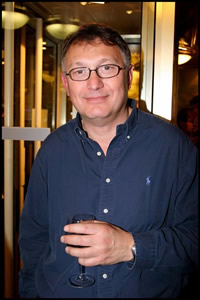
De Franse schrijver en journalist Patrick Besson werd geboren op 1 juni 1956 in Montreuil. Zie ook mijn blog van 1 juni 2009 en alle tags voor Patrick Besson op dit blog.


Uit: Mais le fleuve tuera l'homme blanc


« Ça valait mieux. Installé près d’elle pendant plusieurs heures, j’aurais fini par lui poser des questions auxquelles elle n’aurait pas répondu. Si c’était encore la Blandine de Kergalec qui avait fait autrefois les gros titres des journaux. Dure comme le granit breton, avaient écrit à son sujet les éditorialistes dans leur style caractéristique. Elle était installée de l’autre côté de l’appareil, à deux rangs derrière moi. Elle occupait la place près du hublot. Elle garda son sac sur les genoux pendant plusieurs minutes, semblant douter de vouloir se rendre à destination, puis le glissa sous son siège. Elle n’avait pris ni livre, ni iPod, ni lecteur DVD. Elle passerait les six heures de vol à penser, comme tous les gens en proie à une obsession. Avait-elle remarqué que je la regardais ? Sa façon de ne pas me voir m’inclinait à croire que oui. Passa devant mes genoux une silhouette fluette, puis il y eut un souffle léger à ma droite : la créature infime s’asseyait. Une veste fluide flottait autour de son absence d’épaules. L’homme se présenta. Entre passagers de la classe affaires, on se présente. Pour faire des affaires. C’était un conseiller de présidents africains. Les conseillers de présidents africains sont intéressés par les hommes du pétrole et les hommes du pétrole par les conseillers de présidents africains. Ils exercent, en Afrique, la même profession : pomper. Il regarda alentour, vérifiant qu’il n’avait plus personne à saluer. Partiellement chauve, il avait choisi, comme nombre de footballeurs et de chanteurs hip-hop, de l’être en entier, et son petit crâne rasé luisait comme une pomme au-dessus des fauteuils. Il se rassit, ouvrit son ordinateur et se mit à écrire, sans doute à l’usage du président du pays où nous nous rendions, une note facturée 50 000 euros. 75 000 ? Il refusa le verre de champagne que lui proposait l’hôtesse. Je regardai, de l’autre côté de l’avion, si Blandine de Kergalec avait accepté le sien. Non plus. On se préparait pourtant à un long voyage et les longs voyages se passent mieux avec du champagne.”


 1402641-1f8d8f80bfdfc94ec488938254e2cbad.jpg

Patrick Besson (Montreuil, 1 juni 1956)


De Engelse dichter en schrijver
John Edward Masefield werd geboren op 1 juni 1878 in Ledbury, in Herefordshire. Zie ook mijn blog van 1 juni 2009 en eveneens alle tags voor John Masefield op dit blog.


Vagabond


Dunno a heap about the what an' why,

Can't say's I ever knowed.

Heaven to me's a fair blue stretch of sky,

Earth's jest a dusty road.


Dunno the names o' things, nor what they are,

Can't say's I ever will.

Dunno about God--he's jest the noddin' star

Atop the windy hill.


Dunno about Life--it's jest a tramp alone

From wakin'-time to doss.

Dunno about Death--it's jest a quiet stone

All over-grey wi' moss.


An' why I live, an' why the old world spins,

Are things I never knowed;

My mark's the gypsy fires, the lonely inns,

An' jest the dusty road.


[There is no God, as I was taught in youth...]


There is no God, as I was taught in youth,

Though each, according to his stature, builds

Some covered shrine for what he thinks the truth,

Which day by day his reddest heart-blood gilds.

There is no God; but death, the clasping sea,

In which we move like fish, deep over deep

Made of men's souls that bodies have set free,

Floods to a Justice though it seems asleep.

There is no God, but still, behind the veil,

The hurt thing works, out of its agony.

Still; like a touching of a brimming Grail,

Return the pennies given to passers by.

There is no God, but we, who breathe the air,

Are God ourselves and touch God everywhere.


 1402641-14262c0dd5e4fb4bd7668683d96663e1.jpg

John Edward Masefield (1 juni 1878 – 12 mei 1967)

Portret door William Strang, 1909 


De Oostenrijkse schrijver Ferdinand Raimund werd geboren op 1 juni 1790 in Wenen. Zie ook mijn blog van 1 juni 2009 en eveneens alle tags voor Ferdinand Raimund op dit blog.


Uit: Der Diamant des Geisterkönigs


„Erste Szene.

Zauberer.  Feen.  Geister.  (Einige mit Bittschriften.) Ein Feuergeist.

Chor.

Sollen wir noch lange harren?

Bald verläßt uns die Geduld!

Sind wir Geister seine Narren?

Unverzeihlich ist die Schuld.

Fee Aprikosa.  Welche Beleidigung, Damen solange warten zu lassen, als wären sie seine Domestiken!

Alle.  Das ist unerhört!

Erster Zauberer.  Ich frage, wie kann man ein Geisterkönig sein und so lange schlafen?

Zweiter Zauberer.  Und ich frage, wie kann man vernünftig sein und unvernünftig reden?  Geisterkönig ist er; er muß für uns alle wachen, folglich muß er auch für uns alle schlafen.

Erster Zauberer.  Seine Pflicht heischt aber, unsere Bitten zu hören.

Fee Amarillis.  Und er kümmert sich gar nicht um uns; spart seine Gunst nur für die Menschen auf.

Erster Zauberer.  Er hat schon ungeheure Schätze der Luft entzogen und sie der Erde zugewendet.

Zweiter Zauberer.  Sehen Sie, darum bauen sich die Leute jetzt so viele Luftschlösser.  Wenn nicht das Sterben bei ihnen noch Mode wäre, so ging's dem Volk besser als uns.

Fee Aprikosa.  Was wollen Sie denn?  Er hat ja erst gestern einen Menschen, den er auf der Erde kennen gelernt hat, unter die Geister aufgenommen, weil ihn bei dem letzten Wetter der Blitz erschlagen hat.

Erster Zauberer.  Ja, richtig; er heißt Zephise, war Taschenspieler und soll ein blitzdummer Kerl sein.

Zweiter Zauberer.  Sehr natürlich!  Dumm war er so schon, der Blitz hat ihn auch getroffen, also ist er blitzdumm.

Fee Amarillis.  Der Zauberkönig verschwendet zu viel.  Seine Reisen auf die Erde kosten ihm enorme Summen.“


 1402641-ccd1cbe507f91024757eb70db04eabae.jpg

Ferdinand Raimund (1 juni 1790 - 5 september 1836)

Scene uit “Der Diamant des Geisterkönigs“, Pegasus Theater, Aichach, 2009


De Duitse schrijver, essayist, journalist, biograaf en uitgever Peter de Mendelssohn werd op 1 juni 1908 in München geboren. Zie ook mijn blog van 1 juni 2009 en eveneens alle tags voor Peter de Mendelssohn op dit blog.


Uit: Zeitungsstadt Berlin


„1848 kam ein junger Mann von zweiundzwanzig Jahren aus Süddeutschland nach Berlin, um hier sein Glück zu machen. Er hieß Leopold Ullstein. Neun-zehn Jahre nach ihm kam ein junger Mann von 24 Jahren aus Ostdeutschland nach Berlin, um gleichfalls hier sein Glück zu machen. Er hieß Rudolf Mosse.

Abermals dreizehn Jahre später kam ein junger Mann von einunddreißg Jahren aus Westdeutschland nach Berlin, auch er, um hier sein Glück zu machen, das die beiden anderen schon gemacht hatten. Er hieß August Scherl.

Diese drei Männer veränderten das Gesicht der Stadt. Zusammen, wenn auch nicht gemeinsam, vereint, wenn auch im stetigen Wettstreit erbauten sie auf dem Fundament [...] der geschäftstüchtigen Buchhändler Rüdiger, Voss, Haude und Spener und nicht zuletzt des sie allzeit mahnenden Heinrich von Kleist die größte Zeitungsstadt der Welt.“


 1402641-f24955d9c57528f7351aecd46bf77ebf.jpg

Peter de Mendelssohn (1 juni 1908 – 10 augustus 1982)
Ullstein Buchverlage in de Friedrichstraße in Berlijn

Geschreven door Romenu om 14:00 Reageer op dit bericht

Colleen McCullough, Macedonio Fernández, Dennis Gaens, Rhidian Brook

De Australische schrijfster Colleen McCullough werd geboren op 1 juni 1937 in Wellington. Zie ook mijn blog van 1 juni 2009 en eveneens alle tags voor Colleen McCullough op dit blog.


Uit: The Thorn Birds


“The doll’s golden hair tumbled down, the pearls flew winking into the long grass and disappeared. A dusty boot came down thoughtlessly on the abandoned dress, smearing grease from the smithy across its satin. Meggie dropped to her knees, scrabbling frantically to collect the miniature clothes before more damage was done them, then she began picking among the grass blades where she thought the pearls might have fallen. Her tears were blinding her, the grief in her heart new, for until now she had never owned anything worth grieving for.

Frank threw the shoe hissing into cold water and straightened his back; it didn’t ache these days, so perhaps he was used to smithying. Not before time, his father would have said, after six months at it. But Frank knew very well how long it was since his introduction to the forge and anvil; he had measured the time in hatred and resentment. Throwing the hammer into its box, he pushed the lank black hair off his brow with a trembling hand and dragged the old leather apron from around his neck. His shirt lay on a heap of straw in the corner; he plodded across to it and stood for a moment staring at the splintering barn wall as if it did not exist, his black eyes wide and fixed.

He was very small, not above five feet three inches, and thin still as striplings are, but the bare shoulders and arms had muscles already knotted from working with the hammer, and the pale, flawless skin gleamed with sweat. The darkness of his hair and eyes had a foreign tang, his full-lipped mouth and wide-bridged nose not the usual family shape, but there was Maori blood on his mother’s side and in him it showed. He was nearly sixteen years old, where Bob was barely eleven, Jack ten, Hughie nine, Stuart five and little Meggie three. Then he remembered that today Meggie was four; it was December 8th. He put on his shirt and left the barn”.


1402639-72cca2f0d4c83add41dd969fcdc26d17.jpg
Colleen McCullough (Wellington, 1 juni 1937)

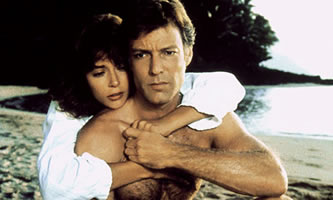
Scene uit de tv-serie met Richard Chamberlain en Rachel Ward, 1983


De Argentijnse schrijver
Macedonio Fernández werd geboren op 1 juni 1874 in Buenos Aires. Zie ook mijn blog van 1 juni 2009 enook mijn blog van 1 juni 2010.


Uit: From The Museum of Eterna’s Novel (Vertaald door Margaret Schwartz)


“Horrible art and the accumulated glories of the past, which have always existed, are a result of the following: the sonorousness of language and the existence of a public; without this sonorousness, only thinking and creating would remain; without a clamoring public, art would not be drowned. Under these conditions, Literature would be pure art, and there would be many more beautiful works than there are at present: there would be three or four Cervantes, the Cervantes of the Quijote, without the stories, Quevedo the humorist and poet of passion, without the moralizing orator, various Gómez de la Sernas. We’ll be liberated from the likes of Calderón, the Prince of falsetto, from lack of feeling, which is poor taste itself; from the likes of Góngora, at least from time to time, with his exclamations of “Ay Fabio, o sorrow!” We’d have three Heines, each of sarcasm and sadness, or D’Annunzios to limitlessly versify passion. Happily, we would have only the first act of Faust, and in compensation various Poes, and various Bovaries—with their sad affliction of loveless appetite, despicable and bloody—and this other, lacerating absurdity: Hamlet’s lyric of sorrow, which convinces and breeds sympathy, despite the false psychologism of its source. We’ll be free of the scientific realism of Ibsen, one of Zola’s victims, and this magnificent artist for his part will be dismantled by sociology and theory of heresy and pathology, and instead of a dozen master works we’ll possess a hundred, of true, intrinsic artistic worth, not mere copies of reality. These works will be typically literary, works of Prose, not of didactics, without any musical language (meter, rhyme, sonorousness) or paintings with words, that is, descriptions.”


1402639-975b09cf41336e67435793c782b9d0d5.jpg 

Macedonio Fernández (1 juni 1874 – 10 februari 1952)


Onafhankelijk van geboortedata:


De Nederlandse dichter Dennis Gaens werd geboren in Susteren in 1982. Zie ook mijn blog van 1 juni 2009 en ook mijn blog van 1 juni 2010.


veertig graden


als we de kou hierbinnen
de ruimte geven
en onze koorts buiten
op straat laten spelen

ons zweet tussen
de groeven van klinkers
en door blaren in het asfalt
omhoog laten komen
de straat overstromen

lantaarnpalen laten smelten
dwars over de weg alleen
de stoep begaanbaar houden

met onze ruggengraat
door drempels breken
het bestemmingsplan
laten getuigen van
de onrust in onze botten

als we onze koorts
in straten laten razen
zijn we 38, 39, 40
dichterbij de zon


 1402639-c7d39903b6a11aa8455d0d0dfef9c161.jpg

Dennis Gaens (Susteren, 1982)


De Britse schrijver Rhidian Brook werd geboren  in 1964 in Tenby. Zijn eerste roman “The Testimony Of Taliesin Jones” won drie prijzen, waaronder de 1997 Somerset Maugham Award, en werd verfilmd met in de hoofdrol Jonathan Pryce. Zijn tweede roman “Jesus And The Adman” werd gepubliceerd in 1999. Zijn derde roman “The Aftermath” verscheen in april 2013. Zijn korte verhalen zijn gepubliceerd door The Paris Review, Punch, The New Statesman, Time Out en andere tijdschriften, en verschillende ervan werden uitgezonden op BBC Radio 4's Short Story. Zijn eerste opdracht voor de televisie – “Mr Harvey Lights A Candle”- werd uitgezonden in 2005 op BBC1 met Timothy Spall in de hoofdrol. Brook schreef ook voor de BBC serie Silent Witness tussen 2005 en 2007, en de dramaproductie Atlantis voor BBC1 in 2008. Africa United, zijn eerste lange speelfilm kwam in het Verenigd Koninkrijk uit in oktober 2010.  Brook schreef eveneens artikelen voor kranten, waaronder The Observer, The Guardian en The Daily Telegraph. In 2005 presenteerde hij Nailing The Cross, een documentaire voor  BBC1. In 2006 werkte hij mee aanj een serie “In The Blood” van BBC World Service, en filmde hij de reis van zijn familie door de aids-pandemie. Zijn boek over die reis – “More Than Eyes Can See”- werd in 2007 gepubliceerd door Marion Boyars. Ook levert Brooks al meer dan 12 jaar regelmatig bijdragen aan Radio 4's "Thought For The Day.”


Uit: More Than Eyes Can See


“Our biceps were still aching from the final round of jabs when we arrived in the rural Kenyan town of Kithituni, where the Salvation Army had pioneered a communal response to HIV/Aids. We had been inoculated against a host of deadly diseases. We had learned all about the pandemic, explained to Gabriel and Agnes how HIV passed from one person to another, read books and talked to people trying to get a sense of what life would be like in the communities we were going to. Most of what we knew about Africa lay between the dualities of safari and catastrophe, between the writings of the starry-eyed accounts of settlers, naturalists, hunters and alarming news reports, movies and documentaries. None of it really prepared us for what we found.

There were immediate cultural adjustments to make and material discomforts to face: no cars, a "goat-powered" internet, pit latrines for toilets, no fridge (we only had power for three hours a day), no running hot water, and a limited amount of food produce consisting mainly of scrawny chicken, beans, rice and the maize breeze-block otherwise known as ugali. There were big bugs to worry about and an over-neurotic applic  ation of Deet at sundown, but we adjusted quickly and the kids seemed to be enjoying it as much as we were. It was the people who made it easy.

Every day, the chief patriarch and matriarch in the area – Jonathan and Agnes (every other woman seemed to be called Agnes in Kithituni) – would swing by on their way to market to check that we were OK; hordes of children would come to play football with our children (with a football made from plastic bags and string) or play with Gabriel's Gameboy until the power ran out. George the baptist would stop off for tea, deliver his home-grown onions and discuss some finer theological point. Lelu showed us how to kill the army ants that walked in through the front door at exactly 7pm every night. And on the 45-minute walk to market we'd learn Swahili by practising the local greetings 100 times a day. By the time we had bought the children two goats at Friday market (we called them Malarone and Larium after the malaria tablets) we were well and truly part of the community and able to thank God in three more languages.”


 1402639-53b4131ad9606fd5cffb60968ba78868.jpg

Rhidian Brook (Tenby, 1964)

Geschreven door Romenu om 13:54 Reageer op dit bericht

Meer van Romenu

↑ Terug naar de berichten