

Naar de inhoud

Romenu

Over literatuur, gedichten, kunst en cultuur
seniorennet.beseniorennet.be

Berichten van 3 november 2012

Ann Scott, André Malraux, Joe Queenan, Jan Boerstoel

De Franse schrijfster Ann Scott (pseudoniem) werd geboren op 3 november 1965 in Boulogne-Billancourt. Zie ook mijn blog van 3 november 2010 en eveneens alle tags voor Ann Scott op dit blog.


Uit: Superstars


„Je n'avais jamais été témoin d'autant de souffrance dans un regard. D'autant de désespoir. Un puits sans fond dans tout ce noir brouillé de larmes. Sa bouche restait entrouverte, implorante. J'aurais voulu pouvoir parler, lui dire que ce n'était plus qu'une question de secondes, que j'allais venir vers elle. Mais j'étais incapable d'émettre un son. J'étais bouleversée par cette douleur liée à moi qu'elle me laissait voir. Qu'elle acceptait de me laisser voir. Était-elle déjà proche au point de savoir combien j'en avais besoin ? Je savais comment ça s'appelait, je savais ce que ça faisait à l'autre, mais je ne savais pas fonctionner autrement. Il n'y avait que lorsqu'on me laissait approcher si loin, que je pouvais ensuite m'apaiser et commencer à être dans l'échange. J'avais besoin de voir l'autre accepter sa dépendance, besoin de lui faire du mal avant de pouvoir lui faire du bien.”

(…)


Elle a relevé sa tête, ses lèvres ont commencé à remuer mais j'ai aussitôt plaqué ma main sur sa bouche. Elle ne pouvait pas dire ça dès maintenant. Elle devait se retenir. Le plus longtemps possible. Jusqu'à ce qu'elle suffoque trop pour garder ces deux mots pour elle. Et alors là, seulement à ce moment-là, elle pourrait les laisser échapper, elle pourrait les hurler, même, si elle voulait.”


 1268380-abbcf0d9810ad167f2ffdbcf38ffcf49.jpg

Ann Scott (Boulogne-Billancourt, 3 november 1965)


De Franse schrijver en kunstfilosoof André Malraux werd geboren op 3 november 1901 in Parijs. Zie ook mijn blog van 3 november 2010 en eveneens alle tags voor André Malraux op dit blog.


Uit: Note sur l’Islam


“La nature d'une civilisation, c'est ce qui s'agrège autour d'une religion. Notre civilisation est incapable de  construire un temple ou un tombeau. Elle sera contrainte de trouver sa valeur fondamentale, ou elle se décomposera.

C'est le grand phénomène de notre époque que la violence de la poussée islamique. Sous-estimée par la plupart de nos contemporains, cette montée de l'islam est analogiquement comparable aux débuts du communisme du temps de Lénine. Les conséquences de ce phénomène sont encore imprévisibles. A l'origine de la révolution marxiste, on croyait pouvoir endiguer le courant par des solutions partielles. Ni le christianisme, ni les organisations patronales ou ouvrières n'ont trouvé la réponse. De même aujourd'hui, le monde occidental ne semble guère préparé à affronter le problème de l'islam. En théorie, la solution paraît d'ailleurs extrêmement difficile. Peut-être serait-elle possible en pratique si, pour nous borner à l'aspect français de la question, celle-ci était pensée et appliquée par un véritable homme d'Etat. Les données actuelles du problème portent à croire que des formes variées de dictature musulmane vont s'établir successivement à travers le monde arabe. Quand je dis «musulmane» je pense moins aux structures religieuses qu'aux structures temporelles découlant de la doctrine de Mahomet. Dès maintenant, le sultan du Maroc est dépassé et Bourguiba ne conservera le pouvoir qu'en devenant une sorte de dictateur. Peut-être des solutions partielles auraient-elles suffi à endiguer le courant de l'islam, si elles avaient été appliquées à temps. Actuellement, il est trop tard ! Les «misérables» ont d'ailleurs peu à perdre.”


 1268380-d469f7261d6ccd5ecd3625fd714d021d.jpg

André Malraux (3 november 1901 – 23 november 1976)


De Amerikaanse schrijver, humorist en criticus Joe Queenan werd geboren op 3 november 1950 in Philadelphia, Pennsylvania. Zie ook mijn blog van 3 november 2010 en eveneens alle tags voor Joe Queenan op dit blog.


Uit: Balsamic Dreams: A Short but Self-Important History of the Baby Boomer Generation


“They had not been the first generation to sell out, but they were the first generation to sell out and then insist that they hadn't. Here was their central tragedy, the poisoned well from which all their unhappiness flowed. They were conflicted. They were flummoxed. Their center would not hold, because they were no longer centered.They could not process the information that their guilt was misplaced, that no one in the United States of America would ever blame anyone for devoting every single moment of his life to the pursuit of filthy lucre--as long as he didn't try pretending that he hadn't. The heartbreak of the Baby Boomer generation lay in the fact that they could not fully enjoy the wealth they had moved heaven and earth to acquire because they felt tainted by their ravenous greed. Baby Boomers would have turned out so much saner and happier if they had ripped a page from the Founding Fathers' playbook and said, "Yes, I chopped down that cherry tree. And then I securitized it into four equal tranches, with the first two splices reverting to the underwriter. You got a problem with that?"

Clearly, this refusal to own up to their own acquisitiveness is not the Baby Boomers' only broken promise. They said they wouldn't become crass and vulgar. But they are. They said they would never become horrid conformists. But they are. They said they would not be ruthless materialists. But then they embraced a complete Lifestyle Über Alles philosophy, carping and caviling at dinner parties over which local bakery sold the best sourdough boules, which kayak shop offered the most attractive warranties, which brand of grappa was most culturally authentic. It was a generation that once prided itself on questioning authority. Now its only questions were referred to authorities like Williams-Sonoma: "Is l'aceto di Modena superior to l'aceto di Reggio? Is Calasparra or arborio rice more desirable in preparing paella a la valencia?" Their utopian visions of peace, love and understanding had been replaced by balsamic dreams.”


 1268380-2f05dc1b633db051265ad3001841564a.jpg

Joe Queenan (Philadelphia, 3 november 1950)


De Nederlandse dichter en schrijver Jan Boerstoel werd geboren in Den Haag op 3 november 1944. Zie ook mijn blog van 3 november 2010 en eveneens alle tags voor Jan Boerstoel op dit blog.


Pulp


De houtpulp, die zo'n kleine honderd jaar
als drager dient voor al wat wordt geschreven,
begint het met de jaren te begeven,
dus vallen alle boeken uit elkaar.
De pulproman maar ook het meesterwerk,
want als de zure tand des tijds gaat zieken
stoort hij zich niet aan oordeel of kritieken,
die knaagt aan ieder genre even sterk.

En zonder wetenschappelijke hulp
zal ook dit rijm straks eindigen als pulp.


Spoeddebat


Je zou je regelrecht in Artis wanen:
een kleine kikker kwaakt en blaast zich op,
luid toegejuicht door kippen zonder kop,
de ezels huilen krokodilletranen.

Een zevenslaper zit discreet te snurken,
een zwartekousenkraai krast ach en wee,
de ratelslang heeft weer eens geen idee,
maar wijt in stilte alles aan de Turken.

Ziedaar een blik in 's lands vergaderzaal,
het onderwerp is de cultuur ditmaal.


1268380-824ed1be695084d413bbe01020644f90.jpg
Jan Boerstoel (Den Haag, 3 november 1944)


Zie voor nog meer schrijvers van de 3e november ook mijn vorige blog van vandaag.
Geschreven door Romenu om 19:12 Reageer op dit bericht

Oodgeroo Noonuccal, Dieter Wellershoff, Hanns Heinz Ewers, William Cullen Bryant

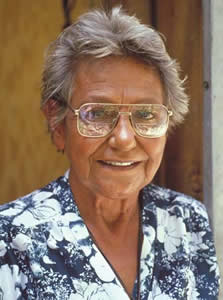
De Australische dichteres en schrijfster Oodgeroo Noonuccal (eig. Kathleen Jean Mary Ruska) werd geboren op 3 november 1920 in Minjerribah (Stradbroke Island) in Moreton Bay. Zie ook mijn blog van 3 november 2010 en eveneens alle tags voor Oodgeroo Noonuccal op dit blog.


No More Boomerang

No more boomerang
No more spear;
Now all civilised —
Colour bar and beer.

No more corroboree,
Gay dance and din.
Now we got movies,
And pay to go in.

No more sharing
What the hunter brings.
Now we work for money,
Then pay it back for things.

Now we track bosses
To catch a few bob,
Now we go walkabout
On bus to the job.

One time naked,
Who never knew shame;
Now we put clothes on
To hide whatsaname.

No more gunya,
Now bungalow,
Paid by hire purchase
In twenty year or so.

Lay down the stone axe,
Take up the steel,
And work like a nigger
For a white man meal.

No more firesticks
That made the whites scoff.
Now all electric,
And no better off.

Bunyip he finish,
Now got instead
White fella Bunyip
Call him Red.

Abstract picture now —
What they coming at?
Cripes, in our caves we
Did better than that.

Black hunted wallaby,
White hunt dollar;
White fella witchdoctor
Wear dog-collar.

No more message-stick;
Lubras and lads.
Got television now,
Mostly ads.

Lay down the woomera,
Lay down the waddy.
Now we got atom-bomb,
End every-body.


1268376-fd6f1c67f02b5a55103fefa1f90d3a4d.jpg
Oodgeroo Noonuccal (3 November 1920—16 September 1993)


De Duitse schrijver en essayist Dieter Wellershoff werd geboren op 3 november 1925 in Neuss. Zie ook mijn blog van 3 november 2010 en eveneens alle tags voor Dieter Wellershoff op dit blog.


Uit: Das normale Leben


“Aber sie wußte es genau. Frank würde sie zum Essen ausführen, um mit ihr über die Reise nach New York zu reden, bei der sie ihn begleiten sollte. Danach würde er sie zu Hause absetzen und in den Villenvorort fahren, in dem er mit seiner Familie lebte. Vor zwei Jahren, als sie sich kennengelernt

hatten, war er einige Male mit hochgekommen in ihre kleine Mansarde. Dazu war er jetzt nicht mehr bereit.

»Ich bin kein Student mehr«, hatte er gesagt und ihr angeboten, etwas dazu beizutragen, daß sie in einen größeren Raum mit mehr Licht für ihre künstlerische Arbeit umziehen konnte, in dem man nicht dauernd seinen Kopf an der Dachschräge stieß. Anfangs hatte sie selbst gedacht, daß die Mansarde nur eine Übergangslösung sei. Aber sie hatte den Vorteil schätzen gelernt, daß sie von hier aus nur

einen Fußweg von zehn Minuten bis zur Hochschule hatte, und war geblieben. Frank hatte gesagt, die Mansarde sei eine Selbstbestrafung von ihr. Das war einer seiner flotten Sprüche, mit denen er vorgab, alles zu durchschauen, auch sie und ihr Schneckenhaus, wie er es nannte. Was er wirklich

von ihr wahrnahm, wußte sie nicht so genau. Sie hatte sich bei ihrer ersten Begegnung auf einer Vernissage von seinem Blick taxiert gefühlt und in einem hellsichtigen Moment geahnt, daß sie dieGeliebte dieses Manneswerden würde. Seine Selbstsicherheit und seine Ausstrahlung von

Energie hatten alles entschieden, noch bevor sie wußte, daß er ein bekannter Kunsthändler mit internationalen Geschäftsbeziehungen war. Kurz danach hatte sie auch erfahren,  daß er achtzehn Jahre älter war als sie. Und das hatte erneut den ersten Eindruck bestätigt, den er auf sie gemacht

hatte. Ganz im Gegensatz zu ihr war er ein Mensch, der seine Zeit nicht nutzlos und entschlußlos vertat, eine Eigenschaft, die sie trotz einer nicht ganz aufgelösten Befremdung an ihm bewunderte. Gleich beim ersten Essen, zu dem er sie eingeladen hatte, schlug er ihr vor, ihn für einige Tage nach London zu begleiten, wo er regelmäßig die Kunstauktionen besuchte.”


 1268376-106579e125ed23958cff0c89bbcef9b4.jpg

Dieter Wellershoff (Neuss, 3 november 1925)


De Duitse schrijver, filmmaker en cabaretier Hanns Heinz Ewers werd geboren op 3 november 1871 in Düsseldorf. Zie ook mijn blog van 3 november 2010 en eveneens alle tags voor Hanns Heinz Ewers op dit blog.


Uit: Vampir


« Er griff es schnell, klemmte es fest in der Hand. "Er löst sich auf!" lachte Frank Braun. Der Schwindsüchtige kroch zurück in die Kulissen, klammerte sich fest, schlotternd und zitternd. Doch die Menge schrie weiter und johlte. Eine Soubrette trat auf, die Musik setzte ihr Lied ein. Aber man ließ sie nicht singen. Man schrie sie an, warf allen möglichen Kram nach ihr. Sie hielt aus, so gut es ging, da schleuderte einer der Studenten einen leeren Blumenkorb hinauf. Nun riß sie aus. Und das Publikum schrie nach dem Männchen. Alle kreischten den Kehrreim: "Seht den kleinen Hampelmann, Wie der hampeln, strampeln kann -" Noch einmal kam es heraus, noch einmal sprang das Männchen. Zappelte, hopste. Fiel dann. Stand auf, überschlug sich, schwankte, rollte über den Boden. Knickte ein, schrie auf, preßte beide Hände vor den Mund. Stürzte in die Kulissen. Immer noch klatschten sie. Wurden ruhig endlich. Ließen die Soubrette ihre Zoten grölen. Die Studenten gingen. Aber einer blieb zurück, der kam erst später nach bin die Weinstube. "Ich war hinten," sagte er. "Der Kerl hat einen Blutsturz bekommen." Ein anderer fragte: "Na, was hast du angeordnet? Bist doch Mediziner!" "Nichts!" erwiderte der. "Es waren schon zwei Ärzte da." Einen Augenblick schwiegen sie. Da machte der lange Ballus seinen behäbigen alten Witz: "Daraus kann man wiederum ersehn, daß man nicht zu viel hampeln soll." Frank Braun rief: "Trinkt doch - was kümmert euch der Clown! Er hat seine Pflicht erfüllt in dem Leben da: hat mir Spaß gemacht dreiviertel Stunden lang!" So lachte er, das war seine wilde Geste. Und doch: Lüge wars! - Er hatte bebend dagesessen all die Zeit über, zitternd, ächzend, sich windend in den Schmerzen des springenden Männchens. Hatte gelitten, ah, all diese Qualen - Aber hochmütig die Maske, wüst und frech –“


 1268376-0f1a355298556c1a333e3ad84f6d560b.jpg

Hanns Heinz Ewers (3 november 1871 – 12 juni 1943)


De Amerikaanse dichter, journalist en jurist William Cullen Bryant werd geboren op 3 november 1794 in Cummington, Massachusetts. Zie ook mijn blog van 3 november 2010 en eveneens alle tags voor William Cullen Bryant op dit blog.


A Hymn of The Sea


The sea is mighty, but a mightier sways
His restless billows. Thou, whose hands have scooped
His boundless gulfs and built his shore, thy breath,
That moved in the beginning o'er his face,
Moves o'er it evermore. The obedient waves
To its strong motion roll, and rise and fall.
Still from that realm of rain thy cloud goes up,
As at the first, to water the great earth,
And keep her valleys green. A hundred realms
Watch its broad shadow warping on the wind,
And in the dropping shower, with gladness hear
Thy promise of the harvest. I look forth
Over the boundless blue, where joyously
The bright crests of innumerable waves
Glance to the sun at once, as when the hands
Of a great multitude are upward flung
In acclamation. I behold the ships
Gliding from cape to cape, from isle to isle,
Or stemming toward far lands, or hastening home
From the old world. It is thy friendly breeze
That bears them, with the riches of the land,
And treasure of dear lives, till, in the port,
The shouting seaman climbs and furls the sail.

But who shall bide thy tempest, who shall face
The blast that wakes the fury of the sea?
Oh God! thy justice makes the world turn pale,
When on the armed fleet, that royally
Bears down the surges, carrying war, to smite
Some city, or invade some thoughtless realm,
Descends the fierce tornado. The vast hulks
Are whirled like chaff upon the waves; the sails
Fly, rent like webs of gossamer; the masts
Are snapped asunder; downward from the decks,
Downward are slung, into the fathomless gulf,
Their cruel engines; and their hosts, arrayed
In trappings of the battle-field, are whelmed
By whirlpools, or dashed dead upon the rocks.
Then stand the nations still with awe, and pause,
A moment, from the bloody work of war.

These restless surges eat away the shores
Of earth's old continents; the fertile plain
Welters in shallows, headlands crumble down,
And the tide drifts the sea-sand in the streets
Of the drowned city. Thou, meanwhile, afar
In the green chambers of the middle sea,
Where broadest spread the waters and the line
Sinks deepest, while no eye beholds thy work,
Creator! thou dost teach the coral worm
To lay his mighty reefs. From age to age,
He builds beneath the waters, till, at last,
His bulwarks overtop the brine, and check
The long wave rolling from the southern pole
To break upon Japan. Thou bid'st the fires,
That smoulder under ocean, heave on high
The new-made mountains, and uplift their peaks,
A place of refuge for the storm-driven bird.
The birds and wafting billows plant the rifts
With herb and tree; sweet fountains gush; sweet airs
Ripple the living lakes that, fringed with flowers,
Are gathered in the hollows. Thou dost look
On thy creation and pronounce it good.
Its valleys, glorious with their summer green,
Praise thee in silent beauty, and its woods,
Swept by the murmuring winds of ocean, join
The murmuring shores in a perpetual hymn.


1268376-3b0fcf63df856cb3227bcec619fe0a23.jpg 

William Cullen Bryant (3 november 1794 – 12 juni 1878)

Geschreven door Romenu om 19:06 Reageer op dit bericht

Meer van Romenu

↑ Terug naar de berichten