

Naar de inhoud

Romenu

Over literatuur, gedichten, kunst en cultuur
seniorennet.beseniorennet.be

Berichten van 14 februari 2012

Ischa Meijer, Alexander Kluge, Piet Paaltjens, Robert Shea, Frederick Philip Grove
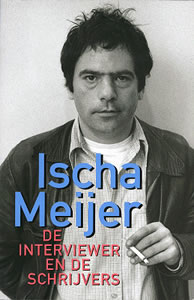
De Nederlandse journalist, toneelschrijver, filmacteur en televisiepresentator Ischa Meijer werd geboren in Amsterdam op 14 februari 1943. Zie ook alle tags voor Ischa Meijer op dit blog.


Uit: De interviewer en de schrijvers (Godfried Bomans)


„Achter grote ramen ligt de zandkleurige tuin, een kolossaal stuk duin beneemt het uitzicht op het bos daarachter. We drinken gescheiden een kopje thee. Bomans in de keuken, ik in de kamer. Dan staat hij plotseling naast me. Het is tien uur in de morgen. We kijken peinzend door de ruiten. Bomans belooft me een wandeling. Maar eerst de trap op, een nauwe gang door, naar zijn werkkamer.

Bomans: ‘Heb jij ooit gehoord van een jongen die op zijn achttiende sprookjes schreef? Dat is toch belachelijk, eigenlijk. We zochten allemaal ons klooster. Ik las maar, en ik las maar. Alles was beter dan dat huis... En toch, dat is zo vreemd... geen van de kinderen zal het ooit willen toegeven, ik zou het niet eens tegen ze durven zeggen. Twintig jaar ben ik ziek geweest, psychisch een wrak, ik heb twintig jaar in bed gelegen. Nu moet ik volwassen worden. Ik ben een nabloeier... 't Kost tijd. Maar ik ga vooruit... Dat vind ik zo merkwaardig... Jij zit hier volkomen ontspannen tegenover me, je luistert naar me, stelt me een vraag. Maar dat zou ik indertijd nooit gedurfd hebben. Zomaar op bezoek bij een schrijver. Ik zou bloedrood en stuntelig op diezelfde bank hebben gezeten. Ik was zover nog niet... ik moest genezen.

Ik voel me benauwd, laten we een wandelingetje maken.’

Hij loopt voor me uit, een beetje gebogen, terwijl hij praat. Door de natte bladeren het heuveltje op. We kijken uit over het bos.

 Bomans: ‘Maar ik ga vooruit. Wat ik gistermiddag op de televisie deed... zomaar in debat gaan over een actueel onderwerp... 't Was niet goed, dat weet ik wel... maar ik deed het. Ik schrijf nu in de Volkskrant elke zaterdag een stukje, dat zou ik vijf jaar geleden niet gedurfd hebben. Over gewone alledaagse dingen zomaar je mening geven. 't Gaat zo langzaam, weet je...’

 We staan voor een gigantische, volkomen verlaten villa, gluren door de ruitjes, praten met de tuinman. Lopen daarna de weg op, het dorp Bloemendaal in.“


 1093877-83e57c4352815c1ccc3f45690a9ad137.jpg

Ischa Meijer (14 februari 1943 – 14 februari 1995)


De Duitse schrijver en regisseur Alexander Kluge werd op 14 februari 1932 geboren in Halberstadt. Zie ook mijn blog van 14 februari 2010 en ook mijn blog van 14 februari 2011.


Uit: Paris, die Hauptstadt des 19. Jahrhunderts


“Am 11. Juni 1940, einem Dienstag, lag die viele Kilometer sich im Umriß eines menschlichen Magens erstreckende Metropole Paris im Sonnenglast, eine Wüste aus grauem Stein. In den späten Nachmittagsstunden befand sie sich unter einem schwarzen Nebel. Die Sonne stach mit "gelblichen und roten Lanzen" in dieses Dunkel. Ein unregelmäßiger Niederschlag von Ruß, sozusagen in Wolken von großer Kleinteiligkeit. Sie färbten den Oberarm, ließen die Hand frei, sie berußten das Gesicht, schonten die Schuhe. In der Erinnerung der Bewohner war dies der Tag des Untergangs, im Gegensatz zum 14. Juni, einem Freitag, an dem von Norden die deutschen Truppen in Paris einmarschierten.

(…)


Am 11. Juni aber war es schwer, die Verdunkelung des Himmelslichts zu deuten. Major Benôit-Guyod von der Militärkommandantur hielt das Phänomen für einen künstlich verbreiteten Nebel, wie ihn die Marine verwendet. Dann wäre dies eine Maßnahme gewesen, um feindliche Bomber zu desorientieren. Wenn ich mich schneuze, ist mein Taschentuch schwarz, notierte Benôit-Guyod.¹


 1093877-66ab6b5ecc72acbafeba507a1c7b3e16.jpg

Alexander Kluge (Halberstadt, 14 februari 1932)


De Nederlandse dichter en predikant Piet Paaltjens werd geboren in Leeuwarden op 14 februari 1835. Zie ook alle tags voor Piet Paaltjes op dit blog.


Immortelle XXXIII


Mijn hart was toegevroren,

Mijn tranen vloeiden niet meer.

Toen trof mij haar gloeiende blikstraal,

En de wateren ruischten weer.


O ware ik toch verdronken

In den bitterzilten vloed!

In brakke liefdetranen

Te smoren is honingzoet.


Immortelle LX


Toen Knaap mij de laatste maal knipte,

Was hij aangedaan onder zijn werk.

‘Wat wordt u al grijs!’ sprak hij somber,

‘Ik vrees, u studeert te sterk.’


En Jongmans, toen hij mij gisteren

De maat voor een pantalon nam,

Keek van mijn magerheid zóó op,

Dat ik dacht dat hem iets overkwam.


Vater Muller ontzei me zijn tafel.

Ze verliep anders heelemaal.

Mijn holle kaak deed de lui denken,

Het eten was bij hem zoo schraal.


En mijn oppasser heeft zelfs den ploert al

Een goed woord voor een draagplaats verzocht,

Als soms mijnheers begraafnis

Te Leiden plaats hebben mocht.


Maar wie er ook zien en beweenen,

Dat ik zoo jong moet vergaan,

Niet hare grijsblauwe oogjes,

En die hebben 't mij juist gedaan.


Adam en Eva


Adam en Eva,
Die aten samen gort.
Adam had een broekje aan
En Eva droeg een schort.
Als ik mij niet zéér vergis,
Is dat lang geleden,
Maar het ging (of 'k heb het mis!)
Toen al net als heden.
Eva's die de broek aanhebben,
Zijn de rechte Eva's niet,
En een Adam met een schort voor
Noemde men een keukenpiet.
Wat de kroon is voor een koning,
Voor de huisvrouw is haar schort.
Draag de uwe steeds met ere
En 't ontbreek't u nooit aan - gort.


 1093877-0394be756c098d79ddf90183ba9fb709.jpg

Piet Paaltjens (14 februari 1835 – 19 januari 1894)

Geboortehuis in Leeuwarden, Voorstreek 80


De Amerikaanse schrijver Robert Shea werd geboren op 14 februari 1933 in New York. Zie ook alle tags voor Robert Shea op dit blog.


Uit: All Things Are Lights


„Roland and the young man-at-arms clung to the wooden wall, saving themselves from falling twenty feet to the yard below. Right beside them was the gaping hole in the palisade left by the stone.

Roland knew more stones would soon follow, and wanted desperately to jump for the ladder. But he forced himself to stand still long enough to see what was happening at the Cathar fortress. He watched the wide main gateway swing open. A blaze of red torchlight gleamed on helmets and spear-points -- fighting men were pouring out on the run. He waited a moment, counting. A hundred or more.

His breathing quickened and his heart pounded. Here was the diversion he needed.

He shouted down into the darkness, adding his cry to the shouts of men waking up within the crusader fort. "To arms!

To arms! The Cathars are attacking!"

Pushing the man-at-arms before him, he hurried down the ladder. The young Breton was blubbering.

"Alain. The damned Bougres got Alain."

"Mourn him later," Roland advised. "Just try to keep yourself alive. "

Roland hesitated at the foot of the steps. The stone had knocked the logs apart, leaving an opening at the base of the wall wide enough for a man to step through.

"I am going out there to get a better look at them," Roland said, sliding the two-handed sword, almost as long as his leg, out of its scabbard. "You report to the commander."

"God go with you, Sire Orlando," the man-at-arms said to him.

Roland hurried out into the darkness, alone with his excitement and fear.“


 1093877-68b07a9afa67cd67e4e23abe96ee1362.jpg

Robert Shea (14 februari 1933 – 10 maart 1994)

New York City 


De Canadees-Duitse schrijver en vertaler Frederick Philip Grove werd geboren als Felix Paul Greve op 14 februari 1879 in Radomno, Westpruisen. Zie ook alle tags voor Frederick Philip Grove op dit blog.


Uit: Fruits of the Earth


„On the trail from the yard a dust cloud was trailing along. It took Abe a second or so to make out, at the apex of the fan-shaped cloud, a man on horseback tearing along at a terrific speed. He was riding a draught-horse, which fact was betrayed by the lumbering though furious gallop. He had just crossed the pasture.
“He leapt the gate,” Victor said from behind Abe’s back.
Abe did not answer. Who could it be? Whence did he come? A dull and ever-increasing disquietude took hold of him.
Suddenly he recognized the rider. It was Bill Crane. He should have been back by this time. The horse he was riding was clearly doing its utmost; yet Bill was wildly lashing it with a long line.
Everybody in the whole field was aware of the rider’s approach; all work had slowed down.
Then, at a distance of a quarter of a mile, the horse stumbled in full career and fell, throwing the rider who rolled over two or three times, to leap up and to fall again, fighting for breath and reeling.
Abe veered on Lafontaine. “For God’s sake, shut that engine off!”
Victor jumped; the hum subsided into silence.
Bill had stopped, struggling for his voice. “Charlie!” he yelled. “Charlie’s got hurt.” Abe’s knees gave under him.
“Where? How?” he shouted.
“Hilmer’s bridge. Load went over him!” Bill was still staggering forward; apparently he had been hurt by his fall.
“Hurt?” Abe asked as if groping for a clue.
“Load went right over him.”
For a moment it looked as if Abe were going to ask more questions. Then he turned and ran for the lead team of his grain tank. Feverishly he unhooked one of the horses, a Percheron colt, and, gathering the long line into loops, vaulted on his back. Lashing the heavy horse into a gallop, he shot past the engine out on the trail.“


 1093877-1e12460379ebfeb3f423a24e636f8b98.jpg

Frederick Philip Grove (14 februari 1879 – 19 augustus 1948)


Zie voor nog meer schrijvers van de 14e februari ook mijn vorige blog van vandaag.
Geschreven door Romenu om 19:23 Reageer op dit bericht

Frank Harris, Julia de Burgos, Vsevolod Garsjin, Edmond About, Johann Martin Usteri, Pierre-Claude de La Chaussée, Leone Battista Alberti

De Iers-Engelse schrijver, publicist, uitgever en redacteur Frank Harris werd geboren op 14 februari 1856 in Galway, Ierland Zie ook alle tags voor Frank Harris op dit blog.


Uit: Oscar Wilde, His Life and Confessions


“Even as a schoolboy he was an excellent talker: his descriptive power being far above the average, and his humorous exaggerations of school occurrences always highly amusing.

“A favourite place for the boys to sit and gossip in the late afternoon in winter time was round a stove which stood in ‘The Stone Hall.’ Here Oscar was at his best; although his brother Willie was perhaps in those days even better than he was at telling a story.

“Oscar would frequently vary the entertainment by giving us extremely quaint illustrations of holy people in stained-glass attitudes: his power of twisting his limbs into weird contortions being very great. (I am told that Sir William Wilde, his father, possessed the same power.) It must not be thought, however, that there was any suggestion of irreverence in the exhibition.

“At one of these gatherings, about the year 1870, I remember a discussion taking place about an ecclesiastical prosecution that made a considerable stir at the time. Oscar was present, and full of the mysterious nature of the Court of Arches; he told us there was nothing he would like better in after life than to be the hero of such a cause celèbre and to go down to posterity as the defendant in such a case as ‘Regina versus Wilde!’

“At school he was almost always called ‘Oscar’— but he had a nick-name, ‘Grey-crow,’ which the boys would call him when they wished to annoy him, and which he resented greatly. It was derived in some mysterious way from the name of an island in the Upper Loch Erne, within easy reach of the school by boat.

“It was some little time before he left Portora that the boys got to know of his full name, Oscar Fingal O’Flahertie Wills Wilde. Just at the close of his school career he won the ‘Carpenter’ Greek Testament Prize,— and on presentation day was called up to the dais by Dr. Steele, by all his names — much to Oscar’s annoyance; for a great deal of schoolboy chaff followed.“


 1093871-f82a83a872f8071d15e6cb68474caa69.jpg

Frank Harris (14 februari 1856 – 27 augustus 1931)


De Puerto Ricaanse dichteres en schrijfster Julia de Burgos (eig. Julia Constanze Burgos García) werd geboren op 14 februari 1914 in Carolina. Zie ook mijn blog van 14 februari 2009 en ook mijn blog van 14 februari 2010 en ook mijn blog van 14 februari 2011.


I Am Embodied in Now (Soy en cuerpo de ahora)


How this load of centuries wants to knock me down
that on my back drinks the current of time!
Time never changing that stagnates in the centuries
and that nurtures its body with past reflections.


I am afraid of the height of your ambitions—it tells me–;
the yesterday that nurtures me bends in the interior
of your simple life that admits no past
and that lives in the alive, open to the moment;
now the always nakedness of your mind angers me,
repels my load and expands in the new;
it confuses me now in the svelteness of your idea
that flagellates my face and straightens your body…
look to one side and another: hunchbacks, mediocrities;
they are mine, the ones who water my always full vacuum;
be one of them; untwist your vanguard; limp;
it’s so easy to flip from the live to the dead.


You have wanted to knock me down, load in the body of centuries
of prejudices, of hatreds, of passions, of jealousies.


You have wanted to knock me down with your heavy load
But I found myself, and your effort was in vain.


Go, line your centuries with the vulgar ignorant;
my ambitions are not yours, my flights are not yours.


I am embodied in now; about yesterday I know nothing.
In the alive, my life knows the I Am of the new.


Vertaald door Jack Agueros


 1093871-888512ede7129c744b93614ac11ca7ec.jpg

Julia de Burgos (14 februari 1914 – 6 juli 1953)


De Russische schrijver
Vsevolod Garsjin werd geboren op 14 februari 1855 in Prijatnaja Dolina. Zie ook alle tags voor Vsevolod Garsjin op dit blog.


Uit: The scarlet blossom (Vertaald door R.J. Warren)


“Take him to the ward. To the right.”

“I know—I know; I was here with you last year. We went over the Asylum. I know all about it, and it will be difficult to deceive me,” said the patient.

He turned towards the door. The keeper opened it before him, and, with the same rapid gait, holding his head well up, he left the office, and, almost running, went to the right, to the ward for mental patients. Those who were escorting him could scarcely keep up with him.

“Ring! I cannot. You have tied my arms.”  The porter opened the door, and they entered the Asylum.

It was a large stone building, an old Government structure. Two large halls—one the dining-hall, the other a general room for quiet patients; a wide corridor with a glass door leading into a flower-garden, and some twenty separate rooms where the patients lived occupied the lower story. Here, also, were two dark rooms—one lined with mattresses, the other with boards—in which violent patients were placed; and an enormous, gloomy, vaulted room, which was the bath-room.

The upper story was occupied by women, whence there came a confused din, interspersed with yells and howling. The Asylum had been built for eighty patients, but as it was the only one available for some distance around there were nearly three hundred accommodated within its walls. Each small cubicle held four or five beds. In winter-time, when the patients were not allowed into the garden and all the iron-barred windows were tightly closed, the building became unendurable stifling.

They led the new patient into the room in which were the baths. Even on a sane person this room was calculated to produce a feeling of depression, and on a distorted, excited imagination the impression would be so much the greater. It was a large vaulted room with a greasy stone floor, and lighted by one window in a corner. The walls and arches were painted a dark red. Two stone baths, like two oval-shaped holes, and full of water, were let into, and on a level with, the floor, which had become almost black from the accumulated dirt of ages. A huge copper stove with a cylindrical boiler for heating the water, and a whole system of copper tubes and taps, filled the corner opposite the window. Everything bore an unusually gloomy and, for a disordered mind, fantastic character, which impression was further heightened by the forbidding physiognomy of the stout, taciturn warder in charge of the baths.


 1093871-c0494f3731b8ba64ce48284e9a47acf9.jpg

Vsevolod Garsjin (14 februari 1855 – 31 maart 1888)

Portret door Ilya Repin, 1884


De Franse schrijver Edmond François Valentin About werd geboren op 14 februari 1828 in Dieuze, Lorrainne. Zie ook alle tags voor Edmond About op dit blog.


Uit: Rome contemporaine


„Mon auberge.

Charlemagne était logé au palais des Césars, sur le mont Palatin. Cette auberge impériale, que les barbares avaient respectée jusqu’en 800, n’est plus habitée aujourd’hui. Il n’en reste que des tas de pierres, où les hiboux eux-mêmes trouvent difficilement un nid confortable.

Charles VIII, lorsqu’il fit son escapade triomphale, habitait, au bout du Cours, ce gros palais de Venise, si laid et si noir, où le comte Colloredo donne les plus belles fêtes de Rome.

Montaigne était campé à l’hôtel de l’Ours : on n’y rencontre plus de pédants, mais beaucoup de voituriers.

Notre divin Rabelais logeait a la même enseigne, mais peu s’en fallut qu’on lui accordât pour rien le plus bel appartement du fort Saint-Ange. Le père de l’esprit français aurait été bien là pour ratiociner à loisir sur les mœurs et coutumes de l’île Sonnante.

Nicolas Poussin vivait près d’ici, devant l’église de la Trinité-des-Monts, à deux pas de la belle fresque de Daniel de Volterre, qu’il plaçait si haut, et que le gouvernement français a espéré un instant de placer au Louvre.

Le président de Brosses, du temps qu’il était conseiller et qu’il montrait de si étranges figures à la portière de son carrosse, habitait à la place d’Espagne. M. de Chateaubriand se tenait à l’ambassade de France, et Mme de Staël dans les nuages.

Je suis mieux logé, moi chétif, que tant de Français illustres, et, par les deux fenêtres de mon observatoire, je vois les choses de bien plus haut.“


 1093871-87d0de889766a6f3f0c1e35d4d2c60e9.jpg

Edmond About  (14 februari 1828 – 16 januari 1885)


Zie voor onderstaande schrijvers ook mijn blog van 14 februari 2011.


De Franse toneelschrijver Pierre-Claude Nivelle de La Chaussée werd geboren op 14 februari 1692 in Parijs. Zie ook mijn blog van 14 februari 2007  en ook mijn blog van 14 februari 2010.


De Italiaanse dichter, schilder, taalkundige, filosoof, cryptograaf, musicus en architect Leone Battista Alberti werd geboren in Genua op 14 februari 1404. Zie ook mijn blog van 14 februari 2007 en ook mijn blog van 14 februari 2010. 


De Zwitserse schrijver en dichter Johann Martin Usteri werd geboren op 14 februari 1763 in  Zürich. Zie ook mijn blog van 14 februari 2007 en ook mijn blog van 14 februari 2009 en ook mijn blog van 14 februari 2010.


Geschreven door Romenu om 19:16 Reageer op dit bericht

Meer van Romenu

↑ Terug naar de berichten