Naar de inhoud

Romenu

Over literatuur, gedichten, kunst en cultuur
seniorennet.beseniorennet.be

Berichten van 14 januari 2011

J. Bernlef, Edward St Aubyn, Yukio Mishima, Anchee Min, Mary Robison
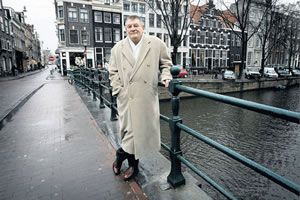
De Nederlandse schrijver en dichter J. Bernlef werd geboren op 14 januari 1937 in Sint Pancras. Zie ook mijn blog van 14 januari 2007 en ook mijn blog van 14 januari 2008 en ook mijn blog van 14 januari 2009 en ook mijn blog van 14 januari 2010.


Blinddruk


Stemmen die wilden klinken

maar in stilte steken bleven


Dooierloos ei

onverpopte vlinder


De gedroomde aanzet tot het begin

van een eerste aarzelende zin


Maar de lippen alweer gesloten

dooft het denken


Onbegonnen werk licht op.


Conservatorium

 
De ramen van het conservatorium staan wijdopen

daarbinnen vergrijpt iemand zich aan eeuwenoude gevoelens

de vleugel jammert en klaagt


In het park scheren zwaluwen het gras

oogsten lucht en insecten


Hoe te leven? Voor wat?

Grote vragen waarop kleine antwoorden passen


Zo precies als deze zwaluwen die geven

vliegensvlug


Iemand daarbinnen houdt plotseling op met spelen

vloekt en slaat zijn vleugel dicht.


Geluk


In takken groeperen zich groene zinnen

popelend om alle kanten uit te lopen


Op stoeptegels een kindertekening

door regenschrift al half gewist


Achter een dakkapel begint een merel te zingen

houdt dan midden in zijn herinnering op


In mijn hoofd vertwijgt zich zijn lied - niemand

ziet iets aankomen, dat is ons geluk.


 830476-6d3a108b4d8a133860916574144b004e.jpg

J. Bernlef (Sint Pancras, 14 januari 1937)


De Britse schrijver en journalist Edward St Aubyn werd geboren op 14 januari 1960 in Cornwall. Zie ook mijn blog van 14 januari 2009 en ook mijn blog van 14 januari 2010.


Uit:  Nette Aussichten (Some Hope, vertaald door Dirk van Gunsteren)


„Patrick erwachte und wusste, dass er geträumt hatte, konnte sich aber an den Inhalt des Traums nicht erinnern. Ihn quälte der vertraute Wunsch, etwas zu fassen zu bekommen, das soeben aus dem Bewusstsein entschwunden war, auf dessen Existenz jedoch gerade durch sein Fehlen geschlossen werden konnte - wie man aus herumwirbelnden Papierfetzen schließen kann, dass ein schneller Wagen vorbeigefahren ist.
Die verschwommenen Fragmente seines Traums, in dem er anscheinend an einem Seeufer gewesen war, vermischten sich mit der Aufführung von Maß für Maß, die er am Abend zuvor zusammen mit Johnny Hall gesehen hatte. Obwohl der Regisseur als Bühnenbild einen Busbahnhof gewählt hatte, konnte nichts den Schock mildern, das Wort "Gnade" derart oft an einem einzigen Abend zu hören.
Vielleicht entstanden all seine Probleme daraus, dass er das falsche Vokabular verwendete, dachte er mit einer kurzen Aufwallung von Erregung, die es ihm gestattete, die Bettdecke zurückzuschlagen und zu erwägen aufzustehen. Er bewegte sich in einer Welt, in der das Wort "Wohltätigkeit", gleich einer schönen, von ihrem eifersüchtigen Ehemann unablässig bewachten Frau, ausschließlich in Begleitung der Wörter "Essen", "Komitee" oder "Ball" auftrat. Für "Mitgefühl" hatte niemand Verwendung, wogegen "Milde" häufig vorkam, und zwar in Form von Klagen über die Kürze von Gefängnisstrafen. Dennoch wusste er, dass seine Schwierigkeiten grundsätzlicherer Natur waren.
Er war erschöpft von seinem lebenslangen Bedürfnis, Widerstreitendes miteinander zu vereinbaren: Er wollte in seinem Körper und außerhalb seines Körpers sein, im Bett und auf der Vorhangstange, in der Vene und in der Spritze, ein Auge hinter einer Augenklappe verbergen und mit dem anderen die Augenklappe mustern; er mühte sich, dem ständigen Beobachten ein Ende zu setzen, indem er sich in die Bewusstlosigkeit trieb, und fühlte sich dann gezwungen, die Ränder der Bewusstlosigkeit zu beobachten und die Finsternis sichtbar zu machen; er entzog sich jeder Anstrengung, verdarb das Nichtstun jedoch durch Rastlosigkeit, er fand Wortspiele verlockend, hatte aber einen Widerwillen gegen das Virus der Zweideutigkeit; er neigte dazu, Sätze in der Mitte mit dem Scharnier eines einschränkenden "aber" zu versehen, sehnte sich jedoch danach, seine Zunge wie eine Eidechse entrollen und eine vorbeisausende Fliege mit unfehlbarer Präzision fangen zu können; er versuchte verzweifelt, der selbstzerrüttenden Ironie zu entkommen und zu sagen, was er wirklich meinte, doch das, was er wirklich meinte, vermochte nur Ironie auszudrücken.“
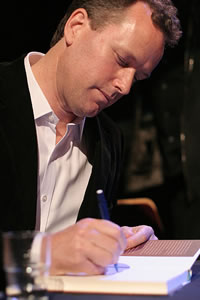


 830476-e08db9f1a8ba6ed05c508fc407ba8842.jpg

Edward St Aubyn (Cornwall, 14 januari 1960)


De Japanse schrijver Yukio Mishima werd geboren op 14 januari 1925 in Tokyo. Zie ook mijn blog van 14 januari 2007  en ook mijn blog van 14 januari 2008 en ook mijn blog van 14 januari 2009 en ook mijn blog van 14 januari 2010.


Uit: The Sound of Waves (Vertaald door Meredith Weatherby)


„UTA-JIMA—Song Island—has only about fourteen hundred inhabitants and a coastline of something under three miles.
The island has two spots with surpassingly beautiful views. One is Yashiro Shrine, which faces northwest and stands near the crest of the island. The shrine commands an uninterrupted view of the wide expanse of the Gulf of Ise, and the island lies directly in the straits connecting the gulf with the Pacific Ocean. The Chita Peninsula approaches from the north, and the Atsumi Peninsula stretches away to the northeast. To the west you can catch glimpses of the coastline between the ports of Uji-Yamada and Yokkaichi in Tsu.
By climbing the two hundred stone steps that lead up to the shrine and looking back from the spot where there is a torii guarded by a pair of stone temple-dogs, you can see how these distant shores cradle within their arms the storied Gulf of Ise, unchanged through the centuries. Once there were two "torii"; pines growing here, their branches twisted and trained into the shape of a torii, providing a curious frame for the view, but they died some years ago.
Just now the needles of the surrounding pine trees are still dull-green from winter, but already the spring seaweeds are staining the sea red near the shore. The northwest monsoon blows steadily from the direction of Tsu, making it still too cold to enjoy the view.
Yashiro Shrine is dedicated to Watatsumi-no-Mikoto, god of the sea. This is an island of fishermen and it is natural that the inhabitants should be devout worshippers of this god. They are forever praying for calm seas, and the very first thing they do upon being rescued from some peril of the sea is to make a votive offering at the sea-god's shrine.“



 830476-f33b724aed28e152cfceb6aff84e9253.jpg

Yukio Mishima (14 januari 1925 - 25 november 1970)


De Chinese schrijfster Anchee Min werd geboren in Shanghai op 14 januari 1957. Zie ook mijn blog van 14 januari 2009 en ook mijn blog van 14 januari 2010.


Uit: The Last Empress


“In 1852, a beautiful seventeen-year-old girl from an important but impoverished family of the Yehonala clan arrived in Peking as a minor concubine to the young Emperor, Hsien Feng. Tzu Hsi, known as Orchid as a girl, was one among hundreds of concubines whose sole purpose was to bear the Emperor a son.

It was not a good time to enter the Forbidden City, a vast complex of palaces and gardens run by thousands of eunuchs and encircled by a wall in the center of Peking. The Ch’ing Dynasty was losing its vitality and the court had become an insular, xenophobic place. A few decades earlier, China had lost the first Opium War, and it had done little since to strengthen its defenses or improve its diplomatic ties to other nations.

Within the walls of the Forbidden City the consequences of a misstep were often deadly. As one of hundreds of women vying for the attention of the Emperor, Orchid discovered that she must take matters into her own hands. After training herself in the art of pleasing a man, she risked everything by bribing her way into the royal bedchamber and seducing the monarch. Hsien Feng was a troubled man, but for a time their love was passionate and genuine, and soon she had the great fortune to bear him his only son and heir. Elevated to the rank of Empress, Orchid still had to struggle to maintain her position as the Emperor took new lovers. The right to raise her own child, who was under the control of Empress Nuharoo, the Emperor’s senior wife, was constantly at issue.

The invasion by Britain, France, and Russia in 1860, and the subsequent occupation of Peking, forced the Chinese court into exile in the distant hunting reserve of Jehol, beyond the Great Wall. There the humiliating news of the harsh terms for peace contributed to the decline of the Emperor’s health. With the death of Hsien Feng came a palace coup, which Orchid helped to foil with the help of her brother-in-law Prince Kung and General Yung Lu. The handsome Yung Lu reignited romantic feelings in the still young Orchid, but in her new position of power there was little opportunity for a personal life. As coregent with Empress Nuharoo until her son’s maturity, Empress Orchid was at the beginning of a long and tumultuous reign that would last into the next century.”



 830476-8cc65e32a6fc6f617b4b1cec39dfbc36.jpg

Anchee Min (Shanghai, 14 januari 1957)


De Amerikaanse schrijfster
Mary Robison werd geboren op 14 januari 1949 in Washington D.C. Zie ook mijn blog van 14 januari 2009 en ook mijn blog van 14 januari 2010.


Uit: Why Did I Ever?


17

Nine West, I've never really had great luck with their shoes. They can look terrific but they have sharp arches and hard fucking soles.

Once in New York on my way to Penn Station I had to stop and remove the Nine West shoes I was wearing. I had to walk on in my stocking feet. Barrabus, I think he was called, was with me. My husband then but he wouldn't wait up, wouldn't take an extra minute out, oh no.

"Just keep going!" I called to him. "However eventually, I will meet you there."

That ex I heard was arrested for stealing food. Maybe I only dreamed it. It's what I tell people, anyway.


18

I call my doctor's office to ask for some Ritalin. His nurse answers and says, "This is Annabelle. According to our records, you're not due for a prescription at this time."

I say, "Annabelle, this is not what it appears."

"Oh?" she says and waits because she was trained to wait and force me to do the synopsizing.

I will take that challenge. "There was a series of mishaps," I tell her. "Some were spilled at the sink or ruined by moisture. Then a vial I use for travel got mislaid and they're gone. I'm out," I say. "Who can explain it?"

But I'm a stupid woman for asking that question. Nurse Annabelle can explain what happened to my drugs.

Without Ritalin I can sustain an evil thought or two, such as: "That there feels like cancer of the esophagus." However, I'm liable to skip over more routine kinds of thinking, such as, "Move up in line here," or "Steer."

So I'm in bed. I'm in bed unless Dr. Rex himself calls to inform me he's written new prescriptions.

More emphatically, I am in bed until.


 830476-c9192af778ab7b588a7c1900da753c62.jpg

Mary Robison (Washington, 14 januari 1949)


Zie voor nog meer schrijvers van de 14e januari ook mijn vorige blog van vandaag en eveneens mijn eerste blog van vandaag.
Geschreven door Romenu om 19:37 Reageer op dit bericht

Martin Auer, John Dos Passos, Tillie Olsen, Marek Hlasko, Rudolf Hagelstange

De Oostenrijkse dichter en schrijver, musicus en cabaretier Martin Auer werd geboren op 14 januari 1951 in Wenen. Zie ook mijn blog van 14 januari 2009 en ook mijn blog van 14 januari 2010.


Uit: Und jetzt?


"Ich bin die Johanna!"

Der Mann in dem verdreckten Zimmer reisst die Augen auf. Es kann sein, dass ein oder zwei Erbsen aus seinem offenen Mund auf den Teller zurückfallen. Der Löffel in seiner Hand bleibt über dem Teller hängen wie ein verlorenes Raumschiff über einem toten Planeten.

Fassungslos starrt er das Mädchen an, das in der Tür steht, die Arme hängen lässt und anscheinend nicht mehr zu sagen hat, als sie schon gesagt hat. Jetzt ist er dran, soviel ist ihm klar. Aber was sagt man zu einer Tochter, die man vor Jahren - waren es sechs? Sieben? Acht? - verlassen hat, besser aufgehoben bei der tüchtigen Mutter als beim verwahrlosten Vater, und die jetzt vor einem steht, blass und mager, Augenbrauen, Nasenflügel und Lippen von Ringen durchstochen, und einen mit den dick schwarz eingerandeten Augen ansieht wie ein kriegsgefangener Offizier, der fest entschlossen ist, nicht mehr von sich preiszugeben als Name und Dienstgrad?

Der Augenblick gerinnt zu Minuten. Als wären sie beide eingefroren in diesen Augenblick, ohne jemals wieder daraus auftauchen zu können. Ihr argwöhnischer Blick prallt auf seine graue Haut, seine Bartstoppeln, die Tränensäcke, das schüttere zerraufte Haar, den verblödeten Blick. Sein Hemd ist fleckig, die Hand, die den Löffel in Schwebe hält, zittert. Auf dem Tisch, an dem er seine Erbsen isst, stapeln sich alte Zeitungen und leere Konservendosen, eine zerrissene Socke krönt das Arrangement.

Der verwahrloste Alte versucht zu schnallen, was gespielt wird, aber der Blick seiner Tochter verrät ihm nichts. Diese Augen sind ein einziger Vorbehalt, enthalten sich jeden Urteils und geben nichts preis. Vorläufig steht sie hier in der Tür, und über ihren nächsten Schritt wird sie entscheiden, wenn es soweit ist. Jetzt ist erst einmal er am Zug, und das ist es, was ihn so verwirrt.

Schließlich findet er den Ausweg. Er lässt die Hand mit dem Löffel sinken, ergreift stattdessen das Glas, das neben dem Teller steht, hebt es hoch und sagt: "Prost!"


 830467-f42f58b36d280e916a0feeee9972df2f.jpg

Martin Auer (Wenen, 14 januari 1951)


De Amerikaanse schrijver John Dos Passos werd geboren op 14 januari 1896 in Chicago. Zie ook mijn blog van 14 januari 2007  en ook mijn blog van 14 januari 2008 en ook mijn blog van 14 januari 2009 en ook mijn blog van 14 januari 2010.


Uit: 1919 (U.S.A.)


“T.R. drove like a fiend in a buckboard over the muddy roads through the driving rain from Mt. Mercy in the Adirondacks to catch the train to Buffalo where McKinley was dying,

     As President

     he moved Sagamore Hill, the healthy, happy normal American home, to the White House, took foreign diplomats and fat armyofficers out walking in Rock Creek Park where he led them a terrible dance through brambles, hopping across the creek on cobblestones, wading the fords, scrambling up the shady banks.,

     and shook the Big Stick at malefactors of great wealth.

     Things were bully.

     He engineered the Panama revolution under the shadow of which took place the famous hocuspocus of juggling the old and new canal companies by which forty million dollars vanished into the pockets of the international bankers,

     but Old Glory floated over the Canal Zone.

     and the canal was cut through.

     He busted a few trusts,

     had Booker Washington to lunch at the White House,

     and urged the conservation of wild life.

     He got the Nobel Peace Prize for patching up the Peace of Portsmouth that ended the Russo-Japanese War,

     and sent the Atlantic Fleet around the world for everybody to see that

America was a firstclass power. He left the presidency to Taft after his second term leaving to that elephantine lawyer the congenial task of pouring judicial oil on the hurt feeling of the moneymasters.”


 830467-9a81438fb9a8fbfaaacf5d0a5bb737ae.jpg

John Dos Passos (14 januari 1896 – 28 september 1970)


De Joods-Amerikaanse schrijfster, dichteres en feministe
Tillie Lerner Olsen werd geboren in Omaha (Nebraska) op 14 januari 1912. Zie ook mijn blog van 14 januari 2009 en ook mijn blog van 14 januari 2010.


Uit: Tell Me a Riddle


“For forty-seven years they had been married. How deep back the stubborn, gnarled roots of the quarrel reached, no one could say — but only now, when tending to the needs of others no longer shackled them together, the roots swelled up visible, split the earth between them, and the tearing shook even to the children, long since grown.

Why now, why now? wailed Hannah.

As if when we grew up weren't enough, said Paul.

Poor Ma. Poor Dad. It hurts so for both of them, said Vivi. They never had very much; at least in old age they should be happy.

Knock their heads together, insisted Sammy; tell 'em: you're too old for this kind of thing; no reason not to get along now.

Lennie wrote to Clara: They've lived over so much together; what could possibly tear them apart?

Something tangible enough.

Arthritic hands, and such work as he got, occasional. Poverty all his life, and there was little breath left for running. He could not, could not turn away from this desire: to have the troubling of responsibility, the fretting with money, over and done with; to be free, to be carefree where success was not measured by accumulation, and there was use for the vitality still in him. There was a way. They could sell the house, and with the money join his lodge's Haven, cooperative for the aged. Happy communal life, and was he not already an official; had he not helped organize it, raise funds, served as a trustee?”


 830467-b667b2b5c1944490bd51fe1e4f5b3511.jpg

Tillie Olsen (14 januari 1912 – 1 januari 2007)


De Poolse schrijver Marek Hlasko werd geboren op 14 januari 1934 in Warschau. Zie ook mijn blog van 14 januari 2009 en ook mijn blog van 14 januari 2010.


Uit: The Beautiful Twenty-Year-Olds


"I write about people I have known and loved. … It is for those people that I would like to write why I do not live in Warsaw. I would like to write it because I owe a lot to those people, I have not stopped loving them and cannot forget them. ... I have told myself: Poland is not Putrament or Kruczkowski [the latter summed up Hłasko at the 12th plenum of the Central Committee in October 1958 in the following way: "As we can see, comrades, the road from a first step into the clouds … to the last step into the bog of imperialist intelligence is not long"], and all the others. Poland is all those people who read me and believed in me. ... I knew of course that nobody believed in my working for anti-Polish intelligence, but should there be one reader who believed that, this book has been written for him.“


 830467-e54f2db681887c01569f814e000d6ddf.jpg

Marek Hlasko (14 januari 1934 – 14 juni 1969)


De Duitse dichter en schrijver Rudolf Hagelstange werd geboren op 14 januari 1912 in Nordhausen. Zie ook mijn blog van 14 januari 2009 en ook mijn blog van 14 januari 2010.


Wir nennen es Winter


Wir nennen es Winter. Und meinen damit:
Atemholen des Lebens, und über Verwesung
kühles Leinen des Schnees. Ostwind ums Haus
Scheite im Ofen, im Kreis einer Lampe
Nüsse und Wein. Die Mette, den Christbaum.
Freude, aufs Eis geschrieben, Spuren im Schnee.
Und immer der Wechsel vom Kalten ins Warme.
Später die Feste mit Masken und tanzenden Paaren.
Föhn in den Adern. Und Krokus in schneenassen
Fäusten des jungen Frühlings.


Sommerliches Gebet


Lass das Korn am Halm sich häufen

und die Frucht im Feld!

Lass das Heu der Wiesen reifen,

Herr der Welt!


Nimm das Vieh auf deinen Weiden

unter deine Hut

und die Hirten, die da leiden

in der Mittagsglut.


Lass die Winde leiser wehen

vor der Sonne Bild!

Lass den Regen niedergehen,

der die Brunnen füllt!


Führe uns auf jeder Straße

– Wiesenland und Stein – !

Aber lass nach deinem Maße

uns zum Heil es sein!


Ohne dessen Plan vom Dache

nicht ein Sperling fällt,

schütze uns vor Ungemache,

Herr der Welt!


 830467-f08ab57652dd586b9a975d1910bd4595.jpg

Rudolf Hagelstange (14 januari 1912 – 5 augustus 1984)

Geschreven door Romenu om 19:25 Reageer op dit bericht

Anatoli Rybakov, Werner Helwig, Zacharias Topelius, Isaäc da Costa, Ida Dehmel

De Russische schrijver Anatoli Rybakov werd geboren op 14 januari 1911 in Tsjernihiv. Zie ook mijn blog van 14 januari 2009 en ook mijn blog van 14 januari 2010.


Uit: The Children of the Arbat


„This was the reasoning of an emigre who did not know Russia or the Russian village or the peasant. What had happened to the famous electric plow that Lenin had gazed on with such naive hope in 1922? Where was it now? It wasn’t that Lenin didn’t understand technology, just that he didn’t understand the Russian village and the Russian peasant. In order to make the peasant literate and cultured and in order to safeguard the village from famine and so on, we needed not decades but centuries.

That approach, the approach that tried to inculcate the psychology of the farmer, was alien to the peasant. The farmer didn’t need the dictatorship of the proletariat. The farmer, the private farmer and the individualist, has to be stifled at birth in the Russian peasant. As for cooperatives, by all means, but the kind in which the peasant will be a simple worker. That’s what he had accomplished: the second Russian revolution, and it was no less important than the first one.

In the October Revolution we had the peasants on our side, and in the collectivization we had them against us. Yes, of course we need books and science and protection against crop failure, but we need all that, not as preliminaries of collectivization, but on the basis of it. Lenin had said: first culture, then collectivization. Stalin’s way was: first collectivization, then culture.“


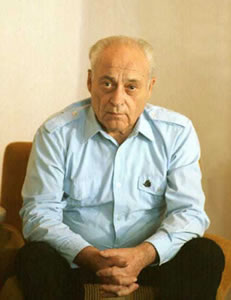
 830458-b38b170a2f9f5ca92eba655915c8300b.jpg

Anatoli Rybakov (14 januari 1911 – 23 december 1998)


De Duitse dichter en schrijver Werner Helwig werd op 14 januari 1905 in Berlijn geboren. Zie ook mijn blog van 14 januari 2009 en ook mijn blog van 14 januari 2010.


Uit: Isländisches Kajütenbuch


„Husavik, grau und sauber ins dünne Grün seiner Wiesen gesetzt, verschwand hinter uns. Das Meer sank sichtlich in die Tiefe zurück, während der Horizont mehr und mehr anstieg. Nach drei Stunden Fahrt dampfte unser Kühler wie ein Samowar, und wir mußten einen Teil unseres Sodavorrates für ihn opfern, da hier die Quellen so eigensinnige Wege nahmen, daß wir sie nicht erreichen konnten. Endlich hatten wir das Hochland vor dem Wagen.
E
in baumloses Gelände, braungrün getönt, von niedrigen Hügelbergen durchzogen, breitete sich rundhin aus. Die Straße verlief in weichen, oft unkenntlichen Linien durch lehmige Löcher und Kulen. Hier gab es dann Wasser genug in Form von ausgedehnten Pfützen. Es peitschte uns durch die zersprungene Windschutzscheibe ins Gesicht. Auf immer noch leicht geschrägter Ebene stiegen wir an. Die Dämmerung ließ Schleier von Nebel auf uns nieder. Der Sichtkreis war schließlich auf fünf Meter beschränkt. Ruckend und hüpfend humpelte der getreue Wagen dahin und mit ihm humpelten und hüpften unsere gepeinigten Leiber.
"
Jetzt ist Nacht", murmelte Brygg, und da es keineswegs der Tatsache entsprach, wollte ich ihn verwundert anschauen, was mir aber nicht gelang, da die hüpfende Wagendecke ihm den Diplomatenhut bis auf die Nase ins Gesicht getrieben hatte. Ich zog die Bremse und korrigierte seinen Anzug. Er bearbeitete in schweigendem Verdruß die Islandkarte, die er aus der Tasche der Wagentür gezogen hatte.“


 830458-425c7eec87c083a9e53aacc99f3833d0.jpg

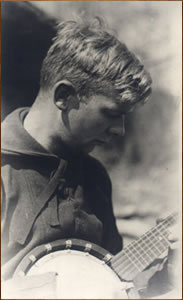
Werner Helwig (14 januari 1905 – 4 februari 1985)

Helwig met banjo, 1929


De Finse dichter en schrijver Zacharias Topelius  werd geboren in Nykarleby op 14 januari 1818. Zie ook mijn blog van 14 januari 2009 en ook mijn blog van 14 januari 2010.


Uit: Times of Gustaf Adolf


„EVERYBODY in Wasa who had life and feet  had gone down to the harbor to enjoy the uncommon spectacle of a man-of-war. Five or six  hundred people lined the shore, rowed out in boats, or climbed the masts of the vachts or the roofs of the store-houses to get a better view. Two hundred recruits regarded with mingled curiosity, fear, and pride, the vessel which was to take them from their fatherland, perhaps forever; and behind them stood a large group of mothers, sisters, and sweet-hearts, shedding bitter tears at the thought of the approaching separation.
The governor, Ulfsparre, was away in Sweden. His lieutenant, Steward Peder Thun, with his garrison, received the new-comers; the recruits formed a row on both sides, and the captain of the " Maria
Eleonora " offered his arm politely to Lady Regina, to escort her to Korsholm. But at this moment the proud young girl remembered that she was a prisoner; she refused the officer's arm, and walked alone, with a princely bearing, followed by her old serva'nt, through the ranks of the recruits and the
staring crowd.
Such an unusual sight put all Wasa in a terrible state of curiosity. In an instant there arose and spread the strangest reports about her.

"She is a princess of Austria," said some; "the emperor's daughter, taken prisoner during the war, and sent here for safety." Others pretended to recognize in her the Queen Maria Eleonora; but why did she come to Korsholm?
" I will tell you," whispered a tinker, with an important air. "She is in league with her German countrvmen against the king and the country, and therefore she is to be imprisoned in this remote and secure fortress of Korsholm."


830458-89071cd260a4acd35a2c8202602709cf.jpg 

Zacharias Topelius (14 januari 1818 – 12 maart 1898)


De Nederlandse dichter en schrijver Isaäc da Costa werd geboren in Amsterdam op 14 januari 1798. Zie ook mijn blog van 14 januari 2007 en ook mijn blog van 14 januari 2009 en ook mijn blog van 14 januari 2010.


Wachter! Wat is er van den nacht? (Fragment)


De wereld onzes tijds, met weten ingenomen

Zoo als geen vroegere ooit, zuigt in haar dorst by stroomen

De vrucht der drukpers in, die gistend tot ons komt

En hoofd en hart om strijd of prikkelt of verstompt.


Geen boeken evenwel die deze dorst verzaden!

Neen! op der stormen vlerk, gelijk de orakelbladen

Der Pythonis, gevoerd, of liever, over volk

Aan volk van uit den schoot der bliksemzwangre wolk

By vlagen neêrgedaald, brengt Kennis en Beschaving

Ons menschdom, uur aan uur, in 't Vlugschrift versche laving!


Een breede plas van licht, die de oogen scheemren doet!

Een even snel vergaan als weêr gewassen vloed!

Een zee van letters, waar, by 't zweepen van de winden,

Steeds vreemder schaduwen op rijzen en verzwinden

In allerhande vorm, - en dan op eens één beeld

(Het uwe, o Geest des tijds!) zich afdrukt en herteelt

Vollediger, dan of Daguerre 't onder 't zweven

Bespied had, aangelokt, en op zijn vlak doen kleven.


Is 't waar? en wordt by 't zweet der rustelooze pers

Door Vlugschrift en Journaal naar 't leven steeds en versch

Het beeld, de stem des Tijds herbaard? zijn zin, zijn pogen,

Beloften, dreigingen, vermeten en vermogen,

Ons ieder dag verhaald? van ieder nieuwen stap

Die ter volmaaktheid voert, verslag en rekenschap

Gebracht? zoo sta het vrij die godspraak te ondervragen!

Ja, by het kroost der Pers zich met de vraag te wagen,

Die uit het binnenst roept: ‘Wat is er van den nacht,

o Wachter! welk een dag wordt aan de kim gewacht?’


 830458-a593c0e4dc3912c18edf96b7ace6210f.jpg

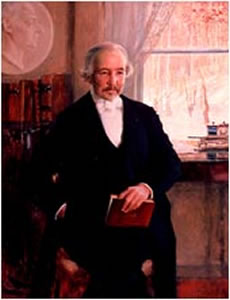
Isaäc da Costa (14 januari 1798 – 28 april 1860)

Da Costakade in Amsterdam


De Duitse dichteres en strijdster voor vrouwenrechten Ida Dehmel werd geboren op 14 januari 1870 in Bingen. Zie ook mijn blog van 14 januari 2007 en ook mijn blog van 14 januari 2009 en ook mijn blog van 14 januari 2010.


Uit: Ida und Richard Dehmel - Harry Graf Kessler. Briefwechsel 1898-1935


„Lieber Herr Graf!

Wir sind schon mitten in unsrer Vortragsodyssee, und nähern uns immer mehr Weimar. Ich nehme an (Dehmel liest heute in Karlsruh, und hat mich gebeten, Ihnen zu schreiben) also wir nehmen an, daß Sie Ihre Einladung damals durchaus ernstlich meinten – wenn wir auch den von Ihnen zugesagten Brief nicht erhalten haben. Ich habe damals gleich an Frau Förster-Nietzsche geschrieben; Sie war ganz damit einverstanden, daß wir diesmal bei Ihnen wohnen. Nun bitte ich Sie freundlichst um ein Wort, ob wir Ihnen am 10ten vormittags recht kommen; (den Zug würden wir Ihnen noch mitteilen). Wir können bis zum 14ten bleiben. Hauptmanns wollten gleichzeitig hinkommen; Sie werden sie wohl vorher noch bei der Hofmannsthalschen Première [Ödipus und die Sphinx sprechen.

Unsre Adresse bleibt bis zum 7ten Mannheim, L. 12. 18.

Mit freundlichem Gruߓ


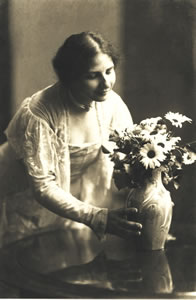
830458-ea4b574d738e5a6b8605ed950d6bd2f7.jpg
Ida Dehmel (14 januar 1870 - 29 september 1942)

Geschreven door Romenu om 19:20 Reageer op dit bericht

Meer van Romenu

↑ Terug naar de berichten