Naar de inhoud

Romenu

Over literatuur, gedichten, kunst en cultuur
seniorennet.beseniorennet.be

Berichten van 27 mei 2017

Niels 't Hooft, Jan Blokker, Linda Pastan, Louis-Ferdinand Céline, Georges Eekhoud, Said, John Cheever, John Barth

De Nederlandse schrijver, journalist, blogger en gamedeskundige Niels 't Hooft werd geboren in Leiderdorp op 27 mei 1980. Zie ook alle tags voor Niels ‘t Hooft op dit blog.

Uit: Hou me vast of ik hyperventileer

“Ze zit tegenover me. Halflang lichtbruin haar, strak rood jasje, stippelblouse, grijsleren handtas. Een gesatureerd graslandschap trekt aan ons voorbij. Elektriciteitsmasten aan de horizon, uitbundige zon. Op ons na is de coupé leeg. Het is maandagochtend, kwart over tien, ik ben op weg naar Maastricht, en ik schat haar 28.
Ze rommelt met een aluminium doosje, afgeronde hoeken, waaruit ze een contactlens haalt. Het doosje heeft één compartiment. Naast de schroefrand zit een lampje. Ze legt de lens op haar wijsvinger en houdt hem tegen het licht. Heel even draait ze een zonnestraal, zonder het te merken, recht in mijn gezicht. Ze doet lenzenvloeistof op de lens, trekt haar ooglid omlaag en laat de lens routineus op zijn plek zakken. Dan klikt ze het doosje dicht. In het deksel zit een lichtgevende appel verzonken, die na sluiting een paar keer pulseert en dan langzaam uitdooft. Ze kijkt op, naar mij, en ik richt me weer op de krant.
Dit is de toekomst, maar aan mij is niets veranderd. De wereld overkomt me als voorheen. 's Morgens neem ik het nieuws tot me, in inkt gedrukt op papier. Meestal doe ik dat in een koffiezaak, maar als het even kan in de trein, zodat ik toch nog de sensatie van vooruitgang ervaar. De trein is niet goedkoop, maar ik neem boterhammen mee, en een thermoskan koffie. Als de ergste spits voorbij is, stap ik in. Een of twee coupés volstaan om de kranten bij elkaar te sprokkelen, inclusief de weekendbijlages. Her en der heeft iemand iets uitgescheurd, een recensie van een game die ik niet speel of een reportage over een technologie die ik niet gebruik. Maar niemand neemt verhalen over politiek mee. Wie daar om geeft, heeft zelf een abonnement.
Ik ben snel oud geworden. Geboren in 1980, op de grens tussen de laatste generatie die opgroeide zonder internet en mobiele telefoons, en de eerste generatie die niet anders heeft gekend. Met enthousiasme nam ik ze in gebruik, maar toen ik mijn baan verloor en, later, van de bijstand moest gaan leven, liet ik ze net zo makkelijk weer los.”


 2041017-abc7cb40b7f0ad3dc066994656c4577a.jpg
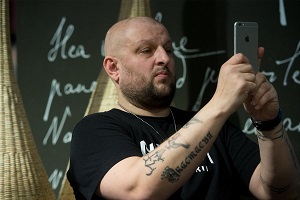
Niels 't Hooft (Leiderdorp, 27 mei 1980)


De Nederlandse schrijver, journalist en columnist Jan Blokker werd geboren in Amsterdam op 27 mei 1927. Zie ook alle tags voor Jan Blokker op dit blog.

Uit: The boldest way

“Pas in de 19de eeuw – het heeft vast weer met het nationalisme te maken – raakt satire geprivatiseerd en geregionaliseerd: de verbijzondering van de verschillende nationale samenlevingen vraagt om satirische aanpakken die zich van land tot land, en misschien zelfs wel van streek tot streek onderscheiden; Gladstone is nou eenmaal een fundamenteel andere liberaal dan Thorbecke. Waar natuurlijk nog bij komt dat iedereen ineens het alfabet onder de knie heeft, dus zich verschanst in het eigen, beperkte taalgebied. Alle mooie praatjes ten spijt wordt de wereld na Waterloo steeds kleiner, en het lijkt me een illusie te geloven dat de Airbus intussen de verkokering zou hebben doorbroken.
Allicht zijn er nog altijd oude en nieuwe instituties van bovennationale aard, maar de eerste Don Quichote die rondgaat in de Verenigde Naties of het Europees Parlement moet volgens mij nog geschreven worden, en ik bespeur ook nergens de aanvechting om er aan te beginnen.
Hoe zou dat komen?
Ik zou het niet anders kunnen verklaren dan uit een zeker ontmoedigingsgevoel. The boldest way to tell men freely of their foulest faults – alles goed en wel, maar heeft mijn satire enige vat op de gang van zaken binnen het Kremlin of het Vaticaan? Satire gaat uit van veranderbaarheid, maar een beetje satiricus kent z’n grenzen: misschien kan hij burgemeester Van Thijn of minister Smit-Kroes in verlegenheid brengen, maar Tsjernenko? Johannes Paulus II?
De regionalisering van het hekelen versterkt zichzelf. Gedurende twee jaar heeft Johan Anthierens een Vlaamse variant van de Canard Enchainé boven water gehouden, die De Zwijger heette, en waaraan ik een poosje meewerkte. De medewerking mislukte. Ik had van Amsterdam uit niet het gevoel dat ik mijn Belgische taalstamgenoten anders dan in zeer globale termen – meer als hoofdartikelschrijver, of zoals Fritz Behrendt in Het Parool de Arabische vijanden van Israel voor de laatste maal waarschuwt – in mijn satirische ongenoegen kon laten delen, en ik werd wekelijks in dat gevoel gesterkt omdat driekwart van de satirische woede van Anthierens mij domweg ontging: ik begreep niet wat er stond.”


 2041017-d6d22b9d2d036e5f5d674e40361f4a9e.jpg
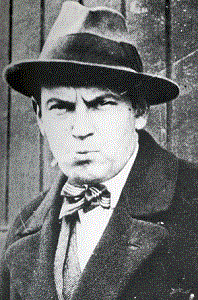
Jan Blokker (27 mei 1927 - 6 juli 2010)


De Amerikaanse dichteres Linda Pastan werd geboren op 27 mei 1932 in New York. Zie ook alle tags voor Linda Pastan op dit blog.


A New Poet

Finding a new poet
is like finding a new wildflower
out in the woods. You don't see

its name in the flower books, and
nobody you tell believes
in its odd color or the way

its leaves grow in splayed rows
down the whole length of the page. In fact
the very page smells of spilled

red wine and the mustiness of the sea
on a foggy day - the odor of truth
and of lying.

And the words are so familiar,
so strangely new, words
you almost wrote yourself, if only

in your dreams there had been a pencil
or a pen or even a paintbrush,
if only there had been a flower.


Emily Dickinson

We think of hidden in a white dress
among the folded linens and sachets
of well-kept cupboards, or just out of sight
sending jellies and notes with no address
to all the wondering Amherst neighbors.
Eccentric as New England weather
the stiff wind of her mind, stinging or gentle,
blew two half imagined lovers off.
Yet legend won't explain the sheer sanity
of vision, the serious mischief
of language, the economy of pain.


 2041017-7c8d0e4e9fe5b14e36ff6e3977d993d9.jpg
Linda Pastan (New York, 27 mei 1932)


De Franse schrijver Louis-Ferdinand Céline (pseudoniem van Louis Ferdinand Destouches) werd geboren in Courbevoie op 27 mei 1894. Zie ook alle tags voor Louis-Ferdinand Céline op dit blog.

Uit: Reis naar het einde van de nacht (Vertaald door E.Y. Kummer)

“Maar nee, de vlam verdween, het lawaai bleef lang in m’n hoofd hangen, en m’n armen en benen beefden alsof iemand ze van achteren heen en weer schudde. ’t Leek of mijn ledematen ervandoor gingen, maar ze bleven toch bij me. In de rook, die nog lang daarna in m’n ogen prikte, bleef de scherpe geur van kruit en zwavel hangen, alsof men de luizen en vlooien van de hele wereld wilde verdelgen.
Onmiddellijk daarop dacht ik aan wachtmeester Barousse, die zo juist uit elkaar gespat was, zoals de andere knaap ons verteld had. Dat was goed nieuws. ‘Prachtig!’ dacht ik meteen. ‘Dat is een hele grote ploert minder in het regiment!’ Hij had me voor de krijgsraad willen slepen voor een blik conserven. ‘Ieder z’n privé-oorlogje!’ zei ik bij mezelf. Van die kant bekeken, scheen de oorlog zo nu en dan wel z’n nut te hebben, dat moest ik toegeven! Ik kende nog wel drie of vier rotschoften in het regiment die ik, net als Barousse, graag aan een granaat had geholpen. Wat de kolonel betrof, die wenste ik geen kwaad toe. Toch was hij ook dood. Ik zag hem eerst niet meer. Dat kwam omdat hij door de ontploffing op het talud was geslingerd, languit op z’n zij, in de armen van de cavalerist te voet, de boodschapper, die ook dood was. Ze omhelsden elkaar, die twee, nu en voor eeuwig, maar de cavalerist had geen hoofd meer, je zag alleen een opening boven in z’n hals, met bloed erin dat klokkend sudderde, zoals jam in een pan. De buik van de kolonel was opengereten, z’n gezicht was afschuwelijk vertrokken. ’t Had hem beslist pijn gedaan, toen het gebeurde. Z’n eigen schuld! Als hij bij de eerste kogels weg was gegaan, was hem dit niet overkomen.”


 2041017-8ced3b0d8ba003ba0985654383d4836d.jpg
Louis-Ferdinand Céline (27 mei 1894 - 1 juli 1961)
Portret door Sam Dillemans, 2006


De Belgische Franstalige schrijver Georges Eekhoud werd in Antwerpen geboren op 27 mei 1854. Zie ook alle tags voor Georges Eekhoud op dit blog.

Uit: Kees Doorik (Vertaald door August Peeters)

“Als de laatste bussel op dén dorschvloer lag, rolde Janneke de kar onder het afdak. Kees verzamelde het alaam in een hoek van de schuur en sloot de deur.
Paulien stond op de mannen te wachten. Kees, het glas in de hand, deed ze nader komen, en, zich tot de boerin wendend :
- Santee, bazin ! zegde hij, alvorens den inhoud in éen teug naar binnen te gieten. Met de tong tegen het gehemelte smakkend, gaf hij het glas terug aan de meid.
De werkers dronken om beurt. Ze stonden daar in hun hemdsmouwen ; het rood, baaien flanel hing los open en liet de vleezige borsten bloot, waarop er zweetdruppelen perelden. Een zerpen okselreuk ging uit van die sterk afgeslaafden.
Door het aanhoudend wroeten van de heupen, gedurende 't werken, waren hun hemden boven den strafgespannen broekriem opgeschoven en hingen daar nu in losse plooien. Sommigen dier jongens ontspanden den riem, en, de hand tusschen de gesperde beenen in 't kruis van hun broek, rokken zij hun slip terug op haar plaats. Ze deden dat doodeenvoudig, met een vrij gebaar ; voor wie zouden zij zich moeten schamen, het was hun zoo natuurlijk als maaien.
Het waren allen forschgebouwde kerels, zoo log en gespierd als de ossen uit de streek.
In hun aangezichten, zoo gebruind als een kermisbrood, legden hun dikke, goedige lippen en hun azuur-blauwe oogen iets kinderachtigs. Ze spraken slechts met langgerekte, éenlettergrepige woorden, en als ze lachten toonden ze hun wit en stevig wolvengebit.”


 2041017-890ce5a69e8bf2a8a6de9791d71ca6e9.jpg
Georges Eekhoud (27 mei 1854 - 29 mei 1927)
Standbeeld in Antwerpen


De Duits-Iraanse dichter en schrijver Said werd geboren op 27 mei 1947 in Teheran. Zie ook alle tags voor Said op dit blog.

Uit: Der lange Arm der Mullahs

„In Teheran wird eine Allee nach Jalal AI-Ahmad genannt.

Name: Jalal Al-Ahmad. Geboren 1923 als Sohn eines hohen islamischen Geistlichen. Besuch der Koranschule; als er lesen und schreiben konnte, schickte ihn der Vater als Lehrling in den Basar, dort Arbeit als Buchhalter. Heimliche Studien an der Abendschule, Al-Ahmad holt die Hochschulreife nach; anschließend Studium der iranischen Literatur an der Universität Teheran. Als der Vater davon er-fährt, verstößt er den Sohn aus der Familie; Al-Ahmad ver-dient seinen Lebensunterhalt als Lehrer. Von 1944 bis 1948 Mitglied der Kommunistischen Partei (Tu-deh), hernach Sympathisant der Trotzkisten, Kontakte zur IV. Internationale. Dann eine Phase der politischen Abstinenz: Al-Ahmad bereist das Land, durchfährt und durchwandert es bis in die letzten Winkel. Er verfaßt Schriften über verschiedene Dialekte des Persischen, schreibt Reiseberichte, die Furore machen. Aus seinen politischen und persönlichen Erfahrungen, aus der Hochsprache und den gesprochenen Dialekten entwickelt Al-Ahmad einen Stil, der begeistert. Bald gilt er als der erste Iraner seit dem 14. Jahrhundert, der einen wahrhaft eigenen Ton gefunden hat. Nach einigen Übersetzungen verfaßt er 1962 das Pamphlet Die Verwestlichung, in dem er vollständig mit Kultur und Werten des Westens abrechnet. Das Buch wird verboten. Hunderte von Lesern werden inhaftiert, auch der Autor selbst muß für einige Zeit ins Gefängnis. Kurz vor seinem Tod im Jahre 1969 unternimmt Al-Ahmad eine Reise nach Mekka, als Teilnehmer an einer vom Staat organisierten Pilgerfahrt. Danach beschreibt er die Ekstase der Gläubigen — aber auch seine Trauer, in diesen Chor der Ergriffenheit nicht einstimmen zu können, da er an nichts mehr glaube. Dieser Reisebericht gilt zu Recht als ein Meilenstein der iranischen Prosa: Da betrachtet einer, der nicht mehr glaubt, die Pilgerfahrt der Gläubigen und beschreibt das in einer Sprache, die Zeugnis von all den Welten ablegt, die er durchwandert hat: die strenggläubige des Vaterhauses, die bürgerlich-religiöse des Basars, die kartesianisch ausgerichtete der Universität, die ideologisch-messianische der Kommunisten, die rhetorisch-brillante der Trotzkisten und schließlich die Welt des Ursprungs, die der persischen Dialekte. Wäre einer wie Al-Ahmad, mit seiner sprachlichen Urgewalt, sozusagen gewappnet mit der Artillerie der Gosse, nicht der ideale intellektuelle Gegenspieler eines Chomeini gewesen?“


 2041017-1361a6695856f3517e26858fc2ff43c9.JPG
Said (Teheran, 27 mei 1947)


De Amerikaanse schrijver John Cheever werd geboren op 27 mei 1912 in Quincy, Massachusetts. Zie ook alle tags voor John Cheever op dit blog.

Uit:The Journals of John Cheever

“THE LATE FORTIES AND THE FIFTIES In middle age there is mystery, there is mystification. The most I can make out of this hour is a kind of loneliness. Even the beauty of the visible world seems to crumble, yes even love. I feel that there has been some miscarriage, some wrong turning, but 1 do not know when it took place and I have no hope of finding it.Thinking for a week about Leander, Betsey, and Eben without writing a word, without making any progress. And so I see all my plans—the voyage to Genoa, etc.—collapse. Is there something intrinsically wrong with these three, that I can't grasp them? Thinking this morning to discard the opera.Yesterday was rainy and deeply overcast. At four B. and I walked up Holbrook Road to the K.s', The clearing wind had begun to blow. As the overcast was displaced with brilliance and color, as more and more light poured into the valley, the hour seemed tumultuous and exalting. Backgammon and gin.Skating one afternoon at the Newberry's. The end of a very cold winter day. The ice, contracting in the cold, made a noise like thunder. Walking up the frozen field to the house we could hear it thundering. We went back that night. There was no one else on the pond. The G.s' dog was barking. There was no moon and the ice was black. It seemed, skating out into the center of the pond, that the number of stars I could see was multiplied. They seemed as thickly sown as a rush of snowflakes. As I skated back to the end of the pond, the number seemed to diminish. I was confounded. It could have been the whiskey and the wine. It could have been my utter ignorance of cosmology.To church; the second Sunday in Lent. From the bank president's wife behind me drifted the smell of camphor from her furs, and the stales of her breath, as she sang, "Glory be to the Father, and to the Son, and to the Holy Ghost; As it was in the beginning, is now, and ever shall be, world without end." The Old Testament dealt with should the Father eat bitter grapes; the New with an eye for an eye and a tooth for a tooth. The sermon with the doctrine of Incarnation. The rector has a plain mind. If it has any charms, they are the charms of plainness. Through inheritance and cultivation he has reached an impermeable homeliness. His mind and his face are one. He spoke of the impressive historical documentation of Christ's birth, miracles, and death. The church is meant to evoke rural England. The summoning bells, the late-winter sunlight, the lancet windows, the hand-cut stone. But these are real fragments of a real past. World without end, I murmur, shutting my eyes, Amen. But I seem to stand outside the realm of God's mercy.I would like not to be vindictive or narrow. I would like to avoid phony compassion. Thinking of the midsummer night, "Parlons francais," the drunkard said. I see that this is small. I see in the five-and-ten-cent store yesterday that my descriptions of Betsey's pleasure are small. »


2041017-99d7192fda01f7801f971efd740484b5.jpg
John Cheever (27 mei 1912 – 18 juni 1982)


De Amerikaanse schrijver John Barth werd geboren op 27 mei 1930 in Cambridge, Maryland. Zie ook alle tags voor John Barth op dit blog.

Uit: Where Three Roads Meet

“Roger wilco, old buddy, as even callow nonveterans like themselves sometimes said in those postwar days: military radio-communications lingo for Got your message and will comply. Post-World War Two is the when of this story, although the nation's brief peaceful respite after V-J Day 1945 would end in 1950 with North Korea's invasion of South and the American-run UN "police action" to contain that invasion.
Excuse Narrator if you knew all that, Reader: It matters because this story's where is the campus environs of a major university-a campus swarming, as were all such in the USA back then, with veterans of that previous war, their educations subsidized by the GI Bill of Rights. At all-male institutions such as this was in those days, the undergraduate student body was thus divided into somewhat older, more life-experienced, and now draft-exempt World War Two vets, many of them married, and younger, greener, soon-to- be-draft-vulnerable hands like the then Will Chase and his only slightly older best friend and mentor, Al Baumann.
Greener, yes, in that neither Al nor Will had shared their war-veteran classmates' transformative experience of military service, not to mention actual combat. But green comes in shades, and in every other respect Al was so much the savvier that as of this telling Narrator still shakes his head at that pair's friendship, wondering what on earth Al B. found interesting in Will C.; what he got from a connection so clearly beneficial to his protégé. Born and raised in one of the city's most desirable neighborhoods as the only child of well-to-do parents, his dad a professor of oncology at the university's medical school, Alfred Baumann had been educated K-12 (as they say nowadays but did not then) at private day schools whose graduates routinely matriculated in the Ivy League. “


 2041017-abcd1fa22f0e5668061d349c6f246228.jpg
John Barth (Cambridge, 27 mei 1930)
Cover


Zie voor nog meer schrijvers van de 27e mei ook mijn vorige blog van vandaag.
Geschreven door Romenu om 11:05 Reageer op dit bericht

Max Brod, Kaur Kender, Adriaan Venema, Arnold Bennett, Richard Schaukal, Ferdynand Ossendowski, M. A. von Thümmel, Herman Wouk, Dashiell Hammett

De Tsjechisch-Israëlische dichter, schrijver, criticus en componist Max Brod werd geboren in Praag op 27 mei 1884. Zie ook alle tags voor Max Brod op dit blog.

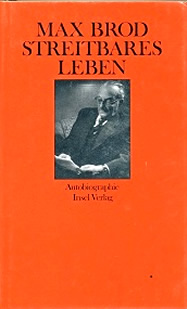
Uit: Streitbares Leben

„Ich brachte Werfel sofort mit Weltsch und Kafka zusammen. Wir hatten damals einen Kult der schönen Wälder und Bäche rings um Prag, Werfel wurde gleich eingeführt, fröhlich schwammen wir eines Sommertages viele Stunden lang (in meiner Erinnerung hat er überhaupt kein Ende) in den reinen, silbernen Strömungen der Sazawa. – Am nächsten Tag stürmte Mama Werfel meine Wohnung. Was mir denn einfalle! Ich sei doch der Ältere und müsse Verstand haben! Ihr Junge sei puterrot vor Sonnenbrand heimgekehrt und liege jetzt an hohem Fieber darnieder. Er werde die Matura nicht machen können... So schlimm kam es nun nicht, immerhin machte ich mir Vorwürfe, daß ich an die besonders weiße zarte Haut des jungen blonden Alkaios nicht gedacht hatte. Wir andern waren abgehärtet.
Ich sandte die Gedichte an den Mann mit der buntgestickten Weste. Er lehnte sie entschieden ab. Ich besitze noch einen Stoß Briefe, in denen Axel Juncker auf meine Überredungskünste reagiert. Endlich siegte ich doch. Und in Berlin, bei meiner ersten Vorlesung („es ist erstaunlich, mit wie geringem Akzent dieser tschechische Dichter deutsch spricht“, schrieb ein Kritiker. Dabei habe ich es nie so weit gebracht, korrekt tschechisch zu sprechen), legte ich zuletzt meine Werke weg, um aus den Druckbogen des damals noch völlig unbekannten Werfeischen „Weltfreund“ eine ganze Reihe von Gedichten zu lesen. Es war Werfeis Premiere vor einem Weltforum – eine kleine Sensation.
Es dauerte nicht lange, und der Kriegsausbruch spülte alle anderen Probleme in den Orkus. Kam der junge Krieger zu kurzem Urlaub heim, so war er, der Weltfreund, von Sarkasmen und Menschenverachtung verzehrt. Einmal erzählte er mir, wie er sich im Feld immer vorgestellt hatte, selbst gleichgültige Personen (wie zum Beispiel die Besitzerin des Hauses, in dem seine Eltern wohnten) würden ihn mit froher Rührung begrüßen, den aus so schwerer Gefahr Heimgekehrten. Und was sagte die Hausbesitzerin in Wirklichkeit beim Wiedersehen? Werfel ahmte virtuos ihre gralzende Baßstimme nach: „Herr Werfel, wissen Sie schon das Neueste? Der Herr Reitler im dritten Stock hat gekündigt.“


 2041009-02e7bb79b647c2aeb641df4d1c1d3b21.jpg
Max Brod (27 mei 1884 - 20 december 1968)
Cover


De Estse schrijver Kaur Kender werd geboren op 27 mei 1971 in Estland. Zie ook alle tags voor Kaur Kender op dit blog.

Uit: Through Peaceful Eyes (Vertaald door Jurgen Kaljuvee)

“We drove to Kütiorg to the Open Studio Art Exhibition. I have no friends living further Kütiorg in Estonia. We were there for 20 minutes. Looked at art. We drank a Jagermeister (0.5 liters, about 200) while driving. We were back in Tallinn just in time to go to Othello club (700 was spent on gas). Two of Maria’s friends joined us in the car. One secretarutka, the other probably a prostitutka. Wearing very expensive clothing. Picture beautiful. We bought a one-liter bottle of Hennessy (18 000). We drank the bottle in the car. Maria did not want to. I was driving. The day before I had bought 2 grams of cocaine (1100 a gram). We did one gram on a CD in the car. Maria did not do it. She never does it. I went home, put on the brand new white Gant shirt and black Armani jeans.
I paid for the cover fees at the Othello club (400? I cannot recall exactly). Maria introduced me to three Russian thugs. One thug I already knew for a long time. We drank Hennessy XO (4000 a bottle, I bought at least two). At 4 o’clock, another thug in a white shirt and black jeans arrived. Straight from the prison. He had had 4 years. Everybody was happy. Everybody was wearing white shirts and black jeans. Many had tattoos. I vaguely recall a moment: we were jumping up and down with four thugs in the middle of the dance floor and we were screaming: “Davai, davai, davai!” I was unconscious with happiness because I felt that I was home, I was with my people.
Maria dragged me to the car because I was getting tired. I wanted her to spend the night at my place. She was dodging. I tried to convince her. She said no. I got angry. She smiled: “But you said that you have not had a TV set for 8 years and that you read and write. Why don’t we go to my place because we can then watch a movie together in the morning.” We went to Kallavere. Police patrol. Luckily we were not pulled over. I had 12 000 in cash on me. You don’t need more because there are no bigger fines. We were lucky. Maria showed me her poems. She had three notebooks of them. In Russian. Powerful stuff.”


 2041009-200af030f4ce7c9509e6a4c0b41af40b.jpg
Kaur Kender (Estland, 27 mei 1971)


De Nederlandse journalist, schrijver en kunsthandelaar Adriaan Harrie Venema werd geboren in Heiloo op 27 mei 1941. Zie ook alle tags voor Adriaan venema op dit blog.

Uit: Schrijvers, uitgevers en hun collaboratie.

“Aan twee Nederlandse letterkundigen wier houding in de bezettingsjaren een nadere studie meer dan waard is, is een biografie gewijd. J.W.F. Werumeus Buning, geen nationaal-socialist, kreeg een biograaf, P. Hijmans, die een uitvoerige studie aan hem wijdde; George Kettmann jr., wel een nationaal-socialist, kreeg Wim Huberts als biograaf, zij het dat deze zijn studie een ‘biografische schets’ noemde, een opstap naar een uitgebreidere biografie. Een goede biograaf zal altijd trachten aan te tonen welk belang zijn biografie heeft, dat wil zeggen welk belang zijn onderwerp - de beschreven persoon - heeft. Hij kan daarbij gemakkelijk in een val trappen: de bewondering voor dichters als Werumeus Buning en Kettmann bijvoorbeeld is vaak moeilijk te verenigen met de kritiek op hun handelen in de bezettingsjaren. Een voorbeeld van een biograaf die níét in deze val trapte is Wam de Moor in diens tweedelige biografie van J. van Oudshoom. De biografen van Kettmann en Werumeus Buning daaren tegen zijn, zoals ik wil aantonen, wel in deze val getrapt.
Hijmans, in zijn beschrijving van het handelen van Werumeus Buning in de bezettingsjaren, heeft een verhaal geschreven vol onwaarheden en verdraaiingen. Dat is ernstig, want latere geschiedschrijvers zullen aangewezen menen te zijn op de studie van Hijmans, die er nota bene op is gepromoveerd. Dan krijgen we dat Max van Rooy in een verhaal over de houding van schrijvers in de oorlog over Werumeus Bunings toetreding tot de Kultuurkamer vergoelijkend schrijft: ‘Na grote aarzeling en onder druk van een vriendin, was dit ook het geval met de hoofdredacteur van De Gids, J.W.F. Werumeus Buning, die overigens duidelijk verzetsliteratuur heeft geschreven en in 1943 de inleiding bij het tweede deel van het illegale Geuzenliedboek.
Van Rooy kwam tot zijn oordeel omdat hij niet anders kon: over Werumeus Buning bestond enkel de biografie van Hijmans. Werumeus Buning heeft, laat ik dat maar direct vooropstellen, géén ‘verzetsliteratuur’ geschreven. Wel komen vrij vaak gedichten van hem voor in clandestiene uitgaven; maar clandestiene uitgaven bevatten lang niet altijd verzetsliteratuur (hierover en over het aandeel van Werumeus Buning in de clandestiene uitgaven: Dirk de Jong. en Lisette Lewin.”


 2041009-220fb9908913f54c950cecb43a6b8d60.gif
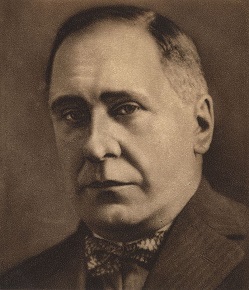
Adriaan Venema (27 mei 1941 – 31 oktober 1993)
Werumeus Buning


De Engelse schrijver Arnold Bennett werd geboren in Hanley, Staffordshire, op 27 mei 1867. Zie ook alle tags voor Arnold Bennett op dit blog.

Uit: How to Live on 24 Hours a Day

“If my typical man wishes to live fully and completely he must, in his mind, arrange a day within a day. And this inner day, a Chinese box in a larger Chinese box, must begin at 6 p.m. and end at 10 a.m. It is a day of sixteen hours; and during all these sixteen hours he has nothing whatever to do but cultivate his body and his soul and his fellow men. During those sixteen hours he is free; he is not a wage-earner; he is not preoccupied with monetary cares; he is just as good as a man with a private income. This must be his attitude. And his attitude is all important. His success in life (much more important than the amount of estate upon what his executors will have to pay estate duty) depends on it. What? You say that full energy given to those sixteen hours will lessen the value of the business eight? Not so. On the contrary, it will assuredly increase the value of the business eight. One of the chief things which my typical man has to learn is that the mental faculties are capable of a continuous hard activity; they do not tire like an arm or a leg. All they want is change—not rest, except in sleep.”
(…)

“The most important of all perceptions is the continual perception of cause and effect—in other words, the perception of the continuous development of the universe—in still other words, the perception of the course of evolution. When one has thoroughly got imbued into one's head the leading truth that nothing happens without a cause, one grows not only large-minded, but large-hearted. It is hard to have one's watch stolen, but one reflects that the thief of the watch became a thief from causes of heredity and environment which are as interesting as they are scientifically comprehensible; and one buys another watch, if not with joy, at any rate with a philosophy that makes bitterness impossible. One loses, in the study of cause and effect, that absurd air which so many people have of being always shocked and pained by the curiousness of life. Such people live amid human nature as if human nature were a foreign country full of awful foreign customs. But, having reached maturity, one ought surely to be ashamed of being a stranger in a strange land!”


 2041009-02fe31721e3f26cf184959d5f3fa8ac1.jpg
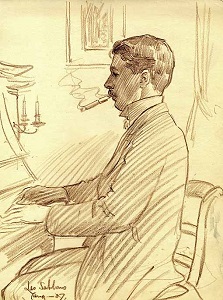
Arnold Bennett (27 mei 1867 - 27 maart 1931)
Houtskooltekening door Frederick Marriott, 1907


De Duitse dichter en schrijver Richard von Schaukal werd geboren op 27 mei 1874 in Brünn. Zie ook alle tags voor Richard von Schaukal op dit blog.


Damals

Sonntag war's. Wir gingen durch das Korn,
wo verborgen blaue Blumen brannten.
Ob sie deinen Blick zu Boden bannten?
Unsichtbare Grillen sangen vorn.

Folgten wir dem lockenden Getön?
Was ich zu dir sprach, hab ich vergessen.
Was du schwiegst, kannst du es noch ermessen?
Sommer war es, und die Welt war schön.


Kind, du bist rein

Kind, du bist rein
Mein Bild in deiner Seele seh ich nicht,
Denn das ist dein
Und also lauter Licht.

Demütig tret ich bei dir ein,
Dem alles, was du hast, gebricht.

Und dennoch kann es sein,
Daß meine Seele mit dir spricht,
Als wär sie nicht allein,
Als wären sie zu zwein,
Ein Reimpaar im Gedicht.


 2041009-bb49f57d7ddac9ed2f133eaa5a13cd17.jpg
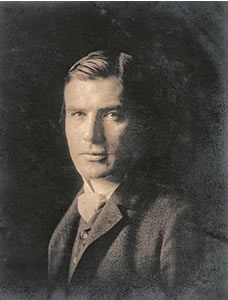
Richard von Schaukal (27 mei 1874 – 10 oktober 1942)
In 1903 


De Poolse schrijver, journalist, ontdekkingsreiziger en globetrotter Ferdynand Ossendowski werd geboren op 27 mei 1876 in Dvina. Zie ook alle tags voor Ferdynand Ossendowski op dit blog.

Uit: Beasts, Men And God

“The stranger, running his eyes constantly over all of us and over everything about the room, began to take off his skin coat after putting his rifle in the corner. He was dressed in an old leather blouse with trousers of the same material tucked in high felt boots. His face was quite young, fine and tinged with something akin to mockery. His white, sharp teeth glimmered as his eyes penetrated everything they rested upon. I noticed the locks of grey in his shaggy head. Lines of bitterness circled his mouth. They showed his life had been very stormy and full of danger. He took a seat beside his rifle and laid his ax on the floor below.
“What? Is it your wife?” asked one of the drunken soldiers, pointing to the ax.
The tall peasant looked calmly at him from the quiet eyes under their heavy brows and as calmly answered:
“One meets a different folk these days and with an ax it is much safer.”
He began to drink tea very greedily, while his eyes looked at me many times with sharp inquiry in them and ran often round the whole cabin in search of the answer to his doubts. Very slowly and with a guarded drawl he answered all the questions of the soldiers between gulps of the hot tea, then he turned his glass upside down as evidence of having finished, placed on the top of it the small lump of sugar left and remarked to the soldiers:
“I am going out to look after my horse and will unsaddle your horses for you also.”
“All right,” exclaimed the half-sleeping young soldier, “bring in our rifles as well.”
The soldiers were lying on the benches and thus left for us only the floor. The stranger soon came back, brought the rifles and set them in the dark corner. He dropped the saddle pads on the floor, sat down on them and began to take off his boots. The soldiers and my guest soon were snoring but I did not sleep for thinking of what next to do. Finally as dawn was breaking, I dozed off only to awake in the broad daylight and find my stranger gone. I went outside the hut and discovered him saddling a fine bay stallion.
“Are you going away?” I asked.
“Yes, but I want to go together with these —— comrades,’” he whispered, “and afterwards I shall come back.”


 2041009-4b93ff49e3d4effc64df45ff25ee06bc.jpg
Ferdynand Ossendowski (27 mei 1876 – 3 januari 1945)
In 1903 


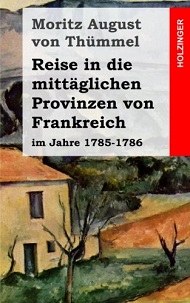
De Duitse dichter en schrijver Moritz August von Thümmel werd geboren op 27 mei 1738 in Schönefeld. Zie ook alle tags voor Moritz August von Thümmel en voor August von Thümmel op dit blog.

Uit: Reise in die mittäglichen Provinzen von Frankreich im Jahre 1785-1786

„Die volle Sonne hatte Mühe mich zu wecken. Als ich die Augen aufschlug, mußte ich mich einigemal fragen, wo ich wäre und wohin ich wollte, eh' ich es deutlich erfuhr. Das erste, was mir beifiel, war ein Wechsel auf Herrn Frege, einen Sohn des berühmten Banquiers dieses Namens zu Leipzig. Ich lernte einen artigen und gefälligen Mann an ihm kennen. Sein Deutsch war mir beinahe lieber, als das, womit ich gestern an der Wirthstafel so angenehm überrascht wurde; denn er zahlte mir Geld, und bat mich auf morgen zu Tische. Mein heutiger Mittag hat nichts für mein Tagebuch abgeworfen. Es wollten keine Berlinerinnen kommen, so sehr ich mich darnach umsah. Unter den Anwesenden fand sich nicht Ein Auge, in das ich hätte blicken mögen; und es war eben so gut: denn ich konnte um so viel ruhiger der Erholung pflegen, die mir nach der Nachtwache von gestern sehr nöthig war.
Mit diesem Gefühle in allen Gliedern, und einem Pack Zeitungen, die für die Gäste da lagen, schlich ich wohl gesättigt nach meinem Zimmer. Hier pflanzte ich Bastianen, der mir sie vorlesen sollte, meinem Lehnstuhle gegenüber. Es ging schlecht. – Margot, sagte er zu seiner Entschuldigung, lese auch nicht besser. – Ich setzte den Prologus an seine Stelle, einige Zeilen nachher auch den Epilogus: aber der Zeitungstext und ihre Stimmen paßten so widrig zusammen, daß ich vor der Hand für das beste hielt, auf die Bequemlichkeit eines Vorlesers Verzicht zu thun. Es greift doch nichts die Gehörnerven so empfindlich an, als werthlose Neuigkeiten, die uns in einem hochtrabenden Tone verkündiget werden. Der erste deklamirte: daß Ludewig der Vielgeliebte zwei Tage und drei Nächte mit Madam Dubarri auf dem Schlosse zu Meudon zugebracht habe. – Der andere: daß der Herzog von Orleans entschlossen sei, eine Reiherbeitze zu halten. – »Das mag er,« unterbrach ich den Epilogus: »trage nur die unnützen Blätter wieder in den Saal, damit nicht etwa gar jemand darauf warte.«

 2041009-e0e6d2a5a70f1e4a932f4d7b20e7aa36.jpg
Moritz August von Thümmel (27 mei 1738 – 26 oktober 1817)
Cover


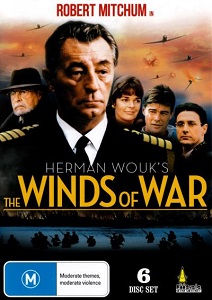
De Amerikaanse schrijver Herman Wouk werd geboren op 27 mei 1915 in New York. Zie ook alle tags voor Herman Wouk op dit blog.

Uit:The Winds of War

“The Russian Revolution is a radical change in history. The abolition of private property has created a new world. You may like it or detest it, but it’s new. Hitler’s socialism was a sham to get a mob of gangsters into power. He’s frozen the German economy just as it was, smashed the labor unions, lengthened the working hours, cut the pay, and kept all the old rich crowd on top, the Krupps and Thyssens, the men who gave him the money to run for office. The big Nazis live like barons, like sultans. The concentration camps are for anybody who still wants the socialist part of National Socialism."
(...)

"I’m sorry. I’m impressed with Hitler’s ability to use socialist prattle when necessary, and then discard it. He uses doctrines as he uses money, to get things done. They’re expendable. He uses racism because that’s the pure distillate of German romantic egotism, just as Lenin used utopian Marxism because it appealed to Russia’s messianic streak. Hitler means to hammer out a united Europe.... He understands them, and he may just succeed. A unified Europe must come. The medieval jigsaw of nations is obsolete. The balance of power is dangerous foolishness in the industrial age. It must all be thrown out. Somebody has to be ruthless enough to do it, since the peoples with their ancient hatreds will never do it themselves. It’s only Napoleon’s original vision, but he was a century ahead of his time.”


 2041009-9b2d041813a9ce01b54b04122937301b.jpg
Herman Wouk (New York, 27 mei 1915)
Cover


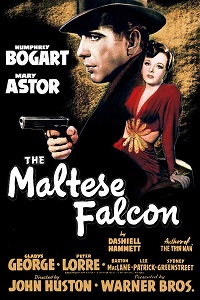
De Amerikaanse schrijver Dashiell Samuel Hammett werd geboren in Saint Mary's County (Maryland), op 27 mei 1894. Zie ook alle tags voor Dashiell Hammett op dit blog.

Uit: The Maltese Falcon

“Spade rocked back in his chair and asked: "Now what can I do for you, Miss Wonderly?"
She caught her breath and looked at him. She swallowed and said hurriedly: "Could you--? I thought--I--that is--" Then she tortured her lower lip with glistening teeth and said nothing. Only her dark eyes spoke now, pleading.
Spade smiled and nodded as if he understood her, but pleas-antly, as if nothing serious were involved. He said: "Suppose you tell me about it, from the beginning, and then we'll know what needs doing.
Better begin as far back as you can.
"That was in New York."
"Yes."
"I don't know where she met him. I mean I don't know where in New York. She's five years younger than I--only seventeen--and we didn't have the same friends.
I don't suppose we've ever been as close as sisters should be. Mama and Papa are in Europe. It would kill them. I've got to get her back before they come home."
"Yes," he said.
"They're coming home the first of the month."
Spade's eyes brightened. "Then we've two weeks," he said.
"I didn't know what she had done until her letter came.
I was frantic." Her lips trembled. Her hands mashed the dark handbag in her lap. "I was too afraid she had done something like this to go to the police, and the fear that something had happened to her kept urging me to go. There wasn't anyone I could go to for advice. I didn't know what to do. What could I do?"
"Nothing, of course," Spade said, "but then her letter came?"
"Yes, and I sent her a telegram asking her to come home. I sent it to General Delivery here. That was the only address she gave me. I waited a whole week, but no answer came, not another word from her. And Mama and Papa's return was drawing nearer and nearer. So I came to San Francisco to get her. I wrote her I was coming. I shouldn't have done that, should I?"
"Maybe not. It's not always easy to know what to do. You haven't found her?"


 2041009-cc8c79caa837741b4cd3a3b628768f92.jpg
Dashiell Hammett (27 mei 1894 – 10 januari 1961)
Affiche voor de film uit 1941

Geschreven door Romenu om 11:03 Reageer op dit bericht

Meer van Romenu

↑ Terug naar de berichten