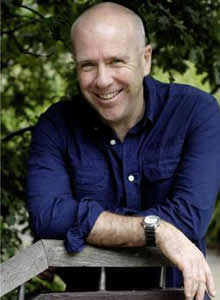
A. F.Th. van der Heijden, Heinz Helle, Boualem Sansal, Friedrich Nietzsche, Michail Lermontov, Italo Calvino
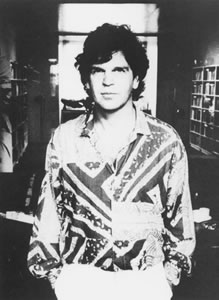
De Nederlandse schrijver A. F. Th. van der Heijden werd geboren in Geldrop op 15 oktober 1951. Zie ook mijn blog van 15 oktober 2010 en eveneens alle tags voor A. F.Th. van der Heijden op dit blog.
Uit: Vallende ouders
“Waar ik het aan verdiend had, wist ik 't, maar juni was schitterend dat jaar. Ik voerde geen bal uit en elke nieuwe dag leek in zijn volmaaktheid zo sprekend op de vorige, dat de dagen vanzelf over elkaar heen schoven en op elkaar bleken te passen en ik me die maand ben gaan herinneren als één perfecte zomerdag. Een dag die zelfs langer dan een maand duurde, want hij strekte zich uit tot diep in juli. Onverstoorbaar sliep de ene maand een gat in de volgende. Zo'n veertig dagen telde juni en elke dag was een Wiederkehr des Gleichen. Zelfs dat de eerste twintig dagen lengden, en het tweede twintigtal kromp, viel niet op. De junimaand was in zijn geheel een ‘langste dag’.
Behalve diep in die dag kijken, deed ik eigenlijk niets. In plaats van snelle indrukken in zich op te nemen hebben mijn zinnen veertig dagen lang als een camera naar die ene junidag opengestaan en het resultaat, zie ik nu, is verbluffend. De schaduwen van de tuin waarin ik zat zijn scherper dan ze in werkelijkheid ooit geweest kunnen zijn. Het zonlicht is onwaarachtig fel en het zand van de bloemperkjes schittert als suiker. Niets beweegt. Geen blaadje, niets. De kleine witte vlinders hangen roerloos als bloesems tussen de struiken. De coniferen zijn massieve rotskegels. Aan de lijn drie of vier vereeuwigde wasknijpers... Een gaaf daguerrotype.
Het lijkt wel of ik mijn eigen bewegingloosheid op die veertigvoudige dag heb overgedragen.
Maar ook akoestisch manifesteert die dag zich als geen andere. Op het aanrecht in de keuken achter me worden kopjes neegezet... in de zachte stem van mijn moeder is haar hele geschiedenis te beluisteren... een hond gromt... en boven dat alles uit is de pneumatische boor van een bij in een bloem hoorbaar... Zo'n dag die zich dertig, veertig keer herhaalt is uit het geheugen niet meer weg te branden.
En schamen deed ik me tegenover al dat moois: de tuin, de dag, de zon, en de zomer die er al was terwijl hij nog moest komen... Schamen voor de dingen die ik gedaan had, maar meer nog voor wat ik verzuimd had te doen.”
A. F.Th. van der Heijden (Geldrop, 15 oktober 1951)
De Duitse schrijver Heinz Helle werd geboren op 15 oktober 1978 in München. Zie ook alle tags voor Heinz Helle op dit blog.
Uit: Der beruhigende Klang von explodierendem Kerosin
„Der Platz liegt irgendwo in der Vorstadt, die Eckfahnen sind gelb, sie sind überall gelb, und neben dem Eingang zum Vereinsheim hängt das Wappen einer unbekannten Brauerei. Sie kommen raus, sie kommen die Kellertreppe hoch in ihren gelbblauen und grünweißen Trikots, die Jungs, sie sind acht oder neun Jahre alt, und du siehst ihnen zu, weil es dich freut, wenn Angehörige deiner Spezies etwas haben, das ihnen viel bedeutet, wenn es etwas gibt in ihrem Leben, wofür sie kämpfen, ohne Waffen oder Gewalt.
Du stehst in der Nähe der Mittellinie, genau da, wo sie einlaufen werden, und du klatschst in die Hände und freust dich. Einer von ihnen lächelt dir zu.
Er ist noch ein kleiner Junge. Er steht im Tor. Es ist das erste Mal, dass er im Tor steht, und er denkt sich, gut, wenn ihr wollt, dass ich ins Tor gehe, gehe ich ins Tor, mir egal.
Zuerst passiert nichts. Als dann irgendwann dieser grünweiße Stürmer auf ihn zugelaufen kommt, allein mit dem Ball, denkt er nichts, und der Grünweiße schießt nicht, er kommt näher und näher, und er denkt sich immer noch nichts, und der Grünweiße kommt noch etwas näher, und dann denkt er plötzlich, Scheiße, ich muss diesen Ball halten, und er denkt, ich werde ihn halten, denn es geht mir gut, meine Eltern sind auch da, sie sind extra gekommen, um mir zuzusehen, und wir haben vorhin noch bei McDonald’s 20 Chicken McNuggets geholt, die kriege ich in der Halbzeitpause, mit süßsaurer Sauce, aber wieso haben sie mich heute ins Tor gestellt, ich bin doch eigentlich Verteidiger und zwar ein guter Verteidiger, aber wahrscheinlich eben auch ein guter Torwart, aber woher wollen die das denn wissen, ich war doch in meinem ganzen Leben noch nie im Tor, nicht mal im Training, ich krieg doch immer Anschiss, weil ich mich unter den Flanken wegducke, aber jetzt habe ich keine Angst, jetzt werde ich mich nicht ducken, da kommt dieser Grünweiße, schieß ruhig, Mann, schieß endlich, ich habe keine Angst, komm nur her, du Grünweißer.“
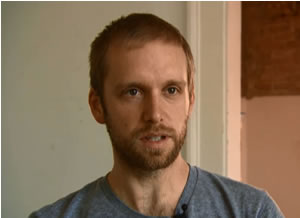
Heinz Helle (München, 15 oktober 1978)
De Franstalige Algerijnse schrijver Boualem Sansal werd geboren op 15 oktober 1949 in El Teniente-Had. Zie ook alle tags voor Boualem Sansal op dit blog.
Uit: Rue Darwin (Darwin Street)
“From everything he said, which we used to know by heart, Palestine, Arab honor, the great revolution, the victory inscribed in History, imperialo-Zionism, neo-colonialism, international reaction, the treason of the Arab leaders, their legendary failure to foresee, I have retained fragments of phrases that more than thirty years later still make me shudder: “... the dead do not count ... a hundred thousand dead, two hundred thousand dead, what is that? ... it is nothing, we have given a million and a half to our country, and we were ready to sacrifice double, triple, quadruple ... unto the last ... wars are won with the dead, not with the living and never with the survivors, the more dead there are, the more beautiful the victory ... the Arab land is thirsty for blood and the Muslim people want martyrs.”
(…)
In my eyes the problem was in Islam itself, which pushes its partisans into pride, into exclusivity, which designates its partisans as judges and supreme protectors of the universe even when having trouble feeding their children or getting rid of people who are starving. Too much is too much. Perhaps Islam and the Muslims are simply not compatible.”

Boualem Sansal (El Teniente-Had, 15 oktober 1949)
De Duitse dichter, filosoof, filoloog en schrijver Friedrich Nietzsche werd geboren op 15 oktober 1844 in Röcken ten zuidwesten van Leipzig. Zie ook mijn blog van 15 oktober 2010 en eveneens alle tags voor Friedrich Nietzsche op dit blog.
Im deutschen November
Dies ist der Herbst: der bricht dir noch das Herz!
Fliege fort! fliege fort!
Die Sonne schleicht zum Berg
Und steigt und steigt
und ruht bei jedem Schritt.
Was ward die Welt so welk!
Auf müd gespannten Fäden spielt
Der Wind sein Lied.
Die Hoffnung floh
Er klagt ihr nach.
Dies ist der Herbst: der bricht dir noch das Herz.
Fliege fort! fliege fort!
Oh Frucht des Baums,
Du zitterst, fällst?
Welch ein Geheimnis lehrte dich
Die Nacht,
Daß eis'ger Schauder deine Wange,
Die purpur-Wange deckt?
Du schweigst, antwortest nicht?
Wer redet noch?
Dies ist der Herbst: der bricht dir noch das Herz.
Fliege fort! fliege fort!
"Ich bin nicht schön"
- so spricht die Sternenblume
"Doch Menschen lieb' ich
Und Menschen tröst' ich
sie sollen jetzt noch Blumen sehn,
nach mir sich bücken
ach! und mich brechen -
in ihrem Auge glänzet dann
Erinnerung auf,
Erinnerung an Schöneres als ich:
- ich seh's, ich seh's - und sterbe so".
Dies ist der Herbst: der bricht dir noch das Herz!
Fliege fort! fliege fort!
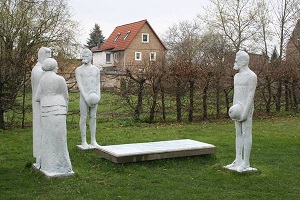
Friedrich Nietzsche (15 oktober 1844 – 25 augustus 1900)
Monument in Röcken
De Russische dichter en schrijver Michail Joerjevitsj Lermontov werd geboren op 15 oktober 1814 in Moskou. Zie ook mijn blog van 15 oktober 2010 en eveneens alle tags voor Michail Lermontov op dit blog.
Loneliness
It's Hell for us to draw the fetters
Of life in alienation, stiff.
All people prefer to share gladness,
And nobody - to share grief.
As a king of air, I'm lone here,
The pain lives in my heart, so grim,
And I can see that, to the fear
Of fate, years pass me by like dreams;
And comes again with, touched by gold,
The same dream, gloomy one and old.
I see a coffin, black and sole,
It waits: why to detain the world?
There will be not a sad reflection,
There will be (I am betting on)
Much more gaily celebration
When I am dead, than - born.
When, in the Cornfield...
When, in the cornfield, yellow waves are rising,
The wood is rustling at the sound of soft wind,
And, in the garden, crimson plums are hiding
In pleasant shade of leaves, so shining ones and green;
When, spilled with fragrant dew in calmness of the alley,
In morning of a gold or evening of a red,
Under the bush, the lily of a valley,
Is gladly nodding me with silver of her head;
When the icy brook in the ravine is playing,
And, sinking thoughts in somewhat misty dreams,
In bubbling tones secretly tale-telling
Of those peaceful lands from which it gaily streams --
Then wrinkles are smoothing on my knitted brow,
My heart is losing troubles and distress --
And I can apprehend the happiness on earth,
And see Almighty in the heavens now...
Vertaald door Yevgeny Bomver
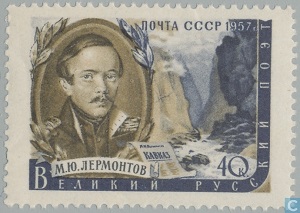
Michail Lermontov (15 oktober 1814 - 27 juli 1841)
De Italiaanse schrijver Italo Calvino werd geboren in Santiago de las Vegas op Cuba op 15 oktober 1923. Zie ook mijn blog van 15 oktober 2010 en eveneens alle tags voor Italo Calvino op dit blog.
Uit: Invisible Cities (Vertaald door William Weaver)
“This is the result: the more Leonia expels goods, the more it accumulates them; the scales of its past are soldered into a cuirass that cannot be removed. As the city is renewed each day, it preserves all of itself in its only definitive form: yesterday's sweepings piled up on the sweepings of the day before yesterday and of all its days and years and decades.
Leonia's rubbish little by little would invade the world, if, from beyond the final crest of its boundless rubbish heap, the street cleaners of other cities were not pressing, also pushing mountains of refuse in front of themselves. Perhaps the whole world, beyond Leonia's boundaries, is covered by craters of rubbish, each surrounding a metropolis in constant eruption. The boundaries between the alien, hostile cities are infected ramparts where the detritus of both support each other, overlap, mingle.
The greater its height grows, the more the danger of a landslide looms: a tin can, an old tire, an unraveled wine flask, if it rolls toward Leonia, is enough to bring with it an avalanche of unmated shoes, calendars of bygone years, withered flowers, submerging the city in its own past, which it had tried in vain to reject, mingling with the past of the neighboring cities, finally clean. A cataclysm will flatten the sordid mountain range, canceling every trace of the metropolis always dressed in new clothes. In the nearby cities they are all ready, waiting with bulldozers to flatten the terrain, to push into the new territory, expand, and drive the new street cleaners still farther out. »
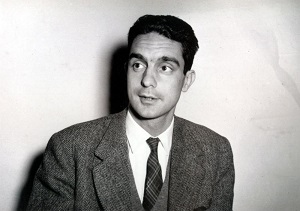
Italo Calvino (15 oktober 1923 - 19 november 1985)
Zie voor nog meer schrijvers van de 15e oktober ook mijn blog van 15 oktober 2013 en ook mijn blog van 15 oktober 2011 deel 1 en eveneens deel 2.