Naar de inhoud

Romenu

Over literatuur, gedichten, kunst en cultuur
seniorennet.beseniorennet.be

Berichten van 7 december 2011

Tatamkhulu Afrika, Johann Nestroy, Friedrich Schlögl
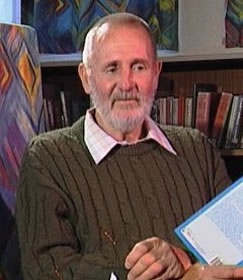
De Zuid-Afrikaanse dichter en schrijver Tatamkhulu Afrika werd geboren op 7 december 1920 in Egypte. Zie ook alle tags voor Tatamkhulu Afrika op dit blog.


The knifing


Black workers pass
me carrying their tools.
I call to them for help:
the stone
masks of their faces turn
aside,
do not look my way again.
He flails the blade
across the top of my skull
(does he see it as a fruit,
splittable, spewing seed?),
slashes, then,
the tender guardians of my wrists,
drives the knife-point in
below my left side’s bottom rib,
and runs.
I leave a spoor
like a wounded beast’s,
make it to the little Indian shop
that sells boiled eggs with mayonnaise,
sway,
falling about in my own blood,
eyes shouting “Help!”
They carry me to the ambulance.
The clouds sweep
me with their sad sides:
yet I hear someone speak
of the bright day
and what a shame it is that this should be done
to anyone on such a day.
A face stares
at me through the wire-mesh
of a police van.
It is his; he sees
my wretched body pass,
blood leaking at every seam:
blood that is also on his hands;
turns away, then with a suddenness that says
more than any tongue,
burrows his face into his hands.
What does he see?
They stitch and stitch,
let my head hang down
when the lights go round and I feel
sense slipping from me like a skin,
and I am the unadorned
genitals of my need.
She screams and screams,
like a cat on heat,
like a little girl drumming her heels.
But she is seventeen:
he beat her until she was all
broken up inside.
I stare at the fluorescent tube;
it shrinks
to a filament of fire in my brain.
Blood still sees
from the black Khayelitsha youth’s
panga-riven-skull;
black bruises prowl
over the old man opposite’s
white-as-his-sheet-skin.
Only I do not sleep.
Time is a pendulum that swings
unlinked to any clock:
only the black window’s scowling back
tell of night; pain writhes
through me like an eel.
I watch the glucose drip,
drop by dizzying drop,
into my veins, wake
to sunlight on the walls,
starlings flirting past the glass,
Khayelitsha mopping blood from his neck,
grinning, saying
I can borrow his pee-bottle if I want.
I sag on the bed,
glucose mellow-honey in my veins,
small pulse of reluctant life
kick-starting way back.
Khayelitsha takes my hand,
hopes I’ll soon be well;
goes out then,
moving slowly amongst the slow-
moving coterie of his friends.
Desultory Xhosa clicks
snap like trodden sticks,
fade down
an inner tribal trial.
I face him then:
his neck nuzzling my palm.
His face still hidden in his hands.
What does he see?
I think to set him free.
How shall he be free?
Or I?
Testicle to testicle, we are trussed
by the winding round
us, rambling plastic coils.
Roaring down each other’s throats,
bellowing of our need,
we are skewered on the sharp
white lightning of his blade.


1048064-43c45be3b150132a30c00f7d78ffc0f3.jpg 

Tatamkhulu Afrika (7 december 1920 – 23 december 2002)


De Oostenrijkse schrijver Johann Nepomuk Eduard Ambrosius Nestroy werd geboren in Wenen op 7 december 1801. Zie ook alle tags voor Johann Nestroy op dit blog.


Uit: Einen Jux will er sich machen


„Erster Aufzug

Zimmer in Herrn Zanglers Hause; die allgemeine Eingangstüre im Prospekt, jedoch gegen die rechte Seite; links am Prospekt ein ziemlich breiter Ofenschirm, rechts und links eine Seitentüre, zu beiden Seiten Tisch und Stuhl

Erster Auftritt


Zangler Ich habe Ihnen jetzt ein für allemal g'sagt –

Sonders Und ich Ihnen ein für allemal erklärt –

Zangler Daß Sie meine Nichte und Mündel nicht kriegen!

Sonders Daß Marie die Meine werden muß!

Zangler Das werd' ich zu verhindern wissen!

Sonders Schwerlich so sicher, als ich es durchzusetzen weiß!

Zangler Kecker Jüngling!

Sonders Hartherziger Mann! Was haben Sie gegen mich? Meine Tante in Brüssel ist reich.

Zangler Gratulier'!

Sonders Ich werde sie beerben.

Zangler Aber wann?

Sonders Sonderbare Frage! Nach ihrem Tode.

Zangler Und bis wann wird sie sterb'n? Aha, da stockt die Antwort. So eine Tant' in Brüssel kann leben, so lang sie will.

Sonders Das wünsch' ich ihr vom Herzen, denn ich weiß, daß sie auch bei Lebzeiten reichlich zu meinem Glücke beitragen wird.

Zangler Reichlich beitragen – wieviel is das in Brüssel? Reichlich beitragen is hier das unbestimmteste Zahlwort, was es gibt, und in unbestimmten Zahlen schließ' ich kein Geschäft. Und kurz und gut, ins Ausland lass' ich meine Mündel schon durchaus nicht heiraten.

Sonders So heirate ich sie und bleibe hier.

Zangler Und derweil schnappt dort ein anderer die Erbschaft weg, das wär' erst gar das Wahre! Mit ei'm Wort, g'horsamer Diener! Plagen Sie sich auch nicht zu sehr mit unnötigem Herumspekulier'n um mein Haus! Meine Nichte is heut' früh an den Ort ihrer Bestimmung abgereist.

Sonders Wie, Marie fort –?

Zangler Ja, nach Dingsda – logiert in der ungenannten Gassen, Numero soundso viel, im beliebigen Stock, rechts bei der zug'sperrten Türe, da können S' anläuten, so oft S' wollen, hineinlassen wer'n s' Ihnen aber nicht.“


 1048064-a3f437215ce61fcede81e0c3e3689ad1.jpg

Johann Nestroy (7 december 1801 - 25 mei 1862)

Wenzel Scholz, Karl Treumann en Nestroy, 
Lithographie van Joseph Kriehuber, 1855


De Oostenrijkse schrijver en columnist Friedrich Kilian Schlögl werd geboren op 7 december 1821 in de Weense voorstad Laimgrube (nu Wenen). Zie ook mijn blog van 7 december 2010.


Uit: Sonderbare Käuze


»Mit dem alten Wien – oder vielmehr mit den Empfindungen der alten Wiener – verfährt die Demolierungsära recht grausam. Stück um Stück, woran die liebsten Erinnerungen haften, fallen in Schutt und Trümmer, und bald wird der letzte Rest der einstigen Heimstätte trauter Gemütlichkeit verschwunden sein, um Platz zu schaffen für die anstürmenden Jünger einer neuen Epoche, für die räumlichen Bedürfnisse einer modernen Weltstadt.«

»Die Metamorphose vollzieht sich rasch und rastlos und unaufhaltsam. Mit Beil und Axt kommen sie herangezogen, die unbarmherzigen Apostel der neuen Lehre, welche da heißt: ›Entwickelung‹, und unter ihren Schlägen stürzen die grünsten Bäume, in deren Schatten wir tausendmal gewandelt, und stürzen die Mauerhüllen der altehrwürdigsten Asyle, wohin wir in trüben Stunden geflüchtet, und unter den Fäusten pietätloser Reformen zerbröckelt, was uns einst wert und teuer war!«

So klagte dieser Tage ein alter Wiener, als er während seines gewohnten Spazierganges dazukam, wie die ersten Spatenstiche den Erdhügel des Paradiesgärtchens aufzuwühlen begannen und Hieb um Hieb auf die ächzenden Bäume und Sträucher niederfielen. – Der arme Mann hatte vielleicht eine kleine Berechtigung zu seufzen und zu jammern. Verjagte man ihn doch aller Orten, wo es ihm wohl und heimisch war und sich sein Herz erfreute. Die Basteien nahm man ihm, mit den schön gepflegten Wegen und der entzückenden Fernsicht nach den blauen Bergen des Südens; das Glacis, die Arena seiner Jugendspiele, verschwand, und statt des grünen Kranzes, der die Stadt umsäumte, erhob sich ein kahler Wall ihm fremdartiger Gebäude; den Prater, das urwüchsige Kleinod Wiens, reguliert man ihm bis zur Unkenntlichkeit, und schon rüttelt ein unheimlich Gerücht auch noch an anderen, viellieben Vermächtnissen edelmütiger Herzen, indem die vandalste Spekulation ihre gierigen Augen gerade auf die populärsten Parkidyllen warf, um statt der nutzlosen Baumgruppen und Blumenbeete dividendenfähige Baukomplexe zu gründen. Inzwischen, bis dieses Crimen patronisiert, demoliert man ihm den letzten Aussichtspunkt: das reizende Paradiesgärtchen.“


1048064-07cb1367759499ac0821b0fcbe28785d.jpg
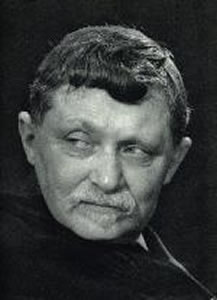
Friedrich Schlögl (7 december 1821 - 7 oktober 1892)


Zie voor nog meer schrijvers van de 7e december ook mijn vorige blog van vandaag.
Geschreven door Romenu om 19:29 Reageer op dit bericht

Gabriel Marcel, Noam Chomsky, Willa Cather, Samuel Gottlieb Bürde

De Franse filosoof en toneelauteur Gabriel Marcel werd geboren op 7 december 1889 in Parijs. Zie ook alle tags voor Gabriel Marcel op dit blog.


Uit: Awakenings (Vertaald door Peter S. Rogers)


„This summer day of 1899 was a terrible date in the life of a child, as  I learned that we were going to leave Stockholm and return to Paris.  How can I ever forget the heavy heart with which I received this  news? As my father suffered somewhat from the Swedish climate and  didn't much care for the worldly and formal aspects of diplomatic  life, he was going to switch positions with a senior member of the  Council of State, Monsieur Catusse. This meant first of all that I  could no longer hope to spend vacation in Finland or in Norway.  What may seem peculiar is that nothing, or almost nothing, attracted
me in the Paris where we were to settle definitively. I also felt that our  return would be, sooner or later, followed by my entrance into the  lycée, something I vaguely feared since, until then, I had been edu-
cated at home. I can't recall whether it was immediately before or  after our stay in Stockholm that, for some months, I attended classes  at Rue Royale where my fellow students were mainly young girls.

What had I most appreciated in the Swedish capital? Without hesitation I would say the landscapes. I remember a discussion with my  father on the topic during a boat ride on the Saltsjön. He was essen-
tially a man of the Midi, the French South, and this somewhat uniform and sad nature bored him. Yet there was something in it that  exalted me. But what words could I use to translate that emotion?

I must have expressed myself rather awkwardly. But when I think  about what I had lived during that year in Stockholm, I see this: it  was as though I had been removed from the humdrum life I was to
suffer from so much later on, by the fact of being far away, and on  the edge of countries that were still farther away and which attracted me.“


 1048061-2df984edd4cb51a4ca2a87670df1e1a3.jpg

Gabriel Marcel (7 december 1889 - 8 oktober 1973)


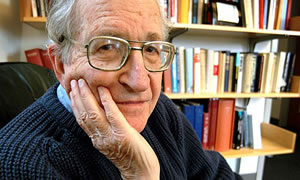
De Amerikaanse taalkundige, mediacriticus en anarchistisch denker Noam Chomsky werd geboren in Philadelphia op 7 december 1928. Zie ook mijn blog van 7 december 2007 en ook mijn blog van 7 december 2008 en ook mijn blog van 7 december 2009 en ook mijn blog van 7 december 2010.


Uit: Chronicles of Dissent, 1992


„QUESTION: One of your books, The Fateful Triangle, focuses specifically on the Middle East, and I was wondering if you could talk about your position on a possible two-state solution to the Palestinian question.

CHOMSKY: I don't think that's the optimal solution, but it has been the realistic political settlement for some time. We have to begin with some fundamentals here. The real question is: there are plainly two national groups that claim the right of self-determination in what used to be Palestine, roughly the area now occupied by Israel minus the Golan Heights, which is part of Syria.

So there are two national groups which claim national self-determination. One group is the indigenous population, or what's left of it -- a lot of it's been expelled or driven out or fled. The other group is the Jewish settlers who came in, originally from Europe, later from other parts of the Middle East and some other places. So there are two groups, the indigenous population and the immigrants and their descendants. Both claim the right of national self-determination. Here we have to make a crucial decision: are we racists or aren't we? If we're not racists, then the indigenous population has the same rights of self-determination as the settlers who replaced them. Some might claim more, but let's say at least as much right. Hence if we are not racist, we will try to press for a solution which accords them -- we'll say they are human beings with equal rights, therefore they both merit the claim to national self-determination. I'm granting that the settlers have the same rights as the indigenous population; many do not find that obvious but let's grant it. Then there are a number of possibilities. One possibility is a democratic secular society. Virtually nobody is in favor of that. Some people say they are, but if you look closely they're not really. There are various models for multi-ethnic societies, say Switzerland or whatever. And maybe in the long run these might be the best idea, but they're unrealistic.“


1048061-e3ebdcb2eadbf38810da47493c1fae70.jpg
Noam Chomsky (Philadelphia, 7 december 1928)


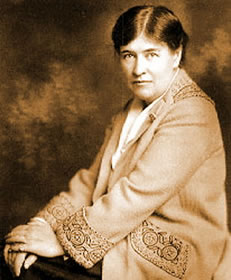
De Amerikaanse schrijfster Willa Cather werd geboren op 7 december 1873 in de buurt van Winchester, Virginia. Zie ook mijn blog van 7 december 2006 en ook mijn blog van 7 december 2009 ook mijn blog van 7 december 2010.


Uit: The Song of the Lark


"She was getting back to the earliest source of gladness that she could remember. She had loved the sun, and the brilliant solitudes of sand and sun, long before these other things had come along to fasten themseves upon her and torment her. That night, when she clambered into her big German feather bed, she felt completely released from the enslaving desire to get on in the world. Darkness had once again the sweet wonder that it had in childhood...

(...)

"She used to wonder at her own inactivity. She could lie there hour after hour in the sun and listen to the strident whirr of the big locusts, and to the light, ironical laughter of the quaking asps. All her life she had been hurrying and sputtering, as if she had been born behind time and had been trying to catch up. Now, she reflected...it was as if she were waiting for something to catch up with her. She had got to a place where she was out of the stream of meaningless activity and undirected effort.

(...)

"Here she could lie for half a day undistracted, holding pleasant and incomplete conceptions in her mind--almost in her hands. They were scarcely clear enough to be called ideas. They had something to do with fragrance and color and sound, but almost nothing to do with words. She was singing very little now, but a song would go through her head all morning, as a spring keeps welling up, and it was a pleasant sensation indefinitely prolonged. It was much more like a sensation than like an idea, or an act of remembering. Music had never before come to her in that sensuous form. It had always been a thing to be struggled with, had always brought anxiety and exaltation and chagrin--never content and indolence."


 1048061-ba9b95ae25768bf3dd29ee3af0ce5869.jpg

Willa Cather (7 december 1873 – 24 april 1947)


De Duitse dichter
Samuel Gottlieb Bürde werd geboren op 7 december 1753 in Breslau. Zie ook mijn blog van 7 december 2010.


Geist der Wahrheit, lehre mich


Geist der Wahrheit, lehre mich

aller Weisheit Quelle kennen!

Jesum kann ich nur durch dich

meinen Herrn und Heiland nennen.

Du nur kannst ihn mir verklären

und mein Herz in Gott belehren.


Du nur machst das Herz gewiß

und erleuchtest meine Seele,

daß ich in der Finsterniß

nicht den Weg des Heils verfehle.

Du nur führst auf Gottes Pfaden,

zeugst von Wahrheit und von Gnaden.


Heiligung und Reinigkeit

und ein gottgefällig Leben,

selige Zufriedenheit,

wahre Weisheit kannst du geben.

Selig, die an deinen Gaben

theil durch Lieb und Glauben haben.


Was mir fehlt, find ich in dir,

nur durch dich kann ich genesen.

Mache Wohnung ganz in mir,

daß werd neu mein ganzes Wesen!

Dann wird meine Schwachheit Stärke

und ich wirke Gottes Werke.


 1048061-d93199ff65ad83905a611b6614703116.jpg

Samuel Gottlieb Bürde (7 december 1753 - 28 april 1831)

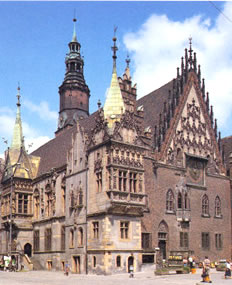
Breslau, raadhuis (Geen portret beschikbaar)

Geschreven door Romenu om 19:25 Reageer op dit bericht

Meer van Romenu

↑ Terug naar de berichten