

 A. F.Th. van der Heijden, Michail Lermontov, P.G. Wodehouse, Italo Calvino
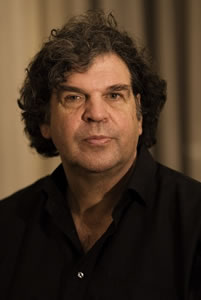
De Nederlandse schrijver A. F. Th. van der Heijden werd geboren in Geldrop op 15 oktober 1951. Zie ook mijn blog van 15 oktober 2006 en ook mijn blog van 15 oktober 2007.
Uit: Het schervengericht
‘Hoe
heet jij?’
‘Ik blijf me niet voorstellen.’
‘Je naam.’
‘Scott Maddox.’
‘Hoe heet je echt?’
‘Maddox, Scott. Vraag het Carhartt. Vraag het
De Griek.’
‘Die weten niet beter.’
‘Als jij het beter weet, zeg het dan.’
‘Scott, wie ben jij?’
‘Een heel andere vraag.’
‘Zeg me wie je bent. Ik heb er recht op.’
‘Wil je me leren kennen?’ schreeuwde hij opeens.
Hij begon aan de kram te rukken waarmee het uiteinde van het verband in zijn
nek vastzat. Doordat hij van zijn ingezwachtelde handen alleen de ontvelde
vingertoppen
kon gebruiken, kwam het stukje metaal met z’n weerhaakjes steeds dieper in het
gaas vast te zitten.
‘Doe geen moeite,’ zei Remo. ‘Ik weet wie je bent.’
‘Ik weet wie jij bent. Daarom doe ik die moeite juist.’
‘Jij was het.’
‘Ik was wat?’
‘Jij hebt het gedaan.’
‘Wat?’
‘Mijn vrouw.’
‘Die is in het kraambed gestorven.’
‘Nog voor de kleine er was, ja.’
‘Ik heb niets gedaan. Ik ben geen verloskundige.’
‘Je personeel.’
‘Ik zie het nu,’ zei Maddox. ‘De regisseur.’
‘De regisseur, Scott, dat ben jij.’
‘Twee regisseurs, voor anker aan hun dekzwabber.’
‘Ze hebben allebei hun dromen geregisseerd.’
‘Bij jou was het kunstlicht en namaakbloed. Ik ben je de baas.’
Remo liet de steel van zijn trekker los, en klauwde met tien vingers tegelijk
in de verbandkluwen rond Maddox’ hoofd. ‘Jij bent...’ Met zulke hevig trillende
handen was het niet gemakkelijk een begin te maken met het afwikkelen van de
windsels. En dan waren er
nog de krammen, waarvan er een op het achterhoofd zat. Remo haakte twee vingers
achter een strook verband, en trok. Maddox steunde van de pijn, en duwde zijn
omzwachtelde handen tegen Remo’s borst, maar zonder veel kracht.
‘Ik ben het,’ klonk het dof uit een mond die nu achter het verschoven verband
schuilging. ‘Ik ben die ik ben. Ik ben die ben.’
Remo bleef trekken. De windsels kwamen in lussen los. Er hing een hele wolk van
tussen hun hoofden. De onderste laag, die vastgeplakt zat in de brandwonden,
moest met nog meer geweld losgetrokken worden.
Maddox hield zijn pijnkreten gedempt, misschien om de bewakers niet te
alarmeren.
Naar onderen toe werden de zwachtels smeriger. Groenig van pus en zalf, en
bevlekt met bijna zwartgeworden bloed. Remo trok, en Maddox draaide rond zijn
as, zichzelf los windend van het verband.
‘Wie ben jij?’
Nog steeds geen gezicht. Het ging schuil achter een samenstel van zachte,
bruine wondkorsten, waartussen stippellijnen van opkomend bloed liepen, dat
spoedig rijkelijk begon te lekken.
‘Je ziet toch wie ik ben.’
A. F.Th. van der Heijden (Geldrop, 15 oktober 1951)
De Russische dichter en schrijver Michail Joerjevitsj Lermontov werd geboren op 15 oktober 1814 in Moskou. Zie ook mijn blog van 15 oktober 2006.
Ich möchte leben! Möchte leiden
Ich möchte leben! Möchte
leiden,
Als gäb es Liebe nicht noch Glück;
Verzärtelt ward mein Geist von beiden
Und allzu sorglos mein Geschick.
Mag nur der Hohn der Welt
verjagen
Der Ruhe trügerischen Wahn;
Was ist ein Dichter ohne Plagen?
Was ohne Sturm der Ozean?
Er lebt nur um den Preis
von Qualen,
Den Preis von Kummer ganz allein,
Und Ruhm möcht ehrlich er bezahlen,
Des Himmels Töne kauft er ein.
Wir trennten uns, doch dein Porträt
Wir trennten uns,
doch dein Porträt
Bewahr am Busen ich bis heut.
Erfreut's mir doch das Herz wie eh
Als blasses Abbild schönrer Zeit.
Da schon in andrer
Liebe Joch
Ich ging, vergessen konnt ich's nicht.
Verlaßner Dom bleibt Kirche noch,
Gott bleibt, wenn auch sein Bild zerbricht.
Vertaald door Barbara Heitkam
Das Blatt
Es ward einst ein Blatt von der heimischen Eiche
geschlagen
Und ward von dem Sturme zur baumleeren Steppe getragen;
Es welkte vor Gram und vor Hitze und Kälte geschwind,
Da trug es endlich zum Schwarzen Meere der Wind.
Hier sieht es am Meer eine junge Platane aufsteigen
-
Sanft säuselt der Wind durch die Blätter und spielt mit den Zweigen;
Es wiegen Paradiesvögel sich auf den Ästen und singen,
Der Meeresprinzessin zum Ruhm ihre Lieder erklingen.
Schüchtern naht sich das wandernde Blättchen
dem blühenden Baume
Und fleht um Obdach und Schutz in dem schattigen Raume,
So spricht es: »Ich bin das verwaiste Blatt einer Eiche,
Vom Sturme entrissen der Heimat rauhem Bereiche;
Ganz einsam und ziellos, so flog ich im endlosen
Kummer,
Nicht Obdach konnte ich finden, nicht Nahrung noch
Schlummer -
In deinen smaragdenen Blättern erlös mich der Plagen,
Ich will dir's vergelten; kenn viele Geschichten und Sagen...«
»Du, heb dich hinweg!« sprach der Baum - »du bist
von den Wettern
Vergilbt und verdorrt und gleichst nicht meinen
übrigen Blättern.
Hast vieles gesehn, doch was soll ich mit deinem Erzählen?
Ich muß mich genug mit dem Singsang der Vögel schon quälen.
Nein, geh deinen Weg - bei mir wirst du umsonst
dich bemühen!
Mich liebt die Sonne - und ihr nur gehört mein Blühen;
Stolz sind meine Zweige empor zum Himmel gebogen,
Die Wurzeln mir waschen des Meeres dienstbare Wogen.«
Vertaald door Friedrich Bodenstedt
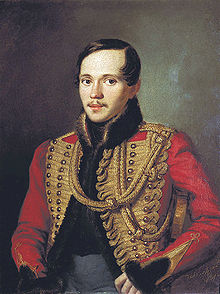
Michail Lermontov (15 oktober 1814 - 27 juli 1841)
Portret door Pyotr Zabolotsky,1837
De Brits-Amerikaanse schrijver Grenville Wodehouse werd geboren op 15 oktober 1881 in Guildford. Zie ook mijn blog van 15 oktober 2006.
Uit: The Code of the Woosters
„I reached out a hand from under
the blankets, and rang the bell for Jeeves.
'Good
evening, Jeeves.'
'Good morning, sir.'
This surprised me.
'Is it morning?'
'Yes, sir.'
'Are you sure? It seems very dark outside.'
'There is a fog, sir. If you will recollect, we are now in Autumn -- season of
mists and mellow fruitfulness.'
'Season of what?'
'Mists, sir, and mellow fruitfulness.'
'Oh? Yes. Yes, I see. Well, be that as it may, get me one of those bracers of
yours, will you?'
'I have one in readiness, sir, in the ice-box.'
He shimmered out, and I sat up in bed with that rather unpleasant feeling you
get sometimes that you're going to die in about five minutes. On the previous
night, I had given a little dinner at the Drones to Gussie Fink-Nottle as a
friendly send-off before his approaching nuptials with Madeline, only daughter
of Sir Watkyn Bassett, CBE, and these things take their toll. Indeed, just
before Jeeves came in, I had been dreaming that some bounder was driving spikes
through my head -- not just ordinary spikes, as used by Jael the wife of Heber,
but red-hot ones.
He returned with the tissue-restorer. I loosed it down the hatch, and after
undergoing the passing discomfort, unavoidable when you drink Jeeves's patent
morning revivers, of having the top of the skull fly up to the ceiling and the
eyes shoot out of their sockets and rebound from the opposite wall like racquet
balls, felt better. It would have been overstating it to say that even now
Bertram was back again in mid-season form, but I had at least slid into the
convalescent class and was equal to a spot of conversation.
'Ha!' I said, retrieving the eyeballs and replacing them in position. 'Well,
Jeeves, what goes on in the great world? Is that the paper you have there?'
'No, sir. It is some literature from the Travel Bureau. I thought that you
might care to glance at it.'
'Oh?' I said. 'You did, did you?'
And there was a brief and -- if that's the word I want -- pregnant silence.
I suppose that when two men of iron will live in close association with one
another, there are bound to be occasional clashes, and one of these had recently
popped up in the Wooster home. Jeeves was trying to get me to go on a
Round-The-World cruise, and I would have none of it. But in spite of my firm
statements to this effect, scarcely a day passed without him bringing me a
sheaf or nosegay of those illustrated folders which the Ho-for-the-open-spaces
birds send out in the hope of drumming up custom. His whole attitude recalled
irresistibly to the mind that of some assiduous hound who will persist in
laying a dead rat on the drawing-room carpet, though repeatedly apprised by
word and gesture that the market for same is sluggish or even non-existent.“
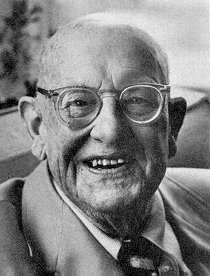
P.G. Wodehouse (15 oktober 1881 – 14 februari 1975)
De Italiaanse schrijver Italo Calvino werd geboren in Santiago de las Vegas op Cuba op 15 oktober 1923. In 1925 keert de familie terug naar Italië, San Remo, de geboorteplaats van zijn vader, die landbouwkundig ingenieur was. Zijn moeder was biologe en afkomstig uit Sardinië.
Na zijn gymnasiumopleiding, schreef hij zich in aan de universiteit van Turijn om, in de voetsporen van zijn vader, landbouwkunde te gaan studeren. In 1943 gaf hij zijn studie op om zich bij de partizanen aan te sluiten tijdens het verzet in de Alpes Maritimes. In 1945 keerde hij terug naar de universiteit van Turijn maar dan als student aan de Letterenfaculteit, waar hij in 1947 afstudeerde met een scriptie over Joseph Conrad. Na de bevrijding werd hij actief lid van de Communistische Partij van Italië (PCI) en werkte hij mee aan communistische dagbladen en tijdschriften. In Turijn kwam hij al snel in contact met de intellectuelen die verbonden waren aan de uitgeverij Einaudi, zoals Cesare Pavese en Elio Vittorini en wordt hij medewerker van het tijdschrift 'Il Politecnico'.
In 1947 werd, door Einaudi, de korte roman Il sentiero dei nidi di ragno gepubliceerd en bleek Calvino een veelbelovend schrijver van de nieuwe neorealistische literatuur te zijn. Vanaf 1950 is hij werkzaam op de redactie van Einaudi, de uitgeverij waarvan hij van 1955 tot 1961 directeur werd. Gedurende deze periode publiceerde hij een verhalenbundel Racconti (1958) en drie romans gebundeld in I nostri antenati (1960). Na onenigheid over de te volgen politieke lijn zegde hij in 1957 zijn lidmaatschap van de PCI op en samen met Elio Vittorini richtte hij in 1959 het tijdschrift ‘Il Menabò’ op.
In 1960 verbleef hij zes maanden in de Verenigde Staten en daarna woonde hij een tijd in Rome terwijl hij, door een steeds groeiende interesse voor de Franse cultuur, lange periodes in Parijs doorbracht. Hij had aandacht voor de ontwikkelingen die zich begin jaren zestig voordeden, zowel aan het nieuw linkse front als aan het front van de neo avant-garde (Gruppo ’63) maar hield er afstand van. In La giornata di uno scrutatore (1963) geeft hij zijn visie op de crisis van links.
Hij volgde de eerste uitingen van de studentenopstand in Italië en in Frankrijk aandachtig en ook al was hij het eens met de kritische en anti- autoritaire houding van de studenten, dit kwam niet tot uiting in zijn werk, zoals blijkt uit Le città invisibili (1972) en Il castello dei destini incrociati (1973).
Zijn internationale faam breidde zich snel uit door de vertalingen van zijn werken.
Uit: If on a winter's night a traveller (Se una notte d’inverno un viaggiatore)
“... I'm speaking to you two, a fairly unrecognisable tangle under the rumpled sheet. Maybe afterward you will go your separate ways and the story will again have to shift gears painfully, to alternate between the feminine tu and the masculine; but now, since your bodies are trying to find, skin to skin, the adhesion most generous in sensations, to transmit and receive vibrations and waves, to compenetrate the fullnesses and the voids, since in mental activity you have also agreed on teh maximum agreement, you can be addressed with an articulated speech that includes you both in a sole, two-headed person. First of all the field of action, or of existence, must be established for this double entity you form. Where is the reciprocal indentification leading? What is the central theme that recurs in your variations and modulations? A tension concentrated on not losing anything of its own potential, on prolonging a state of reactivity, on exploiting the accumullation of the other's desire in order to multiply one's own charge? Or is it the most submissive abandonment, the exploration of the immensity of strokable and reciprocally stroking spaces, the dissolving of one's being in a lake whose surface is infinitely tactile? In both situations you certainly do not exist except in relation to each other, but, to make those situations possible, your respective egos have not so much to erase themselves as to occupy, without reserve, all the void of the mental space, invest in itself at the maximum interest or spend itself to the last penny. In short, what you are doing is very beautiful but grammatically it doesn't change a thing. At the moment when you most appear to be a united voi, a second person plural, you are two tus, more separate and circumscribed than before.
(This is already true now, when you are still occupied, each with the other's presence, in an exclusive fashion. Imagine how it will be in a little while, when ghosts that do not meet will frequent your minds, accompanying the encounters of your bodies tested by habit.)
Ludmilla, now you are being read. Your body is being subjected to a systematic reading, through channels of tactile information, visual, olfactory, and not without some intervention of the taste buds. Hearing also has its role, alert to your gasps and your trills. It is not only the body that is, in you, the object of raeding: the body matters insofar as it is part of a complex of elaborate elements, not all visible and not all present, but manifested in visible and present events: the clouding of your eyes, your laughing, the words you speak, your way of gathering and spreading your hair, your initiatives and your reticences, and all the signs that are on the frontier between you and usage and habits and memory and prehistory and fashion, all codes, all the poor alphabets by which one human being believes at certain moments that he is reading another human being.”
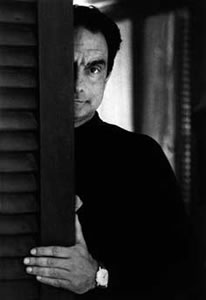
Italo Calvino (15 oktober 1923 - 19 november 1985)
Zie voor nog meer schrijvers van de 15e
oktober ook mijn vorige blog van vandaag.


