

Naar de inhoud

Romenu

Over literatuur, gedichten, kunst en cultuur
seniorennet.beseniorennet.be

Berichten van 23 september 2012

Antonio Tabucchi, Mary Coleridge, Theodor Körner, Euripides
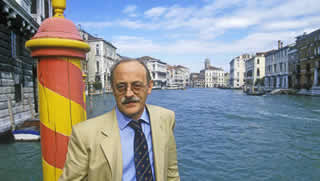
De Italiaanse schrijver, vertaler, en literatuurwetenschapper Antonio Tabucchi werd op 23 september 1943 geboren in Pisa. Zie ook mijn blog van 23 september 2010 en eveneens alle tags voor Antonio Tabucchi op dit blog.


Uit: The Missing Head (Vertaald door Patrick Creagh) 


“Manolo the Gypsy opened his eyes, peered at the dim light creeping through the cracks in his hovel, and got to his feet trying not to make a sound. He had no need to dress because he slept fully clothed, and the orange jacket given him the year before by Agostinho da Silva, known as Franz the German, tamer of toothless lions in the Wonder Circus, now served him for both day and night. In the faint glimmer of dawn he groped around for the battered sandals-cum-slippers that were his only footwear. He found them and slid his feet in. He knew every inch of the hut, and could move about in its murk knowing perfectly well where its few wretched sticks of furniture were. He took a confident step towards the door, and in so doing his right foot clashed against an oil-lamp standing on the floor.

Damn the woman! exclaimed Manolo between his teeth. He was of course referring to his wife, who the previous evening had insisted on leaving this lamp beside her bed on the pretext that the blackness of night gave her nightmares and she dreamt of her dead. If she kept the flame burning as low as can be, she said, the ghosts of her dead dared not to haunt her, and so she could sleep in peace.

“And what is El Rey about at this hour of the morning, O afflicted spirit of our Andalusian dead?”

His wife’s voice was muffled and drowsy, as it is with anyone still half asleep. She always spoke to him in geringonça, a hotch-potch of Romany, Portuguese and Andalusian. And she called him El Rey—the King.

King of a heap of shit, Manolo felt the urge to answer, but he said nothing. King of a shitheap. To be sure he had once been El Rey, when the gypsies were honoured, when his people freely roamed the plains of Andalusia, when they made copper trinkets to sell in the villages and dressed in black and wore fine felt hats, and their knives were not weapons to fight for your life with, but peerless treasures fashioned in chased silver.”


1241791-962183e6cd1ecb37f6f331e4d532c97c.jpg
Antonio Tabucchi (Pisa, 23 september 1943)


De Engelse dichteres en schrijfster Mary Elizabeth Coleridge werd geboren in Londen op 23 september 1861. Zie ook mijn blog van 23 september 2010 en eveneens alle tags voor Mary Colderidge op dit blog.


‘He came unto His own, and His own received Him not’


As Christ the Lord was passing by,
He came, one night, to a cottage door.
He came, a poor man, to the poor;
He had no bed whereon to lie.

He asked in vain for a crust of bread,
Standing there in the frozen blast.
The door was locked and bolted fast.
‘Only a beggar!’ the poor man said.

Christ the Lord went further on,
Until He came to a palace gate.
There a king was keeping his state,
In every window the candles shone.

The king beheld Him out in the cold.
He left his guests in the banquet-hall.
He bade his servants tend them all.
‘I wait on a Guest I know of old.’

‘’Tis only a beggar-man!’ they said.
‘Yes,’ he said; ‘it is Christ the Lord.’
He spoke to Him a kindly word,
He gave Him wine and he gave Him bread.

Now Christ is Lord of Heaven and Hell,
And all the words of Christ are true.
He touched the cottage, and it grew;
He touched the palace, and it fell.

The poor man is become a king.
Never was man so sad as he.
Sorrow and Sin on the throne make three,
He has no joy in mortal thing.

But the sun streams in at the cottage door
That stands where once the palace stood.
And the workman, toiling to earn his food,
Was never a king before.


1241791-6d01223990e54cf98408ae885a93dbe2.jpg 

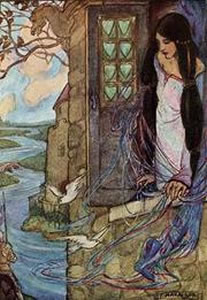
Mary Coleridge (23 september 1861 – 25 augustus 1907)

Illustratie door Eleanor Vere Boyle in Voices from Fairyland, the fantastical poems of Mary Coleridge Charlotte Mew and Sylvia Townsend Warner.


De Duitse dichter en schrijver Theodor Körner werd geboren op 23 september 1791 in Dresden. Zie ook mijn blog van 23 september 2010 en eveneens alle tags voor Theodor Körner op dit blog.


Die drei Sterne


Es blinken drei freundliche Sterne

  Ins Dunkel des Lebens herein;

Die Sterne, die funkeln so traulich,

  Sie heißen: Lied, Liebe und Wein.


Es lebt in der Stimme des Liedes

  Ein treues, mitfühlendes Herz;

Im Liede verjüngt sich die Freude,

  Im Liede verweht sich der Schmerz.


Der Wein ist der Stimme des Liedes

  Zum freudigen Wunder gesellt

Und malt sich mit glühenden Strahlen

  Zum ewigen Frühling der Welt.


Doch schimmert mit freudigem Winken

  Der dritte Stern erst herein,

Dann klingt’s in der Seele wie Lieder,

  Dann glüht es im Herzen wie Wein.


Drum blickt denn, ihr herzigen Sterne,

  In unsre Brust auch herein!

Es begleite durch Leben und Sterben

  Uns Lied und Liebe und Wein!


Und Wein und Lieder und Liebe,

  Sie schmücken die festliche Nacht!

Drum leb’, wer das Küssen und Lieben

  Und Trinken und Singen erdacht!


1241791-4688ac3617d3de8386648e7d2e8dc08f.jpg
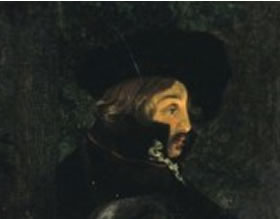
Theodor Körner (23 september 1791 - 26 augustus 1813)

Körner, detail van het schilderij “Vorposten” van Georg Friedrich Kersting 1815


De Griekse schrijver Euripides werd geboren in 480 of 484 voor Christus. Zie ook mijn blog van 23 september 2010 en eveneens alle tags voor Euripises op dit blog.


Uit: Alcestis


“Apollo
Huis van Admetus, waarin ik mij schik aan tafel,
geduldig als een dagloner, ik die een god ben.
Want Zeus heeft door mijn zoon te dooden daaraan schuld,
Asclepius: Zeus dreef de bliksems in zijn borst.
Vertorend om zijn lot doodde ik de smeden van
Zeus' vuur: ik doodde de Cyclopen, daarom dwong
mijn vader mij tot arbeid voor een sterveling, als boete.
Gekomen in dit land, weidde ik voor mijn gastheer
de runderen en hield zijn huis tot nu in stand.
Want ik, die zelf ook vroom ben, vond gelijke vroomheid
in Pheres' zoon, dien ik beschermde tegen sterven.
De Moiren overtroefde ik: zij stonden toe:
Admetus mocht voor 't oogenblik de Hades mijden,
als hij een and're doode in zijn plaats liet gaan.
En al zijn vrienden ging hij lang, hij vroeg hen en
zijn vader en zijn oude moeder, die hem baarde,
en hij vond niemand, die voor hem wel sterven wilde
en nooit het licht meer zien, vond niemand dan zijn vrouw.
Nu steunen in 't paleis zijn armen haar, nu zij
daar worstelt met den dood: want dezen dag, staat vast,
moet zij den dood ingaan en 't leven achterlaten.
En ik, om niet besmet te worden in 't paleis,
verlaat het dak van deze woning, die ik lief kreeg.
Reeds zie ik hoe de Dood nabij gekomen is,
hij, priester der gestorvenen, naar Hades' huis
zal hij haar voeren: juist op tijd is hij gekomen,
loerende op den dag, waarop zij sterven moest.”


Vertaald door J. C. Kamerbeek


1241791-a2593eef035ba12397a59efcaf6c7578.jpg
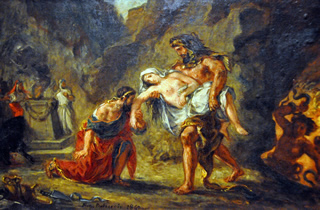
Euripides (484 v. Chr – 406 v. Chr)

Hercules en Alcestis door Eugène Delacroix, 1862


Zie voor nog meer schrijvers van de 23e september ook mijn vorige blog van vandaag.
Geschreven door Romenu om 15:34 Reageer op dit bericht

Jaroslav Seifert, Emma Orczy, Leni Saris, Daniel Czepko von Reigersfeld

De Tsjechische dichter Jaroslav Seifert werd op 23 september 1901 geboren en groeide op in de arbeiderswijk Žižkov in Praag. Zie ook mijn blog van 23 september 2010 en eveneens alle tags voor Jaroslav Seifert op dit blog.


Lied


Mit weißem tüchlein winkt,

wer abschied nimmt,

etwas geht mit jedem tag zu ende,

etwas wunderbares geht zu ende.


Die taube kehrt, der botschaft botin,

windauf, windab nach haus zurück;

mit und ohne hoffnung kehren

ewig wir nach haus zurück.


Lächle mit verweinten augen,

das tüchlein, ach, verwahr es,

mit jedem tag beginnt etwas,

beginnt etwas wunderbares.


Vertaald door Rainer Kunze


Métamorphoses


Le garçon se change en un blanc buisson;
le buisson, en pâtre en train de dormir;
ses cheveux si fins, en cordes de lyre ;
et la neige, en neige sur son front blond.


Les mots se changent en questions ;
sagesse et gloire en rudes rides ;
à reculons corde de lyre
se change en fin cheveu; et le garçon
en poète, le poète en buisson,
sous lequel il dormait au temps où
il aimait la beauté d’amour fou.


Quiconque de beauté se toque
sans fin l’aime sa vie durant,
la poursuit toute son époque —
la beauté a des pieds charmants
qu’elle chausse de fines socques.


Le fier carrousel des métamorphoses
change le poète en amant maudit,
car il suffira d’une courte pause :
le voici changé en eau d’alambic,
dont l’alchimiste fait vapeur chimique,
et qu’après, tout au fond il précipite.


Vertaald door Jana Boxberger


 1241789-c2cca3d4fd7dbf8c517d469b620accdf.jpg

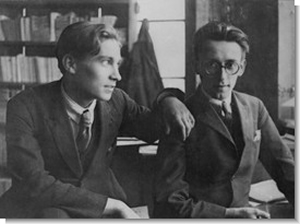
Jaroslav Seifert ( 23 september 1901 – 10 januari 1986)

Hier links met fotograaf en regisseur Otakar Mrkvička


De Hongaarse schrijfster Emmuska Orcy de Orczi, ook wel Baronesse Orczy of Baronesse d'Orczy werd geboren in Tarnaörs op 23 september 1865. Zie ook mijn blog van 23 september 2010 en eveneens alle tags voor Emma Orczy op dit blog.


Uit: The Scarlet Pimpernel


“No one had seen these mysterious Englishmen; as for their leader, he was never spoken of, save with a superstitious shudder. Citoyen Foucquier-Tinville would in the course of the day receive a scrap of paper from some mysterious source; sometimes he would find it in the pocket of his coat, at others it would be handed to him by someone in the crowd, whilst he was on his way to the sitting of the Committee of Public Safety. The paper always contained a brief notice that the band of meddlesome Englishmen were at work, and it was always signed with a device drawn in red—a little star-shaped flower, which we in England call the Scarlet Pimpernel. Within a few hours of the receipt of this impudent notice, the citoyens of the Committee of Public Safety would hear that so many royalists and aristocrats had succeeded in reaching the coast, and were on their way to England and safety.

The guards at the gates had been doubled, the sergeants in command had been threatened with death, whilst liberal rewards were offered for the capture of these daring and impudent Englishmen. There was a sum of five thousand francs promised to the man who laid hands on the mysterious and elusive Scarlet Pimpernel.

Everyone felt that Bibot would be that man, and Bibot allowed that belief to take firm root in everybody's mind; and so, day after day, people came to watch him at the West Gate, so as to be present when he laid hands on any fugitive aristo who perhaps might be accompanied by that mysterious Englishman.

"Bah!" he said to his trusted corporal, "Citoyen Grospierre was a fool! Had it been me now, at that North Gate last week . . ."

Citoyen Bibot spat on the ground to express his contempt for his comrade's stupidity.

"How did it happen, citoyen?" asked the corporal.

"Grospierre was at the gate, keeping good watch," began Bibot, pompously, as the crowd closed in round him, listening eagerly to his narrative. "We've all heard of this meddlesome Englishman, this accursed Scarlet Pimpernel. He won't get through MY gate, MORBLEU! unless he be the devil himself. But Grospierre was a fool. The market carts were going through the gates; there was one laden with casks, and driven by an old man, with a boy beside him. Grospierre was a bit drunk, but he thought himself very clever; he looked into the casks—most of them, at least—and saw they were empty, and let the cart go through."


 1241789-6b3ab40560eb9d81cf15538a15abb156.jpg

Emma Orczy (23 september 1865 – 12 november 1947)

Anthony Andrews als “the Scarlet Pimpernel” in de gelijknamige film uit 1982


De Nederlandse schrijfster Leni Saris werd geboren in Rotterdam op 23 september 1915. Zie ook mijn blog van 23 september 2010 en eveneens alle tags voor Leni Saris op dit blog.


Uit: Hollands Dagboek


„Maandag

In enkele dagen heb ik vier fotografen bij mij thuis gezien en heb ik mijn gezicht in alle mogelijke en onmogelijke standen gevouwen.

Toen ik de hondjes nog had, werden alle foto's bijzonder ontspannen gemaakt. Ik pakte een hondje op en de foto was gemaakt, omdat er met die kleine dingen altijd iets te lachen viel.

Nu hebben we ook met de poes deze pose geprobeerd. Aangezien zij alleen maar kwaad krijst en wringt als ze wordt opgepakt, zal dit beslist geen charmante foto zijn geworden.

Nu wordt het dus soms een foto achter mijn kleine, rode schrijfmachientje, waar ik het prettigst op werk; ik wil geen tekstverwerker en mijn diverse electronische - en de oude elektrische - machines zijn moordend voor mijn inspiratie. Geef mij mijn eenvoudige ouderwetse machientje maar, dat, in de huls geschoven, na afloop van het werkfestijn, iets heeft van een rode lolly-zonder-stok... het gekke ding!

De afspraak voor een voorbereidend gesprek voor de televisie moet worden verschoven want er is iets mis gegaan met stukken die 'ergens' zijn blijven hangen... ook dat nog!

Waar... oh, waar haal ik de tijd vandaan om een kleine honderd kerstkaarten te schrijven, waar ik anders zo vroeg mee ben? Zakenbrieven blijven liggen, alleen fanpost wordt beantwoord.“


1241789-a62dbde7dd1e8d962b20854bd4fab37a.jpg 

Leni Saris (23 september 1915 – 9 december 1999)


De Duitse dichter en schrijver Daniel Czepko von Reigersfeld werd op 23 september 1605 in Koischwitz (Pools: Koskowice) geboren. Zie ook mijn blog van 23 september 2010 en eveneens alle tags voor Daniel Czepko von Reigersfeld op dit blog.


Jugend trachte nach Tugend!

An ein Kind der Welt


Du Kind der Welt, erkenne deine Plagen,

Die Sinnen, die dich schützen und verjagen:

Denn was du suchst Lust, Ehre Gut und Geld,

Dis ist ein Trost, der selbst sich quält und fällt,

Du Kind der Welt.


Ein Rauch und Traum ist sonst dein Wolbehagen,

Der eitle Wind pflegt es stracks zu verjagen,

Und dich darzu: So schlecht ist es bestellt,

Drumb eile fort, die Tugend sey dein Zelt,

Du Kind der Welt.


Drumb auff und komm der Tugend nachzujagen,

Die Tugend ist, wiltu recht nach ihr fragen,

Ein fester Thurm, den keine Macht zerschellt,

Ein Kriegs Mann, welcher siegt und allzeit Platz behält.

Du Kind der Welt.


1241789-10998f3452239eb9e2eab22da5a0374a.jpg 

Daniel Czepko von Reigersfeld (23 september 1605 – 8 september 1660)

Geschreven door Romenu om 15:28 Reageer op dit bericht

Meer van Romenu

↑ Terug naar de berichten