Naar de inhoud

Romenu

Over literatuur, gedichten, kunst en cultuur
seniorennet.beseniorennet.be

Berichten van 27 juni 2016

Lucille Clifton, Rafael Chirbes, E. J. Potgieter, Kees Ouwens, Dawud Wharnsby, Zsuzsanna Gahse, João Guimarães Rosa
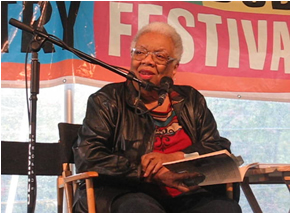
De Amerikaanse dichteres en schrijfster Lucille Clifton werd geboren in New York op 27 juni 1936. Zie ook alle tags voor Lucille Clifton op dit blog.


Miss Rosie

when I watch you
wrapped up like garbage
sitting, surrounded by the smell
of too old potato peels
or
when I watch you
in your old man's shoes
with the little toe cut out
sitting, waiting for your mind
like next week's grocery
I say
when I watch you
you wet brown bag of a woman
who used to be the best looking gal in Georgia
used to be called the Georgia Rose
I stand up
through your destruction
I stand up


Wishes For Sons

i wish them cramps.
i wish them a strange town
and the last tampon.
I wish them no 7-11.

i wish them one week early
and wearing a white skirt.
i wish them one week late.

later i wish them hot flashes
and clots like you
wouldn't believe. let the
flashes come when they
meet someone special.
let the clots come
when they want to.

let them think they have accepted
arrogance in the universe,
then bring them to gynecologists
not unlike themselves.


 1930101-bf0f1470a4b9209ad55be6e4099f30a8.jpg
Lucille Clifton (27 juni 1936 – 13 februari 2010)


De Spaanse schrijver Rafael Chirbes werd geboren op 27 juni 1949 in Tabernes de Valldigna bij Valencia. Zie ook alle tags voor Rafael Chirbes op dit blog

Uit: Aan de oever (Vertaald door Eugenie Schoolderman en Arie van der Wal)

“Zolang ik me kan heugen kom ik al op de paden in het moeras. Toen ik amper elf of twaalf was, liet mijn oom me zien hoe ik het geweer moest hanteren, kinderen waren in die tijd al vroeg volwassen, op je negende of tiende hielp je mee op het land, in de bouw, in de werkplaatsen. Aan de terugslag van mijn eerste schot hield ik een blauwe plek op mijn schouder over, ik was bijna tegen de grond gesmakt. Zoals te verwachten was schoot ik mis, waardoor ik me doodschaamde toen ik me naar hem omdraaide. Ik dacht dat hij de spot met me zou drijven en was bang dat hij me uit zou lachen, maar nee, hij streek met zijn hand over mijn hoofd, woelde door mijn haar en zei: Je hebt nu net de macht gekregen om iets levends te laten sterven, eigenlijk een nogal miserabel soort macht, want ware macht – en die heeft niemand, ook God niet, dat verhaal van Lazarus gelooft geen hond – is dat wat dood is weer tot leven wekken. Iets of iemand het leven benemen is makkelijk, dat kan iedereen. Dat wordt dagelijks in de halve wereld gedaan. Sla de kranten er maar op na. Zelfs jij kunt het, iets of iemand het leven benemen, mits je natuurlijk een beetje beter richt (hier glimlachte hij wél en kneep spottend zijn levendige grijze ogen tot spleetjes, waar zijn goede humeur een web van kleine rimpeltjes omheen legde). De mens, die in staat is geweest immense gebouwen op te trekken, hele bergen te laten verdwijnen, kanalen te graven en bruggen over de zee te bouwen, is er niet in geslaagd een kind dat net is gestorven zijn ogen weer op te laten slaan. Soms is het meest volumineuze en allerzwaarste het makkelijkst te verplaatsen. Reusachtige stenen in de laadbak van een vrachtwagen, lorries vol zware metalen. Maar moet je je voorstellen, er is geen krachtpatser in staat om dat wat je in je draagt, je gedachten, je verlangens, wat niets lijkt te wegen, op zijn schouders te tillen en het ergens anders naartoe te brengen. Er is geen vrachtwagen die het kan verplaatsen. Het voor elkaar krijgen dat iemand die zijn neus voor jou ophaalt of lak aan je heeft je uiteindelijk gaat mogen, is heel wat moeilijker dan die persoon met een paar klappen tegen de grond werken. Mensen slaan uit onmacht. Ze denken dat ze met geweld kunnen bereiken wat hun niet lukt met tederheid, met intelligentie.”


 1930101-bb42521aa5fb8c043412a2958ac4fa30.jpg
Rafael Chirbes (Tabernes de Valldigna, 27 juni 1949)


De Nederlandse schrijver Everhardus Johannes Potgieter werd geboren in Zwolle op 27 juni 1808. Zie ook alle tags voor Potgieter op dit blog.

Uit: Jan, Jannetje en hun jongste kind

“Een portret van JANNETJE te leveren, zou een lust wezen, zoo het geene meesterhand eischte. Om er echter niet schaakmat af te komen, moet men de gaven van REMBRANDT aan die van RUBBENS paren; ik wil wel gelooven, dat er zulke witte raven vliegen; maar ik vrees niet, dat iemand zal ontkennen, dat zij zeldzaam zijn. Immers, louter met het gloeijend koloriet, louter door de tot overdaad toe weelderige vormen van den Vlaamschen Meester, treft men JANNETJE niet. Als ze gelijkend zal worden voorgesteld, mag de nadenkende ernst van den Hollandschen Schilder bij uitnemendheid, mag de rustige zielskracht, waardoor zijne beelden de duisternis om hen heen verlichten, er niet aan ontbreken. Eene moeder wordt echter het liefst in hare kinderen geprezen, en die hadden de kloeke echtelingen bij de vleet; JAN genoot onder al zijne ellende den zegen van ROEMER VISSCHER:

Een vrolijck wijf en eerbaer bij desen,
Slapen dat de nacht schijnt kort te wesen.

En kijk hare dochteren maar eens aan, als gij weten wilt, hoe de deftige matrone er in den bloei van vrolijk- en jolijkheid uitzag. ”Mijne kinders vallen tengerder dan ik plagt te wezen”, moge zij klagen; smeltend noch smachtend hebben de oolijken niets van het teringzieke, dat uit vreemde poëzij in de onze is overgewaaid, maar dat wij toch niet mooi vinden dan in verzen! Wat goedronde gezigtjes, – blank als de sneeuw, welke ook de kleur der geestige kijkers moge zijn, – wat gulgaauwen lach, – als we regt kennis hebben gemaakt, en zij ons wild woelwater schelden, schoon zij stouten schalk meenen. Welke ronde, mollige armen – welk een zeebarichen boezem, zoo als een dichter harer jonkheid zeide; – een mooi woord, VENUS zelf rees immers uit het blanke schuim der golven op?”


 1930101-69ebfa3b72708b62f67ea1ec2917fb4c.jpg
Potgieter (27 juni 1808 – 3 februari 1875)
Borstbeeld uit 1908 door Charles van Wyk op de Potgietersingel in Zwolle


De Nederlandse dichter Kees Ouwens werd geboren op 27 juni 1944 in Zeist. Zie ook alle tags voor Kees Ouwens op dit blog.


Achter een dikke boom

Het was acht uur.
Ik ging van huis en begaf mij buiten het dorp.
Het was koud. Een scherpe wind deed mijn
ogen tranen.
De grond waarop ik liep was hard als steen.
 
Ik volgde een bochtig pad.
Toen ik moe werd, ontkleedde ik mij
achter een dikke boom.
Maar ik bleef alleen, dat maakte
mij radeloos.
Want in mijn oor lag nog haar stem
en ik zag haar voor me, al hield ik de
ogen gesloten.


Uit gewoonte

Toen ik mij in de vrije natuur bevond
met in mijn hand een uitgedoofde sigaret
en ergens in mijn achterhoofd een hoer
die achter een boom zou staan om mij
te foppen en dan plotseling te voorschijn
Over dit hoofdstuk/artikelauteurs

kwam om mij te dwingen haar
te bezitten in laag maar ondoordringbaar struikgewas
en daarna op de achterkant van een
gebruikte ansichtkaart mijn adres opschreef...
 
en ik voor de zoveelste keer een pad afliep
met God halverwege mijn hersenen
en het hiernamaals als een diploma in mijn binnenzak,
begaf ik mij naar een boom om te urineren
maar in werkelijkheid trok ik mij af, uit gewoonte.
 
Waarnaar verlangde ik toch?


 1930101-261ee98e1cfbe96ae02e0b6dab47ce21.jpg
Kees Ouwens (27 juni 1944 – 24 augustus 2004)


De Canadese dichter, singer-songwriter, performer en sociale activist. Dawud (David) Wharnsby Ali werd geboren op 27 juni 1972 in Kitchener, Ontario. Zie ook alle tags voor Dawud Wharnsby op dit blog.


Color of Islam

Allah made us all a different shade and colour.
Nations and tribes recognize one another!
’cause every single person is your sister or brother.
So many different colours of Islam.

Fill the world with colour, paint it everywhere you go.
Paint everything you see, and tell everyone you know.
Qur’an will be your paint, and your brush will be iman,
So fill the world with colour, every colour of Islam.

Truth as clear and blue as the sky we walk under.
Love as bright and loud as the lightening and thunder.
Peace as pure and white as the moon, so full of wonder.
So many different colours of Islam!

Fill the world with colour, paint it everywhere you go.
Paint everything you see, and tell everyone you know.
Qur’an will be your paint, and your brush will be iman,
So fill the world with colour, every colour of Islam.

Smiles, warm and shining, like the sun upon our faces.
Hope as rich and green as the trees of an oasis.
The colours of our faith bloom in so many places.
So many different colours of Islam

Fill the world with colour, paint it everywhere you go.
Paint everything you see, and tell everyone you know.
Qur’an will be your paint, and your brush will be iman,
So fill the world with colour, every colour of Islam.


 1930101-f7d5f7dc3670357b9a43efbfa3963e5d.jpg
Dawud Wharnsby (Kitchener, 27 juni 1972)


De Duitse schrijfster en vertaalster Zsuzsanna Gahse werd op 27 juni 1946 in Boedapest geboren. Zie ook alle tags voor Zsuzsanna Gahse op dit blog.

Uit: Südsudelbuch

„Eine Frau geht durch den Mittelgang in Richtung Speisewagen, ihr folgt ein erwachsener jüngerer Mann, er schwingt die Hüften wie sie, schwingt etwas unbeholfen rechts aus, links nicht, der
Sohn, er hat bei ihr gehen gelernt.
Es wäre gut, niemanden sehen zu müssen.
Hinter mir schwärmt eine Frau von den Wäldern in der Berglandschaft. Zauberhaft, berückend sei die Natur. Eines der wackligen Wörter ist Natur. Orkane oder Überflutungen fände die Schwärmerin nicht beglückend, und ich müsste sie fragen, was sie mit dem Wort Natur meint.
Zwischendurch kreuzt der Schaffner auf, er dreht sich, kann den Oberkörper nach links und rechts schwenken, er geht wie ein europäischer Südländer, wie ein Italiener. Gut wäre es, hinter ihm hergehen zu können. Er stakst nicht, hat keine Bergbeine, obwohl auch die Italiener Berge haben.
Schräg gegenüber von mir hat eine junge Frau in Shorts die Füße auf den Sitz hochgezogen, jetzt hockt sie mit leicht geöffneten Beinen und liest eine Zeitung.“


 1930101-a8134e04ebe3588d19f1cb6da28fa9c0.jpg
Zsuzsanna Gahse (Boedapest, 27 juni 1946)


De Braziliaanse schrijver João Guimarães Rosa werd geboren op 27 juni 1908 in Cordisburgo, Minas Gerais. Zie ook alle tags voor João Guimarães Rosa op dit blog.

Uit: The Devil To Pay In The Backlands (Vertaald door James L. Taylor en Harriet de Onís)

“It’s nothing.
Those shots you heard were not men fighting, God be praised. It was just me there in the back yard, target-shooting down by the creek, to keep in practice. I do it every day, because I enjoy it; have ever since I was a boy. Afterwards, they came to me about a calf, a stray white one, with the queerest eyes, and a muzzle like a dog. They told me about it but I didn’t want to see it. On account of the deformity it was born with, with lips drawn back, it looked like somebody laughing. Man-face or dogfaoe: that settled it for them; it was the devil. Foolish folk. They killed it. Don‘t know who it belonged to. They came to borrow my gun and I let them have it.
You are smiling, amused-like. Listen, when it is a real gunfight, all the dogs start barking, immediately-then when it’s over you go to see if anybody got killed. You will have to excuse it, air, but this is the sertao. Some say it’s not-that the real senao is way out yonder, on the high plains, beyond the Urucuiia River. Nonsense. For those of Corinto and Curvelo, then, isn’t right here the sertao? Ah, but there’s more to it than that! The sertao describes itself: it is where the grazing lands have no fences; where you can keep going ten, fifteen leagues without coming upon a single house; where a criminal can safely hide out, beyond the reach of the authorities. The Urucuia rises in the mountains to the west. But today, on its banks, you find everything: huge ranches bordering rich lowlands, the flood plains; farms that stretch from woods to woods; thick trees in virgin forests-some are still standing. The surrounding lands are the gerais. These gerais are endless. Anyway, the gentleman knows how it is: each one believes what he likes: hog, pig, or swine, it’s as you opine. The sertao is everywhere.
About the devil? I have nothing to say. Ask the others around here. Like fools, they’re afraid even to mention his name; instead they say the Que-Diga, the What-You-May-Call-liim. Bah!
Not me. Over-avoiding a thing is a way of living with it. Take Aristides, who lives in that palm grove there on the right, on the creek called Vereda-da-Vaca-Mansa-de-Santa-Rita.”


 1930101-bc3cd17335775bb561b14d2ec001c3b3.jpg
João Guimarães Rosa (27 juni 1908 – 19 november 1967)


Zie voor nog meer schrijvers van de 27e juni ook mijn blog van 27 juni 2015 deel 2.
Geschreven door Romenu om 17:57 Reageer op dit bericht

Paul Laurence Dunbar

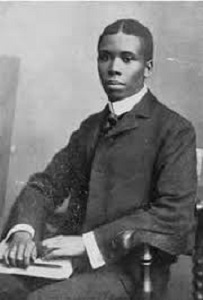
De Amerikaanse dichter en schrijver Paul Laurence Dunbar werd geboren op 27 juni 1872 in Dayton, Ohio. Dunbar was de zoon van voormalige slaven uit Kentucky. Hij volgde de middelbare school in Dayton; daar was hij de enige Afro-Amerikaan in zijn klas. Een van zijn klasgenoten was Orville Wright, voor wiens familie Pauls moeder werkte. Al tijdens zijn schooltijd gaf hij voor het eerst blijk van zijn literaire talent. Hij was lid van de literaire kring en uitgever van de schoolkrant. Met de steun van de gebroeders Wright was hij in staat om zijn eerste krant “The Dayton Tattler” te publiceren. Na de middelbare school werkte hij, gedwongen door zijn financiële situatie, als liftboy. Op een bijeenkomst van de westerse Vereniging van Schrijvers in 1892 werd hij uitgenodigd door een vroegere leraar om gedichten voor te dragen en hij maakte daarmee zoveel indruk dat hij een aanbevelingsbrief van de beroemde dichter James Whitcomb Riley ontving. In hetzelfde jaar publiceerde hij zijn eerste dichtbundel “Oak and Ivy”. Nadat hij verhuisd was naar Chicago, ontmoette hij Frederick Douglass, die hem omschreef als "the most promising young colored man in America." Dunbars gedichten verschenen in bekende kranten als The New York Times. Met zijn tweede dichtbundel “Majors and Minors” - Majors staat voor tekst in het standaard Engels en Minors voor teksten in dialect - was hij zo succesvol dat hij uitgenodigd werd voor een ​​zes maanden durende lezingentour door Engeland. Na zijn terugkeer in Amerika kreeg hij een baan bij de Library of Congress in Washington. Daar ontmoette hij en trouwde hij met de schrijfster Alice Ruth Moore. In Washington ontstond een roman en twee dichtbundels. Ook schreef hij in deze tijd enkele libretti. Toen bij Dunbar in 1898 tuberculose geconstateerd werd keerde hij terug naar Dayton en wijdde zich uitsluitend aan het schrijven en aan lezingen. In 1902 scheidde hij van zijn vrouw. Dunbar was een van de eerste zwarte dichter die in de Verenigde Staten erkenning gekregen.


The Corn-Stalk Fiddle

When the corn’s all cut and the bright stalks shine
Like the burnished spears of a field of gold;
When the field-mice rich on the nubbins dine,
And the frost comes white and the wind blows cold;
Then its heigho fellows and hi-diddle-diddle,
For the time is ripe for the corn-stalk fiddle.

And you take a stalk that is straight and long,
With an expert eye to its worthy points,
And you think of the bubbling strains of song
That are bound between its pithy joints—
Then you cut out strings, with a bridge in the middle,
With a corn-stalk bow for a corn-stalk fiddle.

Then the strains that grow as you draw the bow
O’er the yielding strings with a practiced hand!
And the music’s flow never loud but low
Is the concert note of a fairy band.
Oh, your dainty songs are a misty riddle
To the simple sweets of the corn-stalk fiddle.

When the eve comes on and our work is done
And the sun drops down with a tender glance,
With their hearts all prime for the harmless fun,
Come the neighbor girls for the evening’s dance,
And they wait for the well-known twist and twiddle,
More time than tune—from the corn-stalk fiddle.

Then brother Jabez takes the bow,
While Ned stands off with Susan Bland,
Then Henry stops by Milly Snow
And John takes Nellie Jones’s hand,
While I pair off with Mandy Biddle,
And scrape, scrape, scrape goes the corn-stalk fiddle.

“Salute your partners,” comes the call,
“All join hands and circle round,”
“Grand train back,” and “Balance all,”
Footsteps lightly spurn the ground,
“Take your lady and balance down the middle”
To the merry strains of the corn-stalk fiddle.

So the night goes on and the dance is o’er,
And the merry girls are homeward gone,
But I see it all in my sleep once more,
And I dream till the very break of dawn
Of an impish dance on a red-hot griddle
To the screech and scrape of a corn-stalk fiddle.

 2042231-37f6d6ccb4b6f78d865b195456020cc9.jpg
Paul Laurence Dunbar (27 juni 1872 - 9 februari 1906)

Geschreven door Romenu om 00:00 Reageer op dit bericht

Teju Cole

De Nigeriaans-Amerikaanse schrijver, fotograaf en kunsthistoricus Teju Cole werd geboren op 27 juni 1975 in Kalamazoo, Michigan. Cole en zijn moeder keerden kort na zijn geboorte terug naar Lagos, Nigeria, waar zijn vader zich na het behalen van zijn MBA aan de Western Michigan University bij hen voegde. Cole ging op 17-jarige leeftijd terug naar de VS om een jaar lang te studeren aan de Western Michigan University, waarna hij overstapte naar Kalamazoo College, waar hij in 1996 zijn bachelor behaalde. Een studie medicijnen aan de Universiteit van Michigan gaf hij op om zichin te schrijven voor een programma Afrikaanse kunstgeschiedenis aan de School of Oriental and African Studies en uiteindelijk behaalde hij een doctoraat in de kunstgeschiedenis aan de Columbia University. Cole schreef drie boeken: een novelle: “Every Day is for the Thief”, een roman, Open City en een verzameling van meer dan 40 essays: “Known and Strange Things”, gepubliceerd in 2016. Van juni tot november 2014 was hij 'writer in residence' van de Literaturhaus Zürich en de PWG Foundation in Zurich. “Open City” werd vertaald in tien talen en over het algemeen door de critici positief ontvangen. Cole levert regelmatig bijdragen aan The New York Times, Qarrtsiluni, Granta, The New Yorker, Transition, The New Inquiry, en A Public Space en hij is fotografie criticus van New York Times Magazine.

Uit: Open City

“And so when I began to go on evening walks last fall, I found Morningside Heights an easy place from which to set out into the city. The path that drops down from the Cathedral of St. John the Divine and crosses Morningside Park is only fifteen minutes from Central Park. In the other direction, going west, it is some ten minutes to Sakura Park, and walking northward from there brings you toward Harlem, along the Hudson, though traffic makes the river on the other side of the trees inaudible. These walks, a counterpoint to my busy days at the hospital, steadily lengthened, taking me farther and farther afield each time, so that I often found myself at quite a distance from home late at night, and was compelled to return home by subway. In this way, at the beginning of the final year of my psychiatry fellowship, New York City worked itself into my life at walking pace.
Not long before this aimless wandering began, I had fallen into the habit of watching bird migrations from my apartment, and I wonder now if the two are connected. On the days when I was home early enough from the hospital, I used to look out the window like someone taking auspices, hoping to see the miracle of natural immigration. Each time I caught sight of geese swooping in formation across the sky, I wondered how our life below might look from their perspective, and imagined that, were they ever to indulge in such speculation, the high-rises might seem to them like firs massed in a grove. Often, as I searched the sky, all I saw was rain, or the faint contrail of an airplane bisecting the window, and I doubted in some part of myself whether these birds, with their dark wings and throats, their pale bodies and tireless little hearts, really did exist. So amazed was I by them that I couldn’t trust my memory when they weren’t there.
Pigeons flew by from time to time, as did sparrows, wrens, orioles, tanagers, and swifts, though it was almost impossible to identify the birds from the tiny, solitary, and mostly colorless specks I saw fizzing across the sky. While I waited for the rare squadrons of geese, I would sometimes listen to the radio. I generally avoided American stations, which had too many commercials for my taste — Beethoven followed by ski jackets, Wagner after artisanal cheese — instead tuning to Internet stations from Canada, Germany, or the Netherlands. And though I often couldn’t understand the announcers, my comprehension of their languages being poor, the programming always met my evening mood with great exactness. Much of the music was familiar, as I had by this point been an avid listener to classical radio for more than fourteen years, but some of it was new. There were also rare moments of astonishment, like the first time I heard, on a station broadcasting from Hamburg, a bewitching piece for orchestra and alto solo by Shchedrin (or perhaps it was Ysaÿe) which, to this day, I have been unable to identify.


 1974069-082eb1c5aa6f8da1d398effd1a0fbedc.JPG
Teju Cole (Kalamazoo, 27 juni 1975)


Geschreven door Romenu om 00:00 Reageer op dit bericht

Frank O'Hara

De Amerikaanse dichter, schrijver en kunstcriticus Francis Russell "Frank" O'Hara werd geboren op 27 juni 1926 in Baltimore als zoon van Russell Joseph O'Hara en Katherine (née Broderick) en groeide op in Grafton, Massachusetts. Hij bezocht de St. John's High School. Eigenlijk was hij geboren maart, maar zijn ouders hadden zijn ware geboortedatum veranderd omdat hij verwekt werd buiten het huwelijk. Hij studeerde piano aan het New England Conservatory in Boston in de jaren 1941-1944 en diende in de Stille Zuidzee en Japan op de destroyer USS Nicholas tijdens WO II. Met de financiële middelen die voor veteranen ter beschikking werden gesteld ging hij naar Harvard University, waar de kunstenaar en schrijver Edward Gorey zijn kamergenoot was. O'Hara werd sterk beïnvloed door de beeldende kunst en hedendaagse muziek, die zijn eerste liefde was (hij bleef zijn hele leven een goede pianist). Zijn favoriete dichters waren Pierre Reverdy, Arthur Rimbaud, Stéphane Mallarmé, Boris Pasternak en Vladimir Majakovski. Op Harvard ontmoette O'Hara John Ashbery en begon hij met het publiceren van gedichten in de Harvard Advocate. Ondanks zijn liefde voor muziek veranderde O'Hara zijn hoofdvak en hij studeerde af in 1950 met een graad in Engels. Daarna bezocht hij de Universiteit van Michigan in Ann Arbor. In Michigan won hij een Hopwood Award en behaalde hij zijn MA in Engelse literatuur in 1951. In de herfst verhuisde O'Hara naar een appartement in New York City met Joe LeSueur, die zijn kamergenoot en soms minnaar zou zijn voor de komende 11 jaar. Het was in deze tijd dat hij begon les te geven aanThe New School. O'Hara was actief in de kunstwereld, werkte als recensent voor ARTnews, en in 1960 was hij assistent-conservator expositie schilderijen en beeldhouwwerken van het Museum of Modern Art. Hij was ook bevriend met de kunstenaars Willem de Kooning, Norman Bluhm, Larry Rivers en Joan Mitchell. In de vroege ochtenduren van 24 juli 1966, werd O'Hara aangereden door een jeep op het strand Fire Island. Hij stierf de volgende dag aan een gescheurde lever. Zijn poëzie toont de invloed van abstract expressionisme, surrealisme, de Russische poëzie en dichters van het Franse symbolisme en door William Carlos Williams. O’Hara wordt beschouwd als een leidende figuur in de New York School-een informele groep van kunstenaars, schrijvers en muzikanten die inspiratie putte uit jazz, surrealisme, abstract expressionisme, action painting en hedendaagse avant-gardistische kunststromingen.


Why I Am Not A Painter

I am not a painter, I am a poet.
Why? I think I would rather be
a painter, but I am not. Well,

for instance, Mike Goldberg
is starting a painting. I drop in.
"Sit down and have a drink" he
says. I drink; we drink. I look
up. "You have SARDINES in it."
"Yes, it needed something there."
"Oh." I go and the days go by
and I drop in again. The painting
is going on, and I go, and the days
go by. I drop in. The painting is
finished. "Where's SARDINES?"
All that's left is just
letters, "It was too much," Mike says.

But me? One day I am thinking of
a color: orange. I write a line
about orange. Pretty soon it is a
whole page of words, not lines.
Then another page. There should be
so much more, not of orange, of
words, of how terrible orange is
and life. Days go by. It is even in
prose, I am a real poet. My poem
is finished and I haven't mentioned
orange yet. It's twelve poems, I call
it ORANGES. And one day in a gallery
I see Mike's painting, called SARDINES.


Homosexuality

So we are taking off our masks, are we, and keeping
our mouths shut? as if we'd been pierced by a glance!

The song of an old cow is not more full of judgment
than the vapors which escape one's soul when one is sick;

so I pull the shadows around me like a puff
and crinkle my eyes as if at the most exquisite moment

of a very long opera, and then we are off!
without reproach and without hope that our delicate feet

will touch the earth again, let alone "very soon."
It is the law of my own voice I shall investigate.

I start like ice, my finger to my ear, my ear
to my heart, that proud cur at the garbage can

in the rain. It's wonderful to admire oneself
with complete candor, tallying up the merits of each

of the latrines. 14th Street is drunken and credulous,
53 rd tries to tremble but is too at rest. The good

love a park and the inept a railway station,
and there are the divine ones who drag themselves up

and down the lengthening shadow of an Abyssinian head
in the dust, trailing their long elegant heels of hot air

crying to confuse the brave "It's a summer day,
and I want to be wanted more than anything else in the world."


 1949219-b040db40fcc416155976a6ae9609cb3c.jpg
Frank O'Hara (27 juni 1926 - 25 juli 1966)

Geschreven door Romenu om 00:00 Reageer op dit bericht

Meer van Romenu

↑ Terug naar de berichten