J. H. Leopold, Ida Gerhardt, Andre Rudolph, Rubem Fonseca, Henning Boëtius, Camilo José Cela, Rachel Billington
De Nederlandse dichter en classicus Jan Hendrik Leopold werd geboren in ’s-Hertogenbosch op 11 mei 1865. Zie ook alle tags voor J. H. Leopold op dit blog.
In winteravondkou
In winteravondkou, in het groot open
van het blauwvloeiende belopen
roestrandig staal,
spichtig, onzichtig nu de nieuwe maan
als een fijn edel veertje, als een losse haal
en dun getogen.
Rondom vochtig staan
de zwarte sparren, lorken gril verwezen,
verzameld onderhout, somber en nors,
maar onder de donkerte der schors
is helder al het jonge sap gerezen.
Onder de nevels in de vert'
het bronzen roepen van een hert.
Maartlucht
Maartlucht, die er tegelijk
zo scherp als glas
en zo ontvoerend zijn kan.
O, de bezieling, zijnde in de bezwaren
anders nooit betrokken streken
en schuilgelegen uitzicht
te brengen vondsten fonkelend en schaars:
de moeilijkheden zijn de kans der kunstenaars.
Zingende lucht
Zingende lucht
zingende wind -
en binnen in,
binnen de struiken
ligt uitgegoten
een donkere vijver
en luistert en hoort,
hoort stil verloren
en denkt en peinst...
Want van lente, van lente,
Het zingt al van lente en zonneschijn.
J. H. Leopold (11 mei 1865 - 21 juni 1925)
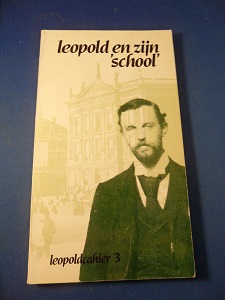
Cover Leopold Cahier
De Nederlandse dichteres Ida Gerhardt werd geboren in Gorinchem op 11 mei 1905. Zie ook alle tags voor Ida Gerhardt op dit blog.
Thuiskomst
Dit is mijn droom- het kleine huis aan de rivier;
het rusteloze scheren van de zwaluw gaat er
langs dak en raam; de roodborst nestelt bij de vlier.
Een schip zeilt traag voorbij; de bel luidt over 't water.
En als ik nader waar de dijk zich buigt door 't land,
richt kort zich op die in de lage tuin gebogen
over de spade staat,-en met de vrije hand
weert zij het helle licht beschuttend van de ogen.
Hoe ken ik dit gebaar, hoe is het mij vertrouwd,
dit sterke opzien van wie daag'lijks naar de lucht en
het wiss'lend, open water turend, rustig oud
werd in dit dijkland en zijn ruime wolkenvluchten.
Er is een scherp herkennen van elkaar en
dan komt zij langs het smalle klinkerpad gelopen,-
maar keert nog terug en stoot de stroeve huisdeur open.
Dit ogenblik-wat tellen zóveel bitt're jaren?
Tweespraak
De vogel eenzaam op het dak
spreekt tot de wind om het huis:
`Daarbinnen leeft een
die is alleen,
en toch hoorde ik dat zij sprak.'
En dan spreekt de wind om het huis
tot de vogel eenzaam op het dak:
`Daarginder leeft een
die liet haar alleen.
Zij zegt het woord dat hij brak.'
NIKÈ
Kraanvogels met machtige slag,
kraanvogels in vliegende vlucht
boven Hellas, hoog aan de lucht,
de snavels in falanx gericht;
drie wiggen in splinterend licht,
met het scherp door de zeewind gewet.
En zij hebben triomf getrompet
waar in fonkeling Sounion lag,
waar ik stond en hen hoorde, hen zag
en hun paean vervaard heb vertaald:
op de donkere nacht heeft de dag
de gevederde zege behaald.

Ida Gerhardt (11 mei 1905 – 15 augustus 1997)
De Duitse dichter en schrijver Andre Rudolph werd geboren in Warschau op 11 mei 1975 en groeide op in Leipzig. Zie ook alle tags voor Andre Rudolph op dit blog.
bei sachgemäßer lagerung
halten unsre tage acht, vielleicht
zehn stunden, bevor sie
zu goldstaub zerfallen; es ist dann
ungefähr sechs, ein altes
augenleiden hindert uns
an der weiteren lektüre von
papas randnotizen zu mamas brief;
(»lassen wir den kram erstmal liegen«).
nach einbruch der dunkelheit,
flimmern und klammern, – singen die
antennenfische wieder ihr lied, es handelt
vom fließtext der leiber, der uns
aus der lesbarkeit befreit
die zahl der schneewittchen
nimmt seit jahren deutlich zu
dem aufmerksamen beobachter ent-
geht dabei die scheue sorgfalt nicht,
mit der sie den pergament-
schmetterling ihrer seele – auf –
und – zu – falten wie einen hohen
besuch. (wozu dann aber der dunkle
glanz des kometen, den sie in ihren
gepanzerten büchsen verschlossen
halten?) – selten träumen sie
von messern. manchmal wünschen sie
sich ins moos. einige schneewittchen
behaupten beharrlich, sie hätten kiemen

Andre Rudolph (Warschau, 11 mei 1975)
De Braziliaanse schrijver José Rubem Fonseca werd geboren op 11 mei 1925 in Juiz de Fora. Zie ook alle tags voor Rubem Fonseca op dit blog.
Uit: Vast Emotions and Imperfect Thoughts (Vertaald door Clifford E.Landers)
`Hi,' she said.
I turned away. She came after me and took my arm as we walked.
`I said hi and you didn't answer.'
I stopped. I looked at her. She couldn't be more than sixteen at most.
`What do you want me to say?'
`At least say hi.'
`Hi.'
`Wanna buy me some grub at the Guanabara?'
I kept quiet, thinking.
`Later I'll go home with you if you want.'
The girl had a decent and deserving face, even if perverted; she might be a student prostituting herself to buy drugs. Whatever it was, she promised release and tenderness.
`What's your name?'
`Dani.'
`Let's go,' I said. We crossed the street, back to the side where the Guanabara was.
`Can I order a steak and fries?'
`You can order anything you want.'
When her food arrived, Dani asked, `Aren't you going to eat anything?'
`I'm not hungry.'
She ate voraciously. Between forkfuls she stopped and smiled gently. She chewed first on one side then on the other, a harmonious thing, healthy, bovine, perfect, to be envied.
`Well?' she said.
`Well what?'
`What now?'

Rubem Fonseca (Juiz de Fora, 11 mei 1925)
De Duitse schrijver Henning Boëtius werd geboren op 11 mei 1939 in Langen, Hessen. Zie ook alle tags voor Henning Boëtius op dit blog.
Uit: Phönix aus der Asche
"Das würde aber nur funktionieren, wenn sich vorher die richtige Knallgasmischung gebildet hätte. Mindestens 15 Prozent Wasserstoff muss Luft enthalten, um eine entsprechende Reaktion zu ermöglichen. Was wiederum ein Leck in einer Zelle vor- aussetzt."
"Oder eine ungenügende Ventilation im Gasschacht, was allerdings höchst unwahrscheinlich ist." Eckener leerte sein Bourbonglas in einem Zug. "Die Hecklastigkeit des Schiffes könnte tatsächlich für ein Leck sprechen. Nur ist die Frage, wieso solch penible Leute wie Knorr es nicht bemerkt haben sollen. Eines scheint allerdings möglich. Pruss ist der Aussage eines Zeugen nach die letzte Kurve zu schnell gefahren. Die großen Kräfte, die dies im Schiffsskelett hervorruft, könnten einen der Spanndrähte zum Reißen gebracht haben. Wie eine Peitsche könnte er Zelle vier aufgeschlitzt haben. Doch hat niemand von den Leuten in der Gondel diesen Fahrfehler bestätigt. Alle sagen, die Lage sei völlig normal gewesen. Ich glaubt diesen erfahrenen Leuten. Die meisten von ihnen haben unter mir ihr Handwerk gelernt. Gehen wir zur nächsten Theorie. Ein Funke aus den Motoren. Vielleicht beim plötzlichen Umstellen auf volle Kraft zurück. Die Sache ist höchst unwahrscheinlich. Wie sollte ein solcher Funke ausgerechnet in den Teil des oberen Schiffes gelangen, um dort das Knallgasgemisch zu entzünden. Wir wissen aus den Einsätzen deutscher Luftschiffe im ersten Weltkrieg über England, dass erst sehr hohe und intensive Temperaturen, wie sie Phosphorgeschosse entwickeln, ein Schiff zur Explosion bringen können."

Henning Boëtius (Langen, 11 mei 1939)
De Spaanse schrijver Camilo José Cela werd geboren op 11 mei 1916 in Iria Flavia. Zie ook alle tags voor Camilo José Cela op dit blog.
Uit:The Family of Pascual Duarte (Vertaald door Anthony Kerrigan)
“It is a strange thing, but if as a child I was taken out of range of that stench I felt the anguish of death. I remember a trip I made to the capital of the province to see about my military service. I spent the whole damn day wandering about as if I had lost my bearings, sniffing the wind like a game dog. When I went to bed back at the inn, I caught a whiff of my corduroy pants, and that brought me back to my senses. My blood began to run again and it warmed the heart of me. I pushed the pillow away and laid my head on the folded pants and slept like a log that night.
We kept a sorry little burro in the stable, skinny and covered with sores, to help us in the work. When we had a run of luck-which to tell the truth was not very often-we also kept a pair of hogs (begging your pardon) or even as many as three. Behind the house there was a kind of corral, not very large but which served its purpose, and a well. Eventually I had to seal off the well because the water became polluted.
Beyond the corral ran a stream, sometimes half dry and never very full, always dirty and stinking like a troop of gypsies. Still, sometimes, when I wanted to kill an afternoon, I’d catch some fine eels there. My wife used to say, and despite everything, what she said was humorous enough, that the eels were so fat because they ate the same as Don Jésus—only a day later. When the mood to fish was on me the hours slipped away like shadows, without my noticing them, so that it was always dark by the time I went to pack up my gear. Far off in the distance, like a fat squat turtle, like a snake hugging the ground and afraid to move, Almendralejo lay in the dusk, its lights begining to flicker.”

Camilo José Cela (11 mei 1916 – 17 januari 2002)
Standbeeld in Padrón
De Britse schrijfster Rachel Billington werd geboren op 11 mei 1942 in Londen. Zie ook alle tags voor Rachel Billington op dit blog.
Uit: The Missing Boy
“The car was not a car: it was a limousine, one of those drawn-out white vehicles with darkened windows you see swimming through London streets.
The boy had imagined them filled with pouting blondes on their way to film premieres or veiled dark-eyed beauties taking a break from their sheikh owner.
The word ‘limousine’ was identified with glamour, sex, money.
He took a step closer. He shivered. This limousine lay in the far corner of a field, just outside a broken-down shed littered with old farm implements, disguised by nettles, brambles and bulging bales of straw.
How are the mighty fallen! He remembered that line from somewhere. He might have read it, although it was the sort of thing Eve would say. He shivered again. He wasn’t cold. The sun was shining. It was fear of the strangeness of everything and now this car. It was also excitement.
He climbed over the gate, which was padlocked with a rusty chain, and began to walk towards the car. He didn’t want to think about his mother. It felt like days since he’d left home. As if he’d gone on the longest plane trip in the world and landed up on another planet. Actually, he’d travelled by train that morning and it was still afternoon. Just look how the sun glinted off the limo’s chrome even though the body of it was bog filthy.”

Rachel Billington (Londen, 11 mei 1942)
Cover
Zie voor nog meer schrijvers van de 11e mei ook mijn blog van 11 mei 2015 deel 2.