

Naar de inhoud

Romenu

Over literatuur, gedichten, kunst en cultuur
seniorennet.beseniorennet.be

Berichten van 23 december 2011

Robert Bly, Norman Maclean, Marcelin Pleynet, Tim Fountain, Iván Mándy
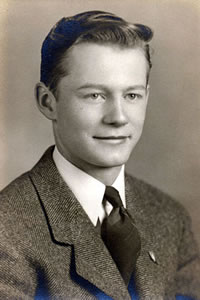
De Amerikaanse dichter en schrijver Robert Bly werd geboren op 23 december 1926 in Madison, Minnesota. Zie ook mijn blog van 23 december 2008 en ook mijn blog van 23 december 2009 en ook mijn blog van 23 december 2010.


The Buried Train


Tell me about the train that people say got buried
By the avalanche--was it snow?--It was
In Colorado, and no one saw it happen.
There was smoke from the engine curling up

Lightly through fir tops, and the engine sounds.
There were all those people reading--some
From Thoreau, some from Henry Ward Beecher.
And the engineer smoking and putting his head out.

I wonder when that happened. Was it after
High School, or was it the year we were two?
We entered this narrow place, and we heard the sound
Above us--the train couldn't move fast enough.

It isn't clear what happened next. Are you and I
Still sitting there in the train, waiting for the lights
To go on? Or did the real train get really buried;
So at night a ghost train comes out and keeps going...


SOLITUDE LATE AT NIGHT IN THE WOODS

I
The body is like a November birch facing the full moon
And reaching into the cold heavens.
In these trees there is no ambition, no sodden body, no leaves,
Nothing but bare trunks climbing like cold fire!

II
My last walk in the trees has come. At dawn
I must return to the trapped fields,
To the obedient earth.
The trees shall be reaching all the winter.

III
It is a joy to walk in the bare woods.
The moonlight is not broken by the heavy leaves.
The leaves are down, and touching the soaked earth,
Giving off the odor that partridges love.


 1058880-ac2e15e4eed56b0b39ba9e306015f3e3.jpg

Robert Bly (Madison, 23 december 1926)

Een jonge Robert Bly 


De Amerikaanse schrijver Norman Fitzroy Maclean werd geboren op 23 december 1902 in Clarinda, Iowa. Zie ook mijn blog van 23 december 2008 en ook mijn blog van 23 december 2009 en ook mijn blog van 23 december 2010. 


Uit: A River Runs Through It


“The four-and-a-half-ounce thing in silk wrappings that trembles with the underskin motions of the flesh becomes a stick without brains, refusing anything simple that is wanted of it. All that a rod has to do is lift the line, the leader, and the fly off the water, give them a good toss over the head, and then shoot them forward so they will land in the water without a splash in the following order: fly, transparent leader, and then the line—otherwise the fish will see the fly is a fake and be gone. Of course, there are special casts that anyone could predict would be difficult, and they require artistry—casts where the line can't go over the fisherman's head because cliffs or trees are immediately behind, sideways casts to get the fly under overhanging willows, and so on. But what's remarkable about just a straight cast—just picking up a rod with a line on it and tossing the line across the river?


1058880-a5ebb4184aa04d01e79a344bb00908a0.jpg
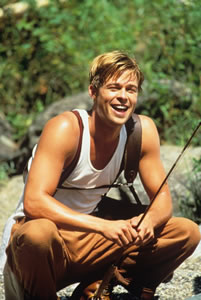
Scene uit de film van Robert Redford uit 1992 met o.a. Brad Pitt


Well, until man is redeemed he will always take a fly rod too far back, just as natural man always overswings with an ax or golf club and loses all his power somewhere in the air: only with a rod it's worse, because the fly often comes so far back it gets caught behind in a bush or rock. When my father said it was an art that ended at two o'clock, he often added, "closer to ten than to two," meaning that the rod should be taken back only slightly farther than overhead (straight overhead being twelve o'clock).”


 1058880-05c19347262628b771288aceba3826b2.jpg

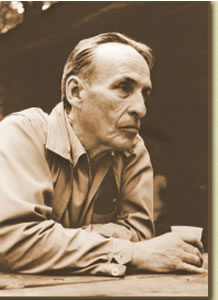
Norman Maclean (23 december 1902 – 2 augustus 1990)


De Franse dichter, schrijver en essayist Marcelin Pleynet werd geboren op 23 december 1933 in Lyon. Zie ook mijn blog van 23 december 2008 en ook mijn blog van 23 december 2009 en ook mijn blog van 23 december 2010. 
 

Uit: Comme la poésie la peinture


„Apollinaire, qu’est-ce à dire ? Que savez-vous d’Apollinaire ?

Il m’a toujours semblé que les héritiers et les amis d’Apollinaire avaient réussi le « mauvais coup » dont Cézanne soupçonnait ceux qui prétendaient s’intéresser à sa peinture.

Je n’en veux pour preuve que les débats et tractations qui aboutissent à refuser, en 1924, puis en 1950, tous les projets de sculptures que Picasso proposa pour la tombe de son ami. C’est finalement un des artistes les plus médiocres du voisinage, un certain Serge Ferat, qui réalisera le monument. Pourquoi lui ? Quel rôle jouèrent effectivement Jacqueline Kolb (qu’Apollinaire épousa en mai 1918, sept mois avant de mourir) et les amis du poète dans cette mauvaise affaire ?

Apollinaire aujourd’hui. Quatre volumes et un « Album » dans la « Bibliothèque de la Pléiade », qui n’a toujours pas publié la correspondance et notamment les Lettres à Lou, d’où sont extraits les poèmes qui figurent dans le tome I des OEuvres complètes de la « Bibliothèque de la Pléiade », à partir d’une charcuterie poétique dont les éditeurs semblent ne s’être jamais demandé jusqu’à quel point elle dénaturait du tout au tout lesdits « Poèmes à Lou ». Pourquoi cette curieuse attitude vis-à-vis d’un poète dont on publie et commente par ailleurs la moindre notule journalistique ?“


 1058880-969dfe82d661a33238e963abad8260a6.jpg

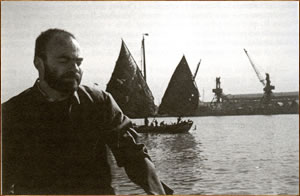
Marcelin Pleynet (Lyon, 23 december 1933)

In Shanghai, 1974 


De Britse schrijver Tim Fountain werd geboren op 23 december 1967 in Dewsbury, West Yorkshire. Zie ook mijn blog van 23 december 2008 en ook mijn blog van 23 december 2009 en ook mijn blog van 23 december 2010. 
 

Uit: Icons: Quentin Crisp


„He offered us a drink and proceeded to pour me a vast brandy in a tall glass that was covered in

grease; what looked like a fried egg proceeded to form on the top of the glass. He then sat

alongside me on the bed, with Bette opposite in an armchair no more than two feet away (Bourne

said we looked like “three men in a boat”) and proceeded to hold forth for two hours.

It was an utterly mesmerising and intoxicating performance, and made all the more fascinating

for me because I hadn’t seen his one-man show An Evening With Quentin Crisp or read his books

in enough detail to know that he was often quoting from them word for word, and that this was

essentially his ‘greatest hits album’ performed live. Neither did I know that this was a performance he gave almost daily to the hundreds of strangers who phoned him up and offered to buy him lunch (he never removed his name from the phonebook, saying: “I am the most available man in America”).

He succeeded in making me believe this stuff was being said for the first time, for me.

He ranged over subjects as diverse as oral sex (“Marlene Dietrich said you have to let them put it

in, otherwise they won’t come back”) and higher education (“a last wild effort on the part of the

authorities to prevent an overdose of leisure driving the world mad”). More controversially, he

asked me why President Bill Clinton was “sending the brave and the beautiful to fight in Yugoslavia”

adding, “let them die, they’re only Europeans”.

And yet in the next breath he was telling me we must give our love to the underdog and the unloveable. It was a fantastically contradictory performance.“
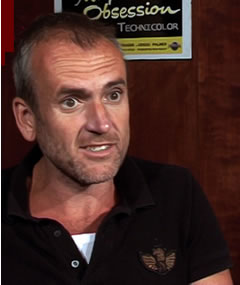


 1058880-4329d7b161b9c34d65d757818e9e0298.jpg

Tim Fountain (Dewsbury, 23 december 1967)


De Hongaarse Iván Mándy werd geboren op 23 december 1918 in Boedapest. Zie ook alle tags voor Iván Mándy op dit blog.


Uit: The Crossing (Vertaald door Eszter Molnár)


"Who said he was let out? Turned out."

"All the more reason, then!"

"Why? Would you have kept him in?"

"The smell!"

"Smell? You call that a smell? Stink's more like it. Stinker!"

"Someone should take that bottle away from him."

"What for?"

The old man over by that tree! He's watching me! How long has he been watching me?

A balcony high up. A woman on a tiny chair. Sunbathing. Suddenly leaning forward. Leaning over the railing.

The old man over by that tree! He's watching me! How long has he been watching me? Blinking his eyes... winking. Yes, yes, positively winking. Any minute now and he's going to wave. Does he know me from somewhere? No, impossible. Or is it?

And in fact the old man did seem to be nodding familiarly. He did not wave. Why should he? He closed his eyes. But only to look up again.

The woman drew back. Pressed back against the wall. Pressed close against the wall of the balcony. He came to see me. He's going to come up. No, he hasn't the strength to move. Can't even stand. Hold it! Any minute now and he'll be springing to his feet.

Then her mind went blank. She faded herself into the wall.

Down below the woman in the blue smock.

"We should phone."

"Who do you have in mind?"

"What do you mean, who? Who do you think? An ambulance! Don't you think we should phone for an ambulance?"
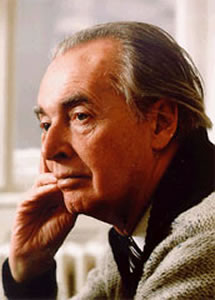


 1058880-21b9382bfb7be6014110877ef3936dad.jpg

Iván Mándy (23 december 1918 – 26 oktober 1995)
Portret door Szinte Gábor, 1979


Zie voor nog meer schrijvers van de 23e december ook mijn vorige blog van vandaag en eveneens mijn eerste blog van vandaag.
Geschreven door Romenu om 22:34 Reageer op dit bericht

J.J.L. ten Kate, Harry Shearer, Christa Winsloe, Albert Ehrenstein

De Nederlandse dichter-dominee Jan Jakob Lodewijk ten Kate werd geboren op 23 december 1819 in Den Haag. Zie ook alle tags voor J.J.L. ten Kate op dit blog.


Het verdorde blaadje


Blaadje, door de noordse vlagen
Van de stengel afgeslagen,
Werwaards gaat gij?

" 'k Weet het niet!
Wind en Zefier doen mij dwalen
Naar een onbekend verschiet,
Van de bergen naar de dalen,
Van de vlakte naar het riet:
Nu eens in de zonnestralen,
Dan eens waar de regen giet.
'k Mag niet vragen
En niet klagen:
'k Ga waar àlles heen moet gaan,
't Lenteroosje
Met zijn bloosje,
En de groene lauwerblaân!"


De Bijbel in huis


Als de Bijbel wordt gelezen
In het christlijk huisgezin,
Poost de zorge van haar vrezen,
Houdt de scherts haar lachjes in.

Vader voelt zijn diere plichten,
Moeder sterkt zich in gebeên,
En Gods liefdestralen lichten
Over 't hoofd der kindren heen!

Al het goede, in 't harte slapend,
Waakt en wordt op nieuw gewijd;
Oud en jong voelt zich gewapend
Voor des Levens heilige strijd.

Droef zou 's Levens echo wezen,
Klonk er niets dan 's Mensen woord:
Waar de Bijbel wordt gelezen,
Wordt des Heren stem gehoord!


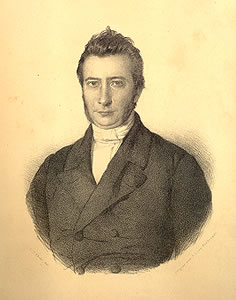
 1058876-9608b80afa2e1361b2ad4b6ba3739ca2.jpg

J.J.L. ten Kate (23 december 1819 -  24 december 1889)

Portret door A.J. Ehnle


De Amerikaanse schrijver en komische acteur  Harry Shearer werd geboren op 23 december 1943 in Los Angeles. Zie ook mijn blog van 23 december 2007 en ook mijn blog van 23 december 2008 en ook mijn blog van 23 december 2009 en ook mijn blog van 23 december 2010.


Uit: Don't Demonize Political Opponents, Infantilize Them (Blog The Huffington Post)


Last week in New Orleans, James Carville and Mary Matalin hosted a day-long conference on "Taking the Poison Out of Partisanship", the latest in many attempts to get the partisan voices lowered in what passes for political discourse in this country.

But I wasn't there, I was traveling. And In one of my innumerable trips through airports this year, my thoughts were momentarily distracted from observations about junk-touching and the fading glories of first-class jet travel by the sight of a baby. I'm not a parent, so other peoples' children are not always a source of ineffable joy, but this was one of those baby's faces that could make Attila the Hun say "Awwww".

Walking down the jetway, I mused that one key to the charm of the young in our species, among others, was the role of the eyes. Apparently, we're born with the size of eyes we'll have throughout life; it's the rest of the body that grows around them. So the young have what appear to be outsize eyes with which to gaze lovingly at us, carrying the crucial age-old message: "Don't eat me".


 1058876-f0cec88b65e93f84b3ab8294797c50d9.jpg

Harry Shearer (Los Angeles, 23 december 1943)


De Duits- Hongaarse schrijfster en beeldend kunstenares Christa Winsloe werd geboren in Darmstadt op 23 december 1888. Zie ook mijn blog van 23 december 2010.


Uit: Demoiselles en uniforme (Mädchen in Uniform)


„MADEMOISELLE VON KESTEN

Ah ! mais alors, tu es deja une vraie grande fille. Nous avons des enfants beaucoup plus jeunes dans notre maison.

LA TANTE

Ah !oui,je voulais justement vous demander encore quelque chose, Mademoiselle von Kesten, si vous permettez.

MADEMOISELLE VON KESTEN

Mais je vous en prie.

LA TANTE

Oui, comment dois-je dire ; j’aimerais bien savoir qui sont maintenant les enfants, au juste… de quelles familles…


1058876-ab9595ddfc83423dd441354877874eb7.jpg
Scene uit de film met
Lilli Palmer en Romy Schneider


MADEMOISELLE VON KESTEN

Ah ! Votre Excellence pense sans doute qu’il y a peut-être quelque chose de changé chez nous…

LA TANTE, faisant de la tete un signe d’affirmation.

Oui, oui, c’est ce que je voulais dire.

MADEMOISELLE VON KESTEN

Oh! quant.cela, je puis vous rassurer complètement. Les filles des profiteurs de guerre, ou d’autres gens semblables, ne sont pas acceptes chez nous, bien que l’on nous adresse tant de demandes. Non, non, nous nous en tenons rigoureusement.à l’avant-guerre. Je dois dire que cela nous oblige . des sacrifices.“


 1058876-fc208bf986c85184b60073b65ee13d4e.jpg

Christa Winsloe (23 december 1888 - 10 juni 1944)


De Oostenrijkse expressionistische dichter en schrijver Albert Ehrenstein werd op 23 december 1886 in Wenen geboren. Zie ook mijn blog van 23 december 2006 en ook mijn blog van 23 december 2008 en ook mijn blog van 23 december 2009 en ook mijn blog van 23 december 2010.


Der Knabe singt


Ich lebe blond und wacker

wohl in die Welt hinaus,

die Welt sie sei mein Acker,

die Welt sie sei mein Haus.


Wie Blumen viele sprießen,

so sprieße ich in sie.

Will’s Blut für sie vergießen

und mächtig sein wie sie!


Mein Handeln sei ein Handeln

wie Gottes, süß und schwer.

Nur träumend will ich wandeln,

und weiter sei nichts mehr.


Enttäuscht


Das Leid hat meine Qualenstirn

und meine Hände müd gemacht.

Mein Leib, du mein Garten und Lustgefild,

soll ich noch ferner müd und weh

mich leiden an der Leiden Lust,

und weiter gehen wank und weh

und tragen, was mich matt und müd

und krank und fiebersiech gemacht?


In meinem Garten heute und einst

mein Herz so arm und krank,

weil alle Freuden eingeheimst,

kein Leid, an dem ich satt mich trank!

Mein Herz aber krampfte laut,

wollt’ seine Nahrung haben;

wo ist das neue Leidenhaus erbaut

mit Mädchen, Geiern, Raben?


In jede Lust ich zwar versank,

und sank dabei angsttief,

doch schließlich stets wach, sehnsuchtskrank

es in mir rief.

O Garten, Garten, wie kenne ich dich!

jede Blume, Pflanze versucht,

an Dornen, Nesseln, erquickt’ ich mich,

schien glücklich mir, versucht.


Doch jetzt: es laubt kein Baum,

es wächst mir keine Rinde,

an der ich und mein Traum

zu neuen Leiden finde


 1058876-1e71bbee135f23e3c6bf9e52eb81d901.jpg

Albert Ehrenstein (23 december 1886 – 8 april 1950)

Portret door Gregor Rabinovitch
Geschreven door Romenu om 22:34 Reageer op dit bericht

Charles Sainte-Beuve, Giusepe di Lampedusa, Mathilde Wesendonck, Martin Opitz

De Franse dichter, schrijver en criticus Charles Augustin Sainte-Beuve werd geboren op 23 december 1804 in Boulogne-sur-Mer. Zie ook alle tags voor Charles Sainte-Beuve op dit blog.


PREMIER AMOUR


Un autre plus heureux, va unir son sort à celui de mon amie. Mais, quoiqu’elle trompe ainsi mes plus chère espérances, dois-je la moins aimer ?

Mackensie, l’Homme sensible.


Printemps, que me veux-tu ? pourquoi ce doux sourire,

Ces fleurs dans tes cheveux et ces boutons naissants ?

Pourquoi dans les bosquets cette voix qui soupire,

Et du soleil d’avril ces rayons caressants ?


Printemps si beau, ta vue attriste ma jeunesse ;

De biens évanouis tu parles à mon cœur ;

Et d’un bonheur prochain ta riante promesse

M’apporte un long regret de mon premier bonheur.


Un seul être pour moi remplissait la nature ;

En ses yeux je puisais la vie et l’avenir ;


Au musical accent de sa voix calme et pure,

Vers un plus frais matin je croyais rajeunir.


Oh ! combien je l’aimais ! et c’était en silence !

De son front virginal arrosé de pudeur,

De sa bouche où nageait tant d’heureuse indolence,

Mon souffle aurait terni l’éclatante candeur.


Par instants j’espérais. Bonne autant qu’ingénue,

Elle me consolait du sort trop inhumain ;

Je l’avais vue un jour rougir à ma venue,

Et sa main par hasard avait touché ma main.


Que de fois, étalant une robe nouvelle,

Naïve, elle appela mon regard enivré,

Et sembla s’applaudir de l’espoir d’être belle,

Préférant le ruban que j’avais préféré !


Ou bien, si d’un pinceau la légère finesse

Sur l’ovale d’ivoire avait peint ses attraits,

Le velours de sa joue, et sa fleur de jeunesse,

Et ses grands sourcils noirs couronnant tous ses traits ;


Ah ! qu’elle aimait encor, sur le portrait fidèle

Que ses doigts blancs et longs me tenaient approché,

Interroger mon goût, le front vers moi penché,

Et m’entendre à loisir parler d’elle près d’elle !


Un soir, je lui trouvai de moins vives couleurs :

Assise, elle rêvait : sa paupière abaissée

Sous ses plis transparents dérobait quelques pleurs ;

Son souris trahissait une triste pensée.


Bientôt elle chanta ; c’était un chant d’adieux.

Oh ! comme, en soupirant la plaintive romance,


Sa voix se fondait toute en pleurs mélodieux,

Qui, tombés en mon cœur, éteignaient l’espérance !


Le lendemain un autre avait reçu sa foi.

Par le vœu de ta mère à l’autel emmenée,

Fille tendre et pieuse, épouse résignée,

Sois heureuse par lui, sois heureuse sans moi !


Mais que je puisse au moins me rappeler tes charmes ;

Que de ton souvenir l’éclat mystérieux

Descende quelquefois au milieu de mes larmes,

Comme un rayon de lune, un bel Ange des cieux !


Qu’en silence adorant ta mémoire si chère,

Je l’invoque en mes jours de faiblesse et d’ennui ;

Tel en sa sœur aînée un frère cherche appui,

Tel un fils orphelin appelle encor sa mère.


 1058868-52894a0848aa6a687f98e794baf276cc.jpg

Charles Sainte-Beuve (23 december 1804 – 13 oktober 1869)

Getekend door François-Joseph Heim, 1856


De Italiaanse schrijver Giuseppe Tomasi di Lampedusa werd geboren in Palermo op 23 december 1896. Zie ook alle tags voor Giuseppe Tomasi di Lampedusa op dit blog.


Uit: The Leopard (Vertaald door Archibald Colquhoun)


'You're a gentleman, Chevalley, and I consider it a privilege to have met you; you are right in all you say; your only mistake was saying "the Sicilians must want to improve." I'll tell you a personal anecdote. Two or three days before Garibaldi entered Palermo I was introduced to some British naval officers from one of the warships then in harbour to keep an eye on things. They had heard, I don't know how, that I own a house down on the shore facing the sea, with a terrace on its roof from which can be seen the whole circle of hills around the city; they asked to visit this house of mine and look at the landscape where Garibaldini were said to be operating, as they could get no clear idea from their ships. In fact Garibaldi was already at Gibilrossa. They came to my house, I accompanied them up on to the roof; they were simple youths in spite of their reddish whiskers. They were ecstatic about the view, the vehemence of the light; they confessed, though, that they had been horrified at the squalor, decay, filth of the streets around. I didn't explain to them that one thing was derived from the other, as I have tried to with you. Then one of them asked me what those Italian volunteers were really coming to do in Sicily. "They are coming to teach us good manners!" I replied in English. "But they won't succeed, because we are gods." 


 1058868-66b6c3e431b5930489f1f1e95592f009.jpg

Giuseppe Tomasi di Lampedusa (23 december 1896 - 23 juli 1957)


De Duitse dichteres en schrijfster
Mathilde Wesendonck werd geboren als Agnes Luckemeyer op 23 december 1828 in Elberfeld.
Zie ook mijn blog van 23 december 2008 en ook mijn blog van 23 december 2009 en ook mijn blog van 23 december 2010.


Schmerzen


Sonne, weinest jeden Abend

Dir die schönen Augen rot,

Wenn im Meeresspiegel badend

Dich erreicht der frühe Tod;


Doch erstehst in alter Pracht,

Glorie der düstren Welt,

Du am Morgen neu erwacht,

Wie ein stolzer Siegesheld!


Ach, wie sollte ich da klagen,

Wie, mein Herz, so schwer dich sehn,

Muß die Sonne selbst verzagen,

Muß die Sonne untergehn?


Und gebieret Tod nur Leben,

Geben Schmerzen Wonnen nur:

O wie dank' ich, daß gegeben

Solche Schmerzen mir Natur!


1058868-5308643500ea28fe119f021c4680d608.jpg
Mathilde Wesendonck (23 december 1828 – 31 augustus 1902)


De Duitse dichter Martin Opitz von Boberfeld werd geboren op 23 december 1597 in Bunzlau (Silezië). Zie ook mijn blog van 23 december 2008 en ook mijn blog van 23 december 2009 en ook mijn blog van 23 december 2010.


Sonett

Aus dem Italienischen Petrarchae.

Ist Liebe lauter nichts, wie daß sie mich entzündet?
Ist sie dann gleichwohl was, wem ist ihr Tun bewußt?
Ist sie auch recht und gut, wie bringt sie böse Lust?
Ist sie nicht gut, wie daß man Freud aus ihr empfindet?

Lieb ich gar williglich, wie daß ich Schmerzen trage?
Muß ich es tun, was hilfts, daß ich solch Trauren führ?
Tu ichs nicht gern, wer ists, der es befiehlet mir?
Tu ich es gern, warum, daß ich mich dann beklage?

Ich wanke wie das Gras, so von den kühlen Winden
Um Vesperzeit bald hin geneiget wird, bald her.
Ich walle wie ein Schiff, das in dem wilden Meer

Von Wellen umjagt nicht kann zu Rande finden.
Ich weiß nicht was ich will, ich will nicht was ich weiß,
Im Sommer ist mir kalt, im Winter ist mir heiß.


1058868-5af56aede05277173dcb0f2c763e0a5d.jpg
Martin Opitz  (23 december 1597 – 20 augustus 1639)


Geschreven door Romenu om 19:22 Reageer op dit bericht

Meer van Romenu

↑ Terug naar de berichten