Naar de inhoud

Romenu

Over literatuur, gedichten, kunst en cultuur
seniorennet.beseniorennet.be

Berichten van 26 oktober 2011

Jan Wolkers, Andrew Motion, Stephen L. Carter, Karin Boye
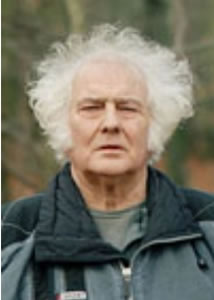
De Nederlandse dichter, schrijver en beeldend kunstenaar Jan Wolkers werd geboren in Oegstgeest op 26 oktober 1925. Zie ook mijn blog van 26 oktober 2010 en eveneens alle tags voor Jan Wolkers op dit blog.


Uit: Langpootmuggen
 

„Gek van het licht zeilen ze door het open raam naar binnen. Hun achterpoten slierten slap achter hun lichamen aan, willoos laten ze zich meevoeren. Maar hun voorpoten zwemmen begerig door de ruimte, omarmen schokkend het licht. Dan tuimelen ze verblind omlaag en blijven trillend op de grond zitten tot ze weer omhoog kunnen vliegen om in een laatste waanzin het gloeiende glas van de lamp te omhelzen. Met verbrande poten en vleugels vallen ze als een dor reepje boombast naar beneden.

- Ik moet het raam sluiten, mompelt hij.

Hij loopt naar het raam en sluit het.

Het zijn schepselen Gods, denkt hij. Ik mag ze niet willens en wetens door het executiepeloton van 150 Watt laten ombrengen. Jeltsma, ja, die vuilak. Die stak, op de verjaardag van Mies nog wel, de stekker van het elektrisch straalkacheltje in het stopkontakt. En maar op zijn dronken poten door de kamer waggelen. In de ene hand het brandende kacheltje en in de andere een stoel. En overal waar er een zat ging hij op de stoel staan en drukte het gloeiende deksel tegen het plafond. Het leek wel of er menselijk geluid uit die hete kabine kwam. Een deernis-wekkend gefluister dat overging in gesis van pijn. Ik moest ineens kotsen. Met samengeklemde kaken rende ik naar de W.C., maar terwijl ik de bril omhoog klapte zag ik dat er een motvisje in de pot liep. Ik kon niet op dat beestje kotsen en het met mijn bedorven eten doortrekken. Ik kotste naast de W.C. en met het maagzuur druipend van mijn kin zei ik tegen dat diertje:

- Ben jij zo laat nog aan de wandel, klein druppeltje kwik, voortschuivend traantje. Je kan hier niet meer uit, hè. Ik zal je helpen. Voordat die goorling komt en je boven op je kop schijt.

En ik pakte een W.C.-papiertje en liet hem er op lopen en zette hem

[p. 42]

op de grond.

- Ga maar gauw naar je moeder toe, zei ik.

Maar toen kwam Mies en die zei:

- Hoe heb ik het nou met je Johan, je zit naast de W.C. te kotsen. Je ziet alles dubbel.

Er was maar één motvisje, zei ik.

Ach, jij, je bent hartstikke teut, zei ze.

Ze trok me overeind en veegde in de keuken mijn gezicht af met een natte punt van de handdoek.

Toen ik de kamer weer binnenkwam had Jeltsma een krant op de tafel uitgespreid en daarboven keerde hij het straalkacheltje om. De krant lag vol afgebrande lucifers, kromgetrokken door de hitte.

- Willem Jeltsma, zei ik langzaam en nadrukkelijk, dat had je niet mogen doen. Je kan zelf nog geen spijker in de muur slaan, laat staan een langpootmug maken. God is duizenden jaren bezig geweest met die beesten. Ontwerpen... ontwerpen en nog eens helemaal opnieuw beginnen. Tot hij zag dat het goed was. Je kan het zien aan de vleugeltjes. Ze zijn van allemaal kleine stukjes aan elkaar gezet. Tot ze groot genoeg waren om te vliegen. En toen zei God:

Gaat heen en vermenigvuldigt u!

Maar die Jeltsma begint me straal in mijn gezicht uit te lachen.“


 1019301-d9a7dc2fec8fa22d762b61ced7dc3a4f.jpg

Jan Wolkers (26 oktober 1925 – 19 oktober 2007)


De Engelse dichter, schrijver en biograaf  Andrew Motion werd geboren op 26 oktober 1952 in Braintree in Essex. Zie ook mijn blog van 26 oktober 2007 en ook mijn blog van 26 oktober 2008 en ook mijn blog van 26 oktober 2009 en ook mijn blog van 26 oktober 2010


Uit: Andrew Motion on Keats (Lezing)


Why do we need a new life of Keats?
In a way the answer is obvious. Even though three excellent biographies of him were published in the 1960s, the one that we know best in England is by Robert Gittings,. The two that you know best are by Eileen Ward and Walter Jackson Bate. Even though we have those excellent biographies, and even though we know now an enormous amount about his daily doings, our sense of him has changed in the last thirty odd years.
Like all important writers, he turns in the wind of history, showing new facets of his genius to each succeeding generation. In another sense, the answer is complicated. The Keats that has been given to us is very finely figured but, generally speaking, held apart from the life of his times. The other great Romantic poets are routinely placed in the context of the French Revolution, of the war against Napoleon, of the repressive Tory government which was in power during the early years of the nineteenth century. Think about the way we think of Byron, who died for liberty in Greece, or Shelley wearing his politics on his sleeve, or Blake, being Blake. But "Little Junkets", as Lee Hunt famously called him - Keats is a charming voluptuary, gazing open-mouthed at beauty and truth, while others concentrate on the Bastille or Castlereagh.
Clearly, there is a lot to value in the "old" readings of Keats, and equally clearly it would be ridiculous to turn him in to a narrowly political writer. He spends far too much energy trying to transcend time, to make that seem sensible. He's also too mercurial, too much what one of his publishers called, "a man of fits and starts". All the same, Keats doesn't get his just desserts, as a man or a writer, unless we put him in his place and wonder how he reflects the pressures which bore on him.

Sometimes this means defining his political beliefs, the staunchly liberal views, which in the early part of his short life were relatively simple and idealistic, but which towards the end, became much more intricate and refined. Sometimes, it means appreciating the ways in which he was shaped unconsciously.”


 1019301-55afa68c2f0ad4d42d3bcf43357e8309.jpg

Andrew Motion (Braintree, 26 oktober 1952)


De Amerikaanse schrijver Stephen L. Carter werd geboren op 26 oktober 1954 in Washington, D.C. Zie ook mijn blog van 26 oktober 2008 en en ook mijn blog van 26 oktober 2009 en ook mijn blog van 26 oktober 2010


Uit: New England White


„On Friday the cat disappeared, the White House phoned, and Jeannie's fever — said the sitter when Julia called from the echoing marble lobby of Lombard Hall, where she and her husband were fêting shadowy alumni, one or two facing indictment, whose only virtue was piles of money — hit 103. After that, things got worser faster, as her grandmother used to say, although Granny Vee's Harlem locutions, shaped to the rhythm of an era when the race possessed a stylish sense of humor about itself, would not have gone over well in the Landing, and Julia Carlyle had long schooled herself to avoid them.

The cat was the smallest problem, even if later it turned out to be a portent. Rainbow Coalition, the children's smelly feline mutt, had vanished before and usually came back, but now and then stayed away and was dutifully replaced by another dreadful creature of the same name. The White House was another matter. Lemaster's college roommate, now residing in the Oval Office, telephoned at least once a month, usually to shoot the breeze, a thing it had never before occurred to Julia that Presidents of the United States did. As to Jeannie, well, the child was a solid eight years into a feverish childhood, the youngest of four, and her mother knew by now not to rush home at each spike of the thermometer. Tylenol and cool compresses had so far defeated every virus that had dared attack her child and would stymie this one, too. Julia gave the sitter her marching orders and returned to the endless dinner in time for Lemaster's closing jokes. It was eleven minutes before ten on the second Friday in November in the year of our Lord 2003. Outside Lombard Hall, the snow had arrived early, two inches on the ground and more expected. As the police later would reconstruct the night's events, Professor Kellen Zant was already dead and on the way to town in his car.“


 1019301-6832358133f1cee0e3ba27f51403d3d3.jpg

Stephen L. Carter (Washington, 26 oktober 1954)


De Zweedse dichteres en schrijfster Karin Maria Boye werd geboren op 26 oktober 1900 in Göteborg. Zie ook mijn blog van 26 oktober 2008 en ook mijn blog van 26 oktober 2009 en ook mijn blog van 26 oktober 2010


Clouds


See the mighty clouds, whose distant lofty tops
proud, shimmering rise, white as white snow!
Calmly they glide on, at last in calm to die below,
slowly dissolving in a shower of cool drops.


Majestic clouds - smiling onward they go straight
through life, through death in brilliant sun,
in ether so clear and pure, dark care unknown,
with quiet and grand contempt for their fate.


Would I were granted, festively proud as those,
to climb where the bustle of worlds does not tread
and bear the sunlight's golden wreath around my head
no matter how angrily round me the storms' roar goes.


Evening Prayer


No time is like this one,
the evening's final, silent hour.
No sorrows burn any longer,
no voices crowd any more.


Then take now into your hands
this day that is past, like a token.
For I know: into good you will turn
what I have held or broken.


Evilly I think, evilly I act,
but all things you heal and cleanse.
My days then you transform
From gravel to precious stones.


You must lift, you must carry,
I can only leave all things behind.
Take me, lead me, be close to me!
Show me what you next may intend!


You


Cool is your voice as murmur of springs, and your being
tartly fresh as the autumn's fragrant fruits.
Clear in your eye rests
high September's chill merriment.


A fountain you are, whose sunnily glittering beam,
beautiful in its equilibrium, beautiful in its form-strict arc,
beautiful in its strength, possesses
the power to love limits and noble dimensions.


Hail to your playing calm, your springtime health!
Hail to your spirit's sweet, godlike nobility,
drawn in your features' purity
and the singing harmony of your limbs!


Vertaald door David McDuff


1019301-4e7c9bd9b54ea5dd6f43371e8fcf98ab.jpg
Karin Boye (26 oktober 1900 – 24 april 1941)


Zie voor nog meer schrijvers van de 26e oktober ook mijn vorige blog van vandaag.
Geschreven door Romenu om 19:25 Reageer op dit bericht

Trevor Joyce, Pat Conroy, Ulrich Plenzdorf, Sorley MacLean, Andrej Bely

De Ierse dichter Trevor Joyce werd geboren op 26 oktober 1947 in Dublin. Zie ook mijn blog van 26 oktober 2008 en ook mijn blog van 26 oktober 2009 en ook mijn blog van 26 oktober 2010


Fast Rivers

for Michael Smith


right at the very

instant of delivery

the messengers

begin to fail

and are already

exhausted


when we see the moment so

instantaneously

spent

reckoning surely we regard

time not yet come

extinct

let not the fool delude himself

that which he foresees

will last

no longer than the bygone show

and all things thus

shall pass


our lives are fast rivers soon

delivered to the sea

of death

whereto go all dominions down

exhausted and

are quenched

there must find the slightest rill

with tributary stream

and flood

all then levelled utterly

daylabourer

and lord


this world is but a road to one

wherein is no abiding

grief

he needs due bearing who would not

from that true path

fall off

the setting out is at our birth

we travel as we live

dying

at last complete the course

and in that death

lie down


 1019300-48e749341fa0cdc8d7c188ba66e10549.jpg

Trevor Joyce (Dublin, 26 oktober 1947)


De Amerikaanse schrijver Pat Conroy werd geboren op 26 oktober 1945 in Atlanta, Georgia. Zie ook mijn blog van 26 oktober 2008 en ook mijn blog van 26 oktober 2009 en ook mijn blog van 26 oktober 2010 


Uit: South of Broad


„In the secrecy of its gardens you can discover jasmine and camellias and hundreds of other plants that look embroidered and stolen from the Garden of Eden for the sheer love of richness and the joy of stealing from the gods. In its kitchens, the stoves are lit up in happiness as the lamb is marinating in red wine sauce, vinaigrette is prepared for the salad, crabmeat is anointed with sherry, custards are baked in the oven, and buttermilk biscuits cool on the counter.
Because of its devotional, graceful attraction to food and gardens and architecture, Charleston stands for all the principles that make living well both a civic virtue and a standard. It is a rapturous, defining place to grow up. Everything I reveal to you now will be Charleston-shaped and Charleston-governed, and sometimes even Charleston-ruined. But it is my fault and not the city's that it came close to destroying me. Not everyone responds to beauty in the same way. Though Charleston can do much, it can't always improve on the strangeness of human behavior. But Charleston has a high tolerance for eccentricity and bemusement. There is a tastefulness in its gentility that comes from the knowledge that Charleston is a permanent dimple in the understated skyline, while the rest of us are only visitors.
My father was an immensely gifted science teacher who could make the beach at Sullivan's Island seem like a laboratory created for his own pleasures and devices. He could pick up a starfish, or describe the last excruciating moments of an oyster's life on a flat a hundred yards from where we stood. He made Christmas ornaments out of the braceletlike egg casings of whelks. In my mother's gardens he would show me where the ladybug disguised her eggs beneath the leaves of basil and arugula. In the Congaree Swamp, he discovered a new species of salamander that was named in his honor. There was no butterfly that drifted into our life he could not identify by sight. At night, he would take my brother, Steve, and I out into the boat to the middle of Charleston Harbor and make us memorize the constellations.“


1019300-2728a65c571e9a44a80c04372bc7daa7.jpg
Pat Conroy (Atlanta, 26 oktober 1945)


De Duitse schrijver
Ulrich Plenzdorf werd geboren op 26 oktober 1934 in Berlijn. Zie ook mijn blog van 26 oktober 2006 en ook mijn blog van 26 oktober 2008 en ook mijn blog van 26 oktober 2010


Uit: Die neuen Leiden des jungen W.


»Und deswegen ging Edgar weg, glauben Sie?«

»Ich weiß nicht... Jedenfalls, was die meisten denken, Ed ging weg wegen dieser Sache mit Flemming, das ist Quatsch. Warum er das gemacht hat, versteh ich zwar auch nicht. Ed hatte nichts auszustehen. Er war Chef in allen Fächern, ohne zu pauken.

Und er hielt sich sonst immer aus allem raus. Ärger gab es bei uns öfter. Viele sagten: Muttersöhnchen. Natürlich nicht öffentlich. Ed war ein kleiner Stier. Oder er hätte es überhört. Beispielsweise das mit den Miniröcken. Die Weiber, ich meine: die Mädchen aus unserer Klasse, sie konnten es nicht bleibenlassen, in diesen Miniröcken in der Werkstatt aufzukreuzen, zur Arbeit. Um den Ausbildern was zu zeigen. X-mal hatten sie das schon verboten. Das stank uns dann so an, daß wir mal, alle Jungs, eines Morgens in Miniröcken zur Arbeit antraten. Das war eine ziemliche Superschau. Ed hielt sich da raus. Das war ihm wohl auch zu albern.«

Leider hatte ich nichts gegen kurze Röcke. Man kommt morgens völlig vertrieft aus dem ollen Bett, sieht die erste Frau am Fenster, schon lebt man etwas. Ansonsten kann sich von mir aus jeder anziehen, wie er will. Trotzdem war die Sache ein echter Jux.

Hätte von mir sein können, die Idee. Rausgehalten hab ich mich einfach, weil ich Muttern keinen Ärger machen wollte. Das war wirklich ein großer Fehler von mir: Ich wollte ihr nie Ärger machen. Ich war überhaupt daran gewöhnt, nie jemand Ärger zu machen. Auf die Art muß man sich dann jeden Spaß verkneifen. Das konnte einen langsam anstinken. Ich weiß nicht, ob mich einer versteht. Damit sind wir beim Thema, weshalb ich zu Hause kündigte. Ich hatte einfach genug davon, als lebender Beweis dafür rumzulaufen, daß man einen Jungen auch sehr gut ohne Vater erziehen kann. Das sollte es doch sein. An einem Tag war ich mal auf den blöden Gedanken gekommen, was gewesen wäre, wenn ich plötzlich abkratzen müßte, schwarze Pocken oder was. Ich meine, was ich dann vom Leben gehabt hätte. Den Gedanken wurde ich einfach nicht mehr los.“


1019300-a32e0d956a726d9548a50b7de1e322c8.jpg
Ulrich Plenzdorf (26 oktober 1934 – 9 augustus 2007)

Scene uit de televisiefilm uit 1976 met Klaus Hoffmann als Edgar Wibeau


De Schotse dichter Sorley MacLean (Schots Gaelic: Somhairle MacGill-Eain) werd geboren op 26 oktober 1911 Osgaig op het eiland Raasay. Zie ook mijn blog van 26 oktober 2008 en ook mijn blog van 26 oktober 2010


Death Valley


Some Nazi or other has said that the Fuehrer
had restored to German manhood the
‘right and joy of dying in battle’.


Sitting dead in ‘Death Valley’
below the Ruweisat Ridge,
a boy with his forelock down about his cheek
and his face slate-grey;


I thought of the right and the joy
that he got from his Fuehrer,
of falling in the field of slaughter
to rise no more;


of the pomp and the fame
that he had, not alone,
though he was the most piteous to see
in a valley gone to seed


with flies about grey corpses
on a dun sand
dirty yellow and full of the rubbish
and fragments of battle.


Was the boy of the band
who abused the Jews
and Communists, or of the greater
band of those


led, from the beginning of generations,
unwillingly to the trial
and mad delirium of every war
for the sake of rulers?


Whatever his desire or mishap,
his innocence or malignity,
he showed no pleasure in his death
below the Ruweisat Ridge.


 1019300-9dd011df095bcc2bcc176a15a3a3a392.jpg

Sorley MacLean (26 october 1911 - 24 november 1996)

Portret door Donald MacKenzie


De Russische schrijver en theoreticus van het symbolisme Andrej Bely werd geboren op 26 oktober 1880 in Moskou. Zie ook mijn blog van 26 oktober 2008 en ook mijn blog van 26 oktober 2010


Uit: Petersburg (Vertaald door Robert A. Maguire en John E. Malmstad)


“He had a fear of space.
The landscape of the country actually frightened him. Beyond the snows, beyond the ice, and beyond the jagged line of the forest the blizzard would come up. Out there, by a stupid accident, he had nearly frozen to death.
That had happened some fifty years ago.
While he had been freezing to death, someone’s cold fingers, forcing their way into his breast, had harshly stroked his heart, and an icy hand had led him along. He had climbed the rungs of his career with that same incredible expanse always before his eyes. There, from there an icy hand beckoned. Measureless immensity flew on: the Empire of Russia.
Apollon Apollonovich Ableukhov ensconced himself behind city walls for many years, hating the orphaned distances of the provinces, the wisps of smoke from tiny villages, and the jackdaw. Only once had he risked transecting these distances by express train: on an official mission from Petersburg to Tokyo.
Apollon Apollonovich did not discuss his stay in Japan with anyone. He used to say to the Minister:
‘Russia is an icy plain. It is roamed by wolves!’
And the Minister would look at him, stroking his well-groomed gray mustache with a white hand. And he said nothing, and sighed. On the completion of his official duties he had been intending to…
But he died.
And Apollon Apollonovich was utterly alone. Behind him the ages stretched into immeasurable expanses. Ahead of him an icy hand revealed immeasurable expanses.
Immeasurable expanses flew to meet him.
Oh Rus, Rus!
Is it you who have set the winds, storms, and snows howling across the steppe? It seemed to the senator that from a mound a voice was calling him. Only hungry wolves gather in packs out there.
Undoubtedly the senator had been developing a fear of space.”


 1019300-b002d1f563f289949e8357414a488cc5.jpg

Andrej Bely (26 oktober 1880 – 8 januari 1934)

Geschreven door Romenu om 19:20 Reageer op dit bericht

Marja Pruis

De Nederlandse schrijfster en journaliste Marja Pruis werd geboren in Amsterdam op 26 oktober 1959. Marja Pruis studeerde Nederlands en Algemene Taalwetenschap aan de Universiteit van Amsterdam. Daarna ging zij aan de slag als literatuurredactrice bij De Groene Amsterdammer, waar zij sinds 2006 deel uitmaakt van de redactie. Sinds 1999 schrijft zij romans. Haar eerste roman, Bloem (2002), was een experimentele, impressionistische novelle over lust en seks, en over de afstand tussen twee mensen in een liefdesrelatie. In 2005 verscheen haar tweede roman De Vertrouweling. Deze leverde Pruis nominaties op voor de AKO Literatuurprijs en de Anna Bijns Prijs. De meest recente roman van Pruis, Atoomgeheimen, verscheen in 2008. Atoomgeheimen kwam op de longlist van de AKO Literatuurprijs. In 2011 heeft Pruis het literatuurkritische werk Kus me, straf me uitgegeven. Kus me, straf me haalde de shortlist van AKO Literatuurprijs.


Uit: Bloem


„Seks, seks, seks.
Eigenlijk denkt Bloem wat anders, maar dit staat wel zo netjes. Ze kon het spel niet anders spelen dan door zich klein te maken, dan door te denken aan het meisje dat ze eens op televisie had gezien, dat met een zwaar Gronings accent zei dat ze dat ook welns wilde probeern, vastbindn en zo. Ze liet hem met een sigaret langzaam langs de binnenkant van haar dijen omhooggaan tot ze het voelde schroeien. Ze liet zich bekijken, om en om rollen. Als ze bij de bakker stond leek alles ervoor gemaakt om bij haar naar binnen te proppen, van harde puntjes tot kaasstengels, een handjevol graag. Ze ging naar de dokter omdat ze pijn in haar buik had en was bang dat de dokter iets zou uitroepen als hij tussen haar benen zou kijken, maar die vertrok geen spier en schreef alleen het recept voor een zalfje uit dat het schrijnen minder moest maken, en een antibioticum tegen blaasontsteking. Ze voelde zich een wandelende trechter. Het was alsof een gulzig zuigende slang zich van mond tot mond in haar had genesteld en voortdurend meer wilde. Meer, meer, meer. Ze kreeg ook meer, meer, meer, waardoor ze soms met verbazing op straat, in de trein, in de supermarkt, op het schoolplein, om zich heen keek en zich afvroeg in welke dorheid die mensen zich staande moesten zien te houden. Ze wist niet hoe gauw ze zich thuis op bed moest laten vallen, op haar buik, met haar hand tussen haar benen, met haar telefoon tussen haar benen, met de hele groentela tussen haar benen, en het kratje bier niet te vergeten. Ze was vol, maar het kon altijd nog voller. De splinters zaten in haar handpalmen, opgedroogd sperma in haar hals, maar het kon nog meer.“


1021932-cf1f4df3493037d62078b630de79201c.jpg
Marja Pruis (Amsterdam, 26 oktober 1959)

Geschreven door Romenu om 00:00 Reageer op dit bericht

Meer van Romenu

↑ Terug naar de berichten