Naar de inhoud

Romenu

Over literatuur, gedichten, kunst en cultuur
seniorennet.beseniorennet.be

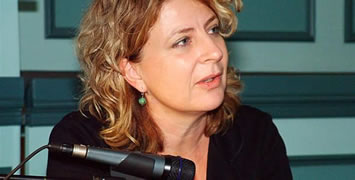
Marja Pruis

De Nederlandse schrijfster en journaliste Marja Pruis werd geboren in Amsterdam op 26 oktober 1959. Marja Pruis studeerde Nederlands en Algemene Taalwetenschap aan de Universiteit van Amsterdam. Daarna ging zij aan de slag als literatuurredactrice bij De Groene Amsterdammer, waar zij sinds 2006 deel uitmaakt van de redactie. Sinds 1999 schrijft zij romans. Haar eerste roman, Bloem (2002), was een experimentele, impressionistische novelle over lust en seks, en over de afstand tussen twee mensen in een liefdesrelatie. In 2005 verscheen haar tweede roman De Vertrouweling. Deze leverde Pruis nominaties op voor de AKO Literatuurprijs en de Anna Bijns Prijs. De meest recente roman van Pruis, Atoomgeheimen, verscheen in 2008. Atoomgeheimen kwam op de longlist van de AKO Literatuurprijs. In 2011 heeft Pruis het literatuurkritische werk Kus me, straf me uitgegeven. Kus me, straf me haalde de shortlist van AKO Literatuurprijs.


Uit: Bloem


„Seks, seks, seks.
Eigenlijk denkt Bloem wat anders, maar dit staat wel zo netjes. Ze kon het spel niet anders spelen dan door zich klein te maken, dan door te denken aan het meisje dat ze eens op televisie had gezien, dat met een zwaar Gronings accent zei dat ze dat ook welns wilde probeern, vastbindn en zo. Ze liet hem met een sigaret langzaam langs de binnenkant van haar dijen omhooggaan tot ze het voelde schroeien. Ze liet zich bekijken, om en om rollen. Als ze bij de bakker stond leek alles ervoor gemaakt om bij haar naar binnen te proppen, van harde puntjes tot kaasstengels, een handjevol graag. Ze ging naar de dokter omdat ze pijn in haar buik had en was bang dat de dokter iets zou uitroepen als hij tussen haar benen zou kijken, maar die vertrok geen spier en schreef alleen het recept voor een zalfje uit dat het schrijnen minder moest maken, en een antibioticum tegen blaasontsteking. Ze voelde zich een wandelende trechter. Het was alsof een gulzig zuigende slang zich van mond tot mond in haar had genesteld en voortdurend meer wilde. Meer, meer, meer. Ze kreeg ook meer, meer, meer, waardoor ze soms met verbazing op straat, in de trein, in de supermarkt, op het schoolplein, om zich heen keek en zich afvroeg in welke dorheid die mensen zich staande moesten zien te houden. Ze wist niet hoe gauw ze zich thuis op bed moest laten vallen, op haar buik, met haar hand tussen haar benen, met haar telefoon tussen haar benen, met de hele groentela tussen haar benen, en het kratje bier niet te vergeten. Ze was vol, maar het kon altijd nog voller. De splinters zaten in haar handpalmen, opgedroogd sperma in haar hals, maar het kon nog meer.“


1021932-cf1f4df3493037d62078b630de79201c.jpg
Marja Pruis (Amsterdam, 26 oktober 1959)

Geschreven door Romenu om 00:00 Reageer op dit bericht
Reageer op dit bericht

Reageer op dit bericht

Een titel of je eigen website toevoegen

De blogger leest alles eerst na: je tekst verschijnt zodra die goedgekeurd is.

Anne Tyler, Peter Rühmkorf, Willem Wilmink, Harold Brodkey, Jakob Hein, Daniel Mark Epstein

De Amerikaanse schrijfster Anne Tyler werd geboren op 25 oktober 1941 in Minneapolis, Minnesota. Zie ook mijn blog van 25 oktober 2010 en eveneens alle tags voor Anne Tyler op dit blog.


Uit: Breathing Lessons


„Maggie and Ira Moran had to go to a funeral in Deer Lick, Pennsylvania. Maggie’s girlhood friend had lost her husband. Deer Lick lay on a narrow country road some ninety miles north of Baltimore, and the funeral was scheduled for ten-thirty Saturday morning; so Ira figured they should start around eight. This made him grumpy. (He was not an early-morning kind of man.) Also Saturday was his busiest day at work, and he had no one to cover for him. Also their car was in the body shop. It had needed extensive repairs and Saturday morning at opening time, eight o’clock exactly, was the soonest they could get it back. Ira said maybe they’d just better not go, but Maggie said they had to. She and Serena had been friends forever. Or nearly forever: forty-two years, beginning with Miss Kimmel’s first grade.
They planned to wake up at seven, but Maggie must have set the alarm wrong and so they overslept. They had to dress in a hurry and rush through breakfast, making do with faucet coffee and cold cereal. Then Ira headed off for the store on foot to leave a note for his customers, and Maggie walked to the body shop. She was wearing her best dress—blue and white sprigged, with cape sleeves—and crisp black pumps, on account of the funeral. The pumps were only medium-heeled but slowed her down some anyway; she was more used to crepe soles. Another problem was that the crotch of her panty hose had somehow slipped to about the middle of her thighs, so she had to take shortened, unnaturally level steps like a chunky little windup toy wheeling along the sidewalk.
Luckily, the body shop was only a few blocks away. (In this part of town things were intermingled—small frame houses like theirs sitting among portrait photographers’ studios, one-woman beauty parlors, driving schools, and podiatry clinics.) And the weather was perfect—a warm, sunny day in September, with just enough breeze to cool her face. She patted down her bangs where they tended to frizz out like a forelock. She hugged her dress-up purse under her arm. She turned left at the corner and there was Harbor Body and Fender, with the peeling green garage doors already hoisted up and the cavernous interior smelling of some sharp-scented paint that made her think of nail polish.“


 1018652-1250dca345e892f6cadadda90a243f48.jpg

Anne Tyler (Minneapolis, 25 oktober 1941)


De Duitse dichter en schrijver Peter Rühmkorf werd geboren op 25 oktober 1929 in Dortmund.  Zie ook mijn blog van 25 oktober 2010 en eveneens alle tags voor Peter Rühmkorf op dit blog.


Ballade von den geschenkten Blättern  

Es war mal ein Paradiesvogelschiß,
der schien sich sogleich seiner Sendung gewiß,
weil er klackste bei mir in den Garten.
Bei so etwas liegt der Gedanke nicht fern,
vielleicht birgt er einen nützlichen Kern -
Mal warten.  
Ein Jahr verflog - ein zweites verfloß
Erst im dritten hatte ein ärmlicher Sproß
sich entschieden, Flagge zu zeigen:
Ein Stengel schoß auf, ein Blättchen daran,
das sah mich statt grün eher bleiern an,
sehr eigen.  
Ich ließ es so treiben und nahm es als Jux,
bis es Hecken und Sträucher weit überwuchs
und mein Haus in den Schatten setzte.
Da sprach ich, egal, ob du Deibel,
ob Christ, ja, die Weltenesche persönlich bist,
Herbstende ist für dich der Letzte.  
Ich schränkte die Säge, ich wetzte das Beil,
weil mir ein besonntes Altenteil
doch erfreulicher schien als ein düstres.
Da fingen - «Halt ein, unseliger Mann»,
die blechernen Blätter zu rascheln an,
«gib Acht, es folgt was Illüstres!»  
Und Geschepper, Geldepper, Geklimper, Geklirr,
aus den Händen glitt mir mein Mördergeschirr,
und ich fluchte nur, «ab mit Schaden!»
Weil aufs Stichwort hatte der seltsame Gast
Sich seiner gesammelten Blätterlast Ent! - laden -  
«Was Schaden?! - Für dich? - Ungläubiger Buch-
stabendruckser; doch ganz nach Belieben -
Weil auf jedem Blatt steht ein goldener Spruch
in privater Geheimschrift geschrieben.
Und wenn du sie einsäckelst Fitz für Fitz,
selbst die schrägen und scheinbar verrenkten,
und es mangelt dir eines Tages an Witz,
dann greif nur zurück auf deinen Besitz,
und es knattern wie eh die Poengten ...  
Und genieß dich getrost als Beschenkten!»  


1018652-4d1f5128f6a037b951776965a1ca209a.jpg 

Peter Rühmkorf (25 oktober 1929 – 8 juni 2008)


De  Nederlandse dichter, schrijver en zanger Willem Andries Wilmink werd geboren in Enschede op 25 oktober 1936. Zie ook mijn blog van 25 oktober 2008 en ook mijn blog van 25 oktober 2009 en ook mijn blog van 25 oktober 2010


Vader


vader kocht ooit
een verzameld werk
een bundel gedichten
van degelijk merk

bij wat hij mooi vond
zette hij strepen
een enkele keer
een uitroepteken

bij tijd en wijle
herlees ik die
zeer summiere
biografie

in een code
van strepen en stippen
steeg het water
hem naar de lippen


Allerzielen


Soms loopt er door een drukke straat
ineens een oude kameraad
of reisgenoot.
Je weet zodra je hem begroet:
het kan niet dat ik hem ontmoet,
want hij is dood.
Eerst ben je nog een tijd verbaasd
omdat die levende toch haast
die dode was.
Heb je de zaak dan afgedaan,
dan komt er weer zo'n dode aan,
met flinke pas.

Thuis van het dodencarnaval
zie je de spiegel in de hal,
je schrik is groot:
die man daar in het spiegelglas,
met die bekende regenjas,
was die niet dood?


 1018652-0ddbfa1f401d6c6e7021df796ff6f110.jpg

Willem Wilmink (25 oktober 1936 – 2 augustus 2003)


De Amerikaanse schrijver Harold Brodkey werd geboren op 25 oktober 1930 als Aaron Roy Weintraub in Staunton, Illinois. Zie ook mijn blog van 25 oktober 2008 en ook mijn blog van 25 oktober 2009 en ook mijn blog van 25 oktober 2010


Uit: First Love And Other Sorrows


„Toward the end of March in St. Louis, slush fills the gutters, and dirty snow lies heaped alongside porch steps, and everything seems to be suffocating in the embrace of a season that lasts too long. Radiators hiss mournfully, no one manages to be patient, the wind draws tears from your eyes, the clouds are filled with sadness. Women with scarves around their heads and their feed encased in fur-lined boots pick their way carefully over patches of melting ice. It seems that winter will last forever, that this is the decision of nature and nothing can be done about it.

At the age when I was always being warned by my mother not to get overheated, spring began on that evening when I was first allowed to go outside after dinner and play kick-the-can. The ground would be moist, I’d manage to get muddy in spite of what seemed to me extreme precautions, my mother would call me home in the darkness and when she saw me she would ask, “What have you done to yourself?” “Nothing,” I’d say, hopefully. But by the time I was sixteen, the moment when the year passed into spring, like so many other things, was less clear. In March and April, track began, but indoors; mid-term exams came and went; the buds appeared on the maples, staining all their branches red; but it was still winter, and I found myself having feelings in class that were like long petitions for spring and all its work.“


 1018652-e582373efbeafe17c5f3089c67ca3e93.jpg

Harold Brodkey (25 oktober 1930 - 26 januari 1996)


De Duitse schrijver en arts Jakob Hein werd geboren op 25 oktober 1971 in Leipzig. Zie ook mijn blog van 25 oktober 2008.en ook mijn blog van 25 oktober 2009 en ook mijn blog van 25 oktober 2010


Uit: Vor mir den Tag und hinter mir die Nacht


„Die haben gesagt, ich kann ihn in einer Stunde abholen. Da habe ich beschlossen, mir in der Zwischenzeit mal Sie und Ihre Agentur für verworrene Ideen anzugucken.«

»Verworfene Ideen«, korrigierte Boris. »Wir sind eine Agentur für verworfene Ideen.«

»Jaja, ich weiß schon. Ist gerade viel los?«

»Nein, im Moment ist es gerade etwas ruhiger.

Möchten Sie einen Kaffee trinken?«

»Ehrlich gesagt, würde ich viel lieber einen Tee trinken, aber nur, wenn sie einen richtigen dahaben. «

»Ich glaube, ich habe irgendwo noch Teebeutel«, sagte Boris.

»Dann trinke ich lieber einen Kaffee. Obwohl sie Teebeutel heißen, habe ich es noch nie erlebt, dass

es jemandem gelungen ist, aus diesen Beuteln einen Tee zu machen.«

Boris sah sie fragend an.

»In diese Beutel wird das gefüllt, was nach der Teeernte zusammengefegt wurde, die wenigen Aromastoffe werden von dem sie umgebenden Toilettenpapier aufgesogen. Wenn schließlich die Beutel lauwarm gewässert werden, können sich diese armseligen Teekrümel nicht ausbreiten. Tee braucht sehr viel Platz, den gibt es nicht in so einem Beutel.

Viele Menschen ahnen das und bewegen deshalb ihre Teebeutel wie wild durch das umgebende Wasser. Aber diese Masche funktioniert nicht, das ist gerade so, als würden sie einen Vogelkäfig umherwerfen, um die Flugweise des darin befindlichen Vogels zu erforschen. Also stopfen die Hersteller meist mehr Tee in diese Beutel, als man für eine Tasse bräuchte, wodurch das Wasser dunkel und bitter wird.«

Boris konnte ihr nicht vollständig folgen, weil seine Aufmerksamkeit gleichzeitig von Hör-, Sehund

Geruchssinn beansprucht wurde. Diese Frau sah nicht nur gut aus, sie trug ein Parfüm, in dem

um diese Tageszeit eine Sandelholznote dominierte und das ihn ganz durcheinanderbrachte.“


 1018652-4239bdcc2d6317b456f9a39c7b89ea16.jpg

Jakob Hein (Leipzig, 25 oktober 1971)


De Amerikaanse dichter, schrijver en biograaf Daniel Mark Epstein werd geboren op 25 October 1948 in Washington, D.C. Zie ook mijn blog van 25 oktober 2009 en ook mijn blog van 25 oktober 2008 en ook mijn blog van 25 oktober 2010


In Late November


Of the butterfly-bush, whose purple flowers
The monarch and the swallowtail
Sipped in August, near my windowpane
(Such a wealth of wings and flower clusters
I could hardly see the grass, the trees)
Only stalks and branches remain,
And panicles tipped with russet berries.
Now I see everything so vividly:
The young woman on her hands and knees,
Planting the meek shrubs three years ago --
Three short years and thirteen feet below --
Told me the light was perfect here and so
The plants would thrive, just wait and see
How gracefully the flowers would bear wings.
I would see her when she was not there,
Then go blind, standing right beside her.
How could I begin to explain such things?
Soon enough the blossoms reached my sill,
A floor above her terrace flat. Too late
For her to see the wonder she had wrought
Or for me to tell her. She'd moved out.
I never dreamed these branches in full bloom
Would all but block the summer view below:
Garden, gardener and terrace door,
Casting a dappled shadow across my room.
I never knew that when November came
I would miss the butterflies so much
And see the world more clearly than before.


 1018652-0c14b10c0080657c4f72e221b92826f9.jpg

Daniel Mark Epstein (Washington, 25 oktober 1948)


Zie voor nog meer schrijvers van de 25e oktober ook mijn vorige blog van vandaag.
Geschreven door Romenu om 19:23 Reageer op dit bericht

John Berryman, Christine D'haen, Hélène Swarth, Karl Emil Franzos, Benjamin Henri Constant

De Amerikaanse dichter en schrijver John Allyn Berryman (eig. John Allyn Smith) werd geboren op 25 oktober 1914 in McAlester, Oklahoma. Zie ook mijn blog van 25 oktober 2008 en ook mijn blog van 25 oktober 2009 en ook mijn blog van 25 oktober 2010


Dream Song 6: A Capital at Wells


During the father's walking—how he look

down by now in soft boards, Henry, pass

and what he feel or no, who know?—

as during hís broad father's, all the breaks

& ill-lucks of a thriving pioneer

back to the flying boy in mountain air,


Vermont's child to go out, and while Keats sweat'

for hopeless inextricable lust, Henry's fate,

and Ethan Allen was a calling man,

all through the blind one's dream of the start,

when Day was killing Porter and had to part

lovers for ever, fancy if you can,


while the cardinals' guile to keep Aeneas out

was failing, while in some hearts Chinese doubt

inscrutably was growing, toward its end,

and a starved lion by a water-hole

clouded with gall, while Abelard was whole,

these grapes of stone were being proffered, friend.


Dream Song 7: 'The Prisoner of Shark Island' with Paul Muni


Henry is old, old; for Henry remembers

Mr Deeds' tuba, & the Cameo,

& the race in Ben Hur,—The Lost World, with sound,

& The Man from Blankey's, which he did not dig,

nor did he understand one caption of,

bewildered Henry, while the Big Ones laughed.


Now Henry is unmistakably a Big One.

Fãonnee; he don't féel so.

He just stuck around.

The German & the Russian films into

Italian & Japanese films turned, while many

were prevented from making it.


He wishing he could squirm again where Hoot

is just ahead of rustlers, where William S

forgoes some deep advantage, & moves on,

where Hashknife Hartley having the matter taped

the rats are flying. For the rats

have moved in, mostly, and this is for real.


 1018644-8d0cb0e3c1348dd2eae8c683e1977f14.jpg

John Berryman (25 oktober 1914 – 7 januari 1972)


De Vlaamse dichteres en prozaschrijfster Christine D'Haen werd geboren in Sint-Amandsberg op 25 oktober 1923. Zie ook mijn blog van 5 september 2009 en ook mijn blog van 25 oktober 2008 en ook mijn blog van 25 oktober 2009 en ook mijn blog van 25 oktober 2010


Woord en wereld


Nancy, Place Stanislas, glansvolle maan, die naam,

die klank, die zaak, hoe dan verwant? Het ding een ding.

Het beeld daarvan in mij is verinwendiging,

grenzeloos band van beeld en denkwerk: dioraam.

De naam een ding ook, daarvan de onaanraakbaarheid,

tot van de naam het beeld met beeld en beeld verbindt,

en taal het al in strengen vangt van labyrinth.

Terwijl de maan stijgt, ijlend door de korte tijd

komt klank, al dadelijk geprangd in een cadans,

van steeds herhaalde steeds veranderende dwang,

verzwonden zaak en naam, beeld en gedachtengang.

Gedicht, gezicht: in lichaam danst al wat er was,

a, n, i, s op zilvertrillende balans,

de zang, glansvolle maan, Nancy, Place Stanislas.


Vita

Bloesems, bloemenwangen, baby, blos,
een dochter, zoon, mijn: schijn, zoet, bitter, zuur
en zout, die vier, maar talloos met textuur;
kleur met lijn oneindig; meng en scheid,
ontvouw, spreid, bal, creëer, fuseer en splijt;
vaarwel. Want langs de zenuw geest en woord,
elk instrument klank die geen oor meer hoort,
nooit zonder het getal weer baby, blos.


 1018644-f24f7010e3dba4c3dfff9d2ba5636c06.jpg

Christine D'haen (25 oktober 1923 – 3 september 2009)


De Nederlandse dichteres Hélène Swarth werd geboren op 25 oktober 1859 in Amsterdam. Zie ook mijn blog van 25 oktober 2010 en eveneens alle tags voor Hélène Swarth op dit blog.


Late liefde


Ik wil uit mijn kamer ontvluchten
De bekoring van je gelaat,
Het zweeft in de wolkenluchten,
Al boven de grauwe straat.

De mensen doen wijze verhalen,
Niets begrijp ik van hun gepraat.
Tussen anderen en mij zie ik stralen
De bekoring van je gelaat.

En wil ik boeken lezen,
Ik weet niet wat er in staat.
Tussen mij en het boek komt gerezen
De bekoring van je gelaat.

O mijn hart, met dat wilde gehamer,
Dat mijn leven te pletter slaat!
O alom, in de sombere kamer,
De bekoring van je gelaat!

O uit meelij, om mij te genezen
Zeg een woord zodat ik je haat,
Zo dat ik niet langer zal vrezen
De bekoring van je gelaat.


Het Allerdroefste


O droef is elke erinnering
Aan hem, die jong ten grave ging,
Maar ’t allerdroefste dunkt mij dat:
Nooit heeft mijn lief mij liefgehad.

O, dat ik dááraan denken blijf!
Voor hem was ik een tijdverdrijf,
Wat hij voor mij was wist hij wel:
Hij was mijn hemel en mijn hel.

Kon ik maar wenen als weleer!
O God, ik heb geen tranen meer.
Kon ik maar bidden! ’t was zijn spot
Die mij vertwijflen deed aan God.

O schoon gelaat! o zonnig haar!
Demonische ogen, diep en klaar!
O sfinx-lach om die fijne mond!
O raadsel dat ik nooit verstond!

Hij boog mijn trots, hij brak mijn wil,
Mijn afgemarteld hart werd stil.
Hij temde, als een wild dier, mijn ziel,
Tot, slaafs, zij aan zijn voeten viel.

Mijn arme liefde knielde in ’t zand
En kuste, bleek, zijn meesterhand.
Toen hij mij dat had aangedaan,
Toen bood hij mij... zijn vriendschap aan.


 1018644-1c60239169a51302eb686d05061c10fe.jpg

Hélène Swarth (25 oktober 1859 - 20 juni 1941)


De Oostenrijkse schrijver Karl Emil Franzos werd geboren op 25 oktober 1848 in Czortków (Galicië). Zie ook mijn blog van 25 oktober 2008 en ook mijn blog van 25 oktober 2010


Uit: Der Shylock von Barnow


“Gerade dem alten, grauen Kloster der Dominikaner gegenüber steht das große, weiße Haus des Juden, hart an der Heerstraße, die von Lemberg nach Skala führt und das düstere Städtchen durchschneidet. Wer in einem der kleinen, schmutzigen Häuser des Ghetto geboren ist, wächst in Ehrfurcht und Bewunderung auf vor diesem Hause und seinem Besitzer, dem alten Moses Freudenthal. Dieses Haus und dieser Mann sind der Stolz von Barnow. Und Beide rechtfertigen auch, jedes in seiner Weise, diesen Stolz.

Da ist zuerst das Haus. Es ist, als wüßte es seinen Wert, so stolz und stattlich steht es da in seinem weißen, reinlichen Aufputz, mit der langen, glänzenden Fensterreihe des ersten Stockwerks, mit den bunten Kaufläden zu ebener Erde, zu beiden Seiten des mächtigen Thorwegs, der einladend geöffnet ist. Denn dieses Haus ist ein Einkehrhaus und die Edelleute wissen seine Vorzüge zu schätzen, wenn sie ins Bezirksamt oder zum Wochenmarkt in die Stadt kommen, und ebenso die Kavallerieoffiziere aus den Dörfern der Umgegend, wenn sie die Langweile hereintreibt. Aber daneben ist das Haus auch ein Zinshaus, denn im ersten Stockwerk wohnen die vornehmsten Honoratioren von Barnow, der Bezirksrichter und der Arzt, zur Miete und daneben – noch alles Mögliche dazu. Denn es ist fast schwer zu sagen, was alles im Erdgeschoße zusammengedrängt ist. Da findet sich eine Lottokollektur und eine Assekuranz-Agentschaft für Vieh, Menschen und Getreide, eine Tuchhandlung und ein Spezereiwarenladen, eine Weinstube für die vornehmen Gäste und ein Branntweinschank für die Bauern. Und Kollekteur, Agent, Kaufmann und Wirt, dies Alles ist Moses Freudenthal.”


1018644-7097407b5cb2f198bc0f7c7c5c78c9fc.jpg
Karl Emil Franzos (25 oktober 1848 - 28 januari 1904)


De Franse schrijver Benjamin Henri Constant de Rebecque werd geboren op 25 oktober 1767 in Lausanne. Zie ook mijn blog van 25 oktober 2006 en ook mijn blog van 25 oktober 2010


Uit: Adolphe


„Je venais de finir à vingt-deux ans mes études à l'université de Gottingue. — L'intention de mon

père, ministre de l'électeur de **, était que je parcourusse les pays les plus remarquables de

l'Europe. Il voulait ensuite m'appeler auprès de lui, me faire entrer dans le département dont la direction lui était confiée, et me préparer à le remplacer un jour. J'avais obtenu, par un travail assez opiniâtre, au milieu d'une vie très dissipée, des succès qui m'avaient distingué de mes compagnons d'étude, et qui avaient fait concevoir à mon père sur moi des espérances probablement fort exagérées. Ces espérances l'avaient rendu très indulgent pour beaucoup de fautes que j'avais commises. Il ne m'avait jamais laissé souffrir des suites de ces fautes. Il avait toujours accordé, quelquefois prévenu, mes demandes à cet égard.

Malheureusement sa conduite était plutôt noble et généreuse que tendre. J'étais pénétré de tous ses

droits à ma reconnaissance et à mon respect. Mais aucune confiance n'avait existé jamais entre nous. Il avait dans l'esprit je ne sais quoi d'ironique qui convenait mal à mon caractère. Je ne demandais

alors qu'à me livrer à ces impressions primitives et fougueuses qui jettent l'âme hors de la sphère

commune, et lui inspirent le dédain de tous les objets qui l'environnent. Je trouvais dans mon père,

non pas un censeur, mais un observateur froid et caustique, qui souriait d'abord de pitié, et qui

finissait bientôt la conversation avec impatience.“


1018644-cd8288482c62115d1a845fbb18dd6f8d.jpg
Benjamin Constant (25 oktober 1767 – 8 december 1830)

Geschreven door Romenu om 19:16 Reageer op dit bericht

Zsuzsa Bánk, August Graf von Platen, Onno Kosters, Norman Rush

De Duitse schrijfster Zsuzsa Bánk werd geboren op 24 oktober 1965 in Frankfurt am Main. Zie ook mijn blog van 24 oktober 2009 en ook mijn blog van 24 oktober 2010.


Uit: Die hellen Tage


„Ich kenne Aja, seit ich denken kann. Ich habe kaum eine Erinnerung an eine Zeit vor ihr, an ein Leben, in dem es sie nicht gegeben hat, keine Vorstellung, wie sie ausgesehen haben könnten, Tage ohne Aja. Aja gefiel mir sofort. Sie sprach laut und deutlich und kannte Wörter wie Wanderzirkus und Schellenkranz. Zwischen anderen sah sie winzig aus, mit ihren kleinen Händen und Füßen, und als müsse sie dem etwas entgegensetzen, sprach sie in langen Sätzen, denen kaum jemand folgte, als wolle sie beweisen, dass sie laut reden konnte, ohne Pause und ohne Fehler. Sie zog in dem Jahr zu uns, in dem für uns Kinder nichts lustiger war, als unsere Namen rückwärts aufzusagen und uns laut Retep oder Itteb zu rufen. Aja hieß immer nur Aja.
Wir fanden uns, wie sich Kinder finden, ohne zu zögern, ohne Umstände, und sobald wir unser erstes Spiel begonnen, unsere ersten Fragen gestellt hatten, verbrachten wir unsere Tage miteinander, fädelten sie auf wie an einer endlosen Kette, und hielten jede Unterbrechung, mit der andere uns trennten, für eine Zumutung. Wenn Aja zu mir kam, öffnete sie unser Hoftor lautlos. Niemand konnte unser Tor lautlos öffnen und schließen, weil es ein großes Tor auf Rollen war, das jeden Besuch vor den letzten Schritten zur Haustür ankündigte, und dessen Geräusch wir bis unters Dach und bis in die hintersten Winkel des Gartens hören konnten. Nur Aja öffnete unser Tor so leise, dass es niemandem auffiel, auch nicht, dass sie über den Hof lief, und ich wunderte mich, wie still sie sein, wie unbemerkt sie kommen und gehen konnte.
Wir müssen uns im Sommer begegnet sein, im Sommer, der Aja umgab, als gehöre er ihr, als gehörten sein Licht, sein Staub, seine langen hellen Abende ihr, und durch den sie sich ohne Jacke und Schuhe, mit einem gelben Hut, den sie im Schrank ihrer Mutter gefunden hatte, bewegte wie durch ein großes, lichtes Haus, dessen Zimmer ohne Türen ineinanderliefen.”


 1017952-01580edc37fc46318c0559a1b39a87ab.jpg

Zsuzsa Bánk (Frankfurt am Main, 24 oktober 1965)


De Duitse dichter Karl August Georg Maximilian Graf von Platen-Hallermünde werd geboren op 24 oktober 1796 in Ansbach. Zie ook mijn blog van 24 oktober 2010 en eveneens alle tags voor August Graf von Platen op dit blog.


Schön wie der Tag und lieblich wie der Morgen


Schön wie der Tag und lieblich wie der Morgen,
Mit edler Stirn, mit Augen voll von Treue,
An Jahren jung und reizend wie das Neue,
So fand ich dich, so fand ich meine Sorgen.

O wär ich schon an deiner Brust geborgen,
Wo ich mich sammle, wenn ich mich zerstreue!
O wäre schon bezwungen diese Scheue,
Die unsern Bund vertagt von heut auf morgen!

Was fliehst du mich? Vermagst du mich zu hassen?
Was quälst du so durch deiner Huld Verschweigung
Den Liebevollen, der sich fühlt verlassen?

Beim ersten Zeichen deiner künft'gen Neigung
Wird eine bange Wonne mich erfassen,
Wie einen Fürsten bei der Thronbesteigung.


Des Glückes Gunst wird nur durch dich vergeben


Des Glückes Gunst wird nur durch dich vergeben,
Schön ist die Rose nur, von dir gebrochen,
Und ein Gedicht nur schön, von dir gesprochen.
Tot ist die Welt, du bist allein am Leben.

In diesen Lauben, die sich hold verweben,
Wird ohne dich mir jeder Tag zu Wochen,
Und dieser Wein, den warme Sonnen kochen,
Kann nur aus deiner Hand ein Herz beleben.

Von dir geschieden, trenn ich mich vom Glücke,
Das Schönste dient mir nur, mich zu zerstreuen,
Das Größte füllt mir kaum des Innern Lücke.

Doch drückst du mich an deine Brust, den Treuen,
Dann kehrt die Welt in meine Brust zurücke,
Und am Geringsten kann ich mich erfreuen.


Daß ich dich liebe, hast du nie vermutet


Daß ich dich liebe, hast du nie vermutet,
Nie konnten's Menschen um uns her beachten:
Mein ganzes Sein ist nur ein stilles Trachten,
Und leise pocht das Herz mir, weil es blutet.

Ob's ruhig in mir, oder ob es flutet,
Teilnehmend wolltest du das nie betrachten,
Und daß die Deinen mich für wenig achten,
Das hat mich oft geschmerzt, doch oft ermutet.

Denn meine Seele strebte warm nach oben,
Und was mir freundlich, feindlich trat entgegen,
Ein Traum erschien mir's, der mich rings umwoben.

Und also will ich auch der Liebe pflegen,
Mit einer Sinnesart, die nicht zu loben,
Doch, die zu schelten, mich bedünkt verwegen.


 1017952-7235d50b8cbfb2d16f748991771ac83b.jpg

August Graf von Platen (24 oktober 1796 - 5 december 1835)

Standbeeld in Ansbach


De Nederlandse dichter Onno Kosters werd geboren op 24 oktober 1962 in Baarn. Zie ook mijn blog van 24 oktober 2010 en eveneens alle tags voor Onno Kosters op dit blog. 


Systeem en verloop


In het systeem staat je stem als een huis.
Huis dat zich sluit, hek voor de deur.
Huis dat zich sluit, blind voor elk raam.
Huis dat zich sluit, wingerd in de muur.
Bel niet aan, breek niet in, kijk en sluit
uit dat de duisternis daar, onder de
lakens over de meubels, onder het stof
(ook dat nog) op die lakens, het stof
op het stof, ooit het daglicht zal zien.
In het systeem heb ik greep op je stem,
draag ik hem uit. Gaat het vervolgens
plat.
Verloop
is een kwestie van tijd, zei de aannemer mij.
Als de herbouw hier toeslaat, eenvoudigweg
omdat de aanleunwoning die je bouwde
wegzakt in zand (er was eens een mannetje)
bij gebrek aan een huis dat staat als je stem,
huis zonder blinden of hekken of wingerd,
herstelt zich het blikveld en slingert het
lood uit: schiet het vanzelf in het lood.
Verloop is een kwestie van tijd, zei de man
die mij die weerstaanbare offerte deed.
(Die mij ook nu nog onweerstaanbaar leek.)


 1017952-499612577484bb3fb9876b53de745fe6.jpg

Onno Kosters (Baarn,  24 oktober 1962)


De Amerikaanse schrijver
Norman Rush werd geboren op 24 oktober 1933 in San Francisco. Zie ook mijn blog van 24 oktober 2008 en ook mijn blog van 24 oktober 2009 en ook mijn blog van 24 oktober 2010


Uit: Mortals


„He’d had to push Iris into the house the first time they inspected it because she thought the floors were wet, they were waxed and buffed to such an insane lustre. They had the best plot on Kgari Close, the largest, at the apex of the horseshoe the close made. They had six rooms. He would admit that their moderne type furniture was on the ungainly and garish side. It was from South Africa. It seemed to be made for very large human beings. On the other hand it was provided free by the government of Botswana. Their bed was firm, and was vast. The corrugated iron roof, painted red to suggest terracotta tile, was a mistake, but only in the hottest part of the year, like now, when it converted the unshaded parts of the house into ovens, to which the answer was the airconditioners they had in their bedroom and living room, at least, at opposite ends of the house, except that unfortunately Iris saw herself as acquiring virtue by abstaining from using them exactly when the justification for using them was greatest. She always denied her attitude had anything to do with solidarity with Dimakatso and the other servants in the neighborhood out in their hot cubicles or with the un-airconditioned population in general, but he thought otherwise. She claimed it was because the airconditioners made too much noise for her. She was very sensitive to noise. Also she could be willful. For example, everything in the house could be locked up—regular closets, linen closets, cupboards, cabinets. The assumption was that you were going to be stolen from. The drill everywhere else was that the maid came to you to get the key when something had to be procured, and brought the key back to you afterward. But Iris kept everything unlocked even though their first maid had complained about it because she was worried that if anything went missing she’d be blamed. So nothing was locked, which was fine, she always did what she wanted. What was wrong now? He was tired of it.
Sometimes the yardman opened the gate, but usually it was the watchman, who came on duty at five. He overlapped the yardman’s tour by half an hour or so, but the yardman could be anywhere, doing anything, including napping someplace. The watchman would normally be at his post under the thorn tree to the right of the gate, sitting on a camp stool and having a cup of Joko tea and eating the very decent leftovers Iris provided—a chop, chicken thighs, and the sweets without which no meal is
complete, to a Motswana.“


1017952-fbb633f7ed05a388a12bfb4a1775ed47.jpg
Norman Rush (San Francisco, 24 oktober 1933)


Zie voor nog meer schrijvers van de 24e oktober ook
mijn vorige blog van vandaag en eveneens mijn eerste blog van vandaag.

Geschreven door Romenu om 19:04 Reageer op dit bericht

Denise Levertov, Ernest Claes, Robert Greacen, Yordan Radichkov

De Engels - Amerikaanse dichteres Denise Levertov werd geboren op 24 oktober 1923 in Ilford, Essex. Zie ook mijn blog van 24 oktober 2008 en ook mijn blog van 24 oktober 2009 en ook mijn blog van 24 oktober 2010


A Map Of The Western Part Of The County Of Essex In England


Something forgotten for twenty years: though my fathers

and mothers came from Cordova and Vitepsk and Caernarvon,

and though I am a citizen of the United States and less a

stranger here than anywhere else, perhaps,

I am Essex-born:

Cranbrook Wash called me into its dark tunnel,

the little streams of Valentines heard my resolves,

Roding held my head above water when I thought it was

drowning me; in Hainault only a haze of thin trees

stood between the red doubledecker buses and the boar-hunt,

the spirit of merciful Phillipa glimmered there.

Pergo Park knew me, and Clavering, and Havering-atte-Bower,

Stanford Rivers lost me in osier beds, Stapleford Abbots

sent me safe home on the dark road after Simeon-quiet evensong,

Wanstead drew me over and over into its basic poetry,

in its serpentine lake I saw bass-viols among the golden dead leaves,

through its trees the ghost of a great house. In

Ilford High Road I saw the multitudes passing pale under the

light of flaring sundown, seven kings

in somber starry robes gathered at Seven Kings

the place of law

where my birth and marriage are recorded

and the death of my father. Woodford Wells

where an old house was called The Naked Beauty (a white

statue forlorn in its garden)

saw the meeting and parting of two sisters,

(forgotten? and further away

the hill before Thaxted? where peace befell us? not once

but many times?).

All the Ivans dreaming of their villages

all the Marias dreaming of their walled cities,

picking up fragments of New World slowly,

not knowing how to put them together nor how to join

image with image, now I know how it was with you, an old map

made long before I was born shows ancient

rights of way where I walked when I was ten burning with desire

for the world's great splendors, a child who traced voyages

indelibly all over the atlas, who now in a far country

remembers the first river, the first

field, bricks and lumber dumped in it ready for building,

that new smell, and remembers

the walls of the garden, the first light.


 1017950-adf91ec4573861298a78cd0b77d14e28.jpg

Denise Levertov (24 oktober 1923 – 20 december 1997)


De Vlaamse auteur Ernest Claes werd geboren op 24 oktober 1885 te Zichem. Zie ook mijn blog van 24 oktober 2010 en eveneens alle tags voor Ernest Claes op dit blog.


Uit: De Witte


„Juist toen de Witte binnentrad kwam er boven in den ronden kop waar 't leven zat, onzichtbaar, een roezig ronken dat aanhield tot er acht helder metalen klanken uitsprongen, en dan begon weer het eenelijk effen tiktakken zonder verpoozen. Op de witglimmende wijzerplaat stak de kleine wijzer in 't volle zwart van de romeinsche acht, en de groote hing lamlullig naar de één gezakt, of 't hem verder niet meer aanging en hij 't zijne gedaan had.

De Witte keek naar de klok en mommelde: ‘Ziede wel dat et nog gien acht ure was,’ en dan zette hij zich aan tafel. Naast den koffiepot lagen drie boterhammen voor hem gereed gesneden. Hij schonk een tas koffie in, keek eens door de openstaande achterdeur den hof in of moeder niet afkwam - en haalde uit den suikerpot in de schapraai drie klontjes broodsuiker. Bedaard begon hij dan zijn boterhammen op te eten, zonder een kruiske te maken nu hem toch niemand zag. Hij lipte telkens proevend aan zijn koffie, en sloeg naar de vliegen die over heel de tafel, in gaatjes en spleetjes, aan broodkruimels en nattigbruine koffievlekken te peuteren zaten.

De drie boterhammen waren spoedig verorberd; hij sneed er nog een van 't brood, en toen die op was ging een halve, die van 's morgens was blijven liggen, ook nog achterna.

De Witte was slecht geluimd, zeer slecht geluimd. Eerst dat droomen, waar niets van aan was, dan de musch die wel nergens zou te vinden zijn, moeder met haar gewoon gezeur van elken morgen, te weinig boterhammen, die vuile koffietafel op den hoop toe, - als ze misschien dachten dat hij dien smerigen boel zou opruimen!... neê, hij kon het even goed laten staan!

Hoe de Witte er uit ziet? - Om met zijn kop te beginnen: sprietel-wit haar, ‘verkenshaar’ noemde hem de meester somtijds, om bij wijze van verkorting den heelen Witte te beduiden. Een laag voorhoofd, kleine bruine oogskens die overal te gelijk rondspiedden, een mager gezicht, groote wijd uitstaande ooren, een mond die tamelijk breed mocht genoemd worden, - iets wat Heinke, zijn oudsten broer, eens had doen zeggen: ‘Oan onze Witte ze bakkes es 't goed te zien dat èm beter kan frèten as werke.’ De Witte had dit als een beleediging opgenomen om den toon waarop het gezegd werd, maar beschouwde het overigens als iets zeer natuurlijks, zelfs zonder dat bakkes. - Ferme schouders had de Witte, een kloeke borst, stevige armen en beenen, die door frak en broek aan ellebogen en knieën heenwrongen, omdat die deelen het meest van zijn dagelijksche lichaamsoefeningen te verduren hadden.“


 1017950-1caa17d2d61f0a87d834d68be5ef6bc8.jpg

Ernest Claes (24 oktober 1885 - 2  september 1968)

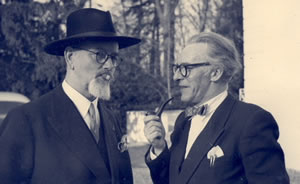
Hier met de schrijver Jan Vercammen (rechts)


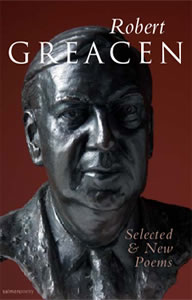
De Ierse dichter en essayist Robert Greacen werd geboren op 24 oktober 1920 in Derry. Zie ook mijn blog van 24 oktober 2008 en ook mijn blog van 24 oktober 2010


At Brendan Behan's Desk


Full seven years I've sat

And scribbled at this desk:

Cards,  letters, poems, autosnaps,

Diary entries, shopping lists,

While Beatrice  down below hoarded

Memories of Brendan in a clutter

Of paintings,  posters, photos,

With, for company, two dogs.


To Brendan's ghost I  must confess

My orderly grey days.

At moments I'd like to be  out

Emptying glasses in the pubs

Of Dublin town, blarneying

To  actors, poets, drunks,

Then taxi-ing back to Cuig*

Not earlier than  three a.m.,

Rousing the solid citizens,

Telling an uncaring world

How  'that old triangle

Went jingle-jangle

Along the banks of the Royal  Canal.'


Instead, I sit at Brendan's desk,

Reading, scribbling,  drinking coffee-

A Protestant without a horse


 1017950-324d8e3f6c396c19365b13964714ad69.jpg

Robert Greacen (24 oktober 1920 – 13 april 2008)


De Bulgaarse schrijver Yordan Radichkov werd geboren op 24 oktober 1929 in het dorp Kalimanitza, in de provincie Montana. Zie ook mijn blog van 24 oktober 2010


Uit: The Bowler-Hat


„Progressive and civilized countries opposed to the bowler-hat, the top hat made desperate attempts to stay and although its resistance it confined itself to the sphere of diplomacy. When they shot the Serbian king in the cab, the bowler-hat first hid the fear on the monarch’s face, because the face of a king must be smiling, or manly, or noble, but never - frightened. The Bowler-hat spread gradually in Europe, threw into   Danube Wallachian and Magyar felt hats, supplanted on North the perky Tyrol hat and made its way even into the British island, as it captured there the Englishmen to their great surprise. British people continued to smoke pipes at the fireplaces and to read Dickens and they accepted the bowler-hat with the smile of Mona Lisa, began to take it for a drive with their famous Rolls-Roices and they accepted the fact that with the same smile they also proved that Britain is a parliamentary state.

A, exactly at that time, when the one half of the Earth was under the shadow of the bowler-hat, and the other half was under the shadow of the iron soldier helmet, our Bulgarian bought The Bowler-hat in question from Italy, before he started on a journey to his homeland.“


 1017950-68919a865fb7c2dd1b81fff096174b0b.jpg

Yordan Radichkov (24 oktober 1929 - 21 januari 2004)

 
Geschreven door Romenu om 18:58 Reageer op dit bericht

Adrian Mitchell, Marghanita Laski, Dorothea von Schlegel, Sarah Josepha Hale, Hubert Aquin

De Engelse dichter , dramaturg en schrijver Adrian Christopher William Mitchell werd geboren in Hampstead Heath op 24 oktober 1932. Zie ook mijn blog van 24 oktober 2009 en ook mijn blog van 24 oktober 2010


There are not enough of us

How much verse is magnificent?
Point oh oh oh oh one per cent.
How much poetry is second-rate?
Around point oh oh oh oh eight.
How much verse is a botched hotch potch?
Ninety-eight per cent by my watch.
How much poetry simply bores?
None of mine and all of yours.


There are too many of us

Most poets are bad poets, the poor creatures.
Much worse than that: most teachers are bad teachers.


for mental patients

pull yourself together
that's what they always say
pull yourself together
throw your cares away
pull yourself together
but if they knew my heart
and how it kicks inside me
they'd say
pull yourself apart

all together now


 1017947-78f3bfa40c33d66a98e3d597ec06a150.jpg

Adrian Mitchell (24 oktober 1932 –  20 december 2008)


De Engelse schrijfster en journaliste Marghanita Laski werd geboren op 24 oktober 1915 in Manchester. Zie ook mijn blog van 24 oktober 2010


Uit: Little Boy Lost

„Her eyes flickered from one to the other, and she said briskly, "Well, have you introduced yourselves yet?" Jean, this is the English gentleman I was telling you about, Monsieur Wainwright. Go and shake hands with him at once. I don't know where your manners are."

The child came slowly forward, his eyes still fixed on Hilary's face. He put out his hand, and as Hilary touched its iciness, the intensity that had held them both was broken. The boy dropped his eyes to the ground and Hilary breathed deeply and felt half-dead with weariness.

The Mother Superior seemed to notice nothing. She went on in the same cheerful voice, "Monsieur is going to spend a few days here and then he's going back to Paris to tell Madame Quilleboeuf all about you." She added with a note of anxiety, "Jean, you remember Madame Quilleboeuf, don't you?"

The boy looked apprehensive. Hilary thought, He's become scared of questions, and an impulse to spare the child made him say quickly, with assurance not interrogation in his voice, "But of course you remember Grandmaman."

Miraculously the little expression changed. Now he looked at Hilary again, but this time his eyes were full of relief and gratitude as if he had already received what he was asking for. He said, "She had a clock. A bird jumped out and said, 'Cuckoo'." The words were tumbling over each other with excitement.

Hilary thought, How queer to hear him talking French, and simultaneously, That must be the clock that the old lady sold. The nun was saying, "I too had a clock like that when I was a little girl in Alsace," and the boy quickly turned to her the face of another child, a child vivid, eager, interested.

Now the Mother Superior was saying smoothly, "I mustn't keep you both indoors talking, when I am sure you want to set out on your walk. Come here, Jean," she said, and helped him into the heavy straight black coat, buttoned it tightly, and pulled the hood up over his head. Then she opened the door and stood quietly waiting beside it until Hilary and Jean had passed her, and then she closed the door behind them and left them together in the hall.

Hilary turned the handle of the front door, but the door wouldn't open. The boy darted forward and said eagerly, "Let me. I know how to." He stood on tiptoe to release a high latch then pulled the door open and proudly held it back for Hilary to pass through.“


 1017947-158c8369c1c7f2808c21c4a40cc98ec7.jpg

Marghanita Laski (24 oktober 1915 - 6 februari 1988)


De Duitse schrijfster Dorothea von Schlegel werd geboren op 24 oktober 1764 in Berlijn. Zie ook mijn blog van 24 oktober 2008 en ook mijn blog van 24 oktober 2009 en ook mijn blog van 24 oktober 2010


Mein Lied, was kann es Neues euch verkünden? (Fragment)
 
Mein Lied, was kann es Neues euch verkünden?
Und welche Weisheit, Freunde, fordert ihr?
Der Hohen meine Jugend zu verbünden,
Dies, wie ihr wißt, gelang noch niemals mir.
Noch Neu, noch Alt wußt' ich je zu ergründen;
Das Schicksal gönn im Alter Weisheit mir.
Wir irren alle, denn wir müssen irren,
Gelassen mag die Zeit den Knäul entwirren.
 
Der Waldstrom braust im tiefen Felsengrund,
Gar schroffe Klippen führen drüber hin,
Die furchtbar hängen überm finstern Schlund;
Wer strauchelt, dem ist sichrer Tod Gewinn!
Ein Müder wankt an Geist und Gliedern wund
Daher, schaut bang hinab, kalt graust der Sinn:
Am Felsen spielt ein Kind, sorglos bemühet
Ein Blümchen pflückend, das am Abgrund blühet.
 
Oft mühten sinnreich Dichter sich und Weise,
Das Leben mit dem Leben zu vergleichen.
Am glücklichsten geschah's im Bild der Reise!
Ein Tor eröffnet Armen sich, wie Reichen;
Früh ausgewandert auf gewohnten Gleise
Sieht er die Dämmrung kaum dem Licht entweichen,
So treibt der Wahn, ihm dürf's allein gelingen,
Rastlos in nie erreichte Fern' zu dringen.
 
Es türmen Felsen sich in seinen Wegen,
Des Mittags Strahlen glühn auf seinem Haupt,
In Wüsten Sands muß sich der Fuß bewegen,
Ein Ungewitter naht, der Sturmwind schnaubt,
Wo kommt ein sichres Dach dem Blick entgegen?
Es seufzt nach Ruh, wem stolzer Mut geraubt;
In später Nacht, nach tausendfält'ger Not
Kömmt er ans Ziel - und dieses ist - der Tod!


 1017947-4e7a50811a4fe4fdcfb28bf3d416d58e.jpg

Dorothea von Schlegel (24 oktober 1764 – 3 augustus 1839)


De Amerikaanse dichteres en schrijfster Sarah Josepha Buell Hale werd geboren op 24 oktober 1788 in Newport, New Hampshire. Zie ook mijn blog van 24 oktober 2008 en ook mijn blog van 24 oktober 2010


Uit: Northwood. A Tale Of new England


„She committed, in  faith, the care of her destitute child to her God,  and he did provide. The hearts of all who knew  the little orphan were softened to pity; and the  lady who finally adopted, and for six years treated  her with all the tenderness of a mother, was a woman capable of performing the duties she had thus  voluntarily assumed. Beneath her forming care,  the fair child grew a lovely, intelligent and accomplished young lady, realizing those expectations her  docility and early industry had inspired. There can  be no excellence attained without industry. The  mind of the idle, Hke the garden of the slothful, will  be overgrown with briars and weeds; and indolence,  under whatever fashionable name it may assume,  sensibility or nervous affections, delicacy or dyspepsia, is a more dangerous enemy to the practice of  virtue, and to moral and intellectual improvement,  than even dissipation or luxury. Those who tread  a devious path, may possibly retrace their steps, or  by a circuitous route finally reach the goal; but  those who never stir, how can they win the race!

It is a good thing to have habits of industry form-  ed early, and to be able to connect our first exertions

with the happiness or benefit they imparted to those  we loved. This Susan could do, and the pleasure

it gave 'her made employment, ever after, a privilege instead of a burden; and when she was released

from the necessity of labor, she was still ready to  receive every order, and attentive to fulfil every

wish of her benefactress.“


 1017947-d074c3baa310a02cb3a94bf176bc25c4.jpg

Sarah Josepha Hale (24 oktober 1788 – 30 april 1879)


Zie voor onderstaande schrijver ook mijn blog van 24 oktober 2010.


De Canadese schrijver, politiek activist, essayist en filmmaker Hubert Aquin werd geboren 24 oktober 1929, in Montreal, Quebec.

Geschreven door Romenu om 18:54 Reageer op dit bericht

Michel van der Plas, Masiela Lusha, Augusten Burroughs, Nick Tosches

De Nederlandse dichter en schrijver Michel van der Plas werd geboren op 23 oktober 1927 in Den Haag. Zie ook mijn blog van 23 oktober 2010 en eveneens alle tags voor Michel van der Plas op dit blog.


Heilsoldaat


Er liep een hondje tussen de soldaten,
meisjes giechelden op de laatste rij,
toen zij een lange juichende cantate
over de hemel zongen: Maakt u vrij!
Het was een straat als alle andere straten
Ik zag een heilsoldaat, hoe hij
Haast jubelend zong, of hij 't nooit meer zou laten,
hij keek omhoog en leek onzegbaar blij.

Ik hoorde de trompet niet noch de hoorn,
ik zag alleen de wonderlijke lach
van een, die in verlangen stond verloren
en zong of hij de hemel open zag
en of hij stond tussen de engelenkoren
en of hij God zag op de jongste dag.

Ik die de moed nooit had om op een kist
van God te spreken met geheven handen
niet om in hete zon, regen en mist
met heul en troost bij pooiers te belanden--
maar ik heb nooit geweten, wat ik wist
en ik dacht koud te zijn, maar ik verbrandde,
ik ging een weg, maar ik heb slechts gegist
want ik kwam uit tegen mijn kamerwanden.

En als de dag komt, waar de heilsoldaat
haast jubelend van zong, zal ik als hij,
zo wonderlijk bereid, zo stil en vrij,
uitzien naar waar de Heer op wolken staat?
Als ik nu zing, zing ik dan niet te laat?
en waarom sta ik altijd nog terzij?


 1017312-3eb6a132c4698394da4834ab3f7cddc2.jpg

Michel van der Plas (Den Haag, 23 oktober 1927)


De Albanees-Amerikaanse schrijfster en actrice Masiela Lusha werd geboren op 23 oktober 1985 in Tirana. Zie ook mijn blog van 23 oktober 2008 en ook mijn blog van 23 oktober 2009 en ook mijn blog van 23 oktober 2010


Celestial Rumors


Last night the stars

Rumored of his defeat.

They lined a perfect

Smile across the navy

Duress

And shined a mocking

Tale of every destiny

He had disowned…


He was given the rights

To happiness—

And yet he had baffled

Even the gods.


What is it that he

Didn’t deserve

That ties his story

To the successions of failure?


And will they mock him?

Will destiny shine its sky

Mirror onto his faded pride

And reflect the face of past

Fears?


Will his faith fold, slowly

Piece by happy piece

Inside the darkest chapters

Of his world? Will

He release the hope he was promised,

The sandy world he had quickly built

With dreams?


How quiet the night seems.


He refuses to look into the presence of stars

He refuses to recount their promise

They had already deceived him once.


 1017312-13c5130d8d1328f2c41f969e014ac058.jpg

Masiela Lusha (Tirana, 23 oktober 1985)


De Amerikaanse schrijver Augusten Xon Burroughs werd geboren op 23 oktober 1965 in Pittsburgh, Pennsylvania. Zie ook mijn blog van 23 oktober 2008 en ook mijn blog van 23 oktober 2009 en ook mijn blog van 23 oktober 2010


Uit: Possible Side Effects


“The first time I was star-struck, the object of my affection was a glamorous Eastern Airlines stewardess. She had towering blond hair, frosted blue eyelids, and was well into her twenties. I was 8. We were thrown together when my parents put me on a flight by myself to Lawrenceville, Georgia, to visit my wealthy grandparents.

"I call them by their first names, Jack and Carolyn," I told her with pride. "They're my father's parents. And my grandmother wears lots of jewelry, just like you."

"Aren't you precious?" the flight attendant said.

I smiled because I loved the name, precious. It reminded me of precious stones like rubies and emeralds and diamonds. And even semiprecious stones, like onyx, which was the black stone men wore, and the ugliest one of all.

The flight attendant returned to the kitchen and I looked out the window, happy to see the mundane "North" pass by, far below me.  As the only member of my family for generations born above the Mason-Dixon line, I was fascinated by the impossibly exotic South.

Like, instead of dirty, gray squirrels, my grandparents had Technicolor peacocks on their lawn. And while we got hateful blizzards in the winter, my grandparents got yet more sunshine. I found it impossible to believe that snow did not cover the world but here was proof.

Though this became an annual trip for me, my grandfather traveled a lot, so I never spent much time with him. And he was gruff, so when he was around I was frightened and avoided him.”


 1017312-c66794c09b0c5b2046b405ccb3c53ddf.jpg

Augusten Burroughs (Pittsburgh, 23 oktober 1965)


De Amerikaanse dichter, schrijver en journalist Nick Tosches werd geboren in 1949 in Newark, New Jersey. Zie ook mijn blog van 23 oktober 2008 en ook mijn blog van 23 oktober 2009 en ook mijn blog van 23 oktober 2010


Uit: Patti Smith: A Baby Wolf with Neon Blues


“Patricia Lee Smith hit the linen on December 30, 1946, in Chicago, and was raised, the eldest of four children, in Deptford Township, New Jersey.

She had been slapped about by tuberculosis; she was a frail-seeming punkling, skinny and daydreamy. She attended Glassboro State College, briefly, and tried doing piecework at a toy factory. Both made her carsick. In 1967 she came to New York. From there she went to Paris with her sister Linda. She wanted to be an artist, but her drawing became poems. She returned to New Jersey, then to New York, where she slowly but steadily became arch moll of rhythm’d word.

Patti co-authored a book with playwright Sam Shepard, “Mad Dog Blues & Other Plays.” She appeared in a film, Robert Mapplethorpe Gets His Nipple Pierced. Late in 1971, Telegraph Books published her first volume of poems, “Seventh Heaven,” which she dedicated to Mickey Spillane and Anita Pallenberg. She began to publish prose-poem essays about rock ‘n’ roll in such magazines as Rolling Stone and Creem. A second book of poems, “Kodak,” appeared in 1972. By the time Gotham Book Mart published her “Witt” in 1973, Patti had become a legend on the New York poetry circuit. She was feared, revered, and her public readings elicited the sort of gut response that had been alien to poetry for more than a few decades. Word spread, and people who avoided poetry as the stuff of four-eyed pedants found themselves oohing and howling at what came out of Patti’s mouth. Established poets feared for their credence. Many well-known poets refused to go on after Patti at a reading, she was that awesome.

The music, too. It had started with just Lenny Kaye on guitar, intuitively the two reinvented melic poetry. The band grew; piano, another guitar, then later drums. Finally, after all those years, rock ‘n’ roll had a poet.”


 1017312-d36e34ff0c32ee1209f17ebb890d968f.jpg

Nick Tosches (Newark, 23 oktober 1949)


Zie voor nog meer schrijvers van de 23e oktober ook mijn vorige blog van vandaag.
Geschreven door Romenu om 18:57 Reageer op dit bericht

Robert Bridges, Adalbert Stifter, Rodja Weigand, Gjergj Fishta, Restif de la Bretonne

De Engelse dichter, toneel- en prozaschrijver Robert Seymour Bridges werd geboren in Walmer, Kent, op 23 oktober 1844. Zie ook mijn blog van 23 oktober 2009 en ook mijn blog van 23 oktober 2010


Nightingales


Beautiful must be the mountains whence ye come,

And bright in the fruitful valleys the streams, wherefrom

Ye learn your song:

Where are those starry woods? O might I wander there,

Among the flowers, which in that heavenly air

Bloom the year long!


Nay, barren are those mountains and spent the streams:

Our song is the voice of desire, that haunts our dreams,

A throe of the heart,

Whose pining visions dim, forbidden hopes profound,

No dying cadence nor long sigh can sound,

For all our art.


Alone, aloud in the raptured ear of men

We pour our dark nocturnal secret; and then,

As night is withdrawn

From these sweet-springing meads and bursting boughs of May,

Dream, while the innumerable choir of day

Welcome the dawn.


 1017308-71630852e6ab00a1cb3af2bd1f2e83e5.jpg

Robert Bridges (23 oktober 1844 - 21 april 1930)


De Oostenrijkse schrijver Adalbert Stifter werd geboren in Oberplan op 23 oktober 1805. Zie ook mijn blog van 23 oktober 2010 en eveneens alle tags voor Adalbert Stifter dit blog.


Uit: Feldblumen


„Man legt oft etwas dem Menschen zur Last, woran eigentlich die Chemie alle Schuld hat. Es ist offenbar, daß wenn ein Mensch zu wenig Metalle, z. B. Eisen, in sein Blut bekommen hat, die andern Atome gleichsam darnach lechzen müssen, um, damit verbunden, das chemisch heilsame Gleichgewicht herstellen zu können. Nur mißversteht aber der so schlimm Begabte meistens seinen Drang, und statt in's Blut, schleppt er unbeholfen die Metalle in seine Stube und in die Kästen, und greift hiebei ganz ungeschickt nach Silber und dergleichen. Wir heißen den armen Schelm dann einen Geizhals; – sei's um den Namen – aber verachten soll man ihn nicht so leichtfertig, als sei er selber schuld, was sich doch offenbar durch die Thatsache widerlegt, daß gerade der echteste darunter alles Papiergeld haßt und durchaus nicht nach Zinsen trachtet, sondern das einfache, reine, schöne Metallgeld aufhebt und hütet.

Andere haben andere Verwandtschaften, lieber Titus! z. B. ich und Du, denen man es übel nahm, daß sie die Damen, und darunter wieder die schönsten, oft unbillig anstarren; – aber bei mir wenigstens ist es nicht abzustellen, weil ich, so zu sagen, ein Schönheitsgeizhals bin. Ich habe es jetzt heraus, wie mich das Ding schon als Kind verfolgte, wo ich oft um lichte Steinchen raufte, oder als Knabe mit dicken, rothgeweinten Augen von dem Taubenschlage herabkam, in dem ich stundenlang gekauert saß, um die schönsten Romane zu lesen, die mein seliger Vater gar so sehr verbot, weil er es lieber hatte, daß ich das Quae maribus und solches Zeug lernte, was ich zwar auch that, so daß ich das Ding der Länge nach herzusagen vermochte; – aber ich hatte es millionenmal lieber, wenn ich mich aus einem schönen Ritterbuche abängstigen konnte, oder wenn mir einmal – ich habe seitdem das Werk nicht mehr gelesen – geradezu das Herz brach, da Ludwig der Strenge sofort seine wunderschöne, unschuldige Gattin hinrichten ließ, die bloß verläumdet war, und die Niemand retten konnte als ich, der ich aus dem Buche die ganze Schlechtigkeit ihrer Feinde gelesen hatte, aber unglücklicher Weise dreihundert Jahre zu spät.

Damals, da ich bis zur letzten Seite auf Rettung baute und traute, und endlich keine kam, rieb ich mich fast auf vor Schmerz. Aus jenem unbewohnten, staubigen Taubenschlage, Titus, trug ich wundersame, liebe Gefühle bis in die spätesten Zeiten meines Lebens hinüber, und wurde nach der Hand für und für kein Anderer; immer suche ich noch, bildlich gesprochen, solche Taubenschläge, spanne mich aus der Gewerkswelt los und buhle um die Braut des Schönen“.


 1017308-ff8df95cce5b460db4cd4844daa58336.jpg

Adalbert Stifter (23 oktober 1805  - 28 januari 1868)

Standbeeld in Linz


De Duitse dichter, schrijver en uitgever Rodja Weigand werd geboren op 23 oktober 1945 in München. Zie ook mijn blog van 23 oktober 2010


der augenblick


augenblick bleib
du sitzt nicht oft bei mir
dein arm ruht auf meiner schulter
auf deinen lippen lügt nichts
dein haar fällt rot
auch noch im winter
manchmal horche ich
nach draußen
doch die angst
findet keinen weg mehr


1017308-7b88285403402e4ab3c61b1269d1211d.jpg
Rodja Weigand (München, 23 oktober 1945)


Zie voor onderstaande schrijvers ook
mijn blog van 23 oktober 2010.


De Albanese dichter, vertaler en pater Franciscaan Gjergj Fishta werd geboren op 23 oktober 1871 in Fishta të Zadrimes. Zie ook mijn blog van 23 oktober 2008.


De Franse schrijver Nicolas Edmonde Restif de La Bretonne werd geboren op 23 oktober 1734 in Sacy bij Auxerre. Zie ook mijn blog van 23 oktober 2008.

Geschreven door Romenu om 18:56 Reageer op dit bericht

Doris Lessing, Arjen Lubach, Alfred Douglas

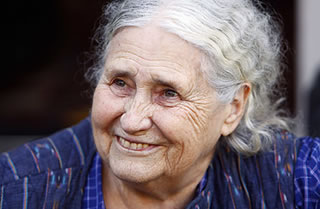
De Britse schrijster Doris Lessing werd geboren in Kermanshah, Perzië op 22 oktober 1919. Zie ook mijn blog van 22 oktober 2010 en eveneens alle tags voor Doris Lessing op dit blog.


Uit: The Grass is Singing


„Long before the murder marked them out, people spoke of the Turners in the hard, careless voices reserved for misfits, outlaws, and the self-exiled. The Turners were disliked, though few of their neighbours had ever met them, or even seen them in the distance. Yet what was there to dislike? They simply 'kept themselves to themselves'; that was all. They were never seen at district dances, or fêtes, or gymkhanas. They must have had something to be ashamed of; that was the feeling. It was not right to seclude themselves like that; it was a slap in the face of everyone else; what had they got to be so stuck-up about? What, indeed! Living the way they did! That little box of a house - it was forgivable as a temporary dwelling, but not to live in permanently. Why, some natives (though not many, thank heavens) had houses as good; and it would give them a bad impression to see white people living in such a way.

And then it was that someone used the phrase 'poor whites'. It caused disquiet. There was no great money-cleavage in those days (that was before the era of the tobacco barons), but there was certainly a race division. The small community of Afri­kaners had their own lives, and the Britishers ignored them. 'Poor whites' were Afrikaners, never British. But the person who said the Turners were poor whites stuck to it defiantly. What was the difference? What was a poor white? It was the way one lived, a question of standards. All the Turners needed were a drove of children to make them poor whites.

Though the arguments were unanswerable, people would still not think of them as poor whites. To do that would be letting the side down. The Turners were British, after all.

Thus the district handled the Turners, in accordance with that esprit de corps which is the first rule of South African society, but which the Turners themselves ignored. They ap­parently did not recognize the need for esprit de corps; that, really, was why they were hated.“


 1016604-9aa85f03c1a21260a7cbcb78ac8551bf.jpg

Doris Lessing (Kermanshah, 22 oktober 1919)


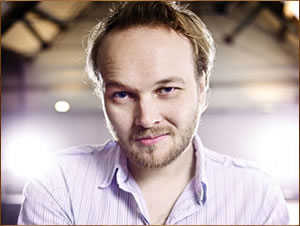
De Nederlandse schrijver, cabaretier en televisiepresentator Arjen Henrik Lubach werd geboren in Lutjegast op 22 oktober 1979. Zie ook mijn blog van 22 oktober 2010.


Uit: Magnus


‘Ik had in Groningen en later in Amsterdam vaak gehoopt op de achtbaan die er van je leven kan worden. Jezelf ergens omhoog takelen en dan zonder enige invloed op het traject naar beneden lazeren, zonder de bochten of de duur van de baan te kennen. Het liefst in de striemende regen en in het gezelschap van onbekenden. Nu het eenmaal zover was, was ik misselijker dan ooit.

’(…)


“Waar we precies over hebben gepraat die avond weet ik niet meer. Het zal vermoedelijk een verzameling roddels over klasgenoten geweest zijn. Herinneringen aan Florence, verwachtingen over het examenjaar en wat we daarna gingen doen. Dat is ook niet wat me is bijgebleven. De onderwerpenop zich zijn niet relevant, het zijn de reacties en grapjes over de onderwerpen die maken dat je met iemand nog geen vijf minuten in een lift kan staan of juist vakanties lang samen in ingesneeuwde chalets kan doorbrengen. Vaak denken mensen dat je de diepte in moet, moet raken aan onaangeraakte roerselen, dat je die bij de ander omhoog moet halen, maar dat is onzin: de verdieping zit in structuur, in het vormen van gedachten, in absurdisme, in taal, in humor.”


1016604-b982caac42e28b67c881dc65f1d44d51.jpg
Arjen Lubach (Lutjegast, 22 oktober 1979)


De Engelse dichter en schrijver
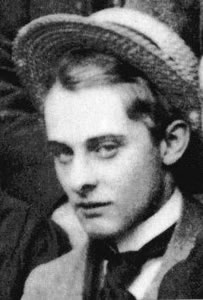
Alfred Douglas werd geboren in Ham Hill in Worcestershire op 22 oktober 1870. Zie ook mijn blog van 22 oktober 2010 en eveneens alle tags voor Alfred Douglas op dit blog.


Two Loves
 

I dreamed I stood upon a little hill,
And at my feet there lay a ground, that seemed
Like a waste garden, flowering at its will
With buds and blossoms. There were pools that dreamed
Black and unruffled; there were white lilies
A few, and crocuses, and violets
Purple or pale, snake-like fritillaries
Scarce seen for the rank grass, and through green nets
Blue eyes of shy peryenche winked in the sun.
And there were curious flowers, before unknown,
Flowers that were stained with moonlight, or with shades
Of Nature's willful moods; and here a one
That had drunk in the transitory tone
Of one brief moment in a sunset; blades
Of grass that in an hundred springs had been
Slowly but exquisitely nurtured by the stars,
And watered with the scented dew long cupped
In lilies, that for rays of sun had seen
Only God's glory, for never a sunrise mars
The luminous air of Heaven. Beyond, abrupt,
A grey stone wall. o'ergrown with velvet moss
Uprose; and gazing I stood long, all mazed
To see a place so strange, so sweet, so fair.
And as I stood and marvelled, lo! across
The garden came a youth; one hand he raised
To shield him from the sun, his wind-tossed hair
Was twined with flowers, and in his hand he bore
A purple bunch of bursting grapes, his eyes
Were clear as crystal, naked all was he,
White as the snow on pathless mountains frore,
Red were his lips as red wine-spilith that dyes
A marble floor, his brow chalcedony.
And he came near me, with his lips uncurled
And kind, and caught my hand and kissed my mouth,
And gave me grapes to eat, and said, 'Sweet friend,
Come I will show thee shadows of the world
And images of life. See from the South
Comes the pale pageant that hath never an end.'
And lo! within the garden of my dream
I saw two walking on a shining plain
Of golden light. The one did joyous seem
And fair and blooming, and a sweet refrain
Came from his lips; he sang of pretty maids
And joyous love of comely girl and boy,
His eyes were bright, and 'mid the dancing blades
Of golden grass his feet did trip for joy;
And in his hand he held an ivory lute
With strings of gold that were as maidens' hair,
And sang with voice as tuneful as a flute,
And round his neck three chains of roses were.
But he that was his comrade walked aside;
He was full sad and sweet, and his large eyes
Were strange with wondrous brightness, staring wide
With gazing; and he sighed with many sighs
That moved me, and his cheeks were wan and white
Like pallid lilies, and his lips were red
Like poppies, and his hands he clenched tight,
And yet again unclenched, and his head
Was wreathed with moon-flowers pale as lips of death.
A purple robe he wore, o'erwrought in gold
With the device of a great snake, whose breath
Was fiery flame: which when I did behold
I fell a-weeping, and I cried, 'Sweet youth,
Tell me why, sad and sighing, thou dost rove
These pleasent realms? I pray thee speak me sooth
What is thy name?' He said, 'My name is Love.'
Then straight the first did turn himself to me
And cried, 'He lieth, for his name is Shame,
But I am Love, and I was wont to be
Alone in this fair garden, till he came
Unasked by night; I am true Love, I fill
The hearts of boy and girl with mutual flame.'
Then sighing, said the other, 'Have thy will,
I am the love that dare not speak its name.'


1016604-01c98a18193b885fddcb91fd53ad4fd9.jpg
Alfred Douglas (22 oktober 1870 – 20 maart 1945)


Zie voor nog meer schrijvers van de 22e oktober ook
mijn vorige blog van vandaag.

Geschreven door Romenu om 18:23 Reageer op dit bericht

Lévi Weemoedt, A. L. Kennedy, Ivan Boenin, Charles Leconte de Lisle

De Nederlandse dichter en schrijver Lévi Weemoedt werd geboren in Geldrop op 22 oktober 1948. Zie ook mijn blog van 22 oktober 2010 en eveneens alle tags voor Lévi Weemoedt op dit blog.


Onder lijn 4


De werkers kwamen fluitend van karwei,
staken de rijweg over, dromden rond de halte.
De adel van hun kracht beschaamde mij:
triest hing daartussen, zinloos, míjn gestalte.

Een eerlijk broodblik priemde in mijn kraag,
een zwaar beslagen schoen rustt' op mijn tenen.
Mijn leven had nog nooit zo leeg geschenen:
ík had alleen een plaat gekocht vandaag.

O! 't Liefst zou ik van hen hier voorman wezen
en legde in één gebaar de hele haven lam!

Maar ach! Voor morgen staat een boek op het program.
En dan maar weer een plaat, men kan niet eeuwig lezen.


De bedriegertjes

"wat 'n treurigheid! O, het is niet waar
toch?", snikte de psychiater.
"En dat heeft u al van uw derde jaar?
Ging dat nooit eens over later...?"

Ach, ik zei maar snel dat het overging
en haalde een glaasje water.


Don juan lul


'k Kan niet lezen en niet schrijven.
'k Ben de langzaamste in vlijt.
Maar het allerdroevigst ben ik
in sociale vaardigheid.

Nooit kan ik iets leuks verzinnen!
Sta ik voor een mooie meid,
ach, dan schiet mij slechts te binnen
dat ik dood wil. Heel de tijd.


 1016602-83f5ff9d80c0807ea1305e9b1e9b9825.jpg

Lévi Weemoedt (Geldrop, 22 oktober 1948)


De Schotse schrijfster Alison Louise Kennedy werd geboren op 22 oktober 1965 in Dundee. Zie ook mijn blog van 22 oktober 2008 en ook mijn blog van 22 oktober 2009 en ook mijn blog van 22 oktober 2010


Uit: What Becomes

“The cinema was tiny: twelve rows deep from the blacked-out wall and the shadowed doorway down to the empty screen, which had started to bother him now, a kind of hanging absence.
How did they make any money with a place this small? Even if it was packed?
Which it wasn’t. Quite the reverse. There was, in fact, no one else here. Boy at the door had to turn the lights on just for him, Frank feeling bad about this, thinking he shouldn’t insist on seeing a film all by himself and might as well go to the bigger space they kept upstairs which had a balcony and quite probably leg room and would be more in the way of a theatre and professional. In half an hour they’d be showing a comedy up there.
Or he could drive to a multiscreen effort: there’d been one in the last big town as he came round the coast—huge glass and metal tower, looked like a part of an airport: they’d have an audience, they’d have audiences to spare.
Although that was a guess and maybe the multiplex was empty, too. The bar, the stalls that sold reconstituted food, the toilets, the passageways, perhaps they were all deserted. Frank hoped so.
And he’d said nothing here as he’d taken back his torn stub and walked through the doorway, hadn’t apologised or shown uncertainty. He’d only stepped inside what seemed a quietly watchful space as the younger man drifted away and left him to it.
Four seats across and then the aisle and then another four and that was it. The room wasn’t much broader than his lounge and it put Frank in mind of a bus, some kind of wide, slow vehicle, sliding off towards destinations it left undisclosed.
He didn’t choose a seat immediately, wandering a little, liking the solitude, a whole cinema of his own—the kind of thing a child might imagine, might enjoy. He believed he would move around later if no one else appeared, run amok just a touch and leave his phone turned on so he could answer it if anybody called.“

 
1016602-10c9c4f8b167e07354c107d44517d214.jpg
A. L. Kennedy (Dundee, 22 oktober 1965)


De Russische schrijver en dichter Ivan Aleksejevitsj Boenin werd geboren in Voronezj op 22 oktober 1870. Zie ook mijn blog van 22 oktober 2008 en ook mijn blog van 22 oktober 2009 en ook mijn blog van 22 oktober 2010


Der Smaragd (Vertaald door Eric Boemer)


“Die nächtliche, dunkelblaue Schwärzung des Himmels in den ruhig dahinziehenden Wolken, die überall weiß sind, nur um den hochstehenden Mond herum hellblau gefärbt. Wenn du lange genug schaust, sind es nicht die Wolken, die ziehen, sondern der Mond selbst, und nahe bei ihm, zusammen mit ihm, fließt die goldene Träne eines Sterns: der Mond verschwindet langsam in der Höhe, die bodenlos ist, und immer höher und höher nimmt er den Stern mit sich fort.

Mit vorgeschobenen Schultern sitzt sie auf der Bank des geöffneten Fensters und schaut, mit zurückgebeugtem Kopf, in die Höhe – im Kopf beginnt es ihr von der Bewegung am Himmel zu schwindeln. Er steht bei ihren Knien.

»Was ist das nur für eine Farbe? Ich kann sie nicht bestimmen! Und sie, Tolja, können sie's?«

»Die Farbe wovon, Kisa?«

»Ich habe ihnen schon tausendmal gesagt, dass sie mich nicht so nennen sollen … «

»Ich habe es vernommen, Ksenija Andreevna.«

»Ich spreche von diesem Himmel dort zwischen den Wolken. Was für eine wundervolle Farbe. Das ist schon die göttliche Wahrheit, auf Erden gibt es sowas nicht. Irgendein Smaragd.«

»Wenn sie schon am Himmel ist, dann ist sie natürlich auch himmlisch. Was ist denn ein Smaragd? Ich habe in meinem Leben noch keinen gesehen. Ihnen gefällt einfach nur das Wort.«

»Ja. Nun, ich weiß nicht, – vielleicht nicht gerade ein Smaragd, sondern ein Saphir … Nur einer von der Sorte, dass es ihn, wirklich, nur im Paradies geben kann. Und wenn man auf diese Weise auf das alles schaut, wie soll man da nicht glauben, dass es ein Paradies gibt, Engel, den göttlichen Thron …«

»Und goldene Birnen an einer Weide …«

»Was sind sie doch verdorben, Tolja. Marja Sergeevna hat schon recht, wenn sie sagt, dass selbst das beschränkteste Mädchen immer noch besser ist, als jeder junge Mann.«

»Die Wahrheit selbst fließt über Marjas geheiligte Lippen, Kisa.«

Sie trägt ein gekräuseltes Kattunkleidchen und billiges Schuhwerk; hat volle Waden und Knie, jungmädchenhaft, ein rundes Köpfchen mit einem kleinen Zopf drumherum, der so lieblich herunterhängt … Er legt eine Hand auf ihr Knie, die andere um ihre Schultern und küsst halb im Scherz ihre leichtgeöffneten Lippen. Sie macht sich ruhig los, schiebt seine Hand von ihrem Knie.

»Was soll das? Sind wir beleidigt?«

Sie lehnt sich mit dem Nacken an den Fensterrahmen, und er sieht, dass sie, während sie sich auf die Lippen beißt, die Tränen zurückhält.

»Was ist denn los?«

»Ach, lassen sie mich …«

»Was ist denn passiert?«

Sie flüstert:

»Nichts …«

Und springt von der Fensterbank und läuft fort.

Er zuckt mit den Schultern:

»Dumm bis zur Heiligkeit!«


 1016602-360e5b6e9289474e69bd12eabca1b3db.jpg

Ivan Boenin (22 oktober 1870 - 8 november 1953)

Monument in Moskou


De Franse dichter en schrijver Charles Marie René Leconte de Lisle werd geboren op 22 oktober 1818 op het eiland Réunion. Zie voor onderstaande schrijvers ook mijn blog van 22 oktober 2008 en ook mijn blog van 22 oktober 2009 en ook mijn blog van 22 oktober 2010


A un poète mort


Toi dont les yeux erraient, altérés de lumière,
De la couleur divine au contour immortel
Et de la chair vivante à la splendeur du ciel,
Dors en paix dans la nuit qui scelle ta paupière.

Voir, entendre, sentir ? Vent, fumée et poussière.
Aimer ? La coupe d'or ne contient que du fiel.
Comme un Dieu plein d'ennui qui déserte l'autel,
Rentre et disperse-toi dans l'immense matière.

Sur ton muet sépulcre et tes os consumés
Qu'un autre verse ou non les pleurs accoutumés,
Que ton siècle banal t'oublie ou te renomme ;

Moi, je t'envie, au fond du tombeau calme et noir,
D'être affranchi de vivre et de ne plus savoir
La honte de penser et l'horreur d'être un homme !


Aux modernes


Vous vivez lâchement, sans rêve, sans dessein,
Plus vieux, plus décrépits que la terre inféconde,
Châtrés dès le berceau par le siècle assassin
De toute passion vigoureuse et profonde.

Votre cervelle est vide autant que votre sein,
Et vous avez souillé ce misérable monde
D'un sang si corrompu, d'un souffle si malsain,
Que la mort germe seule en cette boue immonde.

Hommes, tueurs de Dieux, les temps ne sont pas loin
Où, sur un grand tas d'or vautrés dans quelque coin,
Ayant rongé le sol nourricier jusqu'aux roches,

Ne sachant faire rien ni des jours ni des nuits,
Noyés dans le néant des suprêmes ennuis,
Vous mourrez bêtement en emplissant vos poches.


 1016602-96fc9a84aa64a0c3fa2c8008ce97a8b3.jpg

Charles Leconte de Lisle (22 oktober 1818 – 18 juli 1894)


Geschreven door Romenu om 18:13 Reageer op dit bericht

Doeschka Meijsing, Martin Bril, Tariq Ali, Mehdi Charef

De Nederlandse schrijfster Doeschka Meijsing werd geboren in Eindhoven op 21 oktober 1947. Zie ook mijn blog van 21 oktober 2010 en eveneens alle tags voor Doeschka Meijsing op dit blog.


Uit: Der Weg nach Caviano (Vertaald door Rosemarie Still)


„Die sieben Geschworenen sind fort. Vielleicht war die Jury zu klein, um zu einem einstimmigen Urteil zu gelangen, vielleicht ist ein Urteil auch gar nicht nötig. Das Zuschlagen der Autotüren dröhnt noch in meinen Ohren. Ihre Gerüche hängen noch in den Räumen, und Joeps Wassernapf, an den alle ständig gestoßen sind, ist verschwunden. Die alte Frau hatte schulterzuckend genickt, als ich sie fragte, ob ich sofort einziehen könne. Aber selbstverständlich, sie würde weiterhin jede Woche zum Saubermachen kommen. Sie bot mir Pfirsiche an und ließ mich in dem großen, leeren Haus allein. Ich fing an auszurechnen, wieviel ich ihr schuldig war, und hörte gelangweilt wieder damit auf. Schließlich hatte ich hier etwas anderes zu tun.Dieses Land, das ich von 1955 bis 1969 jeden Sommer in allen Einzelheiten erforscht hatte, von den geheimnisvollen Steinen in der Kinderzeit bis zu den erotischen Verwicklungen späterer Jahre - dieses Land empfing mich die letzten beiden Male, mehr als ein Vierteljahrhundert nachdem ich von ihm Abschied genommen hatte, nicht mit offenen Armen. Es zeigte sich auf eine Weise gefährlich und feindlich, gegen die mir die Fallgruben in meiner Kindheit wie flache Gräben vorkamen.Als Kind hatte ich einen wichtigen Entschluß gefaßt: Ich wollte jeden Augenblick festhalten und bewahren, mit der einen Einschränkung: jeden glücklichen Augenblick.Das Glück entdeckte ich im Alter von zehn Jahren. Ich saß auf der Schaukel auf dem Dachboden meines Elternhauses. Knaben schaukeln in dem Alter nur, wenn niemand in der Nähe ist. Vielleicht waren unten unangenehme Dinge vorgefallen, vielleicht waren sich meine Cousins und Cousinen, die bei uns wohnten, in die Haare geraten und auf die Straße geschickt worden, oder meine Mutter lag mit Migräne auf dem Sofa, was von seiten der Familie absolute Ruhe erforderlich machte. Oder vielleicht war die ganze Familie ins Auto gesprungen, um einen lautstarken, pädagogisch wertvollen Ausflug nach Hoorn, Enkhuizen und dem Afsluitdijk zu unternehmen. Jedenfalls war ich allein auf dem Dachboden. Links von mir die fast einen Meter lange knallrote Dampflokomotive auf Rädern, die aufeinandergestapelten Baukästen, der Puppenwagen aus Korbgeflecht von meiner Cousine und so weiter und so weiter. Rechts der große Schrank mit den Kleidersäcken für die Wintermäntel und den Sonntagsanzügen und -kostümen meiner Eltern. Hinter mir der dunkle Raum, in dem das Geheimnis des früheren Lebens meiner Eltern aufbewahrt war. Man riecht das Geheimnis, aber es schlummert noch unter der Oberfläche und lädt noch nicht zu genauerer Erforschung ein.“


1016052-d0a85a3c56aa56b75be0fed1cc132927.jpg
Doeschka Meijsing (Eindhoven, 21 oktober 1947)

Bij de ontvangst van de AKO Literatuurprijs 2009 


De Nederlandse dichter, columnist en schrijver Martin Bril werd geboren in Utrecht op 21 oktober 1959. Zie ook mijn blog van 21 oktober 2010 en eveneens alle tags voor Martin Bril op dit blog.


Kanker (2)


De zuster duwt het bed door lange
Stille gangen naar de OK, haar kleppers
Piepen op de vloer, patiënt
Ligt in een blauwe schort

Patiënt ben ik, en aan 't plafond
Zoeven tl-buizen voorbij, de weg

Gaat naar het licht, om niet
Te zeggen dat ik steeds dichter
Bij de waarheid kom,

Grote duisternis


Kunst


Wat we willen
Momenten
Van helderheid

Of beter nog: van grote
Klaarheid

Schaars zijn die momenten
En ook nog goed verborgen

Zoeken heeft dus
Nauwelijks zin, maar
Vinden wel

De kunst is zo te leven
Dat het je overkomt
Die klaarheid, af en toe


1016052-94cfff466ecaa300b014fe608be14f86.jpg
Martin Bril (Utrecht, 21 oktober 1959 - 22 april 2009)


De Pakistaanse auteur, journalist en filmmaker Tariq Ali werd geboren in Lahore op 21 oktober 1943. . Zie ook mijn blog van 21 oktober 2008 en ook mijn blog van 21 oktober 2009 en ook mijn blog van 21 oktober 2010


Uit: The Duel


„Books have a destiny. This is my third study of Pakistan. The first, Pakistan: Military Rule or People's Power?, was written in 1969 and predicted the breakup of the state. It was banned in Pakistan. Critics of every persuasion, even those who liked the book, thought it was going too far in suggesting that the state could disintegrate, but a few years later that is exactly what happened. Just over a decade later I wrote Can Pakistan Survive? The question mark was not unimportant but nonetheless struck a raw nerve in General Zia's Pakistan, where to even pose the question was unacceptable. The general himself was extremely angry about its publication, as were sections of the bureaucracy, willing instruments of every despotism. Zia attacked both me and the book at a press conference in India, which was helpful and much appreciated by the publisher's sales department. That book too was banned, but to my delight was shamelessly pirated in many editions in Pakistan. They don't ban books anymore, or at least not recently, which is a relief and a small step forward.
When I left in 1963, the country consisted of West and East Pakistan. Eight years later the East defected and became Bangladesh. The population of the Western wing was then 40-45 million. It has grown phenomenally ever since and is now approaching the 200 million mark. The under-thirties constitute a majority.

This book centers on the long duel between a U.S.-backed politico-military elite and the citizens of the country. In earlier years the State Department would provide the seconds for the duel, but with U.S. troops now in neighboring Afghanistan and U.S. bombs falling on homes inside Pakistan, the conflict is assuming a more direct form. Were it to proceed further, as some have been arguing in Washington, there is a distinct possibility that serious cracks would threaten the much-vaunted unity of the Pakistan military high command. The relationship with Washington, always controversial in the country, now threatens the Pakistan army“

.


 1016052-35182088b7802981f7e1fb95e57fa534.jpg

Tariq Ali (Lahore,  21 oktober 1943)


De Frans-Algerijnse schrijver en regisseur Mehdi Charef werd geboren op 21 oktober 1952 in Maghnia in Algerije. Zie ook mijn blog van 21 oktober 2008 en ook mijn blog van 21 oktober 2009 en ook mijn blog van 21 oktober 2010


Uit: A bras le coeur


„Elle lève les yeux, fixe ce malandrin de Mbami, regarde les deux mères et conclut, affolée :
    – On dirait que je... que je l'aime !
    Elle se frappe le visage ; sa mère l'arrête. Farida se jette sur sa compagne, la serre dans ses bras.
    – Ce n'est pas notre faute ! On a été ensorcelées !
   Elles s'étreignent. Les mères sanglotent. Le marabout, qui en a vu et entendu d'autres, a l'œil qui brille. L'une des mères, bien que bouleversée par le drame, paraît moins niaise que l'autre. Méfiante, elle demande :
    – Si l'on ne vous avait pas surprises toutes les deux nues, le visage enfoui dans les cuisses l'une de l'autre, et possédées par le démon, vous vous seriez dénoncées ?
    – Sûr, maman, et comment ! Mais nous n'osions pas, notre malheur était trop grand, nous ne voulions pas vous éclabousser de honte !
    – Nous sommes soulagées d'avoir été découvertes reprend Farida, finaude.
    Pour ne pas se trahir, elle se garde bien d'ôter ses mains tremblantes de son visage...
    Le malandrin souffle sur ses deux kanouns et jure :
     – Je m'en vais vous l'évacuer comme il faut, ce djinn d'enfer qui vous ronge l'âme, pervertit votre esprit et enflamme vos corps purs! Parole de Si Mbami Youssef Ould Hadjzahir!
    L'épaisse fumée bleue s'élève en volutes. Il flotte une odeur âcre et un goût de cendre imprègne le palais. Le marabout se redresse. Il pose ses mains sur la tête des filles en pleurs, et leur met de la braise sous le nez. Elles grimacent et clignent des yeux. Il les a recouvertes d'un long voile sombre et épais, qui empêche la fumée de s'échapper. Le marabout a l'oeil perçant. Il est sûr de son coup et jubile ; il joint les mains et récite quelques formules dans sa barbe..


1016052-9a660783b227721d8f6f64c78878a85a.jpg
Mehdi Charef (Maghnia, 21 oktober 1952)


Zie voor nog meer schrijvers van de 21e oktober ook mijn vorige blog van vandaag en eveneens mijn eerste blog van vandaag.
Geschreven door Romenu om 17:56 Reageer op dit bericht

Allen Hoey, Patrick Kavanagh, Nikos Engonopoulos

De Amerikaanse dichter, schrijver en criticus Allen Hoey werd geboren op 21 oktober 1952 in Kingston, New York. Zie ook mijn blog van 21 oktober 2008 en ook mijn blog van 21 oktober 2009 en ook mijn blog van 21 oktober 2010


Uit: Provençal Light, a long poem


After the Orchard: "Souvenir de Mauve" (fragment)


At last! These are the days, filled with such light
a Dutchman could never dream, even steeped in absinthe,
I came seeking. If I thought my palette inadequate to the sky
damped with clouds, the fields and orchards sunk beneath
two feet of snow, how paler it seems with the sun finally streaming,
not mere atmospherics, but light, pure and intense--greens
beyond any in Holland or the chestnuts of a Paris arcade,
and cobalts and ultramarines--abandon your greys! Not pale but
chrome yellows, reds deep as the wine-colored Seine at dusk.
And you, down from Denmark, can your eyes be any less
dazzled than mine, reared under Dutch skies, soot-smudged
the year round, the close--some call them "cozy"--homes,
low-ceilinged and dark all day. No wonder Dutch painting is so murky,
all chiaroscuro and the varnished sheen applied after--nothing else
but the finish could glow. But here--the sun might burn
the eyes right out of the heads of cold-blooded painters like us,
schooled on shadow, our palettes tricked out with greys and bistre.
Earth tones? Here, the earth is tinged violet, the sky
carries the green of blossoming pears to cast heaven
azure, topaz--the chromatic scale at a sitting!
The whole day
spent in the orchard--and see this peach tree, the way the earth
seems by centering strokes to rise into the tree,
the violets and pinks of the soil, the slightest trace of shadow,
mirrored--no, itself come to bloom in the blossoms that grace
each limb, pink runners of flame to the thinnest twig,
and the clouds, released blossoms riding the wind, a meringue
whipped of plain air. The whole canvas wrenched from the mistral,
wind beating the canvas like sails, the easel pegged down, dust
driven into the pigment. See how the brusque strokes convey
color seized from the turmoil of growth, the traces--here and here--
where the canvas shows through. Enough of technique.


 1016049-b061039f2a469024c406d9f744cbe678.jpg

Allen Hoey (21 oktober 1952 – 16 juni 2010)


De Ierse dichter Patrick Kavanagh werd geboren op 21 oktober 1904 in County Monaghan. Zie ook mijn blog van 21 oktober 2010 en eveneens alle tags voor Patrick Kavanagh op dit blog.


On An Apple-Ripe September Morning


On an apple-ripe September morning
Through the mist-chill fields I went

With a pitch-fork on my shoulder

Less for use than for devilment.


The threshing mill was set-up, I knew,

In Cassidy's haggard last night,

And we owed them a day at the threshing

Since last year. O it was delight


To be paying bills of laughter

And chaffy gossip in kind

With work thrown in to ballast

The fantasy-soaring mind.


As I crossed the wooden bridge I wondered

As I looked into the drain

If ever a summer morning should find me

Shovelling up eels again.


And I thought of the wasps' nest in the bank

And how I got chased one day

Leaving the drag and the scraw-knife behind,

How I covered my face with hay.


The wet leaves of the cocksfoot

Polished my boots as I

Went round by the glistening bog-holes

Lost in unthinking joy.


I'll be carrying bags to-day, I mused,

The best job at the mill

With plenty of time to talk of our loves

As we wait for the bags to fill.


Maybe Mary might call round...

And then I came to the haggard gate,

And I knew as I entered that I had come

Through fields that were part of no earthly estate.


 1016049-914f023124b91761b9621e4090fee94d.jpg

Patrick Kavanagh (21 oktober 1904 – 30 november 1967)

Portret door Patrick Swift, 1960


De Griekse dichter en schilder Nikos Engonopoulos werd geboren op 21 oktober 1907 in Athene. Zie ook mijn blog van 21 oktober 2008 en ook mijn blog van 21 oktober 2009 en ook mijn blog van 21 oktober 2010


BOLIVÁR   (Fragment)

A Greek Poem


Bolivár! You were reality, and you are, even now, you are
    no dream.
When the wild hunters nail the wild eagles, and the other wild
    birds and animals,
Over their wooden doors in the wild forests,
You live again, and shout, and grieve,
And you are yourself the hammer, nail and eagle.


If on the isles of coral, winds blow and the empty fishing boats
    overturn,
And the parrots are a riot of voices when the day ends and
    the gardens grow quiet drowned in humidity,
And in the tall trees the crows perch,
Consider, beside the waves, the iron tables of the cafeneion,
How the damp eats at them in the gloom, and far off the light
    that flashes on, off, on again, turning back and forth.
And day breaks – what frightful anguish – after a night without
    sleep,
And the water reveals nothing of its secrets. Such is life.
And the sun comes, and the houses on the wharf, with their
    island-style arches,
Painted pink, and green, with white sills (Naxos, Chios),
How they live! How they shine like translucent fairies! Such is
    Bolivár!


Bolivár! I cry out your name, reclining on the peak of
    Mount Ere,
The highest peak on the isle of Hydra.
From here the view, enchanting, extends as far as the Saronic
    isles, Thebes,
Beyond Monemvasia, far below, to august Egypt,
And as far as Panama, Guatemala, Nicaragua, Honduras, Haiti,
    San Domingo, Bolivia, Colombia, Peru, Venezuela,
    Chile, Argentina, Brazil, Uraguay, Paraguay, Ecuador,
As far even as Mexico.
With hard stone I carve your name in rock, that afterwards men
    may come in pilgrimage.
As I carve sparks fly – such, they say, was Bolivár – and I
    watch my hand as it writes, gleaming in the sun.


Vertaald door David Connolly


1016049-c9f9afc57af148bab09e3cd85f82fcb2.jpg
Nikos Engonopoulos (21 oktober 1907 – 31 oktober 1985)


Geschreven door Romenu om 17:49 Reageer op dit bericht

Alphonse de Lamartine, Samuel T. Coleridge, Martin Roda Becher

De Franse dichter en schrijver Alphonse de Lamartine werd geboren op 21 oktober 1790 in Mâcon. Zie ook mijn blog van 21 oktober 2010 en eveneens alle tags voor Alphonse de Lamartine op dit blog.


Souvenir


En vain le jour succède au jour,
Ils glissent sans laisser de trace ;
Dans mon âme rien ne t'efface,
Ô dernier songe de l'amour !

Je vois mes rapides années
S'accumuler derrière moi,
Comme le chêne autour de soi
Voit tomber ses feuilles fanées.

Mon front est blanchi par le temps ;
Mon sang refroidi coule à peine,
Semblable à cette onde qu'enchaîne
Le souffle glacé des autans.

Mais ta jeune et brillante image,
Que le regret vient embellir,
Dans mon sein ne saurait vieillir
Comme l'âme, elle n'a point d'âge.

Non, tu n'as pas quitté mes yeux;
Et quand mon regard solitaire
Cessa de te voir sur la terre,
Soudain je te vis dans les cieux.

Là, tu m'apparais telle encore
Que tu fus à ce dernier jour,
Quand vers ton céleste séjour
Tu t'envolas avec l'aurore.

Ta pure et touchante beauté
Dans les cieux même t'a suivie ;
Tes yeux, où s'éteignait la vie,
Rayonnent d'immortalité !

Du zéphyr l'amoureuse haleine
Soulève encor tes longs cheveux ;
Sur ton sein leurs flots onduleux
Retombent en tresses d'ébène,

L'ombre de ce voile incertain
Adoucit encor ton image,
Comme l'aube qui se dégage
Des derniers voiles du matin.

Du soleil la céleste flamme
Avec les jours revient et fuit ;
Mais mon amour n'a pas de nuit,
Et tu luis toujours sur mon âme.

C'est toi que j'entends, que je vois,
Dans le désert, dans le nuage;
L'onde réfléchit ton image;
Le zéphyr m'apporte ta voix.

Tandis que la terre sommeille,
Si j'entends le vent soupirer,
Je crois t'entendre murmurer
Des mots sacrés à mon oreille.

Si j'admire ces feux épars
Qui des nuits parsèment le voile,
Je crois te voir dans chaque étoile
Qui plaît le plus à mes regards.

Et si le souffle du zéphyr
M'enivre du parfum des fleurs.
Dans ses plus suaves odeurs
C'est ton souffle que je respire.

C'est ta main qui sèche mes pleurs,
Quand je vais, triste et solitaire,
Répandre en secret ma prière
Près des autels consolateurs.

Quand je dors, tu veilles dans l'ombre ;
Tes ailes reposent sur moi ;
Tous mes songes viennent de toi,
Doux comme le regard d'une ombre.

Pendant mon sommeil, si ta main
De mes jours déliait la trame,
Céleste moitié de mon âme,
J'irais m'éveiller dans ton sein !

Comme deux rayons de l'aurore,
Comme deux soupirs confondus,
Nos deux âmes ne forment plus
Qu'une âme, et je soupire encore !


 1016043-4d05bcbc3e20d3a04732ae1cbe817ce3.jpg

Alphonse de Lamartine (21 oktober 1790 – 28 februari 1869)

Gravure door F. Holl naar P. Gérard. 1845.


De Engels dichter en criticus Samuel Taylor Coleridge werd geboren op 21 oktober 1772 in Ottery St. Mary, Devonshire. Zie ook mijn blog van 21 oktober 2010 en eveneens alle tags voor Samuel T. Coleridge op dit blog.


A Day Dream


My eyes make pictures when they're shut:--

I see a fountain large and fair,

A Willow and a ruined Hut,

And thee, and me, and Mary there.

O Mary! make thy gentle lap our pillow!

Bend o'er us, like a bower, my beautiful green Willow!


A wild-rose roofs the ruined shed,

And that and summer well agree

And lo! where Mary leans her head,

Two dear names carved upon the tree!

And Mary's tears, they are not tears of sorrow:

Our sister and our friend will both be here to-morrow.


'Twas Day! But now few, large, and bright

The stars are round the crescent moon!

And now it is a dark warm Night,

The balmiest of the month of June!

A glow-worm fallen, and on the marge remounting

Shines, and its shadow shines, fit stars for our sweet fountain.


O ever -- ever be thou blest!

For dearly, Asra! love I thee!

This brooding warmth across my breast,

This depth of tranquil bliss -- ah me!

Fount, Tree, and Shed are gone, I know not whither,

But in one quiet room we three are still together.


The shadows dance upon the wall,

By the still dancing fire-flames made;

And now they slumber, moveless all!

And now they melt to one deep shade!

But not from me shall this mild darkness steal thee:

I dream thee with mine eyes, and at my heart I feel thee!


Thine eyelash on my cheek doth play--

'Tis Mary's hand upon my brow!

But let me check this tender lay,

Which none may hear but she and thou!

Like the still hive at quiet midnight humming,

Murmur it to yourselves, ye two beloved women!


 1016043-5b385ad0ff838ba57a0656ebc1d2c3fc.jpg

Samuel T. Coleridge (21 oktober 1772 – 25 juli 1834)

Portret door Peter Vandyke, 1795


De Duitse schrijver en criticus Martin Roda Becher werd geboren in New York op 21 oktober 1944. Zie ook mijn blog van 21 oktober 2008 en ook mijn blog van 21 oktober 2010


Uit: An den Grenzen des Staunens


„Go und Mühle sind Einkreisungs-, Einmauerungsspiele, demgegenüber ist Schach eine offene Feldschlacht, obwohl es gerade im Schach zu Anfang versteckte Winkel gibt, in denen Frieden herrscht. Halma spiegelt den Kampf ums Terrain, jeder Platz muß erkämpft sein, was ja auch im Schach für den fortgeschrittenen Spieler entscheidend wird. Go und Mühle sind heimtückische, hinterhältige Spiele, in denen die physische Vernichtung des Gegners als Zielsetzung viel krasser zutage tritt als beim  Schach.  Man kann über weite Strecken ohne böse Absichten Schach spielen, man möchte sich beispielsweise entwicklen. Der Konflikt ist freilich unvermeidlich, vorprogrammiert, und er löst erst das zerstörerische Kalkül aus; es wird dann unumgänglich, einen Plan zu entwerfen. [..] Schach ist ein Kampfspiel auf Raten, oder man könnte auch mit Deleuze und Guattari sagen, auf dem Schachbrett vollzieht sich die Einverleibung der nomadischen Kriegsmaschine in den Staatsapparat. Gegen Ende des Mittelspiels gibt es kaum mehr einen friedlichen Punkt auf dem Schachbrett, die Schicksale der einzelnen Figuren haben sich dicht vernetzt. Das macht das Endspiel so düster und eintönig, wie Go und Mühle es von Anfang sind. Da können die Figuren nichts anderes mehr als töten oder getötet werden.“


1016043-13b45b3b6f5a0412c27d138e7d2df222.jpg
Martin Roda Becher (New York, 21 oktober 1944)

Geschreven door Romenu om 17:45 Reageer op dit bericht

Stephan Enter

De Nederlandse schrijver Stephan Enter werd geboren op 20 oktober 1968 in Voorthuizen en groeide op in Voorthuizen en Barneveld. Hij studeerde in Utrecht Nederlands en Keltisch. Voor dat laatste bezocht hij enkele malen Ierland. Enter debuteerde in 1999 met de verhalenbundel Winterhanden en in 2004 verscheen zijn roman Lichtjaren. Beide werden genomineerd voor de Libris Literatuurprijs én voor de Gerard Walschapprijs. In 2007 kwam zijn roman Spel uit, in 2011 volgde de roman Grip.


Uit: Vogeltaal


‘Wat kon ik verzinnen dat hem straks in Afrika aan mij zou laten terugdenken als de beste vriend die hij hier heeft gehad? Ik had allerlei dingen bedacht om hem te geven, maar steeds waren het dingen die niet zó bijzonder waren dat hij ze nooit in zijn eigen land zou kunnen krijgen: mijn Zwitserse mes met zaag en schaartje, een van mijn drie pauwenveren, de grote roze schelp waar je beter de zee in hoorde dan in alle andere schelpen. En zou ik die spullen ook niet gaan missen als ik ze nooit meer terugzag?’

(…)


‘Onze nachtegaalstemmetjes werden schor en sloegen om de haverklap over. We zweetten; sommigen van ons zaten onder de puisten en de zwaarst getroffenen zaten de hele dag door onder hun trui te wroeten; we raakten obsessief geprikkeld door alles wat obsceen was en vooral blootfoto’s bezaten een bizarre aantrekkingskracht (maar ook los daarvan kregen we op de gekste momenten een erectie).’


 1103336-794f35cd45deaee661851d184cb02195.jpg

Stephan Enter (Voorthuizen, 20 oktober 1968)

Geschreven door Romenu om 00:00 Reageer op dit bericht

Hans Warren, Arthur Rimbaud, Marnix Gijsen, Oskar Pastior

De Nederlandse dichter, schrijver en criticus Hans Warren werd op 20 oktober 1921 geboren in Borssele. Zie ook mijn blog van 20 oktober 2010 en eveneens alle tags voor Hans Warren op dit blog.


Uit: Geheim Dagboek, deel 13


„27 aug. (1979) — Om half vijf maakte Mario me wakker, om vijf uur werden we ook telefonisch gewekt. (...) De vlucht ging over Frankfurt, München, Oostenrijk (prachtig besneeuwde Alpen, wolkenpartijen), Joegoslavië, Noord-Griekenland, de Griekse kust, Athene (ik had tranen in mijn ogen), allerlei eilanden naar Rhodos. Daar moesten we een half uur wachten. Warm, ongeveer dertig graden, heerlijk na de koude zomer in Holland. Weer opgestegen en ongeveer half twee plaatselijke tijd aangekomen in Athene.

(...)


„1 sep. (1979) — (...) Om negen uur per bus van Mavromateion vertokken naar Markopoulo. Zeer mooie tocht. Daarna nog een fraaie taxirit van Markopoulo naar het afgelegen museum van Vavrona (Brauron). Het was nog kleiston, maar door tussenkomst van onze chauffeur mochten we naar binnen. Wel een uur lang waren we de enige bezoekers. (...)

Weer sterk ontroerd door het ‘beertje’ met het konijntje op de arm: een echt meisjesportret, maar toch heeft dat kind al de waardigheid en ernst van een kleine priesteres. (...)

En het beroemde reliëf van Apollo en Artemis als tweeling, dat je eigenlijk in avondstrijklicht moet zien. Is veel van de Griekse schoonheid niet door verval en aantasting weemoedig-mooi geworden? De tempel van Sounion: .je reinste droomromantiek. Ga daarom liever tegen de avond naar Brauron als de late zon dat reliëf verguldt, de gezichten van Apollo en Artemis, hun nobele lichamen. ’s Morgens is het licht er koel.

We bleven ruim twee uur in het museum en liepen toen langs het wilde pad naar de toegang tot de Artemis-tempel. (...)

Voor het tempelcomplex hadden we maar twintig minuten, het sloot om half een. De bruine, tufstenen

zuilen staan er in een laag terrein, er was zelfs hier en daar nog wat water waar vogels kwamen drinken en baden. Ook nog een kort bezoek gebracht aan het kleine kapelletje van Dimitros, waarin het aardedonker is. Er wordt beweerd dat het boven het graf van Ifigeneia is gebouwd.“


Thuiskeer in Zeeland


Hart van mijn land ik ben terug
in 't waaien van uw volle zomer,
lig lui en languit op mijn rug,
weer thuis en nog dezelfde dromer

Ver als de blik gaat, ver als wolken
ruisen de popels ijl en licht;
als water koeren duiven onder
het bloesemdek van uw gezicht.

Ik ben terug, ik lig te rusten
in 't bruidsbed van uw welig kruid
en luister: nooit was ik bewuster
van onze eenheid van geluid.

't Vernis van licht om alle halmen,
het boomscherm dat de einder sluit,
de klokken, wier verwaaiend galmen
tegen de zilte hemel stuit -

klank, geur en kleur, zinlijk herkennen:
de karper op de waterplas,
het hooi, zingende zeeuwse stemmen,
de zoete bonen, 't prille vlas -

Ik lig, ik ben terug, ik droom
uw dromen in een blijde schemer;
ik werd weer kind, ik werd een boom,
een plant, een lied, een stukje hemel.


Onweer


De donder jaagt met knetterende zwepen
Een felle witte vogelstoet naar huis
Over de Schelde, maar ze talmen even,
Waar een vis uit het groezlig water stuift.

Twee meisjes roepen met klinkende stemmen,
Gelouterd en geschaduwd door het vuur;
Nooit zal ik ze na dit moment herkennen,
Deze profielen, angeliek en puur.

En groter gaat het wilde waaien heersen,
Het water wordt een zandwoestijn gelijk;
Een schorre vogel houdt niet op te krijsen,
als 't lood der regens op de golven strijkt.


1015474-3bcb93077f6cbe946d396e52cfceb99d.jpg
Hans Warren (20 oktober 1921 – 19 december 2001)


De Franse dichter Arthur Rimbaud werd geboren op 20 oktober 1854 in Charleville. Zie ook mijn blog van 20 oktober 2010 en eveneens alle tags voor Arthur Rimbaud op dit blog.


L'Eternité


Elle est retrouvée.
Quoi ? - L'Eternité.
C'est la mer allée
Avec le soleil.

Ame sentinelle,
Murmurons l'aveu
De la nuit si nulle
Et du jour en feu.

Des humains suffrages,
Des communs élans
Là tu te dégages
Et voles selon.

Puisque de vous seules,
Braises de satin,
Le Devoir s'exhale
Sans qu'on dise : enfin.

Là pas d'espérance,
Nul orietur.
Science avec patience,
Le supplice est sûr.

Elle est retrouvée.
Quoi ? - L'Eternité.
C'est la mer allée
Avec le soleil.


Ma bohème


Je m'en allais, les poings dans mes poches crevées ;
Mon paletot aussi devenait idéal ;
J'allais sous le ciel, Muse ! et j'étais ton féal ;
Oh ! là ! là ! que d'amours splendides j'ai rêvées !

Mon unique culotte avait un large trou.
- Petit-Poucet rêveur, j'égrenais dans ma course
Des rimes. Mon auberge était à la Grande-Ourse.
- Mes étoiles au ciel avaient un doux frou-frou

Et je les écoutais, assis au bord des routes,
Ces bons soirs de septembre où je sentais des gouttes
De rosée à mon front, comme un vin de vigueur ;

Où, rimant au milieu des ombres fantastiques,
Comme des lyres, je tirais les élastiques
De mes souliers blessés, un pied près de mon coeur !


Marine


Les chars d'argent et de cuivre -
Les proues d'acier et d'argent -
Battent l'écume, -
Soulèvent les souches des ronces.
Les courants de la lande,
Et les ornières immenses du reflux,
Filent circulairement vers l'est,
Vers les piliers de la forêt, -
Vers les fûts de la jetée,
Dont l'angle est heurté par des tourbillons de lumière.


 1015474-a6d5d33e6f5e661be871c8b9154bea8e.jpg

Arthur Rimbaud (20 oktober 1854 – 10 november 1891)

Leonardo DiCaprio als Rimbaud in de film Total Eclipse (1995)


De Vlaamse dichter en schrijver Marnix Gijsen werd geboren op 20 oktober 1899 in Antwerpen. Zie ook mijn blog van 20 oktober 2010 en eveneens alle tags voor Marnix Gijssen op dit blog.


Mijn vadertje


Mijn vadertje, hij was rechtvaardigheid,
Hij had den zwaren last op zich geladen,

een eerlijk man te zijn
in woord en daad.
Dat is het schone, dwaze kwaad
waar, na ons Here Jezus Christus,
de sterkste man aan ondergaat


Zijn oog was rustigblauw; een verre zee.
Zijn woord van blijheid soms plotse fusee
in stalen nacht.
Hij lachte rood en zoende onverwacht
mijn dwaze haren en mijn jong gedacht.


De hoge schepen die de Schelde droeg,
hij wist hun laden vast en schoon te sturen.
Hij had hun namen lief,
om mee te spelen-als een kind naíef;
Karatschi, Pantos, Calcutta,
lijk schoon koralen.


Hij wist de haven; heimwee en verdriet,
bij vroegen morgenmist
en in den avond onder luid en rauw sirenenlied.


Hij heeft de bossen van zijn jeugd bemind,
Hij kende bomen lijk wij mensen kennen,
Hij wist de winden en den oogst,
en wou mijn hand aan 't ruw bedrijf des jagers wennen.


Mijn vadertj' hij was rechtvaardigheid.
Hij had de goede liefde tot de still'en ware dingen.


Onder de schaduw van een dorpse kerk
ligt zijn sobere zerk.
Ik weet hoe zijn gedenken mij gelijk een lichte wolk behoedt.
Zijn rode, bange handen hield hij stervend Christus tegemoet.


 1015474-76fe74578f09a387b9b3d99fa0ad58b3.jpg

Marnix Gijsen (20 oktober 1899 – 29 september 1984)


De Duits-Roemeense schrijver Oskar Pastior werd in 1927 in Hermannstadt (Transsylvanië, Roemenië) geboren. Zie ook mijn blog van 20 oktober 2010 en eveneens alle tags voor Oskar Pastior op dit blog.


O-Ton


O-Ton "Automne" – Linguistikherbst

Stick Harwest / Osenj / Toamna / Stick

Stick Lippstick Nota Bene – heu

was da abwest im Dümpel-Sermon:


Zero-Phonem


Der Kürbis wächst

In Eros-Hemden sensen

Tristia

Trestia

Deltageflecht


Da ist ("Kusnejtschik / Zinziwer") Synopsis

von Kolchis her ergangen:

Seerosensee / Seerosenbucht

Ost-West-Phantom

Ovids Metamorphosen

am Bösendorfer Luch


Die Semaphoren morsen:

            "noch steht es zahn / um haaresbrei

              an topf und hasen / geht es wald

              das jahr es jährt / sich horn und hin"


O Zero Osero – der See

Rien ne va plus – O Zero Stick

O Lambda Entengrütze Haarnest Fälfä

hilf Schilf

heu Schelf

O-Ton

Automne

mir ist so rosident phantom

Semiramis / Sorbonne / Sa-Um-Weh


 1015474-3fa78ee89c4245e19cede247d3205f21.jpg

Oskar Pastior (20 oktober 1927 – 4 oktober 2006)


Zie voor nog meer schrijvers van de 20e oktober ook mijn vorige blog van vandaag en eveneens mijn eerste blog van vandaag.

Geschreven door Romenu om 00:00 Reageer op dit bericht

Elfriede Jelinek, John von Düffel, Theresia Walser, O. P. Zier

De Oostenrijkse schrijfster Elfriede Jelinek werd geboren op 20 oktober 1946 in Mürzzuschlag, een kleine stad in de deelstaat Stiermarken. Zie ook mijn blog van 20 oktober 2008 en ook mijn blog van 20 oktober 2009 en ook mijn blog van 20 oktober 2010


Uit: Im Prater


„Das Erstaunliche an der Kindheit ist, daß sie nur vergehen kann. Vorher genießt sie noch ihr Leben und geht und schaut fleißig herum, weil das von ihr so verlangt wird. Dem Kind soll sich etwas einprägen, aber den Stempel dazu kriegt es nie in die Finger, auch später nicht. Dann lernt das Kind, in einem bestimmten Sinn zu denken, nur die Kindheit ist sinnlos, vorausgesetzt, man hat überhaupt eine. Später, das Erwachsenwerden, zwingt einen, das, was man als Kind gesehen und erlebt hat, unter einen Sinn zu stellen, es dann wieder unter einem anderen Sinn zu sehen, und, bis einem die Sinne irgendwann ausgehen, werden die vergangenen Dinge ununterbrochen einem Sinn untergeordnet, immer einem andren, weil sie letztlich eben gar keinen haben. Meine Sinne sind, als ich ein Kind war, vom Prater geschärft worden, und kaum war ich zu Hause, sind sie wieder gelöscht worden. Der Prater ist in mir ununterbrochen wieder ausradiert worden. Dort war ich mit meinem Vater und meinen Tanten, den Schwestern meines Vaters, sie haben ganz in der Nähe des Praters gewohnt, am Max Winter-Platz, und zuerst habe ich mit meinem Onkel mikroskopiert, und dann sind wir in den Prater gegangen, wo ich mich selbst von der Leine meiner an diesem Ort immer abwesenden Mutter lassen konnte. Meine Mutter konnte sich mich nur als ein Wesen vorstellen, das so lange da war, als sie es beherrscht hat. Wenn die Gefahr bestand, ich könnte die Beherrschung verlieren, ihre wie jede andre auch, schreiend vor Vergnügen auf dem Ringelspiel mit den Topferln – meinem Lieblingsringelspiel – oder auf andren Vergnügungsmaschinen, inmitten all der Buntheit des Praters und all der Vielfältigkeit, die sich ohnehin jeder Beherrschung zu entziehen schien, wie jede Vielfalt, die es jedem Herrschen schwermacht (daher duldet man sie ja so selten!), wenn ich also außer Rand und außerhalb ihre Herrschafts-Bande zu geraten drohte wie eine verirrte Billardkugel, mußte ich, gleichsam am Schnürl, wieder zurückgeholt werden.”


 1015471-fb97d4fba3afc7b17762357ac3ae4012.jpg

Elfriede Jelinek (Mürzzuschlag, 20 oktober 1946)


De Duitse schrijver John von Düffel werd geboren op 20 oktober 1966 in Göttingen. Zie ook mijn blog van 20 oktober 2008 en ook mijn blog van 20 oktober 2009 en ook mijn blog van 20 oktober 2010


Uit: Jorge


„Die Insel vor ihm hatte die Farbe des Sandsteins, den man hier brach. Das Land in seinem Rücken entließ seine Hügel ins Licht. Es war eine buckelnde Herde, die vor der aufsteigenden Sonne davonkroch, spärliche Haine, gewundene Terrassen, Gärten aus Geröll. Auf den Spuren der Dämmerung wanderten Schatten wie dunkle Wolken über das Land. Doch der Morgen im Sommer war kurz, und sobald die Sonne steil stand, würde sich nichts mehr rühren. Jorge de Houwelandt watete bis zu den Hüften in den Uferwellen und rieb sich eine Handvoll Wasser ins Gesicht. Das Meer schmeckte nach Schlaf. Ohne die Augen zu öffnen, legte er das Kinn auf die Brust, streckte die Arme aus und tauchte ein.
Mit angehaltenem Atem schwamm er ein paar Züge unter Wasser, in seinen Ohren das Rollen der Kiesel und Steine in der sanften Dünung. Er wußte, daß Esther ihm vom Strand aus zusah, daß sie die schiefergraue Oberfläche nach seinem Kopf absuchte und darauf wartete, ihn zwischen den Wellen wiederauftauchen zu sehen, die sich zu dieser frühen Stunde noch nicht brachen, sondern an Land huschten wie Tiere unter einem Tuch. Er brauchte nicht zu atmen. Er verspürte keinen Drang nach Luft. Was er brauchte, war das Meer.
Er konnte die Feier noch immer absagen. Er war das Familienoberhaupt. Wenn er nicht wollte, würde sein Geburtstag nicht stattfinden, alle würden bleiben, wo sie waren. Er, Jorge, brauchte kein Fest.

Die kleine Bucht warf einen Schattensaum über das allmählich erwachende Meer. Nur auf der Insel lag schon Licht. Es fing sich in den Klippen und verlieh dem Sandstein für Augenblicke die Farbe von gebrannten Ziegeln. Jorge glitt schwerelos durch die anschmiegsame, zudringliche Frische der flüssigen Welt und betrachtete die rundgewaschenen Steine und Muscheln unter sich.”


1015471-c2261b560e9e400d3134bf333b449f28.jpg
John von Düffel (Göttingen, 20 oktober 1966)


De Duitse schrijfster Theresia Walser werd geboren op 20 oktober 1967 in Friedrichshafen. Zie ook mijn blog van 20 oktober 2008 en ook mijn blog van 20 oktober 2010


Uit: Am Anfang war die Nacht Musik


„Aber Anna, seine Frau, schläft, die Patienten schlafen, alle schlafen noch, das ganze Haus. Wahrscheinlich ist auch Kaline wieder eingeschlafen. Das sieht ihr ähnlich. Kaum lässt sie

sich nieder, auf der Küchenbank neben dem Herd oder auf dem Hocker im Waschraum, sinkt sie in einen tiefen Schlaf.

Vor zwei Tagen erst hat er sie in diesem Zustand sogar im Salon ertappt. Zurückgelehnt in eines der Kissen glich sie einem zierlichen Tier mit geschlossenen Augen. Oder einer schlanken Pflanze. Einer vom Schlaf überraschten Blüte. Gern hätte er länger auf ihre leicht gewölbten Lider geblickt. Geschlossene Augen haben etwas so Unschuldiges, Wehrloses. Doch er musste sie wecken. Seine Frau wurde in solchen Fällen schnell laut, viel zu laut für ein arglos schlafendes Mädchen. Er sagte

ihren Namen, aber Kaline wachte nicht auf. Hinfassen wollte er nicht, also blieb er stehen und fing an, ihr ins Gesicht zu blasen, bis sie die Augen aufschlug. Eher erstaunt als erschrocken, Entschuldigung murmelnd. Unbemerkt stand Anna in der Tür, und so wurde es doch noch sehr schnell sehr laut, so

laut, dass an Schlafen überhaupt nicht mehr zu denken war.

Das Schimpfen vertrieb jeglichen Schlaf in die hintersten Winkel des Hauses. Hinab in die dunklen Kellergewölbe. Und hoch hinauf, höher noch als die Zimmer der Bediensteten, in diese winzige Kammer direkt unterm Dach. Ein Stübchen wie von Spinnweben eingesponnen,wo die Fenster, der Tauben wegen, vernagelt blieben. Dort war der Schlaf noch Schlaf, dieser natürlichste Zustand des Menschen. Und der ihm am meisten entsprechende. Schließlich beginnt des Menschen Dasein im

Schlaf. Und wozu hat die Natur ihn vorgesehen, wenn nicht dazu, ihr Dasein fortzuführen.“


 1015471-63a9fd65642468cbfb0ecf497e82fa54.jpg

Theresia Walser (Friedrichshafen, 20 oktober 1967)


De Oostenrijkse schrijver O. P. Zier werd geboren in Schwarzach im Pongau op 20 oktober 1954 en groeide op in Lend. Zie ook mijn blog van 20 oktober 2008 en ook mijn blog van 20 oktober 2009 en ook mijn blog van 20 oktober 2010


Uit: Tote Saison


„Hätte ich sie bloß umgebracht!

Wäre ich Barbara Lochners Mörder, es spräche nicht mehr gegen mich denn so.

Ich hatte nicht nur kein Alibi und am Tatort meine Spuren hinterlassen, ich war überdies zur Tatzeit nachweislich und unbestritten mit dem Mordopfer dort verabredet gewesen.

Darüber hinaus verfügte ich – nach allem, was zuvor geschehen war – über mehr als genug Gründe für dieses Gewaltverbrechen.

Ich hatte schon die längste Zeit das Gefühl, dass mir auch mein Verteidiger nicht so recht glaubte.

Aber was hieß hier überhaupt Verteidiger! – Wir waren als Kinder und Heranwachsende eng befreundet gewesen. Fritz hatte irgendwie zu der Bande gehört, die aus Alex und mir bestanden hatte. Er war, wie Alex, ohne Vater aufgewachsen, ein Lediger. Seine Mutter war Handarbeitslehrerin in Lend gewesen. Fritz hatte keine Ahnung, wer sein Vater war, aber schon früh hatte er sich in Andeutungen gefallen, dass es sich dabei um einen Baron oder einen Grafen handle. Wir hatten diese Mutmaßungen nicht als abwegig erachtet, denn an Geld hatte es seiner Mama offenbar nie gemangelt. Es schien immer erheblich mehr davon vorhanden zu sein, als mit Strick- und Kochunterricht an einer Hauptschule zu verdienen war. Auch lebten die beiden allein in einem stattlichen, von einem großen, verwilderten Obstgarten umgebenen Haus, das auf mich immer seltsam leer, regelrecht verlassen gewirkt hatte. Fritz verfügte darin über ein randvoll mit den herrlichsten Spielsachen angefülltes Kinderzimmer, in dem er sich jedoch nur selten aufhielt – ganz und gar unbegreiflich für uns Gassenbuben, die jede Minute des Aufenthaltes in diesem Kinderparadies genossen. Doch wie oft hatten wir unseren Freund vergeblich zu überreden versucht, mit uns in seinem Zimmer zu spielen.“


 1015471-e34f64a590104a129792e536864349c2.jpg

O. P. Zier (Schwarzach im Pongau, 20 oktober 1954)

Geschreven door Romenu om 00:00 Reageer op dit bericht

Robert Pinsky, Belle van Zuylen, Lewis Grizzard

De Amerikaanse dichter, vertaler en essayist Robert Pinsky werd geboren op 20 oktober 1940 in Long Branch, New Jersey. Zie ook mijn blog van 20 oktober 2008 en ook mijn blog van 20 oktober 2009 en ook mijn blog van 20 oktober 2010


Shirt


The back, the yoke, the yardage. Lapped seams,

The nearly invisible stitches along the collar

Turned in a sweatshop by Koreans or Malaysians


Gossiping over tea and noodles on their break

Or talking money or politics while one fitted

This armpiece with its overseam to the band


Of cuff I button at my wrist. The presser, the cutter,

The wringer, the mangle. The needle, the union,

The treadle, the bobbin. The code. The infamous blaze


At the Triangle Factory in nineteen-eleven.

One hundred and forty-six died in the flames

On the ninth floor, no hydrants, no fire escapes--


The witness in a building across the street

Who watched how a young man helped a girl to step

Up to the windowsill, then held her out


Away from the masonry wall and let her drop.

And then another. As if he were helping them up

To enter a streetcar, and not eternity.


A third before he dropped her put her arms

Around his neck and kissed him. Then he held

Her into space, and dropped her. Almost at once


He stepped up to the sill himself, his jacket flared

And fluttered up from his shirt as he came down,

Air filling up the legs of his gray trousers--


Like Hart Crane's Bedlamite, "shrill shirt ballooning."

Wonderful how the patern matches perfectly

Across the placket and over the twin bar-tacked


Corners of both pockets, like a strict rhyme

Or a major chord. Prints, plaids, checks,

Houndstooth, Tattersall, Madras. The clan tartans


Invented by mill-owners inspired by the hoax of Ossian,

To control their savage Scottish workers, tamed

By a fabricated heraldry: MacGregor,


Bailey, MacMartin. The kilt, devised for workers

to wear among the dusty clattering looms.

Weavers, carders, spinners. The loader,


The docker, the navvy. The planter, the picker, the sorter

Sweating at her machine in a litter of cotton

As slaves in calico headrags sweated in fields:


George Herbert, your descendant is a Black

Lady in South Carolina, her name is Irma

And she inspected my shirt. Its color and fit


And feel and its clean smell have satisfied

both her and me. We have culled its cost and quality

Down to the buttons of simulated bone,


The buttonholes, the sizing, the facing, the characters

Printed in black on neckband and tail. The shape,

The label, the labor, the color, the shade. The shirt.


1015467-802e81208949337e66ac3ab94b344744.jpg
Robert Pinsky (Long Branch, 20 oktober 1940)


De Nederlandse schrijfster Belle van Zuylen werd op 20 oktober 1740 geboren in slot Zuylen, gemeente Maarssen bij Utrecht. Zie ook mijn blog van 20 oktober 2010 en eveneens alle tags voor Belle van Zuylen op dit blog.


Uit: De geschiedenis van Caliste


„Brief II

Mijnheer,

U leek gisteren zoo bedroefd, dat ik niet kan nalaten u te vragen welke reden tot verdriet u heeft. U zult misschien niet geneigd zijn het te zeggen, maar u zult me niet kwalijk kunnen nemen het gevraagd te hebben; sinds gisteren heb ik slechts uw beeld voor den geest. Mylord komt ons bijna elken dag bezoeken. Weliswaar blijft hij gewoonlijk slechts een oogenblik. Komt het u voor dat men er in Lausanne op begint te letten en dat men mij kan gispen omdat ik hem ontvang? Gij kent hem voorzoover het mogelijk is een jongmensch te kennen; gij kent zijn ouders en hun zienswijze. Ongetwijfeld hebt gij in het hart van Cécile gelezen; zeg mij welke gedragslijn ik moet volgen. Ik ben, mijnheer, uw zeer onderdanige en gehoorzame dienaresse.“


1015467-131e1bd6cb2c97e7572810f598df6d9e.jpg
Belle van Zuylen (20 oktober 1740 – 27 december 1805)

Pasteltekening uit 1771 door Maurice-Quentin de la Tour


De Amerikaanse (humoristische) schrijver en columnist Lewis McDonald Grizzard Jr. werd geboren op 20 oktober 1946 in Columbus, Georgia. Zie ook mijn blog van 20 oktober 2008 en ook mijn blog van 20 oktober 2010


Uit: All Booked Up (Column)


„Somewhere in the USA - This begins my third straight week on the road in search of publicity for a book. Some observations:

It really doesn't matter how long it takes to fly from one place to another anymore. Once an airplane is in the air, it goes about as fast as I want it to go.

What is of consequence today, however, is how long it will take to get the plane into the air in the first place.

I've been in an airplane every day for two weeks, and not a single one has taken off on time. There are traffic delays, weather delays, mechanical delays and delays where there are no explanations at all.

From the time I left my hotel, it took me eight hours to get from Chicago to Detroit. The flight itself took less than an hour.

What we need in this country are corridor trains that go 150 mph, downtown to downtown. No traffic. Shorter cab rides. Less hassle.

We won't ever have that, however, because it makes too much sense. No cable TV in Chicago

Do you realize there is no such thing as cable TV in the city of Chicago? Something political, I presume, but where do these people get their wrestling shows without Ted Turner's Superstation?

Until Friday, I'd never been to Minneapolis before. Now, I know why.

I asked a bellman outside a Miami hotel to call me a cab, it was late in the evening. Just then, I noticed a cab parked across the street.

"Never mind," I said to the bellman. "There's a cab across the street."

"No, no," said the bellman. "That is a fake cab. You get inside, and the driver takes off somewhere and beats you up and takes your money."

"Oh."

At the Marquette Inn in Minneapolis the soap is blue and comes in the shape of a seashell. At the Marriott Marquis in New York the lobby is on the eighth floor.“


 1015467-8d6ac9b4ade7cf2057beea019e789fb2.jpg

Lewis Grizzard (20 oktober 1946 – 20 maart 1994)

Geschreven door Romenu om 00:00 Reageer op dit bericht

Miguel Ángel Asturias, Leigh Hunt, Adam Lindsay Gordon, Nardo Aluman

De Guatemalteekse schrijver Miguel Ángel Asturias werd geboren op 19 oktober 1899 in Guatemala-Stad.  Zie ook mijn blog van 19 oktober 2010 en eveneens alle tags voor Miguel Ángel Asturias op dit blog.


Navels of Sun and Precious Copals

The little bones of the echo
on the tongue of the Forgetful Emissary.

On the tongue of the Forgetful Emissary,
the message of the Goldthinking-star-gods.

"May the mist rise early,
fragrant with tamarind, poplar, suquinay ,
may it spread its cloths over the words
and may the Four Magicians of the Sky be created
with navels of sun and precious copals.

"May they be of black maize,
maize coiled with sexes and snakes,
their hair, their pupils and their dreams.

"May they be of white maize,
maize coiled with sperm and the moon,
their teeth, the quicklime of their corneas,
their bones and their nails.

"And may their flesh be of yellow maize,
moistened in water sweet
with the night of the star
and skinned with quicklime
in blind boil,
the lime of the eyes
of the Twohanded Tattooer,
the one who was destroyed
along with his raisers of worlds of dream
by the man of mud
who in his turn was annihilated
by fire, the laughter of the stones."

And so was created
the Man-of-Four-Magics,
the one who wears bluegreen feathers
of quetzals and flowers covered with dew,
who illuminates and burns like resinous pine,
who sets things alight
in my country forged of honey.

All was visible, except for the moment
of healing the navels
with webs of tobacco smoke
and placing in their folds,
along with the copals of splendor
and dust of worn-out words,
the magic of the three halves.

By the magic of the three halves,
the half which holds things within
becomes magnetized by the sole presence
of the Man-of-the-Four-Magics,
issues from things and penetrates
the interior of that which completes it,
before restoring it, with an unknown half.

By the magic of the three halves,
there is a half that remains in things,
another that leaves and returns to things
and the unknown half, the one that magic adds.


Vertaald door Robert W. Lebling


 1014890-614928e35ec8e88b28b10625b44d50b7.jpg

Miguel Ángel Asturias (19 oktober 1899 – 9 juni 1974)


De Engelse dichter, schrijver en essayist
James Leigh Hunt werd geboren op 19 oktober 1784 in Southgate, Middlesex. Zie ook mijn blog van 19 oktober 2010 en eveneens alle tags voor Leigh Hunt op dit blog.


A Thought of the Nile


It flows through old hushed Egypt and its sands,

Like some grave mighty thought threading a dream,
And times and things, as in that vision, seem

Keeping along it their eternal stands,--

Caves, pillars, pyramids, the shepherd bands

That roamed through the young world, the glory extreme

Of high Sesostris, and that southern beam,

The laughing queen that caught the world's great hands.


Then comes a mightier silence, stern and strong,

As of a world left empty of its throng,

And the void weighs on us; and then we wake,

And hear the fruitful stream lapsing along

Twixt villages, and think how we shall take

Our own calm journey on for human sake.


Abou Ben Adhem


Abou Ben Adhem (may his tribe increase!)

Awoke one night from a deep dream of peace,

And saw, within the moonlight in his room,

Making it rich, and like a lily in bloom,

An angel writing in a book of gold:—

Exceeding peace had made Ben Adhem bold,

And to the Presence in the room he said

"What writest thou?"—The vision raised its head,

And with a look made of all sweet accord,

Answered "The names of those who love the Lord."

"And is mine one?" said Abou. "Nay, not so,"

Replied the angel. Abou spoke more low,

But cheerly still, and said "I pray thee, then,

Write me as one that loves his fellow men."


The angel wrote, and vanished. The next night

It came again with a great wakening light,

And showed the names whom love of God had blessed,

And lo! Ben Adhem's name led all the rest.


 1014890-0bdfaa36f29d7c24a6834cf85876992c.jpg

Leigh Hunt (19 oktober 1784 – 28 augustus 1859)

Portret door Robert Haydon, National Portrait Gallery, Londen


De Australische dichter Adam Lindsay Gordon werd geboren op 19 oktober 1833 op de Azoren. Zie ook mijn blog van 19 oktober 2008 en ook mijn blog van 18 oktober 2009 en ook mijn blog van 19 oktober 2010


Ars Longa


Our hopes are wild imaginings,

Our schemes are airy castles,

Yet these, on earth, are lords and kings,

And we their slaves and vassals ;

Yon dream, forsooth, of buoyant youth,

Most ready to deceive is,

But age will own the bitter truth,

'Ars longa, vita brevis.'


The hill of life with eager feet

We climbed in merry morning,

But on the downward track we meet

The shades of twilight warning ;

The shadows gaunt they fall aslant ;

And those who scaled Ben Nevis,

Against the mole-hills toil and pant,

'Ars longa, vita brevis.'


The obstacles that barr'd our path

We seldom quail'd to dash on

In youth , for youth one motto hath,

'The will, the way must fashion.'

Those words, I wot, blood thick and hot,

Too ready to believe is,

But thin and cold our blood hath got,

'Ars longa, vita brevis.'


And 'art is long', and 'life is short',

And man is slow at learning ;

And yet by divers dealings taught,

For divers follies yearning,

He owns at last, with grief downcast

(For man disposed to grieve is)—

One adage old stands true and fast,

'Ars longa, vita brevis.'


We journey, manhood, youth, and age,

The matron, and the maiden,

Like pilgrims on a pilgrimage,

Loins girded, heavy laden :—

Each pilgrim strong, who joins our throng,

Most eager to achieve is,

Foredoom'd ere long to swell the song,

'Ars longa, vita brevis.'


At morn, with staff and sandal-shoon,

We travel brisk and cheery,

But some have laid them down ere noon,

And all at eve are weary ;

The noontide glows with no repose,

And bitter chill the eve is,

The grasshopper a burden grows,

'Ars longa, vita brevis.'


The staff is snapp'd, the sandal fray'd,

The flint-stone galls and blisters,

Our brother's steps we cannot aid,

Ah me ! nor aid our sister's :

The pit prepares its hidden snares,

The rock prepared to cleave is,

We cry, in falling unawares,

'Ars longa, vita brevis.'


Oh ! Wisdom, which we sought to win !

Oh ! Strength in which we trusted !

Oh ! Glory, which we gloried in !

Oh ! puppets we adjusted !

On barren land our seed is sand,

And torn the web we weave is,

The bruised reed hath pierced the hand,

'Ars longa, vita brevis.'


We, too, 'Job's comforters' have met,

With steps, like ours, unsteady,

They could not help themselves, and yet

To judge us they were ready ;

Life's path is trod at last, and God

More ready to reprieve is,

They know,who rest beneath the sod,

'Mors grata, vita brevis.'


 1014890-64ff20c50d00e22b830e951af8759674.jpg

Adam Lindsay Gordon (19 oktober 1833 – 24 juni 1870)

Beeld in Melbourne


De Surinaamse schrijver Nardo Aluman (eig. Ronald Renardo Aloema) werd geboren in Christiaankondre op 19 oktober 1946. Zie ook mijn blog van 19 oktober 2008 en ook mijn blog van 18 oktober 2009 en ook mijn blog van 19 oktober 2010


Uit: Julawai / De strijd tussen goed en kwaad


„Op een dag gingen Julawai, zijn vrouw en hun kinderen voor een paar dagen naar familie en vrienden verder de rivier op. Volgens zeggen woonden Julawai en zijn gezin even voorbij het dorp Bigiston aan de Marowijnerivier.

Vroeger was het de gewoonte dat men van zulke tochten gebruik maakte om voedsel te vergaren voor de komende tijd. Julawai nam dus zijn pijl en boog en hengelstokken mee.

In een opgewekte stemming voeren zij in hun korjaal de rivier op. Toen ze bij een kreek aankwamen, besloot Julawai daar een paar dagen te blijven om te vissen en te jagen. Twee dagen waren genoeg om een mutete (draagmand) vol vlees en vis te hebben.

Hierna werd de tocht voortgezet. Rustig pagaaiend bezong Julawai zijn successen bij het jagen en vissen. Zijn mooie gezang weerkaatste tegen het gordijn van het oerwoud en het wateroppervlak. Hij zong dat de successen van het leven afhangen van de wil van de natuur. Zijn vrouw en kinderen waren net als hij blij en gelukkig.

Het dorp waar ze naar toe gingen heette Tolenga. Het was een bekend dorpje van goudzoekers en balatableeders (rubbertappers). Het was ook bekend door de bijzondere gaven van enkele oudere bewoners. Naar men zegt, waren de mensen van Tolenga afkomstig uit Brazilië en hadden de ouderen hun kennis vandaar meegenomen.

Een van hen, een vrouwelijke pyjai (geestelijk leider), was beroemd als vroedvrouw. Een ongeboren kind dat moeilijk lag, kon door deze vrouw in de baarmoeder elastisch gemaakt worden, door middel van medicinale kruiden.

Een andere pyjai, een oude man die Byjai (leermeester) werd genoemd, kon urenlang onder water wandelingen maken. Als hij naar een ander dorp wilde reizen, deed hij dit onder water. Hij zei altijd tegen zijn vrouw en kinderen dat hij veel vrienden had in het water, in de rivier, die hem met raad en daad bijstonden. Van heinde en ver kwamen zieke mensen voor genezing bij hem. In moeilijke gevallen zei hij tegen zijn patiënten dat ze een paar dagen bij hem thuis moesten wachten om hem de tijd te geven zijn vrienden van de rivier te raadplegen. Als hij terugkwam, was de patiënt meestal al genezen, wat zijn vrienden van de rivier hadden bewerkstelligd.“


 1014890-6c1b2570d0cd008ff9f82671c5ac8507.jpg

Nardo Aluman (Christiaankondre, 19 oktober 1946)


Zie voor nog meer schrijvers van de 19e oktober ook mijn vorige blog van vandaag.

Geschreven door Romenu om 18:49 Reageer op dit bericht

Philip Pullman, Andrew Vachss, Fannie Hurst, John le Carré

De Britse schrijver Philip Pullman werd geboren op 19 oktober 1946 in Norwich als zoon van een luchtmachtofficier. Zie ook mijn blog van 19 oktober 2008 en ook mijn blog van 18 oktober 2009 en ook mijn blog van 19 oktober 2010


Uit: The Amber Spyglass


„Ama climbed the path to the cave, as she'd done for many days now, bread and milk in the bag on her back, a heavy puzzlement in her heart. How in the world could she ever manage to reach the sleeping girl? Would the woman never leave the cave for more than a few minutes?
Ama came to the rock where the woman had told her to leave the food since she wasn't allowed in the cave anymore. She put down the bag, but she didn't go straight home; she climbed a little farther, up past the cave and through the thick rhododendrons, and farther up still to where the trees thinned out and the rainbows began.
This part of the valley was where the streams and cascades ran most confusingly: shafts of green-white water would sink into potholes and emerge a little lower down, or gush upward in splintered fountains, or divide into myriad streamlets, or swirl round and round trapped in a whirlpool. When the world was frozen, spears and shelves and columns of glassy ice grew over every surface, and under it all, the water could still be heard gushing and tinkling, and spray still escaped to the air for the rainbows to form.
Ama and her daemon climbed up over the rock shelves and around the little cataracts, past the whirlpools and through the spectrum-tinted spray, until her hair and her eyelids and his squirrel fur were beaded all over with a million tiny pearls of moisture. The game was to get to the top without wiping your eyes, despite the temptation, and the sunlight sparkled and fractured into red, yellow, green, blue, and every color between right in front of Ama's eyes, but she mustn't wipe her hand across to see better until she got right to the top, or the game would be lost.
Kulang, her daemon, sprang to a rock near the top of the little waterfall, and she knew he would turn at once to watch and make sure she didn't brush the moisture off her eyelashes - except that he didn't.”


1014887-658ff4d923b5eb2f8c3a8781e4f41dc4.jpg
Philip Pullman
(Norwich, 19 oktober 1946)


De Amerikaanse schrijfster Fannie Hurst werd geboren op 19 oktober 1889 in Hamilton, Ohio. Zie ook mijn blog van 19 oktober 2008 en ook mijn blog van 18 oktober 2009 en ook mijn blog van 19 oktober 2010


Uit: The Vertical City


„By that same architectural gesture of grief which caused Jehan at Agra to erect the Taj Mahal in memory of a dead wife and a cold hearthstone, so the Bon Ton hotel, even to the pillars with red-freckled monoliths and peacock-backed lobby chairs, making the analogy rather absurdly complete, reared its fourteen stories of “elegantly furnished suites, all the comforts and none of the discomforts of home.”

A mausoleum to the hearth. And as true to form as any that ever mourned the dynastic bones of an Augustus or a Hadrian.

An Indiana-limestone and Vermont-marble tomb to Hestia.

All ye who enter here, at sixty dollars a week and up, leave behind the lingo of the fireside chair, parsley bed, servant problem, cretonne shoe bags, hose nozzle, striped awnings, attic trunks, bird houses, ice-cream salt, spare-room matting, bungalow aprons, mayonnaise receipt, fruit jars, spring painting, summer covers, fall cleaning, winter apples.

The mosaic tablet of the family hotel is nailed to the room side of each door and its commandments read something like this:

One ring: Bell Boy.

Two rings: Chambermaid.

Three rings: Valet.

Under no conditions are guests permitted to use electric irons in
rooms.

Cooking in rooms not permitted.

No dogs allowed.

Management not responsible for loss or theft of jewels. Same can be
deposited for safe-keeping in the safe at office.

Our famous two-dollar Table d’Hote dinner is served in the Red
Dining Room from six-thirty to eight. Music.

It is doubtful if in all its hothouse garden of women the Hotel Bon Ton boasted a broken finger nail or that little brash place along the forefinger that tattles so of potato peeling or asparagus scraping.“


 1014887-fc83d45ca2ef5e2fffb3b668d522ec93.jpg

Fannie Hurst (19 oktober 1889 – 23 februari 1968)


De Amerikaanse schrijver Andrew Vachss werd geboren op 19 oktober 1942 in New York. Zie ook mijn blog van 19 oktober 2008 en ook mijn blog van 18 oktober 2009 en ook mijn blog van 19 oktober 2010


Uit: Flood


„The outside of Flood's studio was deserted, no action in the halls. I rang for the freight elevator and went to the stairs when I heard it start to move. Checked the elevator entrance, nobody around. The Plymouth was sitting untouched where I'd left it. I didn't expect anything else—any fool who tried to take off the tires would have to be wearing razor-proof gloves, for openers.

I got back to the office just as the sun was breaking over the Hudson. A few solitary men were standing on the piers with fishing tackle, setting up for the day. The fish in the Hudson aren't much to look at, never grow too big or have bright colors. But the guys who fish down there tell me they put up a hell of a fight. I figured that any fish who could survive the Hudson River would have to be tough, like a dog raised in the pound. Or a kid raised by the State.

I put the car away, making a mental note to do some cosmetic surgery on it before this case with Flood made it too visible. Went upstairs, deactivated everything, and let myself in. Pansy gave me a halfhearted growl just to let me know she was on the job, then charged over, wagging her stump of a tail. Even without the security systems I knew there hadn't been any visitors. Pansy was cut from the same cloth as my old Doberman, Devil, and nobody would get in here without war breaking loose.

That had happened once, and it gave Blumberg his big chance to act like a real lawyer. I was hiding a certain gentleman in my old apartment. He told me people were looking for him, but said nothing about those people wearing blue coats and badges instead of business suits. Anyway, while I was out trying to square some other beef, the cops arrived and decided to serve a Smith and Wesson warrant on my premises. They smashed in the door, and Devil met them head on.“


1014887-f52ac532e80709998d3846cdb75c3598.jpg
Andrew Vachss (New York, 19 oktober 1942)


De Britse schrijver John le Carré werd geboren op 19 oktober 1931 in Poole, Dorset, Engeland. Zie ook mijn blog van 19 oktober 2006 en ook mijn blog van 18 oktober 2009 en ook mijn blog van 19 oktober 2010


Uit: Our Kind of Traitor


„The stadium is erupting.

First Robin Soderling, then Roger Federer looking as becomingly modest and self-assured as only God can. Perry is craning forward, lips pressed tensely together. He’s in the presence.

Warm-up time. Federer mis-hits a couple of backhands; Soderling’s forehand returns are a little too waspish for a friendly exchange. Federer practises a couple of serves, alone. Soderling does the same, alone.

Practice over. Their jackets fall off them like sheaths from swords. In the pale blue corner, Federer, with a flash of red inside his collar and a matching red tick on his headband. In the white corner, Soderling, with phosphorescent yellow flashes on his sleeves and shorts.

Perry’s gaze strays back to the smoked windows, so Gail’s does too. Is that a cream-coloured blazer she sees with a gold anchor on the pocket, floating in the brown mist behind the glass? If ever there was a man not to get into the back of a taxi with, it’s Signor Emilio dell Oro, she wants to tell Perry.

But quiet: the match has begun and to the joy of the crowd, but too suddenly for Gail, Federer has broken Soderling’s serve and won his own. Now it’s Soderling to serve again. A pretty blonde ballgirl with a ponytail hands him a ball, drops a bob, and canters off again. The linesman howls as if he’s been stung. The rain’s coming on again.

Soderling has double-faulted; Federer’s triumphal march to victory has begun. Perry’s face is lit with simple awe and Gail discovers she is loving him all over again from scratch: his unaffected courage, his determination to do the right thing even if it’s wrong, his need to be loyal and his refusal to be sorry for himself. She’s his sister, friend, protector. A similar feeling must have overtaken Perry, for he grasps her hand and keeps it. Soderling is going for the French Open. Federer is going for history and Perry is going with him. Federer has won the first set 6-1. It took him just under half an hour.“


 1014887-193aa23684e0443403ba7516f209a9b4.jpg

John le Carré (Poole, 19 oktober 1931)

Geschreven door Romenu om 18:42 Reageer op dit bericht

Man Booker Prize voor Julian Barnes

Man Booker Prize voor Julian Barnes


De Engelse schrijver Julian Barnes heeft de Britse literatuurprijs Man Booker Prize 2011 gewonnen. Hij kreeg de prijs voor zijn boek 'The Sense of an Ending'. De Man Booker Prize is een van de belangrijkste onderscheidingen in de Engelstalige literatuur. De prijs wordt toegekend aan het beste Engelstalige fictiewerk uit het Gemenebest, Ierland en Zimbabwe. Julian Barnes werd geboren op 19 januari 1946 in Leicester. Zie ook alle tags voor Julian Barnes op dit blog.


Uit: The Sense of an Ending


„I remember, in no particular order:

– a shiny inner wrist;

– steam rising from a wet sink as a hot frying pan is laughingly tossed into it;

– gouts of sperm circling a plughole, before being sluiced down the full length of a tall house;

– a river rushing nonsensically upstream, its wave and wash lit by half a dozen chasing torchbeams;

– another river, broad and grey, the direction of its flow disguised by a stiff wind exciting the surface;

– bathwater long gone cold behind a locked door. This last isn’t something I actually saw, but what you end up remembering isn’t always the same as what you have witnessed.
 
We live in time – it holds us and moulds us – but I’ve never felt I understood it very well. And I’m not referring to theories about how it bends and doubles back, or may exist elsewhere in parallel versions. No, I mean ordinary, everyday time, which clocks and watches assure us passes regularly: tick-tock, click-clock. Is there anything more plausible than a second hand? And yet it takes only the smallest pleasure or pain to teach us time’s malleability. Some emotions speed it up, others slow it down; occasionally, it seems to go missing – until the eventual point when it really does go missing, never to return.

• *
•

I’m not very interested in my schooldays, and don’t feel any nostalgia for them. But school is where it all began, so I need to return briefly to a few incidents that have grown into anecdotes, to some approximate memories which time has deformed into certainty. If I can’t be sure of the actual events any more, I can at least be true to the impressions those facts left. That’s the best I can manage.

There were three of us, and he now made the fourth. We hadn’t expected to add to our tight number: cliques and pairings had happened long before, and we were already beginning to imagine our escape from school into life. His name was Adrian Finn, a tall, shy boy who initially kept his eyes down and his mind to himself. For the first day or two, we took little notice of him: at our school there was no welcoming ceremony, let alone its opposite, the punitive induction. We just registered his presence and waited.“


1014696-09e8f20215c75e4c9eb0b643f174653c.jpg
Julian Barnes (
Leicester,  19 januari 1946)

Geschreven door Romenu om 13:07 Reageer op dit bericht

Meer van Romenu

↑ Terug naar de berichten