

Naar de inhoud

Romenu

Over literatuur, gedichten, kunst en cultuur
seniorennet.beseniorennet.be

Berichten van 26 augustus 2017

Christopher Isherwood, Laura van der Haar, C. B. Vaandrager, Paula Hawkins, Joachim Helfer, Guillaume Apollinaire, Rashid Al-Daif
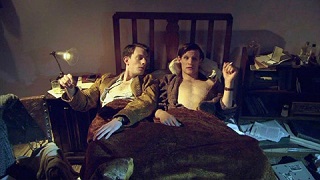
De Brits-Amerikaanse schrijver Christopher Isherwood werd geboren op 26 augustus 1904 in Disley in het graafschap Cheshire in Engeland. Zie ook mijn blog van 26 augustus 2010 en eveneens alle tags voor Christopher Isherwood op dit blog.

Uit: Christopher and His Kind

« The train moved on again. For the first time in his life, he found himself entering a foreign country without official permission. If Heinz had been with him, what could the lawyer have done but accept the accomplished fact and somehow arrange for Heinz to remain in Belgium?
Next morning, the lawyer left Brussels by car for Trier, as he had promised. That night he returned, alone. He told Christopher that he had duly met Heinz at the hotel. Heinz had assured him that he hadn't been questioned, hadn't aroused anybody's curiosity. They had gone to the consulate and got the visa. Then, just as they were about to start on their return journey, some Gestapo agents had appeared. They had asked to see Heinz's papers and had then taken him away with them. They had told the lawyer that Heinz was under arrest as a draft evader. Before leaving Trier, the lawyer had consulted a German lawyer and engaged him to defend Heinz at his forthcoming trial.
A day or two after the arrest, the German lawyer came from Trier to Brussels to discuss the tactics of Heinz's defense. He was a Nazi Party member in good standing and had the boundless cynicism of one who is determined to survive under any conceivable political conditions. Christopher, in his present hyper-emotional state, found a strange relief in talking to him, because he seemed utterly incapable of sympathy. Heinz was now in four kinds of potential trouble: He had attempted to change his nationality. (This could almost certainly be concealed from the prosecution.) He had consorted with a number of prominent anti-Nazis, most of them Jews. (This could probably be concealed or, at worst, excused as having been Christopher's fault.) He had been guilty of homosexual acts. (This couldn’t be co-directors that what they need is the spirit of the merchant-adventurers. He hates the banks. He hates public companies, because they aren't allowed to take risks. He particularly enjoys ragging the pompous U.S.A. businessmen. Somebody once cabled him from New York: 'Believe market has touched bottom.' Potter cabled back: `Whose?' At board meetings he lies on a sofa—ostensibly because he once had a bad leg; actually because this position gives him a moral advantage. He and his colleagues tell each other dirty limericks and the very serious-minded secretary takes them all down in shorthand—because, as he once explained, he thought they might be in code.
Much less willingly, Wystan and Christopher also became the captive audience of a young man with whom they had to share their table in the second-class dining room. He was a rubber planter, returning from leave in England to a plantation near Singapore. I will call him White.“


 2067504-30c7059e4a2dd7890995541ac30c057f.jpg
Christopher Isherwood (26 augustus 1904 – 4 januari 1986)
Scene uit de gelijknamige tv-film uit 2011


De Nederlandse dichteres Laura van der Haar werd geboren in Groningen in op 26 augustus 1982. Zie ook alle tags voor Laura van der Haar op dit blog.


splinters

rottende slootkant, stofhooi, seks in de bosjes, festivalkots
klein straatgedierte sterft in roosters, vogels
walmen na op het wegdek

de zomer is begonnen

overal klinkt zacht gelik
aan ijsjes, liefjes, hondenanussen
autogeronk, bericht voor een meisje, plus het meisje
dat voorzichtig in haar handen wrijft

de smeulende resten van een barbecue
waar het vlees weer redelijk lekker was
rolschaatsers, rochelaars en wespen

die vroege zomer
steekt
net als de bosjes

hoeveel splinters zal haar lijf blijven verdragen
voordat ze meer hout is dan mens


 2067504-dbf8c91b2d61be20b6afee3ce175c405.jpg
Laura van der Haar (Groningen, 26 augustus 1982)


De Nederlandse schrijver en dichter Cornelis Bastiaan Vaandrager werd geboren in Rotterdam op 26 augustus 1935. Zie ook alle tags voor C. B. Vaandrager op dit blog.


Wimpel

Weinig gekend, ondanks
wimpels die waaien al heen en al weer.
Notere wij: oranjeband, oranjeding,
oranjedoek, oranjeboven, kwast,
sliert, slinger. Doekje met bal,
puntige vlag, staart, vlinder,
flappertje, franje.
Kostelijke redding: kindje van vlag.


Met andere ogen

Zaterdagochtend is het en verdacht
dinamies in de stad.
Ik ben vrij.
Om te rijden.
Om een bezoek af te leggen. Aan wie
ik wil.
Waarheen
ik wil.
Waar
ik wil. Ik haast mij, want haast
- maar een brug, een onmogelijke brug is dat
niet verdacht dinamies?
En kranig (?)
Stervenslangzaam passeert er 1 elevator.
Tarwe barst los in een ruim.
Een indruk
waaraan ik me niet kan onttrekken:
bepaalde personen worden op mijn weg bepaald vijandig
aan mijn oog onttrokken.

(Ik zie het met andere ogen:
dezelfde stad,
hetzelfde solide reisdoel
met andere ogen.)

Maar ik dwaal af. Ik bedoel
dit: ik heb zo mijn waterdichte dagdroom
en ben serieus onthutst
door het plotseling kalmeren van mijn pedalen.


 2067504-fec2ec74b05927962811e643b77013c9.jpg
C. B. Vaandrager (26 augustus 1935 - 18 maart 1992)
Cover


De Britse schrijfster Paula Hawkins werd geboren op 26 augustus 1972 en groeide op in Salisbury (het huidige Harare in Zimbabwe) in Rhodesië. Zie ook alle tags voor Paula Hawkins op dit blog.

Uit:The Girl on the Train

“I've been kept waiting. The appointment was for half an hour ago, and I'm still here, sitting in the reception room flicking through Vogue, thinking about getting up and walking out. I know doctors' appointments run over, but therapists? Films have always led me to believe that they kick you out the moment your thirty minutes are up. I suppose Hollywood isn't really talking about the kind of therapist you get referred to on the National Health Service.
I'm just about to go up to the receptionist to tell her that I've waited long enough, I'm leaving, when the doctor's office door swings open and this very tall, lanky man emerges, looking apologetic and holding out his hand to me.
"Mrs. Hipwell, I am so sorry to have kept you waiting," he says, and I just smile at him and tell him it's all right, and I feel, in this moment, that it will be all right, because I've only been in his company for a moment or two and already I feel soothed.
I think it's the voice. Soft and low. Slightly accented, which I was expecting, because his name is Dr. Kamal Abdic. I guess he must be midthirties, although he looks very young with his incredible dark honey skin. He has hands I could imagine on me, long and delicate fingers, I can almost feel them on my skin.
We don't talk about anything substantial, it's just the introductory session, the getting-to-know-you stuff; he asks me what the trouble is and I tell him about the panic attacks, the insomnia, the fact that I lie awake at night too frightened to fall asleep. He wants me to talk a bit more about that, but I'm not ready yet. He asks me whether I take drugs, drink alcohol. I tell him I have other vices these days, and I catch his eye and I think he knows what I mean. Then I feel as if I ought to be taking this a bit more seriously, so I tell him about the gallery closing and that I feel at a loose end all the time, my lack of direction, the fact that I spend too much time in my head. He doesn't talk much, just the occasional prompt, but I want to hear him speak, so as I'm leaving I ask him where he's from.
"Maidstone," he says, "in Kent. But I moved to Corly a few years back." He knows that wasn't what I was asking; he gives me a wolfish smile.”


 2067504-6d6dbd834c5c46cb6278d94460721a9b.jpg
Paula Hawkins (Salisbury, 26 augustus 1972)


De Duitse schrijver Joachim Helfer werd geboren in Bonn op 26 augustus 1964. Zie ook mijn blog van 26 augustus 2010 en eveneens alle tags voor Joachim Helfer op dit blog.

Uit: To call a spade a spade

“More than a decade after Rashid and I were paired in the West-East-Divan literary exchange project, the fruit of our encounter remains quite undigested. Many find it hard to swallow, if not poisonous. Few even agree on what it is: Did Rashid write a (self)-ironic piece of fiction about two fictional characters, Joachim and Rashid? So say those who seem to feel that his original text, published without my comments in Arabic under the title "The German returns to his senses", requires such premises in order to be consumed safely. Rashid himself, of course, never provided such reader's guidance: It's not the writer's job to interpret his own text; much less to prescribe any 'correct' ways to read it. Those who read Rashid's text as a macho-provocation, as both illustration and justification of their prejudices against heterosexual men - 'oriental' on top of it! - were certainly free to do so.
Or did Rashid write a both warm- and light-hearted, but fundamentally earnest anthropological study on me, the real Joachim, and himself, the real Rashid? So say I, with what I believe are good critical arguments. Fictionalising real events entails changing names, places, and circumstances beyond recognition. An accomplished writer like Rashid obviously knows those literary standard-techniques. Had he desired to fictionalise what he experienced with me, he had done so. He also masters the register of irony, and the markers such as all-out hyperbole conventionally used to flag it. Signs of both fictionalisation and irony are, however, conspicuously absent in the longest stretch of his text. They only appear, tellingly together, in the very last scene: The wedding party which is, unlike the rest of the text, indeed fictional. It is precisely the absence of such conventional irony, I hasten to add, that Rashid should be praised for. Had he actually, as his apologists maintain he has, written a tongue-in-cheek novella on one German's Damascus-experience of conversion from gay Saul to straight Paul - the booklet would be rightly forgotten. Rashid wanted to do something more daring.”


 2067504-6b2b159f05ea4576debf38478e3873f8.jpg
Joachim Helfer (Bonn, 26 augustus 1964)
Cover van Rashid al-Daif en Joachim Helfer (2015): What Makes a Man? Sex Talk in Beirut and Berlin


De Franstalige schrijver en dichter Guillaume Apollinaire werd in Parijs geboren op 26 augustus 1880. Zie ook mijn blog van 26 augustus 2010 en eveneens alle tags voor Guillaume Apollinaire op dit blog.


Marizibill

Dans la Haute-Rue à Cologne
Elle allait et venait le soir
Offerte à tous en tout mignonne
Puis buvait lasse des trottoirs
Très tard dans les brasseries borgnes

Elle se mettait sur la paille
Pour un maquereau roux et rose
C'était un juif il sentait l'ail
Et l'avait venant de Formose
Tirée d'un bordel de Changaï

Je connais gens de toutes sortes
Ils n'égalent pas leurs destins
Indécis comme feuilles mortes
Leurs yeux sont des feux mal éteints
Leurs cœurs bougent comme leurs portes.


Carte postale

Je t’écris de dessous la tente
Tandis que meurt ce jour d’été
Où floraison éblouissante
Dans le ciel à peine bleuté
Une canonnade éclatante
Se fane avant d’avoir été


La porte

La porte de l’hôtel sourit terriblement
Qu’est-ce que cela peut me faire ô ma maman
D’être cet employé pour qui seul rien n’existe
Pi-mus couples allant dans la profonde eau triste
Anges frais débarqués à Marseille hier matin
J’entends mourir et remourir un chant lointain
Humble comme je suis qui ne suis rien qui vaille


Enfant je t’ai donné ce que j’avais travaille


 2067504-047cdd9852333ba2ba2923dec321fed0.jpg
Guillaume Apollinaire (26 augustus 1880 – 9 november 1918)
Hier met echtgenote Jacqueline in 1918


Onafhankelijk van geboortedata:

De Libanese schrijver Rashid Al-Daif werd in 1945 geboren in Ehden bij Zgharta in het noorden van Libanon. Zie ook alle tags voor Rashid Al-Daif op dit blog.

Uit: Die Verschwulung der Welt (Samen met Joachim Helfer)

„Die Beziehung zwischen Mann und Frau, Ehe, Scheidung, Kinder, Singledasein, Zusammenwohnen, freie Liebe, Trennung zwischen Sex und Liebe, Sex und Liebe als Einheit ... All diese Themen interessieren mich brennend, und ich versuche soviel wie möglich darüber zu erfahren, wie die Welt mit ihnen umgeht.
Für Homosexualität hatte ich mich dagegen bisher nur allgemein interessiert, gerade so, wie man sich als nicht direkt Betroffener dafür interessiert, denn ich lebe in einer Gesellschaft, die Männlichkeit feiert und verehrt und sie bei jeder Gelegenheit stolz demonstriert. Ein Vater wird bei uns mit dem Namen seines erstgeborenen Sohnes tituliert, und dieser erhält den Namen des Großvaters. Schon die alten arabischen Kritiker haben die großen Dichter ihrer Zeit als »Hengste« (fuhul) bezeichnet. Homosexualität gilt bei uns als etwas Anstößiges und Schandhaftes, das es zu unterdrücken gilt, ja als ein strafbares Vergehen. Homosexuelle werden als »Anormale« (sadd) bezeichnet, und homosexueller Verkehr gilt als ein widernatürlicher Akt. Ich achte ständig sehr darauf, eine Distanz zum Verhalten, zu den Begrifflichkeiten und den Ideologien der Gesellschaft zu bewahren, der ich angehöre, und stelle die Überzeugungen meiner Mitmenschen, selbst meine eigenen, permanent auf den Prüfstand. Und dennoch habe ich manche gesellschaftlichen Konzeptionen verinnerlicht, ohne daß ich mir dessen immer bewußt werde.
Ich erinnere mich, daß ich große Freude empfand, als mein Sohn zum ersten Mal mit einer Freundin nach Hause kam und mit ihr auf sein Zimmer ging. Ich rief innerlich »hurra!«, als ich hörte, wie er die Tür von innen verschloß. Seine Männlichkeit war bewiesen. Eine Entwicklung war abgeschlossen.“


 2067504-afed05d59c85f45288d984405e14f048.jpg
(Rashid Al-Daif, Ehden, 1945)


Zie voor nog meer schrijvers van de 26e augustus ook mijn vorige blog van vandaag.
Geschreven door Romenu om 10:15 Reageer op dit bericht

Jules Romains, Julio Cortázar, Walter Helmut Fritz, Joachim Zelter, Jürgen Kross, Ludwig Aurbacher, Boris Pahor

De Franse schrijver Jules Romains, pseudoniem van Louis Henri Farigoule, werd geboren op 26 augustus 1885 in La Chapuze in het kanton Saint-Julien-Chapteuil. Zie ook mijn blog van 26 augustus 2010 en eveneens alle tags voor Jules Romain op dit blog.


Une vapeur d’égout

 Je suis très triste. Moi qui ne pleure jamais,
Une larme s’épuise à sortir de mes yeux ;
Et penché sur mon cœur comme sur une cuve
D’où montent lentement des gaz irrespirables,
J’ai besoin que la mort me pince les narines.

Puis je rage. Mes dents grincent. Je voudrais tordre
Du fer, casser un meuble ou fendre des mâchoires.
Je souffre ; on me torture. À quoi me sert d’avoir
Des poings et d’être fort ?

Il y a des sanglots dans le fond de ma gorge ;
Afin que je consente à leur livrer passage
Ils se déguisent en hurlements de fureur.

Le passé me fait mal ; l’avenir me fait peur.
Oh ! les sales fourmis, les minutes futures
Me grimpent à la jambe et me piquent la peau ;
Je voudrais les écrabouiller sous mes chaussures !

Le camion traîné par les chevaux tranquilles,
Les bicyclettes glissant commes des aiguilles
Dans de l’étoffe,
les grelots,
Les coups de fouet, les cris des marchands de journaux
Ont vite anéanti mon âme douloureuse.

Je m’abandonne tout au rythme des passants,
L’unanime frémit autour de ma cervelle.
Comment savoir si j’ai un cœur qui a aimé.
Quand la foule remue et que je suis en elle ?

Ardent comme un vivant, mais serein comme un mort,
Je n’ai plus de passé, d’avenir ni de sort,
J’ai de la joie et du bon néant dans la gorge.


L’essieu d’un tombereau

L’essieu d’un tombereau grince et le cheval bute.
Au coin du mur un enfant pleure. Il s’est perdu.
Il croit que c’est fini pour toujours ; que son père
Meurt englué parmi les grouillements épais
De la foule.
Beaucoup de femmes ont des crêpes.
Le ciel est du charbon broyé sur de la craie.

L’entonnoir de la rue est mousseux de bruits âcres.
L’univers marche ayant la tête dans un sac.

Je cherche.
L’enfant pleure.
Le tombereau grince.


 2067502-5b83934b9e754120837aa794c37aec55.jpg
Jules Romains (26 augustus 1885 – 14 augustus 1972)


De Argentijnse schrijver Julio Cortázar werd geboren op 26 augustus 1914 in Brussel. Zie ook mijn blog van 26 augustus 2010 en eveneens alle tags voor Julio Cortázar op dit blog.

Uit: Graffiti (Vertaald door Gregory Rabassa)

“You came back at dawn, after the patrols had thinned out in their mute sweep, and on the rest of the door you sketched a quick seascape with sails and breakwaters; if he didn’t look at it closely a person might have said it was a play of random lines, but she would know how to look at it. That night you barely escaped a pair of policemen, in your apartment you drank glass after glass of gin and you talked to her, you told her everything that came into your mouth, like a different sketch made with sound, another harbor with sails, you pictured her as dark and silent, you chose lips and breasts for her, you loved her a little.
Almost immediately it occurred to you that she would be looking for an answer, that she would return to her sketch the way you were returning now to yours, and even though the danger had become so much greater since the attacks at the market, you dared go up to the garage, walk around the block, drink endless beers at the cafe on the corner. It was absurd because she wouldn’t stop after seeing your sketch, any one of the many women coming and going might be her. At dawn on the second day you chose a gray wall and sketched a white triangle surrounded by splotches like oak leaves; from the same cafe on the corner you could see the wall (they’d already cleaned off the garage door and a patrol, furious, kept coming back), at dusk you withdrew a little, but choosing different lookout points, moving from one place to another, making small purchases in the shops so as not to draw too much attention.
It was already dark night when you heard the sirens and the spotlights swept your eyes. There was a confused crowding by the wall, you ran, in the face of all good sense, and all that helped you was the good luck to have a car turn the corner and put on its brakes when the driver saw the patrol wagon, its bulk protected you and you saw the struggle, black hair pulled by gloved hands, the kicks and the screams, the cut-off glimpse of blue slacks before they threw her into the wagon and took her away.”


 2067502-d076fa1920cde79b4f99de7191be3589.jpg
Julio Cortázar (26 augustus 1914 - 12 februari 1984)


De Duitse dichter en schrijver Walter Helmut Fritz werd geboren op 26 augustus 1929 in Karlsruhe. Zie ook alle tags voor Walter Helmut Fritz op dit blog en ook mijn blog van 26 augustus 2010


Elpenor

Elpenor, kein Held,
zu kurz gekommen und wortkarg,
fragte im Hades dann doch:
warum nur
werden wir nie erfahren, was alles
dies zu bedeuten hatte,
warum nur
kommt es uns oft so vor,
als ob wir vertauscht worden wären,
warum nur
ist das Leben ein solcher Gewaltakt −
fragte und hörte
den Widerhall seiner Fragen
und erlebte noch einmal
den Lärm der Gefährten,
das Erwachen aus seinem Rausch,
den Sturz vom Dache des Hauses.


Der Wal

Dieser graue, schwarze,
glänzende Kessel
mit seinem Dampfstrahl,
welches Experiment des Lebens,
sagst du, diese Walze,
dieser Felsen in Bewegung
und dann dieser Tanz,
den er mit andern zusammen
aufführt, ehe er wieder wandert,
mit seinen Augen
– blau – von Email,
seinem Gehirn, größer
als das aller anderen Wesen,
seinem Gesang, ohne Stimmband,
seinem Lachen, seinem Gebrüll.
Du kennst seine Arglosigkeit
gegenüber den Menschen,
die ihn besinnungslos jagen.
Dem Wasser verdankt er alles.
Diese Hinfälligkeit,
wenn er strandet und erstickt,
weil seine Kräfte nicht reichen,
den Brustkorb zu dehnen.


 2067502-aa1d0df80b6557420b2447bc79dbc466.jpg
Walter Helmut Fritz ( 26 augustus 1929 – 20 november 2010)


De Duitse schrijver Joachim Zelter werd geboren in Freiburg im Breisgau op 26 augustus 1962. Zie ook alle tags voor Joachim Zelter op dit blog en ook mijn blog van 26 augustus 2010.

Uit: Briefe aus Amerika

„Die Yale Universität ist nicht nur ein Zentrum des Geis-tes, sondern auch ein Bollwerk der Ruhe im Zentrum eines Orkans, und der ruhigste Punkt inmitten dieses Zentrums, der absolute Ruhepunkt, ist der Innenhof der Bibliothek, umgeben von meterdicken, efeubewach-senen Mauern. An diesem Ort saß ich auf einer Bank und las. In einem entlegenen Winkel des Hofes: der Umriss eines Menschen, einer jungen Frau, die unter einem Torbogen stand und aus einem Buch las. Sie las laut. Vielleicht ein Gedicht, ein langes Gedicht, ein sehr langes Gedicht, denn nach einer halben Stunde hörte ich ihre Stimme immer noch. Eine merkwürdige Stimme, zweifellos schön, auch wenn die Stimme nicht unbedingt schön sein wollte, so wie alles an ihr auf eine beiläufige Art und Weise schön war, ihr Gesicht, ihr Rock, ihr schwarzes Haar, ihre weißen Arme — ohne im Geringsten schön sein zu wollen. Ohne es zu wollen, war sie die schönste Frau, die ich in der Neuen Welt gesehen hatte. Nichts von dem, was sie las, konnte ich zunächst verstehen. Nur ihre Stimme. Ich hörte ihre Stimme ...
Sie sprach ruhig, bestimmt, nicht besonders laut, aber auch nicht verschüchtert leise. Jedes Wort, das sie sprach, war mit Bedacht gesprochen, als ob sich damit eine ei-gene Welt verbinde, mit Bedacht, ohne dabei zu sehr zu betonen. So stand sie da und las. Ich bewahrte mir dieses Bild, ging in die Bibliothek oder einkaufen, und als ich wieder zurückkam, stand sie immer noch da und las aus demselben Buch. Die Seiten offenbar eng bedruckt — man konnte das, wenn schon nicht sehen, so doch zumindest erahnen. Vielleicht Shakespeare, die gesammelten Werke, oder ein anderes Buch. Was immer sie auch las, sie las es akribisch, ohne aufzuschauen oder abzuweichen oder zurückzuweichen. Ich hielt Abstand, wollte sie nicht stören oder ihr zu nahe kommen, und ich wollte ihr deshalb nicht zu nahe kommen, weil ich mir nichts mehr als ihre Nähe wünschte. Deshalb saß ich stundenlang auf einer Bank. Oder kehrte immer wieder zu dieser Bank zurück. Wer immer sie auch war: Schauspielschülerin, Buchlieb-haberin, Vorleserin ... Irgendwann konnte ich sogar einzelne Wörter ver-stehen. Es waren keine Wörter, sondern Namen. Sie las Namen, einfach nur Namen, und dies in alphabetischer Reihenfolge: Nachname, Vorname; Nachname, Vorname ... Sie las aus einem Telefonbuch. Ich sah deutlich die gelbe Farbe. Und das stellte alles Bisherige infrage.”


 2067502-b7eeb12843cc557a28adee1264b763f8.jpg
Joachim Zelter (Freiburg im Breisgau, 26 augustus 1962)


De Duitse dichter en schrijver Jürgen Kross werd geboren op 26 augustus 1937 in Hirschberg. Zie ook mijn blog van 26 augustus 2007 en ook mijn blog van 26 augustus 2010.

Uit: Kaltfront


Zerkleinert den
stein.
am regen. und

treibt ihn die himmel
entlang. voll
kraut überwuchertem tod.


*


dem eisblatt des
teiches
noch zugehörig. der neige.

gipfelt’s, das ganze,
am himmel,
tief unten.


 2067502-d199ce70f48d597a0282fd19b5c58db7.jpg
Jürgen Kross (Hirschberg, 26 augustus 1937)
Hirschberg (tegenwoordig:Jelenia Góra), raadhuis 


De Duitse schrijver Ludwig Aurbacher werd geboren op 26 augustus 1784 in Türkheim, Schwaben. Zie ook alle tags voor Ludwig Auerbach op dit blog en ook mijn blog van 26 augustus 2010.

Uit:Aus dem Leben und den Schriften des Magisters Herle, und seines Freundes Mänle

“Auf meiner letzten Ferienreise, durch das freundliche Oberschwaben, kam ich auch in das ehemalige Reichsstädtlein J**. Da gewahrte ich im Stadtzollhäuschen einen Zudrang von vielen Menschen, die, wie ich bemerkte, daselbst einer Versteigerung wegen sich versammelt hatten. Auf mein Befragen: was da Köstliches in Aufstreich gegeben werde? ward mir zur Antwort: »Nichts als lumpiger Hausrath nebst einigen lumpigen Büchern. Es gehe aber Alles theuer genug weg, fuhr der Befragte fort, gleichsam als wären es Kleinodien und Reliquien; denn da der Verstorbene Alles schuldig geworden, so wollten dessen Gläubiger doch etwas davon haben, was jeden Falls besser wäre, als gar nichts; zudem sey der Selbige ein lustiger Kauz gewesen, von Jedermann wohl gelitten, weßhalb man denn gerne von ihm ein Andenken erhalten wolle.«
Als ich von alten Büchern hörte, ich, der ich keine Trödelbude vorbei gehen kann, ohne nach dergleichen Plunder zu fragen und zu suchen – so mischte ich mich unter die Steigerungslustigen, und trat ein. Ein leichter Ueberblick des Vorraths bestätigte vollkommen die Aussage jenes Mannes; auch wurde der lumpige Kram unter Schäckern und Lachen, hoch und theuer genug ersteigert. Mich zogen indessen allein die Bücher an, die ich vorläufig durchmusterte. Es war gutes altes Zeug darunter. Am meisten aber interessirten mich ein Paar Manuscripte; das eine führte den Titel: »Philologische Belustigungen;« das andere: »Aus dem Leben und den Schriften des Magisters Herle und seines Freundes Mänle.« Und als es nun zuletzt an die Feilbiethung des literarischen Nachlasses kam, nahm ich keinen Anstand, sogleich einige Dukaten für das Ganze zu biethen, das mir denn auch, nicht ohne höhnisches Lächeln der Zuschauer, gegen baare Bezahlung ohne Einspruch zugeeignet wurde.
Mit meinem Fang wohl zufrieden, ließ ich sogleich Alles – es war eben nicht viel – in's Gasthaus zur Post schaffen, wo ich zu übernachten gedachte.
Es gefiel mir in diesem Hause. Ich traf hier, was auf dem Lande und in kleinern Städten nichts Seltenes ist, eine patriarchalische Wirthschaft, wo die Familie ihr Familienleben ungestört fortführt unter und neben den Gästen, die eben auch, obgleich Fremde, sogleich und in Allem als Familienglieder betrachtet und behandelt werden.“


 2067502-0163b24904792d3a07c1cda295c05052.jpg
Ludwig Aurbacher (26 augustus 1784 – 25 mei 1847)
Cover


De Sloveense schrijver Boris Pahor werd geboren in Triëst op 26 augustus 1913. Zie ook alle tags voor Boris Pahor op dit blog en ook mijn blog van 26 augustus 2010.

Uit: Pilgrim Among the Shadows/a Memoir (Vertaald door Michael Biggins)

"The bewildered herd hastily undresses...the light bulb shows a multitude of bare skulls and ladderlike ribs, while all hands are busy twisting rags into bundles. Emaciated limbs shiver, shift back and forth, and hop to fend off the winds....On this harp of a human chest the wind's cold finger's play a quiet requiem....The body loves the countless warm tongues that lick it....and we forget that beneath the shower room is an oven, and that night and day a stoker heaves human logs into it. Even if the bodies think they may soon be used to heat the water, the pleasure offered by this wet warmth is not lessened..."
(...)

"...the Dachau parade grounds are an enormous garbage dump, with countless shovels heaving paper, wet rags, broken clogs, and filthy striped bundles onto it out of washroom windows. Among the mattresses that cover the large field are unwrapped paper bandages, worn wooden spoons, and a knife fashioned in prehistoric times. Mattresses with wet stains, empty, lacking the forms that made the indentations in them. Mattresses with naked bodies. Bodies with wounds. Female genitalia with hard, swollen labia. Decomposing labia eight inches wide. More rubbish. More clogs. More heaps of wet, filthy zebra skins laid low by typhus. Next to them, bodies still functioning, undressing on the mattresses. A bandage unraveling like the thread of the insatiable Fates. A bony hand refusing to let go of its wooden spoon..."
(...)

"Man is capable of anything. He has drunk wine from the skulls of the vanquished, he has shrunk heads. Twentieth-century Europeans used such heads as desk decorations, heads with grinning teeth. Flayed human skins hung in Dachau, Dr. Blaha writes, like laundry set out to dry...."


 2067502-228215722a273334da5c737ae2afbf35.jpg
Boris Pahor (Triëst, 26 augustus 1913)          

Geschreven door Romenu om 10:14 Reageer op dit bericht

Meer van Romenu

↑ Terug naar de berichten