

Naar de inhoud

Romenu

Over literatuur, gedichten, kunst en cultuur
seniorennet.beseniorennet.be

Berichten van 26 juni 2016

Aimé Césaire, Jacqueline van der Waals, Yves Beauchemin, Elisabeth Büchle, Laurie Lee, Pearl S. Buck
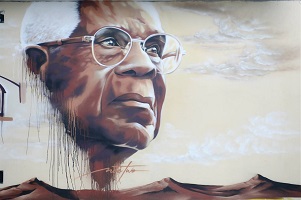
De Afrocaraïbische schrijver en politicus Aimé Césaire werd geboren op 26 juni 1913 in Basse-Pointe, Martinique. Zie ook alle tags voor Aimé Césaire op dit blog.


The Woman and the Flame

A bit of light that descends the springhead of a gaze
twin shadow of the eyelash and the rainbow on a face
and round about
who goes there angelically
ambling
Woman the current weather
the current weather matters little to me
my life is always ahead of a hurricane
you are the morning that swoops down on the lamp a night stone
   between its teeth
you are the passage of seabirds as well
you who are the wind through the salty ipomeas of consciousness
insinuating yourself from another world
Woman
you are a dragon whose lovely color is dispersed and darkens so
   as to constitute the
inevitable tenor of things
I am used to brush fires
I am used to ashen bush rats and the bronze ibis of the flame
Woman binder of the foresail gorgeous ghost
helmet of algae of eucalyptus
                             dawn isn’t it
                             and in the abandon of the ribbands
                             very savory swimmer

Vertaald door Clayton Eshleman


Mississipi

Too bad for you men who don’t notice that my eyes remember
slings and black flags
which murder with each blink of my Mississipi lashes

Too bad for you men who do not see who do not see anything
not even the gorgeous railway signals formed under my eyelids by the black and red discs
of the coral snake that my munificence coils in my Mississipi tears

Too bad for you men who do not see that in the depth of the reticule where chance has
deposited our Mississipi eyes

there waits a buffalo sunk to the very hilt of the swamp’s eyes
Too bad for you men who do not see that you cannot stop me from building to his fill

egg-headed islands of flagrant sky
under the calm ferocity of the immense geranium of our sun.

Vertaald door Clayton Eshleman en A. James Arnold


 1929692-1529b1974ed52e3393d315e19c8a1265.jpg
Aimé Césaire (26 juni 1913 – 17 april 2008)
Muurschildering in Bagnolet, Frankrijk


De Nederlandse dichteres Jacqueline Elisabeth van der Waals werd geboren op 26 juni 1868 in Den Haag. Zie ook alle tags voor Jacqueline van der Waals op dit blog.


Afscheid

Eén ogenblik van het voorbije leven
Als voor 't bewogen spiegelvlak te staan
Van rimplend water, dat met stadig beven,
Het beeld, eer het tot stand komt, doet vergaan.
De vorm te zien, die in het water drijft,
Onzuiver zo van kleuren als contouren,
Die, vluchtig bij het allerlichtst beroeren,
Geen wezen heeft, dat in zichzelf beklijft...

En heen te gaan - en niets dat achter blijft
Dan dingen, die wij meenden te bezitten,
En niet ons eigen waren, die als klitten
Nog hechten in de plooien van ons kleed,
Maar die wij van ons doen, zoals we leed
En bitterheid en zorgen van ons deden,
Als niet van ons, als dingen van 't verleden...

Een oogwenk voor het vlottend watervlak te staan
En naar 't verwarde spiegelbeeld te staren,
Dat nog de trekken draagt, die de onze waren,
En stil en eenzaam heen te gaan.


Avondnevel

O, die blinkend witte nevel over de venen! de uitgestrekte,
Grote, stille nevelzee, wier waatren de aarde bedekten!

Wij liepen des avonds tegen
De tijd, dat de zon onderging,
Samen op stille wegen
Door het moeras en zwegen
Van verwondering.
Slechts hoopjes turf en daken
Van donkere huisjes staken
Zwart uit de nevel omhoog.
Ze was zo stil, zo zonderling,
Die zee, waar niets bewoog.

O, die zwarte, grillige heuvelkust,
Die met haar brede lijn,
Scheidde de blinkende nevelrust
Van 't gloeiende karmijn!
Want boven de donkere landen
Stond vuurrood de hemel te branden
Met onheilspellende schijn.

Ik werd onrustig en ik zocht
Een woord, dat de stilte verbreken mocht.
Ik keek in de zon, in het nevelmeer....
Het zwijgen werd pijnlijk.
De avond, de aarde, mijn leven werd zeer,
zeer onwaarschijnlijk.


 1929692-3d5d3a688d02239c87fa670e447b81f8.jpg
Jacqueline van der Waals (26 juni 1868 – 29 april 1922)
Cover 


De Canadese schrijver Yves Beauchemin werd geboren op 26 juni 1941 in Rouyn-Noranda, Quebec. Zie ook alle tags voor Yves Beauchemin op dit blog.

Uit: Le Matou

“-Qu'est-ce que je vais faire de tout cet alphabet? se demandait Florent, de plus en plus intrigué.
- Va la vendre dans un magasin d'antiques, lui suggéra Slipskin et il lui fournit sur-le-champ l'adresse de l'établissement de son père.
Deux jours passèrent. la générosité de son bienfaiteur ne donnait pas de signes de fatigue. Florent résolut d'aller au fond de l'affaire et de recevoir lui-même son prochain colis. Il se leva à l'aube et s'installa à son bureau devant une tasse de café.
À six heures vingt, il entendit une auto stopper devant Musipop. Bondissant de sa chaise, il courut ouvrir la porte et se retrouva nez à nez avec un infirme loqueteux, à la barbe hirsute, au visage creusé, qui le regardait d'un air stupide, la bouche béante.
- Mo... mo... mossieu Bwazono, bafouilla-t-il en lui tendant un colis, pendant que l'auto démarrait avec fracas.
Florent le considéra un instant, puis se retira dans le bureau. L'infirme déposa le colis par terre et s'avança au milieu de la rue, tournant la tête de tous côtés, complètement désemparé.
(…)

- Votre père sur la deuxième ligne, fit mademoiselle Relique dont la voix, aggravée par le récepteur, avait la douceur de la broche piquante.
- Salut, lança Florent, je m'achète un restaurant.
- Hein ? Quoi ? Que c'est que tu me dis là ?
- Oui, je m'achète une restaurant. La Binerie, sur la rue Mont-Royal.
- Es-tu sérieux ? La Binerie ? C'est un très bon spot, ça. J'allais manger là durant la guerre. Mais tu veux rire. Jamais je ne croirai…
- Je te raconterai. Pour l'instant, je suis un peu pressé. Dis donc, tu connais un peu le milieu des affaires, toi… As-tu déjà entendu parler d'un bonhomme du nom d'Egon Ratablavasky ?
- Egon quoi ? Minute! Laisse-moi prendre un crayon et répète-moi ça lentement, mon blond. Je vais m'informer, fit-il après avoir noté. Fie-toi sur moi, j'ai le nez long et le bras sans fin. Ah oui! Pendant que j'y pense : ta mère fait demander si vous venez souper dimanche? "


 1929692-fbfd545097d7ea63eec80e8f6d975f84.jpg
Yves Beauchemin (Rouyn-Noranda, 26 juni 1941)


De Duitse schrijfster Elisabeth Büchle werd geboren op 26 juni 1969 in Trossingen, Baden-Württemberg. Zie ook alle tags voor Elisabeth Büchle op dit blog.

Uit: Unter dem Polarlicht

„Die künstliche Beleuchtung des Büros im Bankgebäude surrte leise vor sich hin, während Chiara Kilians Finger der Tastatur ein schnelles Stakkato an Klackgeräuschen abverlangte. Die Frau auf dem Stuhl gegeniiber rutschte unruhig umher. Sie hatte ihr Anliegen geschäftsmäßig und detailliert vorgetragen, doch nun verriet ihre Körpersprache ihre innere Aufregung.
Chiara lächelte die Eingabemaske mehr traurig als fröhlich an.
Sie fand Noa Schochs Idee von einem Blumen-Geschenk-Bücher-Café in einem reinen Wohngebiet in Freiburg interessant, ahnte jedoch, dass die Finanzierung durch die Bank, bei der Chiara morgen genau ein halbes Jahr angestellt war, nicht zustande kommen würde. Mit ihren 22 Jahren war Noa noch ein Jahr jünger als Chiara und hatte bis auf eine gut durchdachte und bezaubernde Geschäftsidee keine Sicherheiten vorzuweisen.
Sie wollte der hübschen Rothaarigen gerade mitteilen, wie gering ihre Chancen waren. als es an der Tür klopfte. Einer der neuen Auszubildenden - ihr Namensgedächtnis verweigerte wieder einmal seinen Dienst - kam herein und sagte, ohne die Kundin zu beachten: „Frau Kilian, Sie werden von Herrn Meier erwartet.“
„Zwei Minuten, bitte“, erwiderte Chiara Freundlich und warf Noa einen cntschulcligenden Blick zu.
„Er sagte aber sofort!“, widersprach der jugendliche und trat neben sie, als plane er, ihr den Drehstuhl unter dem Hintern wegzuziehen. „Ich kümmere mich so lange um „Frau Schoch“. brummte Chiara und stand auf. Dieser junge Mann würde es weit bringen, dessen war sie sich gewiss. „Entschuldigen Sie mich bitte. Ich bin gleich wieder für Sie da.“


 1929692-486ddef52e8ba34b0a4da83577f522a1.JPG
Elisabeth Büchle (Trossingen, 26 juni 1969)


De Engelse dichter en schrijver Laurence Edward Alan "Laurie" Lee werd geboren in Stroud, Gloucestershire op 26 juni 1914. Zie ook alle tags voor Laurie Lee op dit blog.


Day of These Days

Such a morning it is when love
leans through geranium windows
and calls with a cockerel's tongue.

When red-haired girls scamper like roses
over the rain-green grass;
and the sun drips honey.

When hedgerows grow venerable,
berries dry black as blood,
and holes suck in their bees.

Such a morning it is when mice
run whispering from the church,
dragging dropped ears of harvest.

When the partridge draws back his spring
and shoots like a buzzing arrow
over grained and mahogany fields.

When no table is bare,
and no beast dry,
and the tramp feeds on ribs of rabbit.


 1929692-4d1fdf25fb35a060de90c56eb829fa16.jpg
Laurie Lee (26 juni 1914 – 13 mei 1997)


De Amerikaanse schrijfster Pearl S. Buck werd geboren in Hillsboro West-Virginia, op 26 juni 1892. Zie ook alle tags voor Pearl S. Buck op dit blog en eveneens alle tags voor P. S. Buck.

Uit: The good earth

“And out of his heaviness there stood out strangely but one clear thought and it was a pain to him, and it was this, that he wished he had not taken the two pearls from O-lan that day when she was washing his clothes at the pool, and he would never bear to see Lotus put them in her ears again.”
(…)

“When the rich are too rich there are ways, and when the poor are too poor there are ways. Last winter we sold two girls and endured, and this winter, if this one my woman bears is a girl, we will sell again. One slave I have kept—the first. The others it is better to sell than to kill, although there are those who prefer to kill them before they draw breath. This is one of the ways when the poor are too poor. When the rich are too rich there is a way, and if I am not mistaken, that way will come soon.”
(…)

“Spring passed and summer passed into harvest and in the hot autumn sun before winter comes Wang Lung sat where his father had sat against the wall. And he thought no more about anything now except his food and his drink and his land. But of his land he thought no more what harvest it would bring or what seed would be planted or of anything except of the land itself, and he stooped sometimes and gathered some of the earth up in his hand and he sat thus and held it in his hand, and it seemed full of life between his fingers. And he was content, holding it thus, and he thought of it fitfully and of his good coffin that was there; and the kind earth waited without haste until he came to it.”


 1929692-90dbbcaa0fbf52cdf15549df991f3fc8.jpg
Pearl S. Buck (26 juni 1892 – 6 maart 1973) 


Zie voor nog meer schrijvers van de 26e juni ook mijn vorige blog van vandaag.
 

Geschreven door Romenu om 11:37 Reageer op dit bericht

Stefan Andres, Martin Andersen-Nexø, Branwell Brontë, Bankim Chandra Chatterjee, Sunthorn Phu, Sidney Howard

Duitse schrijver Stefan Andres werd geboren op 26 juni 1906 in Breitwies bij Trier. Zie ook alle tags voor Stefan Andres op dit blog.

Uit: Wir sind Utopia

“Die enge, düstere Gassenrinne fuhr der Wagen langsam dahin, wiewohl kein Mensch, weder Zivilist noch Soldat, ihm begegnete. Auf dem weiten, gleißenden Platz nahm er die Kehre, und im Schatten vor der Freitreppe der in ihrem starrenden Prunk unfreudig wirkenden Barockfassade des Karmeliterklosters stand er dann still.
Unter der Pforte erschien auf das groblässige Signal des Wagens hin ein Offizier, von einem Sergeanten und einem Soldaten begleitet, welche die Ankömmlinge mit düster gleichmütigen Blicken empfingen.
Die sechs Bajonette sprangen sofort auf das Pflaster, ein Kommando schnarrte, und die Lehmgestalten erhoben sich mühsam, traten ein paarmal hin und her und sprangen ebenfalls, nachdem sie die eingeschlafenen Füße zuvor möglichst tief hatten herabkommen lassen, vorsichtig auf das Pflaster.
Es waren über zwanzig Gefangene, die im Karmeliterkloster untergebracht werden sollten. Seine Geräumigkeit und vergitterten Fenster machten den Bau für seine neue Bestimmung noch geeigneter; zudem lag das Kloster mit der Hinterfront an der Stadtmauer, und da ging es aus den Fenstern des ersten Stockes über fünfzehn Meter tief jäh hinunter. Das war ein weiterer Vorteil für die Wachhabenden, denn das etwa zweihundert Gefangene beherbergende Lager konnte so mit einer schwachen Besatzung auskommen, die in der Tat nur aus einem Leutnant, einem Sergeanten und zwei Soldaten bestand.
Freilich lagen in der Stadt noch einige Fliegerabwehrbatterien und leichte Kraftfahrverbände, die auf den Einsatz warteten.“


 1929688-022f7d88c01513629c2f466a0ec97ae3.jpg
Stefan Andres (26 juni 1906 - 29 juni 1970)


De Deense schrijver Martin Andersen-Nexø werd geboren op 26 juni 1869 in Kopenhagen. Zie ook alle tags voor Martin Andersen-Nexø op dit blog.

Uit:Die Passagiere der leeren Plätze (Vertaald door Ellen Schou en Karl Schodder)

„Aber eines Tages hielt ich dann doch eine gewaltige Summe Geldes in der Hand: vierhundert Kronen, für die ich nach Italien fahren sollte; die unfassbar gutherzige Frau hatte sie herangeschafft. Es ist nicht zu sagen, wie mir zumute war; dem Tode war ich entschlüpft, und dem noch Schlimmeren — der Sklaverei — ebenfalls! Wie ein Sperling, der durch wunderbaren Zufall aus dem Rachen der Katze entkommt, flatterte ich davon, halbtot, aber froh und warm im Herzen. Ich war — im letzten Augenblick — auf die Sonnenseite des Daseins versetzt worden; jetzt war ich an der Reihe, Sonne zu schlecken!
Aber war da Platz für mich? Und würden jene, die dort schon saßen, mit mir zu tun haben wollen — oder würden sie mich hetzen wie einen fremden Köter, der dort nichts zu suchen hätte?
Es war ganz merkwürdig, ins Lager der Auserwählten versetzt zu werden, zu denen, deren Leben so viel mehr galt, dass Reisen in den Süden dafür aufgewendet wurden. Wenn ich auch nur dritter Klasse fuhr, so nahm sich vor dem Hintergrund des Zwecks der Reise doch alles ganz anders aus. Mein Leben sollte gerettet werden, während alle die anderen, meine Leidensgefährten, in ihrem Elend stecken blieben! Ich empfand zugleich ein Gefühl des Auserwähltseins und der Fahnenflucht — der Treulosigkeit gegenüber allen jenen, mit denen ich ein Schicksal gemeinsam hatte.
Und ich war aus meiner Arme-Leute-Ergebenheit herausgerissen worden. Ich entdeckte rasch, dass es auf der Sonnenseite des Daseins Platz genug gab, für mich und viele andere; überall fuhren die Züge halbleer, während jene, die hätten mit dabei sein sollen, irgendwo im Dunkel saßen und verkamen. Warum wagten sie sich nicht hervor und machten ihr Recht geltend? Und warum war ich selber so geniert und verschüchtert, als ob ich ein Schmarotzer wäre?
Schon die erste Nacht der Reise von der schleswigschen Grenze bis zur Hauptstadt wurde mir zu einer unvergesslichen Lektion, mich nicht deshalb als auserwählt zu betrachten, weil ich zufällig einem Menschen begegnet war, der in mein Schicksal eingegriffen und mich aus meinem Zusammenhang, aus dem Zusammenhang des Elends herausgerissen hatte.“


 1929688-ff195503e6dc105c30df478555030e50.jpg
Martin Andersen-Nexø (26 juni 1869 – 1 juni 1954)
Portret door Knud Aage Larsen, 1934.


De Engelse dichter en schilder Branwell Brontë werd op 26 juni 1817 geboren in Thornton, Yorkshire. Zie ook alle tags voor Branwell Brontë op dit blog.


Epistle To The Labouring Poor (Fragment)

Your mean attire and scanty fare
Are, doubtless, springs of bitter care,
Expose you blushing, trembling, bare,
To haughty scorn;
Yet murmur not in black despair,
Nor weep forlorn.

You see that lordling glittering ride
In all the pomp of wealth and pride,
With lady lolling at his side,
And train attendant:
'Tis all, when felt and fairly tried,
But care resplendent.

As riches grow his wants increase,
His passions burn and gnaw his peace,
Ambition foams like raging seas
And breaks the rein,
Excess produces pale disease
And racking pain.

Compared with him thrice happy you;
Though small your stock your wants are few,
Each wild desire your toils subdue,
And sweeten rest,
Remove all fancied ills from view,
And calm your breast.


 1929688-5d350f79692871652a7e965a616074b0.jpg
Branwell Brontë (26 juni 1817 – 24 september 1848)


De Bengaals – Indische dichter, schrijver, essayiste en journalist Bankim Chandra Chatterjee werd geboren op 26 juni 1838 in Kanthalpura. Zie ook alle tags voor Bankim Chandra Chatterjee op dit blog.

Uit: The Poison Tree (Vertaald door Miriam S. Knight)

“It was not quite an ordinary house, but it had no sign of prosperity. The door-frames were broken and dirty; there was no trace of human occupation—only owls, mice, reptiles, and insects gathered there. The light came only from one side. Nagendra saw some articles of furniture for human use; but everything indicated poverty. One or two cooking vessels, a broken oven, three or four brass dishes—these were the sole ornaments of the place. The walls were black; spiders' webs hung in the corners; cockroaches, spiders, lizards, and mice, scampered about everywhere. On a dilapidated bedstead lay an old man who seemed to be at death's door; his eyes were sunk, his breath hurried, his lips trembling. By the side of his bed stood an earthen lamp upon a fragment of brick taken from the ruins of the house. In it the oil was deficient; so also was it in the body of the man. Another lamp shone by the bedside—a girl of faultlessly fair face, of soft, starry beauty.
Whether because the light from the oil-less lamp was dim, or because the two occupants of the house were absorbed in thinking of their approaching separation, Nagendra's entrance was unseen. Standing in the doorway, he heard the last sorrowful words that issued from the mouth of the old man. These two, the old man and the young girl, were friendless in this densely-peopled world. Once they had had wealth, relatives, men and maid servants—abundance of all kinds; but by the fickleness of fortune, one after another, all had gone. The mother of the family, seeing the faces of her son and daughter daily fading like the dew-drenched lotus from the pinch of poverty, had early sunk upon the bed of death. All the other stars had been extinguished with that moon. The support of the race, the jewel of his mother's eye, the hope of his father's age, even he had been laid on the pyre before his father's eyes. No one remained save the old man and this enchanting girl. They dwelt in this ruined, deserted house in the midst of the forest. Each was to the other the only helper.”


 1929688-f6cc571363ce990a43076b5d23fc9153.jpg
Bankim Chandra Chatterjee (26 juni 1838 – 8 april 1894)
Cover 


De Thaise dichter Sunthorn Phu werd geboren op 26 juni 1786 in Bangkok. Zie ook alle tags voor Sunthorn Phu op dit blog.

Uit: Phra Aphai Mani (Vertaald door Prince Prem Burachat)

“The two pupils made rapid advance in their studies. The professor of music took Phra Abhai Mani to the top of a mountain to play his flute, and what he learned was no common kind of flute-playing.
When he played, all the wild animals in the forest - even tigers and elephants - forgot to eat and came to listen, enraptured by the magic notes that came out of the musical instrument. Within seven months, Phra Abhai Mani had completely mastered the art of music, with which he could charm the hearts of men and lull them to sleep or make them fall in with his desires. His instruction finished, the professor handed him back his ring : he desired no payment from a pupil such as Phra Abhai Mani. So Phra Abhai Mani, full of gratitude, took leave of him and rejoined his brother, who had likewise completed his course. Sri Suvarna now knew all there was to be known about military tactics and could handle any weapon with infinite skill. He had als o been handed back his ring on completing his studies. There was nothing to prevent the two brothers from returning to their father's palace with all due speed.
On their arrival, they went straight to the hall where Sudasna was giving audience. As soon as the Prince saw his sons, he beamed with pleasure, and called them to his side. At once he began to ask how they had fared. But when he heard how his elder son has been learning to play the flute, and his younger son had spent his time wielding common weapons, his pleasure turned to anger, and, stamping his royal foot, said in his rage
"I do not wish to hear an not wish to hear any more! Music! Music is fit only for hired minstrels and entertainers. Why, even the women in my palace can learn to play music. And a knowledge of common weapons is suitable only for common soldiers. What have the sons of princes to do with such things? You have both put me to shame. I cannot let you stay in my palace. I ought to drive you out. You have been away a whole year, wasting your time, and then you come to annoy me with your foolish talk.”


 1929688-dbe4e3d5fc22846730197be103e02a92.jpg
Sunthorn Phu (26 juni 1786 - ? 1855)
Beeld in het wassenbeelden museum in Nakhon Pathom


De Amerikaanse toneel- en draaiboekschrijver Sidney Howard werd geboren op 26 juni 1891 in Oakland, Californië. Zie ook alle tags voor Sidney Howard op dit blog.

Uit: The Story Gets a Treatment

“The talking picture should, if possible, never pause to talk about itself. This is a lesson which many directors and writers in Hollywood have still to learn. One still sees too many picture scenes which are no more than photographed play scenes. By this I mean scenes in which the director has deluded himself into the belief that he is satisfying the action demands of the picture medium by moving his camera round and about a theater stage and cutting from close-up of A to close-up of B.
Dialogue scenes of talking pictures should be written as though each were a full-rate cable, for every word of which the writer has to pay out of his own pocket.
Length hangs like doom over any picture. All producers and directors seem to have one weakness in common. They are unwilling to face the fact that their scripts are too long, and proceed in the delusion that they will not need cutting after the film has been shot and put together. The picture which is cut to length in script can be smoothly cut and the cuts blended over so that they will not afterwards be apparent. The picture which is shot from an over-length script and cut after it has been put together will always show the bad joints of crude carpentry.
The day of important original screenplays is near, when our O'Neills and Kaufmans will be writing for the screen as independently as they now write for the stage and arranging for their productions, not out of deference to the higher weekly salary, but with the same greed for the best artistic conditions of cast and direction which they now impose upon the theater. This is inevitable because the best talents for producing, directing and acting have already been drawn to the screen. In the screen drama that is to come, the director will continue his domination, at least until the screen has welded director and screenwriter into a single individual. But the writer's side of this superman will still play second fiddle and screen drama will not be literature but something else, something new. It is always a sound idea in art, as in life, to welcome anything new when it is good, and motion pictures seem bent on growing better and better."


 1929688-f63d200d4f66a4fb4a9f3e09fdb242dd.jpg
Sidney Howard (26 juni 1891 – 23 augustus 1939)

Geschreven door Romenu om 11:36 Reageer op dit bericht

Meer van Romenu

↑ Terug naar de berichten