Naar de inhoud

Romenu

Over literatuur, gedichten, kunst en cultuur
seniorennet.beseniorennet.be

Berichten van 25 maart 2017

Jung Chang

De Chinese schrijfster Jung Chang werd geboren in Yibin, Sichuan op 25 maart 1952. Haar ouders waren lid van de Communistische Partij van China. Tijdens de Culturele Revolutie werden zij allebei opgepakt en werd Chang zelf naar het platteland gestuurd. Na de Culturele Revolutie ging ze in 1978 naar Engeland en studeerde er taalwetenschap aan de Universiteit van York, waar ze in 1982 promoveerde. Sindsdien woont zij in het Verenigd Koninkrijk. Haar werken schrijft zij in het Engels. Chang kreeg grote internationale bekendheid door haar boek “Wild swans. Three daughters of China” uit 1991. Hierin beschrijft Chang de geschiedenis van China van het begin van de 20e eeuw tot aan het eind van de Culturele Revolutie aan de hand van de levens van haar grootmoeder, haar moeder en haarzelf. Er verschenen meer dan vijftien miljoen exemplaren, in 40 talen. Van de Nederlandse vertaling werden er zo'n 600.000 verkocht. Het boek is in China verboden. Samen met haar man, historicus Jon Halliday, schreef Chang “Mme Sun Yat-Sen (Soong Ching-ling)” (1986), een biografie van Song Qingling, de vrouw van Sun. Samen schreven zij ook “Mao: The Unknown Story” (2005). Ook deze Mao-biografie is in China verboden. In 2013 verscheen Changs biografie van de invloedrijke Chinese keizerin Cixi: “Empress dowager Cixi: The concubine who launched modern China.”

Uit:Wilde zwanen.Drie dochters van China (Vertaald door Paul Syrier)

“Op vijftienjarige leeftijd werd mijn grootmoeder de concubine van een oorlogsheer met de rang van generaal, tevens hoofd van de politie van een onbeduidende nationale regering van China. Het was 1924 en het land verkeerde in een staat van chaos. Een groot deel ervan, met inbegrip van Mantsjoerije, waar mijn grootmoeder woonde, werd bestuurd door oorlogsheren die elkaar het licht in de ogen niet gunden. De huwelijksovereenkomst werd geregeld door haar vader, een politiefunctionaris in het provinciestadje Yixian in het zuidwesten van Mantsjoerije, ongeveer honderdvijftig kilometer ten noorden van de Grote Muur en driehonderdvijfenzeventig kilometer ten noordoosten van Peking. Zoals de meeste Chinese steden was Yixian als een fort gebouwd. Het werd omgeven door muren van negen meter hoog en drieënhalve meter dik uit de tijd van de Tang-dynastie (618-907 na Christus), bekroond met transen, op regelmatige afstanden door zestien bastions onderbroken en zo breed dat een paard er met gemak overheen kon rijden. De stad had vier poorten, een voor elke windrichting, met beschermende voorpoorten, en de fortificaties als geheel waren door een diepe gracht omgeven. De opmerkelijkste trek van de stad was een hoge, rijkgedecoreerde klokketoren van donkerbruine natuursteen, die was gebouwd in de zesde eeuw, toen het boeddhisme in het gebied was geïntroduceerd. Iedere nacht werd de klok geluid om de tijd aan te geven en verder deed de toren dienst om te waarschuwen voor branden en overstromingen. Yixian was een welvarende marktplaats. De vlakten in de omgeving produceerden katoen, maïs, sorghum, sojabonen, sesam, peren, appels en druiven. Op de stukken grasland en in de heuvels in het westen fokten de boeren schapen en koeien. Mijn overgrootvader, Yang Ru-shan, was geboren in 1894, toen China in zijn geheel werd bestuurd door een keizer, die in Peking resideerde. De keizerlijke familie bestond uit Mantsjoes, die China in 1644 hadden veroverd vanuit Mantsjoerije, dat hun basis was. De Yangs waren Han-Chinezen, etnische Chinezen, en waren op zoek naar middelen van bestaan het land ten noorden van de Grote Muur in getrokken. Mijn overgrootvader was enig kind, en op grond hiervan was hij voor de familie uiterst belangrijk. Alleen een zoon kon de familienaam voortzetten —zonder hem zou de familielijn tot een einde komen, hetgeen in de ogen van Chinezen het grootste verraad was dat je je voorouders kon aandoen. Hij werd naar een goede school gestuurd. De bedoeling was dat hij het examen zou doen en mandarijn werd, ambtenaar, wat destijds de aspiratie van de meeste Chinese mannen was. Het ambtenarenbestaan bracht macht met zich mee, en macht geld. Zonder macht of geld voelde geen enkele Chinees zich veilig voor de chicanes van het openbaar gezag of het willekeurige geweld. Er had nooit een rechtsstelsel in eigenlijke zin bestaan. De rechtspraak vond lukraak plaats en wreedheden waren zowel geïnstitutionaliseerd als willekeurig. Een ambtenaar met macht wás de wet. Het mandarijnschap was voor een kind van niet-adelijke familie de enige manier om aan deze cyclus van onrecht en angst te ontsnappen.”


 2110001-579bcf19cb1f4d9add1b9ea0754ce349.jpg
Jung Chang (Yibin, Sichuan, 25 maart 1952)

Geschreven door Romenu om 00:00 Reageer op dit bericht

Paul Meeuws

De Nederlandse dichter en schrijver Paul Meeuws werd geboren op 25 maart 1947 in Roermond. Van Paul Meeuws verschenen gedichten in Dietsche Warande & Belfort, De Vlaamse Gids, Tirade, de Poëziekrant, Het Moment en Meander. Eerder publiceerde hij twee bundels met korte verhalen, “Badhuis in de sneeuw” (1988) en “Jonge modinettes”(1994), beide bij Uitgeverij van Oorschot. Daarnaast publiceerde hij essays over beeldende kunst, zoals “De aarde is plat “over perspectief en een schoolboek over kunst en cultuur. Meeuws was jarenlang werkzaam in het voortgezet onderwijs, als docent beeldende vorming en Nederlands.


Andere Tijden

We zien uw kinderjaren in zwart-wit.
Oud daglicht knippert als een uitgewreven oog.
Het heeft te lang geslapen
en haast zich door de straten van weleer.

Je kunt dat haasten zien.
Het licht slaat stappen over.
Het is niet eerlijk wat het met de mensen doet.

U neemt mij kwalijk dat ik erom lach,
dat koddige geren,
hoeden die alsmaar op en afgaan,
die knieval en dat rollen met de ogen
van meisjes met een slecht gebit.

U wilt de televisie uit.
Verleden hoort niet te bewegen.
Het hoort door de verhalen
als een kind in slaap gewiegd.

Natuurlijk doet het maar alsof.
Wij worden heimelijk bespied en leren
het al vroeg dat waarheid niet bestaat.

Of wel bestaat, maar zich
alleen maar openbaart in preken
en andere staaltjes godsgeloof.

U doet het sissen van zo’n oude gaslamp na.
Het withete bollen van het nieuwe kousje
is maar een kleine stap verwijderd
van de glazen peer die ons nu in een lichtkring zet.

Kijk, onze jongensgezichten nog,
verrukt van zoveel technische vooruitgang,
weerspiegeld door het raam!


Wals

Zonnige zaterdag, twaalf uur.
Het wiel draait aan de orgelman,
de zon draait om de straat.

Een houten herderin leert mij een wals,
de pirouette van een boor.

De klank vliedt van het middelpunt,
flegmatisch mechaniek,
dat over ziel en zaligheid
de wildste geruchten uitbraakt
door zijn pijpen.


 2043978-7a366d4a62091f21615512ac710e1899.jpg
Paul Meeuws (Roermond., 25 maart 1947)
          

Geschreven door Romenu om 00:00 Reageer op dit bericht

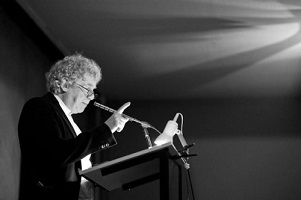
Pol Hoste, Menno Van der Beek, Flannery O'Connor, Jaime Sabines, Peter Van Straaten, Toni Cade Bambara, Antonio Fogazzaro

De Vlaamse schrijver Pol Hoste werd geboren in Lokeren op 25 maart 1947. Zie ook alle tags voor Pol Hoste op dit blog.

Uit: Tel

“- Hoe gaat het met je?
Je weet dat ik daar niet graag op antwoord, ik heb je al uitgelegd waarom.
- Is het zo erg dat ik gewoon eens vraag hoe het met je gaat, mag dat ook al niet meer?
- Het is helemaal niet erg, alleen hadden we afgesproken dat je het me niet meer zou vragen. Dat is alles. Als je me dus vraagt hoe het met me gaat herinner ik je alleen maar aan onze afspraak. Niet meer of niet minder. Dat hoef je dus helemaal niet erg te vinden.
- Dat weet ik, maar wind je niet meteen zo op, want dat is echt geen normale reactie meer, sta me toe dat ik dat zeg. Ik vraag gewoon even hoe het met je gaat en in plaats van te zeggen, zo of zo, maak je een drama alsof ik je geen ogenblik met rust laat. En het is al zo lang geleden dat we nog eens met elkaar gepraat hebben.
- Ik maak helemaal geen drama, ik herinner je alleen maar aan onze afspraak dat je me niet meer zou vragen hoe ik het maak. Want daarover gaat het en over niets anders.
- Is dat dan zo'n verschrikkelijke vraag? Straks ga ik nog denken dat ik helemaal abnormaal ben omdat ik gewoon even zeg: ‘Dag, hoe maak je het?’ Ik word er ziek van als ik daaraan denk. Ik begrijp helemaal niet waarom je me niet gewoon zegt, het gaat me goed of slecht of maar zo zo. Je mag het me gerust zeggen als het je slecht gaat. Misschien zit je in geldnood, sta je op het punt van ziek te worden, hoe kan ik dat weten, ik maak me alleen soms zorgen, dat is alles, dat kan toch, of mag ik dat ook niet meer? Ik kan je toch niet opbellen en dan doen alsof het helemaal niet om jou gaat? Alsof je er niet bent. Dat zou me een toestand worden. Ik ben niet gek.
- Ik ook niet.
- Kijk, als jij nu gewoon op mijn vraag had geantwoord: het gaat me zo of zo, ik verwacht daar helemaal geen uitgebreid antwoord op, denk dat maar niet, je hoeft me zeker niet alles te vertellen, helemaal niet, nee, alleen even gewoon hoe het met je gaat. Zo of zo, het zal me een zorg zijn, je beslist toch zelf wat je daarop antwoordt, ik zeg toch niet wat je me moet zeggen, integendeel, je hoeft me niet te sparen, ik bedoel, als je daar nu gewoon even kort op had geantwoord, dan hadden we er al lang over gezwegen in plaats van alweer zo tegen elkaar tekeer te gaan. Dat vind ik echt niet prettig."


 2021092-d5e6ee52216ac6b8d0b169712203e774.jpg
Pol Hoste (Lokeren, 25 maart 1947)


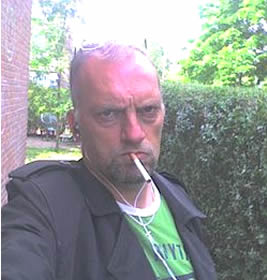
De Nederlandse dichter en vertaler Menno van der Beek werd geboren op 25 maart 1967 in Rotterdam. Zie ook alle tags voor Menno van der Beek op dit blog


De held kan niet bewegen

De held kan niet bewegen zonder zijn infuus
maar hij heeft zin in roken, dus hij stapt uit bed
en hij beweegt zijn lichaam richting het toilet:
voorlopig heeft hij een excuus. Pas bij de lift
wordt het gevaarlijk. In zijn blauwe kamerjas
heeft hij om drie uur 's nachts hier niets te zoeken
dus nu begint het avontuur. Zijn vingers tasten
met een vertrouwd gebaar al in in zijn badstof zakken
op zoek naar het bekende pakje. Maar hij is gestopt
na een slecht nieuws-gesprek, om toch iets terug te doen;
dus, dit gaat langer duren dan hij had gedacht:

hij moet op jacht. Hij rijdt met zijn infuus de lift in
en gaat omlaag. Hij wil opnieuw beginnen.


Grondhouding

Zo ver als mogelijk bij deze stad vandaan
in nat gras, met de handen in zijn zakken
gestrekt boven de grond in een net pak
midden in een weiland liggen. Een hectare

behaarde klei. Alleen van boven zichtbaar
trekt hij vertraagd zijn schouders op, verkrampt;
zijn nek verdwijnt. De tong tussen zijn tanden,
glimmende ogen in de camera,

die draaiend opstijgt: opgewekte kieviet
die steeds meer ziet. Daar schuiven aan de randen
boeren in beeld, de handen op de rug,

op zoek naar een gesprekje, maar dat wil hij niet.
Hij klopt zijn pak af met zijn natte handen
en holt het hele eind naar huis terug.


 2021092-238effe3e8e317d3c2bc1b187c8c7187.jpg
Menno Van der Beek (Rotterdam, 25 maart 1967)


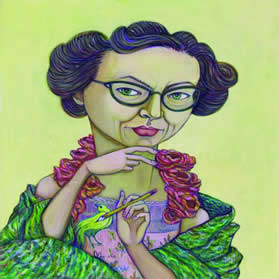
De Amerikaanse schrijfster Flannery O'Connor werd geboren op 25 maart 1925 in Savannah, Georgia. Zie ook  alle tags voor Flannery O'Connor op dit blog.

Uit: A Good Man Is Hard to Find and Other Stories

“The grandmother offered to hold the baby and the children's mother passed him over the front seat to her. She set him on her knee and bounced him and told him about the things they were passing. She rolled her eyes and screwed up her mouth and stuck her leathery thin face into his smooth bland one. Occasionally he gave her a faraway smile. They passed a large cotton field with five or six graves fenced in the middle of it, like a small island. "Look at the graveyard!" the grandmother said, pointing it out. "That was the old family burying ground. That belonged to the plantation."
"Where's the plantation?" John Wesley asked.
"Gone With the Wind," said the grandmother. "Ha. Ha."
When the children finished all the comic books they had brought, they opened the lunch and ate it. The grandmother ate a peanut butter sandwich and an olive and would not let the children throw the box and the paper napkins out the window. When there was nothing else to do they played a game by choosing a cloud and making the other two guess what shape it suggested. John Wesley took one the shape of a cow and June Star guessed a cow and John Wesley said, no, an automobile, and June Star said he didn't play fair, and they began to slap each other over the grandmother.
The grandmother said she would tell them a story if they would keep quiet. When she told a story, she rolled her eyes and waved her head and was very dramatic. She said once when she was a maiden lady she had been courted by a Mr. Edgar Atkins Teagarden from Jasper, Georgia. She said he was a very good-looking man and a gentleman and that he brought her a watermelon every Saturday afternoon with his initials cut in it, E. A. T. Well, one Saturday, she said, Mr. Teagarden brought the watermelon and there was nobody at home and he left it on the front porch and returned in his buggy to Jasper, but she never got the watermelon, she said, because a nigger boy ate it when he saw the initials, E. A. T.!“


 2021092-802a9c605cf70105272031749b0f39bc.jpg
Flannery O'Connor (25 maart 1925 – 3 augustus 1964)
Portret door Katherine Sandoz


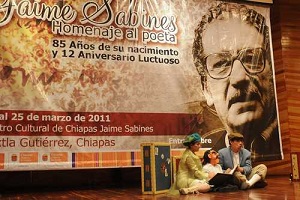
De Mexicaanse dichter en schrijver Jaime Sabines Gutiérrez werd geboren op 25 maart 1926 in Tuxtla Gutiérrez, Chiapas. Zie ook alle tags voor Jaime Sabines op dit blog.


IK WEET HET NIET ZEKER, maar ik denk het,
een vrouw en een man
worden op een dag verliefd,
langzamerhand blijven ze alleen,
iets in hun hart zegt hun dat ze alleen zijn,
alleen op aarde dringen ze in elkaar door,
beginnen ze elkaar te doden. 

Alles gebeurt in stilte. Zoals
licht ontstaat in het oog.
Liefde verenigt lichamen.
In stilte vervullen ze elkaar.

Op een dag ontwaken ze, armen over elkaar;
denken dat ze alles weten.
Zien dat ze naakt zijn en alles weten.

(Ik weet het niet zeker. Ik denk het.)


Vertaald door Mariolein Sabarte Belacortu


I take pleasure in the way the rain beats its wings on the back of the floating city.

The dust comes down.  The air is left clean, crossed by leaves of odour, by birds of coolness, by dreams.  The sky receives the city that is being born.

Streetcars, buses, trucks, people on bicycles and on foot, carts of all colours, street-vendors, bakers, pots of tamales, grilles of baked bananas, balls flying between one child and another: the streets swell, the sounds of voices multiply in the last light of the day hung up to dry.

They come out like ants after the rain, to pick up the crumb of the sky, the little straw of eternity to take away to their dark houses, with cuttlefish hanging from the roofs, with weaving spiders under the beds, and with one familiar ghost, at least, in back of some door.

Thanks be to you, Mother of the Black Clouds, who have so whitened the face of the afternoon and have helped us to go on loving life.


Vertaald door W.S. Merwin


 2021092-fcd4c9931c673bc9dd9b475b4fc0c764.jpg
Jaime Sabines (25 maart 1926 – 19 maart 1999)
Affiche bij zijn 85e geboortedag in 2011


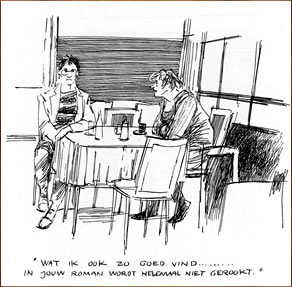
De Nederlandse cartoonist en striptekenaar Peter van Straaten werd geboren in Arnhem op 25 maart 1935. Zie ook alle tags voor Peter van Straaten op dit blog.


 2021092-d53cfff8e19a83aafe65cf94ff1134e9.jpg
“Wat ik ook zo goed vind….
In jouw roman wordt helemaal niet gerookt”


 2021092-731a57bb5ef0445d5e699795507fea37.jpg
Peter Van Straaten (25 maart 1935 – 8 december 2016)


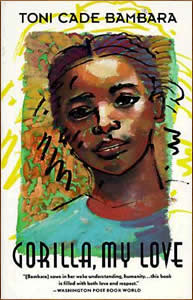
De Amerikaanse schrijfster en sociale activiste Toni Cade Bambara werd als Miltona Mirkin Cade geboren op 25 maart 1939 in New York. Zie ook alle tags voor Toni Cade Bambara op dit blog.

Uit: Gorilla, My Love

That was the year Hunca Bubba changed his name. Not a change up, but a change back, since Jefferson Winston Vale was the name in the first place. Which was news to me cause he'd been my Hunca Bubba my whole lifetime, since I couldn't manage Uncle to save my life. So far as I was concerned it was a change completely to somethin soundin very geographical weather like to me, like somethin you'd find in a almanac. Or somethin you'd run across when you sittin in the navigator seat with a wet thumb on the map crinkly in your lap, watchin the roads and signs so when Granddaddy Vale say "Which was, Scout," you got sense enough to say take the next exit or take a left or whatever it is. Not that Scout's my name. Just the name Granddaddy call whoever sittin in the navigator seat. Which is usually me cause I don't feature sittin in the back with the pecans. Now, you figure pecans all right to be sittin with. If you thinks so, that's your business. But they dusty sometime and make you cough. And they got a way of slidin around and down sudden, like maybe a rat in the buckets, So if you scary like me, you sleep with the lights on and blame it on Baby Jason and, so as not to waste good electric, you study the maps. And that's how come I'm in the navigator seat most times and get to be called Scout.
So Hunca Bubba in the back with the pecans and Baby Jason, and he in love. And we got to hear all this stuff about this woman he in love with and all. Which really ain't enough to keep the mind alive, though Baby Jason got no better sense than to give his undivided attention and keep grabbin at the photograph which is just a picture of some skinny woman in a countrified dress with her hand shot up to her face like she shame fore cameras. But there's a movie house in the background which I ax about. Cause I am a movie freak from way back, even though it do get me in trouble sometime.
Like when me and Big Brood and Baby Jason was on our own last Easter and couldn't go to the Dorset cause we'd seen all the Three Stooges they was. And the RKO Hamilton was closed readying up for the Easter Pageant that night. And the West End, the Regun and the Sunset was too far, less we had grownups with us which we didn't. So we walk up Amsterdam Avenue to the Washington and Gorilla, My Love playin, they say which suit me just fine, thought the "my love" part kinda drag Big Brood some.”


 2021092-9dd8f3d3aa9d46b9c698be5a98a575de.jpg
Toni Cade Bambara (25 maart 1939 – 9 december 1995)
Cover


De Italiaanse schrijver Antonio Fogazzaro werd geboren op 25 maart 1842 in Vicenza. Zie ook alle tags voor Antonio Fogazzaro op dit blog.

Uit: The Saint

“Then her thoughts dwelt on another painful passage in the letter from Italy which she had not mentioned. But, in spite of her silence, her misery was evident. Noemi pressed her lips to Jeanne’s forehead, and letting them rest there in silence, touched by the secret sorrow which accepted her sympathy. Then she slowly drew away from the long embrace as if fearful of severing some delicate thread which bound their two souls together.
“Perhaps that good old man knew where—Do you think he was in communication with ——” she murmured.
Jeanne shook her head in denial. During the September following that sad July, Jeanne’s unfortunate husband had died in Venice of delirium tremens. She had gone to the Villa Flores in October, and there in that same garden where the Marchesa Scremin had once laid bare her poor, suffering old heart to Don Giuseppe, had expressed a desire that Piero should be told of her husband’s death, should realise that he might henceforth think of her without a shadow of guilt, if indeed he still wished to think of her at all. Don Giuseppe first gently urged her not to abandon herself to this dream, and then avowed to her in all sincerity that no tidings of Piero had reached him since the day of his disappearance.
Fearing other questions, and unwilling any longer to expose her wound to the touch of unskilled fingers, Jeanne sought to change the subject. “Tell me about your monk,” she said. But just at that moment Carlino’s voice was heard in the hall.
“Not now,” replied Noemi. “To-night.”
Carlino came in, a white silk muffler round his neck, grumbling at the Lac d’Armour, which he pronounced a huge fraud, which only filled the air with odious, poisonous, little creatures. “To be sure.” said he, “love itself is no better.” Noemi would not allow him to talk of love. Why should he discuss a subject which he did not understand? Carlino thanked her. He had been on the point of falling in love with her; had greatly feared such a catastrophe. Her words, coming as they did so soon after her appearance in a certain offensive hat, with an ungraceful feather, and after some rather bourgeois expressions of admiration for that poor, tiresome devil Mendelssohn, had saved him à jamais. The two sparred gaily for some time, and, in spite of his poisoned tonsils, Carlino was in such high spirits that Noemi congratulated him on the subject of his novel. “It must be making rapid progress,” she said.”


 2021092-9c854659aa60f1cc829e1dc20a29bf35.jpg
Antonio Fogazzaro (25 maart 1842 – 7 maart 1911)


Zie voor nog meer schrijvers van de 25e maart ook mijn vorige blog van vandaag.

Geschreven door Romenu om 00:00 Reageer op dit bericht

Jacques Bens, Jacques Audiberti, Filip De Pillecyn, Erica Pedretti, Evliya Çelebi, Anne Fanshawe, Daniel Schiebeler, Mary Webb

De Franse dichter en schrijver Jacques Bens werd geboren op 25 maart 1931 in Cadolive (Bouches-du-Rhône). Zie ook alle tags voor Jacques Bens op dit blog.


Melancholy

So I’ll once more find my old horizons,
cherished scent of winds and habitations.
Fear not if it seems I’m quitting the place.

I leave Paris just to love it better.

One tends to hurry a banal embrace.
But what’s this pride worth that’s past all seasons?   
Try to unite the heart with its reasons. 
The city, while smiling, leaves a rough trace.

I leave Paris just to love you better.

To love you better, I couldn’t picture—
Now I see the present whisks us away.   
To see you, I have to step back a bit.
I lock up my regrets, as will be fit,
Slipping my key under your entryway.


Nostalgia

I’ll no longer haunt this lost location
Where my friends, gently, find some fixation,
Fixation I crave, though I play the stud,

For I love the smell of books most of all.

If I’ve swapped my pen for a plow and mud
(That is, lyric and inoculation),
If I’ve, I say, chosen field plantation,
I’ve not renounced my écriveron blood:

Still, I love the smell of books above all.

To regain that world that had me in thrall,
To meet, each day, my cousin the proofer!
To sniff the cold perfume of leather scrawl!
To relive, at last, the life I recall,
And egads! return like a proud victor!


Vertaald door Rachel Galvin
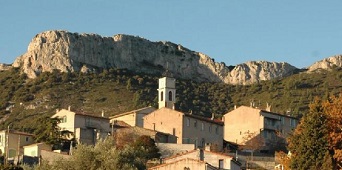
 

 2021088-e24f3bcc919a8546dbad5fa84b83aedb.jpg
Jacques Bens (25 maart 1931 – 26 juli 2001)
Cadolive (Bouches-du-Rhône)


De Franse dichter en schrijver Jacques Audiberti werd geboren op 25 maart 1899 in Antibes. Zie ook alle tags voor Jacques Audiberti op dit blog.


Si je meurs

Si je meurs, qu'aille ma veuve
à Javel prés de Citron.
Dans un bistrot elle y trouve,
à l'enseigne du Beau Brun,

trois musicos de fortune
qui lui joueront - mi, ré, mi
l'air de la petite Tane
qui m'aurait peut-être aimé

puisqu'elle n'offrait qu'une ombre
sur le rail des violons.
Mon épouse, ô ma novembre,
sous terre les jours sont lents.


Parnasse

Mon train filait avec cette allure qu'il prend
pour fuir, nocturne, l'heure où grouille le parent.
Il traversait une forêt. Contre les baies
elle appendait un bloc de cimes recourbées,
tapisserie obscure aux dévidoirs profonds.
Quoique ganache en cerfs, sentiers, cèpes et fonts,
moi, pourtant, je savais, à trois jours de la voie,
un arbre, que jamais pour de bon je ne voie !
Il porte, sur son tronc funèbre, un chapelet
de masques ciselés à coups de pistolet
par le nègre en rupture et le bûcheron ivre.
Je me rendai pour rapporter, car il faut vivre,
à Melun, qui n'est pas un lieu phénoménal.
Là, sous une muraille, au bord de tel canal,
quelque chose s'était passé, mais quoi ? La veille
plutôt que dépouiller la presse, humble merveille,
j'avais, fruit sec du rêve et du nombre, établi
combien de tomes lus peut supporter mon lit
sans crouler aux lamas qui bêlent sous son ventre.
J'arrivai dans Melun où, tout de suite, m'entre
la ronce du mystère éclos dans tous les creux.
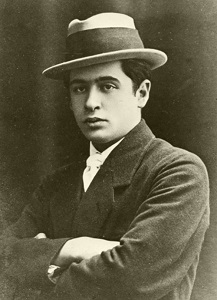
 

 2021088-7d48e86d5afc28250261aff11bdfc379.jpg
Jacques Audiberti (25 maart 1899 – 10 juli 1965)


De Vlaamse schrijver Filip De Pillecyn werd te Hamme aan de Durme geboren op 25 maart 1891. Zie ook alle tags voor Filip De Pillecyn op dit blog.

Uit: Mensen achter de dijk

“De wind strijkt vanuit de Durmevallei over het dorp. Ik hoor hem zoeven daar ik loop, geborgen onder moeders lakense kapmantel. Ik schrijd veilig en gelukkig naast haar in de warme duisternis die mij afsluit van de wereld. Moeders hand is vol rustig, innig leven en zonder te zien waar ik ga, klem ik die hand in de mijne en zie in mijn verbeelding de huizen waarlangs wij gaan. De lage werkmanshuisjes van de Kapellestraat met wat verder een boerenwoning die gaandeweg verloren staat in het dorp; en de winkels waaruit nu de lichtschijn valt over de straat. Ik hoor de stap van mensen naast mij, een winkeldeur gaat met belgerinkel open.
- Pas op, de goot, zegt moeder.
Ik trek de mantel open, op een kier om zo te zeggen. De valavond en de wind en het gerucht van de straat zijn meteen weer rondom mij. Ik stap over de goot die de straat dwarst en het dikke, flauwe licht van de lantaarn glimt in het donkere water. Ik trek de mantel weer dicht en wandel voort in mijn wereld vol warme, geheimzinnige vereenzaming.
Het is alsof de geur van de kerk nog rondom mij hangt; zware wierooklucht en die mist van verstorvenheid die ernstig en treurig maakt. Als moeder tijd heeft gaat zij naar het lof en ik ga mee; als wij terugkomen is het duister en dan ga ik aan haar hand, onder de warme, donkere mantel naar huis. Het is de maand oktober en de vrouwen gaan sterkte zoeken in de rozenkrans. Het gemurmel van hun gebed stijgt rondom mij, hun gestalten zijn zwaar en onbeweeglijk in de gele schemervlekken van kaars en lamp. En van zohaast wij in het kerkportaal zijn glijd ik onder moeders mantel Zo ga ik van de kerk naar huis, afgesloten van de mensen, en alleen de warme, weke druk van moeders hand weerhoudt mij in de werkelijkheid.
Ik stel mij voor hoe moeder stapt. Hoog opgeschoten en statig in de zware lakense mantel die tot aan de hielen reikt; edele, zwarte stof die een leven lang haar dienst doet. De satijnen muts met binders staat op haar dicht blond haar dat achter aan het hoofd in een dikke wrong is samengevlochten. Ik hoor ze soms goên avond zeggen en ik tracht, aan de klank van de stem, te raden wie haar groet. Maar de woorden komen verdoft en ver tot mij.”
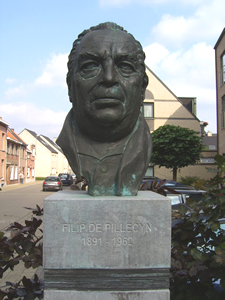
 

 2021088-dc1a4204e934c336631acfa194e89a73.png
Filip De Pillecyn (25 maart 1891 – 7 augustus 1962)
Borstbeeld in Hamme 


De Zwitserse schrijfster en beeldhouwster Erica Pedretti werd geboren op 25 maart 1930 in Šternberk (Tsjechië). Zie ook alle tags voor Erica Pedretti op dit blog.

Uit: Fremd genug

„Und statt der gluschtigen Fasnachtschüechli, die meine Schweizer Großmutter jeden Winter, etwa zur Zeit meines Geburtstags, also gerade jetzt, zu Hause korbweise buk, auf die ich mich gefreut hatte, wenn ich schon in die Schweiz, wo es doch noch und noch Fasnachtschüechli geben sollte, in ein Kinderheim mußte, statt Fasnachtschüechli gab es hier Griesbrei mit Zimt und Zucker, alle Tage zum Frühstück. Zuunterst am langen Tisch saß ich, immer als Letzte vor dem noch vollen Teller, und was ich morgens nicht schaffte, das bekam ich wieder zu Mittag. Seither ist mir Griesbrei zuwider, und beim Geruch von Zimt sehe und höre ich kleine, mit ihrem Besteck in den Tellern klappernde Kinder in einem holzgetäfelten Speisesaal. Wann endlich würden meine Eltern aus der Tschechoslowakei kommen und mich abholen?
Immer wieder durfte eins der Kinder abreisen, glücklich und beneidet, und das Fräulein, das sie mit der Bergbahn hinunter nach Vitznau gebracht hatte, erzählte dann von den schönen, tränenreichen Wiedersehen mit den Müttern. In Gedanken probte ich meine Abreise, wollte eine ebenso rührende Wiedersehensszene bieten. Doch damit war dann nichts: ein Kuß von der Mutter, ein Kuß vom Vater. Meine Eltern hatten gar keinen Sinn für Sentimentales.
Wieder zu Hause, wurde ich von meiner Schweizer Großmutter, die vis-à-vis wohnte, auf schweizerdeutsch begrüßt. Das hatte ich im Kinderheim mehr oder weniger gelernt und konnte es jetzt, den spöttischen ch, ch, ch der Geschwister und Eltern zum Trotz, als Geheimsprache mit der Omi verbessern.
Wie gahts? Hesch guet gschlafe, und was mache mir hüt? rief sie aus ihrem Fenster herüber.
Zu Hause durfte man sonst keinen Dialekt, auch keinen einheimischen Dialekt sprechen, nur fern des Vaters, auf der Straße, und dorthin durfte ich mit vier Jahren noch nicht. So wurde Schweizerdeutsch, wahrscheinlich das aargauische, denn meine Großmutter kam aus Aarau, mein erster Dialekt. Den ich dann leider wieder vergaß, als die Omi zügelte, zurück in die Schweiz.“
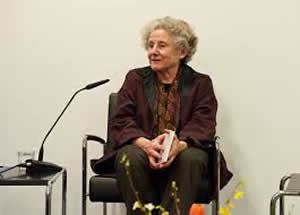
 

 2021088-d317cd8b603eb9634ba81224e2ef97ea.jpg
Erica Pedretti (Šternberk 25 maart 1930)


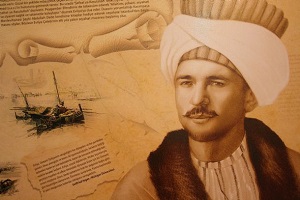
De Turkse schrijver Evliya Çelebi werd geboren op 25 maart 1611 in Istanbul. Zie ook alle tags voor Evliya Çelebi op dit blog.

Uit: Narrative of Travels in Europe, Asia, and Africa, in the Seventeenth Century (Vertaald door Joseph von Hammer)

“It was built by a Greek Princess called Modína. Here I was first enabled to perform my Friday’s prayer, which I did with great devotion, and then went forth to view the town. It is the port of Brússa, and forms a safe harbour, being closed against the wind from seven points and open only to the North. The anchorage is excellent. At the head of the harbour stands the custom-house, the lease of which amounts to a million aspers. The town is built by the sea-shore,3 on a low rocky ground. Prince Orkhán, with his father Osmán’s permission, conquered this town in the year 721 (1321) and destroyed the walls in several places, that it might no longer afford shelter to the infidels. It is governed by a Voivode, subordinate to Brússa, the chief seat of the Sanjak of Khodávendkiár. The judge is appointed with one hundred and fifty aspers a day. His annual revenue amounts to two thousand piastres. This appointment is sometimes given to the Mollá of Brússa as Páshmáklik (pin-money). The houses are all faced with brick. There are three mosques (jámí) and seven mesjids, three kháns, one bath, two schools for boys, and two hundred small streets; but no room for reading the Korán or tradition, because the greater number of the inhabitants are Greeks. There are fine gardens producing superior figs and grapes. From the excellence of its vinegar, it has acquired the name of Dárkhill (vinegar-house). South-east of the town we passed on horseback continuously through gardens and the cultivated field called Filehdár. The river Nílúfer, not fordable in the beginning of spring, is a clear stream, which issuing from the mountains Rúhbán, Ketelí and Castel, waters the valley of Fillehdár and disembogues into the White Sea. The main road crosses it over a handsome bridge, each arch of which resembles the arch of heaven; its name, as well as that of the river, was received from its builder the Princess Nílúfer, daughter of a Sultán (Orkhán): after continuing our journey among gardens and vineyards for two hours, we reached the town of Brússa, the emporium of silk, the ancient capital of this country (Bithynia).”
 

 2021088-295f50e1e4bdb75a2f490106c3b4ebb1.jpg
Evliya Çelebi (25 maart 1611 – na 1683 op een van zijn reizen)


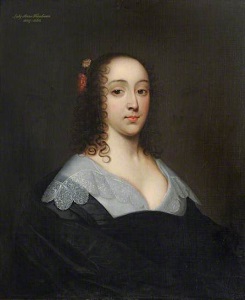
De Engelse schrijfster Lady Anne Fanshawe werd geboren op 25 maart 1625 in Balls Park, bij Hertford. Zie ook alle tags voor Anne Fanshawe op dit blog.

Uit:The Memoirs of Lady Fanshawe

“Now you will expect that I should say something that may remain of us jointly, which I will do though it makes my eyes gush out with tears, and cuts me to the soul to remember, and in part express the joys I was blessed with in him. Glory be to God, we never had but one mind throughout our lives. Our souls were wrapped up in each other's; our aims and designs one, our loves one, and our resentments one. We so studied one the other, that we knew each other's mind by our looks.
Whatever was real happiness, God gave it me in him; but to commend my better half, which I want sufficient expression for, methinks is to commend myself, and so may bear a censure; but, might it be permitted, I could dwell eternally on his praise most justly; but thus without offence I do, and so you may imitate him in his patience, his prudence, his chastity, his charity, his generosity, his perfect resignation to God's will, and praise God for him as long as you live here, and with him hereafter in the Kingdom of Heaven. Amen.
Your father was born in Ware Park, in the month of June, in the year of our Lord 1608, and was the tenth child of Sir Henry Fanshawe, whose father bought Ten, in Essex, and Ware Park, in Hertfordshire. This, your great-grandfather, came out of Derbyshire from a small estate, Fanshawe-Gate, being the principal part that then this family had, which exceeded not above two hundred pounds a year, and about so much more they had in the town and parish of Dronfield, within two miles of Fanshawe-Gate, where the family had been some hundreds of years, as appears by the church of Dronfield, in the chancel of which church I have seen several grave-stones with the names of that family, many of them very ancient; and the chancel, which is very old, was and is kept wholly for a burying-place for that family.”
 

 2021088-9136051fcb3fc6f2636436796e6cde4d.jpeg
Anne Fanshawe (25 maart 1625 - 1680)
Portret door Cornelis Janssens van Ceulen, ca. 1644-1661


De Duitse dichter en schrijver Daniel Schiebeler werd geboren op 25 maart 1741 in Hamburg. Zie ook alle tags voor Daniel Schiebeler op dit blog.


Das Glockenspiel

Hörst du den feyerlichen Klang?
Empfindung füllt mein Herz,
Die es noch nie zuvor durchdrang,
Entzücken, Andacht, Schmerz!

O Daphne, dieser Augenblick
Bekrönt ein liebend Paar,
Es schwört sich seines Lebens Glück
Am heil'gen Traualtar.

Belohnt ist nun der Tage Reih,
In Seufzern hingebracht,
Und jede, der Melancholey
Geweihte, lange Nacht.

Sieh diese Thräne, welche mir
Durchs Auge zitternd bricht!
Dein Herz, o Daphne, sag' es dir,
Was diese Thräne spricht!
 

 2021088-d61c500eeca44b52e2ef990398b5d94f.jpg
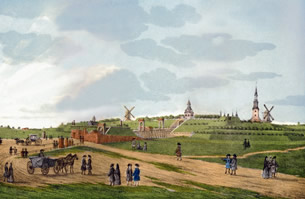
Daniel Schiebeler (25 maart 1741 – 19 augustus 1771)
Hamburg vanaf de kant van het Altonaer Tor in 1700


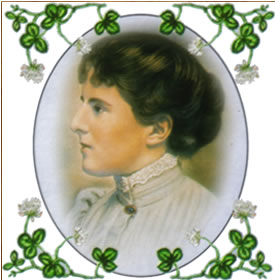
De Engelse dichteres en schrijfster Mary Webb werd geboren als Gladys Mary Meredith in Leighton, Shropshire op 25 maart 1881. Zie ook alle tags voor Mary Webb op dit blog.


Green Rain

Into the scented woods we'll go,
And see the blackthorn swim in snow.
High above, in the budding leaves,
A brooding dove awakes and grieves;
The glades with mingled music stir,
And wildly laughs the woodpecker.
When blackthorn petals pearl the breeze,
There are the twisted hawthorne trees
Thick-set with buds, as clear and pale
As golden water or green hail-
As if a storm of rain had stood
Enchanted in the thorny wood,
nd, hearing fairy voices call,
Hung poised, forgetting how to fall.


The Night Sky

The moon, beyond her violet bars,
From towering heights of thunder-cloud,
Sheds calm upon our scarlet wars,
To soothe a world so small, so loud.
And little clouds like feathered spray,
Like rounded waves on summer seas,
Or frosted panes on a winter day,
Float in the dark blue silences.
Within their foam, transparent, white,
Like flashing fish the stars go by
Without a sound across the night.
In quietude and secrecy
The white, soft lightnings feel their way
To the boundless dark and back again,
With less stir than a gnat makes
In its little joy, its little pain.
 

 2021088-41dd3b8263e472c711eb12d9fbb2ec07.jpg
Mary Webb (25 maart 1881 – 8 oktober 1927)

Geschreven door Romenu om 00:00 Reageer op dit bericht

Meer van Romenu

↑ Terug naar de berichten