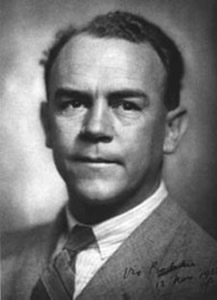
William Styron, Renée Vivien, Jean-Pierre Chabrol, Sophie van der Stap, Ben Jonson, Yasunari Kawabata, Athol Fugard
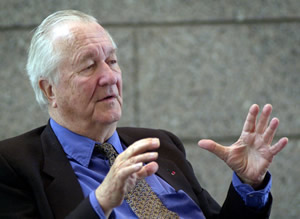
De Amerikaanse schrijver William Styron werd op 11 juni 1925 in Newport News in de staat Virginia geboren. Zie ook alle tags voor William Styron op dit blog.
Uit: Darkness Visible
“When I was aware that I had been laid low by the disease, I felt a need, among other things, to register a strong protest against the word “depression.” Depression, most people know, used to be termed ‘melancholia,” a word which appears in English as early as the year 1305 and crops up more than once in Chaucer, who in his usage seemed to be aware of its pathological nuances. “Melancholia” would still appear to be a far more apt and evocative word for the blacker forms of this disorder, but it was usurped by a noun with a bland tonality and lacking any magisterial presence, used indifferently to describe an economic decline or a rut in the ground, a true wimp of a word for such a major illness. It may be that the scientist generally held responsible for its currency in modern times, a Johns Hopkins Medical School faculty member justly venerated—the Swiss-born Adolf Meyer—had a tin ear for the finer rhythms of English and therefore was unaware of the semantic damage he had inflicted by offering “Depression” as a descriptive noun for such a dreadful and raging disease. Nonetheless, for over seventy-five years the word had slithered innocuously through the language like a slug, leaving little trace of its intrinsic malevolence and preventing, by its very insipidity, a general awareness of the horrible intensity of the disease when out of control.
As one who has suffered from the malady in extremis yet returned to tell the tale, I would lobby for a truly arresting designation. “Brainstorm,” for instance, has unfortunately been preempted to describe, somewhat jocularly, intellectual inspiration. But something along these lines is needed. Told that someone’s mood disorder has evolved into a storm—a veritable howling tempest in the brain, which is indeed what a clinical depression resembles like nothing else—even the uninformed layman might display sympathy rather than the standard reaction that ‘depression” evokes, something akin to So what?” pr “You’ll pull out of it” or “We all have bad days. The phrase “nervous breakdown” seems on its way out, certainly deservedly so, owing to its insinuation of a vague spinelessness, but we still seem destined to be saddled with “depression” until a better, sturdier name is created."
William Styron (11 juni 1925 – 1 november 2006)
De Britse dichteres en schrijfster Renée Vivien (eig. Pauline Mary Tarn) werd geboren op 11 juni 1877 in Londen. Zie ook alle tags voor Renée Vivien op dit blog.
À l’Amie
Dans tes yeux les clartés trop brutales s’émoussent.
Ton front lisse, pareil à l’éclatant vélin,
Que l’écarlate et l’or de l’image éclaboussent,
Brûle de reflets roux ton regard opalin.
Ton visage a pour moi le charme des fleurs mortes,
Et le souffle appauvri des lys que tu m’apportes
Monte vers tes langueurs du soleil au déclin.
Fuyons, Sérénité de mes heures meurtries,
Au fond du crépuscule infructueux et las.
Dans l’enveloppement des vapeurs attendries,
Dans le soir énerve, je te dirai très bas.
Ce que fut la beauté de la Maîtresse unique…
Ah ! cet âpre parfum, cette amère musique
Des bonheurs accablés qui ne reviendront pas !
Ainsi nous troublerons longtemps la paix des cendres.
Je te dirai des mots de passion, et toi,
Le rêve ailleurs, longtemps, de tes vagues yeux tendres,
Tu suivras ton passé de souffrance et d’effroi.
Ta voix aura le chant des lentes litanies
Où sanglote l’écho des plaintes infinies,
Et ton âme, l’essor douloureux de la Foi.
Aurore sur la Mer
Je te méprise enfin, souffrance passagère !
J’ai relevé le front. J’ai fini de pleurer.
Mon âme est affranchie, et ta forme légère
Dans les nuits sans repos ne vient plus l’effleurer.
Aujourd’hui je souris à l’Amour qui me blesse.
O vent des vastes mers, qui, sans parfum de fleurs,
D’une âcre odeur de sel ranimes ma faiblesse,
O vent du large ! emporte à jamais les douleurs !
Emporte les douleurs au loin, d’un grand coup d’aile,
Afin que le bonheur éclate, triomphal,
Dans nos cœurs où l’orgueil divin se renouvelle,
Tournés vers le soleil, les chants et l’idéal !
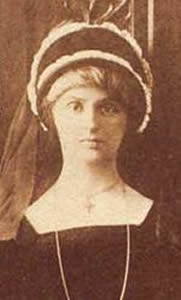
Renée Vivien (11 juni 1877 – 10 november 1909)
De Franse schrijver Jean-Pierre Chabrol werd geboren op 11 juni 1925 in Chamborigaud. Zie ook alle tags voor Jean-Pierre Chabrol op dit blog.
Uit: Le crève Cévenne
« Rivera Manuel Blasco Velasquez Garcia ferme ses contrevents, toussant si péniblement qu’il ne me salue que du menton. Mineur retraité depuis cet été, Rivera est silicosé à 80 %. Nous l’appelons affectueusement : « Crèvera ».
En somme, je broie du noir, tombé de ma bibliothèque attiédie dans la rue cisaillée par des bises contrariées. Maussade. C’est le temps, c’est la saison. Et puis le boulanger m’a dit que Mme Sirven était bien « fatiguée », ce qui signifie, chez nous, qu’elle est à l’article de la mort. Elle a quatre-vingt-cinq ans. Elle a inventé une sorte de métier qu’elle a exercé tout au long de sa vie.
Aussi loin que remontent mes souvenirs, je la revois toujours au même endroit, toujours pareille : à l’entrée du grand tournant, quand on quitte le village en direction de la montagne. Très maigre, à peine voûtée, toute vêtue de noir, d’étranges yeux, très clairs, bordés de sang. Je ne l’ai jamais vue jeune, je ne l’ai jamais vue vieillir.
L’après-midi de ce lundi 5 novembre 1971 tire à sa fin. À l’auberge, il y a le Fossoyeur, le père Louiset, l’Aubergiste et moi. La nuit tombe. Mme Sirven se meurt, et nous parlons. »
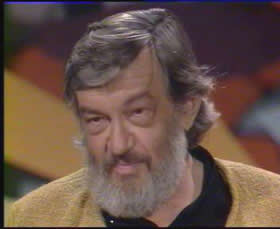
Jean-Pierre Chabrol (11 juni 1925 – 1 december 2001)
De Nederlandse schrijfster Sophie van der Stap werd geboren in Amsterdam op 11 juni 1983. Zie ook alle tags voor Sophie van der Stap op dit blog.
Uit: Heute bin ich blond (Vertaald door Barbara Heller)
„Gemüsehändler, die mir eine Extratüte Vitamine in den Einkaufskorb packen. Freunde, die mich fest in den Arm nehmen. Meine Familie, die mit mir weint. Mit nassen Augen schaue ich in den Spiegel und lasse die Frau mit meinen neuen Haaren spielen. Von meinen vollen Lippen ist nur noch ein bestürzter Strich übrig, quer durch mein Gesicht. Je länger die Frau an meinen Haaren herumzupft, desto dünner wird der Strich und desto verzweifelter werde ich. Ich sehe einfach unmöglich aus. Soeben bin ich mir im Spiegel abhandengekommen.
Endlich verlasse ich die Kabine, mit einem Muttchenkopf, der nicht meiner ist. Es sieht potthässlich aus, und es juckt. Das ist keine Sophie mehr, nicht mal annähernd, das ist eine steife, langweiligealte Jungfer aus einem steifen, langweiligen Ort wie Wassenaar. Die Frau redet mir aufmunternd zu. »Du musst dich erst damit anfreunden. Das geht nicht von heute auf morgen. Spiel ein bisschen damit, probier es aus, und in zwei Wochen bist das ganz du.« Jaja. Ganz ich. Ich – eine steife alte Jungfer? Ich – eine Stella?“
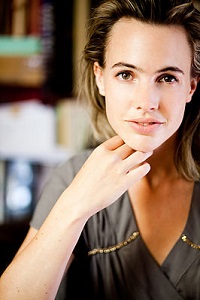
Sophie van der Stap (Amsterdam, 11 juni 1983)
De Engelse dichter en schrijver Ben Jonson werd geboren rond 11 juni 1572 in Westminster, Londen. Zie ook alle tags voor Ben Jonson op dit blog.
A Farewell To The World
False world, good night! since thou hast brought
That hour upon my morn of age;
Henceforth I quit thee from my thought,
My part is ended on thy stage.
Yes, threaten, do. Alas! I fear
As little as I hope from thee:
I know thou canst not show nor bear
More hatred than thou hast to me.
My tender, first, and simple years
Thou didst abuse and then betray;
Since stir'd'st up jealousies and fears,
When all the causes were away.
Then in a soil hast planted me
Where breathe the basest of thy fools;
Where envious arts professed be,
And pride and ignorance the schools;
Where nothing is examined, weigh'd,
But as 'tis rumour'd, so believed;
Where every freedom is betray'd,
And every goodness tax'd or grieved.
But what we're born for, we must bear:
Our frail condition it is such
That what to all may happen here,
If 't chance to me, I must not grutch.
Else I my state should much mistake
To harbour a divided thought
From all my kind-that, for my sake,
There should a miracle be wrought.
No, I do know that I was born
To age, misfortune, sickness, grief:
But I will bear these with that scorn
As shall not need thy false relief.
Nor for my peace will I go far,
As wanderers do, that still do roam;
But make my strengths, such as they are,
Here in my bosom, and at home.

Ben Jonson (ca. 11 juni 1572 – 6 augustus 1637)
Ben Jonson en William Shakespeare door Paul Rainer
De Japanse schrijver Yasunari Kawabata werd geboren op 11 juni 1899 in Osaka. Zie ook alle tags voor Yasunari Kawabata op dit blog.
Uit: The House of the Sleeping Beauties (Vertaald door Edward Seidensticker)
“He was not to do anything in bad taste, the woman of the inn warned old Eguchi. He was not to put his finger into the mouth of the sleeping girl, or try anything else of that sort.
There was this room, of about four yards square, and the one next to it, but apparently no other rooms upstairs. And, since the downstairs seemed too restrict for guests rooms, the place could scarcely be called an inn at all. Probably because its secret allowed none, there was no sign at the gate. All was silence. Admitted through the locked gate, old Eguchi had seen only the woman to whom he was now talking. It was his first visit.
He did not know whether she was the proprietress or a maid. It seemed best not asked.
A small woman perhaps in her mid-forties, she had a youthful voice, and it was as if she had especially cultivated a calm, steady manner. The thin lips scarcely parted as she spoke. She did not often look at Eguchi. There was something in the dark eyes that lowered his defenses, and she seemed quite at ease..
She made tea from the iron kettle on the bronze brazier. The tea leaves and the quality of the brewing were astonishingly good for the place and the occasion.. to put old Eguchi more tranquilized. In the alcove hung a picture of Kawai Gyokudِ, probably a reproduction, of a mountain village warm with autumn leaves. Nothing suggested it room had unusual secrets.
"And please do not try to wake her. Not that you could, whatever you did. She is soundly asleep and knows nothing."
The woman said it again: "She will sleep on and on and knows nothing at all, from start to finish. Not even who's been with her, You needn't worry."
Eguchi said nothing of the doubts that were coming over him.
"She is a very pretty girl. I only take guests I know I can trust."
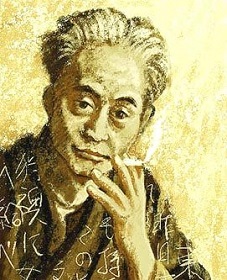
Yasunari Kawabata (11 juni 1899 — 16 april 1972)
De Zuidafrikaanse schrijver Harold Athol Lannigan Fugard werd geboren op 11 juni 1932 in Middelburg, Kaapprovincie. Zie ook alle tags voor Athol Fugard op dit blog.
Uit:Master Harold...and the boys
“Anybody who thinks there's nothing wrong with this world needs to have his head examined. Just when things are going all right, without fail someone or something will come along and spoil everything. Somebody should write that down as a fundamental law of the Universe. The principle of perpetual disappointment. If there is a God who created this world, he should scrap it and try again.”
(…)
“Those are big collisions, Hally. They make for a lot of bruises. People get hurt in all that bumping, and we're sick and tired of it now. It's been going on for too long. Are we never going to get it right?...Learn to dance life like champions instead of always being just a bunch of beginners at it?”
(…)
“The clocks are ticking my friends. History has got a strict timetable. If we're not careful we might be remembered as the country who arrived to late.”
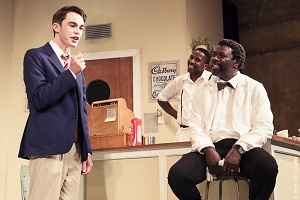
Athol Fugard (Middelburg (ZA), 11 juni 1932)
Scene uit een opvoering in Kaapstad, 2013
Zie voor nog meer schrijvers van de 11e juni ook mijn blog van 11 juni 2012 en ook mijn blog van 11 juni 2011 deel 2.