Naar de inhoud

Romenu

Over literatuur, gedichten, kunst en cultuur
seniorennet.beseniorennet.be

Berichten van 29 oktober 2011

Harald Hartung, Matthias Zschokke, Claire Goll, Mohsen Emadi, Zbigniew Herbert
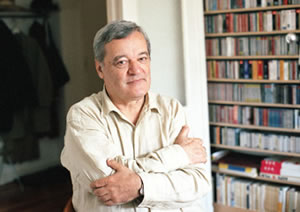
De Duitse schrijver, dichter en literatuurwetenschapper Harald Hartung werd geboren op 29 oktober 1932 in Heme. Zie ook mijn blog van 29 oktober 2010 en eveneens alle tags voor Harald Hartung op dit blog.


Vergessene Zeile


Gestern sehr früh fiel mir eine Zeile ein
Sie handelte vom Tod und begann Der Tod…
dann folgte etwas wie eine Behauptung


Sie schien mir gut und tröstete mich zugleich
so daß ich liegen blieb und mein Glück genoß


Dann stand ich auf Der Tod ist … probierte ich
und hatte vergessen wie es weiterging


Der Tod ist eine vergessene Zeile.


Mantegnas Sebastian


Ich zählte alle Pfeile

die er an seinem Leib trägt


die Stellen wo sie eintreten

die Stellen wo sie austreten

auch die verdeckten


und vergaß über meinem Zählen

den eigenen Schmerz


Ich trat hinaus in das Licht des Kanals

Zwischen Schmutz

und dümpelnden Plastikflaschen


trieb bäuchlings ein Teddybär

Da trat mir das Salz ins Aug


Blick in den Hof


Während es anfängt zu schneien

schaukelt das Mädchen im Hof

schaukelt sich tief

ins wachsende weiße Dunkel

Glück ist ein Sekundenschlaf

Ich schaue auf, die leere Schaukel

schwingt noch ein wenig nach


 1021095-10cc159d43109886808606748dcfcd51.jpg

Harald Hartung (Herne, 29 oktober 1932)


De Zwitserse dichter, schrijver en filmmaker Matthias Zschokke werd geboren op 29 oktober 1954 in Bern. Zie ook mijn blog van 29 oktober 2010 en eveneens alle tags voor Matthias Zschokke op dit blog.


Uit: Max


„Wenn es ihm gut geht, das heißt, wenn er die Seelenruhe findet, stellt er sich abends an eine Bar und hat gelegentlich das erhebende Gefühl, da seien Leute, welche glauben, er könne leben.

Dann versucht er, ein möglichst interessantes Gesicht zu machen.

Jeder macht sein Gesicht, Gesichter sind nicht.

Er versucht intensiv, einen Charakterkopf dar­zustellen, etwa den denkend-leidenden, um die vermeintlich Beobachtenden nicht zu enttäuschen, denn denkend leiden ist gefragt.

Es fällt ihm schwer. Er hat ein liebes, gesundes, reines Gesicht. Aber er macht ein Vakuum in seinem Mund, so daß es die Backen etwas zusammenzieht.

Wenn er dann an seinem Glas nippt, gibt es einen leisen Schmatzer, wegen dem Druckausgleich.

Auch wenn er zu sprechen anhebt, erklingt zuerst jeweils ein feines Plop.

Er beißt die Zähne zusammen (mehr bildlich gesprochen. Konkret würde er sich auf das eingesogene Backenfleisch beißen) und denkt: »Nur gut, daß ich nicht schlafe. Schlafend könnte mich jeder erkennen, da ist mein Gesicht nackt.«

Er heißt bestimmt Martin.

Nein, Martins mag ich zu wenig. Ich will ihn mögen, diesen jungen Mann, denn ich will über ihn schreiben, und dazu muß ich ihn mögen. Sonst gebe ich ihn bald auf

ich nenne ihn einmal Max

ich kenne einen Max. Der ist ganz anders, aber lieben muß ich ihn

jeder Name löst präzise Vorstellungen aus

ich werde den Namen ändern, sobald es nötig wird

wenn das Ganze nicht nur Größenwahn ist

eine schöne Frau sagt ihm das oft           eine  unsagbar schöne Frau, welche sogar schöne Hände besitzt          alles, alles                  und die bemüht sich ganz selten mal zu ihm, um ihn zu kränken. Aber er mag das sehr und versucht immer neu, in sie hineinzusehen. Überhaupt ist das einer der wenigen Gedankengänge in seinem Alpenseegesichtskopf. Und sie kommt dann zu ihm, um etwas ganz Bissiges zu sagen wie etwa: »Ich bin nur zufällig hier«, oder: »Du bist ähnlich wie Martin«. (Nehmen wir ruhig einen Martin, dadurch wird dem Leser die Bösartigkeit grob vor Augen geführt), wobei es Max viel mehr schmerzt, daß er ähnlich sein soll wie ..., nicht, daß er ähnlich sein soll wie Martin.

Ja - schreiben wir doch einmal von diesen Begegnungen. Irgendwo muß ich beginnen“


 1021095-b2c6c25c1f6b6eb20b02ac88126f8ffa.jpg

Matthias Zschokke (Bern, 29 oktober 1954)


De Duits – Franse schrijfster Claire Goll werd geboren op 29 oktober 1890 in Nürnberg. Zie ook mijn blog van 29 oktober 2010 en eveneens alle tags voor Claire Goll op dit blog.


Du kommst

Du
Tötest alle Dezembernesseln
Mit März
Mein Herz rufet schon Hyazinthen
Süss-süsser Rausch
Vergehen

Aus allen Augen duften Narzissen
Mir
Weinen Lachen
Und Taumel
Ich scheine Sonne
Hin-gebend
Demut
Du kommst!


Liebe

Ich liebe die Stille zwischen uns
Dieselbe Stille wie zwischen Blumen.
Das leise Schweigen am Morgen,
Das lautere des Abends
Und das zitternde zu Mitternacht
Das um den Andern fürchtet.

Ich mag nicht, dass Menschen kommen
Und uns unsere Stille stehlen,
Die gross ist wie die Stille der Kathedralen.
Ach, wie sie es zerbrechen
Unser blaues Schweigen aus venetianischem Glas.
Ich könnte weinen, wenn Fremde kommen.
Nur die Vögel draussen verstehen uns
Und singen unsre Stille
Und machen uns noch stummer vor der Ewigkeit.
Stille, süsser Vorschuss auf den Tod,
Sag dem Geliebten wie ich ihn liebe.


 1021095-ecd2d517f99b468ac68d3be1e10f7263.jpg

Claire Goll (29 oktober 1890 – 30 mei 1977)

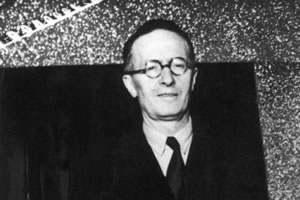
Yvan en Claire Goll 


De Iraanse dichter en vertaler Mohsen Emadi werd geboren op 29 oktober 1976 in Teheran. Zie ook mijn blog van 29 oktober 2008 en ook mijn blog van 29 oktober 2009 en ook mijn blog van 29 oktober 2010


Blood’s Voice


If one day flood brings in a sad panther
and a shrine’s door,
if they sew up a shirt with the panther’s skin,
make a necklace with his teeth,
I know that whoever puts on the shirt
will disappear,
and whoever wears the necklace
would be obliged to carry
her own head under her arms.


I take the shrine’s door
install it on the threshold
of my house. It creaks open
to a circle of women,
heads on knees,
caressing their own hair.


Outside, body-less heads
surround a fire with songs.
I don’t recognize my own voice
and the door closes and opens
to the rhythm of the words I grunt.


It is raining.
A unclothed woman knocks on the door.
She carries a boat on her back.
I greet her between the panther’s roar
and the door’s groans.
Silently she unloads her boat in a corner,
climbs in and falls asleep.


The house is in water.
Water carries away corpses of women,
it carries away the door,
and my voice.


We paddle.
We row looking for the voice.


My legacy is a door through which
when a woman enters or leaves
my voice cracks,
and the house drowns in that alien sound.


Each time my bed is a boat
to attract the nudity of a woman.
A women’s nakedness is silent.
It is wet.


I uproot the door,
plant it on my rooftop.
The wind blows.
Guns appear on the threshold of the door.
They point themselves at my throat.


The wind blows
and a thousand wounded panthers
leap out from my mouth.
I am naked.


An unclothed woman,
wet,
draws herself out from among the guns,
kisses the door,
kneels before me.
Panthers leap out from her hair.


I caress your hair.
The door will shut,
voices and winds will pound on the door.
I will not open.
And the lost voice of the man
will become blood,
will flood through the cracks
and mingling with the rain
that will come pouring,
it will flow through the city’s gutters and veins.
I kiss you
and my blood leaps out with every breath,
out from my throat.
It becomes my voice.


You are silent.
You speak inside me.


There’s no one on the rooftop.
I stand there, collect all the photographs
the shirts, the photos of a thousand hands holding guns,
the portraits of women’s heads
and the narrow stream of blood
that flows on the paper’s edge.


I light a match,
throw into fire the shirts and the papers.
The fire has your shape.
I want to touch your hair.
I reach for you
and become a poet.


I pick up my pen
and blood flows from my hand.
The lines are your hair,
in every line a panther roars.


**

On the balcony
I fill my childhood cradle with soil,
plant roses inside it.
I water the roses,
rock the cradle.
The city is silent.


 1021095-44c6bbc655abdaa58e0c729ee978cf21.jpg

Mohsen Emadi (Teheran, 29 oktober 1976)


De Poolse dichter, schrijver en essayist Zbigniew Herbert werd geboren op 29 oktober 1924 in Lemberg. Zie ook mijn blog van 29 oktober 2008 en ook mijn blog van 29 oktober 2009 en ook mijn blog van 29 oktober 2010


A Description of the King


The king's beard on which sauces and ovations

fell until it became heavy as an axe

appears suddenly in a dream to a man condemned to die

and on a candlestick of flesh shines alone in the dark.


One hand for tearing meat is huge as a whole province

through which a ploughman inches forward a corvette lingers

The hand wielding the sceptre has withered from distinction

has grown grey from old age like an ancient coin


In the hour-glass of the heart sand trickles lazily

Feet taken off with boots stand in a corner

on guard when at night stiiffening on the throne

the king heirlessly forfeits his third dimension


I Would Like to Describe


I would like to describe the simplest emotion

joy or sadness

but not as others do

reaching for shafts of rain or sun


I would like to describe a light

which is being born in me

but I know it does not resemble

any star

for it is not so bright

not so pure

and is uncertain


I would like to describe courage

without dragging behind me a dusty lion

and also anxiety

without shaking a glass full of water


to put it another way

I would give all metaphors

in return for one word

drawn out of my breast like a rib

for one word

contained within the boundaries

of my skin


but apparently this is not possible


and just to say -- I love

I run around like mad

picking up handfuls of birds

and my tenderness

which after all is not made of water

asks the water for a face


and anger

different from fire

borrows from it

a loquacious tongue


so is blurred

so is blurred

in me

what white-haired gentleman

separated once and for all

and said

this in the subject

this is the object


we fall asleep

with one hand under our head

and with the other in a mound of planets


our feet abandon us

and taste the earth

with their tiny roots

which next morning

we tear out painfully


 1021095-4705786bc766976c6216e1b6e2581694.jpg

Zbigniew Herbert (29 oktober 1924 – 28 juli 1998)


Zie voor nog meer schrijvers van de 29e oktober ook mijn vorige blog van vandaag.
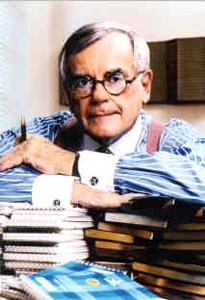
Geschreven door Romenu om 18:57 Reageer op dit bericht

Dominick Dunne, Aleksandr Zinovjev, Georg Engel, Jean Giraudoux, André Chénier

De Amerikaanse schrijver Dominick Dunne werd geboren op 29 oktober 1925 in Hartford, Connecticut. Zie ook mijn blog van 29 oktober 2008 en ook mijn blog van 29 oktober 2009 en ook mijn blog van 29 oktober 2010


 Uit: Another City, Not My Own


„Certainly, there are enough references to his obliteration in his journal in the months before he was found dead in the media room of his country house in Prud'homme, Connecticut, where he had been watching the miniseries of one of his novels, A Season in Purgatory. The book was about a rich young man who got away with murder because of the influence of his prominent and powerful father. Getting away with murder was a relentless theme of Gus Bailey's. He was pitiless in his journalistic and novelistic pursuit of those who did, as well as of those in the legal profession who created the false defenses that often set their clients free. That book, the miniseries of which he was watching, had brought Gus Bailey and the unsolved murder in Greenwich, Connecticut, which, to avoid a libel suit, he had renamed Scarborough Hill, a great deal of notoriety at the time of its publication, resulting in the reopening of the murder case by the police. Gus had fervently believed that the case remained unsolved because the police had been intimidated by the power and wealth of the killer's family, which extended all the way to the highest office in the land.
"It was exactly the same thing in the Woodward case," said Gus, who had written an earlier novel about a famous society shooting in the aristocratic Woodward family on Long Island in the fifties called The Two Mrs. Grenvilles. "The police were simply outdazzled by the grandeur of Elsie, whom I called Alice Grenville, and Ann Woodward got away with shooting her husband."
As always, when Gus's passions were involved in his writing, he ruffled feathers. Powerful families became upset with him. He created enemies.
"You seem to have annoyed a great many very important people," said Gillian Greenwood of the BBC, as a statement not a question, in the living room of Gus Bailey's New York penthouse, where she was interviewing him on camera for a documentary on his life called The Trials of Augustus Bailey“.


1021091-aa1a120802f37364d398d6801bbcf252.jpg 

Dominick Dunne (29 oktober 1925 - 26 augustus 2009)


De Russische schrijver en wetenschapsfilosoof Aleksandr Aleksandrovitsj Zinovjev  werd geboren in Pachtino op 29 oktober 1922. Zie ook mijn blog van 29 oktober 2010 en eveneens alle tags voor Aleksandr Zinovjev op dit blog.


Uit: Global Suprasociety and Russia (Vertaald door Helen Shelestiuk)


„I will not expand on the desperate situation, in which Russia and the Russians found themselves as a result of the crisis in their history, which happened after 1985. This information is already known from numerous sources. But there still remains a shroud of secrecy over the fact that that situation did not happen merely as a result of untoward historical developments, but had been diligently planned by certain forces in the West and artificially imposed on the Russians. That condition is the consequence of one of the greatest tragedies in the social history of mankind. The tragedy which began in the mid 1980s may with high probability have a fatal end for Russia, but I do not count on my ability to turn the course of history and ward off this end. This may only be done by a great effort of millions of people, by persistent struggle and self-sacrifice. I am moved by the call of duty of a Russian person, who sees the tragic outcome of the Russian history and thinks it criminal to keep silence.
Actual historical developments are always a combination of two processes: 1) 'elemental', unplanned and uncontrolled; 2) conscious-volitional, planned and controlled. Their proportions and roles vary with certain limitations. The domination of the second type will lead to a situation, when the general line of development is monitored, and only less important components may be out of control.

If we intend to give a scientific description of these processes, we will require quite different methodologies and sets of concepts. 'Elemental', natural processes are described with the concepts and postulates of dialectic. For the conscious-volitional processes we would need a different methodology, based on the knowledge of what social plans (projects) are, how and why they are created, how they are executed, and by what rules. Though this other methodology does not exclude dialectic, it implies an essentially different focus of attention while examining social objects.”


 1021091-9e79c423238f9a9b966748584709efd8.jpg

Aleksandr Zinovjev (29 oktober 1922 - 10 mei 2006)

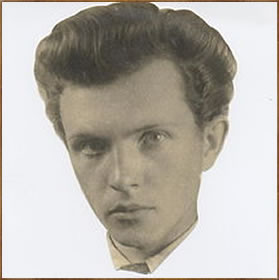
In 1938 


De Duitse schrijver Georg Julius Leopold Engel werd geboren op 29 oktober 1866 in Greifswald.

Zie ook mijn blog van 29 oktober 2008 en ook mijn blog van 29 oktober 2010


Uit: Hann Klüth


„Doch ohne darauf zu achten, kaute der Lotse eine Zeitlang begierig weiter, dann spie er den Tabak wieder aus und schüttelte so mutlos das Haupt, daß die schweißnassen grauweißen Locken ihm struwlig über die Stirn fielen. – »Ne, Mudding,« stöhnte er und sank zusammen – »es wird nichts mehr. Fünfzig Jahre hab ich ihm nu gekaut. Und seit vier Tagen will's nich mehr – kuck' – das is ein Zeichen vom lieben Gott.«

»Ja, ja, was wollt's nich?« nickte die kleine, ältliche Frau und faltete wieder zerknirscht die Hände. Darauf strickte sie, wie erschreckt, an dem grauen Strumpf weiter.

Dicht unter den Fenstern des Lotsenhäuschens lag zur selben Zeit eine kleine Jacht am Bollwerk angeschlossen. Sie war von oben bis unten mit Kartoffeln beladen und gehörte Johann Christian Petersen. Wenigstens stand sein Name in goldenen Buchstaben vorne an der Schiffswand. Aber der eigentliche Kapitän des Fahrzeuges war Frau Dörthe Petersen, die eben in ihrer Küchenkajüte einen Eierkuchen gebacken hatte und nun von der Steuerbordseite aus der kleinen Line, die am Bollwerk stand, ein großes Stück heraufreichte.

In der bloßen Hand. Aber das schadete nichts.

»Nu iß, mein Döchting,« sagte die starkknochige Frau, die mit nackten Füßen und hochaufgeschürzt herumging, denn aus dem kleinen Schiff wurden von zwei halberwachsenen, strohblonden Söhnen der Frau Dörthe ununterbrochen Kartoffeln über das Landungsbrett gekarrt und draußen in Säcke gefüllt. Wenn es zu langsam ging, dann sprang Frau Dörthe selbst entschlossen hinzu, um ihren beiden Sprossen je einen freundlich-aufmunternden Puff unter die Rippen zu versetzen.

»Au, Mudding, das tut jo weh!«

»Das soll es ja auch. – Man immer zu.«

Und das Karren ging weiter.

So hielt sie alles im Gang. Nur ihr Mann hockte in einem braunen, fellartigen Anzug auf dem Kajütendach und spielte, ohne sich um etwas zu kümmern, die Handharmonika.“


 1021091-dbfe0d2ef72b8d430aeb12f4a4f3384d.jpg

Georg Engel (29 oktober 1866 – 19 oktober 1931)

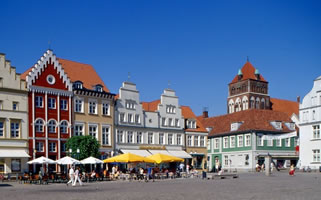
Greifswald, Markt (Geen portret beschikbaar)


De Franse schrijver, toneelauteur en beroepsdiplomaat Jean Giraudoux werd geboren op 29 oktober 1882 in Bellac/Haute-Vienne. Zie ook mijn blog van 29 oktober 2006 en ook mijn blog van 29 oktober 2008 en ook mijn blog van 29 oktober 2010


Uit: Electre


“EGISTHE . Il n'est pas deux façons de faire signe, président, c'est de se séparer de la troupe, monter sur une éminence, et agiter sa lanterne ou son drapeau. On trahit la terre comme on trahit une place assiégée, par des signaux. Le philosophe les fait de sa terrasse, le poète ou le désespéré les fait, de son balcon ou de son plongeoir. Si les Dieux, depuis dix ans n'arrivent point à se mêler de notre vie, c'est que j'ai veillé à ce ce que les promontoires soient vides est les champs de foire combles, c'est que j'ai ordonné le mariage des rêveurs, des peintres et des chimistes ; c'est que, pour éviter de créer entre nos concitoyens ces différences de race morale qui ne peuvent manquer de colorer différemment le hommes aux yeux des Dieux, j'ai toujours feint d'attribuer une importance énorme aux délits et dérisoire aux crimes. Rien n'entretient mieux la fixité divine que la même atmosphère égale autour des assassinats et des vols de pain . Je dois reconnaître que sur ce point, la justice des tribunaux m'a abondamment secondé. Et toutes les fois où j'ai été obligé de sévir, de là haut on ne l'a point vu. Aucune de mes sanctions n'a été assez voyante pour permettre aux Dieux l'ajustement de leur vengeance. Pas d'exil. Je tue. L'exilé a la même tendance à grimper les chemins escarpés que la coccinelle. Et je ne monte pas mes supplices en évidence. Alors que nos pauvres villes voisines se trahissent elles-mêmes en érigeant leur gibet au faîte des collines, moi je crucifie au fond des vallées. Et maintenant, j'ai tout dit sur Electre..”.


 1021091-f096a5ae59965899cf4390b4cc02befc.jpg

Jean Giraudoux (29 oktober 1882 -  31 januari 1944)


De Franse dichter André Chénier (eigentlich André Marie Chénier ofde Chénier) werd geboren op 29 oktober 1762 in Galata bij Constantinopel. Zie ook mijn blog van 29 oktober 2008 en ook mijn blog van 29 oktober 2010


A Fanny (I)


Non, de tous les amants les regards, les soupirs
Ne sont point des pièges perfides.
Non, à tromper des coeurs délicats et timides
Tous ne mettent point leurs plaisirs.
Toujours la feinte mensongère
Ne farde point de pleurs, vains enfants des désirs,
Une insidieuse prière.

Non, avec votre image, artifice et détour,
Fanny, n'habitent point une âme ;
Des yeux pleins de vos traits sont à vous. Nulle femme
Ne leur paraît digne d'amour.
Ah ! la pâle fleur de Clytie
Ne voit au ciel qu'un astre ; et l'absence du jour
Flétrit sa tête appesantie.

Des lèves d'une belle un seul mot échappé
Blesse d'une trace profonde
Le coeur d'un malheureux qui ne voit qu'elle au monde.
Son coeur pleure en secret frappé,
Quand sa bouche feint de sourire.
Il fuit ; et jusqu'au jour, de son trouble occupé,
Absente, il ose au moins lui dire

Fanny, belle adorée aux yeux doux et sereins,
Heureux qui n'ayant d'autre envie
Que de vous voir, vous plaire et vous donner sa vie,
Oublié de tous les humains,
Près d'aller rejoindre ses pères,
Vous dira, vous pressant de ses mourantes mains
Crois-tu qu'il soit des coeurs sincères ?


 1021091-357ffb3868b77f592aced188c5b8577d.jpg

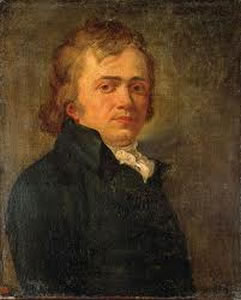
André Chénier (29 oktober 1762 – 25 juli 1794)

Anoniem, Musée de Carnavalet, Parijs

Geschreven door Romenu om 18:52 Reageer op dit bericht

Meer van Romenu

↑ Terug naar de berichten