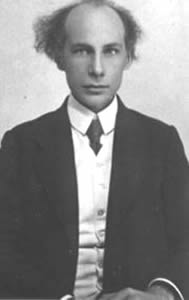
Jan Wolkers, Marja Pruis, Andrew Motion, Maartje Wortel Stephen L. Carter, Karin Boye
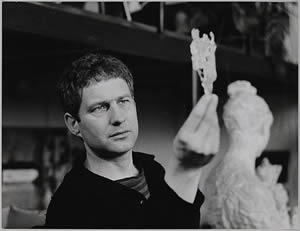
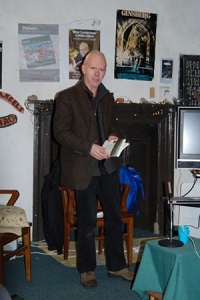
De Nederlandse dichter, schrijver en beeldend kunstenaar Jan Wolkers werd geboren in Oegstgeest op 26 oktober 1925. Zie ook mijn blog van 26 oktober 2010 en eveneens alle tags voor Jan Wolkers op dit blog.
Uit: Kort Amerikaans
‘Ik hoef niet langer alleen te zijn. Eindelijk heb ik een vrouw gevonden voor wie ik mijn hoofd niet af hoef te wenden uit angst dat ze mijn geschonden gelaat zal zien, die me niet zal verlaten omdat ik haar van te voren gezegd heb dat het onmogelijk is. Dat je met zo iemand als ik ben niet getrouwd kan zijn.’ En, doelend op het schilderij waarop het litteken was aangebracht, denkt hij verder: ‘Voordat we elkaar gezien hadden hebben ze al geprobeerd het onmogelijk te maken tussen ons. Ze hebben je voor mij gewaarschuwd, je laten zien, hoe ik getekend ben.’
(…)
‘Als jij aan je ouders en je broers en je zusters evenveel liefde gaf als aan die koudbloedige dieren, dan zou het nog niet zo slecht met je aflopen. Die beesten zit je maar te knuffelen en te bevingeren en ons doe je niets dan het leven zuur maken. Als jij ooit nog een vrouw krijgt mag ze wel Jobs geduld en Salomo's wijsheid hebben.’ De getekende is de vervloekte. Op bladzijde 50 voegt de vader Erik toe: ‘Jij gaat naar het gesticht, ik zal je morgen weg laten halen! Van de duivel ben je bezeten! Jou wacht het eeuwig vuur. Ontaard kind! Laag en gemeen ben je!’
(…)
‘Gesteld dat u zo'n sigaret had en die aan mij verkocht. Goed, ik stop hem bij mij en thuis geef ik hem aan mijn broer. Die is daar heel blij mee en gaat hem meteen op roken. Maar de volgende dag heeft hij een dikke keel. Hij kan zijn mond niet meer opendoen want taaie slijmdraden zitten aan de binnenkant over zijn mond geplakt. Dan moet hij naar het ziekenhuis waar hij op een afschuwelijke manier sterft. Maar voor hij doodgaat zie ik hem voor het laatst. Ik mag niet bij hem komen want het is erg besmettelijk. Ik kan hem alleen achter glas zien als een vis in een aquarium. Voor hij sterft steekt hij zijn arm naar mij omhoog en balt zijn vuist. Dan spreidt hij twee vingers, zoals je doet om er een sigaret tussen te houden en maakt een gebaar van roken. Daarna valt hij terug in het kussen en is dood. Maar ik weet het, ik heb het teken verstaan. Ik ben zijn moordenaar op het spoor.Terwijl hij sprak brak het zweet door zijn huid naar buiten.’
Jan Wolkers (26 oktober 1925 – 19 oktober 2007)
De Nederlandse schrijfster en journaliste Marja Pruis werd geboren in Amsterdam op 26 oktober 1959. Zie ook alle tags voor Marja Pruis op dit blog.
Uit: Wandelaar en zwartziener Het debuut van Martinus Nijhoff
“Nijhoffs poëzie, met haar eigen idioom, klassieke vorm en suggestieve symboliek, nodigt uit tot dooddenken. ‘Een gedicht bestaat uit woorden, niet uit gedachten,’ waarschuwt de dichter in een voordracht over eigen werk, in 1935 (afgedrukt als inleiding op de bloemlezing Lees maar, er staat niet wat er staat, 1959). Hij vond dat je een gedicht moest ondergaan, zonder te proberen het in gedachten over te brengen. ‘Het verdraagt de overheveling niet.’ Om onmiddellijk hieraan toe te voegen: ‘Ik was me bewust dat ik dit uit een soort gemakzucht zei.’ Vervolgens gaat hij op zoek naar wat kenmerkend zou kunnen zijn voor de poëzie van zijn tijd, misschien zelfs voor die van hemzelf. En hij constateert dat de moderne dichters raadselachtiger zijn dan hun voorgangers, omdat zij niet meer bezig zijn hun gevoel direct op papier te storten. In tegendeel: zij construeren en componeren ‘korte stukjes geobjectiveerd leven’, en stellen daarbij hoge eisen aan de taal die, aldus Nijhoff, zuiverder en onderzoekender dan ooit wordt ingezet.
Met het oog op dat zuivere en onderzoekende helpt het om ‘De wandelaar’ een keer hardop te lezen. Het strakke rijmschema te proeven op de tong (Carolingen - zingen, Baudelaire - misère), langzaam mee te lopen met de archaische wendingen (‘Stil heeft mijn hart de daden sterven laten’, ‘Toen zich mijn handen tot geen daad meer hieven’), andermaal de raadselachtige openingsregel te beschouwen (‘Mijn eenzaam leven wandelt in de straten’) en de even raadselachtige slotregel (‘Stil mozaïkspel zonder perspectieven’). Niet een gedicht om ontmoedigend eerbiedig over te doen, maar wel één om je blijvend over te verbazen. Omdat het zonder een lyrische gevoelsuitstorting te zijn, een desolate indruk wekt.”

Marja Pruis (Amsterdam, 26 oktober 1959)
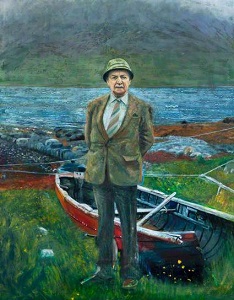
De Engelse dichter, schrijver en biograaf Andrew Motion werd geboren op 26 oktober 1952 in Braintree in Essex. Zie ook alle tags voor Andrew Motion op dit blog en ook mijn blog van 26 oktober 2010
Uit: Silver
“My Father’s Orders
In those days I did my father’s bidding. I would leave my bed at six o’clock
every morning, tiptoe past his door so as not to disturb his slumber, then set
to work as quietly as possible among the foul tankards, glasses, plates,
knives, gobs of tobacco, broken pipe-stems and other signs of interrupted
pleasure that awaited me in the taproom below. Only after an hour or so—when
everything had been made straight and the air was fresh again—could my father
be trusted to appear, cursing me for having made such an intolerable racket.
“Good Lord, boy” was his reliable greeting. “Must you dole out headaches
to the entire county?” He did not look in my direction as he asked this, but
slouched from the doorway to a freshly wiped table, and collapsed there with
both hands pressed to his temples. What followed was also always the same: I
must look sharp and fetch him a reviving shot of grog, then cook some rashers
of bacon and present them to him with a good thick slice of brown bread.
My father gulped his rum without so much as blinking, and chewed his meal
in silence. I see him now as clearly as I did then—almost forty years distant.
The flushed face, the tuft of sandy hair, the red-rimmed eyes—and melancholy
engulfing him as palpably as smoke surrounds a fire. At the time I thought he
must be annoyed by the world in general and me in particular. Now I suppose he
was chiefly frustrated with himself. His life had begun with adventure and
excitement, but was ending in the banality of repetition. His consolation—which
might even have been a positive pleasure—was to finish his breakfast by issuing
me with instructions he thought might keep me as unhappy as he felt himself.“

Andrew Motion (Braintree, 26 oktober 1952)
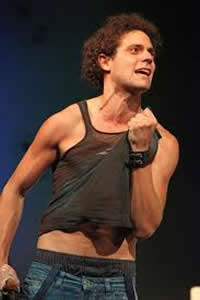
De Nederlandse schrijfster Maartje Wortel werd geboren in Eemnes op 26 oktober 1982. Zie ook alle tags voor Maartje Wortel op dit blog.
Uit: Half mens
“Hij dacht aan het meisje, haar huis, de rolstoel, dokter Manzini en aan zijn vele mislukte pogingen. Hij dacht aan papegaaien die net als mensen logisch kunnen redeneren. Hij dacht opnieuw aan alle mislukte pogingen en toen kwam hij klaar, spuitend over de badkamervloer en het gereedschap in de badkuip. Het gereedschap hielp niets, het masturberen hielp niet, alles was zoals het was en zo bleef het. Met zijn broek nog op zijn enkels liep hij naar de woonkamer, dat ging verdomde moeilijk en dat kon hem niet schelen. Hij pakte de luchtbuks, overwoog dat hele ding leeg te schieten op zijn muur, de bank, alle planten. Maar de buren, dan had je de buren. Ze zouden denken dat hij gek was. hij was niet gek. hier stond hij; een man die reclame maakte voor anderen, die wist hoe zijn dagen gingen, iemand die steeds verder weg was gevlucht van wie hij zelf was. Hier stond hij dan op de derde verdieping in zijn ruimte woonkamer bij het raam met zijn broek op zijn enkeles en zijn lul in half stijve toestand. Je leeft, je werkt, je vertrekt iedere ochtend met een taxi naar de Summer Factory, waar je typt, knikt, lacht lunch en de lift pakt, je werk zit erop, je gaat naar huis, je leest, je kijkt documentaires over de natuur, de mens, het leven, technologie, je verhuist steeds opnieuw wanneer je uitgevlucht bent, en alles wat er van je wordt is een man met zijn broek op zijn enkels.”

Maartje Wortel (Eemnes, 26 oktober 1982)
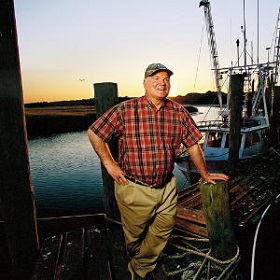
De Amerikaanse schrijver Stephen L. Carter werd geboren op 26 oktober 1954 in Washington, D.C. Zie ook alle tags voor Stephen L. Carter op dit en ook mijn blog van 26 oktober 2010
Uit: The Violence of Peace
“The election of Barack Obama, according to critics and admirers alike, ushered in a new era in American foreign policy. Perhaps. But it did not usher in a new era in American warfare. Under Obama, we fight in much the same way that we did under his predecessor—for similar reasons, with similar justifications. Strip away the soaring rhetoric and you begin to discover what probably we should have known from the start: When it comes to war, presidents do what they think they must.
Obama might have run in 2008 as the peace candidate, but next time around he will be running as a war president. This simple truth cannot be avoided. Although the next presidential election will doubtless feature bitter disputes over domestic policy, it will also be a referendum on Obama as commander in chief of the mightiest armed forces on the face of the globe.
Surely a degree of Barack Obama’s electoral victory was due to his successful effort to persuade voters that he was a builder of bridges. It even looks as if he has; not in domestic policy, which remains as polarized as ever, but in his approach to war. True, there were people on the left and right alike who thought that America had elected an antiwar president, but that simply turned out not to be true. Rather, the nation elected a president in the tradition of American wartime leaders: a man ultimately willing, whether or not it was his original intention, to sacrifice idealism for pragmatism in pursuit of his primary duty of keeping the nation safe.”

Stephen L. Carter (Washington, 26 oktober 1954)
De Zweedse dichteres en schrijfster Karin Maria Boye werd geboren op 26 oktober 1900 in Göteborg. Zie ook alle tags voor Karin Boye op dit en ook mijn blog van 26 oktober 2010
WALPURGIS NIGHT
At last I stand near the mountain of the
fates.
All around like stormclouds crowd formless beings, creatures of the twilight,
black-winged,
phosphorous-eyed.
Shall I stay? Shall I
go? The road lies dark.
If I stay peacefully here at the
foot of the mountain,
then no one will touch me.
Calmly I can see their struggle like a play of the mist in the air, myself
merely a lost eye.
But if I go, if I go,
then I shall know nothing more.
For the one who takes those steps
life becomes legend.
Myself fire
I shall ride on coiling snakes of fire.
Myself wind
I shall fly on winged wind-dragons.
Myself nothing,
myself lost in the storm
I shall fling myself forth dead or living, a fate future-heavy.
Vertaald door David McDuff
The tree under the earth
There grows a tree under the earth;
a mirage pursues me,
a song of living glass, of burning silver.
Like darkness before light
all weight must melt
when only one drop falls fom the song of the leaves.
An anguish pursues me.
It trickles out of the earth.
A tree suffers agonies in the heavy stratum of the earth.
Oh wind! Sunlight!
Feel that agony:
the promise of scent of paradise wonders.
Where are you wandering, feet, that trample
so soft or hard,
that the crust fragments and gives up its booty?
For the tree's sake, have pity!
For the tree's sake, have pity!
For the tree's sake I'm calling you from the four points of the compass!
Or must we wait for a god - and which?
Vertaald door Michael Peverett

Karin Boye (26 oktober 1900 – 24 april 1941)
Standbeeld in Huddinge
Zie voor nog meer schrijvers van de 26e oktober ook mijn vorige
blog van vandaag.