Dolce far niente, Alfred Tomlinson, Lucebert, Jan Slauerhoff, Chimamanda Ngozi Adichie, Agatha Christie, Orhan Kemal, Gunnar Ekelöf
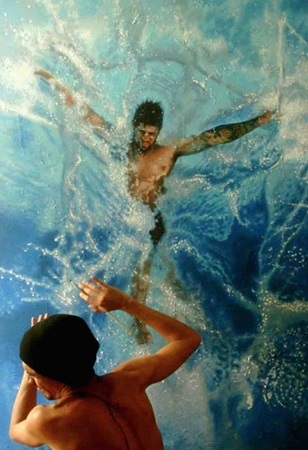
Dolce far niente
Gustavo Silva Nuñez poseert voor een door hem geschilderde zwemmer, 2015.
Swimming Chenango Lake
Winter will bar the swimmer soon.
He reads the water’s autumnal hestitations
A wealth of ways: it is jarred,
It is astir already despite its steadiness,
Where the first leaves at the first
Tremor of the morning air have dropped
Anticipating him, launching their imprints
Outwards in eccentric, overlapping circles.
There is a geometry of water, for this
Squares off the clouds’ redundances
And sets them floating in a nether atmosphere
All angles and elongations: every tree
Appears a cypress as it stretches there
And every bush that shows the season,
A shaft of fire. It is a geometry and not
A fantasia of distorting forms, but each
Liquid variation answerable to the theme
It makes away from, plays before:
It is a consistency, the grain of the pulsating flow.
But he has looked long enough, and now
Body must recall the eye to its dependence
As he scissors the waterscape apart
And sways it to tatters. Its coldness
Holding him to itself, he grants the grasp,
For to swim is also to take hold
On water’s meaning, to move in its embrace
And to be, between grasp and grasping, free.
He reaches in-and-through to that space
The body is heir to, making a where
In water, a possession to be relinquished
Willingly at each stroke. The image he has torn
Flows-to behind him, healing itself,
Lifting and lengthening, splayed like the feathers
Down an immense wing whose darkening spread
Shadows his solitariness: alone, he is unnamed
By this baptism, where only Chenango bears a name
In a lost language he begins to construe —
A speech of densities and derisions, of half-
Replies to the questions his body must frame
Frogwise across the all but penetrable element.
Human, he fronts it and, human, he draws back
From the interior cold, the mercilessness
That yet shows a kind of mercy sustaining him.
The last sun of the year is drying his skin
Above a surface a mere mosaic of tiny shatterings,
Where a wind is unscaping all images in the flowing obsidian,
The going-elsewhere of ripples incessantly shaping.
Alfred Tomlinson (8 januari 1927 – 22 augustus 2015)
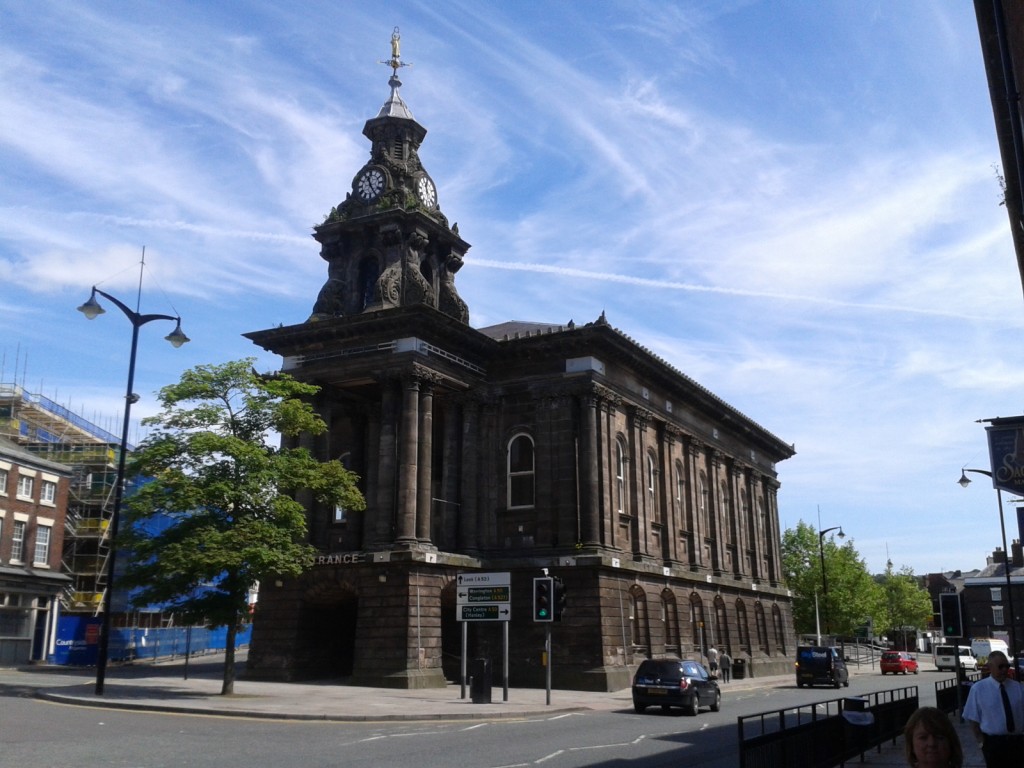
Stoke-on-Trent, Old Town Hall. Alfred Tomlinson werd geboren in Stoke-on-Trent.
De Nederlandse dichter Lucebert werd in Amsterdam geboren op 15 september 1924 onder de naam Lubertus Swaanswijk. Zie ook mijn blog van 15 september 2010 en eveneens alle tags voor Lucebert op dit blog.
Pastorale
noodweer
weerlicht
de noodklep open
het sluimerraam dicht
dromen dromen zich dood
dodekop tooit zich
in het zwarte zwerk
vlekken bleekmiddel
het skelet kraakt
een aangebrande wolk
een blaar een sudderlap
aan de slapen
druif van droefenis
de versteende vissen
beitel die uit de bedding
terwijl gier fluistert
blaas op de holle blik
met het laatste zoeklicht
de stilte stilt het tempeesten
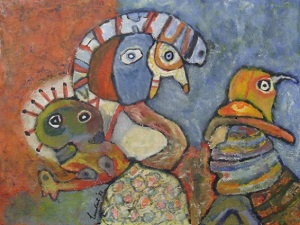
Lucebert: Hond & Kat III, 1988
arp
tegen de polsslag van het steen
klopt de gedachte van de hand
ritselt de rokzoom van trottoirs
ademen rotsen over mij heen
staat de oxyde der zee
op de brandbreekbare ogen der aarde
dwars door mijn mond door
breekt het harde gat van gebaar
en mijn stem wenkt
stilte galoppeer maar
geen gewicht dat meer denkt
zo
ben ik tot over mijn oren verloofd met het licht
het licht koopt mij op
loopt op mijn tred mijn hals mijn haar
een mars van mens
de echte mens die wenst
stilte galoppeer maar
door de verstilde galoppade
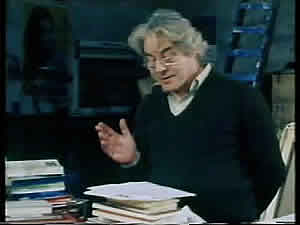
Lucebert (15 september 1924 - 10 mei 1994)
De Nederlandse dichter en schrijver Jan Jacob Slauerhoff werd geboren in Leeuwarden op 15 september 1898. Zie ook mijn blog van 15 september 2010 en eveneens alle tags voor Jan Slauerhoff op dit blog.
De Vluchtelinge
Soms weent zij uit: dat zij niet meer kan blijven
Onbevlekte in verblijven, waar bedreigen
Haar offerpijn en floers, waaronder lijven
Den Dienst der wrede liefkozing bedrijven.
'k Geloof haar niet, maar neem haar lijfsgewaden.
Nog naakt vernederd, smeekt zij de genade
Te mogen gaan. Ik spot: ‘Ga zo, mijn gade!’
En sliep in zekerheid... Zij is gaan waden
Door diepe sneeuw en zich aan kuis ijs wonden.
Zij dacht rechtuit te vluchten, liep een ronde:
Des morgens aan een muur is zij gevonden,
Teruggedragen binnen mijn verblijven,
Waar maagden haar bevrozen leden wrijven,
Hervoorbereiden voor het feest der lijven.
De dagen gaan
De dagen gaan langs de aarde, lange horden -
Nooit is de zon 't vermeêren moe geworden.
Een koning sterft, godslasterend, meinedig -
Nooit bleef een onbezette zetel ledig.
Volksplantingen geraken in versterf -
Reeds bloeien schonere uit hun bederf,
Weer ondergaand met zinkende getijen.
Nu is de tijd voor oude heerschappijen;
Vermolmde staten wanklen - de Commune
Zal rustig rijzen uit de roeste ruïne
En zal een rijk zijn van de ganse aarde:
Herberg voor volkeren, verlost van wallen,
Bewoners van de veilge hemelhallen
En in de ogen Gods gelijk van waarde.
Herfstwind
Herfstwind verdrijft de witte wolken,
Ganzen trekken langs het lege zwerk,
Nog geuren chrysanten en bloeien orchideeën,
Kon ik mijn vroeger lief nu vergeten,
Bijna was ik gelukkig,
Met mijn bloemenboot op de Fen-rivier,
Wit schuimt de stroom langs de boeg,
Fluit en trom houden maat met de riemslag,
Onder 't rumoer broeden sombre gedachten,
Jeugd jaagt voorbij, dood staat onwrikbaar.
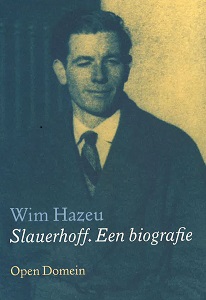
Jan Slauerhoff (15 september 1898 – 5 oktober 1936)
Cover biografie
De Nigeriaanse schrijfster Chimamanda Ngozi Adichie werd geboren op 15 september 1977 in Enugu. Zie ook mijn blog van 15 september 2010 en eveneens alle tags voor Chimamanda Ngozi Adichie op dit blog.
Uit: Americanah
“It’s too tight,” Ifemelu said. “Don’t make it tight.” Because Aisha kept twisting to the end, Ifemelu thought that perhaps she had not understood, and so Ifemelu touched the offending braid and said, “Tight, tight.”
Aisha pushed her hand away. “No. No. Leave it. It good.”
“It’s tight!” Ifemelu said. “Please loosen it.”
Mariama was watching them. A flow of French came from her. Aisha loosened the braid.
“Sorry,” Mariama said. “She doesn’t understand very well.”
But Ifemelu could see, from Aisha’s face, that she understood very well. Aisha was simply a true market woman, immune to the cosmetic niceties of American customer service. Ifemelu imagined her working in a market in Dakar, like the braiders in Lagos who would blow their noses and wipe their hands on their wrappers, roughly jerk their customers’ heads to position them better, complain about how full or how hard or how short the hair was, shout out to passing women, while all the time conversing too loudly and braiding too tightly.
“You know her?” Aisha asked, glancing at the television screen.
“What?”
Aisha repeated herself, and pointed at the actress on the screen.
“No,” Ifemelu said.
“But you Nigerian.”
“Yes, but I don’t know her.”
Aisha gestured to the pile of DVDs on the table. “Before, too much voodoo. Very bad.
Now Nigeria film is very good. Big nice house!”
Ifemelu thought little of Nollywood ɹlms, with their exaggerated histrionics and their improbable plots, but she nodded in agreement because to hear “Nigeria” and “good” in the same sentence was a luxury, even coming from this strange Senegalese woman, and she chose to see in this an augury of her return home.”
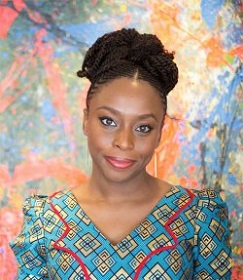
Chimamanda Ngozi Adichi (Enugu, 15 september 1977)
De Britse schrijfster Agatha Christie werd geboren in Torquay (Devon) op 15 september 1890. Zie ook mijn blog van 15 september 2010 en eveneens alle tags voor Agatha Christie op dit blog.
Uit: The Tuesday Night Club
'Unsolved mysteries.'
Raymond West repeated the words with a kind of deliberate self-conscious pleasure.
'Unsolved mysteries.'
He looked round him with satisfaction. The room was an old one with broad black beams across the ceiling and it was furnished with good old furniture that belonged to it. Hence Raymond West's approving glance. By profession he was a writer and he liked the atmosphere to be flawless. His Aunt Jane's house always pleased him as the right setting for her personality. He looked across the hearth to where she sat erect in the big grandfather chair.
'That's not what I mean. I was not talking philosophy,' Raymond said. 'I was thinking of actual bare prosaic facts, things that have happened and that no one has ever explained.'
'I know just the sort of thing you mean, dear,' said Miss Marple. 'For instance, Mrs. Carruthers had a very strange experience yesterday morning. She bought two gills of pickled shrimps at Elliot's. She called at two other shops and when she got home she found she had not got the shrimps with her. She went back to the two shops she had visited but these shrimps had completely disappeared. Now that seems to me very remarkable.'
'My dear Aunt,' said Raymond West with some amusement, 'I didn't mean that sort of village incident. I was thinking of murders and disappearances - the kind of thing that Sir Henry could tell us about by the hour if he liked.'
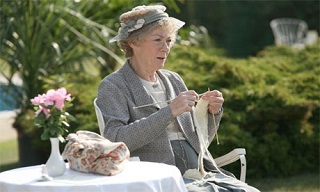
Agatha Christie (15 september 1890 – 12 januari 1976)
Geraldine McEwan als Miss Marple in de serie “Agatha Christie’s Marple”, 2007 - 2009
De Turkse schrijver Orhan Kemal (eig. Mehmet Raşit Öğütçü) werd geboren op 15 september 1914 in Ceyhan. Zie ook mijn blog van 15 september 2010 en eveneens alle tags voor Orhan Kemal op dit blog.
Uit: The Idle Years (Vertaald door Cengiz Lugal)
“I thought they were wonderful people, particularly the father. He talked about various matters, smoothed his thick moustache in an authoritative manner and swore frequently. Meanwhile Nejip’s sister laid out a dining-cloth across the floor, laid a chopping-board down on it, set down little flannels we would be using as napkins and brought in the bread-box. She did all this as if playing a little game, smiling now and then and revealing a sparkling gold tooth whenever she did so. I wondered who she
was smiling for: me or Gazi?
After we had eaten our meal, drunk our coffees and chatted about things of no consequence, we retired to the beds Nejip’s sister had made up for us. Our beds had been laid out side by side. All the bedding was spotlessly clean, expertly patched here and there and smelling of soap.
We climbed into our beds.
‘Ahhh…’ I sighed. ‘This is great!’
Gazi lifted his head up. ‘What? You mean the girl? I could get engaged to her immediately!’
I got very cross with him. ‘You unscrupulous…’
‘No, that’s what you are! Now, I know that if I don’t beat you to it…’
‘What?’
‘Come on, I saw you. Giving her all those leery looks.’
The next morning we had a marvellous breakfast and wandered down to Galata. The day passed.
‘Once the money from your aunt comes through,’ said Gazi the next day, ‘we can invite Nejip out.’
‘Yes, that’ll be good. We can take him out for a meal.’
‘To a decent place. With raki and proper meze.’
‘We’ll pay back Nevzat, too.’
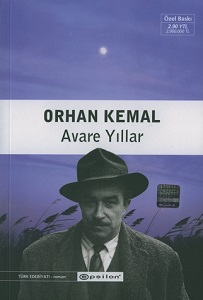
Orhan Kemal (15 september 1914 – 2 juni 1970)
Cover Turkse uitgave
De Zweedse dichter en schrijver Bengt Gunnar Ekelöf werd geboren op 15 september 1907 in Stockholm. Zie ook mijn blog van 15 september 2010 en eveneens alle tags voor Gunnar Ekelöf op dit blog.
Everyone is a world
Everyone is a world, peopled
by blind beings in dark commotion
against the self the king who rules them.
In every soul thousands of souls are trapped,
in every world thousands of worlds are hidden
and these blind, these underworlds
are real and living, though incomplete,
as true as I am real. And we kings
and princes of the thousand possibilities in us
are ourselves servants, trapped
in some greater creature, whose self and being
we grasp as little as our own superior
his superior. Our own feelings have taken
the color of their love and death.
As when a mighty steamship passes
far out, under the horizon, lying
in the evening glitter- - And we don’t know about it
until the swell reaches us on the shore,
first one, then another, and then many
which strike and boom until everything has become
as before. – Yet everything is different.
So we shades are troubled by a strange unease
When something tells us that others have gone ahead,
That some of the possibilities have been released.
Vertaald door L. Nathan en J. Larson
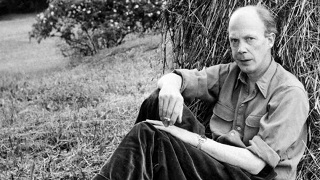
Gunnar Ekelöf (15 september 1907 – 16 maart 1968)
Zie voor nog meer schrijvers van de 15e september ook mijn blog van 15 september 2015 en ook mijn blog van 15 september 2013 deel 2.