Luisa Valenzuela, Eugène Ionesco, Marilynne Robinson, Louis Verbeeck, William Cowper, Theophilus Cibber
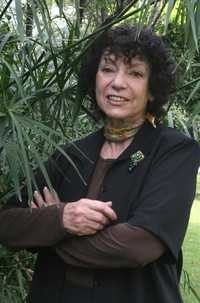
De Argentijnse schrijfster Luisa Valenzuela werd geboren op 26 november 1938 in Buenos Aires. Zie ook alle tags voor Luisa Valenzuela op dit blog.
Uit: I'm your horse in the night (Vertaald door Deborah Bonner)
« Cachaca's good drink. It goes down and up and down all the right tracks, and then stops to warm up the corners that need it most. Gal Costa's voice is hot, she envelops us in its sound and half-dancing, half floating, we reach the bed. We lie down and keep on staring deep into each other's eyes, continue caressing each other without allowing ourselves to give into the pure senses just yet. We continue recognizing, rediscovering each other.
Beto, I say, looking at him. I know that isn't his real name, but it's the only one I can call him out loud. He replied:
"We'll make it some day, Chiquita, but let's not talk now."
It's better that way. Better if he doesn't start talking about how we'll make it someday and ruin the wonder of what we're about to attain right now, the two of us, all alone.
"A noite eu so teu cavala," Gal Costa suddenly sings from the record player.
"I'm your horse in the night," I translate slowly. And so to bind him in a spell and stop him from thinking about other things:
"It's a saint's song, like in the macumba. Someone who's in a trance says she's the horse of the spirit who's riding her, she's his mount."
"Chiquita, you're always getting carried away with esoteric meanings and witchcraft. You know perfectly well that she isn't talking about spirits. If you're my horse in the night it's because I ride you, like this, see? …"
Luisa Valenzuela (Buenos Aires, 26 november 1938)
De Frans-Roemeense schrijver Eugène Ionesco werd geboren op 26 november 1912 in Slatina, Roemenië. Zie ook alle tags voor Eugène Ionesco op dit blog.
Uit: Fragments of a Journal Vertaald door Jean Stewart)
“Nothing is mightier than our why, nothing stands above it, because in the end there is a why to which no answer is possible. In fact, from why to why, from one step to the next, you get to the end of things. And it is only by travelling from one why to the next, as far as the why that is unanswerable, that man attains the level of the creative principle, facing the infinite, equal to the infinite maybe. So long as he can answer the why he gets lost, he loses his way among things. 'Why this?' I answer, 'because that," and from one explanation to the next I reach the point where no explanation is satisfying, from one explanation to the next I reach zero, the absolute, where truth and falsehood are equivalent, become equal to one another, are identified with one another, cancel each other out in face of the absolute nothing. And so we can understand how all action, all choice, all history is justified, at the end of time, by a final cancelling-out. The why goes beyond everything. Nothing goes beyond the why, not even the nothing, because the nothing is not the explanation; when silence confronts us, the question to which there is no answer rings out in the silence. That ultimate why, that great why is like a light that blots out everything, but a blinding light; nothing more can be made out, there is nothing more to make out.”
(…)
“If I tell these private thoughts of mine, it is because I know they are not mine alone, and that practically everyone is trying to say the same things and that the writer is only a man who says out loud what other people think or whisper.”
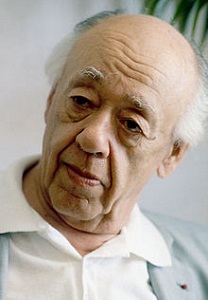
Eugène Ionesco (26 november 1912 – 28 maart 1994)
De Amerikaanse schrijfster Marilynne Robinson werd geboren in Sandpoint, Idaho op 26 november 1943. Zie ook alle tags voor Marilynne Robonson op dit blog.
Uit:Gilead
“I felt like telling them, I appreciate a joke as much as anybody. There have been many occasions in my life when I have wanted to say that. But it’s not a thing people are willing to accept. They want you to be a little bit apart. I felt like saying, I’m a dying man, and I won’t have so many more occasions to laugh, in this world, at least. But that would just make them serious and polite, I suppose. I’m keeping my condition a secret as long as I can. For a dying man I feel pretty good, and that is a blessing. Of course your mother knows about it. She said if I feel good maybe the doctor is wrong. But at my age there’s a limit to how wrong he can be.
And what else should I tell you? I’ll tell you about my grandfather. He was a chaplain in the Union Army. He lost an eye at the battle of Wilson’s Creek, on the day of the death of General Lyon. I do wish you could have known him. It was as if that one good eye of his were somehow ten times an eye. He could make me feel as though he had poked me with a stick, just by looking at me. Not that he meant any harm to speak of. He was just afire with old certainties, and he couldn’t bear all the patience that was required of him by the peace and by the aging of his body and the forgetfulness that had settled over everything. He thought we should all be living at a dead run. I don’t say he was wrong. That would be like contradicting John the Baptist. There is a photograph of my grandfather around the house somewhere. It is a good likeness. It shows a wild-haired, one-eyed, scrawny old fellow with a crooked beard, like a paintbrush left to dry with lacquer in it, staring down the camera as if it had accused him of something terrible, very suddenly, and he is still thinking how to reply, and keeping the question at bay with the sheer ferocity of that stare. Of course there is guilt enough in the best life to account for a look like that.”
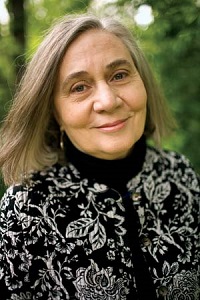
Marilynne Robinson (Sandpoint, 26 november 1943)
De Vlaamse dichter en schrijver Louis Verbeeck werd geboren in Tessenderlo op 26 november 1932. Zie ook alle tags voor Louis Verbeeck op dit blog.
Zenobia
Voor Jan Engelman
Zenobia, gij loeit mij aan.
Ik zie u in de weide staan
van liefde rood te blozen.
Gij staart mistroostig in het rond
en traag beweegt uw moedermond.
Er is nu melk in dozen.
De boter wijkt voor margarien.
Gij hangt niet meer in de vitrien.
Men maalt u tot konserven.
Gedaan met alle tederheid
Men melkt met electriciteit.
Uw koedom ligt aan scherven.
Daarom zijt gij zo droef van zin
en blinkt er bleke weemoed in
de toendra's van uw ogen.
O kijk, een gouden tranendreef.
Kom, dat ik u mijn zakdoek geef
om ze wat af te drogen.
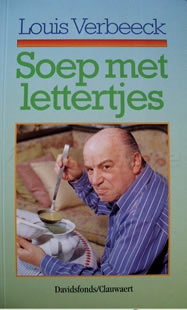
Louis Verbeeck (Tessenderlo, 26 november 1932)
Cover
De Engelse dichter William Cowper werd geboren op 26 november 1731 in Berkhamstead, Herford. Zie ook alle tags voor William Cowper op dit blog.
Abuse Of The Gospel
Too many, Lord, abuse Thy grace
In this licentious day,
And while they boast they see Thy face,
They turn their own away.
Thy book displays a gracious light
That can the blind restore;
But these are dazzled by the sight,
And blinded still the more.
The pardon such presume upon,
They do not beg but steal;
And when they plead it at Thy throne,
Oh! where's the Spirit's seal?
Was it for this, ye lawless tribe,
The dear Redeemer bled?
Is this the grace the saints imbibe
From Christ the living head?
Ah, Lord, we know Thy chosen few
Are fed with heavenly fare;
But these, -- the wretched husks they chew,
Proclaim them what they are.
The liberty our hearts implore
Is not to live in sin;
But still to wait at Wisdom's door,
Till Mercy calls us in.
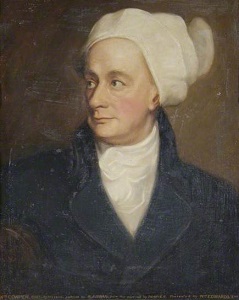
William Cowper (26 november 1731 – 25 april 1800)
Portret door Robert John Swan, 1900
De Engelse schrijver en acteur Theophilus Cibber werd geboren op 26 november 1703 in Londen. Zie ook alle tags voor Theophilus Cibber op dit blog.
Uit: The Lives of the Poets of Great Britain and Ireland (William Shakespeare)
“There have been some ages in which providence seemed pleased in a most remarkable manner to display it self, in giving to the world the finest genius's to illuminate a people formerly barbarous. After a long night of Gothic ignorance, after many ages of priestcraft and superstition, learning and genius visited our Island in the days of the renowned Queen Elizabeth. It was then that liberty began to dawn, and the people having shook off the restraints of priestly austerity, presumed to think for themselves. At an Æra so remarkable as this, so famous in history, it seems no wonder that the nation would be blessed with those immortal ornaments of wit and learning, who all conspired at once to make it famous.----This astonishing genius, seemed to be commissioned from above, to deliver us not only from the ignorance under which we laboured as to poetry, but to carry poetry almost to its perfection. But to write a panegyric on Shakespear appears as unnecessary, as the attempt would be vain; for whoever has any taste for what is great, terrible, or tender, may meet with the amplest gratification in Shakespear; as may those also have a taste for drollery and true humour. His genius was almost boundless, and he succeeded alike in every part of writing. I cannot forbear giving the character of Shakespear in the words of a great genius, in a prologue spoken by Mr. Garrick when he first opened Drury-lane house as Manager.”
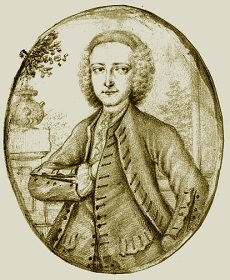
Theophilus Cibber (26 november 1703 - oktober 1758)
Zie voor nog meer schrijvers van de 26e november ook mijn blog van 26 november 2011.