Naar de inhoud

Romenu

Over literatuur, gedichten, kunst en cultuur
seniorennet.beseniorennet.be

Berichten van 13 maart 2016

Am fünften Sonntag in der Fasten (Annette von Droste-Hülshoff )


Bij de vijfde zondag van de vasten


 1889650-74e73dd263eba4fd8d6dddc1b0e20227.jpg
Jezus bij Pontius Pilatus door Mihály Munkácsy, 1881


Am fünften Sonntag in der Fasten
Evang.: Die Juden wollen Jesum steinigen

Die Propheten sind begraben,
Abraham ist tot!
Millionen Greis' und Knaben
Und der Mägdlein rot,
Viele, die mir Liebe gaben,
Denen ich sie bot:
Alle, alle sind begraben,
Alle sind sie tot!

Herr, du hast es mir verkündet,
Und dein Wort steht fest,
Daß nur der das Leben findet,
Der das Leben läßt.
Ach, in meiner Seele windet
Es sich dumpf gepreßt;
Doch du hast es mir verkündet,
Und dein Wort steht fest.

Aber von mir selbst bereitet
Leb' ich oft der Pein;
Alles scheint mir wohl geleitet,
Und der Mensch allein,
Der dein Ebenbild bedeutet,
Jammervoll zu sein;
Sieh, so hab' ich mir bereitet
Namenlose Pein.

Hab' ich grausend es empfunden,
Wie in der Natur
An ein Fäserchen gebunden,
Eine Nerve nur,
Oft dein Ebenbild verschwunden
Auf die letzte Spur:
Hab' ich keinen Geist gefunden,
Einen Körper nur!

Seh' ich dann zu Staub zerfallen,
Was so warm gelebt,
Ohne daß die Muskeln wallen,
Eine Nerve bebt,
Da die Seele doch an allen
Innig fest geklebt:
Möcht' ich selbst zu Staub zerfallen,
Daß ich nie gelebt!

Schrecklich über alles Denken
Ist die dumpfe Nacht,
Drin sich kann ein Geist versenken,
Der allein gedacht,
Der sich nicht von dir ließ lenken,
Helle Glaubensmacht!
Ach, was mag der Finstre denken,
Als die finstre Nacht?

Meine Lieder werden leben,
Wenn ich längst entschwand:
Mancher wird vor ihnen beben,
Der gleich mir empfand.
Ob ein Andrer sie gegeben,
Oder meine Hand:
Sieh, die Lieder durften leben,
Aber ich entschwand!

Bruder mein, so laß uns sehen
Fest auf Gottes Wort!
Die Verwirrung wird vergehen,
Dies lebt ewig fort.
Weißt du, wie sie mag entstehen
Im Gehirne dort?
Ob wir einst nicht lächelnd sehen
Der Verstörung Wort?

Wie es hing an einem Faden,
Der zu hart gespannt,
Mit entflammtem Blut beladen,
Sich der Stirn entwand?
Flehen wir zu Gottes Gnaden,
Flehen zu seiner Hand,
Die die Fädchen und die Faden
Liebreich ausgespannt!


 1889650-34bbf1340a3cc594b12d86f84c8aecf4.jpg
Annette von Droste-Hülshoff (10 januari 1797 – 24 mei 1848)
Altaar in de kapel van Burg Hülshoff


Zie voor de schrijvers van de 13e maart ook mijn vorige drie blogs van vandaag.


Geschreven door Romenu om 13:57 Reageer op dit bericht

Mahmoud Darwish, Yuri Andrukhovych, Vladimir Makanin, Didier Decoin, Melih Cevdet Anday

De Palestijnse dichter Mahmoud Darwish werd geboren in Al-Birwa, Palestina, op 13 maart 1941. Zie ook alle tags voor Mahmoud Darwish op dit blog.


Other Berbers Will Come

Other Berbers will come.
The emperor's wife will be abducted.
Drums will beat loudly.
Drums will beat so that horses
will leap over human bodies
from the Aegean Sea to the Dardanelles.
So why should we be concerned?
What do our wives have to do with horse racing?
The emperor's wife will be abducted.
Drums will beat loudly and other Berbers
will come.Berbers will fill the cities' emptiness,
slightly higher than the sea,
mightier than the sword in a time of madness.
So why should we be concerned?
What do our children have to do
with the children of this impudence?
Drums will beat loudly
and other Berbers will come.
The emperor's wife will be taken
from his bedroom. From his bedroom
he will launch a military assault
to return his bedmate to his bed.
Why should we be concerned?
What do fifty thousand victims
have to do with this brief marriage?
Can Homer be born after us . . .
and myths open their doors to the throng?


Here The Birds' Journey Ends

Here the birds' journey ends, our journey, the journey of words,
and after us there will be a horizon for the new birds.
We are the ones who forge the sky's copper, the sky that will carve roads
after us and make amends with our names above the distant cloud slopes.
Soon we will descend the widow's descent in the memory fields
and raise our tent to the final winds: blow, for the poem to live, and blow
on the poem's road. After us, the plants will grow and grow
over roads only we have walked and our obstinate steps inaugurated.
And we will etch on the final rocks, "Long live life, long live life,"
and fall into ourselves. And after us there'll be a horizon for the new birds.


Neighing At The Slope

Horses' neighing at the slope. Downward or upward.
I prepare my portrait for my woman to hang on a wall when I die.
She says: Is there a wall to hang it on?
I say: We'll build a room for it. Where? In any house.
Horses' neighing at the slope. Downward or upward.
Does a thirty-year-old woman need a homeland where she might make a life?
Can I reach the summit of this rugged mountain? The slope is either an abyss
or a place of siege.
Midway it divides. It's a journey. Martyrs kill one another.
I prepare my portrait for my woman. When a new horse neighs in you, tear it up.
Horses' neighing at the slope. Upward, or upward. 


 1889646-beb99bd97771b49ec06b76af7b4d70f4.jpg
Mahmoud Darwish (13 maart 1941 - 9 augustus 2008)


De Oekraïense dichter en schrijver Yuri Andrukhovych werd geboren op 13 maart 1960 in Iwano-Frankiwsk. Zie ook alle tags voor Yuri Andrukhovych op dit blog.


Nothing But Budapest

I could even wash the locomotives
at Keleti station –
just to be nearer Buda with her green
hills.
Not to say a word
to sit and listen,
as everyone around me talks about something in Hungarian.

According to Peter Zilahy
in the last few years
Hungarians have lost their world dominance
in suicide
and are now just somewhere in the top
five.

That might mean that they
are coming to more of an understanding with the world.
Meaning that more and more people understand their language.
It could just as well
not mean anything
but the fact that the conclusion is premature.

They called me a taxi
somewhere between one and two a.m., the driver
was about eighty
and didn’t speak any tourist language.
Just as well at that time of night
the journey from Pest to Buda
didn’t take long,
otherwise I would have had to master Hungarian
as quickly as possible
to try and keep the conversation going
which from one point of view isn’t easy
after two bottles of quickly drunk
‘Palinka’.

In front of the Freedom Bridge (Szabadság hid),
he, of course, forgetting that I’m not from here
(taking his age into account
not strange at all and even natural),
livened up and started to tell me a story.
As if I, in my everyday life,
washed locomotives at Keleti station
and could get the joke!

I seized the moment
when I could follow him and laugh.
Although the funniest thing was something else entirely:
he’d never heard of the name of the hotel
I was staying in.
I had to show him the way
with gestures, and only St Matthew’s cathedral (Mátyástemplom)
saved us both.

I paid him much more
than I owed him, after which I discovered
that half his teeth were missing –
he smiled so widely.
What did he wish me
as we parted?

Good night? Sleep well? Good luck
my son, you were my millionth passenger?

That remains his and my secret.
As with the dreadfully swollen young gypsy
sniffing glue from a plastic bag
the next day on Margaret Island (Margit sziget).
Our eyes met
and he kind of stretched out his hand –
go away, you didn’t see anything, disappear.
That remains our secret.

I don’t rule it out, that from time to time
he washes locomotives at Keleti station –
just to survive, gobble his sandwich,
drink beer,
just to be nearer Buda with her green
hills.

Just so as not to jump into that awful Danube,
with its black-grey water,
thereby moving his fatherland (Magyarország)
a few places higher
in the world rankings.


 1889646-4ff57f87c497efa8aa73f518ada3cd08.jpg
Yuri Andrukhovych (Iwano-Frankiwsk, 13 maart 1960)


De Russische schrijver Vladimir Makanin werd geboren op 13 maart 1937 in Orsk. Zie ook alle tags voor Vladimir Makanin op dit blog.

Uit: Benzinkönig (Vertaald door Annelore Nitschke)

„Nur darum geht es der Roten Armbinde. Schneller, verdammt noch mal! Runter von den Gleisen! Aha! So! Durch den zer-bombten Bahnhof auf den Platz, ebenfalls leicht zerbombt. Da sind schon die Schützenpanzer gekommen – für euch, Jungs! Für euch! Vorwärts!
»Wo sind die Schützenpanzer?«
»Da drüben … Alle rüber – alle in die Kolonne!«
Ein hünenhafter Soldat – einer wie der wird nicht blau – brüllt:
»In welche Kolonne denn? He, du-u! Wo siehst du eine Ko-lonne?«
»Ihr müsst eben eine Kolonne bilden. Alle zusammen … Ihr seid die Kolonne«, erklärt die Rote Armbinde. »Da drüben sind eure Schützenpanzer. Da sind auch zwei leere Lastwagen von Major Schilin. Und drei Laster mit Benzinfässern … Das Benzin ist auch von Major Schilin.«
Der neue Name stachelt die Soldaten sofort auf. Rekruten bei der Ankunft stachelt jeder Name auf, der respektvoll ausgespro-chen wird … Und sie brüllen:
»Wow! … Jungs! Boah … Wir werden auch noch jemanden begleiten.«
»Ihr werdet niemanden begleiten, sondern einfach alle zusam­ men in einer Kolonne fahren. Zusammen marschieren … fah-ren … marschier-fahren …« Die Rote Armbinde verspricht sich bei dem Verb, dem wichtigsten Verb des Krieges.
Die Soldaten verlassen im bunten Haufen die Gleise. ­Endlich … Der Platz ist voller Trichter. Im Eifer des Suffs klettern die Sol-daten auf die Schützenpanzer, und diese, vier Panzerfahrzeuge,­ rollen langsam, Seite an Seite, auf die Straße hinaus … Zu den Lastwagen.
Es geht Richtung Bamut. Zum Truppenteil Nummer xy. Los-los! Die Kolonne formiert sich irgendwie … Los-los! Da sind die Laster mit dem Benzin! Keine Angst! Wir werden nicht ver-brennen!
Ein stiller alter Tschetschene taucht auf. Mit einer Gepäck-trägerplakette auf der Brust. Graukopf. Im Gesicht einen ner-vösen Dauertick.“


 1889646-1a42c9af8830bc93f3363edffde70580.jpg
Vladimir Makanin (Orsk, 13 maart 1937)


De Franse schrijver Didier Decoin werd geboren op 13 maart 1945 in Boulogne-Billancourt (Seine). Zie ook alle tags voor Didier Decoin op dit blog.

Uit:John l'enfer

“Lorsque John entame sa progression sur le flanc de la montagne absolument verticale, en manœuvrant les pattes grêles de la bête-à-ventouses, les gens de la rue s’arrêtent, lèvent les yeux, ils le regardent faire et, parfois, le saluent de la main. Mais peu à peu, ils se lassent et s’en vont : pour eux, ce sont toujours les mêmes gestes qui recommencent. John l’Enfer, lui seul, sait qu’aucun de ses
efforts ne ressemble au précédent. D’abord, il y a le risque qui augmente - moins en fonction de l’altitude que de la fatigue.
Ensuite, la musculature s’assouplit, les mouvements sont plus heurtés, plus audacieux. Au fur et à mesure que les vitres retrouvent leur transparence, une sorte d’optimisme comparable a l’ivresse
gagne le laveur de carreaux. Dans certains cas, il ira peut-être jusqu’a se lâcher d’une main pour atteindre tel ou tel recoin. Il siffle, puis il chante, puis il se raconte des histoires. Le vent écarte ses
lèvres, pénètre en trombe dans ses poumons : autant 1’air du rez-de-chaussée était gluant, lourd, comme filandreux, autant le vent d’en haut est rafraîchissant, purifié; un vent bleu comme le sang.
La première demi-heure est pénible, la deuxième est vivifiante; c’est au cours de la troisième demi-heure que, accoutumance aidant, tout peut arriver.
Il faut, à intervalles réguliers, prendre la mesure du vide, défier le vertige; ne pas s’intéresser a ce qui se passe derrière la fenêtre, a l’intérieur du gratte-ciel : sinon, on a vite fait de se croire sur terre ;
le plus dangereux, c’est la fille qui peint ses ongles, qui souffle dessus, qui les tourne vers la lumière du jour, la moquette est épaisse et verte, tout est doux, infiniment trop.“


 1889646-f4471ebed49170eb6b39f797a241d37b.jpeg
Didier Decoin (Boulogne-Billancourt 13 maart 1945)


De Turkse dichter Melih Cevdet (eig. Melih Cevdet Anday) werd geboren op 13 maart 1915 in Istanboel. Zie ook alle tags voor Melih Cevdet op dit blog.


Die Nacht auf dem Bauernhof

Wir waren Heu holen gefahren zum Kalverhof,
Zehn Wagen, wie schön war der Küste Apfelfarbe,
In der Abenddämmerung war sie tiefrot geworden.
Die Stille armer Dörfer schloss sich uns an
Auf des Abends schmalem Pfad.
Wir schwiegen, entlang der Hecke aus Leid
Und gefiederten Johannisbrotbäumen, fremdartig.
Da fing ein Soldat an, ein Volkslied zu singen.
Wie eine angenehme, erwachende Meeresbrise,
Wie halbe Freude, vom Himmel kommend.
Lief uns nach wie ein verirrter Vogel.
In die Zisterne der Nacht fiel ein leerer Stern,
Krachend, wie ein Fichtenzapfen,
In der vollkommenen Stille unserer Pferde,
Unter alten Olivenbäumen hindurch
Betraten wir den nach totem Heu riechenden Hof, heiß;
Dann zäumten wir die Pferde ab
Und entließen sie auf die endlose Weide im Dunkeln.
Im Wagen legte ich mich hin, aufs Stroh.
Was, wenn die Pferde weglaufen, ich vergesse es nicht,
Im Schlaf weidete ich mit ihnen.
Morgens waren meine Augen und Lippen geschwollen
Von der giftigen Weidenfliege zerstochen.
In meinem Mund raschelte Stroh.
Ich sah auf, die Pferde vierzig Schritte entfernt,
Nur vierzig Schritte hatten sie zurückgelegt,
Im schlaflosen Gras einer langen Nacht.


Vertaald door Johannes Neuner


 1889646-845337e25ed90dede4cb752dbae4dc11.jpg
Melih Cevdet Anday (13 maart 1915 – 28 november 2002)
Standbeeld in Ören, Turkije 


Zie voor nog meer schrijvers van de 13e maart ook mijn twee vorige blogs van vandaag.



Geschreven door Romenu om 13:53 Reageer op dit bericht

Yeghishe Charents, Oskar Loerke, Hermine de Graaf, W.O. Mitchell, Hugh Walpole

De Armeense dichter Yeghishe Charents werd geboren op 13 maart 1897 in Kars (toen Rusland, nu Turkije). Zie ook alle tags voor Yeghishe Charents op dit blog.


Requiem Aeternamin Memory of Komitas (Fragment)

Could your holy,
Broken soul ever dream that
You would return one day
To your great fatherland?
That such love and tenderness
Would scent your presence,
And Charents would kiss
Your lifeless lips?

But in your native land,
In its ancient mother-city,
On a new pedesral
And on purple hearts.
Your sacred body,
Embalmed as holy relic,
Has risen loftily,
Soaring like a mountain.

Here is your people,
Bringing its love and affection,
Rocking your fervent hart
mth your ancient songs
A heart, steeped in torment,
That has endured pain with such meekness
See how we sing to your glory now,
See how proud you’ve made us.

With a deep yearning, like a wound,
And a sacred awe,
I bow
To your dulcet bones.
From my heart and soul
Pours the same regret,
O my father, lost in a sleep without return,
That you could not see your son.

It seems as though I’ve seen you
From childhood till death.
As if I’ve wandered
Those deserted roads. 7
Holding your trembling hand,
For bread and water,
I've wandered like a thief,
With my blind beggar of a father.

Thus holding the aged hand
Of my harrowed father
I have begged, disconsolate, for bitter brand
In faraway places.
In the chill courtyards of churches,
Huddling with my sick father,
I have dreamt of our
Faraway home, like dreaming of bread.


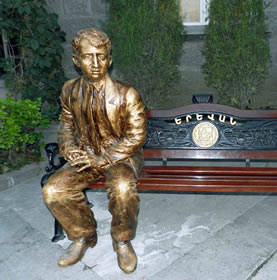
 1889642-fe6d69c071707aef5bb8276e788fad70.jpg
Yeghishe Charents (13 maart 1897 – 29 november 1937)
Standbeeld in Yerevan


De Duitse dichter Oskar Loerke werd geboren op 13 maart 1884 in Jungen. Zie ook alle tags voor Oskar Loerke op dit blog.


Der Stein ist hier zu End...

Der Stein ist hier zu End, hier treibt die grüne Kraft.
Du wünschst, dort stehe eine Steinlaterne,
Chinesisch, großer Meister zu gedenken,
Und nahe gegenüber ihrem Schaft
Ein niedrer Sitz zum Sichversenken.
Am Fuß ihm liegen Pfirsich-Purpurkerne,
Vom Fleisch entblößt, noch naß vom Saft.
Gehackt hat eine Amsel, ein Häher gescholten,
Dann gilt nicht mehr, was eben hat gegolten.
Nach unten siehst du Wüsten unter dem Rasen,
Nach oben Wüsten hinter den Wolkenoasen;
Wüsten endet ein Pflasterpfad und mündet
In einem Viereck aus schweren Platten.
Wo mag das sein? - Ein fremder Mann entzündet
Die heimische Laterne aus Basalt.
Wirklich ist er: er wirft einen Schatten.
Mein Schatten aber hat Baumes Gestalt,
Ich rage sausend über der Abendleuchte.
Der Mann im weiten Kittel aus schwarzer Seide
Erhebt das Auge, das verzückungfeuchte.
Von Weisheit voll und also leer von Leide,
Nimmt er den Wipfel, der über ihm weht,
Tief in sein Schweigen, bevor er geht.


Lautlos ging die Rosenuhr

Lautlos ging die Rosenuhr.
Rote Blätter lagen
Auf der Treppe vor dem Flur
Zu dem Haus der Sagen.

Auf den Stufen der Augur,
Knie um Knie geschlagen,
Schlief beim Gang der Rosenuhr -
Längst aus allen Tagen,

Längst schon ein Gerippe nur,
Los von Milz und Magen,
Unter grüner Stachelschnur -
Ohne daß der Himmelswagen
Aus dem Weltraum weiterfuhr.


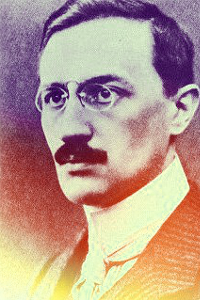
 1889642-98d004684b25f710d5e11ba3501fe5fe.png
Oskar Loerke (13 maart 1884 – 24 februari 1941)


De Nederlands schrijfster Hermine de Graaf werd geboren in Winschoten op 13 maart 1951. Zie ook alle tags voor Hermine de Graaf op dit blog.

Uit: De weg naar het pompstation

“Ik kan hun gesprekken afluisteren en probeer de misdaad te reconstrueren. Mijn gedachten vormen een postmoderne misdaadgeschiedenis, waarin het lijk zelf de moord oplost. Dat ze me ooit iets zouden aandoen was een ingecalculeerd risico. Wee je gebeente als je niet doet wat de mensen zeggen.”
(…)

"Corinne was de knapste en het type dat er bij het ouder worden als een geconserveerde schoonheid goed blijft uitzien. Een fenomeen dat later door haar accountant, die haar als een diepte investering zag, feilloos op juiste waarde werd geschat."


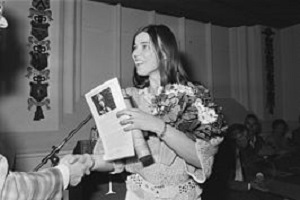
 1889642-811c4b11dc2592731fbabcc74193a557.jpg
Hermine de Graaf (13 maart 1951 - 24 november 2013)
Hier bij de uitreikingvan de   Geert Jan Lubberhuizen Prijs in 1985


De Canadese schrijver W.O. Mitchell werd geboren op 13 maart 1914 in Weyburn, Saskatchewan. Zie ook alle tags voor W. O. Mitchell op dit blog.

Uit: Who Has Seen the Wind

“Although two years of wind had filed the black dust even higher against the fences and farm buildings, and the yellow-stubbled fields were thinly stocked with the meagre stocks of lean times, the fall of 1931 still brought the excitement of harvest with it. The haize green of young wheat no longer spread over the flat expanse of prairie; the incessant winds rolled waves no longer through the darker green of June growth. For several weeks men had been busy in the fields. following the binders, stooping to pick up the sheaves and pile them into the stoolts that thimbled the land.
It was an urgent time of the year for the mu, whose livelihood depended upon the prairie. Down the streets on both sides of the river, tractors hauled threshing machines with feeders turned back upon themselves. linked to cool: cars and followed in turn by the wheeled half-cylinders of water wagons.
Empty and full. high, spreading grain wagons passed through on grinding wheels; long caterpillars of grain freights often blocked Main Street with their slow passage for minutes at a time.
Strange men swung down from the trains, their blanket rolls slung over one shoulder. bright flannel shirts open at the neck, their lean faces dark with coal dust. They stood before the beer parlour of the Royal Hotel, in front of Drew’s Pool Hall, or on the bank comer. waiting for the farmers who came into town, looking for bundle pitchers, spikers. and team Skinners. There was harvest work for perhaps half the men who came to the town, at a dollar and a half a day, the day lasting from five in the rooming to seven at night.
Though the crop was poor and wheat only twenty-five cents a bushel - it had cost thirty cents to grow - it must be harvested.
On the morning of the first day of September, the bright noise of sparrows just under the window high in the peaking front of the O’Connal house woke Brian.”


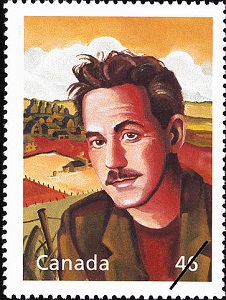
 1889642-0b913c7584f4d16932666a38bc2aadba.jpg
W.O. Mitchell (13 maart 1914 – 25 februari 1998)


De Britse schrijver Hugh Seymour Walpole werd geboren op 13 maart 1884 in Auckland, Nieuw Zeeland. Zie ook alle tags voor Hugh Walpole op dit blog.

Uit:The Young Enchanted

“Young Henry Trenchard, one fine afternoon in the Spring of 1920, had an amazing adventure.
He was standing at the edge of Piccadilly Circus, just in front of Swan and Edgar's where  the omnibuses stopped. They now stop there no longer but take a last frenzied leap around the corner into Regent Street, greatly to the disappointment of many people who still linger at the old spot  and have a vague sense all the rest of the day of having been cheated by the omnibus companies.
Henry generally paused there before crossing the Circus, partly because he was short-sighted and partly because he never became tired of the spectacle of life and excitement that Piccadilly Circus offered to him. His pince-nez, that never properly fitted his nose, always covered one eye more than the other and gave the interested spectator a dramatic sense of suspense because they seemed to be eternally at the crisis of falling to the ground, there to be smashed into a hundred pieces, these pince-nez coloured his whole life. Had he worn spectacles — large, round, moon-shaped ones as he should have done — he would have seen life steadily and seen it whole, but a kind of rather pathetic vanity — although he was not really vain — prevented him from buying spectacles.
The ill-balancing of these pince-nez is at the back of all those adventures of his that this book is going to record.
(…)

““God! Is there a God, do you think, Henry?"
"Yes," he answered. "I think there is One, but of what kind He is I don't know."
"There must be... There must be... To go out like this when one's heart and soul are at their strongest. And He is loving, I can't but fancy. He smiles, perhaps, at the importance we give to death and pain. So short a time it must seem to Him that we are here... But if He isn't... If there is nothing more- What a cruel, cold game for Something to play with us-"


1889642-915881737f7e1f8f6016406f01347f06.jpg
Hugh Walpole (13 maart 1884 – 1 juni 1941)
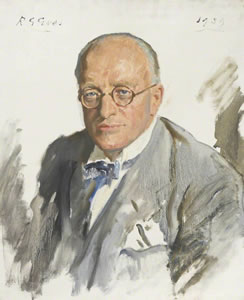
Portret door Reginald Grenville Eves, 1939


Zie voor nog meer schrijvers van de 13e maart ook mijn vorige blog van vandaag.

Geschreven door Romenu om 13:52 Reageer op dit bericht

Inge Müller, Richard Zoozmann, Moritz Graf von Strachwitz, Oscar Blumenthal, Paul Morand

De Duitse dichteres en schrijfster Inge Müller werd geboren op 13 maart 1925 in Berlijn. Zie ook alle tags voor Inge Müller op dit blog. 


Unterm Schutt I

Unterm Gebell der Eisenrohre schlief ich
Schon im Griff der Erde
Das Kind Moses im Kästchen treibend
Zwischen Schilf und Brandung
Und wachte auf als irgendwo im Herz der Kontinente
Rauch aufstieg aus offenem Meer
Heißer als tausend Sonnen
Kälter als Marmorherz.
Auf sechzehn Füßen ging ich in die Mitte genommen
Den ersten Schritt gegen den Staub.


Unterm Schutt III

Als ich Wasser holte fiel ein Haus auf mich
Wir haben das Haus getragen
Der vergessene Hund und ich
Fragt mich nicht wie
Ich erinnere mich nicht
Fragt den Hund wie.


Hacks

Dir Lieber wär ich lieber
Wenn ich den Mund halten würde
Wo kein Mund ist
Und kein Halten
Den Alten tust du feind
Und bist älter noch als sie
Versteckst dich in den Falten.
Was weißt du
Und wie?


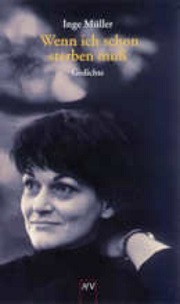
 1889638-ee1f126c1a1649a195171cfe6216f21e.jpg
Inge Müller (13 maart 1926 – 1 juni 1966)
Cover


De Duitse dichter, schrijver en vertaler Richard Zoozmann werd geboren op 13 maart 1863 in Berlijn. Zie ook alle tags voor Richard Zoozmann op dit blog.


Ein anspruchsloses Buch

Ein anspruchsloses Buch ist dies,
Nimm´s ohne Anspruch hin und lies,
Gar vieles bringt´s für viele.
Leicht ist´s, darin sich umzusehn,
So oft und wo du bleibest stehn.
Stets bist du dort am Ziele.


Mir ist, als wäre jede Beere...

Mir ist, als wäre jede Beere
Ein Born der Lebensfreudigkeit,
Als gäbe sie die große Lehre:
Gedulde dich, es kommt die Zeit!

Wie durch Millionen Sonnenstrahlen,
Die uns nur tagelang gestreift,
Mit Saft sich füllten unsere Schalen,
Bis wir zur süßen Frucht gereift.

So wird trotz allem welken Laube
Durch freier Seelen Sonnenglut
Der Menschheit volle Wundertraube
Erst in Erkenntnis reif und gut.


 1889638-a04561629faaa2d1e8f04e08b38b4375.jpg
Richard Zoozmann (13 maart 1863 – 15 februari 1934)
Cover


De Duitse dichter Moritz Graf von Strachwitz werd geboren op 13 maart 1822 in Peterwitz nabij Frankenstein. Zie ook alle tags voor Moritz Graf von Strachwitz op dit blog.


Mir ist auf Erden wenig quer gegangen...

Mir ist auf Erden wenig quer gegangen,
Und wenig Gram hat meine Stirn verdunkelt;
Stets hat der Freude Rot aus meinen Wangen,
Aus meinen Augen Jugendmut gefunkelt.

Ich schminkte nie zum Spaß die Wangen blasser,
Noch quetscht' ich je mit affektierten Schmerzen
In meine Augen künstlich Tränenwasser;
Ich leide wenig an zerrißnem Herzen.

Mich freut der Becher noch, der Schmerzvertilger,
Mich freut der holde Zauber noch des Kusses;
Ich walle rasch, ein froher Liebespilger,
Im schrankenlosen Garten des Genusses.

Und wenn der Sturm der Zeit mein Haupt getroffen,
So meint' ich ihn am besten zu verstehen,
Wenn ich mit Mut und meinem kühnsten Hoffen
Dem blauen Himmel wollt' entgegen sehen.


 1889638-48844f01f224f5a22d74fcfbc5b8fcf8.jpg
Moritz Graf von Strachwitz (13 maart 1822 – 11 december 1847)


De Duitse dichter, schrijver en criticus Oskar Blumenthal werd geboren op 13 maart 1852 in Berlijn. Zie ook alle tags voor Oskar Blumenthal op dit blog.


Du willst bei Fachgenossen...

Du willst bei Fachgenossen gelten?
Das ist verlorne Liebesmüh.
Was dir missglückt, verzeihn sie selten,
Was dir gelingt, verzeihn sie nie!


Meine Antikritik

"Was machst du, wenn die Kritik dich kränkt?"
Meine Antikritik: ich bleibe heiter.
"Und wenn sie dich an den Galgen gehängt?"
Meine Antikritik: ich lebe weiter.


 1889638-3a23b3bb0fe59608b262265324dbbd00.jpg
Oscar Blumenthal (13 maart 1852 – 24 april 1917)


De Franse dichter, schrijver en diplomaat Paul Morand werd geboren op 13 maart 1888 in Parijs. Zie ook alle tags voor Paul Morand op dit blog.

Uit: L'homme pressé

“- Quoi, tu n'es pas content ? fit Pierre en souriant.
- Non, non et non ! éclata Placide, trépignant. Vous façons me tuent. Sachez que j'ai failli m'évanouir d'émotion !
Je redoute les chocs. Quand vous me faites une gentillesse, c'est si brusquement que j'en suis plus fâcher que d'une amende ! Vous me réveillez en sursaut ! Vous ne me laissez pas le temps de m'habiller. Même pas le temps de dormir ou si peu que vous m'empêchez de trouver le vrai sommeil. Vous ne me laissez d'ailleurs le temps de rien ! Je suis votre souffre-douleur. Je souffre de toujours essayer de vous rattraper. J'ai besoin de vivre normalement, moi, et non pas crispé à l'arrière du convoi, dans le rôle de serre-frein. Et puisque je suis ici ce matin, contre mon gré, j'en profite pour vous dire que je romps notre association et que je m'installe à mon compte.
- C'est sérieux ? demanda Pierre.
Il regardait, stupéfait, cet ami de quinze ans chez qui il n'apercevait plus qu'une incompréhensible animosité. Il eut envie de dire : « Mais qu'est-ce que je t'ai fait ? » ne parvenant pas à comprendre qu'une simple différence dans leur tempo respectif pût charger d'un tel ressentiment l'âme de Placide.
Il s’efforça de se mettre à sa place, de se juger impartialement  qu'est-ce qu'on pouvait lui reprocher ? Un peu trop de rapidité, poussée parfois – bien rarement – jusqu'à la fébrilité. C'était un défaut, un travers plutôt, un travers charmant  tant de gens sont léthargiques, poids lourds odieux à soulever. Chez lui, tout était vitalité, envol. On devrait, au contraire, lui être reconnaissant d'accélérer les choses et de les mener si vite à bonne fin.
Placide s'était un peu calmé  il reprit froidement :
- J'ai besoin d'un climat plus tempéré que le tien  tu torréfies, et moi il faut que je mitonne.
Dès ma sortie de l’École des Chartres, tu a été mon mauvais génie…“


 1889638-5b19de5ce792c493d48f687f8d35783f.jpg
Paul Morand (13 maart 1888 – 23 juli 1976)

Geschreven door Romenu om 13:50 Reageer op dit bericht

Meer van Romenu

↑ Terug naar de berichten