Naar de inhoud

Romenu

Over literatuur, gedichten, kunst en cultuur
seniorennet.beseniorennet.be

Berichten van 19 februari 2013

Björn Kuhligk, Amy Tan, Dmitri Lipskerov, Thomas Brasch
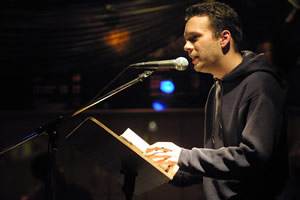
De Duitse dichter en schrijver Björn Kuhligk werd geboren op 19 februari 1975 in Berlijn. Zie ook alle tags voor Björn Kuhligk op dit blog.


Während des Freitagsgebetes

(für Katja Krauß)


WÄHREND DES FREITAGSGEBETES

die kopftuchgebückten Frauen

auf den Feldern, von den Minaretten

fallen die Worte wie Ringe um die Häuser, abends

stellen sich Sprenger an, die zerfallenen

Gewächshäuser, eine Ansammlung

Zelte, vor denen zwei Kinder am Feuer

bei Nacht der Swimmingpool, pauschal-beleuchtet

bis ins Hellblau, das Anschlagen der Zikaden

in den Dörfern stehen Häuser leer, auf den Dächern

rostende Wassertonnen, LADIES

AND GENTLEMEN: MR. GERMANY, dann

der Clubtanz, Hände hoch und rechts und links

und Beine breit, IHR NAME AUF EINEM REISKORN

die Sonne seilt sich, das kennt man hier, wie jeden Abend

hinter den Bergen ab, SIE WERDEN ES NICHT VERGESSEN

die Fotoserie, in der ein Pärchen am Meer

und freundlich auf das Wasser blickt

über den nackten Oberkörpern am Morgen

drei Kampfjets Richtung Osten

dann der Clubtanz, Hände hoch und rechts

und links, irgendjemand macht das Foto


Horizontbetrachter

Hier ist ein Wald

da sind die Bäume

darin sind die Ringe

darin schläft die Angst

du schlägst zu mit der Axt

und trinkst den Harzstein mit

und das Lieblingstier

das ist der Affe im Zoo

den kannst du besuchen

und er dich nicht


1339625-bc46e0b5bf3ac9e7365c82457eb282eb.jpg
Björn Kuhligk (Berlijn, 19 februari 1975)


De Amerikaanse schrijfster

Amy Tan werd geboren in Oakland, Ohio, op 19 februari 1952. Zie ook alle tags voor Amy Tan op dit blog.


Uit: The Hundred Secret Senses


“My sister Kwan believes she has yin eyes. She sees those who have died and now dwell in the World of Yin, ghosts who leave the mists just to visit her kitchen on Balboa Street in San Francisco.
"Libby-ah," she'll say to me. "Guess who I see yesterday, you guess." And I don't have to guess that she's talking about someone dead.
Actually, Kwan is my half sister, but I'm not supposed to mention that publicly. That would be an insult, as if she deserved only fifty percent of the love from our family. But just to set the genetic record straight, Kwan and I share a father, only that. She was born in China. My brothers, Kevin and Tommy, and I were born in San Francisco after my father, Jack Yee, immigrated here and married our mother, Louise Kenfield.
Mom calls herself "American mixed grill, a bit of everything white, fatty, and fried." She was born in Moscow, Idaho, where she was a champion baton twirler and once won a county fair prize for growing a deformed potato that had the profile of Jimmy Durante. She told me she dreamed she'd one day grow up to be different -- thin, exotic, and noble like Luise Rainer, who won an Oscar playing O-lan in The Good Earth. When Mom moved to San Francisco and became a Kelly girl instead, she did the next-best thing. She married our father. Mom thinks that her marrying out of the Anglo race makes her a liberal. "When Jack and I met," she still tells people, "there were laws against mixed marriages. We broke the law for love." She neglects to mention that those laws didn't apply in California.”


 1339625-6ef14c05904d73677e5414be9faf5351.jpg

Amy Tan (Oakland, 19 februari 1952)


De Russische schrijver Dmitri Lipskerov werd geboren op 19 februari 1964 in Moskou. Zie ook alle tags voor Dmitri Lipskerov op dit blog.


Uit: The Last Sleep of Reason (Vertaald door Dmitri Priven)


"My legs glow in the dark!"

"Send him away to the psychiatric ward!"

"I'm ready for discharge!" Volodya instantly came to his senses…

Later that day he was discharged and his sick leave was over.

Anna Karlovna brought her husband home in a taxi and nursed him like a baby, heedless of her husband's malicious taunts about her barren German belly and Nazi relatives.

That night Volodya's legs got frozen over like a river in winter, and he was already grateful to his wife for bandaging his sore thighs with angora wool. A forgiving woman, she was stroking her husband's hair till the morning; he was crying bitterly, bidding farewell to his hopes for international recognition and generalship. Of all his fantasies only one remained: that Zubov would give him some of his pumpkin seeds, but then only if Major Pogosian commanded so.

The following morning Anna Karlovna found her husband's legs absolutely recovered, at least exactly the same as they were before the relapse - just slightly swollen at thighs. Tenderly she rubbed grandma's live cell ointment into them and helped her husband into the boots.

The police department welcomed Sinichkin back with mixed feelings. Major Pogosian patted him on the shoulder, but then lifted up his hands with typical Armenian sadness and talked at length that fame can spoil you and it is all good that the record did not happen.”


 1339625-d01e15b21a079897377f76b107d1bbf0.jpg

Dmitri Lipskerov (Moskou, 19 februari 1964)


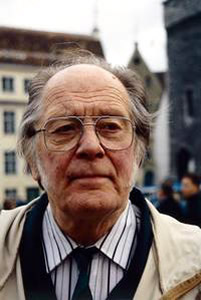
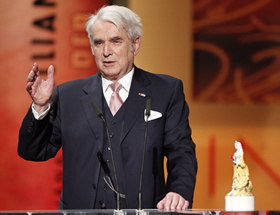
De Duitse dichter en schrijver Thomas Brasch werd geboren in Westow,Yorkshire (Engeland) op 19 februari 1945. Zie ook alle tags voor Thomas Brasch op dit blog.


Schlaflied für K.


Nacht oder Tag oder jetzt
Will ich bei dir liegen
Vom schlimmsten Frieden gehetzt
Zwischen zwei Kriegen


Ich oder wir oder du
Denken ohne Gedanken
Schließ deine Augen zu
Siehst du die Städte schwanken


In den Traum oder Tod oder Schlaf
Komm in den Steingarten
wo ich dich nie traf
will ich jetzt auf dich warten


WENN ICH DICH BEGEHRE GEGEN JEDE VERNUNFT

wenn ich in dir suche meine Unterkunft

wenn ich das Sehnen und die Sucht benenn mit deinem Namen

und denke, es war gestern, als wir zu uns kamen

wenn ich inmeiner Liebe ganz verfangen bin

und alle meine Wünsche wandern zu dir hin

was kann denn daran unvernünftig sein,

wenn wir nicht uns, nur der Vernunft jetzt sagen:

Bleib allein.


 1339625-7d965bb19e2d254c17515ea1a1dff527.jpg

Thomas Brasch (19 februari 1945 – 3 november 2001)


Zie voor nog meer schrijvers van de 19e februari ook mijn blog van 19 februari 2011 deel 2 en eveneens deel 3.
Geschreven door Romenu om 19:48 Reageer op dit bericht

Siri Hustvedt, Helen Fielding, Jaan Kross, Herbert Rosendorfer

De Amerikaanse schrijfster en essayiste Siri Hustvedt werd geboren op 19 februari 1955 in Northfield, Minnesota. Zie ook alle tags voor Siri Hustvedt op dit blog.


Uit: Living, Thinking, Looking


“DESIRE APPEARS AS A FEELING, a flicker or a bomb in the body, but it’s always a hunger for something, and it always propels us somewhere else, toward the thing that is missing. Even when this motion takes place on the inner terrain of fantasy, it has a quickening effect on the daydreamer. The object of desire—whether it’s a good meal, a beautiful dress or car, another person, or something abstract, such as fame, learning, or happiness—exists outside of us and at a distance. Whatever it is, we don’t have it now. Although they often overlap, desires and needs are semantically distinct. I need to eat, but I may not have much desire for what is placed in front of me. While a need is urgent for bodily comfort or even survival, a desire exists at another level of experience. It may be sensible or irrational, healthy or dangerous, fleeting or obsessive, weak or strong, but it isn’t essential to life and limb. The difference between need and desire may be behind the fact that I’ve never heard anyone talk of a rat’s “desire”—instincts, drives, behaviors, yes, but never desires. The word seems to imply an imaginative subject, someone who thinks and speaks. In Webster’s, the second definition for the noun desire is: “an expressed wish, a request.” One could argue about whether animals have “desires.” They certainly have preferences. Dogs bark to signal they wish to go outside, ravenously consume one food but leave another untouched, and make it known that the vet’s door is anathema. Monkeys express their wishes in forms sophisticated enough to rival those of their cousins, the Homo sapiens. Nevertheless, human desire is shaped and articulated in symbolic terms not available to animals.
When my sister Asti was three years old, her heart’s desire, repeatedly expressed, was a Mickey Mouse telephone, a Christmas wish that sent my parents on a multi-city search for a toy that had sold out everywhere.”


 1339630-01c864c9ab067be7d920162801b7ee9c.jpg

Siri Hustvedt (Northfield, 19 februari 1955)


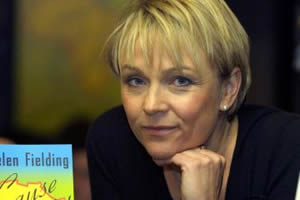
De Engelse schrijfster Helen Fielding werd geboren in Morley, Yorkshire op 19 februari 1958. Zie ook alle tags voor Helen Fielding op dit blog.


Uit: Bridget Jones's Diary


"Sorry. I got lost."
"Lost? Durr! What are we going to do with you? Come on in!"
She led me through the frosted-glass doors into the lounge, shouting, "She got lost, everyone!"
"Bridget! Happy New Year!" said Geoffrey Alconbury, clad in a yellow diamond-patterned sweater. He did a jokey Bob Hope step then gave me the sort of hug which Boots would send straight to the police station.
"Hahumph," he said, going red in the face and pulling his trousers up by the waistband. "Which junction did you come off at?"
"Junction nineteen, but there was a diversion ..."
"Junction nineteen! Una, she came off at Junction nineteen! You've added an hour to your journey before you even started. Come on, let's get you a drink. How's your love life, anyway?"
Oh God. Why can't married people understand that this is no longer a polite question to ask? We wouldn't rush up to them and roar, "How's your marriage going? Still having sex?" Everyone knows that dating in your thirties is not the happy-go-lucky free-for-all it was when you were twenty-two and that the honest answer is more likely to be, "Actually, last night my married lover appeared wearing suspenders and a darling little Angora crop-top, told me he was gay/a sex addict/a narcotic addict/a commitment phobic and beat me up with a dildo," than, "Super, thanks."
Not being a natural liar, I ended up mumbling shamefacedly to Geoffrey, "Fine," at which point he boomed, "So you still haven't got a feller!"
"Bridget! What are we going to do with you!" said Una. "You career girls! I don't know! Can't put it off forever, you know. Tick-tock-tick-tock."


1339630-a4f58e9df98a7290d53f7d9d3b8fc983.jpg 

Helen Fielding (Morley, 19 februari 1958)


De Estlandse schrijver Jaan Kross werd geboren op 19 februari 1920 in Tallin. Zie ook alle tags voor Jaan Kross op dit blog.


Uit: Uncle (Vertaald door Eric Dickens)


“Why should the most valuable items be packed in the first place? To save them from air raids? All well and good. But not only for that reason. To also send them out of Estonia at the first opportunity! And why the hell should they have any interest in that? To rescue them from the impending battles in Tartu. Fine. But encouraging their theft?! No! The order the librarians had received was a monolithic order from a monolithic robot. Like the majority of orders at the time. Any attempt to sabotage it could in itself prove deadly. But a deadliness which may, in fact have spurred on rather than scared off. Lord knows. The order came from Berlin to Tallinn and Tallinn to Tartu like a vehicle speeding along on caterpillar tracks. Armoured, targeted and utterly merciless. Like most orders at that time. Resistance to the order shot up like so much grass (weeds, they would have said in the other camp). Victorious grass. Whose existence always presented the risk of a thickening of the blood, but which thrives and grow rank over everything. The result: the contents, numbers and addresses of the crates became all of a jumble.
Where what ended up, whether in Germany, Tallinn, Haapsalu or in the manor houses of the Province of Tartumaa, no one there ever found out for sure. Even now, in August '45, no one had a complete overview. But one thing was clear: some of the crates, about two or three lorry loads, had ended up at Mardimäe Manor in the cellars of the present schoolhouse. And now that the order had been given to return evacuated books to Tartu, these too had to be returned. Lorries drove out, to that end, from locations in Tartu, including the University, to seven or eight places that week. So the chain split off in seven or eight different directions. It was therefore pretty unlikely that anything had been left to chance.”


 1339630-38b2627777e9d0a99e09da79b2fa360b.jpg

Jaan Kross (19 februari 1920 – 27 december 2007)


De Duitse schrijver
Herbert Rosendorfer werd op 19 februari 1934 in Gries geboren. Zie ook alle tags voor Herbert Rosendorfer op dit blog.


Uit: Deutsche Geschichte. Ein Versuch (Das Jahrhundert des Prinzen Eugen)


“Nach dem Ende des Dreißigjährigen Krieges war in Deutschland, und nicht nur in Deutschland,

nichts mehr so, wie es vorher gewesen war.

Die katholische Seite hatte den Krieg verloren, die protestantische Seite ihn nicht gewonnen. Das Deutsche Reich gab es noch, stark angeschlagen und verwundet, vor allem wirtschaftlich geschwächt. Der einzige Vorteil aus dem Frieden von Münster und Osnabrück für das Reich war, daß in gewisser Weise der verbleibende Rest, geographisch und institutionell gesehen, festgeschrieben und umrissen war. Die Regeln der Diplomatie, die in den folgenden Jahrhunderten das Scharnier aller Politik zumindest in Friedenszeiten bilden sollten, beruhten auf den mühsamen Errungenschaften des Westfälischen Friedensinstruments. Daß die Reichsgewalt, die Macht des Kaisers, in rasantem Sinken

begriffen war, konnte davon allerdings nicht aufgehalten werden. Vermutlich bewirkte nur das immer

zu beobachtende politische Beharrungsvermögen, daß das Reich die Katastrophe von 1618/48 um eineinhalb Jahrhunderte überdauerte.

Die kleinen oder sogar winzigen Territorialherrschaften wurstelten recht und schlecht vor sich hin. Sie waren, sofern nicht Reichsstädte oder geistliche Fürstentümer, Aufsplitterungen von ehemals größeren Gebieten.”


 1339630-5133760814ae0cecb85ae26464e99429.jpg

Herbert Rosendorfer (Gries, 19 februari 1934)


Zie voor nog meer schrijvers van de 19e februari ook mijn vorige blog van vandaag

Geschreven door Romenu om 19:30 Reageer op dit bericht

Helene Hegemann

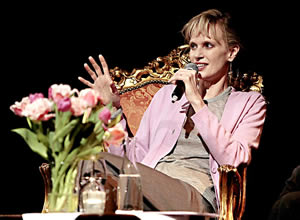
De Duitse schrijfster, regisseuse en actrice Helene Hegemann werd geboren in Freiburg im Breisgau op 19 februari 1992. Hegemann groeide bij haar gescheiden moeder in Bochum op, die echter overleed toen Helene veertien jaar oud was. Daarop trok ze bij haar vader in, regisseur Carl Hegemann in Berlijn. Hegemanns theaterstuk Ariel 15 ging in december 2007 in het Ballhaus Ost in première en werd in 2008 door de Deutschlandradio tot luisterspel bewerkt. Het draaiboek voor de film Torpedo, dat ze reeds als veertienjarige geschreven had, werd in 2008 met ondersteuning van de Kulturstiftung des Bundes verfilmd en leverde haar in 2008 de Max Ophüls-prijs op. Als actrice trad Hegemann op in de film Deutschland 09, in de bijdrage Die Unvollendete van Nicolette Krebitz. In 2010 bereikte Helene Hegemann nationale bekendheid met haar roman “Axolotl Roadkill”, verschenen bij de Ullstein Verlag. Begin februari 2010 merkte een blogger op dat de roman sterke gelijkenissen met het boek Strobo van de blogger Airen uit 2009 vertoonde, evenwel zonder dat de roman enige bronvermelding bezat. Hegemann gaf toe dat ze tekstpassages uit dit werk gekopieerd had en Airen niet gecontacteerd. Hegemann verklaarde dat deze vorm van sampling een corollarium van de hedendaagse mediacultuur is, waarin de herkomst van materiaal onduidelijk wordt. Dit ontlokte een verregaand debat in de media omtrent intertekstualiteit en het auteursrecht. Uitgeverij Ullstein voegde in de tweede editie van het werk verschillende bronnen toe, die in de vierde nog gedetailleerd werden uitgebreid. Zo bevat Axolotl Roadkill onder andere fragmenten van Kathy Acker, David Foster Wallace, Rainald Goetz en Valérie Valère. Het Thalia Theater uit Hamburg heeft in 2010 een theaterversie op de planken gebracht en beklemtoonde dat de keuze voor Axolotl Roadkill alreeds vóór de plagiaataffaire gemaakt was.

Uit: Axolotl Roadkill

 „Wenn ich lüge, dann neurotisch und zwanghaft. Meine Lügen ergeben sich aus einer Abhängigkeit von metaphysischen Begebenheiten. Wenn Annika lügt, sollen ihre Lügen dem Wohl der Belogenen dienen oder der Harmonie der Gruppe oder zumindest ihrer Leistungsmotivation. Davon ist sie fest überzeugt.
Lars: „Ja, das tut mir jetzt natürlich auch total leid dass wir euch stören hier, aber das ist echt scheiße ohne Playstation an so einem Scheißtag.“
Mifti (wirft mit einer lässigen Geste die Haare zurück): „Kein Ding, Lars! Ich bin aber auch nicht durchgekommen durch dieses Spiel da, ich weiß nicht, zuerst habe ich dann sechshundert Zombies pro Minute abgeballert, aber das Schlimme war dann später, dass da irgendwann dieses Seeungeheuer kam mit dem Ding im Rücken, und ich habe das mit dem Anker nicht getroffen.“
Lars: „Das ist kein Anker, sondern eine Harpune!“
Mifti: „Ich glaube, das ist ein Anker, weil der Typ ja spontan war und gerade keine Harpune zur Hand hatte auf dem Ruderboot und dann diesen Anker in die zu Flossen umgestalteten Vorderextremitäten des großen Fisches rammen sollte, aber das hab ich dann halt nicht hingekriegt.“
Lars: „Wahrscheinlich, weil man da am Anfang den Hund befreien musste aus dieser Bärenfalle und du das nicht gemacht hast. Mir ist der Hund bei der Geschichte mit dem großen Raubfisch später zu Hilfe gekommen, weil ich ihn da im ersten Level gerettet habe.“
Mifti: „Dieser Scheißhund? Scheiße!“
Lars: „Ja, scheiße.“
Mifti: „Wie scheiße. Was für eine Scheiße das ist, oder? Dass man da mit gedrückter B-Taste Menschen abknallt, und sich im Endeffekt alles nur noch um einen weißen Bernhardiner-Grönlandhund-Mischling dreht.“
Annika: „Was führt ihr hier gerade für einen außerirdischen Dialog, Kinder?“


1509470-06231eefe07c98e47e70ea8dacdae771.jpg
Helene Hegemann (Freiburg im Breisgau, 19 februari 1992)

Geschreven door Romenu om 00:00 Reageer op dit bericht

Meer van Romenu

↑ Terug naar de berichten