Naar de inhoud

Romenu

Over literatuur, gedichten, kunst en cultuur
seniorennet.beseniorennet.be

Berichten van 5 januari 2014

Umberto Eco, Paul Ingendaay, Ngũgĩ wa Thiong'o, László Krasznahorkai, Friedrich Dürrenmatt
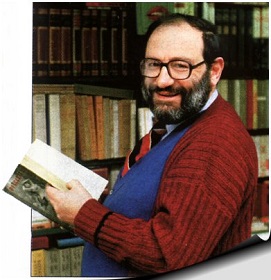
De Italiaanse schrijver Umberto Eco werd geboren op 5 januari 1932 in Allasandria. Zie ook alle tags voor Umberto Eco op dit blog.

Uit: The Prague Cemetery (Vertaald door Richard Dixon)

“A passerby on that gray morning in March 1897, crossing, at his own risk and peril, Place Maubert, or the Maub, as it was known in criminal circles (formerly a center of university life in the Middle Ages, when students flocked there from the Faculty of Arts in Vicus Stramineus, or Rue du Fouarre, and later a place of execution for apostles of free thought such as Étienne Dolet), would have found himself in one of the few spots in Paris spared from Baron Haussmann’s devastations, amid a tangle of malodorous alleys, sliced in two by the course of the Bièvre, which still emerged here, flowing out from the bowels of the metropolis, where it had long been confined, before emptying feverish, gasping, and verminous into the nearby Seine. From Place Maubert, already scarred by Boulevard Saint-Germain, a web of narrow lanes still branched off, such as Rue Maître-Albert, Rue Saint-Séverin, Rue Galande, Rue de la Bûcherie, Rue Saint-Julien-le-Pauvre, as far as Rue de la Huchette, littered with filthy hotels generally run by Auvergnat hoteliers of legendary cupidity, who demanded one franc for the first night and 40 centimes thereafter (plus 20 sous if you wanted a sheet).
If he were to turn into what was later to become Rue Sauton but was then still Rue d’Amboise, about halfway along the street, between a brothel masquerading as a brasserie and a tavern that served dinner with foul wine for two sous (cheap even then, but all that was affordable to students from the nearby Sorbonne), he would have found an impasse, or blind alley, which by that time was called Impasse Maubert, but up to 1865 had been called Cul-de-sac d’Amboise, and years earlier had housed a tapis-franc (in underworld slang, a tavern, a hostelry of ill fame, usually run by an ex-convict, and the haunt of felons just released from jail), and was also notorious because in the 18th century there had stood here the laboratory of three celebrated women poisoners, found one day asphyxiated by the deadly substances they were distilling on their stoves.”


 1525519-415cc74d5b0e93f67eb8fcc5218e9845.jpg
Umberto Eco (Allasandria, 5 januari 1932)


De Duitser schrijver, criticus en literatuurwetenschapper Paul Ingendaay werd geboren op 5 januari 1961 in Keulen. Zie ook alle tags voor Paul Ingendaay op dit blog.

Uit: Die Nacht von Madrid

„Wie die Droschkenkutscher von früher, sage ich gern. Wir hocken vorn und fahren alle, die uns darum bitten. Natürlich haben wir gegenüber den alten Zeiten einen Vorteil. Wir sitzen warm unter einem Dach und bekommen von den Elementen nicht viel mit. Wir brauchen keinen Mantel und keine Mütze. Leider, denke ich manchmal, haben wir auch keine Peitsche mehr.
Unsere Tage sind lang. Zwölf, dreizehn Stunden, manchmal vierzehn. Wer vernünftig ist, hält in der Mittagszeit an und setzt sich in Ruhe hin, um was zu essen. Ich mache es so. Wer nachts fährt, hat es schwerer, aber unmöglich ist das auch nicht. Man kennt seine Stadt. Man kommt herum und findet irgendwo in Madrid eine Nachtbar, um ein Sandwich zu essen. Müsste ich nachts fahren, würde ich Aurora bitten, mir was vorzubereiten, wie sie es früher gemacht hat, als ich noch im Sägewerk war. Alles schön klein geschnitten, ein Stück Obst dazu, Plastikdeckel drauf, damit keine Sägespäne drankamen. Ging gut, über die Jahre. Nur als das Sägewerk zumachte, musste ich mir was einfallen lassen.
Die Taxilizenz habe ich gerade noch gekauft, als sie billig war. Mein jüngerer Bruder kaufte das Ding ein paar Jahre zu spät und konnte nicht aufhören zu fluchen. Er ist ein unglücklicher Taxifahrer geworden, mein Bruder, nicht ganz im Gleichgewicht. Wir haben uns länger nicht gesehen.
Ich merke mir Gesichter und Stimmen, das ist mein Sport. Manche Fahrgäste erkennt man nicht leicht, besonders im Winter, oder sie lesen nur Zeitung und sagen nicht mal fünf Worte, wenn sie bezahlen. »Hier, nehmen Sie«, sagen sie und »Danke«, wenn ich ihnen die Quittung gebe. Das macht keinen Spaß, diese Abfertigung. Mein Taxi ist keine Hühnchenbraterei. Dann muss ich mir sagen, dass auch die Mürrischen zu meiner Sammlung gehören. Dass sie meine Sammlung, ich sag jetzt mal, bereichern. Sobald ich mir das klarmache, ist es gut.“


 1525519-0b133c6b614db6e49800133897ec23b9.jpg
Paul Ingendaay (Keulen, 5 januari 1961)


De Keniase schrijver Ngũgĩ wa Thiong'o werd geboren op 5 januari 1938 in Kamiriithu, Limuru, Kenia. Zie ook alle tags voor Ngũgĩ wa Thiong'o op dit blog.

Uit: Devil on the Cross

“And there and then the people crucified the Devil on the Cross, and they went away singing songs of victory. After three days, th ere came others dressed in suits and ties, who, keeping close to the wall of darkness, lifted the Devil down from the cross. And they knelt before him, and they prayed to him in loud voices, beseeching him to give them a portion of his robes of cunning."
(…)

“What Waringa tried hard to avoid was looking at the pictures of the walls and windows of the church. Many of the pictures showed Jesus in the arms of the virgin Mary or on the cross. But others depicted the devil, with two cow-like horns and a tail like a monkey's, raising one leg in a dance of evil, while his angels, armed with burning pitchforks, turned over human beings on a bonfire. The Virgin Mary, Jesus and God's angels were white, like European, but the devil and his angels were black.”
(…)

“As she stared at them, Waringa noted that their skins were indeed red, like that of pigs or like the skin of a black person who has been scalded with boiling water or who has burned himself with acid creams. Even the hair in their arms and necks stood out stiff and straight like the bristle of an aging hog.”
(…)

“Literature is the honey of a nation’s soul, preserved for her children to taste forever, a little at a time! Gikuyu said that he who has put something aside never goes hungry. Do you think Gikuyu was a fool when he said that? A nation that has cast away its literature is a nation that has sold its soul and has been left a mere shell.”


 1525519-0742f59c8d10693b717157d9dc01e588.jpg
Ngũgĩ wa Thiong'o (Kamiriithu, 5 januari 1938)


De Hongaarse schrijver László Krasznahorkai werd geboren op 5 januari 1954 in Gyula. Zie ook alle tags voor László Krasznahorkai op dit blog.

Uit: Satantango (Vertaald door George Szirtes)

“In the tense silence the continual buzzing of the horseflies was the only audible sound, that and the constant rain beating down in the distance, and, uniting the two, the ever more frequent scritch-scratch of the bent acacia trees outside, and the strange nightshift work of the bugs in the table legs and in various parts of the counter whose irregular pulse measured out the small parcels of time, apportioning the narrow space into which a word, a sentence or a movement might perfectly fit. The entire end-of-October night was beating with a single pulse, its own strange rhythm sounding through trees and rain and mud in a manner beyond words or vision: a vision present in the low light, in the slow passage of darkness, in the blurred shadows, in the working of tired muscles; in the silence, in its human subjects, in the undulating surface of the metaled road; in the hair moving to a different beat than do the dissolving fibers of the body; growth and decay on their divergent paths; all these thousands of echoing rhythms, this confusing clatter of night noises, all parts of an apparently common stream, that is the attempt to forget despair; though behind things other things appear as if by mischief, and once beyond the power of the eye they don't hang together. So with the door left open as if forever, with the lock that will never open. There is a chasm, a crevice.”


 1525519-165d8b90fbf1ebfd3831cca93c9aab4d.jpg
László Krasznahorkai (Gyula, 5 januari 1954)


De Zwitserse schrijver Friedrich Dürrenmatt werd geboren op 5 januari 1921 in Konolfingen. Zie ook alle tags voor Friedrich Dürrenmatt op dit blog.

Uit: Das Versprechen

„Ich ging zur Bar, um noch einen Whisky zu trinken. Außer der älteren Bardame fand ich dort noch einen Herrn, der sich mir vorstellte, kaum daß ich Platz genommen hatte. Es war Dr. H., der ehemalige Kommandant\ der Kantonspolizei Zürich, ein großer und schwerer Mann, altmodisch, mit einer goldenen Uhrkette quer über der Weste, wie man dies heute nur noch selten sieht. Trotz seines Alters waren seine borstigen Haare noch schwarz, der Schnurrbart buschig. Er saß an der Bar auf einem der hohen Stühle, trank Rotwein, rauchte eine Bahianos und redete die Bardame mit Vornamen an. Seine Stimme war laut und seine Gesten waren lebhaft, ein unzimperlicher Mensch, der mich gleicherweise anzog wie abschreckte. Als es schon gegen drei ging und zum ersten Johnnie Walker vier weitere gekommen waren, erbot er sich, mich am nächsten Morgen mit seinem Opel Kapitän nach Zürich zu schaffen. Da ich die Gegend um Chur und überhaupt diesen Teil der Schweiz nur flüchtig kannte, nahm ich die Einladung an. Dr. H. war als Mitglied einer eidgenössischen Kommission nach Graubünden gekommen und hatte, da ihn das Wetter an der Rückfahrt hinderte, ebenfalls meinen Vortrag besucht, ließ sich jedoch nicht darüber aus, nur daß er einmal meinte: »Sie tragen ziemlich ungeschickt vor.
Am nächsten Morgen machten wir uns auf den Weg. Ich hatte in der Dämmerung um noch etwas schlafen zu können zwei Medomin genommen und war wie gelähmt.“


 1525519-7fca245e3a204f870cfcc312672212d1.jpg
Friedrich Dürrenmatt (5 januari 1921 – 14 december 1990)
Portret door Walter Jonas, rond 1944


Zie voor nog meer schrijvers van de 5e januari ook mijn vorige twee blogs van vandaag.
Geschreven door Romenu om 18:54 Reageer op dit bericht

Luisa Futoransky, Forough Farokhzad, Yevgeni Popov, William Snodgrass

De Argentijnse dichteres en schrijfster Luisa Futoransky werd geboren op 5 januari 1939 in Buenos Aires. Zie ook alle tags voor Luisa Futoransky op dit blog.


Tatoong

Golden buddhas of Tatoong with their centers of balance in flames
buddhas with guardians strumming wise mandolins to help them sleep

meanwhile the interpreter strives before a shining trinity
explaining that the figures on the sides are the secretaries
but without specifying as to what faction, which cosmic party
what paperwork they have to fill out to pass from the blue
to the orange of illumination

how many incarnations at the mercy of the elements in the shacks of Yunnan
how much silk and manure and horse sweat
and yak’s milk so that the gust of silence and wind
causes me to doubt my light and shadow

but the Japanese are filming murmured sequences
of martial arts at the feet of the Contemplator
and after we go off in our buses to empty ourselves
of more dinners, more temples, more purchases

what do these tens of thousands of buddhas do at night
to be so happy and composed the next morning?


Circery

I changed
these men into little poems
and confined them to books and journals
because, nowadays,
it’s not worth
going about finding them acorns
or daisies for holy days.

As for Ulysses, the guy from Ithaca,
tell him my oven’s already full
of asps, toads
and mastodons like him.
Besides, the (circus) game
of resurrections
is no longer my specialty.
Now I weave.
Believe me.


Vertaald door Jason Weiss


 1525508-a70863650506ae6b782b51b39b923538.jpg
Luisa Futoransky (Buenos Aires, 5 januari 1939)


De Iraanse dichteres Forough Farokhzad werd geboren op 5 januari 1935 in Teheran. Zie ook alle tags voor Forough Farokhzad op dit blog.


The Bird Was Just A Bird

The birds said:
“What a bright day, what a fresh air!
Spring has arrived.
I must look for my mate.”

The bird fled from the edge of wire.
The bird soared away towards the clouds-
and disappeared fast.
Just like a wish,
Just like a prayer,
Just like a whisper,
The bird spread far and wide-
in the air.

The bird was tiny.
The bird was light.
The bird was not bright,
The bird was lonely,
But the bird, well,
was truly free.

In the sky,
Over the ups and downs of the hills and the lanes,
Over the traffic lights and over the stop signs,
The bird constantly flew.

And,
in the heights of the peace of her dreams,
She finally felt the blue sense of time and space.

The bird, well, was just a bird.
The bird, well, was truly free.


Vertaald door Maryam Dilmaghani


 1525508-ce0c8d7f66b7754ab23262e5c297047e.JPG
Forough Farokhzad (5 januari 1935 – 13 februari 1967)


De Russische schrijver Yevgeni Anatoljewitsj Popov werd geboren op 5 januari 1946 in Krasnojarsk, Sibirië. Zie ook alle tags voor Yevgeni Popov op dit blog.

Uit: Mein Moskau

„Jahr für Jahr schmückten am 1. Mai und am 7. November die bekannten Figuren der Parteibonzen das Lenin-Mausoleum und die jubilierenden «Vertreter der Werktätigen» den Roten Platz; letztere trugen rote Fahnen sowie die Portraits eben jener «Diener des Volkes», welche auf dem Mausoleum standen.

Jahrelang bestürmten Dichter und Schriftsteller erfolglos die Zeitschriftenredaktionen und Verlage, bis sie zu Dissidenten oder Emigranten wurden, oder sie nahmen die Spielregeln an und stärkten die Reihen der sowjetischen «Kulturarbeiter».

Trotzdem, das war nur Moskaus äussere Hülle. Alle wussten (und ich glaube nicht, dass die Perestroika noch jemandem die Augen öffnen musste), dass es sich mit Moskau nicht so einfach verhielt, dass unter der dünnen Kruste erstarrter kommunistischer Lava vulkanische Leidenschaften brodelten: Kommunisten prügelten sich um die Macht und richteten sich um der Karriere willen gegenseitig zugrunde, Untergrundmilizionäre mehrten ihr Vermögen, wer mochte, konnte in Moskau jedes, auch das «antisowjetischste» Buch auftreiben, und der Siegeszug der Ideen von Marx und Lenin über den Planeten verhinderte keinesfalls, dass es in der Zitadelle des Kommunismus sowohl Prostituierte, Devisenschieber, Spekulanten, Diebe und Banditen als auch andersdenkende Philosophen, Schriftsteller und Künstler gab, aber auch ehrliche Durchschnittsbürger, denen jede Ideologie gestohlen bleiben konnte.“


 1525508-9f341ce719ff2b5118731398a13c7b7b.jpg
Yevgeni Popov (Krasnojarsk, 5 januari 1946)


De Amerikaanse dichter William De Witt Snodgrass werd geboren op 5 januari 1926 in Wilkinsburg, Pennsylvania. Zie ook alle tags voor William Snodgrass op dit blog.


Who Steals My Good Name
For the person who obtained my debit card number and spent $11,000 in five days

My pale stepdaughter, just off the school bus,
Scowled, 'Well, that's the last time I say my name's
Snodgrass!' Just so, may that anonymous
Mexican male who prodigally claims

My clan lines, identity and the sixteen
Digits that unlock my bank account,
Think twice. That less than proper name's been
Taken by three ex-wives, each for an amount

Past all you've squandered, each more than pleased
To change it back. That surname you affect
May have more consequence than getting teased
By dumb kids or tracked down by bank detectives.

Don't underrate its history: one of ours played
Piano on his prison's weekly broadcast;
One got rich on a scammed quiz show; one made
A bungle costing the World Series. My own past

Could subject you to guilt by association:
If you write anything more than false checks,
Abandon all hope of large press publication
Or prizes—critics shun the name like sex

Without a condom. Whoever steals my purse
Helps chain me to my writing desk again
For fun and profit. So take thanks with my curse:
May your pen name help send you to your pen.


 1525516-c4b50aad698a8ad9110e526c5bb6b2df.jpg
William Snodgrass (5 januari 1926 – 13 januari 2009)


Zie voor nog meer schrijvers van de 5e januari ook mijn vorige blog van vandaag.

Geschreven door Romenu om 18:42 Reageer op dit bericht

Pierre Seghers, Fred Wander, Humbert Wolfe, Stella Gibbons, Terenci Moix

De Franse dichter en uitgever Pierre Seghers werd geboren op 5 januari 1906 in Parijs. Zie ook alle tags voor Pierre Seghers op dit blog.


La vie

Ainsi passe la vie, de l’un à l’autre va
Se fait et se défait, s’invente, se prolonge
S’endort dans des maisons que bâtissent les songes
Se rêve et s’éveillant ne se reconnaît pas

Ainsi passe la vie. Quand le soleil va naître
Il partage déjà ses hautes graminées
Ses nuages, ses fleurs, ses défuntes années
Son devenir de feux passant dans nos fenêtres

Ainsi passe la vie. On entend des bourdons
Tracer dans la lumière un sillage illusoire
Pour lui seul le poète écoute ses histoires
Et plonge au cœur des fleurs pour apprendre leur nom

Ainsi passe la vie à surprendre un langage
Inaudible et pourtant comme l’herbe vivant
De l’éternel azur qui n’est fait que de vents
De silence, d’attente, et d’autres paysages


 1525507-286ad1b170460e057c7d9d9fd377d1db.jpg
Pierre Seghers (5 januari 1906 – 4 november 1987)
Hier met de acteur  Gerard Philipe die zijn gedichten leest, 1955


De Oostenrijkse schrijver Fred Wander werd geboren op 5 januari 1917 in Wenen als Fritz Rosenblatt. Zie ook alle tags voor Fred Wander op dit blog.

Uit: Hôtel Baalbek

„Und dann kam Hanna wieder herunter und berichtete, wirr und wortreich wie immer und ein wenig verächtlich:
Er sieht Gespenster, er sagt, er habe Katja auf der Straße gesehen, sagt er, auf der Canebière. Er ist mit der Straßenbahn gefahren, und unsere Tochter, so sagt er, ist gerade über die Kreuzung gelaufen, mit einem fremden Mann, er hat gerufen, ist abgesprungen und hat sie gesucht, er ist verrückt geworden!
Er konnte Katja natürlich nicht gesehen haben, sie war vor drei Tagen mit dem Schi∑ abgefahren. Mit der Deventer war sie abgefahren, nach Martinique. Gewiß nicht, um in Martinique zu bleiben, wer blieb schon in Martinique oder Honduras oder in Costa Rica, man kau∫e Visa und Schffskarten nach Martinique oder nach Panama, um von dort nach New York zu gelangen.
Hanna ging dann hinaus auf die Straße, wahrscheinlich, um ein wenig Fett und Gemüse für eine Suppe zu besorgen, was in diesen Tagen nicht leicht war. Alles wurde nur im Schleich gehandelt, gehamstert, versteckt, getauscht, man fürchtete, es würde noch schlimmer kommen. Wenn erst die Deutschen da waren, wenn sie ganz Frankreich besetzten, dann würden wir nichts mehr abbekommen, was würde mit uns geschehen? Was würde geschehen, wenn wir nicht rechtzeitig auf ein Schff kamen?“


 1525507-cd44a160283b46be8db4ff881d5a68e5.jpg
Fred Wander (5 januari 1917 – 10 juli 2006)


De Engelse dichter Humbert Wolfe werd geboren op 5 januari 1885 in Milaan. Zie ook alle tags voor Humbert Wolfe op dit blog.


The Thought

I will not write a poem for you,
because a poem, even the loveliest,
can only do what words can do -
stir the air, and dwindle, and be at rest.

Nor will I hold you with my hands, because
the bones of my hands on yours would press,
and you'd say after, 'Mortal was,
and crumbling, that lover's tenderness.'

But I will hold you in a thought without moving
spirit or desire or will
for I know no other way of loving,
that endures when the heart is stil


 1525507-12ceef4ac468d4501e2347312dabadd4.jpg
Humbert Wolfe (5 januari 1885 – 5 januari 1940)


De Engelse schrijfster Stella Gibbons werd geboren op 5 januari 1902 in Londen. Zie ook alle tags voor Stella Gibbons op dit blog.

Uit:Cold Comfort Farm

“Mrs Smiling was awaiting her in the drawing-room over-looking the river. She was a small Irishwoman of twenty-six years, with a fair complexion, large grey eyes and a little crooked nose. She had two interests in life. One was the imposing of reason and moderation into the bosoms of some fifteen gentlemen of birth and fortune who were madly in love with her, and who had flown to such remote places as Jhonsong La Lake M'Luba-M'Luba and the Kwanhattons because of her refusal to marry them. She wrote to them all once a week, and they (as her friends knew to their cost, for she was ever reading aloud long, boring bits from their letters) wrote to her.
These gentlemen, because of the hard work they did in savage foreign parts and of their devotion to Mrs Smiling, were known collectively as 'Mary's Pioneers-O', a quotation from the spirited poem by Walt Whitman.
Mrs Smiling's second interest was her collection of brassieres, and her search for a perfect one. She was reputed to have the largest and finest collection of these garments in the world, it was hoped that on her death it would be left to the nation.
She was an authority on the cut, fit, colour, construction and proper functioning of brassieres: and her friends had learned that her interest, even in moments of extreme emotional or physical distress, could be aroused and her composure restored by the hasty utterance of the phrase:
'I saw a brassiere to-day. Mary, that would have interested you...'


 1525507-1b84b8196e0b7af394d9203cf685ade9.jpeg
Stella Gibbons (5 januari 1902 – 19 december 1989)


De Spaanse (Catalaanse) schrijver Terenci Moix werd geboren op 5 januari 1942 in Barcelona. Zie ook alle tags voor Terenci Moix op dit blog.


Sexy Whim

Some enchanted evening, quan el dia
derivi envers la nit emmetzinada
florirà entre les ruïnes de Philaë
el rostre turmentós de l'espectre que espero,
em lliuraré, derivant sense nit,
a l'extrema carícia dels no-mites.

Un capvespre màgic, qualsevol, some
enchanted evening, sabràs de mi
que cavalco a l'encalç de l'ensurt
aferrat al timó de la Barca Daurada
que tremola entre els matolls d'esfinxs
somiant l'Opet d'Amon, cerimoniós.


 1525507-dbd0eccb218d934be413f982a6e2dde4.jpg
Terenci Moix (5 januari 1942 – 2 april 2003)

Geschreven door Romenu om 18:25 Reageer op dit bericht

Meer van Romenu

↑ Terug naar de berichten