Naar de inhoud

Romenu

Over literatuur, gedichten, kunst en cultuur
seniorennet.beseniorennet.be

Berichten van 26 juni 2011

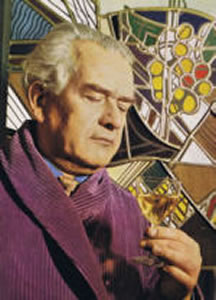
In Memoriam Heere Heeresma


In Memoriam Heere Heeresma


De Nederlandse schrijver Heere Heeresma is zondagochtend op 79-jarige leeftijd overleden in een verzorgingstehuis voor oudere kunstenaars en wetenschappers in Laren. De schrijver was bekend van onder meer zijn romans Een dagje naar het strand en Han de Wit gaat in ontwikkelingshulp. Heere Heeresma werd geboren in Amsterdam op 9 maart 1932. Zie ook mijn blog van 9 maart 2007 en ook mijn blog van 9 maart 2008. en en ook mijn blog van 9 maart 2009 en ook mijn blog van 9 maart 2010.


Uit: Een aanranding in het Vondelpark


„Ze bleef liggen, ze voelde zich te zwak om op te staan. Het was weer doodstil in het park. Het was opgehouden met sneeuwen merkte ze. Ze hoorde helemaal niks meer. Net zoals in het begin. Na die drukte van net leek het wel alsof ze ergens op de Sahara was. Vele vragen spookte door haar hoofd; ‘Wat gebeurt er allemaal? Waarom moet mij dit nou net overkomen?’. ‘Ik moet opstaan en verder lopen. Laat ik dit maar vergeten’ Ze stond op en liep verder. Haar benen voelde nog zwak aan.
Het is doodstil. Ze hoort alleen het kraken van de sneeuw onder haar schoenen. Hé, in de verte zag ze een schommelend lichtje. Waarschijnlijk van een fietser…“


Uit: Kijk, een drenkeling komt voorbij


‘“Nee,” zei hij. “Eerst mijn schelpen verkopen.” “Hoe wil je die kar door het strand trekken?” vroeg ze, liep naar voren, legde een hand op de grijze ezel en duwde. Het dier viel om. Het was van gewapend karton en een voorpoot lag door de val eraf. Bitter keek hij neer op die flauwekul en begon toen de kar los te maken. Vers touw. Echt touw. Geen blauwe of oranje lijnen van kunststof.


Uit: Han de Wit gaat in ontwikkelingshulp


“En daar was vader. De donderende slag waarmee deze de keukendeur achter zich dicht gooide deed het meubilair trillen. Vaders vrolijke bas schalde door het huis en knallend sloeg hij moeder op d'r gat.
‘Ondeugd!’ schreeuwde moeder en dreigde vader met de pollelepel waarbij de soep over haar hand liep.
Glimlachend zag hij het aan. Hij hield er van wanneer vader in een puik humeurtje was. Zo vaak kwam dat niet voor. Streep aan de balk.
‘Zo jan lul!’
‘Dag vader.’ Hij reikte vader de hand en kromp in elkaar toen deze hem even in zijn eeltknuist drukte.
‘Eten!’ riep vader.
‘Trek eerst je duffelse jekker uit en was je jatten, man,’ zei moeder.
‘Deze vuiligheid op m'n kleren en m'n lichaam is tenminste door eerlijk werk verkregen,’ meende vader.
‘Daar behoef je ons toch niet de dupe van te laten worden.’
Mopperend verdween vader in de slaapkamer.


Het allerlaatste gedicht


De hebzucht en de fantasie zijn prima

Want vullen onze eenzaamheid met lust.

Hier is de Bijenkorf al, en daar de Hema.

En straks de dood voor de noodzakelijke rust.


940801-798a0c3db7e5574552095618da577d75.jpg
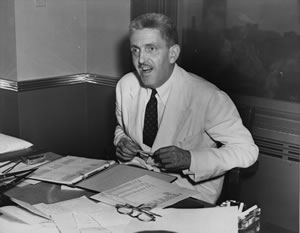
Heere Heeresma (9 maart 1932 – 26 juni 2011)

Geschreven door Romenu om 21:09 Reageer op dit bericht

Jacqueline van der Waals, Aimé Césaire, Yves Beauchemin, Elisabeth Büchle, Laurie Lee, Pearl S. Buck

De Nederlandse dichteres Jacqueline Elisabeth van der Waals werd geboren op 26 juni 1868 in Den Haag. Zie ook mijn blog van 26 juni 2007 en ook mijn blog van 26 juni 2008 en ook mijn blog van 26 juni 2009 en ook mijn blog van 26 juni 2010.


Rozenboompje


Als de zon des avonds daalt

Staat mijn rozenboom vol rozen,

Nog in 't avondlicht te blozen

Dat zijn kruintje overstraalt.


't Boompje bloost en bloeit en blinkt

In het midden van mijn gaarde,

Waar rondom de duisterende aarde

Reeds in schemering verzinkt.


's Avonds in mijn rozenhof

Blijft het avondlicht gevangen

In de duizend roosjes hangen,

Rodend roos en rozelof.


Vreemd


Vreemd, dat boom en tak zo stil staan

In het gouden licht vandaag,

Dat de bladertjes zo stil gaan,

't Een na 't ander, naar omlaag.


Dat het zonlicht zo voorzichtig

Door de ijlheid straalt van 't lof,

En het groene blad doorzichtig

En veel edeler maakt van stof,


Dat het windje in de twijgen

Zo behoedzaam gaat te werk

En aleen wat blaadjes zijgen

Doet op 't pad en 't bloemenperk,


Zonder 't wazig diep te raken

Waar de groene schemer blauwt,

Of de goudglans schuw te maken

In het ijlbebladerd hout,


Of te roeren aan de vijver,

Waar zeer statiglijk en traag

Twee voorname zwanen drijven

Met hun spiegelbeeld omlaag,


En wat late najaarsrozen,

Als bewasemend amethyst,

Al de weemoed van hun broze

Schoonheid heffen in de mist.


 940761-741ffd2526e880f80ba095b474a9516b.jpg

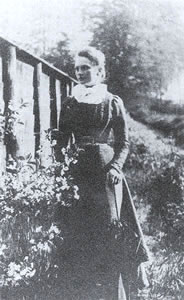
Jacqueline van der Waals (26 juni 1868 – 29 april 1922)


De Afrocaraïbische schrijver en politicus Aimé Césaire werd geboren op 26 juni 1913 in Basse-Pointe, Martinique. Zie ook mijn blog van 26 juni 2007 en ook mijn blog van 26 juni 2008 en ook mijn blog van 26 juni 2009 en ook mijn blog van 26 juni 2010.


Prophétie


Là
où l'aventure garde les yeux clairs
là où les femmes rayonnent de langage
là où la mort est belle dans la main comme un oiseau
saison de lait
là où le souterrain cueille de sa propre génuflexion un luxe
de prunelles plus violent que des chenilles
là où la merveille agile fait flèche et feu de tout bois

là où la nuit vigoureuse saigne une vitesse de purs végétaux

là où les abeilles des étoiles piquent le ciel d'une ruche
plus ardente que la nuit
là où le bruit de mes talons remplit l'espace et lève
à rebours la face du temps
là où l'arc-en-ciel de ma parole est chargé d'unir demain
à l'espoir et l'infant à la reine,

d'avoir injurié mes maîtres mordu les soldats du sultan
d'avoir gémi dans le désert
d'avoir crié vers mes gardiens
d'avoir supplié les chacals et les hyènes pasteurs de caravanes

je regarde
la fumée se précipite en cheval sauvage sur le devant
de la scène ourle un instant la lave
de sa fragile queue de paon puis se déchirant
la chemise s'ouvre d'un coup la poitrine et
je la regarde en îles britanniques en îlots
en rochers déchiquetés se fondre
peu à peu dans la mer lucide de l'air
où baignent prophétiques
ma gueule
ma révolte
mon nom.


940761-1529b1974ed52e3393d315e19c8a1265.jpg
Aimé Césaire (26 juni 1913 – 17 april 2008)


De Canadese schrijver Yves Beauchemin werd geboren op 26 juni 1941 in Rouyn-Noranda, Quebec. Zie ook mijn blog van 26 juni 2007 en ook mijn blog van 26 juni 2008 en ook mijn blog van 26 juni 2009 en ook mijn blog van 26 juni 2010.


Uit: Les émois d'un marchand de café


„Eh bien! si... si je vous hébergeais pour la nuit? Cela vous donnerait un peu de temps pour chercher un logement, non? J'ai une très grande maison à Outremont, que j'habite seul depuis des années. Enfin, pas tout à fait seul, à vrai dire. J'ai une gouvernante qui s'occupe de mon intérieur.. Je suis divorcé., crut-il bon d'ajouter et mes enfants sont man ès... enfin deux d'entre eux.

Il eut un sourire embarrassé : j'espère que vous ne vous imaginez pas que je suis en train... euh... de vous draguer comme on dit?

Je n'y ai pas pensé une seconde, monsieur répondit-elle, avec un plissement d'œil presque impertinent.

Il arriva chez lui dans un état d'exaltation qu'il n'avait pas connu depuis des années, étonné d'ailleurs par sa réaction, car le bon sens lui disait que l'arrivée de cette jeune femme et de son poupon ne pouvait lui apporter que des complications.
Elle sortit de l'auto et contempla, interdite, l'immense maison de deux étages au revêtement de bardeaux de cèdre grisâtres, puis les arbres centenaires...
- Vous êtes riche, vous!

- Un peu, répondit-il avec un petit rire satisfait. Mais j'ai dû travailler dur, vous savez. Et je continue.

- Qu'est-ce que vous faites?

- Je suis dans le café.“


 940761-7ffa2d4f0bad6a45afe2de9d0d9d2401.jpg

Yves Beauchemin (Rouyn-Noranda, 26 juni 1941)


De Duitse schrijfster Elisabeth Büchle werd geboren op 26 juni 1969 in Trossingen, Baden-Württemberg. Zie ook mijn blog van 26 juni 2009 en ook mijn blog van 26 juni 2010.


 Uit: Goldsommer


„Der kräftige Wind peitschte den Neuschnee auf und trug ihn mit sich davon. Die ganze Welt schien nur noch aus einer weißen, eisigen Wand und dem brennenden Schmerz in ihrem Herzen zu bestehen. „Warum?“, murmelte Amrei zum wiederholten Mal gegen den wütenden Sturm an und zog dabei Schutz suchend die Schultern in die Höhe.

Sie spürte ein unangenehmes Rumoren in sich, als sie beobachtete, wie ihr Bruder seine schwangere Frau fest in die Arme schloss. Inmitten des Schneetreibens wirkte das Paar wie ein einziger dunkler

Schatten. Michael hatte die junge Frau vor einem halben Jahr von einer seiner Reisen mitgebracht und geheiratet. Er hatte keinen Einspruch gegen diese überstürzte Heirat mit einer Fremden, die nur

Hochdeutsch sprach, gelten lassen. Und jetzt ließ er sie alle allein.

Nachdem ihr Vater schon früh als Freiwilliger in den Krieg gezogen war, war nun auch Michael einberufen worden.

„Warum?“, presste Amrei erneut zwischen zusammengebissenen Zähnen hervor. Jetzt blieben auf dem Hof nur noch die alte Großmutter, ein Knecht, diese fremde Frau, die ihre Schwägerin war, und

sie selbst zurück. Amrei hob den Kopf, als das Knirschen des Schnees unter Michaels schweren Schritten sein Näherkommen verriet. Aufrecht, trotz der vom Wind herbeigepeitschten, beißenden Schneegraupel, stand ihr Bruder vor ihr und blickte liebevoll auf sie herunter. Wie so oft lag ein Lächeln auf dem Gesicht des fröhlichen jungen Mannes. „So, Kleine. Jetzt musst du ein paar Wochen ohne mich auskommen.“

„Das wird eine Wohltat sein!“, gab sie patzig zurück, obwohl ihr dabei ein kräftiger Schmerz in ihrem Inneren den Atem zu rauben drohte.

„Das dachte ich mir, Kleine!“, erwiderte Michael grinsend.

„Ich bin 14 Jahre alt und deshalb keineswegs klein!“

„Stimmt, du bist ziemlich groß.”


940761-b0ff77140ebf71c9162e92f335965ed5.jpg 

Elisabeth Büchle (Trossingen, 26 juni 1969)


De Engelse dichter en schrijver Laurence Edward Alan "Laurie" Lee werd geboren in Stroud, Gloucestershire op 26 juni 1914. Zie ook mijn blog van 26 juni 2007 en ook mijn blog van 26 juni 2008 en ook mijn blog van 26 juni 2009 en ook mijn blog van 26 juni 2010.


My Many-Coated Man

Under the scarlet-licking leaves,
through bloody thought and bubbly shade,
the padded, spicy tiger moves
a sheath of swords, a hooded blade.

The turtle on the naked sand
peels to the air his pewter snout
and rubs the sky with slotted shell –
the heart's dismay turned inside out.

The rank red fox goes forth at night
to bite the gosling's downy throat,
then digs his grave with panic claws
to share oblivion with the stoat.

The mottled moth, pinned to a tree,
woos with his wings the bark's disease
and strikes a fungoid, fevered pose
to live forgotten and at ease.

Like these, my many-coated man
shields his hot hunger from the wind,
and, hooded by a smile, commits
his private murder in the mind.


Field of Autumn


"Slow moves the acid breath of noon

over the copper-coated hill,

slow from the wild crab's bearded breast

the palsied apples fall.


Like coloured smoke the day hangs fire,

taking the village without sound;

the vulture-headed sun lies low

chained to the violet ground.


The horse upon the rocky height

rolls all the valley in his eye,

but dares not raise his foot or move

his shoulder from the fly.


The sheep, snail-backed against the wall,

lifts her blind face but does not know

the cry her blackened tongue gives forth

is the first bleat of snow.


Each bird and stone, each roof and well,

feels the gold foot of autumn pass;

each spider binds with glittering snare

the splintered bones of grass.


Slow moves the hour that sucks our life,

slow drops the late wasp from the pear,

the rose tree's thread of scent draws thin -

and snaps upon the air. "


 940761-0e6eb070d5052ebbf6109bef2e6ccebc.jpg

Laurie Lee (26 juni 1914 – 13 mei 1997)


De Amerikaanse schrijfster Pearl S. Buck werd geboren in Hillsboro West-Virginia, op 26 juni 1892. Zie ook mijn blog van 26 juni 2010 en eveneens alle tags voor Pearl S. Buck op dit blog.


Uit: The good earth


„He hurried out into the middle room, drawing on his blue outer trousers as he went, and knotting about the fullness at his waist his girdle of blue cotton cloth. He left his upper body bare until he had heated water to bathe himself. He went into the shed which was the kitchen, leaning against the house, and out of its dusk an ox twisted its head from behind the corner next the door and lowed at him deeply. The kitchen was made of earthen bricks as the house was, great squares of earth dug from their own fields, and thatched with straw from their own wheat. Out of their own earth had his grandfather in his youth fashioned also the oven, baked and black with many years of meal preparing. On top of this earthen structure stood a deep, round, iron cauldron.
This cauldron he filled partly full of water, dipping it with a half gourd from an earthen jar that stood near, but he dipped cautiously, for water was precious. Then, after a hesitation, he suddenly lifted the jar and emptied all the water into the cauldron. This day he would bathe his whole body. Not since he was a child upon his mother's knee had anyone looked upon his body. Today one would, and he would have it clean.
He went around the oven to the rear, and selecting a handful of the dry grass and stalks standing in the corner of the kitchen, he arranged it delicately in the mouth of the oven, making the most of every leaf. Then from an old flint and iron he caught a flame and thrust it into the straw and there was a blaze.
This was the last morning he would have to light the fire. He had lit it every morning since his mother died six years before. He had lit the fire, boiled water, and poured the water into a bowl and taken it into the room where his father sat upon his bed, coughing and fumbling for his shoes upon the floor. Every morning for these six years the old man had waited for his son to bring in hot water to ease him of his morning coughing.“


940761-af19fdc9cdbd69d5db21aefc103d0c29.jpg
Pearl S. Buck (26 juni 1892 – 6 maart 1973)

Portret door Freeman Elliott


Zie voor nog meer schrijvers van de 26e juni ook mijn vorige blog van vandaag

Geschreven door Romenu om 19:41 Reageer op dit bericht

Stefan Andres, Martin Andersen-Nexø, Bankim Chandra Chatterjee, Sunthorn Phu, Branwell Brontë, Sidney Howard

Duitse schrijver Stefan Andres werd geboren op 26 juni 1906 in Breitwies bij Trier. Zie ook mijn blog van 26 juni 2007 en ook mijn blog van 26 juni 2008 en ook mijn blog van 26 juni 2009 en ook mijn blog van 26 juni 2010.


Uit: Wir sind Utopia


„Das braune, eintönige Plateau lag unter der jeden Tag gleich wiederkehrenden Sonne zerpulvert da, und um das Gefährt, das in den sanften Senkungen des Weges verging und wieder hügelan strebte, hatte sich eine so dichte Staubwolke gebildet, daß man nur an seiner Schnelligkeit, dem Benzingestank und dem nachmittäglich langen Schatten einen Lastkraftwagen erkennen konnte. Wer aus der Ferne die knatternde, gelbe Wolke in der Einöde dahinkriechen sah, konnte die groteske Vor-

stellung haben, daß sich ein Stück des Weges erhoben und auf Wanderschaft begeben habe, um die rätselhafte Linie seines Auf und Ab und alle Windungen selber einmal zu verfolgen, in einem goldenen Federbusch dahinstäubend und eine lange, immer dünner und niedriger gleitende Schleppe hinter sich herziehend.

Aber es gab keinen Zuschauer. Die wenigen Bauernhäuser starrten mit schwarzen Fenstern ausgestorben in den Sonnenbrand, nur ein paar Hunde hoben gegen das sich nahende Monstrum aus Staub und Lärm die Nasen, duckten sich und sprangen in die versengten Felder, um dann wieder auf den leeren Weg zurückzukehren, an dessen Rand sie entlangsuchten, um bei einem umgewofenen Gepäckwagen und dem aufgedunsenen Körper eines Pferdes herumzuschnüffeln, zögernd und miteinander zankend, bis der Hunger ihren Abscheu vor dem Aas überwand.

Die Staubwolke aber kroch unentwegt in die Weite, und dort, wo auf der goldbraunen Höhe die ebenso braune Ringmauer einer im Mittelalter liegengebliebenen Stadt wie eine natürliche Felsenstufe sich erhob, verschwand sie unter dem Torbogen wie eine Lokomotive in einem Tunnel, und die Wachsoldaten unterm Tor sahen, wie auf dem Katzenkopfpflaster der Staub um den Wagen plötz-

lich verging und Bajonette hervorblitzten, ein eiserner Verhau um die wie aus Lehm gebackenen Gestalten, die auf dem offenen Lastwagen hockten und mit stumpfen Gesichtern den unerwarteten Schatten genossen und kaum den Kopf zu einem verstohlenen, flüchtigen Um- blick erhoben.


 940758-cdecfd41216b50b11b34a16f5bd7b9a1.jpg

Stefan Andres (26 juni 1906 - 29 juni 1970)


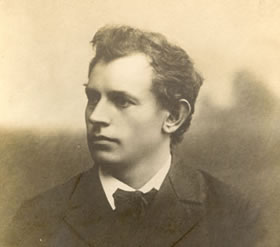
De Deense schrijver Martin Andersen-Nexø werd geboren op 26 juni 1869 in Kopenhagen. Zie ook mijn blog van 26 juni 2007 en ook mijn blog van 26 juni 2009 en ook mijn blog van 26 juni 2010.


Uit: Die Passagiere der leeren Plätze (Vertaald door Ellen Schou en Karl Schodder)


„Wird unser Zeitalter etwa deshalb das eiserne genannt, weil die große Mehrheit von uns mit einer Kette ums Bein zur Welt kommen?
Ich gehörte selbst zu den unschuldig Ausgestoßenen, die, sobald sie kriechen können, den Reihen der Lebenssklaven eingekoppelt werden, deren verfluchtes Los es ist, einigen wenigen Auserwählten die Erde zu einem angenehmen Aufenthaltsort zu machen. Ab und zu wurde einer von uns ausgekoppelt und der Ewigkeit übergeben — billig und ohne Zeremonien; automatisch schloss sich die Reihe wieder, und wir anderen plackten uns zur Erde gebeugt weiter ab, während unsere ausgehungerten Seelen die Luft mit ihrem Geschrei erfüllten. Wie umherirrende Vögel kreisten sie über uns, ruhelos nach einem geschützten Brutplatz jagend. So zahlreich waren sie, dass sie die Sonne verdunkelten und selbst auf die lichtesten Gegenden der Erde Schatten warfen.
Eines Tages wurde ich als unbrauchbar ausgekoppelt — und auf freiem Felde zum Sterben zurückgelassen. Es meldete sich kein Arzt, obwohl ich noch gern ein bisschen gelebt hätte, aber ein schwarzer Pfaffe kreiste in bedenklicher Nähe um mich herum. Er wartete darauf, dass ich abkratzte, damit er meine Seele einfangen könnte. Zu seiner Entschuldigung muss gesagt werden, dass er vom Staat dazu abgerichtet worden war.
Die Beute entschlüpfte ihm aber; eine gutherzige Frau sammelte mich auf und brachte mich zu einem Arzt. „Tuberkulose!" sagte er. — „Und im übrigen verbraucht, ausgezehrt, von Geburt an unterernährt! Wie lange haben Sie gearbeitet?"
„Zwanzig Jahre."
„Und wie alt sind Sie?"
„Vierundzwanzig."
„Dann haben Sie ja eigentlich auch ausgedient." „Ist gar nichts dagegen zu tun?" fragte die warmherzige Frau. „Ein Winter im Süden könnte ihn vielleicht retten. Sonst aber krepiert er."
Das Wort „krepiert" gab mir einen Stich — im Grunde ziemlich sinnlos. Warum sich an Worte hängen, wenn die Bedeutung die gleiche ist? Und die ließ sich nicht missverstehen. In der Gesellschaft ist kein Organ vorhanden, das ein unschuldig zum Tode Verurteilter anrufen und um Begnadigung bitten kann. Verbrauchter und misshandelter Pferde nimmt die Polizei sich an, ein missbrauchter und vor der Zeit ausgenutzter Arbeiter hat nur den Himmel. Ich richtete mich ohne großes Widerstreben darauf ein, meine ausgehöhlten Lungen mit ewiger Seligkeit zu füllen.“


940758-efa14106d16950632745b05b7086fb06.jpg 

Martin Andersen-Nexø (26 juni 1869 – 1 juni 1954)


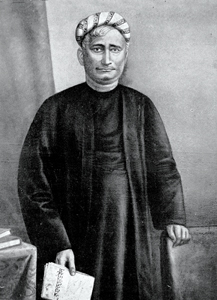
De Bengaals – Indische dichter, schrijver, essayiste en journalist Bankim Chandra Chatterjee werd geboren op 26 juni 1838 in Kanthalpura. Zie ook mijn blog van 26 juni 2007 en ook mijn blog van 26 juni 2009 en ook mijn blog van 26 juni 2010.


Uit: The Poison Tree (Vertaald door Miriam S. Knight)


„Nagendra was in a great strait. If, in fear of the storm, he should leave the boat, the men would think him a coward; if he remained he would break his word to Surja Mukhi. Some may ask, What harm if he did? We know not, but Nagendra thought it harm. At this moment Rahamat Mullah said, "Sir, the rope is old; I do not know what may happen. The storm has much increased;[6] it will be well to leave the boat." Accordingly Nagendra got out.

No one can stand on the river bank without shelter in a heavy storm of rain. There was no sign of abatement; therefore Nagendra, thinking it necessary to seek for shelter, set out to walk to the village, which was at some distance from the river, through miry paths. Presently the rain ceased, the wind abated slightly, but the sky was still thickly covered with clouds; therefore both wind and rain might be expected at night. Nagendra went on, not turning back.

Though it was early in the evening, there was thick darkness, because of the clouds. There was no sign of village, house, plain, road, or river; but the trees, being surrounded by myriads of fireflies, looked like artificial trees studded with diamonds. The lightning goddess also still sent quick flashes through the now silent black and white clouds. A woman's anger does not die away suddenly. The assembled frogs, rejoicing in the newly fallen rain, held high festival; and if you listened attentively the voice of the cricket might be heard, like[7] the undying crackle of Ravana's funeral pyre. Amid the sounds might be distinguished the fall of the rain-drops on the leaves of the trees, and that of the leaves into the pools beneath; the noise of jackals' feet on the wet paths, occasionally that of the birds on the trees shaking the water from their drenched feathers, and now and then the moaning of the almost subdued wind. Presently Nagendra saw a light in the distance. Traversing the flooded earth, drenched by the drippings from the trees, and frightening away the jackals, he approached the light; and on nearing it with much difficulty, saw that it proceeded from an old brick-built house, the door of which was open. Leaving his servant outside, Nagendra entered the house, which he found in a frightful condition.“


 940758-5982018d28235b56bab3e7b38620b298.jpg

Bankim Chandra Chatterjee (26 juni 1838 – 8 april 1894)


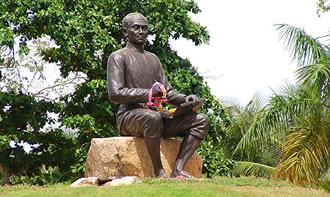
De Thaise dichter Sunthorn Phu werd geboren op 26 juni 1786 in Bangkok. Zie ook mijn blog van 26 juni 2007 en ook mijn blog van 26 juni 2009 en ook mijn blog van 26 juni 2010.


Uit: Phra Aphai Mani (Vertaald door Prince Prem Burachat)


„ONCE upon a time, a certain prince whose name was Sudasna ruled over a small but prosperous country. He had two sons : the elder, fifteen years of age, was called Phra Abhai Mani, and the younger, aged thirteen, was called Sri Suvarna. Realising that they had reached years of discretion, and were ready to have knowledge instilled into them, so that they might later rule the principality rightly and justly, he summoned them into his presence and addressed them thus :

"My sons, one day you will rule over this country. It is meet that, like those princes of old, you should acquire knowledge which will enable you to protect your inheritance. So you must seek out learned men from whom you may receive instruction in such subjects as will be useful to you hereafter."

The two young brothers bowed to their father, and signified their intention of obeying his will. After receiving further words of fatherly advice, they took their leave of him.

In those days, wise and learned men lived the lives of hermits, jealously guarding the treasures of their knowledge in the fastnesses of the forest or in the distant villages. By dint of much effort, and after fifteen days' travel through the jungle, Phra Abhai Mani and Sri Suvarna succeeded in finding two ancient professors worthy of their consideration. One, as a notice on his door announced, taught the gentle art of flute-playing, and the other the sturdier science of self-defence. Phra Abhai Mani dicided without any hesitation that he would learn to play the flute, while Sri Suvarna chose self-defence. The only difficulty was that neither had brought with him the hundred thousand tamlueng of gold which each professor seemed to require in exchange for his instruction, (for in those days before there was popular education, teachers were entitled to demand their price!). However, on explaining the matter to the venerable old men, the latter kindly agreed to accept a ring of each as fee : they knew that the boys were of noble descent.“


 940758-456d44d83674289117c2581934021dde.jpg

Sunthorn Phu (26 juni 1786 - ? 1855)

Standbeeld in Rayong


De Engelse dichter Branwell Brontë werd op 26 juni 1817 geboren in Thornton, Yorkshire. Zie ook mijn blog van 26 juni 2009 en ook mijn blog van 26 juni 2010.


Penmaenmawr (Winter 1845)


I knew a flower whose leaves were meant to bloom

Till Death should snatch it to adorn the tomb,

Now, blanching 'neath the blight of hopeless grief

With never blooming and yet living leaf;

A flower on which my mind would wish to shine,

If but one beam could break from mind like mine:

I had an ear which could on accents dwell

That might as well say 'perish' as 'farewell' -

An eye which saw, far off, a tender form

Beaten, unsheltered, by affliction's storm -

An arm - a lip - that trembled to embrace

My Angel's gentle breast and sorrowing face

A mind that clung to Ouse's fertile side

While tossing - objectless - on Menai's tide!


 940758-7c0e2bcf39fdddc8778ea991e3cc4501.jpg

Branwell Brontë (26 juni 1817 – 24 september 1848)

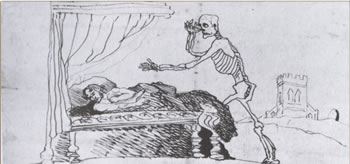
Karikatuur van Branwell zelf, wachtend op de dood


De Amerikaanse toneel- en draaiboekschrijver Sidney Howard werd geboren op 26 juni 1891 in Oakland, Californië. Zie ook mijn blog van 26 juni 2007.


Uit: The Story Gets a Treatment


“If one goes to the root of the matter, motion pictures are neither written nor acted, but made. It is the combination of director with cameraman which, more than the writer, more even than the beloved screen personality, gives the finished picture its life. Apart from the original story material, the writer's function in the making of pictures is a secondary one. Since the screen as we know it draws the vast bulk of its story material from books, periodicals and the stage – with a few imaginative excursions into biography – the screenwriter's task is really a job of adaptation hack writing, cut to the dimension of the director's demands. The screen does not yet ask of its writers much more than technical ingenuity.

In my opinion, novels make better pictures than plays. The playwright selects for his material a story which is most effectively told within the scenic limitations for the stage and is likely to suffer from over-elaboration on the screen. The screening of a play requires expansion, which is bad for a work of art. The screening of a novel, by contrast, requires contraction, which is apt to be good.

The motion-picture form lies somewhere between the novel and the play. It rejoices in at least the geographic freedom of the novel because it can move easily from place to place as a play cannot. However, the motion picture must do without the repose of either novel or play, and therefore without the reflective expansion of either idea or emotion. It has its own and most rigorous technique, which is best described by saying that a moving photograph must move and keep moving. In other words, its story, to be well told, must be told continuously in action. What the characters think or feel on the screen must be expressed by doing, and only strong and clear thoughts and emotions can be expected to pierce through a medium which, even in color, lacks the reality of the flesh and blood of the stage, on the one hand, and of the novelist's personal spell on the other.“


940758-25f4bbe4850fc909bc40d241ee7822e0.jpg
Sidney Howard (26 juni 1891 – 23 augustus 1939)

Geschreven door Romenu om 19:34 Reageer op dit bericht

Meer van Romenu

↑ Terug naar de berichten