Naar de inhoud

Romenu

Over literatuur, gedichten, kunst en cultuur
seniorennet.beseniorennet.be

Berichten van 21 juni 2014

Ed Leeflang, Thomas Blondeau, Anne Carson, Adam Zagajewski, Ian McEwan, Alon Hilu, Robert Menasse
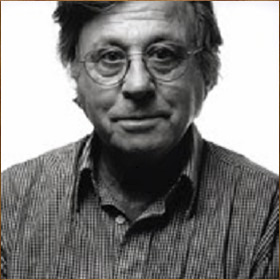
De Nederlandse dichter Ed Leeflang werd geboren op 21 juni 1929 in Amsterdam. Zie ook alle tags voor Ed Leeflang op dit blog.


Ze is zo groot

Ze is zo groot, zo warm, zo zonnig.
Ze haalt haar wijsheid uit een land
waar vuilnisbakken zijn beverfd met bloemen;
's zomers zeilt zij op haar houten ledikant.

Haar lach vliegt zeer omslachtig
als een fazant bijvoorbeeld door het lokaal,
zo kleurig ook; zij houdt van allemaal
en niemand is alleen gelaten.
Ze kan niet haten.

Op het bord zij waaren en hij hete;
ze is er voor het zijn, niet voor het weten,
naar kennis heeft ze nooit gedorst.
Ze is zo groot, zo warm, zo zonnig;
ze geeft straks heel de klas de borst.


Werkcoupé

Besneeuwde velden zijn de wereld zelf.
De zware hekken sluiten niets meer af.
Tot suikerbeesten eten paarden zich
waarna de bakker ze komt halen.
O palmen van de boerenkool.
Magere haas, golfplaat van eterniet,
contour die slingert, sierend niets
voorbijschiet en ontroert.
De reigers vasten, maraboes
mijn stiltes trouw gebleven
in menselijk teveel. Tellen
houdt op. Roestende emmer, halfbedoelven
steekt schuins zijn hengsel uit
naar het gewapend riet.
Houwdegens posten in de leegte
het liefste bij verdriet.


Kortenhoef

De avond komt over de kleine binnenplas.
Ik peddel niet meer, licht zuchtend loopt
de kano vast in de plompeblaren. Nog een
kleine opmerking van de wind
achter mij in het riet. De watermunt
geurt me met kracht achterna van het
licht aanvaren.

Een fuut komt haastig nog door de ban,
met watervrees zwemmend, alsof het zo weer
spertijd is, weer jeugd en oorlog worden kan.

Een bel ontploft zacht aan het oppervlak;
heeft ook het ongeborene al ontzetting?

Wat heb je toch met de stilte,
steeds minder beangste, verouderde man?
Je leven heb je onder de leden
en je wil toch niemand meer laten delen
in die besmetting?


 1614967-7bfed2661e4301d2ed4d077f28a1eee2.jpg
Ed Leeflang (21 juni 1929 – 17 maart 2008)


De Vlaamse dichter, schrijver en journalist Thomas Blondeau werd geboren in Poperinge op 21 juni 1978. Zie ook Zie ook alle tags voor Thomas Blondeau op dit blog.


mijn geweten stond buiten tegen

mijn geweten stond buiten tegen
een boom te pissen toen ik stierf
en ter ere van die gelegenheid
hebben zij mij tentoongesteld

al mijn vrienden van ebbenhout kwamen langs
de boktorren en de bomen, de kristallen fles wijn
de godvergeten decors en de cicaden van vlees

iemand plaatste een schorpioen op
mijn borst omdat het nu toch geen
kwaad meer kon en koud dat het was
koud

ik werd begraven in een schildpaddenschild
en mijn pyjama die ene die S. ooit droeg en waarin ze me
’s ochtends devoot de mooiste tieten aanbood

de priester zegende ‘t publiek maar vatte vlam
door een fout van de vuurspuwer die indruk wou
maken op mijn vrouw geloof ik

boven mij een paarlemoeren iets dat dikke
druppels bloedde die in een meer van versteende planten
vielen, ze werden daar kikkers, vogels en mistsluiers dik als mijn oogleden


Uit: ‘Mijn beste gedicht dat u nooit zult lezen

IV

we hebben gelogen om bij elkaar te zijn
dat draagt niet ver deze dagen dit zal dan
geen muur meer zijn geen contrapunt geen bed
ik ben nog jong bedden zijn om over op te
scheppen niet om te slapen te scheiden

vrienden verloren om bij elkaar te zijn
en dat allemaal zonder cirkels in het zand
handschoenen in het gezicht een godbetert
voorhangsel die brokaten druppels bloei – hou maar op

vraag me belachelijk te zijn ik zal manmoedig
op tafel staan een voet in de soepkom en zwaaien
met een heilig vuil servet


 1614967-ee502f6ec7e2d168b041251207422f7d.jpg
Thomas Blondeau (21 juni 1978 – 20 oktober 2013)


De Canadese dichteres, essayiste en vertaalster Anne Carson werd geboren op 21 juni 1950 in Toronto. Zie ook alle tags voor Anne Carson op dit blog.


Book of Isaiah, Part I

Isaiah awoke angry.
Lapping at Isaiah’s ears black birdsong no it was anger.  
God had filled Isaiah’s ears with stingers.
Once God and Isaiah were friends.
God and Isaiah used to converse nightly, Isaiah would rush into the garden.
They conversed under the Branch, night streamed down.
From the sole of the foot to the head God would make Isaiah ring.  
Isaiah had loved God and now his love was turned to pain.  
Isaiah wanted a name for the pain, he called it sin.
Now Isaiah was a man who believed he was a nation.
Isaiah called the nation Judah and the sin Judah’s condition.  
Inside Isaiah God saw the worldsheet burning.
Isaiah and God saw things differently, I can only tell you their actions.
Isaiah addressed the nation.  
Man’s brittleness! cried Isaiah.
The nation stirred in its husk and slept again.
Two slabs of bloody meat lay folded on its eyes like wings.  
Like a hard glossy painting the nation slept.
Who can invent a new fear?
Yet I have invented sin, thought Isaiah, running his hand over the knobs.
And then, because of a great attraction between them—
which Isaiah fought (for and against) for the rest of his life—
God shattered Isaiah’s indifference.
God washed Isaiah’s hair in fire.
God took the stay.
From beneath its meat wings the nation listened.  
You, said Isaiah.
No answer.
I cannot hear you, Isaiah spoke again under the Branch.  
Light bleached open the night camera.
God arrived.
God smashed Isaiah like glass through every socket of his nation.  
Liar! said God.
Isaiah put his hands on his coat, he put his hand on his face.
Isaiah is a small man, said Isaiah, but no liar.
God paused.
And so that was their contract.  
Brittle on both sides, no lying.
Isaiah’s wife came to the doorway, the doorposts had moved.  
What’s that sound? said Isaiah’s wife.  
The fear of the Lord, said Isaiah.  
He grinned in the dark, she went back inside.


 1614967-0a29e47f19f1c9cd16a54230fe310d9f.jpg
Anne Carson (Toronto, 21 juni 1950)


De Poolse dichter en essayist Adam Zagajewski werd geboren op 21 juni 1945 in Lwów, het huidige Lviv. Zie ook alle tags voor Adam Zagajewski op dit blog.


Tracht de verwonde wereld te bezingen

Tracht de verwonde wereld te bezingen.
Gedenk de lange junidagen,
de wilde aardbeien, de druppels roséwijn.
De brandnetels, die steevast door ballingen
verlaten panden overgroeiden.
Je moet de verwonde wereld bezingen.
Je aanschouwde stijlvolle jachten en schepen;
één had een lange reis voor de boeg,
anderen wachtte enkel het zilte niets.
Je zag vluchtelingen op weg naar nergens,
je hoorde de beulen een lied van vreugde zingen.
De verwonde wereld hoor je te bezingen.
Gedenk de ogenblikken waarop jullie samen waren
in een witte kamer; het gordijn bewoog.
Keer in gedachten terug naar het concert
toen de muziek losbarstte.
In de herfst raapte je eikels in het park
en bladeren dwarrelden over de
littekens van de aarde.
Bezing de verwonde wereld
en de grijze, door een lijster verloren veer,
en het zachte licht, dat dwaalt en verdwijnt
en weerkeert.


Vertaald door René Smeets en Kris van Heuckelom


Balance

I watched the arctic landscape from above
and thought of nothing, lovely nothing.
I observed white canopies of clouds, vast
expanses where no wolf tracks could be found.

I thought about you and about the emptiness
that can promise one thing only: plenitude—
and that a certain sort of snowy wasteland
bursts from a surfeit of happiness.

As we drew closer to our landing,
the vulnerable earth emerged among the clouds,
comic gardens forgotten by their owners,
pale grass plagued by winter and the wind.

I put my book down and for an instant felt
a perfect balance between waking and dreams.
But when the plane touched concrete, then
assiduously circled the airport’s labryinth,

I once again knew nothing. The darkness
of daily wanderings resumed, the day’s sweet darkness,
the darkness of the voice that counts and measures,
remembers and forgets.


 1614967-be339dbb1b75788041156dd63150cb75.jpg
Adam Zagajewski (Lwów, 21 juni 1945)


De Britse schrijver Ian McEwan werd op 21 juni 1948 geboren in de Engelse garnizoensplaats Aldershot. Zie ook alle tags voor Ian McEwan op dit blog.

Uit: Amsterdam

“George, the sad, rich publisher who doted on her and whom, to everyone's surprise, she had not left, though she always treated him badly. They looked now to where he stood outside the door, receiving commiseration from a group of mourners. Her death had raised him from general contempt. He appeared to have grown an inch or two, his back had straightened, his voice had deepened, a new dignity had narrowed his pleading, greedy eyes. Refusing to consign her to a home, he had cared for her with his own hands. More to the point, in the early days, when people still wanted to see her, he vetted her visitors. Clive and Vernon were strictly rationed because they were considered to make her excitable and, afterward, depressed about her condition. Another key male, the foreign secretary, was also unwelcome. People began to mutter; there were muted references in a couple of gossip columns. And then it no longer mattered, because the word was she was horribly not herself; people didn't want to go and see her and were glad that George was there to prevent them. Clive and Vernon, however, continued to enjoy loathing him.
As they turned about again, the phone in Vernon's pocket rang. He excused himself and stepped aside, leaving his friend to proceed alone.
Clive drew his overcoat about him and slowed his pace. There must be over two hundred in the black-suited crowd outside the crematorium now. Soon it would seem rude not to go over and say something to George. He got her finally, when she couldn't recognize her own face in the mirror.He could do nothing about her affairs, but in the end she was entirely his. Clive was losing the sensation in his feet, and as he stamped them the rhythm gave him back the ten-note falling figure, ritardando, a cor anglais, and rising softly against it, contrapuntally, cellos in mirror image. Her face in it. The end. All he wanted now was the warmth, the silence of his studio, the piano, the unfinished score, and to reach the end. He heard Vernon say in parting, "Fine. Rewrite the standfirst and run it on page four. I'll be there in a couple of hours." Then he said to Clive, "Bloody Israelis. We ought to wander over."


 1614967-1a1b0a87d8ca7111d863a1badfc97d17.jpg
Ian McEwan (Aldershot, 21 juni 1948)


De Israëlische schrijver Alon Hilu werd geboren op 21 juni 1972 in Jaffa. Zie ook alle tags voor Alon Hilu op dit blog.

Uit: Ver weg (Vertaald door Sylvie Hoyinck)

“Denk je echt in alle eerlijkheid dat jouw persoonlijkheid verbrijzeld is en verdwenen vanwege een beetje moeilijke periode? Ben je vergeten dat er een ware identiteit bestaat die helemaal van jou, van Nadav is, de Nadaviteit, wie jij bent, een identiteit en een doel die altijd bij je blijven, een essentie die gevormd wordt door de ziel en de geestelijke bouw van wie je bent?’
(…)

‘De crux is dat je een volwassen, zelfs gerespecteerd, man bent; er werd altijd waarderend over jou, de jurist bij het parket, gesproken en ook ik was er, tot ik een paar maanden geleden die eerste bizarre brief van je ontving, altijd van overtuigd dat je zo’n onderkoeld type was, zo’n ernstige oom die tot ’s avonds laat zit te werken en niet weet hoe hij zijn gevoelens moet tonen. [ … ] Je kunt dan wel besluiten dat je bezeten bent, maar moet je er dan meteen de hele wereld mee besmetten?’
(…)

‘Vergeet niet dat we zonder de pijn van slechte tijden, in goede tijden het genot niet op juiste waarde kunnen schatten! De pijn van vandaag bestaat zodat we ons die herinneren op andere dagen, bij een glas bier aan het strand, omgeven door goede vrienden, als we volmondig lachen en we misschien met enige weemoed terugdenken aan die moeilijke periode.”


 1614967-390f2c9c15b66097da4a32910bccbbff.jpg
Alon Hilu (Jaffa, 21 juni 1972)


De Oostenrijkse schrijver Robert Menasse werd geboren op 21 juni 1954 in Wenen. Zie ook alle tags voor Robert Menasse op dit blog.

Uit: Ich kann jeder sagen

„Im Flugzeug von Wien nach Rio de Janeiro – Nein. Ich möchte neu anfangen. Als ich Eva zum ersten Mal küsste, hörten wir die Platte »Born to be wild«. Das ist sechzehn Jahre her. Als ich unlängst von der Arbeit heimkam, wehrte Eva meinen Versuch, sie zu küssen, ab, worauf ich in das Zimmer unserer Tochter schaute.
Vanessa lag mit geschlossenen Augen auf ihrem Bett und hörte »Born to be alive«. Sie öffnete nicht einmal die Augen. Ich – Nein. Ich möchte neu anfangen. Ich war ein sehr guter Student, der zu den schönsten Hoffnungen berechtigte. Es war, als steckte in mir eine bis zum Äußersten angespannte Stahlfeder. Mein Lehrer, Professor Schneider, gab mir zu verstehen, dass er von mir erwartete, das Studium mit Auszeichnung abzuschließen. Aber die Feder löste sich nicht, ich machte nicht den Sprung nach vorne, sondern verhedderte mich in Theorien. Ich studierte übrigens Wirtschaftswissenschaften. Ich schrieb eine Arbeit zum Thema »Heterodoxer Schock«. Die Methode des heterodoxen Schocks gilt als Mittel, eine darniederliegende Nationalökonomie durch eine bewusst herbeigeführte reinigende Krise zu sanieren, in der man völlig geänderte Bedingungen für einen neuen Aufschwung durchsetzt.
Das war die Lehrmeinung. Ich plädierte aber dafür, diese Methode auch einmal bei saturierten, stabilen Volkswirtschaften anzuwenden, um auch diesen wie-der das Gefühl von Aufbruch und Neubeginn zu geben. Diese These war ein Skandal. Am Ende musste ich froh sein, eine positive Abschlussnote zu bekommen. Seit damals – Nein. Ich will neu anfangen. Wahr- scheinlich begann es schon, als ich zur Schule ging. Es war die Zeit, Ende der 60er-Jahre, als die Idee, man könne und müsse neu beginnen, alles anders und besser machen, zum allgemeinen Fetisch wurde.“


 1614967-1ead8abaa47b3253b7165d58d39d3720.jpg
Robert Menasse (Wenen, 21 juni 1954)


Zie voor nog meer schrijvers van de 21e juni ook mijn vorige twee blogs van vandaag.
Geschreven door Romenu om 14:11 Reageer op dit bericht

Jean-Paul Sartre, Machado de Assis, Georg Lentz, Chitra Gajadin, Helmut Heißenbüttel, Françoise Sagan

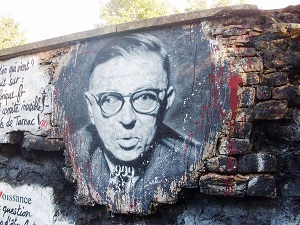
De Franse schrijver Jean Paul Sartre werd geboren op 21 juni 1905 in Parijs. Zie ook alle tags voor Jean-Paul Sartre op dit blog.

Uit: Nausea (Vertaald door Robert Baldick)

“I jump up: it would be much better if I could only stop thinking. Thoughts are the dullest things. Duller than flesh. They stretch out and there's no end to them and they leave a funny taste in the mouth. Then there are words, inside the thoughts, unfinished words, a sketchy sentence which constantly returns: "I have to fi. . . I ex. . . Dead . . . M. de Roll is dead . . . I am not ... I ex. . ." It goes, it goes . . . and there's no end to it. It's worse than the rest because I feel responsible and have complicity in it. For example, this sort of painful rumination: I exist, I am the one who keeps it up. I. The body lives by itself once it has begun. But though I am the one who continues it, unrolls it. I exist. How serpentine is this feeling of existing, I unwind it, slowly. ... If I could keep myself from thinking! I try, and succeed: my head seems to fill with smoke . . . and then it starts again: "Smoke . . . not to think . . . don't want to think ... I think I don't want to think. I mustn't think that I don't want to think. Because that's still a thought." Will there never be an end to it?
My thought is me: that's why I can't stop. I exist because I think . . . and I can't stop myself from thinking. At this very moment, it's frightful, if I exist, it is because I am horrified at existing. I am the one who pulls myself from the nothingness to which I aspire: the hatred, the disgust of existing, there are as many ways to make myself exist, to thrust myself into existence. Thoughts are born at the back of me, like sudden giddiness, I feel them being born behind my head ... if I yield, they're going to come round in front of me, between my eyes, and I always yield, the thought grows and grows and there it is, immense, filling me completely and renewing my existence.”


 1614961-844923b2fa73eb8fb7b9a14a73c6289a.jpg
Jean-Paul Sartre (21 juni 1905 - 15 april 1980)
Portret op een muur in Saint-Romain-au-Mont-d'Or


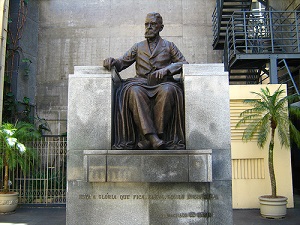
De Braziliaanse schrijver Joaquim Maria Machado de Assis werd geboren in Rio de Janeiro op 21 juni 1839. Zie ook alle tags voor Machado de Assis op dit blog.

Uit: The Posthumous Memoirs of Brás Cubas (Vertaald door Gregory Rabassa)

“Late and bored. Some nine or ten people had seen me leave, among them three ladies: my sister Sabina, married to Cotrim--their daughter, a lily of the valley,--and ... Be patient! In just a little while I'll tell you who the third lady was. Be content with knowing that the unnamed one, even though not a relative, suffered more than the relatives did. It's true. She suffered more. I'm not saying that she wailed, I'm not saying that she rolled on the ground in convulsions, or that my passing was a highly dramatic thing ... An old bachelor who expires at the age of sixty-four doesn't seem to gather up all the elements of a tragedy in himself. And even if that were the case, what least suited that unnamed lady was to show such feelings. Standing by the head of the bed, her eyes cloudy, her mouth half open, the sad lady had a hard time believing my extinction.
"Dead! Dead!" she kept saying to herself.
And her imagination, like the storks that an illustrious traveler watched taking flight from the Ilissus on their way to African shores without the hindrance of ruins and times--that lady's imagination also flew over the present rubble to the shores of a youthful Africa ... Let it go. We'll get there later on. We'll go there when I get my early years back. Now I want to die peacefully, methodically, listening to the ladies sobbing, the men talking softly, the rain drumming on the caladium leaves of my suburban home, and the strident sound of a knife a grinder is sharpening outside by a harness-maker's door. I swear to you that the orchestra of death was not at all as sad as it might have seemed. From a certain point on it even got to be delightful. Life was thrashing about in my chest with the surging of an ocean wave. My consciousness was evaporating. I was descending into physical and moral immobility and my body was turning into a plant, a stone, mud, nothing at all.
I died of pneumonia, yet if I tell my reader that it wasn't so much the pneumonia that caused my death but a magnificent and useful idea he might not believe me and, nevertheless, it's the truth. Let me explain briefly. You can judge for yourself.”


 1614961-701511569cb880f755e5f235aeed3b24.jpg
Machado de Assis (21 juni 1839 - 29 september 1908)
Standbeeld in Rio de Janeiro


De Duitse schrijer en uitgever Georg Lentz werd geboren in Blankenhagen op 21 juni 1928. Zie ook alle tags voor Georg Lentz op dit blog.

Uit: Muckefuck

„(Die Sorte hat sich leider als anfällig gegen Mehltau erwiesen.) Wir alle haben in den Wintergärten ausrangierte Badewannen oder Tonnen aufgestellt, in die wir das Regenwasser vom Dach leiten, zur Bewässerung der Pflanzen. Im Mai ernten wir die ersten Radieschen, rot und frisch. Sie knacken, wenn man hineinbeißt, und brennen die Zunge. Und im Sommer sitzen alle draußen, die Frauen kühlen Bierflaschen in Emailleeimern und bringen selbst gebackenen Bienenstich.
Heute benutzen die meisten Kühlschränke. Ich nicht. Denn als Ede, mein Vater, von Beruf erst Taxifahrer, dann Taxenbesitzer, die Laube baute, sorgte er für einen großen, kühlen Keller. Im Fußboden der Veranda ist eine Falltür eingelassen, und eine hölzerne, etwas wackelige Stiege führt hinunter.
Mit diesem Keller hängt eine meiner frühesten Erinnerungen zusammen. Fünf Jahre alt mag ich gewesen sein, als ich meine erste Expedition in den kramgefüllten Keller unternahm, auf der Suche nach zwei schwarzen, gelb gebordelten Kavalleriestiefeln, deren genaues Aussehen mir längst bekannt war. Durch ein Bild. In meinem Zimmer nämlich hing ein ziemlich großer Vierfarbdruck, Reminiszenz an die aktive Dienstzeit meines Vaters als Kavallerist. Es zeigte Ede in dunkelblauer Paradeuniform, zu der eben die gelb gebordelten Stiefel, hier augenscheinlich auf Hochglanz poliert, gehörten. Im Hintergrund unterstrich ein tänzelnder Apfelschimmel die hippologische Beziehung. Nur Edes Gesicht war schwarz-weiß. Ein aufgeklebtes Foto. An den Rändern löste es sich.”


 1614961-7fd56e789c04f42249591fda7d79c8c4.jpg
Georg Lentz (21 juni 1928 - 18 januari 2009)
Cover


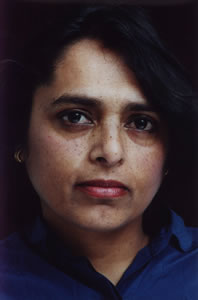
De Surinaamse dichteres en schrijfster Chitra Gajadin werd geboren in District Suriname op 21 juni 1954. Zie ook alle tags voor Chitra Gajadin op dit blog.


Jodenbreestraat

Boslandcreoolse op de stoep
uitgestald op wankel krat handvol
waren blijft mijn broer staan wijst
een vapetablet aan vijftig cent per
stuk in vluchtig opkijken staren haar
ogen door ons heen weerkaatst haar
blik verre oerwouden het lange
weerzien
heb je twee gulden
wat doe je met vier tabletjes?
twee nachten met één
gelaten stem in de strijd zonder
wapens in een land vol bloedzuigers


Domburg 1986

De rivier is diepbruin in rimpelloos
zwijgen
droge ogen vol mijmering langs de
kant
treurende oude bomen de
schemering
holt op blote kindervoeten vooruit

Avondstilte ruw gesmoord in
alcohol
wk-kijkers in warungs
bromfietsen stuiven uiteen
als geschrokken honden in de nacht


 1614961-bc7eabc182ecad0a0bcb129be5d16013.jpg
Chitra Gajadin (District Suriname, 21 juni 1954)


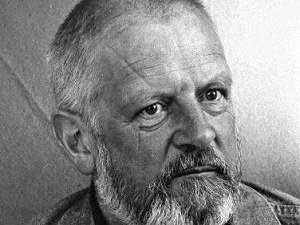
De Duitse dichter, schrijver en essayist Helmut Heißenbüttel werd geboren op 21 juni 1921 in Rüstringen, tegenwoordig Wilhelmshaven. Zie ook alle tags voorHelmut Heißenbüttel op dit blog.


Gedicht über die Übung zu sterben (Fragment)

americans in trains Bleiglanz auf der Limmat gleichmäßige
Verteilung von Licht Figur Geräusch Wasserglock Leuteschaum
Schneewind Steingesicht Efeurhomb Glanzknot Mövenflugornament
oberhalb strandend an einem Ufer aus abendlich aufeinander
getürmt Gespräch das nicht Sicherung und Mussorgsky gespielt von
Sviatoslav Richter Partner die fröhlich einander verständlich
ohne je selbst ins Auge das die Tendenz zu weit Ortsfremde
sowieso triumphierend über den Torso des weiblichen Rückens
blasses Licht aber angenehm und IN WELCHEN VERHÄLTNISSEN
SONST MEIN TREIBEN ZU VIELEM WAS SONST HIER GILT UND
 
IST UND NICHT GILT UND GILT UND NICHTS IST UND WIE
SICH DIESER ZUSTAND SONST IN SICH SELBER BEFINDE
DARÜBER WÄRE WOHL VIEL DENN UNSER WESEN HAT HIER
DEN VORTEIL IN SEINER WELTLÄUFIGKEIT DAVON BERÜHRT
ZU WERDEN MEIST NUR WENN MAN LUST HAT ES VON SICH
SO ZIEMLICH Schräghandgeruch Wurzelhand hin und her
wagrecht Lupinengelb zwischen Gitterhand Strichketten Gestäng
schattenschuppig Küste indrin und eine Schwierigkeit
kommt von hinten und geht nie mehr weg Grenzriß weißrasch
wütend bewischt vorüber die Silhouette die weggedreht plötzlich


 1614961-60117af9f2f955bc46f38f3554928fbe.jpg
Helmut Heißenbüttel (21 juni 1921 – 19 september 1996)


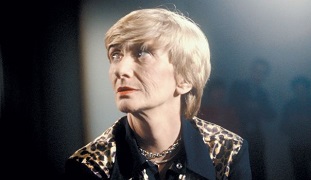
De Franse schrijfster Françoise Sagan (pseudoniem van Françoise Quoirez) werd geboren in Cajarc, Lot op 21 juni 1935. Zie ook alle tags voor Françoise Sagan op dit blog.

Uit: Een korte pijn (Vertaald door Marijke Arijs)

‘U bent, geloof ik, net zo dol op de hedendaagse architectuur als ik,’ lachte Matthieu.
Ten teken van respect stak hij Saltiéry een sigaar toe. Een zo veelzeggend teken van respect, dat zijn medewerkers bij het binnenkomen dadelijk roken of ze Matthieus nieuwe klant met egards moesten behandelen.
‘Ik heb erover nagedacht,’ zei Matthieu met tegenzin. ‘Het ergste zou wel vermeden kunnen worden. Veel hangt af van het gebruikte materiaal, de vorm, het aantal huisjes dat u wil bouwen…’
Plots was hij ontspannen, geïnteresseerd, nieuwsgierig. Plots kreeg hij zin om dat terrein om te vormen tot een lieflijke, romantische plek, net zo adembenemend mooi als hij ze vijftien jaar geleden als verliefde jongeman had gevonden. Of tien jaar geleden. Wat maakte het uit? Die Saltiéry leek een geschikte kerel. Had hij maar zo iemand als vriend gehad, en niet die Robert Gaudet.
‘Ik heb al een paar schetsen gemaakt. Ik zal ze u laten zien.’
Hij trok zijn la open, haalde er de mappen uit en gooide ze op een hoop op zijn bureau – tegen alle ongeschreven regels in die bepalen dat een architect de vruchten van zijn verbeelding alleen schets na schets, angstvallig en geleidelijk mag onthullen wanneer alle contracten zo goed als getekend zijn, precies zoals ze een vrouw het gruwelijk verminkte lijk van haar echtgenoot laten zien ter identificatie. Daar lagen alle plannen, alle ideën ingegeven door Matthieus geest en schoonheidsgevoel, op een hoop. Werk dat die man zich, als hij oneerlijk was, in het geheugen kon prenten om het later te gebruiken.”


 1614961-427c04093f06d3ec58b40532a9f307e6.jpg
Françoise Sagan (21 juni 1935 – 24 september 2004)


Zie voor nog meer schrijvers van de 21e juni ook mijn vorige blog van vandaag.

Geschreven door Romenu om 13:53 Reageer op dit bericht

Wulf Kirsten, Frans de Cort, Patrick Lowie, Henry S. Taylor, Mary McCarthy, Aleksandr Tvardovsky, Fyodor Gladkov

De Duitse dichter, schrijver en uitgever Wulf Kirsten werd geboren op 21 juni 1934 in Klipphausen bij Meißen. Zie ook alle tags voor Wulf Kirsten op dit blog.


KURFÜRSTENDAMM

Eisenzahnstraße, abgewinkelten arms.
emaille. gingkobäumchen in reih und glied.
astlos. vorübergehend an pfähle gebunden,
laufen neben den passanten her. so tun,
als ob. und wie sie marschieren.
pomologie, preußisch gedrillt. flexibel
gekrümmt bogenlaternen, eisenkunstguß.
nostalgisch verschnörkelt.
die geschmacksbildende idee alternierend
und eine spur zu absichtlich
zwischen die baumschulflüchter gesetzt.
abgeplatzte platanenrinde: heißt das,
ich soll entziffern, was die urbanisierte
natur mir achtlos vor die füße wirft?
eingemummt in ein giftgrünes brillengestell
die bankbesetzerin und ihr ausgesperrtes
eigentum. hinter einem wall sparriger
bündel das sperrgut mitten auf der avenue.
die einzige und ihr eigentum. anschauungs-
modell. sorgsam verschnürt und gehütet.
die geheimnisse des lebens. fremdbestimmt.
die krümel teilt sie mit den tauben, fittich,
fußkrank und stahlblau. ein ausgewildertes
team. gut eingespielt. auf einem endlosband
gestreckt fassadenfrohes grafitti-esperanto.
der mauerabtrag von spechten handlich
geklopft, oder waren die heiligen brocken
bloß auf feindwall getrimmt? verhökert
an einer straßenecke in Berlin.


 1614952-939f0364c3200f0d9c5e21aed10c9873.jpg
Wulf Kirsten (Klipphausen, 21 juni 1934)
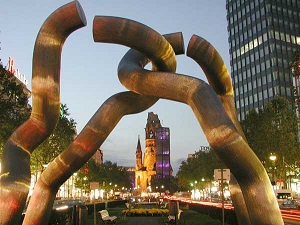
De Kurfürstendamm in Berlijn


De Vlaamse dichter Frans Joseph de Cort werd geboren in Antwerpen op 21 juni 1834.Zie ook alle tags voor Frans de Cort op dit blog en ook mijn blog van 21 juni 2011 deel 2.


Mijne moedertaal

Mijne moedertaal, mijne moedertaal,
Wie of haar ook kleinere,
Min ik als mijn vaderland,
Sta ik voor met hand en tand!
O mijn Neerlands, ja mijn Neerlands,
Dat houd ik steeds in ere!

Mijne moedertaal, mijne moedertaal,
Wat andre komt daarnevens!
Zwaardgekletter, klokkenklank,
Snarenspel en minnezang,
O mijn Neerlands, ja mijn Neerlands,
Dat alles zijt gij tevens!

Mijne moedertaal is de schoonste taal,
En zou ze 't ook niet wezen,
Haar verkiezen zou ik nog,
Want zij is de mijne toch!
O mijn Neerlands, ja mijn Neerlands,
Wees eeuwig mij geprezen!


 1614952-e78bde1c9d885501ff972ce1cd3e847d.jpg
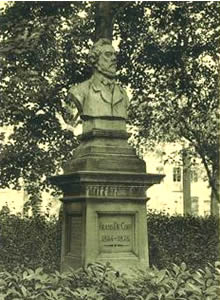
Frans de Cort (21 juni 1834 – 18 januari 1878)
Monument in het stadspark van Antwerpen


De Belgische, Franstalige schrijver Patrick Lowie werd geboren op 21 juni 1964 in Brussel. Zie ook alle tags voor Patrick Lowie op dit blog.

Uit: L'enfant du Kerala

« Le beau jeune homme aux surprenantes allures lit d’autres infos. Des allures d’adolescents. Un sourire aux lèvres l’embellissant encore. Il lit les infos sur d’honnêtes citoyens devenus en peu de temps terroristes. Sur des étrangers renvoyés dans leur pays. Peu importent les prétextes. L’Italie est aux côtés de l’Empire. Pour retrouver le sien ? Ce n’est pas la première fois qu’elle se trompe d’histoire. La péninsule a changée. Fellini et Pasolini sont morts. Darwin est rayé des manuels scolaires. On reprend l’idée d’Adam. Et Eve pour la cuisine. Le sourire de l’adolescent cache une infinie tristesse.
L’Italie est donc redevenue fasciste. Noire. L’expulsion de pauvres se fait en silence. Les hommes en noir du Vatican interdisent les mariages interreligieux. Les relations hors mariage. Le préservatif. L’homosexualité. Ils financent des dictatures. Forcément. Va-t-on à nouveau interdire le mariage aux artistes ? Va-t-on à nouveau jeter du fenouil aux pieds des pédés calcinés sur les bûchers ?
Le jeune homme au sourire craquant se refuse d’acheter les best-sellers qu’on lui impose dans les médias. Ceux qu’on voit partout. Ceux qui n’ont rien à offrir. Il évite d’acheter les livres qui ne sont pas écrits par ceux qui prétendent les avoir écrit. Il entre dans une librairie. Y découvre un minuscule très vieux carnet. Presque un livre : « Théâtre à Bethléem ». Il l’achète.
Il ne peut s’empêcher de passer devant la gelateria.
S’offrir un cornet à la straciatella. »
Il les attend sur un banc : elle et la fin de ses cours. Attente interminable. Long tout est trop long. Bruyant aussi. Il ne s’entend plus penser. Elle le rejoint sur le banc. Ils retournent chez eux. Elle lui dit je t’aime en arabe. Une langue qu’il ne comprend plus. Il ne peut que sourire. Rougir un peu.”


 1614952-4d6877560030e0807e8efc8f57b072ff.jpg
Patrick Lowie (Brussel, 21 juni 1964)
In 1989


De Amerikaanse dichter Henry S. Taylor werd geboren op 21 juni 1942 in Loudoun County, Virginia. Zie ook alle tags voor Henry S. Taylor op dit blog.


The Way It Sometimes Is

At times it is like watching a face you have just met,
trying to decide who it reminds you of—
no one, surely, whom you ever hated or loved,
but yes, somebody, somebody. You watch the face
as it turns and nods, showing you, at certain angles,
a curve of the lips or a lift of the eyebrow
that is exactly right, and still the lost face
eludes you. Now this face is talking, and you hear
a sound in the voice, the accent on certain words—
yes! a phrase . . . you barely recall sitting outside,
by a pool or a campfire, remarking
a peculiar, recurring expression. Two syllables,
wasn’t it? Doorknob? Bathroom? Shawcross? What the hell
kind of word is shawcross? A name; not the right one.
A couple of syllables that could possibly be
a little like something you may once have heard.
So the talk drifts, and you drift, sneaking glances,
pounding your brain. Days later a face occurs to you,
and yes, there is a resemblance. That odd word, though,
or phrase, is gone. It must have been somebody else.
Yes, it’s like that, at times; something is, maybe;
and there are days when you can almost say what it is.


 1614952-088ddd003a1c641d96ea66c68129113c.jpg
Henry S. Taylor (Loudoun County, 21 juni 1942)


De Amerikaanse schrijfster en feministe Mary McCarthy werd geboren op 21 juni 1912 in Seattle. Zie ook alle tags voor Mary MaCarthy op dit blog.

Uit: The Group

“Kay was glad when Harald tooled home (that was one of his favorite expressions) for dinner, instead of eating with the others in that speak-easy. Once he had brought one of the authors, and Kay had made salmon loaf with cream pickle sauce. That would have to be the night they broke for dinner early, and there was quite a wait ('Bake 1 hour', the recipe went, and Kay usually added fifteen minutes to what the cookbook said), which they had to gloss over with cocktails. Harald did not realize what a rush it was for her, every day now, coming home from work at Mr Macy's and having to stop at Gristede's for the groceries; Harald never had time any more to do the marketing in the morning. And, strange to say, ever since she had started doing it, it had been a bone of contention between them. He liked the A&P because it was cheaper, and she liked Gristede's because they delivered and had fancy vegetables - the Sutton Place trade, Harald called it. Then Harald liked to cook the same old stand-bys (like his spaghetti with dried mushrooms and tomato paste), and she liked to read the cookbook and the food columns and always be trying recipes with her glasses on and measuring the seasonings and timing everything; cooking was a lively art and she made it academic and lifeless. It was funny, the little differences that had developed between them, in the course of three months; at first, she had just been Harald's echo. But now, if he said why not be sensible and open a can (this was another night when dinner was not ready), she would scream that she could not do that, it might be all right for him, but she could not live that way, week in, week out, eating like an animal, just to keep alive. Afterward, when he had left, she was sorry, and made a resolution to be a better planner and budget her preparation time, the way the food columns said.”


 1614952-d26f70a71a5ab5311508bdf29909bcc1.jpg
Mary McCarthy (21 juni 1912 – 25 oktober 1989)


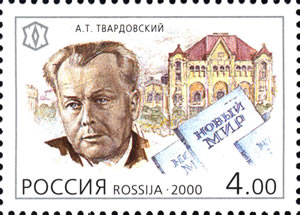
De Russische dichter Aleksandr Tvardovsky werd geboren in Oblast Smolenskop 21 juni 1910. Zie ook alle tags voor Aleksandr Tvardovsky op dit blog.


I was killed near Rzhev (Fragment)

I was killed near Rzhev
In a nameless bog,
In fifth company,
On the Left flank,
In a cruel air raid

I didn’t hear explosions
And did not see the flash
Down to an abyss from a cliff
No start, no end

And in this whole world
To the end of its days -
Neither patches, nor badges
From my tunic you’ll find

I am where the blind roots
Seek for food in the dark
I am where the rye waves
On a hill in the dust

I am where the cockerel cries
In the dew of the dawn
I am where your cars
Tear the air on highways

Where – small stalk to small stalk –
River’s weaving its grass
Where for the remembrance
Even my mother won’t come

In a bitter year’s summer
I was killed.
And for me
Neither news nor bulletins
Will come after this day


Vertaald door Mike Munford


1614952-b7782c4b59decfe44b368a0ec5ba6a39.jpg
Aleksandr Tvardovsky (21 juni 1910—18 december 1971)


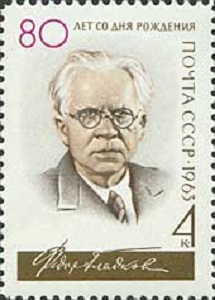
De Russische schrijver Fyodor Gladkov werd geboren op 21 juni 1883 in Chernavka. Zie ook alle tags voor Fyodor Gladkov op dit blog.

Uit: Cement (Vertaald door A.S. Arthur en C. Ashleigh)

'"I don't know what you mean by Utopia, Comrade Shidky. If you don't pronounce the word factory, the workmen will say it. What are you jawing about: the factory is the past or the future? If the workers are banging their heads against the factory every day- as they are- then the factory is there, and it's waiting for workers' hands to run it. What's all the joke about with you, Comrades? Have you been to the factory? Have you seen the Diesel engines and the workmen? The factory is a whole little town and the machines are all ready to run. Why have the workers been robbing the factory? Why do rain and wind eat into the concrete and iron? Why does destruction go on? And the rubbish heaps pile up? Why have the workers nothing to do except fool around with empty bellies? The worker isn't a broody hen: you can't ask him to sit down on the eggs and hatch chicks! And you keep on telling him that the factory isn't a factory, but an abandoned quarry, and he spits on you then and curses with all his might. How could he treat you otherwise? he's* right in stripping the factory and dragging it bit by bit to his home; it would all go to the devil anyway. You've been filling his head with all sorts of beautiful language, but what have you done to make him a class-conscious proleterian instead of a cheese-paring haggler? That's the way you have to put the question, my dear Comrades."


 1614952-3a424057d339800d95e29a13ed85f6be.jpg
Fyodor Gladkov (21 juni 1883 – 20 december 1958)

Geschreven door Romenu om 13:36 Reageer op dit bericht

Meer van Romenu

↑ Terug naar de berichten