Naar de inhoud

Romenu

Over literatuur, gedichten, kunst en cultuur
seniorennet.beseniorennet.be

Berichten van 16 augustus 2015

Charles Bukowski, Reiner Kunze, Moritz Rinke, Ferenc Juhász, Alice Nahon
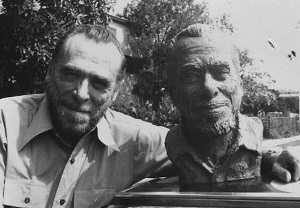
De Amerikaanse dichter en fictieschrijver Charles Bukowski werd geboren op 16 augustus 1920 in Andernach, Duitsland. Zie ook alle tags voor Charles Bukowski op dit blog en ook mijn blog van 16 augustus 2010.


An Almost Made Up Poem

I see you drinking at a fountain with tiny
blue hands, no, your hands are not tiny
they are small, and the fountain is in France
where you wrote me that last letter and
I answered and never heard from you again.
you used to write insane poems about
ANGELS AND GOD, all in upper case, and you
knew famous artists and most of them
were your lovers, and I wrote back, it’ all right,
go ahead, enter their lives, I’ not jealous
because we’ never met. we got close once in
New Orleans, one half block, but never met, never
touched. so you went with the famous and wrote
about the famous, and, of course, what you found out
is that the famous are worried about
their fame –– not the beautiful young girl in bed
with them, who gives them that, and then awakens
in the morning to write upper case poems about
ANGELS AND GOD. we know God is dead, they’ told
us, but listening to you I wasn’ sure. maybe
it was the upper case. you were one of the
best female poets and I told the publishers,
editors, “ her, print her, she’ mad but she’
magic. there’ no lie in her fire.” I loved you
like a man loves a woman he never touches, only
writes to, keeps little photographs of. I would have
loved you more if I had sat in a small room rolling a
cigarette and listened to you piss in the bathroom,
but that didn’ happen. your letters got sadder.
your lovers betrayed you. kid, I wrote back, all
lovers betray. it didn’ help. you said
you had a crying bench and it was by a bridge and
the bridge was over a river and you sat on the crying
bench every night and wept for the lovers who had
hurt and forgotten you. I wrote back but never
heard again. a friend wrote me of your suicide
3 or 4 months after it happened. if I had met you
I would probably have been unfair to you or you
to me. it was best like this.


 1802507-c8ec91852440a654907f87c71f50ddde.jpg
Charles Bukowski (16 augustus 1920 – 9 maart 1994)


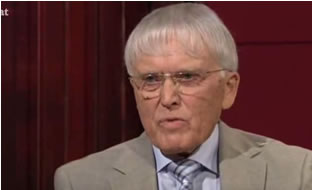
De Duitse dichter en schrijver Reiner Kunze werd geboren op 16 augustus 1933 in Oelsnitz, Erzgebirge. Zie ook alle tags voor Reiner Kunze op dit blog en ook mijn blog van 16 augustus 2010.


NATURGEDICHT

Die dinge hören nur, wenn du sie rufst
bei ihrem wahren namen

Getäuscht sein will allein
der mensch

Er täuscht sich
aus der welt hinaus, die dinge

kennen kein verzeihn


MEDITIEREN

Was das sei, tochter?

Gegen morgen
noch am schreibtisch sitzen, am hosenbein
einen nachtfalter der
schläft

und keiner weiß vom anderen


SEOULER STRASSENBILD

Alle menschen, schien's, sind
auf dem weg, sind
                           jung und
auf dem weg, sind
                          schlank und
auf dem weg

Das handy am ohr, schienen sie einander zu beteuern,
daß der eine für den andern wie geschaffen ist,
doch auf dem weg
in die entgegengesetzte richtung
 

 1802507-029eff55270e4ff7bc6eb935a74653a3.jpg
Reiner Kunze (Oelsnitz, 16 augustus 1933)


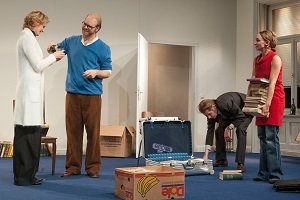
De Duitse (toneel)schrijver Moritz Rinke werd geboren op 16 augustus 1967 in Worpswede bij Bremen. Zie ook alle tags voor Moritz Rinke op dit blog en ook mijn blog van 16 augustus 2010.

Uit: Wir lieben und wissen nichts

"Sebastian bleibt sitzen. – Hannah mit einem riesigen Entsafter, der aussieht wie eine Raumkapsel.
Sebastian
Am meisten interessieren mich die Adamiten. Das war die freieste Gesellschaft, die man sich überhaupt vorstellen kann ...
Hannah
Fang an zu packen ...
Sebastian
Wie heißt noch mal dieser Film mit dem kleinen Schauspieler ...? Der mit der blonden Frau, die sich
dann später getrennt haben?
Hannah
Sebastian ...
Sebastian
Der ist in dieser Sekte ... Diese wahnsinnige Szene, die er in dem Film gespielt hat, das war ein Sexgottesdienst für Eingeweihte, das ist bestimmt angelehnt an Alexander den Sechsten, da bin ich mir absolut sicher.
Hannah
Ich bin begeistert ... Wo ist der Originalkarton?
Sebastian
Hannah, ich bleibe hier ... Ich kann nicht, ich werde ständig irgendwo hingebracht, wo ich gar nicht hinwill. Stell doch bitte diesen schrecklichen Entsafter ab! Ich werde hier in der Abstellkammer wohnen.
Hannah
Sebastian, pack bitte deinen Koffer, unsere Tausch- partner sind in einer Stunde da! Und ich weiß nicht, ob die hier wohnen wollen mit einem fremden Mann in der Abstellkammer!"
 

 1802507-129f8837580a070b5413919a0fdf997f.jpg
Moritz Rinke (Worpswede, 16 augustus 1967)
Scene uit een opvoering in Aken, 2013


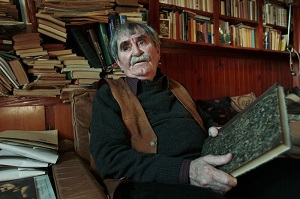
De Hongaarse dichter Ferenc Juhász werd geboren op 16 augustus 1928 in Biatorbágy. Zie ook alle tags voor Ferenc Juhász op dit blog.


Birth Of The Foal

As May was opening the rosebuds,
elder and lilac beginning to bloom,
it was time for the mare to foal.
She'd rest herself, or hobble lazily
after the boy who sang as he led her
to pasture, wading through the meadowflowers.
They wandered back at dusk, bone-tired,
the moon perched on a blue shoulder of sky.
Then the mare lay down,
sweating and trembling, on her straw in the stable.
The drowsy, heavy-bellied cows
surrounded her, waiting, watching, snuffing.
Later, when even the hay slept
and the shaft of the Plough pointed South,
the foal was born. Hours the mare
spent licking the foal with its glue-blind eyes.
And the foal slept at her side,
a heap of feathers ripped from a bed.
Straw never spread as soft as this.
Milk or snow never slept like a foal.
Dawn bounced up in a bright red hat,
waved at the world and skipped away.
Up staggered the foal,
its hooves were jelly - knots of foam.
Then day sniffed with its blue nose
through the open stable window, and found them -
the foal nuzzling its mother,
velvet fumbling for her milk.
Then all the trees were talking at once,
chickens scrabbled in the yard,
like golden flowers
envy withered the last stars.


Vertaald door David Wevill
 

 1802507-0a80dce1e3c61b0f4a84a023e59f5382.jpg
Ferenc Juhász (Biatorbágy, 16 augustus 1928)


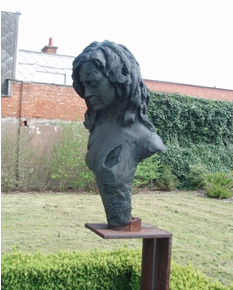
De Vlaamse dichteres Alice Nahon werd te Antwerpen geboren op 16 augustus 1896.  Zie ook alle tags voor Alice Nahon op dit blog en ook mijn blog van 16 augustus 2010.


Margrieten

’t Is of die bloemen het weten:
Ze buigen beurt om beurt
uit eerbied voor de stilte
die aan mijn hart is gebeurd.

En reder dan aan mensen
doe ik die elfen in ’t gras
het effen verhaal dat hij heenging
om ’t heimwee dat ik was.

Ze neigen bevreemd naar elkander
’t naïeve margrietenhoofd:
dàt hadden ze van de mensen
toch nooit geloofd.

Nu staan ze zonder vragen,
een bleke sterrenstoet,
een goedheid zonder woorden,
te bloeien aan mijn voet.

Een kommer te raden, te helen,
en te doen of men weet het niet,
dat moeten de mensen nog leren
van de hoge stille margriet.


Bidden

Bidden is niet enkel knielen;
’t Is in ’t huis van onbeminden
En in grauw mizerie-zielen
Veel verborgen liefde vinden.

Bidden is de bittere dingen
Met een zacht gezeg vergoeden;
’t Is doorheen zijn tranen zingen
En in alles ’t schoon vermoeden.

Bidden is langs donkere paden
Lampen van gevoel doen branden;
Bidden is de schoonste daden
Dragen op zijn eigen handen.

Bidden is in stilte weten
Weelde en weedom van elkander;
Bidden is zichzelf vergeten
Om te peinzen aan een ander.
 

 1802507-5b63534b2f2cc4256fee9d4a4295c813.jpg
Alice Nahon (16 augustus 1896 -  21 mei 1933)
Borstbeeld in Putte 


Zie voor nog meer schrijvers van de 16e augustus ook mijn vorige blog van vandaag.


Geschreven door Romenu om 14:19 Reageer op dit bericht

Jules Laforgue, T. E. Lawrence, Pierre Henri Ritter jr., Max Schuchart

De Franse dichter Jules Laforgue werd geboren in Montevideo op 16 augustus 1860. Zie ook alle tags voor Jules Laforgue op dit blog en ook mijn blog van 16 augustus 2010.


Sundays

Autumn! It is autumn! Once again autumn!
The great gale and all its trail
Of reprisals, and of music . . .
It is “Closed for the Season” at seaside hotels.
Leaf-fall, fall of Antigones and Philomels:
My gravedigger, Alas poor Yorick!
Lumps them pell-mell.

Love and straw-fires for ever!

The good young ladies
Inviolable and frail
File soberly this way
Summoned by the chapel-bell
Hygienically and most dulcetly
As befits the “sweet” Sabbath-day.

How all around them grows purified
And Sundayfied.

And how faces all grow long at the sight of them!

As for me, though: I am the Great White Bear,
Brought hither by iceberg ferry,
More polar, more spotless pure
Than those girls in white millinery;
Not, though, what you would call a churchgoer.
I am the Grand Master of Analysis;
Remember this.

And yet . . . and yet . . . why so pale?
Come, trust your old friend, you can tell me the tale.

Ah no? Can such things be?
I turn my face to the seas and the rough skies,
To all things that grumble and that utter sighs.

Such things! Such things!
Matter for sleepless nights and nail-bitings.

Poor, poor, for all their promisings!

And we! Drowned in such seas,
Plunged into such wonderment,
Fallen to our knees . . . !

O wonder, found and at once hidden,
So martyred, poor, yet full of passion,
Being, as it were, a thing forbidden
Never to be touched, save in dream fashion.

Wondrous thing,
Most violet attar, precious residue,
The universe
Has care of you
And planets in their courses are your nurse
From burying to marrying.

Oh, it is rich not to be bought!
Just your dear eyes, there, in the skies –
Greater than God, higher than thought,
Those thoughtless and thought-coloured eyes!

So frail, so thin!
And all that mortal warmth
Hoarded within!

O forgive her, if, unthinking
(How well it becomes her!)
She makes eyes a little
To beg you a little
To have pity a little!

O frail, frail, and still athirst
For those Masses which I so mock!
Bend, bend your dear head; O look,
The spring-time, the lilac-burst.
I was not thinking, I swear, of lovemakings
But of heavenly things!

O if, after morning Mass,
We could but vanish and be no more
– Being sick of the human race,
So well-contented, so crass,
There, at the church-door

Vertaald door P. N. Furbank


 1802504-70fb39ada166e3f11c315134b4faf222.gif
Jules Laforgue (16 augustus 1860 - 20 augustus 1887)
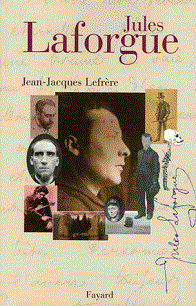
Cover


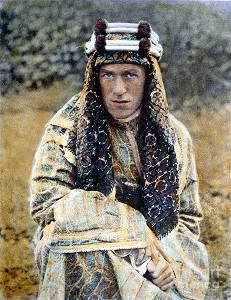
De Britse prozaschrijver, archeoloog en militair Thomas Edward Lawrence werd geboren op 16 augustus 1888. Hij staat beter bekend als Lawrence of Arabia. Zie ook alle tags voor T. E. Lawrence op dit blog en ook mijn blog van 16 augustus 2010.

Uit:Seven Pillars of Wisdom

“We rode on across the great valley. A camel-rider, garrulous and old, came out from the houses and jogged over to join us. He named himself Khallaf, too friendly-like. His salutation came after a pause in a trite stream of chat; and when it was returned he tried to force us
into conversation. However, Tafas grudged his company, and gave him short answers. Khallaf persisted, and finally, to improve his footing, bent down and burrowed in his saddle pouch till he found a small covered pot of enamelled iron, containing a liberal portion of the staple of travel in the Hejaz. This was the unleavened dough cake of yesterday, but crumbled between the fingers while still warm, and moistened with liquid butter till its particles would fall apart only reluctantly. It was then sweetened for eating with ground sugar, and scooped up like damp sawdust in pressed pellets with the fingers.
I ate a little, on this my first attempt, while Tafas and Abdulla played at it vigorously; so for his bounty Khallaf went half-hungry: deservedly, for it was thought effeminate by the Arabs to carry a provision of food for a little journey of one hundred miles. We were now fellows, and the chat began again while Khallaf told us about the last fighting, and a reverse Feisal had had the day before. It seemed he had been beaten out of Kheif in the head of Wadi Safra, and was now at Hamra, only a little way in front of us; or at least Khallaf thought he was there: we might learn for sure in Wasta, the next village on our road. The fighting had not been severe; but the few casualties were all among the tribesmen of Tafas and Khallaf; and the names and hurts of
each were told in order.
Meanwhile I looked about, interested to find myself in a new country.
The sand and detritus of last night and of Bir el Sheikh had vanished.”
 

 1802504-9dbfd2eab14f24c5bde4db82957fb904.jpg
T. E. Lawrence (16 augustus 1888 – 19 mei 1935)


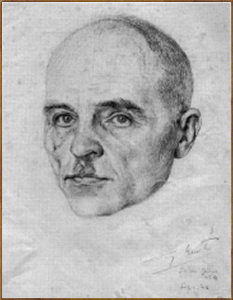
De Nederlandse journalist, letterkundige, criticus en publicist Pierre Henri Ritter jr. werd geboren in Utrecht op 16 augustus 1882. Zie ook alle tags voor Pierre Henri Ritter jr. op dit blog en ook mijn blog van 16 augustus 2010.

Uit: Het nieuwe boek van J. van Oudshoorn (“Zondag”)

“Belangwekkender dan de bibliotheek van lijvige romans en novellenbundels die een over-milde literaire Sint ons dit jaar bracht, zijn drie kleine boekjes: de ‘Marginalia’ van Dirk Coster, ‘Pandorra’ van Arthur van Schendel, en ‘Zondag’ van J. van Oudshoorn. Het is merkwaardig, dat onze literatuur, die zich zoo te buiten gaat aan schrijf-onmatigheid, tegelijkerstijd in enkele bladzijden in staat is, haar ware beteekenis te handhaven van vertolking van geestelijk leven. De meeste romans behandelen de problemen der salons, zeldzamer ontdekt men achter woorden en verbeeldingen zielkundige of wijsgeerige vraagstukken, vraagstukken die de kern van het leven betreffen.
Het vraagstuk dat de pen van J. van Oudshoorn bestuurt, is, bij voortduring, het vraagstuk van de eenzaamheid der ziel. Individualisme, zegt men, en men spreekt daarmede onbewust uit, dat hier het probleem aan de orde is van onze wezenseigenheid, die zich on-verdeeld gevoelt, die zich één gevoelt met het Al-leven, het Al-leven dat zich in hoogste instantie aan den mensch openbaart als de Negatie, als het Niet. Een geest als die van van Oudshoorn, die zich immer aan den afgrond van dat Niet bevindt, zonder nochthans in dat Niet ten onder te gaan, komt voor de noodzakelijkheid, te moeten leven, zijn persoonlijkheid te moeten vinden. Dit is een noodzakelijkheid die de gewone, gezond-levende mensch niet beseft. Die laat zich voortdrijven door het instinct van zijn vitaliteit, hij verricht de daden van het leven altijd onbewust, en die onbewustheid stelt hem in staat, voortdurend aan zijn ijl en oneindig, zijn vaag en twijfelend innerlijk de beperking op te leggen van de positieve persoonlijkheid. Een menschenziel is als een waterdroppel, waarin zich de duizend nuancen van werelden en hemelen weerspiegelen, zij is aarzelend door haar rijkdom en helderheid, en: iets positief-willen eischt immer de hardhandige verbreking van mogelijkheden.
Daarom hebben de beste geesten altijd de grootste moeite tot omlijnde overtuigingen te komen, omlijnde overtuigingen, die de menschengemeenschap, als het ware om haar bestaan te verzekeren, onverbiddelijk eischt.”


 1802504-c77b960186a0938956b0dea93bc12c3c.jpg
Pierre Henri Ritter jr. (16 augustus 1882 – 13 april 1962)
Portret door Gerardus Knuttel, 1942


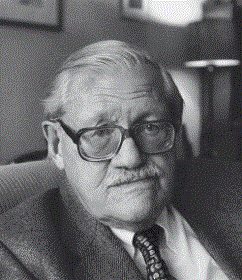
De Nederlandse dichter, journalist en vertaler Max Schuchart werd geboren in Rotterdam op 16 augustus 1920. Zie ook alle tags voor Max Schuchart op dit blog en ook mijn blog van 16 augustus 2010.


s.o.s.

Eén onbedachtzaam moment,
En wat in den tijd werd volbracht-
Van den jagenden holenmensch
En den eersten vuursteenslag
Tot Franklin D. Roosevelt-
Zal, in een hooploozen strijd
Om den zin van een verder bestaan,
In den afgrond der eeuwigheid
Spoorloos ten ondergaan.


Dualisme

Ik zou wel graag zo willen zingen,
Als Leopold of Engelman,
Van ijle, porseleinen dingen
En liefde op een hoger plan.
 
Maar, nachtegaal, mijn stem is stuk
En met mijn hart voorgoed gebroken;
Ik stamel schor om wat geluk
En om een vrouw die goed kan koken.


 1802504-8a303b99ff882dff2f16efa6d1cb0899.gif
Max Schuchart (16 augustus 1920 - 25 februari 2005)

Geschreven door Romenu om 14:01 Reageer op dit bericht

Meer van Romenu

↑ Terug naar de berichten