Naar de inhoud

Romenu

Over literatuur, gedichten, kunst en cultuur
seniorennet.beseniorennet.be

Berichten van 26 december 2011

Christmas in India (Rudyard Kipling)


Aan alle bezoekers en mede-bloggers een Prettig Kerstfeest!


 1060650-fa8ffc02b4a950f0c4fa6faab2312145.jpg

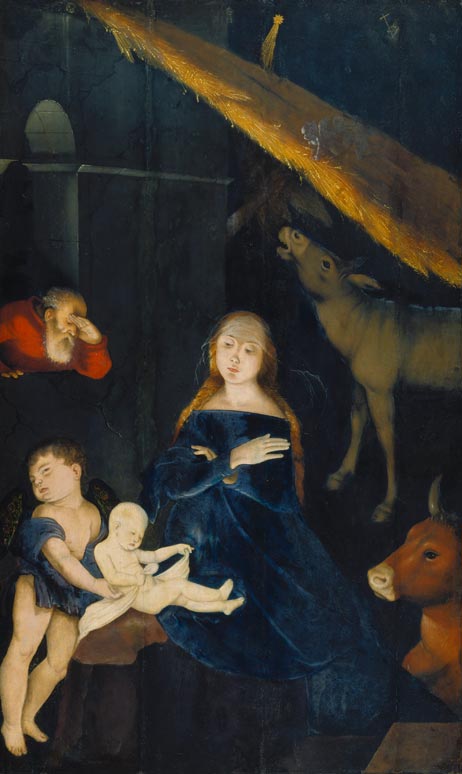
De Geboorte van Christus, Hans Baldung (Grien), 1484/85 tot 1545


Christmas in India


Dim dawn behind the tamerisks -- the sky is saffron-yellow --

As the women in the village grind the corn,

And the parrots seek the riverside, each calling to his fellow

That the Day, the staring Easter Day, is born.

O the white dust on the highway! O the stenches in the byway!

O the clammy fog that hovers over earth!

And at Home they're making merry 'neath the white and scarlet berry --

What part have India's exiles in their mirth?


Full day begind the tamarisks -- the sky is blue and staring --

As the cattle crawl afield beneath the yoke,

And they bear One o'er the field-path, who is past all hope or caring,

To the ghat below the curling wreaths of smoke.

Call on Rama, going slowly, as ye bear a brother lowly --

Call on Rama -- he may hear, perhaps, your voice!

With our hymn-books and our psalters we appeal to other altars,

And to-day we bid "good Christian men rejoice!"


High noon behind the tamarisks -- the sun is hot above us --

As at Home the Christmas Day is breaking wan.

They will drink our healths at dinner -- those who tell us how they love us,

And forget us till another year be gone!

Oh the toil that knows no breaking! Oh the Heimweh, ceaseless, aching!

Oh the black dividing Sea and alien Plain!

Youth was cheap -- wherefore we sold it.

Gold was good -- we hoped to hold it,

And to-day we know the fulness of our gain!


Grey dusk behind the tamarisks -- the parrots fly together --

As the sun is sinking slowly over Home;

And his last ray seems to mock us shackled in a lifelong tether.

That drags us back howe'er so far we roam.

Hard her service, poor her payment -- she in ancient, tattered raiment --

India, she the grim Stepmother of our kind.

If a year of life be lent her, if her temple's shrine we enter,

The door is shut -- we may not look behind.


Black night behind the tamarisks -- the owls begin their chorus --

As the conches from the temple scream and bray.

With the fruitless years behind us and the hopeless years before us,

Let us honor, O my brother, Christmas Day!

Call a truce, then, to our labours -- let us feast with friends and neighbours,

And be merry as the custom of our caste;

For, if "faint and forced the laughter," and if sadness follow after,

We are richer by one mocking Christmas past.


 1060650-0c2590448f2983fafe907cb62f6a94b3.jpg

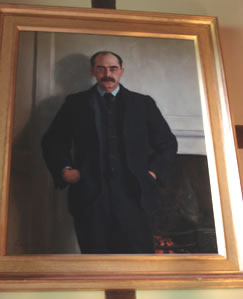
Rudyard Kipling (30 december 1865 –18 januari 1936)

Portret in Bateman's, Kiplings huis in Burwash, East Sussex


Zie voor de schrijvers van de 26e december ook mijn vorige blog van vandaag en ook mijn derde blog van vandaag en ook mijn tweede blog van vandaag en eveneens mijn eerste blog van vandaag.
Geschreven door Romenu om 17:44 Reageer op dit bericht

David Sedaris, Elizabeth Kostova, Henry Miller, Rainer Malkowski

De Amerikaanse schrijver David Sedaris werd geboren in Binghamton, New York, op 26 december 1956. Zie ook mijn blog van 26 december 2009 en ook mijn blog van 26 december 2010.


Uit: Dress Your Family in Corduroy and Denim


“When my family first moved to North Carolina, we lived in a rented house three blocks from the school where I would begin the third grade. My mother made friends with one of the neighbors, but one seemed enough for her. Within a year we would move again and, as she explained, there wasn’t much point in getting too close to people we would have to say good-bye to. Our next house was less than a mile away, and the short journey would hardly merit tears or even good-byes, for that matter. It was more of a "see you later" situation, but still I adopted my mother’s attitude, as it allowed me to pretend that not making friends was a conscious choice. I could if I wanted to. It just wasn’t the right time.
Back in New York State, we had lived in the country, with no sidewalks or streetlights; you could leave the house and still be alone. But here, when you looked out the window, you saw other houses, and people inside those houses. I hoped that in walking around after dark I might witness a murder, but for the most part our neighbors just sat in their living rooms, watching TV. The only place that seemed truly different was owned by a man named Mr. Tomkey, who did not believe in television. This was told to us by our mother’s friend, who dropped by one afternoon with a basketful of okra. The woman did not editorialize—rather, she just presented her information, leaving her listener to make of it what she might. Had my mother said, "That’s the craziest thing I’ve ever heard in my life," I assume that the friend would have agreed, and had she said, "Three cheers for Mr. Tomkey," the friend likely would have agreed as well. It was a kind of test, as was the okra.”


1060647-27fcc8f6f8ca29a13b9a92c796f118d6.jpg 

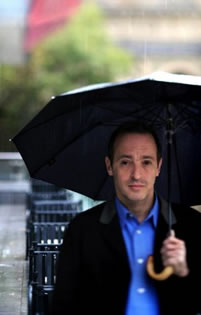
David Sedaris (Binghamton, 26 december 1956)


De Amerikaanse schrijfster Elizabeth Kostova werd geboren op 26 december 1964 in New London, Connecticut. Zie ook mijn blog van 26 december 2009 en ook mijn blog van 26 december 2010.


Uit: The Historian


“When my father returned from some name on the European map that hung on the wall in our dining room, he smelled like other times and places, spicy and tired. We took our vacations in Paris or Rome, diligently studying the landmarks my father thought I should see, but I longed for those other places he disappeared to, those strange old places I had never been.
While he was gone, I went back and forth to school, dropping my books on the polished hall table with a bang. Neither Mrs. Clay nor my father let me go out in the evenings, except to the occasional carefully approved movie with carefully approved friends, and—to my retrospective astonishment—I never flouted these rules. I preferred solitude anyway; it was the medium in which I had been raised, in which I swam comfortably. I excelled at my studies but not in my social life. Girls my age terrified me, especially the tough-talking, chain-smoking sophisticates of our diplomatic circle—around them I always felt that my dress was too long, or too short, or that I should have been wearing something else entirely. Boys mystified me, although I dreamed vaguely of men. In fact, I was happiest alone in my father’s library, a large, fine room on the first floor of our house.”


 1060647-e8039dbaafd187de7cbe4738b5d8ba3f.jpg

Elizabeth Kostova (New London, 26 december 1964)


De Amerikaanse schrijver Henry Miller werd geboren op 26 december 1891 In New York. Zie ook mijn blog van 26 december 2006 en ook mijn blog van 26 december 2007 en ook mijn blog van 26 december 2008 en ook mijn blog van 26 december 2009en ook mijn blog van 26 december 2010.


Uit: Sexus


„What I secretly longed for was to disentangle myself from all those lives which had woven themselves into the pattern of my own life and were making my destiny a part of theirs. To shake myself free of these accumulating experiences which were mine only by force of inertia required a violent effort. Now and then I lunged and tore at the net, but only to become more enmeshed. My liberation seemed to involve pain and suffering to those near and dear to me. Every move I made for my own private good brought about reproach and condemnation. I was a traitor a thousand times over. ...

The purpose of discipline is to promote freedom. But freedom leads to infinity and infinity is terrifying. Then arose the comforting thought of stopping at the brink, of setting down in words the mysteries of impulsion, compulsion, propulsion, of bathing the senses in human odors. To become utterly human, the compassionate fiend incarnate, the locksmith of the great door leading beyond and away and forever isolate. ...

In the beginning one wants to approach every problem directly. The more direct and insistent the approach, the more quickly and surely one succeeds in getting caught in the web. No one is more helpless than the heroic individual. And no one can produce more tragedy and confusion than such a type. Flashing his sword above the Gordian knot, he promises speedy deliverance. A delusion which ends in an ocean of blood.

The creative artist has something in common with the hero. Though functioning on another plane, he too believes that he has solutions to offer. He gives his life to accomplish imaginary triumphs. At the conclusion of every grand experiment, whether by statesman, warrior, poet or philosopher, the problems of life present the same enigmatic complexion. The happiest peoples, it is said, are those which have no history. Those which have a history, those which have made history, seem only to have emphasized through their accomplishments the eternality of struggle. These disappear too, eventually, just as those who made no effort, who were content merely to live and enjoy. ...

The creative individual (in wrestling with his medium) is supposed to experience a joy which balances, if it does not outweigh, the pain and anguish which accompany the struggle to express himself. He lives in his work, we say. But this unique kind of life varies extremely with the individual. It is only in the measure that he is aware of more life, the life abundant, that he may be said to live in his work.


 1060647-c890085a129b8c8816a417a676d595ff.jpg

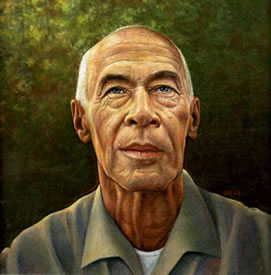
Henry Miller (26 december 1891 – 7 juni 1980)

Portret door Mark Hess 


De Duitse dichter Rainer Malkowski werd geboren op 26 december 1939 in Berlijn-Tempelhof. Zie ook mijn blog van 26 december 2006 en ook mijn blog van 26 december 2007 en ook mijn blog van 26 december 2008 en ook mijn blog van 26 december 2009en ook mijn blog van 26 december 2010.


Unbescheidener Wunsch


Aus einem Knopf,

einem Kamm, dem drei Zähne fehlen,

aus einer Pellkartoffel

sollte sie zu machen sein: die Poesie.


Nicht als Trittbrettfahrerin

vorformulierter

Gesinnung oder

Bedeutung.


Nicht aufsitzend

huckepack

den großen Gegenständen.


Zwei Sessel


Zwei Sessel
Sie haben mir gedient.
Und ich besinge sie so nüchtern,
wie es ihnen entspricht.
Schwarz gestrichenes Holz
und Segeltuch -
Material für ein Schiff,
eine Reise.
Und bin ich nicht
in ihnen gereist?
Manchen Tag, manche Nacht
denkend
und träumend?
Sie gaben immer,
was Dinge geben können:
zuverlässig scheinenden Halt,
Orientierung
und ein leises
Echo
des entschwundenen Lebens.


 1060647-851c750a64e1dc4709874920a23f6b90.jpg

Rainer Malkowski (26 december 1939 – 1 september 2003)

Berlijn, Kollwitzplatz, 1997
Geschreven door Romenu om 17:44 Reageer op dit bericht

Hans Brinkmann, Mani Beckmann, Alejo Carpentier, Jean Toomer, Willy Corsari

De Duitse dichter, schrijver en criticus Hans Brinkmann werd geboren op 26 december 1956 in Freiberg in Sachsen. Zie ook mijn blog van 26 december 2009 en ook mijn blog van 26 december 2010.


Das Proletariat

Mit aufgebundenem Bären
(und für die Katz im Sack)
lebt unter Milliardären
das arme Huckepack.

Sehr frei, auf klassenlose
gebügelt und im Lack
lebt es, das kuriose,
das arme Huckepack.

Es ist anachronistisch.
Nach Lage und Geschmack
ein Unding – rein statistisch
kaum arm, das Huckepack.

Liegt es nicht auf der Tasche
des Staates, der zu lax …?
Das ist doch wohl die Masche
des armen Huckepacks.

Hingegen die Initiative,
die in die Hände spuckt
und abseits aller Tarife
den eignen Packen huckt.

Ich rede vom Unternehmer.
Der rackert wie ein Gaul.
Anbei wird immer bequemer
das Huckepack und faul.

Kaum weiß es zu begreifen,
was all das Rackern soll
für Zwänge, die es kneifen,
und für die Hucke voll.

Es fühlt sich überflüssig.
Es lebt als Parasit
und sagt sich selten schlüssig,
was eigentlich geschieht.

Fast bringt es auf Gedanken
dank Arbeitslosigkeit,
die brächen alle Schranken
der Lohn- und Brotarbeit. –

Mit aufgebundenem Bären
wie für die Katz im Sack
lebt, ohne zu verjähren,
das alte Huckepack.


 1060643-a7b44c6a3a51f6caaedf85807b781794.jpg

Hans Brinkmann (Freiberg, 26 december 1956)


De Duitse schrijver Mani Beckmann (pseudoniem Tom Finnek) werd geboren op 26 december 1965 in Alstätte/Westfalen. Zie ook mijn blog van 26 december 2008 en ook mijn blog van 26 december 2009 en ook mijn blog van 26 december 2010.


Uit: Unter der Asche (als Tom Finnek)


„Samstag, 27. Oktober 1666

 London dämmerte. Ein warmes, rötliches Abendlicht legte sich wie ein unpassend gefärbtes Leichentuch über die Stadt und ließ die Verwüstung und Zerstörung noch unwirklicher erscheinen. Beinahe hatte es den Anschein, als glühten die verbrannten Überreste immer noch. Die hagere Gestalt stand seit etwa einer Stunde regungslos am Fenster und starrte hinaus ins Halbdunkel. Auch das Gesicht des Mannes war unbewegt, die knittrige fahle Haut leuchtete im Abendlicht, als wäre sie vom Fieber gerötet. Der weiße Haarschopf und die buschigen Augenbrauen schienen ebenfalls wie vom furchtbaren Feuer erfasst, das die gesamte City von London vor beinahe zwei Monaten in Schutt und Asche gelegt hatte. Noch immer lag ein merklicher Brandgeruch über den Häusern und dem Fluss, und manchmal kam es dem Mann so vor, als hätte sich dieser Geruch in seinem Kopf eingebrannt, wie ein unsichtbares Kainsmal.

Durch das Fenster seiner Dachstube schaute er auf den Friedhof und die alte gotische Kirche von St. Olave. Dahinter sah er die breite Themse und am gegenüberliegenden nördlichen Ufer die niedergebrannten Ruinen der Häuser und Kirchen, die wie Hohn und Spott auf ihre einstige Größe wirkten. Zur Linken wurde der Blick durch die London Bridge versperrt, deren dicht gedrängte und überbordende Häuser durch eine Baulücke am anderen Ende gerettet worden waren. Ein Brand vor über dreißig Jahren hatte diese Lücke gerissen und damit ein Übergreifen des furchtbaren Feuers auf die Südseite der Brücke und den Stadtteil Southwark verhindert.“


 1060643-ab1712734f408b23351daddb14acfdca.jpg

Mani Beckmann (Alstätte, 26 december 1965)


De Cubaanse schrijver, essayist en musicoloog Alejo Carpentier werd geboren in Havana op 26 december 1904. Zie ook mijn blog van 26 december 2009 en ook mijn blog van 26 december 2010.


Uit: The Kingdom of This World (Vertaald door Harriet de Onís)


"When Ti Noel laid his brick at the foot of a wall it was almost midnight. Nevertheless construction was going on by the light of bonfires and torches. Along the way men were sleeping on great blocks of stone, on cannon, beside mules whose knees were callused from falling as they toiled upward. Worn out with fatigue, the old man dropped into a ditch under the suspension bridge. A whiplash awakened him at dawn. Above, the bulls who were to have their throats cut at daybreak were bellowing. New scaffoldings had come into being with the passing of the cold clouds, and the entire mountain came alive with neighing, shouts, bugle calls, whip cracks, the squeaking of dew-swollen ropes. Ti Noel began the descent to Milot in search of another brick. On the way down he could see coming up the flanks of the mountain, by every path and byway, thick columns of women, children, and old men, each with a brick to be left at the foot of the fortress, which rising like an ant-hill, thanks to those grains of fired clay borne to it unceasingly, from season to season, from year's end to year's end. Ti Noel soon learned that this had been going on for more than twelve years, and that the entire population of the North had been drafted for this incredible task. Every protest had been silenced in blood. Walking, walking, up and down, down and up, the Negro began to think that the chamber-music orchestras of Sans Souci, the splendor of the uniforms, and the statues of naked white women soaking up the sun on their scrolled pedestals among the sculptured boxwood hedging the flower beds were all the product of a slavery as abominable as that he had known on the plantation of M. Leonormand de Mezy."


1060643-3cdae9122d4c748130ff2f83cdf156fc.jpg
Alejo Carpentier (26 december 1904 - 24 april 1980)


De Amerikaanse dichter en schrijver Jean Toomer werd geboren op 26 december 1894 in Washington, D.C. Zie ook mijn blog van 26 december 2009 en ook mijn blog van 26 december 2010.


Evening Song


Full moon rising on the waters of my heart,

Lakes and moon and fires,

Cloine tires,

Holding her lips apart.


Promises of slumber leaving shore to charm the moon,

Miracle made vesper-keeps,

Cloine sleeps,

And I'll be sleeping soon.


Cloine, curled like the sleepy waters whtere the moonwaves start,

Radiant, resplendently she gleams,

Cloine dreams,

Lips pressed against my heart.


1060643-8d3799c58af79ae790040c8af2add4c0.jpg
Jean Toomer (26 december 1894 – 30 maart 1967)

New York, 1934


De Nederlandse schrijfster
Willy Corsari (pseudoniem van Wilhelmina Angela Douwes-Schmidt) werd geboren in Sint-Pieters-Jette, Brussel, op 26 december 1897. Zie ook mijn blog van 26 december 2009 en ook mijn blog van 26 december 2010.


Liedje voor Carolyn

Als ik een kindje zie met blonde haren
Denk ik aan jou, Carolyn
Ik zal je beeld altijd in mij bewaren
Als iets heel liefs, Carolyn
Al ben je ver, ik zal je nooit vergeten
Want ik ben trouw, Carolyn
Ik wil zo graag, dat jij het eens zult weten
Hoe 'k van je hou, Carolyn

Soms, in de nacht, heb ik heel mooie dromen
Dan ben je hier, Carolyn
Ik zie je dan de kamer binnenkomen
Waar jij nooit was, Carolyn
Ik zie je ogen, kan je lachje horen
Ik zeg: "Hello, Carolyn!"
Maar als de dag komt heb ik je verloren
Je bent weer weg, Carolyn

Als er ooit droefheid zijn mocht in je leven
Denk dan aan mij, Carolyn
Die jou zo graag alle geluk zou geven
Mijn meisje klein, Carolyn
Misschien zul jij ook eens een kindje krijgen
Zo lief als jij, Carolyn
Dan blijft van oma, als ze eens zal zwijgen
Dit lied voor jou, Carolyn


 1060643-614e0379e6e02c922b9263c775646793.jpg

Willy Corsari (26 december 1897 – 11 mei 1998)


Geschreven door Romenu om 17:26 Reageer op dit bericht

Alfred Huggenberger, René Bazin, Julien Benda, Jean Galtier-Boissière,Thomas Gray

De Zwitserse dichter en schrijver Alfred Huggenberger werd geboren op 26 december 1867 in Bewangen nabij Bertschikon. Zie ook mijn blog van 26 december 2009  en ook mijn blog van 26 december 2010.


Abendgold


Spät, wenn die Sonne säumend

Die Wölklein rötet hold,

Dann steh' ich gerne träumend

Und schau' ins Abendgold.


Die Stunden, die verflossen,

Durchleb' ich noch einmal;

Von diesem Glanz umgossen

Erblassen Schmerz und Qual.


Und wenn der süsse Schimmer

Dann weicht der Dämm'rung mild,

Trag' ich im Herzen immer

Vom Tag das letzte Bild.


So mag das Leben bringen

Viel, was wir nicht begehrt,

Beim seligen Verklingen

Zeigt alles sich verklärt.


Idyll


Es dampft eine Wiese am Waldesrand,

Da kann man träumen allerhand.


Der Wetzstein surrt, die Sense singt,

Gedämpft von fern ein Jauchzer klingt.


Versteckt im Walde schläft die Nacht,

Die Wipfel glühn in Morgenpracht.


Das Märchen lehnt am Stamm in Ruh'

Und blickt erstaunt dem Mähder zu.


Der mäht durchs reife Gras sich Bahn

Und geht und fängt von vorne an.


Und plötzlich zwingt des Morgens Lust

Ihm einen Jauchzer aus der Brust.


Das Echo gibt den Schall zurück,

Und hoch im Blauen schwebt das Glück.


 1060641-a5d53b91af3762acfd3907f2846d9eec.jpg

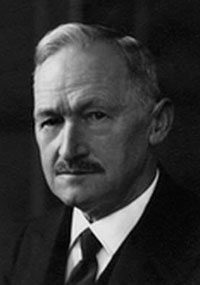
Alfred Huggenberger (26 december 1867 – 14 februari 1960)


De Franse schrijver
René Bazin werd geboren op 26 december 1853 in Angers. Zie ook mijn blog van 26 december 2009
en ook mijn blog van 26 december 2010. 


Uit: Les Noëllet

„Comme ils sont tristes, ces soirs d’octobre ! Il y a dans l’air une moiteur qui fait mourir les choses. Les feuilles tombent, comme lasses de vivre, sans le moindre vent qui les chasse. Des troupes d’oiseaux reviennent au nid. Et, par le chemin qui monte, un chemin creux de la Vendée angevine, que les orages nettoient et qu’émondent les chèvres, un jeune gars rentre à la ferme, à cheval sur la Huasse.

Elle n’est plus belle, la Huasse, avec ses poils blancs ébouriffés, son ventre énorme pelé par l’attelage, sa crinière en éventail, qui lui donnent l’air d’un chat-huant. Elle va son pas résigné de serviteur usé à la peine, traînant sur les cailloux les traits pendants de son collier, tandis que, par devant, son poulain gambade, comme un petit chevreuil blond et fou. Son cavalier ne la presse pas. Ils sont, elle et lui, presque du même âge. Depuis quinze ans qu’il est venu monde, elle l’a si souvent porté sur son dos, de cette même allure maternelle que rien n’étonne! Maintenant, c’est sa compagne de labour. Toute la journée, ils ont hersé ensemble dans les terres basses. La chaleur était grande, les mottes étaient dures. Tous deux sont las. Il la laisse donc aller, la bonne bête, aussi doucement qu’elle veut, les yeux mi-clos, et lui, tranquille, dépassant la haie de toute sa tête baignée de lumière, il regarde cette campagne superbe dont il est l’enfant.“
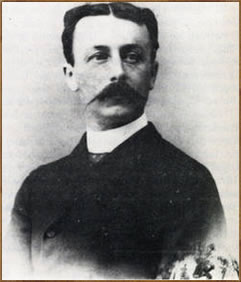


 1060641-2913feb2efdc5a40bd391a1b4062a568.jpg

René Bazin (26 december 1853 – 19 juli 1932)


De Franse schrijver en filosoof
Julien Benda werd geboren op 26 december 1867 in Parijs. Zie ook mijn blog van 26 december 2006 en ook mijn blog van 26 december 2008 en ook mijn blog van 26 december 2009.


Uit: The Treason of the Intellectuals (Vertaald door Richard Aldington)


“As regards the nation, think of Italy; as regards class, think of Russia; and you will see the hitherto known point of perfection attained by the spirit of hatred against what is "different" among a group of men, consciously realist and at last liberated from all non-practical morality. And my predictions are not rendered less probable by the fact that these two nations are hailed as models throughout the world by those who desire either the grandeur of their nation or the triumph of their class.
These dark predictions do not seem to me to need as much modification as some people think, on account of certain actions resolutely directed against war, such as the setting up of a supernational institution and the agreements recently made by the rival nations. Imposed upon the nations by their Ministers rather than desired by them, dictated solely by interest (the fear of war and its ravages) and not at all by a change in public morality, these new institutions may perhaps be opposed to war but leave intact the
spirit of war, and nothing leads us to suppose that a nation which only respects a contract for practical reasons, will not break it as soon as breaking it appears more profitable. Peace, if it ever exists, will not be based on the fear of war but on the love of peace. It will not be the abstaining from an act, but the coming of a state of mind. In this sense the most insignificant writer can serve peace where the most powerful tribunals can do nothing. And moreover these tribunals leave untouched the economic war between the nations and the class wars.“
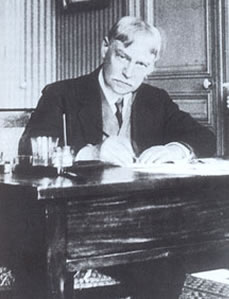


 1060641-3c1d93fb3e49fab23a1ccd5f9570d2be.jpg

Julien Benda (26 december 1867 – 7 juni 1956) 


De Franse schrijver, polemist en journalist Jean Galtier-Boissière werd geboren op 26 december 1891 in Parijs. Zie ook mijn blog van 26 december 2009 en ook mijn blog van 26 december 2010. 


Uit: Mémoires d’un Parisien (Nos amours de jeunesse)


„Mon ami Jean-Loup était un «direct», suivant l'expression d'Arletty: superbe gaillard au torse en parfait trapèze, excessivement velu, et prodigieusement monté, ce qui ne gâte rien. Sa cour auprès des belles consistait essentiellement à leur présenter en toute simplicité ses considérables attributs. De même que son père, suivant la légende, Jean-Loup jouissait d'une virilité exceptionnelle. C'est lui qui énumérait de la sorte ses performances d'une nuit:

- Oh! rien de sensationnel; quinze coups: deux doublés, deux petits brelans, un royal (quatre de suite) et un isolé.

Prouvant sa flamme à l'élue d'un soir de dix à quinze fois de suite, cet amant innombrable ne pouvait conserver aucune maîtresse, car chacune de ses conquêtes entrait à l'hôpital ou en clinique le lendemain même de la prestigieuse séance inaugurale.

Dans ma Bonne Vie, la petite ahurie qui disait «J'connais pas l'homme» était une conquête de Jean-Loup, lequel déclarait: «Je ne vais tout de même pas rentrer chez moi la bitte sous le bras.»

Mon ami Gabriel, lui, appartenait au genre baratineur. Il avait de la verve et du feu. Éloquent, persuasif, pressant, il répétait sans cesse à l'élue: «Je suis l'Amant ! Je suis l'AMANT !» et il arrivait souvent à convaincre sa partenaire qu'il convenait de ne pas laisser passer une telle occasion.“
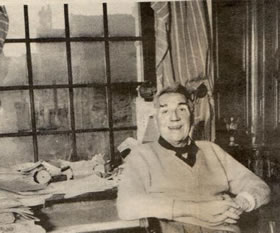


 1060641-b4e171599b0c744483d46139b936b9e4.jpg

Jean Galtier-Boissière (26 december 1891 – 22 januari 1966)


 De Engelse dichter en geleerde Thomas Gray werd geboren op 26 december 1716 in Londen. Zie ook mijn blog van 26 december 2006 en ook mijn blog van 26 december 2008 en ook mijn blog van 26 december 2009.


Ode on the death of a favorite cat


Twas on a lofty vase's side,

Where China's gayest art had dyed

The azure flowers that blow;

Demurest of the tabby kind,

The pensive Selima, reclined,

Gazed on the lake below.


Her conscious tail her joy declared;

The fair round face, the snowy beard,

The velvet of her paws,

Her coat, that with the tortoise vies,

Her ears of jet, and emerald eyes,

She saw; and purred applause.


Still had she gazed; but 'midst the tide

Two angel forms were seen to glide,

The genii of the stream:

Their scaly armor's Tyrian hue

Through richest purple to the view

Betrayed a golden gleam.


The hapless nymph with wonder saw:

A whisker first and then a claw,

With many an ardent wish,

She stretched in vain to reach the prize.

What female heart can gold despise?

What cat's averse to fish?


Presumptuous maid! with looks intent

Again she stretched, again she bent,

Nor knew the gulf between.

(Malignant Fate sat by and smiled)

The slippery verge her feet beguiled,

She tumbled headlong in.


Eight times emerging from the flood

She mewed to every watery god,

Some speedy aid to send.

No dolphin came, no Nereid stirred;

Nor cruel Tom, nor Susan heard;

A favorite has no friend!


From hence, ye beauties, undeceived,

Know, one false step is ne'er retrieved,

And be with caution bold.

Not all that tempts your wandering eyes

And heedless hearts, is lawful prize;

Nor all that glisters, gold.
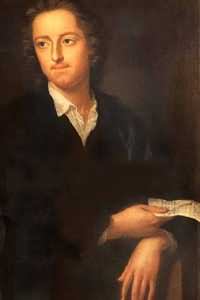


1060641-feda8de8014596b724df0484a707074d.jpg
Thomas Gray (26 december 1716 – 30 juli 1771)

Geschreven door Romenu om 17:21 Reageer op dit bericht

Ernst Moritz Arndt, Johann Gaudenz von Salis-Seewis, E. D. E. N. Southworth, Jean-François de Saint-Lambert

De Duitse dichter en schrijver Ernst Moritz Arndt werd op 26 december 1769 in Groß-Schoritz geboren op het eiland Rügen. Zie ook mijn blog van 26 december 2009 en ook mijn blog van 26 december 2010.


Gebet eines kleinen Knaben an den heiligen Christ


Du lieber heil'ger frommer Christ,
Der für uns Kinder kommen ist,
Damit wir sollen weiß und rein
Und rechte Kinder Gottes sein,

Du Licht vom lieben Gott gesandt
In unser dunkles Erdenland,
Du Himmelskind und Himmelschein,
Damit wir sollen himmlisch sein:

Du lieber heil'ger frommer Christ,
Weil heute dein Geburtstag ist,
Drum ist auf Erden weit und breit,
Bei allen Kindern frohe Zeit.

O segne mich! ich bin noch klein,
O mache mir den Busen rein!
O bade mir die Seele hell
In deinem reichen Himmelsquell!

Daß ich wie Engel Gottes sei
In Demut und in Liebe treu,
Daß ich dein bleibe für und für,
Du heil'ger Christ, das schenke mir!


1060637-15deaa7f2874f68cb02d6e11ee62d48a.jpg
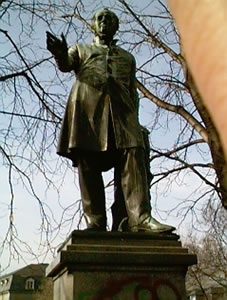
Ernst Moritz Arndt (26 december 1769 – 29 januari 1860)

Monument in Bonn


De Zwitserse dichter en schrijver Freiherr
Johann Gaudenz von Salis-Seewis werd geboren op 26 december 1762 op slot Bothmar bei Malans. Zie ook mijn blog van 26 december 2009 en ook mijn blog van 26 december 2010.


Frühlingslied


Unsre Wiesen grünen wieder,

Blumen duften überall;

Fröhlich tönen Finkenlieder,

Zärtlich schlägt die Nachtigall.

Alle Wipfel dämmern grüner,

Liebe girrt und lockt darin;

Jeder Schäfer wird nun kühner,

Sanfter jede Schäferin.


Blüten, die die Knosp' entwickeln,

Hüllt der Lenz in zartes Laub;

Färbt den Sammet der Aurikeln,

Pudert sie mit Silberstaub.

Sieh! das holde Maienreischen

Dringt aus breitem Blatt hervor,

Beut sich zum bescheidnen Sträußchen

An der Unschuld Busenflor.


Auf den zarten Stengeln wanken

Tulpenkelche, rot und gelb,

Und das Geißblatt flicht aus Ranken

Liebenden ein Laubgewölb'.

Alle Lüfte säuseln lauer

Mit der Liebe Hauch uns an;

Frühlingslust und Wonneschauer

Fühlet, was noch fühlen kann.


1060637-848cb9818f0d2e3001a289c9db300ad5.jpg
Johann Gaudenz von Salis-Seewis (26 december 1762 – 29 januari 1834)


De Amerikaanse schrijfster Emma Dorothy Eliza Nevitte Southworth werd geboren op 26 december 1819 in Washington, D.C. Zie ook mijn blog van 26 december 2009 en ook mijn blog van 26 december 2010.


Uit: The Hidden Hand


„HURRICANE HALL is a large old family mansion, built of dark-red sandstone, in one of the loneliest and wildest of the mountain regions of Virginia.

The estate is surrounded on three sides by a range of steep, gray rocks, spiked with clumps of dark evergreens, and called, from its horseshoe form, the Devil's Hoof.

On the fourth side the ground gradually descends in broken rock and barren soil to the edge of the wild mountain stream known as the Devil's Run.

When storms and floods were high the loud roaring of the wind through the wild mountain gorges and the terrific raging of the torrent over its rocky course gave to this savage locality its ill-omened names of Devil's Hoof, Devil's Run and Hurricane Hall.

Major Ira Warfield, the lonely proprietor of the Hall, was a veteran officer, who, in disgust at what he supposed to be ill-requited services, had retired from public life to spend the evening of his vigorous age on this his patrimonial estate. Here he lived in seclusion, with his old-fashioned housekeeper, Mrs. Condiment, and his old family servants and his favorite dogs and horses. Here his mornings were usually spent in the chase, in which he excelled, and his afternoons and evenings were occupied in small convivial suppers among his few chosen companions of the chase or the bottle.“


 1060637-e2a73b731ef1917def20266535744bbe.jpg

E. D. E. N. Southworth (26 december 1819 – 30 juni 1899)


De Franse dichter, schrijver en filosoof
Jean-François de Saint-Lambert werd geboren op 26 december 1716 in Nancy. Zie ook mijn blog van 26 december 2009 en ook mijn blog van 26 december 2010.


La bourrasque d'été (Fragment)


Des monts et des rochers le vaste amphithéâtre
Disparaît tout à coup sous un voile grisâtre ;
Le nuage élargi les couvre de ses flancs ;
Il pèse sur les airs tranquilles et brûlants.
Mais des traits enflammés ont sillonné la nue,
Et la foudre en grondant roule dans l'étendue :
Elle redouble, vole, éclate dans les airs ;
Leur nuit est plus profonde, et de vastes éclairs
En font sortir sans cesse un jour pâle et livide.
Du couchant ténébreux s'élance un vent rapide
Qui tourne sur la plaine, et, rasant les sillons,
Enlève un sable noir, qu'il roule en tourbillons.
Ce nuage nouveau, ce torrent de poussière,
Dérobe à la campagne un reste de lumière.
La peur, l'airain sonnant, dans les temples sacrés
Font entrer à grands flots les peuples égarés.
Grand Dieu ! vois à tes pieds leur foule consternée
Te demander le prix des travaux de l'année.


 1060637-3f9d1e683b55ec4110ccf9b6aaef9ca2.jpg

Jean-François de Saint-Lambert (26 december 1716 – 9 februari 1803)


Geschreven door Romenu om 17:16 Reageer op dit bericht

Meer van Romenu

↑ Terug naar de berichten