

Naar de inhoud

Romenu

Over literatuur, gedichten, kunst en cultuur
seniorennet.beseniorennet.be

Berichten van 16 november 2014

Chinua Achebe, Anton Koolhaas, José Saramago, Renate Rubinstein, Craig Arnold, Danny Wallace
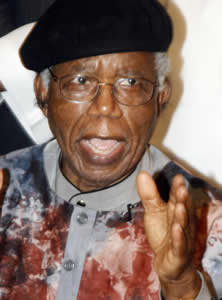
De Nigeriaanse dichter en schrijver Chinua Achebe werd geboren op 16 november 1930 in Ogidi. Zie ook alle tags voor Chinua Achebe op dit blog.


Remembrance Day

Your proclaimed mourning
your flag at half-mast your
solemn face your smart backward
step and salute at the flowered
foot of empty graves your
glorious words-none, nothing
will their spirit appease. Had they
the choice they would gladly
have worn for you the same
stricken face gladly flown
your droopéd flag spoken
your tremulous eulogy-and
been alive. . . . Admittedly you
suffered too. You lived wretchedly
on all manner of gross fare;
you were tethered to the nervous
precipice day and night; your
groomed hair lost gloss, your
smooth body roundedness.
Truly
you suffered much. But now
you have the choice of a dozen
ways to rehabilitate yourself.
 

Pick any one of them and soon
you will forget the fear
and hardship, the peril
on the edge of the chasm. . . . The
shops stock again a variety
of hair dyes, the lace and
the gold are coming back; so
you will regain lost mirth
and girth and forget. But when,
how soon, will they their death? Long,
long after you forget they turned
newcomers again before the hazards
and rigors of reincarnation, rude
clods once more who once had borne
the finest scarifications of the potter's
delicate hand now squashed back
into primeval mud, they will
remember. Therefore fear them! Fear

their malice your fallen kindred
wronged in death. Fear their blood feud;
tremble for the day of their
visit! Flee! Flee! Flee your
guilt palaces and cities! Flee
lest they come to ransack
your place and find you still
at home at the crossroad hour. Pray
that they return empty-handed
that day to nurse their red-hot
hatred for another long year. . . .
Your glorious words are not
for them nor your proliferation
in a dozen cities of the bronze
heroes of Idumota. . . . Flee! Seek
asylum in distant places till
a new generation of heroes rise
in phalanges behind their purified
child-priest to inaugurate
a season of atonement and rescue
from fingers calloused by heavy deeds
the tender rites of reconciliation


 1680509-3f51e64c068e8c9199029717c1673230.jpg
Chinua Achebe (Ogidi, 16 november 1930)


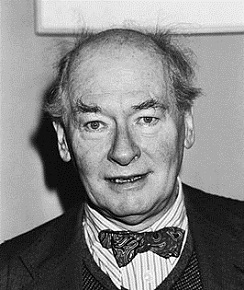
De Nederlandse schrijver Anton Koolhaas werd op 16 november 1912 in Utrecht geboren. Zie ook alle tags voor Anton Koolhaas op dit blog.

Uit: Mijnheer Tip is de dikste mijnheer

“Toen Tip weer op vier poten stond, begon hij met Ferry eens goed ondersteboven te lopen. Het gaf een doffe dreun toen ze botsten, maar Tip had niet genoeg kracht gezet en Ferry bleef overeind. ‘Het is de dag van de tulpenbol en de dwaze windhandel, jongens,’ riep Tip en op hetzelfde ogenblik was het hele dozijn andere varkens ook op de poten en begonnen de veertien varkens driftig door het hok te sjokken, waarbij zij telkens botsten, steunden, draaiden en elkaar soms behendig ontweken. De grap was nu dat men met zijn vieren of vijven in de hoek van het hok terecht moest zien te komen en dan ging men daar net doen, of men er niet meer uit kon geraken. Ferry en Tip moesten dan die knoop ontwarren en dat was altijd zo leuk, want ze riepen dan commando’s die erg gek klonken. ‘Hijs die schele uit de oliestook,’ riep
Ferry en hij gaf Simon Artzt (het dikste varken van de ploeg) een peut in de buik zodat Simon, gierend van de pijn die hij voorwendde, achteruit stoof tot helemaal achter in het hok, waar hij dan met zijn dikke achterste tegen de muur stuitte. Dat gaf dan zo’n geweldige klets, dat iedereen zich een ongeluk lachte.
(…)

Tip en Ferry gingen nu samen aan de gang om hem opnieuw uit de klont te krijgen en daartoe begonnen ze in de achterste plooi van zijn oor, daar waar dat overging in zijn nek, te knagen en gekke dingen te zeggen als: ‘Snoepscheuten lopen de spuigaten uit,’ en ‘Altijd is Kortjakje ziek, op poten en op vleugels’ en Simon Artzt werd daar zo krieuwelig en zo week van, dat hij begon te kwijlen en te smakken en dan gooide hij zich met een ruk omhoog, trappelde draaiend en met de voorpoten over de ruggen van de makkers die hem insloten heen, tot hij los was en in zijn eentje midden in het hok stond. Dan riepen allen tegelijkertijd:
‘Dikke boems de biggenknijper
Kan niet door de puntenslijper.”
 

 1680509-c189f305c6ab3b8c10e7903d1c25dae4.jpg
Anton Koolhaas (16 november 1912 – 16 december 1992)


De Portugese schrijver José Saramago werd geboren op 16 november 1922 in het dorpje Azinhaga in de provincie Ribatejo. Zie ook alle tags voor José Saramago op dit blog.

Uit: Baltasar and Blimunda (Vertaald door Giovanni Pontiero)

“The machine has stopped climbing and hovers in the sky, its wings extended, its beak pointing northward, and it has every appearance of being motionless. The priest opens the sail a little more, three-quarters of the amber balls are already covered in shadow, and the machine starts to descend gently, it is like sailing across a tranquil lake in a small boat, a tiny adjustment to the rudder, a stroke with one oar, those little touches that only mankind is capable of inventing. Slowly, land begins to appear, Lisbon looms into sight, the uneven rectangle of the Palace Square, the labyrinth of streets and alleyways, the frieze of the veranda where the priest lives and where even now the officers of the Holy Office of the Inquisition are forcing an entry to arrest him, they have come too late, officers who are so scrupulous in the affairs of heaven, yet who forget to look up at the blue sky, where they would see the machine, a tiny dot in the remote distance, but how could they raise their eyes when they are confronted, to their horror, with a Bible whose pages have been torn out at the Pentateuch, when they are confronted by the Koran reduced to indecipherable fragments, they leave at once and head for the Rossio and the headquarters of the Holy Office of the Inquisition to report that the priest they had gone to arrest has already escaped, and it never occurs to them that he has taken refuge in the great celestial dome, which they will never know, because it is quite true that God has a weakness for madmen, the disabled, and eccentrics, but most certainly not for officers of the Holy Office of the Inquisition. The Passarola descends a little further, until the estate of the Duke of Aveiro comes into sight, and these three fliers are clearly beginners, they lack the experience that would enable them to distinguish important landmarks at a glance, rivers and streams, lakes, villages sprinkled like stars on earth, dense forests, they can see the four walls of the coach-house, the airport from which they launched their flight, Padre Bartolomeu Lourenço suddenly remembers that he has a spyglass in the chest, he fetches it at once and trains it downwards, ah, how wonderful to be able to live and invent things, he can now distinguish the pallet in the corner, and the forge, but the harpsichord has disappeared,…”
 

 1680509-0f927e4ff1861124be63f4afb8b51d6c.jpg
José Saramago (16 november 1922 - 18 juni 2010)


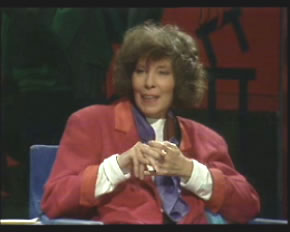
De Nederlandse schrijfster en journaliste Renate Rubinstein werd geboren op 16 november 1929 in Berlijn. Zie ook alle tags voor Renate Rubinstein op dit blog.

Uit: Links en rechts in de politiek en in het leven

“Wat is eigenlijk een linkse intellectueel? Dat is niet iemand die communist is, want zover hoef je beslist niet te gaan, maar het is wel iemand die niet anticommunist is. Jean Paul Sartre in Frankrijk, Harry Mulisch bij ons, Noam Chomsky in Amerika, zijn van die instelling illustere voorbeelden. ‘Quand on était anticommuniste de manière resolue, on était catalogué à droite. Bon. Ceux qui ne voulaient pas être classés à droite, qui voulaient rester à gauche, ont cherché de manière désespérée, pour ainsi dire, à ne pas être communistes et à ne pas être anticommunistes,’ schrijft Aron. Hij had het over de jaren dertig en over de jaren vijftig, maar nog steeds is de verleden tijd niet van toepassing op het verschijnsel. Die afkeer van het anticommunisme gaat op zijn minst terug tot de tijd van Stalins showprocessen in de jaren dertig, toen twijfel aan de schuld van Boekarin betekende dat men Stalin afviel en daarmee ‘objectief’ Hitler steunde. En Hitler was voor onze wereld in die jaren en tot aan 1945 het urgentste gevaar. Tegen dat gevaar sloten de democratieën een bondgenootschap met hun andere aartsvijand, de àndere totalitaire macht die, net als zij, bedreigd werd door de eerste. Ze hebben loyaal hun hulp verleend, ze hebben zich na de overwinning aan de afspraak gehouden die voor beide partijen had moeten gelden, en zich uit de landen die ze bevrijd hadden teruggetrokken. Maar ze bleven met de Sovjetunie in die staat van koude oorlog die de natuurlijke relatie is tussen de beide systemen. En hoe succesvol de vernietiging van het nationaal-socialisme ook geweest is, tot op de dag van vandaag vervult in het linkse milieu het fascisme zijn rol als boeman tegen het anticommunisme. Er zit in deze ontwikkeling iets raars, iets dat ik niet begrijp, een behoefte aan legitimatie, een merkwaardig soort schuldgevoel, een heimwee misschien naar tijden waarin goed en kwaad nog samenvielen met links en rechts, waardoor onze wereld overzichtelijk was.”
 

 1680509-39fb849f8bbe6c9428e1ba0f34490cd7.jpg
Renate Rubinstein (16 november 1929 – 23 november 1990)


De Amerikaanse dichter Craig Arnold werd geboren op 16 november 1967 in Temple, Californië. Zie ook alle tags voor Craig Arnold op dit blog.


Mulberry

You have towered here
leaning half over the wall
all my awareness

years before I knew
what silkworm was or China
I felt your berries

pulp under my feet
tracked your purple all over
grandmother’s carpet

a sapling planted
by some sea captain to make
shade for a future

This winter you lost
one of  your long low branches
to a backed-up car

and the old woman
who has known you all her life
wept at the split wood

Your bark is wrinkled
more deeply than any face
you live so slowly

do our voices sound
to you like the fluttering
of  paper moth wings

do we seem rootless
holding fast to the anchor
of  the saddest things
 

 1680509-bc1419e93444f784d633e741320fd05a.jpg
Craig Arnold (16 november 1967 – 27 april 2009)


De Schotse schrijver, humorist, radio-en televisie presentator Daniel Frederick Wallace werd geboren op 16 november 1976 in Dundee. Zie ook alle tags voor Daniel Wallace op dit blog en ook mijn blog van 16 november 2008 en ook mijn blog van 16 november 2009 en ook mijn blog van 16 november 2010.

Uit: Friends Like These

« Surely not. I wasn't a man. I was a boy. I had a silly, ungrown-up job, for starters  -  writing columns and hosting quiz shows.
But steadily, the tremors got stronger. We started buying fresh bread. We visited a farmers' market and bought some olives, despite the fact that very few local farmers in this part of London have ever actually farmed an olive.
I wanted to talk to Lizzie about what was happening, but she seemed so comfortable, so at ease with this slide into domesticity, that it never seemed the right moment.
Then she brought home some display cushions. Not for bottoms, for display only. She also bought some sticks which she stuck in a jar and convinced me were a 'dramatic focal point' for our living room.
I smiled and hid the copy of Kung Fu Soccer I'd bought that afternoon in HMV. In the evening, I poured out my heart over a pint with my mate, Ian.
'What's happening to me, Ian?' I asked. 'I don't want to be one of those men you see wandering around Ikea or the linen section of John Lewis. You know the ones  -  lost souls who discuss congestion charging and wear jeans with elasticated waists.'
'It nearly happened to me,' said Ian, heavily. And then, with real gravitas: 'I even bought a juicer.'
I remembered that. He'd drunk nothing but carrot juice for six weeks and his elbows turned yellow.
'I managed to pull back from the brink,' said Ian. 'That's what you have to do. Before you become a Stepford Man.'
'What if it's too late?' I said, panicked and nervy. 'What if I've already become one of Them? Just the other day . . . God, I can't believe I'm going to tell you this . . .'
Ian closed his eyes and waved me on.
'I saw a girl walking through town. I could see her midriff, and . . .' Ian leaned forward. 'And I tutted, Ian. I bloody tutted.'
'You tutted?' He was outraged. This was worse than he thought.”


1680509-d8284a4891efb80272be1da6cc747f34.jpg
Danny Wallace (Dundee, 16 november 1976)


Zie voor nog meer schrijvers van de 16e november ook mijn vorige blog van vandaag.

Geschreven door Romenu om 12:23 Reageer op dit bericht

Hugo Dittberner, Birgitta Arens, Andrea Barrett, Henri Charrière, Jónas Hallgrímsson, Max Zimmering

De Duitse schrijver, dichter en essayist Hugo Dittberner werd geboren op 16 november 1944 in Gieboldehausen. Zie ook alle tags voor Hugo Dittberner op dit blog en ook mijn blog van 16 november 2010.


Frühlingslied

Es ist wahr, der Frühling ist da!
Das Rotkehlchen bläht die über-
mütige Brust, als gehöre der Garten
ihm. Die Kinder lassen die Mützen im
Schrank und wandern zu Abenteuern
im fernen Rebhuhn-Gesträuch. In den
Lüften streiten sich Krähen und
Baumfalken um günstige Hoch-
sitze. Und hier unten, in den Stuben,
das muß gesagt werden, öffnen die Herz-
kranken die Fenster und blasen ein
bißchen die Backen, die Fanfare,
vielleicht fürs allerletzte Jahr.
Ist es wahr, ist der Frühling
hier? Ein ländlicher Frühling, über den
klumpige Wolken dahinfliegen, sich auf-
lösen oder Wasser herablassen, ganz
nach Verdienst? Wer hofft, wäscht
die Fenster; wer im Mißmut nistet,
zieht die Gardinen beiseite und zeigt
sein Gesicht, das winterliche, damit es
die Nachbarn noch einmal fröstele.


 1680503-f5464dd3c2c5d357b2d59b6d0d4db59f.jpg
Hugo Dittberner (Gieboldehausen, 16 november 1944)


De Duitse schrijfster Birgitta Arens werd geboren op 16 november 1948 in Oeventrop. Zie ook alle tags voor Birgitta Arens op dit blog en ook mijn blog van 16 november 2008

Uit: Katzengold

„Wenn wir nicht sterben wollen, beginne ich, dann müssen wir erzählen vom Allerwichtigsten und wie man es findet. Ich weiß, das Allerwichtigste hat sich in einem langen, schönen Satz versteckt. Er beginnt mit einer alten Geschichte, macht irgendwann vielleicht die Liebe zu seinem Gegenstand und ihre Dauer, läßt im Vorübergehen diese oder jene Begebenheit anklingen, die sogar noch älter ist, und fährt dann damit fort, wie wir gerannt sind, um ihn doch noch einzuholen in dem langen, kalten Flur, schneller als der Schatten an der Wand und mit ein bißchen Glück durch die Türe und an Linas Bett, aber dann doch zu spät gekommen sind; behauptet in der Folge noch, daß wir leben wollen immer und immer und glücklich und ohne jede Angst, füllt weiter Seite um Seite, wir müssen ihm nach durch das ganze Buch und von einem Ort zum andern, und irgendwann führt er uns an unseren Schreibtisch, wir setzen uns, und obgleich wir das Ende noch immer nicht kennen, beginnen wir schon einmal mit dem Anfang. Wenn wir nicht sterben wollen, schreiben wir, dann müssen wir erzählen: jetzt, auf der Stelle, mit Lina im Kopf und Bernhard und all den Geschichten, und wir erzählen zwanzig oder dreißig Jahre lang.
Es war einmal und ist noch nicht vorbei, fahren wir dann fort, daß das Glück verhindert wurde. Zornig sind wir und zorniger bei jeder Wiederholung. Und dann erzählen wir, wie der Lehrer die außergewöhnliche Begabung der kleinen Lina erkannte und ihre Eltern zu sich kommen ließ. Sie müssen Ihr Kind auf die höhere Schule schicken, flehte der Lehrer. Nein, sagten die uneinsichtigen Eltern. Ich werde ein Stipendium beantragen, rief beschwörend der Lehrer.“


 1680503-b63dbcc6d0c1baa70ef97a1b2b3a1685.jpg
Birgitta Arens (Oeventrop,16 november 1948)


De Amerikaanse schrijfster Andrea Barrett werd geboren in Cape Cod, Massachusetts op 16 november 1954. Zie ook alle tags voor Andrea Barret op dit blog en ook mijn blog van 16 november 2010.

Uit:The Investigators

“Early that June, Constantine Boyd left Detroit with his usual trunk but got on a train headed east instead of west. For the past three summers he’d worked at his uncle’s farm in western Michigan, but now, just as he was becoming truly useful, his family had made other plans. Because a different uncle had requested the loan of him, he was being shipped elsewhere: like a harrow, or a horse.
He was twelve that summer of 1908, and he sulked all the way to Toledo, napped between Toledo and Cleveland, woke angry with his absent mother but then forgave her in Erie, when he found the cookies she’d slipped in beside the sandwiches. In Buffalo he passed a bank that looked like a castle, horses plodding along the canal, and a gigantic electric hoist moving grain from a ship into an empty boxcar. At the station where he switched for the train to Bath, he saw a motorized bicycle, one of the very sights his mother had promised, being chased by a terrier, and with that his bad mood slipped away. He was going someplace near water, he remembered. With new people, new things to see and do, away from the steaming city and his father.
In Bath, one of those new people carried Constantine’s trunk to a dusty automobile. “It was made up the road in Syracuse,” his mother’s younger brother said, running his knobby hand over the hood. “I know the engine’s inventor.”


 1680503-a2216f58357d6cc5f75822758163e9ee.jpg
Andrea Barrett (Cape Cod, 16 november 1954)


De Franse schrijver Henri Charrière werd geboren op 16 november 1906 in Saint-Étienne-de-Lugdarès. Zie ook alle tags voor Henri Charrière op dit blog en ook mijn blog van 16 november 2010.

Uit: Papillon(Vertaal door Walter B. Michaels)

"Look at them, there in front of you. Can you see them clearly, those dozen cheeseheads brought to Paris from some distant village? They're only petits bourgeois, some retired, others small businessmen. Not worth talking about. You can't expect them to understand your twenty-five years and the life you've led in Montmartre. To them, Pigalle and the Place Blanche are hell itself, and anybody who stays up half the night is an enemy of society. They like to serve on this jury, are extremely proud of it, in fact.
Moreover, I can assure you, they're all acutely aware of their own mean little lives.
"And here you are, young and handsome. Surely you realize I'm going to hold nothing back when I describe you as a Don Juan of Montmartre? I'll make them your enemies straight off. You're too well dressed. You should have worn more humble garments. Ah, that was a major tactical error. Don't you see they envy you your clothes? They buy theirs at Samaritaine. Never have they gone to a tailor, even in their dreams."
It was now ten o'clock, and we were ready to start. Before me were six magistrates, one of whom was an aggressive attorney who was going to use all his Machiavellian power and intelligence to convince these twelve shopkeepers that I was guilty...”


 1680503-cdf7fa6cffdc0079e6856a6f1eca534b.jpg
Henri Charrière (16 november 1906 – 29 juli 1973)
Steve McQueen en Dustin Hoffman in de film “Papillon” uit 1973


De IJslandse dichter en natuurwetenschapper Jónas Hallgrímsson werd geboren op 16 november 1807 in Öxnadalur. Zie ook alle tags voor Jónas Hallgrímsson op dit blog en ook mijn blog van 16 november 2010.


Bosi

Growl, my Bósi, never bite ---
better heed this warning!
Or someone --- turning snappish --- might
smash your jaw some morning.

And never join the gibing pack
of 'gentlefolk' that flatters
until a man has turned his back ---
then tears his name to tatters.


Mowing Song

Swishing, stripping, slashing,
slowly he goes mowing,
scythe-blade lashing lithely,
lethally beneath him.
Gallant flowers are falling,
fate betrays the daisies.
Iron edge is tireless;
under him, earth thunders.

'Let's be glad!' the little
lamb bleats out and gambols,
'glad that when the winter
wakens, and they take me
from its dread and deadly
dangers to the manger,
loads of luscious fodder
lie there sweet and drying!'

Slashing, stripping, swashing,
sweeping, he goes reaping,
scythe is swishing blithely.
Slow, behind the mower,
walks a woman raking --
watch your distance, mistress!
not too near me, darling --
near my vicious whishing!

All the flowers have fallen,
fairest grasses perish:
life is brief, aborted
by the ripper's stripping.
Haft is humming softly,
hefted firmly, deftly;
iron edge is tireless;
under him, earth thunders.


 1680503-362bd784402d64082bbbb02177955dc7.jpg
Jónas Hallgrímsson (16 november 1807 – 26 mei 1845)
Standbeeld in Reykjavik


De Duitse dichter en schrijver Max Zimmering werd geboren op 16 november 1909 in Pirna (Sachsen). Zie ook alle tags voor Max Zimmering op dit blog en ook mijn blog van 16 november 2010.


Es beginnt erst der Mensch...

Es beginnt erst der Mensch,
wo die Ausbeutung endet,
wo das Brot, das du ißt,
keinen würgt,
wo die Frau ihren Pfennig
nicht tausendmal wendet,
wo das Leben
das Leben verbürgt.

Es beginnt erst der Mensch,
wo das Sterben verständlich,
weil die Jahre
zur Neige gelebt,
und wo endlich
der menschliche Friede unendlich,
wo das Schwert
keine Gräber mehr gräbt.

Es beginnt erst der Mensch,
wo die Herzen erklingen,
wo die Flamme der Menschlichkeit
brennt
und wo Hände
die toten Gesteine bezwingen,
wo der Mensch
sich zum Menschen bekennt.


 1680503-e9f1eb344ec5755ac34174c36e7fd29f.jpg
Max Zimmering (16 november 1909 - 15 september 1973)

Geschreven door Romenu om 12:22 Reageer op dit bericht

Frits van der Meer

De Nederlandse literator, kunsthistoricus, archeoloog en katholiek priester Frederik Gerben Louis (Frits) van der Meer werd geboren in Bolsward op 16 november 1904. Van der Meer volgde het Magister Alvinus-gymnasium in Sneek. Hij besloot in 1919 priester te worden en volgde de middelbare opleiding op het Aartsbisschoppelijk Kleinseminarie in Culemborg. Daarna studeerde hij tussen 1924 en 1928 aan het Groot-seminarie Rijsenburg en werd op 22 juli 1928 tot priester gewijd. In 1932 begon hij christelijke archeologie te studeren aan het Pontificio Istituto di Archeologia Cristiana in Rome. Hij promoveerde in 1934 op een iconografisch proefschrift over de representaties van de Apocalyps. In 1939 werd hij benoemd tot lector aan de Katholieke Universiteit van Nijmegen. In 1941 verscheen zijn Catechismus die in vele edities veel katholieke huisgezinnen zou bereiken. Hij werd in 1946 bijzonder hoogleraar christelijke archeologie en liturgie. Internationaal maakte hij naam met zijn studie naar Aurelius Augustinus, Augustinus de zielzorger uit (1947). In 1955 volgde zijn benoeming tot gewoon hoogleraar Schoonheidsleer en kunstgeschiedenis, christelijke archeologie en iconografie. Hij stond bekend als een zeer enthousiast docent. Met de bestuurlijke kant van het hoogleraarschap hield hij zich niet bezig en hij bezocht ook vrijwel nooit congressen of symposia. Hij had een aansprekende en bevlogen stijl van schrijven, waaruit een sterk religieus besef sprak. Zijn Atlas van de Westerse beschaving (1951) en Atlas van de Oudchristelijke wereld (1958) zijn in diverse talen vertaald en worden internationaal nog steeds door zowel studenten als docenten veel gebruikt. Na zijn emeritaat in 1974 woonde hij in het Lentse klooster Huize St. Jozef bij de Zusters Franciscanessen van Waltbreitbach alwaar hij dagelijks de Mis opdroeg en werkte aan enkele iconen en publicaties. Van der Meer werd in 1950 gevraagd als lid van de Koninklijke Nederlandse Akademie van Wetenschappen. In 1964 ontving hij de P.C. Hooft-prijs. In 1978 verscheen een herdruk van zijn rijkelijk geïllustreerde proefschrift uit 1938 gelijktijdig in het Nederlands, Duits, Frans en Engels. Hij ontving in 1980 de Karel de Grote-prijs van de stad Nijmegen.

Uit:: Ten huize van…Prof. dr. Frits van der Meer (interview door Joos Florquin, 1975)

“Men begint in zijn leven zo maar niet op zekere dag ikonen te schilderen. Men moet er toch wat van kennen, begaafd zijn.

Dat is een verhaal op zichzelf. Als kleine jongen al was ik bezeten door het tekenen. Aan de pianoles had ik een grondige hekel maar als ik kon tekenen, was ik echt gelukkig. Het is meer dan een keer gebeurd dat ik tijd en uur vergat en tot diep in de nacht bleef zitten doortekenen in het prieel in onze tuin, zelfs in november als het koud was. Opeens verscheen dan mijn vader met zo een ouderwetse lantaarn in de hand en zonder een woord te zeggen, gaf hij met zijn duim een duidelijk teken!
Dat tekenen was dus een echte passie maar toen ik priester ben geworden, heb ik het opgegeven en heb ik het meeste weggedaan. Wat ik aan tekeningen uit die tijd nog bezit, werd door anderen gered.
Nu heb ik een zuster die een jaar jonger is dan ik en die leeft nu apart in een kluis in Friesland. Ze behoort tot de orde van de Karmel. Die zuster heeft het ikonen tekenen geleerd van een Rus uit Parijs. Ze maakt er van alle soorten, grote en kleine, maar ze zijn alle verrukkelijk. Ze zijn ook erg gevraagd en ze verdient er aardig haar brood mee, wat het klooster ten goede komt en dat is nodig.
Zij is het, samen met de oude organist hier in huis, die er mij toe hebben gebracht me ook op het ikonen tekenen toe te leggen. Mijn zuster zei: je bent straks 70 en dan ben je geen hoogleraar meer en dan heb je wat anders te doen. Alhoewel ik in 40 jaar geen penseel meer heb aangeraakt, gaat het me wel enigszins van de hand. Je hebt er niet veel voor nodig: een tekenplank, wat aardverven, eierdooiers, water en penselen. Ik kan er mijn weg in vinden omdat ik de voorschriften van de ortodokse kerk goed ken. Daarbij gaf Martine mij een receptenboek.
Wat ik maak, zijn geen kopieën. Het is allemaal vrij uitgedacht. De personages hebben vaak het gezicht van iemand die ik ken. Zo heeft de H. Maagd op haar sterfbed het gezicht van mijn moeder.”


 1705603-2cb90e9940b02509c8c7d8171a838250.jpg
Frits van der Meer (16 november 1904 – 19 juli 1994)
Hier links bij de uitreiking van de P. C. Hooftprijs in 1964

Geschreven door Romenu om 00:00 Reageer op dit bericht

Meer van Romenu

↑ Terug naar de berichten