

Naar de inhoud

Romenu

Over literatuur, gedichten, kunst en cultuur
seniorennet.beseniorennet.be

Berichten van 27 juli 2011

Michael Longley, Hilde Domin, Theodore Dreiser, Marijke Höweler, Julien Gracq
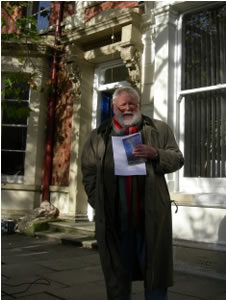
De Ierse dichter Michael Longley werd geboren op 27 juli 1939 in Belfast. Zie ook mijn blog van 27 juli 2007 en ook mijn blog van 27 juli 2009 en ook mijn blog van 27 juli 2010.


The Ice-Cream Man


Rum and raisin, vanilla, butter-scotch, walnut, peach:

You would rhyme off the flavours. That was before

They murdered the ice-cream man on the Lisburn Road

And you bought carnations to lay outside his shop.

I named for you all the wild flowers of the Burren

I had seen in one day: thyme, valerian, loosestrife,

Meadowsweet, tway blade, crowfoot, ling, angelica,

Herb robert, marjoram, cow parsley, sundew, vetch,

Mountain avens, wood sage, ragged robin, stitchwort,

Yarrow, lady’s bedstraw, bindweed, bog pimpernel.


Eurycleia


I

Eurycleia fetched a basin, poured cold water into it,

Added hot water, and got ready to wash his feet.

But Odysseus shifted out of the firelight, afraid

She might notice his scar, the key to his identity,

A wound a boar inflicted years back, a flesh-wound.

His wet-nurse cradled his foot in her hands and touched

The scar, and recognising him she let go of his leg

Which clattered into the basin — water everywhere,

Such pain and happiness, her eyes filling with tears,

Her old voice cracking as she stroked his beard and whispered

‘You are my baby boy for sure and I didn’t know you

Until I had fondled my master’s body all over.’


II

I began like Odysseus by loving the wrong woman

Who has disappeared among the skyscrapers of New York

After wandering for thousands of years from Ithaca.

She alone remembers the coppice, dense and overgrown,

Where in a compost of dead leaves the boar conceals

Its bristling spine and fire-red eyes and white tusks.


 961080-c28d9ff4e7639ee9aa15c44adf2e388f.jpg

Michael Longley (Belfast, 27 juli 1939)


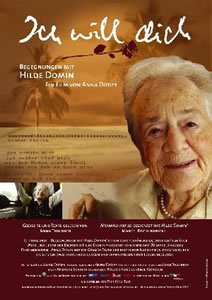
De Duitse schrijfster, dichteres en vertaalster Hilde Domin werd geboren in Keulen als Hilde Löwenstein op 27 juli 1909. Zie ook mijn blog van 27 juli 2010 en eveneens alle tags voor Hilde Domin op dit blog.


Lied zur Ermutigung III
für Li

Diese Vögel
ohne Schmerzen,
diese leichtesten goldenen
Vögel
dahintreibend
über den Dächern.


Keiner
nach dem andern
fragend.


Ohne Bitte,
ohne Sehnsucht,
sich mischend, sich trennend.


Wir,
unter den Dächern,
uns anklammernd.


Sieh,
die Sonne kehrt
wieder
als goldener Rauch.
Die fallende steigt.
Steigt aus den Dächern Hiobs.
Es tagt
heute
zum zweiten Mal.


Wo steht unser Mandelbaum


Ich liege

in deinen Armen, Liebster,

wie der Mandelkern in der Mandel.
Sag mir: wo steht

unser Mandelbaum?

Ich liege in deinen Armen

wie in einem Schiff,

ohne Route noch Hafen,

aber mit Delphinen am Bug.


Unter unserem Rücken

ein Band von Betten

unsere Betten in den vielen Ländern,

im Nirgendwo der Nacht,

wenn rings ein fremdes Zimmer versinkt.


Wohin wir kamen

- wohin wir kommen, Liebster,

alles ist anders,

alles ist gleich.


Überall wird das Heu

auf andere Weise geschichtet

zum Trocknen

unter der gleichen

Sonne.


961080-7735f78851cf2c936eeb62fea0c6c9c9.jpg
Hilde Domin (27 juli 1909 -  22 februari 2006)

Filmaffiche 


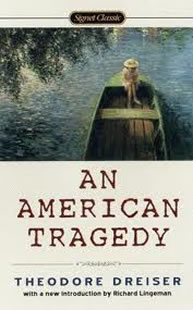
De Amerikaanse schrijver Theodore Herman Albert Dreiser werd geboren op 27 juli 1871 in Sullivan, Indiana.  Zie ook mijn blog van 27 juli 2007 en ook mijn blog van 27 juli 2008 en ook mijn blog van 27 juli 2009 en ook mijn blog van 27 juli 2010.

Uit: An American Tragedy


„Dusk--of a summer night.

And the tall walls of the commercial heart of an American city of perhaps 400,000 inhabitants--such walls as in time may linger as a mere fable.

And up the broad street, now comparatively hushed, a little band of six,--a man of about fifty, short, stout, with bushy hair protruding from under a round black felt hat, a most unimportant- looking person, who carried a small portable organ such as is customarily used by street preachers and singers.  And with him a woman perhaps five years his junior, taller, not so broad, but solid of frame and vigorous, very plain in face and dress, and yet not homely, leading with one hand a small boy of seven and in the other carrying a Bible and several hymn books.  With these three, but walking independently behind, was a girl of fifteen, a boy of twelve and another girl of nine, all following obediently, but not

too enthusiastically, in the wake of the others.

It was hot, yet with a sweet languor about it all.

Crossing at right angles the great thoroughfare on which they walked, was a second canyon-like way, threaded by throngs and vehicles and various lines of cars which clanged their bells and made such progress as they might amid swiftly moving streams of traffic.  Yet the little group seemed unconscious of anything save a set purpose to make its way between the contending lines of traffic and pedestrians which flowed by them.

Having reached an intersection this side of the second principal thoroughfare--really just an alley between two tall structures—now quite bare of life of any kind, the man put down the organ, which

the woman immediately opened, setting up a music rack upon which she placed a wide flat hymn book.  Then handing the Bible to the man, she fell back in line with him, while the twelve-year-old boy

put down a small camp-stool in front of the organ.“


 961080-4bac11de9e9293d1dc72ae91b63c717c.jpg

Theodore  Dreiser (27 juli 1871 – 28 december 1945)

Cover 


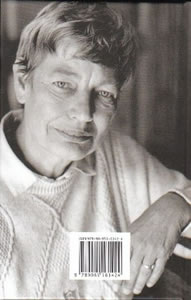
De Nederlandse schrijfster en psychologe Marijke Höweler werd geboren in Koog aan de Zaan op 27 juli 1938. Zie ook mijn blog van 27 juli 2007 en ook mijn blog van 27 juli 2009 en ook mijn blog van 27 juli 2010.
 

Uit: Het Huis


“Het kind ging mee. De hond begon meteen te blaffen. Ik zei dat ie niets deed, hoewel ik hem de laatste tijd heel slecht vertrouwde.

Ze zeiden dat ik het heel mooi had verbouwd. We gingen aan de tafel zitten. Ik schonk een glas. Het kind lustte geen melk. Maar ik had niet anders.

De balken vonden ze ook heel mooi, die waren zeker oud? Ik zei maar niet dat het schijnlogs waren die ik zelf had opgehangen. Maar toch, terwijl zij daar mijn werk zo zaten te bekijken, moest ik almaar denken aan mijn vrouw, die ze niet had kunnen zien. Omdat ik ermee bezig was voor als zij uit het ziekenhuis zou komen. Daarom heb ik de houten overkap voor de gordijnen nooit afgemaakt. Dat zag ik eigenlijk voor het eerst nu zij er zo naar keken.


Ze leken op te willen staan. Ik zei ze dat mijn vrouw was weggehaald. Ze vroegen of het lang geleden was. Twee jaar en zeven maanden. En gisteren zou ze jarig zijn geweest. Ze vonden het wel erg. Het kind zat me nieuwsgierig aan te kijken. Nadat ik ze uitgelegd had waar mijn vrouw aan was gestorven, liet ik ze de keuken zien, de was- en strijkkamer, de bloemenkas, die leeg was en waar ik nooit meer kwam. Ik snapte eigenlijk meteen dat de salon hun smaak niet was. Ze hielden meer van wat ik liever armoe noem. Ik ging zoeken of ik nog koek of snoep had voor het kind. Dat was zo en het zei: ‘Dank u wel.’ ‘Meneer,’ zei Laisa, maar dat hoefde niet van mij. Ik vind het genoeg als kinderen je bedanken.”


961080-49b820a2e50ae422391e93138686d0b9.jpg
Marijke Höweler (27 juli 1938 - 5 mei 2006)


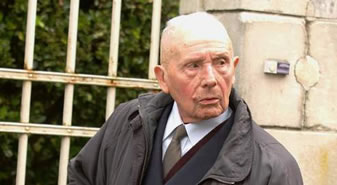
De Franse schrijver
Julien Gracq werd geboren op 27 juli 1910 als Louis Poirier in Saint-Florent-le-Vieil bij Angers. Zie ook mijn blog van 27 juli 2007 en ook mijn blog van 27 juli 2009 en ook mijn blog van 27 juli 2010.
 

Uit: Le sens de la forêt


„Ce fut vers la fin de décembre que la première neige tomba sur l’Ardenne. Quand Grange se réveilla, un jour blanc et sans âge qui suintait de la terre cotonnait sur le plafond l’ombre des croisées ; mais sa première impression fut moins celle de l’éclairage insolite que d’un suspens anormal du temps : il crut d’abord que son réveil s’était arrêté ; la chambre, la maison entière semblaient planer sur une longue glissade de silence – un silence douillet et sapide de cloître, qui ne s’arrêtait plus Il se leva, vit par la fenêtre la forêt blanche à perte de vue, et se recoucha dans la chambre quiète avec un contentement qui lui faisait cligner les yeux. Le silence respirait autour de lui plus subtil sous cette lumière luxueuse. Le temps faisait halte : pour les habitants du Toit, cette neige un peu fée qui allait fermer les routes ouvrait le temps des grandes vacances. (p.104)
Ils fumèrent un moment en silence. Il faisait bon. La nuée se dissipait; un ou deux coups de tonnerre roulèrent faiblement derrière l’horizon de la Belgique, avec le grondement pacifié d’une queue d’orage. La lune s’était dégagée : au fond de la trouée des arbres, la pente de la clairière se givrait d’une lumière froide, minérale, toute ocellée par l’ombre d’encre des jeunes sapins assis sur l’herbe.“


 961080-9504a708d2553b090c5ae8ee8e423185.jpg

Julien Gracq (27 juli 1910 – 22 december 2007)


Zie voor nog meer schrijvers van de 27e juli ook
mijn vorige blog van vandaag.
Geschreven door Romenu om 19:15 Reageer op dit bericht

Hilaire Belloc, Vladimir Korolenko, Lafcadio Hearn, Rajzel Zychlinsk, Alexandre Dumas fils, Denis Davydov

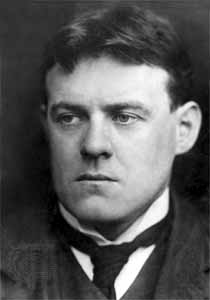
De Britse dichter en schrijver Hilaire Belloc werd geboren te St-Cloud op 27 juli 1870. Zie ook mijn blog van 27 juli 2009 en ook mijn blog van 27 juli 2010.


September


I, from a window where the Meuse is wide,
Looked eastward out to the September night;
The men that in the hopeless battle died
Rose, and deployed, and stationed for the fight;
A brumal army, vague and ordered large
For mile on mile by some pale general,-
I saw them lean by companies to the charge,
But no man living heard the bugle-call.

And fading still, and pointing to their scars,
They fled in lessening clouds, where gray and high
Dawn lay along the heaven in misty bars;
But watching from that eastern casement, I
Saw the Republic splendid in the sky,
And round her terrible head the morning stars.


October


Look, how those steep woods on the mountain's face
Burn, burn against the sunset; now the cold
Invades our very noon: the year's grown old,
Mornings are dark, and evenings come apace.
The vines below have lost their purple grace,
And in Forreze the white wrack backward rolled,
Hangs to the hills tempestuous, fold on fold,
And moaning gusts make desolate all the place.

Mine host the month, at thy good hostelry,
Tired limbs I'll stretch and steaming beast I'll tether;
Pile on great logs with Gascon hand and free,
And pour the Gascon stuff that laughs at weather;
Swell your tough lungs, north wind, no whit care we,
Singing old songs and drinking wine together.


 961076-f1b5a9a05024bf418f973fea3cea35a7.jpg

Hilaire Belloc (27 juli 1870. – 16 juli 1953)


De Russische schrijver Vladimir Korolenko werd geboren op 27 juli 1853 in Zjitomir (Volynië). Zie ook mijn blog van 27 juli 2007 en ook  mijn blog van 27 juli 2008 en ook mijn blog van 27 juli 2009 en ook mijn blog van 27 juli 2010.


Uit: The Blind Musician (Vertaald door Helen Altschuler)


„A child was born, in the dead of night, to a wealthy family in the South-West Territory. The young mother lay sunk in heavy languor; but when the infant's first cry sounded, low and plaintive, she began to toss feverishly on her bed. Her eyes were shut, but her lips moved, whispering, and her pale face, still soft of outline almost as a child's, twisted as though in suffering and impatient protest—the expression a much-petted child might wear on its first contact with sorrow.

The midwife bent close over the whispering lips.

"Why? Why does he..." the mother asked, almost inaudibly.

The midwife did not understand. Again the child's cry sounded. An expression of bitter suffering passed over the mother's face, and a heavy tear welled from her eyes.

"Why? Why?" she whispered, faintly as before.

This time the midwife understood her question, and answered tranquilly:

"Why the child cries? It's always so. Don't you worry yourself about it."

But the mother was not to be soothed. She started at each new cry, demanding over and over again, with wrathful impatience:

"Why so ... so dreadful?"

The midwife heard nothing out of the ordinary in the child's cries; and the mother, she could see, was hardly conscious—did not, perhaps, even know what she was saying. Turning away from the bed, she busied herself with the infant.

The mother fell silent. Only, now and again, some grievous suffering, finding no outlet in words or movement, pressed great tears from her shut eyes. Through the heavy lashes they seeped, and rolled softly down the marble pallor of her cheeks.

Can the mother's heart have sensed the grim, the unalleviable tragedy that had come into the world with the new-born life—that hung over the infant's cradle, to follow him through all his life, to the very grave?

Or was it, perhaps, no more than delirium? Be that as it may, the child was born blind.“


 961076-83911f3e6c1f5fde21e54ee2e09d21d8.jpg

Vladimir Korolenko (27 juli 1853 – 25 december 1921)

Portret in de Tretjakovgalerij in Moskou


De Engelstalige schrijver Lafcadio Hearn werd geboren op 27 juli 1850 op het Griekse eiland Lefkada. Zie ook mijn blog van 27 juli 2009 en ook mijn blog van 27 juli 2010.


Uit: My First Day In The Orient


'T is at first a delightfully odd confusion only, as you look down one of them, through an interminable flutter of flags and swaying of dark blue drapery, all made beautiful and mysterious with Japanese or Chinese lettering. For there are no immediately discernible laws of construction or deco-ration: each building seems to have a fantastic prettiness of its own; nothing is exactly like anything else, and all is bewilderingly novel. But gradually, after an hour passed in the quarter, the eye begins to recognise in a vague way some general plan in the construction of these low, light, queerly-gabled wooden houses, mostly unpainted, with their first storeys all open to the street, and thin strips of roofing sloping above each shop-front, like awnings, back to the miniature balconies of paper-screened second storeys. You begin to understand the common plan of the tiny shops, with their matted floors well raised above the street level, and the general perpendicular arrangement of sign-lettering, whether undulating on drapery or glimmering on gilded and lacquered sign-boards. You observe that the same rich dark blue which dominates in popular costume rules also in shop draperies, though there is a sprinkling of other tints, — bright blue and white and red (no greens or yellows). And then you note also that the dresses of the labourers are lettered with the same wonderful lettering as the shop draperies. No arabesques could produce such an effect. As modified for decorative purposes, these ideographs have a speaking symmetry which no design without a meaning could possess. As they appear on the back of a workman's frock — pure white on dark blue — and large enough to be easily read at a great distance (indicating some guild or company of which the wearer is a member or employee), they give to the poor cheap garment a factitious appearance of splendour.“


961076-53d949e35013cd415d6dcf855164634e.jpg
Lafcadio Hearn (27 juli 1850 – 26 september 1904)

Borstbeeld in het Lafcadio Hearn memorial park in Okubo


De Poolse dichteres Rajzel Zychlinski werd geboren op 27 juli 1910 in Gąbin, Polen.  Zie ook mijn blog van 27 juli 2007 en ook mijn blog van 27 juli 2009 en ook mijn blog van 27 juli 2010.


God Hid His Face.


All the roads led to death,

all the roads.


All the winds breathed betrayal,

all the winds.


At all the doorways angry dogs barked,

at all the doorways.


All the waters laughed at us,

all the waters.


All the nights fattened on our dread,

all the nights.


And the heavens were bare and empty,

all the heavens.


God hid his face.


 961076-c1c8e612acf2765279f603a30009eaf6.jpg

Rajzel Zychlinski (27 juli 1910 – 13 juni 2001)


De Franse schrijver Alexandre Dumas fils werd geboren op 27 juli 1824 in Parijs. Zie ook mijn blog van 27 juli 2009 en ook mijn blog van 27 juli 2010.


Uit: La dame aux camélias


„Chaque fois que l'on jouait une pièce nouvelle, on était sûr de l'y voir, avec trois choses qui ne la quittaient jamais, et qui occupaient toujours le devant de sa loge de rez-de-chaussée: sa lorgnette, un sac de bonbons et un bouquet de camélias.

Pendant vingt-cinq jours du mois, les camélias étaient blancs, et pendant cinq ils étaient rouges; on n'a jamais su la raison de cette variété de couleurs, que je signale sans pouvoir l'expliquer, et que les habitués des théâtres où elle allait le plus fréquemment et ses amis avaient remarquée comme moi.

On n'avait jamais vu à Marguerite d'autres fleurs que des camélias. Aussi chez Mme Barjon, sa fleuriste, avait-on fini par la surnommer la Dame aux Camélias, et ce surnom lui était resté.“

(…)


“Cependant cette gaieté, cette façon de parler et de boire, qui me paraissaient chez les autres convives les résultats de la débauche, de l'habitude ou de la force, me semblaient chez Marguerite un besoin d'oublier, une fièvre, une irritabilité nerveuse. A chaque verre de vin de Champagne, ses joues se couvraient d'un rouge fiévreux, et une toux, légère au commencement du souper, était devenue à la longue assez forte pour là forcer à renverser sa tête sur le dos de sa chaise et à comprimer sa poitrine dans ses mains toutes les fois qu'elle toussait.”


961076-f557428d140ad567302a77ededb82d35.jpg
Alexandre Dumas fils (27 juli 1824 - 27 november 1895)


De Russische dichter en soldaat Denis Vasilyevich Davydov werd geboren op 27 juli 1784 in Moskou. Zie voor onderstaande schrijver  ook mijn blog van 27 juli 2007.


The mariner

Through the seas in fury raging,
'Neath the skies bow'd down and dark,
Battle with the waves lone waging,
Struggles hopeless now my bark.
 
But, oh joy! the clouds dividing,
Let my star gleam forth to view;
And in its mild beam confiding,
Gay I sing with courage new.
 
Herold bright of day before me,
Golden youth-restoring star,
Evil chance aye hangeth o'er me,
When thou beamest low and far.
 
Yet, when thro' the clouds no beaming
Of thy light comes down to me,
I am lost beyond redeeming,
Without guide on shoreless sea.


Vertaald door Constance Bache


961076-c62d686bdf74ddec7cd6dd3fe49c6f18.jpg
Denis Davydov (27 juli 1784 – 22 april 1839)

Geschreven door Romenu om 19:07 Reageer op dit bericht

Meer van Romenu

↑ Terug naar de berichten