Naar de inhoud

Romenu

Over literatuur, gedichten, kunst en cultuur
seniorennet.beseniorennet.be

Berichten van 4 februari 2018

Am fünften Sonntage nach Heilige Drei Könige (Annette von Droste-Hülshoff)


2117482-7bca25a441acbdef98e1f498b9ce2cbf.jpg
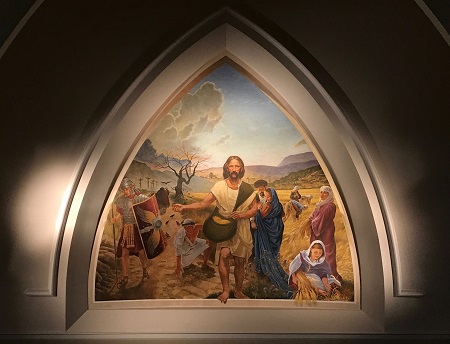
The Parable of the Sower door Gerald Steinmeyer, 2004
Gordon-Conwell Theological Seminary in Charlotte, North Carolina


Am fünften Sonntage nach Heilige Drei Könige
Evang.: Vom Samen, so unter die Dornen fiel

In die Dornen ist dein Wort gefallen,
In die Dornen, die mein Herz zerrissen;
Du, mein Gott, nur du allein kannst wissen,
Wie sie schmerzlich sind vor andern allen;
In die Dornen meiner bittern Reue,
Die noch keine Tröstung will empfangen;
So verbarg ich es in finstrer Scheue,
Und so ist es trübe aufgegangen.

Und so wächst es auf in bittrer Wonne,
Und die Dornen lassen es gedeihen;
Ach! mein Boden ist zu hart, im Freien
Leckt den Tau vom Felsen ihm die Sonne.
Kann es gleich nur langsam sich entfalten,
Schirmen sie es treulich doch vor Stürmen
Und dem Hauch der Luft, dem todeskalten,
Und wenn sich des Zweifels Wolken türmen.

In die Dornen ist dein Wort gefallen,
Und sie werden blut'ge Rosen tragen;
Soll ich einst dir zu vertrauen wagen,
Darf ich nur in ihrem Kranze wallen.
Wenn er recht erstrahlt im Feuerglanze
Und das Haupt mir sengt mit tiefen Wunden,
Dann gedeiht die zarte Gottespflanze,
Muß an seinem Schmerzenstrahl gesunden.

In Entsagung schwinden muß mein Leben,
In Betrachtung meine Zeit ersterben,
So nur kann ich um das Höchste werben;
Meine Augen darf ich nicht erheben.
Ach! ich habe sie mißbraucht zu Sünden
Und verscherzt des Aufblicks reine Freude;
Dann nur kann ich noch den Himmel finden,
So ich ihn in Scham zu schauen meide.

Wenn ich blicke in die milden Mienen
O, wie schmerzlich muß es mich betrüben,
Denen noch das teure Recht geblieben
Ihrem Gott in Freudigkeit zu dienen!
Muß an seinem Schmerzenstrahl gesunden.
Muß erglühend sie zur Erde schlagen;
In ein reines Auge sie zu senken,
Kann ich nimmer sonder Frevel wagen.

Und wie tief neig' ich die Stirn, die trübe,
Wenn die Sünde rauscht an mir vorüber,
Meinen Manche, daß mich Abscheu triebe,
Und gewinnen lieber mich und lieber,
Ist es oft nur mein vergangnes Leben,
Grauenhaft zum zweitenmal geboren;
Ach! und oft empfind' ich gar mit Beben,
Wie der Finstre noch kein Spiel verloren!

Aber, was er auch für Tücke hege,
Kämpfen will ich um des Himmels Grenzen;
Meine Augen sollen freudig glänzen,
Wenn ich mich in meine Dornen lege,
Daß die Welt nicht meinen Kampf darf rügen,
Oder gar mit eitelm Lob geleiten:
Wohl, ich kann durch Gottes Wunder siegen,
Aber nimmer mit zwei Feinden streiten.

Ob ein Tag mir steigen wird auf Erden,
Wo ich frei mich zu den Deinen zähle?
Wo kein Schwert mehr fährt durch meine Seele,
Wenn mir deine Hände sichtbar werden?
Herr, und soll der Tag mir nimmer scheinen,
Dürft' ich ihn in Ewigkeit nicht hoffen,
Dennoch muß ich meine Schulden weinen,
O, der Sünder hat sich selbst getroffen!


 2117482-0c9d0b48c09bb21767887a30f030ff89.jpg
Annette von Droste-Hülshoff (10 januari 1797 – 24 mei 1848)
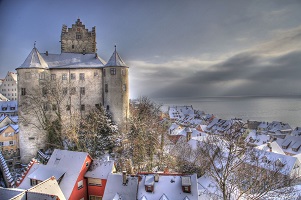
De Meersburg aan de Bodensee waar de dichteres van 1841 tot 1848 woonde.


Zie voor de schrijvers van de 4e februari ook mijn twee vorige blogs van vandaag.

Geschreven door Romenu om 10:15 Reageer op dit bericht

Robert Coover, Stewart O'Nan, Louis Ferron, Werner Schwab, Norman Ohler, Luuk Imhann, Else Kemps

De Amerikaanse schrijver Robert Coover werd geboren op 4 februari 1932 in Charles City, Iowa. Zie ook alle tags voor Robert Coover op dit blog.

Uit: White-Bread Jesus

“When that bully Cavanaugh rises in the middle of the opening prayer like a self-righteous Sadducee, shouldered round by all his fawning scribes and elders, to silence Reverend Wesley Edwards (was he shouting? of course he was shouting, God is deaf as a stump), neither he nor Jesus is surprised. In fact, they welcome it. Such persecutions are to be expected when what is hidden is revealed, and indeed stand as validation of it. What else is the Easter story about — for Christ’s sake? Who concurs: As they persecuted me, they’ll persecute you. A prophet in his own country, and all that, my son. But rejoice and be glad, your reward is great. His immediate reward is to have to sit beside the pulpit, biting his tongue, staring out on the sad blank faces of his First Presbyterian congregation, while the banker, having skipped ahead in the proceedings to the tithes and offerings, money being all he knows (and power, Cavanaugh knows power), speaks of the general good health of the church finances, its immediate needs (an assistant minister, for example — urgently!), and Easter as a loving family occasion. No, no, you idiot! It is a time of rejection of family, indeed of all earthly connections! Have you no ears? If anyone comes to me and does not hate his own father and mother and wife and children and brothers and sisters, yes, and even his own life, he cannot be my disciple! Leave everything — everything! — and follow me! You ignorant fool! Listen to your own son Tommy’s scripture reading: “But who do you say that I am?” Do you not know? It’s all Wesley can do to stop another noisy eruption from coming on. The indwelling Christ, too, is aboil with indignation, cursing traders and moneychangers and all their abominable progeny. A den of robbers! They are polluting the temple! Drive them out! He’s in a state, they’re both in a state.
It has been a trying couple of weeks. The Passion of Wesley Edwards. He’s not kidding, he’s endured it all in this Passiontide fortnight, from the deathly silence of God and the collapse of his faith, through all the upheavals at home and a plunge into harrowing desolation, a veritable descent into hell, to — finally — a kind of weird convulsive redemption that has left him rattled and confused and not completely in control of himself.”

 2117478-408bd4100ed85678875bb7037736adca.jpg
Robert Coover (Charles City, 4 februari 1932)


De Amerikaanse schrijver Stewart O'Nan werd geboren op 4 februari 1961 in Pittsburgh, Pennsylvania. Zie ook alle tags voor Stewart O’Nan op dit blog.

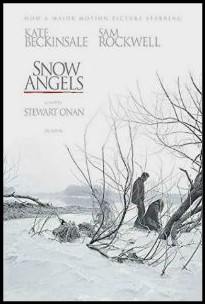
Uit: Snow Angels

“I was in the band the fall my father left, in the second row of trombones, in the middle because I was a freshman. Tuesdays and Wednesdays after school we practiced in the music room, but on Fridays Mr. Chervenick led us outside in our down jackets and tasseled Steeler hats and shitkicker boots and across the footbridge that spanned the interstate to the middle school soccer field, where, like the football team itself, we ran square-outs and curls and a maneuver Mr. Chervenick called an oblique, with which, for the finale of every halftime show, we described—all 122 of us—a whirling funnel approximating our school's nickname, the Golden Tornadoes. We never got it quite right, though every Friday Mr. Chervenick tried to inspire us, scampering across the frost-slicked grass in his chocolate leather coat and kid gloves and cordovans to herd us into formation until—in utter disgust—instead of steering a wayward oboe back on course he would simply arrest him or her by the shoulders so the entire block of winds had to stop, and then the brass and the drums, and we would have to start all over again.
Late one Friday in mid-December we were working on the tornado. Dusk had begun to fill the air and it was snowing, but Saturday was our last home game and Mr. Chervenick persuaded the janitor to turn on the lights.
An inch or so had fallen during the day and it was impossible to see the lines. "Wrong, wrong, wrong!" Mr. Chervenick shouted. When the girl pulling the xylophone slipped and twisted her ankle, he blew his whistle three times, which meant we were to line up for a final chastising pep talk before we could leave. He climbed the three steps of his little wheeled podium and let us stand in silence for a minute so we would realize how disappointed he was. Snow piled up in our hair. Beyond the sea of flakes drifting through the high lights came the ringing drone of a tractor-trailer's chains on the interstate. In the valley, muffled by a ceiling of clouds, lay the burning grid of Butler, the black river, the busy mills.
"We have all worked very hard this year," he said, and paused, breathing steam, as if speaking to a stadium, waiting for his words to circle. Beside me Warren Hardesty muttered something—a joke, a rejoinder—and then we heard what I immediately identified (from my own .22, my father's Mossberg, the nightly news from Vietnam) as gunshots.”


 2117478-7047c621910bbedd804223bef392c4ad.jpg
Stewart O'Nan (Pittsburgh, 4 februari 1961)
Cover luisterboek


De Nederlandse dichter en schrijver Louis Ferron werd op 4 februari 1942 geboren in Leiden. Zie ook alle tags voor Louis Ferron op dit blog.

Uit: Karelische nachten

“Waar? In háár bed? Het mijne? Heb ik mij de afgelopen nacht nog op haar gewenteld? Of heeft zij schrijlings op mij plaatsgenomen? Wat had er tussen ons kunnen gebeuren wanneer de wereld vierkant was en duisternis heerste als je het licht aan deed?
Vragen, voortdurend vragen, de ene al zinlozer dan de andere. Kwestie van behoud. Wie niet vraagt zal niet weten. Daartoe dient men ook een encyclopedie in huis te hebben. Om een antwoord op al die vragen te vinden. Waar ligt het Kattegat en wie was August Graf von Platen Hallermünde? En dan dat vlees. Ik bedoel, van die vrouw. Zoveel. Dat kunnen de dekens niet verborgen houden.
Ik heb altijd een voorkeur gehad voor gevulde vrouwen. Of druk ik me hier te actief uit? Is het niet altijd eerder zó geweest...? Het Kattegat, dat weet ik heel zeker, ligt ten oosten van Jutland. En August Graf von Platen Hallermünde was een van die tragische figuren die, hoewel ze de eeuwigheid hebben nagestreefd, niet bestand zijn gebleken tegen het woeden der tijd. Een kwestie van slecht bloed. Daar is geen kruidenthee, geen purgeermiddel tegen gewassen. Platen: aan tyfeuze koortsen gestorven. In Syracuse, ver van zijn geboortegrond. Vlak voor zijn sterven wellicht nog beroofd door een morsige schandknaap, die hem eens trouw tot in de dood had beloofd.
Wer die Schönheit angeschaut mit Augen,
Ist dem Tode schon anheim gegeben...
De schoonheid gezien hebben en dat beeld mee het graf in moeten nemen omdat men te weinig talent heeft die ervaring in een blijvend monument om te zetten...
Zou die vrouw naast me een monument waard zijn? Ik sloot mijn ogen en probeerde me haar gestalte voor de geest te halen. Veel vlees. Maar hoe is het verdeeld over het lichaam? Ik moet gisteravond met haar gedanst hebben, haar in de heupen hebben gegrepen, mijn handen rond haar billen en op haar borsten hebben gelegd.”


 2117478-50fd0e921ed529819bf3639437a6ac78.jpg
Louis Ferron (4 februari 1942 – 26 augustus 2005)
Cover


De Oostenrijkse toneelschrijver Werner Schwab werd geboren in Graz op 4 februari 1958. Zie ook alle tags voor Werner Schwab op dit blog.

Uit: Die Präsidentinnen

„MARIEDL (unterm Tisch) Ich glaub nicht, daß das recht ist, Erna, mit deiner Sparsamkeit. Deine Sparsamkeit ist viel zu groß und viel zu übertrieben. Der Herrgott will nicht, daß es den guten Menschen schlecht geht.
ERNA (wütend, hebt das Tischtuch) Du hast ein leichtes Reden, meine liebe Mariedl, du warst immer alleine und ohne eine richtige Bindung. Du hast immer herumfahren können in der Welt, wenn du eine Freizeit bekommen hast in deinem Leben. Du warst heuer schon in Lourdes, in Medjugorje und zweimal in Mariazell. Du hast keine Verantwortung für ein abtrünniges Kind.
GRETE Aber der Herrmann ist doch schon ein männlicher Mann.
MARIEDL taucht auf, setzt sich, zuckt ratlos die Schultern und beginnt den Oberkörper rhythmisch nach vor und zurück zu bewegen.
ERNA Ein Mannsbild ist er schon. Die Weiber drehn sich eh alle um nach dem Herrmann, so schamlos wie die sind in der heutigen Zeit. Aber er leugnet ja alles ab, was schön ist im Leben und was einen guten Sinn hat. Da oben, sag ich immer zum Herrmann, da oben kommen einmal die Bilder von meinen Enkerln hin. (Sie zeigt auf zwei weiße, rechteckige Flecken an der Wand.) Aber den Gefallen tut er mir nicht an, der macht mir keine Enkelkinder. Dabei hab ich früher einmal fünf freie Platzerln freigehalten für die Enkelbilder, jetzt hab ich eh schon drei Plätze aufgebraucht für die erste Zeit, damit der Herrmann nicht so geschreckt ist. Dabei könnte er so leicht Verkehr haben in der heutigen Zeit. Heute haben die Menschen ja den ganzen Tag einen Verkehr. Und der Herrmann gibt ja auch zu, daß er immer einen Verkehr haben könnte, aber er hat eben absichtlich nie einen Verkehr, weil so ein Verkehr kann ja eine richtige Schwangerschaft einleiten, und so etwas wäre zusammengezählt unter dem Strich womöglich ein Enkerl.“

 2117478-2a88941e929c2f5308f63e464875114f.jpg
Werner Schwab (4 februari 1958 - 1 januari 1994)


De Duitse schrijver en journalist Norman Ohler werd geboren op 4 februari 1970 in Zweibrücken. Zie ook alle tags voor Norman Ohler op dit blog.

Uit: Blitzed

“Under a clean-swept summer sky stretching over both industrial zones and uniform housing, I take the suburban train south-east, to the edge of Berlin. In order to find the remnants of the Temmler factory I have to get out at Adlershof, which nowadays calls itself 'Germany's most modern technology park'. Avoiding the campus, I strike off across an urban no man's land, skirting dilapidated factory buildings, and passing through a wilderness of crumbling brick and rusty steel. The Temmler factory moved here in 1933. It was only one year later that Albert Mendel (the Jewish co-owner of the Tempelhof Chemicals Factory) was expropriated by the racist laws of the regime and Temmler took over his share, quickly expanding the business. These were good times for the German chemicals industry (or at least for its Aryan members), and pharmaceutical development boomed. Research was tirelessly conducted on new, pioneering substances that would ease the pain of modern humanity or sedate its troubles. Many of the resulting pharmacological innovations shape the way we consume medicine today By now the former Temmler factory in Berlin-Johannisthal has fallen into ruin. There is no sign of its prosperous past, of a time when millions of Pervitin pills a week were being pressed. The grounds lie unused, a dead property. Crossing a deserted car park, I make my way through a wildly overgrown patch of forest and over a wall stuck with broken bits of glass designed to deter intruders. Between ferns and saplings stands the old wooden 'witch's house' of the founder, Theodor Temmler, once the nucleus of the company. Behind dense alder bushes looms a forsaken brick building. A window is broken enough for me to be able to climb through, stumbling into a long dark corridor. Mildew and mould grow from the walls and ceilings. At the end of the hallway a door stands beckoning, half open, encrusted with flaking green paint. Beyond the door, daylight peers through two shattered, lead-framed industrial windows. An abandoned bird's nest hides in the corner. Chipped white tiles reach all the way to the high ceiling, which is furnished with circular air vents.”


 2117478-ab7c1d4bba9143bc8245dcedaf840913.jpg
Norman Ohler (Zweibrücken, 4 februari 1970)]


Onafhankelijk van geboortedata

De Nederlandse dichter en theatermaker Luuk Imhann werd geboren in Monster in 1986. Zie ook alle tags voor Luuk Imhann op dit blog.

Uit: Paradijs

“Het laatste lid van de groep, Danuel Milton, is vooral stil. Oud en wijs wil hij overkomen, denk ik, maar hoewel hij met zijn achtenvijftig jaar de oudste is van de expeditie – de rest is niet veel jonger – maakt hij geen wijze indruk. Hij lijkt een groot verdriet met zich mee te dragen en geeft me met norse blikken het gevoel dat ik niet gewenst ben. Ik, de student, die het allemaal toch niet begrijpt. Dat mijn vader de expeditie financiert levert me nog geen voorrangspositie op, lijkt Danuel te willen zeggen.
De anderen zijn een jaar of twintig ouder dan ik en zijn het studentenleven waarin ik me nog begeef al geruime tijd ontgroeid. Allen zien we eruit als oermensen in de jungle die ze voor de grap westerse kleding hebben aangetrokken, zo ongemakkelijk bewegen we ons erin voort. Enige uitzondering, op Osu en Yong na, die geen ongemak kennen of het nooit laten blijken, is Lilith, die rondloopt als een bosnimf; zelfs met doorweekte kleding en een eindeloze stroom zweet over haar uitgeputte gezicht is ze nog beeldschoon. Haar zwarte, lange haren, haar groene ogen, ze lijkt soms op een dolende figuur die je diep het oerwoud in lokt, waarna je je weg niet meer terugvindt.
We stoppen en de biologen pakken hun verrekijkers. Olav legt een hand op mijn schouder en wijst me waar ik moet kijken. ‘Een Aap van de Oude Wereld,’ zegt hij.”


 2117478-6fa61812f4a4c7bf18e3ecbaaf1f3d63.jpg
Luuk Imhann (Monster, 1986)


De Nederlandse dichteres Else Kemps werd geboren in Malden in 1995. Zie ook alle tags voor Else Kemps op dit blog.


De logeerbeer

Het is laat als je het uitspreekt: ‘Ik wil het liever geen naam geven.’
Ik herinner me de meester van groep vier, die de klas vroeg of iemand iets kon bedenken dat geen naam had. Ik keek het lokaal rond, naar de logeerbeer waarvan in een kringgesprek was besloten dat iedereen een eigen naam mocht verzinnen. In het bijbehorende dagboek schreven we dingen als ‘in bad geweest met Lola,’ ‘appelcruesli gegeten met Joost’ en ‘over boten gedroomd met Bernhard.’ Daarna dacht ik aan de vissen in onze vijver, die zich voortplantten tot het water oranje zag. Alleen de vader was bij aankoop Sjaak gedoopt.
Ik vertel je niets over de vissen en de beer. Ik zeg enkel dat ik niet weet wat me banger maakt: dat de dingen zonder naam gemaakt zijn om te worden vergeten of dat ik ze stuk voor stuk onthouden heb.


 2117478-984544eafc65afdcbbcd13c1857153ae.jpg
Else Kemps (Malden, 1995)


Zie voor nog meer schrijvers van de 4e februari ook mijn vorige blog van vandaag.

Zie voor bovenstaande schrijvers ook mijn blog van 4 februari 2007 en ook mijn blog van 4 februari 2008 en eveneens mijn blog van 4 februari 2009.

Geschreven door Romenu om 10:13 Reageer op dit bericht

Alfred Andersch, Grigore Vieru, E. J. Pratt, Georg Brandes, Jacques Prévert, Jean Richepin, Carl Michael Bellman

De Duitse schrijver Alfred Andersch werd geboren op 4 februari 1914 in München. Zie ook alle tags voor Alfred Andersch op dit blog.

Uit: Sansibar oder der letzte Grund

„Der Mississippi wäre das Richtige, dachte der Junge, auf dem Mississippi konnte man einfach ein Kanu klauen und wegfahren, wenn es stimmte, was im Huckleberry Finn stand. Auf der Ostsee würde man mit einem Kanu nicht sehr weit kommen, ganz abgesehen davon, daß es an der Ostsee nicht mal schnelle wendige Kanus gab, sondern nur so olle schwere Ruderboote. Er sah vom Buch auf, unter der Treenebrücke floß das Wasser still und langsam durch; die Weide, unter der er saß, hing ins Wasser rein, und gegenüber, in der alten Gerberei, regte sich, wie immer, nichts. Der Mississippi wäre besser als die Speicher in der alten, verlassenen Gerberei und die Weide am langsamen Fluß. Auf dem Mississippi wäre man weg, während man sich auf den Speichern in der Gerberei und unter der Weide nur verstecken konnte. Unter der Weide auch nur, solange sie Blätter hatte, und die hatten schon mächtig begonnen abzufallen und trieben gelb auf dem braunen Wasser davon. Verstecken war übrigens nicht das Richtige, dachte der Junge – man mußte weg sein.
Man mußte weg sein, aber man mußte irgendwohin kommen. Man durfte es nicht so machen wie Vater, der weg gewollt hatte, aber immer nur ziellos auf die offene See hinausgefahren war. Wenn man kein anderes Ziel hatte als die offene See, so mußte man immer wieder zurückkehren. Erst dann ist man weg, dachte der Junge, wenn man hinter der offenen See Land erreicht."
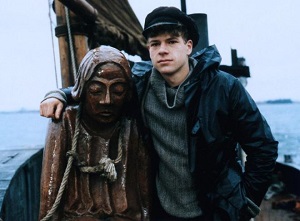
 

 2117471-fc05e2c09475a980c86f2514b5a849fe.jpg
Alfred Andersch (4 februari 1914 – 21 februari 1980)
Scene uit de gelijknamige film uit 1987


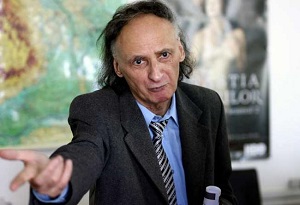
De Moldavische dichter en schrijver Grigore Vieru werd geboren in Pereita op 4 februari 1935. Zie ook alle tags voor Grigore Vieru op dit blog.


Mutterwesen

Leicht mein' Mami, Gotteswesen
Weil du treten könntest mal
Auf die Samen, die leicht schweben
In dem Himmel-Erde All.

In den Augen Angst empfindest,
Trotzdem glücklich bist im Rest –
Zartes Gras weiß wie du heißest,
Und der Stern weiß was du denkst.


Mutters Haar

Wie viele Häuser hast du, Mutter,
Mit Ton verputzt und mit Kalk geweißt!
In deinem Haar bleicht, Mutter,
Der damalige Kalk.
Wie lange habe ich geweint
Im Hunger, wie in einer Zange gepresst!
Nachts, als du Totenwache hieltest.
In deinem Haar bleicht, Mutter,
Das Salz meiner alten Tränen.
Abends ich rüge deinen Enkel,
Weil er nicht artig ist,
Aber er zieht bei dir im Vollen um,
Und weint auch
In deinem Haar.


Vertaald door Nicolae Dabija
 

 2117471-a98554cf6acabd113828fabd45275fc6.jpg
Grigore Vieru (4 februari 1935 - 18 januari 2009)
Cover


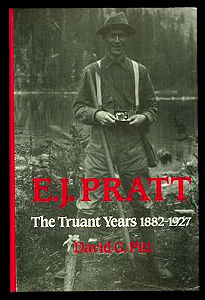
De Canadese dichter E. J. Pratt werd op 4 februari 1882 geboren in Western Bay, Newfoundland. Zie ook alle tags voor E. J. Pratt op dit blog.


The Truant (Fragment)

And the little genus homo, six feet high,
Standing erect, countered with this reply --
"You dumb insouciant invertebrate,
You rule a lower than a feudal state --
A realm of flunkey decimals that run,
Return; return and run; again return,
Each group around its little sun,
And every sun a satellite.
There they go by day and night,
Nothing to do but run and burn,
Taking turn and turn about,
Light-year in and light-year out,
Dancing, dancing in quadrillions,
Never leaving their pavilions.

"Your astronomical conceit
Of bulk and power is anserine.
Your ignorance so thick,
You did not know your own arithmetic.
We flung the graphs about your flying feet,
We measured your diameter --
Merely a line
Of zeros prefaced by an integer.
Before we came
You had no name.
You did not know direction or your pace;
We taught you all you ever knew
Of motion, time and space.
We healed you of your vertigo
And put you in our kindergarten show,
Perambulated you through prisms, drew
Your mumu's through the Milky Way,
Lassoed your comets when they ran astray,
Yoked Leo, Taurus, and your team of Bears
To pull our kiddy cars of inverse squares.

"Boast not about your harmony,
Your perfect curves, your rings
Of pure and endless light -- 'Twas we
Who pinned upon your Seraphim their wings,
And when your brassy heavens rang
With joy that morning while the planets sang
Their choruses of archangelic lore,
'Twas we who ordered the notes upon their score
Out of our winds and strings.
Yes! all your shapely forms
Are ours -- parabolas of silver light,
Those blueprints of your spiral stairs
From nadir depth to zenith height,
Coronas, rainbows after storms,
Auroras on your eastern tapestries
And constellations over western seas.
 

 2117471-c586c0043697b4702e073deb85fe8503.jpg
E. J. Pratt (4 februari 1882 – 26 april 1964)
Cover


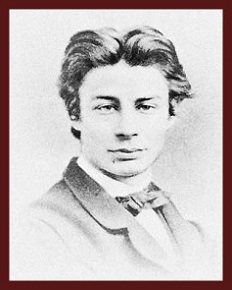
De Deense schrijver, criticus en filosoof Georg Brandes werd geboren op 4 februari 1842 in Kopenhagen. Zie ook alle tags voor Georg Brandes op dit blog.

Uit: Recollections Of My Childhood And Youth

„I liked my name. My mother and my aunts said it in such a kindly way.
And the name was noteworthy because it was so difficult to pronounce. No boy or girl smaller than I could pronounce it properly; they all said _Gayrok_.
I came into the world two months too soon, I was in such a hurry. My mother was alone and had no help. When the midwife came I had arrived already. I was so feeble that the first few years great care had to be taken of me to keep me alive. I was well made enough, but not strong, and this was the source of many vexations to me during those years when a boy's one desire and one ambition is to be strong.
I was not clumsy, very agile if anything; I learnt to be a good high jumper, to climb and run well, was no contemptible wrestler, and by degrees became an expert fighter. But I was not muscularly strong, and never could be compared with those who were so.
The world, meanwhile, was so new, and still such an unknown country.
About that time I was making the discovery of fresh elements.
I was not afraid of what I did not like. To overcome dislike of a thing often satisfied one's feeling of honour.
"Are you afraid of the water?" asked my brisk uncle from Funen one day.
I did not know exactly what there was to be afraid of, but answered unhesitatingly: "No." I was five years old; it was Summer, consequently rainy and windy.
I undressed in the bathing establishment; the old sailor fastened a cork belt round my waist. It was odiously wet, as another boy had just taken it off, and it made me shiver. Uncle took hold of me round the waist, tossed me out into the water, and taught me to take care of myself.
Afterwards I learnt to swim properly with the help of a long pole fastened to the cork belt and held by the bathing-man, but my familiarity with the salt element dated from the day I was flung out into it like a little parcel. Without by any means distinguishing myself in swimming, any more than in any other athletic exercise, I became a very fair swimmer, and developed a fondness for the water and for bathing which has made me very loth, all my life, to miss my bath a single day.”
 2117471-9623aa9de2eedf72930236dcee82964d.jpg
Georg Brandes (4 februari 1842 – 19 februari 1927) 
In 1866


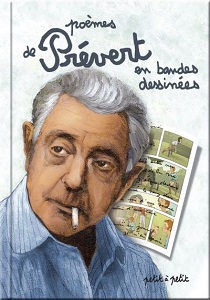
De Franse dichter Jacques Prévert werd geboren in Neuilly-sur-Seine op 4 februari 1900. Zie ook alle tags voor Jacques Prévert op dit blog.


Les enfants qui s’aiment

Les enfants qui s'aiment s'embrassent debout
Contre les portes de la nuit
Et les passants qui passent les désignent du doigt
Mais les enfants qui s'aiment
Ne sont là pour personne
Et c'est seulement leur ombre
Qui tremble dans la nuit
Excitant la rage des passants
Leur rage, leur mépris, leurs rires et leur envie
Les enfants qui s'aiment ne sont là pour personne
Ils sont ailleurs bien plus loin que la nuit
Bien plus haut que le jour
Dans l'éblouissante clarté de leur premier amour


Fiësta

En leeg waren de glazen
en de flessen kapot
En het bed dat lag open
en de deur zat op slot
En op de vuile vloer,
schitterden in het stof
de scherven als sterretjes
van schoonheid en geluk
En ik was laveloos
ik stond in vuur en vlam
en jij lag bandeloos
in mijn armen, bloot.


Paris at night

Drie lucifertjes een voor een aangestreken in de nacht
Het eerste om heel je gezicht te kunnen zien
Het tweede om je ogen te zien
Het derde om je mond te zien
En dan heel het donker om dat alles vast te houden
Als ik je in mijn armen neem.


Vertaald door Wim Hofman
 

 2117471-5fa825a14bae2bd7152e0c5b9de8969b.jpg
Jacques Prévert (4 februari 1900 – 11 april 1973)
Cover 


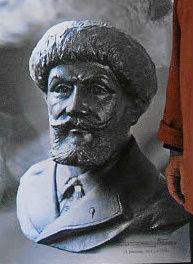
De Franse dichter en schrijver Jean Richepin werd geboren op 4 februari 1849 in Médéa, Algerije. Zie ook alle tags voor Jean Richepin op dit blog.


Sonnet grec

C'était un grand sculpteur que le Grec Praxitèle.
La légende pourtant nous raconte qu'un jour,
Voulant faire une coupe et ne rien mettre autour,
Il ne vit point de forme assez pure pour elle.

Mais le soir, fatigué de son travail rebelle,
Comme il baisait un sein façonné par l'amour,
Tout à coup il trouva. Ce bouton ! ce contour
Et la coupe naquit sur ce parfait modèle.

La femme dont la gorge avait un tel dessin
Qu'on moula l'idéal aux rondeurs de son sein,
Cette déesse en chair, comment se nommait-elle ?

Nul ne le sait. Mais grâce au sculpteur, à l'amant,
La coupe a survécu dans sa forme immortelle,
Et sa beauté demeure impérissablement.


Rondeau

Votre beau thé, moins rare que vos yeux,
Votre thé vert, fleuri, délicieux,
Qui vaut quasi dix mille francs la livre,
Moins que la fleur de vos yeux il enivre
Et fait rêver qu'on s'en va dans les cieux.

J'ai bu les deux aromes précieux ;
Et jusqu'au jour dans mon lit soucieux
Il m'a sonné des fanfares de cuivre,
Votre beau thé.

Je vous voyais passer parmi les Dieux,
Dans un grand char aux flamboyants essieux ;
Et sous la roue en or, n'osant vous suivre,
J'ai mis mon front, et j'ai cessé de vivre
En bénissant, écrasé mais joyeux,
Votre beauté.
 

 2117471-d39a416c76688ba61e49236b62c26ce0.jpg
Jean Richepin (4 februari 1849 – 12 december 1926)
Borstbeeld


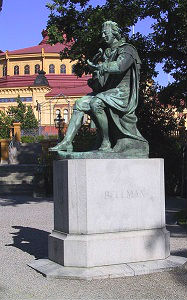
De Zweedse Rokoko-dichter en componist Carl Michael Bellman werd geboren op 4 februari 1740 in Stockholm. Zie ook alle tags voor Carl Michael Bellman op dit blog.


Drink out thy glass

Drink out thy glass! See, on thy threshold, nightly,
Staying his sword, stands Death, awaiting thee.
Be not alarmed; the grave-door, opened slightly,
Closes again; a full year it may be
Ere thou art dragged, poor sufferer, to the grave.
Pick the octave!
Tune up the strings! Sing of life with glee!

Golden's the hue thy dull, wan cheeks are showing;
Shrunken's thy chest, and flat each shoulder-blade.
Give me thy hand! Each dark vein, larger growing,
Is, to my touch, as if in water laid.
Damp are these hands; stiff are these veins becoming.
Pick now, and strumming,
Empty thy bottle! Sing! drink unafraid.

. . . . .

Skal, then, my boy! Old Bacchus sends last greeting;
Freya's farewell receive thou, o'er thy bowl.
Fast in her praise thy thin blood flows, repeating
Its old-time force, as it was wont to roll.
Sing, read, forget; nay, think and weep while thinking.
Art thou for drinking
Another bottle? Thou art dead? No Skal!
 

 2117471-bbcf35165b3f2de207b95561d15989a4.jpg
Carl Michael Bellman (4 februari 1740 – 11 februari 1795)
Standbeeld in Stockholm


Zie voor bovenstaande schrijvers ook mijn blog van 4 februari 2007 en ook mijn blog van 4 februari 2008 en eveneens mijn blog van 4 februari 2009.


Geschreven door Romenu om 10:11 Reageer op dit bericht

Meer van Romenu

↑ Terug naar de berichten