De Zuid-Afrikaanse schrijver André Brink werd geboren op 29 mei 1935 in Vrede. Zie ook alle tags voor André Brink op dit blog.
Uit: A dry white season
“I had never been so close to death before.
For a long time, as I lay there trying to clear my mind, I couldn't think coherently at all, conscious only of a terrible, blind bitterness. Why had they singled me out? Didn't they understand? Had everything I'd gone through on their behalf been utterly in vain? Did it really count for nothing? What had happened to logic, meaning and sense?
But I feel much calmer now. It helps to discipline oneself like this, writing it down to see it set out on paper, to try and weigh it and find some significance in it.
Prof Bruwer: There are only two kinds of madness one should guard against, Ben. One is the belief that we can do everything. The other is the belief that we can do nothing.
I wanted to help. Right. I meant it very sincerely. But I wanted to do it on my terms. And I am white, and they are black. I thought it was still possible to reach beyond our whiteness and blackness. I thought that to reach out and touch hands across the gulf would be sufficient in itself. But I grasped so little, really: as if good intentions from my side could solve it all. It was presumptuous of me. In an ordinary world, in a natural one, I might have succeeded. But not in this deranged, divided age. I can do all I can for Gordon or scores of others who have come to me; I can imagine myself in their shoes, I can project myself into their suffering. But I cannot, ever, live their lives for them. So what else could come of it but failure?
Whether I like it or not, whether I feel like cursing my own condition or not -- and that would only serve to confirm my impotence -- I am white. This is the small, final, terrifying truth of my broken world. I am white. And because I am white I am born into a state of privilege. Even if I fight the system that has reduced us to this I remain white, and favored by the very circumstances I abhor“.
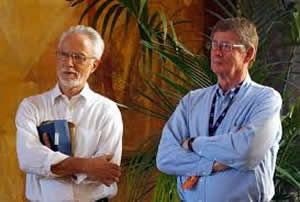
André Brink (29 mei 1935 - 6 februari 2015)
Hier met J.M. Coetzee (links)
De Catalaanse dichter, schrijver en vertaler Eduard Escoffet werd geboren op 29 mei 1979 in Barcelona. Zie ook alle tags voor Eduard Escoffet op dit blog.
angst
angst vor der mutter
angst vor der pfeife des vaters
angst vor dem onkel
angst vor der ehe des onkels
angst vor der cousine die mit großen brüsten herüberschaut
angst mutter zu werden
angst die cousine zu sein, der der cousin den schwanz reinsteckt
angst der cousin zu sein, der der cousine den schwanz reinstecken soll
angst ein treuer vater zu sein
angst ein elternteil zu sein und das zuckersüße kind grenzenlos zu lieben
angst eine sorgende mutter zu sein
die einen unbekannten nährt:
die einen terroristen nährt,
die ein sektenmitglied nährt,
die einen junkie nährt,
die einen kiezdealer nährt,
die einen künstler voller acid nährt,
die einen visionär nährt,
die einen dieb nährt,
die einen polizisten nährt.
angst mutter zu sein und die pistole nicht zu verkraften, wenn der sohn mit flecken in der
uniform nach hause kommt
angst vor dem brot
angst vor dem wind
angst vor oliven mit anchovis
angst eine mit anchovi gefüllte olive zu sein oder noch schlimmer: eine garnele
angst vor denen die reden und angst vor denen die nicht reden
angst skater zu hassen
angst ikea zu hassen
angst gewerkschafter zu hassen
angst die heilige katholische kirche und jeden einzelnen ihrer anhänger zu hassen
angst dem vater zu schreiben
angst kafka zu sein
angst heterosexuell zu sein
angst homosexuell zu sein
angst nicht bisexuell zu sein
angst nicht multikulturell zu sein
angst kein demokrat zu sein
angst stalin zu sein
angst nichts zu verlieren zu haben
angst
angst nicht du zu sein
angst nicht du zu sein
angst nicht du zu sein
Vertaald door Roger Friedlein

Eduard Escoffet (Barcelona, 29 mei 1979)
De Engelse dichter, letterkundige, schrijver en journalist Gilbert Keith Chesterton werd geboren in Londen op 29 mei 1874. Zie ook alle tags voor G. K. Chesterton en alle tags voor Chesterton op dit blog.
Uit: The Man Who Was Thursday
“More especially this attractive unreality fell upon it about nightfall, when the extravagant roofs were dark against the afterglow and the whole insane village seemed as separate as a drifting cloud. This again was more strongly true of the many nights of local festivity, when the little gardens were often illuminated, and the big Chinese lanterns glowed in the dwarfish trees like some fierce and monstrous fruit. And this was strongest of all on one particular evening, still vaguely remembered in the locality, of which the auburn-haired poet was the hero. It was not by any means the only evening of which he was the hero. On many nights those passing by his little back garden might hear his high, didactic voice laying down the law to men and particularly to women. The attitude of women in such cases was indeed one of the paradoxes of the place. Most of the women were of the kind vaguely called emancipated, and professed some protest against male supremacy. Yet these new women would always pay to a man the extravagant compliment which no ordinary woman ever pays to him, that of listening while he is talking. And Mr. Lucian Gregory, the red-haired poet, was really (in some sense) a man worth listening to, even if one only laughed at the end of it. He put the old cant of the lawlessness of art and the art of lawlessness with a certain impudent freshness which gave at least a momentary pleasure. He was helped in some degree by the arresting oddity of his appearance, which he worked, as the phrase goes, for all it was worth. His dark red hair parted in the middle was literally like a woman’s, and curved into the slow curls of a virgin in a pre-Raphaelite picture. From within this almost saintly oval, however, his face projected suddenly broad and brutal, the chin carried forward with a look of cockney contempt. This combination at once tickled and terrified the nerves of a neurotic population. He seemed like a walking blasphemy, a blend of the angel and the ape.
This particular evening, if it is remembered for nothing else, will be remembered in that place for its strange sunset. It looked like the end of the world. All the heaven seemed covered with a quite vivid and palpable plumage; you could only say that the sky was full of feathers, and of feathers that almost brushed the face. Across the great part of the dome they were grey, with the strangest tints of violet and mauve and an unnatural pink or pale green; but towards the west the whole grew past description, transparent and passionate, and the last red-hot plumes of it covered up the sun like something too good to be seen. The whole was so close about the earth, as to express nothing but a violent secrecy. The very empyrean seemed to be a secret. It expressed that splendid smallness which is the soul of local patriotism. The very sky seemed small.”
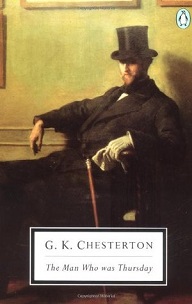
G. K. Chesterton (29 mei 1874 - 14 juli 1936)
Cover
De Franse schrijver Bernard Charles Henri Clavel werd geboren op 29 mei 1923 in Lons-le-Saunier. Zie ook alle tags voor Bernard Clavel op dit blog.
Uit:Les roses de Verdun
« Je me suis vite rendu compte que leur présence si obsédante devait tenir au fait que j'étais à Verdun, car je ne revoyais ni ceux qui étaient tombés avant notre arrivée ici, ni ceux qui devaient mourir plus tard, dans d'autres secteurs où ça n'était pas beaucoup moins dur. Je mettais des noms et des prénoms sur ces visages. Et des noms de villes ou de villages aussi. Ceux des endroits d'où ils venaient. Où on avait dû attendre leur retour. Où ils figuraient sans doute sur le marbre d'un monument. Je demeurais là, figé, sans plus rien voir de ce café pauvre, sans rien entendre de ce qui se disait autour de moi. Je contemplais des visages sans vie et qui fixaient pourtant sur moi des regards intenses. Et j'entendais ma propre voix répéter des noms. Je suis resté là longtemps. J'ai payé. Je suis sorti et me suis sans réfléchir rendu au cinéma. Le film était amusant, mais mes copains toujours là semblaient me reprocher mon rire. Quand je (j'allais dire nous et ce serait plus juste) suis sorti de cette salle, la bise faisait courir d'un bout à l'autre de la rue une petite neige dure et serrée qui pinçait la peau.
Le lendemain, j'étais sur pied bien avant l'aube. J'ai ouvert ma fenêtre. L'enseigne clignotante rouge ne fonctionnait plus. A la lueur fade qui montait de la rue j'ai vu filer la neige. En face, les toitures qui se devinaient à peine étaient blanches. En dépit de ce que les terribles hivers de guerre m'ont fait endurer, il me reste de mon enfance une passion très forte pour ces matins où tout s'emmitoufle dans un silence blanc. Ma fenêtre refermée, je suis resté longtemps le nez à la vitre glacée, à regarder ce torrent gris qui donnait presque le vertige. J'ai fait ma toilette, je me suis habillé chaudement et je suis descendu. J'aime la neige, mais là, elle ne me souriait vraiment pas. C'était le petit concierge qui se trouvait de service. Il m'a tout de suite averti : — Si vous prenez la route pour Aulnois, je vous souhaite bien du plaisir."
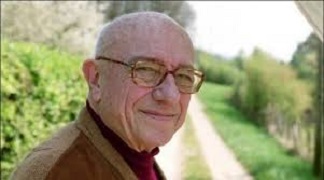
Bernard Clavel (29 mei 1923 – 5 oktober 2010)
De Engelse dichter en schrijver Terence Hanbury White werd geboren op 29 mei 1906 in Bombay (Mombai). Zie ook alle tags voor T. H. White op dit blog.
Uit: The Sword in the Stone
“The boy slept well in the woodland nest where he had laid himself down, in that kind of thin but refreshing sleep which people have when they begin to lie out of doors. At first he only dipped below the surface of sleep, and skimmed along like a salmon in shallow water, so close to the surface that he fancied himself in air. He thought himself awake when he was already asleep. He saw the stars
above his face, whirling on their silent and sleepless axis, and the leaves of the trees rustling against them, and he heard small changes in the grass. These little noises of footsteps and soft-fringed wing-beats and stealthy bellies drawn over the grass blades or rattling against the bracken at first frightened or interested him, so that he moved to see what they were (but never saw), then soothed him, so that he no longer cared to see what they were but trusted them to be themselves, and finally left him altogether as he swam down deeper and deeper, nuzzling into the scented turf, into the warm ground, into the unending waters under the earth.”
(...)
“These marvels were great and comfortable ones, but in the old England there was a greater still. The weather behaved itself.
In the spring all the little flowers came out obediently in the meads, and the dew sparkled, and the birds sang; in the summer it was beautifully hot for no less than four months, and, if it did rain just enough for agricultural purposes, they managed to arrange it so that it rained while you were in bed; in the autumn the leaves flamed and rattled before the west winds, tempering their sad adieu with glory; and in the winter, which was confined by statute to two months, the snow lay evenly, three feet thick, but never turned into slush.”
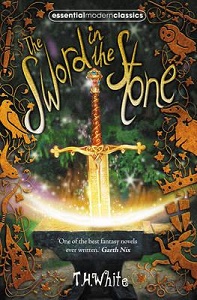
T. H. White (29 mei 1906 – 17 januari 1964)
Cover
De Oostenrijkse schrijver en theatercriticus Hans Weigel werd geboren op 29 mei 1908 in Wenen. Zie ook alle tags voor Hans Weigel op dit blog.
Uit:Unvollendete Symphonie
Das ist Peter Taussig«, hat er gesagt. »Er ist wieder da.«
Ich weiß genau, daß mir sofort aufgefallen ist, wie er nicht gesagt hat: »Er ist zurückgekommen«, sondern: »Er ist wieder da.«
Dann habe ich gedacht: Das ist der Augenblick, auf den ich zu warten angefangen habe, als ich ein kleines Mädchen war. Und der erst, für mich, die neue Zeit einleitet. Ich sehe zum erstenmal einen Juden.
Ich habe gewußt, daß der Mann, der da gestanden ist, ein Jude sein muß und keiner, der anderswoher zurückgekommen war: aus dem Krieg, aus der gewaltigen Wanderung, die Europa überzogen hat, aus einer Gefangenschaft. Von überallher sonst ist man zurückgekommen. Als Jude ist man wieder da gewesen.
Es ist nicht dein Name gewesen, der für mich zwar ungewohnt geklungen hat, doch nicht so, wie ich mir die Judennamen gedacht habe: Blumental, Veilchenfeld, Löwenstein, Wolfsohn, poetisch, romantisch und fremdhaft gerade in ihrer extremen, etwas schamlosen nackten Beziehung zu der Sprache derer, denen zuzugehören den Trägern verwehrt gewesen ist.
Auch nicht, wie du ausgesehen hast; denn du siehst nicht deutlich oder ganz eindeutig jüdisch aus, du wärst mir nie als ungewöhnlicher, andersartiger, exotischer Anblick aufgefallen.
(...)
Der Hausherr ist ein alter Freund von dir gewesen. Außer seiner Frau hast du keinen von uns gekannt. Ihr habt sofort zu reden angefangen, das große Gespräch jener Tage: Wo ist der, was ist aus jenem geworden, hörst du etwas von dem und von jenem? »Ich muß dir soviel erzählen«, hast du gesagt wie dein Freund, aber ihr habt nichts von dem erzählt, was gewesen ist, als ihr getrennt gewesen seid; und wer das, was er zu erzählen hat, nicht am ersten Tag erzählt, der erzählt’s nie. Ihr habt nur von der Gegenwart gesprochen, von den Menschen, euch gegenseitig vergewissert, wer noch lebt und wo; und dann seid ihr bald in eure gemeinsame Vergangenheit geraten und habt sie lachend und gerührt wieder gegenwärtig gemacht."
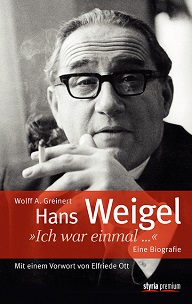
Hans Weigel (29 mei 1908 – 12 augustus 1991)
Cover biografie
De Argentijnse dichteres Alfonsina Storni werd geboren in Sala Capriasca, Zwitserland op 29 mei 1892. Zie ook alle tags voor Alfonsina Storni op dit blog.
The Moment
A city of gray bones
lies abandoned at my feet.
The piles of bones
are separated by black trenches,
the streets,
divided by them,
ordered, raised by them.
In the city, bristling with two million men,
I haven't a single one to love me.
The sky, even grayer
than the city,
descends over me,
takes over my life,
stops up my arteries,
turns off my voice...
However,
the world,
like a whirlwind
from which I can't escape,
turns rond a dead point:
my heart.
Vertaald door Marion Freeman and Mary Crow
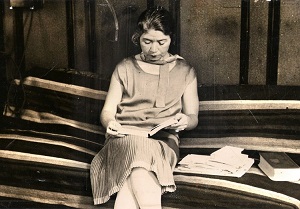
Alfonsina Storni (29 mei 1892 – 25 oktober 1938)
Zie voor nog meer schrijvers van de 29e mei ook mijn blog van 29 mei 2016 deel 2.


 Summer is coming (Dora Read Goodale)