Naar de inhoud

Romenu

Over literatuur, gedichten, kunst en cultuur
seniorennet.beseniorennet.be

Berichten van 26 september 2015

Bart Chabot, T. S. Eliot, Thomas van Aalten, Christoph W. Bauer. Luís Fernando Veríssimo, Mark Haddon, William Self
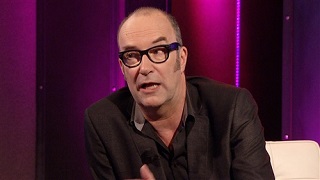
De Nederlandse dichter en schrijver Bart Chabot werd geboren in Den Haag op 26 september 1954. Zie ook mijn blog van 26 september 2010 en eveneens alle tags voor Bart Chabot op dit blog.

Uit: Triggerhappy

“De eerste avond stonden de sterren, en dat waren er nogal wat – duizenden zo zonder grotestadslicht – boven het huis en de omringende bergen geparkeerd, zonder op te schuiven of in te schikken. De hemel leek een kunstwerk, alsof het doek was weggetrokken en de lucht zojuist onthuld. In Den Haag keek Frank zelden naar de sterren; een enkele keer daargelaten, op kerstavond bijvoorbeeld, of als Nicole en hij bezoek uitlieten. Naar de hemel turen bewaarde je onbewust voor als je op vakantie was en nauwelijks iets omhanden had.
Later die avond kregen ze ruzie, moe als ze waren van de lange reis naar de Haut-Languedoc en moe van wat ze van thuis met zich meedroegen, onuitgesproken zaken; en ten slotte vielen ze in slaap. Het met elkaar goedmaken zou tot de volgende dag moeten wachten.
De veldkrekels, forse exemplaren, die al vroeg in de middag met tjirpen begonnen, vulden de lucht en daarmee de middag.
In de struiken rond het zwembad huisden de horzels, die tevoorschijn kwamen als je het water verliet en zich eenmaal in de nabijheid van een natte rug, schouder of dijbeen niet eenvoudig lieten wegbonjouren.
Tweemaal per week kwam een man die het zwembad bijhield het terrein van Villa Aurora op. Een man die zo vroeg en stilletjes arriveerde dat je hem niet hoorde. Dat hij was langs geweest, leidde Frank af uit het feit dat het terrasmeubilair was opgeruimd en het zwembadwater lichter blauw was.
Frank zou de schoonmaker niet éen keer treffen, alsof deze hem ontweek; hoewel Frank een lichte slaper was die in Den Haag meestal van het minste gerucht wakker werd en dan beneden controleerde of alles in orde was – op de waakzaamheid van de hond had Frank nooit durven vertrouwen – en daarna stil in bed schoof om Nicole niet te wekken, zoals hij Juliette indertijd evenmin had gewekt tijdens zijn nachtelijke rondes.”


 1818432-32075452cea7bff51564a66839dd928e.jpg
Bart Chabot (Den Haag, 26 september 1954)


De Engels-Amerikaanse dichter en schrijver T. S. Eliot werd op 26 september 1888 geboren in St.Louis, Missouri. Zie ook mijn blog van 26 september 2010 en eveneens alle tags voor T. S. Eliot op dit blog.


Sweeney Among the Nightingales

Apeneck Sweeney spreads his knees
Letting his arms hang down to laugh,
The zebra stripes along his jaw
Swelling to maculate giraffe.
 
The circles of the stormy moon
Slide westward toward the River Plate,
Death and the Raven drift above
And Sweeney guards the horned gate.
 
Gloomy Orion and the Dog
Are veiled; and hushed the shrunken seas;
The person in the Spanish cape
Tries to sit on Sweeney's knees
 
Slips and pulls the table cloth
Overturns a coffee-cup,
Reorganized upon the floor
She yawns and draws a stocking up;
 
The silent man in mocha brown
Sprawls at the window-sill and gapes;
The waiter brings in oranges
Bananas figs and hothouse grapes;
 
The silent vertebrate in brown
Contracts and concentrates, withdraws;
Rachel née Rabinovitch
Tears at the grapes with murderous paws;
 
She and the lady in the cape
Are suspect, thought to be in league;
Therefore the man with heavy eyes
Declines the gambit, shows fatigue,
 
Leaves the room and reappears
Outside the window, leaning in,
Branches of wisteria
Circumscribe a golden grin;
 
The host with someone indistinct
Converses at the door apart,
The nightingales are singing near
The Convent of the Sacred Heart,
 
And sang within the bloody wood
When Agamemnon cried aloud,
And let their liquid droppings fall
To stain the stiff dishonoured shroud.


 1818432-229e6d75fcbbe529c56e8dfc189d0771.jpg
T. S. Eliot (26 september 1888 – 4 januari 1965)


De Nederlandse schrijver Thomas van Aalten werd geboren in Huissen bij Arnhem op 26 september 1978. Zie ook alle tags voor Thomas van Aalten op dit blog.

Uit: Leeuwenstrijd

“Mijn vader ziet er jongensachtig uit met zijn lichtgebruinde huid, vlotte shirts, sneakers en zijn iPod; hij kleedt zich eigenlijk als een puber. Ik had liever een vader gehad zoals ik op plaatjes in een oud kinderboek rag: een met een spencer, een pijp en een baard. Zo’n vader die in de schuur een hok voor de hond timmert. Maar ik zie mijn vader amper want ik woon bij mijn moeder en bovendien wil mijn vader zelf eeuwig kind zijn, terwijl ik zelf niets liever zou willen dan oud worden omdat veertien jaar zijn het ergste is wat je kan overkomen.
Jammer dat je niet kunt zeggen: ‘Sorry, jongens, maar ik sla even over, ik word geen veertien maar schakel meteen door naar achttien, oké?‘ In de ogen van je moeder ben je nog een knulletje, en dat zul je nog wel even blijven, maar je hebt al wel een beetje haar op je zak en een rare stem die overslaat en je zit in een groeispurt - slungelige armen, onhandig lange benen - omdat je elke dag een heel brood naar binnen schuift. Tenminste, als je niet in de pauze op school zakken winegums en chips koopt, zoals veel klasgenoten doen.
Je bent waarschijnlijk op je veertiende meer klaar met de wereld dan je de rest van je leven zult zijn. Maar het gekke is: het lijkt of al die andere veertien- en vijftienjarigen uit mijn klas het leven doodnormaal vinden. Of zullen ze 's avonds allemaal, net als ik, op hun bed liggen met hun handen onder hun achterhoofd, kijkend naar het plafond? Hoe komt het dat er niets aan de hand lijkt met die lui?"


 1818432-eb44bbb7cbd886d861e9b129978a8d3d.jpg
Thomas van Aalten (Huissen, 26 september 1978)


De Oostenrijkse dichter, schrijver en vertaler Christoph W. Bauer werd geboren in Kolbnitz op 26 september 1968. Zie ook alle tags voor Christoph W. Bauer op dit blog.


Supersonic

L

per du mit den dingen sie personifizierten die
stühle zwischen die sie gerieten um nicht
zu verstummen am gegenüber kehrten sie
dem spiegel den rücken wie einer geschichte
von der sie nicht mehr gelesen
werden wollten weil sie mit ihnen rechnete
in gesichertem vokabular zur bergkette
geschmiedet an der eine zukunft
herbeigezogen kam mit sonorer stimme
und worten die ihnen fehlten
erwachten in möbeln plüschkameraden
um platz zu greifen in andrem ins gebet der
mimikry genommen stets ab durch die mitte


 1818432-d1b4266b250a5cd5988e94543731f8a9.jpg
Christoph W. Bauer (Kolbnitz, 26 september 1968)


De Braziliaanse schrijver Luís Fernando Veríssimo werd geboren op 26 september 1936 in Porto Alegre, Rio Grande do Sul. Zie ook alle tags voor Luís Fernando Veríssimo op dit blog.

Uit:Borges and the Eternal Orangutans (Vertaald door Jull Costa)

‘You mean that if the writer were to stab someone three times, he could allege that he was merely doing so in order to improve his style.’
‘Something like that. Soaking up experience and atmosphere.’
‘It’s said that the artist Turner used to have himself lashed to the ship’s mast during storms at sea so that he could make sure he was getting the colours and details of his painted vortices right.’
‘And it worked. But neither you nor I will ever experience “the slicer”, Vogelstein. We are condemned to “the blade”, to the knife purely as theory. Even if we used “the slicer” against someone, we would still be ourselves, watching, analyzing the scene, and, therefore, inevitably, holding “the blade” in our hand.
I don’t think I could kill anyone, apart from my own characters. And I don’t think I would feel comfortable at sea either. There aren’t any libraries at sea. The sea replaces the library.”


 1818432-cf6aeffa93493a798ec115a7ed683183.jpg
Luís Fernando Veríssimo (Porto Alegre, 26 september 1936)


De Engelse schrijver Mark Haddon werd geboren op 26 september 1962 in Northampton. Zie ook alle tags voor Mark Haddon op dit blog.

Uit: The Red House

“The week after the funeral Dominic had been standing at the sink bottle-­brushing the green vase. The last of the freak snow was still packed down the side of the shed and the rotary washing line was turning in the wind. Angela came in holding the phone as if it was a mystery object she’d found on the hall table. That was Richard.
Dominic upended the vase on the wire rack. And what did he want?
He’s offered to take us on holiday.
He dried his hands on the tea towel. Are we talking about your brother, or some entirely different Richard?
We are indeed talking about my brother.
He really had no idea what to say. Angela and Richard had spent no more than an afternoon in each other’s company over the last fifteen years and their meeting at the funeral had seemed perfunctory at best. Where’s the exotic location?
He’s rented a house on the Welsh border. Near Hay-­on-­Wye.
The fine sandy beaches of Herefordshire. He halved the tea towel and hung it over the radiator.
I said yes.
Well, thanks for the consultation.
Angela paused and held his eye. Richard knows we can’t afford a holiday of our own. I’m not looking forward to it any more than you, but I didn’t have a great deal of choice.
He held up his hands. Point taken. They’d had this argument way too many times. Herefordshire it is then.
Ordnance Survey 161. The Black Mountains / Y Mynyddoedd Duon. Dominic flipped up the pink cover and unfolded the big paper concertina. He had loved maps since he was a boy. Here be monsters. X marks the spot. The edges of the paper browned and scalloped with a burning match, messages flashed from peak to peak using triangles of broken mirror.”


 1818432-2e8c880a3ba8ce1d922a86e080506bc5.jpg
Mark Haddon (Northampton, 26 september 1962)


De Engelse schrijver, criticus en columnist William Self werd geboren in Londen op 26 september 1961. Zie ook alle tags voor William Self op dit blog en ook mijn blog van 26 september 2010.

Uit: Junk Mail

“LAST YEAR IHAVING been a slap-up one for Burroughsians, it was almost too much to hope that the publication of the Letters 1945-1959 would put any more flesh on the junk-atrophied bones of the notorious ‘l-Iombre Invisible’. Besides, in the wake of media brouhaha surrounding David Cronenberg’s Naked Lunch and Ted Morgan’s exhaustive biography Literary Outlaw, how much more weight could the Burroughs myth really bear? Fortunately, the answer is: a lot.
The letters collected here by Oliver Harris have been re- edited from an expurgated edition long out of print. They are written principally to Allen Ginsberg, Burroughs’s tireless friend, amanuensis, literary agent and all-round bum-chum, with short culs-de-sac heading off towards Jack Kerouac and Neal Cassady, the other corners of the Beat hotting circuit.
Harris has assembled these, together with a somewhat gee-whiz introduction and comprehensive notes, to form what may conceivably be Burroughs’s best work of all. Burroughs was aware at the time of the centrality of his correspondence to his literary endeavour: ‘Maybe,’ he remarks to Allen Ginsberg at the core of this volume, ‘the real novel is in letters to you.’
It is. The letters display all the sassiness, the marriage of Mandarin and slang, the shoot-from-the-hip aphorizing of Burroughs’s best prose, but decoupled from the rather portentous literary experimentation and attitudinizing that has marked his oeuvre since fame hit with the publication of Naked Lunch, shortly after the chronological end of this volume.”


 1818432-51928ac4906015da618bd0bc2e78a17f.jpg
William Self (Londen, 26 september 1961)


Zie voor nog meer schrijvers van de 26e september ook mijn vorige blog van vandaag.


Geschreven door Romenu om 13:30 Reageer op dit bericht

Jane Smiley, Vladimir Vojnovitsj, Cyprian Ekwensi, Peter Turrini, Joseph Furphy, Edwin Keppel Bennett

De Amerikaanse schrijfster Jane Smiley werd geboren op 26 september 1949 in Los Angeles. Zie ook alle tags voor Jane Smiley op dit blog en ook mijn blog van 26 september 2010

Uit: A Thousand Acres

“Acreage and financing were facts as basic as the name and gender in Zebulon County. Harold Clark and my father used to argue at our kitchen table about who should get the Ericson land when they finally lost their mortgage. I was aware of this whenever I played with Ruthie Ericson, whenever my mother, my sister Rose, and I went over to help can garden produce, whenever Mrs. Ericson brought over some pies or doughnuts, whenever my father loaned Mr. Ericson a tool, whenever we ate Sunday dinner in the Ericson's kitchen. I recognized the justice of Harold Clark's opinion that the Ericson' land was on his side of the road, but even so, I thought it should be us. For one thing, Dinah Ericson's bedroom had a window seat in the closet that I coveted. For another, I thought it appropriate and desirable that the great circle of the flat earth spreading out from the T intersection of County Road 686 and Cabot Street be ours. A thousand acres. It was that simple.
It was 1951 and I was eight when I saw the farm and the future in this way. That was the year my father bought his first car, a Buick sedan with prickly gray velvet seats, so rounded and slick that it was easy to slide off the backseat into the footwell when we went over a stiff bump or around a sharp corner. That was also the year my sister Caroline was born, which was undoubtedly the reason my father bought the car. The Ericson Children and the Clark children continued to ride in the back of the farm pickup, but the Cook children kicked their toes against a front seat and stared out the back windows, nicely protected from the dust.
The car was the exact measure of six hundred forty acres compared to three hundred or five hundred. »


 1818425-12545edd0937751612e05876aca1949f.jpg
Jane Smiley (Los Angeles, 26 september 1949)


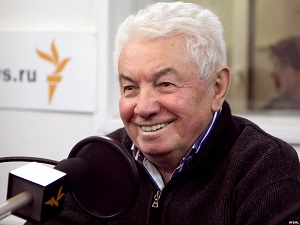
De Russische schrijver en dissident Vladimir Nikolajevitsj Vojnovitsj werd geboren in Doesjanbe op 26 september 1932. Zie ook alle tags voor Vladimir Vojnovitsj op dit blogen ook mijn blog van 26 september 2010

Uit: Monumental Propaganda (Vertaald door Andrew Bromfield)

“A large statue of Stalin stood in the center of Dolgov on Stalin Square, formerly Cathedral Square, formerly the Square of the Fallen. It had been erected in 1949 in honor of Stalin’s seventieth birthday, on her—that is, Aglaya’s—initiative. At that time Aglaya was the first secretary of the district Party committee, but even she had been forced to overcome opposition. Everyone understood what great educational importance the monument could have, and no one dared oppose it directly, but secret enemies of the people and demagogues had raised their heads to object, citing the present state of postwar devastation. They incessantly reminded everyone that the district suffered delays and irregularities in deliveries of foodstuffs, that the people were destitute and swollen-bellied from hunger and the time was not yet right for grandiose projects that were too great a burden on the local budget.
One of the monument’s main opponents had been Wilhelm Leopoldovich Livshits, editor-in-chief of the newspaper Bolshevik Tempos. He wrote an article called “Bronze Before Bread” and published it in his newspaper. In it he stated that monumental propaganda was, of course, a matter of great importance—Lenin himself had emphasized that it was a matter of great importance—but did we have the moral right today to spend so much money on a monument when our people were suffering? “Just whose ‘ours’ and ‘yours’ are these?” Aglaya inquired in a letter to the editor, in which she also explained that our Russian people are long-suffering, they would tighten their belts still further, they would suffer in the short term, but the monument erected by them would endure forever. In his reply Livshits informed her that all of us have only one people, the Soviet people, and that the monument was indeed essential, but it could be erected later, when the economic situation in the district and the country as a whole improved. He even had the effrontery to enlist Stalin himself as one of his allies. According to Livshits, Stalin, being wise and modest, would not have approved such prodigal expenditure at an hour of such great difficulty for the Motherland.”


 1818425-ab57bea3f800bb83a0f0493338df8b1d.jpg
Vladimir Vojnovitsj (Doesjanbe, 26 september 1932)


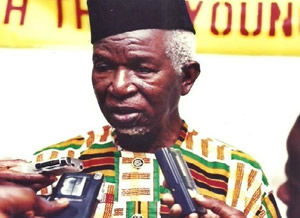
De Nigeriaanse schrijver Cyprian Ekwensi werd op 26 september 1921 in Nigeria geboren in Minna. Zie ook alle tags voor Cyprian Ekwensi op dit blog.

Uit: Jagua Nana

“She stored away the food, then she took out her towel and went to the bathroom, but when she knocked a man answered her from the inside and she went instead to the lavatory. The same old bucket, piled high; the floor messed about, so she could see nowhere to her silver sandals. It was all done by those wretched children upstairs.
Why blame them when their mothers did not know better.
 ...The unpleasant side of Lagos: the flies in the lavatory- big and blue and stubborn - settled on breakfast yam and lunch-time stew (they were invisible in a stew with greens). But Jagua closed her eyes and shut her nostrils with her town.
(…)

Jagua followed Rosa to the outskirts of lagos, to the slum of slums, a part of the city which she had often heard of, but had never visited. (...) Filth was scattered everywhere in the surroundings. (...) Jagua looked at the degradation. Bare floor which came off in powdery puffs if you rubbed your foot too hard. The bed was in the same room, wooden, with a mattress stuffed with the kind of grass cut by prisoners at the racecourse.”


 1818425-25adcdfb19fa8e87d8fb5f8c7ba63d3c.jpg
Cyprian Ekwensi (26 september 1921 - 4 november 2007)


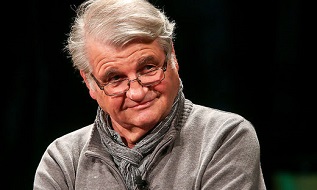
De Oostenrijkse schrijver Peter Turrini werd geboren op  26. September 1944 in St. Margarethen im Lavanttal. Zie ook alle tags voor Peter Turrini op dit blog.

Uit: Wie verdächtig ist der Mensch ?

“Es gibt die schöne Geschichte vom Buben auf dem Lande, dem ein Lehrer oder ein Pfarrer ein Buch gibt und dem sich die Welt der Phantasie eröffnet. Der Bub liest und liest, wird gescheiter und gescheiter, und eines Tages wird er, der arme Bub vom Lande, Lehrer oder Professor oder Pfarrer.
Die Geschichte ist als Biographie denkbar, auch meine gleicht ihr ungefähr, und doch ist sie eine Illusion: sie verschweigt, weil sie von der glücklichmachenden Moral des Aufsteigens ausgeht, den Preis, den dieser Aufstieg kostet.
Sie unterschlägt die andere Geschichte, die unter der schönen liegt, die Geschichte der Entfremdung von seiner Umgebung, den Verlust sozialer Wirklichkeit, die Einsamkeit des Aufsteigenden, des Lesenden.
Die ersten Geschichten, die ich aufgenommen habe, waren erzählt. Meine Mutter erzählte uns Buben vor dem Einschlafen Geschichten, denen eines gemeinsam war. In ihnen herrschte Gerechtigkeit, wurde Aggressivität bestraft und Gutsein belohnt. Gute Taten, auch wenn sie im Verborgenen blühten, bekamen ihren gerechten Lohn, und schlechte Taten, selbst der geheimste Diebstahl, wurden früher oder später entdeckt. Meine Mutter hatte die Fähigkeit, die Dramaturgie der Geschichten zu kürzen oder zu strecken, je nachdem, ob wir müde waren oder munter. Die Moral der Geschichte, Strafe oder Lob, stellte sich früher oder später ein, sie kam unausbleiblich. Die Gerechtigkeit hatte etwas Selbstverständliches und gleichzeitig Überirdisches. Sie traf ein wie ein Naturgesetz, die Menschen mochten sich verhalten, wie sie wollten, es kam der Moment des Gerichts und des Einschlafens.
Außerhalb dieser Geschichten, im Leben des fünfjährigen Buben vom Lande, sah alles anders aus. Mein Vater war ein italienischer Kunsttischler, den es in den dreißiger Jahren nach Kärnten verschlagen hatte. Seine Sprache, dieses Gemisch von Kärntnerisch und Italienisch, seine ganze Art, paßte nicht in die bäuerliche Umgebung.“


 1818425-02d57d6cb896b640e9a5a6e2c3b7b660.jpg
Peter Turrini (St. Margarethen im Lavanttal, 26. September 1944)


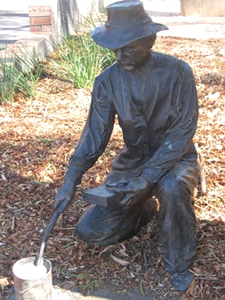
De Australische dichter en schrijver Joseph Furphy werd geboren op 26 september 1843 in Yering, een voorstad van Melbourne. Zie ook alle tags voor Joseph Furphy op dit blog.


The Bullfrog Bell

Now the truce of night brings respite to the sordid care of day,
And in listlessness I pace the river side,
Where the solitude is wounded by no lighted window's ray;
But illicit fancy will not be denied
For the darkening flat reiterates a freer life's farewell,
In the long familiar knocking of a bullfrog bell.

And in reverie I see the loaded waggons slowly creep,
Far across the western plains of New South Wales;
With 'talking' wheels and platforms, with wool-ropes biting deep,
And the dust of two broad countries on the vales.
Till the stars take shape in patterns, and through their dreamy spell
Comes the low, incessant knocking of the bullfrog bell.

And the retrospection lingers, bringing spiritless regret,
Though the northward track is open to me still
I may count the morning muster — I may track the stragglers yet
I may spell or battle onward, as I will
I may wake at night to listen, and know that all is well
By the reassuring answer of the bullfrog bell.

But that virile life repeated would be wearisome and trite,
Since the glamour of adventure cannot last
When the future, with its freshness, its pulsing, roseate light,
Has congealed into a leaden-coloured Past.
So an unreturning era owns its sympathetic knell
In the melancholy knocking of that bull-frog bell.


 1818425-8fc82143df2448f1441b7a9f9e0ae7aa.jpg
Joseph Furphy (26 september 1843 - 13 september 1912)
Standbeeld inShepparton


Zie voor onderstaande schrijver ook mijn blog van 26 september 2010.

De Engels schrijver, dichter en germanist Edwin Keppel Bennett werd geboren op 26 september 1887 in Wareham, Dorset.

Geschreven door Romenu om 13:19 Reageer op dit bericht

Jerry Hormone

De Nederlandse schrijver en muzikant Jerry Hormone (pseudoniem van Jeroen Aalbers) werd geboren in Numansdorp op 26 september 1982. In 1999 Jeroen Aalbers punkrockband The Ragin' Hormones op en nam hiervoor het alias Jerry Hormone aan. In 2000 trad Aalbers als gitarist toe tot punkrockband The Apers. Met The Apers nam hij drie albums op, speelde op grote festivals als Lowlands en Paaspop en toerde meermaals door Europa en de Verenigde Staten. In 2005 verliet Aalbers de band. In 2005 werd hij, hoewel hij nog geen ervaring had op dit vlak, door een vriend gevraagd een proeftekst in te leveren voor een nieuw te starten reeks kinderboeken. Aalbers nam de opdracht aan en schreef in één nacht het verhaal “Poespoes de lampenkapkat”, over een kat met een anti-krabkraag om. De tekst werd goedgekeurd en Aalbers werd gevraagd de vaste schrijver te worden van de serie Borre, waarvoor hij samenwerkte met illustrator Stefan Tijs. Sindsdien schreef hij meer dan 100 verhalen over Borre, waarvan de eerste op kleuterniveau waren en het niveau opliep tot bovenbouwniveau. Naast het schrijven speelde en speelt Aalbers in groepen als The Quotes, Anne Frank Zappa (met Elle Bandita), The Jerry Hormone Ego Trip, The Windowsill en The Rubber Hearts (de laatste twee beiden met andere (ex-)leden van The Apers). In 2011 richtte Aalbers geïllustreerd literair tijdschrift Strak op, waarin onder andere werk van Henk van Straten, Daan Doesborgh, Hanneke Hendrix, Han Hoogerbrugge en Theo Wesselo verscheen. Naast zijn schrijf- en muziekcarrière, studeerde Aalbers van 2007 tot 2013 Nederlands aan de Universiteit Leiden. Hij voltooide de bachelor-opleiding.

Uit: De spareribclub

“Het is bloedverziekend heet. M’n rug is zeiknat en m’n zonnebril glijdt steeds van m’n neus. Uitgerekend op de warmste dag van het jaar scheidt de airco ermee uit. Daar rij je dan een auto van dik een ton voor.
‘Wat een hitte. Het lijkt verdomme ónze crematie wel.’
‘Hè, Johan.’
Wat een schijnheil. Ze heeft Arie nooit gemogen. Koos altijd Ank d’r kant. Gaat ze nu hij dood is een
beetje afkeurende gezichten naar me zitten trekken als ik een grapje maak.
Ik zet de radio harder. Steek een Caballero zonder filter op. Zij klapt haar zonneklep omlaag. Kijkt in het spiegeltje. Frut aan d’r permanent. Pakt oogpotlood en mascara. Dat gaat straks allemaal in dikke zwarte strepen over d’r wangen.
De Maeterlinckweg. Een parkje met een vijver en het crematorium, hoekig en van IJsselsteen. Ik draai
de wagen de parkeerplaats op. Grind knerpt onder de banden. Ik zoek tevergeefs naar een plekje onder een boom. Parkeer in de volle zon.
‘Hoe zie ik eruit?’ vraagt ze.
Ik kijk niet. Ik weet hoe ze eruitziet.
‘Goed,’ zeg ik. Ik pak m’n jasje en stap uit.
Er is flink veel volk op komen dagen. Arie kende een hoop mensen. En nog meer mensen kenden Arie. Er worden stemmige knikjes uitgewisseld. Handen geschud.
‘Johan!’ hoor ik achter me. Veel te hard. Veel te op-
getogen. Het is Van Aalst. Hij staat met Dirk bij z’n Jaguar.
Ik loop naar ze toe.
‘Hé Johan, heb-ie misschien een peukie voor me? Ik had geen tijd meer om bij de pomp...’
‘Jij ook gecondoleerd, Van Aalst.’ Ik houd hem het pakje Caballero’s voor.
‘Doe mij er ook een,’ zegt Dirk.
‘Was jij niet gestopt?’
‘Jawel, maar vandaag effe niet.’


 1893178-c0254f66455e10e9753060c5eb6dba24.jpg
Jerry Hormone (Numansdorp, 26 september 1982)

Geschreven door Romenu om 00:00 Reageer op dit bericht

Meer van Romenu

↑ Terug naar de berichten