Naar de inhoud

Romenu

Over literatuur, gedichten, kunst en cultuur
seniorennet.beseniorennet.be

Madison Cawein, Federica de Cesco, Roger Martin du Gard, Hamvas Béla, Daniel Biga, Ceija Stojka
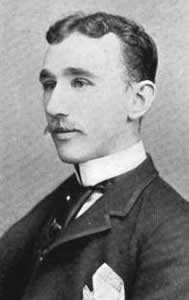
De Amerikaanse dichter Madison Julius Cawein werd geboren in Louisville, Kentucky, op 23 maart 1865. Zie ook alle tags voor Madison Cawein op dit blog..


A Boy’s Heart


It's out and away at break of day,
To frolic and run in the sun-sweet hay:
It's up and out with a laugh and shout
Let the old world know that a boy's about.

It's ho for the creek that the minnows streak,
That the sunbeams dapple, the cattle seek;
For a fishing-pole and a swimming-hole,
Where a boy can loaf and chat with his soul.

It's oh to lie and look at the sky
Through the roof of the leaves that's built so high:
Where all day long the birds make song,
And everything 's right and nothing is wrong.

It's hey to win where the breeze blows thin,
And watch the twinkle of feather and fin:
To lie all day and dream away
The long, long hours as a boy's heart may.

It's oh to talk with the trees and walk
With the winds that whisper to flower and stalk:
And it's oh to look in the open book
Of your own boy-dreams in some leafy nook.

Away from the noise of the town, and toys,
To dream the dreams that are dreamed by boys:
To run in the heat, with sun-tanned feet,
To the music of youth in your heart's young beat.

To splash and wade in the light and shade
Of the league-long ripples the sunbeams braid:
In boyhood's wise to see with eyes
Of fancy hued as the butterflies.

To walk for hours and learn the flowers,
And things that haunt the woods and bowers:
To climb to a nest on a tree's top crest,
Where a bird, like your heart, is singing its best.

To feel the rain on your face again,
Like the thirsty throats that the flowers strain:
To hear the call of the waterfall,
Like the voice of youth, a wonder-thrall.

And it's oh for me at last to see
The rainbow's end by the hillside tree:
On the wet hillside where the wild ferns hide,
Like a boy's bright soul to see it glide.

Then to laugh and run through shower and sun
In the irised hues that are arched and spun:
And, the rainbow's friend, to find and spend
The bag of gold at the rainbow's end.


1360451-b382cb3e74a10701271f7ff56657146c.jpg 

Madison Cawein (23 maart 1865 – 8 december 1914)

Rond 1893


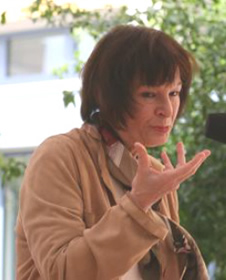
De Zwitserse schrijfster Federica de Cesco werd geboren op 23 maart 1938 in Pordenone, Zie alle tags voor Federica de Cesco op dit blog.


Uit: Die Augen des Schmetterlings


“Mein Verstand sagt mir, dass etwas, das nicht mehr da ist, auch nicht mehr zurückkommen sollte; aber ganz sicher werde ich nie sein. Ich bin eine Frau, die auf Vorzeichen achtet, die in Mondnächten mit griffbereitem Messer durchs Haus geht. Alle schlafen in diesem Haus, warm und ruhig und im Vertrauen. Ich trete leise auf, ganz leise. Die Schlafenden sollen nicht gestört werden. Es liegt etwas Beruhigendes in dem sicheren Gefühl des Messers in meiner Hand, in dem Funkeln der kurzen, scharfen Klinge. Behutsam ziehe ich die Schiebetür auf, beobachte die Bewegung der Blätter, den Nebelflor, das zarte Gespinst. Unter dem Mondlicht wandeln sich die Dinge, verändern ihr Gesicht. Ich blicke nach allen Seiten, nach drei, vier Seiten, nach allen Seiten, nach drei, vier Seiten. Immer wieder und wieder. Kurz vor der Morgendämmerung kommt Wind auf, ein salziger Wind, der vom Meer her weht. Trägt er den Blumenduft des Todes heran, schließen sich meine Finger fester um den Griff. Mein Gesicht, meine Hände glänzen hell. Ich stehe ja nicht im Schatten, ich will gesehen werden. Ein leichtes Zittern geht über meine Haut, aber Furcht empfinde ich keine. Ich bin eine Sonnentochter; der Geist, der in der Dunkelheit schwebt, entstammt dem bleichen Mondgeschlecht. Ich sage: »Weg mit dir! Was glaubst du, wer ich bin?« Bewegen sich Blätter, knistern Zweige, zieht meine Klinge einen blitzenden Kreis. Aufrecht stehe ich vor der Schiebetür, spreche halblaut die richtigen Worte. Die Menschen, die ich liebe, sind in Sicherheit. Weil Enzo nicht mehr da ist, bin ich es von nun an, die Wache hält.

Ich betrachte mich oft im Spiegel, nicht aus Eitelkeit, sondern aus Neugierde. Meine Vorfahren waren Samen, jenes Volk im Hohen Norden, das noch vor hundert Jahren in »Lavvo« – in Stangenzelten – lebte. Ich trage ihr Erbe in mir; es prägt meine äußere Erscheinung. In meinem Gesicht erkenne ich Lailas Augen, die ohne zu blinzeln das Sonnenlicht ertragen; ich sehe Reidars harte Wangen, sein starkes Kinn. Und auch Henriks dunkles Haar, die etwas stumpfe Nase, den sinnlichen Mund. Ich beschreibe mich wie die Bilder, die ich oft auf den Zeitschriftenseiten sah: grüne Augen, fein geformte Züge, über die das Licht rinnt wie Wasser, eine auffallend gewölbte Stirn. Doch womöglich trägt mein Gesicht noch andere, geheimnisvollere Spuren? Ich weiß es, ich habe sie gesehen.”


1360451-cacb175eca8af8de65434673d8f504f1.jpg 

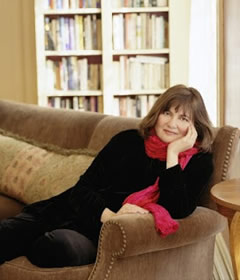
Federica de Cesco (Pordenone, 23 maart 1938)


De Franse schrijver Roger Martin du Gard werd geboren op 23 maart 1881 in Neuilly. Zie alle tags voor Roger Martin du Gard op dit blog.


Uit: Les Thibault, I, Le pénitencier


“Arthur attendait dans la  cour. Jacques  eût voulu prendre  congé du directeur; mais M.Faîsme lui tournait le dos: il pous-sait lui-même, ainsi que chaque soir, les verrous du portail. Au milieu des aboiements du chien, Jacques entendit la voix d’Arthur:

–«Eh bien, vous venez?»

Il le suivit.

Il retrouva sa cellule avec une impression de soulagement. La chaise d’Antoine était là, près de la table. L’affection du frère aîné l’enveloppait encore. Il endossa ses vêtements de travail. Le corps était las, mais le cerveau alerte; il y avait en lui, outre le Jacques de tous les jours, un autre être,immatériel, né d’aujourd’hui, qui regardait agir le premier, qui le dominait.

Il ne put demeurer assis, et se mit à tourner en rond dans la chambre. Un sentiment neuf et puissant le tenait debout: la conscience d’uneforce. Il s’était approché de la porte, et il res-

tait là, le front au carreau, l’œil fixé sur la lampe du couloir désert. L’atmosphère suffocante ducalorifère augmentait sa fatigue. Il dormait presque. Tout à coup, de l’autre côté de la vitre, une ombre se dressa. La porte, fermée à double tour, s’ouvrit:

Arthur apportait le dîner.

–«Allons, dépêche, petite crapule!»

Avant d’entamer les lentilles, Jacques retira du plateau le morceau de gruyère et le gobelet d’eau rougie.

–«Pour moi?» dit le garçon. Il sourit, prit le bout de fromage et s’en fut le manger près de l’armoire, afin de n’être pas vu de la porte. C’était l’heure où, avant son dîner, M.Faîsme venait, en pantoufles, faire un tour dans le couloir; et le plus souvent on ne s’apercevait de sa visite qu’après son passage, à

l’odeur écœurante du cigare qui pénétrait par le treillage de l’imposte.”


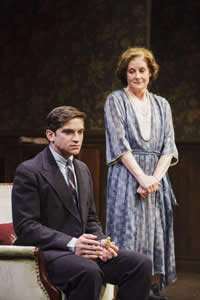
1360451-2c5ab1fa4e1d1ba6db773b09774fc748.jpg 

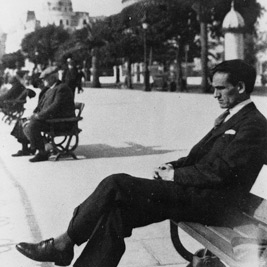
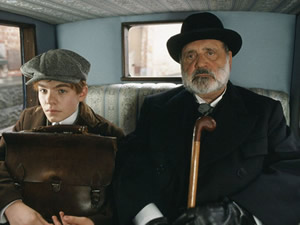
Roger Martin du Gard (23 maart 1881 – 22 augustus 1958)

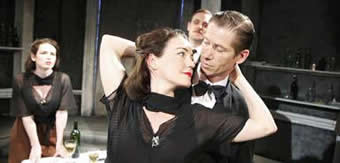
Scene uit de film “Les Thibaut” van Jean-Daniel Verhaeghe, 2003


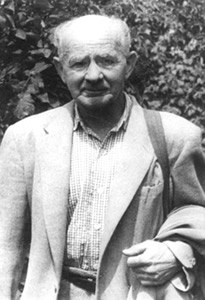
De Hongaarse schrijver Hamvas Béla werd geboren op 23 maart 1897 in Eperjes (tegenwoordig Prešov). Zie alle tags voor Hamvas Béla op dit blog.


Uit: Preface to Crime and Punishment (Vertaald door Bors Hulesch)


“Theodor Dreiser, over half a century after Dostoevsky, wrote An American Tragedy. This novel poses exactly the same question: is it permissible to kill in order to get ahead? Dreiser’s conclusion is that, as a result of an unjust social structure, it is not man who is responsible for murder, but society itself. This stereotypical cliché helped to diminish the poignancy of the matter at the time, and it should sound all the more familiar to the contemporary ear because has is also become part of our school curriculum.

Before the murder, Rodion Raskolnikov was undoubtedly a Stendhalian hero in the likeness of Julien Sorel, or perhaps one of Balzac’s characters; a contemporary careerist who, in the name of his accomplishment, was ready to commit Napoleon-like misdeeds. After committing the murder though, this picture changes. Raskolnikov would now shrug his shoulders at Dreiser’s theorem and tell us that he was also going to save himself from his predicament by some similar reasoning; but that all of this remained on a theoretical level and was left behind when he actually struck the old woman down. As to what becomes of him? He is now like a dog about to attack, baring his teeth to growl the words: Dear Mr. Society, please do step closer – not to worry – and have a look at these. What are these, sir? (Shows his hands.) Do you know what these are? I will tell you sir, they are hands. They are my two hands. I killed her with this pair of hands. These hands you shall not remove from me, sir. You suggest that social structure is wrong, sir, and that consequently, I was forced to murder this usurer. That society is to blame. That the unjust distribution of wealth is… - blah-blah, we know all the rest. Look, sir, if I could only undo what I have done, I would chop these two hands right off. But I cannot. I have indeed killed her, and all I can do now is accept the responsibility and go do my time in Siberia. Twenty years? Let it be twenty years. But I forbid you to spread any rumors about me wanting to divert the blame onto the inequalities of social structure. Injustice exists independently of my affair, and although it may have a bearing, however remote and slight, on the events; this can only be theoretical.”


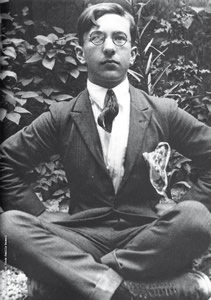
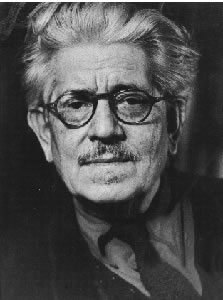
1360451-f91dd44af17dfead54b563708f64a26b.jpg 

Hamvas Béla (23 maart 1897 – 7 november 1968)


De Franse dichter en schrijver Daniel Biga werd geboren op 23 maart 1940 in Nice. Zie alle tags voor Daniel Biga op dit blog.


FOUILLES

Ma direction est le poids du silence
épousant le vacarme du temps

révèle le signe dans l'insignifiant

creuse dans le tronc la souche la racine
vise précisément
puis le travail accompli lève-toi
et d'un seul regard embrasse
la vastitude

ceci est le mouvement juste


Les Salopards


"Sois un
Soleil!"


mais comment ne pas être parfois cet astre noir qui


les carboniserait ceux-là tous ceux-là parvenus traîtres collabos

notables profiteurs affairistes...


ils ont démoli
Pauliani!


le cinéma le patronage les jardins la ruelle le passage


et l'école après avoir embétonné dans la cité le cours du
Paillon ils ont démoli
Pauliani comme le reste : je découvre cette nouvelle plaie errant ce

matin dans le quartier où depuis si longtemps je n'étais


revenu et d'immenses panneaux annoncent que vont s'édifier


là les luxueuses résidences d'Acropolis


les salopards!


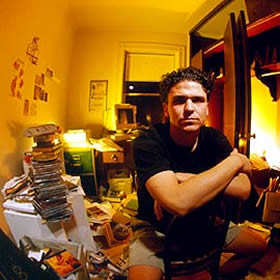
1360451-005b1d5ef9cef649a8dc48c1127b59db.jpg 

Daniel Biga (Nice, 23 maart 1940)

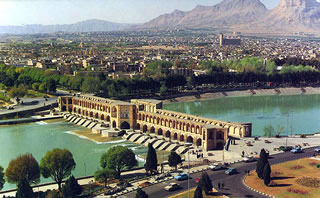
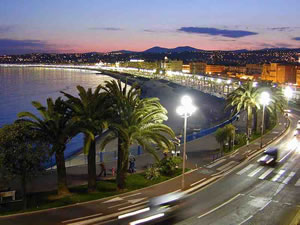
Nice,  Promenade des Anglais


De Oostenrijkse schrijfster Ceija Stojka werd op 23 maart 1933 geboren in Kraubarth. Zie alle tags voor Ceija Stojka op dit blog.


Uit: Träume ich, dass ich lebe?


“Das haben wir ausgenutzt. Wir sind ins Haus, haben uns gewaschen und geputzt, haben die Kleider gewechselt, haben die Post genommen und sind halt einmal zu Hause gewesen. Aber bald mussten wir wieder weg. Die Mama hat immer gesagt, lieber einen Tag länger auf eurem Platz, bevor sie uns finden! Wenn der Park sauber gemacht wurde, mussten wir uns woanders verstecken, unter der Brücke, oder wir haben uns aufgeteilt.

Aber wir haben auch gelacht, der Karli und die Kathi, die Mitzi und der Mongo, die haben oft kleine Vorstellungen gegeben. Der Karli hat gespielt, er ist der gestiefelte Kater

Er hat hinten auf seine Schuhe diese Tortenschneider befestigt, die hatten einen Stiel und ein Radl mit

kleinen Zacken. Er war der gestiefelte Kater und er war so schön, sein Gesicht hat gebrannt wie Feuer. Wir haben furchtbar gelacht. Aber wenn wir in den Laubhaufen gekrochen sind, durften wir nicht lachen.

Meine Mutter hat immer auf die Schritte der Leute draußen gehorcht, sie hatte schon die Unterschiede herausgefunden. Die Spaziergänger hat man schon von weitem langsam kommen gehört, sie haben

gesagt, na bald kommt der Frühling. Dann hast du gewusst, es ist ein Liebespärchen. Aber die Nazis sind immer gerannt und haben geschimpft.

Wir haben nur gespürt, dass sie ganz schlimme Menschen sind. Ich hab einige Male auf der Straße erlebt, dass sie Kinder getreten haben. Da wird man dann lautlos. Und nachdem ich miterlebt hatte, wie sie meinen Vater holten, war schon klar, dass das nicht okay sein kann.”


1360451-ef8bb0379e880c83b16b5ab9b98c96fe.jpg 

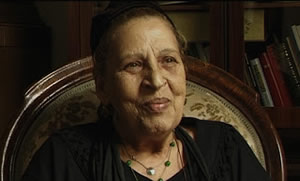
Ceija Stojka (Steiermark, 23 maart 1933)
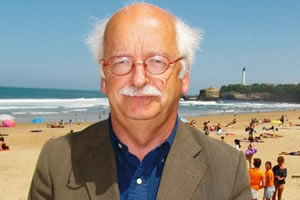
Geschreven door Romenu om 19:04 Reageer op dit bericht
Reageer op dit bericht

Reageer op dit bericht

Een titel of je eigen website toevoegen

De blogger leest alles eerst na: je tekst verschijnt zodra die goedgekeurd is.

Érik Orsenna, Gabrielle Roy, Ludvík Kundera, Léon Deubel, Edward Moore, Arnold Sauwen

De Franse schrijver Érik Orsenna werd geboren in Parijs op 22 maart 1947 als Érik Arnoult. Zie ook alle tags voor Erik Orsenna op dit blog.


Uit: La grammaire est une chanson douce


“Les mots dormaient.
Ils s’étaient posés sur les branches des arbres et ne bougeaient plus. Nous marchions doucement sur le sable pour ne pas les réveiller. Bêtement, je tendais l’oreille : j’aurais tant voulu surprendre leurs rêves. J’aimerais tellement savoir ce qui se passe dans la tête des mots. Bien sûr, je n’entendais rien. Rien que le grondement sourd du ressac, là-bas, derrière la colline. Et un vent léger. Peut-être seulement le souffle de la planète Terre avançant dans la nuit.
Nous approchions d’un bâtiment qu’éclairait mal une croix rouge tremblotante.
-Voici l’hôpital, murmura Monsieur Henri.
Je frissonnai.
L’hôpital ? Un hôpital pour les mots ? Je n’arrivais pas à y croire. La honte m’envahit.
Quelque chose me disait que, leurs souffrances nous en étions, nous les humains, responsables. Vous savez, comme ces Indiens d’Amérique morts de maladies apportées par les conquérants européens.
Il n’y a pas d’accueil ni d’infirmiers dans un hôpital de mots ; Les couloirs étaient vides. Seule nous guidaient les lueurs bleues des veilleuses. Malgré nos précautions, nos semelles couinaient sur le sol.
Comme en réponse, un bruit très faible se fit entendre. Par deux fois. Un gémissement très doux. Il passait sous l’une des portes, telle une lettre qu’on glisse discrètement, pour ne pas déranger.”


 1359616-8f6044a509a41588b329ed3842a65ca7.jpg

Érik Orsenna (Parijs, 22 maart 1947)


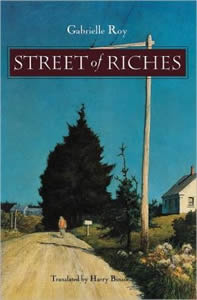
De Canadese schrijfster Gabrielle Roy werd geboren op 22 maart 1909 in Saint Boniface, Manitoba. Zie ook alle tags voor Gabrielle Roy op dit blog.


Uit: Street of Riches


My mother would retort: “Only yesterday the Fathers told me again that my Gervais is so intelligent everything comes to him effortlessly; and apparently that’s not too good a thing, either.”
My mother was most skillful in parrying what she called Madame Guilbert’s “thrusts.” Despite all this — or perhaps because of it — our two families could scarcely get along without each other.
Often of an evening my mother would go out on the open porch in front of our big house and say to my sister Odette, “Supper is ready. Run over and tell your father; he’s still at the Guilberts’. Bring him back before any argument begins.”
Odette would sally forth across the field. When she reached the Guilberts’, there my father would be, his pipe clamped between his teeth, leaning against our neighbor’s gate and chatting peaceably with Monsieur Guilbert about rosebushes, apple trees, and asparagus. So long as the two men were on such subjects, there was no need for alarm; and here Monsieur Guilbert was willing enough to accept my father’s views, since he granted that my father knew more about gardening than he did. Then Odette would espy Gisèle’s face at one of the upstairs windows. Gisèle would call out, “Wait for me, Odette; I’m coming down. I want to show you my tatting.”
In those days they were both fanatically devoted to piano playing and to a sort of lacemaking that involved the use of a shuttle and was, if my memory serves me well, called tatting.
Then my mother would send my brother Gervais to see what on earth could be keeping my Father and Odette over there. At the field’s edge, Gervais would encounter his classmate Lucien Guilbert, and the latter would entice my brother behind an ancient barn to smoke a cigarette; needless to say, Madame Guilbert always maintained that it was Gervais who had induced Lucien to indulge this bad habit.


1359616-91da428c6ab17e5c20945858a648764b.jpg 

Gabrielle Roy (22 maart 1909 – 13 juli 1983)

Cover 


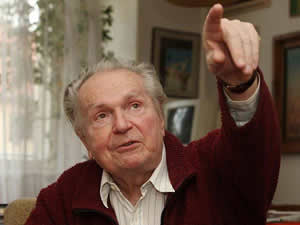
De Tsjechische dichter en schrijver Ludvík Kundera werd geboren op 22 maart 1920 in Brünn. Zie ook alle tags voor Ludvik Kundera op dit blog.


Uit: Of Tea and Dada


“Kunstat nestles in a fold of undulating countryside that marks theeastern edge of the Bohemian-Moravian Uplands. Overlooking its broadmain street, stands the old house where Ludvik Kundera has lived forover a quarter of a century. Entering the house soon draws the visitorinto a world of tea-infusions and dada, two life-long Kundera passionsrecently marked by published volumes on the subjects. Conversation tooin all likelihood turns eventually to Frantisek Halas, whom Kunderafirst met in Kunstat and who lies buried in the nearby cemetery. But,equally, Kundera's readiness to talk of past associations with HansArp, Alfred Kubin, Bertolt Brecht, Peter Huchel and others tells of anearly desire for involvement on the wider front of european culturaldevelopment in the twentieth century. In his youth, Kundera's ownstudies were perforce terminated with the closing of Czech universitiesfollowing the German Occupation. Born in the spring of 1920 in Brno, hewas in his third semester. But an interest in literature and thetheatre was already aroused and his first verse appeared in Mladdkultura before the war. He had also embarked upon what was to be alife-long affaire de coeur with the art of translation - his firstventure, a schoolboy attempt to produce a Czech version of poems fromHeine's Buch der Lieder. Both Czech and German were spoken in the home(his father was Czech, his mother half-Austrian, half-Hungarian) andthe house was well stocked with books. The beginnings of linguistic andcultural interaction were in place.”


1359616-33fa80e0bfec8af5d8d9397a04e27e52.jpg 

Ludvík Kundera (22 maart 1920 – 17 augustus 2010)


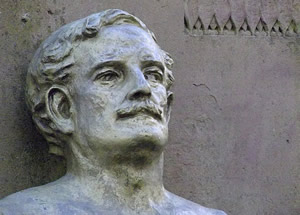
De Franse dichter Léon Deubel werd geboren op 22 maart 1879 in Belfort. Zie ook alle tags voor Léon Deubel op dit blog.


Tombeau du Poète


Par les sentiers abrupts où les fauves s’engagent,
Sur un pic ébloui qui monte en geyser d’or,
Compagnon fabuleux de l’aigle et du condor,
Le Poète nourrit sa tristesse sauvage.
 
À ses pieds, confondus dans un double servage,
Multipliant sans cesse un formidable effort,
Les Hommes, par instants, diffamaient son essor ;
Mais lui voyait au loin s’allumer des rivages.
 
Et nativement sourd à l’injure démente,
Assuré de savoir à quelle ivre Bacchante
Sera livrée un jour sa dépouille meurtrie ;
 
Laissant la foule aux liens d’un opaque sommeil,

Pour découvrir enfin l’azur de sa patrie
Il reprit le chemin blasphémé du soleil !


1359616-138d10b9d8391b3401d34368c325e64f.jpg 

Léon Deubel (22 maart 1879 – 4 juni 1913)

Beeld in Belfort


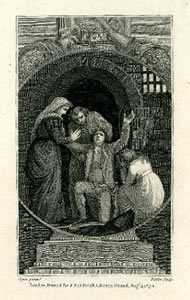
De Engelse schrijver Edward Moore werd geboren in Abingdon, Berkshire op 22 maart 1712. Zie ook alle tags voor Edward Moore op dit blog.


Uit: The Gamester


“SCENE III.

Enter Jarvis.

Mrs. Bev. Is this well, Jarvis? I desired you to avoid me.

Jar. Did you, madam? I am an old man, and had forgot. Perhaps too you forbad my tears; but I am old, madam, and age will be forgetful.

Mrs. Bev. The faithful creature! how he moves me!

[To Charlotte.

Char. Not to have seen him had been cruelty.

Jar. I have forgot these apartments too. I remember none such in my young master's house; and yet I have lived in't these five and twenty years. His good father would not have dismissed me.

Mrs. Bev. He had no reason, Jarvis.

Jar. I was faithful to him while he lived, and when he 425Iii died, he bequeathed me to his son. I have been faithful to Him too.

Mrs. Bev. I know it, I know it, Jarvis.

Char. We both know it.

Jar. I am an old man, madam, and have not a long time to live. I asked but to have died with him, and he dismissed me.

Mrs. Bev. Prithee no more of this! 'Twas his poverty that dismissed you.

Jar. Is he indeed so poor then? Oh! he was the joy of my old heart. But must his creditors have all? And have they sold his house too? His father built it when He was but a prating boy. The times I have carried him in these arms! And, Jarvis, says he, when a beggar has asked charity of me, why should people be poor? You shan't be poor, Jarvis; if I was a king, nobody should be poor. Yet He is poor. And then he was so brave!—O, he was a brave little boy! And yet so merciful, he'd not have killed the gnat that stung him.”


1359616-01550674d88514cae211321527f3da8a.jpg 

Edward Moore (22 maart 1712 – 1 maart 1757)

Illustratie uit een uitgave uit 1792


De Vlaamse dichter en schrijver Arnold Sauwen werd geboren te Stokkem op 22 maart 1857. Zie ook alle tags voor Arnold Sauwen op dit blog.


In blauwe lucht, hoog boven heuvelklingen


In blauwe lucht, hoog boven heuvelklingen

en open veld, dat laait in zonnegloed;

met scherpe blikken, die ter laagte dringen,

zwerft daar de sperwer rond, die dorst naar bloed.


Hij daalt en stijgt en zweeft in wijde kringen,

tot 't speurend oog de bange prooi ontmoet;

hangt dan een poos te trillen op zijn zwingen

en schiet plots neêr... Wee! argeloos gebroed...


Een noodkreet gilt... de witte veêren stuiven,

daar kromme snavel 't rillend vleesch doorwoelt;

maar machtloos vleugelklept de angstige duive,


gelijk de ziel die lust schept in het leven,

maar boven zich de hand des Noodlots voelt,

als sperwerklauwen dreigend opgeheven!’


1359616-5527abad52ef48a1b4df48a73690e447.jpg 

Arnold Sauwen (22 maart 1857 – 11 mei 1938)

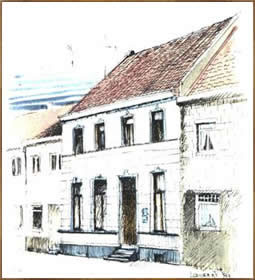
Geboortehuis in Stokkem


Zie voor nog meer schrijvers van de 22e maart ook mijn blog van 22 maart 2012 deel 2.

Geschreven door Romenu om 15:47 Reageer op dit bericht

Willem de Mérode, 250 Jaar Jean Paul, Hamid Skif, Hubert Fichte, Peter Hacks, Michel Bartosik

Dit Romenu Blog bestaat vandaag precies zeven jaar. Dank weer aan alle oude en nieuwe bezoekers voor hun interesse en reacties van het afgelopen jaar. De eerste bijdrage in 2006 ging over de dichter en schrijver Willem de Mérode. Traditiegetrouw, omdat hij aan de wieg stond van dit Blog, ook nu weer een gedicht van hem. Zie ook mijn blog van 2 september 2010 en voor het overige de Willem de Mérode tags op dit blog bij Skynet.


Stil dorp


De molen heft zijn armen stil
In de blauwe zonnige najaarslucht
En laat ze vallen met een zucht,
Als een moe man, tegen zijn wil.

De huizen slapen, het gordijn
Is neergelaten voor elk raam
Alleen met den blinkende koopren naam
Speelt op de deuren de zonneschijn.

Het dorp is nooit zó stil geweest.
En nergens zweeft een zweem van gerucht:
Een lege zaal waar 't geruis is gevlucht
Met het sterven van 't roezelig feest.

Geen mens durft gaan langs 't zandig pad,
Wijl 't rustend dorp dan wakker schrikt,
En verwijtend de wandelaar tegenblikt
Die treedt op takken en krakend blad.

Ik kom niet vóór de avond thuis,
Dat elk geluid als een dreigend woord
Niet roept hoe ik de stilte vermoord.
Vóór 't donker is kom ik niet thuis.


1359145-fcc3db4fd5fd6c2ae791105bd8b5b046.jpg
Willem de Mérode (2 september 1887 – 22 mei 1939)


250 Jaar Jean Paul


De Duitse dichter en schrijver
Jean Paul werd op 21 maart 1763 in Wunsiedel geboren. Dat is vandaag precies 250 jaar geleden. Zie ook alle tags voor Jean Paul op dit blog.


Uit: Leben des vergnügten Schulmeisterlein Maria Wutz


“Wie war dein Leben und Sterben so sanft und meerstille, du vergnügtes Schulmeisterlein Wutz! Der stille laue Himmel eines Nachsommers ging nicht mit Gewölk, sondern mit Duft um dein Leben herum: deine Epochen waren die Schwankungen und dein Sterben war das Umlegen einer Lilie, deren Blätter auf stehende Blumen flattern – und schon außer dem Grabe schliefest du sanft!

Jetzt aber, meine Freunde, müssen vor allen Dingen die Stühle um den Ofen, der Schenktisch mit dem Trinkwasser an unsre Knie gerückt und die Vorhänge zugezogen und die Schlafmützen aufgesetzt werden, und an die grand monde über der Gasse drüben und ans Palais royal muß keiner von uns denken, bloß weil ich die ruhige Geschichte des vergnügten Schulmeisterlein erzähle – und du, mein lieber Christian, der du eine einatmende Brust für die einzigen feuerbeständigen Freuden des Lebens, für die häuslichen, hast, setze dich auf den Arm des Großvaterstuhls, aus dem ich herauserzähle, und lehne dich zuweilen ein wenig an mich! Du machst mich gar nicht irre.

Seit der Schwedenzeit waren die Wutze Schulmeister in Auenthal, und ich glaube nicht, daß einer vom Pfarrer oder von seiner Gemeinde verklagt wurde. Allemal acht oder neun Jahre nach der Hochzeit versahen Wutz und Sohn das Amt mit Verstand – unser Maria Wutz dozierte unter seinem Vater schon in der Woche das Abc, in der er das Buchstabieren erlernte, das nichts taugt. Der Charakter unsers Wutz hatte, wie der Unterricht anderer Schulleute, etwas Spielendes und Kindisches; aber nicht im Kummer, sondern in der Freude.

Schon in der Kindheit war er ein wenig kindisch. Denn es gibt zweierlei Kinderspiele, kindische und ernsthafte – die ernsthaften sind Nachahmungen der Erwachsenen, das Kaufmann-, Soldaten-, Handwerker-Spielen – die kindischen sind Nachäffungen der Tiere. Wutz war beim Spielen nie etwas anders als ein Hase, eine Turteltaube oder das Junge derselben, ein Bär, ein Pferd oder gar der Wagen daran. Glaubt mir! ein Seraph findet auch in unsern Kollegien und Hörsälen keine Geschäfte, sondern nur Spiele und, wenn ers hoch treibt, jene zweierlei Spiele.”


1359145-a9c2f6a9c4beb4bc18065bdc7c2f6c92.jpg
Jean Paul (21 maart 1763 – 14 november 1825)

Monument in Schwarzenbach an der Saale


De Algerijnse dichter, schrijver en journalist Hamid Skif werd geboren op 21 maart 1951 in Oran. Zie ook mijn blog van 21 maart 2009 en ook mijn blog van 21 maart 2010 en ook mijn blog van 21 maart 2011.


Uit: La Géographie du danger


«Maintenant, je rase les murs, me terre la nuit tombée, refuse les contacts, évite tout ce qui peut signaler mon existence dans la géographie du danger : gares, ghettos d'immigrés, stations de métro, quartiers chauds, bars, sorties de grands magasins, stades et dancings louches. Je n'existe même pas pour les employeurs successifs ne cherchant à connaître ni identité ni rien d'autre de ma personne. Nous sommes quittes de cette mutuelle non-reconnaissance. Je n'ai plus de nom, plus de prénom, rien que des pseudonymes. Les patronymes que je m'attribue sont fonction de l'employeur. Je suis turc, arabe, berbère, iranien, kurde, gitan, cubain, bosniaque, albanais, roumain, tchétchène, mexicain, brésilien ou chilien au gré des nécessités. J'habite les lieux de ma métamorphose. Les langues importent peu. Il suffit de connaître les mots du dictionnaire des esclaves : travail, pas travail, porter, laver, gratter, vider, charger, décharger, couper, casser, monter, nettoyer, démonter, peindre, clouer, arracher, repos, manger, payer, silence, se cacher, se taire, partir, venir, finir, ne plus revenir, combien ? »

(…)


« Des milliers d’hommes et de femmes fuient la misère, refusent d’avoir faim, et viennent échouer clan

destins dans notre pays qui les refuse. L’homme qui parle est deceux-là, réfugié dans une pièce dont il ne peut sortir, écoutant le temps qui ne bouge pas, guettant celui qui peut-être l’a oublié dans ce réduit.”


1359145-b3307a0153236e64b1d31528bf8b6fac.jpg
Hamid Skif (21 maart 1951 – 18 maart 2011)


De Duitse schrijver Hubert Fichte werd geboren op 21 maart 1935 in Perleberg, Brandenburg. Zie ook alle tags voor Hubert Fichte op dit blog.


Uit: Der Platz der Gehenkten


„Kamelmarkt.

Glück.

Nicht in dem sehr hohen Sinn:

Das Eintreffen des Ideals.

Im niederen, vegetativen Sinn glücklich.

Die Sonne wärmt mich, und ich atme ohne Beschwerden.

Hinter den Palmen die Eiskristalle des Atlas.

Hier auf dem Markt:

Beteiligte Augen, kühne Geschichtsschnitte, gewaltige Hände.

Schmalgesichtige mit langen glatten Haaren, vielleicht aus Rabat.

Die Blauen Männer von Goulimime.

Abstrakte Lippen der Neger.

Übertriebene Finger.

Geheimnisvoll allongierte Kinderschädel.

Wie gut sie riechen!

(…)


Die Zuhörer lachen, wenn der Negerjunge etwas Komisches erzählt.

Sie schneiden verächtliche Gesichter, wenn etwas Heldenhaftes geschieht.

Der Negerjunge sagt, sie sollen die rechte Hand heben.

Sie heben die rechte Hand.

[…]

Der Negerjunge verwandelt sich in den König, die Mutter, den Däumling, den Guul, in den Vogel Strauß.

Die Hände, die mageren, überlängten Finger bilden die Geschichte ein zweites Mal ab.“


1359145-4393f10b48039015a103da1a2c1e4574.jpg 

Hubert Fichte (21 maart 1935 – 8 maart 1986)

Cover 


De Duitse schrijver en dichter Peter Hacks werd geboren op 21 maart 1928 in Breslau. Zie ook alle tags voor Peter Hacks op dit blog.


Uit: Peter Hacks schreibt an »Mamama« Der Familienbriefwechsel 1945–1999


“Liebe Susanne, die Legung des Weihnachtstages auf den15.12.. ist bekanntlich ein Schwindel und gestohlen von dem Sonnengott Mithras, der dazumal um diese Zeit Namenstag gefeiert

hat. Ich finde, es ist sehr viel löblicher, die Sonne anzubeten, als ein schmutziges Balg und eine Menge Rindvieh und so weiter.

Das einzige, was ich nicht verstehe, ist, was die augenblickliche

Jahreszeit mit der Sonne zu tun hat; es ist ausgesprochen schmutzig, am Himmel wie auf Erden. Auch ist es kalt und ich bin bisher mit einem alten Sommermantel herumgelaufen, aber mein

Arbeitsdienstmantel, den ich nicht aus dem Arbeitsdienst habe, sondern im Lazarettzug aus einem Güterwagon gestohlen, ist endlich im Begriff, gefärbt zu werden.

Ich habe überhaupt nicht allzuviel anzuziehen, aber Diogenes von Laertes lebte in einer Tonne, und es gehört dieser gute Herr zu meinen Vorbildern, nämlich neben den Herren Heine und Strindberg, welch letzteren ich erst kürzlich kennen- und schätzen gelernt habe. Ich bin beinahe auf den Rücken gefallen, als ich im »Sohn einer Magd« Sätze fand, die ich zwei Wochen vorher gemacht hatte, und auf die ich sehr stolz war, da ich mir einbildete, sie selbst gemacht zu haben. Auch hat Herr Strindberg wie Herr Heine jene angenehme Art von individuellem Sozialismus, welche der Ansicht ist, daß man wohl verplichtet sei, die Leute weitgehendst zu unterstützen, aber durchaus nicht, sie sympathisch zu

finden, welche ich sehr schätze, was man mir gewiß nicht verübeln kann, wenn man bei Militairs oder besonders Gefangenenlagers gewesen ist, wo der Prozentsatz von Menschen (sofern man darunter etwas Lobenswertes verstehen will) ungefähr war.”


1359145-7fd98882fbcbaae42fe563a68b3fd71b.jpeg 

Peter Hacks (21 maart 1928 – 28 augustus 2003)

Breslau, raadhuis


De Vlaamse dichter, dichter, essayist en docent poëzie Michel Bartosik werd geboren in Antwerpen op 21 maart 1948. Zie ook mijn blog van 21 maart 2009 en ook mijn blog van 21 maart 2010 en ook mijn blog van 21 maart 2011.


Familieportret in een trui van wolken

Voor Louise, mijn vrouw


Ik hurk in de gevoerde hemel van de herfst

met een gobelin van geduld

met de grijze haren van een harp

met de cello van mijn verdriet.


Daar wandelt mijn vader

in parken waar zeepbellen

wolken worden en geeft

elk stofdeeltje de naam

van een sneeuwvlok.


Daar zit mijn moeder

in een stoel van zout en zingt:

met de regen op de ramen

lopen evenwijdig mijn tranen.


En op het voorhoofd van dit knielend

jaargetij wordt in een vrouw langzaam

mijn vrouw zichtbaar.


Mijn stem vloeit naar spiegels,

haar communicerende vaten.  

De tijd is een vijver in de oceaan.


De wolken klappen

als een deksel over

deze rinkelende handenkraal dicht.


Glimlachend achter het vergulde glasraam

van de tuberculeuze ster.


1359145-5cef397afea83d9e6d25266e58be0a91.jpg 

Michel Bartosik (21 maart 1948 – 1 februari 2008)


Zie voor nog meer schrijvers van de 21e maart ook mijn blog van 21 maart 2012 deel 2 en ook ook Romenu’s 1e lustrum pagina.

Geschreven door Romenu om 20:19 Reageer op dit bericht

Pim te Bokkel

De Nederlandse dichter Pim te Bokkel werd geboren in Winterswijk op 21 maart 1983 en groeide op in een havezate, in het Achterhoekse kerkdorp Aalten. Zijn debuutbundel verscheen in 2007 onder de naam “Wie trekt de regen aan?” en werd genomineerd voor de C. Buddingh-prijs voor nieuwe Nederlandstalige poëzie. In 2010 verscheen zijn tweede bundel, genaamd “De dingen de dingen de dans en de dingen”. Begin 2013 verscheen bij Uitgeverij 69/Tungsten de bibliofiele bundel “Dit is hoe het gaat”. Te Bokkel was te zien op festivals als Poetry International, de Zwarte Cross en Crossing Border. Zijn gedichten werden opgenomen in De Gids, DWB , Liegend Konijn en bloemlezingen van Erik Jan Harmens en Gerrit Komrij. Het Parool, nrc.next en De Gelderlander publiceerden gedichten en kort proza, Hollands Maandblad en de HKU publiceerden zijn essays en voor het poëzietijdschrift Awater schrijft Te Bokkel recensies.


Ondermaans

In de slapende zee was een golf te zien
Een golf
maar vlak voordat het zo genoemd
of voor een bruinvis die de kop opstak kon worden aangezien
was het niet meer de golf
Het was ondergedoken aldus de man in de veerboot
die in een kromme lijn
van het land op het eiland aan schommelde
Het was dag en de man in de boot zag de maan
als de glimp
in de golf van een slapende zee


Forensen

De eerste mens
ziet op het perron
door gloeiende wolken
de zon als Superman
uit zijn overhemd breken

Nog even en
hij jaagt tussen de einders
van het laagland
met honderden reizigers
naar een eindpunt

Wat beweegt hen
Wat laten ze achter
Wie was de man
die door gloeiende wolken
de zon zag


 1532466-50a68ab67ee022a342447986bd68cfd0.JPG
Pim te Bokkel (Winterswijk, 21 maart 1983)

Geschreven door Romenu om 00:00 Reageer op dit bericht

Jens Petersen, David Malouf, Friedrich Hölderlin, Katharina Hartwell, Benoît Duteurtre,Touré, Gerard Malanga

De Duitse schrijver en arts Jens Petersen werd geboren op 20 maart 1976 in Pinneberg. Zie alle tags voor Jens Petersen op dit blog.


Uit: Die Haushälterin


“Er hatte Blumenkübel aus Marmor in den Vorgarten gestellt. Einige Jahre nach Kriegsende, kurz bevor er starb, ließ er Türen einbauen, hinter denen sich kein weiteres Schlafzimmer verbarg, kein ungenutzter Salon, nicht mal eine Kammer, bloß die nackte Außenmauer. Jemand erzählte mir, daß später die stämmigen Frauen der Arbeiterwohlfahrt darauf hereingefallen waren, »Prunk!« und »Luxus!« gerufen hatten, während sie ihm den Hintern putzten.
Im Keller hing dieses Photo: mein Großvater vor seinem Fahrrad. Das Photo war grobkörnig und bleich, unmöglich, im Gesicht zu lesen; aber wie er dastand, in
einem Turnanzug, mit geschwellter Brust, die Arme über den Kopf gereckt, zählte er nicht zu den Menschen, die ich gern gekannt hätte.
Mein Vater bezog das Haus nach Ende seines Studiums. Er veränderte fast nichts, als wollte er keine Spuren hinterlassen oder niemanden erzürnen. Lediglich die Hundeklappe zur Terrasse war sein Werk, ein rot lackiertes Blechquadrat mit gummierten Rändern, dessen Scharniere im Wind quietschten. Im Garten markierte ein morscher Holzpflock das Grab eines Golden Retriever, der an meinem dritten Geburtstag das Rattengift in den Ecken der Wäschekammer entdeckt hatte.
Am Südrand des Grundstückes floß der Fluß, ein Nebenarm der Elbe, auf dem im Sommer Familien in ihren Kanus zum Sperrwerk trieben. Manche legten an, breiteten ihre Decken aus, pinkelten hinter die Brombeersträucher und hinterließen auf unserem Rasen leere Zigarettenschachteln, Kerngehäuse oder Klümpchen aus Alufolie. Ich sah ihnen zu, hinter den Gardinen versteckt, damit sie sich nicht fühlten wie Störenfriede.

In der Nachbarschaft wohnten ein junges Ärztepaar, ein Steuerberater, ein Pastor und der Kassenwart der SPD. In ihren Vorgärten standen die neuesten Opel, Hondas und Volkswagen. Die Ärzte hatten ein Baby, das morgens um sechs zu schreien begann; manchmal wachte ich davon auf. Mein Vater und diese Leute hatten wenig miteinander zu tun, höchstens sagten sie »Guten Tag« oder brachten sich Pakete, wenn der Postbote jemanden nicht angetroffen hatte.”


1358340-5b9b21ed24d6bc44ce80886a1423e679.jpg 

Jens Petersen (Pinneberg, 20 maart 1976)


De Australische schrijver David Malouf werd geboren op 20 maart 1934 in Brisbane. Zie alle tags voor David Malouf op dit blog.


Uit: Remembering Babylon


“It was a white man, though there was no way you could have known it from his look. He had the mangy, half-starved look of a black, and when, with a cry, he lost his grip on the rail and came tumbling at their feet, the smell of one too, like dead swamp-water; and must have been as astonished as they were by the words that had jumped out of his mouth because he could find no more of them. He gaped, grinned, rubbed his side, winced, cast his eyes about in a hopeless way, and when he found speech again it was a complaint, against himself perhaps, in some whining blackfeller's lingo.
The boy was incensed. The idea of a language he did not know scared him. He thought that if he allowed the man to go on using it, he would see how weak they were and get the advantage of them. He jerked the stick in the direction of the man's heart. 'Stop that,' he yelled. 'Just steik yur mooth.'
The man, responding to the truculence of the boy's tone, began to crawl about with his nose in the dust. The boy relaxed-That's better, he thought-and even Flash, seeing now that the fellow was prepared to be docile, stopped yapping and began to tongue the stranger's knees.
The man was not keen on it. With a childish whimper he began to hop about, trying to shake the dog off. Lachlan, disturbed and a little disgusted by this display of unmanliness but eager to show that he could be a generous victor, as well as a stern one, called Flash off. 'Ge on wi' ye,' he told the fellow in as gruff a voice as he could manage, and soon had his prisoner going, but at a hobbling gait-one of his legs was shorter than the other. He ordered his cousins to keep back, and in the glow of his new-found mastery they let themselves be led.”


1358340-63a953b4b7e1e8a3ba3f0401c30e0118.jpg 

David Malouf (Brisbane, 20 maart 1934)


De Duitse dichter en schrijver Johann Christian Friedrich Hölderlin werd geboren op 20 maart 1770 in Lauffen am Neckar in het Hertogdom Württemberg. Zie alle tags voor Friedrich Hölderlin op dit blog.


Der Unzufriedne

Horat. Deformis aegrimonia.


»Schicksal! unglücksvolle Leiden

Heißt du Sterblichen die Freuden,

Die die steile Laufhahn hat,

Grausam rauben. Bange Tränen,

Die sich nach der Bahre sehnen,

Zu erzwingen ist dein Rat.«


An die jungen Dichter


Lieben Brüder! es reift unsere Kunst vielleicht,

   Da, dem Jünglinge gleich, lange sie schon gegärt,

      Bald zur Stille der Schönheit;

         Seid nur fromm, wie der Grieche war!


Liebt die Götter und denkt freundlich der Sterblichen!

   Haßt den Rausch, wie den Frost! lehrt, und beschreibet nicht!

      Wenn der Meister euch ängstigt,

         Fragt die große Natur um Rat.


Hyperions Schicksalslied


Ihr wandelt droben im Licht

   Auf weichem Boden, selige Genien!

      Glanzende Götterlüfte

         Rühren euch leicht,

            Wie die Finger der Künstlerin

               Heilige Saiten.


Schicksallos, wie der schlafende

   Säugling, atmen die Himmlischen;

      Keusch bewahrt

         In bescheidener Knospe,

            Blühet ewig

               Ihnen der Geist,

                  Und die seligen Augen

                     Blicken in stiller

                        Ewiger Klarheit.


Doch uns ist gegeben,

   Auf keiner Stätte zu ruhn,

      Es schwinden, es fallen

         Die leidenden Menschen

            Blindlings von einer

               Stunde zur andern,

                  Wie Wasser Voll Klippe

                     Zu Klippe geworfen,

                        Jahr lang ins Ungewisse hinab.


1358340-73efcdba9585f888c96af33ee19e0f6d.jpg 

Friedrich Hölderlin (20 maart 1770 – 7 juni 1843)

Hölderlins geboortehuis in Lauffen, anonieme potloodtekening, rond 1840


De Duitse schrijfster Katharina Hartwell werd geboren op 20 maart 1984 in Keulen. Zie ook alle tags voor Katharina Hartwell op dit blog.


Uit: Über Iva


“Neben mir Iva.
Die sonst am Tisch gegenüber sitzt. Heute aber nicht, kein Platz mehr für sie, darum kommt sie hierher. Fragt: Ist der noch frei? (Meint: den Stuhl neben mir.)
Ich antworte: Ja. Denn frei ist der, lange schon.
Hat viel Ahnung, Iva, nicht unbedingt von Hegel, nicht unbedingt von Kant, aber viel von allem anderen. Kann mir die Welt erklären, wenn ich gut zuhöre, kann es nicht leiden, wenn ich nicht zuhöre, merkt, wenn ich anfange mit den Bändeln meines Anoraks zu spielen, weist mich zurecht: Hörst du jetzt zu, oder nicht?
Dann höre ich zu.
Weil es sich so gehört, weil sie es so erwartet (schlägt es selbst vor, überlässt nichts dem Zufall), führe ich sie aus. Iva.
Ich finde für sie eine Katastrophe, da ist sie Besseres gewöhnt, hält nichts von dem Café, wäre lieber in ein richtiges Restaurant gegangen, erkundigt sich: Für mehr hat's nicht gereicht?
Küssen darf man trotzdem. Anderes hat schon mehr Spaß gemacht.
Iva wohnt in einer WG, nach zwei Wochen nimmt sie mich mit, zeigt mir die Zimmer, außer ihr wohnt da nur einer, das ist Jasper. Das, finde ich, gilt nicht. Das finde ich, erkläre ich ihr, ist keine WG, wenn man da mit dem eigenen Bruder wohnt und wer bezahlt das? Die Eltern. Da lässt sich Iva nichts vormachen, sagt: Klar und überhaupt, was weißt du schon von WGs?”


1358340-17114b01b8c609763d8ce4635fc8e749.jpg 

Katharina Hartwell (Keulen, 20 maart 1984)


De Franse schrijver Benoît Duteurtre werd geboren op 20 maart 1960 in Saint-Adresse nabij le Havre. Zie alle tags voor Benoît Duteurtre op dit blog.


Uit: A nous deux, Paris !


« Dès que l'ancienne locataire disparut dans l'escalier, Jérôme, fou de joie, referma la porte et fit demi-tour pour contempler l'appartement. Son appartement, au coeur de Paris : deux belles pièces fraîchement repeintes, séparées par un double battant vitré à croisillons de bois. Et surtout, par terre, ce combiné gris en matière plastique : le téléphone ! Son premier téléphone, accessoire qui résumait l'étape franchie en montant de la province à la capitale. 

A Rouen où il venait de passer deux ans, les étudiants n'en disposaient quasiment jamais. On se débrouillait, on se déplaçait, on utilisait les cabines publiques. Ici, le téléphone faisait partie des accessoires indispensables et vous transformait soudain en Parisien, avec son numéro à sept chiffres. Jérôme considérait avec gourmandise chacun de ces détails. Pour lui, la population française se divisait en deux catégories : les utilisateurs de numéros à six chiffres (quarante millions de provinciaux sans importance) ; et les détenteurs d'un numéro à sept chiffres : dix millions de privilégiés habitant cette métropole et ses banlieues, qui représentaient la France centrale, la France historique, la France moderne dans laquelle il venait enfin d'accomplir son entrée. 

Il observa encore un instant l'appareil, son cadran circulaire, et le fil qui s'enfonçait au pied du mur dans la prise. Ce combiné posé sur le parquet, dans une pièce presque vide, avait quelque chose de bohème qui lui plaisait. S'accroupissant par terre, il décrocha pour s'assurer que la sonnerie fonctionnait bien. Son oreille absolue reconnut les 440 hertz de la tonalité : un la.”


1358340-2f3a673e860e1ebf76e43143afd898e1.jpg 

Benoît Duteurtre (Saint-Adresse, 20 maart 1960)


De Afrikaans-Amerikaanse schrijver, journalist en cultuurcriticus Touré werd geboren op 20 maart 1971 in Milton, Massachusetts. Zie alle tags voor Touré op dit blog.


Uit: Who’s Afraid of Post-Blackness?


„Once, I went skydiving. For about four minutes in 2007 I was above—and plummeting rapidly toward—a small town in the middle of the Florida panhandle. Jumped out of the plane solo at 14,000 feet. I did it for a TV show called “I’ll Try Anything Once” in which every week I accepted fear-inducing challenges. On the way to the skydiving center the production team stopped for lunch at a restaurant where three middle-aged Black men who worked there recognized me from TV and came over to our table to say hi. We got to talking and they asked what I was doing there. I told them I was on my way to go skydiving. Their faces went cold. They were stunned. One of them said, in a conspiratorial tone and at a volume meant to slide under the sonic radar of the white people sitting right beside me, “Brother, Black people don’t do that.” The other two nodded in agreement. They quickly glanced at the rest of my team and then back at me as if that clinched their point: The only people doing this risk-your-life, crazy foolishness are some loony white boys and you. As they saw it I was breaking the rules of Blackness. I was afraid but not about breaking the invisible rule book.

The plane was old and small with only a seat for the pilot, barely enough room for five adults to sit on the floor, and not enough height to stand. There was one clear, thin, plastic, rickety door that didn’t look strong enough to keep people from falling through it. The walls of the little plane were so thin that the sound of the engine permeated them completely. In order to be heard you had to yell. The plane did not move with the efficiency and grace you want from a plane, it reminded me of an old dying car that sputters and wheezes and makes you pray it’ll start and keep running until you get there. As it climbed into the sky it seemed to be saying, “I think I can, I think I can.” If I hadn’t been scheduled to jump out for the sake of television, I would’ve listened to the voice inside me yelling “Bail!”


1358340-8930b3570171aed729b87d6c3e5e83c4.jpg 

Touré (Milton, 20 maart 1971)


De Amerikaanse dichter en fotograaf
Gerard Joseph Malanga werd geboren op 20 maart 1943 in New York.Zie alle tags voor Gerard Malanga op dit blog.


Mark Rothko …


The parade of wrongdoers long since gone to their graves
and the streets have been emptied
and their stories have spun out and ended, mostly forgotten,
in the most mundane of ways
over subterfuge, greed, and the attempted usurping of justice.

… and now he sits deeply absorbed in his thoughts
as he'd done many times past, in the colors on colors,
and consumed by his demons
near the Boat Basin Central Park West
when the sky turned overcast with that wintry 4 o'clock hue.
The sun thickly veiled. The few
birds that had landed and then gone to rest.


1358340-af48b870d894653dc02c8354c7f94b7c.jpg 

Gerard Malanga (New York, 20 maart 1943)


Zie voor nog meer schrijvers van de 20e maart ook mijn blog van 20 maart 2011 deel 2 en eveneens deel 3.

Geschreven door Romenu om 18:13 Reageer op dit bericht

Philip Roth, Lynne Sharon Schwartz, Hans Mayer, Lina Kostenko, William Allingham


80 Jaar Philip Roth


De Amerikaanse schrijver Philip Roth werd geboren op 19 maart 1933 in Newark. Zie ook alle tags voor Philip Roth op dit blog. Philip Roth viert vandaag zijn 80e verjaardag.


Uit: Portnoy's Complaint


“how do they get so gorgeous, so healthy, so blonde? my contempt for what they believe in is more than neutralized by my adoration of the way they look, the way they move and laugh and speak - the lives they must lead behind those goyische curtains! maybe a pride of shikses is more like it - or is it a pride of shkotzim? for these are the girls whose older brothers are the engaged, good-natured, confident, clean, swift, and powerful halfbacks for the collage football teams called northwestern and texas christian and ucla. their fathers are men with white hair and deep voices who never use double negatives, and their mothers the ladies with the kindly smiles and the wonderful manners who say things like, "i do believe, mary, that we sold thirty-five cakes at the bake sale." "don't be too late, dear," they sing out sweetly to their little tulips as they go bouncing off in their bouffant taffeta dresses to the junior prom with boys whose names are right out of the grade-school reader, not aaron and arnold and marvin, but johnny and billy and jimmy and tod

not portnoy and pincus, but smith and jones and brown! these people are the americans, doctor - like henry aldrich and homer, like the great gildersleeve and his nephew LeRoy, like corliss and veronica, like "oogie pringle" who gets to sing beneath jane powell's window in a date wth judy - these are the people for whom nat "king" cole sings every christmastime, "chestnits roasting on an open fire, jack frost nipping at your nose..." an open fire, in my house? no, no, theirs are the noses whereof he speaks. not his flat black one or my long bumpy one, but those tiny bridgeless wonders whose nostrils point northward automatically at birth. and stay that way for life! these are the children from the coloring books come to life, the children they mean on the signs we pass in union, new jersey, that say CHILDREN AT PLAY and DRIVE CAREFULLY, WE LOVE OUR CHILDREN - these are the girls and boys who live, "next door," the kids who are always asking for "the jalopy" and getting into "jams" and then out of them again in time for the final commercial - the kids whose neighbors aren't he silversteins and the landaus, but fibber mcgee and molly, and ozzie and harriet, and ethel and albert, and lorenzo jones and his wife belle, and jack armstrong! jack armstrong, the all-american goy! - and jack as in john, not jack as in jake, like my father... look, we ate our meals with the radio blaring right away through to the dessert, the glow of the yellow station band is the last light i see each night before sleep - so don't tell me we're just as good as anybody else, don't tell me we're americans just like they are. no, no, these blond-haired christians are the legitimate residents and owners of this place, and they can pump any song they want into the streets and no one is going to stop them either. o america! america! it may have been gold in the streets to my grandparents, it may have been a chicken in every pot to my father and mother, but to me, a child whose earliest movie memories are of ann rutherford and alice faye, america is a shikse nestling under your arm whispering love love love love love!


1357722-6897af5df78130dc3bd02645e50f45e9.jpg 

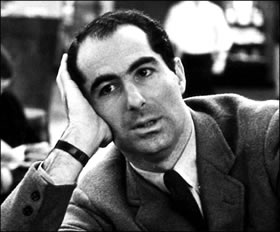
Philip Roth (Newark, 19 maart 1933)


De Amerikaanse schrijfster Lynne Sharon Schwartz werd geboren op 19 maart 1939 in New York. Zie ook alle tags voor Lynne Sharon Schwartz op dit blog.


Uit: Referred Pain and Other Stories (Heat)


“When I was a young woman I had a secret passion. At first I didn't quite grasp that it was a genuine passion. I was married and thought I already had what I wanted. This other thing, I thought, was just fascination and fondness. Also he was too old and a little ugly. But as time passed I recognized it for what it was.

It was his size, first of all. Very large. Imposing. When he got up out of a chair I could see the air shifting deferentially to make room for him, as if the very air at his proximity undulated in its yielding, like fabric or flesh. He was infused with gravity, like a rooted tree or a large piece of machinery, and walked with deliberation, as if he drew strength from the ground and was reluctant to lose touch with it. And his darkness. His skin was leathery, his hair so black and smooth it looked like metal. And his voice. Deep, as if it snaked up from someplace near his groin. Deep and a trifle harsh, almost with a sneering edge. Yet full of kindness. A kindly sneer, if such a thing is possible. And courteous, safe, gray eyes.

He came to our house, sometimes with his wife. He sat in the big armchair, a golden drink in his hand, his feet rooted to the floor, his arms resting on the armrests like Lincoln in his stone chair in his monument. He spoke in his deep, pebbly, sneering, warm voice and smoked cigarettes, wrinkling his brow with each puff, holding the end facing inward so I wondered how his palm didn't get burned. He befriended my young, boyish husband, took him under his wing in their shared line of work. He was kind. And I wanted to be near him and hear his voice.

He felt it too. He looked at me with appreciation and desire, the kind of desire that is civilized and tamed when it would be out of the question to let it run free. The kind of desire that in a man of his age grows wry and ironic and mellow, yet doesn't shrivel or seep away.”


1357722-2d493d675e1900716ff559b82c26a5a3.jpg 

Lynne Sharon Schwartz (New York, 19 maart 1939)


De Duitse literatuurwetenschapper, schrijver, criticus, jurist en socioloog Hans Mayer werd geboren op 19 maart 1907 in Keulen. Zie ook alle tags voor Hans Mayer op dit blog.


Uit: Du störst mich nicht (Über Thomas und Heinrich Mann: Briefwechsel 1900-1949)


“Im übrigen scheint Thomas allein zu dem Älteren zu sprechen: launenhaft, übermütig, gelegentlich boshaft, dann wieder herzlich, fast gefühlvoll. Aber dem Leser ergeht es dabei sonderbar. Heinrich Mann ist stets präsent. Sein Schweigen, zunächst als Verlust und Zufall zu verstehen, ist tönend; es hat Funktion in der merkwürdigen Partitur dieses Briefwechsels. So gewinnt der Leser bei den Briefen nach 1933 nicht den Eindruck, nun erst sei Heinrich Mann vernehmbar geworden. Er war auch vorher stets gegenwärtig. Jeder Brief nämlich von Thomas war gegen den Älteren gleichsam "angeschrieben" worden.

Heinrich Mann hat es gewußt. Auf dem Höhepunkt ihrer öffentlichen und privaten Entzweiung, gegen Ende des Ersten Weltkrieges, in einem Brief, der konzipiert, aber nicht abgeschickt wurde, erläuterte er die Konstellation ebenso hart wie zutreffend: "Du hast, nach allem was ich sehe, Deine Bedeutung in meinem Leben unterschätzt, was das natürliche Gefühl betrifft, und überschätzt hinsichtlich der geistigen Beeinflussung. Die letztere, negativ von Gestalt, ist einseitig von Dir erlitten worden, Du mußt diese Wahrheit schon hinnehmen, es ist keine bloße Schmähung, wie alle die mehr pathetischen als ethischen Wendungen Deines Briefes." Worauf der Briefschreiber auch die eigene Position fixiert: "Was mich betrifft, ich empfinde mich als durchaus selbständige Erscheinung, und mein Welterlebnis ist kein brüderliches, sondern eben das meine. Du störst mich nicht."

So wie er nun vorliegt, bestätigt der Briefwechsel diese Diagnose einer brüderlich-literarischen Beziehung. Jeder Brief Thomas Manns, selbst dort, wo er auf materielle Not eingehen muß, Schwierigkeiten des Exils, Krankheiten, Unglücks- und Todesfälle. Literatur und Politik, steht -- darin völlig adäquat seinem literarischen Gesamtwerk -- unter dem Motto, das als Schlußsatz des autobiographischen Essays "Bilse und ich" schon 1906 formuliert wurde: "Nicht von Euch ist die Rede, gar niemals, seid des nun getröstet, sondern von mir, von mir ..."


1357722-ea1d20940462635e1dba95f14e38a719.jpg 

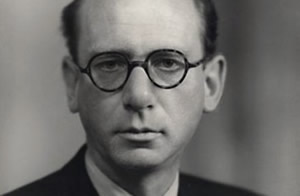
Hans Mayer (19 maart 1907 – 19 mei 2001)


De Oekraïense schrijfster en dichteres Lina Kostenko werd op 19 maart 1930 geboren in Rzhyshchiv. Zie ook alle tags voor Lina Kostenko op dit blog.


Wings


But also true winged soil is not necessary.
Earth is not, it will be heaven.

No field, it will be done.
No steam, it will cloud.

This is probably true bird ...
But what about the man? And what about the man?

He lives on the ground. I do not fly.
A wing has. A wing has!

They are the wings, not down, now, "I
And of truth, virtue and trust "me.

Who - with fidelity in love.
Who - with eternal aspirations.

Who - with sincerity to work.
Who - with generosity to care.

Who - the song, or hope,
Or with poetry, or dreams.

Man allegedly does not fly ...
A wing has. A wing has!


In the days lived sadly and simply


In the days lived sadly and simply,
Everything was as pure snow.
As a dark-eyed wonderful guest
I waited for you from roads.
You were late, came not soon.
I whiled away the time in sorrow,
And in times not good for the heart
I told someone: “I love you.”
Someone lifted me into the sky.
I inhaled, it was blue…
And didn’t dream of you anymore.
And sometimes I stopped,
Spread my hands speechless,
As if waiting for wonderful news
From the land no one knows…
There is heart’s expiation –
To forget evil is easier,
Than what was supposed to be
But never happened in life.


1357722-c28779cc4d2ddecac9c23a24f2436c58.jpg

Lina Kostenko (Rzhyshchiv, 19 maart 1930)


De Ierse dichter William Allingham werd geboren op 19 maart 1824 in Ballyshannon, Donegal. Zie ook alle tags voor William Allingham op dit blog.


In Snow


O English mother, in the ruddy glow
Hugging your baby closer when outside
You see the silent, soft, and cruel snow
Falling again, and think what ills betide
Unshelter'd creatures,--your sad thoughts may go
Where War and Winter now, two spectre-wolves,
Hunt in the freezing vapour that involves
Those Asian peaks of ice and gulfs below.
Does this young Soldier heed the snow that fills
His mouth and open eyes? or mind, in truth,
To-night, his mother's parting syllables?
Ha! is't a red coat?--Merely blood. Keep ruth
For others; this is but an Afghan youth
Shot by the stranger on his native hills.


1357722-ba6f37d70c494e60a69766cf107f80d8.jpg 

William Allingham (19 maart 1824 – 18 november 1889)

Ballyshannon met St Anne's Church


Zie voor nog meer schrijvers van de 19e maart ook mijn blog van 19 maart 2012 deel 1 en ook mijn blog van 19 maart 2011 deel 1 en eveneens deel 2.

Geschreven door Romenu om 19:22 Reageer op dit bericht

Herinnering aan Hugo Claus


Herinnering aan Hugo Claus


Vandaag is het vijf jaar geleden dat de Belgische dichter-schrijver-kunstenaar-filmer Hugo Claus overleed. Zie ook alle tags voor Hugo Claus op dit blog.


Een verteller


Hij zei dat zij zei dat hij zei -
En toen, en toen, en toen?
Het was in de tijd dat de padden dansten.
Het was in het Jaar Zoveel.

Met meer voeten in de aarde
dan je dromen kan
verenigt de verteller nonnen en stieren,
hermelijn en geweren,
karren en kentauren,
en wekt bliksem in de melk. En zet
een weerhaak in het vel
van wie alleen vermoeden wil.


1357253-84d7d8e1c6edaa7c0769ea7314eb94e6.png 

Hugo Claus (5 april 1929 – 19 maart 2008)


Geschreven door Romenu om 07:14 1 reactie Reageer op dit bericht

In Memoriam Rascha Peper


In Memoriam Rascha Peper


De Nederlandse schrijfster Rascha Peper is afgelopen zaterdag op 64-jarige leeftijd in haar huis in Amsterdam overleden. Rascha Peper (pseudoniem van Jenneke Strijland) werd geboren op 1 januari 1949 in Driebergen. Zie ook alle tags voor Rascha Peper op dit blog.


Uit: Zwartwaterkoorts


‘Het frappeert me dat u daarvoor de telefoon kiest, meneer Gorredijk, en niet het daarvoor geëigende middel, zoals we hadden afgesproken.’ Aan de andere kant werd gelachen.
‘Een brief bedoelt u?’
‘Precies.’
‘O, ik zal u heus wel een brief sturen, hoor. Maar een emailadres heeft u ook niet en ik wilde u snel iets laten weten, dus ik denk: ik pak maar even de telefoon.’
Stutijn zweeg. Hij staarde naar de schildpad, die net zijn waterbak verlaten had om een eindje over de kranten te kuieren, terwijl Scheffer, die ook de kamer binnengekomen was, op zijn schild sprong voor een ritje. De kraai was gek met de schildpad. Hij scherpte zijn snavel langs de randen van het schild en greep bij wijze van grap weleens een poot beet. De schildpad tolereerde hem.
‘Omdat ik u een aantrekkelijk voorstel wil doen,’ ging Gorredijk verder.
Juist vanwege de aantrekkelijke voorstellen had hij een half jaar geleden per aangetekende brief laten weten Gorredijk niet meer persoonlijk te woord te willen staan. Zolang hij op tijd de huur betaalde, kon niemand hem verplichten zich in levenden lijve of telefonisch aan contact te onderwerpen. Over de klachten van de buurt en de verbouwing van de zolderverdieping was hij sindsdien schriftelijk geïnformeerd. Hij las de brieven, maar reageerde er nooit op. Tot nu toe was die tactiek afdoende gebleken.
‘Daar ben ik niet in geïnteresseerd.’
‘Dat moet u niet meteen zeggen. Het kon wel eens in uw belang zijn.’
Hij keek toe hoe de kraai zich liet vervoeren, totdat de schildpad onder de laag afhangende citroengeraniums verdween en hij eraf geveegd werd.”


1358357-62f3d976e6258df36b9d55b3e8c7d1f0.jpg 

Rascha Peper (1 januari 1949 - 16 maart 2013)

Geschreven door Romenu om 00:00 Reageer op dit bericht

John Updike, Christa Wolf, Charlotte Roche, Wilfred Owen, Stéphane Mallarmé, Héctor Bianciotti, Hellema

De Amerikaanse schrijver John Updike werd geboren in Shillington, Pennsylvania, op 18 maart 1932. Zie ook alle tags voor John Updike op dit blog.


Uit: Gertrude and Claudius


“Gertrude did not like to think that Claudius had, like his brother, sought the throne. She preferred to think it had fallen to him by unhappy accident. True, he had shown initiative and singleness of purpose in seeking endorsement from the råd and election from the four provincial things, and had by swift letter elicited allegiance from the bishops of Roskilde, Lund, and Ribe; but she ascribed all this to the good cause of stifling chaos in the wake of calamity. In those stunned days after Hamlet was found dead, and not only dead but hideously transfigured, like a long-buried statue disintegrating in shining flakes, Gertrude had been directing her attention elsewhere, inward, to her ancient task of mourning, of shouldering bereavement. For almost the first time in her life since the onset of menses she had felt transformed by illness, unable to leave the bed, as if her proper place were beside Hamlet in his clay grave, in the loathsome burial ground outside the walls of Elsinore, where mist clung to the tufted soil and the shovels of chattering gravediggers were always pecking away at the underworld of bone. Thus isolated, visited only by Herda, who had her own reasons for grief, for Sandro was gone and her belly was swollen, and by her whispering ladies-in-waiting, whose faces were rapt with the thrill of the recent horrific event, and the castle physician, with his dropsical bagcap and bucket of writhing leeches, Gertrude played doctor to her own spiritual symptoms, wondering why her grief felt shallow and tainted by relief. The King's weight had been rolled off her. He had never seen her as she was, fitting her instead into a hasty preconception, his queen. It did occur to her, later, that in this interval some other queen might have been forwarding her son's claim to the throne. But Hamlet had attended his father's burial and disappeared again.”


1356625-60e0f2f5edefd4264bd8a1ffa3769b3d.jpg 

John Updike (18 maart 1932 – 27 januari 2009)


De Duitse schrijfster Christa Wolf werd geboren op 18 maart 1929 in het huidige Poolse Gorzów Wielkopolski  Zie ook alle tags voor Christa Wolf op dit blog.


Uit: Der geteilte Himmel


“In jenen letzten Augusttagen des Jahres 1961 erwacht in einem kleinen Krankenhauszimmer das Mädchen Rita Seidel. Sie hat nicht geschlafen, sie war ohnmächtig. Wie sie die Augen aufschlägt, ist es Abend, und die saubere weiße Wand, auf die sie zuerst sieht, ist nur noch wenig hell. Hier ist sie zum ersten Mal, aber sie weiß gleich wieder, was mit ihr, heute und vorher, geschehen ist. Sie kommt von weit her. Sie hat noch undeutlich ein Gefühl von großer Weite, auch Tiefe. Aber man steigt rasend schnell aus der unendlichen Finsternis in die sehr begrenzte Helligkeit. Ach ja, die Stadt. Enger noch: das Werk, die Montagehalle. Jener

Punkt auf den Schienen, wo ich umkippte. Also hat irgendeiner die beiden Waggons noch angehalten, die da von rechts und links auf mich zukamen. Die zielten genau auf mich. Das war das Letzte.

Die Krankenschwester tritt an das Bett, sie hat beobachtet, wie das Mädchen wach geworden ist und sich mit eigentümlich stillen Augen im Zimmer umsieht, sie spricht sie leise und freundlich an. »Sie sind gesund«, sagt sie munter. Da dreht Rita das Gesicht zur Wand und beginnt zu weinen, hört auch die Nacht über nicht mehr auf, und als morgens der Arzt nach ihr sieht, ist sie nicht fähig, zu antworten.

Aber der Arzt braucht nicht zu fragen, er weiß ja alles, es steht auf dem Unfallblatt. Diese Rita Seidel, eine Studentin, arbeitet nur während der Ferien im Betrieb. Sie ist manches nicht gewohnt, zum Beispiel die Hitze in den Waggons nicht, wenn sie aus der Trockenzelle kommen. Sowieso ist es verboten, bei hohen Temperaturen im Wagen zu arbeiten, aber niemand kann bestreiten, daß die Arbeit drängt. Die Werkzeugkiste ist schwer, sechzig bis

siebzig Pfund, sie hat sie noch bis zu den Schienen geschleppt, wo gerade rangiert wurde, und dann kippte sie um — kein Wunder, zart wie sie ist. Nun heult sie, auch das kennen wir.”


1356625-23196b3152cf024b999aeb0149c06c0e.jpg 

Christa Wolf (Gorzów Wielkopolski, 18. März 1929)


De Duitse schrijfser, televisiepresentatrice, actrice en zangeres Charlotte Roche werd geboren in High Wycombe, Engeland, op 18 maart 1978. Zie ook alle tags voor Charlotte Roche op dit blog.


Uit: Schoßgebete


“Wie immer vor dem Sex haben wir beide Heizdecken im Bett eine halbe Stunde vorher angemacht. Mein Mann hat ganz hochwertige Heizdecken gekauft, die reichen auf beiden Seiten vom Scheitel bis zur Sohle. Für mich muss man da etwas mehr investieren.

Ich habe wahnsinnige Angst, dass so ein Ding anfängt zu glühen und ich nach dem Einschlafen bei lebendigem Leibe verbrenne oder am Rauch ersticke. Unsere Heizdecken schalten sich angeblich nach einer Stunde automatisch ab. Wir legen uns in das vierzig Grad warme Bett nebeneinander hin und starren an die Decke. Der Körper entspannt sich in der Wärme. Ich fange da schon an, tief zu atmen, und grinse in mich rein, in erregter Vorfreude. Dann drehe ich mich um und küsse ihn, meine Hand fährt sofort in seine XXL-Yogahose. Kein Reißverschluss oder so, wo sich Haare oder Vorhaut verfangen könnten. Erst fasse ich seinen Schwanz nicht an, sondern rutsche weiter in die Hose zu den Eiern. Die halte ich wie einen Beutel voll Gold und wiege sie leicht in der Hand. Ab hier betrüge ich meine männerhassende

Mutter. Die hat versucht mir beizubringen, dass Seks etwas Schlechtes ist. Hat bei mir aber nicht gewirkt.

Tief einatmen und ausatmen. Das ist der einzige Moment am Tag, wo ich richtig durchatme. Sonst hab ich nur flache Schnappatmung. Immer auf der Lauer, immer kontrolliert, immer

aufs Schlimmste gefasst. Beim Sex verändere ich komplett meine Persönlichkeit. Meine Therapeutin Frau Drescher meint, ich würde mich unbewusst abspalten, weil meine feministische Mutter mich zum asexuellen Wesen erziehen wollte.”


1356625-94966c2fd6b1663340ca61f4bd95b1da.jpg 

Charlotte Roche (High Wycombe, 18 maart 1978)


De Engelse dichter en schrijver Wilfred Owen werd op 18 maart 1893 geboren in Oswestry in Shropshire. Zie ook alle tags voor Wilfred Owen op dit blog.


Arms and the Boy


Let the boy try along this bayonet-blade
How cold steel is, and keen with hunger of blood;
Blue with all malice, like a madman's flash;
And thinly drawn with famishing for flesh.

Lend him to stroke these blind, blunt bullet-heads
Which long to muzzle in the hearts of lads.
Or give him cartridges of fine zinc teeth,
Sharp with the sharpness of grief and death.

For his teeth seem for laughing round an apple.
There lurk no claws behind his fingers supple;
And God will grow no talons at his heels,
Nor antlers through the thickness of his curls.


Sonnet To My Friend - With An Identity Disc


If ever I had dreamed of my dead name
High in the heart of London, unsurpassed
By Time for ever, and the Fugitive, Fame,
There seeking a long sanctuary at last, -

Or if I onetime hoped to hide its shame,
- Shame of success, and sorrow of defeats, -
Under those holy cypresses, the same
That shade always the quiet place of Keats,

Now rather thank I God there is no risk
Of gravers scoring it with florid screed.
Let my inscription be this soldier's disc.
Wear it, sweet friend. Inscribe no date nor deed.
But may thy heart-beat kiss it, night and day,
Until the name grow blurred and fade away.


1356625-2287461b477a411c71d2833c5a631379.jpg 

Wilfred Owen (18 maart 1893 – 4 november 1918)


De Franse dichter Stéphane Mallarmé werd geboren in Parijs op 18 maart 1842. Zie ook alle tags voor Stéphane Mallarmé op dit blog.


Les fenêtres


Las du triste hôpital, et de l'encens fétide
Qui monte en la blancheur banale des rideaux
Vers le grand crucifix ennuyé du mur vide,
Le moribond sournois y redresse un vieux dos,

Se traîne et va, moins pour chauffer sa pourriture
Que pour voir du soleil sur les pierres, coller
Les poils blancs et les os de la maigre figure
Aux fenêtres qu'un beau rayon clair veut hâler,

Et la bouche, fiévreuse et d'azur bleu vorace,
Telle, jeune, elle alla respirer son trésor,
Une peau virginale et de jadis ! encrasse
D'un long baiser amer les tièdes carreaux d'or.

Ivre, il vit, oubliant l'horreur des saintes huiles,
Les tisanes, l'horloge et le lit infligé,
La toux; et quand le soir saigne parmi les tuiles,
Son oeil, à l'horizon de lumière gorgé,

Voit des galères d'or, belles comme des cygnes,
Sur un fleuve de pourpre et de parfums dormir
En berçant l'éclair fauve et riche de leurs lignes
Dans un grand nonchaloir chargé de souvenir !

Ainsi, pris du dégoût de l'homme à l'âme dure
Vautré dans le bonheur, où ses seuls appétits
Mangent, et qui s'entête à chercher cette ordure
Pour l'offrir à la femme allaitant ses petits,

Je fuis et je m'accroche à toutes les croisées
D'où l'on tourne l'épaule à la vie, et, béni,
Dans leur verre, lavé d'éternelles rosées
Que dore le matin chaste de l'Infini

Je me mire et me vois ange ! et je meurs, et j'aime
- Que la vitre soit l'art, soit la mysticité
A renaître, portant mon rêve en diadème,
Au ciel antérieur où fleurit la Beauté !

Mais, hélas ! Ici-bas est maître : sa hantise
Vient m'écoeurer parfois jusqu'en cet abri sûr,
Et le vomissement impur de la Bêtise
Me force à me boucher le nez devant l'azur.

Est-il moyen, ô Moi qui connais l'amertume,
D'enfoncer le cristal par le monstre insulté
Et de m'enfuir, avec mes deux ailes sans plume
- Au risque de tomber pendant l'éternité ?


Sonnet: ‘Pour votre chère morte, son ami…’

(For your dear departed wife, his friend) 


– ‘Over the lost woods when dark winter lowers

You moan, O solitary captive of the threshold,

That this double tomb which our pride should hold’s

Cluttered, alas, only with absent weight of flowers.


Midnight counts out his empty number,

Wakefulness urges you never to close an eye,

Before in the ancient armchair’s embrace my

Shade is illuminated by the dying embers.


Who wishes to receive visitations often,

Mustn’t load with too many flowers the stone

My finger raises with a dead power’s boredom.


A soul trembling to sit by a hearth so bright,

To exist again, it’s enough if I borrow from

Your lips the breath of my name you murmur all night.’


Vertaald door A. S. Kline


1356625-72900decb0ec2b248660210ac9de25cd.jpg
Stéphane Mallarmé (18 maart 1842 - 9 september 1898)


De Argentijnse schrijver Héctor Bianciotti werd geboren op 18 maart 1930 in Córdoba. Zie ook alle tags voor Héctor Bianciotti op dit blog.


Uit: L'amour n'est pas aimé


“Je ne sens rien - je sens que je ne sens rien. Comme la mort ressemble peu à la mort !
Je crois que le jour est en train de se lever. La nuit a emporté l'empire vers la poussière d'une étoile future. Je perçois une clarté incertaine. La nuit s'est réfugiée dans mon corps.
J'ai froid. Je voudrais m'envelopper dans un drapeau brûlé au soleil des frontières.
Meeta m'a raconté l'histoire de la princesse mais il n'a pas bien rugi. Ma nourrice chante dans le jardin mais elle s'éloigne. Je crois que je me suis endormi. Il faut que je dorme mais je ne veux pas dormir. Les yeux de la panthère brillent sur le mur. Il faut que je lui trouve un nom.”

(…)


« Le scribe sait qu’il s’égare, comme l’artiste qui fait le portrait d’un être aimé s’attarde obstinément sur des détails vestimentaires ou sur le paysage qui sert de fond à son tableau parce qu’il craint que ses pinceaux ne rendent la vérité de ce visage aimé. Il n’y aura aucune vérité, il n’y aura que cette crise de larmes dans son enfance, et, plusieurs années après, dans son adolescence, ces pleurs inattendus au moment de son départ. Ensuite, l’éloignement, la distance, le remords du silence, des lettres indéfiniment remises au lendemain, des élans retenus : les conséquences de ce que nous avons omis de faire sont les plus graves. »


1356625-e0b4f70e53f1a042c24f2e8b94e3e718.jpg
Héctor Bianciotti (18 maart 1930 – 11 juni 2012)


De Nederlandse schrijver Hellema (pseudoniem voor Alexander Bernard (Lex) van Praag) werd geboren in Amsterdam op 18 maart 1921. Zie ook alle tags voor Hellema op dit blog.


Uit: Enige reizen dienden niet ter zake


“Ik [...] reis door het mijnenveld van mijn herinneringen. Het verleden reist mee als torenspitsen aan de einder. Ik ben een handelsreiziger in verleden tijd.’

(…)


“Ik stond hulpeloos om mij heen te kijken. Een wachtpost had mijn schep afgepakt. Een Unterscharführer kwam tierend op me af. “Wat sta je daar de wereld aan te kijken?” “Mijn schep...” zei ik zwak. “Zijn schep! Kijk me zo'n zwijn eens aan! Wat leef je nog, als je geen schep hebt!” Hij begon me in elkaar te slaan. De wachtpost keek lachend toe en slingerde de schep in mijn richting.’

(…)


“De ober deelde weliswaar menu's uit, maar hij noteerde alleen de drank, verder zei hij op elke bestelling “wollen wir sehen”, nam de menu's weer mee en zo begon ik om tien uur aan een maaltijd die ik niet besteld had, maar waarvoor ik mij niettemin dankbaar voelde als voor een bak voer in een concentratiekamp.”


1356625-d97c24c55084966ea8463a6a2bcf1786.jpg
Hellema (18 maart 1921 – 19 maart 2005)


Zie voor nog meer schrijvers van de 18e maart ook mijn blog van 18 maart 2011 deel 2.

Geschreven door Romenu om 07:34 Reageer op dit bericht

Hafid Aggoune, Rense Sinkgraven, William Gibson, Siegfried Lenz, Urmuz

De Franse schrijver Hafid Aggoune werd geboren op 17 maart 1973 in Saint-Etienne. Zie ook alle tags voor Hafid Aggoune op dit blog.


Uit: Les avenirs


“Les années sont passées comme un seul jour. Je n’avais plus rien à faire sur l’île de ma mélancolie. Je suis sorti par le trou qu’un papillon aux ailes féeriques m’avait montré comme dans un conte.

(…)


Le temps remuait et s'avançait vers moi. Il était là depuis le début, sur la main du peintre, dans sa main tracée sur l'air, sans matière, flottante.
Quelque chose en moi suivait des couleurs invisibles.
Dans ce silence, c'est la vie qui, de l'infini le plus lointain, s'approchait de moi et, au passage, dérobait à la nuit des lambeaux d'étoiles comme des peaux mortes à la surface du soleil, comme l'amour et la douleur arrachent des copeaux de corps fossilisés par l'érosion durable de la mélancolie.
En secret, une part qui m'était étrangère me guidait vers le point de lumière, au-delà des pierres, la faille qui, un jour, s'ouvrirait pour ne plus se refermer. Au bord de la vie, elle sauvegardait mon dedans disponible à l'éveil.
Jour après jour, année après année, les décennies ont passé et je continuais de disparaître dans l'image du monde. Je m'engouffrais dans un reflet orphelin.
Je m'étais laissé tombé dans l'attente, livré à elle, donné à elle.”


1356367-9042461b4cec3da1167b4087a9765327.jpg 

Hafid Aggoune (Saint-Etienne, 17 maart 1973)


De Nederlandse dichter
Rense Sinkgraven werd op 17 maart 1965 geboren in het Friese Sint Jacobiparochie. Zie ook alle tags voor Rense Sinkgraven op dit blog.


Witte madonna

Onze-Lieve-Vrouw van Lewenborg


Langs velden, de kamilleweg,
voorbij de smulhoek op de loef,
wacht de witte madonna.

In haar contouren zie ik de maker
die uit steen een engel halen wilde,
witte madonna, klein van stuk.
Je rug draagt diepe sporen.

Een gebed is een dood gedicht.
Je slaat je vleugels uit, verlaat
je man en gaat je eigen weg.
Keer terug. Hoer.

Ik smeek u. Geef haar kracht.
Geef haar een kranig kind dat
wakker wordt in steen.


Koudvuur

Vannacht was
ik weer daar.
Ik zag je
man na man.
Ontspiegeld glas.
Je tors
een raam.
Lakens verkrampt.
Ver
van gestelde tijd –
snijdende wind,
fonkelende straat-
tel ik
de uren kwijt.


1356367-fa2d58ef1c56e4b3671250719a461e85.jpg 

Rense Sinkgraven (Sint Jacobiparochie, 17 maart 1965)


De Amerikaanse schrijver
William Ford Gibson werd geboren in Conway (South Carolina) op 17 maart 1948. Zie ook alle tags voor William Gibson op dit blog.


Uit: Pattern Recognition


“Numb here in the semi-dark, in Damien's bedroom, beneath a silvery thing the color of oven mitts, probably never intended by its makers to actually be slept under. She'd been too tired to find a blanket. The sheets between her skin and the weight of this industrial coverlet are silky, some luxurious thread count, and they smell faintly of, she guesses, Damien. Not badly, though. Actually it's not unpleasant; any physical linkage to a fellow mammal seems a plus at this point.
Damien is a friend.
Their boy-girl Lego doesn't click, he would say.
Damien is thirty, Cayce two years older, but there is some carefully insulated module of immaturity in him, some shy and stubborn thing that frightened the money people. Both have been very good at what they've done, neither seeming to have the least idea of why.
Google Damien and you will find a director of music videos and commercials. Google Cayce and you will find "coolhunter," and if you look closely you may see it suggested that she is a "sensitive" of some kind, a dowser in the world of global marketing.
Though the truth, Damien would say, is closer to allergy, a morbid and sometimes violent reactivity to the semiotics of the marketplace.
Damien's in Russia now, avoiding renovation and claiming to be shooting a documentary. Whatever faintly lived-in feel the place now has, Cayce knows, is the work of a production assistant.
She rolls over, abandoning this pointless parody of sleep. Gropes for her clothes. A small boy's black Fruit Of The Loom T-shirt, thoroughly shrunken, a thin gray V-necked pullover purchased by the half-dozen from a supplier to New England prep schools, and a new and oversized pair of black 501's, every trademark carefully removed. Even the buttons on these have been ground flat, featureless, by a puzzled Korean locksmith, in the Village, a week ago.


1356367-759f2702378f238f57dc789de30f8ead.jpg 

William Gibson (Conway, 17 maart 1948)


De Duitse schrijver
Siegfried Lenz werd op 17 maart 1926 in Lyck, in de landstreek Masuren in Oostpruisen geboren. Zie ook alle tags voor Siegfried Lenz op dit blog.


Uit: So zärtlich war Suleyken


“Jeder Mann, jedes Wesen in Suleyken war von Schrecken und Angst geschlagen, nur Hamilkar Schoß, mein Großvater, zeigte sich von der Bedrohung nicht berührt; sein Auge leuchtete, die Lippen fabrizierten Wort um Wort, dieweil sein riesiger Zeigefinger über die Zeilen des Masuren-Kalenders glitt, die Form einer Girlande nachzeichnend, zitternd vor Glück. Da kam, während er so las, ein magerer, aufgescheuchter Mensch herein, Adolf Abromeit mit Namen, der zeit seines Lebens nicht mehr gezeigt hatte als zwei große rosa Ohren. Er trug eine ungeheure Flinte bei sich, trat, damit fuchtelnd, an Hamilkar Schaß heran und sprach folgendermaßen: "Du tätest", sprach er, "Hamilkar Schaß, gut daran, deine Studien zu verschieben. Es könnte sonst, wie die Dinge stehen, leicht sein, daß der Wawrila mit dir seine Studien treibt. Nur, glaube ich, wirst du nachher zersplieserter aussehen als dieses Buch." Hamilkar Schaß, mein Großvater, blickte zuerst erstaunt, dann ärgerlich auf seinen Besucher; er war, da die Lektüre ihn stets völlig benommen machte, eine ganze Weile unfähig zu einer Antwort. Aber dann, nachdem er sich gefaßt hatte, erhob er sich, massierte seine Zehen und sprach so: "Mir scheint", sprach er, "Adolf Abromeit, als ob du auch die Höflichkeit verlernt hättest. Wie könntest du mich sonst, bitte schön, während des Lesens stören." - "Es ist", sagte Abromeit, "nur von wegen Krieg. Ehrenwort. Wawrila, dem Berüchtigten, ist es in den Sümpfen zu langweilig geworden. Er nähert sich unter gewöhnlichsten Grausamkeiten diesem Dorf. Und weil er, der schwitzende Säufer, schon nah genug ist, haben wir beschlossen, ihn mit unseren Flinten nüchtern zu machen. Dazu aber, Hamilkar Schaß, brauchen wir jede Flinte, die deine sogar besonders." "Das ändert", sagte Hamilkar Schaß, "überhaupt nichts. Selbst ein Krieg, Adolf Abromeit, ist keine Entschuldigung für Unhöflichkeit. Aber wenn die Sache, wie du sagst, arg steht, könnt ihr mit meiner Flinte rechnen. Ich komme."


1356367-3825a9e9334be35df90ce97bc39b1900.jpg 

Siegfried Lenz (Lyck, 17 maart 1926)

Lyck (Pools: Ełk) in 1905


De Roemeense schrijver en avantgardist
Urmuz werd geboren op 17 maart 1883 in Curtea de Argeş. Zie ook alle tags voor Urmuz op dit blog.


Uit: ALGAZY & GRUMMER (Vertaald door Julian Semilian)


“He throws it up on Algazy’s arms... But the old geezer, in whose gut the gobbled bubble’s fermentation kindled the quiverings of forthcoming literature, discerns that all that is submitted to him is far too puny and much too obsolete...

Maddened by hunger and unable to locate in the dark the ideal nourishment which they both so craved, they quickened to the battle anew with redoubled vigor, and under the pretense of merely tasting each other so as to achieve improved integration and get better acquainted, they set about taking bites off of one another with ever flourishing fury, and, gradually consuming each other off, they come to the very last bone... Algazy is the first to finish...

EPILOGUE
The next day, at the foot of the mountain, passers-by could spot in a ditch, hurled by the rain, a gridiron with barbed wire and a scented wooden beak... The authorities were contacted, but before they could arrive on the scene, one of Algazy’s spouses, who was shaped as a broom, showed up unexpectedly and... swinging right and swinging left two or three times, swept everything she found into the garbage...”


1356367-acf9d78246e0a1e6b8ae1fa1bb7607f1.jpg 

Urmuz (17 maart 1883 – 23 novemmber 1923)

Curtea de Argeş, de kathedraal


Zie voor nog meer schrijvers van de 17e maart ook mijn vorige blog van vandaag.

Geschreven door Romenu om 18:22 Reageer op dit bericht

Patrick Hamilton, Hans Wollschläger, Jean Ingelow, Karl Gutzkow, Ebenezer Elliott, Paul Green

De Engelse schrijver Patrick Hamilton werd geboren op 17 maart 1904 in Hassocks, Sussex. Zie ook alle tags voor Patrick Hamilton op dit blog.


Uit: Hangover Square


“For two or three minutes he walked along in a dream, barely conscious of anything. The motion of his body caused his raincoat to make a small thundering noise: his big sports shoes creaked and rustled on the grass of the cliff-top. On his left, down below, lay the vast grey sweep of the Wash under the sombre sky of Christmas afternoon; on his right the scrappy villas in the unfinished muddy roads. A few couples were about, cold, despairing, bowed down by the hopeless emptiness and misery of the season and time of day. He passed a shelter, around which some children were running, firing toy pistols at each other. Then he remembered, without any difficulty, what it was he had to do: he had to kill Netta Longdon.

He was going to kill her, and then he was going to Maidenhead, where he would be happy.

It was a relief to him to have remembered, for now he could think it all out. He liked thinking it out: the opportunity to do so was like lighting up a pipe, something to get at, to get his teeth into.


1356362-e965418f1d284ed6dc19c24857bce9d0.jpg
Scene uit het gelijknamige toneelstuk, Finborough Theatre, Londen, 2008


Why must he kill Netta? Because things had been going on too long, and he must get to Maidenhead and be peaceful and contented again. And why Maidenhead? Because he had been happy there with his sister, Ellen. They had had a splendid fortnight, and she had died a year or so later. He would go on the river again, and be at peace. He liked the High Street, too. He would not drink any more-or only an occasional beer. But first of all he had to kill Netta.

This Netta business had been going on too long. When was he going to kill her? Soon-this year certainly. At once would be best-as soon as he got back to London-he was going back tomorrow, Boxing Day. But these things had to be planned: he had so many plans: too many. The thing was so incredibly, absurdly easy. That was why it was so difficult to choose the right plan. You had only to hit her over the head when she was not looking. You had only to ask her to turn her back to you because you had a surprise for her, and then strike her down. You had only to invite her to a window, to ask her to look down at something, and then throw her out. You had only to put a scarf playfully round her neck, and fondle it admiringly, and then strangle her. You had only to surprise her in her bath, lift up her legs and hold her head down.


1356362-0da67ee936416f8e35257f8bfb4a5b46.jpg 

Patrick Hamilton (17 maart 1904 – 23 september 1962)


De Duitse schrijver, essayist, vertaler, uitgever, historicus, organist en muziekwetenschapper Hans Wollschläger werd geboren op 17 maart 1935 in Minden. Zie ook alle tags voor Hans Wolfschläger op dit blog.


Uit: Leitfaden a priori. Karlheinz Deschners Kriminalgeschichte des Christentums


„Es scheint zweierlei zu sein, was erlebt – und was dem Erlebten dann nachgesagt wird, post-

hum, wenn es bücherreif geworden ist –: sind unsere Informationen über den vitiosen Semper-idem-Kreis vielleicht generell schlecht assortiert? Wir haben eine reiche

Geschichtsschreibung – für die älteren wie für die neueren Zeiten; sie hat selber ihre

Geschichte, und ihre Tradition hat sogar eine ganze Philosophie ausgebildet –: läge die Crux der vergeblichen Lehre bei ihr?

Zumindest auf sie trifft zu, was sich aus dem endlosen politischen Fortsetzungsroman als allgemeiner Verdacht aufdrängt: daß die Lebenslehrerin Geschichte immer auffallend ungelehrige Schüler hatte. Die Zeiten ändern sich, doch sie mit ihnen nicht; sie sind sitzen geblieben, wo sie immer saßen. Das Phänomen ist um so erstaunlicher, als es am Fleiß nicht liegt; es hat mit dem »Betragen« zu tun, mit dem Charakter, und tatsächlich bezeichnet »der

Historiker« eine Gemein-Konstitution, die nicht nur die verschiedensten Persönlichkeiten einbindet, sondern auch die verschiedensten Erlebnisepochen unerschütterlich übergreift, und das mit einer derart zwanghaften Verbindlichkeit, daß niemand, der sich ihr nicht assimiliert, auf zünftigen Applaus rechnen kann. Ihr Zentrum ist der herrenmoralische Blick auf die  Taten – in einem Maß, das die Grenze zur Komplizenschaft mit den Tätern, zur »Beihilfe nach der Tat« nur allzu oft überwallt.


1356362-b35ed8b4217593468ee469dbe839db76.jpg 

Hans Wollschläger (17 maart 1935 – 19 mei 2007)

Minden, markt met raadhuis


De Engelse dichteres en schrijfster Jean Ingelow werd geboren op 17 maart 1820 in Boston, Lincolnshire. Zie ook alle tags voor Jean Ingelow op dit blog.


Sweet are His ways who rules above

'Though I take the wings of the morning.'

Sweet are His ways who rules above,
He gives from wrath a sheltering place;
But covert none is found from grace,
Man shall not hide himself from love.

What though I take to me the wide
Wings of the morning and forth fly,
Faster He goes, whoso care on high
Shepherds the stars and doth them guide.

What though the tents foregone, I roam
Till day wax dim lamenting me;
He wills that I shall sleep to see
The great gold stairs to His sweet home.

What though the press I pass before,
And climb the branch, He lifts his face;
I am not secret from His grace
Lost in the leafy sycamore.

What though denied with murmuring deep
I shame my Lord,—it shall not be;
For He will turn and look on me,
Then must I think thereon and weep.

The nether depth, the heights above,
Nor alleys pleach'd of Paradise,
Nor Herod's judgment-halls suffice:
Man shall not hide himself from love.


1356362-53fcfe6e73a2f02be1819a89782e224e.jpg 

Jean Ingelow (17 maart 1820 – 20 juli 1897)


De Duitse schrijver en journalist Karl Gutzkow werd geboren op 17 maart 1811 in Berlijn. Zie ook alle tags voor Karl Gutzkow op dit blog.


Uit: Der Sadducäer von Amsterdam


“Glückliche Juden, die ihr zwischen Hollands Poldern und Deichen euer Asyl suchtet! Habt ihr je in der Fremde euer Passahlamm in solcher Ruhe genossen und zu den Laubhütten so viel Zweige von den Bäumen brechen dürfen, als an dem Meerbusen IJ? So lustig rauchten nirgends eure Schornsteine bei der Paraskeue am Vorabende des Sabbaths; so reich verbrämte Talare durften die Männer, so schwere goldene Ketten und Ohrgehänge eure Weiber nur in Amsterdam tragen. Die Holländer fürchteten sich weder vor eurem Gelde, noch vor euren Bärten, noch vor euren schönen Töchtern, noch vor Jehova, der sich prächtige Tempel in ihrem Lande baute und mit Wachskerzen, unartikulirten Tönen, ja selbst mit recht unduldsamen, ketzersüchtigen und orthodoxen Priestern und Leviten verehrt wurde.

Es war in der ersten Hälfte des siebzehnten Jahrhunderts, in einer der Straßen, die von dem großen Kai zu Amsterdam auslaufen, in einem stattlichen Hause, das sich vor Niemanden versteckte, aber schon spät, bei eingebrochener Nacht, daß vielleicht die sorgsamste und ehrwürdigste der jüdischen Mütter mit dreien von ihren Söhnen zusammensaß. Welch prachtvolle Umgebung! Welche sonderbare Verbindung des orientalischen und holländischen Geschmacks: in Vorhängen, Sophas, Rauchpfannen, der weitfaltige, elastische, sinnliche Orientalismus, in allem übrigen Zubehör eines großartigen Gesellschaftszimmers die nette, barocke, chinesische Eleganz des Holländers. Esther aber wechselte mit ihren Söhnen jene zärtlichen, sorglichen Reden und Blicke, welche nirgends so treu gemeint sind und wie vom beklommenen Herzen kommen, als im Schooß einer Judenfamilie. Sie ist egoistisch, grausam gegen andere, gewissenlos, die Familienzärtlichkeit der Juden, aber sie ist voller Hingebung und Aufopferung für die Ihrigen.”


1356362-95d4b429cacd694ed43640d004b55a01.jpg 

Karl Gutzkow (17 maart 1811 – 16 december 1878)

Rond 1860 


De Engelse dichter Ebenezer Elliott werd geboren op 17 maart 1781 in Masborough, Yorkshire. Zie ook alle tags voor Ebenezer Elliott op dit blog.


A Poet’s Prayer


Almighty Father! let thy lowly child,

Strong in his love of truth, be wisely bold -

A patriot bard, by sycophants revil'd,

Let him live usefully, and not to die old!

Let poor men's children, pleas'd to read his lays,

Love, for his sake, the scenes where he has been

And, when he ends his pilgrimage of days,

Let him be buried where the grass is green;

Where daisies, blooming earliest, linger late

To hear the bee his busy note prolong -

There let him slumber, and in peace await

The dawning morn, far from the sensual throng,

Who scorn the windflower's blush, the redbreast's lonely song.


1356362-ab49a264a158066d8084baa3df37a574.jpg
Ebenezer Elliott (17 maart 1781 – 1 december 1849)

Anoniem portret, rond 1800 


De Amerikaanse toneelschrijver
Paul Green werd geboren op 17 maart 1894 in Lillington, North Carolina. Zie ook alle tags voor Paul Green op dit blog.


Uit: A Daughter’s Biography (Door Janet Green)


„Perhaps you never heard of my father. I can understand that. One of the things that made him less famous nationally than he should have been was his great age when he died. People stereotyped him with his earlier achievements, but he was a practicing writer until the day he died. In fact, he used to complain that recent interviewers acted as if he were already dead; that their tasks were to gather information from a defunct creature about dinosaur matters. Also, Paul Green, for much of his career, was not in the mainstream of the American theatre. That is, he avoided gratuitous violence, loveless sex, miserable introspection, ironic ambiguity, sophisticated banter, and fearful despair, as subjects for the stage. Still another reason you may never have heard of him is because he was in his beginning a regionalist. As the first white playwright to write about blacks, he created plays dripping in dialect, which are heavy going to urban northern people. I am thinking of some production very early in my father's career of his Negro plays, done by northern white actors in blackface, attempting to mimic the deep North Carolina rural dialect. They did this because the theatre was not then open to black actors. But, as you can imagine, their efforts were not usually what the playwright had in mind.”


1356362-e6df7dc403ff6f7466ebdaec4e3999f4.jpg 

Paul Green (17 maart 1894 – 4 mei 1981)


Geschreven door Romenu om 18:14 Reageer op dit bericht

Bredero, P.C. Hooft, Zoë Jenny, Dirk von Petersdorff, Francisco Ayala

De Nederlandse dichter en toneelschrijver Gerbrand Adriaensz. Bredero werd geboren op 16 maart 1585 in Amsterdam. Zie ook alle tags voor Bredero op dit blog.


Eenzaamheid is armoede


Wat baat u het bezit van landen en van steden
en 't prachtige gebouw vol dure kostbaarheden
waarin u woont, omringd door 'n prinselijke stoet,
wanneer u in uw bed 's nachts eenzaam slapen moet?

Wat baat die erezwerm van dames blank en blij
en 't vorstelijk gevolg van prinsen groot en vrij,
wat baat het dat een elk u als een God begroet,
wanneer u in uw bed 's nachts eenzaam slapen moet?

Wat baat het dat u geurt naar muskus en odeur
en dat de fijnste wijn uw konen siert met kleur
en dat u in uw jeugd leefde op dartele voet,
wanneer u in uw bed 's nachts eenzaam slapen moet?

Wat baat het dat u steeds uit gouden schalen eet
en dat u aan de dis de ereplaats bekleedt
en dat de lieve lust u kittelt, zacht en zoet,
wanneer u in uw bed 's nachts eenzaam slapen moet?

Wat baat het dat uw geest zo wijs is en geleerd
en dat de wereld u daarom bewonderend eert,
dat u onsterfelijk wordt, befaamd door nobel bloed,
wanneer u in uw bed 's nachts eenzaam slapen moet?

Ik wens geen groter schat dan mijn lief in mijn arm,
met haar beleef ik vreugd, naast haar slaap 'k zoet en warm.
U bent de armste mens, al bent u rijk aan goed
wanneer u in uw bed 's nachts eenzaam slapen moet!


Het tweede van de schoonheyt


Het zijn twee sterren licht, of 't zijn twee diamanten,

Die vol van tooverij, haar drayen in't aanschijn,

Of anders gitten swart, of twee smaragden fijn,

Vier reghen-boghen, die aan tween te samen kanten.


Of wel twee peerlen glat, de schoonste van Levanten,

Neen 't moeten vlammen zijn, twee Sonnen heet van schijn,

Ick weet wel, en ick voel, hoe sy verbranden mijn;

Of 't zijn twee blixems snel, van Jupiters ghesanten.


Neen 't isset al te maal, de gitten zijn omringt

Van twee smaragden groen, daar om zijn 't regenbogen,

Dan isset diamant, al dit twee paarlen sluyt,


Sy glinsteren op de wangh, grootachtich puylens' uyt,

Melijdich van opsien sijn dit mijn vrysters ooghen;

Siet ghyse, vraaght niet meer waar liefde my toedringt.


De Liefd’ is blind


Wat wijkt gij, blinde min, van wijsheid en van rede!
Gij mist de weg des deugds doordien gij ’t dwaalpad kiest,
Door ’t volgen van uw lust en broedse zinlijkheden,
Waardoor gij ’t slechtste zoekt en ’t alderbest verliest.


1355720-887ebf34a54d4b5706fc7e44f4c77f4a.jpg 

Gerbrand Bredero (16 maart 1585 - 23 augustus 1618)


De geschiedkundige, dichter en toneelschrijver Pieter Cornelisz. Hooft werd geboren in Amsterdam op 16 maart 1581. Zie ook alle tags voor P. C. Hooft op dit blog.


Aan een nieuwgeboren jongen


O jongen, verse vrucht, die uit het slaaprig leven,
In moeders schoot geleefd, door sporen van de tijd,
Die niet in stilte laat, tot ouders vreugde zijt
In der zinnen gewoel en 't wakend licht gedreven,

Nu heeft u de geboort aan 't Luk overgegeven
Dat school van wissel houdt; de droevige verblijdt,
De blijde droevig maakt; verheft, en nedersmijt;
En tussen hoop en vrees, doet alle zielen zweven.

Op onversufte moed de zegerijke God
Geef u te schutten af de pijlen, waar het Lot
In zijn verbolgenheid u mede zal beschieten;

Ook hare gaven, als 't u mildelijk bedenkt
En rijkdom, wellust, eer, uit volle vaten schenkt,
Met dankbare genoegt' voorzichtig te genieten.


Leidsterren van mijn hoop, planeten van mijn jeugd


Leidsterren van mijn hoop, planeten van mijn jeugd,
Vermogen ogen schoon, in hemels vuur ontsteken,
Als gij uw vensters luikt, zo ziet men mij ontbreken
Mijns levens onderhoud, een teder-zoete vreugd.

Want gij besluit daarin een zaligende deugd,
Vriend’lijke vrolijkheid. De Min met al zijn treken,
Jok, lach, bevalligheid daarinne zijn geweken,
En wat ter wereld is van wellust en geneugt.

Nature, die daar schijnt in droeve damp begraven
Door ‘t missen van uw glans, betreurt haar rijkste gaven,
Die ge altezaam besluit in plaats zo nauw bepaald.

Doch nauw en is zij niet, gelijk het schijnt van buiten,
Maar wijd en woest genoeg om alles in te sluiten
Waar zich mijn wufte ziel zo ver in heeft verdwaald.


Roosje


In de bladen van een roosje
Vindt gij, o mijn zoete Troosje,
Kleene gift. Waar' zij zoo groot
Als de gunst, te kleen een doosje
Waar' de gansche wereldkloot.


1355720-6d8b3ff4e8a8c4be8a173ddb69d84545.jpg 

Pieter Cornelisz. Hooft (16 maart 1581 – 21 mei 1647)

Borstbeeld, Keizersgracht, Amsterdam 


De Zwitserse schrijfster Zoë Jenny werd geboren op 16 maart 1974 in Basel. Zie ook alle tags voor Zoë Jenny op dit blog.


Uit: Das Blütenstaubzimmer


“In der Küche knipste ich das Licht an, setzte mich an den Tisch und umklammerte die noch warme Kaffeetasse. Suchte den Rand nach den braunen, eingetrockneten Flecken ab, das letzte Lebenszeichen, wenn er nicht mehr zurückkehrte. Allmählich erkaltete die Tasse in meinen Händen, unaufhaltsam drang die Nacht herein und breitete sich in der Wohnung aus. Sorgfältig stellte ich die Tasse hin und ging durch den schmalen hohen Gang in mein Zimmer zurück.
Vor dem Fensterrechteck, aus dem ich zuvor meinen Vater beobachtet hatte, hockte jetzt das Insekt, das mich böse anglotzte. Ich setzte mich auf die äußerste Kante des Bettes und ließ es nicht aus den Augen. Jederzeit konnte es mir ins Gesicht springen und seine knotigen, pulsierenden Beine um meinen Körper schlingen. In der Mitte des Zimmers tobten Fliegen um die Glühbirne. Ich starrte in das Licht und auf die Fliegen, und aus den Augenwinkeln beobachtete ich das Insekt, das schwarz und regungslos vor dem Fenster kauerte.
Nach und nach wickelte mich Müdigkeit ein wie warmes Fell. Ich strengte mich an, zwischen den nur noch halb geöffneten Augenlidern die einzelnen Fliegen zu unterscheiden, doch sie schlossen sich mehr und mehr zu einem in der Luft schwirrenden Kreis. Das Insekt kicherte, und ich spürte seine Fühler langsam über den Boden auf meine vom Bett hängenden Füße zukriechen. Ich rannte in die Küche und hielt den Kopf unter das kalte Wasser. Meine Blase war angeschwollen und schmerzte. Ich traute mich nicht, auf die Toilette zu gehen, die auf dem Zwischenstock lag, weil das Licht im Treppenhaus nach kurzer Zeit ausging. Ich spürte das Insekt, das sich in meinem Zimmer regte und nur darauf wartete, mich im dunklen Treppenhaus zu überfallen. In der Küche auf und ab gehend, begann ich die Lieder vor mich hin zu summen, die wir im Kindergarten gelernt hatten. Nur wenige Lieder konnte ich auswendig, weshalb ich sie immer wieder anders zusammensetzte. Mit dem Anschwellen des Schmerzes in der Blase wurde auch meine Stimme lauter, von der ich inständig hoffte, sie trüge mich aus meinem Körper heraus. Schließlich blieb ich vor dem Küchenschrank stehen und pinkelte in ein Gefäß, das ich wischen die Beine klemmte. Sobald das Morgenlicht durch das Küchenfenster schimmerte, zog sich das Insekt in seine ferne Welt zurück. Die Dunkelheit wurde langsam verschluckt. Erschöpft ging ich in mein Zimmer zurück und wühlte mich in die Bettdecke. Um sieben Uhr läutete das Telefon. Es war Vater, der von unterwegs anrief, um mich zu wecken.”


1355720-a37b9283e50e228db517276079fe591d.jpg 

Zoë Jenny (Basel, 16 maart 1974)


De Duitse dichter, schrijver en literatuurwetenschapper Dirk von Petersdorff werd geboren op 16 maart 1966 in Kiel. Zie ook alle tags voor Dirk von Petersdorff op dit blog.


Alter Freund, alte Freundin

Das Leben ging so leicht wie Rennradfahren
im weißen Flatterhemd zum Ostseestrand,
als wir noch straff und voller Zukunft waren,
rieb ich auf deinen Rücken Creme und Sand.
Der Salzgeruch vom Meer, das war die Frühe,
man tat so viele Dinge ohne Grund –
jetzt ist in deinem Lächeln manchmal Mühe,
und bitte kauf die keinen Schäferhund.
Die vollen Lippen waren nur geliehen,
es geht nicht darum, Süße, sich zu halten,
in Jahren, die wie Ostseewolken ziehen,
sind wir Modelle, die nun sanft veralten:
Ich seufze plötzlich auf im Sommerwind,
und du brauchst einen Mann, du willst ein Kind.


1355720-ee671e1cc466bbe1b9bc532383e21f01.jpg 

Dirk von Petersdorff (Kiel, 16 maart 1966)
Kiel


De Spaanse schrijver Francisco Ayala werd geboren op 16 maart 1906 in Granada. Zie ook alle tags voor Francisco Ayala op dit blog.


Uit: Wie Hunde sterben (Muertes de perro, vertaald door Erna Brandenberger)


“Auf diese Weise zügle ich meine Angst, vertreibe mir die Zeit, und falls das Glück mir nicht bis zum Schluß treu sein sollte oder meine Kräfte mich vor der Zeit verlassen, bleibt wenigstens ein Packen Rohmaterial - ein ziemlich wirres Durcheinander zwar, aber auf jeden Fall nützlich, mehr noch: unverzichtbar; denn in diesem unserem gelobten Land verblaßt die Erinnerung im Nu, an das Gute wie an das Schlechte; und das ist, um die Wahrheit zu sagen, nicht einmal unser kleinster Fehler: Wir leben in den Tag hinein, kümmern uns weder um Vergangenes noch um Künftiges, überlassen uns gleichgültig dem Schicksal, stürzen uns hin und wieder - als einzelne wie als Gesamtheit - in besinnungslose Geschäftigkeit, um nach jeder Aufwallung sogleich wieder in Trägheit zu verfallen. Dies vielleicht in der Vermutung, daß nichts von dem, was hier geschieht oder geschehen könnte, erwiesene Tatsache ist.
Es ist - man sehe mir die Abschweifung nach -nicht zu leugnen: Unser Land zählt nicht viel in der Welt; wir selbst halten wenig von uns; unter oberflächlichen Bekenntnissen der Vaterlandsliebe verachten wir es; wir schämen uns unserer Heimat. Jedenfalls, ob wir es wollen oder nicht: Es ist ein kleines Land, ein allzu kleines, irgendwo abseits in einem Winkel in den Tropen, leicht zu übersehen zwischen den "großen Nachbarmächten", wie wir sie in maßloser Überschätzung bezeichnen; und als ob das alles nicht genug wäre, noch dazu abgekapselt hinter dem Streifen Land, der uns erdrückt, würgt und den Atem raubt: dem sogenannten Freihafen, dem alten Piratennest und heutigen Handelsstützpunkt, den die Holländer durch irgendeine wundersame List oder dank der Vorsehung oder einfach aus Zufall behalten konnten.”


1355720-c96bfaca57f1d45facf9e5e8d07e0e11.jpg 

Francisco Ayala (16 maart 1906 – 3 november 2009)

Midden jaren 1930 


Zie voor nog meer schrijvers van de 16e maart ook
mijn vorige blog van vandaag


Geschreven door Romenu om 16:57 Reageer op dit bericht

Hooshang Golshiri, Alice Hoffman, César Vallejo, Sully Prudhomme, René Daumal

De Iraanse schrijver Hooshang Golshiri werd geboren op 16 maart 1938 in Isfahan. Zie ook alle tags voor Hooshang Golshiri op dit blog.


Uit: King of the Benighted (Proloog, vertaald door Abbas Milan)


“The Black Dome is a part of a longer poem called Haft Peykar (Seven Beauties) by the Persian poet Nizami of Ganja (1141-1203). The seven beauties refer to seven portraits of daughters of different kings-p;from the Raj of India and the Khaghan of China to the Shah of Kharazm and the king of the West, or "Sunset-land." When Bahram the Sassanian King, discovers these portraits, he falls in love with them, and, upon succeeding to the throne vacated by the death of his father Yazdigird, he marries all seven princesses. The represent the climes into which the habitable world is divided and are lodged in separate symbolically colored palaces, beginning with the black and ending with the white. Bahram then visits them on seven successive days. This is the story of the first night.

On Saturday, Bahram, clothed in black from head to foot, went to the Black Dome where his bride, the daughter of the Raj of India lived. He asked the Princess to tell him a story and she, with her head cast down, said: When I was a child, a pious and compassionate woman visited our house once a month, and she always wore black. After many persistent inquiries, she finally acquiesced and told us the secret of her unusual attire.

When I was young, the woman said, I was servant to a mighty King in whose land sheep and wolves lived in amity. Yet fate had it that he would become the King of the Benighted, and the story I'll tell you is the tale of how he came to wear black for the rest of his life.”


 1355718-e0b1fc6273ed9ca3f72e09be4e92d48f.jpg

Hooshang Golshiri (16 maart 1938 – 5 juni 2000)

Isfahan 


De Amerikaanse schrijfster Alice Hoffman werd geboren op 16 maart 1952 in New York. Zie ook alle tags voor Alice Hoffman op dit blog.


Uit: The Ice Queen


“Be careful what you wish for. I know that for a fact. Wishes are brutal, unforgiving things, they burn your tongue the moment they’re spoken and you can never take them back. They bruise and bake and come back to haunt you. I’ve made far too many wishes in my lifetime, the first when I was eight years old. Not the sort of wish for ice cream or a party dress or long, blond hair; no. The other sort, the kind that rattles your bones, then sits in the back of your throat, a greedy red toad that chokes you until you say it aloud.

The kind that can change your life in an instant, before you have time to wish you can take it back.

I was in the wrong place at the wrong time, but don’t all stories begin this way? The stranger who comes to town and wreaks havoc. The man who stumbles off a cliff on his wedding day. The woman who goes to look out the window when a bullet, or a piece of glass, or a blue-white icicle pierces her breast. I was the child who stomped her feet and made a single wish and in so doing ended the whole world — my world, at any rate. The only thing that mattered. Of course 1 was self-centered, but don’t most eight year-old girls think they’re the queen of the universe? Don’t they command the stars and seas? Don’t they control the weather? When I closed my eyes to sleep at night, I imagined the rest of the world stopped as well. What I wanted, I thought I should get. What I wished for, I deserved.”


1355718-15de3ee31bb8d5728014513cf2aa31b4.jpg 

Alice Hoffman (New York, 16 maart 1952)


De Peruaanse dichter César Vallejo werd geboren op 16 maart 1892 in Santiago de Chuco, Peru. Zie ook alle tags voor César Vallejo op dit blog.


Paris, October 1936


From all of this I am the only one who leaves.
From this bench I go away, from my pants,
from my great situation, from my actions,
from my number split side to side,
from all of this I am the only one who leaves.

From the Champs Elysées or as the strange
alley of the Moon makes a turn,
my death goes away, my cradle leaves,
and, surrounded by people, alone, cut loose,
my human resemblance turns around
and dispatches its shadows one by one.

And I move away from everything, since everything
remains to create my alibi:
my shoe, its eyelet, as well as its mud
and even the bend in the elbow
of my own buttoned shirt.


Under The Poplars


Like priestly imprisoned poets,
the poplars of blood have fallen asleep.
On the hills, the flocks of Bethlehem
chew arias of grass at sunset.

The ancient shepherd, who shivers
at the last martyrdoms of light,
in his Easter eyes has caught
a purebred flock of stars.

Formed in orphanhood, he goes down
with rumors of burial to the praying field,
and the sheep bells are seasoned with shadow.

It survives, the blue warped
In iron, and on it, pupils shrouded,
A dog etches its pastoral howl.


1355718-009fc348a4cb55724131a287ee5a1905.jpg 

César Vallejo (16 maart 1892 – 15 april 1938)


De Franse schrijver en dichter Sully Prudhomme (eig. René François Armand Prudhomme) werd geboren op 16 maart 1839 in Parijs. Zie ook alle tags voor Sully Prudhomme op dit blog.


La Place Saint-Jean-de-Latran


Au mois de novembre, à midi,

Je foulais cette large place

Au sol vague, formant terrasse

Sur la campagne à l’infini.


A gauche, un aqueduc s’allonge

Par-dessus les plis du désert

Et dans les montagnes se perd

Aussi loin que le regard plonge ;


Vieil échanson que n’use point

La soif des races, il commence

A mes pieds par une arche immense

Et finit là-bas par un point...


A droite, des vergers, des vignes,

Des toits plats, des murs blancs, des pins,

Et, tout au loin, les monts Sabins

Aux sereines et fermes lignes.


Tel le fond d’un lac azuré,

A travers l’eau tranquille et belle,

Voilé, mais non terni par elle,

Semble grandir transfiguré ;


Tel, dans les campagnes romaines,

Sous la fine écharpe de l’air

Paraît plus doux et non moins clair,

Et plus grand, l’horizon des plaines ;


Et cet air magique et subtil

Est tiède : ici l’été s’achève

Comme un printemps nouveau qui rêve

En attendant son mois d’avril.


1355718-74226f8c18fe9532d8be7dc264fa818a.jpg 

Sully Prudhomme (16 maart 1839 – t september 1907)

Sint Jan van Lateranen, Rome


De Franse schrijver en dichter René Daumal werd geboren op 16 maart 1908 in Boulicourt in de Ardennen. Zie ook alle tags voor René Daumal op dit blog.


Uit: La guerre sainte


“Je vais faire un poème sur la guerre. Ce ne sera peut-être pas un vrai poème, mais ce sera sur une vraie guerre.

Ce ne sera pas un vrai poème, parce que le vrai poète, s'il était ici, et si le bruit se répandait parmi la foule qu'il allât parler - alors un grand silence se ferait, un lourd silence d'abord se gonflerait, un silence gros de mille tonnerres.

Visible, nous le verrions, le poète et voyant, il nous verrait ; et nous pâlirions dans nos pauvres ombres, nous lui en voudrions d'être si réel, nous les malingres, nous les gênés, nous les tout-chose.

Il serait ici, plein à craquer des multitudes des ennemis qu'il contient - car il les contient, et les contente quand il veut - incandescent de douleur et de sacrée tranquille comme un artificier, dans le grand silence il ouvrirait un petit robinet, le tous petit robinet du moulin à paroles, et par là nous lâcherait un poème, un tel poème qu'on en deviendrait vert.

Ce que je vais faire ne sera pas un vrai poème poétique de poète, car si le mot "guerre" était dit dans un vrai poème - alors la guerre, la vraie guerre dont parlerait le vrai poète, la guerre sans merci, la guerre sans compromis s'allumerait définitivement dans le dedans de nos coeurs.

Car dans un vrai poème les mots portent leurs choses.

Mais ce ne sera pas non plus discours philosophique. Car pour être philosophe, pour aimer la vérité plus que soi-même, il faut être mort à l'erreur, il faut avoir tué les traîtres complaisances du rêve et de l'illusion commode. Et cela, c'est le but et la fin de la guerre, et la guerre est à peine commencée, il y a encore des traîtres à démasquer.

Et ce ne sera pas non plus oeuvre de science. Car pour être un savant, pour voir et aimer voir les choses telles qu'elles sont, il faut être soi-même, et aimer se voir, tel qu'on est. Il faut avoir brisé les miroirs menteurs, il faut avoir tué d'un regard impitoyable les fantômes insinuants. Et cela, c'est le but et la fin de la guerre, et la guerre est à peine commencée, il y a encore des masques à arracher.”


 1355718-e7d025149d23cd7fed307739736d4bb5.jpg

René Daumal (16 maart 1908 – 21 mei 1944)


Zie voor nog meer schrijvers van de 16e maart ook mijn vorige blog van vandaag.

Geschreven door Romenu om 16:56 Reageer op dit bericht

Percy MacKaye, Patrice de la Tour du Pin, Haldun Taner, Jakob Haringer, Ethel Anderson

De Amerikaanse dichter en schrijver Percy MacKaye werd geboren op 16 maart 1876 in New York. Zie ook alle tags voor Percy MacKaye op dit blog.


Hymn Of The New World


A star a star in the west!
Out of the wave it rose:
And it led us forth on a world-far quest;
Where the mesas scorched and the moorlands froze.
It lured us without rest:
With yearning, yearning—ah!
It sang (as it beckoned us)
A music vast, adventurous-
America!

A star a star in the night!
Out of our hearts it dawned !
And it poured within its wonderful light;
Where our hovels gloomed and our hunger spawned
It healed our passionate blight:
And burning, burning—ah!
It clanged (as it kindled us)
Of a freedom proud and perilous-
America!

A star—a star in the dawn!
Bright from God s brow it gleams!
Like a morning star in ages gone
With hallowed song its holy beams
Urge us forever on:
For chanting, chanting—ah!
It builds (as it blesses us)
A union strong, harmonious-
America !


1355714-be931098abad444b8a89fff84da62b8a.jpg 

Percy MacKaye (16 maart 1875 – 31 augustus 1956)


De Franse dichter Patrice de la Tour du Pin werd geboren op 16 maart 1911 in Parijs. Zie ook alle tags voor Patrice de la Tour du Pin op dit blog.


Psaume 32


N’ai-je pas droit, Seigneur, à des saisons?

n’as-tu pas fait erreur en ce trop long hiver?

mon âme cherche en vain òu s’accoupler.


Je n’anime plus rien et tout me désanime,

ma voix me revient morte au moindre appel vers toi!

peut-être en veux-tu à ma voix.


Sans elle je ne suis qu’un cavalier sans ma monture,

un poète perdu pour ta benediction:

j’ai dû vouloir forcer ta grace.


Plus sommaire est mon cri que celui de tes bêtes,

la moindre pierre est plus musicienne que moi,

ma gorge désolée s’encrasse . . .


Descelle-moi, mon Dieu, je me meurs d’être atone:

depuis trois ans, je me défonce, je me fore,

je m’entends gémir . . . M’entends-tu?


J’ai quitté pour toi des terres profanes

et ton silence me condamne!

non, je ne réclame pas mon dû!


Mais au moins penche-toi, ne laisse pas s’étendre

sur ma quête un ciel d’indifférence,

ne me laisse pas égorgé . . .


 1355714-e6207849f185ca702c507345f061bf1c.jpg

Patrice de la Tour du Pin (16 maart 1911 – 28 oktober 1975)

Met zijn vrouw Anne in de jaren 1940 


De Turkse schrijver Haldun Taner werd geboren op 16 maart 1915 in Istanboel. Zie ook alle tags voor Haldun Taner op dit blog.


Uit: The Ballad Of Ali Of Keshan (Vertaald door Nüvit Özdoğru)


“First Citizen: You said there would be an end to bullying.
Chorus: Well, you can't have everything.
Ali: I've appointed Mr. Thirty Percent Temel as my financial advisor and the Letter-Writer Dervish as my legal advisor.
Voices: Congratulations! (TEMEL and DERVISH are congratulated.)
Ali: In all games played in all coffee houses I shall have my cut. If anyone fails to pay up, I'll make him wear the coast of a porcupine. I want no killjoy around here.
Drunken Rasih: You said there would be no more such things.TEMEL takes a bottle of raki and puts it before DRUNKEN RASİH.Chorus: Well, you can't have everything.
Ali: I've set up in my coffeehouse an organization of servants and taxi-starters. From now on, no one will make business deals with the city without first consulting my office. Anyone wishing to go for washing, housecleaning, wet nurse or labor in the tobacco company must register with Hafize right now.
Second Citizen: He's filling all the jobs with his relatives.
TEMEL places a bottle of raki before the SECOND CITIZEN.
Chorus: Well, you can't have everything.
Ali: The first month's salaries of the servants registered here will go to me – that is, the aid fund. In return, all their legal rights and privileges will be guarded by Dervish the Letter-Writer. We'll get them good salaries, conditions, and in the case of matrons who are pretty well off, compensation and retirement benefits.”


1355714-2a614833cc7ffb080e0294f93ef1ef33.jpg 

Haldun Taner (16 maart 1915 – 7 mei 1986)

Bronzen beeld door Vedat Somay (2005) in Istanboel


De Duitse dichter Jakob Haringer werd als Johann Franz Albert geboren op 16 maart 1898 in Dresden. Zie ook alle tags voor Jakob Haringer op dit blog.


Fahr ich wieder in mein altes Städtchen


Fahr ich wieder in mein altes Städtchen,

flattert ins Kupee der letzte Mohn –

Es sind immer noch dieselben Mädchen,

es ist immer noch derselbe Mond.


Hab an Fraun und Tand mein Herz verloren,

blieb mir nichts als dieses alte Nest!

Kinder spielen lieb vor Gartentoren,

morgen ist das letzte Sommerfest.


Werd ich traurig an den Hügeln sitzen,

denk an all die längst verlorne Zeit;

Droben schon die ersten Sternlein glitzern,

glänzt kein Stern an meine Traurigkeit ...


Einst hing rotes Laub an deinen Locken,

und bald wird es wieder lustig schnein,

an mein schlaflos Bett wehn Friedhofsglocken

und ich werd so ganz verlassen sein.


Fahr ich wieder in mein altes Städtchen,

flattert ins Café der letzte Mohn ...

Es sind immer noch dieselben Mädchen –

es ist immer noch derselbe Mond.


1355714-5d23382bbaff5261d361f963fee2212c.jpg
Jakob Haringer (16 maart 1898 – 3 april 1948)


De Australische dichteres en schrijfster Ethel Anderson werd geboren op 16 maart 1883 in Leamington, in Warwickshire, Engeland. Zie ook alle tags voor Ethel Anderson op dit blog.


Waking, Child, While You Slept (Fragment)


Waking, child, while you slept your mother took

Down from its wooden peg her reaping-hook,

Rustless with use, to cut (her task when dawn

With nervous light would bead the dusky leaves)

From the cold wheat-paddock’s shivering fringe, two sheaves;

Against a block she’d trash the golden grain,

Then winnow corn and husk, and toss again…

With bustling care, in genial haste, not late

Her cows she’d milk, het butter churn, and set

Fresh cream in scalded pans. Her hens she’d feed

With hot scraps, stirred in pollard from the bin;

Then give her dribbling calves what drink they need;

Or drive with flowery staff

Meek stragglers trough the gate;

On her youngest born

Impose the fret,

The letter’d tyranny, of the alphabet.


1355714-875038b2516f6c136a62e535e621c974.jpg 

Ethel Anderson (16 maart 1883 – 4 augustus 1958)

Geschreven door Romenu om 16:46 Reageer op dit bericht

Louis Paul Boon, Ben Okri, David Albahari, Gerhard Seyfried, Kurt Drawert, Andreas Okopenko, An Rutgers van der Loeff

De Vlaamse dichter, schrijver en kunstschilder Louis Paul Boon werd geboren in Aalst op 15 maart 1912. Zie ook alle tags voor Louis Paul Boon op dit blog.


Stilte, hier werkt een dichter


Stilte, hier werkt een dichter

wie is hooggeacht wie is hooggeleerd

de winnaar van een nobelprijs zou je zo zeggen

maar een arbeider zoals jij en ik, moegetobd

opgenomen in een ziekenhuis

aan zijn sterven overgelaten

en denkend plots aan leven en dood

het antwoord weet

de laatste woorden niet meer uitspreken kan

is hij niet de nobelprijs?


wordt ooit de ware dichter door overheden

met haat in hun hart

met misprijzen om zijn werk

op waarde gebrandschat

geprijsd en onder lof vermoord?

in de volksbuurten leest men hem

hij tokkelt op de snaar van hun hart

zijn eigen smart om het onrecht

en een volksvrouw denkt:

jij mijn geliefde dichter


dooft men het oor van de dichter

brengt men het geweten tot zwijgen

legt men zijn tong lam

door een prijs van misprijzende lof

vergeet hij allen de eenvoudigen

zij die hem voortbrachten

in een krot van armoe en opstand


op het hek van de dichter blijft het bord

waarschuwend voor de eerzuchtige groten:

opgepast, gevaarlijke hond


1355100-754a1764d2869792e27bb4f44501b60b.jpg 

Louis Paul Boon (15 maart 1912 - 10 mei 1979)


De Nigeriaanse dichter en romanschrijver Ben Okri werd geboren op 15 maart 1959 in Minna, Nigeria. Zie ook alle tags voor Ben Okri op dit blog. 


Uit: The Famished Road


“In the beginning there was a river. The river became a road and the road branched out to the whole world. And because the road was once a river it was always hungry. In that land of beginnings spirits mingled with the unborn. We could assume numerous forms. Many of us were birds. We knew no boundaries. There was much feasting, playing, and sorrowing. We feasted much because of the beautiful terrors of eternity. We played much because we were free. And we sorrowed much because there were always those amongst us who had just returned from the world of the Living. They had returned inconsolable for all the love they had left behind, all the suffering they hadn’t redeemed, all that they hadn’t understood, and for all that they had barely begun to learn before they were drawn back to the land of origins.

There was not one among us who looked forward to being born. We disliked the rigors of existence, the unfulfilled longings, the enshrined injustices of the world, the labyrinths of love, the ignorance of parents, the fact of dying, the amazing indifference of the Living in the midst of the simple beauties of the universe. We feared the heartlessness of human beings, all of whom are born blind, few of whom ever learn to see.”


1355100-631ef8433ccced236d775dc33c8faed4.jpg 

Ben Okri (Minna, 15 maart 1959)


De Servische schrijver David Albahari werd op 15 maart 1948 geboren in Pec in Sevie.  Zie ook alle tags voor David Albahari op dit blog.


Uit: Gotz and Meyer


“Götz and Meyer were, after all, members of the army, one cannot doubt their loyalty to the Reich and the Führer. Even as they came into the camp, swung children up off the ground, Götz, or maybe it was Meyer, never thought for a moment of what was to come. Everything fitted, after all, into a larger plan, each individual has his own destiny, no-one, least of all Götz, or Meyer, could change that. He was with the children, therefore, only while he was with them. As soon as he’d ruffled the last tousled head, given out the last sweet, lowered the last pair of little feet onto solid ground, they faded from his thoughts and he retreated into his fantasies. Götz, or Meyer, had always wanted to be a fighter pilot. I have no proof whatsoever that this was what he dreamed of, but I find the thought appealing that he’d step up into the cab of his truck as if sliding into the cockpit of a bomber, wearing a leather jacket, but not a pilot’s cap because that would have been a little awkward with his fellow traveller sitting there. The truck was a Saurer, a five-tonner with a box-like body, 1.7 metres high and 5.8 metres long, and it could be hermetically sealed. At first, the Gestapo used smaller trucks, but the Belgrade Saurer was part of a second series, a more perfect series: a full hundred people could stand in the back, apparently, according to what witnesses tell us. One can run a simple calculation based on that and conclude that it was essential for the transport of five thousand souls to make at least fifty trips. During these trips, the souls became real souls, no longer human in form. Götz and Meyer most certainly knew what was happening in the back of the truck, but they definitely would never have described it like that. After all, the people they were driving had no souls, that, at least, was a commonly known fact! Jews were nothing more than mildew on the face of the world! And so, day in and day out, they repeat their practised routine. First Götz, or Meyer, would drive the truck to the gateway of the camp, and then Meyer, or Götz, would open its capacious back. Orderly and calm, the prisoners would climb up into the truck: women, children, a few of the elderly. Beforehand they would place their belongings in another truck, parked within the confines of the camp. Convinced that the moment had finally come for them to be transported to Romania, though there had been talk of Poland, as if that mattered, what mattered was that they were leaving this gruesome place, no matter where they went from here it couldn’t be worse, and a flash of relief would have crossed their faces. I don’t know where Götz and Meyer were at those moments.”


1355100-f98ad5770f5bb7246a1f8157b8d1d144.jpg 

David Albahari (Pec, 15 maart 1948)


De Duitse schrijver, tekenaar en karikaturist Gerhard Seyfried werd geboren op 15 maart 1948 in München. Zie ook mijn blog van 15 maart 2009 en ook mijn blog van 15 maart 2010 en ook mijn blog van 15 maart 2011.


Uit: Das Märchen vom Neuen Fälschungssicheren Personalausweis (blog)


“Frau Mastercard hatte als eine der ersten Deutschen den neuen fälschungssicheren Personalausweis erhalten. Das ärgerte ihren Gemahl, Herrn Mastercard, der auch gerne einen neuen fälschungssicheren Personalausweis sein eigen nennen wollte. Abends, in seinem Stammlokal, klagte er einem Unbekannten an der Bar sein Leid und fügte hinzu: „Ach hätte ich doch nur auch einen neuen fälschungssicheren Personalausweis! Dafür ließe ich schon einen Gulden oder zwei springen!“
„Ei“, erwiderte der Unbekannte, „wenns weiter nichts ist! Einen neuen fälschungssicheren Personalausweis will ich Euch wohl besorgen!“
Er klappte seinen Laptop auf, spuckte hinein und klappte ihn wieder zu – und siehe: Aus dem CD-Schlitz sprang ein funkelnagelneuer fälschungssicherer Personalausweis heraus, ausgestellt auf Herrn Mastercard! Der Unbekannte hatte sogar noch ein paar kleine textliche Verbesserungen hinzugefügt! Herr Mastercard war überglücklich und wollte dem Unbekannten um den Hals fallen, aber der wehrte bescheiden ab: „Nichts da! Habe ich doch gern getan!“ Er hängte sich den Laptop um, wünschte Herrn Mastercard noch viel Vergnügen mit dem neuen fälschungssicheren Personalausweis, trat in die kalte Nacht hinaus und ward nicht mehr gesehen."


1355100-a97d9bcd4caed05afafbae004cf9577c.jpg 

Gerhard Seyfried (München, 15 maart 1948)


De Duitse dichter en schrijver Kurt Drawert werd geboren op 15 maart 1956 in Henningsdorf. Zie ook alle tags voor Kurt Drawert op dit blog. 


Uit: Es wächst nicht zusammen, was nicht zusammen gehört


„Was nicht zusammen gehört,/ das soll sich meiden./ Ich hindere euch nicht,/ wo es euch beliebt, zu weilen. // Denn ihr seid neu,/ und ich bin alt geboren./ Macht, was ihr wollt,/ nur laßt mich ungeschoren.“ – Diese Zeilen stammen von Goethe, und sie beziehen sich auf das Gefühl der Bedräng­nis, wie er es im Umgang mit Bettina von Armin empfand. Liebe kann lästig sein, wer kennt das nicht. Noch lästiger aber, als eine Liebe nicht erwidern zu können, ist die Ver­pflichtung, lieben zu müssen. Sie kommt einer Nötigung gleich und entspringt dem kol­lektiven Willen zur Vermehrung des Eigentums. Denn Liebe an und für sich, jene Liebe, die sich frei verschenkt und unwillkürlich ergibt, ist ein asozialer Zustand und damit für jede auf Funktiona­lität getrimmte Ordnung subversiv. Es ist die in der Liebe selbst angelegte Unbe­rechen­barkeit, die zur Gefahr wird und entsprechend gebändigt werden muß. Am Ende ist es immer die Freiheit des Subjekts, die wieder abge­schafft werden soll, nachdem sie, zunächst moral­philo­sophisch und dann juristisch, eingeführt wurde. Die Etablierung eines Frei­heits­bewußtseins und die Zerstörung des­selben sind die zwei großen und einander permanent riva­lisie­renden Konstanten der westlichen Moderne. Die Literatur vor allem der zweiten Hälfte des 19. Jahr­hunderts ist voll von Beispielen, wie die gesell­schaft­lich verwaltete Liebe zur Kata­strophe des einzelnen oder einer Familie wird. Ob Frau Jenny Treibel in Deutsch­land, Madame Bovary in Frank­reich oder Anna Karenina in Rußland: sie alle leiden an der Differenz eines Begehrens nach sich selbst und jener zur sozia­len Norm gewordenen Ver­pflichtung, die Inner­lichkeit dem Kreislauf von Produktion und Distribution zur Verfügung zu stellen. Und wer es nicht tut, wie Emma Bovary etwa, geht elend zugrunde.”


1355100-de4b2cf6407fdb4c15d254eb0b072c48.jpg 

Kurt Drawert (Henningsdorf, 15 maart 1956)


De Oostenrijkse dichter en schrijver Andreas Okopenko werd in Košice (Slowakije) geboren op 15 maart 1930. Zie ook alle tags voor Andreas Okopenko op dit blog.


Early Impression

Somewhere I sat on warm white steps
Somewhere I sat tanning in the sun
And watched an insect come out of the bushes.

I heard someone call a beloved name
And went in the direction of the call.
Somewhere—that was at age fourteen.


Garden

Deep garden
of dark-green leaves
they come from the ground
and are moist.

Brown earth
awakes
under the leaves.

Garden...
inside
a path
under high grass.

The morning
young and smoke-blue
begins
here.

Before noon
the sun
half shines here.

O day
is here
a long time,
up until evening.

And then
green darkens
slowly
into night.

Garden:
breathing in
the warmth
of the shadows....


Vertaald door Milne Holton Herbert Kuhner


1355100-5cd41e5c399ff69ff897976cc09d7f2b.jpg 

Andreas Okopenko (15 maart 1930 – 27 juni 2010)


De Nederlandse schrijfster An Rutgers van der Loeff werd geboren in Amsterdam op 15 maart 1910. Zie ook alle tags voor An Rutgers van der Loeff op dit blog.

Uit: Rossy, dat krantenkind


‘Nog nooit is een kindje zo goed verzorgd als onze Eleonora,’ zei Mary.

‘Roswita Alberta,’ vulde Ricky aan. Hij hield van volledigheid. Voorlopig tenminste, nu hij nog zo'n kersverse vader was. Drie weken is nog niet lang.

‘Ik wil die duizend dollar nóóit hebben,’ zei Mary met een trillende stem. ‘Nooit! Als ze ... Maar je hebt gelijk, Ricky, ze wordt verschrikkelijk goed verzorgd,’ herhaalde zij nog eens, alsof zij zichzelf wilde gerust stellen. Maar dat hoefde eigenlijk niet, want welke baby had nu twee verpleegsters en twee dokters en flesjes melk die door de moedermelkcentrale in Chicago in ijs per vliegtuig werden verstuurd, elke dag opnieuw? Nee, ze hadden er goed aan gedaan hun kind af te staan voor de medische demonstratie van de modernste stoofwieg. Ze bewezen niet alleen aan hun kind en zichzelf een dienst, maar ook aan de medische wereld, had de directeur van het ziekenhuis gezegd.

‘De medische wereld trekt nut van onze dochter,’ zei Ricky en hij voelde zich trots daar hoog aan de hemel, ver boven alle andere mensen, in het bakje van het Reuzenwiel. ‘Er hebben al drie artikelen over haar in de krant gestaan. En over alle mensen die naar haar zullen komen kijken. Dat zijn niet alleen dokters. Want er is nog nooit zo'n klein kindje in deze Staat geboren.’

‘Ze weegt zo weinig, dat ze haar gewicht altijd met dikke letters drukken,’ zei Mary. En opeens pakte zij weer Ricky's arm, want zij werd weer bang, zoals ze nu al drie weken lang bang was geweest dat ze haar kindje weer zou verliezen. Het was zó klein! Het was te klein voor deze wereld. Het kón bijna niet blijven leven. Maar het had 't nu al bijna drie weken uitgehouden, en nu was er wel een kans dat het goed zou gaan, had de dokter gezegd. Er was een kans. En ondertussen lag het kleine ding nu in het smetteloos witte, electrisch verwarmde wiegje achter glas en werd bekeken door vele, vele mensen die het aanzagen als een kermiswonder.”


1355100-b93b191e377e183891bf08542040da9d.jpg 

An Rutgers van der Loeff (15 maart 1910 – 19 augustus 1990)


Zie voor nog meer schrijvers van de 15e maart ook mijn blog van 15 maart 2012 deel 2.

Geschreven door Romenu om 18:43 Reageer op dit bericht

Horton Foote, Olivier Delorme, Jochen Schimmang, Volker von Törne, Pam Ayres, Theodore de Banville

De Amerikaanse schrijver en draaiboekauteur Horton Foote werd geboren op 14 maart 1916 in Wharton, Texas. Zie ook alle tags voor Horton Foote op dit blog.


Uit: Blind Date


“SARAH NANCY. Anyway, they are all stupid.

DOLORES. Who, honey?

SARAH NANCY. Boys.

DOLORES. Precious, darling.

SARAH NANCY. Dumb and stupid. (she starts away)

DOLORES. Sarah Nancy, where in the world are you going?

SARAH NANCY. I’m going to bed.

DOLORES. Sarah Nancy, what is possessing you to say a thing like that? You’re just trying to tease me.

SARAH NANCY. Oh no I’m not. (She starts away)

DOLORES. Sarah Nancy, you can’t go to bed. You have a young man coming to call on you at any moment. You have to be gracious …

SARAH NANCY. I don’t feel like being gracious. I’m sleepy. I’m going to bed.

DOLORES. Sarah Nancy, you can’t. Do you want to put me in my grave? The son of one of your mother’s dearest friends will be here at any moment to call on you, and you cannot be so rude as to go to bed and refuse to receive him. Sarah Nancy, I beg you. I implore you.

SARAH NANCY. Oh, all right. (She sits down) Ask me some questions.

DOLORES. No, dear. You ask me some questions.

SARAH NANCY. What church do you attend?

DOLORES. That’s lovely. That’s a lovely question to begin wtih. Now I’ll answer as Felix will. Methodist.

SARAH NANCY. That’s a dumb church.

DOLORES. Sarah Nancy.

SARAH NANCY. I think it’s a dumb church. It’s got no style. We used to be Methodist but we left for Episcopal. They don’t rant and rave in the Episcopal church.”


1354493-baf56355be9e04629d9380b3e46ca40d.jpg 

Horton Foote (14 maart 1916 – 4 maart 2009)

Evan Jonigkeit en Hallie Foote in ‘Blind Date,’ New York, 2012


De Franse schrijver Olivier Delorme werd geboren op 14 maart 1958 in Chalon-sur-Saône. Zie ook alle tags voor Olivier Delorme op dit blog.


Uit: La Quatrième Révélation


« Notre ouiquende londonien s'était terminé dans l'euphorie ; mes deux jours de travail à la Bodleian Library m'avaient apporté bien plus que je ne pouvais espérer. Le manuscrit de la Nationale m'avait donné la fin de ce que j'appelais désormais le Manuscrit phallique des actes de Pau>, celui d'Oxford m'en dévoilait le début et l'identité de son auteur - un témoin de première main, si on l'en croyait. »

(…)


« Semblant sorti d'un mauvais polar, adipeux, transpirant, suffoquant, Grimm est boudiné dans un costume sombre bon marché dont il garde pourtant la veste boutonnée. Julien éprouve les plus grandes difficultés à se montrer aimable. - Vous avez l'air d'avoir bien chaud, cher monsieur, vous devriez vous mettre à l'aise. Grimm remercie dans un borborygme et entreprend de retirer sa veste en soufflant comme une baleine. Sa chemise d'un gris douteux laisse voir un marcel en transparence et de larges auréoles ; le moindre de ses mouvements diffuse autour de lui une odeur de sueur rance. »


1354493-d2c1c8f53504c905eb9cf67b5e993282.jpg 

Olivier Delorme (Chalon-sur-Saône, 14 maart 1958)


De Duitse schrijver Jochen Schimmang werd geboren op 14 maart 1948 in Leer, Ostfriesland. Zie ook alle tags voor Jochen Schimmang op dit blog.


Uit: Neue Mitte


“Sander erwartete mich eingangs der ersten Ruine. Hinter den riesigen Fensterbögen im Erdgeschoss war das übliche Kraut hochgeschossen, das sich über kurz oder lang aller verlassenen Gebäude bemächtigt und dabei auch vor einem ehemaligen Regierungssitz nicht haltmacht. Sander stand im Torbogen und lächelte mir freundlich entgegen. Wir hatten uns zwölf oder dreizehn Jahre nicht gesehen, und ich war überrascht, wie wenig er gealtert schien. Er war jetzt siebenundvierzig und trug einen hellen Trenchcoat, den er geschlossen und dessen Kragen er hochgeschlagen hatte, obwohl wir erst Mitte September hatten. Ich sollte bald merken, wogegen er sich schützte. Manchmalwar man hier plötzlich heftigen Windstößen ausgesetzt, die ein paar Schritte weiter wieder von einer fast reglosen Luft abgelöst wurden.

Sander gab mir die Hand und zog mich ins Haus, genauer: zwischen die Mauern, die stehen geblieben waren. Wir brauchten fast eine Viertelstunde, um am anderen Endeder Ruine anzukommen. In manchen Räumen war ein Teil des Mobiliars zurückgelassen worden: Stühle, Sessel, Schreibtische, die nun teilweise völlig verwittert und verschimmelt waren. Andere Stücke hatten die neuen Bewohner an sich genommen und aufgearbeitet, erzählte Sander.

»Bei uns ist praktisch jedes Handwerk vertreten«, sagte er, »sonst könnten wir gar nicht existieren. Das Gerümpel, das hier noch herumsteht, wird bald entsorgt werden.«

Katzen huschten durch die Zimmer, indenen früher die Bittsteller darauf gewartet hatten, vorgelassen zu werden. Die Katzen wurden von den jetzigen Bewohnern gut behandelt,

erzählte Sander, weil man sie gegen die Ratten brauchte. Sie waren fast so etwas wie die geheimen Göttinnen des Geländes.”


1354493-f208fc7bc04b4a94946fdbe5e4d36ac0.jpg 

Jochen Schimmang (Leer, 14 maart 1948)


De Duitse dichter Volker von Törne werd geboren op 14 maart 1934 in Quedlinburg. Zie ook alle tags voor Volker von Törne op dit blog.


Frei wie ein Vogel


Ein Dichter bin ich, und ich schreibe

Mir die Dunkelheit vom Leibe

Damit ihr nicht, wie den von Kleist

Mich nackt in eine Grube schmeißt

Bevor aus deutscher Finsternis

Ich mir ein Stückchen Leben riss


Ich grüß, getrost auf Messers Schneide

Herrn Walther von der Vogelweide

Der auch in diesem Vaterland

Erst unterm Rasen Ruhe fand

In Würzburg, wo ein Knecht hernach

Des Riemenschneiders Hände brach


Ja, Hochverrat und Hirngespinste

Nennt dieses Volk die Schönen Künste

So zog in eines Feuers Rauch

Von dannen Quirin Kuhlmann auch

Ach! Endlos ist die Litanei

Des Leids im Lande Vogelfrei


O Land der Träumer und der Toten!

Dem Tod sie ihre Stirne boten

Und mussten doch ins Dunkel fliehn

Wie jener Friedrich Hölderlin

Der, dass er unter Deutsche kam

Sich doch zu sehr zu Herzen nahm


Wie in Paris einst Heinrich Heine

So lieg ich schlaflos nachts und weine

O Volk, das sich bei Marschmusik

Dreht um den Hals den eignen Strick

Du hast die Freiheitsmelodien

Den deutschen Dichtern nie verziehn


O Volk der treuen Untertanen

Mit Hakenkreuz- und Abgasfahnen

Im Land, das mir einst Heimat war

Mit Apfelbäumen, Mädchenhaar

Das meinen Mund mit Schweigen schlägt

Und das mir doch das Herz bewegt


1354493-2931da72981d77d3c25ead07119f4b6f.jpg 

Volker von Törne ( 14 maart 1934 – 30 december 1980)

Quedlinburg. markt


De Britse dichteres van humoristische poëzie Pam Ayres werd geboren op 14 maart 1947 in Stanford in the Vale in Berkshire (tegenwoordig Oxfordshire). Zie ook alle tags voor Pam Ayres op dit blog.


Heaps of Stuff

How I wish that I was tidy
How I wish that I was neat
How I wish I was methodical
Like others down out street.
I tried to stem the rising tide
I tried to hold it back
But I have been the victim
Of a heap of stuff attack.

Yes, heaps of stuff come creeping,
They clutter up the hall.
And heaps of stuff are softly
Climbing halfway up the wall.
At each end of the staircase
Is a giant heap, a stack;
One to carry up the stairs
And one to carry back.

In a heap of stuff invasion
They settle everywhere -
They grovel on the lino
They tower on the chair.
You're searching for a jacket,
"Is it in here?" you shout,
And, opening the cupboard door,
A heap of stuff falls out.

But heaps are many-faceted
And heaps are multi-faced
And what a heap is made of
Will depend on where it's placed.
Now if it's in the passage
It is mostly boots and shoes
And if it's on the sofa
It is magazines and news.

If it's in the shed
It's broken propagating frames
And if it's in the bathroom
Well, it's best to say no names,
And if it's in the bedroom -
Your own and not the guest's -
The heap of stuff is mostly made
Of socks and shirts and vests.

For a heap is indestructible,
It's something you can't fight.
If you split it up by day
It joins back up at night.
So cunningly positioned
as from room to room you trek,
Increasing all the chances
That you trip and break your neck.

But step into my parlour
Now I've forced the door ajar;
I'll excavate an easy chair -
Just cling there where you are.
And together we'll survey it
Till our eyes they feast enough
On the tidiest home in England
Underneath the heaps of stuff.


1354493-d0653201d4924e41dcc4cde4a3c36e0b.jpg
Pam Ayres (Stanford in the Vale, 14 maart 1947)


De Franse dichter Theodore Faullain de Banville werd geboren op 14 maart 1823 in Moulins in de Auvergne. Zie ook alle tags voor Theodore de Banville op dit blog


La colombe blessée


Ô colombe qui meurs dans le ciel azuré,
Rouvre un instant les yeux, mourante aux blanches ailes !
Le vautour qui te tue expire, déchiré
Par des flèches mortelles.

Va, tu tombes vengée, ô victime, et ta soeur
Peut voir, en traversant la forêt d'ombre pleine,
L'oiseau tout sanglant pendre au carquois d'un chasseur
Qui passe dans la plaine.

Le jeune archer, folâtre et chantant des chansons,
Passe, sa proie au dos, par les herbes fleuries,
Laissant déchiqueter par les dents des buissons
Ces dépouilles meurtries.


1354493-969933822016794bf70117a555c9b6b9.jpg
Theodore de Banville (14 maart 1823 – 15 maart 1891)

Standbeeld in Moulins 


Zie voor nog meer schrijvers van de 14e maart ook mijn blog van 14 maart 2011 deel 2.

Geschreven door Romenu om 19:32 Reageer op dit bericht

Zonnelied van Franciscus (Bij de keuze van paus Franciscus I)


Bij de keuze van paus Franciscus I


1353881-ec753ed7376a0380734724ec04afcdbb.jpg
Sint Franciscus in extase, Caravaggio, 1596


Zonnelied van Franciscus


Allerhoogste, almachtige, goede Heer,

van U zijn de lof, de roem, de eer en alle zegen.

U alleen, Allerhoogste, komen zij toe

en geen mens is waardig uw naam te noemen.


Wees geprezen, mijn Heer met al Uw schepselen,

vooral door mijnheer broeder zon,

die de dag is en door wie Gij ons verlicht.

En hij is mooi en straalt met grote pracht;

van U, Allerhoogste, draagt hij het teken.


Wees geprezen, mijn Heer, door zuster maan en de sterren.

Aan de hemel hebt Gij ze gevormd, helder en kostbaar en mooi.


Wees geprezen, mijn Heer, door broeder wind

en door de lucht, bewolkt of helder, en ieder jaargetijde,

door wie Gij het leven van uw schepselen onderhoudt.


Wees geprezen, mijn Heer, door zuster water,

die heel nuttig is en nederig, kostbaar en kuis.


Wees geprezen, mijn Heer, door broeder vuur,

door wie Gij voor ons de nacht verlicht;

en hij is mooi en vrolijk, stoer en sterk.


Wees geprezen, mijn Heer, door onze zuster, moeder aarde,

die ons voedt en leidt,

en allerlei vruchten voortbrengt, bonte bloemen en planten.


Wees geprezen, mijn Heer, door wie omwille van uw liefde

vergiffenis schenken, en ziekte en verdrukking dragen.


Gelukkig wie dat dragen in vrede,

want door U, Allerhoogste, worden zij gekroond.


Wees geprezen, mijn Heer, door onze zuster de lichamelijke dood,

die geen levend mens kan ontvluchten.


Wee hen die in doodzonde sterven;

gelukkig wie zij in uw allerheiligste wil vindt,

want de tweede dood zal hun geen kwaad doen.


Prijs en zegen mijn Heer,

en dank en dien Hem in grote nederigheid.


1353881-1a6800c4dab9b564814a02d52584c43b.jpg 

Paus Franciscus I (Buenos Aires, 17 december 1936)


Geschreven door Romenu om 20:39 Reageer op dit bericht

Mahmoud Darwish, Yuri Andrukhovych, Vladimir Makanin, Didier Decoin

De Palestijnse dichter Mahmoud Darwish werd geboren in Al-Birwa, Palestina, op 13 maart 1941. Zie ook alle tags voor Mahmoud Darwish op dit blog.


Psalm Three


On the day when my words
were earth...
I was a friend to stalks of wheat.

On the day when my words
were wrath
I was a friend to chains.

On the day when my words
were stones
I was a friend to streams.

On the day when my words
were a rebellion
I was a friend to earthquakes.

On the day when my words
were bitter apples
I was a friend to the optimist.

But when my words became
honey...
flies covered
my lips!...


Vertaald door Ben Bennani


A Lover from Palestine


Her eyes are Palestinian
Her name is Palestinian
Her dress and sorrow Palestinian
Her kerchief, her feet and body Palestinian
Her words and silence Palestinian
Her voice Palestinian
Her birth and her death Palestinian


Vertaald door Marjolijn De Jager


1353839-7e4aeb3f266fc7d5a6f42bff3ed50d4d.jpg 

Mahmoud Darwish (13 maart 1941 - 9 augustus 2008)


De Oekraïense dichter en schrijver Yuri Andrukhovych werd geboren op 13 maart 1960 in Iwano-Frankiwsk. Zie ook alle tags voor Yuri Andrukhovych op dit blog.


Without You – 2


From Songs For the Dead Rooster


The same smells, the same
scented candles, and various other contraptions:
bells, buddhas, new age recordings,
Madame Blavatsky . . .

As for the rest, we left it in perfect order,
the landlady might only have noticed
a couple of stains on the sheets.

Sadly, we don’t know how to do it more neatly.
Angels could do it more neatly,
but they don’t make love.
There’s no such thing as more neatly.

And then someone willed it so that after
a seventeen-month interruption I found myself there again:
the same smells, the same
scented candles, all this pseudo-indian stuff:
mandalas, castanedas, chopsticks, new age
bells and whistles . . .

And a night so long, a loneliness so complete under this ceiling,
and such utter stainlessness
that chances of getting into heaven
are suddenly not too bad.

But they don’t make love there.


Vertaald door Vitaly Chernetsky


(RIB)


I'd like to donate a rib
to an anatomy workshop.
There one finds the giant hearts of butchers and lovers,
the sagging and bloated lungs of smokers,
trumpeters and glass-blowers,
the melancholy innards of drunks,
a tattooed order of a hero (right above the nipple)
and the hands of the last executioner
after the twelfth sentence…
Not another word about the rest of the creatures.
I'd like to donate a rib.
Perhaps something would come out of it —
a fish,
or a woman,
or a branch of
a forgotten tree
gingko…


Vertaald door Yuri Andrukhovych


1353839-a872c64f3e094f1c5066aafe2a446ae7.jpg 

Yuri Andrukhovych (Iwano-Frankiwsk, 13 maart 1960)


De Russische schrijver
Vladimir Makanin werd geboren op 13 maart 1937 in Orsk. Zie ook alle tags voor Vladimir Makanin op dit blog.


Uit: The Safety-valve (Vertaald door Michael Falchikov)


“There was nothing remarkable about the f act that Alevtina had  a lover, a certain Pavel Mikhailov, who was just approaching forty. Perhaps he was a bit clumsy and inexperienced in love affairs, but on the other hand, given the way life flowed in a predictable fashion, for Mikhailov this was absolutely the right time for an affair --

he had a wife, a nice flat, a good income and two sons already finishing school, one in his final year and the other the year below. "There's only a year between my sons,"

Mikhailov liked to repeat, seeing in this fact a certain significance and solidity. How Mikhailov managed to dodge between his family and his mistress is unclear, and it was difficult to believe that he could manage it, since, from the very first moment, you could tell that this was a man not well-versed in lying -- with him it was awkward and unconvincing. "Mikhailov!" – he would be called to the phone amidst the hysterical screech of saws, fussy customers, workers milling around. Mikhailov would be gripped by fear: was it his kids or was it `her'? So off he'd rush to his little nook where the phone was, and here one should note that, to outside appearances, he

walked quietly, ponderously, but inside him he was all in a tearing hurry with the nervous twitch of people who tell lies incompetently and unconvincingly and, above all as befits their age, not very often. Alevtina and his children -- these were the only things that worried Mikhailov at those moments when hewas suddenly called to the phone, whereas at other times he was preoccupied with his work, his wife and his still living elderly mother.

Mikhailov was a man weighed down by responsibilities and by work and this gave a particular tinge to his love -- the loveof a busy man. He grafted away -- an expression be often used -- in a furniture factory which went by the official name of "Workshop for the manufacture of furniture -- orders from organizations and the general public". Early in the morning, Mikhailov would arrive, invariably on time, and from first thing his clothing reeked of varnish and furniture-polish.”


1353839-1a42c9af8830bc93f3363edffde70580.jpg 

Vladimir Makanin (Orsk, 13 maart 1937)


De Franse schrijver Didier Decoin werd geboren op 13 maart 1945 in Boulogne-Billancourt (Seine). Zie ook alle tags voor Didier Decoin op dit blog.


Uit: Avec vue sur la mer


« Avec sa courte tour trapue et ses gros murs de granit, la maison semblait sortie tout droit d’un roman de Daphné du Maurier dont je venais de lire, avec des frissons de terreur jubilatoire, «L’Auberge de la Jamaïque». On n’imaginait pas y arriver autrement qu’en calèche à capote de cuir attelée à des chevaux squelettiques menés par un cocher patibulaire, tandis que des nuées effilochées couraient devant la lune et que des chiens féroces hurlaient sur la lande. Le menton presque dans la mer – enfin, dans cette fureur qui tenait lieu de mer –, le chalet où nous allions loger calait sa nuque contre une falaise pâle qui évoquait irrésistiblement ces canyons sur la crête desquels on voit soudain, dans les westerns, se profiler des silhouettes d’Indiens. D’ailleurs, comme pour forcer le trait, des hordes de chevaux y galopaient en liberté. La fille de la cuisinière (Calixte ? Camille ? Caroline ?…) se serra contre moi. Bien qu’on fût en été, le gardien avait allumé un feu dont les hautes flammes, attisées par le suroît, se contorsionnaient dans la cheminée. Ce n’était pas tant, nous apprit–il, pour assainir la maison restée longtemps inhabitée, que pour empêcher le Diable de descendre par le conduit, tout en rendant service, à peu de frais, aux gnômes des bruyères qui sont toujours en quête de tisons pour rallumer leur pipe. Il était toujours utile, en un lieu aussi éloigné des bienfaits ordinaires de la civilisation, de se concilier les faveurs des gnômes, conclut le gardien du chalet sur le ton le plus sérieux du monde. Les embruns avaient mis sur les vitres des fleurs de sel pareilles aux cristaux de neige. Un volet, quelque part, claquait au vent. La mer était invisible, mais on l’entendait feuler comme une bête féroce.  »


1353839-b848727e438548bc965bf4b674cff9f6.jpg 

Didier Decoin (Boulogne-Billancourt 13 maart 1945)


De Turkse dichter Melih Cevdet (eig. Melih Cevdet Anday) werd geboren op 13 maart 1915 in Istanboel. Zie ook alle tags voor Melih Cevdet op dit blog.


Remembrance


Wish a couple of doves rise
Carnations smell piteously
This is an unmentionable thing
Suddenly comes to my mind

Sun was almost rising
You would get up usually
Perhaps you were still drowsy
Your night comes to my mind

Like the names of flowers I love
Like names of streets I love
Like the names of all my love
Your names come to my mind

That's why comfortable beds shame
That lethargy during the kiss
Joining across the wire fence
Your fingers come to my mind

I have seen so many loves, allies
Read heroes in history
Suiting well to age solemn, simple
Your manners come to my mind

Wish a couple of doves rise
Carnations smell piteously
This is an unforgettable thing
Inevitably comes to my mind

Vertaald door Hüseyin Ergen


 1353839-845337e25ed90dede4cb752dbae4dc11.jpg

Melih Cevdet Anday (13 maart 1915 – 28 november 2002)


Zie voor nog meer schrijvers van de 13e maart ook mijn blog van 13 maart 2012 deel 2.

Geschreven door Romenu om 18:45 Reageer op dit bericht

Dave Eggers, Jack Kerouac, Naomi Shihab Nye, Carl Hiaasen, Edward Albee

De Amerikaanse schrijver Dave Eggers werd geboren op 12 maart 1970 in Chicago. Zie ook alle tags voor Dave Eggers op dit blog.


Uit: Zeitoun


“And when Abdulrahman first witnessed the sardines circling in the black he could not believe the sight, the beauty of the undulating silver orb below the white and gold lantern light. He said nothing, and the other fishermen were careful to be quiet, too, paddling without motors, lest they scare away the catch. They would whisper over the sea, telling jokes and talking about women and girls as they watched the fish rise and spin beneath them. A few hours later, once the sardines were ready, tens of thousands of them glistening in the refracted light, the fishermen would cinch the net and haul them in.
They would motor back to the shore and bring the sardines to the fish broker in the market before dawn. He would pay the men and boys, and would then sell the fish all over western Syria - Lattakia, Baniyas, Damascus. The fishermen would split the money, with Abdulrahman and Ahmad bringing their share home. Their father had passed away the year before and their mother was of fragile health and mind, so all funds they earned fishing went toward the welfare of the house they shared with ten siblings.
Abdulrahman and Ahmad didn't care much about the money, though. They would have done it for free.
Thirty-four years later and thousands of miles west, Abdulrahman Zeitoun was in bed on a Friday morning, slowly leaving the moonless Jableh night, a tattered memory of it caught in a morning dream. He was in his home in New Orleans and beside him he could hear his wife Kathy breathing, her exhalations not unlike the shushing of water against the hull of a wooden boat. Otherwise the house was silent. He knew it was near six o'clock, and the peace would not last. The morning light usually woke the kids once it reached their second-story windows. One of the four would open his or her eyes, and from there the movements were brisk, the house quickly growing loud. With one child awake, it was impossible to keep the other three in bed.”


1353172-7835b4f6e66fde1ee65bf1d28e8e56d3.jpg 

Dave Eggers (Chicago, 12 maart 1970)


De Amerikaanse schrijver Jack Kerouac werd geboren op 12 maart 1922 in Lowell, in de Amerikaanse staat Massachusetts. Zie ook alle tags voor Jack Karouac op dit blog.


Uit: On The Road


“I first met Dean not long after my wife and I split up. I had just gotten over a serious illness that I won't bother to talk about, except that it had something to do with the miserably weary split-up and my feeling that everything was dead. With the coming of Dean Moriarty began the part of my life you could call my life on the road. Before that I'd often dreamed of going West to see the country, always vaguely planning and never taking off. Dean is the perfect guy for the road because he actually was born on the road, when his parents were passing through Salt Lake City in 1926, in a jalopy, on their way to Los Angeles. First reports of him came to me through Chad King, who'd shown me a few letters from him written in a New Mexico reform school. I was tremendously interested in the letters because they so naively and sweetly asked Chad to teach him all about Nietzsche and all the wonderful intellectual things that Chad knew. At one point Carlo and I talked about the letters and wondered if we would ever meet the strange Dean Moriarty. This is all far back, when Dean was not the way he is today, when he was a young jailkid shrouded in mystery. Then news came that Dean was out of reform school and was coming to New York for the first time; also there was talk that he had just married a girl called Marylou.
One day I was hanging around the campus and Chad and Tim Gray told me Dean was staying in a cold-water pad in East Harlem, the Spanish Harlem. Dean had arrived the night before, the first time in New York, with his beautiful little sharp chick Marylou; they got off the Greyhound bus at 50th Street and cut around the corner looking for a place to eat and went right in Hector's, and since then Hector's cafeteria has always been a big symbol of New York for Dean. They spent money on beautiful big glazed cakes and creampuffs.

All this time Dean was telling Marylou things like this: "Now, darling, here we are in New York and although I haven't quite told you everything that I was thinking about when we crossed Missouri and especially at the point when we passed the Booneville reformatory which reminded me of my jail problem, it is absolutely necessary now to postpone all those leftover things concerning our personal lovethings and at once begin thinking of specific worklife plans..." and so on in the way that he had in those early days.”


1353172-2f72e3c71e64625c2cf76e073b607880.jpg
Jack Kerouac (12 maart 1922 – 21 oktober 1969)

Neal Cassidy, zijn dochter Cathy en Jack Kerouac


De Amerikaanse dichteres en schrijfster Naomi Shihab Nye werd geboren op 12 maart 1952 in St. Louis, Missouri. Zie ook alle tags voor Naomi Shihab Nye op dit blog.


Uit: Habibi


“Pals

Are dreams thinner at thirty-three thousand feet?

When their plane landed at Tel Aviv, Poppy was talking so fast, Liyana couldn't pay close attention to details. Normally she liked to notice trees first -- their leaves and shapes -- when she arrived in a new place. Then she'd focus on plants, signs, and, gradually, people. Liyana believed in working up to people. But Poppy leaned across the aisle jabbering so fast, she could barely notice the color of the sky.

"When we go through the checkpoint for passports, let me do the talking, okay? We don't let them stamp our passports here. They stamp a little piece of paper instead. And don't leave anything on the plane. Look around! Did you check under the seats? We'll go to the hotel first and rest awhile, then we'll call the village. My family will come in to see us. They won't expect us to travel all the way out to visit them today. Make sure you have everything. Did you get those pistachios? What about that book Rafik was reading?"

"Poppy's nervous," her mother whispered to Liyana. "He hasn't been here in five years."

He was making Liyana nervous, too. Jitterbug bazooka. He didn't like it when she said foolish words lined up, like mousetrap taffy-puller. That's what she did inside her head when she got nervous. Poppy hadn't told his family their exact arrival time on purpose. "They don't need to come to the airport and make a big scene," he said.

Powder-puff peanut. She'd be good. She wouldn't talk at Customs. She wouldn't say, Yes I'm carrying my worst American habits in the zipper pouch of my suitcase and I plan to let them loose in your streets. There's a kiss in there, too! I'll never tell.

Right away, the Israeli agents singled Liyana's family out and made them stand off to the side in a troublemaker line with two men who looked like international zombies. Other travelers -- sleek Spaniards, Irish nuns -- zoomed right through. The women soldiers at the gate seemed meaner than the men. They all wore dull khaki uniforms. Big guns swung on straps across their backs.”


1353172-8b6c401790ab6eb428fc96f41b0e7200.jpg 

Naomi Shihab Nye (St. Louis,12 maart 1952)


De Amerikaanse schrijver, journalist en columnist Carl Hiaasen werd geboren op 12 maart 1953 in

Plantation, Florida. Zie ook mijn blog van 12 maart 2011.


Uit: Chomp


„Mickey Cray had been out of work ever since a dead iguana fell from a palm tree and hit him on the head.
The iguana, which had died during a hard freeze, was stiff as a board and weighed seven and a half pounds. Mickey’s son had measured the lifeless lizard on a fishing scale, then packed it on ice with the turtle veggies, in the cooler behind the garage. This was after the ambulance had hauled Mickey off to the hospital, where the doctors said he had a serious concussion and ordered him to take it easy.
And to everyone’s surprise, Mickey did take it easy. That’s because the injury left him with double vision and terrible headaches. He lost his appetite and dropped nineteen pounds and lay around on the couch all day, watching nature programs on television.
“I’ll never be the same,” he told his son.
“Knock it off, Pop,” said Wahoo, Mickey’s boy.
Mickey had named him after Wahoo McDaniel, a professional wrestler who’d once played linebacker for the Dolphins. Mickey’s son often wished he’d been called Mickey Jr. or Joe or even Rupert—anything but Wahoo, which was also a species of saltwater fish.
It was a name that was hard to live up to. People naturally expected somebody called Wahoo to act loud and crazy, but that wasn’t Wahoo’s style. Apparently nothing could be done about the name until he was all grown up, at which point he intended to go to the Cutler Ridge courthouse and tell a judge he wanted to be called something normal.”


1353172-d50dd6fcb536ef85d32c24a4ae1baddd.jpg 

Carl Hiaasen (Plantation, 12 maart 1953)


De Amerikaanse schrijver Edward Albee werd geboren op 12 maart 1928 in Washington DC. Zie ook alle tags voor Edward Albee op dit blog.


Uit: Who’s Afraid of Virginia Woolf?


“Act One,

MARTHA: That I am. So, I actually fell for him. And the match seemed...practical too.

You know, Daddy was looking for someone to...

GEORGE: Just a minute, Martha...

MARTHA: ...take over, some time, when he was ready to...

GEORGE [stony]: Just a minute, Martha...

MARTHA: ...retire, and so I thought...

GEORGE: STOP IT, MARTHA!

MARTHA [irritated]: Whadda you want?

GEORGE [too patiently]: I’d thought you were telling the story of our courtship, Martha...

I didn’t know you were going to start in on the other business.

MARTHA [so-thereish]: Well, I am!

GEORGE: I wouldn't, if I were you.

MARTHA: Oh...you wouldn’t? Well, you're not!

GEORGE: Now, you've already sprung a leak about you-know-what...

MARTHA [a duck]: What? What?

GEORGE: ...about the apple of our eye...the sprout...the little bugger... [Spits it out] ...

our son... and if you start on this other business, I warn you, Martha, it’s going to make me

angry.


1353172-539294e5526244cdd8ccfd9b1deecfef.jpg
Scene uit de film van Mike Nichols met Richard Burton en Elizabeth Taylor (1966)


MARTHA [laughing at him]: Oh, it is, is it?

GEORGE: I warn you.

MARTHA [incredulous]: You what?

GEORGE [very quietly]: I warn you.

NICK: Do you really think we have to go through...?

MARTHA: I stand warned! [Pause...then, to HONEY and NICK] So, anyway, I married

the S.O.B., and I had it all planned out...He was the groom...he was going to be groomed.

He'd take over some day...first he’d take over the History

Department, and then, when Daddy retired, he’d take over the college... you know? That’s

the way it was supposed to be.

[To GEORGE, who is at the portable bar with his back to her]

You getting angry, baby? Hunh? [Now back] That’s the way it was supposed to be. Very

simple. And Daddy seemed to think it was a pretty good idea, too. For a while. Until he

watched for a couple of years! [To GEORGE again] You getting angrier? [Now back] Until

he watched for a couple of years and started thinking maybe it wasn’t such a good idea after

all...that maybe Georgie-boy didn’t have the stuff...that he didn’t have it in him!


1353172-5a5edb9f7e113f857e0b4fc9e2297b41.jpg
Edward Albee (Washington DC, 12 maart 1928)

In de jaren 1970


Zie voor nog meer schrijvers van de 12e maart mijn blog van 12 maart 2012 deel 2.

Geschreven door Romenu om 18:32 Reageer op dit bericht

Karl Krolow, Leena Lehtolainen, Georg Maurer, Josef Martin Bauer, Ernst Wichert, Torquato Tasso

De Duitse dichter en schrijver Karl Krolow werd geboren op 11 maart 1915 in Hannover. Zie ook alle tags voor Karl Krolow op dit blog.


Liebesgedicht


Mit halber Stimme rede ich zu dir:
Wirst du mich hören hinter dem bitteren Kräutergesicht
Des Mondes, der zerfällt?
Unter der himmlischen Schönheit der Luft,
Wenn es Tag wird,
Die Frühe ein rötlicher Fisch mit bebender Flosse?

Du bist schön.
Ich sage es den Feldern voll grüner Pastinaken.
Kühl und trocken ist deine Haut. Ich sage es
Zwischen den Häuserwürfeln dieser Stadt, in der ich lebe.
Dein Blick - sanft und sicher wie der eines Vogels.
Ich sage es dem schwingenden Wind.
Dein Nacken - hörst du - ist aus Luft,
Die wie eine Taube durch die Maschen des blauen Laubes schlüpft.

Du hebst dein Gesicht.
An der Ziegelmauer erscheint es noch einmal als Schatten.
Schön bist du. Du bist schön.
Wasserkühl war mein Schlaf an deiner Seite.
Mit halber Stimme rede ich zu dir.
Und die Nacht zerbricht wie Soda, schwarz und blau.


Sieh dir das an


Sieh dir das an, das könnte
einer sein, der einfach weg geht
aus seinem weltlichen Leben,
nachdem er sich mit einem Rest
Saint Emilion den Mund gespült hatte,
der höflich verschwindet, ohne Panik
seinen Abgang voraussah, als er sich
zum erstenmal fragte, was er hier solle
unter anderen, die das alles
ganz selbstverständlich hinkriegen.
Niemand gab ihm Feuer fürs Weiterleben,
und die sinnliche Revolution
verschaffte keine Erleichterung.
Von diesem Augenblick an
fiel es ihm nicht mehr schwer,
sich zu sagen, daß es
ziemlich gleichgültig sein müsse,
in welche Richtung man sich
entferne.


1352364-f205293994e51db88c84fcd3418577e1.jpg  

Karl Krolow (11 maart 1915 – 21 juni 1999)


De Finse schrijfster Leena Lehtolainen werd geboren op 11 maart 1964 in Vesanto. Zie ook alle tags voor Leena Lehtolainen op dit blog.


Uit: Der Wind über den Klippen (Vertaald door Gabriele Schrey-Vasara)


“Der vierte Oktober war ein Samstag. Am Morgen überlegte ich, wieso mir das Datum so bekannt vorkam, dann fiel es mir ein: Heute vor einem Jahr war Harri gestorben.
Ich war den ganzen Tag sprungbereit, denn ich hatte Kommissarsdienst für die gesamte Kripo, was bedeutete, dass ich bei Bedarf Haftbefehle bestätigen oder aufs Präsidium fahren musste, um bei dringlichen Fällen die Ermittlungen zu organisieren. Während der Nacht kamen einige Anrufe, es ging aber nur um die üblichen Kneipenschlägereien und Auseinandersetzungen zwischen Betrunkenen. Ich hatte das Handy mitgenommen und schlief im Erdgeschoss, um Antti und Iida nicht zu wecken. Weil ich im Bereitschaftsdienst mitten in der Nacht weggerufen werden konnte, ohne zu wissen, wann ich zurückkam, hatte ich vor ein paar Wochen endgültig abgestillt. Es war ein wehmütiges Gefühl gewesen, aber Iida war ja kein Säugling mehr, sie konnte bereits laufen und sprach auch schon einige Worte, die üblichen: Mama und Kacka.

Der Morgen des fünften Oktober war grau und nieselig. Um halb acht wurde ich vom Telefon geweckt. Puustjärvis Stimme verriet, dass er eine durchwachte Nacht hinter sich hatte:
"Auf Rödskär wurde eine Leiche gefunden."
Schlief ich noch, träumte ich von Harris Tod vor einem Jahr? Nein, das war kein Traum. Der Schlaf wehte davon wie Blütenstaub von einer Weide.
"Wurde der Tote identifiziert?"
"Ja. Ein gewisser Juha Merivaara, geboren 1951, von Beruf Geschäftsführer."


1352364-047a6b9dd98abf2741c97c64f7961814.jpg 

Leena Lehtolainen (Vesanto, 11 maart 1964)


De Duitse dichter en essayist
Georg Maurer werd geboren op 11 maart 1907 in Siebenburgen (Roemenië). Zie ook alle tags voor Georg Maurer op dit blog.


Froher Morgen

Streckt euch, Zweige, erwacht!
Ich habe ein Ei gegessen und weißes Brot.
Mein ganzer Leib lacht.
Die Nachtsorgen sind tot.

Ich bin aus den Nachtsorgen gekrochen
wie ein Vogel aus dem Ei.
Ich habe die Schale durchbrochen
und spaziere jetzt frei.

Ich weiß jetzt, was die Hühner wissen,
wenn sie picken.
Ich weiß, wen die Raben grüßen,
wenn sie mit dem Kopfe nicken.


1352364-e4e5fe6f9dadc7d31914296dc6ab62bf.jpg
Georg Maurer (11 maart 1907 – 4 augustus 1971)

Siebenburgen (Sibiu) 


De Duitse schrijver
Josef Martin Bauer werd geboren op 11 maart 1901 in Taufkirchen. Zie ook alle tags voor Josef Martin Bauer op dit blog.


Uit: Kranich mit dem Stein


“Irgendwo an der böhmischen Grenze grub die Bevölkerung die bereits durch fast ein Jahrhundert zugeschüttete Erinnerung an einen Müllergesellen aus, der in der Arbeit seines Berufes nicht regsam, in seiner schlecht geführten Ehe aber mit vielen Kindern und im übrigen von der Übernatur mit der Gabe gesegnet gewesen war, zukünftige Dinge zu erschauen. Dieser Mühlknecht aus Apoig, einer Klostermühle, die er ein paar Pachtjahre lang schlecht bewirtschaftet hatte, war jedenfalls viel tüchtiger im Bewirtschaften der Zukunft als der Gegenwart gewesen und hatte in einer Fülle von Weissagungen Umstände, Zeitpunkt und äußere Zeichen ziemlich genau festgelegt, die einstens erkennen lassen sollten, wann die Stunde des großen Abräumens gekommen sein würde. Solcher Art Anzeichen nun wie die, daß man für ein Goldstück große Liegenschaften werde kaufen können, waren wohl unzweideutig auf die Zeit gemünzt, in der man eben lebte und der Weltkatastrophe entgegensah, weshalb denn auch einer dem anderen diese Weissagungen handgeschrieben, so wie er sie eben selbst zusammengehört hatte, weitergab oder, den Finger warnend auf den Mund gelegt, flüsternd erzählte mit allen sehr genau detaillierten Schilderungen von Art und Ausmaß des Grauens.
In breiter Walze gingen die Weissagungen durch die Länder, und die Herren Pfarrer prallten bei der Ausübung ihres Predigeramtes überall auf die quälerische Frage, ob es denn einen Sinn habe, noch weiter an die Tragfähigkeit des Weltgebäudes alle Zukunftshoffnungen zu hängen, wo man über kurz oder lang damit rechnen mußte, von entsetzenerregenden Reitern, die man ,die Roten’ nannte, niedergeritten zu werden, bis alles Land eine Wüstenei ohne menschliches Leben war und das Unkraut wuchernd zu den Fenstern verlassener Häuser in toten Dörfern hineinwuchs.”


1352364-cd0df1dcabad02af33841aff95a116d6.jpg 

Josef Martin Bauer (11 maart 1901 – 15 maart 1970)


De Duitse schrijver Ernst Wichert werd geboren op 11 maart 1831 in Insterburg. Zie ook mijn blog van 11 maart 2007 en ook mijn blog van 11 maart 2009 ook mijn blog van 11 maart 2010.


Uit: Der Väter Sünden


“Äh – äh – äh ... Fasse leise an, Jakob. Du hast heute eine entsetzlich schwere Hand. Leiser, leiser. Und ganz langsam – das Bein – äh, äh! auf den Fußschemel – langsam. Und dann das andere – sanft nachschieben. Nicht so ruckweise, Jakob. Wie das schmerzt! Wenn du darin stecktest – es ist eine Höllenpein. Nun den Rücken – vom Kissen aufrichten – so, so! Setze dich her – ich lege den Arm um deine Schulter – richte mich an dir auf. So! Der Arm ist noch ganz kräftig – was? Ha, ha, ha! Nur die Beine und das Kreuz ... Langsam! Wenn ich erst stehe ... Du weißt ja, es geht noch so passabel. Ah – äh – äh ...«

Der alte Diener gab sich die ersichtlichste Mühe, seinem Herrn das Aufstehen zu erleichtern. Aber alle Schonung der schmerzhaften Gliedmaßen konnte nicht hindern, daß der Graf unter seinen geübten Händen von Zeit zu Zeit jämmerlich stöhnte. Der Dienst wurde schweigend verrichtet. Wahrscheinlich wußte Jakob schon lange, daß der Versuch, sich zu verantworten oder freundlich zu ermutigen, nur die Nervosität des Grafen steigerte. Er schob ihm weiche Pantoffeln auf die Füße und hob diese dann sanft vom Schemel auf die Pelzdecke. Dann gab er ihm einen Mantel um und richtete ihn in Pausen auf. Sobald das Zittern der Kniee nachgelassen hatte, führte er ihn mit ganz kleinen Schritten nach dem anstoßenden Gemach, wo bereits das elektrische Bad vorbereitet war.

Das Wasser schien belebend zu wirken. Der Graf stieg die Stufen offenbar leichter hinauf und hielt sich auch während des Frottierens ziemlich fest auf den Füßen. Sein ganzer Körper wurde mit einer stärkenden Essenz eingerieben und dann in Wolle gepackt. So lag er wieder eine halbe Stunde auf dem Ruhebett und ließ sich das kostbare Spermin einflößen, von dem er sich Wunderdinge versprach.”


1352364-2c8044f47ea6e9277929db3e99f98a3a.jpg 

Ernst Wichert (11 maart 1831 – 21 januari 1902)


De Italiaanse dichter Torquato Tasso werd geboren op 11 maart 1544 in Sorrento bij Napels. Zie ook alle tags voor Torquato Tasso op dit blog.


Liebeszorn

Nicht lautres Gold mehr, wie ich's einst gefunden,
Find' ich ihr Haar, darinn ich ward gefangen;
In ihrem Busen seh' ich, ihren Wangen
Nur Schatten einer Schönheit kurzer Stunden;

Erloschen ist die Flamm', ihr Licht entschwunden,
Die Lieblichkeit des Augenspiels vergangen. -
O Gott! wie war mein Sinn doch da befangen!
Wer hatte mir den Geist geraubt, gebunden?

Grausamer Trug der Lieb'! – Und durft' ich schmücken
Den Trug und Perlen reihen in Gedichten,
Die höhern Schimmer auf ihr Dasein warfen?

Hinweg denn nun mit den erlognen Larven!
Ganz, wie du bist, jetzt möge dich erblicken
Die Welt, dich so betrachten und dann richten!


Vertaald door Karl Förster


1352364-b024055056d67c864f5c56db1de2e898.jpg 

Torquato Tasso (11 maart 1544 – 25 april 1595)

Torquato Tasso in het ziekenhuis St Anna in Ferrara {door Eugène Delacroix, 1839}


Zie voor nog meer schrijvers van de 11e maart ook mijn blog van 11 maart 2012.

Geschreven door Romenu om 18:56 Reageer op dit bericht

Meer van Romenu

↑ Terug naar de berichten