Romenu is een blog over gedichten, literatuur en kunst Maar Romenu is ook een professionele freelance vertaler Du-Ne en Ne-Du http://www.roumen-vertalingen.nl/
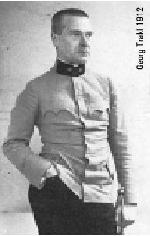
Georg Trakl werd op 3 februari 1887 in het conducteurshuis aan de Waagplatz 2 in Salzburg geboren. Zijn vader, Tobias Trakl, was een handelaar in ijzerwaren en zijn moeder, die ook psychische problemen had, was Maria Catharina Trakl, (meisjesnaam Halik). Voorts had hij nog drie broers en drie zussen. Margarethe (doorgaans Grethe genoemd) stond hem het naast, zelfs zodanig dat sommigen een incestueuze verhouding vermoeden. Zijn jeugd bracht hij door in Salzburg. Vervolgens bezocht hij van 1897 tot 1905 het humanistische gymnasium. Om toch een academische opleiding te kunnen volgen, werkte hij tot 1908 in de praktijk bij een apotheker. Sommigen vermoedden dat hij dit vooral deed om zichzelf opiaten te kunnen verschaffen. Bij het uitbreken van WO I werd Trakl als medicus naar het front in Galicië (heden ten dage in Oekraïne en Polen) gestuurd. Zijn gemoedsschommelingen leidden tot geregelde uitbraken van depressie, die verergerd werden door de afschuw die hij voelde voor de verzorging van de ernstig verwonde soldaten. De spanning en druk dreven hem ertoe een suïcidepoging te ondernemen, welke zijn kameraden nochtans verhinderden. Hij werd in een militair ziekenhuis opgenomen in Kraków, alwaar hij onder strikt toezicht geplaatst werd.Trakl verzonk daar in nog zwaardere depressies en schreef Ficker om advies. Ficker overtuigde hem ervan dat hij contact moest opnemen met Wittgenstein, die inderdaad op weg ging na Trakls bericht te hebben ontvangen. Op 4 november 1914, drie dagen voordat Wittgenstein aan zou komen, overleed hij echter aan een overdosis cocaïne
Paul Celan
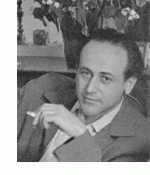
Paul Celan werd onder de naam Paul Antschel op 23 november 1920 geboren in Czernowitz, toentertijd de hoofdstad van de Roemeense Boekovina, nu behorend bij de Oekraïne. Paul Celans ouders waren Duitssprekende joden die hun zoon joods opvoedden en hem naar Duitse christelijke scholen stuurden. In 1942 werden Celans ouders door de Duitse bezetter naar een werkkamp gedeporteerd en daar vermoord. Hijzelf wist aanvankelijk onder te duiken, maar moest vanaf juli 1942 in een werkkamp dwangarbeid verrichten. Celan overleefde de oorlog. Via Boekarest en Wenen vestigde Celan zich in 1948 in Parijs. Daar was hij werkzaam als dichter, vertaler en doceerde hij aan de prestigieuze Ecole Normale Supérieure. Vermoedelijk op 20 april 1970 beëindigde hij zijn leven zelf door in de Seine te springen.
Gerard Reve
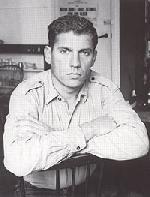
Gerard Reve over: Medearbeiders ”God is in de mensen, de dieren, de planten en alle dingen - in de schepping, die verlost moet worden of waaruit God verlost moet worden, door onze arbeid, aangezien wij medearbeiders van God zijn.” Openbaring ”Tja, waar berust elk godsbegrip op, elke vorm van religie? Op een openbaring, dat wil zeggen op een psychische ervaring van zulk een dwingende en onverbiddelijke kracht, dat de betrokkene het gevoel heeft, niet dat hij een gedachte of een visioen heeft, maar dat een gedachte gedachte of visioen hem bezit en overweldigt.”
Simon Vestdijk
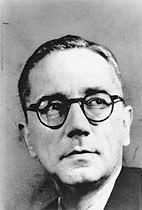
Simon Vestdijk (Harlingen, 17 oktober 1898 – Utrecht, 23 maart 1971) was een Nederlands romancier, dichter, essayist en vertaler. Zijn jeugd te Harlingen en Leeuwarden beschreef hij later in de Anton Wachter-cyclus. Van jongs af aan logeerde hij regelmatig bij zijn grootouders in Amsterdam, waar hij zich in 1917 aan de Universiteit van Amsterdam inschrijft als student in de medicijnen. Tijdens zijn studie die van 1917 tot 1927 duurde, leerde hij Jan Slauerhoff kennen.Tot 1932 is hij als arts in praktijken door heel Nederland werkzaam. In 1932 volgt zijn officiële schrijversdebuut met de uitgave van de bundel Verzen in De Vrije Bladen. Doorslaggevend voor Vestdijks uiteindelijke keuze voor de literatuur is zijn ontmoeting in 1932 met Eddy Du Perron en Menno ter Braak. Deze ontmoeting had tot resultaat dat hij redactielid werd van het tijdschrift Forum Kort daarop, in 1933, wordt zijn eerste novelle, De oubliette, uitgegeven. In hetzelfde jaar schrijft hij Kind tussen vier vrouwen, dat, eerst geweigerd door de uitgever, later de basis zal vormen voor de eerste drie delen van de Anton Wachter-romans. In 1951 ontvangt Vestdijk de P.C. Hooftprijs voor zijn in 1947 verschenen roman De vuuraanbidders. In 1957 wordt hij voor het eerst door het PEN-centrum voor Nederland voorgedragen voor de Nobelprijs voor de Literatuur, die hij echter nooit zal krijgen. Op 20 maart 1971 wordt hem de Prijs der Nederlandse Letteren toegekend, maar voor hij deze kan ontvangen overlijdt hij op 23 maart te Utrecht op 72-jarige leeftijd. Vestdijk was auteur van ca. 200 boeken. Vanwege deze enorme productie noemde de dichter Adriaan Roland Holst hem 'de man die sneller schrijft dan God kan lezen'. Andere belangrijke boeken van Simon Vestdijk zijn: "Kind van stad en land" (1936), "Meneer Visser's hellevaart" (1936), "Ierse nachten" (1946), "De toekomst de religie" (1947), "Pastorale 1943" (1948), "De koperen tuin" (1950), "Ivoren wachters" (1951), "Essays in duodecimo" (1952) en "Het genadeschot" (1964).
K.P. Kavafis K.P. Kavafis werd als kind van Griekse ouders, afkomstig uit Konstantinopel, geboren in 1863 in Alexandrië (tot vandaag een Griekse enclave) waar hij ook het grootste deel van zijn leven woonde en werkte. Twee jaar na de dood van zijn vader verhuist het gezin in 1872 naar Engeland om na een verblijf van vijf jaar naar Alexandrië terug te keren. Vanwege ongeregeldheden in Egypte vlucht het gezin in 1882 naar Konstantinopel, om na drie jaar opnieuw naar Alexandrië terug te gaan. In de jaren die volgen maakt Kavafis reizen naar Parijs, Londen en in 1901 zijn eerste reis naar Griekenland, in latere jaren gevolgd door nog enkele bezoeken. Op de dag van zijn zeventigste verjaardag, in 1933 sterft Kavafis in Alexandrië. De roem kwam voor Kavafis pas na zijn dood, dus postuum. Deels is dat toe te schrijven aan zijn eigen handelswijze. Hij was uiterst terughoudend met de publicatie van zijn gedichten, liet af en toe een enkel gedicht afdrukken in een literair tijdschrift, gaf in eigen beheer enkele bundels met een stuk of twintig gedichten uit en het merendeel van zijn poëzie schonk hij op losse bladen aan zijn beste vrienden.
Thomas Mann
Thomas Mann, de jongere broer van Heinrich Mann, werd geboren op 6 juni 1875 in Lübeck. Hij was de tweede zoon van de graankoopman Thomas Johann Heinrich Mann welke later één van de senatoren van Lübreck werd. Zijn moeder Julia (geboren da Silva-Bruhns) was Duits-Braziliaans van Portugees Kreoolse afkomst. In 1894 debuteerde Thomas Mann met de novelle "Gefallen". Toen Thomas Mann met 21 jaar eindelijk volwassen was en hem dus geld van zijn vaders erfenis toestond - hij kreeg ongeveer 160 tot 180 goldmark per jaar - besloot hij dat hij genoeg had van al die scholen en instituties en werd onafhankelijk schrijver. Kenmerkend voor zijn stijl zijn de ironie, de fenomenale taalbeheersing en de minutieuze detailschildering. Manns reputatie in Duitsland was sterk wisselend. Met zijn eerste roman, Buddenbrooks (1901), had hij een enorm succes, maar door zijn sceptische houding tegenover Duitsland na de Eerste Wereldoorlog veranderde dit volledig. Stelde hij zich tot aan de jaren twintig apolitiek op (Betrachtungen eines Unpolitischen, 1918), meer en meer raakte hij bij het Politiek gebeuren betrokken. Zijn afkeer van het nationaal socialisme groeide, zijn waarschuwingen werden veelvuldiger en heftiger. In 1944 accepteerde hij het Amerikaanse staatsburgerschap. Tussen 1943 en 1947 schreef Mann Doktor Faustus (zie Faust), de roman van de 'Duitse ziel' in de gecamoufleerd geschilderde omstandigheden van de 20ste eeuw. In 1947 bezocht hij voor het eerst sinds de Oorlog Europa, twee jaar later pas Duitsland. In 1952 vertrok hij naar Zwitserland. Op 12 augustus 1955 stierf hij in Zürich. Twintig jaar na zijn dood, in aug. 1975, is zijn literaire nalatenschap geopend: dagboekaantekeningen van 15 maart 1933 tot 29 juli 1955, alsmede notities uit de jaren 1918 tot en met 1921.Belangrijke werken zijn: Der Zauberberg, Der Tod in Venedig, Dokter Faustus , Joseph und seine Brüder en Die Bekenntnisse des Hochstaplers Felix Krull.
Rainer Maria Rilke
Rilke werd op 4 december 1875 geboren in Praag. Hij had al naam gemaakt als dichter met zijn bundels Das Stundenbuch en Das Buch der Bilder, toen hij de literaire wereld versteld deed staan en wereldfaam verwierf met de publicatie van zijn twee delen Neue Gedichte in 1907 en 1908. Hij verzamelde daarin het beste werk uit een van zijn vruchtbaarste periodes, die hij grotendeels doorbracht in Parijs. Rilke was daar diep onder de indruk gekomen van Rodin, bij wie hij een tijdlang in dienst was als particulier secretaris. Rodin, zei hij later, had hem leren kijken. Dit kijken kwam neer op intense concentratie, om het mysterie te kunnen zien ‘achter de schijnbare werkelijkheid'. Latere en rijpere werken als Duineser Elegien (1912-1923) en het ronduit schitterende Die Sonette an Orfeus (1924) illustreren Rilkes metafysische visie op het onzegbare, dat haar verwoording vindt in een hermetische muzikale taal. Op 29 december 1926 overlijdt Rilke in het sanatorium in Val-Mont aan de gevolgen van leukemie. Enkele dagen later wordt hij, overeenkomstig zijn wens, begraven op het kerkhof van Raron.
* * * * * * * * * * * * * * * *
Romenu
Over literatuur, gedichten, kunst en cultuur
23-09-2016
Inge Boulonois
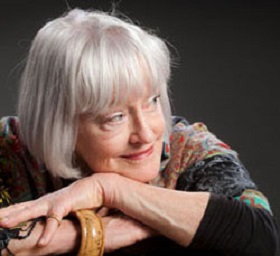
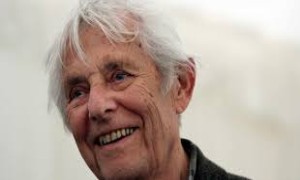
De Nederlandse dichteres en schilderes Inge Boulonoiswerd geboren in Alkmaar op 23 september 1945. Na de middelbare school volgde zij een kunstenaarsopleiding aan de Academie voor Beeldende Kunsten te Arnhem. In 1988 studeerde ze af als waarnemingspsycholoog aan de Universiteit in Nijmegen. In 2000 begon ze met het schrijven van gedichten. Ze debuteerde in 2004 met de bibliofiele bundel “Ooglijke tijd”. In 2007 volgde de bundel “Haast feestelijk”. Verder bundels zijn “Het geluk van een tafel” (2011), “Heerhugowaardse gedichten” (2014), “Lichte en Bonte Gedichten” (2015) en “Idioom van geluk” (2016).Boulonois schrijft zowel vrije als gebonden verzen, “serieuze” als lichtvoetige gedichten. In haar light verses overheerst humoristische maatschappijkritiek. Haar light verses worden door haar zelf geïllustreerd. Daarnaast maakt ze animaties van gedichten en beeldsonnetten. Sinds 2005 analyseert ze poëzie voor Meander op klassiekegedichten.net. Van 2011 tot 2015 was ze officieel stadsdichter van Heerhugowaard. Ze schrijft wekelijks een actueel snelsonnet voor gedichten.nl. Haar poëzie werd opgenomen in diverse literaire tijdschriften en bloemlezingen. Daarnaast zijn haar gedichten meermalen gelauwerd in Nederland en Vlaanderen: Plantage Poëzieprijs (2005), Concept Poëzieprijs (2006), Guido Wulmsprijs (2006), Culturele Centrale Boontje Poëzieprijs (2008), Poëzieprijs Merendree (2009) en de Nieuwegeinse Poëzieprijs (2009).
Kleinood
Hoe het als terloops de eigen plaats vond in een stenen wereld, niemand in de weg, net tussen macadam en stoeprand. Kwetsbaarder dan vlees en bloed
bestaande dankzij minder dan één vingerhoed bijeen gewaaide aarde.
Uit alle macht de deining van de dag verdragend, het steeds aanwezige gevaar van misstappende hakken, van roekeloos verkerend blik in de haast van haast te laat.
Door de aardbol net als wij heel stevig aan zijn boezem gedrukt terwijl bloot zonlicht het een grootspraak van jawelste geeft: Klein Hoefblad, karaatgeel bloeiend –
Verpleeghuis
Zo'n plaats waar je liever niet, maar als het thuis niet meer omdat er door je hoofd te veel verleden slingert, dan liever hier dan elders.
Dit huis slaat zijn armen veilig om je heen. Je mag er tijd verliezen, door bezoekers wakker worden gekust en beesten strelen in de patio.
Terwijl je woorden moe van het bedoelen worden, zinnen zich vergeten en je lippen een geheimtaal vinden, waait in je al meer stilte aan, totdat –
En tot die tijd, ook als je dat niet meer beseft, hangen in je eigen kamer boven het bed de foto's van alle dierbaren, je kleinkinderen lachend. Aan jou, hoe dan ook, gehecht –
The gods, old as night, don't trouble us. Poor weeping Venus! Her pubic hairs are grey, and her magic love girdle has lost its spring. Neptune wonders where he put his trident. Mars is gaga - illusory vultures on the wing.
Pluto exhumed, blinks. My kind of world, he thinks. Kidnapping and rape, like my Front Page exploits adroitly brutal - but he looks out of sorts when other unmanned gods shake their heads tut tut, respond boastingly, boringly anecdotal.
Diana has done a bunk, fearing astronauts. Saturn, Time on his hands, stares at nothing and nothing stares back. Glum Bacchus talks ad nauseam of cirrhosis and small bald Cupid, fiddling with arrows, can't recall which side the heart is.
All the old gods have become enfeebled, mere playthings for poets. Few, doze or daft, frolic on Parnassian clover. True, sometimes summer light dies in a room - but only a bearded profile in a cloud floats over.
Dannie Abse (Cardiff, 22 september 1923 – 28 september 2014) Portret door Peter Douglas Edwards, 1980
Door 't burger-huis op laten middag traden Wij de open lucht in, waar seringen-geur Hing over de achterdeur en lente-wind Stil witte wolken dreef door 't hemelblauw.
Een kleine stadse tuin, alzijds bemuurd Door grauwe steen, en waar een enge ring Groen gras en witte kiezel 't perk Veelkleurge bloemen, 't éénge, rond omsloot.
Luwte beving ons, zon op achtermuur Scheen goud, geluid van schelpjes aan de zee Maakte de kiezel onder 't zachte gaan.
Seringenblaadjes streelden langs ons heen, Rozen, violen, en purpre papaver Bloeiden, en ginds in killen schaduwhoek De schuchtre blanke lelietjes-van-dalen.
Zó rijk, zó schoon leefde in die lutle tuin De volle lente, dat ik dralend toef Voor 'k met een klánk nog de herinnering Diepst doe herleven: blijde gekwinkel Van klokkentoren daalde spelend neer Langs steile muur, door luwte in 't loof, verzellend Ons stille spreken. Toren verborgen Achter de muren, slechts een enkle dag, Een feestdag, deed gij meerder dan 't gewoon, Niet meer bespeurde, daaglijks zelfde, tinklen, En zong ge, telkens weer, de uren door...
De zoele wind en 't heldre spelen wiegden Mijn ziel in sluimring, makend zon en bloemen, Gras-rand en pad tot kleurig droomtafreel.
Lodewijk van Deyssel (22 september 1864 - 26 januari 1952)
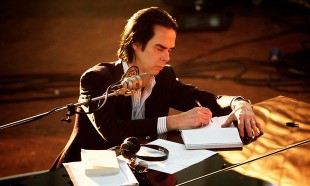
De Australische singer / songwriter, dichter, schrijver en acteur Nicholas Edward Cave werd geboren in Warracknabeal op 22 september 1957. Zie ook alle tags voor Nick Cave op dit blog.
Uit:And the Ass Saw the Angel
“And I know why our friendship must be kept a secret. Or they will kill You like they killed You in the Bible. And then we could not be together. If not for them we would live in this valley together. As best friends. But we must be careful, Jesus. I think I would die if anything happened to You...' - she cried ah think, for ah could hear her little sobs as she spoke - '...just close my eyes and die.' And she let fall a heavy tear, and it passed through the slats and exploded upon mah face, just below the right cheek. And as the droplet began to roll, ah caught it with mah tongue. And ah was shocked momentarily by that tear's sweetness, having known them only as bitter things - only bitter things - always bitter things.” (...)
“...because once you've got one scar on your face or your heart, its only a matter of time before someone gives you another - and another - until a day doesn't go by when you aren't being bashed senseless, nor a town that you haven't been run out of, and you get to be such a goddamn mess that finally it doesn't feel right unless you're getting the Christ beaten out of you - amd within a year of that first damming fall, those first down borne fists, your first run out, you wind up with flies buzzing around your eyes, back at the same place, the same town, deader than when you left, bobbiong around in the swill - a dirty deadbeat whore in a roadside ditch. But a little part of you deosn't die. A little part of you lives on. And you make an orphan of that corrupt and contemtible part, dumping it right smack in the laps of the ones who first robbed you of your sweetness, for it is the wicked fruit of their crimes, it is their blood, their sin, it belongs there, this child of blood, this spawn of sin...”
"David, this has to stop," Bettina had said to him in the History Tutorial Room one day, seven years ago. "You are a married man and I'm going to be married too. The ceremony is next week. I wanted to tell you earlier but didn't like to, because I didn't want to upset you. You are the only man I'll ever really love but I have to think of my future. We have to be realistic. You could never support two homes in any comfort and I'm just not cut out for employment. I'm not that kind of person." He'd thought his heart would break. He was surprised it went on beating. Later he'd told himself he was lucky to be out of a trivial, passing affair with such an unfeeling, whimsical person, but he'd never really believed himself. The truth was that he'd taken no real pleasure since in Milly's straight hair and earnest face. He could see Milly was good, but what a man wanted was something more than honest worth. Sometimes he felt guilty because others called his wife Frilly Mood, ironically, but then he'd tell himself she'd always been like that. Not his doing. His blood ran cold--I say this advisedly. When David heard Bettina's voice--last heard on the floor behind the sofa in the History Tutorial Room--echoing through the shop at two minutes past four, he felt a chill strike down his head to his right shoulder, into his arm and down to his fingers, and he had the feeling that if that section of blood didn't warm up before it got back up to his heart, that organ would freeze and this time stop once and for all. So much a heart can stand, no more. David turned his back on his customers, lest he be seen and recognised by Bettina, and busied himself looking for a Peruvian crucifixion scene, grateful that his heart had survived the shock. But not before he had seen the little girl obediently leave her mother's side and head through shopping bags and spring-clad elbows towards her father. Bettina, near the door, was clearly interested in purchasing the papier-mache bowl at 65 [pounds sterling]; Daddy flicked through Easter cards at the back of the shop."
Your anvil is the earth, spanning the sky your arm describes the orbit of the sun. I’ve worked seventy-six years on the high scaffold but could not find you, mighty one.
I shape the marble, but it goes awry into dead idols when the work is done. The dreamy rainbows now elude my eye that used to see them under every stone.
Now I’m a weathered rock, it is my turn to be ill-temperaed, tortured, taciturn, but in my soul the rainbows brightly shine.
How can I breach my body’s prison gate? Strike me, if you can love this reprobate: I am the marble, Stone-carver Divine!
My English Reader
In Toronto the locals tried to warn me very soon that young roughs rob pedestrians in parks and lonely streets, but I didn’t listen. Then on a spring afternoon, carrying a bagful of milk, various cheeses and meats,
I was walking on my way home. A tall young African ran straight towards me, grabbed my shopping bag as he got near and seized me firmly. No doubt, he will stab me, if he can. He was panting after his spurt. I was trembling with fear.
Is he going to strangle me, this barbarous disgrace? I watched his heavy lips become a smile across his face. He was enjoying it. Shall I shout? “He kills me, the beast!”
But the street was empty. There was no help within sight. He went on squeezing me harder and said, as he squeezed: “Let me embrace you. I adore the poems you write.”
Vertaald door Peter Zollman
György Faludy (22 september 1910 – 1 september 2006)
De Duitse dichter en schrijver Hans Leip werd geboren op 22 september 1893 in Hamburg. Zie ook alle tags voor Hans Leip op dit blog.
Uit: Die Nächtezettel der Sinsebal
"Nun hebt sich meine Decke steil. Sie liegt der schwarzen Nacht auf. O du süßer Tisch! War ich ein klein Kind, daß ich darunter kroch, in Dielenritzen die Nadeln stach, die meiner Mutter vom Schoß fielen. Silberne Nadelknopfreihe wie sanfte Abendperlen, die nicht weh tun, gebettet im Feudeldreck. Wann war denn die Zeit, daß die Spitzen sich wandten, in meine Finger stachen, in meine Schultern, in meine Knie, in meine roten Lippenkreise? Kleine Nacht! Ach, kleine Sammetpfotennacht, wie schwarz machst du die Tropfen Blut, darob doch meine Augen schlafen sollen. Bist du verliebt in mich? O du, verliebt, daß ich an dich und an keins gedenken soll. Still! Nun ist meine Hand dir über! Schmal steigt sie über dich, scharf auf, hell von Mond. Nun bist du hart zurück, so flach, so steil gestreckt. Was will meine weiße Decke hinter meiner Hand? Sie spreitet sich dir an, du trägst sie, starr dir angelegt, kleine, einsame Nacht. Was geht meine Hand von mir? Ist meine Hand mir über? Nun legt sie alle Nadeln von mir fort, aus meinen Fingern, aus meinen Schultern, meinen Knien, aus meinen roten Lippenringen, die im Herzen sich verflechten. Hatte ich ein Nadelkissen, hergeweht ein Geschenk, war wie eins der kleinen Brüste, als ich sechzehn war. Nun liegt eine Hand mir breit gehöhlt. O Lust, sprich nicht von ferne! O andre Hand, du klirrst vom Schreiben der Stunden. Von allen Spitzen schreibt das schwarze Nachtblut, Wort, Schrei und das erstickte Nichts, auch den Pulsschlag, Liebster, als du schliefest, und die Geschichten zwischen Wand und Unerforschlichkeit. Nun hebt sich meine Decke wie ein Blatt. Nun ritzen alle Nadeln ihren Weg. Nun hebt sich meine Decke wie ein Buch. Nun blättern seine Seiten aus mir auf.”
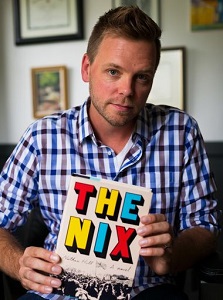
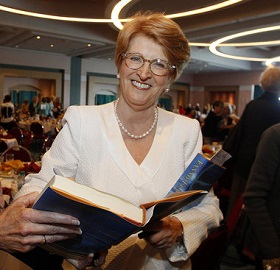
De Amerikaanse schrijver Nathan Hill werd geboren in Cedar Rapids, Iowa, in 1976 en groeide op in het Middenwesten, waar zijn grootouders als maïs-, soja- en veeboeren hadden gewerkt. Zijn familie verhuisde voortdurend toen hij opgroeide – naar Illinois, Missouri, Oklahoma en Kansas – terwijl zijn vader zich omhoog werkte naar het management bij Kmart. Boeken waren schaars bij hem thuis, maar zijn ouders verwenden hem met de Choose Your Own Adventure series. Vanaf de lagere school wilde Hill schrijver worden. In de tweede klas, schreef hij een verhaal over een dappere ridder proberen om een prinses te redden uit een spookkasteel: "The Castle of No Return" en hij illustreerde het zelf. Hij studeerde Engels en journalistiek aan de Universiteit van Iowa, waar hij studeerde bij de schrijfster Sara Levine. Hill probeerde de journalistiek voor een tijdje door te schrijven voor The Cedar Rapids Gazette, toen ging terug naar de University of Massachusetts, Amherst voor zijn M.F.A. aan. Hij publiceerde verhalen in een handvol bekende tijdschriften als The Iowa Review, Agni en The Gettysburg Review. Maar doorbreken in de New Yorkse literaire wereld was zwaarder dan hij had verwacht. Zijn verhalenbundel werd afgewezen door 38 literaire agenten. Toen de afwijzingen zich opstapelden begon Hill te wanhopen. Om zichzelf af te leiden, begon hij met het spelen van World of Warcraft, die al snel een obsessie werd. Hij stopte na een paar jaar met spelen en begon zich meer te richten op het schrijven en onderzoek doen voor "The Nix", een rommelig proces dat hij beschreef als “drie jaar van schrijven, zes jaar van onderzoek en ploeteren" Tegenwoordig werkt Hill als Associate Professor Engels aan de Universiteit van St. Thomas in St. Paul, Minnesota, waar hij creatief schrijven doceert en literatuurcursussen geeft.
Uit: The Nix
“Late Summer 1988 If Samuel had known his mother was leaving, he might have paid more attention. He might have listened more carefully to her, observed her more closely, written certain crucial things down. Maybe he could have acted differently, spoken differently, been a different person. Maybe he could have been a child worth sticking around for. But Samuel did not know his mother was leaving. He did not know she had been leaving for many months now—in secret, and in pieces. She had been removing items from the house one by one. A single dress from her closet. Then a lone photo from the album. A fork from the silverware drawer. A quilt from under the bed. Every week, she took something new. A sweater. A pair of shoes. A Christmas ornament. A book. Slowly, her presence in the house grew thinner. She’d been at it almost a year when Samuel and his father began to sense something, a sort of instability, a puzzling and disturbing and some-times even sinister feeling of depletion. It struck them at odd moments. They looked at the bookshelf and thought: Don’t we own more books than that? They walked by the china cabinet and felt sure something was missing. But what? They could not give it a name—this impression that life’s details were being reorganized. They didn’t understand that the reason they were no longer eating Crock-Pot meals was that the Crock-Pot was no longer in the house. If the bookshelf seemed bare, it was because she had pruned it of its poetry. If the china cabinet seemed a little vacant, it was because two plates, two bowls, and a teapot had been lifted from the collection. They were being burglarized at a very slow pace. “Didn’t there used to be more photos on that wall?” Samuel’s father said, standing at the foot of the stairs, squinting. “Didn’t we have that picture from the Grand Canyon up there?” “No,” Samuel’s mother said. “We put that picture away.” “We did? I don’t remember that.” “It was your decision.”
“He began his tour through the heart streets of Montreal. The streets were changing. The Victorian gingerbread was going down everywhere, and on every second corner was the half-covered skeleton of a new, flat office building. The city seemed fierce to go modern, as though it had suddenly been converted to some new theory of hygiene and had learned with horror that it was impossible to scarpe the dirt out of gargoyle crevices and carved grapevines, and therefore was determined to cauterize the whole landscape. But they were beautiful. They were the only beauty, the last magic. Breavman knew what he knew, that their bodies never died. Everything else was fiction. It was the beauty they carried. He remembered them all, there was nothing lost. To serve them. His mind sang praise as he climbed a street to the mountain. For the body of Heather, which slept and slept. For the body of Bertha, which fell with apples and a flute. For the body of Lisa, early and late, which smelled of speed and forests. For the body of Tamara, whose thighs made him a fetishist of thighs. For the body of Norma, goosefleshed, wet. For the body of Patricia, which he had still to tame. (…)
The jukebox wailed. He believed he understood the longing of the cheap tunes better than anyone there. The Wurlitzer was a great beast, blinking in pain. It was everybody's neon wound. A suffering ventriloquist. It was the kind of pet people wanted. An eternal bear for baiting, with electric blood. Breavman had a quarter to spare. It was fat, it loved its chains, it gobbled and was ready to fester all night. Breavman thought he'd just sit back and sip his Orange Crush. A memory hit him urgently and he asked a waitress for her pencil. On a napkin he scribbled: Jesus! I just remembered what Lisa's favorite game was. After a heavy snow we would go into a back yard with a few of our friends. The expanse of snow would be white and unbroken. Bertha was the spinner. You held her hands while she turned on her heels, you circled her until your feet left the ground. Then she let go and you flew over the snow. You remained still in whatever position you landed. When everyone had been flung in this fashion into the fresh snow, the beautiful part of the game began. You stood up carefully, taking great pains not to disturb the impression you had made. Now the comparisons. Of course you would have done your best to land in some crazy position, arms and legs sticking out. Then we walked away, leaving a lovely white field of blossom-like shapes with footprint stems.”
Leonard Cohen (Montréal, 21 september 1934) In 1988
“Bill Hodges isn’t the only one who took an instant dislike to Becky Helmington’s replacement. The nurses and orderlies who work in the Traumatic Brain Injury Clinic call it the Bucket, as in Brain Bucket, and before long Ruth Scapelli has become known as Nurse Ratched. By the end of her third month, she has gotten three nurses transferred for various small infractions, and one orderly fired for smoking in a supply closet. She has banned certain colorful uniforms as “too distracting” or “too suggestive.” The doctors like her, though. They find her swift and competent. With the patients she is also swift and competent, but she’s cold, and there’s an undertone of contempt there, as well. She will not allow even the most cataclysmically injured of them to be called a gork or a burn or a wipeout, at least not in her hearing, but she has a certain attitude. “She knows her stuff,” one nurse said to another in the break room not long after Scapelli took up her duties. “No argument about that, but there’s something missing.” The other nurse was a thirty-year veteran who had seen it all. She considered, then said one word…but it was le mot juste. “Mercy.” Scapelli never exhibits coldness or contempt when she accompanies Felix Babineau, the head of Neuro, on his rounds, and he probably wouldn’t notice if she did. Some of the other doctors have noticed, but few pay any mind; the doings of such lesser beings as nurses—even head nurses—are far below their lordly gaze. »
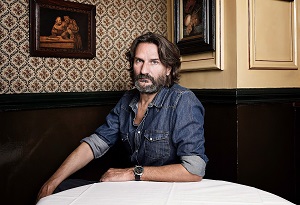
« Non, ce n’est pas une petite réunion. C’est la fin du monde en marche. On ne peut pas à la fois obéir au monde et le transformer. Un jour, on étudiera à l’école comment la démocratie s’est autodétruite. Dans cinquante ans, Alfred Duler sera poursuivi pour crimes contre l’humanité. Chaque fois que ce type emploie le mot «marché», il faut comprendre «gâteau». S’il dit «Études de marché», cela veut dire «Études du gâteau»; «économie de marché» signifie «économie du gâteau». Cet homme est favorable à la libéralisation du gâteau, il veut lancer de nouveaux produits sur le gâteau, se lancer à la conquête de nouveaux gâteaux, et n’oublie jamais de préciser que le gâteau est mondial. Il vous hait, sachez-le. Pour lui, vous n’êtes que du bétail à gaver, des chiens de Pavlov, tout ce qui l’intéresse c’est votre fric dans la poche de ses actionnaires (les fonds de pension américains, c’est-à-dire une bande de retraités liftés en train de crever au bord des piscines de Miami, Floride). Et que tourne le Meilleur des Mondes Matérialistes. J’ai prié Alfred de m’excuser à nouveau car je sentais que j’étais sur le point de saigner du nez. C’est le problème avec la cocaïne parisienne: elle est tellement coupée qu’il faut avoir les narines solides. Je sentais le sang affluer. Je me suis levé en reniflant à toute berzingue pour foncer aux chiottes et là, mon nez s’est mis à pisser comme jamais, il n’arrêtait pas de dégouliner, il y avait du sang partout, sur le miroir, sur ma chemise, sur le rouleau de serviette automatisé, sur le carrelage, et mes narines faisaient de grosses bulles rouges. Heureusement que personne n’est entré à ce moment-là, je me suis regardé dans la glace et j’ai vu mon visage ensanglanté, du rouge partout, sur le menton, la bouche, le col, le lavabo cramoisi, et j’avais du sang sur les mains — cette fois ça y est, ils avaient gagné, j’avais littéralement du sang sur les mains — et ça m’a donné une idée, alors j’ai écrit sur les murs de leurs chiottes «Pigs», «PIGS» sur la porte, et je suis sorti dans le couloir, pigs sur le contreplaqué, pigs sur la moquette, pigs dans l’ascenseur, et je me suis enfui, je crois que les caméras de surveillance doivent avoir immortalisé cet instant glorieux. Le jour où j’ai baptisé le capitalisme de mon propre sang."
Frédéric Beigbeder (Neuilly-sur-Seine, 21 september 1965)
“The game is to stare at it until they are cross-eyed, which seemed to them to be some sort of grand achievement. As far as amusements go, it is on a par with holding your breath until you pass out or dropping from a rope into the freezing swimming hole outside of town named the Blue Devil, so cold that even on a hot day when you hit the water the first shock jolts you to your eyeballs, stops your heart, and makes you see stars before your eyes. By the time you come out your body is so numb you can't feel where your legs are and your lips have turned blue, hence the name. But boys, being the insane creatures they are, cannot wait to come crawling out covered with goose bumps and do it all over again. These were some of the activities that thrilled Bobby to the core. However, for Bobby just life itself was exciting. And really at that time and that place what red-blooded American boy would not wake up every morning jumping for joy and ready to go? He was living smack-dab in the middle of the greatest country in the world-some said the greatest country that ever was or ever would be. We had just beaten the Germans and the Japanese in a fair fight. We had saved Europe and everyone liked us that year, even the French. Our girls were the prettiest, our boys the handsomest, our soldiers the bravest, and our flag the most beautiful. That year it seemed like everyone in the world wanted to be an American. People from all over the world were having a fit trying to come here. And who could blame them? We had John Wayne, Betty Grable, Mickey Mouse, Roy Rogers, Superman, Dagwood and Blondie, the Andrews Sisters, and Captain Marvel. Buck Rogers and Red Ryder, BB guns, the Hardy Boys, G-men, Miss America, cotton candy. Plus Charlie McCarthy and Edgar Bergen, Amos 'n' Andy, Fibber McGee and Molly, and anybody could grow up and become the president of the United States.”
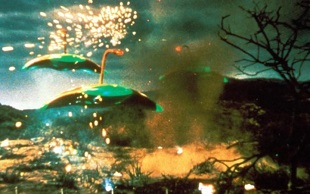
“Peculiar markings, as yet unexplained, were seen near the site of that outbreak during the next two oppositions. The storm burst upon us six years ago now. As Mars approached opposition, Lavelle of Java set the wires of the astronomical exchange palpitating with the amazing intelligence of a huge outbreak of incandescent gas upon the planet. It had occurred towards midnight of the twelfth; and the spectroscope, to which he had at once resorted, indicated a mass of flaming gas, chiefly hydrogen, moving with an enormous velocity towards this earth. This jet of fire had become invisible about a quarter past twelve. He compared it to a colossal puff of flame suddenly and violently squirted out of the planet, "as flaming gases rushed out of a gun." A singularly appropriate phrase it proved. Yet the next day there was nothing of this in the papers except a little note in the Daily Telegraph, and the world went in ignorance of one of the gravest dangers that ever threatened the human race. I might not have heard of the eruption at all had I not met Ogilvy, the well-known astronomer, at Ottershaw. He was immensely excited at the news, and in the excess of his feelings invited me up to take a turn with him that night in a scrutiny of the red planet. In spite of all that has happened since, I still remember that vigil very distinctly: the black and silent observatory, the shadowed lantern throwing a feeble glow upon the floor in the corner, the steady ticking of the clockwork of the telescope, the little slit in the roof--an oblong profundity with the stardust streaked across it. Ogilvy moved about, invisible but audible. Looking through the telescope, one saw a circle of deep blue and the little round planet swimming in the field. It seemed such a little thing, so bright and small and still, faintly marked with transverse stripes, and slightly flattened from the perfect round. But so little it was, so silvery warm--a pin's-head of light! It was as if it quivered, but really this was the telescope vibrating with the activity of the clockwork that kept the planet in view. As I watched, the planet seemed to grow larger and smaller and to advance and recede, but that was simply that my eye was tired. Forty millions of miles it was from us--more than forty millions of miles of void. Few people realise the immensity of vacancy in which the dust of the material universe swims. Near it in the field, I remember, were three faint points of light, three telescopic stars infinitely remote, and all around it was the unfathomable darkness of empty space.”
H. G. Wells (21 september 1866 - 13 augustus 1946) Scene uit de gelijknamige film uit 1953
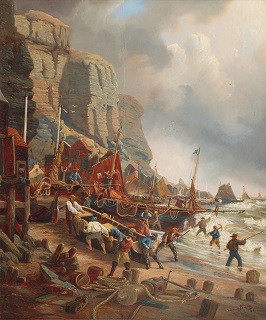
Der Fische viel gefangen sind, Die Nacht wird dunkel, nass der Wind; Bald ab vom Strande strömt die Flut, Drum rudert rasch und rudert gut, Damit wir zeitig landen.
Es pfeift der Wind bei hohler See, Nicht Mond, nicht Stern ist in der Höh'; Doch halten fest wir im Gesicht Auf fernem Turm der Heimat Licht, Wohin wir oft uns fanden.
Bald sind wir nah, nun senkt das Blei, Noch alle Not ist nicht vorbei, Hier liegen flach der Klippen viel, Und ist fürwahr kein Kinderspiel, Bei dunkler Nacht zu stranden.
Mit Licht die Unsern sind am Strand! Bald ziehn die Boote wir zu Land; Dann heitre Mahlzeit machen wir, Und der Gefahren lachen wir, Die glücklich wir bestanden.
Johann Peter Eckermann (21 september 1792 - 3 december 1854) Englische Fischer an der Küste Helgolands door Hans Bohrdt, 1883
My Computer Ate My Homework, Dolce far niente, Kenn Nesbitt
Dolce far niente
"Chateau on the Lake" Computer Graphic Painting, door Alexander Peverett, 2011.
My Computer Ate My Homework
My computer ate my homework. Yes, it’s troublesome, but true. Though it didn’t gnaw or nibble and it didn’t chomp or chew. It digested it completely. It consumed my homework whole, when I pressed the Shift and Enter keys instead of Shift-Control.
It devoured my hours of typing, every picture, chart and graph, and it left me most unsettled when I thought I heard it laugh.
I would guess it was a virus, or it could have been a worm, that deleted every bit but didn’t prompt me to confirm.
I suppose I might have pressed Escape instead of pressing Save, but, regardless, my computer now will never misbehave.
For I found a good solution and I smiled to hear the crash, when I chucked it out the window and it landed in the trash.
Kenn Nesbitt (Berkeley, 20 februarie 1962) Berkeley. Alexander Peverett werd geboren in Berkeley.
All winter your brute shoulders strained against collars, padding and steerhide over the ash hames, to haul sledges of cordwood for drying through spring and summer, for the Glenwood stove next winter, and for the simmering range.
In April you pulled cartloads of manure to spread on the fields, dark manure of Holsteins, and knobs of your own clustered with oats. All summer you mowed the grass in meadow and hayfield, the mowing machine clacketing beside you, while the sun walked high in the morning;
and after noon's heat, you pulled a clawed rake through the same acres, gathering stacks, and dragged the wagon from stack to stack, and the built hayrack back, uphill to the chaffy barn, three loads of hay a day from standing grass in the morning.
Sundays you trotted the two miles to church with the light load a leather quartertop buggy, and grazed in the sound of hymns. Generation on generation, your neck rubbed the windowsill of the stall, smoothing the wood as the sea smooths glass.
When you were old and lame, when your shoulders hurt bending to graze, one October the man, who fed you and kept you, and harnessed you every morning, led you through corn stubble to sandy ground above Eagle Pond, and dug a hole beside you where you stood shuddering in your skin,
and lay the shotgun's muzzle in the boneless hollow behind your ear, and fired the slug into your brain, and felled you into your grave, shoveling sand to cover you, setting goldenrod upright above you, where by next summer a dent in the ground made your monument.
For a hundred and fifty years, in the Pasture of dead horses, roots of pine trees pushed through the pale curves of your ribs, yellow blossoms flourished above you in autumn, and in winter frost heaved your bones in the ground - old toilers, soil makers:
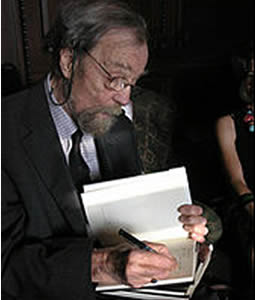
O Roger, Mackerel, Riley, Ned, Nellie, Chester, Lady Ghost.
Uit:Zo begint het slechte (Vertaald door Aline Glastra van Loon)
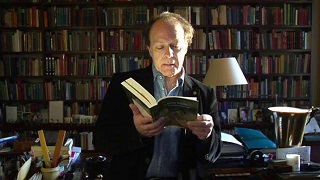
“Eduardo Muriel droeg een dun snorretje, alsof hij dat had laten staan toen de acteur Errol Flynn een voorbeeld was en daarna had vergeten het te rectificeren of voller te laten worden, als een van die mannen met vaste gewoontes wat betreft hun uiterlijke verschijning, die niet beseffen dat de tijd voorbijgaat en dat de modes veranderen of dat ze verouderen – het is alsof ze daar niets mee te maken hebben en het uitsluiten, alsof ze zich veilig voelen voor het verstrijken van de tijd –, en tot op zekere hoogte hebben ze gelijk dat ze zich geen zorgen maken en er geen aandacht aan besteden: daar ze zich niet aanpassen aan hun leeftijd, houden ze die binnen de perken; daar ze er wat betreft hun uiterlijk niet aan toegeven, aanvaarden ze die uiteindelijk niet, en op die manier worden ze wel belaagd en benaderd door de vreeswekkende jaren – die het tegen vrijwel iedereen opnemen –, maar die durven zich hen niet toe te eigenen, nestelen zich niet in hun binnenste en tasten ook hun verschijning niet aan, bedekken die slechts met heel lichte natte sneeuw of schemerduister. Hij was lang, tamelijk veel langer dan zijn generatiegenoten gemiddeld waren, nog die van de generatie van mijn vader of de daaropvolgende. Daardoor zag hij er op het eerste gezicht sterk en goedgebouwd uit, hoewel zijn gestalte niet typisch mannelijk was: voor zijn lengte een beetje smal in de schouders, waardoor hij breed in de heupen leek, hoewel die niet vreemd uitstaken en hij totaal niet dikbuikig was, en met een paar erg lange benen waar hij geen raad mee wist wanneer hij zat: als hij ze over elkaar sloeg (en dat deed hij al met al het liefste), bereikte de voet van het bovenste been op natuurlijke wijze de grond, iets waar sommige vrouwen, die trots zijn op hun kuiten – ze willen niet dat de ene hangend gezien wordt, of dikker gemaakt of gedeformeerd door de knie –, in slagen met behulp van hoge hakken en door ze op een onnatuurlijke manier te verdraaien. Vanwege die smalle schouders droeg Muriel gewoonlijk colberts met schoudervullingen die niet erg opvielen, geloof ik, ofwel de kleermaker maakte ze voor hem in de vage vorm van een omgekeerde trapeze (in de jaren zeventig en tachtig van de vorige eeuw, toen dat niet meer zo gebruikelijk was, ging hij nog naar de kleermaker of kwam die bij hem thuis).”
“Het kasteel van ‘meneer den b'ron’ stond boven op een mooi-begroeiden heuvel, vlak tegenover het kasteel van ‘meneer de groave’ dat zich insgelijks verhief boven op een mooi-begroeiden heuvel. Daaronder en daartusschen lag het dal, met het dorpje en de zacht door groene weilanden heen kronkelende rivier. Het kasteel van ‘meneer de groave’ was grooter en grootscher dan het kasteel van ‘meneer den b'ron’. Het had ouderwetsche koepels en torens en kanteelen en spiegelde zijn statige schoonheid in een der breede bochten van het stille water. Maar het minder grandioos kasteel van ‘meneer den b'ron’ was toch pittoresker gelegen: het heuveltje waarop het stond was ietwat hooger dan de andere heuvel; het zicht van daar uit ontvouwde zich ruimer en mooier over de gansche streek; en vrij dicht bij, als 't ware er bij behoorend, stond een oude, oude, houten molen: een molen die dateerde uit de middeneeuwen, gansch grijs en gansch verweerd, en die bij gunstig weer nog werkte, als een aartsvader die zijn knokkelige ledematen in beweging houdt om frisch te blijven. Daaronder lag het dorpje, en 't heette ‘Meulegem’. Heel héél oude papieren, die vergeeld en half vergaan lagen op den zolder van 't gemeentehuis getuigden ervan, dat de molen al lange jaren bestond vóór het dorpje, waaraan hij zijn naam had gegeven. De huizen, het kerkje, de kasteelen, dat was alles veel later gekomen. Maar de bewoners wisten daar niets of slechts weinig van af. Meulegem veranderde niet: wat hun ouders en hun voorouders gekend hadden bestond nog als vroeger en niets noemenswaard was er ooit bijgekomen. 't Leek wel of Meulegem zoo ineens, op één dag, kant en klaar was neergezet en voorbestemd om altijd zoo te blijven. Er was maar één straat. Zij kwam, als steenweg, kronkelend uit de velden en de bosschen en werd eerst dorpskom tusschen twee herbergen: het ‘Vosken’ en de ‘Nachtegaal’."
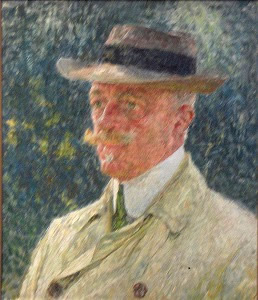
Cyriel Buysse (20 september 1859 - 25 juli 1932) Portret door Emile Claus, ca. 1924
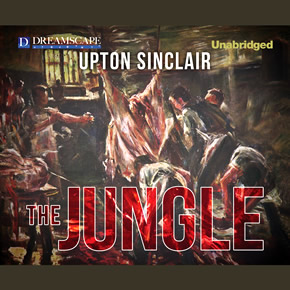
« Gradually there was effected a separation between the spectators and the guests--a separation at least sufficiently complete for working purposes. There was no time during the festivities which ensued when there were not groups of onlookers in the doorways and the corners; and if any one of these onlookers came sufficiently close, or looked sufficiently hungry, a chair was offered him, and he was invited to the feast. It was one of the laws of the veselija that no one goes hungry; and, while a rule made in the forests of Lithuania is hard to apply in the stockyards district of Chicago, with its quarter of a million inhabitants, still they did their best, and the children who ran in from the street, and even the dogs, went out again happier. A charming informality was one of the characteristics of this celebration. The men wore their hats, or, if they wished, they took them off, and their coats with them; they ate when and where they pleased, and moved as often as they pleased. There were to be speeches and singing, but no one had to listen who did not care to; if he wished, meantime, to speak or sing himself, he was perfectly free. The resulting medley of sound distracted no one, save possibly alone the babies, of which there were present a number equal to the total possessed by all the guests invited. There was no other place for the babies to be, and so part of the preparations for the evening consisted of a collection of cribs and carriages in one corner. In these the babies slept, three or four together, or wakened together, as the case might be. Those who were still older, and could reach the tables, marched about munching contentedly at meat bones and bologna sausages. The room is about thirty feet square, with whitewashed walls, bare save for a calendar. a picture of a race horse, and a family tree in a gilded frame. To the right there is a door from the saloon, with a few loafers in the doorway, and in the corner beyond it a bar, with a presiding genius clad in soiled white, with waxed black mustaches and a carefully oiled curl plastered against one side of his forehead. In the opposite corner are two tables, filling a third of the room and laden with dishes and cold viands, which a few of the hungrier guests are already munching.”
Upton Sinclair (20 september 1878 – 25 november 1968) Cover audioboek
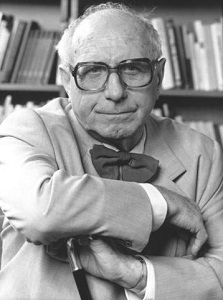
"Manchmal brachte Bruno mich arg in Verlegenheit, so zum Beispiel machte er sich immer über die Sozialisten lustig, die er nur die 'Radieschen' nannte. Der Ausdruck, irgendwo aufgelesen, hatte es ihm angetan, und ich erreichte es nicht, dass er wenigstens in Rysselgeerts Gegenwart darauf verzichtete, den Außenminister 'Großradieschen' zu nennen; Rysselgeert meinte, diese Abneigung richte sich allein gegen ihn, auch das hänge mit Brunos Eifersucht zusammen." (…)
"Die Überzeugung, dass man nur die Lebensbedingungen, nicht aber den Charakter des Menschen ändern könne, hatte ich viel weniger schmerzlich erworben als mein Freund. Dieser war in dem Glauben aufgewachsen, dass der verwirklichte Sozialismus einen besseren Menschen hervorbringen müsse als jede andere Gesellschaftsordnung. Die Einsicht, dass auch der in einem marxistischen Staat geborene Mensch eher zum Bösen als zum Guten neigt, von der er in Rußland schließlich überwältigt worden war, hatte ihn noch mehr erschüttert als der Bankrott des marxistischen Ideals in der Außenpolitik Moskaus. Unter vier Augen forderte er mir immer wieder ab, dass bei uns sauber regiert werde."
“MINNIE: There isn't much time to waste, is there? He has only another hour in England, and he isn't engaged yet. What did he really say in the smoking room last night? FRED: Nothing much. Except that he wanted a wife out there, and he wished he'd had an opportunity of seeing more of Patty. And on the strength of that, you telegraph straight off to Patty to come here and meet him. MINNIE: Naturally! Mr. Scobell will be a very rich man, and I wanted to give poor old Pat a chance. FRED: She has muddled her love affairs terribly. You might just give Pat a friendly caution. MINNIE: Her tongue? (FRED nods.) Yes, she does talk. FRED: And never says anything! But look at her mother! MINNIE: Oh, aunt's a downright horrid old bore! FRED: And Patty's just as bad! Poor old Lorry! MINNIE: Why poor old Lorry? FRED: Fancy being out alone in the wilds of Argentina, and having nothing to listen to but Patty's tongue for four or five years. (Bursts into a roar of laughter.) MINNIE: Hush! [Enter at back, LAWRENCE SCOBELL, about thirty-five, rather heavy, thick-set, stolid, quiet, cautious.] FRED: So you've turned up, Lorry? SCOBELL: Yes, there's a mistake about my cabin; wrong number; they've turned another fellow in.”
Henry Arthur Jones (20 september 1851 – 7 januari 1929) Affiche
I do not ask for mercy for understanding for peace And in these heavy days I do not ask for release I do not ask that suffering shall cease.
I do not pray to God to let me die To give an ear attentive to my cry To pause in his marching and not hurry by.
I do not ask for anything I do not speak I do not question and I do not seek I used to in the day when I was weak.
Now I am strong and lapped in sorrow As in a coat of magic mail and borrow From Time today and care not for tomorrow.
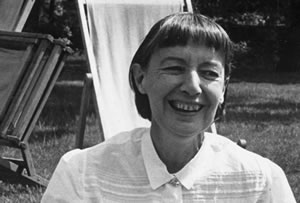
The Pleasures Of Friendship
The pleasures of friendship are exquisite, How pleasant to go to a friend on a visit! I go to my friend, we walk on the grass, And the hours and moments like minutes pass.
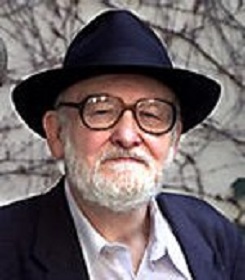
Ein Beben geht durch den Vers, die Seismographen schlagen aus, der Jamben straff gespannter Bogen bricht, der Reim, der in sich selbst verliebt, stirbt ab.
Die Sprache steht vor uns auf, nackt, und wirft das Halseisen zu Boden.
Vers libre, mit dir will ich die Wahrheit befreien, und wenn die Erde aufschreit, nachts, sei wie das Gras, das immer wieder sich
Tags:Donald Hall, Javier Marías, Cyriel Buysse, Upton Sinclair, Joseph Breitbach, Adolf Endler, Henry Arthur Jones, Stevie Smith, Hanns Cibulka, Romenu