Romenu is een blog over gedichten, literatuur en kunst Maar Romenu is ook een professionele freelance vertaler Du-Ne en Ne-Du http://www.roumen-vertalingen.nl/
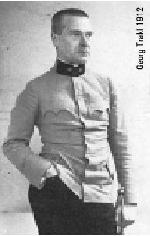
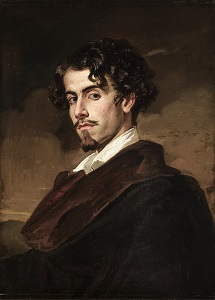
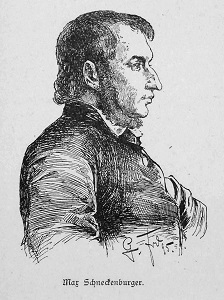
Georg Trakl werd op 3 februari 1887 in het conducteurshuis aan de Waagplatz 2 in Salzburg geboren. Zijn vader, Tobias Trakl, was een handelaar in ijzerwaren en zijn moeder, die ook psychische problemen had, was Maria Catharina Trakl, (meisjesnaam Halik). Voorts had hij nog drie broers en drie zussen. Margarethe (doorgaans Grethe genoemd) stond hem het naast, zelfs zodanig dat sommigen een incestueuze verhouding vermoeden. Zijn jeugd bracht hij door in Salzburg. Vervolgens bezocht hij van 1897 tot 1905 het humanistische gymnasium. Om toch een academische opleiding te kunnen volgen, werkte hij tot 1908 in de praktijk bij een apotheker. Sommigen vermoedden dat hij dit vooral deed om zichzelf opiaten te kunnen verschaffen. Bij het uitbreken van WO I werd Trakl als medicus naar het front in Galicië (heden ten dage in Oekraïne en Polen) gestuurd. Zijn gemoedsschommelingen leidden tot geregelde uitbraken van depressie, die verergerd werden door de afschuw die hij voelde voor de verzorging van de ernstig verwonde soldaten. De spanning en druk dreven hem ertoe een suïcidepoging te ondernemen, welke zijn kameraden nochtans verhinderden. Hij werd in een militair ziekenhuis opgenomen in Kraków, alwaar hij onder strikt toezicht geplaatst werd.Trakl verzonk daar in nog zwaardere depressies en schreef Ficker om advies. Ficker overtuigde hem ervan dat hij contact moest opnemen met Wittgenstein, die inderdaad op weg ging na Trakls bericht te hebben ontvangen. Op 4 november 1914, drie dagen voordat Wittgenstein aan zou komen, overleed hij echter aan een overdosis cocaïne
Paul Celan
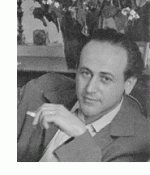
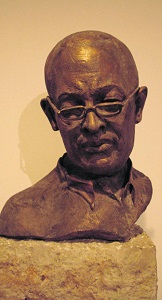
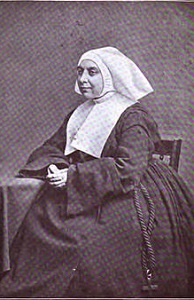
Paul Celan werd onder de naam Paul Antschel op 23 november 1920 geboren in Czernowitz, toentertijd de hoofdstad van de Roemeense Boekovina, nu behorend bij de Oekraïne. Paul Celans ouders waren Duitssprekende joden die hun zoon joods opvoedden en hem naar Duitse christelijke scholen stuurden. In 1942 werden Celans ouders door de Duitse bezetter naar een werkkamp gedeporteerd en daar vermoord. Hijzelf wist aanvankelijk onder te duiken, maar moest vanaf juli 1942 in een werkkamp dwangarbeid verrichten. Celan overleefde de oorlog. Via Boekarest en Wenen vestigde Celan zich in 1948 in Parijs. Daar was hij werkzaam als dichter, vertaler en doceerde hij aan de prestigieuze Ecole Normale Supérieure. Vermoedelijk op 20 april 1970 beëindigde hij zijn leven zelf door in de Seine te springen.
Gerard Reve
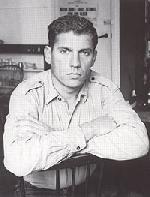
Gerard Reve over: Medearbeiders ”God is in de mensen, de dieren, de planten en alle dingen - in de schepping, die verlost moet worden of waaruit God verlost moet worden, door onze arbeid, aangezien wij medearbeiders van God zijn.” Openbaring ”Tja, waar berust elk godsbegrip op, elke vorm van religie? Op een openbaring, dat wil zeggen op een psychische ervaring van zulk een dwingende en onverbiddelijke kracht, dat de betrokkene het gevoel heeft, niet dat hij een gedachte of een visioen heeft, maar dat een gedachte gedachte of visioen hem bezit en overweldigt.”
Simon Vestdijk
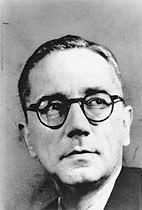
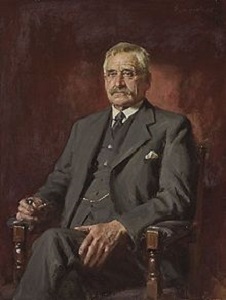
Simon Vestdijk (Harlingen, 17 oktober 1898 – Utrecht, 23 maart 1971) was een Nederlands romancier, dichter, essayist en vertaler. Zijn jeugd te Harlingen en Leeuwarden beschreef hij later in de Anton Wachter-cyclus. Van jongs af aan logeerde hij regelmatig bij zijn grootouders in Amsterdam, waar hij zich in 1917 aan de Universiteit van Amsterdam inschrijft als student in de medicijnen. Tijdens zijn studie die van 1917 tot 1927 duurde, leerde hij Jan Slauerhoff kennen.Tot 1932 is hij als arts in praktijken door heel Nederland werkzaam. In 1932 volgt zijn officiële schrijversdebuut met de uitgave van de bundel Verzen in De Vrije Bladen. Doorslaggevend voor Vestdijks uiteindelijke keuze voor de literatuur is zijn ontmoeting in 1932 met Eddy Du Perron en Menno ter Braak. Deze ontmoeting had tot resultaat dat hij redactielid werd van het tijdschrift Forum Kort daarop, in 1933, wordt zijn eerste novelle, De oubliette, uitgegeven. In hetzelfde jaar schrijft hij Kind tussen vier vrouwen, dat, eerst geweigerd door de uitgever, later de basis zal vormen voor de eerste drie delen van de Anton Wachter-romans. In 1951 ontvangt Vestdijk de P.C. Hooftprijs voor zijn in 1947 verschenen roman De vuuraanbidders. In 1957 wordt hij voor het eerst door het PEN-centrum voor Nederland voorgedragen voor de Nobelprijs voor de Literatuur, die hij echter nooit zal krijgen. Op 20 maart 1971 wordt hem de Prijs der Nederlandse Letteren toegekend, maar voor hij deze kan ontvangen overlijdt hij op 23 maart te Utrecht op 72-jarige leeftijd. Vestdijk was auteur van ca. 200 boeken. Vanwege deze enorme productie noemde de dichter Adriaan Roland Holst hem 'de man die sneller schrijft dan God kan lezen'. Andere belangrijke boeken van Simon Vestdijk zijn: "Kind van stad en land" (1936), "Meneer Visser's hellevaart" (1936), "Ierse nachten" (1946), "De toekomst de religie" (1947), "Pastorale 1943" (1948), "De koperen tuin" (1950), "Ivoren wachters" (1951), "Essays in duodecimo" (1952) en "Het genadeschot" (1964).
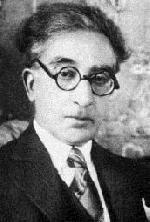
K.P. Kavafis K.P. Kavafis werd als kind van Griekse ouders, afkomstig uit Konstantinopel, geboren in 1863 in Alexandrië (tot vandaag een Griekse enclave) waar hij ook het grootste deel van zijn leven woonde en werkte. Twee jaar na de dood van zijn vader verhuist het gezin in 1872 naar Engeland om na een verblijf van vijf jaar naar Alexandrië terug te keren. Vanwege ongeregeldheden in Egypte vlucht het gezin in 1882 naar Konstantinopel, om na drie jaar opnieuw naar Alexandrië terug te gaan. In de jaren die volgen maakt Kavafis reizen naar Parijs, Londen en in 1901 zijn eerste reis naar Griekenland, in latere jaren gevolgd door nog enkele bezoeken. Op de dag van zijn zeventigste verjaardag, in 1933 sterft Kavafis in Alexandrië. De roem kwam voor Kavafis pas na zijn dood, dus postuum. Deels is dat toe te schrijven aan zijn eigen handelswijze. Hij was uiterst terughoudend met de publicatie van zijn gedichten, liet af en toe een enkel gedicht afdrukken in een literair tijdschrift, gaf in eigen beheer enkele bundels met een stuk of twintig gedichten uit en het merendeel van zijn poëzie schonk hij op losse bladen aan zijn beste vrienden.
Thomas Mann
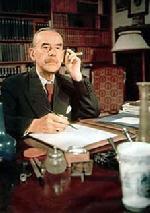
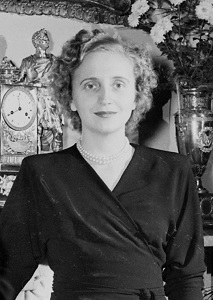
Thomas Mann, de jongere broer van Heinrich Mann, werd geboren op 6 juni 1875 in Lübeck. Hij was de tweede zoon van de graankoopman Thomas Johann Heinrich Mann welke later één van de senatoren van Lübreck werd. Zijn moeder Julia (geboren da Silva-Bruhns) was Duits-Braziliaans van Portugees Kreoolse afkomst. In 1894 debuteerde Thomas Mann met de novelle "Gefallen". Toen Thomas Mann met 21 jaar eindelijk volwassen was en hem dus geld van zijn vaders erfenis toestond - hij kreeg ongeveer 160 tot 180 goldmark per jaar - besloot hij dat hij genoeg had van al die scholen en instituties en werd onafhankelijk schrijver. Kenmerkend voor zijn stijl zijn de ironie, de fenomenale taalbeheersing en de minutieuze detailschildering. Manns reputatie in Duitsland was sterk wisselend. Met zijn eerste roman, Buddenbrooks (1901), had hij een enorm succes, maar door zijn sceptische houding tegenover Duitsland na de Eerste Wereldoorlog veranderde dit volledig. Stelde hij zich tot aan de jaren twintig apolitiek op (Betrachtungen eines Unpolitischen, 1918), meer en meer raakte hij bij het Politiek gebeuren betrokken. Zijn afkeer van het nationaal socialisme groeide, zijn waarschuwingen werden veelvuldiger en heftiger. In 1944 accepteerde hij het Amerikaanse staatsburgerschap. Tussen 1943 en 1947 schreef Mann Doktor Faustus (zie Faust), de roman van de 'Duitse ziel' in de gecamoufleerd geschilderde omstandigheden van de 20ste eeuw. In 1947 bezocht hij voor het eerst sinds de Oorlog Europa, twee jaar later pas Duitsland. In 1952 vertrok hij naar Zwitserland. Op 12 augustus 1955 stierf hij in Zürich. Twintig jaar na zijn dood, in aug. 1975, is zijn literaire nalatenschap geopend: dagboekaantekeningen van 15 maart 1933 tot 29 juli 1955, alsmede notities uit de jaren 1918 tot en met 1921.Belangrijke werken zijn: Der Zauberberg, Der Tod in Venedig, Dokter Faustus , Joseph und seine Brüder en Die Bekenntnisse des Hochstaplers Felix Krull.
Rainer Maria Rilke
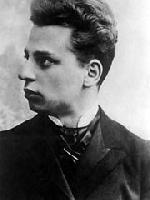
Rilke werd op 4 december 1875 geboren in Praag. Hij had al naam gemaakt als dichter met zijn bundels Das Stundenbuch en Das Buch der Bilder, toen hij de literaire wereld versteld deed staan en wereldfaam verwierf met de publicatie van zijn twee delen Neue Gedichte in 1907 en 1908. Hij verzamelde daarin het beste werk uit een van zijn vruchtbaarste periodes, die hij grotendeels doorbracht in Parijs. Rilke was daar diep onder de indruk gekomen van Rodin, bij wie hij een tijdlang in dienst was als particulier secretaris. Rodin, zei hij later, had hem leren kijken. Dit kijken kwam neer op intense concentratie, om het mysterie te kunnen zien ‘achter de schijnbare werkelijkheid'. Latere en rijpere werken als Duineser Elegien (1912-1923) en het ronduit schitterende Die Sonette an Orfeus (1924) illustreren Rilkes metafysische visie op het onzegbare, dat haar verwoording vindt in een hermetische muzikale taal. Op 29 december 1926 overlijdt Rilke in het sanatorium in Val-Mont aan de gevolgen van leukemie. Enkele dagen later wordt hij, overeenkomstig zijn wens, begraven op het kerkhof van Raron.
* * * * * * * * * * * * * * * *
Romenu
Over literatuur, gedichten, kunst en cultuur
18-02-2018
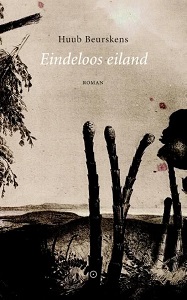
Nick McDonell, Robbert Welagen, Bart FM Droog, Maarten Mourik, Huub Beurskens, Gaston Burssens, Toni Morrison, Elke Erb, Charlotte Van den Broeck
“When dinner started, the children would go to the playroom and eat with the nannies. They lounged on heavy couches, watching movies until they fell asleep and the nannies went outside for cigarettes. Lyle especially loved these dinners and made a point of talking to everybody, lingering in the dining room rather than watching movies with the other children. He loved listening to adults talk. So did Mike, but he knew he didn't understand the way his older brother did. The adults sat and drank wine and laughed and smiled at one another in the fall candlelight. Many of them had started families late or had been married once before and had only recently started new ones. Jobs were interesting; there was much travel. There was a lot to talk about, and the subtext was that they were lucky to have the lives they had. Mike remembered everyone being very happy. Before one of these dinners, Lyle decided that he and Mike would be spies. Lyle had gotten a small tape recorder, only a toy really, for his birthday earlier that fall. Their plan was to hide it in the dining room to record the dinner conversation. While the servants were setting up, and Mike's mother was upstairs dressing, and Mike's father was out walking along the ocean, Lyle and Mike secured the tape recorder under the table with duct tape. As the guests arrived and had drinks, the boys slid between them and crawled under the table and switched on the recorder. They were very excited all through dinner, but they didn't tell any of the other children what they were up to. By dessert, Mike couldn't wait any longer. He wanted to go get the recorder. No, said Lyle, they'll be there for a long time. Let's just look. When they peeked around the dining room door, Elliot Analect saw them and held up the tape recorder, which he must have found much earlier, maybe when he first sat down. Analect wasn't a regular guest at these dinners. He was usually abroad somewhere. At this point he was a correspondent in East Asia, and Mike's father was especially glad to have him for Thanksgiving. Mike's mother didn't like Analect. Mike didn't know this the way Lyle did, but he had a sense of it too. When Analect held up the recorder Mike knew instantly they would be in trouble. He saw the way the adults laughed but didn't think it was funny. One of them, drunker than the rest and not a very good friend of Mike's parents, was even a little angry. Mike remembered that he worked for one of the networks. Their mother was embarrassed and that always made her cross as well. Mike's father called the boys over and tried to set things right by giving them a talk in front of the table that was both funny and serious. Analect removed the tape from the recorder and put it in his pocket.”
“De etalages van een horlogemaker, een lijstenmaker en een antiquair. Hij wierp een blik naar binnen, zonder stil te houden. Het was alsof hij een onzichtbaar jongetje achternaliep. Het jongetje mocht hij niet kwijtraken, want het leidde hem door deze onbekende omgeving. De dingen deden zich als nieuw aan hem voor. Maar toch voelden ze al zo oud. Het eindpunt van de route lag links in een hoek. Een plaque aan de muur vermeldde ‘6 – Scuola parificata’, wat ‘gelijkgestelde school’ betekende. De hoge houten deur stond open en Emilio keek uit op een binnenplaats waar de lokalen omheen lagen. Bij de deuropening hadden zich moeders met kinderen verzameld. Emilio liet zijn oog vallen op een donkere, mysterieuze vrouw met een kind aan iedere hand. Ze kuste hen op de wangen en liep weg. Maar hij liep de openstaande deur door en betrad de binnenplaats. De kinderen speelden er tot ze naar binnen moesten. De moeders keken toe, terwijl ze met elkaar en met enkele leraren praatten. Emilio keek door de ramen bij de leslokalen naar binnen. Kleine stoelen en lage tafeltjes. Platen van dieren aan de muur. Kasten gevuld met boeken en opgestapelde bordspelen. Houten bakken met speelgoed. Slingers van papier. Het geheel maakte een kleurige en chaotische indruk. ‘Kan ik u ergens mee helpen?’ Emilio maakte zich los van het raam en toen hij zich omdraaide nam een lerares hem aandachtig in zich op. ‘Heeft u hier een kind op school zitten?’ vroeg ze. ‘Ik heb hier...’ stamelde hij, maar het lukte hem niet om zijn zin af te maken. Hij wist niet wat hij moest zeggen. Een paar moeders draaiden zich om en bekeken hem van top tot teen. De wandelstok in combinatie met het litteken op zijn voorhoofd wekte wantrouwen. ‘Als u geen familie bent van een kind dat hier naar school gaat, verzoek ik u vriendelijk te vertrekken.’ Emilio begreep waarvoor hij werd aangezien. Hij verliet de binnenplaats. Op het trottoir keek hij even voor zich uit, om het stigma dat hij zojuist kreeg opgeplakt van zich af te schudden. Vervolgens liep hij terug de Via Romana over. De heuvel op. Zoals hij dat vroeger aan het einde van elke schooldag gedaan kon hebben. Bij het huis aangekomen nam hij de gevel een tijdje in zich op en wandelde weer naar beneden. Bij de gesloten deur van de school draaide hij zich om en zette opnieuw de wandeling naar boven in.”
“Het was de zomer van '62. Wij, mijn toenmalige vrouw Ariane Amsberg en ik, waren na vier jaar Washington met groot verlof, en zoals dat gaat reisden we stad en land af om familieleden, vrienden en bekenden op te zoeken. Zo belandden we op een bewolkte, winderige dag in de rietlanden van Kalenberg, waar Jacques Bloem en Clara Eggink in een idyllische lat-relatie woonden: hij in een met zijn boeken volgepakt boerderijtje, ‘De Kale Berg’ gedoopt, en zij in een haventje aan de overkant van de weg op haar ‘bodem’, de woonboot ‘De Wijze Uil’. We logeerden op de boot en ik hoor nog de korte klapjes van het kabbelende water tegen de ijzeren wand. De vriendschap tussen Bloem en Ariane dateerde uit de vroege jaren vijftig in Amsterdam, waar hij zich graag liet bewonderen door mooie jonge meisjes. In haar Leven met J.C. Bloem zegt Clara Eggink daarover dat het in het algemeen de bijna- schoolkinderen waren die hem aantrokken, reden waarom ze hem voor ‘a cradlle-snatcher’ uitmaakte. Bloem leek oprecht verheugd zij vriendinnetje van toen weer te zien en ook ik mocht daarin delen; hij gaf ongevraagd positief commentaar op mijn pas verschenen bundel Nomade. Nadat we onze bagage op Clara's woonboot hadden gedeponeerd, staken we de weg over naar De Kale Berg, waar we thee zouden drinken. Daar troffen we Jacques aan in zijn befaamde bibliotheek, die in tientallen rekken op de deel en de vroegere stal was ondergebracht. Hij liep moeizaam schuifelend, zwaar leunend op een dikke stok met een opvallend grote rubberen dop. We vroegen hem bezorgd of hij allang moeite met lopen had, maar nog voor hij kon antwoorden zei Clara snibbig: ‘Niks hoor, pure aanstellerij. Als hij weet dat niemand hem ziet, loopt ‘ie als een kievit tussen zijn boeken.’ We lachten wat verlegen en probeerden Bloem in bescherming te nemen met een: ‘Nou, hij zal er best zijn reden voor hebben.’
Maarten Mourik (18 februari 1923 - 30 september 2002) Jacques Bloem en Clara Eggink (helemaal rechts) in de jaren '50.
“Wie het grootste deel van zijn inmiddels zestigjarige leven had doorgebracht in een dichtbevolkte negentiende-eeuwse stadswijk en daar al heel veel jaren in een hoekpand woonde, met zijn slaapkamerraam aan een straatzijde, werd niet gauw wakker van het slaan van autodeuren in de nacht, van het gelal van naar huis kerende cafébezoekers, van gesprekken op de stoep in een vreemde taal, van het sjorren en trekken van een morgenster tussen afgedankt huisraad, van de geluiden van een vuilniswagen in de vroege ochtend of het gesnerp van een tram in de bocht om het park een paar straten verderop. Toch was Van Rossum van iets op straat wakker geworden. Hij luisterde, met een oog dicht en het andere op de drie wazige cijfers van zijn wekker. Niets. Door de kier tussen de overgordijnen gluurde weliswaar al daglicht, maar hij hoefde niet naar het toilet en het was zondagsvroeg genoeg om te proberen de slaap te hervatten. Wat niet lukte, want opnieuw moest hij luisteren. Juist omdat er schijnbaar helemaal niets te horen was. Schijnbaar, want er leek een dikke, wattige stilte te hangen, daar achter de gordijnen, tegen de buitenkant van het raam, een tot zwijgen onderdrukt geroezemoes dat de straat vulde. Van Rossum priemde een wrikkende vinger in zijn oor. Nee, dat zat niet dicht. Hij hoorde zelfs het schuiven van zijn onderarm over het dekbed en het bewegen van zijn voeten in hun warme, duistere diepte. Hij pakte zijn bril van het nachtkastje en stond op. Het tafereel dat hij zag toen hij de kier tussen de overgordijnen verbreedde, vervulde hem op slag met verbijstering. Had hij geen bril op gehad, dan had hij zich de ogen uitgewreven, want dan zou het in al zijn evidentie en helderheid niets anders hebben kunnen zijn dan een droombeeld en waarschijnlijk had de bril daarbij op het nachtkastje en Van Rossum gewoon op een zij onder zijn donzen dekbed gelegen.”
Dit is de laatste hartstocht van de herfst zó hij zich uitvlamt in de vlammen van de blaren die wuiven - wellicht zoals wij afscheid wuiven - en rijzen dán eerst rijzen om in eigen gloed in eigen vloed en gloed nog éénmaal zich nog éénmaal uit te vlammen
Aan de vijverkant zijn eenden eender stil omdat de stappen die wij stappen doelloos zijn en onze schaduw niet de vlam kan doven die om de vijver slaat
Dit is de laatste hartstocht van ons allen stil als eenden liggen wij aan de kant omdat de vlam niet onze schaduw doet ontvlammen
Pin-up
Mijn uurwerk stond op kwart voor eeuwigheid. Nog een kwartier en 't was alweer te laat. Maar vijf voor twaalf heb ik hier staan te wachten met reispas, visum en 't gewone afscheid.
Het is nu één over mijn ongenaakbaarheid. 't Wordt tijd dat ik ga vergelijken: zichzelf in een vitrine bekijken, doodshoofd van innigheid;
verwelkte pick-up [pin-up] in een tingeltangel, of nog, en liefst, ter ere van de spijt, een strip-tease in de Blauwe Engel,
of in de varkensstal van Kirkè. Of nog, per post en bij 't ontbijt, de kwadratuur van de vicieuze cirkel.
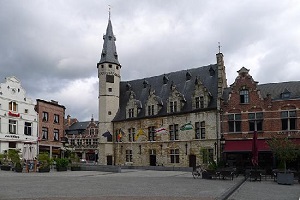
Gaston Burssens (18 februari 1896 – 29 januari 1965) Dendermonde, stadhuis en belfort
"Cosey women," he said. "That's their place you looking for. It ain't been number one for a long time now, but you can't tell them that. Can't tell them nothing. It 1410 or 1401, probably." Now it was her turn to question his certainty. "I'm telling you," he said, suddenly irritable — the wind, he thought, tearing his eyes. "Go on up thataway. You can't miss it 'less you try to. Big as a church." She thanked him but did not turn around when he hollered at her back, "Or a jailhouse." Sandler Gibbons didn't know what made him say that. He believed his wife was on his mind. She would be off the bus by now, stepping carefully on slippery pavement until she got to their driveway. There she would be safe from falling because, with the forethought and common sense he was known for, he was prepared for freezing weather in a neighborhood that had no history of it. But the "jailhouse" comment meant he was really thinking of Romen, his grandson, who should have been home from school an hour and a half ago. Fourteen, way too tall, and getting muscled, there was a skulk about him, something furtive that made Sandler Gibbons stroke his thumb every time the boy came into view. He and Vida Gibbons had been pleased to have him, raise him, when their daughter and son-in-law enlisted. Mother in the army; father in the merchant marines. The best choice out of none when only pickup work (housecleaning in Harbor for the women, hauling road trash for the men) was left after the cannery closed. "Parents idle, children sidle," his own mother used to say. Getting regular yard work helped, but not enough to keep Romen on the dime and out of the sight line of ambitious, under-occupied police. His own boyhood had been shaped by fear of vigilantes, but dark blue uniforms had taken over posse work now. What thirty years ago was a one-sheriff, one-secretary department was now four patrol cars and eight officers with walkie-talkies to keep the peace."
Toni Morrison (Lorain, 18 februari 1931)
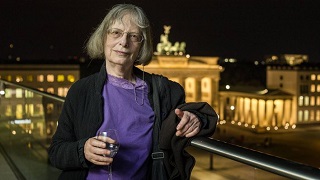
De Duitse dichteres en schrijfster Elke Erb werd geboren op 18 februari 1938 in Scherbach in de Eifel. Zie ook alle tags voor Elke Erbop dit blog.
Selbstgespräche sind nur Meeresrauschen
denn das Selbst, wie wir es hatten, das reine - unter Gottes Eifersucht und scheinheiligem Lidschlag - Gold,
von unseren Klondike-Klauen und sibirischen, karpatisch... geklaubt aus schroffen Quarzen:
außerordentlich weich und dehnbar, leicht
mechanisch zu bearbeiten, von träger Reaktion,
Scheibenmonstranz, wie es vom Stengel nickt,
hört ja weder selbst noch sprichts,
ein Inbegriff des innersten Gehirns - oh Blastula, oh Gastrula, oh Gast
aus fernem Meer, gereist mit gleichsam aufsteigenden Teichen,
Amöbe, die
im Teichohr Meeresrauschen
Jäger und Sammler
Das Leder nicht der Handtasche, der Hüfte nimmt entgegen, Haut nur. So entlegen –
den der stumme Umkreis kantet – jeder Rand um mich, die stets aus dem Gesicht verliert das Land, in das Gesicht auch sammelt: Schrank vor Wand –
ich möchte nur das schlaue kleine Hinternchen des Rehs, des durch Gebüsch sich tauchenden – wahrhaftig! – Farn! – ich sammle!
weißgeflecktes Hinternchen noch sehn – ich sehs!
& den gemeinen Lebensstrick, bis er den Kopf hat, Ganglien, elektrisieren, diesen nicht verlieren!
V. Europa, een inwisselbaar landschap achter het autoraam ondergeschikt aan welk nummer er op de radio draait, wat er door ons heen glijdt bij het staren naar de snelweg, in cadans de kerken, de Tsjechen en de verte het herhaalt zich, zoals wij ons jaar na jaar onbedoeld, maar halsstarrig herhalen Wenen wordt onze woonkamer, de Donau een geknelde zenuw, zelfs het vrijen langdradig in die droge zomer, ik slik muggen in, altijd en later twee tijdstippen die me bij de keel grijpen, nu ze vanzelfsprekend en aangebroken zijn wij meer dan ooit de gietvorm van ons geluk en niet het geluk zelf het glijdt voorbij de plaatsnaamborden, voorbij de tinteling en de twijfel daarna op de autostopplaats de milde stilstand van elkaars glimlach waarachter een schreeuw smeekt dat we het steeds van elkaar zullen weten het heimelijk verbond, wat ons opzweept en de strop
Tags:Nick McDonell, Robbert Welagen, Bart FM Droog, Maarten Mourik, Huub Beurskens, Gaston Burssens, Toni Morrison, Elke Erb, Charlotte Van den Broeck, J. C. Bloem, Clara Eggink, Romenu
Snatch prudence from me, God, burst my brows wide, fling far the trap doors of my mind, let the world breathe awhile. Ho, workers, peasants, you ant-swarms, carters of grain, I fling red poppies down, may the world burst in flames! Maidens, with wild doves fluttering in your soothing breasts, brave lads, with your black-hilted swords thrust in belts, no matter how you strive, earth's but a barren tree, but I, ahoy, with my salt songs shall force the flower! Fold up your aprons, craftsmen, cast your tools away, fling off Necessity's firm yoke, for Freedom calls. Freedom, my lads, is neither wine nor a sweet maid, not goods stacked in vast cellars, no, nor sons in cradles, it's but a scornful, lonely song the wind has takenŠ Come, drink of Lethe's brackish spring to cleanse your minds, forget your cares, your poisons, your ignoble profits, and make your hearts as babes, unburdened, pure and light. . O brain, be flowers that nightingales may come to sing! Old men, howl all you can to bring your white teeth back, to make your hair crow-black, your youthful wits go wild, for by our Lady Moon and our Lord Sun, I swear old age is a false dream and Death but fantasy, all playthings of the brain and the soul's affectations, all but a mistral's blast that blows the temples wide; the dream was lightly dreamt and thus the earth was made; let's take possession of the earth with song, my lads! Aye, fellow craftsmen, seize your oars, the Captain comes; and mothers, give your sweet babes suck to stop their wailing! Ahoy, cast wretched sorrow out, prick up your ears- I sing the sufferings and torments of renowned Odysseus!
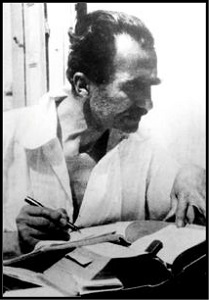
Níkos Kazantzákis (18 februari 1883 - 26 oktober 1957)
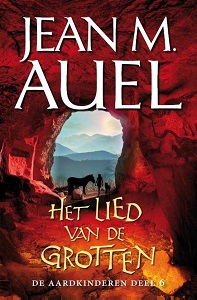
Uit:Het lied van de grotten (Vertaald door Henny van Gulik en Ingrid Tóth)
“Ze bleef staan. ‘Er zijn leeuwen vlak achter de splitsing in het pad,’ zei ze zacht. Jondalar keek naar voren en zag iets bewegen wat hij herkende als leeuwen nu hij wist waarnaar hij keek. Ook hij greep naar zijn wapens. ‘Jij kunt beter hier blijven met Jonayla. Ik zal gaan.’ Ayla keek neer op haar slapende kindje en keek toen naar hem op. ‘Jij bent goed met de speerwerper, Jondalar, maar er zijn minstens twee welpen en drie volwassen leeuwen, waarschijnlijk meer. Als de leeuwen het gevoel krijgen dat er gevaar dreigt voor de welpen en ze besluiten aan te vallen, zul je hulp nodig hebben, iemand om je bij te staan, en je weet dat ik beter ben dan wie dan ook, op jou na.’ Hij fronste zijn voorhoofd en dacht even na terwijl hij haar bleef aankijken. Toen knikte hij. ‘Goed dan... maar blijf achter me.’ Hij zag vanuit zijn ooghoek iets bewegen en keek achterom. ‘En de paarden?’ ‘Ze weten dat er leeuwen in de buurt zijn. Kijk maar,’ zei Ayla. Jondalar keek. Alle drie de paarden, ook het jonge merrieveulen, staarden strak voor zich uit, zich duidelijk bewust van de grote katten. Jondalar fronste weer zijn voorhoofd. ‘Zullen ze zich rustig houden? Vooral kleine Grijs?’
Jean M. Auel (Chicago, 18 februari 1936) Cover
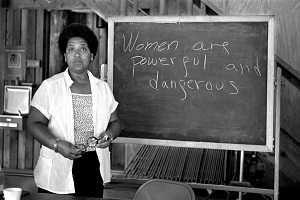
De Afro-Amerikaanse schrijfster, dichteres en lesbisch-feministische, anti-racistische activiste Audre Geraldine Lorde werd geboren op 18 februari 1934 in New York. Zie ookalle tags voor Audre Lordeop dit blog.
Love Poem
Speak earth and bless me with what is richest make sky flow honey out of my hips rigis mountains spread over a valley carved out by the mouth of rain.
And I knew when I entered her I was high wind in her forests hollow fingers whispering sound honey flowed from the split cup impaled on a lance of tongues on the tips of her breasts on her navel and my breath howling into her entrances through lungs of pain.
Greedy as herring-gulls or a child I swing out over the earth over and over again.
Coping
It has rained for five days running the world is a round puddle of sunless water where small islands are only beginning to cope a young boy in my garden is bailing out water from his flower patch when I ask him why he tells me young seeds that have not seen sun forget and drown easily.
Audre Lorde (18 februari 1934 – 17 november 1992)
De Hongaarse schrijver en journalist Mór Jókaiwerd geboren op 18 februari 1825 in Komárom. Zie ookalle tags voor Mór Jókaiop dit blog.
Uit: Black Diamonds(Vertaald door Frances A. Gerard)
“We are in the depths of an underground cavern. It is bad enough to be underground, but here we are all enveloped in black as well: the ceiling is black, so are the walls; they are made of blocks of coal. The floor is one great black looking-glass. It is a sort of pond, polished as steel. Over this polished surface glistens the reflection of a solitary light, the light of a safety-lamp shining through a wire net. A man guides himself over the pond in a narrow boat. By the doubtful light of the lamp he sees high pillars, which rise out of the depths below and reach to the very roof of the cavern--pillars slender, like the columns of a Moorish palace. These pillars are half white and half black; up to a certain point only are they coal black, beyond that they are light in color. What are these pillars? They are the stems of pines and palm-trees. These gigantic stems are quite at home in the layers over the coal-mine, but how have they descended here? They belong to another world--the world of light and air. The coal layers overhead sometimes take fire of themselves, and the fire, being intense, has loosened the hold of these giants and sent them below. Coal-pits kindle of themselves often, as every novice knows, but in this case who extinguished the flames? That is the question. The solitary occupant of the rudely shaped boat or canoe goes restlessly here and there, up and down. He is a man of about thirty years, with a pale face and a dark beard. His firmly closed lips give him an expression of earnestness, or strong, decided will; while his forehead, which is broad, with large bumps over the eyes, shows that he is a deep thinker. His head is uncovered, for here in this vault the air is heavy, and his curly black hair is in thick masses, so that he needs no covering. What is he doing here? He drives his boat over the black looking-glass of the lake; round and round he goes, searching the black walls with anxiety, his lamp raised in his disengaged hand. Does he imagine that a secret is hidden there? Does he think that by touching a spring, and saying "Open Sesame," the treasure hidden there for hundreds of years will spring forth?”
“Im ewigen Eis erstarrt lag der Gipfel des Wetterkogels hinter den drei Gestalten, die sich langsam auf dem mit Geröll bedeckten Weg vorwärts schoben. Tiefe Stille ringsum. Nur die Schritte der drei Menschen, ihr schweres Atmen und zuweilen das leise Gleiten eines gelösten Steins waren vernehmbar. Voran schritt Will Vollrat mit hoch erhobenem Haupt. Ihm folgte mit weniger kräftigen und sicheren Schritten seine Gattin, eine schlanke, zarte Blondine mit lieblichem Gesicht und fiebrig leuchtenden Augen. Zuletzt ging der Bergführer. Er trug Rucksack und Seile, die vor Kurzem noch die drei Gestalten aneinander gefesselt hatten. Der Wetterkogel drohte finster und in Nebel gehüllt hinter ihnen her. Der Bergführer, dessen wettergebräuntes Gesicht wie aus Erz gegossen schien, ließ die scharfen, hellen Augen wachsam und spähend umherschweifen, um den rechten Pfad zu finden. Jetzt rief er Will Vollrat einige Worte zu, um ihm die Richtung anzugeben. Dieser nickte und sah rückwärts zum Gipfel des Wetterkogels hinauf. Da oben hatten sie vor einigen Stunden gestanden nach mühevoller Kletterarbeit. Will Vollrat hatte mit strahlenden Augen den überwältigenden Rundblick in sich aufgenommen.Wie schön, wie einzig schön und wunderbar! Eva Vollrat hatte sich schwer atmend auf den Arm ihres Gatten gelehnt. Mit schwärmerischer Innigkeit haftete ihr Blick auf seinem kühn geschnittenen Profil, und seine machtvollen, strahlenden Augen hielten sie im Bann."
Hedwig Courths-Mahler (18 februari 1867 - 26 november 1950)
»Du schlurfst«, rief Vetter Hans. Ole hörte nicht. »Er ist genauso taub wie Tante Maren«, dachte Hans. »Du schlurfst, Ole!«, rief er lauter. »O, Verzeihung!«, sagte Vetter Ole und hebt nun die Beine betont in die Höhe mit jedem Schritt. Um nichts in der Welt würde er seinen Bruder verärgern wollen. Er hatte ohnehin schon so ein schlechtes Gewissen. Dachte er denn etwa nicht genau in diesem Moment an sie? Sie, von der er wusste, dass sein Bruder sie liebte. Und war es nicht sündhaft von ihm, dass er diese Leidenschaft nicht unter Kontrolle bekam? Es war doch Unrecht seinem Bruder gegenüber und außerdem so unendlich hoffnungslos. Vetter Ole ging streng mit sich ins Gericht; und während er sich auf der anderen Seite des Weges hielt, um nicht so auffällig zu schlurfen, versuchte er mit aller Macht an die allergleichgültigsten Sachen zu denken. Aber wie weit weg er seine Gedanken auch streifen ließ, sie kamen doch über die wunderlichsten Umwege wieder zurück zu dem verbotenen Punkt und flatterten dann wie die Fliegen um das Licht. Die beiden Brüder, die über die Ferien bei ihrem Onkel, dem Priester, zu Besuch waren, befanden sich gerade auf dem Weg zum Anwesen des örtlichen Amtsrichters, wo es eine Tanzgesellschaft geben sollte. Es waren viele Studenten zu Besuch in dem Dorf und diese Tanzgesellschaften verbreiteten sich deshalb wie eine Epidemie von Anwesen zu Anwesen. Vetter Hans war in vortrefflicher Stimmung. Er sang, tanzte, machte Witze schon den ganzen Tag über. Und wenn sein Ton dem schlurfenden Bruder gegenüber vielleicht ein wenig scharf war, dann eigentlich nur aus Ärger darüber, dass es ihm nicht gelang, ihn mit seiner vortrefflichen Stimmung anzustecken.“
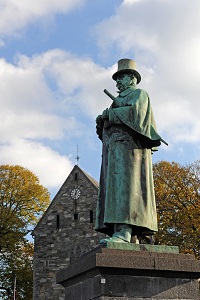
Alexander Kielland (18 februari 1849 - 6 april 1906) Standbeeld in Stavanger
Uit: Wat behouden blijft (Vertaald door Edzard Krol)
“De lucht is even vertrouwd als de kamer. De voor vakantiehuisjes gebruikelijke zweem van muizen, evenals een vage, niet onaangename herinnering aan stinkdieren onder het huis, maar daaromheen en erdoorheen een geur die even penetrant is als zevenduizend voeten. Een illusie natuurlijk. Wat ruikt naar hoogte, is breedte. Een kilometer of twintig noordelijker ligt Canada, en de ijsvlakte, die zijn sporen in deze hele omgeving heeft nagelaten, is niet voor altijd verdwenen, maar heeft zich alleen maar teruggetrokken. Iets in de lucht, zelfs in augustus, zegt dat hij zal terugkeren. Eigenlijk, als je kon vergeten dat je sterfelijk was, en dat was hier ooit gemakkelijker dan op de meeste plekken, zou je werkelijk kunnen geloven dat de tijd circulair is, en niet lineair voortschrijdend zoals onze cultuur geneigd is te bewijzen. Vanuit geologisch perspectief gezien zijn we fossielen in wording, zullen we begraven worden en uiteindelijk weer tevoorschijn komen om wezens in latere tijdperken te verbazen. In geologisch, noch biologisch opzicht zijn we als individu van belang. De ene mens verschilt niet zoveel van de andere, elke generatie herhaalt haar voorouders, de werken die we scheppen om ons te overleven, gaan niet veel langer mee dan mierennesten, en veel minder lang dan koraalriffen. Hier keert alles terug naar zichzelf, herhaalt en vernieuwt alles zichzelf, en is het heden nauwelijks te onderscheiden van het verleden. Sally slaapt nog. Ik glip uit bed en loop op blote voeten over de koude, houten vloer. Als ik langs de kalender loop, wijst die mij erop dat het een andere is dan ik me herinner. Er staat, correct, dat het 1972 is, en dat het augustus is.”
Wallace Stegner (18 februari 1909 – 13 april 1993)
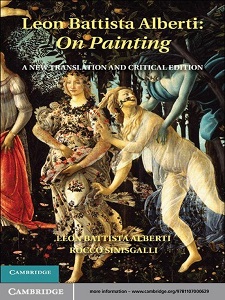
“I think every painter, if he wishes to be a great master, ought to understand clearly the
similarities and the distinctions of the planes, a thing known to very few....They should know that they circumscribe the plane with their lines. When they fill the circumscribed places with colors, they should only seek to present the forms of things seen on this plane as if it were of transparent glass. Thus the visual pyramid could pass through it, placed at a definite distance with definite lights and a definite position of center in space and in a definite place in respect to the observer. Each painter, endowed with his natural instinct , demonstrates this when, in painting this plane, he places himself at a distance as if searching the point and angle of the pyramid from which point he understands the thing painted is best seen. Where this is a single plane, either a wall or a panel on which the painter attempts to depict several planes comprised in the visual pyramid, it would be useful to cut through this pyramid in some definite place, so the painter would be able to express in painting similar outlines and colors with his lines. He who looks at a picture, done as I have described [above], will see a certain cross-section of a visual pyramid, artificially represented with lines and colors on a certain plane according to a given distance, center and lights. Now, since we have said that the picture is a cross-section of the pyramid we ought to investigate what importance this cross-section has for us. Since we have these knowns, we now have new principles with which to reason about the plane from which we have said the pyramid issues.”
Leone Battista Alberti (14 februari 1404 — 25 april 1472) Cover
Tags:Níkos Kazantzákis, Jean M. Auel, Audre Lorde, Mór Jókai, Hedwig Courths-Mahler, Alexander Kielland, Wallace Stegner, Leone Battista Alberti, Romenu
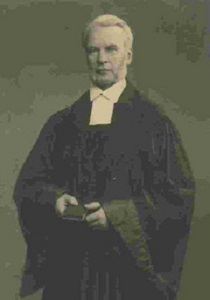
De Duitse dichter, theoloog en predikantJohannes Theodor Rudolf Kögelwerd geboren op 18 februari 1829 in Birnbaum als zoon van pastor Gottfried Kögel en diens echtgenote Florentine. Rudolf Kögel studeerde in de periode 1847-1852 in Halle en Berlijn theologie en filologie en maakte tijdens zijn studententijd reizen naar Frankrijk, Spanje, Oostenrijk, Zwitserland en Italië. Van 1852-1854 werkte hij als godsdientsleraar aan het Vitzthumschen Gymnasium in Dresden, vervolgens als leraar op het seminarium voor stadsscholen in Berlijn. Van 1854 tot 1857 was hij predikant in Nakel bij Bromberg en vervolgens tot 1863 predikant van de Duits-protestantse gemeenschap in Den Haag (Nederland). Van daaruit werd hij door Wilhelm I als predikant naar Berlijn gehaald en ook benoemd tot lid van de kerkenraad van Brandenburg en tot raadheer in het ministerie van cultuur beoemd. In 1868 verleende de Rheinische Friedrich-Wilhelms-Universität Bonn hem een eredoctoraat. Het kerkelijk beleid van Adalbert Falk en Emil Herrmann vocht Kögel door zijn invloed bij de keizer met groeiend succes aan. Door toedoen van Falk werd Kögel bij het ministerie van onderwijs ontslagen, maar in 1878 werd Kögel wel benoemd tot lid van de oud-Pruisische protestantse Oberkirchenrat en in 1880 werd hij algemeen inspecteur van de Kurmark. Hij werd beschreven als een uitstekend predikant. Veel van zijn preken werden gebundeld.. Ook schreef hij talloze kerkelijke liederen. Hij publiceerde ook verschillende kleinere geschriften over de sociale kwestie. Hij trouwde in 1855 in Halle met Marie Müller. Het echtpaar had vier zonen en drie dochters, waaronder Julius die hoogleraar theologie in Kiel zou worden. Na de dood van zijn vrouw Marie in 1884 hertrouwde hij met Karoline von Bodelschwingh.
Heimat für Heimatlose
So nah dem Strand ein stiller Raum, Ein eingehegter Garten: Will man bei Sturm und Wogenschaum Hier noch der Blumen warten? Ich trete ein. Zwei Gräberreih'n In Heidekraut und Moose. Es sagt der Schrift erloschner Schein: "Heimat für Heimatlose!"
Die mitleidslos das Meer geraubt Und die das Meer gab wieder, Hier legten sie ihr bleiches Haupt Von Wellen triefend nieder. Schiffbrüchige — man kennt sie nicht, Ob Schiffsherrn, ob Matrosen, Nun träumen von der Heimat Acht Die armen Heimatlosen.
Du Fremdling mit dem flüchtigen Sinn, Zieh lachend nicht von hinnen, Auf dein Woher, auf dein Wohin Sollst du dich hier besinnen. Noch eh' der Abend niedersinkt, Zerflattert Ruh und Rose, Weh dem, dem nicht beim Scheiden winkt Heimat für Heimatlose.
Du andrer Gast mit müdem Fuß, Voll Schwermut und voll Sorgen, Denk' nicht bei diesem Kirchhofsgruß: "Hier wär' ich wohlgeborgen! Was treib' ich noch von Ort zu Ort, Ein Blatt im Sturmgetose?" Ist wirklich Tod ein Ruheport, Heimat für Heimatlose?
Wir sind ein Volk, vom Strom der Zeit Gespült zum Erdeneiland, Voll Unfall und voll Herzeleid, Bis heim uns holt der Heiland. Das Vaterhaus ist immer nah, Wie wechselnd auch die Lose — Es ist das Kreuz von Golgatha Heimat für Heimatlose.
Uit: Touba and the Meaning of Night (Vertaald door Kamran Talattof and Havva Houshmand)
“Haji Adib thought, "I am old." His heart sank. There was not much time left to spend on the subject of becoming and metamorphosis, or the spirit of dust in part and whole, or to contemplate the trees as a whole or the minute parts making up the whole. He thought that probably each in its own minute society had a few Haji Adibs and Moshir O'Dolehs and Englishmen who fought each other. He laughed and imagined that probably Asdolah their local butcher chopped their meat for them. And then he laughed loudly again. Suddenly the rhythmic sound of the shuttle comb stopped in the basement. Haji Adib could no longer hear the soft conversations of the women. The sun had not yet reached the middle of the sky. Haji Adib still sat on the edge of the octagonal pool, his fist under his chin. He turned his head around and, through the sharp angle that formed between his head and his arm, looked in the direction of the basement. The women had gathered by the basement window staring in his direction and were whispering. He had a feeling that they were talking about him. He remembered that just a few seconds ago he had laughed, loud and without inhibition, in a manner that was not appropriate to his position, and that the women had never seen such behavior in him. As he slowly tapped his foot on the ground, he thought, "They think. Unfortunately, they think. Not like the ants nor like the minute parts of the tree, nor like the particles of dust, but more or less as I do." But, he was certain that they would never have thoughts about Mullah Sadra. Suddenly he was shaken again, for of course they could think about Mullah Sadra as well. Had that not been the case with that rebellious and audacious woman who lived in their town when he was a child, who created all that uproar and sensation? People said that she was a prostitute, but they also said that she was learned. How much talking there was about her! He remembered someone telling his father that she was the messiah. The women were laughing behind the basement window. Haji thought disparagingly that they were behaving with typical women's foolishness. One pushed and the others burst out laughing; one was tickled while the other tried to get away. If there had not been a man in the house, their laughter would probably have been heard all over. Undoubtedly some of them were going crazy for not having a husband, but it was not possible to find husbands for them. They were dependent on Haji Adib, and there was not a man available at the moment who was rich enough to take one of them. Besides, if they did get married who would then weave the carpets? For that, he couldn't bring strange women into the house. They might then participate in some perverse activities with one another.”
Shahrnush Parsipur (Teheran, 17 februari 1946) Cover
De wind neemt happen van het gras. Iemand legt bloemen op een onbemand graf.
Een wit kind wuift met een wijde arm en begint stil te zingen.
Een reepje stof hangt omlaag van de stomp van een tak.
De wind haalt zijn hand door het gras. Tandeloze kam.
Een bij harpoeneert mijn arm en verliest lijf en leven. Zoals eenieder die tot in de kern tracht door te dringen, in de huid steken blijft.
Er is een steen die men niet vormen kan naar zijn hand.
De gastvrije doden
Dennenappels. Boeketten. Prenten met punaises op een boom geprikt. Een man prevelt voor een naam met jaren, aan zijn voeten groeit een schaduw. Een hoed ligt op het hoofdeinde van eengraf, in de deuk staat regenwater. Het muurtje rondom neemt laag na laag af, de toegang gevormd door een enkele rij stenen, om de levenden door te laten. Mezen buitelen dor de lucht of pikken pinda's van een snoer. Mensen stampen aarde uit het profiel van hun schoenzolen om op de parkeerplaats achter te laten.
Uit: The Silent Language of a Donkey at the Time of Death (Vertaald door Farzin Yazdanfar)
“But all these words have produced no results because of the lack of a law for preventing and limiting human beings' cruelty and their limitless cupidity and avidity. If my legs had been crushed in the West, I would have been relieved from this futile suffering or they would have put me to sleep! Ah! Save me from the pain and hunger! I wish I were free to live among animals of my own kind in pastures with a nice climate and to die on the day determined by my destiny. But now I am dying of hunger and hardship in captivity. This is the awful consequence of the life of a speechless animal who has been enslaved by this two-legged creature. I have to burn in the fire that they have kindled. Ah! My patience has reached its limits...! Human beings are killers of the oppressed. Why don't they take untamed and rapacious animals into captivity and put them in service? The only sin that we, tamed animals, have committed is the fact that we are harmless and deprived of our daily food. The world has become dark and murky before my eyes. My body has grown feeble from the suffering inflicted on me by hunger. I can hear somebody's footsteps. Perhaps this is my master who is feeling sorry for my unhappiness and bringing me food. No, it is just a kid who throws a stone at me and runs away. The sooner I die the sooner I will be able to take vengeance from this cruel tyrant before the court of eternal justice.”
Sadegh Hedayat (17 februari 1903 – 9 april 1951) Portret door Amin Nourani, 2004
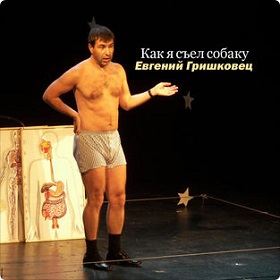
“I’ll talk about a person who is no more now, who already doesn’t exist, in the sense that he existed before, but now he ceased to exist, but besides me no one noticed this. And when I reminisce about him or talk about him, I say, “I thought… or I said”…. And I remember all this in detail, what he did, how he lived, what he thought, I remember why he did this or that, well, good thing, or, more often, bad thing…. I even become embarrassed for him, even though I distinctly understand that it wasn’t me. No, not me. In the sense that for everyone who knows me and knew me it was me, but actually that “I” who’s now saying this is a different person, and that one is no more and has no chance of appearing again…. In short, I ended up having to serve three years in the Pacific fleet…. That’s what kind of person this was. (…)
I remember how we traveled seven days from the “Taiga” station to the Vladivostok station on a passenger/mail train. We traveled slowly, stood at each crossing, and I was grateful to the railroad workers for these tiny delays…. We were going…, and interestingly, you could be going anywhere, to the east, to the south, to the north, and the whole time it would be the exact same scenery, in the sense that, it changes, of course, but the feeling remains that it’s the exact same: This means not very thickly growing birch trees, those uniformly spaced white-black trees, everywhere…. Well, in general, the kind of scenery, looking at which a Russian is obligated to say: “My God… what beauty!” It happens like this: The Russian has woken up, comes out from the sleeping compartment into the corridor of the wagon, on his shoulders hangs a towel, like so, in his hand a toothbrush with toothpaste already on it, he’s a bit blinded by the morning light (in the compartment it had been very dark), he stops at the window, like so, holding onto the handrail. In the corridor the rattle of the train is stronger. Someone draws water from the tea urn. The train: tuduk-tuk-tuk, tuduk-tuk-tuk. The person who has just woken up: “Ssssoooo, where are we by now?” The person with hot water in his mug, swaying with concentration, slowly walking and because of this swaying even more, says: “Who knows…”
Yevgeni Grishkovetz (Kemerovo, 17 februari 1969) Cover
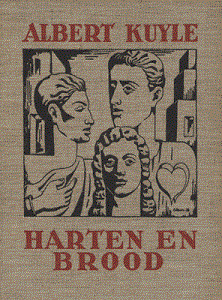
“En Jansen doet heelemaal niets. Die zit maar op een gematte stoel, met zijn kousevoeten op de sport van een andere. Hij heeft alles gezien wat er te zien is, en hij kijkt nog. De zonnebloem die voorover hangt van zwaarte, de drie broeken aan de lijn die slap hangen van vocht. Van Duin loopt nu door de emballage-afdeeling. Hij blijft even staan bij de man die bandijzer om de kisten legt. Pootige kerel. Vlugge werker. De chef hier is een halve gare, die met een hoog boord om werkt. Hij heeft iets krampachtig heerachtigs over zich. Het schijnt dat hij voorzitter is van verschillende vereenigingen en in het bestuur van de leeszaal zit. Hier doet hij in ieder geval niets dan bonnen schrijven en toekijken en zenuwachtig worden als er op het kantoor een reclame is over onvoldoende verpakking en beschadigde zending. Hij neemt zijn groene hoedje af voor mijnheer. Dat draagt hij voor de tocht, en hij zet het af uit eerbied. Het remt echter de kruistocht van van Duin niet. Die loopt door en hij komt bij de getouwen. Als hij binnenkomt, hoort hij slordig een ‘meneer’ mompelen, tusschen het krakende gezoem van de machines door. Het is de kortste en minst zeggende groet die men kan bedenken. Het beteekent evenzeer ‘goeje morgen’ als ‘stik de moord’, en van Duin mag het zelf uitzoeken. Het deert hem niet. Dit is altijd zijn beste uur van de dag. Als hij het flikkerend zweven van de wielen ziet, het wazig flimmeren van de riemen en hij ziet hoe de stof tot een vast geheel wordt. Hij staat tusschen de coulissen, en hij bewondert het spel. Ja, zooveel van de eerlijke sportman steekt er nog in hem, dat hij werkelijk het spel bewondert. En dat is gelukkig, want het filtert veel beroerde dingen in hem. Een man die veel te weinig wordt tegengesproken, een man die iederen dag goed eet, een man die zijn lusten heeft bevredigd zonder stagnatie, een man die om-en-de-bij nooit echt bidt, zoo'n man groeit natuurlijk geestelijk krom en scheef. Er komt een driftprop in zoo'n kerel, die maar een klein zetje noodig heeft om als een kogel er uit te vliegen. Dit, dit gelijkmatig bewegen van menschen en machines, daar kan hij niet tegen op. Hij heeft hier niet het gevoel dat hij dat maakte, dat hij dat beheerscht. Hij heeft hier een zeker ontzag, een vreemde eerbied, voor de dingen en voor de kracht. Hij is de bewaker ervan, van deze religie, van deze tempel en hij doet zijn werk van toekijken en bewonderen schuchter en onopgemerkt.”
Albert Kuyle (17 februari 1904 - 4 maart 1958) Cover
Life taught me long ago that music and poetry are the most beautiful things on earth that life can give us. Except for love, of course.
In an old textbook published by the Imperial Printing House in the year Vrchlickys death I looked up the section on poetics and poetic ornament.
Then I placed a rose in a tumbler, lit a candle and started to write my first verses.
Flare up, flame of words, and soar, even if my fingers get burned!
A startling metaphor is worth more than a ring on ones finger. But not even Puchmajers Rhyming Dictionary was any used to me.
In vain I snatched for ideas and fiercely closed my eyes in order to hear that first magic line. But in the dark, instead of words, I saw a womans smile and wind-blown hair.
That has been my destiny. And Ive been staggering towards it breathlessly all my life.
Vertaald door Ewald Osers
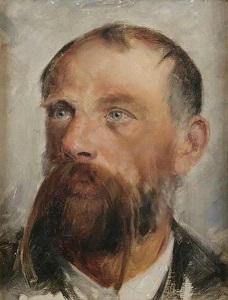
Jaroslav Vrchlický (17 februari 1853 - 9 september 1912) Portret door Hynais Vojtech. z.j.
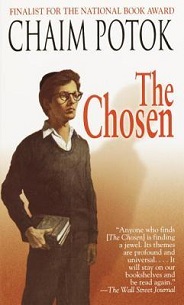
“Throughout the warm-up period, with only our team in the yard, he kept thumping his right fist into his left palm and shouting at us to be a solid defensive front. “No holes,” he shouted from near home plate. “No holes, you hear? Goldberg, what kind of solid defensive front is that? Close in. A battleship could get between you and Malter. That’s it. Schwartz, what are you doing, looking for paratroops? This is a ball game. The enemy’s on the ground. That throw was wide, Goldberg. Throw it like a sharpshooter. Give him the ball again. Throw it. Good. Like a sharpshooter. Very good. Keep the infield solid. No defensive holes in this war.” We batted and threw the ball around, and it was warm and sunny, and there was the smooth, happy feeling of the summer soon to come, and the tight excitement of the ball game. We wanted very much to win, both for ourselves and, more especially, for Mr. Galanter, for we had all come to like his fist-thumping sincerity. To the rabbis who taught in the Jewish parochial schools, baseball was an evil waste of time, a spawn of the potentially assimilationist English portion of the yeshiva day. But to the students of most of the parochial schools, an inter-league baseball victory had come to take on only a shade less significance than a top grade in Talmud, for it was an unquestioned mark of one’s Americanism, and to be counted a loyal American had become increasingly important to us during these last years of the war. So Mr. Galanter stood near home plate, shouting instructions and words of encouragement, and we batted and tossed the ball around. I walked off the field for a moment to set up my eyeglasses for the game. I wore shell-rimmed glasses, and before every game I would bend the earpieces in so the glasses would stay tight on my head and not slip down the bridge of my nose when I began to sweat. I always waited until just before a game to bend down the earpieces, because, bent, they would cut into the skin over my ears, and I did not want to feel the pain a moment longer than I had to. The tops of my ears would be sore for days after every game, but better that, I thought, than the need to keep pushing my glasses up the bridge of my nose or the possibility of having them fall off suddenly during an important play.”
Chaim Potok (17 februari 1929 – 23 juli 2002) Cover
De Chinese schrijver Mo Yanwerd geboren op 17 februari 1955 in Gaomi in de provincie Shandong. Zie ook alle tags voor Mo Yanop dit blog.
Uit: Red Sorghum (Vertaald door Howard Goldblatt)
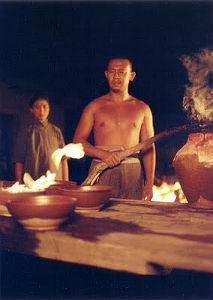
“The ninth day of the eighth lunar month, 1939. My father, a bandit’s offspring who had passed his fifteenth birthday, was joining the forces of Commander Yu Zhan’ao, a man destined to become a legendary hero, to ambush a Japanese convoy on the Jiao-Ping highway. Grandma, a padded jacket over her shoulders, saw them to the edge of the village. “Stop here,” Commander Yu ordered her. She stopped. “Douguan, mind your foster-dad,” she told my father. The sight of her large frame and the warm fragrance of her lined jacket chilled him. He shivered. His stomach growled. Commander Yu patted him on the head and said, “Let’s go, foster-son.” Heaven and earth were in turmoil, the view was blurred. By then the soldiers’ muffled footsteps had moved far down the road. Father could still hear them, but a curtain of blue mist obscured the men themselves. Gripping tightly to Commander Yu’s coat, he nearly flew down the path on churning legs. Grandma receded like a distant shore as the approaching sea of mist grew more tempestuous, holding on to Commander Yu was like clinging to the railing of a boat. That was how Father rushed toward the uncarved granite marker that would rise above his grave in the bright-red sorghum fields of his hometown. A bare-assed little boy once led a white billy goat up to the weed-covered grave, and as it grazed in unhurried contentment, the boy pissed furiously on the grave and sang out: “The sorghum is red—the Japanese are coming—compatriots, get ready—fire your rifles and cannons—” Someone said that the little goatherd was me, but I don’t know. I had learned to love Northeast Gaomi Township with all my heart, and to hate it with unbridled fury. I didn’t realize until I’d grown up that Northeast Gaomi Township is easily the most beautiful and most repulsive, most unusual and most common, most sacred and most corrupt, most heroic and most bastardly, hardest-drinking and hardest-loving place in the world. The people of my father’s generation who lived there ate sorghum out of preference, planting as much of it as they could. In late autumn, during the eighth lunar month, vast stretches of red sorghum shimmered like a sea of blood. Tall and dense, it reeked of glory; cold and graceful, it promised enchantment; passionate and loving, it was tumultuous.”
Mo Yan (Gaomi, 17 februari 1955) Scene uit de gelijknamige film uit 1987
„Peter ist in einem Alter, in dem die Haare jedes Mal. wenn er beim Friseur gewesen ist, nicht kürzer, son-dern immer etwas länger geworden sind. Er nennt das, den Vater auf den Endzustand vorbereiten, ge-s wissermaßen Zentimeter für Zentimeter. Peters Vater kann sich nämlich über lange Haare unerhört aufregen. Er findet Haare, die fast bis auf die Schultern fallen, bei einem Jungen, wörtlich, kriminell. Bei Peter be-to decken die Haare mittlerweile schon fast die Ohren. Peters Vater ist bekannt, dass sich manche anderen Menschen langsam an langes Haar, selbst bei Jungen, gewöhnt haben, aber bei ihm ist das nicht zu erwarten. Er gehört andererseits aber nicht zu der Sorte von Vätern, die sagen: „So will ich's. So wird's ge-macht. Punktum, Schluss." Er geht da etwas raffinierter vor. Peter nennt das Vor-gehen seines Vaters einfach Zermürbungstaktik. Dass er und sein Vater da die gleiche Taktik anwenden, diese Idee ist ihm aber noch nicht gekommen. Der Vater erwähnt Peters Haare mindestens zehnmal am Tag. Ach was, zehnmal reicht nicht hin, wenn man es genau zählt, jedenfalls nicht an Wochenenden. Der Vater sagt: „Also, Peter, ich kann mir nicht helfen, deine Haare sind entschieden zu lang für meinen Geschmack." „Wie wäre denn die Länge nach deinem Geschmack", erkundigt sich Peter spitz, „ich meine, genau ... auf den Zentimeter?" Peters Vater stöhnt. Aber nach spätestens einer halben Stunde fällt schon wieder so eine Bemerkung. „Also, schau doch mal, das sieht ganz einfach ungepflegt aus", sagt Peters Vater. „Was sollen denn die Leute von uns denken, wenn wir dich so rumlaufen lassen?" Peter erinnert seinen Vater an Jesus Christus, an die Helden des Wilden Westens und an den Herrn auf dem Zehnmarkschein. „Und ich erinnere dich an Absalom. falls du weißt, wer das ist", gibt der Vater zurück. „Mit dem nahm's auch ein schlimmes Ende. Wie viel muss ich dir denn zum Taschengeld dazulegen, damit du dir das nächste Mal deine Haare auf eine vernünftige Länge kürzen lässt?" ;Typisch", sagt Peter gereizt, „ihr denkt immer, alles ist käuflich." „... war ja nur ein Vorschlag zur Güte, entschuldige bitte", sagt der Vater penetrant behutsam.“
Tags:Shahrnush Parsipur, Willem Thies, Sadegh Hedayat, Yevgeni Grishkovetz, Albert Kuyle, Jaroslav Vrchlický, Chaim Potok, Mo Yan, Frederik Hetmann, Romenu
After the Cabaret I see the early morning sun At five a.m. I homeward stroll. The lights still burn in my hotel. The cabaret is finally done. In shadows children hunker down. The farmers bring their goods to town. You go to church, silent and old grave sound of church-bells in the air, and then a girl with untamed hair wanders up all blear and cold: “Love me, free of every sin. Look, I’ve kept watch many nights .”
Untitled
And nighttime when there is no light and pictures fall right off the walls, then someone laughs so big and bright Someone’s long hands grab for me And then a lady with green hair who looks at me so very sad -- she was once a mother she swears. She cannot bear the weight of pain (I press the thorns into my heart and then stop full of peace, and I will suffer every hurt it’s what is asked of me.)
Vertaald door Howard A. Landman
Emmy Hennings (17 februari 1885 – 10 augustus 1948) Portret door Alexander Graf, 1951
De Japanse schrijver Mori Ōgaiwerd geboren op 17 februari 1862 als Mori Rintaro in het dorpTsuwano in Iwami. Zie ook alle tags voor Mori Ōgaiop dit blog.
Uit: The Dancing Girl (vertaald door Richard Bowring)
„They have finished loading the coal, and the tables here in the second-class saloon stand in silence. Even the bright glare from the electric lights seems wasted, for tonight the group of card players who usually gather here of an evening are staying in a hotel and I am left alone on board. It is now five years since the hopes I cherished for so long were fulfilled and I received orders to go to Europe. When I arrived here in the port of Saigon, I was struck by the strangeness of everything I saw and heard. I wonder how many thousands of words I wrote every day as I jotted down random thoughts in my travel diary. It was published in a newspaper at the time and was highly praised, but now I shudder to think how any sensitive person must have reacted to my childish ideas and my presumptuous rhetoric. I even recorded details of the common flora and fauna, the geology, and the local customs as if they were rarities. Now, on my way home, the notebooks that I bought intending to use for a diary remain untouched. Could it be that while studying in Germany I developed a kind of nil admiral attitude? No, there is another reason. Returning to Japan, I feel a very different person from when I set out. Not only do I still feel dissatisfied with my studies, but I have also learned how sad this transient life can be. I am now aware of the fallibility of human emotions, but in particular I realize what a fickle heart I have myself. To whom could I possibly show a record of fleeting impressions that might well be right one day and wrong the next? Perhaps this is why my diary was never written. No, there is another reason. Twenty days or more have passed since we left Brindisi. Usually it is the custom at sea to while away the cares of travel even in the company of utter strangers, but I have shut myself up in my cabin under the pretext of feeling somewhat indisposed. I seldom speak to my fellow travelers, for I am tormented by a hidden remorse. At first this pain was a mere wisp of cloud that brushed against my heart, hiding the mountain scenery of Switzerland and dulling my interest in Italy's ancient wins. Then gradually I grew weary of life and weary of myself, and suffered the most heart-rending anguish. Now, remorse has settled in the depths of my heart, the merest shadow. And yet, with everything I read and see it causes me renewed pain, evoking feelings of extreme nostalgia, like a form reflected in a mirror or the echo of a voice. How can I ever rid myself of such remorse? If it were of a different nature I could perhaps soothe my feelings by expressing them in poetry.”
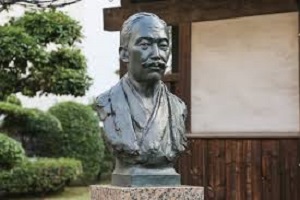
Mori Ōgai (17 februari 1862 – 9 juli 1922) Borstbeeld in Kokura, Kitakyūshū
Her hand within my hands, Her eyes upon my eyes, Her amorous head Reclined upon my breast.-- God knows how many times, With languid step, We wandered on together Beneath the high-topped elms, Which round her portal throw Shadow and mystery!
And yesterday, scarcely a year Flown like a breath, With what a finished grace, With what a smiling calm, She said, as an officious friend Presented each to each-- "I think somewhere we've met, Your face is known to me"-- Ah! fools and high-born gossips Who chase athwart the salons Your prey of scandalous love-tales, What a prize is lost you here! How exquisite a morsel Meant to be devoured Mid whispers--in corners, Behind your fans Of feathers and of gold!--
O! chaste and silent moon, O! tall and leafy elms, O! walls which gird her house, O! shadows of her gate-- Keep silence, let none guess! Keep silence!--for my part I have forgotten all, And she--she--there is no mask Like to her face!
Vertaald door Mary A. Ward
A Matter Of Semantics
t's a matter of semantics, and yet After what happened, you and I Could never agree Who is at fault.
Too bad there is no lover's dictionary To define once and for all When pride is merely pride, And when it is dignity.
Vertaald door Walter Wykes
Gustavo Bécquer (17 februari 1836 – 22 december 1870) Portret door Valeriano Bécquer, 1862
Die Äste sind schwarz Und das Licht ist schmächtig – Woran erkennst du den Frühling?
Die Luft ist trächtig, Trägt Hauch und Gerüche. Kocht schon in der Küche, Im felsigen Hohlraum Die alte Frau Mutter?
Wind sagt seine Sprüche, Die stößig gekürzten, Dem Schweigen ins Ohr. Felsen, was flennst du Duftende Tränen? Was soll dein Gähnen, Sumpfloch im Moor? Wind, und das nennst du schon Ahnung und Frühling, Weil in der Küche, Im felsigen Tief, Der Alten, der Mutter Ein Topf überlief, Mit Sud vom Gewürzten?
Den März erwartend
Der März bringt den Frühling, den warmen Wind, Und wenn auch die Fenster gefroren sind, Bald tauen und tropfen sie alle, Und wo jetzt der schwärzliche Schnee noch liegt, Wirds sein, daß sich zitternd im Windhauch biegt Das Gras in der Buchenwaldhalle.
Dann ist es so weit, und dann kommt der Tag, An dem auch das Veilchen sich rühren mag, Im nassen Moose, noch schüchtern. Das wird wie im trunkenen Rausch nicht sein: So ist nicht der März, selbst sein Sonnenschein Ist rauschig nicht, nein, er ist nüchtern.
Und probt dann ein Vogel den ersten Ton, Staunt über sich selber und fliegt davon, Erschauert der Himmel, als schäm er Der prahlenden, hellblauen Farbe sich, Ganz nackt, wie er glänzt, ohne Wolkenstrich – Ja, so wird der März sein, o käm er!
Georg Britting (7 februari 1891- 27 april 1964) Borstbeeld door Hermann Leber in Regensburg
The widow sought the lawyer's room with children three in tow, She told the lawyer man her tale in tones of deepest woe. Said she, 'My husband took to drink for pains in his inside, 'And never drew a sober breath from then until he died.
'He never drew a sober breath, he died without a will, 'And I must sell the bit of land the childer's mouths to fill. 'There's some is grown and gone away, but some is childer yet, 'And times is very bad indeed — a livin's hard to get.
'There's Min and Sis and little Chris, they stops at home with me, 'And Sal has married Greenhide Bill that breaks for Bingeree. 'And Fred is drovin' Conroy's sheep along the Castlereagh, 'And Charley's shearin' down the Bland, and Peter is away.'
The lawyer wrote the details down in ink of legal blue — 'There's Minnie, Susan, Christopher, they stop at home with you; 'There's Sarah, Frederick, and Charles, I'll write to them to-day, 'But what about the other one — the one who is away?
You’ll have to furnish his consent to sell the bit of land.' The widow shuffled in her seat, 'Oh, don't you understand? ' I thought a lawyer ought to know — I don't know what to say — 'You'll have to do without him, boss, for Peter is away.'
But here the little boy spoke up — said he, 'We thought you knew; 'He's done six months in Goulburn gaol — he's got six more to do.' Thus in one comprehensive flash he made it dear as day, The mystery of Peter's life — the man who was away.
Andrew Paterson (17 februari 1864 – 5 april 1941) Portret door John Longstaff, 1935
“In the basement and attic rooms are the memories of the hundreds of other people who lived a large part of their working lives in this unique house, and experienced its aura of power and history. Their stories belong in this book, too. Some, I regret to say, were slaves. But the house, paradoxical as always, gradually became a place where free African-Americans demonstrated their right to equality. Maggie Rogers began working as a White House maid when William Howard Taft became president in 1909. Her daughter, Lillian Rogers Parks, was hired as a seamstress at the White House in 1929 and worked until the end of the Eisenhower administration in 1961. Growing up, Lillian once asked her mother if she would be happier (and better paid) at some millionaire's mansion elsewhere in the capital. Maggie Rogers scorned the idea. "Heavens no, child! Be it ever so elegant, there's no place like the White House. Why, I'm living history!" There was black pride and White House pride achieving a magical fusion. Also worth commemorating are the efforts of the dedicated, courageous, amazingly patient men who have struggled to keep presidents and their families alive in the often malevolent glare of public criticism and spasms of national hatred. We know them now as members of the Secret Service. But their predecessors are equally memorable, standing guard at the White House's doors in suits that were a size too large for them--to conceal their pistols. Most people, including some of the presidents they guarded, were unaware of those hidden weapons. There is a side to these protectors that few people know about, much less appreciate--the many acts of kindness and thoughtfulness they perform for presidents and first ladies. Perhaps the most touching story comes from the sad days of President Woodrow Wilson's decline. Felled by a stroke, he sank into near despair as Congress rejected his dream of world peace embodied in the League of Nations. When the crippled president went for a ride in the afternoon, the Secret Service used to round up a small crowd of government employees and strolling tourists, who waited at the White House gate to cheer him when he returned. It was a pathetic illusion, but a testament to how much these men cared about the president."
Margaret Truman (17 februari 1924 – 29 januari 2008)
“On the day Lizzie came back from the dead the police and her family and neighbors had already begun the search for her body. They worked on the open countryside between Kingsmarkham and Myringham, combing the hillsides and beating through the woods. It was April but cold and wet, and a sharp northeast wind was blowing. Their task was not a pleasant one; no one laughed or joked and there was little talking. Lizzie's stepfather was among the searchers, but her mother was too upset to leave the house. The evening before, the two of them had appeared on television to appeal for Lizzie to come home, for her abductor or attacker, whatever he might be, to release her. Her mother said she was only sixteen, which was already known, and that she had learning difficulties, which was not. Her stepfather was a lot younger than her mother, perhaps ten years, and looked very young. He had long hair and a beard and wore several earrings, all in the same ear. After the television appearance several people phoned Kingsmarkham Police Station and opined that Colin Crowne had murdered his stepdaughter. One said Colin had buried her on the building site down York Street, a quarter of a mile down the road from where the Crownes and Lizzie lived on the Muriel Campden Estate. Another told Detective Sergeant Vine that she had heard Colin Crowne threaten to kill Lizzie "because she was as thick as two planks." "Those folks as go on telly to talk about their missing kids," said a caller who refused to give her name, "they're always the guilty ones. It's always the dad. I've seen it time and time again. If you don't know that, you've no business being in the police." Chief Inspector Wexford thought she was dead. Not because of what the anonymous caller said, but because all the evidence pointed that way. Lizzie had no boyfriend, she was not at all precocious, she had a low IQ and was rather slow and timid. Three evenings before, she had gone with some friends on the bus to the cinema in Myringham, but at the end of the film the other two girls had left her to come home alone. They had asked her to come clubbing with them but Lizzie had said her mother would be worried--the friends thought Lizzie herself was worried at the idea--and they left her at the bus stop. It was just before eight-thirty and getting dark. She should have been home in Kingsmarkham by nine-fifteen, but she didn't come home at all. At midnight her mother had phoned the police.”
What are our villages, destitute, Or the whole of time and of space? Father's mansions exist in a multitude, - We don't know their name, and their place.
But, while waiting for joys behind earthly skies, Beside which life is only a dream, I renounce the sweetness, beguiling us, I repulse the distress of time streams.
Cruel torments, decline, degradation, You have brought me a garland of death. And the promise of our resurrection Will be never fulfilled on the earth.
His Wines, Feasts And Funs
His wines, feasts and funs are forgotten, His sword and his armour are left, He, single, descends into rotten A dungeon, without a lamp.
With a shrill and continued sound, The door - all forgot it - is rolled: Just dampness and darkness around, And the window's set high and small.
His eyes grow used to the darkness, And through humid gloom under vaults, Strange marks dawn on stony vastness, Of selling, wet floor, and wet walls.
He looks for a long time at networks Of the marks, such unknown, and waits, When his eyes, like eyes of all sinners, Will be well enlightened by death.
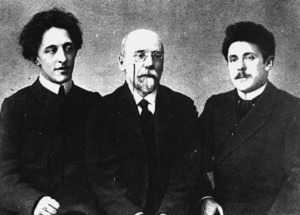
Fjodor Sologoeb (17 februari 1863 - 5 december 1927) Van links naar rechts: Alexander Blok, Fjodor Sologoeb, Georgy Chulkov, jaren 1910
« Un jour, Alain Le Goff me demande : "Seriez-vous capable de me trouver avant ce soir deux bâtons qui n'ont qu'un seul bout chacun ? J'en ai grand besoin et le temps me manque pour les chercher moi-même. Vous aurez une pièce de deux sous pour votre peine." Je ne réponds pas tout de suite. [...]. Avec ses deux bâtons à un seul bout chacun il me prend de si court que je suis sur le point de me tirer d'affaire en inventant quelque prétexte sur le chaud. Si je ne le fais pas, c'est parce que j'appréhende de voir les yeux bleus du grand-père se détourner de moi pendant qu'il dira en soupirant : "Alors, il faudra que je donne mes deux sous à quelqu'un d'autre." Jamais de la vie ! Les deux sous, je m'en moque, mais le quelqu'un d'autre je ne veux pas en entendre parler. [...]. - Alors, dit Alain Le Goff en tirant sur sa pipe, je ne peux pas vous faire confiance ? - Deux bâtons à un seul bout chacun, c'est difficile à trouver. Mais peut-être, si vous pouviez vous contenter d'un seul ... - Ils vont toujours deux par deux, c'est tout ce que je sais. Si vous mettez la main sur l'un, vous tenez l'autre en même temps. - Et de quel côté sont-ils les plus nombreux ? De tous les côtés, dit Alain Le Goff. - Mais comment reconnaît-on qu'un bâton n'a qu'un seul bout ? - Comment ? Vous ne savez pas ? C'est quand l'autre bout n'est pas là ! »
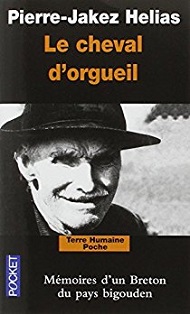
Pêr-Jakez Helias (17 februari 1914 – 13 augustus 1995) Cover
Sie saßen auf den Bänken, Sie saßen um ihren Tisch, Sie ließen Bier sich schenken Und zechten fromm und frisch. Sie kannten keine Sorgen, Sie kannten kein Weh und Ach, Sie kannten kein Gestern und Morgen, Sie lebten nur diesen Tag.
Sie saßen unter der Erle - Schön war des Sommers Zier - Wilde, zorn'ge Kerle Aus York und Lancashire. Sie sangen aus rauhen Kehlen, Sie saßen bis zur Nacht, Sie ließen sich erzählen "Von der schlesischen Weberschlacht."
Und als sie alles wußten, Tränen vergossen sie fast, Auffuhren die robusten Gesellen in toller Hast. Sie ballten die Fäuste und schwangen Die Hüte im Sturme da; Wälder und Wiesen klangen: "Glück auf, Silesia!"
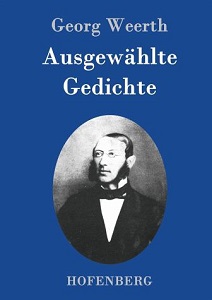
Georg Weerth (17 februari 1822 - 30 juli 1856) Cover
“Lange hatte sich Faust mit den Seifenblasen der Metaphysik, den Irrwischen der Moral, und den Schatten der Theologie herumgeschlagen, ohne eine feste, haltbare Gestalt für seinen Sinn herauszukämpfen. Ergrimmt warf er sich in die dunklen Gefilde der Magie, und hoffte nun der Natur gewaltsam abzuzwingen, was sie uns so eigensinnig verbirgt. Sein erster Gewinn war die merkwürdige Erfindung der Buchdruckerei, der zweite war schaudervoller. Er entdeckte durch Forschen und Zufall die furchtbare Formel, den Teufel aus der Hölle zu rufen, und ihn dem Willen des Menschen untertänig zu machen. Bis jetzt konnte er sich noch nicht, aus Vorliebe zu seiner unsterblichen Seele, für die jeder Christ wacht, ohne sie weiter zu kennen, zu diesem gefährlichen Schritt entschließen. In diesem Augenblick war er ein Mann in seiner vollen Blüte. Die Natur hatte ihn wie einen ihrer Günstlinge behandelt, ihm einen schönen, festen Körper, und eine bedeutende, edle Gesichtsbildung verliehen. Genug um Glück in der Welt zu machen; aber da sie die gefährlichen Gaben, strebende, stolze Kraft des Geistes, hohes, feuriges Gefühl des Herzens, und eine glühende Einbildungskraft hinzufügte, die das Gegenwärtige nie befriedigte, die das Leere, Unzulängliche des Erhaschten in dem Augenblick des Genusses aufspürte, und alle seine übrigen Fähigkeiten beherrschte, so verlor er bald den Pfad des Glücks, auf den nur Beschränktheit den Sterblichen zu führen scheint, und auf welchem ihn nur Bescheidenheit erhält. Früh fand er die Grenzen der Menschheit zu enge, und stieß mit wilder Kraft dagegen an, um sie über die Würklichkeit hinüber zu rücken. Durch das, was er in frühern Jahren begriffen und gefühlt zu haben glaubte, faßte er eine hohe Meinung von den Fähigkeiten, dem moralischen Wert des Menschen, und in der Vergleichung mit andern legte er natürlich seinem eignen Selbst (welches der größte Geist mit dem flachsten Schafskopf gemein hat) den größten Teil der Hauptsumme bei. Zunder genug zu Größe und Ruhm; da aber wahre Größe und wahrer Ruhm, gleich dem Glücke, den am meisten zu fliehen scheinen, der sie dann schon erhaschen will, bevor er ihre feinen, reinen Gestalten von dem Dunst und Nebel absondert, den der Wahn um sie gezogen, so umarmte er nur zu oft eine Wolke für die Gemahlin des Donnerers.“
Friedrich Maximilian Klinger (17 februari 1752 – 25 februari 1831) Cover
De Australische dichteres, schrijfster, uitgeefster en suffragette Louisa Lawsonwerd geboren op 17 februari 1848 in Mudgee, New South Wales. Zie ook alle tags voor Louisa Lawsonop dit blog.
A Reveire
I am sitting by the river, And I while an hour away, Watching circles start and widen In their momentary play. Here a stronger whelms a weaker As its ring expanding flies, There one rises to the surface, As another fades and dies. And I solemn grow with thinking, For just now it would me seem, That each life is like a circle - On time's deep, impellant stream. Do we not upon its bosom Linger for a little day, Making faint and fleeting impress, Then forever fade away. While the strong unresting river Toward Eternity doth glide, All regardless of the circles That have pulsed upon its 'ide.
Louisa Lawson (17 februari 1848 – 12 augustus 1920) Mudgee, New South Wales
A voice resounds like thunder-peal, 'Mid dashing waves and clang of steel:-- "The Rhine, the Rhine, the German Rhine! Who guards to-day my stream divine?"
Chorus.
Dear Fatherland, no danger thine: Firm stand thy sons to watch the Rhine!
They stand, a hundred thousand strong, Quick to avenge their country's wrong; With filial love their bosoms swell, They'll guard the sacred landmark well!
The dead of a heroic race From heaven look down and meet their gaze; They swear with dauntless heart, "O Rhine, Be German as this breast of mine!"
While flows one drop of German blood, Or sword remains to guard thy flood, While rifle rests in patriot hand,-- No foe shall tread thy sacred strand!
Our oath resounds, the river flows, In golden light our banner glows; Our hearts will guard thy stream divine: The Rhine, the Rhine, the German Rhine!
Dear Fatherland, no danger thine: Firm stand thy sons to watch the Rhine!
Max Schneckenburger (17 februari 1819 – 3 mei 1849)
“To one unacquainted with the Ptolemaic system, and unprovided with suitable maps, the Dantesque cos-mology presents difficulties almost as insuperable as those, geography would offer to a child destitute of an atlas. The scheme of the Universe has to be picked out here and there throughout the poem ; and I propose in this chapter to present my reader with a preliminary bird's-eye view of that world through which we are about to become fellow-pilgrims with the Poet. The central point of Dante's Universe is that central point of the Earth which constitutes the centre of gravity. Hither with Dante we descend through the Pit of Hell ; hence painfully threading our way through the bowels of Earth's opposite hemisphere, emerge on the shore of the single island dotting the vast Ocean ; climb with toil the Mountain of Purgatory, situate within the Spheres of Air and Fire, and from the Terrestrial Paradise on its summit ascend through the Nine Heavens : traversing thus all the realms of Time and Space till we attain our final rest in the allcontaining, uncontained, timeless, spaceless, Empyrean, . So marvellous in conception, so perfect in order, so dazzling in glory, is the Universe unfolded to our view. We proceed to consider it in detail. Dante divides our globe into two elemental hemispheres : the Eastern, chiefly of land ; the Western, almost wholly of water. In the midst of the inhabited Land-hemisphere he places Jerusalem ; within the same hemisphere, so that its central and Hell's lowest point is exactly under Jeru-salem, he places Hell ; in the midst of the uninhabited Sea-hemisphere he places Purgatory, as the antipodes to Jeru-salem, distant from it by the whole diameter of the globe. Thus on and within the Earth are situated the temporal and the eternal prison-house of sin. Neither, in Dante's view, formed part of God's original creation, wherein sin was not ;...”
Maria Rossetti (17 februari 1827 - 24 november 1876) Rond 1874