Romenu is een blog over gedichten, literatuur en kunst Maar Romenu is ook een professionele freelance vertaler Du-Ne en Ne-Du http://www.roumen-vertalingen.nl/
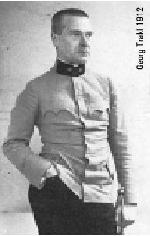
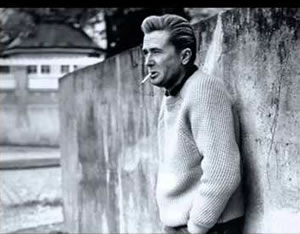
Georg Trakl werd op 3 februari 1887 in het conducteurshuis aan de Waagplatz 2 in Salzburg geboren. Zijn vader, Tobias Trakl, was een handelaar in ijzerwaren en zijn moeder, die ook psychische problemen had, was Maria Catharina Trakl, (meisjesnaam Halik). Voorts had hij nog drie broers en drie zussen. Margarethe (doorgaans Grethe genoemd) stond hem het naast, zelfs zodanig dat sommigen een incestueuze verhouding vermoeden. Zijn jeugd bracht hij door in Salzburg. Vervolgens bezocht hij van 1897 tot 1905 het humanistische gymnasium. Om toch een academische opleiding te kunnen volgen, werkte hij tot 1908 in de praktijk bij een apotheker. Sommigen vermoedden dat hij dit vooral deed om zichzelf opiaten te kunnen verschaffen. Bij het uitbreken van WO I werd Trakl als medicus naar het front in Galicië (heden ten dage in Oekraïne en Polen) gestuurd. Zijn gemoedsschommelingen leidden tot geregelde uitbraken van depressie, die verergerd werden door de afschuw die hij voelde voor de verzorging van de ernstig verwonde soldaten. De spanning en druk dreven hem ertoe een suïcidepoging te ondernemen, welke zijn kameraden nochtans verhinderden. Hij werd in een militair ziekenhuis opgenomen in Kraków, alwaar hij onder strikt toezicht geplaatst werd.Trakl verzonk daar in nog zwaardere depressies en schreef Ficker om advies. Ficker overtuigde hem ervan dat hij contact moest opnemen met Wittgenstein, die inderdaad op weg ging na Trakls bericht te hebben ontvangen. Op 4 november 1914, drie dagen voordat Wittgenstein aan zou komen, overleed hij echter aan een overdosis cocaïne
Paul Celan
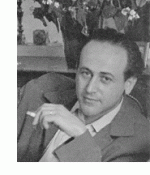
Paul Celan werd onder de naam Paul Antschel op 23 november 1920 geboren in Czernowitz, toentertijd de hoofdstad van de Roemeense Boekovina, nu behorend bij de Oekraïne. Paul Celans ouders waren Duitssprekende joden die hun zoon joods opvoedden en hem naar Duitse christelijke scholen stuurden. In 1942 werden Celans ouders door de Duitse bezetter naar een werkkamp gedeporteerd en daar vermoord. Hijzelf wist aanvankelijk onder te duiken, maar moest vanaf juli 1942 in een werkkamp dwangarbeid verrichten. Celan overleefde de oorlog. Via Boekarest en Wenen vestigde Celan zich in 1948 in Parijs. Daar was hij werkzaam als dichter, vertaler en doceerde hij aan de prestigieuze Ecole Normale Supérieure. Vermoedelijk op 20 april 1970 beëindigde hij zijn leven zelf door in de Seine te springen.
Gerard Reve
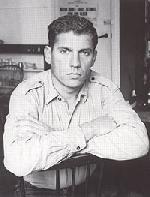
Gerard Reve over: Medearbeiders ”God is in de mensen, de dieren, de planten en alle dingen - in de schepping, die verlost moet worden of waaruit God verlost moet worden, door onze arbeid, aangezien wij medearbeiders van God zijn.” Openbaring ”Tja, waar berust elk godsbegrip op, elke vorm van religie? Op een openbaring, dat wil zeggen op een psychische ervaring van zulk een dwingende en onverbiddelijke kracht, dat de betrokkene het gevoel heeft, niet dat hij een gedachte of een visioen heeft, maar dat een gedachte gedachte of visioen hem bezit en overweldigt.”
Simon Vestdijk
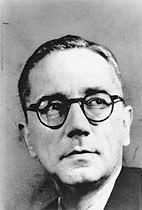
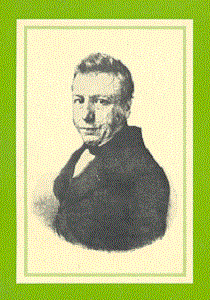
Simon Vestdijk (Harlingen, 17 oktober 1898 – Utrecht, 23 maart 1971) was een Nederlands romancier, dichter, essayist en vertaler. Zijn jeugd te Harlingen en Leeuwarden beschreef hij later in de Anton Wachter-cyclus. Van jongs af aan logeerde hij regelmatig bij zijn grootouders in Amsterdam, waar hij zich in 1917 aan de Universiteit van Amsterdam inschrijft als student in de medicijnen. Tijdens zijn studie die van 1917 tot 1927 duurde, leerde hij Jan Slauerhoff kennen.Tot 1932 is hij als arts in praktijken door heel Nederland werkzaam. In 1932 volgt zijn officiële schrijversdebuut met de uitgave van de bundel Verzen in De Vrije Bladen. Doorslaggevend voor Vestdijks uiteindelijke keuze voor de literatuur is zijn ontmoeting in 1932 met Eddy Du Perron en Menno ter Braak. Deze ontmoeting had tot resultaat dat hij redactielid werd van het tijdschrift Forum Kort daarop, in 1933, wordt zijn eerste novelle, De oubliette, uitgegeven. In hetzelfde jaar schrijft hij Kind tussen vier vrouwen, dat, eerst geweigerd door de uitgever, later de basis zal vormen voor de eerste drie delen van de Anton Wachter-romans. In 1951 ontvangt Vestdijk de P.C. Hooftprijs voor zijn in 1947 verschenen roman De vuuraanbidders. In 1957 wordt hij voor het eerst door het PEN-centrum voor Nederland voorgedragen voor de Nobelprijs voor de Literatuur, die hij echter nooit zal krijgen. Op 20 maart 1971 wordt hem de Prijs der Nederlandse Letteren toegekend, maar voor hij deze kan ontvangen overlijdt hij op 23 maart te Utrecht op 72-jarige leeftijd. Vestdijk was auteur van ca. 200 boeken. Vanwege deze enorme productie noemde de dichter Adriaan Roland Holst hem 'de man die sneller schrijft dan God kan lezen'. Andere belangrijke boeken van Simon Vestdijk zijn: "Kind van stad en land" (1936), "Meneer Visser's hellevaart" (1936), "Ierse nachten" (1946), "De toekomst de religie" (1947), "Pastorale 1943" (1948), "De koperen tuin" (1950), "Ivoren wachters" (1951), "Essays in duodecimo" (1952) en "Het genadeschot" (1964).
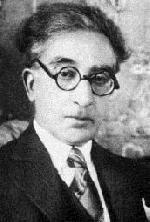
K.P. Kavafis K.P. Kavafis werd als kind van Griekse ouders, afkomstig uit Konstantinopel, geboren in 1863 in Alexandrië (tot vandaag een Griekse enclave) waar hij ook het grootste deel van zijn leven woonde en werkte. Twee jaar na de dood van zijn vader verhuist het gezin in 1872 naar Engeland om na een verblijf van vijf jaar naar Alexandrië terug te keren. Vanwege ongeregeldheden in Egypte vlucht het gezin in 1882 naar Konstantinopel, om na drie jaar opnieuw naar Alexandrië terug te gaan. In de jaren die volgen maakt Kavafis reizen naar Parijs, Londen en in 1901 zijn eerste reis naar Griekenland, in latere jaren gevolgd door nog enkele bezoeken. Op de dag van zijn zeventigste verjaardag, in 1933 sterft Kavafis in Alexandrië. De roem kwam voor Kavafis pas na zijn dood, dus postuum. Deels is dat toe te schrijven aan zijn eigen handelswijze. Hij was uiterst terughoudend met de publicatie van zijn gedichten, liet af en toe een enkel gedicht afdrukken in een literair tijdschrift, gaf in eigen beheer enkele bundels met een stuk of twintig gedichten uit en het merendeel van zijn poëzie schonk hij op losse bladen aan zijn beste vrienden.
Thomas Mann
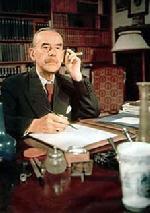
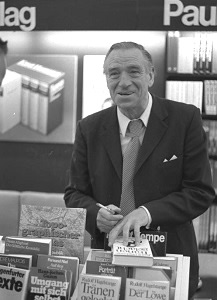
Thomas Mann, de jongere broer van Heinrich Mann, werd geboren op 6 juni 1875 in Lübeck. Hij was de tweede zoon van de graankoopman Thomas Johann Heinrich Mann welke later één van de senatoren van Lübreck werd. Zijn moeder Julia (geboren da Silva-Bruhns) was Duits-Braziliaans van Portugees Kreoolse afkomst. In 1894 debuteerde Thomas Mann met de novelle "Gefallen". Toen Thomas Mann met 21 jaar eindelijk volwassen was en hem dus geld van zijn vaders erfenis toestond - hij kreeg ongeveer 160 tot 180 goldmark per jaar - besloot hij dat hij genoeg had van al die scholen en instituties en werd onafhankelijk schrijver. Kenmerkend voor zijn stijl zijn de ironie, de fenomenale taalbeheersing en de minutieuze detailschildering. Manns reputatie in Duitsland was sterk wisselend. Met zijn eerste roman, Buddenbrooks (1901), had hij een enorm succes, maar door zijn sceptische houding tegenover Duitsland na de Eerste Wereldoorlog veranderde dit volledig. Stelde hij zich tot aan de jaren twintig apolitiek op (Betrachtungen eines Unpolitischen, 1918), meer en meer raakte hij bij het Politiek gebeuren betrokken. Zijn afkeer van het nationaal socialisme groeide, zijn waarschuwingen werden veelvuldiger en heftiger. In 1944 accepteerde hij het Amerikaanse staatsburgerschap. Tussen 1943 en 1947 schreef Mann Doktor Faustus (zie Faust), de roman van de 'Duitse ziel' in de gecamoufleerd geschilderde omstandigheden van de 20ste eeuw. In 1947 bezocht hij voor het eerst sinds de Oorlog Europa, twee jaar later pas Duitsland. In 1952 vertrok hij naar Zwitserland. Op 12 augustus 1955 stierf hij in Zürich. Twintig jaar na zijn dood, in aug. 1975, is zijn literaire nalatenschap geopend: dagboekaantekeningen van 15 maart 1933 tot 29 juli 1955, alsmede notities uit de jaren 1918 tot en met 1921.Belangrijke werken zijn: Der Zauberberg, Der Tod in Venedig, Dokter Faustus , Joseph und seine Brüder en Die Bekenntnisse des Hochstaplers Felix Krull.
Rainer Maria Rilke
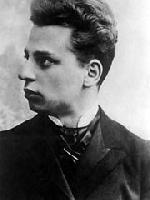
Rilke werd op 4 december 1875 geboren in Praag. Hij had al naam gemaakt als dichter met zijn bundels Das Stundenbuch en Das Buch der Bilder, toen hij de literaire wereld versteld deed staan en wereldfaam verwierf met de publicatie van zijn twee delen Neue Gedichte in 1907 en 1908. Hij verzamelde daarin het beste werk uit een van zijn vruchtbaarste periodes, die hij grotendeels doorbracht in Parijs. Rilke was daar diep onder de indruk gekomen van Rodin, bij wie hij een tijdlang in dienst was als particulier secretaris. Rodin, zei hij later, had hem leren kijken. Dit kijken kwam neer op intense concentratie, om het mysterie te kunnen zien ‘achter de schijnbare werkelijkheid'. Latere en rijpere werken als Duineser Elegien (1912-1923) en het ronduit schitterende Die Sonette an Orfeus (1924) illustreren Rilkes metafysische visie op het onzegbare, dat haar verwoording vindt in een hermetische muzikale taal. Op 29 december 1926 overlijdt Rilke in het sanatorium in Val-Mont aan de gevolgen van leukemie. Enkele dagen later wordt hij, overeenkomstig zijn wens, begraven op het kerkhof van Raron.
* * * * * * * * * * * * * * * *
Romenu
Over literatuur, gedichten, kunst en cultuur
14-01-2017
J. Bernlef, Chris de Stoop, Edward St Aubyn, Yukio Mishima, Anchee Min, Martin Auer
Er staat een rijtuig gereed op een binnenplaats onder een zonnewering. Voor mij of voor een ander. Een ander stapte voor alle zekerheid vast in. Ik weet nog niet of ik vertrekken zal of hier moet blijven, deuren open houden moet voor gasten uit het niets.
Alsof er iemand let op mij achter de gordijnen.
Vriendinnen
Zij schildert alles wit samen met een vriendin zij schilderen alle kamers op ladders staande wit
In jurken van jaren geleden verven zij de vlekken weg trekken naast elkaar verbeten hun kaarsrechte banen
Als zij klaar zijn (ook wit) kijken zij naar de nu weer smetteloze muren en dan aarzelend pas naar elkaar.
Is het berusting, is het vermoeidheid handen op elkaars schouders, dat zij daar zo roerloos blijven staan, als waren zij nooit meer uit hun baan te drijven
Onaantastbaar, de strijd tegen 't bederf met verf gewonnen, glorieus in witgevlekte jurken beginnen zij - twee meisjes langzaam te dansen met elkaar.
Sterven
Als je dicht genaderd bent en denkt het is mij best, ik heb het wel gezien en er is niemand aan wie ik nog hecht,
laat nu maar, heer, uw knecht met een lichaam dat leger wordt en een steeds meer gevuld met dromen laat zachtjes en onvernomen -
dan kun je het wel vergeten. Het moet nog uit je zweten.
J. Bernlef (14 januari 1937 - 29 oktober 2012) In 1968
“Daar staan we dan, mijn broer en ik, laat in de middag, diep in de modder, blauw van de kou, te roepen naar de koeien, ‘kom, kom, kom’, terwijl achter ons opeens kogels tegen het dak van de stal ketsen. lnstinctmatig duiken we ineen en kijken rond. Verzopen velden en weilanden strekken zieh voor ons uit tot aan de horizon, met overvolle grachten eromheen. Het enige ongewone dat we zien is een bulldozer aan de overkant van de wei achter de omheining. De oudere koeien laten zieh gewillig bijeendrijven. Ze luisteren nog naar roepnamen als Stampvoet, Steekhoorn of Wittekop en hebben al eerder een winter in de warme stal meegemaakt. Ze plonzen gezapig door het hek naar het erf, voorbij de lange, verse maiskuil, waarvan de bitterzoete geur als natte damp in de lucht hangt. Ze waggelen, draaiend met hun dikke konten, grommend van genoegen, blindelings naar de stal, recht naar de ruif om hooi te eten. De zeven jonge vaarzen, met hun nog blinkende oranje chips in hun oren, willen echter met geen stokslagen naar het hek, waardoor ze pas in september voor het eerst in de wei zijn gekomen, samen met de springstier. We jagen ze armenzwaaiend op, roepen en tieren, glijden uit en worden drijfnat. Op het laatste moment draaien ze zieh telkens om en stormen rakelings langs ons. Luid loeiend vliegen ze alle kanten uit. En omdat het al sinds onze kinderjaren een uitgemaakte zaak is dat ik de snelste ben en mijn broer de sterkste, is het altijd aan mij om erachteraan te rennen. De wind wakkert aan, ik spring op de graspollen aan de zijkant van een plas, verlies mijn evenwicht en val languit in het slijk. Uitgeteld kijk ik een halve minuut naar de grote vlakken grijs en zwart die boven me over elkaar schuiven. Hoe vaak hebben we dit al samen gedaan? Ik vond het altijd geweldig om met mijn broer de kudde in en uit de stal te laten. In ruil daarvoor krijg ik om de paar jaar een aehterkwartier mee naar huis. Niet van de beste koe, die te veel geld waard is, maar van de slechtste.”
Chris De Stoop (Sint-Gillis-Waas, 14 januari 1958)
« Malcolm’s doubts were not confined to Hampshire. Elysian was a highly innovative but controversial agricultural company. It numbered among its products some of the world’s most radical herbicides and pesticides, and was a leader in the field of genetically modified crops, crossing wheat with Arctic cod to make it frost resistant, or lemons with bullet ants to give them extra zest. Their Giraffe carrots had been a great help to the busy housewife, freeing her to peel a single carrot for Sunday lunch instead of a whole bunch or bag. Nevertheless, environmentalists had attacked one Elysian product after another, claiming that it caused cancer, disrupted the food chain, destroyed bee populations, or turned cattle into cannibals. As the noose of British, European and American legislation closed around it, the company had to face the challenge of finding new markets in the less hysterically regulated countries of Africa, Asia and Latin America. That was where the Foreign Office, liaising with Trade and Industry, had stepped in with their combined expertise in exports and diplomacy. The latter had come very much to the fore after some regrettable suicides among Indian farmers, whose crops had failed when they were sold Cod wheat, designed to withstand the icy rigours of Canada and Norway rather than the glowing anvil of the Indian Plain. Although the company disclaimed any responsibility, an unusually generous consignment of Salamander wheat proved such a success that Elysian was able to use a shot of the gratefully waving villagers, their colourful clothing pressed to their elegantly thin bodies by the billows of a departing helicopter, in one of its advertising campaigns. Elysian’s weaponized agricultural agents had come to Malcolm’s attention when he was asked to sit on the Government committee responsible for the ‘Checkout List’. Aerially dispersed, Checkout caused any vegetation on the ground to burst immediately into flame, forcing enemy soldiers into open country where they could be destroyed by more conventional means. Debates about the Checkout List had of course remained secret, and from the general public’s point of view, Elysian’s name continued to be associated almost entirely with its literary prize."
Uit: Runaway Horses (Vertaald door Michael Gallagher)
“How oddly situated a man is apt to find himself at age thirty-eight! His youth belongs to the distant past. Yet the period of memory beginning with the end of youth and extending to the present has left him not a single vivid impression. And therefore he persists in feeling that nothing more than a fragile barrier separates him from his youth. He is forever hearing with the utmost clarity the sounds of this neighboring domain, but there is no way to penetrate the barrier. Honda felt that his youth had ended with the death of Kiyoaki Matsugae. At that moment something real within him, something that had burned with a vibrant brilliance, suddenly ceased to be. Now, late at night, when Honda grew weary of his legal drafts, he would pick up the dream journal that Kiyoaki had left him and turn over its pages. (...)
Since then eighteen years had passed. The border between dream and memory had grown indistinct in Honda’s mind. Because the words contained in this journal, his only souvenir of his friend, had been traced there by Kiyoaki’s own hand, it had profound significance for Honda. These dreams, left like a handful of gold dust in a winnowing pan, were charged with wonder. As time went by, the dreams and the reality took on equal worth among Honda’s diverse memories. What had actually occurred was in the process of merging with what could have occurred. As reality rapidly gave way to dreams, the past seemed very much like the future. When he was young, there had been only one reality, and the future had seemed to stretch before him, swelling with immense possibilities. But as he grew older, reality seemed to take many forms, and it was the past that seemed refracted into innumerable possibilities. Since each of these was linked with its own reality, the line distinguishing dream and reality became all the more obscure. His memories were in constant flux, and had taken on the aspect of a dream.”
Yukio Mishima (14 januari 1925 - 25 november 1970)
“As I understood it, my parents were doing work that was saving the world. Every evening I would pick up the children and fight with the kids on the block all the way home. It was like eating a regular meal that I got a purple cheek or a bloody nose. It did not bother me too much. Although I was scared of crossing at traffic lights and dark alleys, I learned to not show my fear, because I had to be a model for the children, to show them what bravery meant. After I arranged for the children to play by themselves in the living room, I went to set up the stove to cook dinner. It always took me a long time to light the stove, because I did not understand that wood and coals needed air to burn. I stuffed the stove as I sang songs of Mao quotations. One time, when I tried many times and the stove would not light, I lost my patience. I went out to play, thinking that the stove was not burning. Then a kid came and told me that there was smoke coming out of our house window. This happened three times.I tried to put the children to sleep while the sky was still bright. The children's little feet kicked the cotton blankets and made new holes over the old. The blankets soon became rags. When the room quieted down, I would lean on the windowsill staring at the entrance to the lane, waiting for my parents to appear. I watched the sky turn deep blue, Venus rising, and I would fall asleep by the window.In 1967, when I was ten years old, we moved. It was because our downstairs neighbor accused us of having a bigger space than they had. They said, How can a family of six occupy four rooms while a family of eleven has only one? The revolution is about fairness. They came up with chamber pots and poured shit on our blankets. There were no police. The police station was called a revisionist mechanism and had been shut down by the revolutionaries. The Red Guards had begun looting houses. No one answered our call for help. The neighbors just watched.The downstairs neighbor kept bothering us. We cleaned the shit night after night, swallowed insults in meek submission. The downstairs family became uncontrollable. They threatened to harm us children when our parents were not at home. They said their second daughter had a history of mental illness. Therefore, they could not be responsible for what she was going to do. The second daughter came up and showed me an ax that she had just sharpened.”
Anchee Min (Shanghai, 14 januari 1957)
De Oostenrijkse dichter en schrijver, musicus en cabaretier Martin Auer werd geboren op 14 januari 1951 in Wenen. Zie ook alle tags voor Martin Auer op dit blog.
Über die Erde
Über die Erde sollst du barfuß gehen. Zieh die Schuhe aus, Schuhe machen dich blind. Du kannst doch den Weg mit deinen Zehen sehen, das Wasser, den Wind.
Sollst mit deinen Sohlen die Steine berühren, mit ganz nackter Haut. Dann wirst du bald spüren, daß dir die Erde vertraut.
Spür das nasse Gras unter deinen Füßen und den trockenen Staub. Laß dir vom Moos die Sohlen streicheln und küssen und fühl das Knistern im Laub.
Steig hinein, steig hinein in den Bach und lauf aufwärts dem Wasser entgegen. Halt dein Gesicht unter den Wasserfall. Und dann sollst du dich in die Sonne legen.
Leg deine Wange an die Erde, riech ihren Duft und spür, wie aufsteigt aus ihr eine ganz große Ruh'. Und dann ist die Erde ganz nah bei dir, und du weißt: Du bist ein Teil von Allem und gehörst dazu.
“Before the ferry leaves a horse and wagon comes aboard, a brokendown springwagon loaded with flowers, driven by a little brown man with high cheekbones. Jimmy Herf walks around it; behind the drooping horse with haunches like a hatrack the little warped wagon is unexpectedly merry, stacked with pots of scarlet and pink geraniums, carnations, alyssum, forced roses, blue lobelia. A rich smell of maytime earth comes from it, of wet flowerpots and greenhouses. The driver sits hunched with his hat over his eyes. Jimmy has an impulse to ask him where he is going with all of those flowers, but he stifles it. (...)
He is walking up an incline. There are tracks below him and the slow clatter of a freight, the hiss of an engine. At the top of a hill he stops to look back. He can see nothing but fog spaced with a file of blurred archlights. Then he walks on, taking pleasure in breathing, in the beat of his blood, in the tread of his feet on the pavement, between rows of otherworldly frame houses. Gradually the fog thins, a morning pearliness is seeping in from somewhere. Sunrise finds him walking along a cement road between dumping grounds full of smoking rubbishpiles. The sun shines redly through the mist on rusty donkey-engines, skeleton trucks, wishbones of Fords, shapeless masses of corroding metal. Jimmy walks fast to get out of the smell. He is hungry; his shoes are beginning to raise blisters on his big toes. At a cross-road where the warning light still winks and winks, is a gasoline station, opposite it the Lightning Bug lunchwagon. Carefully he spends his last quarter on breakfast. That leaves him three cents for good luck, or bad luck for that matter. A huge furniture truck, shiny and yellow, has drawn up outside. "Say will you give me a lift?" he asks the redhaired man at the wheel. "How fur ye goin?" "I dunno. . . . Pretty far."
John Dos Passos (14 januari 1896 – 28 september 1970)
„Felix bedeutet der Glückliche. Der Name stammt aus dem Lateinischen. und er war. als die Winters ihn für ihren Sohn aussuchten, in der Hitparade der Jungennarnen soeben auf Platz elf vorgerückt - Tendenz leicht steigend. Melanie Winter hatte die Liste aus dem Internet heruntergeladen und hielt sie ihrem Mann unter die Nase. Ein sorgfältig rot lackierter Fingernagel tippte wiederholt auf die elfte Zeile, und tatsächlich, erkannte André Winter: Felix stand nicht nur weit genug vom. um später einmal belegen zu können. dass man sich mit dieser Wahl durchaus auf der Höhe der Zeit befunden hatte. Nein, in seiner hübschen Zweisilbigkeit stand der Name auch weit genug hinten, um sich deutlich von allen spitzenreitenden einsilbigen Jans und Toms und Bens abzugrenzen, die in diesem Jahr scharenweise, wie es aussah. zur Meinung der Menschheit an den Start geschickt wurden. André Winter studierte stumm die Liste, speziell die Ziffer vor dem Namen Felix. Elf war eine Primzahl. Primzahlen machten ihn nervös. Alles, was sich nicht in ganzzahlige Größen teilen ließ, machte ihn nervös - das uferlose Internet, die gestauchten Zahlenkolonnen unter seinen Kontoausziigen… manchmal sein ganzes Leben. Ein Primzahlenname beschwor womöglich etwas herauf. das ihm in Zukunft Kopfzerbrechen bereiten mochte. Aber die Zukunft war weit entfernt. Die Gegenwart war ausgefüllt von einem fordernd tippenden Zeigefinger, und noch nervöser als die Elf machte André Winter das Wissen darum, wie ungehalten seine Frau reagierte, wenn sie nicht bekam, was sie wollte. Deshalb stimmte er, mit einem letzten Blick auf ihre roten Fingernägel zu. Vermutlich war er bloß abergläubisch. Vielleicht ging alles gut. Und alles ging gut. Elf Jahre lang. Am ersten Tag des zwölften ]ahres wurde alles anders.“
Kan het zijn dat de lier, die sinds lang niet meer ruiste, die sinds lang tot geen harten in dichtmuziek sprak, weer opeens van verrukking en hemellust bruiste, en in stromende galmen het stilzwijgen brak?
Kan het zijn dat een ader, verstikt en vergeten, schoon eens mede van jeugdige zangtonen vol, thans opnieuw, door een stout maar gelukkig vermeten, in de zandgrond geraakt, weder uitschoot en zwol?
’t Mochte zijn, dat een winter voorbij waar gevaren, en haar ijs bij de stralen der lentezon smolt; — dat — een reeks van onvruchtbaar vervlotene jaren door één oogst voor het minst al die dorheid vergold!
Neen! de mens mag zijn lente geen tweedemaal smaken; op zijn winter volgt nooit weer herleving en groei! — dan alleen als dit stof eens zijn doden zal slaken voor een eeuwige zon, voor een eindloze bloei!
Evenwel heeft wellicht onze Dichtkunst haar tijden. — o! De harp van mijn stam heeft de wissling gekend van gejuich en geklag, van verheffing en lijden, van bevrijding en lange — verdorrende ellend.
“I stand here ironing. and what you asked me moves tormented back and forth with the iron. “I wish you would manage the time to come in and talk with me about your daughter. I‘m sure you can help me understand her. She's a youngster who needs help and whom I'm deeply interested in helping.” “Who needs help.” . . . Even if 1 came. what good would it do? You think because I am her mother 1 have a key. or that in some way you could use me as a key? She has lived for nineteen years. There is all that life that has happened outside of me, beyond me. And when is there time to remember. to sift. to weigh. to estimate, to total? I will start and there will be an interruption and I will have to gather it all together again. Or I will become engulfed with all I did or did not do. with what should have been and what cannot be helped. She was a beautiful baby. The first and only one of our five that was beautiful at birth. You do not guess how new and uneasy her tenancy in her now-loveliness. You did not know her all those years she was thought homely, or see her poring over her baby pictures, making me tell her over and over how beautiful she had been-and would be. I would tell her-and was now. to the seeing eye. But the seeing eyes were few or nonexistent. Including mine. I nursed her. They feel that’s important nowadays. I nursed all the children, but with her. with all the fierce rigidity of first motherhood. I did like the books then said. Though her cries battered me to trembling and my breasts ached with swollenness, I waited till the clock decreed.“
Tillie Olsen (14 januari 1912 – 1 januari 2007) Cover
Uit: The Graveyard (Vertaald door Norbert Guterman)
“Franciszek Kowalski, forty-eight years of age, slender, slightly balding, with a ruddy complexion, prominent cheekbones, and blue eyes, took a drink you won’t believe how rarely, only on really extraordinary occasions; he never drank more than he could hold, and never had to be told later by others what he had talked about and how he had behaved He was one of the lucky few who upon waking in the morning never have to be ashamed of the night before. Late one night, however, on his way home from a party meeting, a meeting which had dragged on for many hours, and at which he had often had to take the floor on matters of importance to him and his fellow workers, he ran into a friend whom he had known when they were both partisan fighters, He had not seen him since 1945 when he himself had marched off to the front while his friend, then seriously wounded, had gone to the hospital and stayed there until the end of the war. This meeting so delighted them that they decided to celebrate it with a glass of vodka. They went to the nearest bar. The friend ordered a half pint; and when the bottom of the bottle showed, Franciszek called the waiter, and, so as not to give his friend the impression that he had gone completely rusty since the days of the underground, ordered another half pint This put them in suda high spirits, they talked so heartily, and faded memories took on such brilliant colors, that they asked for a third half pint almost in one breath, and then the waiter himself, without asking them, served them a fourth. When they walked out, day was breaking, and the first bands of light were beginning to show in the gray sky. They said goodbye, afiecfionatdy shaking hands at great length, and then each went his way. Franciszek walked briskly, keeping his eye on a line in the sidewalk, but he felt that some hitherto unknown forces were rocking him from side to side, and the line in the sidewalk kept vanishing from his field of vision. “I guess I’m a bit…”, he murmured, “abit. . .what the hell . . .”
Von der Überwindung des Todes Es gilt nicht dies: zu überwinden, Was in uns nach Behalten schreit. Es darf ein Herz wohl Freude finden An Dingen der Vergänglichkeit: Ein Abendfrieden unter Linden, Ein Trunk, ein Stern, ein Frauenkleid. Entsagung ist die Straße der Gefahren, Und Torheit macht nicht halt vor weißen Haaren.
Es gilt auch nicht: den Tag verspielen Mit dem Gedanken an den Untergang Und nach dem eigenen Herzen zielen In einem fieberhaften Überschwang. Wer sah nicht zu, wie ach so vielen Dabei der Bogen in der Hand zersprang, Und wie sie wehrlos, selbstvergessen Nun taumelnd ihren Weg durchmessen?
Wohl aber gilt uns dies: sich selbst entschreiten, Den Blick gerichtet auf das große Tor, In dem das Ungewisse dieser Zeiten Sich ins unendlich Ungewisse still verlor. Die Schätze, die uns hier entgleiten, Sond ohnehin nur schwaches Rohr, Das uns zerbricht auf dieser letzten Straße, Die jenseits liegt vor uns und unserem Maße.
Ich wollte, daß ich diese Kraft besäße, Ganz ohne Neugier schweigend nachzudringen Dem Tode, so in Demut der Gefäße, Die schmerz- und klagelos zur Neige gingen Und ohne daß die Gier an ihnen fräße, Zu wissen, welchen Trank sie bringen, Bis ich am Tore still die Schuh vom Knöchel streife Wie eine Frucht die Schale in der Zeit der Reife.
Rudolf Hagelstange (14 januari 1912 – 5 augustus 1984)
“What Lenin had called bureaucratic perversion was in fact the only possible way to run the country. It had its dangers: the bureaucracy tries to stand between the people and the leadership, it tries to supplant the leadership. That has to be stamped out without mercy. The apparatus must be the unquestioning executor of the supreme will, it has to be kept in a state of fear, which it will in turn pass on to the people. Did he have such an apparatus? No, he did not! The present apparatus had been formed in the struggle for power and was not yet an instrument of the leader; it regarded itself as a partner in the victory. Budyagin’s visit had been a reminder of this. The apparatus of the true leader is the one he creates for himself after he has come to power. Such an apparatus must not be eternal or permanent, otherwise ties become cemented and the apparatus acquires a monolithic quality and strength of its own. One must keep shuffling it, renewing and replacing it. The creation of such an apparatus is more complicated than just getting rid of rivals. The apparatus consists of hundreds of thousands of people who have been concentrated into a single organism, linked and welded together from top to bottom. The present members of the Politburo were no longer those who had returned with Lenin from abroad. The Politburo members now had their own connections within the apparatus, their own links, which stretched from the top to the bottom. You only had to touch one link for the whole chain to rattle. Did he trust his own entourage? In politics you trust nobody.”
Anatoli Rybakov (14 januari 1911 – 23 december 1998)
“Dieses mental Angestecktwerden ist auf sehr vielen Ebenen möglich. So ist das Sich-identisch-fühlen eines Lesers mit seinem Lieblingsschriftsteller dem gleichen Vorgang zuzuordnen. Ansteckungen können also zum Guten wie zum Schlimmen führen. Ich, beispielsweise, bin entscheidend von dem Werk des englischen Schriftstellers John Cowper Powys angesteckt worden. Das heißt, er hat einen Gärungsvorgang in mir angeregt, der meinen eigentlichen "Ton" fördern half. Zu solcher Fruchtbarkeit können Freundschaften und Liebesverhältnisse führen. Fuhrmann nennt das: Wir setzen uns aus den anderen zusammen, die wir suchen, weil sie wiederum uns für ihre eigene Komplettierung brauchen. In diesem Sinne verstehe ich auch, warum das Schreiben von Büchern im Laufe der letzten Jahrzehnte, sozusagen durch Erpressung seitens der nothaften Zeit, zu einer Beschreibung des Vorgangs, der zum Schreiben führt, hat werden können. Wir suchen im Schriftsteller den Freund, mit dem wir Intimstes austauschen. Wir wünschen ihn, mehr als in ausgerundeten Romanen mit gestellten Kulissen, in Tagebüchern und Briefen über seinem mystischen Eigentum, im Zentrum dieses Eigentums anzutreffen und dort, in diesen Bezirken, Signale mit ihm zu tauschen, in denen er sich, wir uns, endgültig und vorbehaltlos zu erkennen geben. Das ist hilfreich. Das führt uns in brüderlicher Vereinigung durch die zermalmenden Gewalten der Gegenwart.“
Uit: Times of Gustaf Adolf (Vertaald door Selma Borg en Marie A. Brown)
"That is not true," rejoined another, who had received from returning soldiers a vague idea of the conspiracies against the king's life. "It is," added he, with a shy voice, as if fearing to be heard by the object of his story, " it is a nun from Walskland, hired by the Jesuits to make away with the king. Six times has she given him deadly poison, and six times has he been warned in dreams not to drink. When for the seventh time she offered him the draught, the king drew his sword and forced her to swallow her own poison." "But how can she then be here alive?" remarked an elderly lady, innocently. "Alive?" repeated the story-teller, without being disconcerted. "Oh, that is a question. Those creatures can dissemble wonderfully. . . . Yes, indeed, do you remember the Dutchman last year who swallowed melted lead ? I do not wish to say too much — but just look! The black-haired nun is as pale as a corpse! " "Has she given the king poison?" exclaimed a trembling female voice close by. It was Meri, who, with bated breath, drank every word. "What nonsense!" replied a sea-captain, with the air of knowing more than all the rest. " When I was in Stralsund last spring, I saw those same eyes, which one cannot easily forget. The girl was then brought to Stockholm, and one of the guards told me the whole story. She is a Spanish witch, who has sold herself to the evil one, to be for seven years the most beautiful woman on earth.”
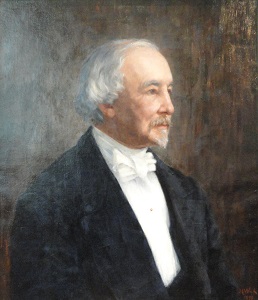
Zacharias Topelius (14 januari 1818 – 12 maart 1898) Portret door Maria Wiik, z.j.
De Duitse dichteres en strijdster voor vrouwenrechten Ida Dehmelwerd geboren op 14 januari 1870 in Bingen. Zie ook alle tags voor Isa Dehmel op dit blog.
Uit: Die Muse der Bohème (Artikel van Özlem Topçu in het Hamburger Abendblatt, 2008)
„Ida Dehmel war ein respektierter Teil der feinen Blankeneser Gesellschaft, auch nach dem Tod ihres Mannes 1920. Bis 1933. Dann durfte sie keine Muse mehr sein – weil sie Jüdin war, lebte aber mit einer Sodergenehmigung weiter in dem Haus. Die Zerstörung ihres Lebens und die Angst vor den Nazis trieb sie in den Selbstmord. Im Alter von 72 Jahren nahm sie sich 1942 mit Schlaftabletten das Leben. In der Straße vor dem Haus erinnert heute ein Stolperstein an Ida Dehmel. Als sie 1896 das erste Mal Richard Dehmel begegnete, waren beide noch mit anderen Partnern verheiratet. Ida Dehmels Ehe war noch von ihrem Vater, einem konservativen Kaufmann aus Bingen am Rhein, arrangiert worden. Ida, die bereits einen Sohn hatte, ließ alles stehen und liegen und ging mit Richard nach Hamburg. Richard Dehmels Gedicht „Empfang“ belegt die exzessive Liebe und das Verlangen zwischen den beiden: „Wie dein Ohr brennt! wie dein Mieder drückt! / rasch, reiß auf, du atmest mit Beschwerde; / o, wie hüpft dein Herzchen nun beglückt! / Komm, ich trage dich, du wildes Wunder: / wie dich Gott gemacht hat! Weg den Plunder! / und dein Brautbett ist die ganze Erde.“ Ida und Richard wurden ein Traumpaar, nicht nur, weil sie „für damalige Verhältnisse in einer nicht gekannten Offenheit mit ihrer Erotik umgin-gen“, sagt ihr Biograf Matthias Wegner („Aber die Liebe. Der Lebenstraum der Ida Dehmel“, Claassen-Verlag). Fotos dokumentieren ihre Lust an der Verkleidung und ihren Hang für „alles Dekorative“, sagt Wegner. Feinste Stoffe, avantgardistischer Schmuck und Kleider, die alle Blicke auf die dunkle Schönheit mit dem vollen Haar zogen. „Sie wollte das so – und sie wollte auch provozieren“, sagt der Autor. Das sei wichtig für sie gewesen, um aus dem Schatten ihres so präsenten Mannes heraustreten zu können. Es gelang ihr. Wenn Ida Dehmel zu ihren Soirées einlud, kamen sie alle. Im Mittelpunkt der Künstlerkreise zu stehen, hatte sie zu ihrer Lebensaufgabe gemacht – und institutionalisiert: 1926 gründete sie den Bund Deutscher Künstlerinnen, aus dem später die Gemeinschaft Deutscher und Österreichischer Künstlerinnenvereine aller Kunstgattungen hervorging (Gedok). Die Gemeinschaft gibt es heute noch – das größte Netzwerk für Künstlerinnen in Europa. Alle drei Jahre verleiht die Gedok in Gedenken an die Gründerin den „Ida-Dehmel-Literaturpreis“.
Edmund White, Daniel Kehlmann, Jay McInerney, Lorrie Moore, Jan de Bas, Edgardo Cozarinsky, Mohammad- Ali Jamālzādeh, Clark Ashton Smith, Michael Carroll
“Although Guy was thirty-five he was still working as a model, and certain of his more ironic and cultured friends called him, as the dying Proust had been called by Colette, “our young man.” For so many years he’d been actually young; he’d arrived from Paris to New York in the late 1970s when he was in his late twenties but passed as nineteen. He’d been the darling of Fire Island Pines the summers of 1980 and 1981; everyone in the Octagon House was in love with him and he was a good deal more egalitarian and participatory in chores and expenses than he needed to be, splitting the grocery and house cleaning bills down to the last penny, even when he skipped meals or entire weekends. Everyone adored him, so he could have skimped on his share. He was making $175 an hour as a model for a whole host of beauty products, which was a lot of money in those days; he made more in two hours than his housemate, the young journalist Howard, earned in a week, or Howard’s lover the mustachioed Cuban bartender Martin took in at Uncle Charlie’s in tips on two or three shifts. Even his heavy French accent made him all the more desirable; one of their most besotted housemates, Tom, started taking French lessons but could never master a whole sentence. Nor was he stinting with his favors. He’d swallow an after- dinner concoction Ted would assemble of acid, tranquilizers, Quaaludes, and the odd yellow jacket. After a strenuous night of dancing at the Sandpiper he’d be found nude at dawn, splayed in the surf with three other amorous beauties or massaging a Croatian fellow model on the deck by the pool as they sipped big shaggy joints of Acapulco gold. He liked the Pines, since the muscular men there were bankers or lawyers or surgeons and not just gigolos, as comparable studs would have been in Saint-Tropez, lounging around on the decks of moored yachts (or “laying out in the sun,” as these American guys all said, though Guy knew from lycée English class back in France that it should be “lying”; the French, he thought primly, would never have made a similar mistake in their own language). He was from Clermont-Ferrand, a big, dead, dreary industrial city in the heart of France, lava-black, cold in the winter and suffocatingly hot in the summer, and now he sent home a thousand dollars a month from New York to his pious mother, who arranged the flowers for the altar, and his Communist father, a Michelin factory hand who’d been laid off for twenty years, living on welfare and drinking too much red wine (his first coup de rouge he downed at eleven every morning, an old habit from his working days).”
“2. Dezember Jana und Ella fahren auf dem Tandem die Landstraße entlang. Die Sonne scheint, die Halme wogen, heitere Musik. Ella am Steuer, Jana breitet die Arme aus, Großaufnahme: Glücklich blinzelt sie in die Sonne. Dann fährt das Rad über einen Stein, kommt von der Straße ab und fällt um. Schmerzensschreie. Die Musik bricht ab, Schwarzblende, Anfangstitel. Setzt gleich den richtigen Ton. Es passt gut, dass ich hier oben ein neues Notizbuch anfange. Neue Umgebung, neue Ideen, ein neuer Anfang. Frische Luft. Letzte Woche ist Esther vier Jahre alt geworden. Jetzt wird alles leichter. Man merkt schon, dass es nicht mehr dauernd Streit um die Frage gibt, wer mit ihr aufsteht, wer sie zu Bett bringt, wer mit den Blöckchen oder der kleinen Eisenbahn oder den Legosteinen spielt. Sie kann jetzt viel mehr alleine tun. Das kalte Blauweiß der zwei Gletscher, darunter schroffer Granit, dann die Wälder, die der Dunst in eine glatte dunkelgrüne Fläche verwandelt. Der Himmel ist leicht bewölkt, eine Wolke hat sich vor die Sonne geschoben, ein Feuerkranz legt sich um ihre weißfaserigen Ränder. Vor dem Haus, das wir gemietet haben, bildet die Wiese einen sanften Abhang, hundert Meter etwa, zum Waldessaum hin: Fichten, Föhren und, dort, eine riesige bleiche Weide. Wenn ich das Fenster öffne, höre ich den Wind flüstern. Sonst höre ich nichts. Tief unten liegt das Tal mit seinen würfelkleinen Häusern, der Länge nach durchschnitten von drei Bändern: Straße, Fluss, Eisenbahn. Wie ein dünner Bleistiftstrich zweigt die Serpentinenstraße ab, auf der wir heraufgekommen sind.“
Daniel Kehlmann (München, 13 januari 1975) Hier bij de uitreiking van de Weense Nestroy-Preis in 2012
“Once, not so very long ago, young men and women had come to the city because they loved books, because they wanted to write novels or short stories or even poems, or because they wanted to be associated with the production and distribution of those artifacts and with the people who created them. For those who haunted suburban libraries and provincial bookstores, Manhattan was the shining island of letters. New York, New York: It was right there on the title pages—the place from which the books and magazines emanated, home of all the publishers, the address of The New Yorker and The Paris Review, where Hemingway had punched O’Hara and Ginsberg seduced Kerouac, Hellman sued McCarthy and Mailer had punched everybody, where—or so they imagined—earnest editorial assistants and aspiring novelists smoked cigarettes in cafés while reciting Dylan Thomas, who’d taken his last breath in St. Vincent’s Hospital after drinking seventeen whiskeys at the White Horse Tavern, which was still serving drinks to the tourists and the young litterateurs who flocked here to raise a glass to the memory of the Welsh bard. These dreamers were people of the book; they loved the sacred New York texts: The House of Mirth, Gatsby, Breakfast at Tiffany’s et al., but also all the marginalia: the romance and the attendant mythology—the affairs and addictions, the feuds and fistfights. Like everyone else in their lousy high school, they’d read The Catcher in the Rye, but unlike everyone else they’d really felt it—it spoke to them in their own language—and they secretly conceived the ambition to one day move to New York and write a novel called Where the Ducks Go in Winter or maybe just The Ducks in Winter. Russell Calloway had been one of them, a suburban Michigander who had an epiphany after his ninth-grade teacher assigned Thomas’s “Fern Hill” in honors English, who subsequently vowed to devote his life to poetry until A Portrait of the Artist as a Young Man changed his religion to fiction. Russell went east to Brown, determined to acquire the skills to write the great American novel, but after reading Ulysses—which seemed to render most of what came afterward anticlimactic—and comparing his own fledgling stories with those written by his Brown classmate Jeff Pierce, he decided he was a more plausible Maxwell Perkins than a Fitzgerald or Hemingway. After a postgraduate year at Oxford he moved to the city and eventually landed a coveted position opening mail and answering the phone for legendary editor Harold Stone, in his leisure hours prowling the used bookstores along Fourth Avenue in the Village, haunting the bars at the Lion’s Head and Elaine’s, catching glimpses of graying literary lions at the front tables.”
„Everyone has divided into teams, four and four, and written the names of famous people, songs, films, plays, books on scraps of wrapping paper torn off the gifts hours earlier. It is another few hours until Therese and her husband Ray's flight, at 4:30, from National Airport. "Yes," says Therese, "I guess we'll have to forgo the 'Averell Harriman: Statesman for All Seasons' exhibit." "I don't know why you couldn't catch a later flight," says Therese's sister, Ann. She is scowling. Ann is the youngest, and ten years younger than Therese, who is the oldest, but lately Ann's voice has taken up a prissy and matronly scolding that startles Therese. "Four-thirty," says Ann, pursing her lips and propping her feet up on the chair next to her. "That's a little ridiculous. You're missing dinner." Her shoes are pointy and Victorian-looking. They are green suede--a cross between a courtesan's and Peter Pan's. The teams are divided in such a way that Therese and Ray and her parents are on one team, Andrew and Pam, Ann and Tad, Ann's fiancé, on the other. Tad is slender and red-haired, a marketing rep for Neutrogena. He and Ann have just become engaged. After nearly a decade of casting about in love and work, Ann is now going to law school and planning her summer wedding. Since Therese worked for years as a public defender and is currently, through a fluky political appointment, a county circuit court judge, she has assumed that Ann's decision to be a lawyer is a kind of sorrowful affirmation, that it will somehow mean the two of them will have new things in common, that Ann will have questions for her, observations, forensic things to say. But this seems not to be so. Ann appears instead to be preoccupied with trying to hire bands and caterers, and to rent a large room in a restaurant. "Ugh," said Therese sympathetically. "Doesn't it make you want to elope?" Therese and Ray were married at the courthouse, with the file clerks as witnesses. Ann shrugged. "I'm trying to figure out how to get everybody from the church to the restaurant in a way that won't wrinkle their outfits and spoil the pictures." "Really?" asked Therese. "You are?"
"On screen I had always regarded the great variety of the Argentine landscape—stretching for nearly three thousand miles between the Tropic of Capricorn and the ice-floes of Antarctica—as little more than a backdrop intended to stir patriotic sentiment. In Martel’s film, the wind rarely ruffles the exteriors which, because of the sheer immobility of the camera and the deliberate lack of conviction in the acting, begin to seem as if they were made of cardboard. Perhaps one has to go back to Mario Soffici’s Prisioneros de la tierra (1939) to find nature so bare, and yet playing such an effective role. That ‘classic’ was an ambitious literary adaptation, but a long way from the chamber films to which the logic of production always consigned urban interiors. Carlos Sorin is not a beginner. He is over fifty, and worked for a long time in advertising and as a cinematographer. Returning to directing after more than a decade of absence, he too left the metropolis—this time for the scenery of his beloved Patagonian desert. His Historias mínimas(Minimal Stories, 2002) was a word-of-mouth success in Argentina, with screenings multiplying week by week. The film combines anecdotal minimalism with extremely careful attention to the image and the actors—with a single exception, all non-professional. Its appeal, impossible to quantify or replicate, lies not only in its unending, empty scenery, but in its details: the tv game-show airing on a cable channel in the middle of nowhere, complete with shabby décor and rinky-dink presenter; the old man searching for his dog, sheepishly wondering if the animal could somehow know that his master had done something wrong; the boastful, love-struck travelling salesman who incessantly changes the name of the cake he is bringing to his girlfriend’s child. »
Edgardo Cozarinsky (Buenos Aires, 13 januari 1939)
Uit: Persian Is Sugar (Vertaald door Heshmat Moayyad en Paul Sprachman)
“Thinking back to the events before the appearance of the officials, I recalled a discussion between the passengers and the boatmen who transferred us to the shore. They were saying that, once again, the king and the parliament in Tehran had gone on the war path. They also said that not only governmental officials had started to pick up undesirables, but that strict orders had been issued from Tehran regarding all traffic in the region. More importantly, that very morning a new official had arrived in Anzali from Rasht. To prove his loyalty and viability, they said, this official was burning the wet alongside the dry, as it were. His behavior was likened to that of a rabid dog that, without any apparent reason, attacks innocent people left and right. Additionally, this very official was eyeing the governorship of the region. Preparing the ground for becoming the governor of Anzali, throughout the morning, he had tied up the entire Anzali-Tehran telegraph line, transmitting information on his own activities. For a while after I entered the hut, I was quite upset. So upset, in fact, that I could not see any thing. As my eyes got used to the darkness, however, I discovered that I was not alone. The first person I saw was one of those typical Europeanized young men who would remain Iran's symbol of insipidness, foolishness, and lack of education for generations to come. I can foresee that, for the next century, Iranian theater audiences will split their sides laughing at the demeanor and behavior of those compatriots of ours. The Europeanized gentleman in the cell wore a high collar, very much like the chimney of a samovar. Even the color of his collar matched that of a samavar, indicating that he had crossed the Caucasus mountains aboard an oil-powered engine. He sat in a niche and, in the dim light, and immersed himself in reading a "novel."
Mohammad- Ali Jamālzādeh (13 januari 1892 - 8 november 1997)
Walled with far azures of the wintering year, Late autumn on a windless altar burns; Splendid as rubies from Sabean urns, A holocaust of hues is gathered here.
The pear-trees lift a Tyrian tinged with blood; Strange purples brighten in the smouldering plums; The fire-red gold of peach and cherry comes To storm the bronzing borders of the wood.
Rich as the pyre of some Hesperian queen, Feeding the ultimate sunset with sad fires, Is this, where beauty with her doom conspires To tell in flame what death and beauty mean.
O, loveliness grown tragical and dear! My heart has taken from the torchful leaf A swiftly soaring glory, and the grief Of love is colored like the dying year.
Amor
This is the fire of Hestia's careful hearth; The flame that fed on many-towered Troy; Selene's light about the Latmian boy; The all-consuming ardor of Melkarth.
This is the peregrine star that will return, Faithful to the olden ephemerides; The torch of corybantic mysteries; The spark still burning in the stoppered urn.
This is the lamp ancestral hands have lit Deep in the doorless crypts of blood and bone . . . . For you and me, it is a witch-fire blown
Where secret airs and obscure pinions flit, That has outburned Walpurgis and the moon And lifts in quenchless rose to a cloudy noon.
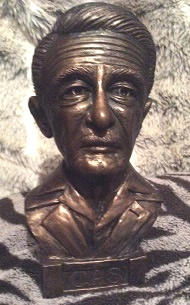
Clark Ashton Smith (13 januari 1893 – 14 augustus 1961) Borstbeeld door Joe Broers, 2015
Onafhankelijk van geboortedata
De Amerikaanse schrijver Michael Carroll werd geboren in 1965 en groeide op in een wijk van Fort Caroline (nu Jacksonville), Florida. Zie ook alle tags voor Michael Carroll op dit blog.
Uit:Little Reef and Other Stories (Little Reef)
“If you’re staying a while,” he ventured wryly, as always, “I could run you a tab.” A tab wasn’t her style, as by now he should’ve deduced, and she said, “I don’t think so.” She handed him a ten- she wasn’t one of those demure biddies- and he took it instantly. Closing his lips and drawing them forth, Buster said, “Wes coming in, Miz Blake?” “He’ll be along directly, I expect. At least I hope. How are things for you, Buster?” “Had a nasty cold last week, but I’m on the mend now. Nice day out there, you’ll note.” “Real pretty day,” she said, nodding, waiting for him to skedaddle. “Be right back with your change,” he said, and his heart seemed to be bursting bright. Jo’s was a bar for women, but Buster ran the day shift. He opened at an unthinkable two in the afternoon. While in her thirties, Jeanette had left inland Jacksonville to be closer to her job and after retiring stayed out here. The beaches had a more bohemian feel, which did not disturb her enough to make a fuss over. In general people minded their own business, Buster and Alison being the only two exceptions. Alison, as usual, was at the bar and had been leaning over it with one of her cocktails, something concocted of juices and hard liquor, when Jeanette had first come in. Alison had also been in love with Wesley, who’d lived with Jeanette since he was a tot, since before that- since he was born and after Jeanette’s only daughter, Lisa, had passed away. Alison had eventually gotten over her crush for Wesley, unlike Buster. She was young still, living with her father, and as far as Jeanette could tell she’d never worked a day in her life. She called her father the Bastard. You got used to stories like this. Jeanette reckoned by now she’d heard them all and most of them here at Jo’s Little Reef. In her agnostic way, she prayed that her Wes would meet a nice boyfriend (not here, God almighty, no!) and thus have no further use for Jo’s. At times she’d try to see what this man looked like in her imagination, playing her game of mental slot machine.“
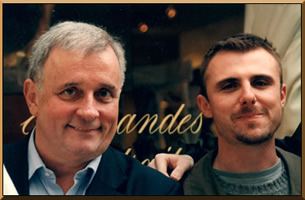
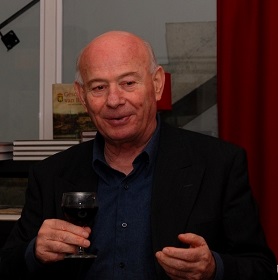
Michael Carroll (Fort Caroline, 1965) Hier met partner Edmund White (links)
Tags:Edmund White, Daniel Kehlmann, Jay McInerney, Lorrie Moore, Jan de Bas, Edgardo Cozarinsky, Mohammad- Ali Jamā,lzā,deh, Clark Ashton Smith, Michael Carroll, Romenu
De BNG Bank Literatuurprijs is dit jaar gewonnen door de Nederlandse schrijfster Hanna Bervoets. Een dag geleden won de 32-jarige Bervoets nog de Frans Kellendonk-prijs. Hanna Bervoets werd geboren in Amsterdam op 14 februari 1984. Zie ook alle tags voor Hanna Bervoets op dit blog.
Uit:Efter
“Laat me jullie vertellen over #103. 18 december, kwart voor negen ’s ochtends: Roya LaFayette loopt het Rheinpark in. Ze draagt een donkerblauwe jas met capuchon en duwt een kinderwagen. Haar tred houdt het midden tussen de zelfverzekerde gang van een wandelaar en de haastige passen van iemand die een trein moet halen: Roya LaFayette stapt stevig door, maar lijkt eerder vastberaden dan bang om te laat te komen. Over de kinderwagen zit een kap die haar dochtertje, net negen maanden oud, moet beschermen tegen de kou. De baby heeft een muts op; het hoofddeksel bedekt beide oren. Om negen uur wordt Roya verwacht op haar werk, een verzekeringsmaatschappij in het centrum van Keulen. Wanneer haar manager haar blauwe jas om kwart over negen niet aan de kapstok ziet hangen, probeert hij contact op te nemen met Roya. Ze blijkt haar Seos te hebben uitgeschakeld. Op dat moment staat Roya voor de deur van een huis, vijf woonblokken van het park. Ze belt aan. Heike Ratz ligt in bed wanneer ze haar deurbel hoort. Ze opent haar ogen, kijkt recht in het verbaasde gezicht van Hamid LaFayette: de man met wie ze de nacht doorbracht. ‘Zal ik opendoen?’ vraagt Heike. Hamid knikt langzaam. Zodra Heike de deur heeft geopend, rijdt Roya haar kinderwagen de gang in. Ze loopt Heikes woonkamer door, direct naar de keuken. Daar parkeert ze de kinderwagen voor het aanrecht. En controleert ze nog één keer of de kap goed dichtzit. ‘Wat doe je?’ gilt Heike, maar Roya duwt Heike de keuken uit. Hamid, die nog altijd in bed ligt, hoort nu het gehuil van zijn dochtertje. En daarna het gekrijs van zijn minnares. Wanneer Hamid de huiskamer binnenkomt, ligt Heike op de grond. Naast haar staat zijn vrouw Roya. Met in haar hand zíjn stanleymes. Daarmee staat de teller nu op honderddrie. En dat zijn slechts de dodelijke slachtoffers. Honderden, duizenden geweldsdelicten worden op dit moment met Efter in verband gebracht. Om nog niet te spreken van de aanrandingen. Deze maand negenentwintig in de regio Kopenhagen alleen, Denemarken registreert de Efterverkrachtingen als enige land apart. #104, #105, #106, #107: morgen, hooguit overmorgen zal ik over nieuwe slachtoffers moeten vertellen.”
Cees van der Pluijm, David Mitchell, Jacques Hamelink, Haruki Murakami, Kamiel Verwer, Jakob Lenz, Fatos Kongoli, Jack London, Ferenc Molnár
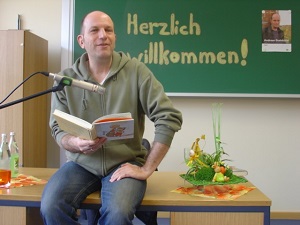
De Nederlandse dichter, schrijver en columnistCees van der Pluijmwerd geboren op 12 januari 1954 te Radio Kootwijk (Gld.). Cees van der Pluijm overleed op 14 december jongstleden op 60-jarige leeftijd. Zie ook alle tags voor Cees van der Pluijm op dit blog.
Winterpark
Je ademt witte wolken uit Het park spreidt als een winterbruid Nog blinkend, haast onaangeraakt
Een wereld van gedempt geluid Waarin je voetstap knisperkraakt Waarin je kinderziel ontwaakt
Je weet dat het niet duren zal: (Als al het ongerepte schoons) Straks vliedt als water naar het dal Wat uit de lucht viel als kristal
De wereld kreeg iets ongewoons De vaders werden weer als zoons Dit moest de sneeuw zijn van hun jeugd O winterpark, o kindervreugd...
De cederallee
Zo moet het zijn: het tedere geweld Van ceders in september, kopergroen Als wachters in gelid, die heel het bos Behoeden voor wat schuilt en spiedt en dreigt
Maar beuken zijn het: neigend naar het veld En reikend naar de lucht, een legioen Van overmoed dat zonder blik of blos Ons voorhoudt dat het eeuwen overstijgt
En in oktobers late middagzon Valt stofgoud van de droge bladerdos
November waait de eerste takken los Het leven wijkt nu met de lichtval mee
Dan wordt voltooid wat eens als feest begon Verloochend in een herfstige allee
Uit:Momenten
1957
Vijfhonderd meter was het hemelsbreed Een handkar was voldoende voor het huisraad En jij mocht zittend mee, wat zat je plat
Fijn bonkend op de bodem met je gat Een kind van drie dat naar een ander huis gaat En de gemeentegrens zelfs overschreed
't Was net iets groter; 't lag er bijna naast 't Was meer verplaatsen dan verhuizen haast
Maar Barneveld werd Apeldoorn die zomer Je weet nog dat het warm was: almaar lomer Werd ieder ritje hotsend uitgezeten
Ook wees men naar de hemel, stomverbaasd Om wat je later nooit meer zou vergeten: Zo'n Sputnik was wel kostje voor een dromer...
Cees van der Pluijm (12 januari 1954 – 14 december 2014)
"Well, perhaps your little walk took you up Peacock Street, to a certain someone called Vincent Costello?" The kitchen sort of swirls, and through the window, on the Essex shore of the river, a tiny stick-man's lifting his bike off the ferry. "Lost for words all of a sudden? Let me jog your memory: ten o'clock last night, closing the blinds, front window, wearing a T-shirt and not a lot else." Yes, I did go downstairs to get Vinny a lager. Yes, I did lower the blind in the front room. Yes, someone did walk by. Relax, I'd told myself. What's the chances of one stranger recognizing me? Mam's expecting me to crumple, but I don't. "You're wasted as a barmaid, Mam. You ought to be handling supergrasses for MI5." Mam gives me the Kath Sykes Filthy Glare. "How old is he?" Now I fold my arms. "None of your business." Mam's eyes go slitty. "Twenty-four, apparently." "If you already know, why're you asking?" "Because a twenty-four-year-old man interfering with a fifteen-year-old schoolgirl is illegal. He could go to prison." "I'll be sixteen in September, and I reckon the Kent police have bigger fish to fry. I'm old enough to make up my own mind about my relationships." Mam lights one of her Marlboro Reds. I'd kill for one. "When I tell your father, he'll flay this Costello fella alive." Sure, Dad has to persuade piss-artists off the premises from time to time, all landlords do, but he's not the flaying-anyone-alive type. "Brendan was fifteen when he was going out with Mandy Fry, and if you think they were just holding hands on the swings, they weren't. Don't recall him getting the 'You could go to prison' treatment." She spells it out like I'm a moron: "It's—different—for—boys."
“I’m on Kauai, in Hawaii, today, Friday, August 5, 2005. It’s unbelievably clear and sunny, not a cloud in the sky. As if the concept clouds doesn’t even exist. I came here at the end of July and, as always, we rented a condo. During the mornings, when it’s cool, I sit at my desk, writing all sorts of things. Like now: I’m writing this, a piece on running that I can pretty much compose as I wish. It’s summer, so naturally it’s hot. Hawaii’s been called the island of eternal summer, but since it’s in the Northern Hemisphere there are, arguably, four seasons of a sort. Summer is somewhat hotter than winter. I spend a lot of time in Cambridge, Massachusetts, and compared to Cambridge—so muggy and hot with all its bricks and concrete it’s like a form of torture—summer in Hawaii is a veritable paradise. No need for an air conditioner here—just leave the window open, and a refreshing breeze blows in. People in Cambridge are always surprised when they hear I’m spending August in Hawaii. “Why would you want to spend summer in a hot place like that?” they invariably ask. But they don’t know what it’s like. How the constant trade winds from the northeast make summers cool. How happy life is here, where we can enjoy lounging around, reading a book in the shade of trees, or, if the notion strikes us, go down, just as we are, for a dip in the inlet. Since I arrived in Hawaii I’ve run about an hour every day, six days a week. It’s two and a half months now since I resumed my old lifestyle in which, unless it’s totally unavoidable, I run every single day. Today I ran for an hour and ten minutes, listening on my Walkman to two albums by the Lovin’ Spoonful—Daydream and Hums of the Lovin’ Spoonful—which I’d recorded on an MD disc. Right now I’m aiming at increasing the distance I run, so speed is less of an issue. As long as I can run a certain distance, that’s all I care about. Sometimes I run fast when I feel like it, but if I increase the pace I shorten the amount of time I run, the point being to let the exhilaration I feel at the end of each run carry over to the next day. This is the same sort of tack I find necessary when writing a novel. I stop every day right at the point where I feel I can write more.”
twee transhumanisten uit Leiden wilden het leed van de mensheid vermijden ze programmeerden hun brein en wat hadden ze het fijn tot ze zich van het silicium wilden bevrijden
Kwamrij
je bleef een dapper en verliefd estheet die scherp en galant zijn kruit verschoot je bracht leven in de bliksemse keet Gerrit, waarom verdomme ben je nu al dood
Bebe, beb´ihr auf zu Füßen, Frühlingserde, und ein Flor, junger Veilchen, sie zu grüßen, keim aus deinem Schoß hervor.
Sagt, ihr Veilchen, eure Wonne, daß ihr sie zu sehn gekriegt, sagt ihr, daß in eurer Sonne, fern von ihr, ein Bruder liegt.
An die Sonne
Seele der Welt, unermüdete Sonne! Mutter der Liebe, der Freuden, des Weins! Ach ohne dich erstarret die Erde Und die Geschöpfe in Traurigkeit. Und wie kann ich von deinem Einfluß Hier allein beseelt und beseligt Ach wie kann ich den Rücken dir wenden?
Wärme, Milde! Mein Vaterland Mit deinem süßesten Strahl, nur laß mich, Ach ich flehe, hier dir näher, Nah wie der Adler dir bleiben.
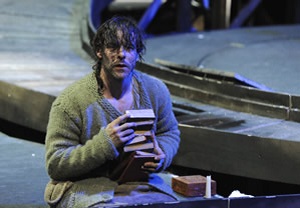
Jakob Michael Reinhold Lenz (12 januari 1751- 24 mei 1792) Markus Meyer als Lenz in een uitvoering van het gelijknamige toneelstuk van Georg Büchner, Salzburg 2012.
Uit: The Loser (Vertaald door Robert Elsie en Janice Mathie-Heck)
“Nevertheless, there I was.The next day, my feet carried me out to the cemetery. You might have assumed that it was the grave of some loved one or some sort of nostalgic contemplation which had prevented my departure. This isn’t true, though I have a lot of respect for graves and for nostalgia. In fact, I’m envious of people who feel that those kinds of notions are important and provide stability, like the force of gravity, as a basis for action. For myself, I feel I’m somewhere beyond gravity, cast off and abandoned in a black hole of disdain. Nostalgia was a fleeting luxury for me. Those weren’t the motives behind my aborted departure or behind my visit the following day – for the first time in my life – to the cemetery. For everyone and from every point of view, I was and am a loser. Grey clouds hovered over the town the next morning. My thoughts were with the refugees at sea. My parents – I live with my mother and father in a two-room apartment plus kitchen – didn’t even bother to ask where I’d been the day before. They were used to my absences and had stopped asking me a long time ago where I was going and what I was doing. My coming home at night was enough for them to get a good night’s sleep. So my thoughts were with the refugees. I was worried about them because of the bad weather, yet there are certain biological processes inside the human body that take place independent of your emotions. I was starving. I dressed and after a quick and muffled ‘morning!’ from the doorway, I left my parents to their coffee in the kitchen, and went out. I don’t think there’s anywhere on earth quite as dusty as the place I live. There’s dust all over, on the flat cement roofs of apartment buildings, on the tiled roofs of private houses, on the pavements and on the flowers poking up in the only park in the centre of town. It sticks to everything, like icing sugar sprinkled on a layer cake in the baker’s showcase window.”
Fatos Kongoli (Elbasan, 12 januari 1944)
De Amerikaanse schrijverJack London(eig. John Griffith Chaney) werd geboren op 12 januari 1876 in San Francisco, Californië. Zie ook alle tags voor Jack Londonop dit blog.
Uit: To Build a Fire
“Day had broken cold and grey, exceedingly cold and grey, when the man turned aside from the main Yukon trail and climbed the high earth-bank, where a dim and little travelled trail led eastward through the fat spruce timberland. It was a steep bank, and he paused for breath at the top, excusing the act to himself by looking at his watch. It was nine o'clock. There was no sun nor hint of sun, though there was not a cloud in the sky. It was a clear day, and yet there seemed an intangible pall over the face of things, a subtle gloom that made the day dark, and that was due to the absence of sun. This fact did not worry the man. He was used to the lack of sun. It had been days since he had seen the sun, and he knew that a few more-days must pass before that cheerful orb, due south, would just peep above the sky-line and dip immediately from view. The man flung a look back along the way he had come. The Yukon lay a mile wide and hidden under three feet of ice. On top of this ice were as many feet of snow. It was all pure white, rolling in gentle, undulations where the ice jams of the freeze-up had formed. North and south, as far as his eye could see, it was unbroken white, save for a dark hairline that curved and twisted from around the spruce-covered island to the south, and that curved and twisted away into the north, where it disappeared behind another spruce-covered island. This dark hair-line was the trail - the main trail - that led south five hundred miles to the Chilcoot Pass, Dyea, and salt water; and that led north seventy miles to Dawson, and still on to the north a thousand miles to Nulato, and finally to St. Michael on Bering Sea, a thousand miles and half a thousand more. But all this - the mysterious, far-reaching hair-line trail. the absence of sun from the sky, the tremendous cold, and the strangeness and weirdness of it all - made no impression on the man. It was not because he was long used to it. He was a newcomer! in the land, a chechaquo, and this was his first winter. The trouble with him was that he was without imagination. He was quick and alert in the things of life, but only in the things, and not in the significances.“
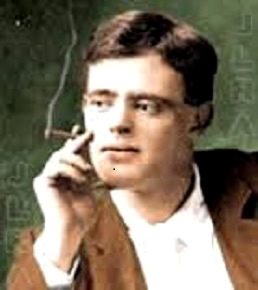
Jack London (12 januari 1876 - 22 november 1916)
De Hongaarse schrijver Ferenc Molnár werd op 12 januari 1878 in een burgerlijk-joods gezin van Duitse afkomst geboren. Zie ook alle tags voor Ferenc Molnár op dit blog.
Uit:Liliom
“JULIE Are you talking to me? MRS. MUSKAT Yes, you! You - chamber-maid, you! In my carousel - - JULIE Who did anything in your old carousel? I paid my fare and took my seat and never said a word, except to my friend here. MARIE No, she never opened her mouth. Liliom came over to her of his own accord. MRS. MUSKAT It's all the same. I'm not going to get in trouble with the police, and lose my license on account of you - you shabby kitchen maid! JULIE Shabby yourself. MRS. MUSKAT You stay out of my carousel! Letting my barker fool with you! Aren't you ashamed of yourself? JULIE What? What did you say? MRS. MUSKAT I suppose you think I have no eyes in my head. I see everything that goes on in my carousel. During the whole ride she let Liliom fool with her - the shameless hussy! JULIE He did not fool with me! I don't let any man fool with me! MRS. MUSKAT He leaned against you all through the ride! JULIE He leaned against the panther. He always leans against something, doesn't he? Everybody leans where he wants. I couldn't tell him not to lean, if he always leans, could I? But he didn't lay a hand on me. » MRS. MUSKAT Oh, didn't he? And I suppose he didn't put his hand around your waist, either? MARIE And if he did? What of it? MRS. MUSKAT You hold your tongue! No one's asking you - just you keep out of it.”
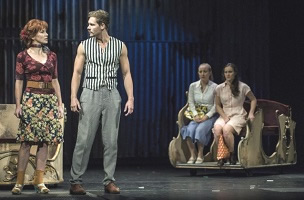
Ferenc Molnár (12 januari 1878 – 1 april 1952) Scene uit een opvoering in Kecskemét, Hongarije, 2014
Tags:Cees van der Pluijm, David Mitchell, Jacques Hamelink, Haruki Murakami, Kamiel Verwer, Jakob Lenz, Fatos Kongoli, Jack London, Ferenc Molnár, Romenu
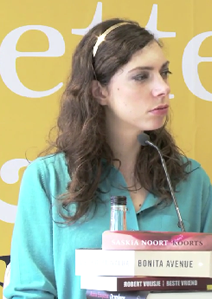
De Nederlandse schrijfster Hanna Bervoetsheeft de Frans Kellendonk-prijs 2017 gewonnen, de driejaarlijkse literatuurprijs voor een auteur met originele kijk op maatschappelijke of existentiële problematiek. De Kellendonk-prijs is vernoemd naar de in Nijmegen geboren schrijver en vertaler Frans Kellendonk (1951-1990). Hanna Bervoetswerd geboren in Amsterdam op 14 februari 1984. Zie ook alle tags voor Hanna Bervoets op dit blog.
Uit: Ivanov
“Geheimen willen we altijd kwijt. Ja, uiteindelijk vertelt iedereen elkaar altijd alles. Ik heb me vaak afgevraagd waarom. Waarschijnlijk is het omdat juist dat wat anderen niet van ons weten, ons maakt tot wie we zijn; onze uitzonderlijkheid bewijst. Zo dragen we onze geheimen mee als een zak glimmende edelstenen. Het is een onopvallende zak, die we bewaren op een onopvallende plek. Tot er per ongeluk iemand over struikelt, de zak opent, nog net iets ziet blinken voor we zijn hand wegduwen – nee, dit mag jij niet weten. Maar wanneer de fonkeling eenmaal ontsnapt is, wordt de verleiding groot; willen we pochen met wat we bij ons dragen en zullen we de zak alsnog opentrekken: kijk dan, hier zijn ze, mijn edelstenen, edelstenen die alleen ík heb, die maken dat ik ben geworden wie ik nu ben. Het snelst trekken we de zak open voor de mensen om wie we geven, want nog meer dan de ander willen zien, betekent liefde dat je jezelf aan de ander wilt laten zien, is het niet? En toch. De eerste keer dat ik Jonas over Helena vertelde, was ook meteen de laatste keer. We kenden elkaar nog maar een paar weken. Het was een warme, droge zomer. Jonas zou met vrienden naar Italië gaan maar had die vakantie één dag voor vertrek afgezegd. Omdat hij geen zin had, beweerde hij. Omdat hij mij had leren kennen, wist ik. Vanaf dat moment zagen we elkaar dagelijks. We spraken af in parken en op stadse terrassen, tot we de ogen van anderen niet meer nodig hadden om onze afspraakjes een zekere ongedwongenheid te verschaffen. Daarna zaten we vooral op mijn balkon. Wanneer de onderburen niet thuis waren dronken we bier en mojito’s tot laat in de avond, en vertelden we elkaar onze levensverhalen; telkens opnieuw, steeds andere details, alsof onze levens routes op een landkaart waren die we nauwkeurig moesten volgen met onze wijsvingers, omdat iedere afslag een nieuwe karaktertrek, een nieuw geheim zou kunnen prijsgeven. Zijn jeugd in Brabant: vader kweker, moeder huisvrouw, één zus, twee broers, een warm gezin (‘maar ook beklemmend’), met neefjes de maïsvelden in om elkaar af te trekken, als tiener het dorp uit, Architectuur in Antwerpen (‘eigenlijk begon mijn leven daar pas’). Mijn jeugd in Rotterdam: enig kind van alleenstaande moeder, vaak op straat, voetballen, skateboarden en schuimblokken stelen uit de supermarkt, duistere puber met paars haar, drie studies begonnen, drie studies niet afgemaakt.”