Romenu is een blog over gedichten, literatuur en kunst Maar Romenu is ook een professionele freelance vertaler Du-Ne en Ne-Du http://www.roumen-vertalingen.nl/
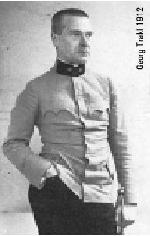
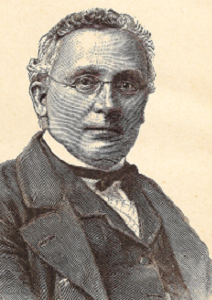
Georg Trakl werd op 3 februari 1887 in het conducteurshuis aan de Waagplatz 2 in Salzburg geboren. Zijn vader, Tobias Trakl, was een handelaar in ijzerwaren en zijn moeder, die ook psychische problemen had, was Maria Catharina Trakl, (meisjesnaam Halik). Voorts had hij nog drie broers en drie zussen. Margarethe (doorgaans Grethe genoemd) stond hem het naast, zelfs zodanig dat sommigen een incestueuze verhouding vermoeden. Zijn jeugd bracht hij door in Salzburg. Vervolgens bezocht hij van 1897 tot 1905 het humanistische gymnasium. Om toch een academische opleiding te kunnen volgen, werkte hij tot 1908 in de praktijk bij een apotheker. Sommigen vermoedden dat hij dit vooral deed om zichzelf opiaten te kunnen verschaffen. Bij het uitbreken van WO I werd Trakl als medicus naar het front in Galicië (heden ten dage in Oekraïne en Polen) gestuurd. Zijn gemoedsschommelingen leidden tot geregelde uitbraken van depressie, die verergerd werden door de afschuw die hij voelde voor de verzorging van de ernstig verwonde soldaten. De spanning en druk dreven hem ertoe een suïcidepoging te ondernemen, welke zijn kameraden nochtans verhinderden. Hij werd in een militair ziekenhuis opgenomen in Kraków, alwaar hij onder strikt toezicht geplaatst werd.Trakl verzonk daar in nog zwaardere depressies en schreef Ficker om advies. Ficker overtuigde hem ervan dat hij contact moest opnemen met Wittgenstein, die inderdaad op weg ging na Trakls bericht te hebben ontvangen. Op 4 november 1914, drie dagen voordat Wittgenstein aan zou komen, overleed hij echter aan een overdosis cocaïne
Paul Celan
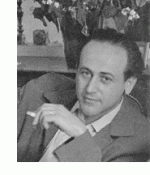
Paul Celan werd onder de naam Paul Antschel op 23 november 1920 geboren in Czernowitz, toentertijd de hoofdstad van de Roemeense Boekovina, nu behorend bij de Oekraïne. Paul Celans ouders waren Duitssprekende joden die hun zoon joods opvoedden en hem naar Duitse christelijke scholen stuurden. In 1942 werden Celans ouders door de Duitse bezetter naar een werkkamp gedeporteerd en daar vermoord. Hijzelf wist aanvankelijk onder te duiken, maar moest vanaf juli 1942 in een werkkamp dwangarbeid verrichten. Celan overleefde de oorlog. Via Boekarest en Wenen vestigde Celan zich in 1948 in Parijs. Daar was hij werkzaam als dichter, vertaler en doceerde hij aan de prestigieuze Ecole Normale Supérieure. Vermoedelijk op 20 april 1970 beëindigde hij zijn leven zelf door in de Seine te springen.
Gerard Reve
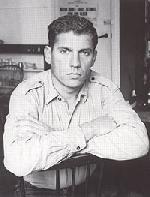
Gerard Reve over: Medearbeiders ”God is in de mensen, de dieren, de planten en alle dingen - in de schepping, die verlost moet worden of waaruit God verlost moet worden, door onze arbeid, aangezien wij medearbeiders van God zijn.” Openbaring ”Tja, waar berust elk godsbegrip op, elke vorm van religie? Op een openbaring, dat wil zeggen op een psychische ervaring van zulk een dwingende en onverbiddelijke kracht, dat de betrokkene het gevoel heeft, niet dat hij een gedachte of een visioen heeft, maar dat een gedachte gedachte of visioen hem bezit en overweldigt.”
Simon Vestdijk
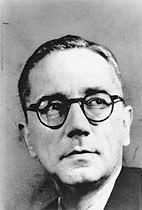
Simon Vestdijk (Harlingen, 17 oktober 1898 – Utrecht, 23 maart 1971) was een Nederlands romancier, dichter, essayist en vertaler. Zijn jeugd te Harlingen en Leeuwarden beschreef hij later in de Anton Wachter-cyclus. Van jongs af aan logeerde hij regelmatig bij zijn grootouders in Amsterdam, waar hij zich in 1917 aan de Universiteit van Amsterdam inschrijft als student in de medicijnen. Tijdens zijn studie die van 1917 tot 1927 duurde, leerde hij Jan Slauerhoff kennen.Tot 1932 is hij als arts in praktijken door heel Nederland werkzaam. In 1932 volgt zijn officiële schrijversdebuut met de uitgave van de bundel Verzen in De Vrije Bladen. Doorslaggevend voor Vestdijks uiteindelijke keuze voor de literatuur is zijn ontmoeting in 1932 met Eddy Du Perron en Menno ter Braak. Deze ontmoeting had tot resultaat dat hij redactielid werd van het tijdschrift Forum Kort daarop, in 1933, wordt zijn eerste novelle, De oubliette, uitgegeven. In hetzelfde jaar schrijft hij Kind tussen vier vrouwen, dat, eerst geweigerd door de uitgever, later de basis zal vormen voor de eerste drie delen van de Anton Wachter-romans. In 1951 ontvangt Vestdijk de P.C. Hooftprijs voor zijn in 1947 verschenen roman De vuuraanbidders. In 1957 wordt hij voor het eerst door het PEN-centrum voor Nederland voorgedragen voor de Nobelprijs voor de Literatuur, die hij echter nooit zal krijgen. Op 20 maart 1971 wordt hem de Prijs der Nederlandse Letteren toegekend, maar voor hij deze kan ontvangen overlijdt hij op 23 maart te Utrecht op 72-jarige leeftijd. Vestdijk was auteur van ca. 200 boeken. Vanwege deze enorme productie noemde de dichter Adriaan Roland Holst hem 'de man die sneller schrijft dan God kan lezen'. Andere belangrijke boeken van Simon Vestdijk zijn: "Kind van stad en land" (1936), "Meneer Visser's hellevaart" (1936), "Ierse nachten" (1946), "De toekomst de religie" (1947), "Pastorale 1943" (1948), "De koperen tuin" (1950), "Ivoren wachters" (1951), "Essays in duodecimo" (1952) en "Het genadeschot" (1964).
K.P. Kavafis K.P. Kavafis werd als kind van Griekse ouders, afkomstig uit Konstantinopel, geboren in 1863 in Alexandrië (tot vandaag een Griekse enclave) waar hij ook het grootste deel van zijn leven woonde en werkte. Twee jaar na de dood van zijn vader verhuist het gezin in 1872 naar Engeland om na een verblijf van vijf jaar naar Alexandrië terug te keren. Vanwege ongeregeldheden in Egypte vlucht het gezin in 1882 naar Konstantinopel, om na drie jaar opnieuw naar Alexandrië terug te gaan. In de jaren die volgen maakt Kavafis reizen naar Parijs, Londen en in 1901 zijn eerste reis naar Griekenland, in latere jaren gevolgd door nog enkele bezoeken. Op de dag van zijn zeventigste verjaardag, in 1933 sterft Kavafis in Alexandrië. De roem kwam voor Kavafis pas na zijn dood, dus postuum. Deels is dat toe te schrijven aan zijn eigen handelswijze. Hij was uiterst terughoudend met de publicatie van zijn gedichten, liet af en toe een enkel gedicht afdrukken in een literair tijdschrift, gaf in eigen beheer enkele bundels met een stuk of twintig gedichten uit en het merendeel van zijn poëzie schonk hij op losse bladen aan zijn beste vrienden.
Thomas Mann
Thomas Mann, de jongere broer van Heinrich Mann, werd geboren op 6 juni 1875 in Lübeck. Hij was de tweede zoon van de graankoopman Thomas Johann Heinrich Mann welke later één van de senatoren van Lübreck werd. Zijn moeder Julia (geboren da Silva-Bruhns) was Duits-Braziliaans van Portugees Kreoolse afkomst. In 1894 debuteerde Thomas Mann met de novelle "Gefallen". Toen Thomas Mann met 21 jaar eindelijk volwassen was en hem dus geld van zijn vaders erfenis toestond - hij kreeg ongeveer 160 tot 180 goldmark per jaar - besloot hij dat hij genoeg had van al die scholen en instituties en werd onafhankelijk schrijver. Kenmerkend voor zijn stijl zijn de ironie, de fenomenale taalbeheersing en de minutieuze detailschildering. Manns reputatie in Duitsland was sterk wisselend. Met zijn eerste roman, Buddenbrooks (1901), had hij een enorm succes, maar door zijn sceptische houding tegenover Duitsland na de Eerste Wereldoorlog veranderde dit volledig. Stelde hij zich tot aan de jaren twintig apolitiek op (Betrachtungen eines Unpolitischen, 1918), meer en meer raakte hij bij het Politiek gebeuren betrokken. Zijn afkeer van het nationaal socialisme groeide, zijn waarschuwingen werden veelvuldiger en heftiger. In 1944 accepteerde hij het Amerikaanse staatsburgerschap. Tussen 1943 en 1947 schreef Mann Doktor Faustus (zie Faust), de roman van de 'Duitse ziel' in de gecamoufleerd geschilderde omstandigheden van de 20ste eeuw. In 1947 bezocht hij voor het eerst sinds de Oorlog Europa, twee jaar later pas Duitsland. In 1952 vertrok hij naar Zwitserland. Op 12 augustus 1955 stierf hij in Zürich. Twintig jaar na zijn dood, in aug. 1975, is zijn literaire nalatenschap geopend: dagboekaantekeningen van 15 maart 1933 tot 29 juli 1955, alsmede notities uit de jaren 1918 tot en met 1921.Belangrijke werken zijn: Der Zauberberg, Der Tod in Venedig, Dokter Faustus , Joseph und seine Brüder en Die Bekenntnisse des Hochstaplers Felix Krull.
Rainer Maria Rilke
Rilke werd op 4 december 1875 geboren in Praag. Hij had al naam gemaakt als dichter met zijn bundels Das Stundenbuch en Das Buch der Bilder, toen hij de literaire wereld versteld deed staan en wereldfaam verwierf met de publicatie van zijn twee delen Neue Gedichte in 1907 en 1908. Hij verzamelde daarin het beste werk uit een van zijn vruchtbaarste periodes, die hij grotendeels doorbracht in Parijs. Rilke was daar diep onder de indruk gekomen van Rodin, bij wie hij een tijdlang in dienst was als particulier secretaris. Rodin, zei hij later, had hem leren kijken. Dit kijken kwam neer op intense concentratie, om het mysterie te kunnen zien ‘achter de schijnbare werkelijkheid'. Latere en rijpere werken als Duineser Elegien (1912-1923) en het ronduit schitterende Die Sonette an Orfeus (1924) illustreren Rilkes metafysische visie op het onzegbare, dat haar verwoording vindt in een hermetische muzikale taal. Op 29 december 1926 overlijdt Rilke in het sanatorium in Val-Mont aan de gevolgen van leukemie. Enkele dagen later wordt hij, overeenkomstig zijn wens, begraven op het kerkhof van Raron.
* * * * * * * * * * * * * * * *
Romenu
Over literatuur, gedichten, kunst en cultuur
15-06-2016
Emma Cline
Onafhankelijk van geboortedata
De Amerikaanse schrijfster Emma Cline werd geboren in 1989 in Sonoma in Californië, waar zij met met vijf broers en zussen opgroeide. Haar BA behaalde zij aan het Middlebury College in Vermont en twee jaar later kreeg zij een studiebeurs voor de prestigieuze Bread Loaf Writers ' Conference. Zij voltooide haar studie met de graad Master of Fine Arts aan de Columbia University in Manhattan, New York. Daarna verhuisde Cline naar Brooklyn, waar ze nog steeds woont en werkt. Ze schrijft voor het blad `O` van Oprah Winfrey en The New Yorker. Haar eerste publicatie `Marion` werd in 2014 bekroond. In 2016 publiceerde zij haar eerste roman `The Girls` in het Engels en Duits. Het manuscript van “The Girls” zou, terwijl zij er nog aan werkte, uitgroeien tot een fel begeerd item en leverde haar, zo gaan de geruchten, 2 miljoen dollar op bij Random House.
Uit: The Girls
“I looked up because of the laughter, and kept looking because of the girls. I noticed their hair first, long and uncombed. Then their jewelry catching the sun. The three of them were far enough away that I saw only the periphery of their features, but it didn’t matter—I knew they were different from everyone else in the park. Families milling in a vague line, waiting for sausages and burgers from the open grill. Women in checked blouses scooting into their boyfriends’ sides, kids tossing eucalyptus buttons at the feral-looking chickens that overran the strip. These long-haired girls seemed to glide above all that was happening around them, tragic and separate. Like royalty in exile. I studied the girls with a shameless, blatant gape: it didn’t seem possible that they might look over and notice me. My hamburger was forgotten in my lap, the breeze blowing in minnow stink from the river. It was an age when I’d immediately scan and rank other girls, keeping up a constant tally of how I fell short, and I saw right away that the black-haired one was the prettiest. I had expected this, even before I’d been able to make out their faces. There was a suggestion of otherworldliness hovering around her, a dirty smock dress barely covering her ass. She was flanked by a skinny redhead and an older girl, dressed with the same shabby afterthought. As if dredged from a lake. All their cheap rings like a second set of knuckles. They were messing with an uneasy threshold, prettiness and ugliness at the same time, and a ripple of awareness followed them through the park. Mothers glancing around for their children, moved by some feeling they couldn’t name. Women reaching for their boyfriends’ hands. The sun spiked through the trees, like always—the drowsy willows, the hot wind gusting over the picnic blankets—but the familiarity of the day was disturbed by the path the girls cut across the regular world. Sleek and thoughtless as sharks breaching the water. It was the end of the sixties, or the summer before the end, and that’s what it seemed like, an endless, formless summer. The Haight populated with white-garbed Process members handing out their oat-colored pamphlets, the jasmine along the roads that year blooming particularly heady and full. Everyone was healthy, tan, and heavy with decoration, and if you weren’t, that was a thing, too—you could be some moon creature, chiffon over the lamp shades, on a kitchari cleanse that stained all your dishes with turmeric.“
‘Zeik niet! Wat niet weet, wat niet deert,’ zei mijn moeder. Als een van hen vroeg wat het was, zei ze: ‘Paardenrookvlees.’ Mijn Turkse vrienden hielden van het paardenrookvlees van mijn moeder. ‘Te veel buitenlanders,’ zei mijn vader op een avond aan tafel. ‘Hij heeft niet één normaal vriendje. We donderen op hier.’ Toen verhuisden we naar de flat in West. We woonden in een vierkamerappartement op twee hoog met een groot grasveld aan de achterkant en ik raakte bevriend met Gerald, een Surinaamse jongen die op vier hoog woonde. Hij had een strenge moeder, mevrouw Lafayette, en drie slanke zusjes die heel soepel konden dansen op de muziek van James Brown, Marvin Gaye, The Jackson Five, en nog een heleboel andere zwarte artiesten die ik niet kende. Ik kon uren naar ze kijken, die glimmende donkere benen, die soepele heupen die heen en weer gingen, die ronde, wippende kontjes, de glimlach en het glanzende kroeshaar. ‘Godverdomme, je doet het erom,’ zei mijn vader toen Gerald bij ons thuiskwam. ‘Zie je dat, Jo, een zwarte!’ Gerald behoorde dus niet tot de normale mensen over wie mijn vader steeds sprak. In de flat kreeg ik last van slapeloosheid. Mijn moeder zei dat ik als baby ook al nooit goed sliep. ‘Janken wel, slapen niet. We namen je mee naar de kroeg, en daar viel je onder de tafel in slaap.’ Ik had een terugkerende droom waarin ik werd achternagezeten door een onheilspellend, voortrollend gevaarte. Het stonk, het zag er smerig uit, het wilde in mijn hoofd kruipen en me verzwelgen. Ik kon niet goed zien wat het was, maar ik wist dat ik het voor moest zien te blijven. Ik vroeg papa Leeuw of hij wist wat het kon zijn. ‘Je geweten,’ zei hij. ‘Zuipen helpt, maar daar ben je nog te jong voor.’
“That afternoon he was driven out to Camp Tshatshi to meet the others. Some had phoned him while he was still in Goma. He had no idea how they'd gotten hold of his number, but as soon as his nomination was announced the calls started coming. People complained about their superiors, saying they couldn't wait For him to arrive. That subservient, singsong tone - he couldn 't stand flattery, and nothing they said made the slightest impression on him. The guards at Camp Tshatshi peered in through the car window as if he were a l‘t’t’t’llllllf, a ghost. The camp was in a euphoric mood. His arrival had been postponed so many times that no one really believed he’d ever turn up. He recognized some of the soldiers who flocked to greet him, men he'd last seen here Five years ago when he fled the city. They were thrilled and wanted to know everything: How had he gotten away? How had he survived those first few months? This from people who would gladly have lynched him at the time. As soon as he managed to get himself a car, he drove into town with his (7130.404;3 - little ones- cautiously, the way he was used to moving about, on the alert for an ambush. The signs of authority he'd been expecting weren't much in evidence. The situation felt fragile; no one could guarantee anyone else's security. He and his bodyguards wore Burundian uniforms and big slouch hats. In the past they'd have been conspicuous dressed like that, but to his surprise the Kinois”’ paid little attention. It seemed they had other things to worry about. It was only when he stopped at a sidewalk café in the rite” for a drink that a few inquisitive people came up to them. The soldiers from the east were ”"mibali", real men, they said. They'd been told the soldiers were all dead, but here they were, alive and well! It was a good thing they'd come. Maybe they should take over again; those who’d stayed behind hadn’t achieved very much."
“Mogelijk kwam het door zijn donkere haar en de diepliggende blauwe ogen dat de jongen door velen als een buitenstaander werd beschouwd, als iemand die niet ‘van hier’ was, al sprak niemand hem er ooit op aan men hield voor zich wat men van hem dacht. Toch had hij al vroeg gemerkt dat hij van zijn leeftijdgenoten verschilde; er ging een schaduw in hem schuil, die de anderen niet hadden en die hem met angst en bevreemding vervulde, een enkele keer ook met verwarrende trots, maar vaker was hij er terneergeslagen onder omdat het kind dat hij nog was het liefst zo wilde zijn als iedereen van zijn leeftijd: een jongen met stug grauw haar en kleine grijze ogen, die de kleren van een oudere broer afdroeg. Sommigen dachten dat hij zijn ouders in de oorlog had verloren en door Wolkenband, wiens naam hij droeg, en zijn vrouw - een geboren Coltersteen - in liefde was aangenomen. Dat was niet het geval. Als er al iets ongewoons aan zijn aflkomst was, bleek dat misschien uit zijn papieren, waarin werd vermeld dat hij op 1 september 1945 was geboren in het London Lock Hospital, Harrow Road 283A‚ als Ernst ElflVader onbekend. Schuchter had de jongen eens aan zijn moeder gevraagd of het waar was dat zijn vader niet bekend was, waarop zijn moeder kortaf had geantwoord dat hij niet zulke vragen moest stellen. Door dit antwoord meende hij te weten dat zijn vader werkelijk onbekend was en voelde hij zich nog meer ontheemd dan hij al was. Instinctief besefte hij nu dat hij door zijn onduidelijke afl
“En Johan… de speer van Rijsbergen, spaart voor een echte racefiets. De oude stalen fiets waar hij zijn rondjes op het crossbaantje mee draait is eigenlijk een gewone jongensfiets die hij samen met zijn vader heeft gestript. Daarin zijn ze zeer grondig te werk gegaan. Zelfs de aanlasbeugel voor de dynamo en de ogen voor de bevestiging van de spatborden hebben ze eraf gezaagd. Om het wat meer ooglijk te maken is daarna de vijl gepakt en heeft Johan zo lang gevijld tot het leek of er nooit iets had gezeten. Wat schuurpapier deed de rest en het frame was zo glad als een aal. Met een eigengemaakt klein kwastje, van varkenshaar, is de fiets donkerblauw geverfd. Een oud racestuur, van Kiske gekregen, maakte de ‘racefiets’ compleet. Van een ruime afstand dan. Voor Johan kan het er allemaal net mee door, toch zou hij het graag anders zien. Daarom gaat hij zo vroeg zijn bed uit. Zes keer in de week fietst hij naar Lowie. “Goedemorgen Lowie, waar liggen mijn kranten?“ Lowie schenkt net de dop van zijn thermoskan vol hete koffie. “Morreguh Johan, daar ligt jouw wijk.” Hij wijst een stapel aan, de stapel voor Johan ligt steeds ergens anders. De bezorgers mogen niets verplaatsen zonder dat Lowie daar toestemming voor geeft. Zijn systeem valt anders in het water, een systeem dat Johan niet weet te doorgronden. De kranten liggen door de hele garage verspreid, behalve bij de rechtermuur. Daar staat het bureau van Lowie.“
„Linde nickt telefonisch. Linde weiß, wovon ich rede. Linde hatte eine alte Tante namens Helene, die einen Elektroladen besaß. Manchmal besuchte meine Freundin Linde ihre Tante Helene. Dann stand die Tante vor ihrem Laden und schaute den Leuten zu, die auf der Marktstraße spazieren gingen. Oder einkaufen. Auf der anderen Straßenseite stand Tante Helenes Freundin Luise vor der Drogerie, die sie von ihrem Mann geerbt hatte. Wenn meine Freundin Linde sich an die beiden Frauen erinnert, stehen sie vor ihren Läden und reden miteinander. Frau Croissant ist ziemlich klein, ziemlich rundlich und hat eine wunderbare Lache. Um die Mittagszeit gehen die zwei eher alten als jungen Geschäftsfrauen gemeinsam Mittagessen. Meistens ins Gasthaus zum Bären. »Frau Croissant«, sagt Linde, »hat mir gut gefallen. In erster Linie wegen der Lache.« »Hatte Klaus auch so eine Lache?« frage ich. Linde erinnert sich nicht. »Das müsstest Du doch wissen«, sagt sie, aber auch ich erinnere mich nicht. »Er lächelte oft und seine Heiterkeit war ansteckend«, sage ich. »Vielleicht war das Lächeln jener Teil seines Lachens, den er zeigen wollte«, sagt Linde. Wir plaudern also ein Weilchen hin und her, bis ich das Gefühl habe, dass wir jetzt genug darüber geredet haben, dass Klaus sehr nett und charmant war und überhaupt nicht aufdringlich, dass Linde damals in Franken wohnte und ich sie ganz unverblümt frage: »Also wie war das jetzt mit Klaus und Dir. Raus mit der Sprache."
Peter O. Chotjewitz (14 juni 1934 – 15 december 2010)
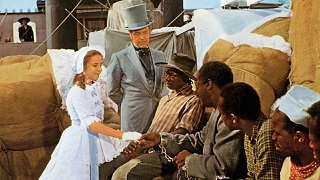
“Agay robe of scarlet and yellow plaid, carefully made and neatly fitted, set off to advantage the dark and rich style of his beauty; and a certain comic air of assurance, blended with bashfulness, showed that he had been not unused to being petted and noticed by his master. "Hulloa, Jim Crow!" said Mr. Shelby, whistling, and snapping a bunch of raisins towards him, "pick that up, now!" The child scampered, with all his little strength, after the prize, while his master laughed. "Come here, Jim Crow," said he. The child came up, and the master patted the curly head, and chucked him under the chin. "Now, Jim, show this gentleman how you can dance and sing." The boy commenced one of those wild, grotesque songs common among the negroes, in a rich, clear voice, accompanying his singing with many comic evolutions of the hands, feet, and whole body, all in perfect time to the music. "Bravo!" said Haley, throwing him a quarter of an orange. "Now, Jim, walk like old Uncle Cudjoe, when he has the rheumatism," said his master. Instantly the flexible limbs of the child assumed the appearance of deformity and distortion, as, with his back humped up, and his master's stick in his hand, he hobbled about the room, his childish face drawn into a doleful pucker, and spitting from right to left, in imitation of an old man.“
Harriet Beecher Stowe (14 juni 1811 – 1 juli 1896) Scene uit de gelijknamige film uit 1965
„Aber lassen wir Zahlen sprechen: Wenn mein Meister die Rubrik »Angestellte« in seiner Steuererklärung ausfüllen mußte, so schrieb er eine schlichte 1 hinein. Diese 1 war ich. Das hinderte ihn freilich nicht, einem Bauern, dessen Dreschmaschine versagte, ebenso trostreich zu versichern, er werde seinen Spezialisten für Dreschmaschinen schicken, wie er einem anderen, dessen Pumpenmotor streikte, verkündete, der Spezialist für Pumpenmotoren sei schon so gut wie auf dem Wege. Als Theodor Buttewegg seines Kurzschlusses wegen endlich auch meinen Meister anrief, wurde ich zum Spezialisten für Kurzschlüsse ernannt. Kein Auftrag wäre mir unangenehmer gewesen als dieser, denn Butteweggs Leitungsschaden war für die städtische Elektrogilde gleichsam das, was im Märchen die unbezwingbaren Glasberge oder die jungfrauenverzehrenden Feuerdrachen für reisende Königssöhne und wandernde Müllerburschen sind. Zwar war Buttewegg noch nicht so weit gegangen, dem etwaigen Bezwinger des Drahtteufels die Hand seiner Tochter anzutragen – das wäre auch eher eine Drohung gewesen –, aber an Versprechungen hatte er es nicht fehlen lassen. Man erzählte sich, daß er die Meister und Monteure, die sich anheischig gemacht hatten, den Bann zu brechen, zuerst immer in seine Schatzkammer geführt und einen Blick auf seine Reichtümer hatte werfen lassen. »Hiervon, meine Lieben«, pflegte er dann zu sagen, »können Sie, gesetzt, Sie beheben den casus criticus, wählen, was immer Sie goutieren!« Ach, die Meister und Monteure goutierten alles, was in dieser Schatzkammer in langen blinkenden Reihen paradierte – war es auch nicht eitel Gold, das da glänzte, so waren es doch an die hundert Flaschen so ziemlich aller edlen Getränke, die sich auf der Basis von Spiritus herstellen lassen. Denn Herr Buttewegg war der erste Schnapsbrenner im Lande, und draußen war Krieg – der Sprit war zu gleichen Teilen Lazaretten und Offizierskasinos vorbehalten.“
“No one knew where her lair was. Sometimes at dawn when peasants walked to the fields, scythes on their shoulders, they saw Stupid Ludmila waving to them amorously from afar. They would halt and wave back to her, stretching their arms lazin as their will to work weakened. Only the calls of their wives and mothers, approaching with sickles and hoes, brought them back to their senses. Women often set dogs on Ludmila. The largest and most dangerous one ever sent to attack her decided not to return. After that she would always appear holding the animal by a rope. The other dogs would flee with their tails between their legs. It was said that Stupid Ludmila lived with this huge dog as with a man. Others predicted that someday she would give birth to children whose bodies would be covered with canine hair and who would have lupine ears and four paws, and that these monsters would live somewhere in the forest. Lekh never repeated these stories about Ludmila. He only mentioned once that when she was very young and innocent her parents ordered her to get married to the son of the village psalmist, notorious for his ugliness and cruelty. Ludmila refused, infuriating her francé so much that he enticed her outside the village where an entire herd of drunken peasants raped the girl until she lost consciousness. After that she was a changed woman; her mind had become addled. Since no one remembered her family and she was considered not too bright, she was nicknamed Stupid Ludmila.”
Heb niets in je handen, noch Een herinnering in de ziel,
Dan zal, wanneer de laatste obool Men je in de handen legt,
En men je handen openvouwt Niets je ontvallen.
Welke troon wil men je geven Die Atropos je niet ontneemt?
Welke lauweren die niet welken Onder Minos' oordeel?
Welke uren die ook jou niet Maken tot de schaduw
Die je zijn zult als je gaat De nacht in en naar 't einde van de weg.
Pluk de bloemen maar laat ze Los eer je ze hebt bezien.
Ga zitten in de zon. Doe afstand En wees koning van jezelf.
Vertaald door August Willemsen
The Herdsman
I'm herdsman of a flock. The sheep are my thoughts And my thoughts are all sensations. I think with my eyes and my ears And my hands and feet And nostrils and mouth.
To think a flower is to see and smell it. To eat a fruit is to sense its savor.
And that is why, when I feel sad, In a day of heat, because of so much joy And lay me down in the grass to rest And close my sun-warmed eyes, I feel my whole body relaxed in reality And know the whole truth and am happy.
Vertaald door Edouard Roditi
Sonnet I
Whether we write or speak or do but look We are ever unapparent. What we are Cannot be transfused into word or book. Our soul from us is infinitely far.
However much we give our thoughts the will To be our soul and gesture it abroad, Our hearts are incommunicable still. In what we show ourselves we are ignored.
The abyss from soul to soul cannot be bridged By any skill of thought or trick of seeming. Unto our very selves we are abridged When we would utter to our thought our being.
We are our dreams of ourselves, souls by gleams, And each to each other dreams of others' dreams.
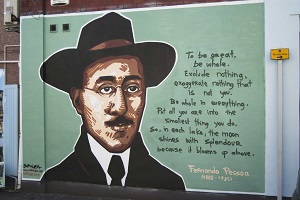
Fernando Pessoa (13 juni 1888 – 30 november 1935) Muurschildering in Bedminster, Bristol
“De middagen hadden voor hem iets droevigs, wat misschien samenhing met de gewoonte thuis om tussen de middag warm te eten, waarna hij altijd slaap kreeg. Al tijdens het eten voelde hij het bloed in zijn benen zakken, werden zijn handen dik en miste hij hele stukken van hetgeen aan tafel werd gesproken. Wanneer het warm was, en de ramen stonden open, was het alsof de slaap van uit de straat opsteeg; loom luisterde hij naar de geluiden buiten die steeds trager en ijler klonken, roepen, het schuiven van een raam, voetstappen. Het was alsof de wereld buiten zachter en grijzer werd en de bewegingen traag en stil als in een aquarium. Zo een met een lampje, zoals bij buurman Paap, waar hij, als de visite 's avonds rustig voortkabbelde, stil en onopgemerkt naast zat in het veilige besef dat de visite nog uren zou duren, zijn vader nog maar bij Costa de Milona, de mijnwerker met de mooie stem, de dienstverhalen nog in het verschiet en de tot het laatst bewaarde hoofdschotel, de ernstige oorontsteking waarmee hij had moeten dienst doen. Veilige vertrouwde verhalen, die als een dam stonden tussen dat doezelen en het gehate moment van opbreken. Hij beschermde deze stemming zoveel mogelijk, gaf correct en snel antwoord, maar zijn stem klonk monotoon en mechanisch, zodat zijn moeder hem vaak bevreemd aanzag. Na het eten hing hij wat rond en ging al spoedig naar zijn kastje in zijn kamertje. Het was een door zijn vader getimmerde kast, met planken vol schoenen, dozen en kleren. Eén plank was voor hem ingeruimd; daar lagen zijn potloden en zijn papier en ook zijn glazen bol, die hij op het strand had gevonden en waarvan niemand wist waarvoor hij had gediend, wat aan de groene bol iets geheimzinnigs gaf. Vóór de kast hing een rood gordijn, dat hij over zich heen trok als hij in zijn kastje wilde zijn. Er was dan een schemerig warm licht dat over zijn stapels papier glansde, die hij beurtelings in de hand nam en bekeek; hij deed er niet veel mee, maar hij verzamelde het fanatiek. Zijn dierbaarste bezittingen waren een vloeiblok, groot, roze en in leer gebonden, en een blocnote, een nieuw, dat nog kraakte als hij het voorzichtig wat boog; hij had het van zijn vader gekregen, tweehonderd vel spiegelglad schrijfpapier stond erop in rode letters, hij streek er vaak over, met de rug van zijn hand, en genoot van het vooruitzicht wat hij er allemaal mee ging doen.”
'ALTHOUGH I'd lie lapped up in linen A deal I'd sweat and little earn If I should live as live the neighbours,' Cried the beggar, Billy Byrne; 'Stretch bones till the daylight come On great-grandfather's battered tomb.' Upon a grey old battered tombstone In Glendalough beside the stream Where the O'Byrnes and Byrnes are buried, He stretched his bones and fell in a dream Of sun and moon that a good hour Bellowed and pranced in the round tower; Of golden king and Silver lady, Bellowing up and bellowing round, Till toes mastered a sweet measure, Mouth mastered a sweet sound, Prancing round and prancing up Until they pranced upon the top. That golden king and that wild lady Sang till stars began to fade, Hands gripped in hands, toes close together, Hair spread on the wind they made; That lady and that golden king Could like a brace of blackbirds sing. 'It's certain that my luck is broken,' That rambling jailbird Billy said; 'Before nightfall I'll pick a pocket And snug it in a feather bed. I cannot find the peace of home On great-grandfather's battered tomb.'
Tom O'Roughley
'THOUGH logic-choppers rule the town, And every man and maid and boy Has marked a distant object down, An aimless joy is a pure joy,' Or so did Tom O'Roughley say That saw the surges running by. 'And wisdom is a butterfly And not a gloomy bird of prey. 'If little planned is little sinned But little need the grave distress. What's dying but a second wind? How but in zig-zag wantonness Could trumpeter Michael be so brave?' Or something of that sort he said, 'And if my dearest friend were dead I'd dance a measure on his grave.'
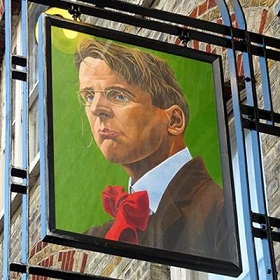
William Butler Yeats (13 juni 1865 – 28 januari 1939) Op het uithangbord van een restaurant in Londen
‘En, wat vind je?’ ‘Hoe bedoel je, wat vind ik?’ ‘Mijn haar. Kijk nou even.’ Mark kijkt op van zijn scherm. Yvonne staat in de deuropening van de woonkamer, een bakje yoghurt in haar hand. Ze beweegt niet. Ze kijkt hem alleen maar aan, haar blauwe ogen wijd opengesperd. Dat doet ze wel vaker, haar ogen opensperren, en het lijkt altijd alsof ze er iets gewichtigs mee wil aangeven, al is het nooit duidelijk wat precies. Dan ziet hij het: het lange, zwarte haar, dat tot onder haar schouders reikte, is nagenoeg gehalveerd. Een simpele ingreep, die haar hele verschijning verandert. Heeft ze het juist daarom gedaan, om aan te geven dat één handeling alles kan veranderen? Om aan te geven dat dat zomaar kan? ‘Nou, wat vind je ervan?’ ‘Leuk,’ antwoordt hij. Hij klapt zijn laptop dicht. Het heeft geen zin om verder te schrijven nu zij er zo doorheen is gaan praten. ‘Leuk?’ herhaalt ze toonloos. Ze neemt een hap yoghurt. ‘Leuk, is dat alles?’ ‘Ja, leuk. Misschien even wennen, maar het is goed gelukt.’ ‘Even wennen?’ Ze spreekt helder en luid, alsof ze aan een debat is begonnen. Toen ze elkaar vier jaar geleden ontmoetten deed ze dat nooit. Misschien omdat haar vader net was overleden, misschien omdat ze behoefte had aan contact, zoals ze zelf weleens zei. Ze praatte in die tijd aan de lopende band. En Mark luisterde. Een maand na hun eerste ontmoeting trok ze bij hem in en zei ze, terwijl ze haar vingers door zijn haren haalde en hem liefdevol aankeek: ‘Jij bent belangrijk voor mij.’ Die zin is hij nooit vergeten, en als het minder gaat denkt hij daaraan terug. Zelfs als ze dat niet meer zegt, moet hij dat niet vergeten: hij is belangrijk voor haar. ‘Ja, even wennen.’ ‘Ik weet dat je dat zei, maar betekent dat dat je het niet leuk vindt? Minder dan het was?’ Ze kijkt bedenkelijk en zet haar bakje yoghurt neer. In een debat is kennelijk geen plaats voor yoghurt.”
“1er juillet 2011. Depuis deux mois, je n'ai réussi que deux fois à me coucher et à dormir avant minuit. La première fois, on m'a réveillée à 3 heures pour m'apprendre qu'il venait d'être arrêté. La seconde fois, on m'a réveillée à 4 heures pour me dire qu'il allait être libéré. 15 mai - 1er juillet : six semaines, un long mois. Un long mois que l'on m'a pris ma vie. Un mois qu'on me fait dire des mots que je n'ai jamais prononcés. Un mois qu'on me harcèle des quatre coins de la planète. Un mois que je ne peux plus sortir dans la rue. Un mois que je n'ai plus de domicile fixe. Un mois que l'on me voit dans des lieux où je ne suis pas. Un mois que des gens que je croyais mes amis me rayent de leur carnet d'adresses. Aujourd'hui, je ne sais plus très bien qui je suis. Je crois que je deviens folle. Quand je suis lucide, que je regarde ma vie, tout ce gâchis, je me dis qu'il faudrait peut-être avoir le courage d'en finir. Je suis amaigrie, cernée, creusée, diaphane. Moche. Mais je peux me regarder dans une glace. Je suis propre. Je n'ai pas menti. Jamais. »
“When I signed the lease five years ago, I joked to Ted that I was staking my financial future on the existence of an innate human impulse that drives visitors to pretty market towns to stock up on butter dishes, preserving jars and other kitchen paraphernalia. So far it’s been a gamble that’s worked; at least, financially. That impulse does exist, and as Ted said, it seems to be countercyclical. It’s even drawn a few old friends to the shop unexpectedly, and Nicky’s visit felt like one of those: simultaneously warm and slightly awkward. There was a clumsiness about him, a laboriousness in his movements that made me think he might have had a stroke, and a kind of neediness to his recollections that suggested he was going through tough times; no wedding ring, and I didn’t ask about Leonora. He commiserated about my marriage and cooed over my pictures of Babette. He didn’t have any of his own two, but men often don’t, and he seemed a little choked when he talked about them. We ate pad thai from the takeaway sitting on boxes in the stockroom and then when a coach party showed up he slipped away, promising to stop by again when he was in the area. The childminder called just as he was going, so we didn’t get to say goodbye properly and I was too preoccupied to take his email. That evening I searched his name on the internet. That’s when I found his obituary. It wasn’t enormously long, but then he wasn’t yet forty, and still he’d made it into the ‘Lives Remembered’ section of the Telegraph, complete with a picture of him as I had known him at university: with that tall, spare frame that always seemed to typify a certain vanishing English body shape, even though his mother was actually Dutch.”
“Ik heb vanmorgen iets liefs en goeds gezien, - iets dat me wèl aandeed en een schoone verheugenis gaf, - het leven is zoo hard tegenwoordig, de menschen doen zoo ruw tegen elkaar, - en dit zachte, dat ik zag van een eenvoudig straatjongetje en een filosofisch straathondje, ontroerde me zóo dat.... mag ik het u vertellen? Het was koud vanmorgen, ofschoon de zomer het lenteloover van boomen tot dat zware groen rijpte waarmede ze nu pralen, in dit seizoen.... Gisteren had het den heelen langen dag door geregend, almaardoor geregend, - ge weet hoe triestig dat is, - en vanmorgen was de lucht prachtig bewogen door forschen, frisschen wind. De witte en grauwe vormlooze en toch vormrijke wolken zeilden daarin. En heel op zijn gemakje kwam het hondje daar aangetrippeld en hield voor mij stil. Een doodgewone straathond was 't: een die naar alle namen zou luisteren! Hij had een grijs-wit vel, en daarop rosten bruine plekken. Zijn snuit was zwart, pekzwart, - wat ik u zeg! - en zijn oogen - ge zoudt zeggen de oogen van een mensch - keken me zeer triestig aan, met blikken van vandaag-nog-niks-tusschen-mijn-tanden-gehad.... Hij heette Mops. Ongetwijfeld. Ik zou Mops zeer zeker voorbijgeloopen zijn, - er zijn zooveel honden op de wereld, - maar de oogen, die bruine oogen tuurden me zoo zielig aan, er was zooveel kalme gelatenheid in, dat ik staan bleef en.... ‘Dag Mops’ zei. 't Hondje bewoog reizekens met sierlijken krul zijn vossen-panache en.... glimlachte tusschen de tanden om mijn week hart, dat zoo verteederd werd door een straathond. Mops was een filosoof. Een die 't leven nam zooals het kwam, - ik had dat al dadelijk in de gaten.... Maar Mops was oud: op zijn zwarten, spitsen reinaart-snoet zaagt ge witte stekels groeien en 't was dàt wat me teeder maakte; ik wist het nu wel.... Maar, wat kon ik voor hem doen? Ik, met m'n ontroerend hart? Mops had het blijkbaar koud. 't Was àl te frisch, zelfs voor een straathond, en Mops rilde op zijn pikkels...."
De Duitse dichter, schrijver en priesterFranz Alfred Muthwerd geboren op 13 juni 1839 in Hadamar. Na de middelbare school in Hadamar studeerde hij theologie in Mainz. Toen hij twijfelde of hij priester zou worden, studeerde hij filosofie in Würzburg, waar hij promoveerde tot dr. Phil. Onder invloed van de religieuze filosoof en dichter Georg Friedrich Daumer koos Muth toch voor het priesterschap en vervolgde zijn studie in Mainz en aan het seminarie in Limburg. Hij werd priester gewijd op 12 maart 1863 in de Hohe Dom in Limburg. Hij werd toen kapelaan in Kestert, in 1870 Domkapelaan in Frankfurt en daarna parochiebeheerder in Rhauenthal. Vanaf 1871 werkte Muth eerst als parochie beheerder en in 1873 als predikant in Dombach en Schwickershausen in Bad Camberg. Muth publiceerde tal van artikelen over verschillende onderwerpen in kranten, tijdschriften en tijdschriften. In een aantal publicaties en verschillende boeken publiceerde Muth meer dan 250 gedichten natuurlyriek wandelenliedjes en kluchten die talrijke herdrukken beleefden. Meer dan 180 componisten, onder andere Josef Rheinberger, Franz Abt, Albert Becker, Aloys Edenkofer, Engelbert Humperdinck, Eduard Köllner, Victor E. Nessler, Joachim Raff, Max Reger, Franz Ries, Robert Schwalm hebben gedichten van Muth op muziek gezet. Als dichter publiceerde hij ook onder het pseudoniem Franz uit Rheine en Franz Hilary.
Frühveilchen
Arme Veilchen, so früh`, o so frühe erwacht, Was blicket ihr aus dem Schnee gar sacht? Arme Blauveilchen in süßem Duft, Es ist ja so kalt und rauh noch die Luft.
Und wie ich hauche, es kann nicht sein, Ihr neiget still die Köpfelein Und duftet noch einmal und schau`t umher, Doch die Luft ist kalt und das Köpfchen schwer.
Arme Veilchen, daß ihr geblüht im März! Müßt nun verhauchen in Ach und Schmerz; Doch neigt ihr`s Köpfchen fromm und lind — Ja sterben läßt sich`s leicht als Kind.
Herbstabend
Auf der Erde Nacht und Dunkel, Oed` die Flur und kahl der Hag, Droben sternig Lichtgefunkel Wie ein sel`ger Himmelstag.
Klagst du, daß die Blätter fliegen? Laß das Laub dem Sturm der Nacht! Dunkel mag die Erde liegen, Droben ist ja Licht entfacht!
Schau`nur zu den Sternenauen: Immer neuer Sterne Schaar Wird dein staunend Auge schauen, Goldenlicht und wunderbar.
Staunend stehst du lichte Sterne Auch in deiner Seele klar, In der Nähe, in der Ferne Wirst du freudig sie gewahr.
Trauerst du, daß Blätter fliegen? Laß das Laub dem Sturm der Nacht! Dunkel mag die Erde liegen; Ist ja Licht genug entfacht!
Franz Alfred Muth (13 juni 1839 - 3 november 1890)
Der Wind strömt stark und warm. Das Grosse Licht baut den Tag auf. Bienen und Kraniche über der Brandung.
Als hätte die Schöpfung nocheinmal begonnen. Kein vorletzter Tag, kein letzter und das Meer bewegt lebendige Finsternis.
Das Haus, im Schwirren der Vogelflüge fliegt auf in die Pinien.
Freude, das Wort aufersteht nicht geraubt, nicht gesäubert.
Wir hängen die Schuhe hinaus in den Wind und er füllt sie mit Schmetterling und Samen der Steine.
Ein paar Sätze, die ich dir zurufen wollte für heute, für morgen, für sieben Leben, kein Ende —
Die Märchen, die Wunder sind alt...
– Gott hat dem Menschen wahrlich sehr wenige Märchen gegeben – (Mihály Babits)
Die Märchen, die Wunder sind alt Und ausgeweidet wie Schlachtvieh. Neue sind nicht erschienen. Der Gott ist fort, ihm gehört das Wunder, Nichts zu sein in den Räumen draussen. Die Glocke ist ein Gefäss für Laut und Klang Und dem Wunder am nächsten, und ist kein Wunder. Die Kerze hält Licht und Feuer fest, dem Wunder am nächsten, und ist kein Wunder. Der Vogel ist von allem das Gegenteil und dem Märchen am nächsten, und ist kein Märchen.
Am Morgen schrie der Sperber im Sprühnebel draussen.
„Polidorio hatte einen IQ von 102, errechnet nach einem Fragebogen für französische Schulkinder im Alter von zwölf bis dreizehn Jahren. Den Fragebogen hatten sie im Kommissariat als Packpapier für in Marseille gedruckte Formulare gefunden und nacheinander mit Bleistift ausgefüllt, in der vorgeschriebenen Zeit. Polidorio war schwer betrunken gewesen. Canisades auch. Es war die lange Nacht der Akten. Zweimal im Jahr wurden auf den Fluren Berge aus Papier aufgetürmt, flüchtig durchgesehen und im Hof verbrannt, eine lästige Pflicht, die oft bis zum Morgengrauen dauerte und traditionell an den Dienstjüngsten hängenblieb. Warum manche Akten weggeworfen und andere aufbewahrt wurden, konnte niemand erklären. Man hatte die Verwaltung von den Franzosen übernommen, wie man eine Höflichkeitsformel übernimmt, und der bürokratische Aufwand stand in keinem Verhältnis zum Nutzen. Die wenigsten Angeklagten konnten lesen und schreiben, Gerichtsverfahren waren kurz. Mitten in der Nacht hatte es im Kommissariat einen Stromausfall gegeben, Polidorio und Canisades waren stundenlang damit beschäftigt gewesen, jemanden aufzutreiben, der einen Vierkantschlüssel für den Sicherungskasten besaß. Eine Weile hatten sie bei Kerzenschein weitergearbeitet, und unter dem Einfluss von Kif und Alkohol war ihre Ermüdung in Euphorie umgeschlagen. Sie veranstalteten im Hof Schneeballschlachten mit zerknülltem Papier und auf den Gängen eine Verfolgungsjagd mit rollenden Aktenschränken. Canisades erklärte sich zu Emerson Fittipaldi, Polidorio setzte mit einer Zigarette einen Abfallhaufen in Brand, dann fiel aus einer umgestürzten Hängeregistratur ein Packen Spezialausweise aus der Kolonialzeit. Sie spannten die Ausweise in die Schreibmaschine, trugen Phantasienamen ein und stolperten damit im Licht des hereinbrechenden Tages gemeinsam ins Bordell («Sonderermittler des Tugendkomitees, Bédeux mein Name») Und davor eben der verhängnisvolle IQ-Test. An die meisten Erlebnisse dieser fatalen Nacht konnte Polidorio sich hinterher nur noch undeutlich erinnern. Aber das Testergebnis blieb hängen. Einhundertzwei. «Alkohol, Stress, Stromausfall!», rief Canisades, eine kleinbusige Schwarze auf jedem Knie. «Ist das eine Entschuldigung? Runden wir einfach auf hundert ab.»
Wolfgang Herrndorf (12 juni 1965 – 26 augustus 2013)
Uit:The Diary of a Young Girl (Vertaald door B. M. Mooyart-Doubleday)
“SATURDAY, JULY 11, 1942 Dearest Kitty, Father, Mother and Margot still can't get used to the chiming of the Westertoren clock, which tells us the time every quarter of an hour. Not me, I liked it from the start; it sounds so reassuring, especially at night. You no doubt want to hear what I think of being in hiding. Well, all I can say is that I don't really know yet. I don't think I'll ever feel at home in this house, but that doesn't mean I hate it. It's more like being on vacation in some strange pension. Kind of an odd way to look at life in hiding, but that's how things are. The Annex is an ideal place to hide in. It may be damp and lopsided, but there's probably not a more comfortable hiding place in all of Amsterdam. No, in all of Holland. Up to now our bedroom, with its blank walls, was very bare. Thanks to Father -who brought my entire postcard and movie-star collection here beforehand -- and to a brush and a pot of glue, I was able to plaster the walls with pictures. It looks much more cheerful. When the van Daans arrive, we'll be able to build cupboards and other odds and ends out of the wood piled in the attic. Margot and Mother have recovered somewhat. Yesterday Mother felt well enough to cook split-pea soup for the first time, but then she was downstairs talking and forgot all about it. The beans were scorched black, and no amount of scraping could get them out of the pan. (…)
Yours, Anne”
Anne Frank (12 juni 1929 – maart 1945) Vader Otto Frank voor een foto van zijn dochter
„Es war mir immer unverständlich, wie sich Menschen festlegen können. Festlegen auf einen Beruf zum Beispiel, oder auf einen Mann fürs Leben oder aber auch auf eine »Leitkultur« für alle. Wie soll das denn gehen?, frage ich. Kein Mensch besteht aus nur einer Erfahrung. Oder aus nur einer Begegnung. Keine Kultur aus nur einer Geschichte. Das Leben ist weder monothematisch noch monokausal. Ich selbst kann mich an keinen Tag erinnern, an dem ich von morgens bis abends immer derselbe Mensch gewesen wäre: Ich war abwechselnd und zuweilen auch gleichzeitig Tochter und Schülerin, Schwester und Freundin, Geliebte und Mutter, Türkin und Deutsche, Nachbarin, Angestellte und Kollegin. Dabei ist keines dieser Ichs eine Solistin, denn iede Erfahrung mit einem neuen Gegenüber geht »nahtlos und ohne unausgefüllte Zwischenräume« in die Erfahrung mit dem Nächsten über und »bewahrt gleichzeitig ihre Identität«, wie der Philosoph john Dewey in »Kunst als Erfahrung« schreibt. Das heißt, man hat nie nur ein Leben, sondern besteht aus verschiedenen Paralleluniversen. Wir sind gemacht aus dem Genpool unserer Ahnen und unseren eigenen Erfahrungen. Deshalb, so Dewey, »existiert kein Mensch ausschließlich innerhalb des Bereichs seiner eigenen Haut«. Wir sind vielmehr ein Echo all der Leben, die uns abverlangt werden, und versuchen im täglichen Dazwischen mühsam, ein selbstbestimmtes und einmaliges Ich zu kreieren. Und werden dabei nur zu einem neuen Echo, nämlich dem unserer eigenen Je mehr ich versuchte, irgendeine Art kontinuierliche Identität in mir zu finden, je Öfter ich fragte: Wer bin ich mit welchem Gegenüber? Und wie verhalte ich mich in dem jeweiligen Kontext?, desto mehr Erfahrungswelten fächerten sich in mir auf.“
Renan Demirkan (Ankara, 12 juni 1955)
De Amerikaanse schrijfster Djuna Barneswerd geboren in Cornwall-on-Hudson, Orange County in de staat New York op 12 juni 1892. Zie ook alle tags voor Djuna Barnes op dit blog.
Uit: Nightwood
“In his search for the particular Comedie humaine Felix had come upon the odd. Conversant with edicts and laws, folk story and heresy, taster of rare wines, thumber of rarer books and old wives' tales - tales of men who became holy and of beasts that became damned - read in all plans for fortifications and bridges, given pause by all graveyards on all roads, a pedant of many churches and castles, his mind dimly and reverently reverberated to Madame de Sevigne, Goethe, Loyola and Brantome. But Loyola sounded the deepest note, he was alone, apart and single. A race that has fled its generations from city to city has not found the necessary time for the accumulation of that toughness which produces ribaldry, nor, after the crucifixion of its ideas, enough forgetfulness in twenty centuries to create legend. It takes a Christian, standing eternally in the Jew's salvation, to blame himself and to bring up from that depth charming and fantastic superstitions through which the slowly and tirelessly milling Jew once more becomes the "collector" of his own past. His undoing is never profitable until some goy has put it back into such shape that it can again be offered as a "sign." A Jew's undoing is never his own, it is God's; his rehabilitation is never his own, it is a Christian's. The Christian traffic in retribution has made the Jew's history a commodity; it is the medium through which he receives, at the necessary moment, the serum of his own past that he may offer it again as his blood. In this manner the Jew participates in the two conditions; and in like manner Felix took the breast of this wet nurse whose milk was his being but which could never be his birthright. Early in life Felix had insinuated himself into the pageantry of the circus and the theatre. In some way they linked his emotions to the higher and unattainable pageantry of Kings and Queens.”
You’d like to kiss your boy who doesn’t want to: He’d like instead to look at life outside. You’re disappointed then, but still you smile: At least it doesn't ache like jealousy, Even though he already looks just like The other who “to look at life outside” Left you like this.
Vertaald door A.Z. Foreman
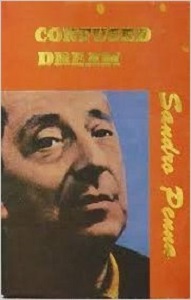
Uit: Confuso sogno
Like the April wind, my boy— clear, light, and a bit variable. But in my fields the grass is warm. Futile to expect a more constant caress.
*
If my boy appears at the tavern, the men smile at him, surprised by the light. But the deal changes after that. My boy in their rough hands, alone, unsure of himself.
Vertaald door George Scrivani
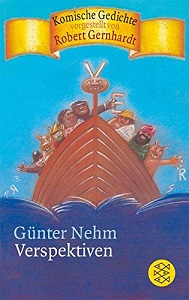
Sandro Penna (12 juni 1906 – 21 januari 1977) Cover
„Der Herr Doktor zuckte die Achseln. »Wenig«, sagte er halblaut. »Aber komm, denk einmal einen Augenblick an mich, lieber Freund! Hast du nicht ein liebes Kind, das nach dir verlangt und sich auf deine Heimkehr freut, wenn du weg bist? Nie mußt du in ein verödetes Haus zurückkehren und dich allein an deinen Tisch hinsetzen. Und dein Kind hat's auch gut daheim. Muß es auch vieles entbehren, was andere genießen können, so ist es in manch anderem auch vor vielen bevorzugt. Nein, Sesemann, ihr seid nicht so sehr zu beklagen, ihr habt es doch recht gut, so zusammenzusein; denk an mein einsames Haus!« Herr Sesemann war aufgestanden und ging nun mit großen Schritten im Zimmer auf und ab, wie er immer zu tun pflegte, wenn ihn irgendeine Sache stark beschäftigte. Auf einmal stand er vor seinem Freunde still und klopfte ihm auf die Schulter. »Doktor, ich habe einen Gedanken: Ich kann dich nicht so sehen, du bist ja gar nicht mehr der alte. Du mußt ein wenig aus dir heraus, und weißt du, wie? Du sollst die Reise unternehmen und das Kind Heidi auf seiner Alp besuchen in unser aller Namen.« Der Herr Doktor war sehr überrascht von dem Vorschlage und wollte sich dagegen wehren, aber Herr Sesemann ließ ihm keine Zeit. Er war so erfreut und erfüllt von seiner neuen Idee, daß er den Freund unter den Arm faßte und nach dem Zimmer seines Töchterchens hinüberzog. Der gute Herr Doktor war für die kranke Klara immer eine erfreuliche Erscheinung, denn er hatte sie von jeher mit einer großen Freundlichkeit behandelt und ihr jedesmal, wenn er kam, etwas Lustiges und Erheiterndes zu erzählen gewußt. Warum er das jetzt nicht mehr konnte, wußte sie wohl und hätte so gern ihn wieder froh gemacht. Sie streckte ihm gleich die Hand entgegen, und er setzte sich zu ihr hin. Herr Sesemann rückte seinen Stuhl auch heran, und indem er Klara bei der Hand faßte, fing er an von der Schweizerreise zu reden und wie er sich selbst darauf gefreut hatte.“
Johanna Spyri (12 juni 1827 - 7 juli 1901) Heidi en Klara. Illustratie door Clara M. Burd, 1924
“I had not succeeded in leaving the interlocution behind, trapped like drained nectar in the valley of the chair slope. Caught without an answer at the ready, I merely repeated: Ce qui m'étonnait ... Hearing this for the second time round, the interlocutor demanded why it was already in the past tense. I explained. I cruise, my jaws wide to snow-plough in the present tense, the plankton of experience. This I then excrete rehashed into a continuous narrative in the past tense. Naturally the process is imaged according to bodily functions. That is an old habit of fant's (fant, the feu infant), so much of whose childtime is preoccupied with them. Even adult fant, book-learned enough to know about metabolism, doesn't feel it happening. You eat; you excrete; but you never catch your cells in the act of creating themselves out of your food and never hear the pop of sugar-energy released into your service from your laden corpuscles. No more can you detect your personality and its decisions in the course of being created your experience. You know only that you ingest the present tense and excrete it as a narrative in the past. History is in the shit tense. You have left it behind you. Fiction is piss: a stream of past events but not behind you, because they never really happened. Hence the hold fictional narrative exerts on modern literate man. And hence the slightly shameful quality of its hold. I knew as I statelily rose from the tweed and rubber launching pad that my stroll, ostensibly towards the glass wall, would soon conduct me to the bookstall. Go daily to stall. Or do you want, inquires nanny interlocutor, to spend a punny? And hence the disesteem in which authors of fictional narrative are held - and hold themselves. Don't, says nanny, hold; don't touch. That's where fantasy and fiction begin. How authors squirm, how they sidle from foot to foot, to avoid that compulsion to narrative. They poise their shears over the wire, threatening to cut the connection. They say they are seeking to alienate you. They take aim to fling you an open-ended fiction: the-book lands legs akimbo, pages open at the splits, less a book than a box of trick tools, its title DO IT YOURSELF KID.”
„Er belfert wie eine dogge, er ächzt wie ein eber, er dröhnt wie ein gorilla; er geifert, sabbert, lechzt, prustet, jault und blökt; er ist zum tierreich geworden, ein werwolf in hosenträgern, ein dem mittelalter entsprungener waldmensch, eine bestie in gestreiftem kammgarn, eine wildsau im fuffzigmarkhemd – holla! müßte ein beherzter rufen, holla, hier geht eine unangenehme szene zu weit! Allein der galante retter schläft auf beiden ohren, weilt im ausland, atmet im gebirge, macht in ferien, döst in freilichtspielen, mogelt bei freunden im skat, räkelt sich auf hoher see, sitzt betroffen im knast, schwitzt im entführten flugzeug, latscht auf exkursionen, verdreht sich den hals im Strandbad, befindet sich überall im bereiche des kreisenden globus, nur nicht vor dem café, wo der Unmensch Nathalie in sieben verschiedene teile zerlegt! Eingehalten, man vergreift sich nicht an einer frau! Feige memme, unedler drecksack, erbärmlicher metzger! Er hat wohl keine mutter gehabt, er ist keinem schoß entsprungen, er trägt keinen zärtlichen Schimmer im blick, er ist auf dem mist geboren, er hat die sonne mit einer klosettbrille verwechselt, hilfe! er ist salamanderkalt, er ist molchhäutig, er ist grün und schleimig wie ein lang nicht gesäuberter ausguß! Monster, wer eine frau ins gesicht schlägt, ist nicht wert, nach ihrem gesäß zu greifen! Hat die weit schon sowas gesehen, berochen, geschmeckt, belauscht? Lassen sie sich ihr tanzstundengeld zurückgeben, mein herr; belieben sie die augengläser zu verlieren, durch die sie ein anmutiges, bein bewundern, einen reizenden hüftschwung verfolgen; eine frau ist ein geschenk der guten natur, dessen sie nie ein empfänger sein sollten, ja!“
“It was nine o’clock and the room was suddenly filling up with girls, none of whom noticed her presence at all. The teletype operator was combing her hair out of its pin curls, one of the typists was going from desk to desk collecting empty glass jars and taking coffee orders. Covers were being pulled off typewriters, coats hung up, newspapers spread out on desks to be read, and as each new arrival came in she was greeted with delighted cries. It sounded as though they had all been separated from one another for four weeks, not four days. Caroline didn't know which desk was hers and she was afraid to sit at someone else's, so she kept standing, watching, and feeling for the first time that morning that she was an outsider at a private club.” (…)
“She had a collection of matchbooks from extravagant places, dropped here and there on tables in the dingy apartment she still shared with Gregg. They made it look as if she lived a gay, mad life. What a typical picture for anyone from out of New York: career girl's apartment, stockings drying over the shower rod, clothes flung helter-skelter in the rush to get to the office on time, to a date on time, a bottle of wine there too, wads of dust lying under the studio couch because you couldn't clean except weekends and sometimes not even then, and all those brightly colored matchbooks with names of well-known eating places, so that even if one managed only two good and sufficient meals a week one could still light one's cigarettes for the rest of the week with the memory.”
«Si le bonheur était le rythme de la volupté, quelle certitude hélas, et que tout serait plus simple. On juge de la beauté sur le plaisir qu’on en attend. Beaucoup de femmes ont cette innocence. Mais, pour quelques hommes, il arrive qu’ils se font une joie d’où le plaisir est presque absent. Chassez-moi ces hommes de la République, dirais-je aux filles de Platon quand elles feront la Loi. La femme se croit la poésie et l’est peut-être. Mais le poète, c’est l’homme. Hélène elle-même est lasse d’être chantée. Qui conteste le désir, le tue. Et l’on meurt, pourtant, de désirer en vain. Hélène, ton tourment c’est le prix que je donne à ta beauté. Ton châtiment, aussi. Tu ne seras pas, tu n’es pas toujours belle. Le coquillage du monde, entrouvert par la lumière, se ferme insensiblement sur la charnière veloutée de la forêt. Et la perle de feu, le soleil, roule vers le bord ; la valve de nacre, le ciel, descend ; et la valve dont la fraîcheur bleue est une flamme, la lèvre passionnée de la mer, s’enfle et tremble. Que veut-elle ? Elle ne sait si elle aime ce qu’elle embrasse, ni si même elle en aime la douleur. La mer monte, et les rocs de bronze, cachant un profond frissonnement, penchent."
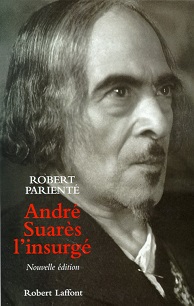
André Suarès (12 juni 1868 – 7 september 1948) Cover biografie
“As this my story will probably run counter to more than one fashion of the day, literary and other, it is pmdent to how to those fashions wherever I honestly can; and therefore to begin with a scrap of description. The edge of a great fox-cover; a flat wilderness of low leafless oaks, fortified by a long dreary thom- capped clay ditch, with sour red water oozing out at every' yard; a broken gate leading into a strait wood-ride, ragged with dead grasses and black with fallen leaves, the centre mashed into a quagmire by innumerable horse-hoofs; some forty red coats, and some four black; a sprinhling of young farmers, resplendent in gold buttons and green; a pair of sleek drab stable-keepers, showing ofl' horses for sale; the surgeon of the union, in Macintosh and antigropelos; two holiday schoolboys with trousers strapped down to bursting point, like a penny steamer’s saiety-valve; midshipman, the only merry one in the field, bumping about an a fretting, sweating hack, with. its nose a foot above its cars; and Lancelot Smith, who then kept two good horses, and “rode forward,” as a fine young fellow of three-and-twenty who can aflord it, and “has nothing else to do,” has a very good right to ride. But what is a description, without a sketch of the weather? - In these Pantheist days especially, when a hero or heroine’s moral state must entirer depend on the barometer, and authors talk as if Christians were cabbages, and a man’s soul as well as his lungs might be saved by sea-breezes and sunshine, or his character developed by wearing guano in his shoes, and training himself against a south wall - we must have a weather-description, though, as I shall presently show, one in flat contradiction of the popular theory. Luckily for our iniormation, Lancelot was very much given to watch both the weather and himself, and had indeed, while in his teens, combined the two in a sort of soul-almanack on the principles just mentioned - somewhat in this style: “Monday, 2lst. - Wind S. W., bright sun, mercury at 30} inches. Felt my heart expanded towards the universe.”
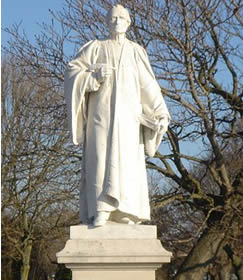
Charles Kingsley (12 juni 1819 - 23 jan 1875) Standbeeld in Bideford, Devon
“Isuppose the truth is simply that it was possible for benefits like these to accrue only to a Negro lucky enough to remain in the poor but relatively benign atmosphere of Virginia. For here in this worn-out country with its decrepit little farms there was still an ebb and flow of human sympathy—no matter how strained and imperfect—between slave and master, even an understanding (if sometimes prickly) intimacy; and in this climate a black man had not yet become the cipher he would become in the steaming fastnesses of the far South but could get off in the woods by himself or with a friend, scratch his balls and relax and roast a stolen chicken over an open fire and brood upon women and the joys of the belly or the possibility of getting hold of a jug of brandy, or pleasure himself with thoughts of any of the countless tolerable features of human existence.” (…)
“I reckon even you didn’t know the actual statistics, hiding out until now like you done. But in the three days and nights that your campaign lasted you managed to hasten fifty-five white people into early graves, not counting a score or so more fearfully wounded or disabled—hors de combat, as the Frenchies say, for the rest of their natural lives. And only God knows how many poor souls will be scarred in their minds by grief and by terrible memories until the day they part this life. No,” he went on, breaking off a black wad from a plug of chewing tobacco, “no, I’ll have to hand it to you, in many respects you was pretty thorough. By sword and ax and gun you run a swath through this county that will be long remembered. You did, as you say, come damn near to taking your army into this town. And in addition, as I think I told you before, you scared the entire South into a condition that may be described as well-nigh shitless. No niggers ever done anything like this.”
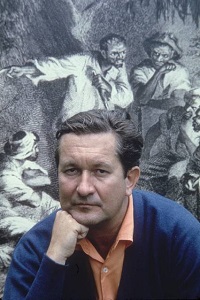
William Styron (11 juni 1925 – 1 november 2006) In 1967
Uit: The Girl With Nine Wigs (Vertaald door Charlotte Caroline Jongejan)
“Before, my daily routine was to wake up at eight for a long run in the park, then have my coffee while rushing off to class. Now I wake up with a cough, and I'm lucky if I can run half the distance in double the time. Lately I need three coffees just to get going, and I'm still late to class every day. Visiting the hospital is a thrilling part of my new routine. After numerous appointments with multiple doctors in various hospitals and two visits to the emergency room, I now find myself in yet another antiseptic hospital lounge with stale magazines, waiting to see a new doctor with a new diagnosis and a new file. At this point, I know this hospital like the back of my hand. I've spent the past two months wandering from one department to the next, from the top floor to the bottom, from the front to the back. Over and over and over again. I've seen eight interns, two gynecologists-why do doctors always assume you're pregnant when they can't figure out what's wrong?-a pulmonary specialist, and two ER teams, and have been prescribed three courses of antibiotics. All to no avail. Between all these doctors, no diagnosis but plenty of symptoms and a lost tampon. Ick. It gave the doctors and my father, who was waiting in the hallway, a big laugh but left me mortified. My symptoms-a strange jabbing here and there, shortness of breath, the loss of a few kilos (which I'm definitely not complaining about), and a pale face that no amount of blush can mask-don't seem to bring me to a diagnosis. So here I am in the waiting room. Again. A door opens and I see him-the one hundredth white coat to examine me and try to figure out what is causing all these seemingly unrelated symptoms. He approaches the reception desk, picks up my file, and calls out "Miss van der Stap" while randomly scanning the waiting room to see which of the rumpled contestants has just won a spot in his examination room.”
Die jaar word ryp in goue akkerblare, in wingerd wat verbruin, en witter lug wat daglank van die nuwe wind en klare son deurspoel word; elke blom word vrug, tot selfs die traagstes; en die eerste blare val so stilweg in die rook-vaal bos en laan, dat die takke van die lang populiere al teen elke ligte môre witter staan. O Heer, laat hierdie dae heilig word: laat alles val wat pronk en sieraad was of enkel jeug, en vér was van die pyn; laat ryp word, Heer, laat U wind waai, laat stort my waan, tot al die hoogheid eindelik vas en nakend uit my teerder jeug verskyn.
Early Autumn
The year matures in golden oak-leaves, in the dun of darkening vineyards, and, paler at all hours air washed by fresh winds and the pellucid sun. Fruits fulfil the individual flowers. even the slowest, and the first leaves fall so silently in smoke-dimmed wood and lane that the slender branches of the poplars tall lift wither silhouettes each radiant dawn. Dear Lord, may all these days be sanctified: let all things fall that were showy and vain or merely young and far removed from tears; make riper, Lord, let your wind blow; my pride strip off, till all that's great at last shows plain naked and firm above my greener years.
Vertaald door Guy Butler
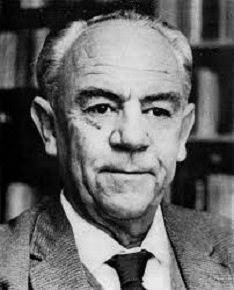
N. P. van Wyk Louw (11 juni 1906 – 18 juni 1970)
De Britse dichteres en schrijfster Renée Vivien (eig. Pauline Mary Tarn) werd geboren op 11 juni 1877 in Londen. Zie ook alle tags voor Renée Vivien op dit blog.
Night
The light, in throes of agony, dies at your knee, Come, o you whose guarded face, so lovely to see, Carries dejection from years heavy and jaded: Come, with your deadly welts turning pale, in distress, With no other scent in the long folds of your dress Than the breath of flowers which have long since faded.
Come, with your unrouged lips that ignite my desires, Without rings, - neither rubies, opals, nor sapphires Dishonoring your fingers, milky as the moon, - And from your eyes put mirrored reflections to flight... For it is here: the simple, chaste hour of the night When hues can oppress, and luxury importune.
Yield up all your chagrin to eternal delight, Exhale in a profound cry your suffering blight, All those events of the past, so cruel and senseless, Leave them to death, to the distance and to silence... In the dream which to strife gives such sweet condolence; To the ancient fever of speech: forgetfulness.
I will kiss your hands and your divine naked feet; Our hearts will cry out for the neglect that they meet, Will decry the vile words and base gestures anew... These flights will linger in peaceful security.... You will join your hands in their mystic purity, And, in the soul-filled shadows, I will adore you.
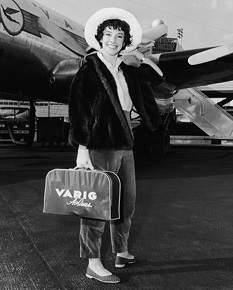
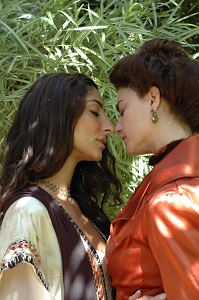
Renée Vivien (11 juni 1877 – 10 november 1909) Necar Zadegan (Kerime) en Traci Dinwiddie (Renée) in de film “The Touch” uit 2007
“Chaque matin, je lui apporte son petit déjeuner au lit, puis je le laisse. Un moment après, j'entends sa guitare. C'est un joli moment pour notre maisonnée ... L'été, sa fenêtre reste ouverte. Les passants ralentissent et s'arrêtent de parler dès qu'ils perçoivent les premières notes, puis ils étouffent leurs pas, puis ils retiennent leur respiration. Sous la fenêtre, les plus hardis s'arrêtent un peu, puis ils repartent comme des voleurs avec ce petit morceau de guitare qui ne leur a rien coûté. Ils ne reprennent un pas normal, ils ne recommencent la conversation que longtemps après avoir dépassé la maison. » (…)
« Ces casse-pieds pouvaient tout se permettre. Le cousin Palamède par exemple. Un vieux célibataire exigeant. La famille ne pouvait l'abandonner à lui-même, alors, elle se l'était réparti : trois mois chez l'un, trois mois chez l'autre. Il fallait voir le Palamède s'asseoir à table, jamais content. Quand la soupe était trop épaisse, il grognait : "Béton ! Béton !" Quand elle était trop claire, il grinçait : "La Garonne ..." Après le café, Palamède regardait le cousin quitter la cuisine pour aller donner aux bêtes, la cousine faire la vaisselle, il réclamait sa pipe et son tabac, s'étalait, soupirait béatement : "On est bien, quand on est célibataire, je ne comprends pas que vous vous mariiez, vous autres ..."
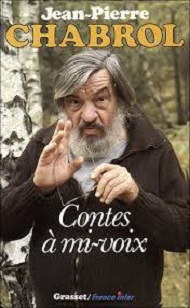
Jean-Pierre Chabrol (11 juni 1925 – 1 december 2001)
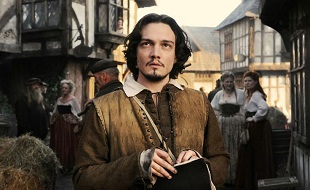
De Engelse dichter en schrijver Ben Jonson werd geboren rond 11 juni 1572 in Westminster, Londen. Zie ook alle tags voor Ben Jonson op dit blog.
The Noble Nature
It is not growing like a tree in bulk, doth make Man better be; or standing long an oak three hundred year, to fall a log at last, dry, bald, and sere;
A lily of a day is fairer in May, although it fall and die that night- It was the plant and flower of Light. In small proportions we just beauties see: and in short measures life may perfect be.
Porth Ceiriad Bay
Descended to the shore, odd how we left the young girl with us to herself, and went straight to examine the stratified cliffs, forgot her entirely in our interest.
You marvelled at the shapes the clockwork sea had worn the stone, talking keenly, until the pace of this random sculpture recalled your age to you, and then its anodynes.
And so you turned, pretending youth, courting the girl as if you were a boy again, leaving the wry cliffs to their erosion and me to my observant solitude.
Ben Jonson (ca. 11 juni 1572 – 6 augustus 1637) Sebastian Armesto als Ben Jonson in de film “Anonymous”, 2011
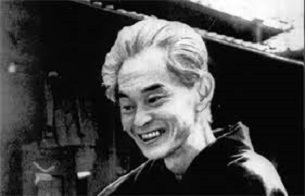
Uit: Snow Country (Vertaald door Edward Seidensticker)
“Her talk of novels seemed to have little to do with “literature” in the everyday sense of the word. The only friendly ties she had with the people of this village had come from exchanging women’s magazines, and afterwards she had gone on with her reading by herself. She was quite indiscriminate and had little understanding of literature, and she borrowed even the novels and magazines she found lying in the guests’ rooms at the inn. Not a few of the new novelists whose names came to her meant nothing to Shimamura. Her manner was as though she were talking of a distant foreign literature. There was something lonely, something sad in it, something that rather suggested a beggar who has lost all desire. It occurred to Shimamura that his own distant fantasy on the occidental ballet, built up from words and photographs in foreign books, was not in its way dissimilar. She talked on happily too of movies and plays she had never seen. She had no doubt been starved all these months for someone who would listen to her. Had she forgotten that a hundred and ninetynine days earlier exactly this sort of conversation had set off the impulse to throw herself at Shimamura? Again she lost herself in the talk, and again her words seemed to be warming her whole body. But her longing for the city had become an undemanding dream, wrapped in simple resignation, and the note of wasted effort was much stronger in it than any suggestion of the exile’s lofty dissatis- faction. She did not seem to find herself especially sad, but in Shimamura’s eyes there was something strangely touching about her. Were he to give himself quite up to that consciousness of wasred effort, Shimamura felt, he would be drawn into a remote emotionalism that would make his own life a waste. But before him was the quick, live face of the woman, ruddy from the mountain air.”
““OHNNIE. What did you want to do? HESTER. Nothing. [Loo/ting a! the certificate in her hand.] Johannes Cornelius Smit-Anna Van Rooyen. Biggest mistake she ever made! JOHNNIE. You don’t know what you’re saying. HESTrER. Yes, I do! I’m saying this was the biggest mistake she ever made. Marriage! One man’s slave all your life, slog away until you’re in your grave. For what? Happiness in Heaven? I seen them- Ma and the others like her, with more kids than they can count, and no money; bruises every pay- day because he comes home drunk or anOIher one in the belly because he was so drunk he didn’t know it was his old wife and got into bed! JOHNNIE. Daddy never beat Mommie. He was never drunk. HESTER. Because he couldn’t. He was a crock. But he did it other ways. She fell into her grave the way they all do- tired, maeg. Frightened! I saw her. JOHNNIE. This is terrible, Hester. HESTER. You’re damned right it is. It’s hell. They live in hell, but they’re too frightened to do anything about it because there’s always somebody around shouting God and Judgement. Mommie should have taken what she wanted and then kicked him out. JOHNNlE. And the children. HESTER. So what! If you get them you get them and if you don’t want them there’s ways. JOHNNlE. Hester! Hester! HESTER. Hester, Hester what? Hester who? Hester Smit! That‘s me. I’ve done it. And I don‘t care a damn. Two months old and I got rid of it.”
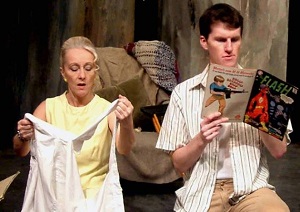
Athol Fugard (Middelburg (ZA), 11 juni 1932) Scene uit een opvoering in het Abbey Theatre, St Albans, 2011
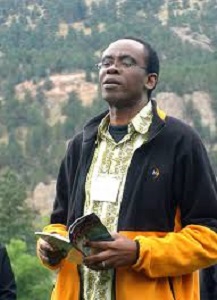
De Nigeriaanse dichter, schrijver, architect, en milieuactivist Nnimmo Bassey werd geboren in Akwa Ibom op 11 juni 1958. Zie ook alle tags voor Nnimmo Bassey op dit blog.
Uit:To cook a continent
“There are some in Africa who argue that having a valuable resource is not necessarily a curse. They say that nature’s wealth is a blessing and that the curse happens only in relation to how resources are grabbed, owned, extracted and utilised. In other words, the curse is located firmly in the social structure of the world. Let us start with a caveat about the word ‘resource’, which implies that nature’s wealth is a bounty, ready for corporate robbery. But we as humans frame this dilemma of extraction incorrectly if we don’t point out the intrinsic right of nature to survive on its own terms. Most importantly, we are part of Mother Earth, not apart from her. Her rights to exist and reproduce the conditions for all species’ existence are not to be violated. That said, everyone acknowledges that Africa is resource rich. That the continent has been a net supplier of energy and raw materials to the North is not in doubt. That the climate crisis confronting the world today is mainly rooted in the wealthy economies’ abuse of fossil fuels, indigenous forests and global commercial agriculture is not in doubt. What has been obfuscated is how to respond to this reality. Indeed, the question peddled in policy circles is often what can be done about Africa. And, in moments of generosity, the question moves to what can be done for Africa.“ This book looks at what has been done to Africa and how Africans and peoples of the world should respond for the collective good of all. The resource conflicts in Africa have been orchestrated by a history of greed and rapacious consumption. We ask the question: must these conflicts remain intractable? We will connect the drive for mindless extraction to the tightening noose of odious debt repayment and we will demand a fresh look at the accounting books, asking when environmental costs and other externalities are included: who really owes what to whom? Isn’t Africa the creditor of the world, if we take seriously the North’s ‘ecological debt’ to the South?”
« La maison que nous habitons est dans une rue sale, pénible à gravir, du haut de laquelle on embrasse tout le pays, mais où les voitures ne passent pas. Il n'y a que les charrettes de bois qui y arrivent, traînées par des boeufs qu'on pique avec un aiguillon. Ils vont, le cou tendu, le pied glissant; leur langue pend et leur peau fume. Je m'arrête toujours à les voir, quand ils portent des fagots et de la farine chez le boulanger qui est à mi-côte; je regarde en même temps les mitrons tout blancs et le grand four tout rouge, - on enfourne avec de grandes pelles, et ça sent la croûte et la braise! La prison est au bout de la rue, et les gendarmes conduisent souvent des prisonniers qui ont les menottes, et qui marchent sans regarder ni à droite ni à gauche, l'oeil fixe, l'air malade. Des femmes leur donnent des sous qu'ils serrent dans leurs mains en inclinant la tête pour remercier. Ils n'ont pas du tout l'air méchant. Un jour on en a emmené un sur une civière, avec un drap blanc qui le couvrait tout entier; il s'était mis le poignet sous une scie, après avoir volé; il avait coulé tant de sang qu'on croyait qu'il allait mourir. Le geôlier, en sa qualité de voisin, est un ami de la maison; il vient de temps en temps manger la soupe chez les gens d'en bas, et nous sommes camarades, son fils et moi. Il m'emmène quelquefois à la prison, parce que c'est plus gai. C'est plein d'arbres; on joue, on rit, et il y en a un, tout vieux, qui vient du bagne et qui fait des cathédrales avec des bouchons et des coquilles de noix. À la maison, l'on ne rit jamais; ma mère bougonne toujours. - Oh! comme je m'amuse davantage avec ce vieux là et le grand qu'on appelle le braconnier, qui a tué le gendarme à la foire du Vivarais!."
Shall I wasting in despair Die because a woman's fair? Or make pale my cheeks with care 'Cause another's rosy are? Be she fairer than the day, Or the flow'ry meads in May, If she be not so to me, What care I how fair she be?
Shall my heart be griev'd or pin'd 'Cause I see a woman kind? Or a well-disposed nature Joined with a lovely feature? Be she meeker, kinder, than Turtle dove or pelican, If she be not so to me, What care I how kind she be?
Shall a woman's virtues move Me to perish for her love? Or her well-deserving known Make me quite forget mine own? Be she with that goodness blest Which may gain her name of best If she be not such to me, What care I, how good she be?
'Cause her fortune seems too high Shall I play the fool and die? Those that bear a noble mind, Where they want of riches find, Think what with them they would That without them dare to woo; And unless that mind I see, What care I how great she be?
Great, or good, or kind, or fair, I will ne'er the more despair; If she love me, this believe, I will die ere she shall grieve; If she slight me when I woo, I can scorn and let her go; For if she be not for me, What care I for whom she be?
Once musing as I sat, And candle burning by, When all were hushed, I might discern A simple silly fly, That flew before mine eyes With free rejoicing heart, And here and there with wings did play, As void of pain and smart. Sometime by me she sat, When she had played her fill, And ever when she rested had, About she flittered still. When I perceived her well, Rejoicing in her place, O happy fly, quoth I, and eke O worm in happy case, Which two of us is best? I that have reason? No; But thou that reason art without And therewith void of woe. I live, and so dost thou, But I live all in pain, And subject am to her, alas, That makes my grief her gain. Thou livset, but feelst no grief, No love doth thee torment; A happy thing for me it were, If God were so content, That thou with pen wert placed here And I sat in thy place, Then I should joy, as thou dost now, And thou shouldst wail thy case.
Barnabe Googe (11 juni 1540 – 1594) Huis in Tudor stijl bij Scotney Castle in Kent, waar Googe onderdak bood aan Jezuïeten