Romenu is een blog over gedichten, literatuur en kunst Maar Romenu is ook een professionele freelance vertaler Du-Ne en Ne-Du http://www.roumen-vertalingen.nl/
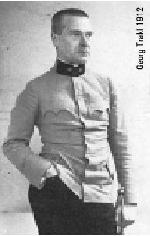
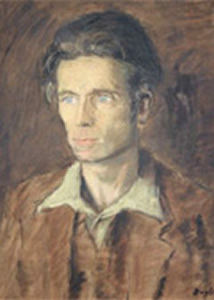
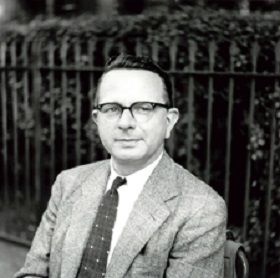
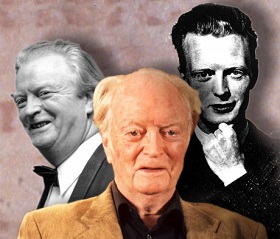
Georg Trakl werd op 3 februari 1887 in het conducteurshuis aan de Waagplatz 2 in Salzburg geboren. Zijn vader, Tobias Trakl, was een handelaar in ijzerwaren en zijn moeder, die ook psychische problemen had, was Maria Catharina Trakl, (meisjesnaam Halik). Voorts had hij nog drie broers en drie zussen. Margarethe (doorgaans Grethe genoemd) stond hem het naast, zelfs zodanig dat sommigen een incestueuze verhouding vermoeden. Zijn jeugd bracht hij door in Salzburg. Vervolgens bezocht hij van 1897 tot 1905 het humanistische gymnasium. Om toch een academische opleiding te kunnen volgen, werkte hij tot 1908 in de praktijk bij een apotheker. Sommigen vermoedden dat hij dit vooral deed om zichzelf opiaten te kunnen verschaffen. Bij het uitbreken van WO I werd Trakl als medicus naar het front in Galicië (heden ten dage in Oekraïne en Polen) gestuurd. Zijn gemoedsschommelingen leidden tot geregelde uitbraken van depressie, die verergerd werden door de afschuw die hij voelde voor de verzorging van de ernstig verwonde soldaten. De spanning en druk dreven hem ertoe een suïcidepoging te ondernemen, welke zijn kameraden nochtans verhinderden. Hij werd in een militair ziekenhuis opgenomen in Kraków, alwaar hij onder strikt toezicht geplaatst werd.Trakl verzonk daar in nog zwaardere depressies en schreef Ficker om advies. Ficker overtuigde hem ervan dat hij contact moest opnemen met Wittgenstein, die inderdaad op weg ging na Trakls bericht te hebben ontvangen. Op 4 november 1914, drie dagen voordat Wittgenstein aan zou komen, overleed hij echter aan een overdosis cocaïne
Paul Celan
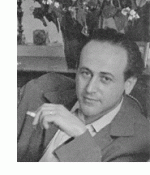
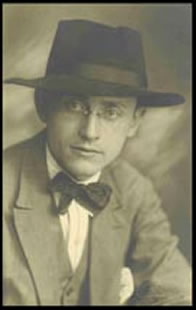
Paul Celan werd onder de naam Paul Antschel op 23 november 1920 geboren in Czernowitz, toentertijd de hoofdstad van de Roemeense Boekovina, nu behorend bij de Oekraïne. Paul Celans ouders waren Duitssprekende joden die hun zoon joods opvoedden en hem naar Duitse christelijke scholen stuurden. In 1942 werden Celans ouders door de Duitse bezetter naar een werkkamp gedeporteerd en daar vermoord. Hijzelf wist aanvankelijk onder te duiken, maar moest vanaf juli 1942 in een werkkamp dwangarbeid verrichten. Celan overleefde de oorlog. Via Boekarest en Wenen vestigde Celan zich in 1948 in Parijs. Daar was hij werkzaam als dichter, vertaler en doceerde hij aan de prestigieuze Ecole Normale Supérieure. Vermoedelijk op 20 april 1970 beëindigde hij zijn leven zelf door in de Seine te springen.
Gerard Reve
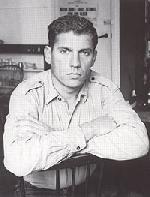
Gerard Reve over: Medearbeiders ”God is in de mensen, de dieren, de planten en alle dingen - in de schepping, die verlost moet worden of waaruit God verlost moet worden, door onze arbeid, aangezien wij medearbeiders van God zijn.” Openbaring ”Tja, waar berust elk godsbegrip op, elke vorm van religie? Op een openbaring, dat wil zeggen op een psychische ervaring van zulk een dwingende en onverbiddelijke kracht, dat de betrokkene het gevoel heeft, niet dat hij een gedachte of een visioen heeft, maar dat een gedachte gedachte of visioen hem bezit en overweldigt.”
Simon Vestdijk
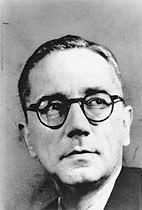
Simon Vestdijk (Harlingen, 17 oktober 1898 – Utrecht, 23 maart 1971) was een Nederlands romancier, dichter, essayist en vertaler. Zijn jeugd te Harlingen en Leeuwarden beschreef hij later in de Anton Wachter-cyclus. Van jongs af aan logeerde hij regelmatig bij zijn grootouders in Amsterdam, waar hij zich in 1917 aan de Universiteit van Amsterdam inschrijft als student in de medicijnen. Tijdens zijn studie die van 1917 tot 1927 duurde, leerde hij Jan Slauerhoff kennen.Tot 1932 is hij als arts in praktijken door heel Nederland werkzaam. In 1932 volgt zijn officiële schrijversdebuut met de uitgave van de bundel Verzen in De Vrije Bladen. Doorslaggevend voor Vestdijks uiteindelijke keuze voor de literatuur is zijn ontmoeting in 1932 met Eddy Du Perron en Menno ter Braak. Deze ontmoeting had tot resultaat dat hij redactielid werd van het tijdschrift Forum Kort daarop, in 1933, wordt zijn eerste novelle, De oubliette, uitgegeven. In hetzelfde jaar schrijft hij Kind tussen vier vrouwen, dat, eerst geweigerd door de uitgever, later de basis zal vormen voor de eerste drie delen van de Anton Wachter-romans. In 1951 ontvangt Vestdijk de P.C. Hooftprijs voor zijn in 1947 verschenen roman De vuuraanbidders. In 1957 wordt hij voor het eerst door het PEN-centrum voor Nederland voorgedragen voor de Nobelprijs voor de Literatuur, die hij echter nooit zal krijgen. Op 20 maart 1971 wordt hem de Prijs der Nederlandse Letteren toegekend, maar voor hij deze kan ontvangen overlijdt hij op 23 maart te Utrecht op 72-jarige leeftijd. Vestdijk was auteur van ca. 200 boeken. Vanwege deze enorme productie noemde de dichter Adriaan Roland Holst hem 'de man die sneller schrijft dan God kan lezen'. Andere belangrijke boeken van Simon Vestdijk zijn: "Kind van stad en land" (1936), "Meneer Visser's hellevaart" (1936), "Ierse nachten" (1946), "De toekomst de religie" (1947), "Pastorale 1943" (1948), "De koperen tuin" (1950), "Ivoren wachters" (1951), "Essays in duodecimo" (1952) en "Het genadeschot" (1964).
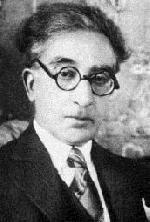
K.P. Kavafis K.P. Kavafis werd als kind van Griekse ouders, afkomstig uit Konstantinopel, geboren in 1863 in Alexandrië (tot vandaag een Griekse enclave) waar hij ook het grootste deel van zijn leven woonde en werkte. Twee jaar na de dood van zijn vader verhuist het gezin in 1872 naar Engeland om na een verblijf van vijf jaar naar Alexandrië terug te keren. Vanwege ongeregeldheden in Egypte vlucht het gezin in 1882 naar Konstantinopel, om na drie jaar opnieuw naar Alexandrië terug te gaan. In de jaren die volgen maakt Kavafis reizen naar Parijs, Londen en in 1901 zijn eerste reis naar Griekenland, in latere jaren gevolgd door nog enkele bezoeken. Op de dag van zijn zeventigste verjaardag, in 1933 sterft Kavafis in Alexandrië. De roem kwam voor Kavafis pas na zijn dood, dus postuum. Deels is dat toe te schrijven aan zijn eigen handelswijze. Hij was uiterst terughoudend met de publicatie van zijn gedichten, liet af en toe een enkel gedicht afdrukken in een literair tijdschrift, gaf in eigen beheer enkele bundels met een stuk of twintig gedichten uit en het merendeel van zijn poëzie schonk hij op losse bladen aan zijn beste vrienden.
Thomas Mann
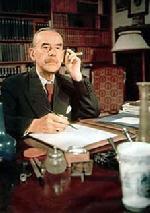
Thomas Mann, de jongere broer van Heinrich Mann, werd geboren op 6 juni 1875 in Lübeck. Hij was de tweede zoon van de graankoopman Thomas Johann Heinrich Mann welke later één van de senatoren van Lübreck werd. Zijn moeder Julia (geboren da Silva-Bruhns) was Duits-Braziliaans van Portugees Kreoolse afkomst. In 1894 debuteerde Thomas Mann met de novelle "Gefallen". Toen Thomas Mann met 21 jaar eindelijk volwassen was en hem dus geld van zijn vaders erfenis toestond - hij kreeg ongeveer 160 tot 180 goldmark per jaar - besloot hij dat hij genoeg had van al die scholen en instituties en werd onafhankelijk schrijver. Kenmerkend voor zijn stijl zijn de ironie, de fenomenale taalbeheersing en de minutieuze detailschildering. Manns reputatie in Duitsland was sterk wisselend. Met zijn eerste roman, Buddenbrooks (1901), had hij een enorm succes, maar door zijn sceptische houding tegenover Duitsland na de Eerste Wereldoorlog veranderde dit volledig. Stelde hij zich tot aan de jaren twintig apolitiek op (Betrachtungen eines Unpolitischen, 1918), meer en meer raakte hij bij het Politiek gebeuren betrokken. Zijn afkeer van het nationaal socialisme groeide, zijn waarschuwingen werden veelvuldiger en heftiger. In 1944 accepteerde hij het Amerikaanse staatsburgerschap. Tussen 1943 en 1947 schreef Mann Doktor Faustus (zie Faust), de roman van de 'Duitse ziel' in de gecamoufleerd geschilderde omstandigheden van de 20ste eeuw. In 1947 bezocht hij voor het eerst sinds de Oorlog Europa, twee jaar later pas Duitsland. In 1952 vertrok hij naar Zwitserland. Op 12 augustus 1955 stierf hij in Zürich. Twintig jaar na zijn dood, in aug. 1975, is zijn literaire nalatenschap geopend: dagboekaantekeningen van 15 maart 1933 tot 29 juli 1955, alsmede notities uit de jaren 1918 tot en met 1921.Belangrijke werken zijn: Der Zauberberg, Der Tod in Venedig, Dokter Faustus , Joseph und seine Brüder en Die Bekenntnisse des Hochstaplers Felix Krull.
Rainer Maria Rilke
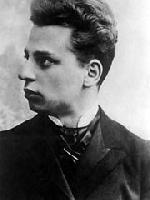
Rilke werd op 4 december 1875 geboren in Praag. Hij had al naam gemaakt als dichter met zijn bundels Das Stundenbuch en Das Buch der Bilder, toen hij de literaire wereld versteld deed staan en wereldfaam verwierf met de publicatie van zijn twee delen Neue Gedichte in 1907 en 1908. Hij verzamelde daarin het beste werk uit een van zijn vruchtbaarste periodes, die hij grotendeels doorbracht in Parijs. Rilke was daar diep onder de indruk gekomen van Rodin, bij wie hij een tijdlang in dienst was als particulier secretaris. Rodin, zei hij later, had hem leren kijken. Dit kijken kwam neer op intense concentratie, om het mysterie te kunnen zien ‘achter de schijnbare werkelijkheid'. Latere en rijpere werken als Duineser Elegien (1912-1923) en het ronduit schitterende Die Sonette an Orfeus (1924) illustreren Rilkes metafysische visie op het onzegbare, dat haar verwoording vindt in een hermetische muzikale taal. Op 29 december 1926 overlijdt Rilke in het sanatorium in Val-Mont aan de gevolgen van leukemie. Enkele dagen later wordt hij, overeenkomstig zijn wens, begraven op het kerkhof van Raron.
* * * * * * * * * * * * * * * *
Romenu
Over literatuur, gedichten, kunst en cultuur
19-08-2015
Jonathan Coe, Li-Young Lee, Louis Th. Lehmann, Ogden Nash, Frank McCourt, Frederik Lucien De Laere, John Dryden
“Let me see, now. The caravan itself is half-obscured, in this picture, by overhanging trees. It had been placed, for some reason, in one of the most remote corners of the grounds, and left there for many years. This photograph captures it just as I remember it: eerie, neglected, the woodwork starting to rot and the metalwork corroding into rust. It was tiny, as this image confirms. The shape, I think, is referred to as “teardrop”: that is to say, the rear end is rounded, describing a small, elegant curve, while the front seems to have been chopped off, and is entirely flat. It’s a curious shape: in effect, the caravan looks as though it is only half there. The trees hanging over its roof and trailing fingers down the walls are some kind of birch, I believe. The caravan had been placed on the outskirts of a wood: in fact the dividing line between this wood–presumably common land–and the furthest reaches of Uncle Owen’s property was difficult to determine. A more modern caravan might have had a picture window at the front; this one, I see, had only two small windows, very high up, and a similar window at the side. No surprise, then, that it was always dark inside. The door was solid and dark, and made of wood, like the whole of the bottom half of the caravan–even the towbar. That’s an odd feature, isn’t it?–but I’m sure that I am right. It rested on four wooden legs, and always sat closer to the ground than it should have done, because both the tyres were flat. The windows were filthy, too, and the whole thing gave the appearance of having been abandoned and fallen into irreversible decay. But to a child, of course, that simply made it all the more attractive. I can only imagine that Ivy and Owen had bought it many years ago–in the 1920s, perhaps, when they were first married–and had stopped using it as soon as they had children. Inside there were only two bunks, so it would have been quite useless for family holidays. How many weeks was it, I wonder, before Beatrix and I set up camp there together? Or was it only a matter of days? They say that split seconds and aeons become interchangeable when you experience intense emotion, and after my arrival at Warden Farm I was soon feeling a sense of loneliness and homesickness which I find it impossible to describe. I was beside myself with unhappiness.”
It wasn't the bright hems of the Lord's skirts that brushed my face and I opened my eyes to see from a cleft in rock His backside;
it's a wasp perched on my left cheek. I keep my eyes closed and stand perfectly still in the garden till it leaves me alone,
not to contemplate how this century ends and the next begins with no one I know having seen God, but to wonder
why I get through most days unscathed, though I live in a time when it might be otherwise, and I grow more fatherless each day.
For years now I have come to conclusions without my father's help, discovering on my own what I know, what I don't know,
and seeing how one cancels the other. I've become a scholar of cancellations. Here, I stand among my father's roses
and see that what punctures outnumbers what consoles, the cruel and the tender never make peace, though one climbs, though one descends
petal by petal to the hidden ground no one owns. I see that which is taken away by violence or persuasion.
The rose announces on earth the kingdom of gravity. A bird cancels it. My eyelids cancel the bird. Anything
might cancel my eyes: distance, time, war. My father said, Never take your both eyes off of the world, before he rocked me.
All night we waited for the knock that would have signalled, All clear, come now; it would have meant escape; it never came.
I didn't make the world I leave you with, he said, and then, being poor, he left me only this world, in which there is always
a family waiting in terror before they're rended, this world wherein a man might arise, go down, and walk along a path
and pause and bow to roses, roses his father raised, and admire them, for one moment unable, thank God, to see in each and every flower the world cancelling itself.
When the thunder stalks the sky, When tickle-footed walks the fly, When shirt is wet and throat is dry, Look, my darling, thats July.
Through the grassy lawn be leather, And prickly temper tug the tether, Shall we postpone our love for weather? If we must melt, lets melt together!
The Chipmunk
My friends all know that I am shy, But the chipmunk is twice and shy and I. He moves with flickering indecision Like stripes across the television. He's like the shadow of a cloud, Or Emily Dickinson read aloud.
The Camel
The camel has a single hump; The dromedary , two; Or else the other way around. I'm never sure. Are you?
Ogden Nash (19 augustus 1902 – 19 mei 1971) Portret door Frederick S. Wight , 1933
“If I knew anything about Sigmund Freud and psychoanalysis I'd be able to trace all my troubles to my miserable childhood in Ireland. That miserable childhood deprived me of self-esteem, triggered spasms of self pity, paralyzed my emotions, made me cranky, envious and disrespectful of authority, retarded my development, crippled my doings with the opposite sex, kept me from rising in the world and made me unfit, almost, for human society. How I became a teacher at all and remained one is a miracle and I have to give myself full marks for surviving all those years in the classrooms of New York. There should be a medal for people who survive miserable childhoods and become teachers, and I should be first in line for the medal and whatever bars might be appended for ensuing miseries. I could lay blame. The miserable childhood doesn't simply happen. It is brought about. There are dark forces. If I am to lay blame it is in a spirit of forgiveness. Therefore, I forgive the following: Pope Pius XII; the English in general and King George VI in particular; Cardinal MacRory, who ruled Ireland when I was a child; the bishop of Limerick, who seemed to think everything was sinful; Eamonn De Valera, former prime minister (Taoiseach) and president of Ireland. Mr. De Valera was a half-Spanish Gaelic fanatic (Spanish onion in an Irish stew) who directed teachers all over Ireland to beat the native tongue into us and natural curiosity out of us. He caused us hours of misery. He was aloof and indifferent to the black and blue welts raised by schoolmaster sticks on various parts of our young bodies. I forgive, also, the priest who drove me from the confessional when I admitted to sins of self-abuse and self-pollution and penny thieveries from my mother's purse. He said I did not show a proper spirit of repentance, especially in the matter of the flesh."
De balts in de pas, lonkend naar de fonkelende ogen van het schichtig wijfje, met een gewei wijds vertakkend zich tot bronstig netwerk.
Het hoofdschuddend pronken met de uitstekende conditie treft doel: een haard, een harem clustert zich rond hem, hij die het gevaar verkent.
Hij die op den duur status koppelt aan grotesk, zijn toorn laat varen en zijn macht aan de hoorns hangt, spijts het overgrote ego.
Filoktetes
De vriendschap had geen gelijke zoals hij daar hand in hand bij de brandstapel stond met een held die het vuur als verlossing koos en hem een boog met gifpijlen schonk, als laatste gift.
Bijna vond hij zijn einde, insgelijks, op het eiland onderweg waar een slang beet in zijn voet: ondraaglijk was de stank, het leed, de boete en de eenzaamheid.
Een held komt, een wonder geschiedt en de geschiedenis wordt herschreven als het orakel in daden wordt vertaald en hij vele levens neemt, een non-stop sneuvelen bij de halsstarrige stad.
Frederik Lucien De Laere (Brugge, 19 augustus 1971)
Can life be a blessing, Or worth the possessing, Can life be a blessing if love were away? Ah no! though our love all night keep us waking, And though he torment us with cares all the day, Yet he sweetens, he sweetens our pains in the taking, There's an hour at the last, there's an hour to repay.
In ev'ry possessing, The ravishing blessing, In ev'ry possessing the fruit of our pain, Poor lovers forget long ages of anguish, Whate'er they have suffer'd and done to obtain; 'Tis a pleasure, a pleasure to sigh and to languish, When we hope, when we hope to be happy again.
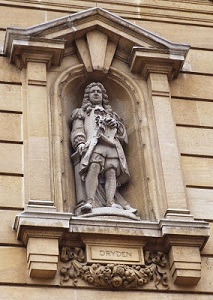
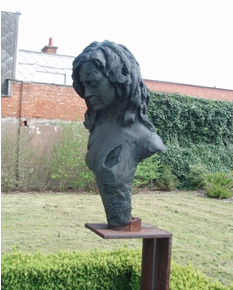
John Dryden (19 augustus 1631 – 12 mei 1700) Standbeeld aan de Northampton Public Library
„ZURG: Stellt euch bitte mal vor. R@: Also ich bin R@. Ich bin achtzehn Jahre alt und Sänger und Gitarrist von Fuckin Sushi. Und das neben mir ist Nino, sie spielt bei uns Keyboards. NINO: Prost. ZURG: Und Wie alt bist du? NINO: Sechzehn. R@: Und das ist Niels am Bass. Er Wird nächstes Jahr achtzehn. Und das ist Lloyd, unser Schlagzeuger. Wie alt bist du eigentlich? LLOYD: Zweiundzwanzig. R@: Was? Das ist ja uralt! ZURG: Geht ihr noch zur Schule? LLOYD: Ich schon lange nicht mehr, die anderen schon. ZURG: Und was machst du beruflich? LLOYD: Ich bin in der Internetbranche. R@ (lacht): So kann man das auch nennen. ZURG: Ich habe grad euer Konzert gesehen und fand es hammer. Wie lang gibt es Fuckin Sushi schon? R@: Seit über einem Jahr. Angefangen haben Wir als Straßenmusiker. Das heißt Niels und ich. Wir waren ein Duo und nannten uns R@‘n'Niels. Unseren ersten Auftritt hatten wir in einem kleinen Kaffvor dem Oma-Café von Heino. Es war auch unser einziger Auftritt und eine Art musikalisches Bombing. ZURG: Vor dem Heino-Café? Lebt der eigentlich noch? R@: Keine Ahnung. NIELS: Na klar! R@: Meinetwegen. Als Nachstes kam Lloyd dazu und zum Schluss Nino. Unseren ersten Auftritt zu viert hatten Wir dann dieses Jahr im Marz. ZURG: Es gibt nicht viele Madchen, die in einer Jungsband spielen. Wie ist das denn so? NINO: Gut.“
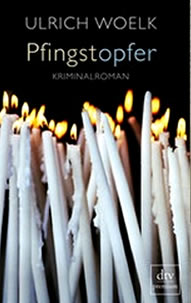
„Die Gemeinde hieß: Sein Wille geschehe. Das Gemeindehaus, ein hellroter eingeschossiger Backsteinbau mit weißen Fensterrahmen, der noch recht neu wirkte, lag an einer geschwungenen Landstraße. Zu Pfingsren vor ungefähr einem Jahr hatte die Gemeinde das Gebäude eingeweiht und bezogen, und seitdem fanden die Gottesdienste dort statt. [Ein kleiner Park mit Kieswegen und getrimmten Buchsbäumen umgab das Haus. In dem Park ragte auf einem weißen, fünf bis sechs Meter hohen Turm ein großes Bronzekreuz in den Himmel. Der Gemeindevorsteher ließ den Wagen an den Strafienrand rollen und schaltete den Motor ab. Der Kies auf dem Boden dampfte. In der Nacht war ein schwerer Regen niedergegangen, doch jetzt zogen die Wolken ab. Die Straße und das flachgeneigte, mit Bitumenschindeln gedeckte Dach des Gemeindehauses gliinzten. Von unten sah es so aus, als hätte das in den Himmel ragende Kreuz auf dem Turm die abziehenden Wolken vertrieben. Die Landschaft Ieuchtete im hellen Sonnenlicht auf, und der Gemeindevorsteher dachte an einen Satz aus der Bibel: Und Gott sah, dass es gut war. Er stieg aus dem Wagen. Wie jeden Sonntag traf er etwa anderthalb Stunden vor dem Gottesdienst beim Gemeindehaus ein, um alles vorzubereiten. Er ging um den Wagen herum auf das Gartentor zu. Das Tor war normalerweise verschlossen, daher irritierte es ihn einen Moment, dass es nur angelehnt war.“
Oh Thou whose Memory quickens Lovers' Souls, Whose Fount of Joy renews the Lover's Tongue, Thy Shadow falls across the World, and They Bow down to it; and of the Rich in Beauty Thou art the Riches that make Lovers mad. Not till thy Secret Beauty through the Cheek Of Laila smite does she inflame Majnún, And not till Thou have sugar'd Shírín's Lip The Hearts of those Two Lovers fill with Blood. For Lov'd and Lover are not but by Thee, Nor Beauty;—Mortal Beauty but the Veil Thy Heavenly hides behind, and from itself Feeds, and our Hearts yearn after as a Bride That glances past us Veil'd—but ever so As none the Beauty from the Veil may know. How long wilt thou continue thus the World To cozen with the Fantom of a Veil From which Thou only peepest?—Time it is To unfold thy perfect Beauty. I would be Thy Lover, and Thine only—I, mine Eyes Seal'd in the Light of Thee to all but Thee, Yea, in the Revelation of Thyself Self-Lost, and Conscience-quit of Good and Evil. Thou movest under all the Forms of Truth, Under the Forms of all Created Things; Look whence I will, still nothing I discern But Thee in all the Universe, in which Thyself Thou dost invest, and through the Eyes Of Man, the subtle Censor scrutinize.
Vertaald door Edward Fitzgerald
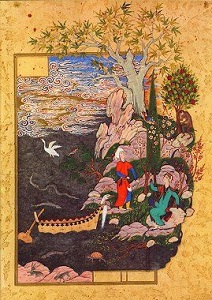
Jami (18 augustus 1414 – 19 november 1492) Salámán and Absál op het Hemelse Eiland. Miniatuur door Mirza Ali, 1560
Uit: Die Zeit und das Glück (Vertaald door Bruno Genzler)
„Und an diesem Punkt schleicht sich ein Lächeln in sein Gesicht, eine unmissverständliche Anspielung, dass ich wohl in süßer Begleitung die Nacht im Keller verbracht hätte. Auch ich lächle – lieber soll er mich für einen Kellerplayboy als für einen illegalen Schatzgräber halten. Ich muss aufpassen. Man weiß ja, wie solche Dinge enden: Man zieht einen Nachbarn ins Vertrauen, der kann den Mund nicht halten und erzählt irgendwann alles den Kollegen im Büro. Am nächsten Tag hat man dann die Carabinieri im Haus und die Männer vom «Amt für historische und kulturelle Güter», die in puncto illegaler Ausgrabungen überhaupt keinen Spaß verstehen. In den darauf folgenden Nächten grabe ich fleißig weiter; eine Marmorplatte kommt zum Vorschein, auf der eine verschleierte Frau dargestellt ist, die ich sogleich «die Vestalin» taufe. Leider ist die Platte in der Mitte durchgebrochen, und meine Vestalin hat keine Beine mehr. Einen halben Meter davon entfernt finde ich eine zweite Marmorplatte, größer noch als die erste, mit eingemeißelten parallelen Linien und Pünktchen sowie drei mysteriösen Buchstaben: PPI. Ich habe keine Ahnung, was sie bedeuten könnten. Hauptsache, mein Privatmuseum hat zwei neue Fundstücke dazugewonnen! Um es kurz zu machen – ich bin wie besessen und kann es tagsüber kaum abwarten, bis es endlich dunkel wird und ich meine Grabungsarbeiten wieder aufnehmen kann. «Früher oder später», sage ich mir, «werde ich einen Schatz finden.» Bis jetzt habe ich noch mit keiner Menschenseele über mein Abenteuer gesprochen.“
« Maintenant l’ombre du pilier – le pilier qui soutient l’angle sud-ouest du toit – divise en deux parties égales l’angle correspondant de la terrasse. Cette terrasse est une large galerie couverte, entourant la maison sur trois de ses côtés. Comme sa largeur est la même dans la portion médiane et dans les branches latérales, le trait d’ombre projeté par le pilier arrive exactement au coin de la maison ; mais il s’arrête là, car seules les dalles de la terrasse sont atteintes par le soleil, qui se trouve encore trop haut dans le ciel. Les murs, en bois, de la maison – c’est-à-dire la façade et le pignon ouest – sont encore protégés de ses rayons par le toit (toit commun à la maison proprement dite et à la terrasse). Ainsi, à cet instant, l’ombre de l’extrême bord du toit coïncide exactement avec la ligne, en angle droit, que forment entre elles la terrasse et les deux faces verticales du coin de la maison. Maintenant, A... est entrée dans la chambre, par la porte intérieure qui donne sur le couloir central. Elle ne regarde pas vers la fenêtre, grande ouverte, par où – depuis la porte – elle apercevrait ce coin de terrasse. Elle s’est maintenant retournée vers la porte pour la refermer. Elle est toujours habillée de la robe claire, à col droit, très collante, qu’elle portait au déjeuner. Christiane, une fois de plus, lui a rappelé que des vêtements moins ajustés permettent de mieux supporter la chaleur. Mais A... s’est contentée de sourire : elle ne souffrait pas de la chaleur, elle avait connu des climats beaucoup plus chauds – en Afrique par exemple – et s’y était toujours très bien portée. Elle ne craint pas le froid non plus, d’ailleurs. Elle conserve partout la même aisance. Les boucles noires de ses cheveux se déplacent d’un mouvement souple, sur les épaules et le dos, lorsqu’elle tourne la tête."
Alain Robbe-Grillet(18 augustus 1922 – 18 februari 2008)
“To begin then - though it is certainly no beginning - the first fragment is of a strange past world, where clouds of nationalism have gathered and broken into a storm of war. Over the forgotten continents - Asia, America, Africa - missiles of destruction fly. The beleaguered people of that day have not fully comprehended the nature of the struggle in which they are engulfed. Those simple blacks, whites and greys which constitute the political situation are grasped readily enough with a little application. But behind these issues lie factors scarcely understood in the council chambers of Peking, London, Cairo or Washington - factors which stem from the long and savage past of the race; factors of instinct and frustrated instinct; factors of fear and lust and dawning conscience; factors inseparable from the adolescence of a species, which loom behind all man’s affairs like an insurmountable mountain chain. 80 men fought each other instead of wrestling with themselves. The bravest sought to evade the currents of hatred by turning outward to the nearest planets in the solar system; the cowardly, by sleeping away their lives in vast hives called dreameries, where the comforts of fantasy could discount the depredations of war. Neither course ultimately offered refuge; when the earthquake comes, it topples both tower and hovel It is fitting that the first fragment should start with a man sitting helplessly in a chair, while bombs fall. The Director of Dreamery Five slid out of his chair before the silent control panels, the question of Floyd Milton making him ungovernably restless. Every so often a distant crump outside announced that the enemy attack was still on; that made the Director no more easy. Although he would be safer down in the vaults, peering into Floyd Milton’s dreams, other considerations caused him to take the elevator and sink to the cool depths of Dreamery Five. He had seen Milton’s face when he came in that aftemoon. Milton had looked like death.”
“Being a child, I never wondered how Bogart came by any money. I assumed that grown-ups had money as a matter of course. Popo had a wife who worked at a variety of jobs; and ended up by becoming the friend of many men. I could never think of Bogart as having mother or father; and he never brought a woman to his little room. This little room of his was called the servant-room but no servant to the people in the main house ever lived there. It was just an architectural convention. It is still something of a miracle to me that Bogart managed to make friends. Yet he did make many friends; he was at one time quite the most popular man in the street. I used to see him squatting on the pavement with all the big men of the street. And while Hat or Edward or Eddoes was talking, Bogart would just look down and draw rings with his fingers on the pavement. He never laughed audibly. He never told a story. Yet whenever there was a fete or something like that, everybody would say, 'We must have Bogart. He smart like hell, that man.' In a way he gave them great solace and comfort, I suppose. And so every morning, as I told you, Hat would shout, very loudly, 'What happening there, Bogart?' And he would wait for the indeterminate grumble which was Bogart saying, 'What happening there, Hat?' But one morning, when Hat shouted, there was no reply. Something which had appeared unalterable was missing. Bogart had vanished; had left us without a word. The men in the street were silent and sorrowful for two whole days. They assembled in Bogart's little room. Hat lifted up the deck of cards that lay on Bogart's table and dropped two or three cards at a time reflectively. Hat said, 'You think he gone Venezuela?' But no one knew. Bogart told them so little. And the next morning Hat got up and lit a cigarette and went to his back verandah and was on the point of shouting, when he remembered. He milked the cows earlier than usual that morning, and the cows didn't like it. A month passed; then another month. Bogart didn't return.”
„Here's a memory. On an overcast morning in February, 1996, I received in the mail from my mother, in St. Louis, a Valentine's package containing one pinkly romantic greeting card, two four-ounce Mr. Goodbars, one hollow red filigree heart on a loop of thread, and one copy of a neuropathologist's report on my father's brain autopsy. I remember the bright-gray winter light that morning. I remember leaving the candy, the card, and the ornament in my living room, taking the autopsy report into my bedroom, and sitting down to read it. The brain (it began) weighed 1,255 gm and showed parasagittal atrophy with sulcal widening. I remember translating grams into pounds and pounds into the familiar shrink-wrapped equivalents in a supermarket meat case. I remember putting the report back into its envelope without reading any further. Some years before he died, my father had participated in a study of memory and aging at Washington University, and one of the perks for participants was a post-mortem brain autopsy, free of charge. I suspect that the study offered other perks of monitoring and treatment which had led my mother, who loved freebies of all kinds, to insist that my father volunteer for it. Thrift was also probably her only conscious motive for including the autopsy report in my Valentine's package. She was saving thirty-two cents' postage. My clearest memories of that February morning are visual and spatial: the yellow Mr. Goodbar, my shift from living room to bedroom, the late-morning light of a season as far from the winter solstice as from spring. I'm aware, however, that even these memories aren't to be trusted. According to the latest theories, which are based on a wealth of neurological and psychological research in the last few decades, the brain is not an album in which memories are stored discretely like unchanging photographs. Instead, a memory is, in the phrase of the psychologist Daniel L. Schacter, a "temporary constellation" of activity-a necessarily approximate excitation of neural circuits that bind a set of sensory images and semantic data into the momentary sensation of a remembered whole. These images and data are seldom the exclusive property of one particular memory."
Jonathan Franzen (Western Springs, 17 augustus 1959)
Who owns those scrawny little feet? Death. Who owns this bristly scorched-looking face? Death. Who owns these still-working lungs? Death. Who owns this utility coat of muscles? Death. Who owns these unspeakable guts? Death. Who owns these questionable brains? Death. All this messy blood? Death. These minimum-efficiency eyes? Death. This wicked little tongue? Death. This occasional wakefulness? Death.
Given, stolen, or held pending trial? Held.
Who owns the whole rainy, stony earth? Death. Who owns all of space? Death.
Who is stronger than hope? Death. Who is stronger than the will? Death. Stronger than love? Death. Stronger than life? Death.
But who is stronger than Death? Me, evidently. Pass, Crow.
Spring & Fall: To A Young Child
Margaret, are you grieving Over Goldengrove unleaving? Leaves, like the things of man, you With your fresh thoughts care for, can you? Ah! as the heart grows older It will come to such sights colder By & by, nor spare a sigh Though worlds of wanwood leafmeal lie; And yet you wíll weep & know why. Now no matter, child, the name: Sorrow's springs are the same. Nor mouth had, no nor mind, expressed What héart héard of, ghóst guéssed: It is the blight man was born for, It is Margaret you mourn for.
O Nile, you are the majestic blood line of my African glory That shower my blessings upon the starved of the world You are the eloquence that ring the Ethiopian bell across the deaf world You are the gifted dancer of graceful rhythms That harmonize with your sisters Atbara and Shabale With your brothers Awash and Juba To fertilize the scorched sands of Arabia O Nile, without your gift Mediterranea shall be a rock of dead waters And Sahara shall be a basket of skeletons You are Africa's black soil that produce life You are the milk that quench the thirsty multitudes You are the messenger of my gospel, O Nile That bring my abundant harves t to the mouth of the needy You are the elegant pilgrim of my mercy. You are the first fountain you are the first ever Ethiopia You are the appeaser of the lustful greeds You are the first Earth Mother of all fertility Rising like the sun from the deepest core of the globe You are the conqueror of the scorching pestilence You are the source you the Africa you are the Ethiopia you are the Nile.
Tsegaye Gabre-Medhin (17 augustus 1936 – 25 februari 2006)
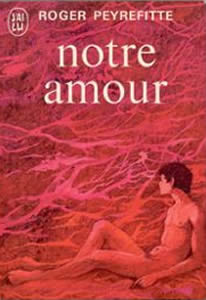
“When I entered the court of the college, I immediately observed the look, the beauty of a young boy. He was with the son of the friend I accompanied and it is because of him that the headmaster seemed to escort me. 'I am delighted to show our house to the author of Amitiés particulières (Special Friendships)',this good priest had said to me. 'But special friendships do not exist in our place. We obtained this result by a very simple means: by having confidence in the students, by enlarging the discipline. Imagine that we allow the big boys to smoke!' And he had lead us to the recreation court. While my friend embraced his son, the other boy, a few steps away from us, did not stop looking at me. He wanted to say to me that he had got to know my name through his friend, that he had passionately read the book, of which the memory had drawn me here, and that he poured the consequences on me again. He had himself sat down in profile, in order to not attract attention, but his green eye sparkled, protected from his long brown hair. His complexion was pink and dim, his nose fine and straight, his well-defined lips added to the softness of his face. A red, cashmere sweater was tightly wrapped around his chest, and his hands, tucked into his pockets, held the arch of his black trousers at the bottom of his back. An imperceptible smile seemed to allude to secrets that we already shared. 'You will have seen it, seen with your own eyes,' the headmaster exclaimed, pointing at students: 'they are smoking! Ah, these nice children!' And he dragged us along to the park, my friend and me. 'Don't judge me naïve,' he continued: 'the clandestine habit of smoking with two was the opportunity for habits that were clandestine as well and by far sadder. If you suppress one of them, you suppress the other ones.' 'We needed to think of this,' I said. 'The heroes of your book were smoking in a conservatory.”
Roger Peyrefitte (17 augustus 1907 – 5 november 2000) Cover
Die bloedrode lichtvlek – misschien de maan. Dan heeft een zandstorm haar afgeduisterd, Maar als die vlek de zon is, moet alles vergaan. Er wordt niet meer gesproken, wel gefluisterd. Enkelen zoeken de weg langs de kerk Waar twee monsters rukken, reuzensterk, Tuimelend aan een metalen keten, Met razend gebrul. Ik had nooit geweten Dat zo woeste dieren daar lagen gekluisterd.
Koorts
Hoor! Zo is nooit gezongen! Hoor! 't Behang bewoog. En 't haar van 't zwaar bewimperd oog. Wat vloog De ruimten door?
't Zal morgen zijn Of 't niet bij nacht zo hard met zwepen Geslagen had. - Zie door 't gordijn De geesten in hun koude schepen!
De takken schaven aan de randen Van 't venster. In de verte fluit Het altijd helder langs de landen. De dieren op de wanden Verdwijnen. 't Licht gaat uit.
Hendrik de Vries (17 augustus 1896 – 18 november 1989 Portret door A. Buytendijk, 1945
De Duitse schrijver en theatermaker Nis-Momme Stockmann werd geboren op 17 augustus 1981 in Wyk auf Föhr. Stockmann voltooide zijn opleiding aan de Duborg-Skolen, de in Flensburg gevestigde school van de Deense minderheid in Schleswig-Holstein. Hij studeerde "Taal en cultuur van Tibet" in Hamburg, media studies in Odense, Denemarken, volgde een opleiding tot chef-kok en uiteindelijk studeerde hij scenario schrijven in Berlijn. Sinds 2002 werkt hij als kunstenaar, schrijver, fotograaf, schilder en filmmaker en realiseert hij woonprojecten. In 2005 richtte hij het “Laboratorium” op - een studio en kunstproject in een verlaten basisschool in Flensburg, die later uitgroeide tot de KKI (Kunst- und Kulturinitiative. Stockmann's bekroonde dramatisch debuut “Der Mann der die Welt aß” ging in première op 17 december 2009 in Heidelberg. Dit werd gevolgd door ongeveer tien andere uitvoeringen van het stuk in onder meer München en Basel. Sinds het seizoen 2009/10, is hij writer in residence bij het Schauspiel Frankfurt. Stockmann schreef toneelstukken, hoorspelen, poëzie, proza en essays en doceert zo nu en dan aan Hogeschool voor de Kunsten in Zürich.
Uit:Der Mann der die Welt aß
„„Ort: Beim Sohn zu Hause. Zeit: Abend. Vater : Du willst dich wirklich selbstständig machen? Sohn: Ja, das muss nur noch mit der Bürgschaft durchgehen. Vater : Bürgschaft? Sohn: Ja ja. Kein Problem, ne Formalität. Vater : Du selbstständig … Sohn: Ja … Vater : Verrückt. Also nicht, dass ich das nicht geglaubt hätte. Ich hab immer daran geglaubt. Aus dir wird was Großes. Sohn: … Vater : Ich will dich mal angucken. Nee – kuck mich mal direkt an, kuck mir mal in die Augen. Ah ja – mein Sohn. Du schaffst das. Verrückt. Du bist ein Verrückter. D schaffst das. Sohn: Ja, ist gut, Papa. Vater : Ich steig da ein. Da brauchst du doch bestimmt mal enen für das Einfache und so. Für das Grobe, oder? (Vater lacht) Ich merk das, jetzt kommen neue Zeiten. Sohn: Ja also … hier ist dein Bett, Papa. Vater : Ich falle dir doch nicht zur Last, oder? Sohn: Nein, Papa. Vater : War das nicht mal dein Arbeitszimmer? Sohn: Ja. Vater : Brauchst du das nicht jetzt? Sohn: Nee, ich … (es kommt schwer raus) hab ein Büro. Vater : Ach so … Ist das nicht teuer?
I see you drinking at a fountain with tiny blue hands, no, your hands are not tiny they are small, and the fountain is in France where you wrote me that last letter and I answered and never heard from you again. you used to write insane poems about ANGELS AND GOD, all in upper case, and you knew famous artists and most of them were your lovers, and I wrote back, it’ all right, go ahead, enter their lives, I’ not jealous because we’ never met. we got close once in New Orleans, one half block, but never met, never touched. so you went with the famous and wrote about the famous, and, of course, what you found out is that the famous are worried about their fame –– not the beautiful young girl in bed with them, who gives them that, and then awakens in the morning to write upper case poems about ANGELS AND GOD. we know God is dead, they’ told us, but listening to you I wasn’ sure. maybe it was the upper case. you were one of the best female poets and I told the publishers, editors, “ her, print her, she’ mad but she’ magic. there’ no lie in her fire.” I loved you like a man loves a woman he never touches, only writes to, keeps little photographs of. I would have loved you more if I had sat in a small room rolling a cigarette and listened to you piss in the bathroom, but that didn’ happen. your letters got sadder. your lovers betrayed you. kid, I wrote back, all lovers betray. it didn’ help. you said you had a crying bench and it was by a bridge and the bridge was over a river and you sat on the crying bench every night and wept for the lovers who had hurt and forgotten you. I wrote back but never heard again. a friend wrote me of your suicide 3 or 4 months after it happened. if I had met you I would probably have been unfair to you or you to me. it was best like this.
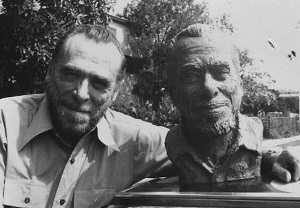
Charles Bukowski (16 augustus 1920 – 9 maart 1994)
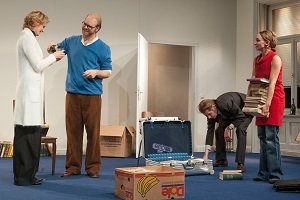
"Sebastian bleibt sitzen. – Hannah mit einem riesigen Entsafter, der aussieht wie eine Raumkapsel. Sebastian Am meisten interessieren mich die Adamiten. Das war die freieste Gesellschaft, die man sich überhaupt vorstellen kann ... Hannah Fang an zu packen ... Sebastian Wie heißt noch mal dieser Film mit dem kleinen Schauspieler ...? Der mit der blonden Frau, die sich dann später getrennt haben? Hannah Sebastian ... Sebastian Der ist in dieser Sekte ... Diese wahnsinnige Szene, die er in dem Film gespielt hat, das war ein Sexgottesdienst für Eingeweihte, das ist bestimmt angelehnt an Alexander den Sechsten, da bin ich mir absolut sicher. Hannah Ich bin begeistert ... Wo ist der Originalkarton? Sebastian Hannah, ich bleibe hier ... Ich kann nicht, ich werde ständig irgendwo hingebracht, wo ich gar nicht hinwill. Stell doch bitte diesen schrecklichen Entsafter ab! Ich werde hier in der Abstellkammer wohnen. Hannah Sebastian, pack bitte deinen Koffer, unsere Tausch- partner sind in einer Stunde da! Und ich weiß nicht, ob die hier wohnen wollen mit einem fremden Mann in der Abstellkammer!"
Moritz Rinke (Worpswede, 16 augustus 1967) Scene uit een opvoering in Aken, 2013
As May was opening the rosebuds, elder and lilac beginning to bloom, it was time for the mare to foal. She'd rest herself, or hobble lazily after the boy who sang as he led her to pasture, wading through the meadowflowers. They wandered back at dusk, bone-tired, the moon perched on a blue shoulder of sky. Then the mare lay down, sweating and trembling, on her straw in the stable. The drowsy, heavy-bellied cows surrounded her, waiting, watching, snuffing. Later, when even the hay slept and the shaft of the Plough pointed South, the foal was born. Hours the mare spent licking the foal with its glue-blind eyes. And the foal slept at her side, a heap of feathers ripped from a bed. Straw never spread as soft as this. Milk or snow never slept like a foal. Dawn bounced up in a bright red hat, waved at the world and skipped away. Up staggered the foal, its hooves were jelly - knots of foam. Then day sniffed with its blue nose through the open stable window, and found them - the foal nuzzling its mother, velvet fumbling for her milk. Then all the trees were talking at once, chickens scrabbled in the yard, like golden flowers envy withered the last stars.
Autumn! It is autumn! Once again autumn! The great gale and all its trail Of reprisals, and of music . . . It is “Closed for the Season” at seaside hotels. Leaf-fall, fall of Antigones and Philomels: My gravedigger, Alas poor Yorick! Lumps them pell-mell.
Love and straw-fires for ever!
The good young ladies Inviolable and frail File soberly this way Summoned by the chapel-bell Hygienically and most dulcetly As befits the “sweet” Sabbath-day.
How all around them grows purified And Sundayfied.
And how faces all grow long at the sight of them!
As for me, though: I am the Great White Bear, Brought hither by iceberg ferry, More polar, more spotless pure Than those girls in white millinery; Not, though, what you would call a churchgoer. I am the Grand Master of Analysis; Remember this.
And yet . . . and yet . . . why so pale? Come, trust your old friend, you can tell me the tale.
Ah no? Can such things be? I turn my face to the seas and the rough skies, To all things that grumble and that utter sighs.
Such things! Such things! Matter for sleepless nights and nail-bitings.
Poor, poor, for all their promisings!
And we! Drowned in such seas, Plunged into such wonderment, Fallen to our knees . . . !
O wonder, found and at once hidden, So martyred, poor, yet full of passion, Being, as it were, a thing forbidden Never to be touched, save in dream fashion.
Wondrous thing, Most violet attar, precious residue, The universe Has care of you And planets in their courses are your nurse From burying to marrying.
Oh, it is rich not to be bought! Just your dear eyes, there, in the skies – Greater than God, higher than thought, Those thoughtless and thought-coloured eyes!
So frail, so thin! And all that mortal warmth Hoarded within!
O forgive her, if, unthinking (How well it becomes her!) She makes eyes a little To beg you a little To have pity a little!
O frail, frail, and still athirst For those Masses which I so mock! Bend, bend your dear head; O look, The spring-time, the lilac-burst. I was not thinking, I swear, of lovemakings But of heavenly things!
O if, after morning Mass, We could but vanish and be no more – Being sick of the human race, So well-contented, so crass, There, at the church-door
Vertaald door P. N. Furbank
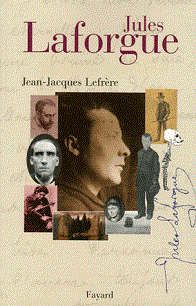
Jules Laforgue (16 augustus 1860 - 20 augustus 1887) Cover
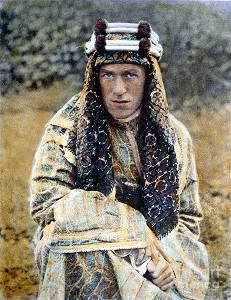
“We rode on across the great valley. A camel-rider, garrulous and old, came out from the houses and jogged over to join us. He named himself Khallaf, too friendly-like. His salutation came after a pause in a trite stream of chat; and when it was returned he tried to force us into conversation. However, Tafas grudged his company, and gave him short answers. Khallaf persisted, and finally, to improve his footing, bent down and burrowed in his saddle pouch till he found a small covered pot of enamelled iron, containing a liberal portion of the staple of travel in the Hejaz. This was the unleavened dough cake of yesterday, but crumbled between the fingers while still warm, and moistened with liquid butter till its particles would fall apart only reluctantly. It was then sweetened for eating with ground sugar, and scooped up like damp sawdust in pressed pellets with the fingers. I ate a little, on this my first attempt, while Tafas and Abdulla played at it vigorously; so for his bounty Khallaf went half-hungry: deservedly, for it was thought effeminate by the Arabs to carry a provision of food for a little journey of one hundred miles. We were now fellows, and the chat began again while Khallaf told us about the last fighting, and a reverse Feisal had had the day before. It seemed he had been beaten out of Kheif in the head of Wadi Safra, and was now at Hamra, only a little way in front of us; or at least Khallaf thought he was there: we might learn for sure in Wasta, the next village on our road. The fighting had not been severe; but the few casualties were all among the tribesmen of Tafas and Khallaf; and the names and hurts of each were told in order. Meanwhile I looked about, interested to find myself in a new country. The sand and detritus of last night and of Bir el Sheikh had vanished.”
Uit: Het nieuwe boek van J. van Oudshoorn (“Zondag”)
“Belangwekkender dan de bibliotheek van lijvige romans en novellenbundels die een over-milde literaire Sint ons dit jaar bracht, zijn drie kleine boekjes: de ‘Marginalia’ van Dirk Coster, ‘Pandorra’ van Arthur van Schendel, en ‘Zondag’ van J. van Oudshoorn. Het is merkwaardig, dat onze literatuur, die zich zoo te buiten gaat aan schrijf-onmatigheid, tegelijkerstijd in enkele bladzijden in staat is, haar ware beteekenis te handhaven van vertolking van geestelijk leven. De meeste romans behandelen de problemen der salons, zeldzamer ontdekt men achter woorden en verbeeldingen zielkundige of wijsgeerige vraagstukken, vraagstukken die de kern van het leven betreffen. Het vraagstuk dat de pen van J. van Oudshoorn bestuurt, is, bij voortduring, het vraagstuk van de eenzaamheid der ziel. Individualisme, zegt men, en men spreekt daarmede onbewust uit, dat hier het probleem aan de orde is van onze wezenseigenheid, die zich on-verdeeld gevoelt, die zich één gevoelt met het Al-leven, het Al-leven dat zich in hoogste instantie aan den mensch openbaart als de Negatie, als het Niet. Een geest als die van van Oudshoorn, die zich immer aan den afgrond van dat Niet bevindt, zonder nochthans in dat Niet ten onder te gaan, komt voor de noodzakelijkheid, te moeten leven, zijn persoonlijkheid te moeten vinden. Dit is een noodzakelijkheid die de gewone, gezond-levende mensch niet beseft. Die laat zich voortdrijven door het instinct van zijn vitaliteit, hij verricht de daden van het leven altijd onbewust, en die onbewustheid stelt hem in staat, voortdurend aan zijn ijl en oneindig, zijn vaag en twijfelend innerlijk de beperking op te leggen van de positieve persoonlijkheid. Een menschenziel is als een waterdroppel, waarin zich de duizend nuancen van werelden en hemelen weerspiegelen, zij is aarzelend door haar rijkdom en helderheid, en: iets positief-willen eischt immer de hardhandige verbreking van mogelijkheden. Daarom hebben de beste geesten altijd de grootste moeite tot omlijnde overtuigingen te komen, omlijnde overtuigingen, die de menschengemeenschap, als het ware om haar bestaan te verzekeren, onverbiddelijk eischt.”
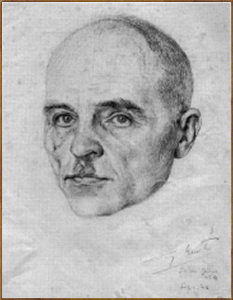
Pierre Henri Ritter jr. (16 augustus 1882 – 13 april 1962) Portret door Gerardus Knuttel, 1942
Eén onbedachtzaam moment, En wat in den tijd werd volbracht- Van den jagenden holenmensch En den eersten vuursteenslag Tot Franklin D. Roosevelt- Zal, in een hooploozen strijd Om den zin van een verder bestaan, In den afgrond der eeuwigheid Spoorloos ten ondergaan.
Dualisme
Ik zou wel graag zo willen zingen, Als Leopold of Engelman, Van ijle, porseleinen dingen En liefde op een hoger plan. Maar, nachtegaal, mijn stem is stuk En met mijn hart voorgoed gebroken; Ik stamel schor om wat geluk En om een vrouw die goed kan koken.
Max Schuchart (16 augustus 1920 - 25 februari 2005)
President Roosevelt, touring Ellis Island in 1906, watched the people from steerage line up for their six-second physical.
Might not, he wondered aloud, the ungloved handling of aliens who were ill infect the healthy? Yet for years more it was done. I imagine
my grandmother, a girl in that Great Hall's polyglot, reverberating vault more terrible than church, dazed by the stars
and stripes in the vast banner up in front where the blessed ones had passed through. Then she did too, to a room like a little chapel, where her mother
might take Communion. A man in a blue cap and a blue uniform—a doctor? a policeman? (Papa would have known, but he had sailed
all alone before them and was waiting now in New York; yet wasn't this New York?)— a man in a blue cap reached for her mother.
Without a word (didn't he speak Italian?) he stuck one finger into her mother's eye, then turned its lid up with a buttonhook,
the long, curved thing for doing up your boots when buttons were too many or too small. You couldn't be American if you were blind
or going to be blind. That much she understood. She'd go to school, she'd learn to read and write and teach her parents. The eye man reached to touch
her own face next; she figured she was ready. She felt big, like that woman in the sea holding up not a buttonhook but a torch.
„Halina, sagte sie in immer der gleichen Tonlage, ich stehl' dir mit meiner Krankheit dein Leben. Du bist mit deinen vierundzwanzig Jahren viel zu jung, um ständig meinetwegen zu Hause zu bleiben. Geh wenigstens mal ins Kino. (…)
„Mit jedem Tag zeigten sich wieder die alten Abhängigkeiten. Auf der einen Seite Teresas unbewusster Wunsch, Halina werde sie aus der Bedrängnis ihres augenblicklichen Lebens herausholen, auf der anderen Seite Halinas ungebrochenes Bedürfnis, Teresa zu beschützen. Radek spielte in dieser Zweisamkeit keine Rolle. Beide hatten jede auf ihre Weise von ihm Besitz ergriffen, und wenn sie von ihm sprachen, dann nur in der Erwartung, dass er am Leben sei und bald nach Hause käme. (…)
Immer war es Halina, die versuchte, gute Stimmung zu machen und die Familie aufzuheitern. Wir können froh sein, dass es uns geht,wie es uns geht, war ihr Lieblingsspruch. Dabei streichelte sie Radek über den Kopf oder küsste sein Ohr, egal, ob er darauf einging oder nicht. Es war, als spürte sie die Enge der Wohnung nicht, nicht den Geruch, der von der immer kränker werdenen Mutter ausging, der sichmit dem Dampf der Kohlsuppe mischte und für immer in die Tapeten zog.“
Een biefstuk is gewoonlijk Afkomstig van een koe. Als men een biefstuk pijn doet, Dan zegt de biefstuk: "Boe!"
Doch als een biefstuk hinnikt Bij onverwachte pijn, Dan zal er hoogst waarschijnlijk Iets niet in orde zijn
De Grens
Als ik een roltrap, zegt men er niets van. Als ik een raapsteel, laat men mij vrij. Als ik een kropsla, kraait er geen haan naar. Maar als ik een bisschop, ben ik er bij.
Daan Zonderland (15 augustus 1909 – 5 augustus 1977)
Het lag voorheen - een paradijs - afzijds en ver van 't vasteland, verloren onder hemelen hoog, besloten tussen 't witte strand, Een bloeiend eiland, dat het hart zich koos tot énige toeverlaat, een tuin waar veilig en vertrouwd het kleine leven gaat.
En het verhaal zegt, dat eenmaal een ziel die zwierf van kust naar kust, een mens ten dode toe vermoeid daar vond een hem genegen rust, hoe deze droom van stilte en licht, de vreugde aan dier en vreemd gewas hem langzaam en niet meer verwacht tot leven weer genas.
Somtijds als achter 't water-vlak de lage zon zijn reis besloot, gebeurde 't dat een oude droom verraderlijk zijn rust besloop - hij sloot de ogen - maar des nachts aanhoorde hij de eeuwige keer der golven, 't waaien van de wind en was niet eenzaam meer.
Met elke morgen als zich 't licht verdiepte tot een gloeiend rood, duwde hij van het hellend strand zijn opgetrokken, kleine boot en koos het water, maar éénmaal des avonds kerend van zijn tocht voorbij de verste horizon, vond hij niet wat hij zocht.
Alleen wat drijvend hout en ook een jammerlijk-verdronken dier, zwermende vogels, over 't graf hun krijsen en hun hees getier. Hij werd weerom - zo zegt 't verhaal - een ziel die zwierf van kust naar kust, een mens ten dode toe vermoeid, vervreemd van vrede en rust.
Maar welke vloed - en dan waarom? - verzwolg dit zo beminde land, verloren onder hemelen hoog, besloten tussen 't witte strand, een bloeiend eiland waar het hart moeizaam genas van d'oude waan, een tuin waar veilig en vertrouwd het leven is gegaan?
“Als ik door ons gebied rijdt, lijkt het soms of het boerenland dankjewel zegt tegen het waterschap! Grazige weilanden, beste piepers, volle maïs. Ook natuur zie ik in toenemende mate blij zijn met waterschapswerk: beken die weer kronkelen, heideveld met natte slenken, vis die weer in schoon water langs de stuw kan zwemmen, vogels, teruggekomen van weggeweest. Maar van inwoners hoor je zelden bedankjes. Geen wonder. Als een mens alle overheden en instanties die dagelijks voor hem in touw zijn, moet bedanken, blijf je bezig. Bovendien: het oogt allemaal vanzelfsprekend: een regenland en toch een droge straat, een veilig huis, droge en toch vruchtbare tuinen en landerijen. Schoon zwemwater, geschikt viswater. Een prachtig landschap en een gevarieerde natuur. Je wc doorspoelen, en ergens voorkomt iemand, dat door dat verontreinigd water mensen ziek worden. Negen miljoen Nederlanders in overstroombaar gebied, een deel daarvan in Reest en Wieden, en vrijwel nooit een centje pijn! Bedanken, hoe zou je dat ook moeten doen? Een veldboeket brengen naar het waterschapshuis? Een maaltje aardappelen? Een mooie brasem? Ik weet een betere manier! Als dijkgraaf hoor ik rond de verkiezing altijd mensen zeggen: ‘Waarom zou ik stemmen? Het loopt toch goed zo? Ga vooral zo door!’ Dat is ook een vorm van bedankje. Maar wel één, die in Den Haag averechts werkt. De politiek legt namelijk een laag opkomstpercentage uit als onverschilligheid en kritiek.”
“She has fine legs which the fireman’s jacket does nothing to conceal and which she takes pride, clearly, in displaying. She is a young woman of questionable virginity and well known to the firemen. She is the toast of a certain section of the town to whom she is affectionately known as Madame Butterfly, although unlike her more famous namesake she has never been married, nor cursed by an uncle bonze for violating the laws of the gods of her ancestors. She has another registered, name: her mother’s name. What she is her mother was before her, and proud of it. The bare-footed fugitive was not, of course, a bridegroom, but a long- established married man with his wife and family and a prosperous business in Longford, the meanest town in Ireland. For the fun of it the firemen made certain that the news of his escapade in the June afternoon got back to Longford. They were fond of, even proud of, Butterfly, as were many other men who had nothing at all to do with the quenching of fire. But one man loved the pilgrim soul in her and his name was Pike Hunter. Like Borgnefesse, the buccaneer of St. Malo on the Rance, who had a buttock shot or sliced off in action on the Spanish Main, Pike Hunter had a lopsided appearance when sitting down. Standing up he was as straight and well-balanced as a man could be: a higher civil servant approaching the age of forty, a shy bachelor, reared, nourished and guarded all his life by a trinity of upper-middle-class aunts. He was pink-faced, with a little fair hair left to emphasise early baldness, mild in his ways, with a slight stutter, somewhat afraid of women. He wore always dark-brown suits with a faint red stripe, dark-brown hats, rimless spectacles, shiny square-toed brown hand-made shoes with a wide welt. In summer, even on the hottest day, he carried a raincoat folded over his arm, and a rolled umbrella.“
Benedict Kiely (15 augustus 1919 - 9 februari 2007)
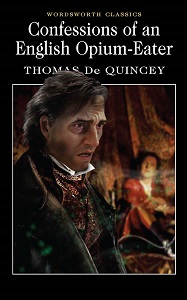
“But still, wine constantly leads a man to the brink of absurdity and extravagance, and beyond a certain point it is sure to volatilize and to disperse the intellectual energies; whereas opium always seems to compose what had been agitated and to concentrate what had been distracted. In short, to sum up all in one word, a man who is inebriated, or tending to inebriation, is, and feels that he is, in a condition which calls up into supremacy the merely human, too often the brutal, part of his nature; but the opium-eater (I speak of him who is not suffering from any disease, or other remote effects of opium) feels that the diviner part of his nature is paramount, that is, the moral affections are in a state of cloudless serenity, and over all is the great light of the majestic intellect. The crack pipe was a tube of glass half as thick as a finger, jaggedly broken at both ends because the prostitute had dropped it. She kept talking about the man down the hall whose pipe still wore a bowl. She said that that special pipe was for sale, but the john figured that he’d already spent enough. The john was of the all-night species, family Blattidae. Having reached that age when a man’s virility begins to wilt flabbily, he admitted that his lust for women grew yearly more slobbery and desperate. Every year now he fell a little further from what he had been. In his youth he had not considered himself to be anything special. Now he recollected with awe how his penis had once leaped eagerly up at the merest thought or touch, how his orgasms had gushed as fluently as Lincoln’s speeches; those were the nights when ten minutes between two trash cans or beneath a parked car had sufficed.”
Thomas de Quincey (15 August 1785 – 8 December 1859) Cover
Het lag voorheen - een paradijs - afzijds en ver van 't vasteland, verloren onder hemelen hoog, besloten tussen 't witte strand, Een bloeiend eiland, dat het hart zich koos tot énige toeverlaat, een tuin waar veilig en vertrouwd het kleine leven gaat.
En het verhaal zegt, dat eenmaal een ziel die zwierf van kust naar kust, een mens ten dode toe vermoeid daar vond een hem genegen rust, hoe deze droom van stilte en licht, de vreugde aan dier en vreemd gewas hem langzaam en niet meer verwacht tot leven weer genas. Somtijds als achter 't water-vlak de lage zon zijn reis besloot, gebeurde 't dat een oude droom verraderlijk zijn rust besloop - hij sloot de ogen - maar des nachts aanhoorde hij de eeuwige keer der golven, 't waaien van de wind en was niet eenzaam meer.
Met elke morgen als zich 't licht verdiepte tot een gloeiend rood, duwde hij van het hellend strand zijn opgetrokken, kleine boot en koos het water, maar éénmaal des avonds kerend van zijn tocht voorbij de verste horizon, vond hij niet wat hij zocht. Alleen wat drijvend hout en ook een jammerlijk-verdronken dier, zwermende vogels, over 't graf hun krijsen en hun hees getier. Hij werd weerom - zo zegt 't verhaal - een ziel die zwierf van kust naar kust, een mens ten dode toe vermoeid, vervreemd van vrede en rust.
Maar welke vloed - en dan waarom? - verzwolg dit zo beminde land, verloren onder hemelen hoog, besloten tussen 't witte strand, een bloeiend eiland waar het hart moeizaam genas van d'oude waan, een tuin waar veilig en vertrouwd het leven is gegaan?
Matthias Claudius (15 augustus 1740 - 21 januari 1815) Cover
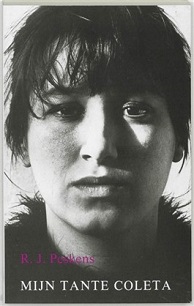
“Het bleek inderdaad dat ook grootvader tot de huisjesmelkers behoorde. Heb je dat dan nooit geweten, dat vader die krotten had, zei moeder. Nee, antwoordde vader. Dat geloof ik direct, zei moeder. En bovendien kun je er nikx aan doen. En daaromis die Laernoes een smeerlap. Omdat hij niet winnen kan, gaat hij met modder gooien. Ik ben zaterdagavond nog even langs zijn winkel en gelukkig had hij zijn lichten uit. Anders had ik hem wel ven te spreken gevraagd. Als je het maar aan mij overlaat, zei vader. Dinsdagmiddag in der raadsvergadering als mijn voorstellen aan de orde komen, zal ik hem ook op dit punt wel van repliek dienen. Daar heb je hém weer met zijn repliek, zei moeder. Wat wou je dan, antwoordde vader geërgerd. Je kunt dit soort zaken toch niet op de vuist uitvechten. Ik zou niet weten waaróm niet, zei moeder, die gereformeerde lamzak. Als jij je er maar niet mee bemoeit, zei vader nog eens. De hele zondag zat hij met zijn grote schrijfblok voor zich aan de tafel in de huiskamer. En ’s maandags stond er weer een stuk van hem in de krant.”
R.J. Peskens (15 augustus 1909 - 18 december 1987) Cover
“Jetzt steht der Kommissar wie angewurzelt neben seinem Nachbarn, der noch immer den Eimer mit dem Futter darin am Henkel festhält. Futter, das nun nicht mehr gebraucht wird. Flaumige Federn schwirren durch die staubige Luft, kleben blutig an den Wänden und auf dem Boden. Ein Huhn hängt kopflos von einem der Dachsparren. »Marder«, erklärt Köpcke. Völxen nickt. Ein Marder sei das Schlimmste, was einem Hühner-stall passieren kann, hat Köpcke ihm seinerzeit erklärt, als er den Drahtzaun um seine Ställe einen halben Meter tief im Boden vergra-ben hat. Ein Fuchs sei dagegen harmlos, der hole sich nur ein Huhn, um es zu essen. Ein Marder aber gerate in einen regelrechten Blut-rausch. »Der killt alles, was sich bewegt, und zwar so lange, bis sich nichts mehr bewegt. Und dann saugt er seinen Opfern das Blut aus, wie ein Vampir, und lässt die Kadaver liegen.« Völxen war dieses Szenario damals allzu drastisch erschienen, weiß er doch um Köpckes dramaturgisches Talent, das sich besonders unter dem Einfluss von ein, zwei Flaschen Herrenhäuser entfaltet. Aber jetzt sieht der Kommissar mit eigenen Augen, dass der Nachbar seinerzeit nicht übertrieben hat. Offenbar hat der Marder ein Schlupfloch im Zaun gefunden oder sich durchgegraben, um dann dieses Blutbad anzurichten. Köpckes breiter Kopf, der ohne Andeutung eines Halses auf seinem gedrungenen Körper sitzt, nickt bekümmert. »Ausgerechnet die Orpington!«, sagt er und spricht dabei jede Silbe buchstabengetreu aus. Orpington. Sieben Hennen und einen Hahn dieser englischen Rasse hat er sich – zusätzlich zu seinen anderen fünf Dutzend Hühnern – angeschafft, um zu testen, ob die Tiere wirklich so legefreudig sind, wie behauptet wird.“
„Da sitzen wir, einander gegenüber, nur wir beide, sie und ich, getrennt durch eine Glasscheibe. Wir sind so selten auf diese Weise für uns, unsere Blicke treffen sich nie, und manchmal, wenn ich sie irgendwo sehe, frage ich mich, ob sie von den Meinen weiß, ob wir eine Rolle spielen in ihren Überlegungen, wenn sie »Sorge« sagt oder »Verantwortung«. Ich suche in ihrem Gesicht, in ihren Gesten, die sie so gern im Scharnier der Raute einrasten lässt. Wer wollte sie sein, als sie sich zum heutigen Anlass für diese futuristische Silberweste entschied? Steif und fern, wie sie da sitzt, wirkt sie nicht, als müsse sie mir dringend etwas sagen. Eine Mediengesellschaft sollen wir sein, wählen Menschen mit dem Privileg, zum Volk zu reden – und dann reden sie so? Vielleicht ist es umgekehrt: Wer an der Macht nicht auffällt und sich mit dem Volk auf Gemeinplätzen verabredet, kann immer weiter herrschen. Herrschen? Sie spricht. Was für ein Redetyp ist dies? Eine Ansprache? Eine Gardinenpredigt? Ein Märchen? Warum nicht? In früheren Jahrhunderten hat man gepredigt: »Mensch, werde wesentlich.« Der Kanzlerin sagte man: »Wesen, werde menschlich«, und so darf sie mir heute persönlich kommen, matriarchalisch, die gute Hirtin, Trümmerfrau, Mutter, Lehrerin, Oberärztin, Hüterin des Schutzmantels. Sie sitzt neben einem Gebinde, das an Begräbnisse erinnert, vor einem Tannenbaum, flankiert von einem Flaggen-Ensemble für Deutschland und Europa, also zwischen Emblemen und Mythen. Jetzt erzählt sie die Geschichte vom verhinderten Schulabbrecher, vom Zusammenhalt, von »Freunden und Nachbarn«, von »Familien, die sich Tag für Tag um ihre Kinder und Angehörigen kümmern«. Doch dies sind sämtlich Dinge, die sie aus freien Stücken tun, und nicht, weil die Regierung ihnen diese Freiheit schenkte.“
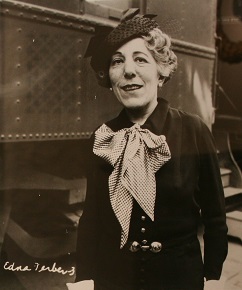
“For equipment she had youth, curiosity, a steel strong frame...four hundred ninety-seven dollars; and a gay adventuresome spirit that was never to die, though it led her into curious places and she often found, at the end, only a trackless waste from which she had to retrace her steps, painfully. But always, to her, red and green cabbages were to be jade and Burgundy, crysoprase and porphyry. Life has no weapons against a woman like that.” (…)
“Some day I'll probably marry a horny-handed son of a toil, and if I do it'll be the horny hands that will win me. If you want to know, I like 'em with their scars on them. There's something about a man who has fought for it - I don't know what it is - a look in his eye - the feel of his hand. He needn't have been successful - thought he probably would be. I don't know. I'm not very good at this analysis stuff. I know he - well, you haven't a mark on you. Not a mark. You quit being an architect, or whatever it was, because architecture was an uphill disheartening job at the time. I don't say that you should have kept on. For all I know you were a bum architect. But if you had kept on - if you had loved it enough to keep on - fighting, and struggling, and sitcking it out - why, that fight would show in your face to-day - in your eyes and your jaw and your hands and in your way of standing and walking and sitting and talking. Listen. I'm not critcizing you. But you're all smooth. I like 'em bumpy.”
Es liegt so viel Freude in der Welt, man muß sie nur heben: e i n Leuchten der Sonne fällt in jegliches Leben! Wenn wir das faßten und brächten ein jeder dem andern zum Gruß, das wäre in dunkelsten Nächten noch Freude im Überfluß!