Romenu is een blog over gedichten, literatuur en kunst Maar Romenu is ook een professionele freelance vertaler Du-Ne en Ne-Du http://www.roumen-vertalingen.nl/
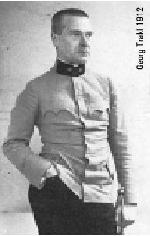
Georg Trakl werd op 3 februari 1887 in het conducteurshuis aan de Waagplatz 2 in Salzburg geboren. Zijn vader, Tobias Trakl, was een handelaar in ijzerwaren en zijn moeder, die ook psychische problemen had, was Maria Catharina Trakl, (meisjesnaam Halik). Voorts had hij nog drie broers en drie zussen. Margarethe (doorgaans Grethe genoemd) stond hem het naast, zelfs zodanig dat sommigen een incestueuze verhouding vermoeden. Zijn jeugd bracht hij door in Salzburg. Vervolgens bezocht hij van 1897 tot 1905 het humanistische gymnasium. Om toch een academische opleiding te kunnen volgen, werkte hij tot 1908 in de praktijk bij een apotheker. Sommigen vermoedden dat hij dit vooral deed om zichzelf opiaten te kunnen verschaffen. Bij het uitbreken van WO I werd Trakl als medicus naar het front in Galicië (heden ten dage in Oekraïne en Polen) gestuurd. Zijn gemoedsschommelingen leidden tot geregelde uitbraken van depressie, die verergerd werden door de afschuw die hij voelde voor de verzorging van de ernstig verwonde soldaten. De spanning en druk dreven hem ertoe een suïcidepoging te ondernemen, welke zijn kameraden nochtans verhinderden. Hij werd in een militair ziekenhuis opgenomen in Kraków, alwaar hij onder strikt toezicht geplaatst werd.Trakl verzonk daar in nog zwaardere depressies en schreef Ficker om advies. Ficker overtuigde hem ervan dat hij contact moest opnemen met Wittgenstein, die inderdaad op weg ging na Trakls bericht te hebben ontvangen. Op 4 november 1914, drie dagen voordat Wittgenstein aan zou komen, overleed hij echter aan een overdosis cocaïne
Paul Celan
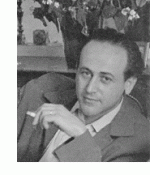
Paul Celan werd onder de naam Paul Antschel op 23 november 1920 geboren in Czernowitz, toentertijd de hoofdstad van de Roemeense Boekovina, nu behorend bij de Oekraïne. Paul Celans ouders waren Duitssprekende joden die hun zoon joods opvoedden en hem naar Duitse christelijke scholen stuurden. In 1942 werden Celans ouders door de Duitse bezetter naar een werkkamp gedeporteerd en daar vermoord. Hijzelf wist aanvankelijk onder te duiken, maar moest vanaf juli 1942 in een werkkamp dwangarbeid verrichten. Celan overleefde de oorlog. Via Boekarest en Wenen vestigde Celan zich in 1948 in Parijs. Daar was hij werkzaam als dichter, vertaler en doceerde hij aan de prestigieuze Ecole Normale Supérieure. Vermoedelijk op 20 april 1970 beëindigde hij zijn leven zelf door in de Seine te springen.
Gerard Reve
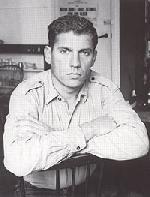
Gerard Reve over: Medearbeiders ”God is in de mensen, de dieren, de planten en alle dingen - in de schepping, die verlost moet worden of waaruit God verlost moet worden, door onze arbeid, aangezien wij medearbeiders van God zijn.” Openbaring ”Tja, waar berust elk godsbegrip op, elke vorm van religie? Op een openbaring, dat wil zeggen op een psychische ervaring van zulk een dwingende en onverbiddelijke kracht, dat de betrokkene het gevoel heeft, niet dat hij een gedachte of een visioen heeft, maar dat een gedachte gedachte of visioen hem bezit en overweldigt.”
Simon Vestdijk
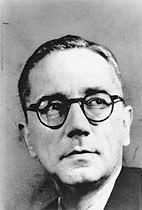
Simon Vestdijk (Harlingen, 17 oktober 1898 – Utrecht, 23 maart 1971) was een Nederlands romancier, dichter, essayist en vertaler. Zijn jeugd te Harlingen en Leeuwarden beschreef hij later in de Anton Wachter-cyclus. Van jongs af aan logeerde hij regelmatig bij zijn grootouders in Amsterdam, waar hij zich in 1917 aan de Universiteit van Amsterdam inschrijft als student in de medicijnen. Tijdens zijn studie die van 1917 tot 1927 duurde, leerde hij Jan Slauerhoff kennen.Tot 1932 is hij als arts in praktijken door heel Nederland werkzaam. In 1932 volgt zijn officiële schrijversdebuut met de uitgave van de bundel Verzen in De Vrije Bladen. Doorslaggevend voor Vestdijks uiteindelijke keuze voor de literatuur is zijn ontmoeting in 1932 met Eddy Du Perron en Menno ter Braak. Deze ontmoeting had tot resultaat dat hij redactielid werd van het tijdschrift Forum Kort daarop, in 1933, wordt zijn eerste novelle, De oubliette, uitgegeven. In hetzelfde jaar schrijft hij Kind tussen vier vrouwen, dat, eerst geweigerd door de uitgever, later de basis zal vormen voor de eerste drie delen van de Anton Wachter-romans. In 1951 ontvangt Vestdijk de P.C. Hooftprijs voor zijn in 1947 verschenen roman De vuuraanbidders. In 1957 wordt hij voor het eerst door het PEN-centrum voor Nederland voorgedragen voor de Nobelprijs voor de Literatuur, die hij echter nooit zal krijgen. Op 20 maart 1971 wordt hem de Prijs der Nederlandse Letteren toegekend, maar voor hij deze kan ontvangen overlijdt hij op 23 maart te Utrecht op 72-jarige leeftijd. Vestdijk was auteur van ca. 200 boeken. Vanwege deze enorme productie noemde de dichter Adriaan Roland Holst hem 'de man die sneller schrijft dan God kan lezen'. Andere belangrijke boeken van Simon Vestdijk zijn: "Kind van stad en land" (1936), "Meneer Visser's hellevaart" (1936), "Ierse nachten" (1946), "De toekomst de religie" (1947), "Pastorale 1943" (1948), "De koperen tuin" (1950), "Ivoren wachters" (1951), "Essays in duodecimo" (1952) en "Het genadeschot" (1964).
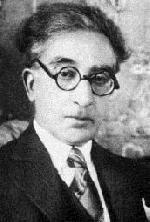
K.P. Kavafis K.P. Kavafis werd als kind van Griekse ouders, afkomstig uit Konstantinopel, geboren in 1863 in Alexandrië (tot vandaag een Griekse enclave) waar hij ook het grootste deel van zijn leven woonde en werkte. Twee jaar na de dood van zijn vader verhuist het gezin in 1872 naar Engeland om na een verblijf van vijf jaar naar Alexandrië terug te keren. Vanwege ongeregeldheden in Egypte vlucht het gezin in 1882 naar Konstantinopel, om na drie jaar opnieuw naar Alexandrië terug te gaan. In de jaren die volgen maakt Kavafis reizen naar Parijs, Londen en in 1901 zijn eerste reis naar Griekenland, in latere jaren gevolgd door nog enkele bezoeken. Op de dag van zijn zeventigste verjaardag, in 1933 sterft Kavafis in Alexandrië. De roem kwam voor Kavafis pas na zijn dood, dus postuum. Deels is dat toe te schrijven aan zijn eigen handelswijze. Hij was uiterst terughoudend met de publicatie van zijn gedichten, liet af en toe een enkel gedicht afdrukken in een literair tijdschrift, gaf in eigen beheer enkele bundels met een stuk of twintig gedichten uit en het merendeel van zijn poëzie schonk hij op losse bladen aan zijn beste vrienden.
Thomas Mann
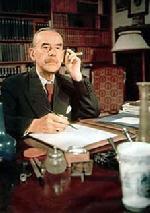
Thomas Mann, de jongere broer van Heinrich Mann, werd geboren op 6 juni 1875 in Lübeck. Hij was de tweede zoon van de graankoopman Thomas Johann Heinrich Mann welke later één van de senatoren van Lübreck werd. Zijn moeder Julia (geboren da Silva-Bruhns) was Duits-Braziliaans van Portugees Kreoolse afkomst. In 1894 debuteerde Thomas Mann met de novelle "Gefallen". Toen Thomas Mann met 21 jaar eindelijk volwassen was en hem dus geld van zijn vaders erfenis toestond - hij kreeg ongeveer 160 tot 180 goldmark per jaar - besloot hij dat hij genoeg had van al die scholen en instituties en werd onafhankelijk schrijver. Kenmerkend voor zijn stijl zijn de ironie, de fenomenale taalbeheersing en de minutieuze detailschildering. Manns reputatie in Duitsland was sterk wisselend. Met zijn eerste roman, Buddenbrooks (1901), had hij een enorm succes, maar door zijn sceptische houding tegenover Duitsland na de Eerste Wereldoorlog veranderde dit volledig. Stelde hij zich tot aan de jaren twintig apolitiek op (Betrachtungen eines Unpolitischen, 1918), meer en meer raakte hij bij het Politiek gebeuren betrokken. Zijn afkeer van het nationaal socialisme groeide, zijn waarschuwingen werden veelvuldiger en heftiger. In 1944 accepteerde hij het Amerikaanse staatsburgerschap. Tussen 1943 en 1947 schreef Mann Doktor Faustus (zie Faust), de roman van de 'Duitse ziel' in de gecamoufleerd geschilderde omstandigheden van de 20ste eeuw. In 1947 bezocht hij voor het eerst sinds de Oorlog Europa, twee jaar later pas Duitsland. In 1952 vertrok hij naar Zwitserland. Op 12 augustus 1955 stierf hij in Zürich. Twintig jaar na zijn dood, in aug. 1975, is zijn literaire nalatenschap geopend: dagboekaantekeningen van 15 maart 1933 tot 29 juli 1955, alsmede notities uit de jaren 1918 tot en met 1921.Belangrijke werken zijn: Der Zauberberg, Der Tod in Venedig, Dokter Faustus , Joseph und seine Brüder en Die Bekenntnisse des Hochstaplers Felix Krull.
Rainer Maria Rilke
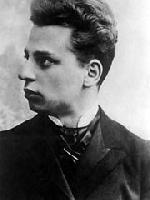
Rilke werd op 4 december 1875 geboren in Praag. Hij had al naam gemaakt als dichter met zijn bundels Das Stundenbuch en Das Buch der Bilder, toen hij de literaire wereld versteld deed staan en wereldfaam verwierf met de publicatie van zijn twee delen Neue Gedichte in 1907 en 1908. Hij verzamelde daarin het beste werk uit een van zijn vruchtbaarste periodes, die hij grotendeels doorbracht in Parijs. Rilke was daar diep onder de indruk gekomen van Rodin, bij wie hij een tijdlang in dienst was als particulier secretaris. Rodin, zei hij later, had hem leren kijken. Dit kijken kwam neer op intense concentratie, om het mysterie te kunnen zien ‘achter de schijnbare werkelijkheid'. Latere en rijpere werken als Duineser Elegien (1912-1923) en het ronduit schitterende Die Sonette an Orfeus (1924) illustreren Rilkes metafysische visie op het onzegbare, dat haar verwoording vindt in een hermetische muzikale taal. Op 29 december 1926 overlijdt Rilke in het sanatorium in Val-Mont aan de gevolgen van leukemie. Enkele dagen later wordt hij, overeenkomstig zijn wens, begraven op het kerkhof van Raron.
* * * * * * * * * * * * * * * *
Romenu
Over literatuur, gedichten, kunst en cultuur
25-07-2017
Robyn Carr
De Amerikaanse schrijfster Robyn Carr werd geboren op 25 juli 1951 in Minnesota. Carr was nooit van plan schrijver te worden. Zij studeerde verpleegkunde op de universiteit. Ze trouwde alop de middelbare school vlak voordat haar man naar de US Air Force vertrok als helikopterpiloot tijdens de Vietnam-oorlog. Carr volgde haar man van basis naar basis, en omdat ze niet lang op één plaats verbleven, was ze niet in staat om haar carrière als verpleegster voort te zetten. Toen ze door een moeilijke zwangerschap in bed moest blijven begon zij romans te lezen om zichzelf af te leiden. Ze besloot al snel om haar eigen romans te schrijven. Carr debuteerde in 1978, maar het zou dertig jaar duren voor ze de eerste plek zou bemachtigen in de New York Times Bestsellerlijst. Dat gebeurde in 2007 met het eerste deel uit haar wereldberoemde Virgin River-serie. Sindsdien publiceert Carr een paar boeken per jaar, in totaal verschenen er inmiddels twintig romans die zich afspelen in het kleine stadje Virgin River. Bovendien startte Carr een nieuwe reeks, “Thunder Point”, die net zo populair lijkt te worden. Hoewel haar verhalen echte goodreads zijn, staan er altijd sterke vrouwelijke karakters centraal en gaat ze onderwerpen als huiselijk geweld en gezondheidsproblemen niet uit de weg.
Uit:What We Find
“Maggie had no idea how long Sully had been up when she finally rolled out of bed at seven-thirty….on about four hours of sleep. She stumbled to the bathroom and purposely didn’t look in the mirror, a little afraid she’d she Cal’s brand on her. She started the shower and got in while it was still cold. Holy mother of pearl, what a night that was. He was an amazing lover. But also, he was such a sweet, smart, funny man. Of course he had to be some strange duck who was taking six months off to do odd jobs and camp. He couldn’t be some ordinary, stable, reliable person, like a truck driver or forest ranger. But then, what type of man did she think she could have a comfortable fit with? Sergei, the Ukrainian artist, had been a disaster. Andrew, the doctor, should’ve worked — they had so many things in common — and it had been a worse disaster. Even running her own hands over her body as she sudsed up in the shower brought delicious tinglings from the night before, little shudders of aftershocks. When she was out of the shower she braved it, looked in the mirror. Her cheeks were either flushed or chafed from his beard. Her lips were rosy from hours of kissing, sometimes so wildly she could hardly catch her breath. She lost control more times than she could count and she was pretty sure she bit him once. His fault, really. He could drive her so far into ecstasy she lost her bearings and became nothing more than a writhing body responding to a powerful body and lost all sense. She wondered if she just rocked and wailed in that little pop-up all the damn night. For all she knew the other campers brought their folding chairs and fires over to Cal’s site and created an audience. At least it had been Sunday night, the weekend warriors gone, population down. She put lotion on her face and some lip gloss, blew out her hair and got dressed. She was going to have to think of what to say to Sully. She’d never faced that before — worry over explaining to her father. She’d had a fling or six at the crossing, and there was Andrew — she’d never explained him. She had just said they were seeing each other and they’d be staying in one of the cabins. Something about this was different. It was probably because he’d had a heart attack, she thought. Or it could be because she hardly knew Calvin, the handsome, good natured bum and princess molester. Better go easy on Sully.”
Robert Graves, Johan Andreas der Mouw, Banana Yoshimoto, Rosemarie Schuder, Katia Mann, Junichirō Tanizaki, Frank Wedekind, Alexandre Dumas père, Betje Wolff
"This is a confidential history. But who, it may be asked, are my confidants? My answer is: it is addressed to posterity. I do not mean my great-grandchildren, or my great-great- grandchildren: I mean an extremely remote posterity. Yet my hope is that you, my eventual readers of a hundred generations ahead, or more, will feel yourselves directly spoken to, as if by a contemporary: as often Herodotus and Thucydides, long dead, seem to speak to me. And why do I specify so extremely remote a posterity as that? I shall explain. I went to Cumae, in Campania, a little less than eighteen years ago, and visited the Sibyl in her cliff cavern on Mount Gaurus. There is always a Sibyl at Cumae, for when one dies her novice-attendant succeeds; but they are not all equally famous. Some of them are never granted a prophecy by Apollo in all the long years of their service. Others prophesy, indeed, but seem more inspired by Bacchus than by Apollo, the drunken nonsense they deliver; which has brought the oracle into discredit. Before the succession of Deiphobe, whom Augustus often consulted, and Amalthea, who is still alive and most famous, there had been a run of very poor Sibyls for nearly three hundred years. The cavern lies behind a pretty little Greek temple sacred to Apollo and Artemis--Cumae was an Aeolian Greek colony. There is an ancient gilt frieze above the portico ascribed to Daedalus, though this is patently absurd, for it is no older than five hundred years, if as old as that, and Daedalus lived at least eleven hundred years ago; it represents the story of Theseus and the Minotaur whom he killed in the Labyrinth of Crete. Before being permitted to visit the Sibyl I had to sacrifice a bullock and a ewe there, to Apollo and Artemis respectively. It was cold December weather. The cavern was a terrifying place, hollowed out from the solid rock, the approach steep, tortuous, pitch-dark and full or bats. I went disguised, but the Sibyl knew me. It must have been my stammer that betrayed me. I stammered badly as a child and though, by following the advice of specialists in elocution, I gradually learned to control my speech on set public occasions, yet on private and unpremeditated ones, I am still, though less so than formerly, liable every now and then to trip nervously over my own tongue: which is what happened to me at Cumae.”
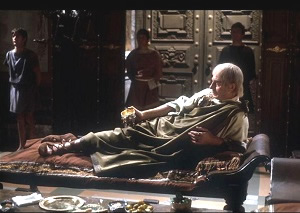
Robert Graves (24 juli 1895 - 7 december 1985) Derek Jacobi als Claudius in de BBC-serie uit 1976
Omhoog zien naar de zon de waterrozen, Kinderlijk, alsof 't Rafaels eng'len waren; Grauw slib en wijde schem'ringen bewaren, Die hier de dood stilde tot smartelozen.
Opzuigt de bliksemstorm het meer tot hozen: Dan staan in blauw doorschijnende pilaren De doden: hun zwarte ogengaten staren Boven hun grijns om macabre apotheozen.
Naar Brahman's zonlicht bloeien mijn gedachten; Schem'ringen, koel, van zielegronden brachten Rust aan mijn smart om wensen, lang gebroken:
Vlaag van herinn'ring woelt uit grauw vergeten 'T verleden op bij flits van plots'ling weten - 'T herrijst, 't herrijst; mijn dode wensen spoken.
Ik zat aan ’t roer
Ik zat aan 't roer; jouw half blote armen roeiden; Door verre rietkrans zwierf karkietgeroep.- De plantjes zag 'k door 't meer - reusacht'ge loup - Die ginds in licht als van Davinci groeiden.
'K zag, hoe diep onder mij, boven een groep Van avondwolken, die roodvlokkig gloeiden, Blauw op oranje, twee libellen stoeiden, Aëroplanen, scheen 't, looping the loop.
En 'k schrok, toen 't plots'ling door mijn denken schoot: Mijn luchtschip hangt boven het avondrood, Dan staat Hij nog boven mijn horizon.
En langs de wolken keek ik weg van 't stuur. Jouw fosf'rend haar leek een roodstralend vuur: En even zag ik de ondergaande zon.
Zwevend op winden waait de zee door ’t duin
Zwevend op winden waait de zee door 't duin, En 't zout blijft achter in 't diep-koele zand; Geen bloemengloed, geen groen van sapp'ge plant Kleurt 't bleke egaal van vér-zichtbare kruin;
Maar 't water, neerfilt'rend, doet, tuin naast tuin, Laaien van tulpenrood 't wijdvlammend land, En ruist als bossen op, tot waar de rand Vaal is door helm en ziek'lijk struikenbruin:
Stormend door open mensenleven, laat De Godheid bloemloos 't oppervlak, waar 't zaad Van blijdschap sterft, door lang verdriet geschroeid;
Tot ondergrondse zuiverheid vervloeid, Herrijst Ze als 't rijk van schijn en rijm en maat, Waar 't Denken tulpt en lovert, ruist en gloeit.
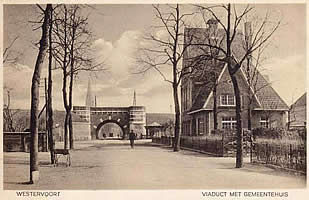
Johan Andreas dèr Mouw (24 juli 1863 – 8 juli 1919) Westervoort op een oude ansichtkaart
"Not at all," he said. "Did you decide on a place to live yet?" "Not even close." I smiled. "I see." "Would you like to come in for some tea?" "No. I'm on my way somewhere and I'm kind of in a hurry." He grinned. "I just stopped by to ask you something. I was talking to my mother, and we were thinking you ought to come to our house for a while." "Huh?" I said. "In any case, why don't you come over tonight around seven? Here's the directions." "Okay ..." I said vacantly, taking the slip of paper. "All right, then, good. Mom and I are both looking forward to your coming." His smile was so bright as he stood in my doorway that I zoomed in for a closeup on his pupils. I couldn't take my eyes off him. I think I heard a spirit call my name. "Okay," I said. "I'll be there." Bad as it sounds, it was like I was possessed. His attitude was so totally "cool," though, I felt I could trust him. In the black gloom before my eyes (as it always is in cases of bewitchment), I saw a straight road leading from me to him. He seemed to glow with white light. That was the effect he had on me. "Okay, see you later," he said, smiling, and left. Before my grandmother's funeral I had barely known him. On the day itself, when Yuichi Tanabe showed up all of a sudden, I actually wondered if he had been her lover. His hands trembled as he lit the incense; his eyes were swollen from crying. When he saw my grandmother's picture on the altar, again his tears fell like rain. My first thought when I saw that was that my love for my own grandmother was nothing compared to this boy's, whoever he was. He looked that sad. Then, mopping his face with a handkerchief, he said, "Let me help with something." After that, he helped me a lot. Yuichi Tanabe ... I must have been quite confused if I took that long to remember when I'd heard grandmother mention his name.”
„Er hat geschrieben, jeder kann seine Beschwerde vortragen. Es wird Abhilfe geschaffen.” Siegmund schlug dem Wirt ermunternd auf die Schulter. “Nach Möglichkeit, steht in dem Blatt”, meinte Baumgartner zurückhaltend. Nach einer Weile des Nachdenkens setzte er hinzu: “Ich wüßte schon, worüber ich mich beschweren könnt. Einer hat mir meinen Sack gestohlen, der Spinoll.” “Pfui, du wirst doch nicht einen Kameraden verraten, du denkst wohl, dafür bekommst du eine Belohnung, ja?” Der Wirt von Baumgarting fuhr betroffen zusammen. “Verrat, mein Gott, ja, der Spinoll war einer von den Anführern, sie könnten ihn greifen …” “Und aufhängen”, setzte Siegmund hinzu. Der Wirt bekreuzigte sich hastig. “Ich will nicht schuld sein am Tode eines Menschen. Die Rache ist mein, spricht der Herr. Ich will mich so billig an dem Spinoll nicht rächen, daß er mich bestohlen hat. Mag er’s mit Gott ausmachen. Und was soll ich beim Statthalter? Ich will mich über nichts beschweren. Will nicht die Aufmerksamkeit auf mich lenken. Leb wohl, Bruder, glaub kaum, daß wir uns noch einmal wiedersehen, es sei denn, du kommst zu mir als Gast nach Baumgarting. Aber als zahlender”, fügte er lachend hinzu und ging. Sie kamen beide nicht weit. Die Reiter des Statthalters griffen sie auf. Sie wurden beschuldigt, sich im verbotenen Gebiet aufzuhalten. Die Reiter berechneten die zwanzig Meilen großzügig. Sie setzten ihre beiden Gefangenen auf Pferde und banden ihnen die Beine unter den Pferdebäuchen zusammen. Der Wirt jammerte leise vor sich hin, die Stricke schnitten schmerzend ein.“
“Die ersten Jahre bis zur Tertia hat mich noch ein Student, der ins Haus kam, um meine vier Brüder bei ihren Aufgaben zu beaufsichtigen, in den Fächern, die man bis zur Unter- oder Obertertia nimmt, unterrichtet; und das war eine Kleinigkeit. Von da ab hatte ich dann Gymnasiallehrer. Jeder kam die Woche vielleicht zwei Stunden; einer für die alten Sprachen, einer für Mathematik und einer für Deutsch und Geschichte. Das Ganze war ja furchtbar leicht, und ich lernte nicht schwer. Es ging sehr schnell. Wenn man allein ist, lernt man viel schneller. In der Schule muß man sich immer nach dem Durchschnitt oder dem Unterdurchschnitt richten, und ich gehörte zum oberen Durchschnitt. Im letzten Jahre hatte ich dann noch Unterricht bei einem Religionsprofessor des Gymnasiums, einem Dr. Engelhardt. Mit dem las ich das Neue Testament auf Griechisch. Religion war ja Pflichtfach am Gymnasium. Ich kann mich erinnern, daß wir einmal zu der Geschichte kamen, wie Jesus die Samariterin trifft und zu ihr sagt: Fünf Männer hast du gehabt, und der, mit dem du jetzt lebst, ist nicht dein Mann. Da wurde der Lehrer etwas verlegen und er kommentierte: Das findet man so in der Vorstadt. So ging es bis zu meinem siebzehnten Jahr. Dann machte ich gemeinsam mit dem Zwillingsbruder als Externe das Abitur am Wilhelms-Gymnasium. Es verlief glänzend. Nun sollte ich auch etwas studieren. Ich ging auf die Universität und hörte vor allem Naturwissenschaften. Bei Röntgen Experimentalphysik und bei meinem Vater Mathematik: Infinitesimal-, Integral-und Differentialrechnung und Funktionstheorie. Aber ich bin noch immer der Meinung, daß ich für diese Fächer keine besondere Veranlagung hatte. Einer meiner Brüder, Peter, der zweitälteste, studierte auch Physik. Er ist ein sehr guter Physiker geworden. Ich war gar nicht dafür prädestiniert, und Röntgen hielt auch gar nichts von mir. Beim Experimentieren passierte mir einmal etwas sehr Mißliches. Ich warf einen Apparat hin. Das hat Röntgen mir sehr übelgenommen. Ich hätte es wahrscheinlich in diesem Fach nie zu etwas gebracht, und auch für Mathematik fand ich mich gar nicht sehr begabt. Ich hätte es auch da nicht sehr weit gebracht. Es war eigentlich mehr so töchterliche Anhänglichkeit. Ich hab's auch alles vergessen. Vielleicht hätte ich zu Ende studiert und auch Examina gemacht. Ich hatte ja erst vier oder sechs Semester studiert, als ich heiratete, und wie ich dann verheiratet war, kam bald das erste Baby, und dann sofort das zweite Baby, und sehr bald kam dann das dritte und vierte.“
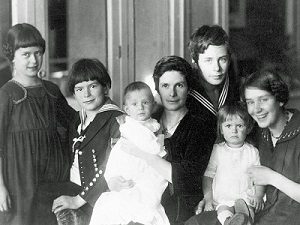
Katia Mann (24 juli 1883 – 25 april 1980) Katia Mann met haar 6 kinderen in 1919 (van links naar rechts: Monika, Golo, Michael, Katia Mann, Klaus, Elisabeth en Erika)
Uit:In Praise of Shadows (Vertaald door Thomas Harper en Edward Seidensticker)
“What incredible pains the fancier of traditional ar-chitecture must take when he sets out to build a house in pure Japanese style, striving somehow to make electric wires, gas pipes, and water lines har-monize with the austerity of Japanese rooms—even someone who has never built a house for himself must sense this when he visits a teahouse, a restaurant, or an inn. For the solitary eccentric it is another matter, he can ignore the blessings of scientific civilization and retreat to some forsaken corner of the countryside) but a man who has a family and lives in the city cannot turn his back on the necessities of modem life—heating, electric lights, sanitary facilities—merely for the sake of doing things the Japanese way. The purist may rack his brain over the placement of a single tele-phone, hiding it behind the staircase or in a corner of the hallway, wherever he thinks it will least offend the eye. He may bury the wires rather than hang them in the garden, hide the switches in a closet or cupboard, run the cords behind a folding screen. Yet for all his ingenuity, his efforts often impress us as nervous, fussy, excessively contrived. For so accustomed are we to electric lights that the sight of a naked bulb beneath an ordinary milk glass shade seems simpler and more natural than any gratuitous attempt to hide it. Seen at dusk as one gazes out upon the countryside from the window of a train, the lonely light of a bulb under an old-fashioned shade, shining dimly from behind the white paper shoji of a thatch-roofed farmhouse, can seem positively elegant. But the snarl and the bulk of an electric fan remain a bit out of place in a Japanese room. The ordinary householder, if he dislikes electric fans, can simply do without them. But if the family business involves the entertainment of own tastes at the expense of others. A friend of mine, the proprietor of a Chinese restaurant called the Kairakuen, is a thoroughgoing purist in matters archi-tectural. He deplores electric fans and long refused to have them in his restaurant, but the complaints from customers with which he was faced every summer ul-timately forced him to give in. »
„Melchior Das ist mir zu langweilig. Ich mache nicht mehr mit. Otto Dann können wir andern nur auch aufhören! – Hast du die Arbeiten, Melchior? Melchior Spielt ihr nur weiter! Moritz Wohin gehst du? Melchior Spazieren. Georg Es wird ja dunkel! Robert Hast du die Arbeiten schon? Melchior Warum soll ich denn nicht im Dunkeln spazierengehn? Ernst Zentralamerika! – Ludwig der Fünfzehnte! Sechzig Verse Homer! – Sieben Gleichungen! Melchior Verdammte Arbeiten! Georg Wenn nur wenigstens der lateinische Aufsatz nicht auf morgen wäre! Moritz An nichts kann man denken, ohne daß einem Arbeiten dazwischenkommen! Otto Ich gehe nach Hause. Georg Ich auch, Arbeiten machen. Ernst Ich auch, ich auch. Robert Gute Nacht, Melchior. Melchior Schlaft wohl! Alle entfernen sich bis auf Moritz und Melchior. Melchior Möchte doch wissen, wozu wir eigentlich auf der Welt sind! Moritz Lieber wollt' ich ein Droschkengaul sein um der Schule willen! – Wozu gehen wir in die Schule? – Wir gehen in die Schule, damit man uns examinieren kann! – Und wozu examiniert man uns? – Damit wir durchfallen. – Sieben müssen ja durchfallen, schon weil das Klassenzimmer oben nur sechzig faßt. – Mir ist so eigentümlich seit Weihnachten... hol mich der Teufel, wäre Papa nicht, heut noch schnürt' ich mein Bündel und ginge nach Altona! Melchior Reden wir von etwas anderem. –
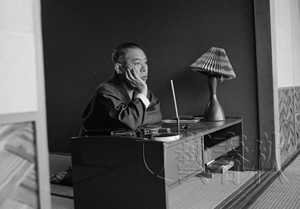
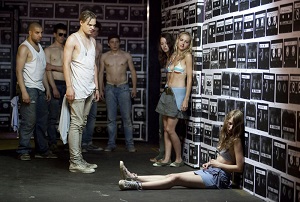
Frank Wedekind (24 juli 1864 - 9 maart 1918) Scene uit de gelijkamige film uit 2009
Uit: The Three Musketeers (Vertaald doorWilliam Barrow)
« By the latter I mean your relatives and friends. Endure nothing from anyone except Monsieur the Cardinal and the king. It is by his courage, please observe, by his courage alone, that a gentleman can make his way nowadays. Whoever hesitates for a second perhaps allows the bait to escape which during that exact second fortune held out to him. You are young. You ought to be brave for two reasons: the first is that you are a Gascon, and the second is that you are my son. Never fear quarrels, but seek adventures. I have taught you how to handle a sword; you have thews of iron, a wrist of steel. Fight on all occasions. Fight the more for duels being forbidden, since consequently there is twice as much courage in fighting. I have nothing to give you, my son, but fifteen crowns, my horse, and the counsels you have just heard. Your mother will add to them a recipe for a certain balsam, which she had from a Bohemian and which has the miraculous virtue of curing all wounds that do not reach the heart. Take advantage of all, and live happily and long. I have but one word to add, and that is to propose an example to you-- not mine, for I myself have never appeared at court, and have only taken part in religious wars as a volunteer; I speak of Monsieur de Tréville, who was formerly my neighbor, and who had the honor to be, as a child, the play-fellow of our king, Louis XIII, whom God preserve! Sometimes their play degenerated into battles, and in these battles the king was not always the stronger. The blows which he received increased greatly his esteem and friendship for Monsieur de Tréville. Afterward, Monsieur de Tréville fought with others: in his first journey to Paris, five times; from the death of the late king till the young one came of age, without reckoning wars and sieges, seven times; and from that date up to the present day, a hundred times, perhaps! So that in spite of edicts, ordinances, and decrees, there he is, captain of the Musketeers; that is to say, chief of a legion of Caesars, whom the king holds in great esteem and whom the cardinal dreads--he who dreads nothing, as it is said. Still further, Monsieur de Tréville gains ten thousand crowns a year; he is therefore a great noble. He began as you begin. Go to him with this letter, and make him your model in order that you may do as he has done.” Upon which M. D’Artagnan the elder girded his own sword round his son, kissed him tenderly on both cheeks, and gave him his benediction. “
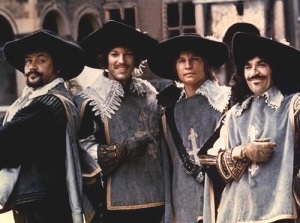
Alexandre Dumas père (24 juli 1802 - 5 december 1870) Scene uit de gelijknamige film uit 1973
Uit:Historie van mejuffrouw Sara Burgerhart (Samen met Aagje deken)
“Ik moest mynen vorigen, die hier nevens gaat, zo schielyk afbreken, om dat Tante my riep, schoon zy my niets te zeggen hadt, en slegts beval, by haar te zitten: Onze gromparty sla ik maar over, om dat ik u nu eens ernstig moet schryven. Myn waarde Vader, weet gy, was Jan Burgerhart; hy negotieerde in de Thee; zyn handel was voordeelig. Myne lieve Moeder was, zo als men dat noemt, een bestorven Meisje. Zy hadt een stuiver goeds, en trouwde zeer jong. My, het eenig kind, voedde men op als een meisje, dat van eene goede familie is, en geld te wagten heeft, door brave Ouders opgevoed wordt. Gy kent myn aandoenlyk hart; gy weet hoe vatbaar het is voor de minste blyken van genegenheid; oordeel dan hoe ik deeze myne dierbare Ouders eerde en beminde. Ouders! dat is toch een zielroerend woord, Antje, en kost my meermaal eene stille traan. Myne Ouders waren gelukkig met elkander. Hun karakter was voor elkander berekent. Meer zeg ik niet. Wie spreekt ooit dan met achting van myne zalige Ouders? och, yder een! .... Gy weet het. Hoe aangenaam was ons zeer geregeld huishouden! Myne Ouders lazen veel, en zagen deeze zucht in my met goedkeuring. Nog zie ik hen in onzen tuin, op de bank zitten, als Vader zyn pypje van rust, zo als hy het noemde, rookte, en Moeder hem iets voorlas, terwyl ik op des goedaartigen mans knie zat te luisteren, of te spelen. Nog zie ik hoe hy my, gevolgt door myne glimlachende Moeder, in huis draagt. ô! Dat waren gouden dagen; waren het niet? Myne Moeder hadt eene Zuster, die veel ouder was, en waar by ik nu inwoon. Die Zuster vondt maar gansch niet billyk, dat Saartje vóór haar ten huwelyk verzogt wierd, en kyk, de Juffrouw was magtig gestelt op het Decorum; dat was het maar: zy meende ook zeer wel te weten, dat zy zo wel veel meer verdiensten, als jaren telde, dan myne Moeder. Doch, of het spel sprak, daar kwamen geene Liefhebbers. Indien onze Vriendin hadt kunnen bewogen worden, om eene aanpryzende voorrede voor Tante te schryven, mooglyk zou men haar gezogt hebben. Hoe 't zy - (verschoon dien inval!) zy begreep, (Tante heeft ook haare invallen, Antje,) dat er geen beter party voor haar opzat, dan zich te voegen by die Lieden, die wy fynen, en die zich zelf vroomen noemen.”
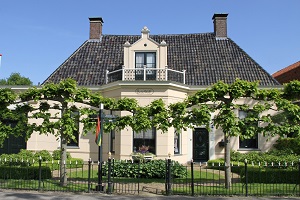
Betje Wolff (24 juli 1738 - 5 november 1804) Het Betje Wolff Museum in Middenbeemster
Wilfried de Jong, Mohsin Hamid, Lauren Groff, Frans Erens, Kai Meyer, Thea Dorn, Irina Liebmann
Bij (het slot van) de Tour de France
Wout Poels en Chris Froome op de Alpe d'Huez in 2015
Uit:Froome en Poels (Column)
Ze reden ze samen het Critérium du Dauphiné, Froome en Poels. De Sky-kopman met zijn Hollandse meesterknecht. Dit was een meerdaagse wedstrijd over een parcours dat al een beetje rook naar de Tour de France. Wout Poels is de lange lerp voor wie het geluk in de bergen ligt. Geef de Noord-Limburgse klimmer een paar meter stijgend asfalt en zie hoe sierlijk en rustig hij op zijn fiets blijft zitten. In het voorjaar had hij pech. Wout brak een stuk van zijn schouder. En in 2012 was hij betrokken bij een ernstige valpartij in de Tour. Hij brak drie ribben, scheurde nier en milt en kneusde zijn longen. Poels lag achterover in het gras te kermen maar besloot toch op de fiets te stappen. Ik wil er niet aan denken hoe dat voelde. In deze Dauphiné zag ik een herboren Poels. Hij reed tijdens de bergetappes in dienst van Froome. Onverstoorbaar trappen op tempo. Stille rug, malende benen. Alleen de wijd opengesperde mond van Wout verraadde de pijn. Wout reed zich leeg op de laatste helling, keek om, ten teken dat zijn kopman ten aanval kon. Na de klassieke fietsbewegingen van Poels, zag ik Froome vol in beeld. De in Kenia geboren Brit trapte als een wezenloze. Hij hield zijn hoofd naar beneden, zijn ellebogen staken lelijk naar buiten. Zijn gezicht werd steeds bleker; alsof de rode bloedlichaampjes in nood hadden geroepen: “Baas, wij blijven hier even beneden, in je kuiten.” Pierlala op een zadel. Zijn stijl is geen lelijke stijl te noemen. Nee, het is erger; het ís geen stijl. Het gaat alleen verschrikkelijk hard.
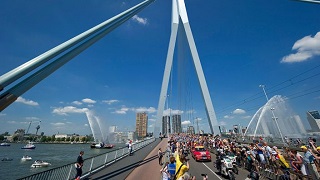
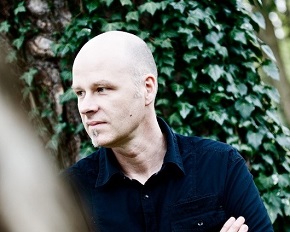
Wilfried de Jong (Rotterdam, 30 september 1957) De Tour de France in Rotterdam, 2015
“De roman van Emily Bronte is een eigenaardig product. Hij gelijkt op niets anders. De auteur, zonder het vak van opstellen te kennen, heeft zich eenvoudig aan het schrijven gezet, omdat zij den tijd daartoe had; omdat haar zuster schreef misschien. Het lijkt niet, dat zij een bepaalde geestdrift voor het een of ander geval heeft gevoeld, maar, willende een verhaal geven, heeft zij een geval van verschrikking, maar toch doodgewone, zeer nabij liggende verschrikking genomen. Hare buitengewoon sterke natuur deed haar indringen in de personen, waarvan zij de daden en gestes wilde noteeren. Geen voorbeeld van een anderen roman zweefde haar voor oogen. Zij teekende op uit haar eigen merg en bloed. Het is alsof zij haar pen daarin doopte: zij de stroeve, harde vrouw, die, niet voor verteedering vatbaar, slechts harde, droge-knookige karakters kon geven. Waarlijk echt Engelsch. Engeland alleen kent het harde, stroeve, haast houterige en daar, naast het uiterst weeke en sentimenteele. Zoo is Engelands taal, 'zoo is zijn litteratuur, zoo zijn zijn menschen. Deze roman is echt Engelsch, door en door Engelsch. Het is alles: concies, afgebroken. Aan de sentimenten is geen enkele sleep, geen franje. Sommige fragmenten konden door Shakespeare zijn geschreven, wanneer hij zich tot romanschrijven had willen zetten. Men moet het werk zelf lezen. Dat, wat men er over heeft gezegd, voor zoover ik weet, geeft niet den zuiveren indruk weer. Noch Wyzewa noch Maeterlinck hebben bij hun lofprijzingen een juist denkbeeld van het karakter van dit product vermogen te vestigen. Het diabolische van Heathcliff is van een indringende intensiteit. Omdat het zoo gewoon is, is dit karakter zoo machtig: beperkt in zijne ziel, is deze toch van groote kracht. Schraapzuchtig en egoistisch, egocentrisch in den meest ongunstigen zin van het woord. Voor niemandt heeft hij een week gevoel over en alleen voor Catherine is hij alles”.
Frans Erens (23 juli 1857 – 5 december 1936) Een cover van Wuthering Heights
“In a city swollen by refugees but still mostly at peace, or at least not yet openly at war, a young man met a young woman in a classroom and did not speak to her. For many days. His name was Saeed and her name was Nadia and he had a beard, not a full beard, more a studiously maintained stubble, and she was always clad from the tips of her toes to the bottom of her jugular notch in a f lowing black robe. Back then people continued to enjoy the luxury of wearing more or less what they wanted to wear, clothing and hair wise, within certain bounds of course, and so these choices meant something. It might seem odd that in cities teetering at the edge of the abyss young people still go to class—in this case an evening class on corporate identity and product branding—but that is the way of things, with cities as with life, for one moment we are pottering about our errands as usual and the next we are dying, and our eternally impending ending does not put a stop to our transient beginnings and middles until the instant when it does. Saeed noticed that Nadia had a beauty mark on her neck, a tawny oval that sometimes, rarely but not never, moved with her pulse. Not long after noticing this, Saeed spoke to Nadia for the first time. Their city had yet to experience any major fighting, just some shootings and the odd car bombing, felt in one’s chest cavity as a subsonic vibration like those emitted by large loudspeakers at music concerts, and Saeed and Nadia had packed up their books and were leaving class. In the stairwell he turned to her and said, “Listen, would you like to have a coffee,” and after a brief pause added, to make it seem less forward, given her conservative attire, “in the cafeteria?”
“At his feet the party roiled with cutting-edge early nineties fashions, midriffs and piercings and ball caps to hide receding hairlines, teeth empurpled by the black light, brown lipstick with brown liner and cartilage cuffs and biker boots and exposed boxers and bump and grind and Salt-N-Pepa and green-glowing dandruff and deodorant streaks and cheekbones highlighted to shine. Somehow he'd acquired an empty jug of water that someone had Ace-bandaged to his head. There was shouting: "All Hail the Water Princeling." Oy: this was bad. His friends had found out where his money came from. He had hidden it, drove a beat-up Volvo for goodness sakes. He was shirtless, he found, better to show off his muscles. He was aware of how he appeared at every angle in the room, and what the jug stole in dignity, it returned in militaristic jauntiness. He puffed his chest. Now he had a bottle of gin in his hand and his friends were shouting, "Lotto! Lotto! Lotto!" as he tilted it to his lips and took in a long draught, which would turn to soldering flux in his brain by morning and make his thoughts impenetrable, impossible to part. "The world is ending," he bellowed. "Why not hump?" A cheer from the dancers at his feet. He raised his arms. [The fatal look up.] In the doorway, suddenly, her. Tall, in silhouette, wet hair casting the hall light into a halo, stream of bodies on the stairs behind her. She was looking at him, though he couldn't see her face. She moved her head and there was half of it, strong and bright. High cheekbones, plush lips. Tiny ears. She was dripping from walking through the rain. He loved her first for the stun of her across this thump and dance. He had seen her before, he knew who she was. Mathilde, whatsername. Beauty like hers cast glimmers on the walls even across campus, phosphorescence on the things she touched. She'd been so far above Lotto -- so far above every person at the school -- she had become mythological. Friendless. Icy. She went weekends to the city; she was a model, hence the fancy clothes. She never partied. Olympian, elegant on her mount. Yes -- Mathilde Yoder. But his victory had made him ready for her tonight. Here she was for him.”
“Sie trage die Sterne in den Augen, hatte einmal jemand gesagt. Iniza spürte den Sog des Universums, seit sie zum ersten Mal hinauf in die Nacht geblickt hatte. Für sie war der Himmel keine Grenze, sondern ein Tor. Sie hatte den Tag kaum erwarten können, an dem es ihr endlich offen stand. Doch dann war nichts so gekommen, wie sie es sich vorgestellt hatte. Paladine in blutroten Rüstungen hatten sie die Rampe einer Raumbarke hinaufgeführt. Lange bevor ihre Heimatwelt im Plasmastrom der Triebwerke verblasst war, hatte Iniza gewusst, dass sie an Bord kein Gast, sondern eine Gefangene war. Man behandelte sie wie eine kostbare Fracht, las ihr die Wünsche von den Lippen ab – Baroness hier, Baroness da – , aber keine Stunde nach dem Start wünschte sie sich zurück in den Palast von Koryantum, von dessen Türmen aus sie schon als Kind das All in seiner ganzen Pracht bewundert hatte. Hier im Schiff sah sie keine Sterne, nur graue Wände aus Stahl, und so bat sie am zweiten Tag der Reise, dass man sie zu einem Fenster bringe, zu einer der gewölbten Panoramascheiben auf dem Oberdeck der Barke. Die Hexe Setembra sandte ihr zwei Paladine, bewaffnet mit Blastern und Klingen, die sie aus ihrer Kabine führten und dorthin begleiteten, wo die Gestirne hundertmal heller strahlten als in den klarsten Nächten daheim auf Koryantum. Stumm vor Ehrfurcht, blickte Iniza ins All hinaus und vergaß beinahe, warum sie wirklich darum gebeten hatte, das Oberdeck aufzusuchen. Dass dies alles Teil des Plans war. Dort draußen loderten die Feuerschwärme der Galaxis, die Sternenflut des äußeren Spiralarms, quarzweiß und rot wie Rubine, smaragdgrün und aquamarin. Sie erkannte den Kerkes-Nebel, wabernd jenseits der Aschenen Welten, und er erinnerte sie an Erzählungen von Schlachtfeldern auf fernen Monden und halbverglühten Wracks auf vergessenen Umlaufbahnen.“
“Es ist karg. Es ist ein wenig pedantisch. Es ist liebevoll Seine Zubereitung erfordert keinen großen Aufwand, aber die wenigen Zutaten müssen mit Bedacht gewählt sein: Roggen-, Roggenmisch- oder Vollkorn-brot, zu acht Millimeter dicken Scheiben geschnitten. Ein bisschen Butter. Käse (Tilsiter), Schinken (Schwarzwälder), Wurst (Jagdwurst). Und schön wäre eine saure Gurke, zum Ende hin blättrig aufgefächert. Die Brote werden mit der Butter dünn bestrichen, auf eins wird der Käse gelegt, auf eins der Schinken, auf eins die Wurst. Idealerweise entsprechen Form und Größe der Käse-, Schinken- und Wurstscheibe Form und Größe der Roggen-, Roggenmisch- oder Vollkornbrot-scheibe. Nur so entsteht die Harmonie, die ein echtes Abendbrot auszeichnet. Auch wenn man sein Abendbrot allein einnimmt, sollte man es keinesfalls stehend in der Küche oder vor dem Fernseher hinunterschlingen. Ein Abend-brot ist ein Abendbrot und kein Sandwich. Bei christlicher Neigung besinnt man sich aufs letzte Abendmahl, während man das Brot zwar nicht bricht, sondern voll Sorgfalt schneidet. Die protestantische Diätweisheit »Frühstücken wie ein Kaiser, Mittagessen wie ein Fürst, Abendessen wie ein Bettelmann• verliert alles Trostlose. Nicht weil man ans Schlankbleiben bzw. -werden denkt. Weil man sich freut, dass Schlichtes glücklich macht. Anfängern, die das bloße Abendbrot nicht in die rechte Gemütslage zu bringen vermag, empfiehlt es sich, ein Bier zu öffnen. »Ich Geringer trinke täglich zum Abendbrot ein Glas helles Bier und reagiere auf diese anderthalb Quart so stark, dass sie regelmäßig meine Verfassung durchaus verändern. Sie verschaffen mir Ruhe, Abspannung und Lehnstuhlbehagen, eine Stimmung von 'Es ist vollbracht!, und >Oh, wie wohl ist mir am Abend!,., schrieb Thomas Mann im Jahre 1906. Der musikalisch versierte Abendbrötler wird das Stichwort des Schriftstellers sogleich aufnehmen. Im Geiste singt er Kanon mit sich selbst •0 wie wohl ist mir am Abend, / Mir am Abend, / Wenn zur Ruh' die Glocken läuten, / Glocken läuten, / Bim, bam, bim, bam, bim, bam!« Doch auch der musikalisch weniger Versierte muss mit seinem Abendbrot nicht im Stillen sitzen bleiben.“
„Sollen wir zu ihnen blicken? In ihre Richtung? Was ist denn dort? Was? Und was waren das für Jahre, die letzten zwanzig? Was war das für ein Glanz, dem wir nachliefen? War es überhaupt Licht? War es Glitzerkram? Haben wir einen Fehler gemacht? Wann? Warum? Was ist geschehen? Diese Frage muss man in Russland nicht stellen. In Russland springt sie einem von jedem Büchertisch entgegen, an jedem Zeitungskiosk brüllen sie regelrecht, diese Schlagzeilen: Wann? Warum? Was ist geschehen? Was ist mit uns geschehen? — Mussten wir das sein?! Die Vogelscheuche unter den Völkern?! — Wir haben euch geliebt. — Wer? — Unsere Kindergartengruppe zum Beispiel. Wir haben russische Tänze geübt. — Na wunderbar, ich sage es ja! Vogelscheuche unter den Völkern! Und das sind wir immer noch! Gespräch in einer Moskauer Küche. Diese Küche ist so klein, dass gerade mal ein winziges Tischchen mit zwei Hockern hineinpasst und ein Hängeschrank über dem Abwaschtisch. Direkt unter dem Küchenfenster stehen Bäume, Schnee auf den Ästen, ein Kiosk, die Sonne scheint. Minus 14 Grad. Die Heizkörper der Wohnung haben keine Ventile, im zentralen Heizwerk wissen sie schon, wie kalt es ist, und schicken genau die Wärme, die gebraucht wird, die bullige Wärme hier in der Küche kostet fast nichts. — Gas haben wir genug! Wir sind Gas! Sie lacht, meine Wirtin. Kein gutes Lachen ist das. — Und verschone mich mit der Vergangenheit. Ich bin eine erwachsene Frau, weißt du, ich habe genug erlebt. Ich spare jetzt meine Kräfte.”
Uit: About Women: Conversations Between a Writer and a Painter (Met Francoise Gilot)
“LA: Although we were born of different generations an ocean apart, both our childhoods were impacted by war—yours by World Wars I and II, and mine by World War II, the Cold War, Korea, and Vietnam. We read a lot about the effect of war on the combatants but not that much about its effect on civilians. Can you say something about how war affected you as a child? FG: My maternal grandmother had five children, two of whom died when they were quite young, leaving two sons and my mother, the youngest. The child my grandmother loved best was named André. He was wounded at the front and died on November 1, 1918, from a shrapnel wound to the liver. The armistice occurred on November 11, 1918. Just when my grandmother thought that her two sons had escaped the war, she learned the tragic news. André was only twenty-three years old. She had had a special relationship with him, so for her it was as if life ended right then and there. On the third floor of her home in Neuilly, there was a small room where her sons, my uncles, both of them officers, had collected all sorts of paraphernalia from the different phases of the war. Many photographs were pinned to the walls, as well as warmaps with little flags on pins for the various events. This room was left as it had been when André died. On the walls, one could see all these black-and-white photographs, some taken from the sky, of destroyed villages and cathedrals and bridges, charredforests, trenches. It was a room entirely full of destruction. LA: Why did your uncles do this? FG: I think they were so involved in the fight that destruction had grown inside them. They had had to withstand so much horror, and perhaps it was a catharsis to objectify their feelings on the walls of that room. Years later, when I entered it for the first time, it felt very strange. I was five years old. It was quite frightening. There were also some half-exploded bombshells that looked like dark and ghostly flowers. My grandmother called that room the War Room.I thought it was the Death Room.”
“Like if youre beautiful you dont feel pain or have dreams or know the despair of loneliness. Why should you be unhappy, youre so beautiful? My God they drive me nuts, like all I am is a beautiful body and nothing else. Not once, never, have they ever tried to love the real me, to love me for what I am, to love me for my mind.” (...)
„They laughed and put their arms around each other and kissed, first gently, then more passionately, and Harry pulled his face back a few inches and looked lovingly at Marion, I love you, and kissed her on the tip of her nose, her eyelids, her cheeks, then her soft lips, her chin, her neck, her ears, then nuzzled his face in her hair and caressed her back with his hands and breathed her name in her ear, Marion, Marion, I love you, and she gently moved with the flow and felt his words and kisses and feelings flow through her, easing away all her problems, her doubts, her fears, her anxieties and she felt warm and alive and vital. She felt loved. She felt necessary. Harry felt real and substantial. He could feel all the loose pieces starting to fall into place. He felt on the verge of something momentous. They felt whole. They felt united. Though they were still on the couch they felt a part of the vastness of the sky and the stars and moon. They were somehow on the crest of a hill with a gentle breeze blowing Marions hair flowingly; and walking through a sunlit woods and flower studded field feeling the freedom of the birds as they flew through the air chirping and singing and the night was comfortingly warm as the soft filtered light continued to push the darkness into the shadows as they held each other and kissed and pushed each others darkness into the corner, believing in each others light, each others dream.”
„The man in the powderblue suit -- which wasn't powder-blue under the lights of the Club Bolivar -- was tall, with wide-set gray eyes, a thin nose, a jaw of stone. He had a rather sensitive mouth. His hair was crisp and black, ever so faintly touched with gray, as by an almost diffident hand. His clothes fitted him as though they had a soul of their own, not just a doubtful past. His name happened to be Mallory. He held a cigarette between the strong, precise fingers of one hand. He put the other hand flat on the white tablecloth, and said: "The letters will cost you ten grand, Miss Farr. That's not too much." He looked at the girl opposite him very briefly; then he looked across empty tables towards the heart-shaped space of floor where the dancers prowled under shifting colored lights. They crowded the customers around the dance-floor so closely that the perspiring waiters had to balance themselves like tightrope walkers to get between the tables. But near where Mallory sat were only four people. A slim, dark woman was drinking a highball across the table from a man whose fat red neck glistened with damp bristles. The woman stared into her glass morosely, and fiddled with a big silver flask in her lap. Farther alongtwo bored, frowning men smoked long thin cigars, without speaking to each other. Mallory said thoughtfully: "Ten grand does it nicely, Miss Farr." Rhonda Farr was very beautiful. She was wearing, for this occasion, all black, except a collar of white fur, light as thistledown, on her evening wrap. Except also a white wig which, meant to disguise her, made her look very girlish. Her eyes were cornflower blue, and she had the sort of skin an old rake dreams of.“
"Ich spürte den Windzug seiner Bewegungen. Was soll's, dachte ich. Ich versuchte, mich nicht um ihn zu kümmern. Nach einer Weile kam ich an einer Markthalle vorbei. Sie war voller Menschen. An den Ständenwurden Gurken oder grüne Bohnen feilgeboten. In der Mitte der Halle gab es eine offene Kanalisation. Die graubraune Brühe stank fürchterlich.Trotzdem drängten immer mehr Menschen hinein. "Wissen Sie, was die Leute hier machen?" Ich schüttelte den Kopf. "Sie tun so, als ob sie einkaufen. Klingt komisch, aber so ist es. Alle tun so, als ob. Verrückt, finden Sie nicht?" Ich seufzte. "Na los, sagen Sie mir wohin, und ich bringe Sie hin." Wir gingen zurück zum Parque de Céspedes. Auf dem Weg kamen wir an der barocken Kathedrale vorbei. Es war eines der wenigen Gebäude, von denen nicht der Verputz abblätterte. Die Fassade erstrahlte in sattem Gelb. Auf den Stufen der Kathedrale saß ein dicker Mulatte. Er hatte ein breites, hässliches Gesicht mit einer platten Nase. Ernesto begrüßte ihn. Der Mulatte hieß Miguel. Er war Schuhputzer. Miguel bestand darauf, mir seinen Schemel zu zeigen. Er hatte ihn selbst gezimmert. Wir gingen über die Straße. Miguel hatte sich unter dem Vordach eines mehrstöckigen Mietshauses eingerichtet. Er zeigte mir Stolz seinen Schemel. Es war ein gewöhnlicher Hocker, wie ich ihn auf Kuba häufiger gesehen hatte. Nicht besonders stabil, da die Seiten aus dünnem Sperrholz gefertigt waren. "Warten Sie, Sie können ein Foto von uns machen." Ernesto setzte sich auf den Schemel. Er stellte die Füße auf das Trittbrett. Miguel nahm eine Bürste aus einer Holzkiste und begann Ernestos Schuhe zu putzen."
Uit: Zelfportret met nijlpaard (Vertaald door W. Hansen)
“Een paar dagen geleden kwam Judith op de eerste hulp, met een oehoe. Het was onze eerste ontmoeting in bijna tien jaar, en ik herkende haar niet, al had ik haar wel moeten herkennen. Dat lag slechts voor een deel aan haar korte haar, ik werd afgeleid door de oehoe, mdat ik bij de eerste blik al dacht dat het een verloren zaak was. En plotseling zei de vrouw: ‘We kennen elkaar. Ik ben het!’ Ik keek haar aan en herkende haar. Mijn handen trilden, terwijl ik de oehoe onderzocht om me ervan te verzekeren dat mijn eerste indruk juist was geweest. Die valt in een duister gat, hem vangt niemand op. En tegen Judith zei ik: ‘Nou, Judith, er is niets meer aan te doen.’ ‘Daar was ik al bang voor,’ zei ze. En alsof er een licht verwijt tussen ons beiden hing, voegde ze er hoofdschuddend aan toe: ‘Hij is niet van mij, ik heb hem bij mijn huis gevonden.’ Ze sloeg haar ogen neer, een ongemakkelijke situatie. De oranje-gele ogen van de oehoe met de zwarte pupillen waren enorm en staarden met een vreselijke uitdrukking in het niets. Terwijl ik voorbereidingen trof om het dier te doden, wisten we beiden niet wat te zeggen. Vroeger had ik Judith nooit verlegen gezien, ze had altijd gestraald, een en al beweging, het prototype van de ongecompliceerde vrouw, de vrouw die in contactadvertenties wordt gezocht als maatje voor het leven. Ze keek afwisselend naar de grond en opzij. Ik dacht: nee, we kennen elkaar niet, we hebben elkaar gekend, nu niet meer, nu zijn we een raadsel voor elkaar. Die vervreemding was verrassend snel gekomen, parallel aan het verdwijnen van de openhartigheid. Op de dag nadat we uit elkaar waren gegaan had ik zo goed als niets meer gemerkt van de normale vertrouwdheid, en dat bleef zo bij elk weerzien. We wisten niet eens meer hoe we elkaar moesten groeten.”
“Greasers can’t walk alone too much or they’ll get jumped, or someone will come by and scream “Greaser!” at them, which doesn’t make you feel too hot, if you know what I mean. We get jumped by the Socs. I’m not sure how you spell it, but it’s the abbreviation for the Socials, the jet set, the West-side rich kids. It’s like the term “greaser,” which is used to class all us boys on the East Side. We’re poorer than the Socs and the middle class. I reckon we’re wilder, too. Not like the Socs, who jump greasers and wreck houses and throw beer blasts for kicks, and get editorials in the paper for being a public disgrace one day and an asset to society the next. Greasers are almost like hoods; we steal things and drive old souped-up cars and hold up gas stations and have a gang fight once in a while. I don’t mean I do things like that. Darry would kill me if I got into trouble with the police. Since Mom and Dad were killed in an auto wreck, the three of us get to stay together only as long as we behave. So Soda and I stay out of trouble as much as we can, and we’re careful not to get caught when we can’t. I only mean that most greasers do things like that, just like we wear our hair long and dress in blue jeans and T-shirts, or leave our shirttails out and wear leather jackets and tennis shoes or boots. I’m not saying that either Socs or greasers are better; that’s just the way things are. I could have waited to go to the movies until Darry or Sodapop got off work. They would have gone with me, or driven me there, or walked along, although Soda just can’t sit still long enough to enjoy a movie and they bore Darry to death. Darry thinks his life is enough without inspecting other people’s. Or I could have gotten one of the gang to come along, one of the four boys Darry and Soda and I have grown up with and consider family. We’re almost as close as brothers; when you grow up in a tight-knit neighborhood like ours you get to know each other real well. If I had thought about it, I could have called Darry and he would have come by on his way home and picked me up, or Two-Bit Mathews—one of our gang—would have come to get me in his car if I had asked him, but sometimes I just don’t use my head. It drives my brother Darry nuts when I do stuff like that, ’cause I’m supposed to be smart; I make good grades and have a high IQ and everything, but I don’t use my head. Besides, I like walking.”
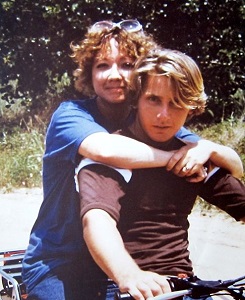
Susan Hinton (Tulsa, 22 juli 1948) Hinton en de acteur Emilio Estevez die Two-Bit Matthews speelt in de gelijknamige film uit 1983.
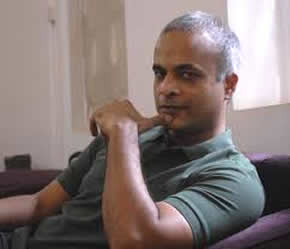
De Indiase schrijver en journalsit Manu Joseph werd geboren op 22 juli 1974 geboren in Kottayam en groeide op in Chennai. Zie ook alle tags voor Manu Joseph op dit blog.
Uit: Serious Men
“From behind, a girl with a bouncing pony tail and an iPod strung to her ears overtook him. Through her damp T-shirt he could see her firm youthful back. He quickened his pace, and regained his lead over her. And he tried to look at her face in the hope that she was not pretty. Beautiful women depressed him. They were like Mercedes, BlackBerry phones and sea-view homes. The girl met his eyes for an instant and looked away without feeling flattered. She had a haughty face that would be a pleasure to tame. With love, poetry or a leather belt, perhaps. Whatever she liked. Her face did not show anything, but it did grow more cold. She was aware that she was being watched, not just by a strange brisk man but also by the unending hordes of miserable people all around who spread dengue and scratched her car. They were always there on the fringes of her world, gawking at her the way stray dogs look at good stock. Ayyan slowed down and let her march ahead. A few feet away, a man stood still and stared at her. His head moved from left to right as she passed him. He was a short man who appeared to stand erect because his back was not long enough. Ayyan knew from the tension in his shirt that it was tucked straight into the underwear for a tighter grip. (The secret fashion of many men he knew.) A thin brown belt ran around his slender waist almost twice. His shirt pocket sagged under the weight of the many things it held. A red comb peeped from the back pocket of his trousers. 'Stop staring at that girl,' Ayyan said. The little man was startled. He then opened his mouth in a sporting but silent laugh. Transient strings of saliva ran from the upper jaw to the lower. They went to one of the pink concrete benches that were dedicated to the memory of a departed member of the Rotary Club. 'Busy day,' the man said, flapping his thighs. 'I'm travelling. That's why I troubled you, Mani. I wanted to settle this fast.' It's all right, my friend,' Ayyan said, 'The important thing is that we have managed to meet.' He took out a piece of printed paper and handed it to him. 'All the details are in this,' Ayyan said. The man studied it more carefully than he probably wanted to. And he tried to appear nonchalant when the envelope full of cash was thrust towards his chest. After the little man left, with quick hectic steps to emphasize that he was busy, Ayyan continued to sit on the bench and stare. The game has to escalate, he told himself. It has to move to a different level. In a way, what he had just done was cruel. It was probably even a crime. But what must a man do? An ordinary clerk stranded in a big daunting world wants to feel the excitement of life, he wants to liberate his wife from the spell of jaundice-yellow walls. What must he do?”
Perhaps we go with wind and cloud and sun, Into the free companionship of air; Perhaps with sunsets when the day is done, All's one to me -- I do not greatly care; So long as there are brown hills -- and a tree Like a mad prophet in a land of dearth -- And I can lie and hear eternally The vast monotonous breathing of the earth.
I have known hours, slow and golden-glowing, Lovely with laughter and suffused with light, O Lord, in such a time appoint my going, When the hands clench, and the cold face grows white, And the spark dies within the feeble brain, Spilling its star-dust back to dust again.
Campus Sonnets: Return - 1917
'The College will reopen Sept. -.' `Catalogue'.
I was just aiming at the jagged hole Torn in the yellow sandbags of their trench, When something threw me sideways with a wrench, And the skies seemed to shrivel like a scroll And disappear . . . and propped against the bole Of a big elm I lay, and watched the clouds Float through the blue, deep sky in speckless crowds, And I was clean again, and young, and whole.
Lord, what a dream that was! And what a doze Waiting for Bill to come along to class! I've cut it now - and he - Oh, hello, Fred! Why, what's the matter? - here - don't be an ass, Sit down and tell me! - What do you suppose? I dreamed I . . . am I . . . wounded? 'You are dead.'
Stephen Vincent Benét (22 juli 1898 – 13 maart 1943)
“All depression has its roots in self-pity, and all self-pity is rooted in people taking themselves too seriously." At the time Switters had disputed her assertion. Even at seventeen, he was aware that depression could have chemical causes. "The key word here is roots," Maestra had countered. "The roots of depression. For most people, self-awareness and self-pity blossom simultaneously in early adolescence. It's about that time that we start viewing the world as something other than a whoop-de-doo playground, we start to experience personally how threatening it can e, how cruel and unjust. At the very moment when we become, for the first time, both introspective and socially conscientious, we receive the bad news that the world, by and large, doesn't give a rat's ass. Even an old tomato like me can recall how painful, scary, and disillusioning that realization was. So, there's a tendency, then, to slip into rage and self-pity, which if indulged, can fester into bouts of depression." "Yeah but Maestra - " "Don't interrupt. Now, unless someone stronger and wiser - a friend, a parent, a novelist, filmmaker, teacher, or musician - can josh us out of it, can elevate us and show us how petty and pompous and monumentally useless it is to take ourselves so seriously, then depression can become a habit, which, in tern, can produce a neurological imprint. Are you with me? Gradually, our brain chemistry becomes conditioned to react to negative stimuli in a particular, predictable way. One thing'll go wrong and it'll automatically switch on its blender and mix us that black cocktail, the ol' doomsday daiquiri, and before we know it, we're soused to the gills from the inside out. Once depression has become electrochemically integrated, it can be extremely difficult to philosophically or psychologically override it; by then it's playing by physical rules, a whole different ball game. That's why Switters my dearest, every time you've shown signs of feeling sorry for yourself, I've played my blues records really loud or read to you from The Horse's Mouth. And that's why when you've exhibited the slightest tendency toward self-importance, I've reminded you that you and me - you and I: excuse me - may be every bit as important as the President or the pope or the biggest prime-time icon in Hollywood, but none of us is much more than a pimple on the ass-end of creation, so let's not get carried away with ourselves. Preventive medicine, boy. It's preventive medicine."
„Nachdem mit der Zeit die Gesichtszüge des Kindes deutlicher geworden waren und insbesondere die breiten, stark hervortretenden Backenknochen mit den tief dahinterliegenden kleinen graugrünen Augen das Eigentümliche des Geschlechtes mehr und mehr sichtbar machten, meinte sein Vater mitunter, die Res' sei durch und durch eine echte Heimrathische. Er sagte es sicherlich nicht aus irgendeiner besonderen Hinneigung, denn mit den Kindern machte man beim Heimrath kein großes Aufheben. Jedes Jahr wurde eins geboren. Starb es, so war es schade darum, blieb es am Leben, war es gut. Wahrscheinlich erinnerte das Gesicht der Resl den Bauern an seine Väter und Urväter und heimelte ihn an. Die Heimraths lebten seit Jahrhunderten auf dem einsamen Bauernhof in Aufhausen. Es gab dort nur noch das weit kleinere Lechnerhaus, und erst in den letzten Jahren nach dem Weltkrieg ist ein gräfliches Gut dazugekommen. Die alte, breite Fahrstraße, die vom hochgelegenen, weithin sichtbaren Aufkirchen in südöstlicher Richtung talabwärts läuft, führt am Hof vorbei, rinnt kurz darauf in einen weit ausgedehnten Fichtenwald und erreicht schließlich nach langen Windungen durch eine triste Moorgegend, in welcher nur wenige niedere, winklige Häuser armer Torfstecher stehen, den ansehnlichen Marktflecken Wolfratshausen. Aufhausen liegt in einer tellerflachen Mulde, die linkerseite sich aufschließt und schräg abfällt. Weite grüne Wiesen, fruchtbare Äcker und friedliche Wälder, die die fernen, leicht gewellten Hügel verdunkeln, breiten sich rundherum aus. Auf der einzigen Straße ächzen schwere Fuhrwerke dahin Wandernde Zigeuner ziehen am Hof vorüber und kampieren mitunter einige Tage am Waldrand. Fremde städtische Menschen tauchen ganz selten auf. Gleichgültig schauen sie die paar Häuser an und gehen weiter. Es mag vorkommen, daß einmal ein Hausierer nach langem Gerede in Aufhausen etwas von seiner Ware absetzt.“
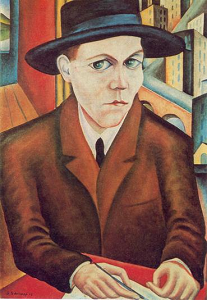
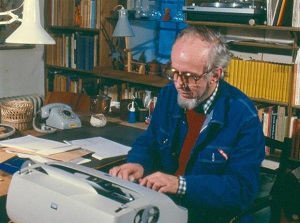
Oskar Maria Graf (22 juli 1894 - 28 juni 1967) Portret door Georg Schrimpf, 1927
In meiner Kammer, wo die Sonne es sieht, Sitzt im weißen Kleide mein jüngstes Lied.
Sitzt da und lächelt: nun diene mir, bin deshalb kommen so schön zu dir.
Ich aber knie ganz stumm mich hin, mir ist, als ob ich im Himmel bin.
Raststätte
Ich weiß eine Kirche; hochschlanke Säulen tragen ihr köstliches Dach. Nach Ewigkeit riechts in ihrer Halle, nach feuchtem Moder und verborgenen Narzissen.
Liebfromme Sänger singen Cantaten, und amt den hohen luftigen Thoren wachen Winde mit geschlossenen Flügeln.
Über den Säulen aber Sah ich walten das herrlichste Gnadenbild: Die Morgensonne tränkte die durstigen Wipfel der Bäume mit frischen Quellen stärkenden Lichts ...
O Wald, Wald, du von heimlichen Liebesworten Gottes Erklingender!
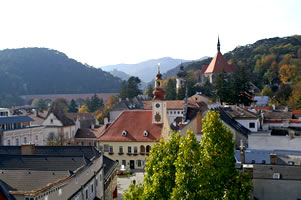
Maria Janitschek (22 juli 1859 – 28 april 1927) Mödling
MY heart, my heart is heavy, Though merrily blooms the May; Out on the ancient bastion, Under the lindens I stay. There stands by yon gray old tower, The sentry-house of the town; A red clad peasant soldier Goes pacing up and down. He toys with his shining musket, That gleams in the sunset red, Presenting and shouldering arms now,— I wish he would shoot me dead!
Sonnet
Still northward is the central mount of Maine, From whose high crown the rugged forests seem Like shaven lawns, and lakes with frequent gleam, 'Like broken mirrors,' flash back light again. Eastward the sea, with its majestic plain, Endless, of radiant, restless blue, superb With might and music, whether storms perturb Its reckless waves, or halcyon winds that reign, Make it serene as wisdom. Storied Spain Is the next coast, and yet we may not sigh For lands beyond the inexorable main; Our noble scenes have yet no history. All subtler charms than those that feed the eye, Our lives must give them; 'tis an aim austere, But opes new vistas, and a pathway clear.
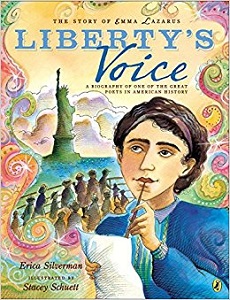
Emma Lazarus (22 juli 1849 – 19 november 1887) Cover biografie
hier sitzt sie nun und singt auf einer nassen Latschenkiefer
gleich fliegt sie zurück zur Natur
Idylle, katastrophal
Zur Zeit fallen Mauern, kann sein, aber jedenfalls wohl nicht die sonnenwarme, weiße, an die ich mich lehne zwar habe ich von Balkons gehört, die ihren Geist aufgaben bei einem schlichten Niesen, deiner aber ist fest verankert und hat Geranien so daß ich eigentlich gerade glauben wollte, ich würde diesen Sonntag bei euch mit Tee und klitzekleinen englischen Keksen überleben aber als du anfingst die Unterhaltung mit Metaphern und Poesie aus eigener Herstellung zu behelligen, ging es doch schief: Die Geranien rochen plötzlich nach Tod, ich bekam eine Leiche in die Pfeife, und unten auf der sonntagsleeren Straße hielt plötzlich ein viel zu langes schwarzes Taxi mit laufendem Motor
Vertaald door Peter Urban-Halle und Henning Vangsgaard
„Und die Wehmutter erfreute sich dessen und führte den ihr wohlbekannten biederen, jungen Hauptmann hin, welcher ihr vor der Höhle gestand und sagte: »O Weib, wie leicht gehe ich in Rom zu meinem Kaiser, und wie schwer wird es mir hier, in diese Höhle einzutreten! Das muß etwas Besonderes sein! Sage mir doch, ob du irgendeinen Grund weißt; denn ich weiß, daß du eine biedere Jüdin bist!« Die Wehmutter aber sprach: »Guter Hauptmann des großen Kaisers! Harre hier vor der Höhle nur einen Augenblick; ich will hineingehen und will dir die Lösung bringen!« Und sie ging hin und sagte es dem Joseph, daß der gute Hauptmann selbst draußen vor der Höhle harre, und daß er herein möchte, aber sich nicht getraue aus einem ihm unerklärlichen Grunde. Als Joseph solches vernahm, ward er gerührt und sprach: »O Gott, wie gut bist Du, daß Du sogar das von mir in Freude verwandelst, davor ich mich am meisten gefürchtet habe! Darum sei Dir allein alles Lob und alle Ehre!« Nach diesen Worten eilte er sogleich aus der Höhle und fiel dem Kornelius zu Füßen, sagend: »Machtträger des großen Kaisers, habe Erbarmen mit mir armem Greise! Siehe, mein junges Weib, das mir durchs Los im Tempel zuteil ward, hat hier sich entledigt ihrer Frucht diese Nacht, und gestern bin ich erst hier angekommen, daher mochte ich nicht mich sogleich bei dir melden lassen!"
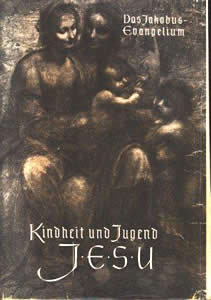
Jakob Lorber (22 juli 1800 - 24 augustus 1864) Cover
Frouke Arns, Ernest Hemingway, Belcampo, Boris Dittrich , Hans Fallada, David Boerljoek
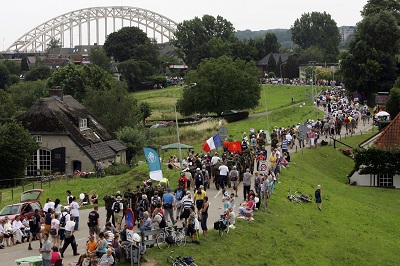
Dolce far niente – Bij de Nijmeegse Vierdaagse
Wandelaars tijdens de Vierdaagse van Nijmegen
Roem en blaren
dit vallen in de voetstappen van hen die voor je gingen gaat je goed af; zwaaiend doe je voort, aangespoord door duizend klanken langs de weg
als lava stroom je door de straten, geeft je glimlach aan elk gezicht, in iedere taal een nieuwe vriend
in de vroegte op de Wedren moedigt de laatste lichting uit de kroeg je aan twee werelden die elkaar hier raken – ieder draagt zijn eigen kruis
in de maat van het legioen ga ook jij de eindstreep halen; op de Via Gladiola wachten zwaardlelies jouw komst
en de stad, zij heeft de tijd, deinend staat zij aan haar kade middenin het feestgedruis straks ga je naar huis, zijn haar straten vreemd sereen, geeft je eeuwige roem en blaren mee.
Frouke Arns (Handorf, 1964) Handorf. Frouke Arnswas in 2015 en 2016 stadsdichter van Nijmegen.
“It was a pleasant café, warm and clean and friendly, and I hung up my old waterproof on the coat rack to dry and put my worn and weathered felt hat on the rack above the bench and ordered a café au lait. The waiter brought it and I took out a notebook from the pocket of the coat and a pencil and started to write. I was writing about up in Michigan and since it was a wild, cold, blowing day it was that sort of day in the story. I had already seen the end of fall come through boyhood, youth and young manhood, and in one place you could write about it better than in another. That was called transplanting yourself, I thought, and it could be as necessary with people as with other sorts of growing things. But in the story the boys were drinking and this made me thirsty and I ordered a rum St. James. This tasted wonderful on the cold day and I kept on writing, feeling very well and feeling the good Martinique rum warm me all through my body and my spirit. A girl came in the café and sat by herself at a table near the window. She was very pretty with a face fresh as a newly minted coin if they minted coins in smooth flesh with rain-freshened skin, and her hair black as a crow's wing and cut sharply and diagonally across her cheek. I looked at her and she disturbed me and made me very excited. I wished I could put her in the story, or anywhere, but she had placed herself so she could watch the street and the entry and I knew she was waiting for someone. So I went on writing. The story was writing itself and I was having a hard time keeping up with it. I ordered another rum St. James and I watched the girl whenever I looked up, or when I sharpened the pencil with a pencil sharpener with the shavings curling into the saucer under my drink. I've seen you, beauty, and you belong to me now, whoever you are waiting for and if I never see you again, I thought. You belong to me and all Paris belongs to me and I belong to this notebook and this pencil. Then I went back to writing and I entered far into the story and was lost in it. I was writing it now and it was not writing itself and I did not look up nor know anything about the time nor think where I was nor order any more rum St. James. I was tired of rum St. James without thinking about it. Then the story was finished and I was very tired. I read the last paragraph and then I looked up and looked for the girl and she had gone.”
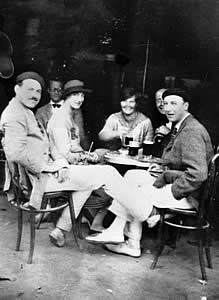
Ernest Hemingway (21 juli 1899 – 2 juli 1961) Ernest Hemingway (links) met vrienden in een café in Parijs
“Waarvoor stroomt mijn bloed in godsnaam door mijn aderen,' verzuchtte Eugène van Sonswyck terwijl hij, gemakkelijk gestrekt en met een boek op zijn schoot, een luie stoel bezwaarde. Waarom ben ik er? Waarom is alles er? Waarom lees ik eigenlijk? Wat heb ik met gedachten van anderen te maken! Eens hoopte ik nog dat daar wat in te vinden was, dat anderen het mij konden zeggen, mij de weg wijzen, ergens naartoe', en, zijn blikken richtend op een enorme, dicht gevulde boekenwand: 'Al die delen waar ik uitkomst van verwachtte; een ondoordringbare muur, een blinde muur. Nee, gedachten van anderen hebben voor mij afgedaan. En mijn eigen gedachten dan, heb ik daar eigenlijk wél iets mee te maken? Zijn ze wel echt van mij! Of wordt er enkel door een ander in mij gedacht? Door een intelligentie, ergens ver weg. Zoals ook een schrijver zijn personages met gedachten vult. Zijn mijn hersens soms lege hulzen waar niet eens gedachten in horen? Dat ze zich daar hebben genesteld als ratten in een kelder, er bezit van hebben genomen. En wij maar denken dat we denken. Misschien is het hele denken wel een vergissing, een fout in de regie. Het hele leven. Waarom blijft niet alles waar het hoort? In zijn onbekende bedding, in de bedding van het niets. Af en toe gaat er iets mis, of slaat op hol, en dat wordt dan levend. Elke geboorte is een ontsporing, een kortsluiting, misschien wel een ontploffing, een ontploffing van cellen. En wij zitten ermee. Iedereen zit met het leven in zijn maag, of hij het wil weten of niet.' De man die al deze overpeinzingen slaakte was een keurig verzorgd, knap en welgebouwd jongmens van minstens vijfentwintig jaar en wiens uitwendig voorkomen geheel in overeenstemming was met de smaakvolle inrichting van het hem omgevende vertrek, de typische herenkamer van een rijk en verwend vrijgezel. Zijn trieste gedachteloop werd onderbroken, of misschien ook wel niet, door de binnenkomst van een nog welig bloeiende vrouw met een theeblad voor zich uit waarop een koffieservies. Zij zet het neer op het kortpotig tafeltje dat, zoals in tal van moderne interieurs, laag bij de grond een middelpunt probeerde te vormen.”
Belcampo (21 juli 1902 – 2 januari 1990) Scene uit de gelijknamige film uit 2015 met Georgina Verbaan en Jeroen van Koningsbrugge
“Dat bleek niet het geval. Gary adviseerde om niet op de aanvraag voor het onderhoud in te gaan: `Wij moeten niet betrokken willen raken in een Nederlands onderzoek. Straks wordt er nog een parlementaire enquête naar de zaak-Korff ingesteld en loopt u de kans opgeroepen te worden uw verklaring in het parlement toe te lichten.' Maar ambassadeur Weislogel heeft door zijn ontmoeting met Korff en de enorme hoeveelheid publiciteit een grote fascinatie voor de zaak ontwikkeld. Hij besloot de aanvraag voor een gesprek off the record te honoreren. Toen hij net als ambassadeur aan de slag was gegaan, werkte hij volgens het draaiboek dat het Amerikaanse State Department voor beginnende ambassadeurs heeft opgesteld. Het eerste hoofdstuk daaruit spoort de nieuwe ambassadeur aan intensief gesprekken te voeren met sleutelfiguren uit de samenleving, om zo een goed beeld te krijgen wie de Amerikaanse belangen het best kunnen helpen dienen. Zijn voorgangers hadden baat bij een dergelijke aanpak. In kwesties als de politieke steun voor de oorlog in Irak of de militaire aanwezigheid in Afghanistan hadden de oriënterende gesprekken hun waarde in het verleden bewezen. De ambassadestaf had dossiers aangemaakt met informatie over iedere gesprekspartner. Voor elke bespreking bestudeerde de ambassadeur de notities. In de ontmoetingen verstrekte Weislogel achteloos gedetailleerde feiten. Hardop nadenkend, alsof hij naar woorden zocht, stelde hij van tevoren ingestudeerde vragen. De truc werkte. Zijn gesprekspartners bewonderden zijn kennis van zaken. `Heel wat beter dan de kippenboer, de kunsthistorica of de onroerendgoedmagnaat die hem zijn voorgegaan,' zoemde het rond in de elitekringen van Nederland. Weislogel concentreerde zich op de zakenwereld, de overheid en de politiek. In hun enthousiasme namen zijn gesprekspartners geen blad voor de mond. Ze stortten hun hart uit, wezen de ambassadeur op tekortkomingen van anderen en prezen zichzelf de hemel in. In korte tijd leerde Scott Weislogel de eigenaardigheden van de Nederlandse samenleving doorgronden. En nu wilde hij achterhalen of er nieuwe ontwikkelingen waren in het onderzoek naar de zaak-Korff.”
«So müßte man wohnen können», denkt Pinneberg. «Si-cher hat dieser Sesam sieben Zimmer. Muß ein klotziges Geld verdienen. Er wird Miete zahlen ... zweihundert Mark? Dreihundert Mark? Ach was, ich habe keine Ahnung. — Zehn Minuten nach vier!» Pinneberg greift in die Tasche, holt aus dem Etui eine Zi-garette und brennt sie an. Um die Ecke weht Lämmchen, im plissierten weißen Rock, der Rohseidenbluse, ohne Hut, die blonden Haare verweht. «Tag, Junge. Es ging wirklich nicht eher. Böse?» «Keine Spur. Nur, wir werden endlos sitzen müssen. Es sind mindestens dreißig Leute reingegangen, seit ich warte.» «Sie werden ja nicht alle zum Doktor gegangen sein. Und dann sind wir ja angemeldet.» «Siehst du, daß es richtig war, daß wir uns angemeldet haben!» «Natürlich war es richtig. Du hast ja immer recht, Junge!» Und auf der Treppe nimmt sie seinen Kopf zwi-schen die Hände und küßt ihn stürmisch. «0 Gott, ich bin glücklich, daß ich dich mal wieder habe, Junge. Denke doch, beinahe vierzehn Tage!» «Ja, Lämmchen», antwortet er. «Ich bin auch nicht mehr brummig.» Die Tür geht auf, und im halbdunklen Flur steht ein wei-ßer Schemen vor ihnen, bellt: «Die Krankenscheine!» «Lassen Sie einen doch erst mal rein», sagt Pinneberg und schiebt Lämmchen vor sich her. «Übrigens sind wir privat. Ich bin angemeldet. Pinneberg ist mein Name.» Auf das Wort «Privat» hin hebt der Schemen die I Land und schaltet das Licht auf dem Flur ein. «Herr Doktor kommt sofort. Einen Augenblick, bitte. Bitte, dort hin-ein.»
Hans Fallada (21 juli 1893 – 5 februari 1947) Scene uit een toneeluitvoering in Bochum, 1973
« I could write a whole book about my ancestors. And I will write it some day, when I have more time. Now I am writing in Russian, but later maybe I will turn to my native Ukrainian, for I was born in Ukraine. • • • Ukraine was and remains my homeland, because I was born in Ukraine, .. the bones of my ancestors, free Cossacks, who fought in the name of glory, power and freedom are buried there.... • What unites them [my ancestors] into one general type? Determina-tion, character, the desire to obtain a set goal. All my life I have felt these traits within me. . . . However, my deter-mination was aimed at overcoming an old, outdated taste and at introduc-ing a new art; a wild beauty into life. ... My father wrote poetry in Russian and Ukrainian (although he did not write much in his native language). . . . In 1915, I painted the picture "Sviatoslav" in the style of ancient Ukrainian painting. As far as the dominance of one or another color scheme in my work, I have to say, that in my person Ukraine has its most faithful son. My color schemes are deeply national. Orange, greenish-yellow, red, and blue tones gush like Niagaras from beneath my brush. When I. paint, it seems to me, that I am a savage rubbing he stick of one color against another in order to obtain a certain color effect. The effect of flames. The effect of passion, the sexual arousal of one color's charac-teristic features and peculiarities by another.... A child of the Ukrainian steppes, I have always been most partial to horizontal formats. ... It would be a good idea to transfer a part of my paintings to Ukraine, my beloved homeland...”
David Boerljoek (21 juli 1882 – 15 januari 1967) Zelfportret van de kunstenaar die een drankje inschenkt aan een tafel
De Catalaanse dichter Ernest Farrés i Junyentwerd in Igualada geboren op 21 juli 1967 en woont in Barcelona. Hij werkt als journalist en redacteur voor het supplement van La Vanguardia, Farrés publiceerde zes dichtbundels: “Clavar-ne una al mall i l'altra a l'enclusa” (1996), “Mosquits” (1998), “Edward Hopper” (2006), “Els efectes imprevisibles dels camps magnètics” (2011), “Blitzkrieg” (2011) en “Los Angeles” (2015), met illustraties van Joan Longas. Elk gedicht in het tweetalige “Edward Hopper”, waarvoor hij de Englantina d'Or van de Jocs Florals van Barcelona ontving, is gebaseerd op een schilderij van de Amerikaanse kunstenaar. Farrés heeft ook een bloemlezing uitgegeven van de hedendaagse Catalaanse poëzie, “21 poetes del XXI”(2001). In Spanje is Edward Hopper zowel in het Catalaans als het Spaans bewerkt voor het toneel. Engelse vertalingen van Farrés 'gedichten zijn verschenen in Calque, The Nation, PN Review, Two Lines, Words without Borders, World Literature Today en Zoland Poetry. Voor zijn blog “La República Poètica de l'Ernest Farrés” ontving hij in 2010 de Vila Martorell-prijs voor literatuurblogs in het Catalaans.
House by the Railroad door Edward Hopper, 1925
House by the Railroad, 1925
I fantasize that luck is placed within my reach. Of course, there's different kinds. Take the kind that turns up ad hoc, for instance, and the kind that unfolds backwards. There are deficits and surpluses of luck. By the same token, we have good luck, everyday luck, luck-you-don't-remember, and bad luck, a.k.a. misfortune. Luck that puts us on easy street and luck that’s an asp, a scorpion fish, a wild boar, a starling. I have a vision of train tracks half covered with grass and rust, hurling themselves —like a jagged line or a blade with an iridescence that catches you by surprise— against a tomorrow without an Achilles’ heel. And I imagine who-knows-what plains and mountains untouched by human hand and still not weatherproofed at the mercy of nor’easters, downpours, and heat. But the fantasies don't stop here. Like the rip in a memory of a past life, another jolts my mind: I recognize myself holding vigil inside a huge Victorian house, vacant, foreboding, phantasmagorical, without going crazy for what I can't possess yet cut off from the world, supreme example of original innocence.
Hills South Truro door Edward Hopper 1930
Hills, South Truro, 1930
I climbed to the very top of the mountain to speak to myself. You know, about the present, the future. Bared to the sun, I held the prerogative of seeing many things coming to pass. It must be due to the scent of earth and distant sea, which were consoling. It must be due to birdsong. It must be due to trains. Is it due to the grandeur of this vista? As the sun beat down I allowed my gaze to range and understood my limits and that a slew of pot-boilers hinders me. That I am diverted by punk points of light. That I dedicate no immortality to doing nothing. That I hear a whisper from inside.
I utter not a word and the surrounding world suddenly possesses me and bears me away. I grow lighter. Become leaf-bearing and even burst into bloom. From the peak I delight in the superhuman contemplation of dominions.
But thereafter my lot will be to descend to the plain, returning to my kind, and thus, as if I were such, I shall resume an everyday likeness squandering time and resources.
De Britse schrijfster Sarah Waterswerd geboren in Neyland, Wales, op 21 juli 1966. Ze ging daar ook naar school en bezocht later de universiteit van Canterbury waar ze haar doctoraat in Engelse literatuur verkreeg. Haar specialisering was moderne homoliteratuur vanaf de negentiende eeuw. Zij deed voor haar proefschrift onderzoek naar lesbische historische romans. Door een bestudering van de negentiende-eeuwse seksuele onderwerelden toont zij onder meer aan dat de voorstellingen die men tegenwoordig van (homo)seksualiteit in de Victoriaanse periode heeft, in het beste geval stereotiep en in het slechtste geval onjuist zijn. Haar werk voor haar promotiethesis inspireerde haar tot het schrijven van haar eigen lesbische historische romans waarin ze het Victoriaanse tijdperk nieuw leven inblaast. Door haar stijl, de periode waarin haar romans zich afspelen en het feit dat haar hoofdpersonages uit de onderklasse afkomstig zijn, wordt zij vaak vergeleken met Dickens. Zij ontving o.a. de Betty Trask Award, Somerset Maugham award, de Lambda Literary Award for Lesbian Fiction, Young Writer of the Year Award en de CWA Historical Dagger prizee. Twee van haar boeken werden door de BBC tot miniseries bewerkt. In 2002 verscheen “Tipping the Velvet” met Rachael Stirling en Keeley Hawes in de hoofdrollen. De serie zorgde voor enige opschudding, omdat op de BBC nog nooit eerder zulke expliciet (lesbische) erotische scènes werden uitgezonden. In 2005 werd Waters’ derde boek “Fingersmith” verfilmd, met Sally Hawkins, Elaine Cassidy en Rupert Evans in de belangrijkste rollen. In het voorjaar van 2006 verscheen haar vierde roman getiteld “The Night Watch” die zich tijdens de Tweede Wereldoorlog afspeelt.
Uit: Tipping the Velvet
“Have you ever tasted a Whitstable oyster? If you have, you will remember it. Some quirk of the Kentish coastline makes Whitstable natives – as they are properly called – the largest and the juiciest, the savouriest yet the subtlest, oysters in the whole of England. Whitstable oysters are, quite rightly, famous. The French, who are known for their sensitive palates, regularly cross the Channel for them; they are shipped, in barrels of ice, to the dining-tables of Hamburg and Berlin. Why, the King himself, I heard, makes special trips to Whitstable with Mrs Keppel, to eat oyster suppers in a private hotel; and as for the old Queen – she dined on a native a day (or so they say) till the day she died. Did you ever go to Whitstable, and see the oyster-parlours there? My father kept one; I was born in it – do you recall a narrow, weather-boarded house, painted a flaking blue, half-way between the High Street and the harbour? Do you remember the bulging sign that hung above the door, that said that Astley's Oysters, the Best in Kent were to be had within? Did you, perhaps, push at that door, and step into the dim, low-ceilinged, fragrant room beyond it? Can you recall the tables with their chequered cloths – the bill of fare chalked on a board – the spirit-lamps, the sweating slabs of butter? Were you served by a girl with a rosy cheek, and a saucy manner, and curls? That was my sister, Alice. Or was it a man, rather tall and stooping, with a snowy apron falling from the knot in his neck-tie to the bow in his boots? That was my father. Did you see, as the kitchen door swung to and fro, a lady stand frowning into the clouds of steam that rose from a pan of bubbling oyster soup, or a sizzling gridiron? That was my mother. And was there at her side a slender, white-faced, unremarkable- looking girl, with the sleeves of her dress rolled up to her elbows, and a lock of lank and colourless hair forever falling into her eye, and her lips continually moving to the words of some street-singer's or music-hall song? That was me. Like Molly Malone in the old ballad, I was a fishmonger, because my parents were. They kept the restaurant, and the rooms above it: I was raised an oyster-girl, and steeped in all the flavours of the trade. My first few childish steps I took around vats of sleeping natives and barrels of ice; before I was ever given a piece of chalk and a slate, I was handed an oysterknife and instructed in its use; while I was still lisping out my alphabet at the schoolmaster's knee, I could name you the contents of an oyster-cook's kitchen – could sample fish with a blindfold on, and tell you their variety. Whitstable was all the world to me, Astley's Parlour my own particular country, oyster-juice my medium. Although I didn't long believe the story told to me by Mother – that they had found me as a baby in an oyster-shell, and a greedy customer had almost eaten me for lunch – for eighteen years I never doubted my own oysterish sympathies, never looked far beyond my father's kitchen for occupation, or for love. »