Romenu is een blog over gedichten, literatuur en kunst Maar Romenu is ook een professionele freelance vertaler Du-Ne en Ne-Du http://www.roumen-vertalingen.nl/
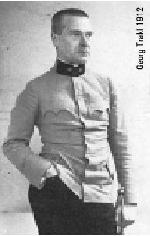
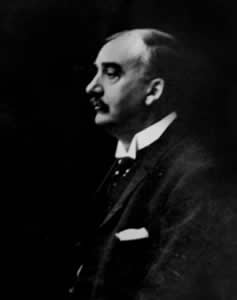
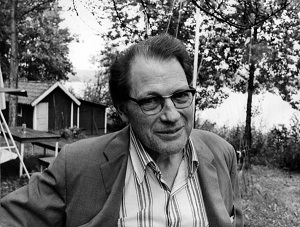
Georg Trakl werd op 3 februari 1887 in het conducteurshuis aan de Waagplatz 2 in Salzburg geboren. Zijn vader, Tobias Trakl, was een handelaar in ijzerwaren en zijn moeder, die ook psychische problemen had, was Maria Catharina Trakl, (meisjesnaam Halik). Voorts had hij nog drie broers en drie zussen. Margarethe (doorgaans Grethe genoemd) stond hem het naast, zelfs zodanig dat sommigen een incestueuze verhouding vermoeden. Zijn jeugd bracht hij door in Salzburg. Vervolgens bezocht hij van 1897 tot 1905 het humanistische gymnasium. Om toch een academische opleiding te kunnen volgen, werkte hij tot 1908 in de praktijk bij een apotheker. Sommigen vermoedden dat hij dit vooral deed om zichzelf opiaten te kunnen verschaffen. Bij het uitbreken van WO I werd Trakl als medicus naar het front in Galicië (heden ten dage in Oekraïne en Polen) gestuurd. Zijn gemoedsschommelingen leidden tot geregelde uitbraken van depressie, die verergerd werden door de afschuw die hij voelde voor de verzorging van de ernstig verwonde soldaten. De spanning en druk dreven hem ertoe een suïcidepoging te ondernemen, welke zijn kameraden nochtans verhinderden. Hij werd in een militair ziekenhuis opgenomen in Kraków, alwaar hij onder strikt toezicht geplaatst werd.Trakl verzonk daar in nog zwaardere depressies en schreef Ficker om advies. Ficker overtuigde hem ervan dat hij contact moest opnemen met Wittgenstein, die inderdaad op weg ging na Trakls bericht te hebben ontvangen. Op 4 november 1914, drie dagen voordat Wittgenstein aan zou komen, overleed hij echter aan een overdosis cocaïne
Paul Celan
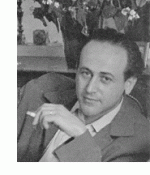
Paul Celan werd onder de naam Paul Antschel op 23 november 1920 geboren in Czernowitz, toentertijd de hoofdstad van de Roemeense Boekovina, nu behorend bij de Oekraïne. Paul Celans ouders waren Duitssprekende joden die hun zoon joods opvoedden en hem naar Duitse christelijke scholen stuurden. In 1942 werden Celans ouders door de Duitse bezetter naar een werkkamp gedeporteerd en daar vermoord. Hijzelf wist aanvankelijk onder te duiken, maar moest vanaf juli 1942 in een werkkamp dwangarbeid verrichten. Celan overleefde de oorlog. Via Boekarest en Wenen vestigde Celan zich in 1948 in Parijs. Daar was hij werkzaam als dichter, vertaler en doceerde hij aan de prestigieuze Ecole Normale Supérieure. Vermoedelijk op 20 april 1970 beëindigde hij zijn leven zelf door in de Seine te springen.
Gerard Reve
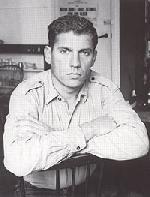
Gerard Reve over: Medearbeiders ”God is in de mensen, de dieren, de planten en alle dingen - in de schepping, die verlost moet worden of waaruit God verlost moet worden, door onze arbeid, aangezien wij medearbeiders van God zijn.” Openbaring ”Tja, waar berust elk godsbegrip op, elke vorm van religie? Op een openbaring, dat wil zeggen op een psychische ervaring van zulk een dwingende en onverbiddelijke kracht, dat de betrokkene het gevoel heeft, niet dat hij een gedachte of een visioen heeft, maar dat een gedachte gedachte of visioen hem bezit en overweldigt.”
Simon Vestdijk
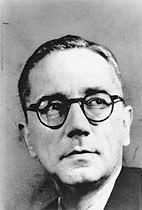
Simon Vestdijk (Harlingen, 17 oktober 1898 – Utrecht, 23 maart 1971) was een Nederlands romancier, dichter, essayist en vertaler. Zijn jeugd te Harlingen en Leeuwarden beschreef hij later in de Anton Wachter-cyclus. Van jongs af aan logeerde hij regelmatig bij zijn grootouders in Amsterdam, waar hij zich in 1917 aan de Universiteit van Amsterdam inschrijft als student in de medicijnen. Tijdens zijn studie die van 1917 tot 1927 duurde, leerde hij Jan Slauerhoff kennen.Tot 1932 is hij als arts in praktijken door heel Nederland werkzaam. In 1932 volgt zijn officiële schrijversdebuut met de uitgave van de bundel Verzen in De Vrije Bladen. Doorslaggevend voor Vestdijks uiteindelijke keuze voor de literatuur is zijn ontmoeting in 1932 met Eddy Du Perron en Menno ter Braak. Deze ontmoeting had tot resultaat dat hij redactielid werd van het tijdschrift Forum Kort daarop, in 1933, wordt zijn eerste novelle, De oubliette, uitgegeven. In hetzelfde jaar schrijft hij Kind tussen vier vrouwen, dat, eerst geweigerd door de uitgever, later de basis zal vormen voor de eerste drie delen van de Anton Wachter-romans. In 1951 ontvangt Vestdijk de P.C. Hooftprijs voor zijn in 1947 verschenen roman De vuuraanbidders. In 1957 wordt hij voor het eerst door het PEN-centrum voor Nederland voorgedragen voor de Nobelprijs voor de Literatuur, die hij echter nooit zal krijgen. Op 20 maart 1971 wordt hem de Prijs der Nederlandse Letteren toegekend, maar voor hij deze kan ontvangen overlijdt hij op 23 maart te Utrecht op 72-jarige leeftijd. Vestdijk was auteur van ca. 200 boeken. Vanwege deze enorme productie noemde de dichter Adriaan Roland Holst hem 'de man die sneller schrijft dan God kan lezen'. Andere belangrijke boeken van Simon Vestdijk zijn: "Kind van stad en land" (1936), "Meneer Visser's hellevaart" (1936), "Ierse nachten" (1946), "De toekomst de religie" (1947), "Pastorale 1943" (1948), "De koperen tuin" (1950), "Ivoren wachters" (1951), "Essays in duodecimo" (1952) en "Het genadeschot" (1964).
K.P. Kavafis K.P. Kavafis werd als kind van Griekse ouders, afkomstig uit Konstantinopel, geboren in 1863 in Alexandrië (tot vandaag een Griekse enclave) waar hij ook het grootste deel van zijn leven woonde en werkte. Twee jaar na de dood van zijn vader verhuist het gezin in 1872 naar Engeland om na een verblijf van vijf jaar naar Alexandrië terug te keren. Vanwege ongeregeldheden in Egypte vlucht het gezin in 1882 naar Konstantinopel, om na drie jaar opnieuw naar Alexandrië terug te gaan. In de jaren die volgen maakt Kavafis reizen naar Parijs, Londen en in 1901 zijn eerste reis naar Griekenland, in latere jaren gevolgd door nog enkele bezoeken. Op de dag van zijn zeventigste verjaardag, in 1933 sterft Kavafis in Alexandrië. De roem kwam voor Kavafis pas na zijn dood, dus postuum. Deels is dat toe te schrijven aan zijn eigen handelswijze. Hij was uiterst terughoudend met de publicatie van zijn gedichten, liet af en toe een enkel gedicht afdrukken in een literair tijdschrift, gaf in eigen beheer enkele bundels met een stuk of twintig gedichten uit en het merendeel van zijn poëzie schonk hij op losse bladen aan zijn beste vrienden.
Thomas Mann
Thomas Mann, de jongere broer van Heinrich Mann, werd geboren op 6 juni 1875 in Lübeck. Hij was de tweede zoon van de graankoopman Thomas Johann Heinrich Mann welke later één van de senatoren van Lübreck werd. Zijn moeder Julia (geboren da Silva-Bruhns) was Duits-Braziliaans van Portugees Kreoolse afkomst. In 1894 debuteerde Thomas Mann met de novelle "Gefallen". Toen Thomas Mann met 21 jaar eindelijk volwassen was en hem dus geld van zijn vaders erfenis toestond - hij kreeg ongeveer 160 tot 180 goldmark per jaar - besloot hij dat hij genoeg had van al die scholen en instituties en werd onafhankelijk schrijver. Kenmerkend voor zijn stijl zijn de ironie, de fenomenale taalbeheersing en de minutieuze detailschildering. Manns reputatie in Duitsland was sterk wisselend. Met zijn eerste roman, Buddenbrooks (1901), had hij een enorm succes, maar door zijn sceptische houding tegenover Duitsland na de Eerste Wereldoorlog veranderde dit volledig. Stelde hij zich tot aan de jaren twintig apolitiek op (Betrachtungen eines Unpolitischen, 1918), meer en meer raakte hij bij het Politiek gebeuren betrokken. Zijn afkeer van het nationaal socialisme groeide, zijn waarschuwingen werden veelvuldiger en heftiger. In 1944 accepteerde hij het Amerikaanse staatsburgerschap. Tussen 1943 en 1947 schreef Mann Doktor Faustus (zie Faust), de roman van de 'Duitse ziel' in de gecamoufleerd geschilderde omstandigheden van de 20ste eeuw. In 1947 bezocht hij voor het eerst sinds de Oorlog Europa, twee jaar later pas Duitsland. In 1952 vertrok hij naar Zwitserland. Op 12 augustus 1955 stierf hij in Zürich. Twintig jaar na zijn dood, in aug. 1975, is zijn literaire nalatenschap geopend: dagboekaantekeningen van 15 maart 1933 tot 29 juli 1955, alsmede notities uit de jaren 1918 tot en met 1921.Belangrijke werken zijn: Der Zauberberg, Der Tod in Venedig, Dokter Faustus , Joseph und seine Brüder en Die Bekenntnisse des Hochstaplers Felix Krull.
Rainer Maria Rilke
Rilke werd op 4 december 1875 geboren in Praag. Hij had al naam gemaakt als dichter met zijn bundels Das Stundenbuch en Das Buch der Bilder, toen hij de literaire wereld versteld deed staan en wereldfaam verwierf met de publicatie van zijn twee delen Neue Gedichte in 1907 en 1908. Hij verzamelde daarin het beste werk uit een van zijn vruchtbaarste periodes, die hij grotendeels doorbracht in Parijs. Rilke was daar diep onder de indruk gekomen van Rodin, bij wie hij een tijdlang in dienst was als particulier secretaris. Rodin, zei hij later, had hem leren kijken. Dit kijken kwam neer op intense concentratie, om het mysterie te kunnen zien ‘achter de schijnbare werkelijkheid'. Latere en rijpere werken als Duineser Elegien (1912-1923) en het ronduit schitterende Die Sonette an Orfeus (1924) illustreren Rilkes metafysische visie op het onzegbare, dat haar verwoording vindt in een hermetische muzikale taal. Op 29 december 1926 overlijdt Rilke in het sanatorium in Val-Mont aan de gevolgen van leukemie. Enkele dagen later wordt hij, overeenkomstig zijn wens, begraven op het kerkhof van Raron.
* * * * * * * * * * * * * * * *
Romenu
Over literatuur, gedichten, kunst en cultuur
08-05-2016
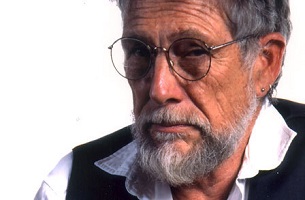
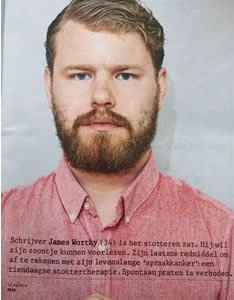
Roddy Doyle, Thomas Pynchon, Pat Barker, Gary Snyder, Gertrud Fussenegger, Edmund Wilson, James Worthy
“Wha’ d’yeh think of the poll? He’s alrigh’. He pulls a reasonable pint. I meant, the election poll. Ah, fuck the-. Go on. Michael D.’s leadin’. Followed by Mitchell. No. The Dragons’ Den fella. Fuckin’ hell. How did tha’ happen? Well, he’s scutterin’ on abou’ community an’ disability an’ tha’. But, really, he’s an 01’ Fianna Fail hack. Up to his entrepreneurial bollix in it. Annyway, my theory. Go on People still love Fianna Fail. But they’d hammer them if they had a candidate. Exactly. But they can vote for this prick without havin’ to admit it. Brilliant. But I think Michael D. will get there. How come? He was goin’ on abou’ the President not bein’ a handmaiden to the government. What’s a handmaiden? I’m not sure. But if I was lookin’ for one in the Golden Pages, I wouldn’t be stoppin’ at the Michaels. Annyway, he suddenly stops, an’ says he broke his kneecap when he fell durin’ a fact-findin’ mission in Colombia. Wha’ does tha’ tell yeh? He was ou’ of his head. Exactly. Fact-findin’ mission me hole. He’s lettin’ us know - he’s one o’ the lads. Well, that’s me decided. Me too.”
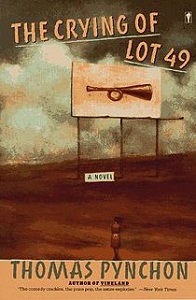
“Mucho, baby," she cried, in an access of helplessness. Mucho Maas, home, bounded through the screen door. "Today was another defeat," he began. "Let me tell you," she also began. But let Mucho go first. He was a disk jockey who worked further along the Peninsula and suffered regular crises of conscience out his profession. "I don't believe in any of it, Ode," he could usually get out. "I try, I truly can't," way down there, further down perhaps than she could reach, so that such times often brought her near panic. It might have been the sight of her so about to lose control that seemed to bring him back up. "You're too sensitive." Yeah, there was so much else she ought to be saying also, but this was what came out. It was true, anyway. For a couple years he'd been a used car salesman and so hyperaware of what that profession had come to mean that working hours were Exquisite torture to him. Mucho shaved his upper lip every morning three times with, three times against the grain to remove any remotest breath of a moustache, new blades he drew blood invariably but kept at it; bought all natural-shoulder suits, then went to a tailor to have the lapels made yet more abnormally narrow, on his hair used only water, combing it like Jack Lemmon to throw them further off. The sight of sawdust, even pencil shavings, made him wince, his own kind being known to use it for hushing sick transmissions, and though he dieted he could still not as Oedipa did use honey to sweeten his coffee for like all things viscous it distressed him, recalling too poignantly what is often mixed with motor oil to ooze dishonest into gaps between piston and cylinder wall. He walked out of a party one night because somebody used the word "creampuff," it seemed maliciously, in his hearing. The man was a refugee Hungarian pastry cook talking shop, but there was your Mucho: thin-skinned.“
« Tonks ushered her into a large room that contained a desk, two chairs, and a filing cabinet. There was a screened-off recess to her right. The part of the room she could see resembled a doctor’s surgery, except that at the far end, underneath the tall windows, there was an easel and a table covered with drawing pads, pens and ink, and pastels. Directly underneath the window was a stool, presumably for the patient since it had been placed where the full, shadowless glare of northern light would fall directly on the face. “I’ll see about the tea. Have a seat.” He went out; she could hear his voice in the room across the corridor requesting a pot of tea and two slices of that rather nice fruitcake, do you think we could manage that? A woman’s voice replied; and then a man’s voice—not Tonks’s—and, finally, a rumble of conversation. Clearly, Tonks had got embroiled in hospital business. Elinor went across to the table and looked at a pen-and-ink drawing of a patient with a gaping hole in his cheek. Presumably, Tonks’s medical drawings would be done in pen and ink—ironical, really, since he’d never made any secret of how much he hated the medium. In fact, he’d described it to her once as the least forgiving medium an artist could work in, calculated to expose every flaw in draftsmanship. Yet she’d have recognized this as Tonks’s work from the purity of the line alone. She wondered what lay behind the screen; probably a washbasin, something like that. But when she looked behind it she saw, instead, a whole wall full of portraits of men with hideously disfigured faces. One of them, the man with no jaw, she recognized from the corridor. Individually, each portrait would have been remarkable; displayed together like this, row upon row, they were overwhelming. She took her time, pausing in front of first one portrait, then another.”
As for poets The Earth Poets Who write small poems, Need help from no man. The Air Poets Play out the swiftest gales And sometimes loll in the eddies. Poem after poem, Curling back on the same thrust.
At fifty below Fuel oil won't flow And propane stays in the tank. Fire Poets Burn at absolute zero Fossil love pumped backup
The first Water Poet Stayed down six years. He was covered with seaweed. The life in his poem Left millions of tiny Different tracks Criss-crossing through the mud.
With the Sun and Moon In his belly, The Space Poet Sleeps. No end to the sky- But his poems, Like wild geese, Fly off the edge.
AMind Poet Stays in the house. The house is empty And it has no walls. The poem Is seen from all sides, Everywhere, At once.
„Leider sollten die Kuriere nicht mehr viele Briefe zwischen den Schwestern hin und her zu spedieren haben. Zehn Monate nach ihrer Hochzeit erwartete Marianne ihre Niederkunft. Mit Bangen, aber auch in zärtlicher Hoffnung fieberte Maria Theresia diesem Ereignis entgegen. "In diesen Tagen", schrieb sie, "wagte ich kaum mehr zu atmen." Seltsam bei dieser Frau, die fast jedes Jahr wohlgemut das Kreißbett bestieg, die sich kaum je über Beschwerden der Schwangerschaft, über die Schmerzen der Geburt beklagte! Um die Schwester zitterte sie. "Denn ich weiß, was eine Niederkunft bedeutet - und denke nur mit Schrecken daran." Gingen böse Ahnungen in ihr um? Am 2. Oktober traten bei Marianne verfrüht die Wehen ein. Vier Tage quälte sie sich vergeblich. Am 5. Oktober empfing sie die Sterbesakramente, am 6. gebar sie ein totes Kind. Immerhin hofften die Ärzte, das Leben der jungen Mutter erhalten zu können. Wieder stürzte Maria Theresia an den Schreibtisch, um die jüngere Schwester mit Zärtlichkeiten zu überschütten. So bitter die Totgeburt: Hauptsache ist und bleibt Mariannes Genesung. "Denken wir jetzt nur an Ihre Wiederherstellung und versenken wir uns nicht in traurige Betrachtungen. Gewiß wird uns Gott helfen..." Und im Nachsatz die Warnung: "Nehmen Sie sich kein Beispiel an mir, denn ich war immer nur zu glücklich bei meinen Entbindungen, mehr als ich es verdient habe."
Uit: Oo, Those Awful Orcs! (A review of Tolkiens The Fellowship of the Ring)
“The most distinguished of Tolkien's admirers and the most conspicuous of his defenders has been Mr. W. H. Auden. That Auden is a master of English verse and a well-equipped critic of verse, no one, as they say, will dispute. It is significant, then, that he comments on the badness of Tolkien's verse - there is a great deal of poetry in The Lord of the Rings. Mr. Auden is apparently quite insensitive - through lack of interest in the other department.- to the fact that Tolkien's prose is just as bad. Prose and verse are on the same level of professorial amateurishness. What I believe has misled Mr. Auden is his own special preoccupation with the legendary theme of the Quest. He has written a book about the literature of the Quest; he has experimented with the theme himself in a remarkable sequence of sonnets; and it is to be hoped that he will do something with it on an even larger scale. In the meantime - as sometimes happens with works that fall in with one's interests - he no doubt so overrates The Lord of the Rings because he reads into it something that he means to write himself. It is indeed the tale of a Quest, but, to the reviewer, an extremely unrewarding one. The hero has no serious temptations; is lured by no insidious enchantments, perplexed by few problems. What we get is a simple confrontation - in more or less the traditional terms of British melodrama - of the Forces of Evil with the Forces of Good, the remote and alien villain with the plucky little home-grown hero. There are streaks of imagination: the ancient tree-spirits, the Ents, with their deep eyes, twiggy beards, rumbly voices; the Elves, whose nobility and beauty is elusive and not quite human. But even these are rather clumsily handled. There is never much development in the episodes; you simply go on getting more of the same thing. Dr. Tolkien has little skill at narrative and no instinct for literary form. The characters talk a story-book language that might have come out of Howard Pyle, and as personalities they do not impose themselves. At the end of this long romance, I had still no conception of the wizard Gandalph, who is a cardinal figure, had never been able to visualize him at all. For the most part such characterizations as Dr. Tolkien is able to contrive are perfectly stereotyped: Frodo the good little Englishman, Samwise, his dog-like servant, who talks lower-class and respectful, and never deserts his master.”
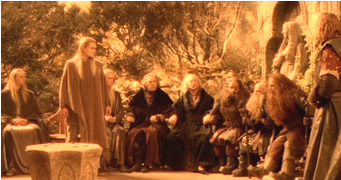
Edmund Wilson (8 mei 1895 – 14 juni 1972) Scene uit de film “The Fellowship of the Ring” uit 2001
“Marzipan kon de harige tenen in zijn bootschoenen voelen krommen. De blinde ezel balkte enthousiast voordat hij, in vloeiend Surinaams, Marzipan voor rotte vis uitmaakte. Marzipan verstond alles, hij had per slot van rekening twee jaar in Suriname gewoond. Alwaar hij schaafijs uitvond. ‘Een Surinaamse ezel? Leuk zo'n zwart balkje.’ giechelde onze zwaarlijvige vedette. 'Ai!’ zei de ezel. 'Mijn naam is Don Qui, Don voor intimi. En ja ik ben blind. En ja ik stoot mezelf dus in het gemeen tyfus vaak aan dezelfde steen.’ Marzipan was gelijk onder de indruk van Don en viel, niet veel later, als een blok voor hem. Het was liefde op het eerste gezicht, net als in de film, en wat volgde was een vrijpartij van jewelste. Ezelprikken, het was in die tijd heel normaal. Net als tandems. Een ezel van achteren pakken, in de volksmond ook wel een ezelsbruggetje genoemd, was zeg maar het nordic walken van de jaren 50.”
Romain Gary, Peter Benchley, Alain-René Lesage, J. Meade Falkner, Johann von Besser, Sophus Schandorph, Sloan Wilson, Otto Zierer
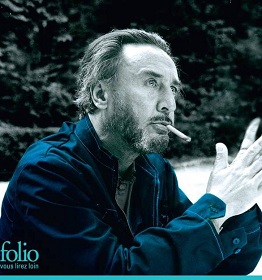
De Franse schrijver, vertaler regisseur en diplomaat Romain Gary werd geboren op 8 mei 1914 in Vilnius, Litouwen. Zie ook alle tags voor Romain Gary op dit blog.
Uit: La promesse de l’aube
«l me fallut quarante-huit heures pour arriver à Nice, par le train des permissionnaires. Le moral de ce train bleu horizon était au plus bas. C'était l'Angleterre qui nous avait entraînés là-dedans, on allait se faire mettre jusqu'au trognon, Hitler était un type pas si mal que ça qu'on avait pas compris et avec qui on aurait dû causer, mais il y avait tout de même un point clair dans le ciel: on avait inventé un nouveau médicament qui guérissait la blemorragie en quelques jours. Cependant, j'étais loin d'être désespéré. Je ne le suis même pas devenu aujourd'hui. Je me donne seulement des airs. Le plus grand effort de ma vie a toujours été de parvenir à désespérer complètement. Il n'y a rien à faire. Il y a toujours en moi quelque chose qui continue à sourire. J'arrivai à Nice au petit matin et me précipitai au Mermonts. Je montai au septième et frappai à la porte. Ma mère occupait la plus petite chambre de l'hôtel: elle avait les intérêts du patron à cœur. J'entrai. La chambre minuscule, triangulaire, avait un air bien fait et inhabité qui me terrifia complètement. Je me précipitai en bas, réveillai la concierge et appris que ma mère avait été transportée à la clinique Saint-Antoine. Je sautai dans un taxi. Les infirmières me dirent plus tard qu'en me voyant entrer elles avaient cru à une attaque à main armée. La tête de ma mère était enfoncée dans l'oreiller, son visage était creusé, inquiet, et désemparé. Je l'embrassai et m'assis sur le lit. J'avais toujours mon cuir sur le dos, et ma casquette sur l'œil: j'avais besoin de cette carapace. Il m'arriva pendant cette permission de garder un mégot de cigare serré pendant plusieurs heures entre mes lèvres: j'avais besoin de me ramasser autour de quelque chose. Sur la table de chevet, bien en évidence dans son écrin violet, il y avait la médaille d'argent gravée à mon nom que j'avais gagnée au championnat de ping-pong, en 1932."
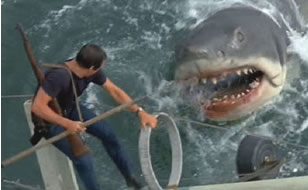
“Middleton spoke into the microphone: “Something is going on, ladies and gentlemen, but we don’t know exactly what. All we know for sure is that Jim Prescott went swimming, and then suddenly a man on a boat out there saw something. Now Police Chief Brody is trying to get the boy to come ashore as fast as possible. It could be the shark, but we just don’t know.” Hooper put the boat in reverse, to back away from the waves. As he looked off the stern, he saw a silver streak moving in the gray-blue water. It seemed part of the wave-motion, but it moved independently. For a second, Hooper did not realize what he was seeing. And even when the realization struck, he did not see the fish clearly. He cried, “Look out!” “What is it?” yelled Brody. “The fish! Get the kid out! Quick!” The boy heard Hooper, and he tried to run. But in the chest-deep water his movements were slow and labored. A swell knocked him sideways. He stumbled, then stood and leaned forward. Brody ran into the water and reached out. A wave hit him in the knees and pushed him back. Middleton said into the microphone, “The man on the boat just said something about a fish. I just don’t know if he means a shark.”
Peter Benchley (8 mei 1940- 11 februari 2006) Roy Schneider als Martin Brody in een scene uit de film uit 1975
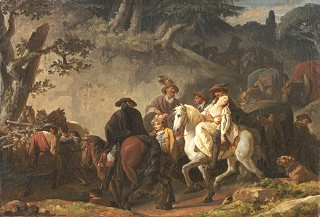
“Il aurait encore bien voulu m’enseigner la langue latine; c’eût été autant d’argent épargné pour lui; mais, hélas! le pauvre Gil Perez! il n’en avait de sa vie su les premiers principes; c’était peut-être (car je n’avance pas cela comme un fait certain) le chanoine du chapitre le plus ignorant: aussi j’ai ouï dire qu’il n’avait pas obtenu son bénéfice par son érudition; il le devait uniquement à la reconnaissance de quelques bonnes religieuses dont il avait été le discret commissionnaire, et qui avaient eu le crédit de lui faire donner l’ordre de prêtrise sans examen. Il fut donc obligé de me mettre sous la férule d’un maître: il m’envoya chez le docteur Godinez, qui passait pour le plus habile pédant d’Oviédo. Je profitai si bien des instructions qu’on me donna, qu’au bout de cinq ou six années, j’entendis un peu les auteurs grecs et assez bien les poètes latins. Je m’appliquai aussi à la logique, qui m’apprit à raisonner beaucoup. J’aimais tant la dispute, que j’arrêtais les passants, connus ou inconnus, pour leur proposer des arguments. Je m’adressais quelquefois à des figures hibernoises qui ne demandaient pas mieux, et il fallait alors nous voir disputer! Quels gestes ! quelles grimaces! quelles contorsions! Nos yeux étaient pleins de fureur, et nosbouches écumantes; on nous devait plutôt prendre pour des possédés que pour des philosophes. Je m’acquis toutefois par là, dans la ville, la réputation de savant. Mon oncle en fut ravi, parce qu’il fit réflexion que je cesserais bientôt de lui être à charge. Or ça, Gil Blas, me dit-il un jour, le temps de ton enfance est passé. Tu as déjà dix-sept ans, et te voilà devenu habile garçon: il faut songer à te pousser. Je suis d’avis de t’envoyer à l’université deSalamanque: avec l’esprit que je te vois, tu ne manqueras pas de trouver un bon poste. Je te donnerai quelques ducats pour faire ton voyage, avec ma mule qui vaut bien dix à douze pistoles; tu la vendras à Salamanque, et tu en emploieras l’argent à t’entretenir jusqu’à ce que tu sois placé."
Alain-René Lesage (8 mei 1668 – 17 november 1747) François André Vincent schilderde de ontvoering van Donna Mencia van Mosquera, 1777-1781 De jonge Gil de Blas hier in het midden, voor het wiite paard met Donna Mencia.
We have done with dogma and divinity, Easter and Whitsun past, The long, long Sundays after Trinity, Are with us at last; The passionless Sundays after Trinity, Neither feast-day nor fast.
Christmas comes with plenty, Lent spreads out its pall, But these are five and twenty, The longest Sundays of all; The placid Sundays after Trinity, Wheat-harvest, fruit-harvest, Fall.
Spring with its burst is over, Summer has had its day, The scented grasses and clover Are cut, and dried into hay; The singing-birds are silent, And the swallows flown away.
Post pugnam pausa fiet; Lord, we have made our choice; In the stillness of autumn quiet, We have heard the still, small voice. We have sung Oh where shall Wisdom? Thick paper, folio, Boyce.
Let it not all be sadness, Not omnia vanitas, Stir up a little gladness To lighten the Tibi cras; Send us that little summer, That comes with Martinmas.
When still the cloudlet dapples The windless cobalt blue, And the scent of gathered apples Fills all the store-rooms through, The gossamer silvers the bramble, The lawns are gemmed with dew.
An end of tombstone Latinity, Stir up sober mirth, Twenty-fifth after Trinity, Kneel with the listening earth, Behind the Advent trumpets They are singing Emmanuel's birth.
Bestrafe mich mit keinem Tadel, Daß deine Schooß mein Herze lieb gewinnt, Denn der Magnet forscht mit der Nadel, Bis er den Mittelpunkt ergründt. Ein Schäfchen grast in Tal und Auen, Wo Schatten ist: Mein Herze will das deine schauen, Drum such ist es, da wo du offen bist.
Was frag' ich denn darnach!
Was frag' ich denn darnach! Wenn du mich nicht wilst lieben? Das kan mich nicht betrüben / Ich weiß / was Daphnis sprach: Wird gleich der Chloris gunst geringer / Ist doch die gantze welt voll solcher dinger. Was frag' ich denn darnach!
Ich bin so gut als du; Du must es auch entbehren / Was ich dir kan gewähren. Schleuß nur dein hertze zu! Meins hat dich schon vorlängsten ausgejaget; Wer weiß / wen noch der schimpff am ärgsten plaget. Ich bin so gut als du!
Ich spitz' mich schon darauff / Wie es dich wird gereuen. Wie werd ich mich erfreuen / Wenn dir hüpfft keiner auff. Wenn du must welcke reibgen schaben / Und flederwisch' am marckte feil wirst haben. Ich spitz' mich schon darauff.
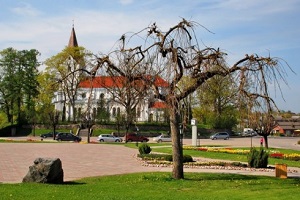
Johann von Besser (8 mei 1654 – 10 februari 1729) Johanneskerk in Saldus (Frauenburg)
Uit: Stina Becomes a Farmer's Wife (vertaald door Sally Ryan)
“For a moment the owner of the cart peered at her from the corner of his eye and looked as if he were going to say something. But when his guest did not by the faintest sign reveal any inclination toward conversation or friendliness, and when he saw her staring straight ahead, crowding as far as possible away from him into the opposite corner of the seat, he sighed loudly, and exclaimed, "Well, well, begosh ye–hm, hm!" He stopped for a moment, wiped the perspiration from his forehead, reached for his pipe, stuffed it from a bladder-pouch, lighted it, touched the fat whitemaned sorrels lightly with the whip, and with a "Gidap!" made them start an easy trot. Always the same white road, edged by grass and plantain leaves covered with a thick layer of dust. Always the same stubbly fields, unending stretches in woodless regions, interrupted only by the square of some solitary farmhouse, or by a cottage half veiled by the poplar row around the garden. Here and there a dried-out pool with its cracked, wrinkled, and hard clay bottom bore witness to the monstrous drought of the summer. "It sure is mighty hot," sighed the farmer after they had ridden quite a distance. Stina nodded, continuing to stare straight ahead. The man could only see the profile of her nose move a bit. Again he was silent for a while before making a new attempt to exchange ideas with her. "The crop got in very well this year. There was nothing to complain about. For the weather was right steady. But–eh–the grain don't weigh much, and we got a mighty big pile o' chaff." These reflections awakened so much interest in Stina that she turned half toward the farmer, and murmured, "The hay wasn't any good either."
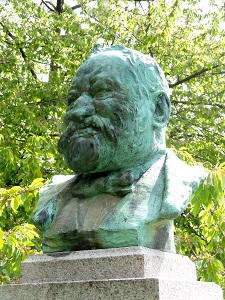
Sophus Schandorph (8 mei 1836 - 1 januari 1901) Borstbeeld in Kopenhagen
“Its peculiar shape caused people to stare at it abstractly, and once at a cocktail party one of the guests said, “Say, that’s funny. Did you ever notice that big question mark on your wall?” “It’s only a crack,” Tom replied. “But why should it be in the form of a question mark?” “It’s just coincidence.” “That’s funny,” the guest said. Tom and Betsy assured each other that someday they would have the whole wall replastered, but they never did. The crack remained as a perpetual reminder of Betsy’s moment of extravagance, Tom’s moment of violence, and their inability either to fix walls properly or to pay to have them fixed. It seemed ironic to Tom that the house should preserve a souvenir of such things, while allowing evenings of pleasure and kindness to slip by without a trace. The crack in the living room was not the only reminder of the worst. An ink stain with handmarks on the wallpaper in Janey’s room commemorated one of the few times Janey ever willfully destroyed property, and the only time Betsy ever lost her temper with her and struck her. Janey was five, and the middle one of the three Rath children. She did everything hard: she screamed when she cried, and when she was happy her small face seemed to hold for an instant all the joy in the world. Upon deciding that she wanted to play with ink, she carefully poured ink over both her hands and made neat imprints on the wallpaper, from the floor to as high as she could reach. Betsy was so angry that she slapped both her hands, and Janey, feeling she had simply been interrupted in the midst of an artistic endeavor, lay on the bed for an hour sobbing and rubbing her hands in her eyes until her whole face was covered with ink. Feeling like a murderess, Betsy tried to comfort her, but even holding and rocking her didn’t seem to help, and Betsy was shocked to find that the child was shuddering. When Tom came home that night he found mother and daughter asleep on the bed together, tightly locked in each other’s arms. Both their faces were covered with ink. All this the wall remembered and recorded.“
"Bei Thor und seinen Blitzen", rief Chlodwig, König der Franken, und faßte nach seinem Zauberamulett. "Der heilige Mann in Reims soll seinen Krug wiederhaben! Ich werde doch nicht so töricht sein und mit seinem Christengott Streit anfangen". "Gelobt sei Jesus Christus", antwortete der Bote. Ihn hatte der Bischof Remigius von Reims in die Königspfalz nach Soissons, wo der Heerkönig der Franken Hof hielt, geschickt, damit er Chlodwig Vorhaltungen mache. Dessen wilde Krieger hatten wieder einmal im eroberten Gallien Kirchen geplündert und kostbare Gottesdienstgeräte weggeschleppt, darunter auch einen Krug von wunderbarer Größe und Schönheit. Jetzt war dieser Krug bei der noch unverteilten Beute in Soissons. „Wenn das Los mir jenen Krug zuspricht, werde ich erfüllen, was dein Bischof wünscht", versprach Chlodwig. Unverzüglich befahl der Frankenherrscher seine Freunde und Gefolgsleute zu sich. Er führte sie in den Raum, wo die Beute der letzten Kriegszüge aufgestapelt war. Es war Brauch, diese Dinge gleichmäßig unter den Mächtigen zu verteilen. „Tapfere Krieger“, sprach Chlodwig, "ich bitte euch, weigert euch nicht, mir außer meinem Beuteanteil noch jenes Gefäß zu geben." "Ruhmreicher König" war die Antwort, „tue, was dir gut erscheint!" So stimmten .alle zu, nur ein rothaariger Graf ... rief „Wieso willst du besser sein als wir anderen? Dir steht nur zu, was das Los bestimmt, nichts sonst!" Mit diesen Worten hob er die steinerne Streitaxt auf und schlug auf den Krug ein, ohne ihn zu zerstören. König Chlodwig tat, als mache ihm dieser Vorfall nichts aus. Er bewahrte aber die Kränkung tief in seiner Brust. Der Bote indes wurde mit dem Krug zu Remigius, dem mächtigen Bischof in der alten Römerstadt Reims, entlassen.“
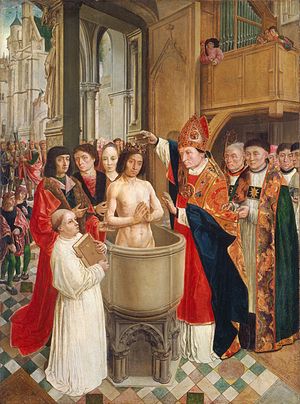
Otto Zierer (8 mei 1909 – 5 maart 1983) Clovis laat zich dopen door de meester van Saint-Gilles, rond 1500 (Geen portret beschikbaar)
“Na een korten strijd doofde de vonk weer uit en dan gaf zij dien glimlach af die door merg en been ging. Als ik te lang aandrong werd zij bang. Neen, het verleden bestond voor haar niet meer. Geen Krist, geen kinderen, alleen nog maar kapok pluizen. Eén ding spookte haar nog door het hoofd, namelijk dat een laatste kleine hypotheek op een van hare huizen nog niet afbetaald was. Wilde zij dat sommetje eerst nog bijeenscharrelen? Mijn brave zuster sprak over haar, waar zij bij zat, als over iemand die afwezig was. - Zij heeft goed gegeten. Zij is erg lastig geweest vandaag.’ Toen zij niet meer pluizen kon zat zij nog een tijdlang met haar blauwe knokkelhanden parallel op haren schoot of uren lang krabbelend aan haren zetel alsof het pluizen nog nawerkte.Zij onderscheidde gisteren van morgen niet meer. Beide beteekenden nog slechts ‘nu niet’. Kwam het doordat haar gezicht verzwakte of doordat zij ten allen tijde door kwade geesten bereden werd? In ieder geval wist zij niet meer of het dag of nacht was, stond op als zij liggen moest en sliep als zij had moeten praten. Als zij zich vasthield aan muren en meubelen, dan kon zij nog wat loopen. 's Nachts, als allen sliepen, stond zij op, sukkelde tot in haren zetel en begon kapok te pluizen die er niet was, of zocht zoo lang tot zij de koffiemolen te pakken kreeg, als was zij van plan voor een of anderen medestander koffie te zetten. En steeds die zwarte hoed op haren grijzen kop, ook bij nacht, als gereed om uit te gaan. Gelooft gij in hekserij? Eindelijk ging zij liggen en toen zij gelaten die hoed liet afnemen wist ik dat ze niet meer zou opstaan.”
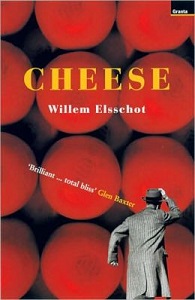
Willem Elsschot (7 mei 1882 – 31 mei 1960) Cover Engelse vertaling
Uit:Het ijzig hart (Vertaald door Mia Buursma en Ans van Kersbergen)
“…zij wist niet dat ik de verkeerde zoon was, de broer die nooit de definitieve beslissing zou nemen, maar ook niet dat ik haar enige getuige was, de enige die haar had gezien, die zich haar naderhand kon herinneren, en toen werd er op de deur geklopt en er kwam iemand binnen met de koffie en het water, hij zette het blad op de tafel en vertrok, en ik merkte dat ik hardop een grapje maakte, maar goed dat het Marivi niet was, ze glimlachte, tussen haar middelste boventanden zat een spleetje, net als bij mijn moeder, ik stond al doodsangsten uit, voegde ik er aan toe, en ze begon te lachen, als ze lachte was ze nog veel mooier, en ik voelde me bijna trots dat ik haar aan het lachen had gebracht, voordat ik me afvroeg wat ik op het spel zette, wat er met me aan de hand was, wie ben je, herinnerde ik mij, waarom heb je contact met me gezocht, waarom was je op de begrafenis van mijn vader, kortom, ging zij verder op de zachte, precieze toon van de zakenvrouw die eraan gewend is dat haar cliënten proberen haar te versieren en dat efficiënt wil afwimpelen, dat is de reden waarom ik contact met u heb gezocht, ik begrijp uiteraard dat dit een delicate kwestie is en dat u op dit moment wellicht nog niet helemaal in de stemming bent om een beslissing te neen, maar het heeft niet zoveel haast, ik zou u alleen willen vragen, in uw eigen belang, er aan te denken...'
»Du darfst nicht träumen.« Das waren die Worte ihrer Lehrerin, der Maestra. »Du musst lernen, deine Gedanken zu lenken und die Gefühle zu beherrschen. Sei kühl wie der Tau und ebenso schön.« Kassandra Karfax schüttelte den Kopf und ihr Schatten tat es ihr gleich. Sie spürte das palastähnliche Haus ihrer Familie in ihrem Rücken, als sei es ein lebendiges Wesen, das lauerte, auf sie wartete. Es war voll von geschäftigen Menschen, zu jeder Tageszeit und Nachtstunde wurden dort redselig Geschäfte abgeschlossen, heimliche Pläne geschmiedet und zwielichtig Intrigen gesponnen. Ihr Vater, den man den Arxiduc nannte, war ein mächtiger Mann, der die Fäden der Welt in seinen Händen hielt. Kassandra wusste, was das für sie bedeutete. »Einmal wirst du das Herz dieses Hauses sein und du wirst schlagen, damit es am Leben bleibt. Du wirst über all das hier gebieten.« Das Mädchen strich über das Metall in ihrer Hand. Schwer lag die Silbermünze zwischen ihren Fingern. So eisighell und doch so schimmerndes Mondlicht am Tage. Sie seufzte. Gerade einmal dreizehn Jahre war sie alt. Sie wollte nicht das Herz des alten Hauses sein, das sich mit seinen verschlungenen Säulengängen und Türmen wie ein Palast an die Felsen über dem unendlich blauen Meer krallte, während unten eine tosende Brandung gegen die zackigen Klippen schlug, so wild und so ungestüm, dass selbst die bunten afrikanischen Gischtgeister diesen Ort mieden.“
“Een keer kreeg ik een felle beet van niets anders dan een grote duizendpoot, wel zes duim lang. Geen wonder: midden in de stad en toch midden in de natuur! Zo waren we, niets anders. Soms lag je languitgestrekt onder je dertig centimeter hoog gelegen huis, plotsklaps oog in oog met een aan een ander vastgenaaide hond, die grommend z'n kaakwerk naar je opensperde. Of, het allermooist: je vond het nest met eieren van een verwilderde kip, wilde die leegplukken en kwam werkelijk onder de luizen te zitten. Het immense genot van zo'n woningonderste laat zich dus verder raden, vooral bij het terugkruipen, hetgeen je vaak niet anders kon dan languit achteruit schuivend, niet op de laatste plaats vanwege allerlei verzakkingen in de vloer en ongelijkmatigheden in het aardoppervlak. Bij sommige erven had je twee rijen loodswoningen, langa-lo-oso, tegenover elkaar staan met bij elke rij de bijbehorende praalgalerij, alwaar veelal de was gedaan werd of de roddel zich dag en nacht voortwoekerde. In het midden van het erf, ook gebruikelijk, een lange, niet erg diepe goot, met aan het hoofd ervan een waterkraan, waar iedere erfbewoner z'n water vandaan kraande. Heel vroeger stond zo'n ding er niet en dan had je eenvoudigweg van die stenen erfputten, hetzij voor of achter op het erf. En owee als je dat kostbare water stond te vermorsen! Sommige bewoners hielden zich uiteraard niet aan de ongeschreven regels en dan stond je altijd weer in een modderpoel, met opgestroopte broekvoet [broekspijp] (als je zo'n lange broek überhaupt mocht dragen of kon staan betalen). Anderen kwamen van heinde en ver 's nachts water stelen, reden waarom de kraan op slot ging met een houten kastje rondom. Dat was tevens om al die mensen die het niet konden betalen netjes van de kraan af te houden.”
She dances on the graves, with grace With her rogue memory. WE KNOW WE CAN’T HOLD ON TO ANYTHING. She Calls up the croaked, the forgotten, them With their knives and demands. Love Gone out, anger gone cold, the wasted times. What Is the thought that we are mortal set against THE GREAT IN VAIN? She dares to think it Underground where everything lives. How Is it possible that things the way they are Are dancing?
Vertaald door David Constantine
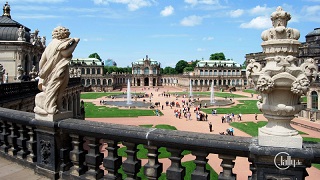
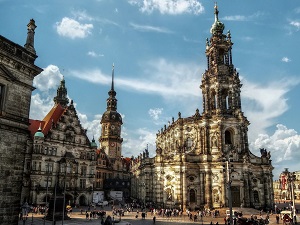
Volker Braun (Dresden, 7 mei 1939) De Zwinger in Dresden
I. My first thought was, he lied in every word, That hoary cripple, with malicious eye Askance to watch the working of his lie On mine, and mouth scarce able to afford Suppression of the glee, that pursed and scored Its edge, at one more victim gained thereby.
II. What else should he be set for, with his staff? What, save to waylay with his lies, ensnare All travellers who might find him posted there, And ask the road? I guessed what skull-like laugh Would break, what crutch 'gin write my epitaph For pastime in the dusty thoroughfare,
III. If at his counsel I should turn aside Into that ominous tract which, all agree, Hides the Dark Tower. Yet acquiescingly I did turn as he pointed: neither pride Nor hope rekindling at the end descried, So much as gladness that some end might be.
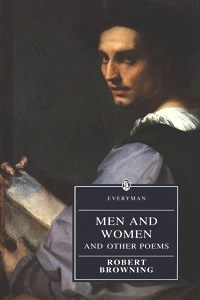
Robert Browning (7 mei 1812 – 12 december 1889) Cover
O het tranen-vergieten is geen zonde, Gepleegd aan 's werelds mooi somber voortglijden Zacht door de eindeloze gang der tijden... O wie nog tranen, tranen vergieten konde...
Hij zou de wrede, wrede wonde op wonde, Die dorsten mensjes in het hart te snijden Hem, die wilde allen in zich zelf verblijden, Helen door tranen. Tranen Zijn Geen Zonde.
Want wat zijn tranen, tranen als een teerheid, Hoog-heerlijk in zich zelf gebrokene emotie Als 't mannen-lijf niet langer kan hoog-trots zijn?
O Laat ons allen vallen in devotie, Als Iets, wat grandiooslijk week ter-nêer leit, Een mens nooit kàn maar wou toch wel een Rots zijn.
Shelley’s sterven
Voorover, in het boot-ruim, lang-uit lag Shelley en las. De wilde golven sloegen Luider en luider langs de zijden, droegen Hoog-op het broze vaartuig, met geklag
Van schril zoevend gieren door want en stag, Die knerpten. Hoorde-i niet, hoe de andren joegen Hierheen en daarheen, zuchtten, riepen, kloegen? Hij las maar, las, totdat hij niets meer zag ...
Toen stond hij op, verwonderd: neevlen drongen Overal aan, en plots ... een donker blok Komt dreigend door die misten opgesprongen ... Hij wankelt door de donderende schok ...
"Is dat de Dood? ontvang me ..." en willig glijdend Valt hij de diepte in, zwijgend, de armen breidend.
Evoë
Ik ga mijn leven in orgieën door Van vol muziek en vreugden onuitspreeklijk, Daar 'k ál smart in losbándigheid verloor, Want dít lijf en mijn trots zijn onverbreeklijk;
Wijl achter me aan een óp-zich-drommend koor, Heel 't schone lijf bewegend wild en weeklijk, Luid-feestende optocht, danst en ik dans voor - O, mijn los-voetigheid is zéér aansteeklijk.
Hoor, hoor naar mij, gij allen die daar gaat Met koud gelaat en stappen zo bedachtig:
Brand op in gloed het leven dat u slaat, U zelf óp-slaánd in vlammen hoog en prachtig.
Droom wég in weelde: ijdel is alle daad - Over ons allen koom het Niet-zijn machtig.
dat de meerkoet pas opstijgt na een rotspurt op water terwijl zo’n jubelende leeuwerik hop! in een keer loodrecht de hemel inschiet
dat de kolibrie zich t leplazarus klapwiekt terwijl zo’n langbenige ooievaar lui in een thermiekbel zijn vleugels strekt en zweeft
dat wij onze huidstulpingen strak sporten terwijl zo’n draakje uit borneo flap! zijn huidplooien uitvouwt tot vleugels en vliegt
Tekening
daar groei jij uit het licht je blik je handen je kleuren wit uit wit
je ogen sluiten geen ogen sluiten geen ogen in
je handen geven geen handen geven geen handen af
handen af ogen in daar groei jij uit het licht
Hélène Gelèns (Bergschenhoek, 6 mei 1967)
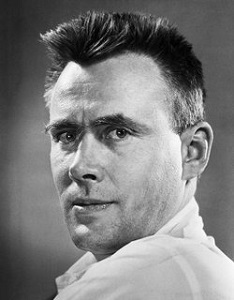
De Nederlandse dichteres en schrijfster Sasja Janssen werd geboren op 6 mei 1968 in Venlo. Zie ook alle tags voor Sasja Janssen op dit blog. Zie ook alle tags voor Sasja Janssen op dit blog.
De zomer was stuk
De zomer was stuk en ik bracht mijn zonden naar de kleermaker, ik twijfelde ijzergaren of rijggaren, hij hielp mij niet, ik had schuld hoe kon hij zoiets vergeten.
De kleermaker pakte mijn zonden uit, in het kale licht kronkelden ze tot ik medelijden met ze kreeg net zoals met de varens die zichzelf van kant maakten net zoals met jou in het woud van Aokigahara.
Het sneeuwde geel en overspel kon niet worden geregen maar vervilt met heet water, zeep, azijn, zijn viltnaald in mijn geil, deze man kort, zijn geheugen bot prees splijtsteken, festonsteken, bladsteken voor wat door en door was, de naden verduveld.
Achter zijn gordijn van kralen kleedde ik me uit voor mijn zonden me weer te grazen namen en daar waar mijn jurk om me heen viel in een kring van mishandeld katoen stak hij met grote halen door mijn vlees de zomen van mijn geslacht in elkaar gedraaid als te heet gewassen wol.
Ze laat een ijswit mannenhemd
Ze laat een ijswit mannenhemd aan een spijker achter, een trui die smerig grijs je navel dreigt, schoenen om een blote wreef, de kalkmuur een aalmoes voor straks alleen
komt ze vertrek zeggen, liegt dag dag nirvana, waarom zich dan een laatste keer laten dekken als een tafel zonder gast, een likkepot op het katoen, haar vingers die er niet meer van pikken.
Ze spreidt naar het kleine, kleinere, aanminnige allerbinnenste waar je ziet hoe verlaten je liefde is.
Sasja Janssen (Venlo, 6 mei 1968)
De Chileens-Amerikaanse toneelschrijver, essayist, dichter, novellist, cartoonist Ariel Dorfman werd op 6 mei 1942 in Buenos Aires geboren. Zie ook alle tags voor Ariel Dorfman op dit blog.
Uit:Feeding on Dreams: Confessions of an Unrepentant Exile
“Call it a gift from Chile to the nation that did so much to destroy our democracy, the nation that was also mine, the America where I thrive and teach and write, where my grand daughters, my Isabella and my Catalina will grow. We Americans – yes, we – received that day all of a sudden the curse and blessing of being able to look at ourselves in a way habitually denied to most of our citizens, the chance to distressingly imagine ourselves as part of the rest of humanity. Never before had they – yes, they – been ripped apart to this degree by the ravages of guilt and rage, the difficulties of memory and forgiveness, the uses and abuses of power, the true meaning of freedom and responsibility. And consequently never were Americans more tempted to apply amnesia to their yesterdays and innocence to their tomorrows, never was it more perilous and easier to sweetly, vindictively rid themselves of the complexity and contradictions of their newly naked predicament. Chile, for all its imperfections and failures, found a way of responding to the terror inflicted on us (yes, us, we Chileans), a path of peace rather than war, a path of understanding rather than retribution. A model that the United States, wrestling with the mirage of its imperial ambitions, did not have the immediate wisdom to follow. And yet the complacent invulnerability of this nation where I now abide has been fractured forever, as the gash in that site at Ground Zero reveals. We citizens will have to share, whether we wish to or not, the precariousness and uncertainty that is the daily lot of the majority of this planet’s other inhabitants. A crisis of this magnitude is one of those opportunities for regeneration and self-knowledge that are granted, from time to time, to certain nations. It can lead to renewal or destruction, used for aggression or for reconciliation, for vengeance or for justice, for the militarization of a society or its humanization."
Ariel Dorfman (Buenos Aires, 6 mei 1942)
De Oostenrijkse dichter, schrijver, essayist en vertaler Erich Fried werd geboren op 6 mei 1921 in Wenen. Zie ook alle tags voor Erich Fried op dit blog.
Achtung auf den Hintergrund
Kernkraft tut not sie bildet den Hintergrund unserer Energiewirtschaft, unseres heutigen Lebens.
Was zuerst nottut kann zuletzt dann die letzte Not sein. Wenn Atomtod das Letzte ist, was kann das Vorletzte sein?
Und schlagen wir heute Nicht schon den breiten Weg ein, der vom Fünft- und Viertletzten hin zum Drittletzten führt?
Beschriebene unbeschriebene Liebe
Ich klage:
Die Liebe hat oft und oft den Tod beschrieben aber der Tod nicht die Liebe und das ist ungerecht. Der Tod sagt: Ich habe die Liebe immer wieder beschrieben nur ihr könnt meine Schrift nicht lesen Das ist nicht meine Schuld.
Strauch mit herzförmigen Blättern (Tanka nach altjapanischer Art)
Sommerregen warm: Wenn ein schwerer Tropfen fällt bebt das ganze Blatt.
So bebt jedes Mal mein Herz wenn dein Name auf es fällt.
Uit:The Hunting Gun(Vertaald door Michael Emmerich)
“All right, Uncle—I’ll still use this term of affection, as I always have—here goes: I know about what happened, about you and Mother. I learnt the whole thing the day before she died. Because I read her diary without her knowing. I can’t even imagine how awful it would have been if I’d really had to say those words. I probably couldn’t have got a single word out, no matter how hard I tried to stay calm. I was only able to do it because this is a letter. Not because I’m shocked, or scared. I just feel sad. So sad my tongue goes numb. Not sad about you, or about Mother, or myself. It’s everything, all around me—the blue sky, the October sunlight, the bark of the crape myrtle, bamboo leaves rustling in the wind, and the water and the stones and the earth, all of nature, all I see, takes on this sad colouring the second I open my mouth to speak. Ever since I read Mother’s diary, I’ve started noticing that maybe two or three times a day, or sometimes even five or six, the whole natural world, everything around me, is suddenly awash with a sad colour, as if the sun is setting. All I have to do is remember you and Mother and my world is completely transformed. Did you know, Uncle, that in addition to the thirty or so colours such as red and blue that you find in a paintbox, there is a separate sad colour, and that this sad colour is something you can really see? What happened between you and Mother has shown me that there is such a thing as love no one blesses, love that must not be blessed. Only the two of you, no one else, could ever know how much in love you were. Not Aunt Midori, not me, not any of our relatives. None of our neighbours, not the people across the street, not even your best friends knew—and they couldn’t. Now that Mother has died, only you know.”
I want to send a dream far from here. The swallows fly high there. Perhaps your wheat ripens and through the yellow oceans of rye a slow humming sound of bread can be heard. This is a world of water and stones, my hand is without bread and I count its lines.
Vertaald door Lars Nordstrom
Home Village
In the gardens of the home village, where earthworms loosen the soil, the columbine still grows and grandfather clocks cluck old-fashionedly in each house. Smoke rises from cottages like sacrificial pillars and to those who come from afar, from the hard toils of the world's oceans and the brothel alleys of Barcelona, this peaceful village is like a silent lie. A lie one would willingly hang on to, a lie for which one would trample down all evil truths.
Nebel, stiller Nebel über Meer und Land. Totenstill die Watten, totenstill der Strand. Trauer, leise Trauer deckt die Erde zu. Seele, liebe Seele, schweig und träum auch du.
Das Nasobem
Auf seinen Nasen schreitet einher das Nasobem, von seinem Kind begleitet. Es steht noch nicht im Brehm.
Es steht noch nicht im Meyer. Und auch im Brockhaus nicht. Es trat aus meiner Leyer zum ersten Mal ans Licht.
Auf seinen Nasen schreitet (wie schon gesagt) seitdem, von seinem Kind begleitet, einher das Nasobem.
Christian Morgenstern (6 mei 1871 – 31 maart 1914) Zelfportret, Berlijn 1895
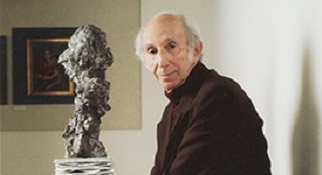
De Nederlandse dichter Simon Mulderwerd geboren in 1986. Mulder woont in Amsterdam, studeerde vergelijkende en historische taalwetenschap te Leiden en wijsbegeerte te Amsterdam. Hij schrijft gedichten, waarbij hij gebruikmaakt van de vaste vorm. Daarnaast legt hij zich toe op de voordrachtskunst, onder meer met een dramatische voordracht, een sinds begin vorige eeuw uitgestorven genre. Mulder is voorts oprichter van Stichting Feest der Poëzie, waarmee hij voordrachtavonden op exclusieve plaatsen organiseert. Daarnaast verzorgt hij de uitgave van 'Avantgaerde', een geheel met de hand gezet, gedrukt en gebonden tijdschrift voor de dichtkunst. In 2008 stond hij als finalist op het NK Poetryslam.
De mannen van de geest
De mannen van de geest, die nacht aan nacht Steeds tussen stapels boeken zijn gezeten De mannen die, soms bladerend verbeten, Alsof in boeken wat zij zochten wacht,
En dan weer kortaf krassend met hun pennen, Daar kalend en uitdijend in hun stoel De jaren tellen – en voor welk doel? Zij denken het heelal te kunnen mennen
Met wet en stelsel op te kunnen tuigen En jagen op de sterren in hun vlucht; De mannen, die nog met hun laatste zucht De wereld voor zich willen laten buigen
De mannen, die in kamertjes doorrookt Elkaar bestrijden om een onnut feit En zich verheugen om een nietigheid – Het spookt om hen zoals het in hen spookt
Als men hen ziet, ziet men hen ontevreden; De mannen van de geest, die nacht aan nacht Steeds vrezen dat hun waarheid wordt ontkracht: Tot deze orde ben ik toegetreden.
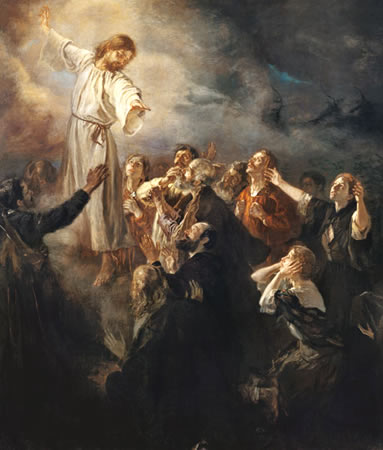
Als Christus von den Todten auferstanden, Erscheint er seinen trauernden Gefährten, Die froh und schnell den Meister, den Verklärten, Den eingebornen Gottessohn erkannten.
»Euch«, spricht der Herr, »erwählt' ich zu Gesandten: »Mein ist die Macht im Himmel und auf Erden; »Wer an mich glaubet, der soll selig werden. »Geht hin und lehrt und tauft in allen Landen!«
Jetzt segnet er noch einmal seine Treuen, Zum großen Bund der Liebe sie zu weihen; Dann trägt ihn eine Wolke himmelwärts.
Und betend sinken Alle hin im Staube; Mit stiller Kraft vollendet sich der Glaube, Der heil'ge Geist glüht siegend durch das Herz.
Theodor Körner (23 september 1791 - 26 augustus 1813) Hofkirche Dresden. Theodor Körner wird geboren in Dresden
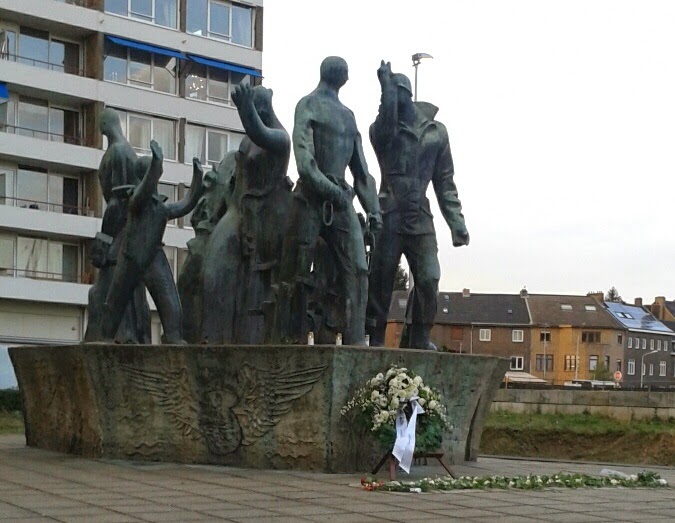
Bevrijdingsmonument in Maastricht, gemaakt door Charles Eyck
Jonge vrede
Kinderen! Wie is klein en wie is groot? Kinderen kunnen net zo dood als grote mensen en die zijn niet eens zo groot als ze elkaar verwensen zonder een grote reden
Want zo was het zestig jaar geleden. Om elkaar beter te bezeren en een goede les te leren kochten ze betere geweren. Maar wat kan een kapotte en dode nog leren? Niets dan te verrotten.
Dus houd van elkaar! Want nijd of haat komt altijd veel te vroeg maar echte liefde nooit te laat. Er bestaat geen reden om je stuk te vechten.
I’m nearly twenty-two years old. Thus Christ too might have appeared in the autumn at the same age when he still had no beard, he was blond and maidens dreamt of him nightly!
The Bull
Hitherto, I lived the throbbing life of a youthful bull bored in the noonday heat among pregnant cows in the field, running around in unending circles declaring his powers and waving amid his game a foaming flag of saliva. He shakes his head and turns with the splitting, thick air on his horns and behind his stamping hooves the tormented grass and earth spatters widely about the terrified green pasture.
And still I live like a bull, but a bull that suddenly stops in the heart of the meadow singing with crickets, stops nostrils lifted and sniffing the air. For he senses that far in the mountain forests the roebuck too stops and listens and lightly flees with the wind, the hissing wind that carries the stench of a distant wolf pack -- thus the bull snorts, but he will not escape like the deer and considers that when his time is to come, he will fight and fall and his bones will be scattered about in the district by the horde -- and slowly and sadly the bull bellows through the fat air.
Thus I will struggle and thus I will fall when the hour is come, and the district will treasure my bones for reminders to future ages
Vertaald door Thomas Land
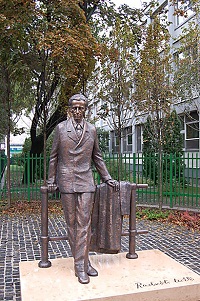
Miklós Radnóti (5 mei 1909 – 9 november 1944) Standbeeld in Boedapest
Mijn kamer bevindt zich op de elfde verdieping. Als ik vanaf mijn balkon naar beneden kijk, loopt er tussen oude platanen door, op enorme betonnen benen, een bovengrondse metro. Gewoonlijk stapt er niemand in of uit, of misschien een man of vijf, meer niet.
Tegenover me verheft zich een reusachtige schoorsteen; beroet, beschimmeld, of hij ook rookt is nog de vraag. Daarnaast, aan deze kant van de haven, staat een silo van ik weet niet hoeveel ton. Duidelijk al tientallen jaren niet in gebruik, leeg. Omdat afbreken veel duurder moet zijn, is hij niet gesloopt, maar blijven staan.
De haven wordt gevormd door een lange en rechthoekige watervlakte, waarvan het ene eind op zee uitkomt. Achter dikke rijen hijskranen gaat ’s avonds de zon onder. Aan de andere kant van de rechthoek met uitzicht op de wal, kijk ik iedere avond vanaf mijn balkon of deze keer de zon in de hijskranen zal blijven hangen.
Voor mij uit aan de verste kant van het water ligt een groot schip met meerdere verdiepingen, glanzend wit voor anker. Tussen loodsen en metalen constructies door kan ik het net zien. Maar als ’s morgens de zon opkomt en het schip als eerste beschijnt straalt het als een nieuwe dag. Als een belofte. Als een sensatie. Als een verwachting.
waar ik ter wereld kom staat een geboorteboom. de zomereik waar ik op lijk staat solitair in natte weidegrond met heuphoog gras dat altijd bloeit. zijn wortels zijn als bank gegroeid
voor wie ruggensteun zoekt. ik neem hem mee om hem te laten zien dat dit ben iken hij neemt plaats op schoot. ik zeg tegen de boom dit is hem dan die ik verstoot om vrouw te zijn en om
dat ik verstikt van heimwee buiten de gewijde grond verblijf. maar als ik zijn stuifmeel snuif, weet ik weer waar te gaan om buiten adem onder die lage kronkelige tak te staan die om mij heen.
Petra Else Jekel (Arnhem, 5 mei 1980)
De Amerikaanse schrijver Morton Rhue (pseudoniem van Todd Strasser) werd geboren op 5 mei 1950 in New York. Zie ook alle tags voor Morton Rhue op dit blog.
Uit: Fame Junkies (Vertaald door Katarina Ganslandt)
„Stell dir vor, du wärst berühmt. Was siehst du vor dir? Dein Foto bei tmz.com, Perez Hilton oder anderen Promiwebseiten im Netz? Dein Gesicht auf den Titelblättern von Hochglanzmagazinen? Eine schwarze Stretchlimousine, die langsam herangleitet und vor einer Meute kreischender Fans anhält? Ein wie ein warmer Frühlingsregen auf dich niederprasselndes Blitzlichtgewitter? Hände, die dir Fotos und Papierfetzen entgegenstrecken, damit du dich darauf verewigst? Einenroten Teppich, über den du schreitest? VIP-Bereiche, zu denen du plötzlich Zugang hast? Die offenen Arme, mit denen die Welt dich empfängt? Bewunderung, Neid? Alle träumen von dir, wollen nur dich. Dich dich dich. Natürlich weißt du, dass diese Vorstellung nichts weiter als eine Illusion ist. Eine zarte Rosenblüte, die dich mit ihrem Duft verzaubert. Ohja, du weißt genau, was es bedeutet, berühmt zu sein, weil du Zeitschriften liest, fernsiehst und im Internet surfst. Dabei lassen sie dich nur die Rosenblüte sehen - nicht das große Ganze. Den mit spitzen Dornen besetzten Strauch, an dem die Blüte wächst, die sich windenden, alles erstickenden Ranken und die gierig um sich greifenden Wurzeln - all das zeigen sie dir nicht. Aber womöglich gehörst du ja zu denen, die es gar nicht so genau wissen wollen, die es vorziehen, in der Illusion zu leben. Für mich bitte nur die Blüte, danke.“
Morton Rhue / Todd Strasser (New York, 5 mei 1950)
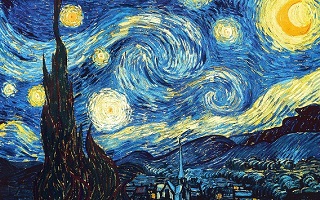
“Sous des ciels, tantôt taillés dans l'éblouissement des saphirs ou des turquoises, tantôt pétris de je ne sais quels soufres infernaux, chauds, délétères et aveuglants ; sous des ciels pareils à des coulées de métaux et de cristaux en fusion, où, parfois, s'étalent, irradiés, de torrides disques solaires ; sous l'incessant et formidable ruissellement de toutes les lumières possibles ; dans des atmosphères lourdes, flambantes, cuisantes, qui semblent s'exhaler de fantastiques fournaises où se volatiliseraient des ors et des diamants et des gemmes singulières — c'est l'étalement inquiétant, troubleur, d'une étrange nature, à la fois vraiment vraie et quasiment supranaturelle, d'une nature excessive où tout, êtres et choses, ombres et lumières, formes et couleurs, se cabre, se dresse en une volonté rageuse de hurler son essentielle et propre chanson, sur le timbre le plus intense, le plus farouchement suraigu ; ce sont des arbres, tordus ainsi que des géants en bataille, proclamant du geste de leurs noueux bras qui menacent et du tragique envolement de leurs vertes crinières, leur puissance indomptable, l'orgueil de leur musculature, leur sève chaude comme du sang, leur éternel défi à l'ouragan, à la foudre, à la nature méchante ; ce sont des cyprès dressant leurs cauchemardantes silhouettes de flammes, qui seraient noires ; des montagnes arquant des dos de mammouths ou de rhinocéros ; des vergers blancs et roses et blonds, comme d'idéaux rêves de vierges ; des maisons accroupies, se contorsionnant passionnément ainsi que des êtres qui jouissent, qui souffrent, qui pensent ; des pierres, des terrains, des broussailles, des gazons, des jardins, des rivières qu'on dirait sculptés en d'inconnus minéraux, polis, miroitants, irisés, féeriques ; ce sont de flamboyants paysages qui paraissent l'ébullition de multicolores émaux dans quelque diabolique creuset d'alchimiste, des frondaisons qu'on dirait de bronze antique, de cuivre neuf, de verre filé ; des parterres de fleurs qui sont moins des fleurs que de richissimes joailleries faites de rubis, d'agates, d'onyx, d'émeraudes, de corindons, de chrysobérils, d'améthistes et de calcédoines ; c'est l'universelle et folle et aveuglante coruscation des choses ; c'est la matière, c'est la nature tout entière tordue frénétiquement, paroxysée, montée aux combles de l'exacerbation ; c'est la forme devenant le cauchemar, la couleur devenant flammes, laves et pierreries, la lumière se faisant incendie, la vie, fièvre chaude »
George Albert Aurier (5 mei 1865 – 5 oktober 1892) Vincent van Gogh, De Sterrennacht uit 1889.
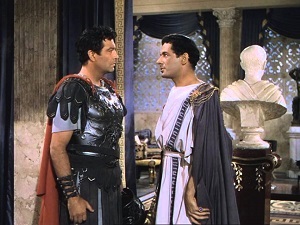
“But after a certain time he spoke, and opened his eyes; he inquired about the weather, and then about gems which the jeweller Idomeneus had promised to send him for examination that day. It appeared that the weather was beautiful, with a light breeze from the Alban hills, and that the gems had not been brought. Petronius closed his eyes again, and had given command to bear him to the tepidarium, when from behind the curtain the nomenclator looked in, announcing that young Marcus Vinicius, recently returned from Asia Minor, had come to visit him. Petronius ordered to admit the guest to the tepidarium, to which he was borne himself. Vinicius was the son of his oldest sister, who years before had married Marcus Vinicius, a man of consular dignity from the time of Tiberius. The young man was serving then under Corbulo against the Parthians, and at the close of the war had returned to the city. Petronius had for him a certain weakness bordering on attachment, for Marcus was beautiful and athletic, a young man who knew how to preserve a certain aesthetic measure in his profligacy; this, Petronius prized above everything. "A greeting to Petronius," said the young man, entering the tepidarium with a springy step. "May all the gods grant thee success, but especially Asklepios and Kypris, for under their double protection nothing evil can meet one." "I greet thee in Rome, and may thy rest be sweet after war," replied Petronius, extending his hand from between the folds of soft karbas stuff in which he was wrapped. "What's to be heard in Armenia; or since thou wert in Asia, didst thou not stumble into Bithynia?" Petronius on a time had been proconsul in Bithynia, and, what is more, he had governed with energy and justice. This was a marvellous contrast in the character of a man noted for effeminacy and love of luxury; hence he was fond of mentioning those times, as they were a proof of what he had been, and of what he might have become had it pleased him. "I happened to visit Heraklea," answered Vinicius. "Corbulo sent me there with an order to assemble reinforcements."
Henryk Sienkiewicz (5 mei 1846 - 15 november 1916) Robert Taylor (Marcus Vinicius) en Leo Glenn (Petronius) in de film “Quo vadis?” uit 1951