Naar de inhoud

Romenu

Over literatuur, gedichten, kunst en cultuur
seniorennet.beseniorennet.be

Alan Sillitoe, Annette Seemann, F. W. Bernstein, Giorgio Bassani, Bernardo Ashetu
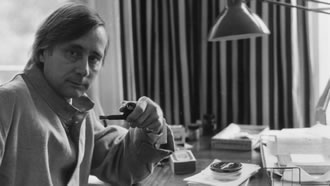
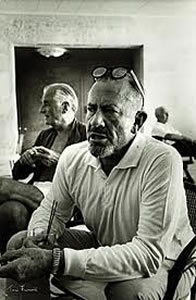
De Engelse schrijver Alan Sillitoe werd geboren op 4 maart 1928 in Nottingham. Zie ook mijn blog van 4 maart 2007  en ook mijn blog van 4 maart 2008 en ook mijn blog van 4 maart 2009 en ook mijn blog van 4 maart 2010.


Uit: The Loneliness of the Long-Distance Runner


„As soon as I got to Borstal they made me a long-distance cross-country runner. I suppose they thought I was just the build for it because I was long and skinny for my age (and still am) and in any case I didn't mind it much, to tell you the truth, because running had always been made much of in our family, especially running away from the police. I've always been a good runner, quick and with a big stride as well, the only trouble being that no matter how fast I run, and I did a very fair lick even though I do say so myself, it didn't stop me getting caught by the cops after that bakery job.
You might think it a bit rare, having long-distance cross-country runners in Borstal, thinking that the first thing a long-distance cross-country runner would do when they set him loose at them fields and woods would be to run as far away from the place as he could get on a bellyful of Borstal slumgullion-but you're wrong, and I'll tell you why. The first thing is that them bastards over us aren't as daft as they most of the time look, and for another thing I'm not so daft as I would look if I tried to make a break for it on my long-distance running, because to abscond and then get caught is nothing but a mug's game, and I'm not falling for it. Cunning is what counts in this life, and even that you've got to use in the slyest way you can; I'm telling you straight: they're cunning, and I'm cunning. If only 'them' and 'us' had the same ideas we'd get on like a house on fire, but they don't see eye to eye with us and we don't see eye to eye with them, so that's how it stands and how it will always stand. The one fact is that all of us are cunning, and because of this there's no love lost between us. So the thing is that they know I won't try to get away from them: they sit there like spiders in that crumbly manor house, perched like jumped-up jackdaws on the roof, watching out over the drives and fields like German generals from the tops of tanks.“


865730-21d20d4d8a88303b1c1addeaa29a25b0.jpg
Alan Sillitoe (Nottingham, 4 maart 1928)

Hier in 1973 


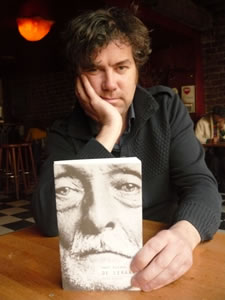
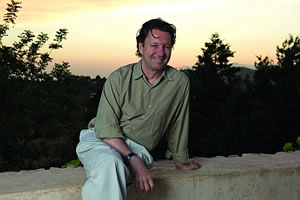
De Duitse schrijfster en vertaalster Annette Seemann werd geboren op 4 maart 1959 in Frankfurt am Main. Zie ook mijn blog van 4 maart 2009 en ook mijn blog van 4 maart 2010.


Uit: Anna Amalia - Herzogin von Weimar


“Sie wandelte sich von der charmanten jungen Rokokoprinzessin mit hohem Haarturmbau zur klassizistisch vor antiken Ruinen posierenden »Pallas Athene«, also entsprechend der Mode unterschiedlichster und für die europäische Geschichte wichtiger Epochen. Sie lebte in Zeiten des Übergangs zur bürgerlichen Gesellschaft, hielt an ständisch orien­tierten Hofzeremoniell fest, entwickelte aber gleichzeitig ein hohes Freundschaftsideal über die Standesgrenzen hinaus. Sie ignorierte die Französische Revolution soweit wie möglich und erlebte schmerzhaft 1806 den Einzug und die Plünderungen der napoleonischen Soldaten in Weimar.
Entscheidend für ihr Leben waren die menschlichen, kulturellen und politischen Beziehungen, die sie als junge Prinzessin und später als Her­zogin auch nach ihrer Übersiedlung nach Weimar und bis zum letzten Lebensjahr zu Braunschweig-Wolfenbüttel, ihrem Herkunftshof, pfleg­te. Dieser Aspekt wurde in der bislang erschienenen biographischen Literatur zu Anna Amalia nie in seiner wahren Bedeutung gewürdigt. Es sind der Braunschweiger Hof und seine kulturell orientierte, offene At­mosphäre, die Anna Amalia geprägt haben. Die Liebe zum Buch, zur Gelehrsamkeit wie zur Unterhaltung, zum Theater, zur Musik und zu den Fremdsprachen wurden in ihrer Kindheit gefördert und trugen die Herzogin lebenslang..“


 865730-a4c6492d674b5ee3fbdd2839aff193c9.jpg

Annette Seemann (Frankfurt am Main, 4 maart 1959)

De Rokokozaal in de Anna Amalia Bibliotheek


De Duitse dichter, graficus, karikaturist en satiricus F. W. Bernstein (eig. Fritz Weigle) werd geboren op 4 maart 1938 in Göppingen. Zie ook mijn blog van 4 maart 2009 en ook mijn blog van 4 maart 2010.


Wachtel Weltmacht?


Schaut Euch nur die Wachtel an!
Trippelt aus dem dunklen Tann;
tut grad so, als sei sie wer.
Wachtel Wachtel täuscht sich sehr.


Wär sie hunderttausend Russen,
hätt den Vatikan zerschussen
und vom Papst befreit ja dann:
Wachtel Wachtel Dschingis Khan!


Doch die Wachtel ist nur friedlich,
rundlich und unendlich niedlich;
sie erweckt nur Sympathie.
Weltmacht Wachtel wird sie nie!


865730-31d5abc153ea9e7d07aafcc97bc90991.jpg
F. W. Bernstein (Göppingen, 4 maart 1938)


De Italiaanse schrijver Giorgio Bassani werd geboren op 4 maart 1916 in Bologna. Zie ook mijn blog van 4 maart 2007  en ook mijn blog van 4 maart 2009 en ook mijn blog van 4 maart 2010.


Uit: Die Brille mit dem Goldrand (Vertaald door Herbert Schlüter)


„Der Nebel war so dicht, dass ich die Stimme Fadigatis hörte, bevor ich ihn selbst sah.
"Mein dummes Schmutzlieschen, wenn du nichts Schlimmeres bist!" fuhr er mit klagendem Tonfall, in dem eine manierierte Zärtlichkeit lag, fort.
"Du musst wissen, dass ich auch rein gar nichts für dich habe!"
Mit wem sprach er? Endlich sah ich ihn. In dem gelben Schein der einzigen Straßenlaterne tauchte plötzlich seine massige Gestalt auf. Ein wenig zur Seite geneigt, bewegte er sich nur langsam vorwärts, wobei er fortwährend sprach – zu einem Hund, wie ich nun feststellte.
Ein paar Meter von mir entfernt blieb er stehen.
"Also, willst du mich nun in Ruhe lassen oder nicht?"
Er sah dem Hund in die Augen und erhob den Zeigefinger zu einer drohenden Gebärde. Das Tier, eine Bastardhündin mit weißem, braungeflecktem Fell (wahrscheinlich war sie das Produkt einer Kreuzung zwischen einer Bracke und einem Foxterrier) erwiderte mit einem feuchten, angsterfüllten Blick von unten, während sie verzweifelt mit dem Schweif wedelte. Sie kroch dabei über den Kies dem Arzt vor die Füße. Im nächsten Moment würde sie sich auf den Rücken wälzen, den Bauch und die Pfoten in der Luft und sich so ganz seiner Gnade anheimgeben.“


865730-349584e4658201103175d1caf47a8854.jpg
Giorgio Bassani (4 maart 1916 – 13 april 2000)


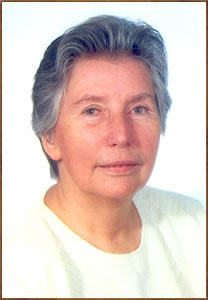
De Surinaamse dichter Bernardo Ashetu (Eig. Hendrik George van Ommeren) werd geboren in Kasabaholo op 4 maart 1929. Zie en ook mijn blog van 4 maart 2009 en ook mijn blog van 4 maart 2010.


Uit goud


Neem de zachte blâren
die hangen tussen bloemen
in glorierijke vazen
en sla de koude haak vast.

Hang 't kale touw op
en overtrek je laatste gedachte
met draden gesponnen uit goud.


Anders


Anir strandde

op een

drooggelopen zee.


Twee uitgebeten

ogen in een

omgeslagen sloep

troffen hem en

hij werd anders

naast een broze

schelp op een

drooggelopen zee

vol roepende vogels.


865730-c98e257ccb014b08e357fc961a1a082d.jpg
Bernardo Ashetu (4 maart 1929  - 3 augustus 1982)
Geschreven door Romenu om 20:41 Reageer op dit bericht
Reageer op dit bericht

Reageer op dit bericht

Een titel of je eigen website toevoegen

De blogger leest alles eerst na: je tekst verschijnt zodra die goedgekeurd is.

Ryszard Kapuściński, Léon-Paul Fargue, Kito Lorenc, Jacques Dupin, Thomas S. Stribling

De Poolse schrijver dichter en journalist Ryszard Kapuściński werd geboren in Pinsk, Polen (thans Wit-Rusland), op 4 maart 1932. Zie ook mijn blog van 4 maart 2009 en ook mijn blog van 4 maart 2010.


Uit: The Shadow of the Sun (Vertaald door Klara Glowczewska)


„People of the North. Have we sufficiently considered the fact that northerners constitute a distinct minority on our planet? Canadians and Poles, Lithuanians and Scandinavians, some Americans and Germans, Russians and Scots, Laplanders and Eskimos, Evenkis and Yakuts--the list is not very long. It may amount to no more than 500 million people: less than 10 percent of the earth's population. The overwhelming majority live in hot climates, their days spent in the warmth of the sun. Mankind first came into being in the sun; the oldest traces of his existence have been found in warm climes. What was the weather like in the biblical paradise? It was eternally warm, hot even, so that Adam and Eve could go about naked and not feel chilled even in the shade of a tree.

Something else strikes the new arrival even as he descends the steps of the airplane: the smell of the tropics. Perhaps he's had intimations of it. It is the scent that permeated Mr. Kanzman's little shop, Colonial and Other Goods, on Perec Street in my hometown of Pinsk. Almonds, cloves, dates, and cocoa. Vanilla and laurel leaves, oranges and bananas, cardamom and saffron. And Drohobych. The interiors of Bruno Schulz's cinammon shops? Didn't their "dimly lit, dark, and solemn interiors" smell intensely of paints, lacquer, incense, the aroma of faraway countries and rare substances? Yet the actual smell of the tropics is somewhat different. We instantly recognize its weight, its sticky materiality. The smell makes us at once aware that we are at that point on earth where an exuberant and indefatigable nature labors, incessantly reproducing itself, spreading and blooming, even as it sickens, disintegrates, festers, and decays.“


 865724-84ffdfc4f3852eb8f1056ec933f7b8b8.jpg

Ryszard Kapuściński (4 maart 1932 - 23 januari 2007)


De Franse dichter en essayist Léon-Paul Fargue werd geboren op 4 maart 1876 in Parijs. Zie ook mijn blog van 4 maart 2007 en ook mijn blog van 4 maart 2008 en ook mijn blog van 4 maart 2009 en ook mijn blog van 4 maart 2010.


Uit: D'après Paris


„J’ai découvert la mer, enfant, rue de Sèvres, un matin plein de courses, au seuil des vacances, en pleine fièvre de départ. Mon père me pressait la mains sans rien dire et se hâtait, de son pas carré. De temps en temps, je regardais d’en bas le doux souci de son profil, et le tournant de son chapeau à haute forme où le ciel d’été défilait. Les maisons s’écartaient et glissaient peu à peu devant un estuaire, que les passants bordaient de sillons mâchurés, comme nous en tracions, le crayon à plat, pour les côtes et pour les montagnes, quand nous faisions une carte de géographie.

(...)

Nous arrivions au Bon Marché: "Tu vois...", commença mon père. En effet. J’aperçus un port fermé de grilles, un môle, un vaisseau immense, aux vitres brillantes, aux cheminées bleues, comme j'en avais vu l’image en couleurs dans un vieux livre, et qui me fit penser à l’Astrolabe, à la Zélée ou au Vengeur, des dames de proue coiffées de fanaux, des hublots laiteux, des lampes qui brûlaient dans le plein jour, des battements d’ailes blanches et jaunes, des claquements de pavillons, des fumées coupées de cris chantants et de cloches, et je compris que c'était la Mer.“


 865724-b12e10d5da3e3402768f5704ae9d3cb2.jpg

Léon-Paul Fargue (4 maart 1876 – 24 november 1947)


De Duits-sorbische dichter, schrijver en vertaler Kito Lorenc werd geboren op 4 maart 1938 in Schleife (Oost-Sachsen). Zie ook mijn blog van 4 maart 2007  en ook mijn blog van 4 maart 2009 en ook mijn blog van 4 maart 2010.


Uit: Die wendische Schiffahrt


„Alfons (rumpelt auf einer Art hölzernem Anti-Fahrrad zur Flurtür herein): Tanten, ich hab wieder was erfunden: das Fahrrad!
Wurscha (unwirsch wegen der Störung): Ach was, das Veloziped ist längst erfunden - schon 1865 wurden in Frankreich 400 Stück verkauft! Und in wenigen Jahren, 1898, wird es von der Firma Waltham Manufacturing in England sogar ein zehnsitziges Fahrrad geben!
Alfons (fährt, wie im folgenden mehrfach, mutwillig im Kreis herum):
Nein, ich hab das Pulver nicht erfunden,
und doch hat es geknallt!
(Da der Gendarm aufmerkt, harmloser weiter:)
Ja, das Fahrrad ist zwar schon erfunden,
aber gerade das Fahrrad, das Fahrrad!
kann man bekanntlich zum zweiten Mal erfinden!
Und schon erfinde ich die Klingel
und da erfinde ich auch das Katzenauge
und ganz beiläufig die Hosenklammer
und die Querstange für den Herrn
und keine Querstange für die Dame
und so weiter wie ich grad Lust hab
und überhaupt macht Fahrrad-Erfinden
erst beim zweiten Mal richtig Spaß!
(Hält, nachdem er einen weiteren Kreis gezogen, knapp vor dem Gendarmen.) Herr Wockatz, ich hab draußen Ihr Fahrrad gesehen. Warum haben Sie keine Schneekette drauf - soll ich Ihnen die Schneekette erfinden? (Fährt, ohne eine Antwort abzuwarten, wieder im Kreis.)“


 865724-022d5daff8f72e92c90c4723bb041b16.jpg

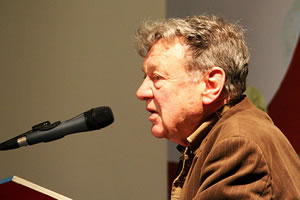
Kito Lorenc (Schleife, 4 maart 1938)

De kerk in Schleife


De Franse dichter Jacques Dupin werd geboren in Privas, Ardèche, op 4 maart 1927. Zie ook mijn blog van 4 maart 2009 en ook mijn blog van 4 maart 2010.


Uit: Écart


„Ce que nous nommons l'impalpable, dans un poème, est pour moi toujours très dur, pas du tout nébuleux. Il s'agit de laisser l'écriture, qui m'est propre quand même!, venir à la langue qui en sera l'expression, et ceci presque sans moi, comme si j'étais traversé, que l'écriture se servait de moi comme d'un médium. Ce qui m'intéresse, c'est d'aller vers quelque chose qui n'existe pas et qui ne commence à être que dans l'élaboration de l'écriture.
Il y a une sorte de consistance qui vient, qui est susceptible de venir à la lumière du fait même que l'on est dans un chantier perpétuel. Ce processus implique un rapport à un magma informe de concrétions mentales et un fonds de langue qui est celui que je puise en moi et dans mon dictionnaire. Écrire n'est que l'émancipation de cette rencontre, comme lorsque deux êtres se rencontrent : ce n'est ni lui ni elle, mais le mouvement qui vient les réunir. Il n'y a pas d'artisanat dans l'écriture. Je ne suis jamais face à ce que je fais comme si j'étais face à un corpus. Un livre s'écrit, s'oublie. Un autre vient, je passe à autre chose. C'est peut-être une grande faiblesse, mais dans tous les cas ça procède chez moi par des saccades, des coups. Je ne reviens pas en arrière, du moins j'essaye de faire que le coup me déporte en avant. J'essaye de parer au plus pressé. On écrit peut-être comme on est. Il n'y a pas de stratégie
."


865724-180520af6d10439ff2036ed3dfda7c67.jpg
Jacques Dupin (Privas, 4 maart 1927)


De Amerikaanse schrijver Thomas S. Stribling werd geboren op 4 maart 1881 in Clifton, Tennessee. Zie ook mijn blog van 4 maart 2009 en ook mijn blog van 4 maart 2010.


Uit: Laughing Stock


„Louella and I drove back in the evening to Shiloh Battlefield, and we intended to stay overnight in the big, log tourist hotel in the park. We did indeed eat supper there, but the feeling of being married was so strange and unnatural to us that we decided to drive after supper back to Clifton, and she would stay at her home and I in mine, which we did.
Nobody knew we were married. We continued like that for a day or two, and then we decided that we would go on the honeymoon we had originally planned.“

We left Clifton early one morning, and we learned afterwards that we were hardly out of town before all the villagers knew that we were married. However, we did not learn that until months later. We motored up through the Carolinas and Virginia, and stopped at Harper's Ferry, which was then one of the quaintest old towns in the United States, but which unhappily the WPA painted up and furbished up, until now it is about like any other old town. We also saw with amazement Copper City,
Tennessee....
...Louella and I drove on to New York....They were delighted with Louella, a Southern girl. All Northern people are delighted with Southern girls. They love to listen to them talk and see if they can understand anything they say. What they say makes no difference; just to comprehend the actual words themselves, that's their pleasure....“


 865724-1436437f1c90efe1acd0d0c8e959e917.jpg

Thomas S. Stribling (4 maart 1881 – 8 juli 1965)

Geschreven door Romenu om 20:36 Reageer op dit bericht

Manfred Flügge, Josef Winkler, Hans Verhagen, Kola Boof, Gudrun Pausewang, James Merrill, Clifton Snider

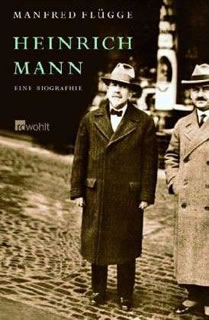
De Duitse schrijver Manfred Flügge werd geboren op 3 maart 1946 in Kolding, Denemarken. Zie ook mijn blog van 3 maart 2009 en ook mijn blog van 3 maart 2010.


Uit: Heinrich Mann


„Der störrische Knabe wollte aber nicht die Aufführung irgendeines Stücks sehen: «Ich will Herrn Gewert sehn!», rief er laut in den Saal hinein. Als der Bube ihn endlich auf der Bühne entdeckt hatte, wurden seine nächtlichen Phantasien wieder wach, und er verstand, dass Herr Gewert zu einer anderen Sphäre gehörte: «Er war ein verwegener, dabei düsterer Mann. Abenteuer und Märchen hatten ihn begleitet.»

Das Kind steigerte sich in eine Wahnvorstellung hinein, provozierte Eklat und Hinauswurf: Mine sollte ihn nach Hause bringen, doch unterwegs warf sich der unbändige Junge mit dem Sonntagsanzug in den Straßendreck, eine wahre Explosion der Affekte. Mine und das Kind gingen ziellos die Straßen auf und ab, bis sie schließlich zum Blumenladen von Gewerts Mutter fanden und dort anklopften. Sie entdeckten Herrn Gewert beim Abendessen. «Er saß und aß.» Aber dieses Sitzen und Essen entzauberte ihn, hob ihn aus der Sphäre von Abenteuer und Märchen heraus. «Der Anblick des ruhig essenden Herrn Gewert ernüchterte mich und erfüllte mich mit Trauer.» Fortan interessierte ihn Herr Gewert nicht mehr, auf Nachfragen der Eltern stellte er sich stumm und dumm. In der eindringlichen Schilderung des Missverständnisses, das eine widersinnige Poesie beinhaltet und zum Skandal führt, ist Heinrich Mann bei sich selbst. Es ist diese Märchensphäre, aus der seine ursprüngliche Inspiration hervorging, zu der immer schon der Wunsch nach der Verwandlung des Lebens gehörte, nach dem Übergreifen des Wunderbaren auf die eigene Erfahrung. Dieser Wunsch bestimmte seine Lebenswahl.

Als er 23 war, ein erstes Romanmanuskript beendet und auch zwei Wochen in Paris verbracht hatte, schrieb er während eines Aufenthalts in Florenz einen kurzen Text, teils in deutscher, teils in französischer Sprache, den er «Mein Plan» nannte. Darin imaginierte er ein apartes, elegantes, leicht theatralisches Leben in der großen Welt, stilvoll und selbstbewusst, beobachtend und genießend. Absolut modern wollte er sein und ein bisschen dekadent. Und: «Natürlich müsste Paris der Schauplatz sein.»


 864995-833719cdde8ef1abb644bd7ff1d913b6.jpg

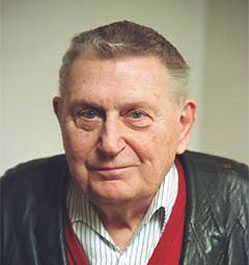
Manfred Flügge (Kolding, 3 maart 1946)

Boekomslag


De Oostenrijkse schrijver Josef Winkler werd geboren op 3 maart 1953 in Kamering, Kärnten. Zie ook mijn blog van 3 maart 2007 en ook mijn blog van 3 maart 2008  en ook mijn blog van 3 maart 2009 en ook mijn blog van 3 maart 2010.


Uit: Der Katzensilberkranz in der Henselstraße


„Immer wieder, besonders abends, wenn es dämmert und in Klagenfurt die Straßen leer werden, gehe ich von der Khevenhüllerstraße, über die Radetzkystraße, Richtung Kaserne, wenige hundert Meter weiter, in die Henselstraße, in der Ingeborg Bachmann einen Teil ihrer Kindheit und ihre Jugend verbracht hat, betrachte einen großen, an der Zauntür des Nachbarhauses hängenden Schildpattkranz, einen Katzensilberkranz, wie ich ihn nenne, der aus Hunderten hostiengroßen

Schildpattalern zusammengefügt ist, ziehe ein leicht angeklebtes Schildpatt aus dem Kranz, stecke es schnell und verstohlen ein – auf meinem Schreibtisch wird es liegen müssen, sage ich mir, während ich diesen Text schreibe – und gehe, an das Katzensilber meiner Kindheit denkend, ein paar Schritte weiter zum Haus Nummer 26, zum Haus der Ingeborg Bachmann, das Katzensilber vor Augen, das ich damals am Flußufer der Drau gesammelt, nach Hause getragen, als Lesezeichen in Winnetou I hineingesteckt habe – ein paar Jahre bevor ich den Namen Ingeborg Bachmann das erste Mal hörte –, an der Stelle, wo Winnetou bei einem Zweikampf seinem damals noch weißen Feind Old Shatterhand ein Messer ins Herz stoßen wollte, aber auf der linken Brusttasche seines Gegners an der Sardinenbüchse abrutschte, so daß das Messer des Indianers seinem Feind Old Shatterhand oberhalb des Halses und innerhalb der Kinnlade in den Mund und durch die Zunge stieß und sein

Blut, wie es in Winnetou I steht, »aus der äußeren Wundöffnung am Hals in einem beinahe fingerdicken Strahle herausrann«.


 864995-c7a5557bdcebf47b8a7a1372b49c5839.jpg

Josef Winkler (Kamering,  3 maart 1953)


De Nederlandse dichter en journalist Hans Verhagen werd geboren in Vlissingen op 3 maart 1939. Zie ook mijn blog van 3 maart 2008 en ook mijn blog van 3 maart 2009 en ook mijn blog van 3 maart 2010.


Wie het hevigst verlangt


Wie het hevigst verlangt naar de ochtend
raakt als eerste verstrikt in de nacht.
Tot in het holst van de kast loert nageslacht.

Zeker eerst vertederd toezien hoe de kindren
elkaar op een lentebriesje blazend zich
vermakend tussen omgekeerde hoge houten stoelen
voortplanten, dan je aangesproken
voelen bij het noemen van je naam
en ook nog eens als een geparkeerd station
luisterrijk te kijk staan
terwijl je zit te eten met andermans mond
omdat je de jouwe wil sparen
voor woorden die je nooit zult spreken.

- welke zou je trouwens ook niet weten –


Gedicht nr. 8 van Citadel


In de cel zucht... wat u nu hoort is het janken van een rat
of acht, hebben we allang gehad,
vier vierjarige personen op trompet,
onder wie de nieuwe Mozart.

Gewaarwordt hij - die grotendeels uit reukorgaan bestaat,
gestoken in een dwingender materie dan de wetenschap
dat de mystiek er niet om liegt, al zou ze graag willen -
dat ook-bekend-als-neus is afgezet, op die plek
bevindt zich nu een modieuze tennisarm
conform de allernieuwste toegevoegde waarde -
dezelfde die hij op z'n elfde al had onderkend
als één van de grootste dompers op aarde.

Domweg dapper zijn gelukkig niet,
maar onbezoedeld sneuvelen.
Drogerende wijn op het lichaam geclusterd met mispels,
gebotteld aan longen, in monden ontzield, ietwat kurkig.
Alleen in deze heuvelen.


 864995-c5ffeac34737a943140caac669517ccc.jpg

Hans Verhagen (Vlissingen, 3 maart 1939)


De Amerikaanse dichter James Merrill werd geboren op 3 maart 1926 in New York. Zie ook mijn blog van 3 maart 2007 en ook mijn blog van 3 maart 2008 en ook mijn blog van 3 maart 2009 en ook mijn blog van 3 maart 2010.


The Black Swan


Black on flat water past the jonquil lawns

       Riding, the black swan draws

A private chaos warbling in its wake,

Assuming, like a fourth dimension, splendor  

That calls the child with white ideas of swans  

       Nearer to that green lake

    Where every paradox means wonder.


Though the black swan’s arched neck is like  

       A question-mark on the lake,

The swan outlaws all possible questioning:  

A thing in itself, like love, like submarine  

Disaster, or the first sound when we wake;

       And the swan-song it sings

    Is the huge silence of the swan.


Illusion: the black swan knows how to break  

       Through expectation, beak

Aimed now at its own breast, now at its image,  

And move across our lives, if the lake is life,  

And by the gentlest turning of its neck

       Transform, in time, time’s damage;

    To less than a black plume, time’s grief.


Enchanter: the black swan has learned to enter  

       Sorrow’s lost secret center

Where like a maypole separate tragedies

Are wound about a tower of ribbons, and where  

The central hollowness is that pure winter

       That does not change but is

    Always brilliant ice and air.


Always the black swan moves on the lake; always

       The blond child stands to gaze  

As the tall emblem pivots and rides out

To the opposite side, always. The child upon  
The bank, hands full of difficult marvels, stays

       Forever to cry aloud

    In anguish: I love the black swan.


 864995-5a5e37f44ae1a1852b6058d2fa4513a2.jpg

James Merrill (3 maart 1926 – 6 februari 1995)


De Amerikaanse dichteres en schrijfster Kola Boof werd (naar eigen zeggen) geboren als Naima Bint Harith op 3 maart 1972 in Omdurman, Soedan. Zie ook mijn blog van 3 maart 2009 en ook mijn blog van 3 maart 2010.


Naima Bint Harith


Jesus, are you lonely without

me?


Every since I came to this country

I have wanted to die.

I cannot find any dolphin to dream

about.

For here...the words of the children

are never children's words.

I am taller than the people here.

I am darker than everyone.

I am not beautiful in the songs they sing.

I am not Mohammed here.


This is a wedding cake, this country.

Stale and dusty.

No veil on my face, no Arab locust,

no husband to enslave me.

No one cuts my vagina here--I am not

accused of witchcraft here.

I am not naked on my dolphin here. There

is no Nile river here.

I have no mother (water) to bleed in.

There is no Blood...over here.


 864995-856aae89516f779739e901849cc87716.jpg

Kola Boof (Omdurman, 3 maart 1972)


De Duitse schrijfster Gudrun Pausewang werd geboren op 3 maart 1928 in Wichstadt. Zie ook mijn blog van 3 maart 2007 en ook mijn blog van 3 maart 2009 en ook mijn blog van 3 maart 2010.


Uit: Rosinkawiese - damals und heute


„Hartershausen, den 28. Februar 1979

Lieber Michael,

Du hast mich bisher nur einige Male kurz gesehen, als ich Deine Großmutter besuchte. Um so mehr überraschte mich Dein langer Brief, den ich vor einer Woche erhielt.

Ich konnte und wollte ihn nicht postwendend beantworten, denn er hat mich tief bewegt. Er hat lebhafte Erinnerungen, schöne und schmerzliche, in mir wachgerufen. Er hat mich gezwungen, meine Einstellung zu einem solchen Vorhaben, wie Du es erwägst, grundsätzlich zu überdenken. Er hat mich gefreut – ja wirklich, er löste in mir eine große Freude darüber aus, daß Du – so jung Du noch bist – einen ganz eigenen Lebensstil verwirklichen willst, daß Du das Sein, nicht das Haben, das Ideelle, nicht das Materielle, kurz: eine neue Lebensqualität anstrebst.

Und nicht zuletzt hat mich Dein Brief mit Dankbarkeit erfüllt, weil Du nach meinen Erfahrungen fragst. Im allgemeinen könnt Ihr jungen Leute heute, in unserer schnell-lebigen Welt, kaum noch etwas mit unseren Erfahrungen anfangen, weil sie längst vom Fortschritt überrollt wurden und dadurch für Euch wertlos geworden sind.

Aber da Du wohl offensichtlich vorhast, gegen den Strom zu schwimmen, oder besser gesagt, mitwirken willst, daß dieser Strom eine andere Richtung nehme, können Dir meine Erfahrungen, die einer Sechsundsiebzigjährigen, vielleicht doch dienlich sein, und ich will sie Dir daher gern übermit-

teln.

Um dies alles zu verarbeiten, habe ich ein paar Tage zeit- lichen Abstands gebraucht. Ich hoffe, Du kannst das begreifen.“


 864995-707906105dc1497b1124163aade926f1.jpg

Gudrun Pausewang (Wichstadt, 3 maart 1928)


De Amerikaanse dichter, schrijver en criticus Clifton Mark Snider werd geboren op 3 maart 1947 in Duluth, Minnesota. Zie ook mijn blog van 3 maart 2009 en ook mijn blog van 3 maart 2010.


Le
Mont
Saint-Michel


A gold Michael
tops the pinnacle,
a small announcement;
wings apart, sword uplifted,
dragon under foot, he gazes down,
further than pilgrims in the Middle Ages,
who trudged, their view blocked by forest.
A triangle in the distance points to heaven,
from the place called before "tomb on a hill,"
before Archangel Michael troubled Saint Aubert
to mount his monument there.  As the people fade
like icing down the narrow streets,  the lights turn
stone into gold: this place, this entanglement of history,
with hidden, shoulder-wide stairways, midnight cemeteries,
and massive medieval walls, arches, and the golden pinnacle.


 864995-ee0d0e9c50ce4346d8fddecd3baff8ef.jpg

Clifton Snider (Duluth, 3 maart 1947)

Mont Saint Michel


Zie voor nog meer schrijvers van de 3e maart ook mijn vorige blog van vandaag.

Geschreven door Romenu om 18:58 Reageer op dit bericht

Heinz Knobloch, Alexandros Papadiamantis, Charels Sealsfield, William Godwin, Edmund Waller, Thomas Otway, Paul Guimard

De Duitse schrijver en feuilletonist Heinz Knobloch werd op 3 maart 1926 in Dresden geboren. Zie ook mijn blog van 3 maart 2009 en ook mijn blog van 3 maart 2010.


Uit: Geisterbahnhöfe


„Wer dabei war …
Als nun am Abend des 9. November 1989 die Mauer durch bewegte Menschen zerbrochen wurde, wollten einige Berliner sehr bald unterirdisch nachsehen, wie es da ausschaute. Sie hatten oft genug über den Stahlplatten gestanden in dieser oder jener Straße. Die hatten ein paar Luftlöcher und gaben ab und zu ein Geräusch her, das so klang, als fahre darunter gerade eine schnelle Bahn. Es handelte sich um die abgedeckten Notausgänge der unterirdischen Bahn, die beileibe nicht als Noteingänge verwendet werden sollten und konnten. Doch etwas Luft mußte bleiben. Sie durfte nicht so abgeschnitten werden wie der Zugang zu den Bahnhöfen.
An jenem sagenhaften 9. November 1989 am frühen Nachmittag, als noch niemand ahnen konnte, was sich am Abend und in der Nacht zutragen würde, an jenem Nachmittag bot sich dem Spaziergänger im Angesicht des Eingangs zum Untergrundbahnhof »Oranienburger Tor«, der unpassierbar stand wie gewohnt, im Schaufenster der Buchhandlung gegenüber ein Anblick; seltsam, ungewohnt und verblüffend.
Undenkbar war er nicht. Im Schaufenster standen, sorgfältig um die »Gesammelten Werke und Schriften« von Erich Honecker gruppiert, die zumeist zweibändigen »Reden und Schriften« von Mielke, Tisch, Hager, Inge Lange und wie sie alle heißen.“


 864990-8c90c89cafdda688c9d1fd4e4060ce4d.jpg

Heinz Knobloch (3 maart 1926 – 24 juli 2003)


De Griekse dichter en schrijver Alexandros Papadiamantis werd geboren op 3 maart 1851 in Hora op het eiland Skiathos. Zie ook mijn blog van 3 maart 2007 en ook mijn blog van 3 maart 2009 en ook mijn blog van 3 maart 2010.


‘night of suffering’

When my poor eyes
will you close in silence,
offering sleep an’ bitter rest
to me…

Hearken how the nightingale
has crouched in solitude,
listen, listen to the owlet
ending its dirge…

And the stars, withered
lilies of God,
keep turning off an’ falling down
from heavenly lowlands…

And the fishing lamp’s gone
somewhere in the bleak haven,
glimmering the sea’s depths an’
being mirrored on the shore.


Vertaald door Irene Voulgaris


 864990-be002da1b0218a280af107c38a3e7e9a.jpg

Alexandros Papadiamantis (3 maart 1851 – 3 januari 1911)


De Oostenrijks-Amerikaanse schrijver Charels Sealsfield (eig. Carl Postl) werd geboren op 3 maart 1793 in Znojmo. Zie ook mijn blog van 3 maart 2007 en ook mijn blog van 3 maart 2009 en ook mijn blog van 3 maart 2010.


Uit: The Cabin Book


" Ton my word ! a masterpiece of Irish description ! " exclaimed at last the Chief Judge. " Not often have I heard anything which has so elastically, drolly, tragi-comically drawn the wild humor of the Irish national character,a comical desperation in the midst of the hardest pressure. Phelim, where did you get the story from ? it is delicious. The most capital gallows story I ever heard, Phelim!" " Capital! really, capital! " joined in the General. " And then so perfectly the reverse of that of the Texan !" observed Colonel Cracker. "Cracker! Cracker!" warned Oakley; "you jump about with the Texan in a manner which I fear will draw upon you a pull of the nose. What can he have done to you ? " "Pooh! done? I should like to see the one who would do anything to Cracker. I suspect him. I don't like his looks." "Don't like his looks?" said Bently, shaking his head. " Why, he has the most noble, cheerful, manly face you could see,a real Apollo's face." " Heaven bless your eyes!" laughed Cracker; " Phelim's face is, in my opinion, ten times better." " And his story, interrupted Meadows, " twenty times." " At any rate, he has carried off the prize," exclaimed a third. "He has ! he has ! " chimed in several. " Also, in the important point of moral," said a little man with a portly stomach, thick lips, and doleful looks ; " also in the important point of moral," he reiterated hastily. " I find it very exceptionable, the moral of the young man's story; very immoral, these Texan tendencies." " And what do you say to all the stories, director ? " asked the General (overhearing the immoral tendencies) of his neighbor, who was looking at thepunch-glass with swimming eyes and shaking head.”


 864990-c6571863e98a8cd924034abb13b80bf8.jpg

Charels Sealsfield (3 maart 1793 – 26 mei 1864)


De Engelse schrijver, journalist, econoom en politiek filosoof. William Godwin werd geboren in Wisbech in Cambridgeshire op 3 maart 1756. Zie ook mijn blog van 3 maart 2009 en ook mijn blog van 3 maart 2010.


Uit: Damon and Delia


“The races at Southampton have, for time immemorial, constituted a scene of rivalship, war, and envy. All the passions incident to the human frame have here assumed as true a scope, as in the more noisy and more tragical contentions of statesmen and warriors. Here nature has displayed her most hidden attractions, and art has furnished out the artillery of beauty.

Here the coquet has surprised, and the love-sick nymph has sapped the heart of the unwary swain. The scene has been equally sought by the bolder and more haughty, as by the timid sex. Here the foxhunter has sought a new subject of his boast in the _nonchalance_ of _dishabille_; the peer has played off the dazzling charms of a coronet and a star; and the _petit maître_ has employed the anxious niceties of dress.

Of all the beauties in this brilliant circle, she, who was incomparably the most celebrated, was the graceful Delia. Her person, though not absolutely tall, had an air of dignity. Her form was bewitching, and her neck was alabaster. Her cheeks glowed with the lovely vermilion of nature, her mouth was small and pouting, her lips were coral, and her teeth whiter than the driven snow. Her forehead was bold, high, and polished, her eyebrows were arched, and from beneath them her fine blue eyes shone with intelligence, and sparkled with heedless gaiety. Her hair was of the brightest auburn, it was in the greatest abundance, and when, unfettered by the ligaments of fashion, it flowed about her shoulders and her lovely neck, it presented the most ravishing object that can possibly be imagined.“


De Engelse dichter en politicus
Edmund Waller werd geboren in Coleshill, Buckinghamshire op 3 maart 1606.
Zie ook mijn blog van 3 maart 2009 en ook mijn blog van 3 maart 2010.


Old Age 


The seas are quiet when the winds give o'er;

So calm are we when passions are no more.

For then we know how vain it was to boast

Of fleeting things, so certain to be lost.

Clouds of affection from our younger eyes

Conceal that emptiness which age descries.


The soul's dark cottage, batter'd and decay'd,

Lets in new light through chinks that Time hath made:

Stronger by weakness, wiser men become

As they draw near to their eternal home.

Leaving the old, both worlds at once they view

That stand upon the threshold of the new.


864990-cc2648dc7ee77759ea45e5b0b593143b.jpg
Edmund Waller (3 maart 1606 – 21 oktober 1687)

Portret door John Riley


De Engelse dichter en schrijver Thomas Otway werd geboren op 3 maart 1652 in Trotton, bij Midhurst. Zie ook mijn blog van 3 maart 2009 en ook mijn blog van 3 maart 2010.


Uit: The Soldier’s Fortune


„ACT I.  SCENE I.

Enter Beaugard and his Father.'


Beau. Sir, I say, and say again, no matrimony ;  I'll not be noosed. Why, I beseech you, sir, tell  me plainly and hirfyy what have I done, that I  deserve to be married }


Father. Why, sauce-box, I, your old fiither, was  married before you were bom.


Beau. Ay, sir, and I thank you, the next thing  you did was, you begot me; the consequence of

which was as follows : As soon as I was born, you  sent me to nurse, where - 1 sucked two years at the  dirty dugs of a foul-feeding witch, that lived in a  thatched sty upon the neighbouring common ; as

soon as I was big enough, that you might be rid of  me, you sent me to a place called a school, to be

slashed and boxed by a ttiick-fisted blockhead, that  could not read himself; where I learned no letters.“


 864990-b4aef92b9a1547f9fa38c661d9cddb9b.jpg

Thomas Otway (3 maart 1652 – 14 april 1685)


Zie voor onderstaande schrijver ook mijn blog van 3 maart 2010.


De Franse schrijver Paul Guimard werd geboren op 3 maart 1921 in Saint-Mars-la-Jaille. Zie ook mijn blog van 3 maart 2007 en ook mijn blog van 3 maart 2009.

Geschreven door Romenu om 18:45 Reageer op dit bericht

Godfried Bomans, Multatuli, Thom Wolfe, John Irving, Michael Salinger

De Nederlandse schrijver Godfried Bomans werd geboren in Den Haag op 2 maart 1913. Zie ook mijn blog van 2 maart 2007 ook mijn blog van 2 maart 2008. en ook mijn blog van 5 december 2009 en eveneens mijn blog van 2 maart 2009 en ook mijn blog van 2 maart 2010.


Uit: Het zondagskind (Sprookjes)


„Er leefden eens een vader en een moeder en die hadden zes kinderen. Elk kind was op een andere dag van de week geboren. Het oudste kind heette Maandag en het jongste Zaterdag. En de rest heette naar de dagen ertussenin.
Maar een zondagskind was er niet bij en dat wilden die vader en moeder nu juist zo graag hebben. Ze waren wel blij met de zes, die ze hadden, maar ze waren nog meer bedroefd om het ene kind, dat ze misten. Ze liepen verdrietig door het huis en keken telkens naar het lege stoeltje, dat ze hadden klaargezet. En elke dag als ze gingen eten, zetten ze de wieg aan tafel, want je wist het maar nooit.
Dit hoorde de oude grootmoeder. Het was maar een klein mensje, met een geplooid mutsje, een piepstem en een bult. Ook was haar rechterbeen wat korter, ofschoon zij zelf volhield dat alleen haar linkerbeen wat langer was.
Maar zij kon toveren. Vroeger toverde zij de hele dag, maar nu deed zij het alleen 's avonds na tafel en was dan erg moe. "Kalm aan, vrouwtje," had de dokter gezegd, "alleen de kleine kunstjes, dan redden we het wel." Maar ze kon het niet laten en deed de grote ook.
Gelukkig maar, want anders was het zondagskind nooit gekomen. Dat zullen wij nu zien.
Op zekere dag kwam de oude grootmoeder voor een weekje logeren. Dat gebeurde elk jaar en nu was het weer zover. Ze klauterde de trap op naar haar kamertje onder de dakpannen en ging meteen in een dik boek zitten lezen.
"Bemoei je maar niet met me," zei ze met haar piepstem, "ik heb mijn boterhammetjes bij me. En als de week om is, dan kom ik vanzelf naar beneden."
Ze sliep niet, ze dronk niet en ze toverde niet, maar las aan één stuk door, de hele week lang. Elke dag kwam een van de zes kinderen, dat op die dag geboren was, naar boven met een kopje thee, maar ze raakte de kopjes niet aan en zei: "Zet het maar neer bij de andere kopjes." En toen het zondag geworden was, stonden er zes kopjes op een rij en toen kwam ze naar beneden.“


864340-70f0e7b5598f00110d5b70b43f024d8d.jpg
Godfried Bomans (2 maart 1913 - 22 december 1971)


De Nederlandse schrijver Multatuli (pseudoniem van Eduard Douwes Dekker werd geboren in Amsterdam op 2 maart 1820. Zie ook mijn blog van 2 maart 2007  en ook mijn blog van 2 maart 2008. en eveneens mijn blog van 2 maart 2009 en ook mijn blog van 2 maart 2010.


Uit: Max Havelaar


“Ik zeg: waarheid en gezond verstand, en hier blyf ik by. Voor de Schrift maak ik natuurlyk een uitzondering. De fout begint al van Van Alphen af, en wel terstond by den eersten regel over die ‘lieve wichtjes’. Wat drommel kon dien ouden heer bewegen, zich uittegeven voor een aanbidder van myn zusje Truitje die zeere oogen had, of van myn broêr Gerrit die altyd met zyn neus speelde? En toch, hy zegt: ‘dat hy die versjes zong, door liefde gedrongen.’ Ik dacht dikwyls als kind: ‘man, ik wilde u graag eens ontmoeten, en als ge my de marmerknikkers weigerde, die ik u vragen zou, of myn naam voluit in banket - ik heet Batavus - dan houd ik u voor een leugenaar.’ Maar ik heb Van Alphen nooit gezien. Hy was al dood, geloof ik, toen hy ons vertelde dat myn vader myn beste vrind was - ik hield meer van Pauweltje Winser, die naast ons woonde in de Batavierstraat - en dat myn kleine hond zoo dankbaar was. We hielden geen honden, omdat ze zoo onzindelyk zyn.

Alles leugens! Zoo gaat dan de opvoeding voort. Het nieuwe zusjen is van de groenvrouw gekomen in een groote kool. Alle Hollanders zyn dapper en edelmoedig. De Romeinen waren bly dat de Batavieren hen lieten leven. De Bey van Tunis kreeg een kolyk als hy het wapperen hoorde van de nederlandsche vlag. De hertog van Alva was een ondier. De eb, in 1672 geloof ik, duurde wat langer dan gewoonlyk, expres om Nederland te beschermen. Leugens! Nederland is Nederland gebleven, omdat onze oude luî goed op hun zaken pasten, en omdat ze het ware geloof hadden. Dat is de zaak!”


864340-9be42e193757b7e121229e2238fc919c.jpg
Multatuli (2 maart 1820 - 19 februari 1887)

Boekomslag


De Amerikaanse schrijver en journalist
Thom Wolfe werd geboren op 2 maart 1930 in Richmond, Virginia. Zie ook mijn blog van 2 maart 2007 en eveneens mijn blog van 2 maart 2009 en ook mijn blog van 2 maart 2010.


Uit: The Right Stuff


„A young man might go into military flight training believing that he was entering some sort of technical school in which he was simply going to acquire a certain set of skills. Instead, he found himself all at once enclosed in a fraternity. And in this fraternity, even though it was military, men were not rated by their outward rank as ensigns, lieutenants, commanders, or whatever. No, herein the world was divided into those who had it and those who did not. This quality, this it, was never named, however, nor was it talked about in any way.

As to just what this ineffable quality was . . . well, it obviously involved bravery. But it was not bravery in the simple sense of being willing to risk your life. The idea seemed to be that any fool could do that, if that was all that was required, just as any fool could throw away his life in the process. No, the idea here (in the all-enclosing fraternity) seemed to be that a man should have the ability to go up in a hurtling piece of machinery and put his hide on the line and then have the moxie, the reflexes, the experience, the coolness, to pull it back in the last yawning moment--and then to go up again the next day, and the next day, and every next day, even if the series should prove infinite--and, ultimately, in its best expression, do so in a cause that means something to thousands, to a people, a nation, to humanity, to God.

Nor was there a test to show whether or not a pilot had this righteous quality. There was, instead, a seemingly infinite series of tests. A career in flying was like climbing one of those ancient Babylonian pyramids made up of a dizzy progression of steps and ledges, a ziggurat, a pyramid extraordinarily high and steep; and the idea was to prove at every foot of the way up that pyramid that you were on of the elected and anointed ones who had the right stuff and could move higher and higher and even--ultimately, God willing, one day--that you might be able to join that special few at the very top, that elite who had the capacity to bring tears to men's eyes, the very Brotherhood of the Right Stuff itself.“


864340-c68c50bc3258cfc8a60d8ace6c407a00.jpg
Thom Wolfe (Richmond, 2 maart 1930)


De Amerikaanse schrijver John Irving werd geboren op 2 maart 1942 in Exeter, New Hampshire. Zie ook mijn blog van 2 maart 2007 en ook mijn blog van 2 maart 2008. en eveneens mijn blog van 2 maart 2009 en ook mijn blog van 2 maart 2010.


Uit: Prayer for Owen Meany


„I am doomed to remember a boy with a wrecked voicenot because of his voice, or because he was the smallest person I ever knew, or even because he was the instrument of my mothers death, but because he is the reason I believe in God; I am a Christian because of Owen Meany. I make no claims to have a life in Christ, or with Christand certainly not for Christ, which Ive heard some zealots claim. Im not very sophisticated in my knowledge of the Old Testament, and Ive not read the New Testament since my Sunday school days, except for those passages that I hear read aloud to me when I go to church. Im somewhat more familiar with the passages from the Bible that appear in The Book of Common Prayer; I read my prayer book often, and my Bible only on holy daysthe prayer book is so much more orderly.


I’ve always been a pretty regular churchgoer. I used to be a CongregationalistI was baptized in the Congregational Church, and after some years of fraternity with Episcopalians (I was confirmed in the Episcopal Church, too), I became rather vague in my religion: in my teens I attended a “nondenominational” church. Then I became an Anglican; the Anglican Church of Canada has been my churchever since I left the United States, about twenty years ago. Being an Anglican is a lot like being an Episcopalianso much so that being an Anglican occasionally impresses upon me the suspicion that I have simply become an Episcopalian again. Anyway, I left the Congregationalists and the Episcopaliansand my country once and for all.

When I die, I shall attempt to be buried in New Hampshirealongside my motherbut the Anglican Church will perform the necessary service before my body suffers the indignity of trying to be sneaked through U.S. Customs. My selections from the Order for the Burial of the Dead are entirely conventional and can be found, in the order that I shall have them readnot sungin The Book of Common Prayer. Almost everyone I know will be familiar with the passage from John, beginning with “. . . whosoever liveth and believeth in me shall never die.”


864340-0d48f73622b972b017148c69b55cd0eb.jpg
John Irving (Exeter, 2 maart 1942)


De Amerikaanse dichter en performer Michael Salinger werd geboren op 2 maart 1962 in Cleveland, Ohio. Zie ook mijn blog van 2 maart 2009 en ook mijn blog van 2 maart 2010.


Vespula vulgaris (Common Wasp)
 

The boy paid no particular attention
to the pear tree that he hid behind
sprawling branches
twisted above his head
or the legion of
yellow jacket wasps
buzzing in drunken circles
around fallen
fermenting summertime fruit
turning brown on the ground
nor did he bother to contemplate
the rough reptilian bark slipping beneath
tufts of grass becoming root
nerve tendril clutching the earth like
wooden shocks of lightening
frozen in time
the fact that he had
his father’s chin, his grandfather’s wit
his mother’s almond eyes
his brother’s Swiss army knife
illicitly in his pocket
and the family posture
shoulders sloped as if by weight
never crossed his mind
the boy did not notice the curl of dust
kicked from behind automobile
headed to horizon
the driver in yellow sundress
determined to escape
and never come back this time
or the whistle of the gopher
startled by the car’s passing
a full moon
cut from translucent tissue
still visible in the daytime sky
went equally ignored
the flash of slick tanned skin
of black haired
neighbor girl
skinny-dipping
had become the entire universe

to him


 864340-1719c34da125bba3be86227587d96654.jpg

Michael Salinger (Cleveland, 2 maart 1962)


Zie voor nog meer schrijvers van de 2e maart ook mijn vorige blog van vandaag.

Geschreven door Romenu om 18:49 Reageer op dit bericht

János Arany, Jevgeni Baratynski, Sholom Aleichem, Olivia Manning, Gerhard von Halem, Pascal Rannou

De Hongaarse dichter János Arany werd geboren op 2 maart 1817 in Nagyszalonta. Zie ook mijn blog van 2 maart 2007 en ook mijn blog van 2 maart 2009 en ook mijn blog van 2 maart 2010.


In der Einsamkeit


Der Puls der Uhr tickt träge an der Wand,
unmeßbar dehnt die Zeit sich immer länger.
Es wacht die Sorge um das Vaterland
und zieht die Furchen auf den Stirnen enger.
Wie lange noch muß diese Welt gebären?
Wie grausam, Schicksal, kann dein Uhrwerk sein.
Ich kann den Zahnradgang der Räder hören,
doch sind nicht Zifferblatt noch Zeiger dein.


Sie kommt, sie kommt, auch Gott kann sie nicht halten,
wie Felsgeröll, das in den Abgrund fällt:
Ob Leben, Tod, Fluch oder Segen walten,
wer kann es sagen, wer auf dieser Welt?
Unschlüssig ist das Volk, die Denker mürbe,
der Zweifel drückt sie wie ein finstrer Bann.
Wenn doch die Frucht in deinem Schoße stürbe...
O Zeit, verweil, erbarm dich, halte an!


Oh unerträglich dieses Zweifels Qualen!
Man spürt des Würfelns fürchterliche Pein,
gern dehnten wir die Zeit, bevor sie fallen,
die Würfel, - sie entscheiden unser Sein.
Ein Schritt in qualmende Unendlichkeiten,
wo ineinanderwirbeln Sein und Tod.
Wir klammern uns an unsre Elendszeiten,
halt noch ein wenig, Strohhalm in der Not!


Wart noch - doch welches Zagen, welche Reue!
Fort, Angstgesichter, euch will ich nicht sehn!
Vernunft und wahre Patriotentreue,
macht das nicht Mut uns, alles zu bestehn?
Und kämpfen ohne Hoffnung, ohne Glauben
an einen Sieg, den keiner vor sich sieht?
Nein - betet, laßt die Kräfte euch nicht rauben
und stimmet an gestählt das Siegeslied.


Laß, Himmel, nicht Millionen von Gebeten
so ungehört zergehn in deinem Schoß!
Ist so viel Blut der Opfer denn vonnöten,
sinnlos versickernd, wo man es vergoß?
Wo tote Märtyrer dort in der stillen
Scholle verfaulen, muß das Leben neu
entstehn und immer weitre Kreise füllen!
Mein Land, vertrau der Zukunft und sei treu.


Nicht immer ist der Mensch des Schicksals Meister,
oft ist's ein Weiser, manchmal auch ein Narr,
und ist die Hand ermattet, sind die Geister
der unheilvollen Nacht des Mitleids bar.
So läßt der Mensch sich wie eine Maschine
oft träge weitertreiben. Doch so wie
er zu sich kommt in seinem besten Sinne,
erwacht auch neue, höhre Harmonie.


Der Zeiten Flut läßt sich zurück nicht drängen,
sie zwingt und stößt uns vorwärts ohne Halt.
Nur an den Rändern bleiben Algen hängen,
und wendet rückwärts sich des Stroms Gewalt.
Getrost, uns trägt der Hauptstrom in die Weite,
und scheitert mancher auch an hartem Riff,
doch fliegend, mit den Ersten Seit an Seite
gebläht die Segel, vorwärts jagt das Schiff.


Vertaald door Annemarie Bostroem


 864338-a595d7b15f0c40e24d4527cbc99ca67b.jpg

János Arany (2 maart 1817 – 22 oktober 1882)

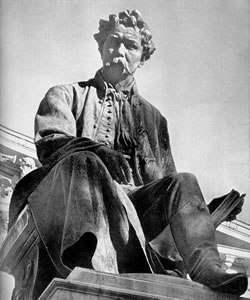
Monument in Boedapest


De Russische dichter Jevgeni Baratynski werd geboren op 2 maart 1800 in Sint Petersburg. Zie ook mijn blog van 2 maart 2007 en ook mijn blog van 2 maart 2009 en ook mijn blog van 2 maart 2010.


Der Tod


Der Tod ist nicht ein Grabgerippe,

Ein Kind des Dunkels und der Nacht,

Nicht jener Schnitter mit der Hippe,

Zu dem der Sklavensinn ihn macht.


Du kommst, uns Trost und Glück zu spenden,

Du, ew'gen Lichtes schöner Strahl:

Den Ölzweig trägst du in den Händen

Und nicht der Sense scharfen Stahl.

Die Welt der Millionen Blüten,

Entsprungen wilder Kräfte Streit,

Durch dich, o Tod, läßt sie behüten

Der Herr der Zeit und Ewigkeit.

Kühl fliegst du über allen Wesen,

Gießt Sanftmut in ihr heißes Blut,

Du läßt vom Selbstsinn sie genesen,

Du zügelst ihren Übermut.


Dem wilden Toben des Orkanes

Gebietet deine Rechte Trutz,

Vorm Wellendrang des Ozeanes

Gewährt dein starker Arm uns Schutz.

Wenn du nicht wärst, o Tod, so reckte

Bis in den Himmel sich der Baum,

Ein ungeheurer Wald bedeckte

Die Welt und raubte uns den Raum.

Und auch der Mensch! Von seinen Wangen

Flieht, wird er deiner sich bewußt,

Die Glut des Zorns, der ihn umfangen,

Und aus dem Herzen böse Lust.


Herrscht Unrecht hier, im Jammertale,

Ist einer arm, der andre reich –

Vor deinem heil'gen Tribunale

Wird alles recht, wird alles gleich.

In Fesseln sind wir hier geschlagen,

Und Zweifel rauben uns die Ruh':

Du lösest alle unsre Fragen,

All unsre Ketten lösest du!


 864338-77ba85f28dc0f4559b04dfcbeff371eb.jpg

Jevgeni Baratynski (2 maart 1800 – 11 juli 1844)


De Russisch-joodse schrijver Sholom Aleichem werd geboren in Pereyslav bij Kiev op 2 maart 1859. Zie ook mijn blog van 2 maart 2009 en ook mijn blog van 2 maart 2010.


Uit: Tewje, der Milchman (Vertaald door Armin Eidherr)


" Nun, wie's mir ums Herz wurde, können Sie sich ja ausmalen. Aber mir's anmerken lassen - pfui ! [ . . . ] Ich antwortete ihnen ganz lebhaft:' Ich beglückwünsche euch, aber warum habt ihr euch, Kinder, erst so spät besonnen? In anderen Ortschaften hat man das beinahe schon vergessen!' Da sagt mir Iwan Poperile, der Bürgermeister mein ich, diesmal schon ganz ernst:' Versteh mich recht, Tewje, wir haben uns hin und her überlegt, ob wir dich verprügeln sollen oder nicht verprügeln sollen. Überall, in allen Ortschaften, prügelt man euch. Warum sollen wir dich verschonen? . . . Da hat die Gemeinde beschlossen, dass wir dich verprügeln sollen . . . Aber jetzt kommt der Haken! Wir wissen noch selber nicht, was wir mit dir machen sollen, Tewje: ob wir dir nur die Scheiben einschlagen sollen und die Federbetten und die Polster zerreißen und die Federn ausschütten oder ob wir verbrennen sollen, deine Kate und den Stall und deinen ganzen Hausrat.“


 864338-dbd7c848ab8cf5b87a0b6c647f7fd3cc.jpg

Sholom Aleichem (2 maart 1859 - 13 mei 1916)


De Britse schrijfster Olivia Manning werd geboren op 2 maart 1908 in Portsmouth. Zie ook mijn blog van 2 maart 2009 en ook mijn blog van 2 maart 2010.


Uit: The Balkan Trilogy (The spoilt city)


„In the face of the threat to Transylvania, no one gave much thought to the southern Dobrudja, but the story went round that the old minister who had wept over Bessarabia, had wept—probably from habit—when the Bulgarian demand was received. He reminded the Cabinet that Queen Marie’s heart was buried in the palace at Balcic and the queen had believed her subjects would safeguard it with their lives. He stood up crying: “To arms, to arms,” but no one, not even the old man himself, could take this call seriously. The queen, though barely two years dead, symbolised an age of chivalry as outmoded as honour, as obsolete as truth.

The transfer of the southern Dobrudja was announced for September 7th.

That, Harriet thought, was one frontier problem peaceably settled, but when she made some comment of this sort to Galpin, he eyed her with the icy irony of one who has good cause to know better.

They had met on the pavement outside the Athénée Palace and Galpin was carrying a suitcase. “For my part,” he said, “I’m keeping a bag ready packed and my petrol-tank full.”

“Oh?”

He crossed to his car and put the case into the boot, then remarked in a milder tone: “I thought it darn odd they were willing to settle for that mouldy bit in the south when they could grab the whole coast.”

“Do you mean they are grabbing the whole coast?”

“They and one other. I expect it was arranged months ago. When the Bulgars take the south, the old Russkies will occupy the north. Between them they’ll hold the whole coastal plain. It’s a Slav plot.”


864338-63b454feacade2c143cc2f87f9d491ba.jpg
Olivia Manning (2 maart 1908 - 23 juli 1980)


De Duitse dichter en schrijver Gerhard Anton von Halem werd geboren op 2 maart 1752 in Oldenburg. Zie ook mijn blog van 2 maart 2009 en ook mijn blog van 2 maart 2010.


Gretels Warnung


Mit Liebesblick und Spiel und Sang

Warb Christel jung und schön;

So lieblich war, so frisch und schlank

Kein Jüngling rings zu seh'n.

Nein, keiner war

In ihrer Schaar,

Für den ich das gefühlt!

Das merkt er, ach!

Und ließ nicht nach,

Bis er es all, bis er es all,

Bis er es all erhielt!


Wohl war im Dorfe mancher Mann,

So jung und schön wie er;

Doch sah'n nur ihn die Mädchen an

Und kos'ten um ihn her.

Bald riß ihr Wort

Ihn schmeichelnd fort,

Gewonnen war sein Herz.

Mir ward er kalt,

Dann floh er bald

Und ließ mich hier, und ließ mich hier,

und ließ mich hier im Schmerz.


Sein Liebesblick und Spiel und Sang,

So süß und wonniglich,

Sein Kuß, der tief zur Seele drang,

Erfreut nicht fürder mich.

Schaut meinen Fall,

Ihr Schwestern all',

Für die der Folsche glüht,

Und trauet nicht dem, was er spricht.

O seht mich an, mich Arme an,

O seht mich an, und flieht!


864338-99f71ba695cf95140bfd53126e452626.jpg
Gerhard Anton von Halem (2 maart 1752 – 4 januari 1819)


Zie voor onderstaande schrijver ook mijn blog van 2 maart 2010.


De Franse schrijver en letterkundige Pascal Rannou werd geboren op 2 maart 1958 in Laval. Zie ook mijn blog van 2 maart 2009.

Geschreven door Romenu om 18:43 Reageer op dit bericht

Jan Eijkelboom, Franzobel, Jim Crace, Franz Hohler, Jacques Chessex, Lytton Strachey

De Nederlandse dichter, vertaler en journalist Jan Eijkelboom werd op 1 maart 1926 in Ridderkerk geboren. Zie ook mijn blog van 1 maart 2008 en ook mijn blog van 28 februari 2008 en ook mijn blog van 1 maart 2009. en ook mijn blog van 1 maart 2010.


Schilderij, Duits, 19de eeuw


Dit is de liefde:
stilstand van de tijd.
De jongeling die met het meisje
in suizend onbewegen
de steile rots afspringt.

Tussen Teutoonse sparren heeft,
onhoorbaar tandenknarsend
boven een stalen baard,
de man te paard
- rivaal of vader -
het zwaard vergeefs ontbloot.
Zie ook de tanden van de honden
die doodstil grommen aan de rand.

Tanden en zwaard bereiken nooit het paar.
Het paar haalt nooit de grond.
Het blijft ontheven in een val
die op een dans gelijkt,
zo losjes houden zij elkander
bij de hand en bij
de smalle leest.

Dit is de tijd die blijft,
omdat er niets beweegt.


Slikkerveer


Hier hoorde mijn moeder in negentien vijf
het drinkwater aan komen ruisen
door de net aangelegde buizen.

Hier zag ik tegen de ochtendzon
mijn grootvader thuiskomen van de Noord
die hij heen-en-terug was overgezwommen
om zijn zestigste verjaardag te vieren.

Hier hoorde ik als jongen
een uiteenvallende briket ritselen
in het fornuis en dacht:
het klinkt als zilverpapier
dat terug tracht te komen
uit zijn verfrommeling.

Ik borg dat op voor later -
voor nu.


Voor wat hoort wat

Voor wat hoort wat
Een kind vraagt nooit
waarom, waartoe het toch
op aarde werd geworpen.


Daarom en niet omdat
het hulpeloos zou zijn
verzorgen wij het trouw,


vereren het als god.
Tot het de dood ontdekt
en een der onzen wordt.


 863743-e4e3d7c21d02da1fbee225c784ba9cfb.jpg

Jan Eijkelboom (1 maart 1926 – 28 februari 2008)


De Oostenrijkse schrijver, dichter en schilder Franzobel werd geboren op 1 maart 1967 in Vöcklabruck. Zie ook mijn blog van 1 maart 2007 en ook mijn blog van 1 maart 2008  en ook mijn blog van 1 maart 2009 en ook mijn blog van 1 maart 2010.


Leibenfrost/Herbst:  


Wie Attila der Hunnenkönig,  
daß die Blätter von den Bäumen  
fallen, nun den Weg befaulen,  
stumm, so ist er eingefallen,  
wer jetzt noch keine Ahnung hat,  
erfährt es nimmermehr.  


Watschenmann:Kaltleutgebern/Täterprofil:  


Lebte eher nicht in fester Partnerschaft,  
also eher Einzelgängertyp, hat sich öfter  
in der Nähe des Tatorts aufgehalten eher  
oder dort vielleicht eher sogar gewohnt  
war im Umgang mit verbalen Konflikten  
eher ungeschickt, das heißt, er reagierte  
eher aggressiv und rastete möglicherweise auch aus,  
fiel durch ständiges Mitführen einer Bewaffnung  
auf, trat eventuell als Tierquäler schon  
in Erscheinung, ehe er jetzt  
Täter geworden ist.  


 863743-4f6f65a3f43ca7a2e289e4ed1cb1c257.jpg

Franzobel (Vöcklabruck, 1 maart 1967)


De Engelse schrijver Jim Crace werd geboren op 1 maart 1946 in St. Albans, Hertfordshire. Zie ook mijn blog van 1 maart 2009. en ook mijn blog van 1 maart 2010.


Uit: Being Dead


„ For old times’ sake, the doctors of zoology had driven out of town that Tuesday afternoon to make a final visit to the singing salt dunes at Baritone Bay. And to lay a ghost. They never made it back alive. They almost never made it back at all.
They’d only meant to take a short nostalgic walk along the coast where they had met as students almost thirty years before. They had made love for the first time in these same dunes. And they might have made love there again if, as the newspapers were to say, ‘Death, armed with a piece of granite, had not stumbled on their kisses.’
They were the oddest pair, these dead, spreadeagled lovers on the coast: Joseph and Celice. Both had been teachers. He was director at the Tidal Institute, where he was noted for his coldness as much as for his brains. She was a part-time tutor at the university. Hardly any of their colleagues had ever seen them together, or visited them at home, let alone witnessed them touch. How unexpected, then, that these two, of all couples, should be found like this, without their underclothes, their heads caved in, unlikely victims of unlikely passions. Who would have thought that unattractive people of that age and learning would encounter sex and murder in the open air?
They paid a heavy price for their nostalgia.”


863743-0fce1a8a46d4ee3ee1675e05777a44d7.jpg
Jim Crace (St. Albans, 1 maart 1946)


De Zwitserse dichter, schrijver, cabaretier en liedjesmaker Franz Hohler werd geboren op 1 maart 1943 in Biel. Zie ook mijn blog van 1 maart 2009 en ook mijn blog van 1 maart 2010.


Vom richtigen Gebrauch der Zeit


Ich habe dich

heute morgen

nicht zum Bahnhof begleitet

ich hatte soviel zu tun

und brauchte sie dringend

die halbe Stunde.


Doch kaum warst du weg

saß ich da

und war

eine ganze Stunde lang traurig.


Solaruhren


Deine Uhr

neben meiner Uhr

auf dem Fenstersims

in der Vormittagssonne.


Gemeinsam

trinken sie Licht

damit sie stets

ihre Pflicht erfüllen können

uns anzuzeigen

wie wir langsam

zusammen älter werden

du und ich.


 863743-219069d511affe298538204a546e44ea.jpg

Franz Hohler (Biel, 1 maart 1943)


De Franstalige, Zwitserse schrijver Jacques Chessex werd geboren op 1 maart 1934 in Payerne. Zie ook mijn blog van 1 maart 2009 en ook mijn blog van 1 maart 2010.


Uit: Le simple préserve l'énigme


„J'ai vingt-six ans, lui trente-trois. A l'époque il est long, maigre, souple, rapide, rieur et même moqueur. Le teint coloré, tirant sur le carmin en fin de repas, le sourire inquiété d'une petite cassure à une incisive. Quarante-huit ans d'amitié sont nés là, je veux dire de mutuelle curiosité, d'histoires de livres, d'enfants, de maisons, de séparations, dans l'exigence légèrement consentie d'une communauté de sentiment sur nos lieux, nos origines, notre proximité, - une totale indépendance des esprits et des mouvements. L'un et l'autre sachant ce qu'écrire pèse de silence, de travail contre soi et le monde, et d'exposition aux coups.“


863743-a4ecf1c898c0b6d4e74c12952bd10efa.jpg
Jacques Chessex (1 maart 1934 – 9 oktober 2009)


De Britse schrijver Giles Lytton Strachey werd geboren op 1 maart 1880 in Londen. Zie ook mijn blog van 1 maart 2007 en ook mijn blog van 1 maart 2008  en ook mijn blog van 1 maart 2009 en ook mijn blog van 1 maart 2010.


Uit: Frederick the Great and Voltaire


„At the present time [October 1915] when it is so difficult to think of anything but of what is and what will be, it may yet be worthwhile to cast occasionally a glance backward at what was. Such glances may at least prove to have the humble merit of being entertaining: they may even be instructive as well. Certainly it would be a mistake to forget that Frederick the Great once lived in Germany. Nor is it altogether useless to remember that a curious old gentleman, extremely thin, extremely active, and heavily bewigged, once decided that, on the whole, it would be as well for him not to live in France. For, just as modern Germany dates from the accession of Frederick to the throne of Prussia, so modern France dates from the establishment of Voltaire on the banks of the Lake of Geneva. The intersection of those two momentous lives forms one of the most curious and one of the most celebrated incidents in history. To English readers it is probably best known through the few brilliant paragraphs devoted to it by Macaulay; though Carlyle's masterly and far more elaborate narrative is familiar to every lover of The History of Friedrich II. Since Carlyle wrote, however, fifty years have passed. New points of view have arisen, and a certain amount of new material -- including the valuable edition of the correspondence between Voltaire and Frederick published from the original documents in the Archives at Berlin -- has become available. It seems, therefore, in spite of the familiarity of the main outlines of the story, that another rapid review of it will not be out of place.

Voltaire was forty-two years of age, and already one of the most famous men of the day, when, in

August 1736, he received a letter from the Crown Prince of Prussia. This letter was the first in a

correspondence which was to last, with a few remarkable intervals, for a space of over forty years. It was written by a young man of twenty-four, of whose personal qualities very little was known, and whose importance seemed to lie simply in the fact that he was heir- apparent to one of the secondary European monarchies.“


863743-68e6a44f6b5c1b78e8b43882c7765595.jpg
Lytton Strachey (1 maart 1880 – 21 januari 1932)

Hier met Virginia Woolf


Zie voor nog meer schrijvers van de 1e maart (en de 29e februari) ook mijn vorige blog van vandaag en eveneens mijn eerste blog van vandaag.
Geschreven door Romenu om 19:53 Reageer op dit bericht

Ryūnosuke Akutagawa, Sabina Lorenz, Robert Lowell, Richard Wilbur, Saul Williams, Ralph Ellison

De Japanse dichter en schrijver Ryūnosuke Akutagawa werd geboren op 1 maart 1892 in Tokio. Zie ook mijn blog van 1 maart 2009 en ook mijn blog van 1 maart 2010.


Uit: In a Grove (Vertaald door Takashi Kojima)


„Yes, sir. Certainly, it was I who found the body. This morning, as usual, I went to cut my daily quota of cedars, when I found the body in a grove in a hollow in the mountains. The exact location? About 150 meters off the Yamashina stage road. It's an out-of-the-way grove of bamboo and cedars.

The body was lying flat on its back dressed in a bluish silk kimono and a wrinkled head-dress of the Kyoto style. A single sword-stroke had pierced the breast. The fallen bamboo-blades around it were stained with bloody blossoms. No, the blood was no longer running. The wound had dried up, I believe. And also, a gad-fly was stuck fast there, hardly noticing my footsteps.

You ask me if I saw a sword or any such thing? No, nothing, sir. I found only a rope at the root of a cedar near by. And . . . well, in addition to a rope, I found a comb. That was all. Apparently he must have made a battle of it before he was murdered, because the grass and fallen bamboo-blades had been trampled down all around.

"A horse was near by?" No, sir. It's hard enough for a man to enter, let alone a horse. The Testimony of a Traveling Buddhist Priest Questioned by a High Police Commissioner The time? Certainly, it was about noon yesterday, sir. The unfortunate man was on the road from Sekiyama to Yamashina. He was walking toward Sekiyama with a woman accompanying him on horseback, who I have since learned was his wife. A scarf hanging from her head hid her face from view. All I saw was the color of her clothes, a lilac-colored suit. Her horse was a sorrel with a fine mane. The lady's height? Oh, about four feet five inches. Since I am a Buddhist priest, I took little notice about her details. Well, the man was armed with a sword as well as a bow and arrows. And I remember that he carried some twenty odd arrows in his quiver.“


 863735-eb1a64115d43474716f7ab67c8dbe79d.jpg

Ryūnosuke Akutagawa (1 maart 1892 – 24 juli 1927)


De Duitse schrijfster en dichteres Sabina Lorenz werd geboren op 1 maart 1967 in München. Zie ook mijn blog van 1 maart 2010.


Abend, offen


In den Straßen wächst Licht (take your time), tröstlich

bunte Einkaufstüten und bunte Kinder, sagt sie, Namen

im Mund, Luxus für alle im Lidl. So entstehen Räume.

Nach hinten raus gibts Brot von gestern, kaum

ahnt man wie sicher die Landschaft geworden ist. Und

unter der Linde, Lidl-Linde, sagt sie, parken tröstlich

bunte Wagen, Baumtraum, sagt sie, also

Parkplatz, Menschen, Einkaufstüten, ob das

wohl für Linden ewig sei, und wie lang

für Linden ewig sei, also ewig, sagt sie, ewig also

ist genauso, als ob es das nie gegeben, sagt sie

eine Zigarette lang, dann erlischt das Licht (take

away), nach hinten raus ist die Linde eine sichere

Geliebte. Den Ort zu bleiben gibts dort auch.


863735-7a5a1130f37970223278dc332527e8d8.jpg
Sabina Lorenz (München, 1 maart 1967)


De Amerikaanse dichter Robert Traill Spence Lowell werd geboren op 1 maart 1917 in Boston. Zie ook mijn blog van 1 maart 2007 en ook mijn blog van 1 maart 2008 en ook mijn blog van 1 maart 2009 en ook mijn blog van 1 maart 2010.


Children of Light 


Our fathers wrung their bread from stocks and stones

And fenced their gardens with the Redmen's bones;

Embarking from the Nether Land of Holland,

Pilgrims unhouseled by Geneva's night,

They planted here the Serpent's seeds of light;

And here the pivoting searchlights probe to shock

The riotous glass houses built on rock,

And candles gutter by an empty altar,

And light is where the landless blood of Cain

Is burning, burning the unburied grain.


Epilogue 


Those blessèd structures, plot and rhyme--

why are they no help to me now

I want to make

something imagined, not recalled?

I hear the noise of my own voice:

The painter's vision is not a lens,

it trembles to caress the light.

But sometimes everything I write

with the threadbare art of my eye

seems a snapshot,

lurid, rapid, garish, grouped,

heightened from life,

yet paralyzed by fact.

All's misalliance.

Yet why not say what happened?

Pray for the grace of accuracy

Vermeer gave to the sun's illumination

stealing like the tide across a map

to his girl solid with yearning.

We are poor passing facts,

warned by that to give

each figure in the photograph

his living name.


863735-eb50e7692784ea76a2ffde09742413a4.jpg
Robert Lowell (1 maart 1917 - 12 September 1977)


De Amerikaanse dichter Richard Wilbur werd geboren op 1 maart 1921 in New York. Zie ook mijn blog van 1 maart 2007 en ook mijn blog van 1 maart 2008 en ook mijn blog van 1 maart 2009 en ook mijn blog van 1 maart 2010.


The Writer


In her room at the prow of the house

Where light breaks, and the windows are tossed with linden,

My daughter is writing a story.


I pause in the stairwell, hearing

>From her shut door a commotion of typewriter-keys

Like a chain hauled over a gunwale.


Young as she is, the stuff

Of her life is a great cargo, and some of it heavy:

I wish her a lucky passage.


But now it is she who pauses,

As if to reject my thought and its easy figure.

A stillness greatens, in which


The whole house seems to be thinking,

And then she is at it again with a bunched clamor

Of strokes, and again is silent.


I remember the dazed starling

Which was trapped in that very room, two years ago;

How we stole in, lifted a sash


And retreated, not to affright it;

And how for a helpless hour, through the crack of the door,

We watched the sleek, wild, dark


And iridescent creature

Batter against the brilliance, drop like a glove

To the hard floor, or the desk-top,


And wait then, humped and bloody,

For the wits to try it again; and how our spirits

Rose when, suddenly sure,


It lifted off from a chair-back,

Beating a smooth course for the right window

And clearing the sill of the world.


It is always a matter, my darling,

Of life or death, as I had forgotten. I wish

What I wished you before, but harder.


863735-f8ae2707ba686df3ebcfc8586f8b9278.jpg
Richard Wilbur (New York, 1 maart 1921)


De Amerikaanse dichter, schrijver, acteur, rapper en musicus Saul Stacey Williams werd geboren in  Newburgh, New York op 29 februari 1972. Zie ook mijn blog van 28 februari 2008 en ook mijn blog van 1 maart 2009 en ook mijn blog van 1 maart 2010.


Uit: Dead Emcee Scrolls: The Lost Teachings of Hip-Hop


„There is no music more powerful than hip-hop. No other music so purely demands an instant affirmative on such a global scale. When the beat drops, people nod their heads, "yes," in the same way that they would in conversation with a loved one, a parent, professor, or minister. Instantaneously, the same mechanical gesture that occurs in moments of dialogue as a sign of agreement which subsequently, releases increased oxygen to the brain and, thus, broadens one's ability to understand, becomes the symbolic and actual gesture that connects you to the beat. No other musical form has created such a raw and visceral connection to the heart while still incorporating various measures from other musical forms that then appeal to other aspects of the emotional core of an individual. Music speaks directly to the subconscious. The consciously simplified beat of the hip-hop drum speaks directly to the heart. The indigenous drumming of continental Africa is known to be primarily dense and quite often up-tempo. The drumming of the indigenous Americas, on the other hand, in its most common representation is primarily sparse and down-tempo. What happens when you put a mixer and cross-fader between those two cultural realities? What kind of rhythms and polyrhythms might you come up with? Perhaps one complex yet basic enough to synchronize the hearts of an entire generation.
To program a drumbeat is to align an external rhythmic device to an individual's biorhythm. I remember being introduced to the hip hop/electronica sub-genre, drum and bass, by one of its pioneers, Goldie. I accompanied him to his DJ set at the London club, the Blue Note“


.

 863735-5e346a50d6025c45102b1f235b0805c4.jpg

Saul Williams (Newburgh, 29 februari 1972)


De Afro-Amerikaanse schrijver Ralph (Waldo) Ellison werd geboren in Oklahoma City op 1 maart 1913. Zie ook mijn blog van 1 maart 2007 en ook mijn blog van 1 maart 2009 en ook mijn blog van 1 maart 2010.


Uit: Living With Music


„It is to marvel: the ageless and irrepressible Duke Ellington is seventy, and another piano player of note, President Richard M. Nixon, has ordered in his honor a state dinner to be served in the house where, years ago, Duke's father, then a butler, once instructed white guests from the provinces in the gentle art and manners proper to such places of elegance and power. It is good news in these times of general social upheaval that traces of the old American success story remain valid, for now where the parent labored the son is to be honored for his achievements. And perhaps it is inevitable that Duke Ellington should be shown the highest hospitality of the nation's First Family in its greatest house, and that through the courtesy of the chief of state all Americans may pay, symbolically, their respects to our greatest composer.

Perhaps it is also inevitable (and if not inevitable, certainly it is proper) that that which a Pulitzer Prize jury of a few years ago was too insecure, or shortsighted, to do, and that which our institutions dedicated to the recognition of artistic achievement have been too prejudiced, negligent, or concerned with European models and styles to do, is finally being done by presidents. For it would seem that Ellington's greatness has been recognized by everyone except those charged with recognizing musical excellence at the highest levels—and even some of these have praised him privately while failing to grant him public honor.“


863735-63a5d745ecd876edcc9a1bedba58ccba.jpg
Ralph Ellison (1 maart 1913 –  16 april 1994)

Geschreven door Romenu om 19:52 Reageer op dit bericht

Steven Barnes, Jean-Edern Hallier, William Dean Howells, John Byrom, Mercedes de Acosta, Marcel Cabon

De Amerikaanse schrijver Steven Barnes werd geboren op 1 maart 1952 in Los Angeles. Zie ook mijn blog van 1 maart 2007 en ook mijn blog van 1 maart 2009 en ook mijn blog van 1 maart 2010.


Uit: Zulu Heart


„Mali had been first to touch Bilalistan's shores, her ships piloted by captains and navigators refused by Abyssinia's royal court. But that kingdom's Immortal Empress had swiftly grasped the potential of the storied land far to the west, and had claimed ownership. Egypt likewise had sent ships and men, as had half a dozen other peoples. Bitterly they fought. As kingdoms rose and fell in the Old World, so did they in the New.

The derelict's barnacled ribs shimmered in twenty cubits of crystalline water, not some heroic singularity but merely another of the rivened husks scattered about the sea bottom like broken birds' nests, once the proud carriages of the bravest sailors the world had ever known. Whether their destroyers' vessels had flown the flags of their origin or slunk through the islands like sharks in the starlight, death had been the same, the watery graves the same, the end the same: northern Bilalistan belonged to Egypt and Abyssinia alone.

Kai resented the fact that such thoughts had interrupted his swim. This was a time for pleasure, not politics. So despite these waters' grim history, or the urgency of a mission he dared not share even with his beloved wife, he paddled about like a boy half his age, reveling in the sun and surf.

Kai of Dar Kush had known war, and loss, and twenty-three summers. He was a tall man, so perfectly proportioned that, in repose, he seemed smaller than his actual height. Beardless and smooth-skinned was Kai, of almost weightless carriage, as easily underestimated as a sleeping cobra.

A solid shadow glided beneath him, roiling the water with its passage. Kai blinked his eyes to clarity, bringing into focus the dolphin's every gray-black digit. Its five cubits of muscle could have shattered him with a flick if it chose, but the creature seemed more inclined merely to float and study him.“


 863716-d159e17488ccf5a351cd37f4b060a63e.jpg

Steven Barnes (Los Angeles, 1 maart 1952)


De Franse schrijver Jean-Edern Hallier werd geboren op 1 maart 1936 in Saint-Germain-en-Laye. Zie ook mijn blog van 1 maart 2009 en ook mijn blog van 1 maart 2010.


Uit: L'enlèvement


« Depuis, je ne pense qu’au Père éternel. J’ai redécouvert la solitude, la solitude orgueilleuse de la Foi. Qu’importe si j’ai fauté : Dieu n’aime que les pécheurs. Comment savoir s’il m’aime ? Perce que tout homme au fond de lui-même vit la souffrance de Jésus -, et se sent abandonné de son père. Eli, Eli, lama sabachthani… Sauf qu’au bout de son calvaire, il ne ressuscite pas ; il connaît cette perversion absolue de la mémoire, le redoublement de la vie, et le redoublement plus terrible de la faute. Sa culpabilité, au lieu de s’en libérer, il l’aggrave.. Il porte sans espoir de rémission tous les péchés du monde. Dans un univers partagé entre les possédés et les démons, il a tout juste l’espérance insensée que ces derniers ressuscitent - Angel, mon ange invincible… D’ailleurs, maintenant que je n’ai plus rien à craindre, je lui téléphone tous les matins de mon domicile. Plus de risque d’écoute. La sonnerie retentit longuement dans le vide qu’est devenu ma vie, cette désolation que peuple, seule, la littérature… »


863716-cd596fbf2c7454715569db5350fa0b32.jpg
Jean-Edern Hallier (1 maart 1936 – 12 januari 1997)


De Amerikaanse dichter, schrijver en criticus William Dean Howells werd geboren op 1 maart 1837 in Martinsville, Ohio. Zie ook mijn blog van 1 maart 2009 en ook mijn blog van 1 maart 2010.


From Generation To Generation


Innocent spirits, bright, immaculate ghosts!

Why throng your heavenly hosts,

As eager for their birth

In this sad home of death, this sorrow-haunted earth?


Beware! Beware! Content you where you are,

And shun this evil star

Where we who are doomed to die,

Have our brief being and pass, we know not where or why.


We have not to consent or to refuse;

It is not ours to choose:

We come because we must,

We know not by what law, if unjust or if just.


The doom is on us, as it is on you,

That nothing can undo;

And all in vain you warn:

As your fate is to die, our fate is to be born.


Living


How passionately I will my life away

Which I would give all that I have to stay;

How wildly I hurry, for the change I crave.

To hurl myself into the changeless grave!


 863716-7ea146afcd8362133ab95c7c63d2a6eb.jpg

William Dean Howells (1 maart 1837 – 11 mei 1920)


De Engelse dichter en vertaler  John Byrom werd geboren op 29 februari 1692 in Manchester. Zie ook mijn blog van 29 februari 2008 en ook mijn blog van 1 maart 2009 en ook mijn blog van 1 maart 2010.


My Time, O ye Muses, was happily spent


My Time, O ye Muses, was happily spent,
When Phebe went with me wherever I went;
Ten thousand sweet Pleasures I felt in my Breast:
Sure never fond Shepherd like Colin was blest!
But now she is gone, and has left me behind,
What a marvellous Change on a sudden I find!
When Things were as fine as could possibly be,
I thought 'twas the Spring; but alas! it was she.


 863716-9573284683524f4e9c0fe3f6eeed4040.jpg

John Byrom (29 februari 1692 – 26 september 1763)


De Spaans-Amerikaanse schrijfster en dichteres Mercedes de Acosta werd geboren op 1 maart 1893 in New York. Zie ook mijn blog van 1 maart 2007 en ook mijn blog van 1 maart 2009 en ook mijn blog van 1 maart 2010.


Uit: Here Lies the Heart


„He rose from where he was sitting against the wall and came toward me, taking my hand and leading me back to a place beside him against the wall. He did not at first speak to me, allowing me to pull myself together. I was able to look around the hall, but my gaze was drawn to Bhagavan, who was sitting absolutely straight in the Buddha posture looking directly in front of him. His eyes did not blink or in any way move. Because they seemed so full of light I had the impression they were gray. I learned later that they were brown, although there have been various opinions as to the color of his eyes. His body was naked except for a loincloth. I discovered soon after, that this and his staff were absolutely his only possessions. His body seemed firm and as if tanned by the sun, although I found that the only exercise he ever took was a twenty-minute walk every afternoon at five o'clock when he walked on the hill and sometimes greeted yogis who came to prostrate themselves at his feet.

He was a strict vegetarian, but he only ate what was placed before him and he never expressed a desire for any kind of food. As he sat there he seemed like a statue, and yet something extraordinary emanated from him. I had a feeling that on some invisible level I was receiving spiritual shocks from him, although his gaze was not directed toward me. He did not seem to be looking at anything, and yet I felt he could see and was conscious of the whole world.

"Bhagavan is in samadhi," Guy Hague said.“


 863716-a593c0e4dc3912c18edf96b7ace6210f.jpg

Mercedes de Acosta (1 maart 1893 – 9 mei 1968)


Zie voor onderstaande schrijver ook mijn blog van 1 maart 2010.


De Mauritiaanse dichter, schrijver en journalist Marcel Cabon werd geboren op 29 februari 1912 in Curepipe. Zie ook mijn blog van 1 maart 2009.

Geschreven door Romenu om 19:00 Reageer op dit bericht

Stephen Spender, Luc Dellisse, Marcel Pagnol, Raphaële Billetdoux

De Engelse dichter, essayist en schrijver Stephen Spender werd geboren op 28 februari 1909 in Londen. Zie ook mijn blog van 28 februari 2007 en ook mijn blog van 28 februari 2008 en ook mijn blog van 28 februari 2009 en ook mijn blog van 28 februari 2010.


Uit: World within world


“It was a sign of this submission of human beings to the mechanical forces they had called into being and put into motion against one another that I was no longer interested in the personality of Hitler, since, having begun the war, he had not the power to make it stop.
Everyone had shrunk in his own mind as well as in the minds of his fellow-beings, because his attention was diverted to events dwarfing individuals. These events could only lead to more battles and a victory catastrophic for the winning, as for the losing side. Personal misfortunes seemed of minor importance compared with the universal nature of the disaster overtaking civilization. So that in the summer of 1940, when invasion seemed imminent, a friend could say to me: "Within six weeks from now, if I blow out my brains and they spatter all over the carpet, in my own home and with my family in the room, no one will think it worth noticing."
We lived in a trance-like condition in which, from our fixed positions in our island-fortress-prison, we witnessed, as in a dream, not only armies, but whole populations controlled by the magnetic force of power. Even in the minds of those who knew them well, France and other continental countries had become mental concepts only, areas in our minds where incredible things happened; there, puppet dictators transmitted orders received from Germany, and Germany, a vast arsenal of mechanical power, added to its resources the industries of other nations and the slave labour of their peoples. Even today, France under the Occupation remains to me an idea only, to which I can attach little reality, a hallucinated vision of folly, betrayal, and despairing courage. So that, if some French friend begins to speak of his life during those years, I stare at him as though expecting to see him change into a different person.“


 862934-5e495e057264301adef13ea0f273cf1b.jpg

Stephen Spender (28 februari 1909 – 16 juli 1995)

WH Auden, Cecil Day Lewis en Stephen Spender op een conferencie in Venetië, 1949.


De Belgische-Franse dichter, schrijver, essayist, dramaturg en scenarioschrijver Luc Dellisse werd geboren op 28 februari 1953 in Brussel. Zie ook mijn blog van 28 februari 2009 en ook mijn blog van 28 februari 2010.


Uit: La poésie pense à autre chose… » 


„1. La poésie ne connaît ni le temps, ni l’espace. Elle procède par gouttes de lumière. Elle ne sert pas à dire, mais à donner à voir. Elle n’a pas de mots pour penser. 

Elle cherche à capter, non pas le flux du temps, mais sa dynamique invisible, son grand mouvement exponentiel, après l’explosion secrète du monde – feu et glace, mort et vie. Elle permet de suivre, à la pointe de l’œil, toutes les météorites décrivant leur course, et chaque éclat. 

Comme une sonde spatiale de retour d’Alpha du centaure, elle ramène à nous des cailloux de différentes formes et de différentes couleurs, sur lesquels s’exercera, jusqu’à l’extinction des feux, notre ingéniosité géologique. 

Ce rêve a plus de force et plus de durée que l’objet réel de la pensée. 

La poésie, qui cherche et qui trouve là où il n’y a rien à trouver, est évidemment une aventure de l’esprit. En ce sens, elle appartient en propre au mouvement alternatif et prospectif de la pensée, qui s’empare des objets du monde, transitoires et mortels, et les transforme en vivants souvenirs. 

Parce qu’elle s’approprie des moments rougeoyants du monde, la poésie est le bonheur. Non pas la reconstitution du bonheur, mais l’expérience du bonheur en soi. Moment d’intensité rejouable, dans les mêmes termes, car ce qui est parfait revient deux fois. 


Quand je sciais la mort sur mon bûcher de verre

Tour de cristal dont les éclairs étaient des aigles

Des staccatos tirés au vol par la panique

Poudre de la main droite au piano

Fumée d’océans calcinés

Passage du vide en flocons de pollen

Porte des bras tordus sur la fresque des falaises

 Son bel œil de forêt mâchée par les hiboux

L’âge réel du froid, l’ascenseur humide

Dans la peau du sommeil »


 862934-450170a398ae73e48c52a408b9aaa359.jpg

 Luc Dellisse (Brussel, 28 februari 1953)


De Franse dichter, schrijver, dramaturg en regisseur Marcel Pagnol werd geboren op 28 februari 1895 in Aubagne, Bouches-du-Rhône. Zie ook mijn blog van 28 februari 2007 en ook mijn blog van 28 februari 2009 en ook mijn blog van 28 februari 2010.


ŒUFS DE PAQUES


Voici venir Pâques fleuries,
Et devant les confiseries
Les petits vagabonds s'arrêtent, envieux.
Ils lèchent leurs lèvres de rose
Tout en contemplant quelque chose
Qui met de la flamme à leurs yeux.


Leurs regards avides attaquent
Les magnifiques œufs de Pâques
Qui trônent, orgueilleux, dans les grands magasins,
Magnifiques, fermes et lisses,
Et que regardent en coulisse
Les poissons d'avril, leurs voisins.


Les uns sont blancs comme la neige.
Des copeaux soyeux les protègent.
Leurs flancs sont faits de sucre. Et l'on voit, à côté,
D'autres, montrant sur leurs flancs sombres
De chocolat brillant dans l'ombre,
De tout petits anges sculptés.


Les uns sont petits et graciles,
Il semble qu'il serait facile
D'en croquer plus d'un à la fois ;
Et d'autres, prenant bien leurs aises,
Unis, simples, pansus, obèses,
S'étalent comme des bourgeois.


Tous sont noués de faveurs roses.
On sent que mille bonnes choses
Logent dans leurs flancs spacieux
L'estomac et la poche vides,
Les pauvres petits, l'œil avide,
Semblent les savourer des yeux.


 862934-0e636b916d5e9ddcbce1394183c2001c.jpg

Marcel Pagnol (28 februari 1895 – 18 april 1974)

Hier met Jacqueline Bouvier


De Franse schrijfster Raphaële Billetdoux werd geboren op 28 februari 1951 in Neuilly sur Seine. Zie ook mijn blog van 28 februari 2009 en ook mijn blog van 28 februari 2010.


Uit: C'est encore moi qui vous écris


„Paris, janvier 1968, 

Papa, 

Je te le demande à l'avance, mais toujours maintenant je me sens coupable. Je cherche, je m'interroge par rapport à qui, à quoi, est-ce vous, est-ce moi, est-ce le seul fait d'avoir à demander une permission ou bien de devoir lutter pour l'obtenir.  

Trop souvent je me suis trouvée dans le sentiment d'impuissance, à vouloir dire les vérités que je crois cachées sous les choses et j'ai terminé cette aventure d'une journée devant la télévision, en pensant que j'aurais mieux fait d'aller m'égayer avec les autres.  J'ai des élans de tendresse pour les gens, pour des beautés dont ils n'ont pas conscience, pour ce professeur qui parle comme s'il avait du nougat collé aux dents, pour cet autre qui crie à chaque cours : « La foire, zéro ! Zéro, la foire ! », en agitant tristement les bras.  

J'ai envie de tout définir dans de petits traités, de m'exprimer par théorèmes pour mettre de l'ordre dans ma vie. Pour cela je préfère la société des adultes car je suis sûre, au moins, qu'ils entendent ce qu'il faut comprendre dans ce que je dis, que je ne sais pas dire...  

Ce merveilleux que me promettait maman vers les quatorze, quinze ans, je commence seulement, à dix-sept ans, à le voir un peu s'allumer. Il ne me paraît plus que j'appartiens à la vie, mais bien que la vie m'appartient, et dans chaque peine j'ai une force de bonheur. Bientôt je vous soumettrai quelque chose pour m'aider qui sera bien dans le fond, quoique décevant dans la forme. 

Papa, sache que ma gaieté n'est jamais oublieuse : même dans l'amusement je travaille, pense à vous, à vos regards... Je note, je juge, je reste lucide, je vous raconte tout sans cesse et sans arrêt dans ma tête, je sais ce que vous aimeriez ou n'aimeriez pas, je suis votre fille et le reste à l'extérieur, j'ai à coeur, toujours, de vous prolonger. »


 862934-ca856d1d5ccfe7fe7e3cbf545b0a8e3a.jpg

Raphaële Billetdoux (Neuilly sur Seine, 28 februari 1951)


Zie voor nog meer schrijvers van de 28e februari ook mijn vorige blog van vandaag en eveneens mijn eerste blog van vandaag. 
 

Zie voor nog de schrijvers van de 29e februari ook mijn derde blog van vandaag.
Geschreven door Romenu om 19:56 Reageer op dit bericht

Bodo Morshäuser, John Montague, Dee Brown, Daniel Handler

De Duitse dichter en schrijver Bodo Morshäuser werd geboren op 28 februari 1953 in Berlijn. Zie ook mijn blog van 28 februari 2007 en ook mijn blog van 28 februari 2008 en ook mijn blog van 28 februari 2009 en ook mijn blog van 28 februari 2010.


HERBST (1978)


Angelangt bei der Verteidigung der Verfassung.
Keine Metapher jetzt zum Winter der kommt!
Letzte Sonne auf betonierter Erde:
nicht zu beschreiben. Mit diesem Wahnsinn
sind wir verwandt ohne Frage.


Wald nun, und Bäume, ein Fest der Zynik.
Leises Grollen hinter den Bergen, vor der Stadt.
Funken sprühen dort, wo geschweißt wird,
mit Maske, aus Not, für kein Wunschkind mehr.
Krieg ist nur ein anderes Wort.


Und wie viele Blätter fallen erst gar nicht mehr!
Wieviel Papier an den Litfaßsäulen:
prophetische Hinweise auf die zwanziger Jahre.
Nach welchem Knochen springst du, Enkelkind,
sind sie nicht vergeben?


Wie viele alte Männer, denen ich nicht verzeih,
daß ich sie nicht verstehen soll,
Trümmerväter, Trümmermütter, endlich satt
und mitverschluckt alle Erinnerung an morgen.


Die letzten der Geschichte ziehen das Holzbein an,
stemmen sich mit Stöcken von der Weltbank hoch,
legen die Binde um den Arm.
Erzähl mir was vom Krieg!“


 862926-276d8fda99316e678dea6d1b3692762d.jpg

Bodo Morshäuser (Berlijn, 28 februari 1953)


De Ierse dichter John Montague werd geboren in New York op 28 februari 1929. Zie ook mijn blog van 28 februari 2007 en ook mijn blog van 28 februari 2008 en ook mijn blog van 28 februari 2009 en ook mijn blog van 28 februari 2010.


A Grafted Tongue


(Dumb,

bloodied, the severed

head now chokes to

speak another tongue -


As in

a long suppressed dream,

some stuttering garb -

led ordeal of my own)


An Irish

child weeps at school

repeating its English.

After each mistake


The master

gouges another mark

on the tally stick

hung about its neck


Like a bell

on a cow, a hobble

on a straying goat.

To slur and stumble


In shame

the altered syllables

of your own name:

to stray sadly home


And find

the turf-cured width

of your parents' hearth

growing slowly alien:


In cabin

and field, they still

speak the old tongue.

You may greet no one.


To grow

a second tongue, as

harsh a humiliation

as twice to be born.


Decades later

that child's grandchild's

speech stumbles over lost

syllables of an old order.


 862926-d581a9e6375572b61a1c72cc93ecd6f2.jpg

John Montague (New York, 28 februari 1929)


De Amerikaanse schrijver en historicus Dee Brown werd geboren op 28 februari 1908 in Alberta, Louisiana. Zie ook mijn blog van 28 februari 2009 en ook mijn blog van 28 februari 2010.


Uit: The Way To Bright Star


„Thinking about the circus coming to town led me to pull out this shoe box full of faded photographs that I keep in the bottom drawer of Old Man Fagerhalt’s desk. I have not looked at them for a long time, maybe a year or more. I just now found my favorite, the one of Queen Elizabeth Jones, of course, and there she is—in her white riding tights, her golden hair done up halo style, her lips parted in that joyful smile that is like none I’ve ever seen on any other human being’s face.

In the picture she is standing in front of those two damned camels. Those poor cursed evil-smelling beasts! Detest them I did, but it was they that brought me to Queen Elizabeth Jones, placing me in debt to them forever.

I would like to brood over the picture and dream again of the time and place where it was made and the life I led then. But I hear Hilda Fagerhalt out in the hardware store chattering with a customer, and I know that any minute now she will be traipsing down the hall, her slippers slapping on the hard boards, thrusting her Swedish head through the open door to remind me sharply to prepare an order for that keg of ten-penny nails I forgot about. “Remember the post office closes at six o’clock, Ben, and don’t forget the horse collars for Jack Bilbrew’s dray teams, either.”

I call her Fagerhalt, but she’s used my name, Butterfield, since Old Man Fagerhalt caught her in bed with me. And me at the time with a leg so badly shattered I knew I’d never ride in the circus again with Queen Elizabeth Jones. When Hilda crawled into my bed, she was only trying to comfort me and ease the cruel pain of mending bones. She is a great comforter, I’ll allow that. But Old Man Fagerhalt saw me as the spoiler of his daughter’s virtue, although she was the one who came into the bed. Maybe he just wanted to get her married and off his hands.

The desk before which I sit—this handmade oaken desk with its innumerable cubbyholes filled with useless papers and trinkets—Hilda now refers to as mine, although I will always think of it as Old Man Fagerhalt’s desk even though he has long been interred in Mount Holly cemetery out on Broadway.“


 862926-4b02eea327f7f2d69dba641cccfe3d10.jpg

Dee Brown (28 februari 1908 – 12 december 2002)


De Amerikaanse schrijver Daniel Handler werd geboren op 28 februari 1970 in San Francisco, Californië. Zie ook mijn blog van 28 februari 2007 en ook mijn blog van 28 februari 2009 en ook mijn blog van 28 februari 2010.


Uit: Watch Your Mouth


„Because this is, you know, an opera. Fiction, like all operas: a lie, but a lie is sort of a myth, and a myth is sort of a truth. All summer long I was watching things happen with Cynthia Glass and her family that were melodramatic, heart-wrenching, and absurdly — truly — tragic. Dire consequences lurked around their house like the growl of cellos when the jealous fiance´, or the enraged father, or the Old Spirit of the Mountains descends on the lovers, flushed with horniness and the effort of singing over a fifty-piece orchestra: La Forza Dei Glasses. Le Nozze Di Incest. Cyn. They were an opera and now the lights are lowering and here we are, reader or readers. No need to stress. An opera in book form is more convenient than the real thing, because you can eat when you want and wear whatever pleases you. Nothing, maybe. Read it alone in bed, the sheets lingering on your bare belly, your hips. Read it when no one's watching. Go ahead.

I know there are some operas that start right up, but this isn't one of them. Like Beethoven, whose only opera clears its throat with not one but four possible overtures, I've written a bunch of openings, all introducing the subject matters and what surrounds them. As somebody said in a book I've since lost, all behavior exists within a social and cultural context, so I hope these overtures will not exactly influence you, but tap you on the shoulder to get you looking in the right direction. Their purpose is similar to those hyphened taxonomies you can find clinging to the back of the title page like mold on a shower curtain, infecting your naked and vulnerable skin. You know the words I mean. I know that deep down you know what I'm talking about. Those Library of Congress things:

Pittsburgh, Pennsylvania — Fiction

Our story begins in Pittsburgh, Pennsylvania, where, the guidebooks would have it, ?geography demanded a city.? As if rich river-soaked land wanted nothing better than a bunch of greyed-out buildings dumped on it. The Ohio River is born where the Allegheny and the Monongahela meet in a wet intersection of sludgy vowels..“


 862926-ba49b75168694dd3eed7b3674425a03a.jpg

Daniel Handler (San Francisco, 28 februari 1970)

Geschreven door Romenu om 19:43 Reageer op dit bericht

Bart Koubaa, Berthold Auerbach, Sophie Tieck, Michel de Montaigne, Ernest Renan

De Vlaamse schrijver Bart Koubaa (pseudoniem van Bart van den Bossche) werd geboren op 28 februari 1968 in Eeklo. Zie ook mijn blog van 28 februari 2009 en ook mijn blog van 28 februari 2010.


Uit: De Belgen en hun breinen


„Mijn grootvader, geboren in Ana Paulowna, is daarvan de oorzaak. Waarschijnlijk was het door zijn toedoen dat mijn ouders een caravan in Cadzand hadden en niet in Blankenberge, dat we cassis dronken in plaats van cola en we geen mayonaise maar frietsaus op onze weliswaar Vlaamse frieten kwakten. Ik maak me sterk dat ik de frikandel speciaal in België geïntroduceerd heb; ik zie nog het gezicht van de frietkotuitbater toen ik hem beschreef wat ik precies wilde.

Mijn grootvader was er ook de oorzaak van dat tijdens legendarische voetbalwedstrijden Nederland-België mijn vader een kalmeringspil diende te slikken en dat de televisie op die avonden niet op BRT maar op Nederland 2 stond. Toch was er één dag in de week dat mijn vader altijd de Nederlandse televisie verkoos: zondagavond, VPRO. Ik ben deels opgevoed met Koot en Bie, met Van Dis in de IJsbreker, met eigenzinnige film- en documentaireavonden en tot op heden met het werk van Wim Kayzer; zijn gasten waren mijn leermeesters. Hij is er rechtstreeks de oorzaak van dat ik vandaag meewerk met wiskundigen, cognitieve neurowetenschappers en filosofen aan de neurologische lokalisatie van het geweten en het creatieve centrum. Mijn argumenten voor vanavond zijn zonder twijfel door zijn televisiewerk gekleurd. Op de trein hierheen voegde ik eraan toe dat mijn argumenten ook bepaald worden door wat mij drijft, en door de nachten sinds de geboorte van mijn zoon, vandaag precies vijf weken geleden.“


 862868-ea5f258ad48a2df96c475e169dbd8ce1.jpg

Bart Koubaa (Eeklo, 28 februari 1968)


De Duitse schrijver Berthold Auerbach (eig. Moyses Baruch) werd geboren op 28 februari 1812 in Nordstetten in het Zwarte Woud. Zie ook mijn blog van 28 februari 2009 en ook mijn blog van 28 februari 2010.


Uit: Der Lautenbacher


„Die Glocke läutete hell, ihre Töne zerflossen sanft in dem lichten Mittag; die Menschen kehrten von ihrer Arbeit heim. Die Männer gingen mit der Mütze in der Hand von den Feldern auf die Straße, die Stimme Gottes hatte sie gerufen, das harte Feldgeräthe aus der Hand zu legen, heimzukehren und sich zu stärken am Gebete und an irdischer Speise. Ein junger, schlank gewachsener Mann war die Straße von der Stadt heraufgekommen. Er war städtisch gekleidet und hatte einen braun marmorirten Ziegenhainer Stock, in den viele Namen eingeschnitten waren, in der Hand. Als er nun das Dorf so vor sich ausgebreitet sah, blieb er stehen, horchte hin nach dem Geläute und schaute umher in den Wald der blühenden Obstbäume, die das Dorf umdrängten. Er grüßte die Leute, die vom Felde herüber kamen, mit einer besondern Freundlichkeit, ja, als ob er sie kenne. Die Leute dankten herzlich und schauten sich Alle nochmals nach ihm um, sie meinten, das müsse Einer aus [106] dem Dorfe sein, der aus der Fremde heimkehre; er hatte sie ja so durchdringend angeschaut, und doch kannten sie ihn nicht.

Als die letzten Töne der Glocke verklungen waren, als Alles auf dem Felde stille, kein Mensch mehr zu sehen war und nur die Lerchen hoch in der Luft jubelten, da setzte sich der Fremdling an den Wegrain, schaute noch lange hinüber nach dem Dorfe, zog endlich eine Brieftasche heraus und oft wieder um sich blickend schrieb er hinein:

»Griechen und Römer! Wie hoch schallten eure Triumphe, wie schmetterten eure Kriegstrompeten, aber nur das Christenthum grub das Erz aus den dunkeln Schachten der Erde, ließ es hoch in den Lüften schweben und weithin seinen Klang ausgießen, zur Anbetung, zur Freude und zur Trauer. Wie herrlich mögen die Harfen und Pauken im Tempel zu Jerusalem geklungen haben; aber nicht mehr Ein Tempel steht auf der Erde, tausende hieß das Christenthum erstehen aller Orten ...“


 862868-0f009f042037db521d5e870f5caaee52.jpg

Berthold Auerbach (28 februari 1812 - 8 februari 1882)


De Duitse dichteres en schrijfster Sophie Tieck werd geboren op 28 februari 1775 in Berlijn. Zie ook mijn blog van 28 februari 2009 en ook mijn blog van 28 februari 2010.


Uit: Der Einsiedler und die Nonne


„In einer mondhellen Nacht stand Rinaldo unter dem Fenster seiner geliebten Lucinde; er hatte ein zärtliches Lied geendigt, und blickte schweigend auf zu den verschlossenen Gittern. Willst du, Grausame, sagte er endlich, denn nimmer meine Seufzer erhören? wird sich niemals dies Gitter öffnen, und du wie eine glänzende Sonne hervortreten? O richte deine Augen nach mir hin, laß mich in ihren Sternen Hoffnung lesen!

Rinaldo! rief eine ernste Stimme, und der Jüngling erschrack, er fürchtete das Geheimniß seiner Liebe verrathen.

Ein alter Mann näherte sich ihm und sagte: Dir leuchtet kein günstiger Stern der [110] Liebe, laß ab, einem Glücke nachzujagen, welches du niemals erreichen wirst.

So wird sie mich ewig verschmähen? rief Rinaldo aus.

O Thor! sagte der Alte, bedarf es nur ihrer Liebe, um dich zu beglücken?

Ach nur ihrer! seufzte der Jüngling. Laß nur sie auf mich hernieder lächeln, so will ich dreist mit des Schicksals Stürmen kämpfen.

Folge mir in meine Wohnung, sagte der Alte, und faßte Rinaldo's Hand, dort soll sich dein Schicksal deinen Augen enthüllen! Der Jüngling stand noch zweifelnd, als eine süße Stimme: Rinaldo! rief. Schnell wendete er sich um, es war Lucinde, die das Gitter ihres Fensters geöffnet hatte, und in aller Pracht der Schönheit stand, und auf den entzückten Jüngling herunter blickte.

Folge mir in meine stille Wohnung, sagte der Alte. Rinaldo ließ seine Hand fahren: O niemals rief er aus, werde ich deine arme Wohnung suchen, siehe dort öffnet sich mir der Himmel, und ich sollte mich ungläubig von ihm wenden?“


862868-4db8f6a554faee8f5e3c4181a64277f7.jpg
Sophie Tieck (28 februari 1775 – 1 oktober 1833)


De Franse filosoof, schrijver en politicus Michel Eyquem de Montaigne werd geboren in Bordeaux op 28 februari 1533. Zie ook mijn blog van 28 februari 2007 en ook mijn blog van 28 februari 2008 en ook mijn blog van 28 februari 2009 en ook mijn blog van 28 februari 2010.


Uit: Les essais: De l’institution des enfants


„Comme les pas que nous employons à nous promener dans une galerie, quoi qu’il y en ait trois fois autant, ne nous lassent pas comme ceux que nous mettons à quelque chemin desseigné1, aussi notre leçon, se passant comme par rencontre2, sans obligation de temps et de lieu, et se mêlant à toutes nos actions, se coulera sans se faire sentir. Les jeux mêmes et les exercices seront une bonne partie de l’étude : la course, la lutte, la musique, la danse, la chasse, le maniement des chevaux et des armes. Je veux que la bienséance extérieure, et l’entregent3, et la disposition de la personne, se façonne quant et quant4 l’âme. Ce n’est pas une âme, ce n’est pas un corps qu’on dresse : c’est un homme ; il n’en faut pas faire à deux5. Et, comme dit Platon, il ne faut pas les dresser l’un sans l’autre, mais les conduire également, comme un couple de chevaux attelés à même timon6. Et, à l’ouïr, semble-t-il pas prêter plus de temps et de sollicitude aux exercices du corps, et estimer que l’esprit s’en exerce quant et quant4, et non au rebours.

Au demeurant, cette institution se doit conduire par une sévère douceur, non comme il se fait. Au lieu de convier les enfants aux lettres, on ne leur présente, à la vérité, que horreur et cruauté. Otez-moi la violence et la force : il n’est rien à mon avis qui abâtardisse7 et étourdisse si fort une nature bien née. Si vous avez envie qu’il craigne la honte et le châtiment, ne l’y endurcissez pas.“


 862868-4760efa8bcb221f72301f3e653214777.jpg

Michel de Montaigne (28 februari 1533 – 13 september 1592)

Standbeeld in Parijs


De Franse schrijver en filosoof Ernest Renan werd op 28 februari 1823 geboren in Tréguier in Bretagne uit een vissersfamilie. Zie ook mijn blog van 28 februari 2010.


Uit: Des religions de l’antiquité et de leurs derniers historiens


"La religion d'un peuple, étant l'expression la plus complète de son individualité, est, en un sens, plus instructive que son histoire. L'histoire d'un peuple, en effet, ne lui appartient pas tout entière : elle renferme une part fortuite ou fatale qui ne dépend pas de la nation, qui parfois même la contrarie dans son déploiement naturel; mais la légende religieuse est bien l'œuvre propre et exclusive du génie de chaque race. L’Inde, par exemple, ne nous a pas laissé une ligne d'histoire proprement dite : les érudits parfois le regrettent, et paieraient au poids de l'or quelque chronique, quelque série de rois; mais, en vérité, nous avons mieux que tout cela : nous avons les poèmes, la mythologie, les livres sacrés du peuple indou; nous avons son âme. Dans l'histoire, nous eussions trouvé quelques faits sèchement racontés, dont la critique eut à grand'peine réussi à saisir le vrai caractère : la fable nous donne, comme dans l'empreinte d'un sceau, l'image fidèle de la manière de sentir et de penser propre à cette nation, son portrait moral tracé par elle-même. Ce que le XVIIIe siècle regardait comme un amas de superstitions et de puérilités est ainsi devenu, aux yeux d'une philosophie de l'histoire plus complète, le centre du développement humain. Des études qui autrefois semblaient l'apanage des esprits frivoles se sont élevées au niveau des plus hautes spéculations, et un livre consacré à l'interprétation de ces fables que Bayle déclarait bonnes tout au plus pour amuser les enfans a pris place parmi les œuvres les plus sérieuses de ce siècle“.


 862868-ea79d6ef7a4a2a6866636b9405e532f0.jpg

Ernest Renan (28 februari 1823 – 12 oktober 1892)

Geschreven door Romenu om 19:06 Reageer op dit bericht

Martin Suter, Yórgos Seféris, Marin Sorescu, Howard Nemerov, José Vasconcelos

De Zwitserse schrijver Martin Suter werd geboren op 29 februari 1948 in Zürich. Zie ook mijn blog van 29 februari 2008 en ook mijn blog van 28 februari 2009 en ook mijn blog van 28 februari 2010.


Uit: Unter Freunden und andere Geschichten aus der Business Class (Der neue Mann )

“Das also ist Meuli, denkt Haberstich, als er Brachingers Büro betritt. Der neue Mann sitzt auf dem Besprechungs­sofa und steht jetzt auf, um ihm die Hand zu schütteln. Brachinger bleibt sitzen. Zwei leere Kaffeetassen und ein paar zerknüllte Schokopapierchen verraten, dass die beiden schon länger zusammensitzen. Aha, ich bin also nachträg­lich dazugebeten worden. Wahrscheinlich nachdem die ver­traulichen Themen besprochen waren, fährt es Haberstich durch den Kopf.
So sieht er also aus, der Mann, der ihm gefährlich werden könnte. Grösser, als er ihn sich vorgestellt hat. Und jünger. Und mit mehr Haaren. Im ersten Vergleich mit sich selbst schneidet der andere, ehrlich gesagt, etwas besser ab. Äu­sserlich. Obwohl: Auf der rechten Schulter scheinen ein paar Schuppen zu liegen. Das ist die Kehrseite von dichtem Haarwuchs - Schuppen.
Von seinem Sessel aus verfolgt Brachinger die Begrü­ssungsszene. Haberstich spürt, wie auch er vergleicht. Da­mit wird er jetzt leben müssen: Mit Meuli verglichen zu werden. Nun, ihm soll's recht sein. Er hat keine Vergleiche zu fürchten. Wenigstens keine fachlichen. Und was die äu­ssere Erscheinung angeht: So übel sieht er auch nicht aus. Er hat einfach keine Zeit für Bodyshaping und Hairstudios. Wichtig ist einfach, dass er schon bei der ersten direkten Begegnung gut abschneidet. Er muss Brachinger alerter, re­aktionsschneller, informierter und schlagfertiger vorkom­men als der Neue. Er muss von Anfang an die Diskrepanz in allen Belangen (ausser vielleicht den äusserlichen) deutlich machen.“


862853-736f1de1f58d8248174d4f8abdc38696.jpg
Martin Suter (Zürich 29 februari 1948)


De Griekse dichter Yórgos Seféris werd geboren in Smyrna (nu Izmir, in Turkije) op 29 februari 1900. . Zie ook mijn blog van 28 februari 2007 en ook mijn blog van 28 februari 2008 en ook mijn blog van 28 februari 2009 en ook mijn blog van 28 februari 2010.


Interval of Joy 


We were happy all that morning

Ο God how happy.

First the stones the leaves and the flowers shone

and then the sun

a huge sun all thorns but so very high in the heavens.

Α Nymph was gathering our cares and hanging them on the trees

a forest of Judas trees.

Cupids and satyrs were singing and playing

and rosy limbs could be glimpsed amid black laurel

the flesh of young children.

We were happy all that morning;

the abyss was a closed well

ο n which the tender foot of a young faun stamped

do γ ο υ remember its laughter: how happy we were!

And then clouds rain and the damp earth;

you stopped laughing when you reclined in the hut,

and opened your large eyes and gazed

on the archangel wielding a fiery sword


'Ι cannot explain it, ' you said, 'Ι cannot explain it, '

Ι find people impossible to understand

however much they may play with colors

they are all black.


Vertaald door Kimon Friar


Just a little more 


Just a little more

And we shall see the almond trees in blossom

The marbles shining in the sun

The sea, the curling waves.

Just a little more

Let us rise just a little higher.


862853-48f03fed46ca7516207455fab22349bb.jpg
Yórgos Seféris (29 februari 1900 - 20 september 1971)


De Roemeense dichter Marin Sorescu werd geboren op 29 februari 1936 in Bulzeşti. Zie ook mijn blog van 28 februari 2009 en ook mijn blog van 28 februari 2010.


The house


Marin Sorescu

I want to build myself a house

As far away as possible

From all the things

I know.


As far away as possible from the mountains

Out of which squirrels leap in the morning

Like apostles in a clock

Naive beyond belief.


And I don’t want it on the shore

Of that white tiredness

Where I could see through every window

An enamelled scale.


And I know all the tricks

Of the plain.

What else can you expect from her

If at night she frees the grass and wheat

To grow through your ribs and temples?


In any place at all

I’d get so fearfully bored

I couldn’t even

Hang

On my wall

Pictures

The doorway would look too familiar

I’d be feeling I had to move on.


If only I could build myself a house

As far away as possible from

Myself.


Vertaald door Ted Hughes en Ioanna Russell-Gebbett


862853-ff12ae96700ce86078b399f39ea684e8.jpg
Marin Sorescu (29 februari 1936 – 8 december 1996)


De Amerikaanse dichter en literatuurdocent Howard Nemerov werd geboren op 29 februari 1920 in New York. Zie ook mijn blog van 29 februari 2008 en ook mijn blog van 28 februari 2009 en ook mijn blog van 28 februari 2010.


A Primer of the Daily Round    


A peels an apple, while B kneels to God,

C telephones to D, who has a hand

On E’s knee, F coughs, G turns up the sod

For H’s grave, I do not understand

But J is bringing one clay pigeon down

While K brings down a nightstick on L’s head,

And M takes mustard, N drives to town,

O goes to bed with P, and Q drops dead,

R lies to S, but happens to be heard

By T, who tells U not to fire V

For having to give W the word

That X is now deceiving Y with Z,

     Who happens, just now to remember A

      Peeling an apple somewhere far away.


Found Poem    

after information received in The St. Louis Post-Dispatch, 4 v 86


The population center of the USA

Has shifted to Potosi, in Missouri.


The calculation employed by authorities

In arriving at this dislocation assumes


That the country is a geometric plane,

Perfectly flat, and that every citizen,


Including those in Alaska and Hawaii

And the District of Columbia, weighs the same;


So that, given these simple presuppositions,

The entire bulk and spread of all the people


Should theoretically balance on the point

Of a needle under Potosi in Missouri


Where no one is residing nowadays

But the watchman over an abandoned mine


Whence the company got the lead out and left.

"It gets pretty lonely here," he says, "at night."


 862853-dacc73cae5feef178d50a4f8fa7d0cff.jpg

Howard Nemerov (29 februari 1920 – 5 juli 1991)


De Mexicaanse schrijver, filosoof en politicus José Vasconcelos Calderón werd geboren in Oaxaca op 28 februari 1882. Zie ook mijn blog van 28 februari 2009.


Uit: The Cosmic Race (Vertaald door J. Manuel Urrutia)


„Authoritative geologists opine that the American continent has some of the oldest parts of the world. The Andean mass is, without doubt, as old as any other in the planet. And if the land is ancient, then the traces of human life and culture go back to where calculations cannot reach. The architectural ruins of the legendary Maya, Quechua, and Toltec are proof of civilized life that precedes the oldest foundation of the Orient and Europe. As the investigations progress, the hypothesis of Atlantis is affirmed, as the craddle of a civilization that thousands of years ago flourished in the vanished continent and in part of what is now America. To think of Atlantis evoques the memory of its mysterious entecedents. The disappeared hyperboreous continent, that left few clues other than the traces of life and culture that sometimes are found under the snows of Greenland; the lemurian or black race of the South; the Atlantis civilization of the red men; next the appearance of the yellow, and at last, the civilization of the whites. This profound legendary hypothesis is a better explanation for the development of the races than the beliefs of geologists like Ameghino, who place the origin of Man in Patagonia, a land that is well known to be of recent geologic formation. On the other hand, this idea of the Ethnic Empires of prehistory is in extraordinary agreement with Wegener theory of the translation of continents.“


862853-a448d0bd19499e2c30b0dd1ceb3465b2.jpg
José Vasconcelos (28 februari 1882 – 30 juni 1959)

Geschreven door Romenu om 19:06 Reageer op dit bericht

John Steinbeck, André Roy, Lawrence Durrell, Henry Longfellow, Elisabeth Borchers

De Amerikaanse schrijver John Steinbeck werd geboren in Salinas, Californië, op 27 februari 1902. Zie ook mijn blog van 27 februari 2007 en ook mijn blog van 27 februari 2008 en ook mijn blog van 27 februari 2009 en ook mijn blog van 27 februari 2010.


Uit: East of Eden


“The Salinas Valley is in Northern California. It is a long narrow swale between two ranges of mountains, and the Salinas River winds and twists up the center until it falls at last into Monterey Bay.

I remember my childhood names for grasses and secret flowers. I remember where a toad may live and what time the birds awaken in the summer-and what trees and seasons smelled like-how people looked and walked and smelled even. The memory of odors is very rich.

I remember that the Gabilan Mountains to the east of the valley were light gay mountains full of sun and loveliness and a kind of invitation, so that you wanted to climb into their warm foothills almost as you want to climb into the lap of a beloved mother. They were beckoning mountains with a brown grass love. The Santa Lucias stood up against the sky to the west and kept the valley from the open sea, and they were dark and brooding-unfriendly and dangerous. I always found in myself a dread of west and a love of east. Where I ever got such an idea I cannot say, unless it could be that the morning came over the peaks of the Gabilans and the night drifted back from the ridges of the Santa Lucias. It may be that the birth and death of the day had some part in my feeling about the two ranges of mountains.

From both sides of the valley little streams slipped out of the hill canyons and fell into the bed of the Salinas River. In the winter of wet years the streams ran full-freshet, and they swelled the river until sometimes it raged and boiled, bank full, and then it was a destroyer. The river tore the edges of the farm lands and washed whole acres down; it toppled barns and houses into itself, to go floating and bobbing away. It trapped cows and pigs and sheep and drowned them in its muddy brown water and carried them to the sea. Then when the late spring came, the river drew in from its edges and the sand banks appeared. And in the summer the river didn't run at all above ground. Some pools would be left in the deep swirl places under a high bank. The tules and grasses grew back, and willows straightened up with the flood debris in their upper branches. The Salinas was only a part-time river.”


 862098-4f805b0fb95cf02f2a0b6b2674a9ed43.jpg

John Steinbeck (27 februari 1902 - 20 december 1968)


De Britse dichter en schrijver Lawrence George Durrell werd geboren op 27 februari 1912 in Jalandhar in India. Zie ook mijn blog van 27 februari 2007 en ook mijn blog van 27 februari 2008 en ook mijn blog van 27 februari 2009 en ook mijn blog van 27 februari 2010.


Uit: Justine


„I have escaped to this island with the child, Melissa's child. As the night is snatched from darkness by Arcturus, I think of my friends and of my beloved Alexandria, with its iodine-coloured meidan of Mazarita, where the open petal of Melissa's mouth fell upon mine like unslaked summer. Ah Melissa!

The child and I are alone. I have not named it yet, though it will, of course, be Justine. I am neither happy nor unhappy: just poetically distrait. At the time I met Justine, I was a happy man. A door had opened on an intimacy with Melissa and, like all solipsistic egotists, I could not resist. I do not judge myself or others. That is far too common for a tired aesthete. I merely comment. And what of Justine? Was she trapped in a projection of a will too powerful which Alexandria threw down? And ought I to get out more?

I had lost the will to live, gazing in a desultory, yet artistically languid, manner into my vacant subconscious and whiling away the taedium vitae with stray girls. This was the unpromising material on which Melissa poured her shimmering nectar. For a week, her former lover, a bestial furrier, stalked the streets, intending to shoot me. But this was Alexandria, where everything was over-analysed under the sun's burning zenith and nothing really happened. Unfortunately.

Of Justine? She was exigent, yet we shared a flirtation so profound it went beyond sexual attraction. "It can come to nothing, this passion between a poor schoolteacher and a married society beauty," I said. "The city gives us no choice," she replied in all seriousness.“


 862098-65b2622824f4915f43b4a12644c7e911.jpg

Lawrence Durrell (27 februari 1912 – 7 november 1990)


De Canadese dichter, schrijver en essayist André Roy werd geboren op 27 februari 1944 in Montréal. Zie ook mijn blog van 27 februari 2010.


Uit: POÈMES INÉDITS


Dans le sombre, j’ai lu la poésie
(pour Paul-Marie, Nicole, Denis, Roger)

Je suis le sombreur qui,
au moment des éclats,
vous apporte les poèmes
qu’il rêvait d’écrire en arrêtant de fumer,
les poèmes du néant tordu;
le chasseur des étoiles qui crient,
de ce qui a été et ne sera plus
en ces temps si courts
où nous fuyons ce qui nous fait mal.

J’écris là où Dieu ne me veut plus,
Lui-Même si triste de ne plus être éternel
et de nous avoir abandonnés en croyant
que nos poèmes nageaient et volaient comme Lui.

Paradis, Purgatoire, Enfer
quand, après avoir trop marché,
nous tomberons enfin dans le ciel,
dans la nuit de la pensée sainte.


862098-4379ebca66b63a2fcdda0261958f911e.jpg
André Roy (Montréal, 27 februari 1944)


De Amerikaanse dichter Henry Wadsworth Longfellow werd geboren in Portland, Maine, op 27 februari 1807. Zie ook mijn blog van 27 februari 2007 en ook mijn blog van 27 februari 2008 en ook mijn blog van 27 februari 2009 en ook mijn blog van 27 februari 2010.


The  Bridge


I stood on the bridge at midnight,

As the clocks were striking the hour,

And the moon rose o'er the city,

Behind the dark church-tower.


I saw her bright reflection

In the waters under me,

Like a golden goblet falling

And sinking into the sea.


And far in the hazy distance

Of that lovely night in June,

The blaze of the flaming furnace

Gleamed redder than the moon.


Among the long, black rafters

The wavering shadows lay,

And the current that came from the ocean

Seemed to lift and bear them away;


As, sweeping and eddying through them,

Rose the belated tide,

And, streaming into the moonlight,

The seaweed floated wide.


And like those waters rushing

Among the wooden piers,

A flood of thoughts came o'er me

That filled my eyes with tears.


How often, oh, how often,

In the days that had gone by,

I had stood on that bridge at midnight

And gazed on that wave and sky!


How often, oh, how often,

I had wished that the ebbing tide

Would bear me away on its bosom

O'er the ocean wild and wide!


For my heart was hot and restless,

And my life was full of care,

And the burden laid upon me

Seemed greater than I could bear.


But now it has fallen from me,

It is buried in the sea;

And only the sorrow of others

Throws its shadow over me.


Yet whenever I cross the river

On its bridge with wooden piers,

Like the odor of brine from the ocean

Comes the thought of other years.


And I think how many thousands

Of care-encumbered men,

Each bearing his burden of sorrow,

Have crossed the bridge since then.


I see the long procession

Still passing to and fro,

The young heart hot and restless,

And the old subdued and slow!


And forever and forever,

As long as the river flows,

As long as the heart has passions,

As long as life has woes;


The moon and its broken reflection

And its shadows shall appear,

As the symbol of love in heaven,

And its wavering image here.


862098-0caf99bd4f1ddfacb4f721f4647ce8e1.jpg
Henry Longfellow (27 februari 1807 - 24 maart 1882)

Portret door Charles Loring Elliott, ca 1842-1846


De Duitse schrijfster en dichteres Elisabeth Borchers werd geboren in Homberg op 27 februari 1926. . Zie ook mijn blog van 27 februari 2007 en ook mijn blog van 27 februari 2008 en ook mijn blog van 27 februari 2009 en ook mijn blog van 27 februari 2010.


zukünftiges
 
als alles vorbei war
krieg und frieden
mann und frau
form und inhalt

als die sonne auf-
und untergegangen war
samt mond und stern und
den musikalien des himmels
und der erde

setzten wir uns
und warteten
auf das
was kommt.


Oktober


Es kommt eine Zeit

Da fragen wir uns:

Was soll denn nur werden?

Die Luft schmeckt

So bitter

Die Vögel sind

Über alle Berge

Der Nebel macht

Die Häuser bleich

Aufs Dach trommeln

Kastanien

Die kleinen Tiere gehen

Unter der Erde spazieren

Wir müssen ins Haus zurück

Da hält uns der Regen gefangen.


862098-97a155f40625366bfae5577965e3add1.jpg
Elisabeth Borchers (Homberg, 27 februari 1926)


Zie voor nog meer schrijvers van de 27e februari ook mijn vorige blog van vandaag en eveneens mijn eerste blog van vandaag.
Geschreven door Romenu om 19:04 Reageer op dit bericht

Vera Friedlander, Irwin Shaw, James T. Farrell, N. Scott Momaday

De Duitse schrijfster Vera Friedlander (eig. Veronika Schmidt) werd geboren op 27 februari 1928 in Woltersdorf. Friedlander werd tijdens de nazi-periode vervolgd als een zogenaamde half-joodse en werd het slachtoffer van dwangarbeid. Veel leden van haar familie werden gedeporteerd en vermoord in Auschwitz, Theresienstadt en andere plaatsen. Na haar afstuderen aan de Arbeiter-und-Bauern-Fakultät studeerde Friedlander germanistiek en behaalde haar doctoraat en habilitatie aan de Humboldt Universiteit in Berlijn. Zij kreeg drie kinderen en werkte als lector bij een uitgeverij. In 1976 gingen zij en haar man naar Warschau, waar ze doceerde aan de universiteit. In 1981 ontving ze de Jacob en Wilhelm Grimm Prijs. Van 1981 tot 1986 was zij hoogleraar Duits aan de Humboldt-universiteit.


Uit: Meine Freundin Luise


„Meine Freundin Luise ist ein Pechvogel, ein dummer Pechvogel, aber eine liebenswerte Person.

Ihr letzter Partner fand eine andere Frau liebenswerter und verließ Luise. Sie wollte nicht allein bleiben. »Dafür bin ich nicht alt genug«, sagte sie.

Ich nahm mir vor, auf Luise in dieser Situation ein bisschen aufzupassen. Sie hatte sich schon öfter geirrt, wenn es um Männer ging. Das kostete sie einmal ihren fast neuen Clio, sonst wäre ihr Partner nicht ausgezogen, einmal war nach einer Trennung ihr Konto abgeräumt und einer hatte beim Abschied den Hund mitgenommen, an dem sie sehr hing. Dieses Mal sollte sie vom Pech verschont bleiben, das schwor ich ihr.

Ich brachte ihr drei Zeitungen, in denen allein lebende Männer aller Altersgruppen mit guten Berufen und unterschiedlichen Interessen vorgestellt wurden, Tennisspieler, Nichtraucher, Hundebesitzer, Briefmarkensammler, Weinkenner, Heimwerker – und von allen wurde geschrieben, dass sie lebensfrohe Optimisten seien.

Die Anzeigen stammten in der einen Zeitung von einer Frau Barbara aus Pankow, in einer anderen Zeitung von einer Frau Ursula aus dem Prenzlauer Berg und in der dritten Zeitung von einer Frau Monika aus Hellersdorf und alle klangen sehr seriös. Luise suchte sich aus jeder der drei Anzeigen einen Mann heraus, den sie kennen lernen wollte, und rief die Partnerschaftsagentinnen an.

Ich warnte sie. »Das gibt Stress. Was machst du, wenn dir alle drei Männer gefallen?«

»Damit werde ich fertig«, versicherte sie.

Die Damen Barbara, Ursula und Monika, luden sie zu einem Besuch ein, um sie mit dem Herrn, für den sie sich interessiere, bekannt zu machen. Und sie möge 100 Euro Vermittlungsgebühr mitbringen.

Um nicht dreimal 100 Euro zu zahlen, nahm sie zunächst nur den Termin bei der Dame Barbara in Pankow wahr.“


 862091-c45c2b06c400f6ecec48cf048595f2f0.jpg

Vera Friedlander (Woltersdorf, 27 februari 1928)


De Amerikaanse schrijver Irwin Shaw werd geboren op 27 februari 1913 als Irwin Gilbert Shamforoff in New York. Zie ook  ook mijn blog van 27 februari 2009 en ook mijn blog van 27 februari 2010.


Uit: Two Weeks in Another Town


"That is," Jack read, "an American, starting at any given point, believes that his career must go from success to success. In the American artist, of any kind, it is the equivalent of the optimistic businessman's greed of the continually expanding economy. The intermittent failure, the cadenced rise and fall of the level of a man's work, which is accepted and understood by the European artist, is fiercely rejected as a normal picture of the process of creation. A dip is not a dip to an American artist, it is a descent into an abyss, an offence against his native moeurs and his compatriots' most dearly held beliefs. In America, the normal incidence of failure, either real or imagined, private or public, which must be expected in such a chancy and elusive endeavor as writing novels or putting on plays or directing motion pictures in regarded, even by the artist himself, as evidence of guilt, as self-betrayal."


 862091-78767d7ce9c115e7909acce9adb126c5.jpg

Irwin Shaw (27 februari 1913 – 16 mei 1984)


De Amerikaanse schrijver James Thomas Farrell werd geboren op 27 februari 1904 in Chicago. Zie ook mijn blog van 27 februari 2007 en ook mijn blog van 27 februari 2009 en ook mijn blog van 27 februari 2010.


Uit: Judgment Day (Studs Lonigan)


"This is the first sign I've seen of the depression that's encouraging," Studs said.

"How come?" asked Ike.

"No lineup outside the ticket window," Studs smiled.

"A couple of years ago, there'd have been a line a block long waiting to get in," Pat said as they purchased their tickets.

"Nice-looking place," Studs said, walking along the glittering foyer.

"Sure, these shows are swell dumps. Fit for a palace. Look at those draperies. They cost dough. Dough!" Ike said.

"Seats on the main floor. Aisle two. This way, please," a shiny, powdered attendant, in a maroon and gray uniform with many brass buttons, braided gold, and a long coat, announced formally.

"Jesus, that's a job for a pansy to have. Dressed up in a monkey suit like that," Studs said.

"Ike, you'd look the nuts with an usher's monkey suit on."

"The broads would give you the eye, too, Ike. They'd call you General Dugan," Studs said.

"I don't need that job."

"Sure, Ike's going to be a big shot out of the commissions he makes, selling shares of stock in the Jackson Park golf course," Pat said.

"Boy, anybody in that outfit standing there and speaking his funny little piece, must feel like a clown if he isn't a damn pansy."

"Studs, a lot of the ushers in these shows went to college," Ike said.

"They look it," Pat said.

"Hell, I hate news reels," Pat whispered to Studs as an usher preceded them quickly along an aisle on the main floor, past many vacant seats.

The usher halted near the center, turned his flashlight on a row of unfilled seats, and they moved in to the middle of the rows.

"I hope we see something exciting in these damn news reels," Ike whispered.

"The thing I like best about news reels is that they're short," Studs whispered.“


 862091-c7a15a2b97f67e1aa28ecc6fa3227d77.jpg

James T. Farrell (27 februari 1904 – 22 augustus 1979)


De Amerikaanse (native, Kiowa) schrijver N(avarre) Scott Momaday werd geboren op 27 februari 1934 in Lawton, Oklahoma. Zie ook mijn blog van 27 februari 2007 en ook mijn blog van 27 februari 2009 en ook mijn blog van 27 februari 2010.


Eagle Feather Fan


The eagle is my power,
And my fan is an eagle.
It is strong and beautiful
In my hand. And it is real.
My fingers hold upon it
As if the beaded handle
Were the twist of bristlecone.
The bones of my hand are fine
And hollow; the fan bears them.
My hand veers in the thin air
Of the summits. All morning
It scuds on the cold currents;
All afternoon it circles
To the singing, to the drums.


862091-7bc5a602eec72b85bd00ca54e7d08125.jpg
N. Scott Momaday (Lawton, 27 februari 1934)

Geschreven door Romenu om 18:56 Reageer op dit bericht

Peter De Vries, Jules Lemaître, Albert Kuyle, Johannes Meinhold, Traugott Vogel

De Amerikaanse schrijver Peter de Vries werd geboren op 27 februari 1910 in Chicago als zoon van Nederlandse immigranten. Zie eook mijn blog van 27 februari 2010.


Uit: The Last Hurrah


„Wednesday morning, 8.40 a.m. Tom has his overnight bag packed. He has on suit and tie.

“I'll miss you,” Kirralyn says, kissing him on the lips. “We'll miss you.” She places Tom's right hand on her protruding belly. “Kiss our baby good bye.”

Tom kneels down and kisses her tummy. “Bye bye little baby,” he sing-songs.

“I wish you didn't have to go.”

“I know,” Tom says. “But I do. This is an important client. He's insisting on a face-to-face, he likes to meet the people he's going to work with. And Derrick insisted I go.”

“Because you're the best,” Kirralyn says. Tom smiles. She has this unwavering faith in him. “You are going to be the best father in the world,” she says. “And husband.”

“You bet,” he says, and makes a concerted effort to look her in the eye.

A horn blasts outside. It's his taxi.

“See you tomorrow night then,” she says, kissing him on the cheek.

“You bet,” he says. “Love you.” And he's out the front door. She watches the taxi driver place his suitcase in the boot of the car. Then Tom's in the taxi and they're off.

“The airport, right?” says the driver.

“Change of plan,” Tom says. “The Cross.”

“The Cross?” says the driver, frowning, then raising his eyebrows, smiling. “Bit early, isn't it?”

Tom takes offence. “What do you mean? I'm going to work.”

“Whatever,” says the driver, turning his attention to the traffic.“


862085-3f1892a862c6904a6ea37b9573491e4d.jpg
Peter De Vries (27 februari 1910 – 28 september 1993)


De Franse schrijver en dichter Jules Lemaître werd geboren op 27 februari 1853 in Vennecy, Loiret. Zie ook mijn blog van 27 februari 2007 en ook mijn blog van 27 februari 2008 en ook mijn blog van 27 februari 2009 en ook mijn blog van 27 februari 2010.


Uit: Les Rois


„Quand la cour se fut rangée des deux côtés du trône, le roi Christian, très vieux, d'une pâleur de cire, sa barbe blanche étalée sur sa tunique militaire et cachant à moitié le grand cordon de l'Aigle-Bleu, dit, d'une voix forte de commandement, chevrotante à peine:

--Monsieur le grand chancelier, quand il vous plaira.

Le grand chancelier, comte de Moellnitz, debout au pied de l'estrade, devant une table carrée couverte d'un tapis de pourpre à crépines d'or—la table royale des mélodrames historiques--déroula un parchemin d'où pendait un sceau rouge plus large qu'une hostie, et, scandant les phrases d'un hochement de sa petite tête d'oiseau déplumé, il lut avec une lenteur et des intonations d'archevêque officiant:

«Nous, Christian XVI, par la grâce de Dieu roi d'Alfanie, à tous présents et à venir salut.

»Considérant que l'âge et la maladie, sans diminuer notre zèle pour le bien de notre peuple, ne nous permettent plus d'y travailler selon notre désir et nous rendent désormais difficile le gouvernement de nos États;

»Déléguons généralement tous nos pouvoirs à notre fils aîné et héritier présomptif, Hermann, prince de Marbourg, duc de Fridagne, et ce pour une année à dater du présent jour;

»Ordonnons à tous nos sujets, à tous les officiers des armées de terre et de mer, à tous les magistrats, administrateurs et fonctionnaires constitués d'obéir au prince de Marbourg comme à nous-même;

»Appelons les bénédictions de Dieu sur le prince Hermann, afin qu'il exerce avec sagesse et prudence et pour le plus grand avantage de nos sujets la puissance que nous lui déléguons.“


862085-52ce2c34aa5082a0a0b4ff2786dac4ed.jpg
Jules Lemaître (27 februari 1853 – 5 augustus 1914)


De Nederlandse schrijver Albert Kuyle werd geboren in Utrecht op 17 februari 1904. Zie ook mijn blog van 27 februari 2010.


Uit: Harten en Brood


„De heele wereld is vol met meisjes als juffrouw Willy. Drie jaar van hun leven zijn ze als alle kindertjes, ze spuwen op hun truitje en morsen al wat ze eten of drinken. Dan neemt de maatschappij hen behoedzaam op uit de bonte veelheid, en begint ze zoetjes-aan af te wennen wat ze gewend zijn geraakt. Ze leeren spelend op het belletje drukken dat boven de tafel hangt, en als een van de meiden hen een tik geeft omdat ze onmenschelijk lastig zijn, dan wordt haar onder oogen gebracht dat het niet aangaat om deze kinderen te slaan. Tot hun zevende jaar blijven ze thuis, en de vier eerste jaren na hun kleurloozen tijd dienen alleen om het beginsel van de uitverkiezing zoetjes-aan in hen wakker te roepen. Ze dragen andere kleeren dan de kinderen waarmee ze niet mogen spelen, en bemerken dat je een hoop, bijna alle dingen, machtig kunt worden als je er maar voldoende lang om blijft vragen. Vader of moeder hebben ronde stukken geld in hun zak of papieren en daarvoor kun je alles krijgen wat er in de wereld achter de ruiten ligt. Na hun zevende jaar gaan ze naar school, soort bij soort en stand bij stand. Er zijn scholen waar allemaal van dezelfde kwaliteit kindertjes in de banken zitten. Ze dragen mooie jurken en goed gemaakte pakjes en worden tweemaal per dag door de kinderjuffrouw gehaald, of door een moeder die ergens taartjes met ze gaat eten.“


 862085-bdc0f5d6cb2bd538bc3a230f84c51906.jpg

Albert Kuyle (17 februari 1904 - 4 maart 1958)


De Duitse schrijver Johannes Wilhelm Meinhold werd geboren op 27 februari 1797 in Netzelkow op Usedom. Zie ook  ook mijn blog van 27 februari 2009 en ook mijn blog van 27 februari 2010.


Uit: Die Bernsteinhexe


„Und hätten wir jetzunder wohl zufrieden sein und Gotte Tag und Nacht auf unsern Knien danken mögen. Denn unangesehen, dass er uns so gnädiglich aus so grosser Trübsal erlöset, hatte er auch das Herze meiner lieben Beichtkinder also umbgekehret, dass sie nicht wussten, was sie uns Gutes tun söllten. Brachten alle Tage Fische, Fleisch, Eier, Würste und was sie mir sonsten bescheren täten und ich wieder vergessen hab. Kamen auch den nächsten Sonntag alle zur Kirchen, gross und klein (ausser der Klienschen in Zempin, so unterdessen einen kleinen Jungen gekriegt und annoch ihre Wochen hielt), allwo ich über Hiob 5, Verse 17, 18, 19, meine Dankpredigt hielte: »Siehe, selig ist der Mensche, den Gott strafet, darum weigere dich der Züchtigung des Allmächtigen nicht. Denn er verletzet und verbindet, er zerschmeisset, und seine Hand heilet. Aus sechs Trübsalen wird er dich erretten, und in der siebenten wird dich kein Übel rühren.« Wobei ich oftermalen von wegen dem Heulen ein wenig innehalten musste, dass sie sich verpusten könnten. Und hätt ich mich in Wahrheit anjetzo mit dem Hiob, nachdeme ihn der Herr wiederumb gnädig aus seinen Trübsalen erlöset, wohl mügen in Vergleichung stellen, wenn nit mein Töchterlein gewesen wäre, so mir abereins viel Herzeleid bereitete.“


862085-9297df3498635c4a95074b21900f7945.jpg
Wilhelm Meinhold (27 februari 1797 – 30 november 1851)

Netzelkow, Marienkirche


Zie voor onderstaande schrijver ook
mijn blog van 27 februari 2007


De Zwitserse schrijver Traugott Vogel werd op 27 februari 1894 als zoon van een groentehandelaar in Zürich geboren.

Geschreven door Romenu om 18:52 Reageer op dit bericht

Michel Houellebecq, Victor Hugo, Adama van Scheltema, Ulrike Syha, Janus Djurhuus, George Barker

De Franse schrijver Michel Houellebecq werd geboren in Réunion op 26 februari 1958 (1956).


Uit: Les Particules élémentaires


“L'univers humain – il commençait à s'en rendre compte – était décevant, plein d'angoisse et d'amertume. Les équations mathématiques lui apportaient des joies sereines et vives. Il avançait dans une semi-obscurité, et tout à coup il trouvait un passage : en quelques formules, en quelques factorisations audacieuses, il s'élevait jusqu'à un palier de sérénité lumineuse. La première équation de la démonstration était la plus émouvante, car la vérité qui papillotait à mi-distance était encore incertaine ; la dernière équation était la plus éblouissante, la plus joyeuse.

(…)


Cela s'est passé vers la fin du mois de juillet.J'étais parti une semaine chez ma mère sur la Côte. Il y avait toujours du passage, beaucoup de monde. Cet été-là, elle faisait l'amour avec un Canadien – un jeune type très costaud, un vrai physique de bûcheron. Le matin de mon départ, je me suis réveillé très tôt. Le soleil était déjà très chaud. Je suis entré dans leur chambre, ils dormaient tous les deux.J'ai hésité quelques secondes, puisj'ai tiré le drap. Ma mère a bougé,j'ai cru un instant que ses yeux allaient s'ouvrir ; ses cuisses se sont légèrement écartées. Je me suis agenouillé devant sa vulve.J'ai approché ma main à quelques centimètres, mais je n'ai pas osé la toucher. Je suis ressorti pour me branler. Elle recueillait de nombreux chats, tous plus ou moins sauvages. Je me suis approché d'un jeune chat noir qui se chauffait sur une pierre. Le sol autour de la maison était caillouteux, très blanc, d'un blanc impitoyable. Le chat m'a regardé à plusieurs reprises pendant que je me branlais, mais il a fermé les yeux avant quej'éjacule. Je me suis baissé,j'ai ramassé une grosse pierre. Le crâne du chat a éclaté, un peu de cervelle a giclé autour.J'ai recouvert le cadavre de pierres, puis je suis rentré dans la maison ; personne n'était encore réveillé.”


861333-25cfb301e3fc89a01ee0556a77ba2629.jpg
Michel Houellebecq (Réunion, 26 februari 1958)


De Franse dichter en schrijver Victor Hugo werd geboren in Besançon (Franche-Comté) op 26 februari 1802.


Uit: L'Homme qui rit


„Je représente l'humanité telle que ses maîtres l'ont faite. L'homme est un mutilé. Ce qu'on m'a fait, on l'a fait au genre humain. On lui a déformé le droit, la justice, la vérité, la raison, l'intelligence, comme à moi les yeux, les narines et les oreilles ; comme à moi, on lui a mis au coeur un cloaque de colère et de douleur, et sur la face un masque de contentement. Où s'était posé le doigt,de Dieu, s'est appuyée la griffe du roi. Monstrueuse superposition. Évêques, pairs et princes, le peuple c'est le souffrant profond qui rit à la surface. Mylords, je vous le dis, le peuple, c'est moi. Aujourd'hui vous l'opprimez, aujourd'hui vous me huez. Mais l'avenir, c'est le dégel sombre. Ce qui était pierre devient flot. L'apparence solide se change en submersion. Un craquement, et tout est dit. Il viendra une heure où une convulsion brisera votre oppression, où un rugissement répliquera à vos huées. (...) Tremblez. Les incorruptibles solutions approchent, les ongles coupés repoussent, les langues arrachées s'envolent, et deviennent des langues de feu éparses au vent des ténèbres, et hurlent dans l'infini ; ceux qui ont faim montrent leurs dents oisives, les paradis bâtis sur les enfers chancellent, on souffre, on souffre, on souffre, et ce qui est en haut penche, et ce qui est en bas s'entrouvre, l'ombre demande à devenir lumière, le damné discute l'élu, c'est le peuple qui vient, vous dis-je, c'est l'homme qui monte, c'est la fin qui commence, c'est la rouge aurore de la catastrophe, et voilà ce qu'il y a dans ce rire, dont vous riez !“


861333-7889fb97690dd8df0edd5986014ea0a7.jpg
Victor Hugo (26 februari 1802 –  22 mei 1885)

Victor Hugo met zoontje François-Victor (in 1836), foto van J. E. Bulloz


De Nederlandse dichter Carel Steven Adama van Scheltema werd geboren in Amsterdam op 26 februari 1877.


Maart


Nou is de Winter weggeruimd.

Die aan de aard zat vastgevroren,

Nou is het vuil er afgeschuimd

En komt de blote grond te voren.


Maart heeft de korst al schoongespoeld

En blaast er op om 't af te drogen;

Zijn eigen borst is blootgewoeld -

Daar gaat die knaap: - zijn donkre ogen,


Als vijvers waar een bloem in drijft

- Maar waar geen bodem is te schouwen

En 't wijze water doodstil blijft -

Kijken in ledige landouwen;


Hij houdt een dood blad in zijn mond,

En blaast het weg - een vreemde vlinder! -

Dan zoekt hij ijvrig aan de grond: -

Hij is de mooie bloemenvinder,


Waarnaar de eerste krokus gluurt

En opkijkt uit haar winterdromen -

Luister! een lijster tureluurt

Al ginder in de hoge bomen!


Die heeft het gure tij al lief!

Die roept het licht om mee te spelen:

Wat zou zo'n boze lentedief

Anders dan zonnestralen stelen?


Daar zijgt de zon in 't waterland

En lacht een rimpling in de sloten, -

De jonge Maart slaapt aan de kant,

Met de eerste bloem, bij de eerste loten.-


De schrale aard leek uitgeteerd

En afgeleefd in al haar naden

En zwarte voegen, - zie: nou keert

Haar jeugd uit de geleden schade!


Zij heeft gedragen en gebaard,

Al zoveel eindeloze malen -

Nou staat haar stil gelaat verklaard

En gaat zij rustig ademhalen.


Zo'n lieve lach heeft ook een vrouw,

Als ze uit het bleke bed weer 't leven

Ziet en aanneemt en weer de vouw

Van naar verdriet heeft gladgewreven.-


Als aard en akker draagt ons hoofd

De voren van zijn wil en werken, -

Geen hand, die uit die voegen rooft,

Geen wind, die ons de diepe merken


Van 't leven en het weten neemt! -

Leun gij dan, maat, op de oude spade!

Zie naar die gaard en klare beemd,

En lees de vrucht van al uw daden


En al uw kommer in de lach

Van wat vergaat en wordt geboren: -

Uw leven is een dorre dag. -

Hebt gij een dode schijn verloren -


Zij gij 't die de eerste paasbloem vindt

Om daar de aard mee af te romen,

Tot de eerste Mei uw dorstig kind

Over zijn bloesems heen ziet komen,


En gij in de geruste schoot

Van Hollands wei u leit te slapen;

Maar 't leven verft uw lijf nog rood!

En roept uw klare geest te wapen


In 't werktuig dat uw leger teelt,

In 't voorjaar dat uw moed zal dragen,

Uw onder-gang en op-tocht beeldt

In de gedaante van de dagen,


Wier ring in u zijn orde herschept.

O gij: gedenk de stille maaier,

Die vroeg genoeg zijn voeten rept! -

Zie! zie: daarginder gaat een zaaier!


 861333-fe076dce0c170b2ae425b410412a04d7.jpg

Adama van Scheltema (26 februari 1877 - 6 mei 1924)


Zie voor de drie bovenstaande schrijvers ook mijn blog van 26 februari 2007 en ook mijn blog van 26 februari 2008 en ook mijn blog van 26 februari 2009 en ook mijn blog van 26 februari 2010.


De Duitse schrijfster en vertaalster Ulrike Syha werd geboren op 26 februari 1976 in Wiesbaden. Zie ook mijn blog van 26 februari 2009 en ook mijn blog van 26 februari 2010.


Uit: Unterwegs durch Angstlandschaften (Bespreking van het stuk „Autofahren in Deutaschland“ door Eva Behrendt in Kultiversum)


„Auf Autobahnraststätten und in Ionenbeschleunigungszentren, Waschsalons und Mietshauskellern lässt die 1976 geborene Autorin ihre vier nicht mehr ganz jugendlichen Hauptfiguren aufeinander prallen. Obwohl an diesen öffentlichen Orten früher oder später garantiert jemand einen Revolver entsichert, eine Bombe explodiert oder ein Wagen aus der Spur gerät, wahren die Dialoge auch bei aufsteigender Panik äußerste verbale Präzision – und Coolness, die sich zugleich auch stets ein bisschen auf die Schippe nimmt. Tempo, Lakonie und trockenen Witz steigert Syha noch dadurch, dass sie fast ununterbrochen den unausgesprochenen Gedankensubtext ihrer Figuren mitliefert: Weniger als lustigen Denkblasen-Effekt à la «Der kleine Wichser», sondern als mehrstimmig sarkastischen, Erzählerfunktion übernehmenden Kommentar, der den Figuren Tiefenschärfe verleiht. Allein Cleo «denkt» nichts hinter oder in Distanz zu ihrer Rede, wahrscheinlich, weil sie ohnehin mit dem identisch ist, was sie sagt. Den Ernst der Stimmung stellt das allenfalls vorübergehend in Frage. Denn immer dann, wenn einer mit dem Auto unterwegs ist, meistens auf der Flucht und oft vor sich selbst, wagt er melancholische Pausenmonologe, manchmal poetisch, öfter, wie im richtigen Leben, hemmungslos pathetisch.“ 


 861333-6d2d49b60e666006d7cb6b180c34dcdd.jpg

Ulrike Syha (Wiesbaden, 26 februari 1976)


De Faeröische dichter en schrijver Janus Djurhuus werd geboren op 26 februari 1881 in Tórshavn. Zie ook mijn blog van 26 februari 2009 en ook mijn blog van 26 februari 2010.


Atlantis


She was wrapped in the sea-foam and the moon beams of the night
shining, just like phosphorence, in the gloomy dawn,
fair as Brynhild Budle’s daughter, beautiful and bright
the suitor shy princess, whom no man ever owned.

And it seemed to me, I knew her, from long forgotten rhymes
-like the ecchoe of the ocean in a strange and woeful tune,
these hymns of grief preserved by the seashells to our time,
the songs that Oceanos sung with Passate and Monsoon.

And I thought I caught a glimpse of castles and of towns,
where the noble people travelled to  spring- and authumn balls
and the crowd went to the ceremonies at the dusk of dawn,
at dedicated shrines and the sacred temple walls.

And I recognized her, she was the priestess of Atlantis,
those sunken and storied and cultivated lands,
she who blessed at the spring-feasts, with garlands of eranthis,
men and women, stock and crop with the vestal virgin’s hands.
-----
Legend tells that Faroe Islands in the Atlantic Sea,
are situated over those long forgotten lands,
and the priestess of Atlantis dressed in northern winds and
in moonlit nights is seen, stretching out her pallid hands.

Legend tells, that they who meet the priestess of Atlantis,
they shall follow her down to her blue home in the deep,
and she smiles until they sleep, and she wraps them with eranthis
while their relatives and friends are left to mourn and weep.


Vertaald door A. E. Petersen


 861333-775a21d109e85003015ca3b9e0a79c23.jpg

Janus Djurhuus (26 februari 1881 – 31 augustus 1948)


De Engelse dichter
George Granville Barker werd geboren op 26 februari 1913 in Loughton, Essex. Zie ook mijn blog van 13 februari 2007 en ook mijn blog van 13 februari 2008 en ook mijn blog van 13 februari 2009 en ook mijn blog van 26 februari 2010.


Grandfather, Grandfather 


Grandfather, Grandfather,

what do pandas say?

Grandfather, Grandfather,

as among the rocks they roll

and rather sadly play

a game that seems

to do with dreams

of places far away.

Grandfather, Grandfather,

what do pandas say?


Grand-daughter, Grand-daughter,

when the pandas play

rather sadly in the rocks

this is what they say

to one another as they seem

to remember in a dream

those places far away:

'Let us tell no one

the word that we say

softly to one another

as we roll and play.

For if they ever heard it,

the tall two-legged Understanders

who always want to know what pandas

like us love to say,

yes, if they ever heard it

they would take it away.'


 861333-c42ad5fdd5e2dadcd6d64e81cc5d750b.jpg

George Barker (26 februari 1913 – 27 oktober 1991)

Portret door Patrick Swift, ca 1960


Zie voor nog meer schrijvers van de 26e februari ook mijn vorige blog van vandaag.

Geschreven door Romenu om 18:14 Reageer op dit bericht

Hermann Lenz, Jean Teulé, Vercors, Pierre Mac Orlan, Antonín Sova, August Thieme, Johann Lauremberg

De Duitse schrijver Hermann Lenz werd op 26 februari 1913 in Stuttgart geboren. Zie ook mijn blog van 26 februari 2007 en ook mijn blog van 26 februari 2009 en ook mijn blog van 26 februari 2010.


Uit: Im stillen Haus Wo Hermann Lenz in München schrieb (door Norbert Hummelt)


„Die Fahrt zum stillen Haus des Schriftstellers Hermann Lenz ist unspektakulär. Gleich, ob man vom Flughafen oder vom Münchener Hauptbahnhof kommt: Am Marienplatz steigt man in die U-Bahn und vier Stationen später, an der Münchner Freiheit, wieder aus. Oberirdisch bietet sich ein eher ernüchternder Anblick. Die vierspurige Leopoldstraße ist vor allem laut, geschäftig, gesichtslos, ein Schwabing-Gefühl will sich nicht einstellen; doch findet sich zum Glück ein Blumenladen, denn ohne etwas in der Hand will der Besucher nicht vor der Tür stehen. Sobald er in die Karl-Theodor-Straße eingebogen ist, stellt sich eine Beruhigung ein, hier kehrt man dem Rummel den Rücken, und dieses Gefühl verstärkt sich schon ein paar Meter weiter, als die Mannheimer Straße erreicht ist. Eine kleine Stichstraße, die wie eine Sackgasse wirkt, nach vielleicht 200 Metern aber auf die ebenfalls kleine Sulzbacher Straße trifft. Auf halbem Wege, auf der linken Seite, steht das Haus Nr. 5, das sich in keiner Weise von den anderen Reihenhäusern abhebt. Die drei Stockwerke sieht man ihm nicht an,

es scheint sich wegzuducken, macht so wenig Aufhebens von sich wie die Bücher, die in diesem Haus geschrieben wurden. Aber wenn man dann hineinschaut …

Wie die anderen Häuser der Umgebung wurde dieses Haus Mitte der dreißiger Jahre von der Firma Hartlaub & Eichbauer gebaut; damals war hier die Stadt zu Ende, dehnten sich Schrebergärten und Tennisplätze, und noch heute kann man aus den oberen Fenstern auf einen Sportplatz sehen. Die Vorderseite des Hauses ist mit wildem Wein bewachsen, schon auf einem Foto von 1940 rankt er sich empor: Ein rasch wucherndes Pioniergewächs, das dem erst wenige Jahre stehen- den Haus bereits die Würde des Alten verleiht. Auf diesem Foto sieht man Hermann Lenz im Alter von 27 Jahren, in der Uniform der deutschen Wehrmacht, die Hände an der Hosennaht, den Wäschebeutel

in der Hand, finster schauend durch die Nickelbrille, auf Fronturlaub vom Frankreichfeldzug. Zu dieser Zeit war er hier polizeilich gemeldet, im elterlichen Haus der Freundin. Im kunsthistorischen Seminar

hatten sie sich kennengelernt, am 9. Dezember 1937 wechselten sie erste Worte, Hermann und Hanne, zwei Jahre jünger, sprachen über das ferne Wien, ein Sehnsuchtsziel, zu jener Zeit noch außerhalb von Deutschland.“


 861328-4d80f3a5ad1e6085683a2bedea1f9be9.jpg

Hermann Lenz (26 februari 1913 – 12 mei 1998)

Boekomslag


De Franse schrijver, scenarioschrijver en acteur Jean Teulé werd geboren op 26 februari 1953 in Saint-Lô, Manche. Zie ook mijn blog van 26 februari 2009 en ook mijn blog van 26 februari 2010.


Uit: Le Montespan


„Un aristocrate conseille un autre : 'Les caries sont dues à des vers dentaires qu'il faut tuer avec des emplâtres de poudre de corne de cerf mélangée à du miel.' Et ils trinquent en buvant une eau-de-vie de fenouil, demandent à Montespan : 'Qu' en pensez-vous ?' Cravate fatiguée en dentelle, justaucorps râpé et chausses à tuyaux d'orgues avachies, Louis-Henri, sous les lambris d'or, tourne sa veste sale. Il ne se sent pas à l'aise parmi ces gens avec qui il faut toujours avoir la bouche ouverte pour rire ou parler. Il reconnaît devant lui, tirée en arrière et maintenue par un cerceau, la coiffure caractéristique d'Athénaïs retombant de chaque côté de la nuque. Derrière son dos, il la prend par la taille et se penche à son oreille, elle se retourne. Ce n'est pas Athénaïs mais une inconnue coiffée comme elle. Il demande excuse : 'Oh, veuillez me pardonner, je croyais que ...' et s'aperçoit que beaucoup de femmes de l'assemblée ont adopté la coiffure à la hurluberlu de son épouse.“


861328-7abf5c593afecaf9adf6c8b4d3e97d31.jpg
Jean Teulé (Saint-Lô, Manche, 26 februari 1953)


De Franse schrijver en karikaturist Jean Bruller alias Vercors werd geboren op 26 februari 1902 in Parijs. Zie ook mijn blog van 26 februari 2007 en ook mijn blog van 26 februari 2009 en ook mijn blog van 26 februari 2010.


Uit: 21 recettes pratiques de mort violente


Du suicide par asphyxie carbonique


S'obtient en faisant brûler du charbon dans un poêle, dans une chambre parfaitement isolée de l'extérieur. La mort survient sitôt l'atmosphère suffisamment saturée d'oxyde de carbone. Poêle et charbon ne sont d'ailleurs pas indispensables. Les personnes économes et patientes pourront les remplacer avantageusement par leur propre respiration, substituant seulement, dans un temps un peu plus long, l'acide carbonique à l'oxyde de carbone, et réalisant ainsi une autoasphyxie qui fait de cette méthode un suicide absolu, de toute beauté. Dans le cas où l'on se servirait d'un poêle, employer de préférence des poêles de dimensions raisonnables.

Se méfier de ces poêles portatifs qu'emploient beaucoup de gens, dits "poêles dans la main"; ils ne réussissent guère qu'à conférer à leur propriétaire une langueur et une nonchalance qu'ils gardent toute leur vie, mais qui entraînent rarement une issue fatale.“


 861328-7fc2923ad0a5f647e6ae45aa88597982.gif

Vercors (26 februari 1902 – 10 juni 1991)


De Franse schrijver en songwriter Pierre Mac Orlan werd geboren op 26 februari 1882 in Peronne als Pierre Dumarchey. Zie ook mijn blog van 26 februari 2009 en ook mijn blog van 26 februari 2010.


Uit: Montmartre


"Je suis allé a Roudon. J'ai titubé sur les planches mal assujetties qui franchissent les Mauves dans les prairies si fraîches et si jeunes. Jai vu danser les filles en coiffe a l'Assemblée de Meung. Couté, vêtu de sa courte blouse bleue écrivait: “Viens danser”, ses mains noueuses de paysan crispées sur le bois du porte-plume comme sur le mancheron d'une charrue. J'aimais ainsi les paysans de la Loire et c'est pourquoi je vis depuis trente années parmi les paysans de la Brie, entre le blé et le vin, comme c'était en 1900 entre les vignes de Tavers et les champs dorés au bord de la route de Vend6me. Couté, grand poète et cœur excellent, fut longtemps mon compagnon. Chez Bouscarat, nous habitions deux chambres voisines. Couté écrivait des poèmes révolutionnaires, car il fut toujours fidèle dans sa foi qui était celle de la justice pour les plus humbles. Souvent, très souvent, les souvenirs de Meung s'éparpillaient autour de lui pour se heurter aux tristes meubles de sa chambre. Mais, il gardait farouche la pudeur de ses émotions principales: celles qui lui inspiraient de si tendres chansons d'amour. Couté vivait en apparence sans amour. S'il y eut l'apparence d'une jeune fille dans sa brève existence, personne, sans doute, ne connut son nom. Ce n'était pas une fille de Paris, mais peut-être celle d'un souvenir charmant cueilli dans la chanson des conscrits de la Loire :

Ne pleure pas la belle, nous te le "renderons”

Le baiser qu' on t’a pris sur les bords de la Louèère-re ,

Nous te le renderons, si t' en fais une histouèère-re.


 861328-d0988ed4139b15295c07d60313def6cb.jpg

Pierre Mac Orlan (26 februari 1882 – 27 juni 1970)


De Tsjechische schrijver en dichter Antonín Sova werd geboren op 26 februari 1864 in Pacov (Dt. Patzau). Zie ook mijn blog van 26 februari 2009. Zie ook mijn blog van 26 februari 2007 en ook mijn blog van 26 februari 2010.


Qui défrisa vos cheveux bruns?

Lorsqu'elle vint dans mon verger, précisément tout se fanait.
Sur l'horizon, morose et vagabond, le soleil sommeillait.

Pourquoi si tard? lui dis-je. Dans les brumes se sont tus les clochers.
Les derniers soleils ne sont que des oiseaux dans les herbes cachés,

mes prés languissent et les eaux se sont obscurcies,
les ombres passent dans les chenaux -jeu stéril que ceci-,

partir sur les îles vertes, je veux partir vers les lointains,
je hisse les drapeaux, les voiles blanches, je tire les filins.

Dans ce printemps je vous attendais. Le jour tintait à l'horizon.
Pour que l'écho de votre voix s'y prenne, j'ai tendu les rayons.

Où étiez-vous alors? Dites, en quels lieux, quels chemins?
De qui étiez-vous le printemps? Dîtes, qui défrisa vos cheveux bruns?

En quel lieu les nuits chaudes vous chantèrent jusqu'au matin?
Par ce silence effrayé mon âme soupirait du soir au matin.

Maintenant que j'ai tout oublié, prêt à tout abandonner,
prêt à prendre la mer, pourquoi venir faner dans mon verger?

Les soleils flambent et les montagnes crient de joie, mais ce n'est pas pour nous.
L'odeur des prairies, le chant de l'air passent très loin de nous.

Je vais m'embarquer seul et j'écoute de l'automne le chant divin,
à la recherche du Nouveau royaume.

Qui défrisa vos cheveux bruns?


 861328-d449bfd9a3b9b2266f0597e08e451961.jpg

Antonín Sova (26 februari 1864 – 16 augustus 1928)


De Duitse dichter August Thieme werd geboren op 26 februari 1780 in Allstedt. Zie ook mijn blog van 26 februari 2009 en ook mijn blog van 26 februari 2010.


Vier Blumen

(An die Familie Schinkels)


Schon sah ich die Wälder herbstlich brau’n

Und den Fels um sich wickeln den Nebelshawl,

Da zog ich noch – mit vier edlen Frau'n

Empor im romantischen Bodethal;

Und als es nun kam zum Heimwärtsgeh'n

Zum Zaudern und Fragen nach Wiederseh'n,

Da dachte ich, daß unvergessen ich sei

Lege ich Jeder ein Blümchen noch bei!


Und da hatte ein Körnchen den Felsen gesprengt,

Und drängte ein Blümchen auf  rosenroth,

Da sprach die eine, wie herzbeengt:

„Das Blümchen gleiche dem Kind in der Noth,

„Und es käme doch fast grausam ‘raus,

„Machte man’s todt für einen Strauߓ!

Der Einen die gesprochen so M u t t e r mild –

War ich, die H a i d e  zu schenken gewillt –


Und wie schön auch Susanne die Flöte sang,

Und Elisabeth das weiche Fagot,

M a r i e  mir doch nach dem Herzen rang,

Weil sie leidend folgte der Liebe Gebot,

Und am Flügel diente zum Piedestal, -

Den Schwestern bei dem schönen Choral:

Ihr hab ich, weil's trägt so verborgene Frucht,

Vom E n g e ls ü ß  um ein Blättchen gesucht.


Doch hoch aus der Trapp‘ in der Schluchten Thor

Da kukte ein nußbraun Auge so fein

Wie aus den Kesseln der Tiefe empor

Und fing die Hörner der Firsten sich ein.

An allem Schönen dies Auge sich übt,

Und durch Hand und Griffel es wiedergiebt!

Daß es bleibe, was ach! so schön mir schien

Sucht' ich für S u s a n n e  das  I m m e r g r ün


Doch noch ein Auge mit brauner Nacht

Hat Zauberkräfte in seinem Schein,

Daß es den Fehlenden besser macht,

Und erschüttert, je tiefer er blickt hinein!

Dies Auge kann beugen, wer Wildes denkt

Und trösten die Herzen, die sich gekränkt!

Da habe ich unter den Blumen geloost

Und auf die E l i s a b e t h  fiel – der A u g e n t  r o st.


 861328-3f4815d7b30bbba2c938bacb2db59906.jpg

August Thieme (26 februari 1780 – 13 juni 1860)

Allstedt


De Duitse dichter en schrijver Johann Lauremberg werd geboren op 26 februari 1590 in Rostock,. Zie ook mijn blog van 26 februari 2009 en ook mijn blog van 26 februari 2010.


Dat Erste Schertz-Gedichte (Fragment)

Vom itzigen Wandel und Maneeren der Minschen


Darna word ick Euphorb, und mit vör Troja toech,
Dar ick ock mangen Held mit minem Sweerd ersloeg.
Als ick im sülven Krieg min levend müste laten,
In einen Paweluen ward mine Seel gegaten:
Ick ward ein Vagel schon, offtmahls heb ick gepraelt
Mit minem bunten Schwantz, mit Golde dörch gemahlt.

Endlick bin ick ein Minsch als junck und nie gebahren:
Herna wenn mine Seel uth dissem Lyff werd fahren,
Wor se werd inloseern, steit in der Götter Knee,
Off ick ein ander Minsch schal werden edder Veh.
Darüm seet juw woll vör, dat gy van keinen dingen
De levend hebbn gehat, in juwen Bueck verschlingen:
Woll solckes würde dohn, de müste twifflen sehr,
Off nicht dat Flesch ein stück van sinem Vader wehr.
Wen disse opinion itzund würd angenahmen,
Würd ick woll offtermahls in sware dancken kamen,
Vnd twifelhafftig syn, wat ick doch wünschen wold,
In welck ein ander Lyff min Geest infahren schold.
Denn dat ick scholde syn ein Storck edr ander Vagel,
Dat mach ick nicht, darna steit mi ock nicht de Kagel.


861328-4ddd1c8d42af7577ad801b58e3d98a5e.jpg
Johann Lauremberg (26 februari 1590 – 28 februari 1658)

Rostock (Geen portret beschikbaar)


Geschreven door Romenu om 18:06 Reageer op dit bericht

Amin Maalouf, Anthony Burgess, Aldo Busi, Robert Rius, Friedrich von Spee

De Libanese (Franstalige) schrijver Amin Maalouf werd geboren in Beiroet, Libanon, op 25 februari 1949. Zie ook mijn blog van 25 februari 2007 en ook mijn blog van 25 februari 2008 en ook mijn blog van 25 februari 2009 en ook mijn blog van 25 januari 2010.


Uit: Die Auflösung der Weltordnungen (Vertaald door Anrea Spingler)


“Wir haben das neue Jahrhundert völlig orientierungslos begonnen.

Schon in den allerersten Monaten kommt es zu beunruhigenden Ereignissen, die den Gedanken nahelegen, daß die Welt gründlich aus den Fugen geraten ist, und zwar auf mehreren Ebenen gleichzeitig: geistig, finanziell, klimatisch, geopolitisch, ethisch.

Hin und wieder kann man zwar unverhofft auch heilsame Erschütterungen erleben; dann beginnt man zu glauben, daß die Menschen, wenn sie in der Sackgasse stecken, stets wie durch ein Wunder Möglichkeiten finden, aus ihr herauszukommen. Doch dann folgen Turbulenzen, die von ganz anderen menschlichen Triebkräften zeugen, dunkleren, vertrauteren, und man fragt sich wieder, ob unsere Spezies nicht in gewisser Weise die äußerste Grenze der moralischen Inkompetenz erreicht hat, ob sie sich noch weiterentwickelt, ob sie nicht eine Regression durchläuft, die in Frage zu stellen droht, was eine lange Reihe von Generationen mühsam aufgebaut hat.

Es geht hier weder um die irrationalen Ängste anläßlich der Jahrtausendwende noch um die ständigen Verwünschungen jener, die Veränderungen fürchten oder über ihre Geschwindigkeit erschrecken. Meine Sorge ist anderer Art; es ist die eines Anhängers der Aufklärung, der das Licht dieser Aufklärung schwächer werden und in manchen Ländern fast erlöschen sieht; es ist die eines leidenschaftlichen Verfechters der Freiheit, der glaubte, diese Freiheit sei auf dem besten Wege, sich über den ganzen Planeten auszubreiten, und der nun erlebt, wie sich eine Welt herausbildet, in der für sie kein Platz mehr ist; es ist die eines Befürworters der harmonischen Vielfalt, der ohnmächtig zusehen muß, wie Fanatismus, Gewalt, Ausgrenzung und Verzweiflung um sich greifen; und es ist zunächst ganz einfach die Sorge eines Menschen, der das Leben liebt und sich nicht mit dem drohenden Desaster abfinden will.”


860745-40c21c66ba72b10f44180a34f2577ce1.jpg
Amin Maalouf (Beiroet, 25 februari 1949)


De Britse dichter en schrijver Anthony Burgess werd geboren op 25 februari 1917 in Manchester, Engeland. Zie ook mijn blog van 25 februari 2007 en ook mijn blog van 25 februari 2008 en ook mijn blog van 25 februari 2009 en ook mijn blog van 25 januari 2010.


Uit: A Clockwork Orange    


“Our pockets were full of deng, so there was no real need from the point of view of crasting any more pretty polly to tolchock some old veck in an alley and viddy him swim in his blood while we counted the takings and divided by four, nor to do the ultra-violent on some shivering starry grey-haired ptitsa in a shop and go smecking off with the till's guts. But, as they say, money isn't everything. The four of us were dressed in the height of fashion, which in those days was a pair of black very tight tights with the old jelly mould, as we called it, fitting on the crotch underneath the tights, this being to protect and also a sort of a design you could viddy clear enough in a certain light, so that I had one in the shape of a spider, Pete had a rooker (a hand, that is), Georgie had a very fancy one of a flower, and poor old Dim had a very hound-and-horny one of a clown's litso (face, that is). Dim not ever having much of an idea of things and being, beyond all shadow of a doubting thomas, the dimmest of we four. Then we wore waisty jackets without lapels but with these very big built-up shoulders ('pletchoes' we called them) which were a kind of a mockery of having real shoulders like that. Then, my brothers, we had these off-white cravats which looked like whipped-up kartoffel or spud with a sort of a design made on it with a fork. We wore our hair not too long and we had flip horrorshow boots for kicking. "What's it going to be then, eh?" The stereo was on and you got the idea that the singer's goloss was moving from one part of the bar it was usually like one for all and all for one. These sharps were dressed in the heighth of fashion too, with purple and green and orange wigs on their gullivers, each one not costing less than three or four weeks of those sharps' wages, I should reckon, and make-up to match (rainbows round the glazzies, that is, and the rot painted very wide). Then they had long black very straight dresses, and on the groody part of them they had little badges of like silver with different malchicks' names on them - Joe and Mike and suchlike. These were sup- posed to be the names of the different malchicks they'd spatted with before they were fourteen. They kept looking our way and I nearly felt like saying the three of us (out of the corner of my rot, that is) should go off for a bit of pol and leave poor old Dim behind, because it would be just a matter of kupetting Dim a demi-litre of white but this time with a dollop of synthemesc in it, but that wouldn't really have been playing like the game. Dim was very very ugly and like his name, but he was a horrorshow filthy fighter and very handy with the boot. "What's it going to be then, eh?"


860745-7b9cd5324f968a323c1561f4c3a3d377.jpg
Anthony Burgess (25 februari 1917 – 22 november 1993)


De Italiaanse schrijver en vertaler Aldo Busi werd geboren op 25 februari 1948 in Montichiari, Brescia. Zie ook mijn blog van 25 februari 2009 en ook mijn blog van 25 januari 2010.


Uit: Standard Life of a Temporary Pantyhose Salesman (Vertaald door Ercole Guidi)


“He likes thinking about it while he's driving, he gets a richer kick out of it and he is sure he won't get into an accident.

That time he had started on the slime-patinated slabs, his feet advancing in a controlled sequence toward the water, when he saw a hand open fan-like. The wave of salutation and the smile were indeed directed at him.

It was that man whom for four days Angelo had been seeing there without seeing him, not a word or gaze between them. One on his thirties, like him, a fine athletic body, the somewhat distant and absent air of he who wants you to believe he just chanced to be there, brown hair long over his neck, white or red shorts, long and robust legs. His back always turned.

Now, Sirmione is to Angelo a place of office, and not of initiation. To the Grotte one goes with the head all blown up, and it does not seem there ever was a first time or first approach.

And the conversations: punctilious and always the same and formulated in the same manner. It is the repository of a pleasant boredom that excludes unexpected or exciting things.

A kind of sun-deck-harem for aging odalisques and eunuchs perfidious by convention and voyeur by vocation.

He truly fancied going there to behold himself grow old in the faces of the others, staying young.

Every one of them entertained the same thought. All taken up in the rite of habit and no one that ever thought of asking himself: what the devil am I doing here?

An answer: to see the devil sag his horns and leave behind bits of goaty hoof and tail-hair. To lose one's hairs and the unsalvageable illusion.”


860745-abd8e0faac5b87fb987a001d8859415c.jpg
Aldo Busi (Montichiari, 25 februari 1948)


De Franse dichter Robert Rius werd geboren op 25 februari 1914 in Castle-Roussillon. Zie ook mijn blog van 25 februari 2009 en ook mijn blog van 25 januari 2010.


Serrures en friche


En Guise de Préface

Il (Dieu) a organisé leur tête d'une manière
admirable ; longue et ayant la bouche en bas, elle
permet aux  miroirs de manger sans avoir besoin de
se courber beaucoup et de prendre leur nourriture
avec autant de facilité que de rapidité.
Diepholz
Katrothéologie (théologie des miroirs) 1748


Les miroirs, que
durcit la sueur des
avalanches, épongent
leur fourreau du fond
des abreuvoirs


Les miroirs pren-
nent les fenêtres
pour cible, élevant
la figure au rang
d'écorce.


Miroir qui tend
l'oreille aux perspec-
ives, tu simplifies
la renommée en
l'écorçant.


Lunaisons qui fer-
tilisez les
miroirs

vos intentions ne
sont rien moins
que lettre-morte.


Dans un miroir
rouillé, des virgules
de soleil font lever
le jour écaillé de fil
de fer.


Le miroir
hurle la syntaxe
défenestrée.


Les miroirs à
serrures onaniques
battent d'étranges
langages.


L'univers de la matière est l'onanisme
Du
miroir.


Un miroir en planche effacera
l'ouverture  des groseilles dont le trou
est à l'ouest.


 860745-c78ce76176fd5d50f69e98eca4dfded2.jpg

Robert Rius (25 februari 1914 - 21 juli 1944)


De Duitse jezuïet en dichter Friedrich von Spee werd op 25 februari 1591 in Kaiserswerth bij Düsseldorf geboren. Zie ook mijn blog van 25 februari 2007 en ook mijn blog van 25 februari 2009 en ook mijn blog van 25 januari 2010.


O Heiland, reiß die Himmel auf


O Heiland, reiß die Himmel auf,

Herab, herab, vom Himmel lauf !

Reiß ab vom Himmel Tor uns Tür,

Reiß ab, wo Schloß und Riegel für !


O Gott, ein' Tau vom Himmel gieß;

Im Tau herab, o Heiland, fließ.

Ihr Wolken, brecht und regnet aus

Den König über Jakobs Haus.


O Erd', schlag aus, schlag aus, o Erd',

Daß Berg und Tal grün alles werd'

O Erd', herfür dies Blümlein bring,

O Heiland, aus der Erden spring.


Wo bleibst du, Trost der ganzen Welt,

Darauf sie all' ihr' Hoffnung stellt ?

O komm, ach komm vom höchsten Saal,

Komm tröst uns hie im Jammertal.


O klare Sonn', du schöner Stern,

Dich wollten wir anschauen gern.

O Sonn', geh auf, ohn' deinen Schein

In Finsternis wir alle sein.


Hie leiden wir die größte Not,

Vor Augen steht der ewig' Tod;

Ach komm, führ uns mit starker Hand

Vom Elend zu dem Vaterland.


Da wollen wir all' danken dir,

Unserm Erlöser, für und für.

Da wollen wir all' loben dich

Je allzeit immer und ewiglich.


 860745-bde767514e2b083f5e2030f2b8c07393.jpg

Friedrich von Spee (25 februari 1591 – 7 augustus 1635)

Portret door Martin Mendgen, 1938


Zie voor nog meer schrijvers van dfe 25e februari ook mijn vorige blog van vandaag.
Geschreven door Romenu om 20:21 Reageer op dit bericht

Franz Xaver Kroetz, Gérard Bessette, Karl May, Mary Chase, Lesja Oekrajinka, Karl Wilhelm Ramler, Carlo Goldoni, Quirinus Kuhlmann

De Duitse dichter, schrijver, regisseur en acteur Franz Xaver Kroetz werd geboren op 25 februari 1946 in München. Zie ook mijn blog van 25 februari 2009 en ook mijn blog van 25 januari 2010.


Grüss Gott!


Oft wenn ich

am Morgen

aufwach


steckt mir

ein Messer

Angst

im Herzen.


Wahllose Qual


Ein anderes Zimmer.

Ein anderer Tisch.

Die alte Fron.


Und immer sicherer

wissen was ich

mir abringe

bewegt nichts

mehr und niemand.


Nach Not und Tränen

dem alten Leiden

der Versuchung

nicht widerstanden

durch Literatur

Ordnung zu haben.


 860739-53dd66bf5bdd2f387933190e8e9d29bc.jpg

Franz Xaver Kroetz (München, 25 februari 1946)


De Canadese schrijver Gérard Bessette werd geboren op 25 februari 1920 in Sainte-Anne-de-Sabrevois, Quebec. Zie ook mijn blog van 25 februari 2009 en ook mijn blog van 25 januari 2010.


Uit: Le libraire


« 10 mars

Ma première démarche en arrivant à Saint-Joachim, ç'a été de me chercher une chambre. Il ne me restait qu'une cinquantaine de dollars et je ne voulais pas coucher à l'hôtel. Une fois installé là, je me connais, j'y serais resté indéfiniment.

En descendant de l'autobus, j'étais très fatigué. Je suis entré dans le petit restaurant qui sert de terminus pour m'acheter des cigares. Comme la vendeuse me rendait ma monnaie, j'ai aperçu, sur une étagère, l'hebdomadaire local, le Courrier de Saint-Joachim. Je l'ai pris. Il datait de trois jours. Ça n'avait pas d'importance.

Je suis allé m'asseoir sur un des bancs de bois dans le coin du restaurant et j'ai ouvert la feuille à la section des petites annonces. On y offrait une dizaine de J'ai noté les adresses dans un calepin, puis j'ai demandé à la serveuse le plan de la ville. Elle a paru surprise puis, après s'être gratté le front, elle a fouillé dans un tiroir rempli de paperasses, dont elle a finalement extrait une carte jaunie. Elle a cru nécessaire de m'avertir qu'elle datait de plusieurs années. Elle a précisé que je pourrais m'en procurer une récente à la Librairie Léon. C'était l'établissement où je devais me présenter le lendemain en qualité de commis. Je ne tenais pas m'y rendre à l'avance. J'ai assuré la serveuse que le vieux plan ferait très bien l'affaire.

Je suis retourné m'installer dans un box à table de formica où j'ai étalé la carte de Saint-Joachim. Ce n'est pas une ville à topographie compliquée. »


860739-18c2bcba52df85e205eaf2d2f904cb92.jpg
Gérard Bessette (25 februari 1920 – 21 februari 2005)


De Duitse schrijver
Karl May werd geboren op 25 februari 1842 in Hohenstein-Ernstthal. Zie ook mijn blog van 25 februari 2007  en ook mijn blog van 25 februari 2008 en
ook mijn blog van 25 februari 2009 en ook mijn blog van 25 januari 2010.


Uit: Winnetou


„Lieber Leser, weißt du, was das Wort Greenhorn bedeutet? Eine höchst ärgerliche und
geringschätzige Bezeichnung für jeden, auf den sie angewendet wird!
,Green‘ heißt grün und unter ,horn‘ ist Fühlhorn gemeint. Ein Greenhorn ist demnach ein Mensch, der noch grün, also neu und unerfahren im Land ist und seine Fühlhörner behutsam ausstrecken muss, wenn er sich nicht der Gefahr aussetzen will, unliebsam anzustoßen. Ein Greenhorn ist ein Mensch, der nicht von seinem Stuhl aufsteht, wenn eine Lady sich setzen will; der den Herrn des Hauses grüßt, bevor er der Mistress und Miss seine Verbeugung gemacht hat; der beim Laden des Gewehrs die Patrone verkehrt in den Lauf schiebt oder erst den Pfropfen, dann die Kugel und zuletzt das Pulver in den Vorderlader stößt. Ein Greenhorn spricht entweder gar kein oder ein sehr reines und geziertes Englisch.
Ihm ist das Yankee-Englisch oder gar die Hinterwäldler-Mundart ein Gräuel. Sie wollen ihm nicht in den Kopf und noch viel weniger über die Zunge. Ein Greenhorn hält ein Racoon für ein Opossum und eine leidlich hübsche Mulattin für eine Quadrone. Ein Greenhorn raucht Zigaretten und verabscheut den Tabaksaft speienden Sir. Ein Greenhorn läuft, wenn er vom Paddy eine Ohrfeige erhalten hat, mit seiner Klage zum Friedensrichter, anstatt, wie ein richtiger Yankee tun soll, den Kerl einfach auf der Stelle niederzuschießen. Ein Greenhorn hält die Stapfen eines Turkey5 für eine Bärenfährte und eine schlanke Sportjacht für einen Mississippisteamer. Ein Greenhorn scheut sich, seine schmutzigen Stiefel auf die Knie seines Mitreisenden zu legen und seine Suppe mit dem Schnaufen eines verendenden Büffels hinabzuschlürfen. Ein Greenhorn schleppt der Reinlichkeit wegen einen Waschschwamm von der Größe eines Riesenkürbis und zehn Pfund Seife mit in die Prärie und steckt sich dazu einen Kompass bei, der schon am dritten oder vierten Tag nach allen möglichen Richtungen, aber nie mehr nach Norden zeigt.“


 860739-0006df50c6b3d9553576087d0c99b932.jpg

Karl May (25 februari 1842 – 30 maart 1912)

Scene uit de Karl May Festspiele in Bad Segeberg


De Amerikaanse schrijfster Mary Chase werd geboren op 25 februari 1907 in Denver, Colorado. Zie ook mijn blog van 25 februari 2009 en ook mijn blog van 25 januari 2010.


Uit: The Wicked, Wicked Ladies in the Haunted House


“In the middle of the wall that faced the boulevard hung a pair of high, wide iron gates across a bricked driveway where once carriages pulled by horses had gone rolling into the grounds. You couldn’t see where they had rolled or where they had stopped because just inside the gates tall wooden boards were nailed together and a sign read: Private Property. Keep Out. Trespassers Prosecuted.

Some people insisted the Old Messerman Place was haunted, that at night they often saw lights flickering through the trees and in the daytime they heard a tap-tapping kind of sound like someone pounding with a hammer in there. Occasionally the neighbors called the police, who came down the boulevard with sirens screaming, unlocked the gates, pried open the boards, and looked around.

A row of pigeons, huddled close together on the roof, would watch with beady eyes as the officers tramped through the garden with flashlights, up and down the stairs, in and out of the rooms in the big empty mansion, never finding anything or anyone.

For a few days after these visits the garden would be dark at night and silent in the daytime. Then the lights would flicker again and the tap-tapping sound was heard as before.

Boys were always trying to climb over the high walls. One would stand on the shoulders of another and reach high up, straining and straining, only to jump down panting.

“Can’t make her. She’s too high.”

Maureen Swanson never tried to climb in by straining and reaching high. What she did was talk to herself as she stood by the gates, her fingers holding the iron posts.”


860739-ff26bad796f2b7fecb8c5a969cbe432c.jpg
Mary Chase (25 februari 1907 – 20 oktober 1981)


De Oekraïense dichteres, schrijfster en vertaalster Lesja Oekrajinka werd geboren op 25 februari 1871 in Novograd-Volynsky. Zie ook mijn blog van 25 februari 2009 en ook mijn blog van 25 januari 2010.


ON A FIELD OF BLOOD (Fragment)

(Dramatic poem)


A remote locale in the vicinity of Jerusalem. From under the gravelly clay, amid thorny thickets

and reddish weeds which grow in the saline soil, a small field has been cleared, upon which a

few contorted red-bark trees remain interspersed. A man, gaunt and haggard, but naturally

stocky and strong, is digging up the field with a large hoe, frequently removing rocks from the

ground, stopping from time to time to wipe the perspiration from his face.

An old man, a pilgrim, is walking past the field, along a path which diverges from the great

Jerusalem road. The pilgrim breathes with difficulty and leans heavily on a staff as he walks,

since the day is hot. Tied to the top of the staff, an empty calabash sways and rattles.

Hearing the clatter, the toiler glances around for an instant, but immediately resumes his work.

PILGRIM: (stopping near the labourer):

"May the Lord bless your labour,

my brother!"

(The worker is silent, relentlessly continues working, ignoring the wayfarer. The pilgrim softly

to himself): "He probably is deaf." (Louder):

"My friend!

I beg you earnestly, give me a drink of water!

Although I have not yet walked very far,

Yet already I drank all my water— it is hot, you see,

and the calabash is small."

THE MAN: (points to the water jug, hidden amongst the weeds)

"There, you may take some."


860739-53c1dcdbf8cc8159fcbb1fef4b5d0263.jpg
Lesja Oekrajinka (25 februari 1871 – 1 augustus 1913)

Standbeeld in de Oekraïne


Zie voor onderstaande schrijvers ook mijn blog van 25 februari 2010.


De Duitse dichter en filosoof Karl Wilhelm Rạmler werd geboren in Kolberg op 25 februari 1725. Zie ook mijn blog van 25 februari 2009.


De Italiaanse toneelschrijver Carlo Goldoni werd geboren in Venetië op 25 februari 1707. Zie ook mijn blog van 25 februari 2007 en ook mijn blog van 25 februari 2009.


De Duitse dichter en mysticus Quirinus Kuhlmann werd geboren op 25 februari 1651 in Breslau. Zie ook mijn blog van 25 februari 2009.

Geschreven door Romenu om 20:12 Reageer op dit bericht

Meer van Romenu

↑ Terug naar de berichten