Naar de inhoud

Romenu

Over literatuur, gedichten, kunst en cultuur
seniorennet.beseniorennet.be

Frédéric Leroy, Botho Strauß, Ann Patchett, Hein Boeken, T. C. Boyle


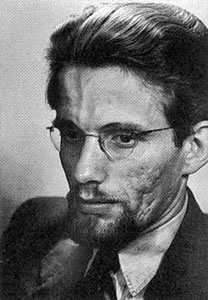
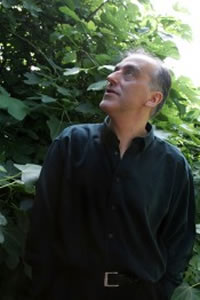
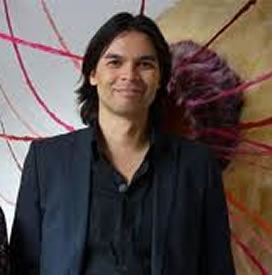
De Vlaamse dichter Frédéric Leroy werd geboren op 2 december 1974 in Blankenberge. Zie ook alle tags voor Frédéric Leroy op dit blog.


De nood aan vaste middelpunten


Het staat ook in de reisgids: de kennismaking met de stad
begint niet aan de poorten maar in het hart, het plein
waar guillotines blinken tussen bloemen en fruit.
Rechtdoor en links zegt u? De man met glazen benen
bedankt het bloemenmeisje, zet de eerste stappen


in het stenen labyrint. Hij is nieuw hier maar declameert
luid en met overtuiging het unieke van elke stoeptegel,
van elk nastarend gezicht – uniek zoals ook woorden
strijdbaar van elkaar willen verschillen (vreemdeling
en vreemdeling twee anderen zijn). Zijn glazen benen


vertonen barsten maar dat deert hem niet: de stad is mooi
en geurt naar honderd verschillende kruiden tegelijk.


De avonden


Ik ben ze gaan liefhebben:


de avonden - hoe ze zwart
op de klaver druipen en ik
ze met open deur opwacht


stoet van stinkende nonnen


hoe ik dan niets heb dan wijn en brood
en hoe ze daar genoegen mee nemen


maar nooit blijven willen, rusteloos zijn


als uit hun rokken schatten vallen
eieren die over de houten vloer
stuiteren, onder meubelen rollen
nachtelijk worden uitgebroed


god weet tot welke monsters.


De avonden. Telkens
wat vozer, wat roestiger
wat meer vooringenomen.


Ondraaglijke lichtheid


In het raam een meisje, jong nog en vrijwillig
machteloos, overtollige zwaarte heeft ze
vrolijk naast zich neergelegd: want zij is licht
en vluchtig, in essentie een uitgehold raadsel
dat moeiteloos de kunst verstaat van het verdwijnen
in de alledaagsheid: zij is de fluisterstem,
de vogelvlucht, het trillen van het spinnenweb,
het licht dat uitdooft op de bodem van de put.


Zij is,


in het raam een meisje, een schatje en ze werkt
je danig op de zenuwen – je hebt een borrel nodig,
denk je, maar bij elke slok wordt je lichaam
weer wat zwaarder, een gapend gravitatieveld.


 1044318-1b7d89ce8be7b760283a65d9dd418f3f.jpg

Frédéric Leroy (Blankenberge, 2 december 1974)


De Duitse schrijver Botho Strauß werd geboren op 2 december 1944 in Naumburg an der Saale. Zie ook mijn blog van 2 december 2007 en ook mijn blog van 2 december 2008 en ook mijn blog van 2 december 2009 en ook mijn blog van 2 december 2010.

Uit: Kongreß / Die Kette der Demütigungen


»Was wollen Sie sagen? Sagen Sie es mir! Sie brauchen nicht laut zu sprechen. Ich sehe Sie unter Ihrer Schreibtischlampe sitzen, Sie beugen den Kopf über das Buch, doch Sie lesen nicht. Ihr Blick streift nur eben diesen Flitterkram der Schrift, man möchte meinen, er stöbere darin wie die Fußspitze des verkaterten Frühaufstehers, der am Morgen nach dem Fest im bunten Abfall von Luftschlangen,

Seidenpapier, zerfetzten Knallbonbons raschelt, lustlos, ohne den geringsten Versuch, mit dem Aufräumen zu beginnen. Sie sehen hinein, als hätten Sie gestern eine Bekanntschaft gemacht, von der Ihnen heute nur noch ein rötlicher stechender Umriß geblieben ist. Von der Ihnen heute etwas ebenso Ungefähres wie Unliebsames schwant. Sie haben vielleicht irgend etwas getan, oder besser gesagt: Sie haben etwas in die Vergessenheit befördert, um die Art und Weise Ihres Vorgehens einmal höflich zu umschreiben. Sie können sich nicht von diesen Zeilen trennen, denn Sie spüren eine gewisse Geborgenheit in ihrem bequemen, geraden Verlauf, eine gewisse Leichtigkeit, auf ihrem Fluß

dahingetragen zu werden. Sie können sich nicht von ihnen trennen, aber Sie hängen auch nicht an ihnen. Sie könnten genauso gut das Buch schließen, Ihren Papierkorb ausleeren, die Servietten im Schrank umsortieren oder etwas beliebig anderes tun, um Ihre Gedankenverlorenheit zu genießen. Um sich schließlich doch dafür zu entscheiden, leise und vorsichtig mit dem Sprechen zu beginnen, es auszusagen, was nun einmal heraus muß, mir das Vertrauen zu schenken, das ich verdiene.«

Der Leser senkte den Kopf und blies in die feine, staubfeine Stimme hinab, die aus der Ritze zwischen den Seiten, aus der Vertiefung des Buchs geflüstert hatte. Er war tatsächlich sehr müde und kämpfte mit dichtem Auge gegen die Gewalt des Verlesens an.”


 1044318-5f145bff0afb74dee83a13dfba92b5d0.jpg

Botho Strauß (Naumburg, 2 december 1944)


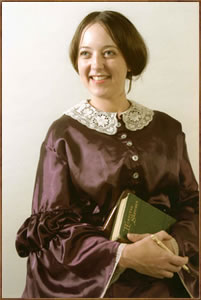
De Amerikaanse schrijfster Ann Patchett werd geboren in Los Angeles op 2 december 1963. Zie ook mijn blog van 2 december 2007 en ook mijn blog van 2 december 2008 en ook mijn blog van 2 december 2009 en ook mijn blog van 2 december 2010.


Uit: State Of Wonder


„The news of Anders Eckman’s death came by way of Aerogram, a piece of bright blue airmail paper that served as both the stationery and, when folded over and sealed along the edges, the envelope. Who even knew they still made such things? This single sheet had traveled from Brazil to Minnesota to mark the passing of a man, a breath of tissue so insubstantial that only the stamp seemed to anchor it to this world. Mr. Fox had the letter in his hand when he came to the lab to tell Marina the news. When she saw him there at the door she smiled at him and in the light of that smile he faltered.

“What?” she said finally.

He opened his mouth and then closed it. When he tried again all he could say was, “It’s snowing.”

“I heard on the radio it was going to.” the window in the lab where she worked faced out into the hall and so she never saw the weather until lunchtime. She waited for a minute for Mr. Fox to say what he had come to say. She didn’t think he had come all the way from his office in the snow, a good ten buildings away, to give her a weather report, but he only stood there in the frame of the open door, unable either to enter the room or step out of it. “Are you all right?”

“Eckman’s dead,” he managed to say before his voice broke, and then with no more explanation he gave her the letter to show just how little about this awful fact he knew.

There were more than thirty buildings on the Vogel campus, labs and office buildings of various sizes and functions. There were labs with stations for twenty technicians and scientists to work at the same time. Others had walls and walls of mice or monkeys or dogs. This particular lab Marina had shared for seven years with Dr. Eckman. It was small enough that all Mr. Fox had to do was reach a hand towards her, and when he did she took the letter from him and sat down slowly in the gray plastic chair beside the separator. At that moment she understood why people say You might want to sit down. There was inside of her a very modest physical collapse, not a faint but a sort of folding, as if she were an extension ruler and her ankles and knees and hips were all being brought together at closer angles.“


1044318-19734a6ad4f65ff1002984ffd38ff550.jpg
Ann Patchett (Los Angeles, 2 december 1963)


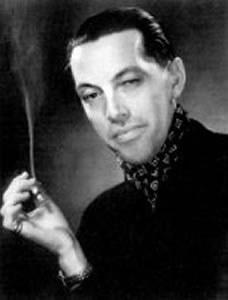
De Nederlandse dichter en schrijver  Hein (Hendrik Jan) Boeken werd geboren in Amsterdam op 2 december 1861. Zie ook mijn blog van 2 december 2010.


Augustus


Hij nu genoot de volheid: als de bijen

Vloog 't af en aan, 't gonst zwaar daar in de tuinen,

In 't gonzen stemmen, en de buige-kruinen

Zij vallen beurtlings schijnbaar naar al zijen;


De maajers werken; in het al-vermeijen

Kijkende de oogen; als de fell' bazuinen

Schalt 't in de fladder-berken, van de kruinen

Der bergen valt 't op vlakten. Dit verblijen


Vond één man, slank wang-bleekig; - en een mann'tje

Kaal-kruinig, breed, krom-armig, die 't rumoerig

Leven wel kend', stad, beemd, luidende volheid, -


En nog een ander mann'tje, liefdspraak, - en dan 't manne'tje

Die 't al liet leven, en liet staan 't uitvoerig

Levens-lijk-denkmaal van zijn volte en holheid.


Dante


Die in zijn jeugd zag schoonsten jeugde-droom,

Liefst ziele-lijfjen in scharlaken-rood,

Toen wit-glimp-wolkjen, - want Haar nam de dood,

Op in het luchtruim, - zingende in zijn droom


Verre englen-stemmen stijgend, - ùit den droom

't Ontwaken: Haar dood, al wat 't leven bood

Hèm sombre dood en klacht en angst en nood,

En toorn op Roomsche Rijk, Itaalje en Room-


-sche Kerk, - en dan die schoonste ziel, die zingt,

En zingt door al zijn leven, dichtst bij God,

Jezus, Maria, en dáár-om het lot


Van duizenden, door hem om God gekringd,

Die boven de' afgrond, waarin jammer woont,

En louterende zielen lichtend troont.


 1044318-feaa993ac6bbf987a39033aba50a8714.jpg

Hein Boeken (2 december 1861 – 19 oktober 1933)
Portret door Willem Witsen, voor 1923


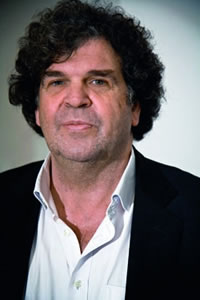
De Amerikaanse schrijver Thomas Coraghessan Boyle werd geboren op 2 december 1948 in Peekskill, New York. Zie ook mijn blog van 2 december 2009 en ook mijn blog van 2 december 2010.


Uit: Greasy Lake


„There was a time when courtesy and winning ways went out of style, when it was good to bead, when you cultivated decadence like a taste.  We were all dangerous characters then.  We wore torn-up leather jackets, slouched around with toothpicks in our mouths, sniffed glue and ether and what somebody claimed was cocaine.  When we wheeled our parents' whining station wagons out into the street we left a patch of rubber half a block long.  We drank gin and grape juice, Tango, Thunderbird, and Bali Hai.  We were nineteen.  We were bad.  We read Andre Gide and struck elaborate poses to show that we didn't give a shit about anything.  At night, we went up to Greasy Lake.
        Through the center of town, up the strip, past the housing developments and shopping malls, street lights giving way to the thin streaming illumination of the headlights, trees crowding the asphalt in a black unbroken wall: that was the way out to Greasy Lake.  The Indians had called it Wakan, a reference to the clarity of its waters.  Now it was fetid and murky, the mud banks glittering with broken glass and strewn with beer cans and the charred remains of bonfires.  There was a single ravaged island a hundred yards from shore, so stripped of vegetation it looked as if the air force had strafed it.  We went up to the lake because everyone went there, because we wanted to snuff the rich scent of possibility on the breeze, watch a girl take off her clothes and plunge into the festering murk, drink beer, smoke pot, howl at the stars, savor the incongruous full-throated roar of rock and roll against the primeval susurrus of frogs and crickets.  This was nature.
        I was there one night, late, in the company of two dangerous characters.  Digby wore a gold star in his right ear and allowed his father to pay his tuition at Cornell; Jeff was thinking of quitting school to become a painter/musician/head-shop proprietor.  They were both expert in the social graces, quick with a sneer, able to manage a Ford with lousy shocks over a rutted and gutted blacktop road at eighty-five while rolling a joint as compact as a Tootsie Pop stick.“ 


1044318-69640ef0498556052d1a8888364d32a2.jpg
T. C. Boyle (Peekskill, 2 december 1948)


Zie voor nog meer schrijvers van de 2e december ook
mijn vorige blog van vandaag.
Geschreven door Romenu om 19:14 Reageer op dit bericht
Reageer op dit bericht

Reageer op dit bericht

Een titel of je eigen website toevoegen

De blogger leest alles eerst na: je tekst verschijnt zodra die goedgekeurd is.

George Saunders, Iakovos Kampanellis, Jacques Lacarrière, Eric L. Harry

De Amerikaanse schrijver George Saunders werd geboren op 2 december 1958 in Chicago. Zie ook mijn blog van 2 december 2007 en ook mijn blog van 2 december 2008 en ook mijn blog van 2 december 2009 en ook mijn blog van 2 december 2010.


Uit: CivilWarLand in Bad Decline


“Whenever a potential big investor comes for the tour the first thing I do is take him out to the transplanted Erie Canal Lock. We've got a good ninety feet of actual Canal out there and a well-researched dioramic of a coolie campsite. Were our faces ever red when we found out it was actually the Irish who built the Canal. We've got no budget to correct, so every fifteen minutes or so a device in the bunkhouse gives off the approximate aroma of an Oriental meal.

Today my possible Historical Reconstruction Associate is Mr. Haberstrom, founder of Burn'n'Learn. Burn'n'Learn is national. Their gimmick is a fully stocked library on the premises and as you tan you call out the name of any book you want to these high-school girls on roller skates. As we walk up the trail he's wearing a sweatsuit and smoking a cigar and I tell him I admire his acumen. I tell him some men are dreamers and others are doers. He asks which am I and I say let's face it, I'm basically the guy who leads the dreamers up the trail to view the Canal Segment. He likes that. He says I have a good head on my shoulders. He touches my arm and says he's hot to spend some reflective moments at the Canal because his great-grandfather was a barge guider way back when who got killed by a donkey. When we reach the clearing he gets all emotional and bolts off through the gambling plaster Chinese. Not to be crass but I sense an impending sizable contribution.“


 1044310-e4ec61b621104d6ba03d8a961b097226.jpg

George Saunders (Chicago, 2 december 1958)


De Griekse dichter en schrijver
Iakovos Kampanellis werd geboren op 2 december 1922 in Hora op het eiland Naxos. Iakovos Kampanellis overleed op 29 maart van dit jaar op 88-jarige leeftijd in Athene. Zie
ook mijn blog van 2 december 2010.

Uit: World Theatre Day Message 2001

"I believe that Theatre will never cease to exist. I think, even if this might sound paradoxical, that this ancient Art is also an Art of the Future. Not because of the will of those who create Theatre – playwrights, actors, directors - and all the other factors that contribute to a performance, but because you, the people, the audience, will still want it to exist in the future.
On what do I base this optimistic prediction about Theatre’s future? On the belief that the creation of Theatre stems from a person’s psychical need, a need that will never be eradicated.
I invite you all today to share some thoughts that would seem to justify my point of view. The fact that Man walked on the Moon seems already an old story! It no longer impresses us that a spaceship went to planet Mars and brought back samples of its soil! A huge space station providing accommodation for space tourists and young couples on their honeymoon is already under construction and spaceships exploring distant planets and sending their photos back to Earth are now almost an everyday occurrence!
However, although we are living in a time when humanity is conquering space, we still continue to go to the Theatre, and find ourselves in a space belonging to an Art that has existed and functioned with the same simple means, ever since measuring time with a sundial was thought to be a great technical achievement. In my view, this evident, timeless relation between human beings and theatre is an eternal one. This is because I believe that while Theatre evolved into a social phenomenon, it was, at the beginning, a natural one. Theatre dates from the time that the first human beings began to memorize their experiences and represent them in imagination, from the time that human beings began to plan their actions, imagining how to accomplish them. The first theatre company and the first theatrical performances took shape in the minds of men and women. Every person has an innate need and ability to create performances. Have you ever realized that each of us, without exception, has at his or her disposal a private theatre company, in which we ourselves play the leading role while at the same time being our own audience ? Very often, we are also the playwright, the director and the set designer of this company. How and when does this occur?”


 1044310-d1f8592ee633bfc4dc9210872bb28d47.jpg

Iakovos Kampanellis (2 december 1922 - 29 maart 2011)


De Franse schrijver Jacques Lacarrière werd geboren op 2 december 1925 in Limoges. Zie ook mijn blog van 2 december 2010.


Uit: L'Eté grec


« Il est vrai que je dois à quelque heureuse disposition de la nature (comme on eût dit dans des récits anciens) de m’adapter très vite aux usages, aux nourritures, aux façons de vivre des lieux où je voyage. La chose n’est pas si aisée, même à vingt-cinq ans. Il y faut un minimum de santé organique, un estomac solide, un foie docile, des papilles libertaires qui acceptent sans trop rechigner  le tsipouro de deux heures du matin, après la liqueur de banane, le yaourt de chèvre qu’on a laissé deux jours au milieu des mouches, l’eau jaune, parfois verte, des citernes où la pluie s’est fait trop attendre. Mais, ce faisant, j’ai éprouvé tous les plaisirs d’un corps qu’on nourrit, qu’on fatigue et qu’on délasse autrement, première façon qu’à un pays de vous parler: par ce qu’il introduit en vous de substances nouvelles, de liquides fantasques.

La Crête m’enseigna tout cela par sa nourriture montagnarde, ses fromages secs, ses olives, ses fruits, ses bouillies d’épeautre, son pain noir, son vin rosé et d’autres saveurs que je découvris: les graines et l’huile de sésame, le fenouil séché au soleil, le basilic frais, le miel de résine et partout ce goût et cette odeur de chèvre qui couvre jusqu’aux vêtements à force de dormir dans les villages sur des planches recouvertes de peaux. J’ai même une fois mangé de l’aigle (…) »


 1044310-14e4cae9631fa994ccab2c774581bbab.jpg

Jacques Lacarrière (2 december 1925 - 17 september 2005)


De Amerikaanse schrijver Eric L. Harry werd geboren op 2 december 1958 in Ocean Springs, Mississippi. Zie ook mijn blog van 2 december 2007 en ook mijn blog van 2 december 2009.


Uit: Inside Delta Force


„I am a nomad, son of an ancient line of nomads. The larger part of my family line is made up of the Scots-Irish, a people descended from that peculiar mixture of the Celts of the northern British Isles and the invading Danes and Norsemen. The result was a landless, illiterate, anarchic, and warlike people who were always difficult, if not downright impossible, to govern. They were a race the British Crown rightfully viewed as dangerous rebels, and consequently exiled to the New World by the tens of thousands.

On arrival in the American colonies, these people fled as far as possible from government control, many of them crossing the Blue Ridge Mountains, and migrating from there throughout what eventually became the highlands of the southern United States. They were the original "backwoodsmen" of American history. In their new home these renegade peoples tended to travel together in interrelated clans that also married and bred quite readily with the Cherokee and Creek Indians of the region.

Both sides of my family were landless sharecroppers and mountain people as far back as I can determine. There is no written record of ancestry, for my parents were the first of our people to read and write and to own a little property. Inherited wealth may be something easily squandered, but inherited poverty is a legacy almost impossible to lose.

What did I receive from this lineage? Things I consider to be very valuable: a good raw intellect and a good tough body. A sense of independence and a realization that wherever I am is my home. A sense of humor. A sense of personal honor that results in a touchiness common to our people. We are easily offended and prone to violence when offended. When the only thing you own is your sense of honor, you tend to protect it at all costs.

I inherited a sense of wanderlust and a curiosity about the world. I inherited a warlike attitude; we have always been good soldierly material if properly disciplined and broken in. I inherited a sense of spirituality rather than "religion," which has served me well, especially in trying times. I am self-confident and resilient. My psyche is self-cleansing. I love life.“


1044310-382a07a54dd6db7c108c11e787a257ae.jpg
Eric L. Harry (Ocean Springs, 2 december 1958)

Geschreven door Romenu om 19:00 2 reacties Reageer op dit bericht

In Memoriam Christa Wolf


In Memoriam Christa Wolf


De (Oost-)Duitse schrijfster Christa Wolf is op de leeftijd van 82 jaar in Berlijn overleden. Dat heeft vandaag haar uitgeverij, de Suhrkamp Verlag, laten weten. De Duitse schrijfster Christa Wolf werd geboren op 18 maart 1929 in het huidige Poolse Gorzów Wielkopolski. Zie ook alle tags voor Christa Wolf op dit blog.


Uit: Was bleibt


„Aber das weiß ich doch, daß man durch willentlichen Entschluß keinen Himmelsschatz erwirbt, der sich unter der Hand vermehrt; weiß doch: Alle Nahrung über des Leibes Notdurft hinaus wächst uns zu, ohne daß wir sie Stück um Stück zusammentragen müßten oder dürften, sie sammelt sich von selbst, und ich fürchte ja, alle diese wüsten Tage würden nichts beisteuern zu dieser dauerhaften Wegzehrung und deshalb unaufhaltbar im Strom des Vergessens abtreiben. In heller Angst, in panischer Angst wollte ich mich jetzt an einen dieser dem Untergang geweihten Tage klammern und ihn festhalten, egal, was ich zu fassen kriegen würde, ob er banal sein würde oder schwerwiegend, und ob er sich schnell ergab oder sich sträuben würde bis zuletzt. So stand ich also, wie jeden Morgen, hinter der Gardine, die dazu angebracht worden war, daß ich mich hinter ihr verbergen konnte, und blickte, hoffentlich ungesehen, hinüber zum großen Parkplatz jenseits der Friedrichstraße.
Übrigens standen sie nicht da. Wenn ich recht sah - die Brille hatte ich mir natürlich aufgesetzt -, waren alle Autos in der ersten und auch die in der zweiten Parkreihe leer. Anfangs, zwei Jahre war es her, daran maß ich die Zeit, hatte ich mich ja von den hohen Kopfstützen mancher Kraftfahrzeuge täuschen lassen, hatte sie für Köpfe gehalten und ob ihrer Unbeweglichkeit beklommen bestaunt; nicht, daß mir gar keine Fehler mehr unterliefen, aber über dieses Stadium war ich hinaus. Köpfe sind ungleichmäßig geformt, beweglich, Kopfstützen gleichförmig, abgerundet, steil - ein gewaltiger Unterschied, den ich irgendwann einmal genau beschreiben könnte, in meiner neuen Sprache, die härter sein würde als die, in der ich immer noch denken mußte. Wie hartnäckig die Stimme die Tonhöhe hält, auf die sie sich einmal eingepegelt hat, und welche Anstrengung es kostet, auch nur Nuancen zu ändern. Von den Wörtern gar nicht zu reden, dachte ich, während ich anfing, mich zu duschen - den Wörtern, die, sich beflissen überstürzend, hervorquellen, wenn ich den Mund aufmache, angeschwollen von Überzeugungen, Vorurteilen, Eitelkeit, Zorn, Enttäuschung und Selbstmitleid.
Wissen möchte ich bloß, warum sie gestern bis nach Mitternacht dastanden und heute früh einfach verschwunden sind.“


1043596-98836c154ecd813467f5d0314d454dca.jpg
Christa Wolf (18 maart 1929 – 1 december 2011)


Zie voor de schrijvers van de 1e december ook
mijn vorige blog van vandaag
en eveneens mijn eerste blog van vandaag. Zie ook ter herinnering aan Ramses Shaffy.

Geschreven door Romenu om 21:41 Reageer op dit bericht

Tahar Ben Jelloun, Daniel Pennac, Billy Childish, Henry Williamson

De Marokkaanse romanschrijver, dichter en essayist Tahar Ben Jelloun werd geboren in Fez op 1 december 1944. Zie ook mijn blog van 1 december 2007 en ook mijn blog van 1 december 2008 en ook mijn blog van 1 december 2009 en ook mijn blog van 1 december 2010.


Uit: Leaving Tangier (Vertaald door Linda Coverdale)


“In Tangier, in the winter, the Café Hafa becomes an observatory for dreams and their aftermath. Cats from the cemetery, the terraces, and the chief communal bread oven of the Marshan district gather round the café as if to watch the play unfolding there in silence, and fooling nobody. Long pipes of kif pass from table to table while glasses of mint tea grow cold, enticing bees that eventually tumble in, a matter of indifference to customers long since lost to the limbo of hashish and tinseled reverie. In the back of one room, two men meticulously prepare the key that opens the gates of departure, selecting leaves, then chopping them swiftly and efficiently. Neither man looks up. Leaning back against the wall, customers sit on mats and stare at the horizon as if seeking to read their fate. They look at the sea, at the clouds that blend into the mountains, and they wait for the twinkling lights of Spain to appear. They watch them without seeing them, and sometimes, even when the lights are lost in fog and bad weather, they see them anyway.

Everyone is silent. Everyone listens. Perhaps she will show up this evening. She’ll talk to them, sing them the song of the drowned man who became a sea star suspended over the straits. They have agreed never to speak her name: that would destroy her, and provoke a whole series of misfortunes as well. So the men watch one another and say nothing. Each one enters his dream and clenches his fists. Only the waiters and the tea master, who owns the café, remain outside the circle, preparing and serving their fare with discretion, coming and going from terrace to terrace without disturbing anyone’s dream. The customers know one another but do not converse. Most of them come from the same neighborhood and have just enough to pay for the tea and a few pipes of kif. Some have a slate on which they keep track of their debt. As if by agreement, they keep silent. Especially at this hour and at this delicate moment when their whole being is caught up in the distance, studying the slightest ripple of the waves or the sound of an old boat coming home to the harbor. Sometimes, hearing the echo of a cry for help, they look at one another without turning a hair.“


1043593-5c2bee415b5e969a08b0fb977ece8ec7.jpg
Tahar Ben Jelloun (Fez, 1 december 1944)


De Franse schrijver
Daniel Pennac werd geboren in Casablanca op 1 december 1944. Zie ook mijn blog van 1 december 2007 en ook mijn blog van 1 december 2008 en ook mijn blog van 1 december 2009 en ook mijn blog van 1 december 2010.

Uit:
La Petite Marchande de Prose

„Et là, Saint-Hiver, le très sérieux, s’était accordé un sourire malicieux.
     — Et parmi ces artistes, nous comptons même des architectes qui conçoivent en ce moment  les plans d’élargissement de notre prison.
     L’effet de stupeur fonctionna au quart de poil:
     — Vous voulez dire que vos prisonniers sont en train de construire leurs propres cellules? s’est exclamée Julie.
     — N’est-ce pas ce que nous faisons tous?

(...)


     Parce qu’il me l’a fait visiter, sa sacrée taule! Et c’est vrai que j’en suis resté tout debout! Incroyable, quand j’y repense: on croit ouvrir des cellules, et on tombe sur des auditoriums dernier cri, des ateliers de peinture éclairés comme le ciel, des bibliothèques monacales où le type, penché sur son boulot, sa corbeille débordant de brouillons, se retourne à peine pour saluer les visiteurs. Rares, d’ailleurs, les visiteurs. Très tôt après leur incarcération, les prisonniers de Saint-Hiver renoncent aux visites. Saint-Hiver affirme n’y être pour rien.
     (Mouvement de mèche.) Très vite, ces hommes sentent qu’ils ont acquis entre ces murs une liberté qu’il leur faut préserver des atteintes de l’extérieur. S’ils ont tué, dehors, c’est, selon eux, parce qu’on leur a refusé le droit d’affirmer cette liberté-là.
     — Et leur refus des visites s’est étendu au rejet des médias sous toutes leurs formes, mademoiselle Corrençon, a précisé Saint-Hiver d’une voix appuyée. Ni journaux, ni radio, ni aucun autre vecteur de l’air du temps. Nous faisons nous-mêmes notre propre télévision.“


 1043593-a1a291ce1817e1a51350e0b954677d4d.jpg

Daniel Pennac (Casablanca, 1 december 1944)


De Britse dichter, schrijver, schilder, zanger en producer Billy Childish (echte naam William Charlie Mand) werd geboren op 1 december 1959 in Chatham, Kent. Zie ook mijn blog van 1 december 2010.


and all their dreams came true


we were the last kids to still have
brillcreamed hair
wear shorts to skool
and be beaten with sticks
and
our parents dreamed of a
new world
of more


more
cars
tvs
sweet wrappers
shopping centers
airports
cut-price meals
cheep booze
and limitless
dislocation


and whats worse
is
all their dreams came true


1043593-144b734f9d7db922a162ace5f6694de2.jpg
Billy Childish (Kent, 1 december 1959)


De Britse schrijver Henry Williamson werd geboren op 1 december 1895 in Londen. Zie ook mijn blog van 1 december 2010.


Uit: The Wet Flanders Plain


“Near St. Julien, opposite Triangle Farm, at a place called Vancouver, stands the most beautiful thing in the Salient. People call it the Canadian Memorial, but for me it is the memorial for all the soliders in the War. It faces towards Ypres, not towards a vanquiched enemy, as do so many of the war memorials to be seen in France to-day, such as the Gallic cock crowing triumphantly on a broken cannon at Roclincourt, or the caribou roaring eastwards from Beaumont Hamel, or the defiant artisan-soldier standing firm and fierce at Lens.

Do the dead feel cock-crowing triumph over the dead? The crowing is for the industrial magnates, the Lens or the Ruhr mine-owners, not for the poor unknowing working-men who fell in the Great Horror, and became part of it.

No; the colossal head and shoulders of the soldier with reversed arms emerging from the tall stone column has the gravity and strength of grief coming from full knowledge of old wrongs done to men by men. It mourns; but it mourns for all mankind. We are silent before it, as we are before the stone figures of the Greeks. The thoughtless one-sided babble about national righteousness or wrongess, the cliches of jingo patriotism, the abstract virtues parasitic on the human spirit, fade before the colossal figure of the common soldier by the warside.

The genius of Man rises out of the stone, and our tears fall before it.“


 1043593-6ad5c0da53502933326f5d87e297760b.jpg

Henry Williamson (1 december 1895 - 13 augustus 1977)


Zie voor nog meer schrijvers van de 1e december ook mijn vorige blog van vandaag.
Geschreven door Romenu om 21:12 Reageer op dit bericht

Mihály Vörösmarty, Valery Bryusov, Ernst Toller

De Hongaarse dichter Mihály Vörösmarty werd geboren op 1 december 1800 in Puszta-Nyék. Zie ook mijn blog van 1 december 2006 en ook mijn blog van 1 december 2008 en ook mijn blog van 1 december 2009. en ook mijn blog van 1 december 2010.


Bitterer Kelch


Wenn stark mit Mannesmut
auf eine Frau du setzt,
und sie mit leichtem Blut
dein ganzes Glück zerfetzt;
wenn sie im Blick ein Lächeln und
verwünschte Tränen trägt,
schärft eines der Begierde Mund,
das andre Wunden schlägt;
so trink und sei gescheit:
Die Welt hält keine Ewigkeit;
sie löst sich auf, vergeht wie Schaum,
es bleibt, was war, der leere Raum.


Wenn dich mit einem Freund
wie Herz und Hirn und Hand
selbst das Geheimste eint
von Ehr und Vaterland;
und er in Meuchelmördertat
ins Herz dir stößt den Stahl,
so daß dein Schicksal durch Verrat
zuuchte wird und schal;
so trink und sei gescheit:
Die Welt hält keine Ewigkeit;
sie löst sich auf, vergeht wie Schaum,
es bleibt, was war, der leere Raum.


Wenn du in Not und Nacht
ums Vaterland dich mühst,
in mörderischer Schlacht
dafür dein Blut vergießt,
und dieses, schlecht beraten,
weist den treuen Dienst zurück
und wird von Feigen, Dummen dreist
geopfert Stück um Stück;
so trink und sei gescheit:
Die Welt hält keine Ewigkeit;
sie löst sich auf, vergeht wie Schaum,
es bleibt, was war, der leere Raum.


Wenn schmerzhaft in der Brust
der Wurm der Sorgen nagt,
wo Glück war, ist Verlust,
du siehst die Welt verzagt
hinschwinden, und von Freude leer
kehrt sich dein Tag und geht,
von neuem anzufangen wär
vergeblich und zu spät;
so trink und sei gescheit:
Die Welt hält keine Ewigkeit;
sie löst sich auf, vergeht wie Schaum,
es bleibt, was war, der leere Raum.


Wenn Kümmernis und Wein
im Hirn sich mischen mild,
erhellt sich von allein
das öde Lebensbild,
dann denke kühn und handle groß
und setz dein Leben dran:
Kein Schicksal findet hoffnungslos
den unverzagten Mann.
So trink und sei gescheit:
Die Welt hält keine Ewigkeit;
doch wie sie steht, solang sie lebt,
sie rastet nicht, sie schafft und webt.


Vertaald door Günther Deicke


 1043586-6c834e8345b8baa2b50d3484b0a09c94.jpg

Mihály Vörösmarty (1 december 1800 – 19 november 1855)

Monument in Boedapest


De Russische dichter en schrijver Valery Bryusov werd geboren op 1 december 1873 in Moskou. Zie ook mijn blog van 1 december 2006 en ook mijn blog van 1 december 2008 en ook mijn blog van 1 december 2009. en ook mijn blog van 1 december 2010. 


Love


Don't think of something small or earthly,

If blasts a fateful storm above --

And don't be shameful of your fear,

Just bend your head before your dear.

Your pliant heart is joining, gladly,

The Genesis by means of love.


Your love comes like a cloud, potent.

Pray, when you've caught it in your sights!

Don't let your heart to be persistent,

Don't get aside, but be assistant!

Regardless of who'd brought the goblet --

It has a gift of sacred heights.


When curtains of house fall down


When curtains of house fall down,

And the lamps' mitigating light

Makes peaceful all shadows around,

I hear the song of delight.


I needn't the astonishing glow,

The beauty and great of the sky.

A curtain, fall down, fall low!

The world, go out and fly!


I have here my books -- lines and letters,

And here my meter plays...

And I know the sweet of the fetters

In deeps of the prisons-caves!


Vertaald door Yevgeny Bonver


 1043586-d744e20196df8d40bc3cac1a34eb35d5.jpg

Valery Bryusov (1 december 1873 - 9 oktober 1924)


De Duitse dichter en schrijver Ernst Toller werd geboren op 1 december 1893 in Samotschin (tegenwoordig Szamocin). Zie ook mijn blog van 1 december 2006 en ook mijn blog van 1 december 2008 en ook mijn blog van 1 december 2009. en ook mijn blog van 1 december 2010.


Wälder


Ihr Wälder fern an Horizonten schwingend,
Vom abendlichen Hauche eingehüllt,
Wie meine Sehnsucht friedlich euch erfüllt,
Minuten Schmerz der Haft bezwingend.


Ich presse meine Stirne an die Eisensäulen,
Die Hände rütteln ihre Unrast wund,
Ich bin viel ärmer als ein armer Hund,
Ich bin des ausgestoßnen Tieres hilflos Heulen.


Ihr Buchenwälder, Dome der Bedrückten,
Ihr Kiefern, Melodie der Heimat, tröstet Leid,
Wie wobet ihr geheimnisvoll um den beglückten


Knaben der fernen Landschaft wundersames Kleid ...
Wann werde ich, umarmt vom tiefen Rauschen,
Den hohen Psalmen eurer Seele lauschen?


Pfade zur Welt


Wir leben fremd den lauten Dingen,

Die um die Menge fiebernd kreisen,

Wir wandern in den stilleren Geleisen

Und lauschen dem Verborgnen, dem Geringen.


Wir sind dem letzten Regentropfen hingegeben,

Den Farbentupfer rundgeschliffner Kieselsteine,

Ein guter Blick des Wächters auslöscht das Gemeine,

Wir fühlen noch im rohen Worte brüderliches Leben.


Ein Grashalm offenbart des Kosmos reiche Fülle,

Die welke Blume rührt uns wie ein krankes Kind,

Der bunte Kot der Vögel ist nur eine Hülle


Des namenlosen Alls, dem wir verwoben sind.

Ein Wind weht menschlich Lachen aus der Ferne,

Und uns berauscht die hymnische Musik der Sterne.


1043586-361b300cfd8a80595563ba593e8eb9ee.jpg
Ernst Toller (1 december 1893 – 22 mei 1939)

Geschreven door Romenu om 21:05 Reageer op dit bericht

Herinnering aan Ramses Shaffy

Herinnering aan Ramses Shaffy


Nederlands grootste chansonnier Ramses Shaffy is vandaag precies twee jaar geleden op 76-jarige leeftijd overleden.


De Nederlandse chansonnier en acteur Ramses Shaffy werd op 29 augustus 1933 geboren in de Parijse voorstad Neuilly-sur-Seine als zoon van een Egyptische diplomaat en een Poolse gravin van Russische afkomst. Zie ook mijn blog van 1 december 2010.


't Is stil in Amsterdam


De mensen zijn gaan slapen
De auto's en de fietsen

Zijn levenloze dingen

De stad behoort nu nog

Aan een paar enkelingen

Zoals ik

Die houden van verlaten straten

Om zomaar hardop

In jezelf te kunnen praten

Om zomaar hardop te kunnen zingen

Want de auto's en de fietsen

Zijn levenloze dingen

Als de mensen zijn gaan slapen

't Is zo stil in Amsterdam

En godzijdank niemand

Die ik tegenkwam


't Is stil in Amsterdam

De mensen zijn gaan slapen

Ik steek een sigaret op

En kijk naar het water

En denk over mezelf

En denk over later

Ik kijk naar de wolken

Die overdrijven

Ik ben dan zo bang

Dat de eenzaamheid zal blijven

Dat ik altijd zo zal lopen

Op onmogelijke uren

Dat ik eraan zal wennen

Dat dit zal blijven duren

Als de mensen zijn gaan slapen

't Is zo stil in Amsterdam

Ik wou

Dat ik nu eindelijk iemand tegenkwam


 1043222-0495faba967a52e9206f783f2fde4ed5.jpg

Ramses Shaffy (29 augustus 1933 – 1 december 2009)


Geschreven door Romenu om 13:33 Reageer op dit bericht

David Nicholls, Lee Klein, Adeline Yen Mah, Reinier de Rooie

De Engelse schrijver David Nicholls werd geboren op 30 november 1966 in Eastleigh, Hampshire. Zie ook mijn blog van 30 november 2008 en ook mijn blog van 30 november 2009.en ook mijn blog van 30 november 2010.


Uit: The Understudy


„Stephen C McQueen had two C.Vs.

Alongside the real-life resumé of all the things he had actually achieved, there was the Nearly CV. This was the good-luck version of his life, the one where the close-shaves and the near-misses and the second-choices had all worked-out; the version where he hadn’t been knocked off his bike on the way to that audition, or come down with shingles during the first week of rehearsal; the one where they hadn’t decided to give the role to that bastard off the telly.

This extraordinary phantom career began with Stephen almost-but-not-quite winning huge praise for his show-stealing Malcolm in Macbeth in Sheffield, then consequently very nearly giving his heart-breaking Biff in Death of a Salesman on a nationwide tour. Soon afterwards, the hypothetical reviews that he would probably have received for his might-have-been King Richard II had to be read to be believed. Diversifying into television, he had come oh-so-close to winning the nations hearts’ as cheeky, unorthodox lawyer Todd Francis in hit TV series Justice For All, and a number of successful film roles, both here and abroad, had quite conceivably followed.

Unfortunately, all these great triumphs had taken place in other, imaginary worlds, and there were strict professional rules about submitting your parallel-universe resumé. This unwillingness to take into account what had taken place in other space-time dimensions meant that Stephen was left with his real-life C.V, a document that reflected both his agent’s unwillingness to say no, and Stephen’s extraordinary capacity, his gift almost, for bad luck. It was this real-life version of events that brought him here, to London’s glittering West End. 

At the age of eight, visiting London for the first time with his Mum and Dad, Piccadilly Circus had seemed like the centre of the Universe, an impossibly glamorous, alien landscape, the kind of place where, in an old British Sixties musical, a dance-routine might break-out at any moment. That was twenty-four years ago. It had since become his place-of-work, and coming up from the hot, soupy air of the tube station into the damp November evening, all Stephen saw was a particularly garish and treacherous roundabout. Nearby an adenoidal busker was doggedly working his way through the Radiohead song-book, and the chances of a dance-routine breaking out seemed very slight indeed. Stephen barely even noticed Eros these days, surely the most underwhelming landmark in the world. If he bothered to look up at all, it was only to check the digital clock under the Coca-Cola sign, to see if he was late.“


 1042723-e6fbd498e68d31f6aa59ba90e0b47690.jpg

David Nicholls (Hampshire, 30 november 1966)


De Amerikaanse dichter, schrijver en essayist Lee Klein werd geboren op 30 november 1965 in New York. Zie ook mijn blog van 30 november 2008 en ook mijn blog van 30 november 2009 en ook mijn blog van 30 november 2010.


THE  SHOPPPINGTOWN DOWN UNDER (Fragment)


The medical center at Shoppingtown

   Either by walk-in or appointment

   It’s pistachio lobby

   Opened onto the street

   From the outface of the Shoppingtown

   With floral print chairs and couches

   And the receptionists behind

   A large polished wood front-piece

   And overhead canvasses in reproduction

  Of one of Vincent Van Gogh’s paintings of irises

   Here the diminutive female Chinese doctor

   Measures my breathing

   Prescribes dosages of steroids

  And puts me on sessions with the nebulizer

  I make an appearance after being directed here

   By Joseph and Wilhemena

  The property managing duo

  Who seem like a suspect and villain?

    Or suspect and suspect

    On an episode of “Hart to Hart”

    Or Shopping Mall Poem She Wrote.

    Accompanied by my father to this Shoppingtown

    But at the medical office alone

    Which I now leave to go back into the interior of the mall

    To purchase my medicines and a disposable camera from a pharmacy

The disposable camera in hopes of taking pictures of myself with Cuban athletes

     Some of whom I have just spotted shopping, in order to recreate

    The William Jefferson Clinton and Fidel Castro handshake

    A few days prior at New York’s Metropolitan Museum of Art

Now during Pax Shoporama-

                We were looking so forward

    To peace in the Middle East

    So we could visit the Gaza Strip Mall

    And speak these epic-ending words

    “The Greatest Peace in Western History

    was known as the Pax Romana

    should this one last any longer

    it might be known as the Pax Shoporama”


 1042723-226c63bc02af9ec13ea5437faa0a9355.gif

Lee Klein (New York, 30 november 1965)


De Chinese schrijfster Adeline Yen Mah werd geboren op 30 november 1937 in Tianjin. Zie ook mijn blog van 30 november 2008 en ook mijn blog van 30 november 2009 en ook mijn blog van 30 november 2010.
 

Uit: Falling Leaves 


“We were both Edgar's victims, though perhaps James suffered more because for many years he shared a room with our two eldest brothers. He hated to make waves. When pushed around, he endured the blows passively or hid from his tormentor. Seeing me being beaten by Edgar he would skulk quickly away in blinkered silence. Afterwards, when Edgar was gone, he would creep back and try to console me, often muttering his favorite phrase 'Suan le!' (Let it be!) . . .

Of Niang's two children, she openly favoured Franklin. In physical appearance he was the spitting image of Niang: a handsome boy with round eyes and a pert upturned nose. Susan at this stage was still a baby. But they were already special. I don't recall either Edgar or Lydia ever laying a finger on them. James and I were the ones singled out to do everyone's bidding. If we were not fast enough there was often a slap or a shove, especially from Edgar.

I always felt more comfortable with my friends at school than at home, where I was considered inferior and insignificant, partly because of the bad luck I had brought about by causing the death of my mother. I remember watching my older sister and brothers playing tag or skipping rope and longing to be included in their games. Although James and I were very close, he went along with the others and became 'one of the boys' when they wished to preclude me.”


 1042723-ef2413d4a82013379fb0fe66e5b2d423.jpg

Adeline Yen Mah (Tianjin, 30 november 1937)


De Nederlandse dichter Reinier de Rooie werd geboren op 30 november 1961 in Hengelo. Zie ook mijn blog van 30 november 2010.


Aan de getergde muze

daar zit je dan: blijf van mijn lijf
en denkt ik kom je straks vermoorden
maar wist je niet dat dichterswoorden
- althans dan wat er overblijft
aan geluid het al dan niet sonore
geroezemoes van klinkers enzovoort -
slechts klanken zijn die ik bewoon
uit liefde voor de waarde
dat wat zich uitleeft wordt tot aarde?


Van eenzaamheid en dan de dood

voor dhr. Christoffel van Assen


Ik ken u goed maar heb u nooit ontmoet

bij leven en bij welzijn. Ik hoorde van

uw eenzaamheid, als kind al eenling

in het hoge noorden, een streng geloof

dé opstap naar verlegenheid

en alle appels werden u ontnomen.


Dan Rotjeknor, waar je in massa's

kunt ontkomen en niemand je echt ziet.

U nam er dienst achter het stuur,

vervoerde allerhande dromen

van hen die wel betaalden maar ook niet.


De oude dag bracht Hengelo

om nog een jaar of wat te schaken.

Dat snap ik niet: er was geen vrouw

die u hier trok, geen verleden dat lonkte,

geen vriend met wat wijn.


Ik ken u goed maar heb u nooit ontmoet

dan in dit innig eenzaam zijn.


Nu is het radicaal te laat. Geen hemel voor

wat nagepraat, geen wolkje dat ons samenvoegt.

U bent zo in en in verwoest, dat mij niets rest dan

deze groet, al is mij ooit in ongeloof ontschoten

wie hier de laatste zending doet.


1042723-fa17f29ccd66705cef273bdcd031a49c.jpg
Reinier de Rooie (Hengelo, 30 november 1961)


Zie voor nog meer schrijvers van de 30e november ook mijn vorige blog van vandaag en eveneens mijn eerste blog van vandaag.

Geschreven door Romenu om 19:15 Reageer op dit bericht

Jan G. Elburg, Mark Twain, Jonathan Swift

De Nederlandse dichter en schrijver Jan G. Elburg werd geboren op 30 november 1919 te Wemeldinge. Zie ook alle tags voor Jan G. Elburg op dit blog.


Liefste omdat de winter een kwaad seizoen is


Over ons voortbestaan

wordt beslist bij handopsteken

van verkeersagenten en sneeuw.

ik maak mij warm met waar praten

omdat in je gezicht je ogen

staan als twee bevende boeketjes.

dit stempelt mij met een gloed van haast

en met lippen met mijn naam van jezus

ertussen.

met herinnering aan kushanden.


overwinterend in mijn

keel

stoor ik mij met

hergezichten.

netels hart heb ik

en over van mijzelf.

onder het kaarslicht van

een winterhemel

hoor ik mijn mensen.

ik ent mij

op mensen

messen

hoogmoed

spelletje voor vingers

en vindersloon

en loopsheid

brood en ander eten.


ere wie mij toekomt

een lang hert een karyatide

van korenschoven een geloof

van aanwrijven

muren in en uit het liefde leven

van de helft dezer eeuw

een levende deense

ondersteek van vlees

voor mijn teveel

een hese hinde

van heel snelle benen

een afrekening.


er is haast geen tijd meer om te bekomen

van ons gevoel voor seizoenen.

ik verkavel

mij rakelings aan het hart voorbij.

er is veel haver in mijn handen

lievekoe.

er gaan paarden van waarheid staan.

haper nu.

laat de koude beschaamd staan buiten.


1042721-361d472227b9a981e62611fca5fd2fc8.jpg
Jan G. Elburg (30 november 1919 – 13 augustus 1992)


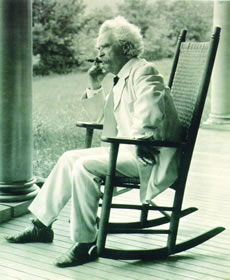
De Amerikaanse schrijver Mark Twain (pseudoniem van Samuel Langhorne Clemens) werd geboren op 30 november 1835 te Florida. Zie ook alle tags voor Mark Twain op dit blog.

Uit: Adventures of  Huckleberry Finn


„Miss Watson she kept pecking at me, and it got tiresome and lonesome. By and by they fetched the niggers in and had prayers, and then everybody was off to bed. I went up to my room with a piece of candle, and put it on the table. Then I set down in a chair by the window and tried to think of something cheerful, but it warn't no use. I felt so lonesome I most wished I was dead. The stars were shining, and the leaves rustled in the woods ever so mournful; and I heard an owl, away off, who-whooing about somebody that was dead, and a whippowill and a dog crying about somebody that was going to die; and the wind was trying to whisper something to me, and I couldn't make out what it was, and so it made the cold shivers run over me. Then away out in the woods I heard that kind of a sound that a ghost makes when it wants to tell about something that's on its mind and can't make itself understood, and so can't rest easy in its grave, and has to go about that way every night grieving. I got so down-hearted and scared I did wish I had some company. Pretty soon a spider went crawling up my shoulder, and I flipped it off and it lit in the candle; and before I could budge it was all shriveled up. I didn't need anybody to tell me that that was an awful bad sign and would fetch me some bad luck, so I was scared and most shook the clothes off of me. I got up and turned around in my tracks three times and crossed my breast every time; and then I tied up a little lock of my hair with a thread to keep witches away. But I hadn't no confidence. You do that when you've lost a horseshoe that you've found, instead of nailing it up over the door, but I hadn't ever heard anybody say it was any way to keep off bad luck when you'd killed a spider.“


 1042721-b9a0f813809327829d8c5963a1b5b99d.jpg

Mark Twain (30 november 1835 – 21 april 1910)


De Engelse schrijver
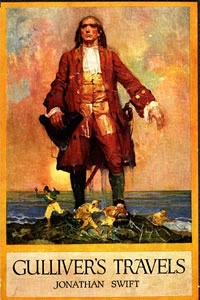
Jonathan Swift werd op 30 november 1667 in Dublin geboren uit Engelse ouders. Zie ook alle tags alle tags voor Jonathan Swift op dit blog. 


Uit: Gulliver's Travels


„It would not be proper, for some reasons, to trouble the reader with the particulars of our adventures in those seas; let it suffice to inform him, that in our passage from thence to the East Indies, we were driven by a violent storm to the north-west of Van Diemen's Land. By an observation, we found ourselves in the latitude of 30 degrees 2 minutes south. Twelve of our crew were dead by immoderate labour and ill food; the rest were in a very weak condition. On the 5th of November, which was the beginning of summer in those parts, the weather being very hazy, the seamen spied a rock within half a cable's length of the ship; but the wind was so strong, that we were driven directly upon it, and immediately split. Six of the crew, of whom I was one, having let down the boat into the sea, made a shift to get clear of the ship and the rock. We rowed, by my computation, about three leagues, till we were able to work no longer, being already spent with labour while we were in the ship. We therefore trusted ourselves to the mercy of the waves, and in about half an hour the boat was overset by a sudden flurry from the north. What became of my companions in the boat, as well as of those who escaped on the rock, or were left in the vessel, I cannot tell; but conclude they were all lost. For my own part, I swam as fortune directed me, and was pushed forward by wind and tide. I often let my legs drop, and could feel no bottom; but when I was almost gone, and able to struggle no longer, I found myself within my depth; and by this time the storm was much abated. The declivity was so small, that I walked near a mile before I got to the shore, which I conjectured was about eight o'clock in the evening. I then advanced forward near half a mile, but could not discover any sign of houses or inhabitants; at least I was in so weak a condition, that I did not observe them. I was extremely tired, and with that, and the heat of the weather, and about half a pint of brandy that I drank as I left the ship, I found myself much inclined to sleep.“


1042721-b40865e8afc810c4386371f1384ed26a.jpg
Jonathan Swift (30 november 1667 – 19 oktober 1745)

Boekomslag

Geschreven door Romenu om 19:10 Reageer op dit bericht

Philip Sidney, John McCrae, Winston Churchill, Lucy Maud Montgomery, Rudolf Lavant, John Bunyan,Sergio Badilla Castillo, David Mamet, Wil Mara

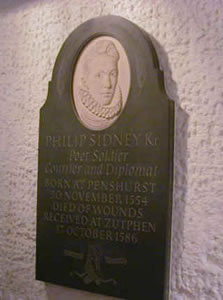
De Engelse schrijver Sir Philip Sidney werd geboren op 30 november 1554 in het  kasteel van Penshurst in het graafschap Kent. Zie ook alle tags voor Sir Philip Sidney op dit blog.


Astrophel and Stella: I


Loving in truth, and fain in verse my love to show,

That she, dear she, might take some pleasure of my pain,--

Pleasure might cause her read, reading might make her know,

Knowledge might pity win, and pity grace obtain,--

I sought fit words to paint the blackest face of woe;

Studying inventions fine her wits to entertain,

Oft turning others' leaves, to see if thence would flow

Some fresh and fruitful showers upon my sunburn'd brain.

But words came halting forth, wanting invention's stay;

Invention, Nature's child, fled step-dame Study's blows;

And others' feet still seem'd but strangers in my way.

Thus great with child to speak and helpless in my throes,

Biting my truant pen, beating myself for spite,

"Fool," said my Muse to me, "look in thy heart, and write."


Astrophel and Stella: III


Let dainty wits cry on the sisters nine,

That, bravely mask'd, their fancies may be told;

Or, Pindar's apes, flaunt they in phrases fine,

Enam'ling with pied flowers their thoughts of gold.

Or else let them in statelier glory shine,

Ennobling newfound tropes with problems old;

Or with strange similes enrich each line,

Of herbs or beasts which Ind or Afric hold.

For me, in sooth, no Muse but one I know;

Phrases and problems from my reach do grow,

And strange things cost too dear for my poor sprites.

How then? even thus: in Stella's face I read

What love and beauty be; then all my deed

But copying is, what in her Nature writes.


 1042720-ce3bf34b3df8e3cf0dbdb530c034fb0a.jpg

Sir Philip Sidney (30 november 1554 – 17 oktober 1586)

Gedenksteen in St Paul’s Cathedral, Londen


De Canadese dichter, arts, auteur, kunstenaar, militair
John Alexander McCrae werd geboren in Guelph (Ontario) op 30 november 1872. Zie ook mijn blog van 30 november 2008 en ook mijn blog van 30 november 2009  en ook mijn blog van 30 november 2010.


Slumber Songs


I


Sleep, little eyes

That brim with childish tears amid thy play,

Be comforted! No grief of night can weigh

Against the joys that throng thy coming day.


Sleep, little heart!

There is no place in Slumberland for tears:

Life soon enough will bring its chilling fears

And sorrows that will dim the after years.

Sleep, little heart!


II


Ah, little eyes

Dead blossoms of a springtime long ago,

That life's storm crushed and left to lie below

The benediction of the falling snow!


Sleep, little heart

That ceased so long ago its frantic beat!

The years that come and go with silent feet

Have naught to tell save this -- that rest is sweet.

Dear little heart.


 1042720-554190e001dd78d2442268b4dba376b2.jpg

John McCrae (30 november 1872 - 28 januari 1918)


De Britse staatsman en schrijver Sir Winston Leonard Spencer Churchill werd geboren in Woodstock op 30 november 1874. Zie ook mijn blog van 30 november 2007 en ook mijn blog van 30 november 2008  ook mijn blog van 30 november 2009. 


Uit: We Shall Fight Them on the Beaches (House of Commons, 4 juni 1940)

“I have, myself, full confidence that if all do their duty, if nothing is neglected, and if the best arrangements are made, as they are being made, we shall prove ourselves once again able to defend our Island home, to ride out the storm of war, and to outlive the menace of tyranny, if necessary for years, if necessary alone.

At any rate, that is what we are going to try to do. That is the resolve of His Majesty’s Government-every man of them. That is the will of Parliament and the nation.

The British Empire and the French Republic, linked together in their cause and in their need, will defend to the death their native soil, aiding each other like good comrades to the utmost of their strength.

Even though large tracts of Europe and many old and famous States have fallen or may fall into the grip of the Gestapo and all the odious apparatus of Nazi rule, we shall not flag or fail.

We shall go on to the end, we shall fight in France,

we shall fight on the seas and oceans,

we shall fight with growing confidence and growing strength in the air, we shall defend our Island, whatever the cost may be,

we shall fight on the beaches,

we shall fight on the landing grounds,

we shall fight in the fields and in the streets,

we shall fight in the hills;

we shall never surrender, and even if, which I do not for a moment believe, this Island or a large part of it were subjugated and starving, then our Empire beyond the seas, armed and guarded by the British Fleet, would carry on the struggle, until, in God’s good time, the New World, with all its power and might, steps forth to the rescue and the liberation of the old.”


1042720-563df20e4d64136d1cc7d2f168ff093a.jpg
Winston Churchill (30 november 1874 - 24 januari 1965)

Churchill in 1940


Zie voor onderstaande schrijvers ook mijn blog van 30 november 2009 en ook mijn blog van 30 november 2010.


 De Canadese schrijfster Lucy Maud Montgomery werd geboren in Clifton op 30 november 1874. Zie ook mijn blog van 30 november 2008.


De Duitse dichter en schrijver Rudolf Lavant (eig. Richard Cramer) werd geboren op 30 november 1844 in Leipzig. Zie ook mijn blog van 30 november 2008.


De Engelse dichter en schrijver John Bunyan werd geboren op 30 november 1628 in Harrowden bij Bedford. Zie ook mijn blog van 30 november 2006 en ook mijn blog van 30 november 2008.


De Chileense dichter en schrijver Sergio Badilla Castillo werd geboren in Valparaíso op 30 november 1947. Zie ook mijn blog van 30 november 2008.


De Amerikaanse toneelschrijver en filmregisseur David Mamet werd geboren op 30 november 1947 in Chicago. Zie ook mijn blog van 30 november 2008.


De Amerikaanse schrijver Wil Mara werd geboren op 30 november 1966 in de buurt van Long Beach Island, New Jersey. Zie ook mijn blog van 30 november 2008.

Geschreven door Romenu om 19:06 Reageer op dit bericht

Christophe Vekeman

De Vlaamse schrijver, dichter en performer Christophe Vekeman werd geboren in Temse op 30 november 1972. Sinds 11 september 2001 heeft Vekeman een wekelijkse column in De Morgen, de krant waarin hij ook het merendeel van de in Leven is werk opgenomen stukken over voornamelijk literatuur en muziek publiceerde. In 2005/2006 was hij een vaste gast in het debatprogramma ‘Morgen beter’ op Canvas. Vekeman is een veel gevraagde en gesmaakte gast op literaire podia in Vlaanderen en Nederland. Hij nam onder veel meer deel aan Saint-Amour, De Nachten, Zuiderzinnen, Geletterde Mensen, Nur Literatur, Lowlands,... In Nederland maakt hij deel uit van het Nightwriterscollectief, samen met onder andere de schrijvers Kluun, Tommy Wieringa en Ronald Giphart. Vekeman publiceerde romans, een verhalenbundel, essays, reportages en interviews:


Uit: 49 manieren om de dag door te komen


„Als zo vaak is het elf uur 's ochtends en je staat voor het raam van je kamer op de eerste verdieping, daar waar je altijd staat, en kijkt door de vitrage naar buiten. Het is koel voor de tijd van het jaar; het is zomer.
Sedert een tiental maanden woon je hier, in deze met kasseien bestrate, doodkalme buurt. Je woont alleen. Veel meer dan wonen doe je niet. Je woont en staat te staren door het raam. Er rijdt een auto voorbij.
Op een steenworp afstand bevindt zich de kerk, die goeddeels omringd wordt door bomen. Dat is de situatie. In de bomen fluiten vogels.
Je hebt een raar gevoel, maar dat negeer je. In plaats van eraan toe te geven, schuif je de vitrage opzij en opent het raam. Signaal voor genoemde vogels, blijkbaar, om nog luider aan het fluiten te gaan. Ze geven hem flink van jetje.
Je voelt je raar, maar zo voel je je nu eenmaal altijd. Je voelt je moe, eveneens naar gewoonte. Het is altijd hetzelfde: alles verandert, maar jij niet. Akkoord, je wordt ouder. Maar zelfs dat heb je altijd al gedaan.
Toch is er deze keer meer aan de hand, en dat merk je gauw genoeg. Eerst wens je nog dapper te blijven doen alsof je denkt dat de pijn in je keel geheel en al inbeelding is, maar als je vervolgens de hand op je voorhoofd legt, stel je een onmiskenbare verhoging van de lichaamstemperatuur vast, die er bepaald niet om liegt. Meteen, als op bevel, wordt ook je keelpijn erger, terwijl een zanderig gevoel spoorslags door al je ledematen trekt en je spieren een stille klaagzang aanheffen.
Amper een paar minuten later sta je in wintertrui in de keuken te wachten tot het water kookt. Je voelt je, zucht je, ronduit beroerd. Je bent uitgeteld. Behalve thee heb je voor dit soort noodsituaties ook altijd een potje aardbeienjam in huis. Niets symboliseert voor jou de noodgedwongen plichtenvrijheid zozeer als een boterhammetje met aardbeienjam. Je rilt van de koorts, niet van genoegen“.


 1052856-131df3f3c8371f28a743018ff9ad5e5c.jpg

Christophe Vekeman (Temse, 30 november 1972)
Geschreven door Romenu om 00:00 Reageer op dit bericht

Mario Petrucci, Carlo Levi, Jean-Philippe Toussaint, C.S. Lewis

De Engelse dichter en schrijver Mario Petrucci werd geboren op 29 november 1958 in Londen. Zie ook mijn blog van 29 november 2008 en ook mijn blog van 29 november 2009 en ook mijn blog van 29 november 2010.


LIGHT


It puffed up our brains -

a bicycle-pump pressure down rubbery cords.

One hundred and eighty-six thousand

miles per second.


Dolphin has no such constancy,

hears like soup.   Its grey-blue steel

jerks into air, makes children gasp.

Dolphin hoops the water - each leap

equal to its aether.


On the west coast I dug

for potatoes.   Light there took its time

to gather, took time to roll in

its hard-earned pillows of dark.


Our Enlightenment boys

ply the radioactive, black-goggled

in the bomb-burst.   They squint past embers

at the rim of the universe, urgent

for the one dark thing.


Already they catch it, condense it,

flourish it across the benchtop

like a royal flush.   Bounce it off the cheek

of the moon.   Make it check itself -

snitch on the slightest anomaly.   Back

and forth, the caged exactitude.


It's the one constant, they said.

Let us build all space, all time, all

knowledge around it.


But the dolphin.   The filed

white teeth, its white life.

It has missed the tide.

The fish-mammal is beached, flesh

desiccating in iridescent decay.

Its shrill scrimshaws to the marrow.


The children think it is smiling.


everyone begins as fish &


ends so – spiralling after
egg (that other half of our
chains) & setting gills


in gristled knot that buds
legs as tadpoles do & blow-
hole ears halfway down


the back & low-set eye
alien as featherless chick –
ah we have peered into


that shared ovum whose
blasto-flesh runs its gauntlet
of fowl & fish so fused at


the tail nothing can be told
apart – is this why when i am
late i find in upstairs dark


you – on placenta duvet &
hunched round self as wom-
bed ones are? – as though


i had just returned from
all eternity to catch you
naked   out   sleepwalking


space without even
navel-twisted purpled
rope to hold you


 1042052-4383f705b251d1dbd4e3b91732ddc522.jpg

Mario Petrucci (Londen, 29 november 1958)


De Italiaanse schrijver, schilder, arts en politicus Carlo Levi werd geboren op 29 november 1902 in Turijn. Zie ook mijn blog van 29 november 2008 en ook mijn blog van 29 november 2009 en ook mijn blog van 29 november 2010.


Uit: Christus kwam niet verder dan Eboli (Vertaald door Margriet Agricola)


„Ik weet niet of zij dit gewend was uit de tijd dat zij hier voor de priester werkte of dat het een antieke traditie was uit homerische tijden, toen de vrouwen de krijgers wasten en met olie masseerden, maar in ieder geval kwam ik er vanaf dat moment niet meer onderuit dat mijn rug werd ingezeept en geboend door twee stevige ruwe handen. De heks was ook zeer verbaasd dat ik haar niet vroeg met mij te slapen. ‘Je bent goed geschapen,’ zei ze, ‘er mankeert niks aan je.’ Maar ze drong niet aan en zei er niets meer over, gewend als zij was aan haar eigen vanzelfsprekende passiviteit. Ik had er vast en zeker mijn eigen mysterieuze redenen voor en zij respecteerde mijn koelheid. Hooguit maakte zij af en toe een lovende opmerking over mijn schoonheden: ‘Wat zie je er goed uit,’ zei ze dan, ‘wat ben je lekker dik.’ Dik zijn is hier het belangrijkste aspect van schoonheid, net als in het Oosten, misschien omdat je hier een machtige heer moet zijn om dik te kunnen worden, een ideaal dat voor de ondervoede boeren onbereikbaar is.

Giulia was dus tot alle diensten bereid; en toch, als ik haar vroeg om te poseren zodat ik een portret van haar kon maken, dan bleek dat onmogelijk. Uiteindelijk concludeerde ik dat haar weigering een magische reden moest hebben, en zijzelf bevestigde dat. Een portret onttrekt iets aan de persoon die geportretteerd wordt, namelijk een beeltenis, en daarmee verkrijgt de schilder absolute macht over degene die voor hem geposeerd heeft.“


 1042052-d538ba377adad46cd4d748aa94033524.jpg

Carlo Levi (29 november 1902 – 4 januari 1975)

Hier met Pier Paolo Pasolini (links) 


De Belgische schrijver Jean-Philippe Toussaint werd op 29 november 1957 geboren in Brussel. Zie ook alle tags voor Jean-Philippe Toussaint op dit blog.


Uit: Autoportrait à l'étranger


„On arrive à Tokyo comme à Bastia, par le ciel, l'avion amorce un long virage au­dessus de la baie et prend l'axe de la piste pour atterrir. Vu de haut, à quatre mille pieds d'altitude, il n'y a pas beaucoup de différence entre le Pacifique et la Méditerranée.

Christian Pietrantoni, d'ailleurs, un ami corse de Madeleine — j'appellerai Madeleine Madeleine dans ces pages, pour m'y retrouver —, ne s'est pas fait attendre pour se manifester afin de me fixer un rendez-vous dans un café de Tokyo pour me donner les dernières nouvelles du village. Dès le lendemain du jour de mon arrivée au Japon, me laissant à peine le temps de défaire mes valises, il m'a téléphoné dans ma chambre d'hôtel, tandis que, en chemise blanche et petit gilet bleu d'instituteur à la retraite (le cadeau de nouvel an de mes parents), j'étais en train de feuilleter un magazine sportif en chaussettes sur mon lit, attendant la visite imminente d'un journaliste qui devait m'interviewer. A peine plus loin dans la chambre d'hôtel, assis à la table ronde, se tenait M. Hirotani, de la maison d'édition Shueisha, qui me servait depuis le début de mon séjour, en relais avec Mme Funabiki, d'accompagnateur et de confident, de guide et de garde du corps, et que j'apercevais du coin de l'oeil dans mon champ de vision, en parfait costume cravate, le visage grave et appliqué, occupé à disposer dans un vase un bouquet de fleurs que l'on m'avait offert. Il était aux prises avec cinq fleurs mauves et blanches (les couleurs d'Anderlecht, je ne sais pas si c'était voulu), dont il modifiait sans cesse la position pour composer un bouquet harmonieux, reprenant régulièrement le tout à zéro, avec patience et méthode, modifiant ici la position d'une fleur, là, la position d'une autre, davantage, me semblait-il, comme un truand dans un film de Godard que comme un adepte de l'arrangement floral japonais.“


 1042052-1193d957d375d0bcdb409da30237dccb.jpg

Jean-Philippe Toussaint (Brussel, 29 november 1957)


De Ierse schrijver C.S. Lewis werd geboren op 29 november 1898 in Belfast. Zie ook alle tags voor C. S. Lewis op dit blog.


Uit: The Four Loves


„To love at all is to be vulnerable. Love anything, and your heart will certainly be wrung and possibly be broken. If you want to make sure of keeping it intact, you must give your heart to no one, not even to an animal. Wrap it carefully round with hobbies and little luxuries; avoid all entanglements; lock it up safe in the casket or coffin of your selfishness. But in that casket-safe, dark, motionless, airless-it will change. It will not be broken; it will become unbreakable, impenetrable, irredeemable. The alternative to tragedy, or at least to the risk of tragedy, is damnation. The only place outside Heaven where you can be perfectly safe from all the dangers and perturbations of love is Hell.

I believe that the most lawless and inordinate loves are less contrary to God’s will than a self-invited and self-protective lovelessness. It is like hiding the talent in a napkin and for much the same reason “I knew thee that thou wert a hard man.” Christ did not teach and suffer that we might become, even in the natural loves, more careful of our own happiness. If a man is not uncalculating toward the earthly beloveds whom he has seen, he is none the more likely to be so towards God whom he has not. We shall draw nearer to God, not by trying to avoid the sufferings inherit in all loves, but by accepting them and offering them to Him; throwing away all defensive armor. If our hearts need to be broken, and if He chooses this as the way in which they should break, so be it.“


 1042052-1c814dbd825a84604de1e04478cfc660.jpg

C.S. Lewis (29 november 1898 – 22 november 1963)


Zie voor nog meer schrijvers van de 29e november ook mijn vorige blog van vandaag en eveneens mijn eerste blog van vandaag.
Geschreven door Romenu om 19:41 Reageer op dit bericht

Louisa May Alcott, Wilhelm Hauff, Franz Stelzhamer

De Amerikaanse schrijfster Louisa May Alcott werd geboren op 29 november 1832 in Germantown, Pennylvania. Zie ook alle tags voor  Louisa May Alcott op dit blog.


Fairy Song


The moonlight fades from flower and tree,

And the stars dim one by one;

The tale is told, the song is sung,

And the Fairy feast is done.

The night-wind rocks the sleeping flowers,

And sings to them, soft and low.

The early birds erelong will wake:

'Tis time for the Elves to go.


O'er the sleeping earth we silently pass,

Unseen by mortal eye,

And send sweet dreams, as we lightly float

Through the quiet moonlit sky;--

For the stars' soft eyes alone may see,

And the flowers alone may know,

The feasts we hold, the tales we tell:

So 'tis time for the Elves to go.


From bird, and blossom, and bee,

We learn the lessons they teach;

And seek, by kindly deeds, to win

A loving friend in each.

And though unseen on earth we dwell,

Sweet voices whisper low,

And gentle hearts most joyously greet

The Elves where'er they go.


When next we meet in the Fairy dell,

May the silver moon's soft light

Shine then on faces gay as now,

And Elfin hearts as light.

Now spread each wing, for the eastern sky

With sunlight soon will glow.

The morning star shall light us home:

Farewell! for the Elves must go.


 1042047-7a5ed908e3a762d07fb890082f58cc7d.jpg

Louisa May Alcott (29 november 1832 – 6 maart 1888)


De Duitse dichter en schrijver Wilhelm Hauff werd geboren in Stuttgart op 29 november 1802. Zie ook alle tags voor Wilhelm Hauff op dit blog.


Morgenrot


Morgenrot,

Leuchtest mir zum frühen Tod?

Bald wird die Trompete blasen.

Dann muß ich mein Leben lassen,

Ich und mancher Kamerad!


Kaum gedacht,

War der Lust ein End´gemacht,

Gestern noch auf stolzen Rossen,

Heute durch die Brust geschossen,

Morgen in das kühle Grab!


Trost


Die Mißgunst lauscht auf allen Wegen,

Daß sie der Liebe Glück verrät,

Doch treue, zarte Liebe geht

Auf tausend unbewachten Stegen;

Ein Druck der Hand, ein flücht’ger Blick

Sagt mir der Liebe süßes Glück.


Und zog ich auch in weite Ferne,

Es zog mit mir mein stilles Glück,

Denn schau ich nicht der Liebe Blick,

So blick ich auf zum Abendsterne;

Wie ihres Auges stille Glut

Strahlt er ins Herz getrosten Mut.


Und wallen meine Tage trüber

Und dringt kein Trost von ihr zu mir,

Und dringt mein Sehnen nicht zu ihr,

Kein Wort von ihr zu mir herüber;

Mein stilles Glück ist nicht getrübt,

Ich weiß ja doch, daß sie mich liebt.


Drum klag ich nicht in weiter Ferne,

Weil Neid der Liebe Weg belauscht,

Wenn auch nicht Wort mit Wort sich tauscht,

Mir strahlt ein Trost im Abendsterne;

Aus seinen milden Strahlen quillt

Mir meiner Liebe trautes Bild.


1042047-5d732a504c28c558563f3870b6599318.jpg 

Wilhelm Hauff  (29 november 1802 - 18 november 1827)


De Oostenrijkse dichter en schrijver Franz Stelzhamer werd geboren in Großpiesenham op 29 november 1802. Zie ook mijn blog van 29 november 2008 en ook mijn blog van 29 november 2009.


Jugend


Ich bin der Erde gleich

Im Frühlingsauferwachen;

Ich bin dem Himmel gleich

Im ersten Morgenlachen.


Ich bin der Sonne gleich,

Die alles glühend herzet;

Ich bin dem Lüftchen gleich,

Das mit den Blumen scherzet.


Ich bin der Quelle gleich,

Geschwellt vom Frühlingshauche;

Ich bin dem Vöglein gleich,

Das singend baut im Strauche.


Ich bin den Hügeln gleich,

Die tiefbeschaulich weilen;

Ich bin den Schäfchen gleich,

Die durch das Blaue eilen.


Ich bin den Bergen gleich,

Die Erz in den Adern rollen;

Ich bin den Wolken gleich,

Den Blitz und Donner vollen.


Ich bin dem Veilchen gleich,

Das still im Duft sich freuet;

Ich bin dem Baume gleich,

Der breiten Schatten streuet.


So  all und jedem gleich

In Wesen oder Weise,

Steh’ ich im weiten Reich

Wie im Familienkreise.


Es zieht mich her und hin,

Es drängt mich weit und weiter,

Der jugendfrohe Sinn

Ist Führer und Begleiter


Und sich allüberall,

Auf Flur und Feld und Heide,

Im Wald , am wilden Fall

Ist Lust und Augenweide


O Lenz, o Jugendlust,

O jubelvolle Erde,

Was hätt’ ich denn gewußt,

Wenn Gott nicht sprach sein: "Werde!"


Nun hebt der Vögel Chor

Im Haine an zu psalmen

Und neigt der Wiesenflor

Die Häupter an den Halmen:


Da beug’ auch ich das Knie

Zu Preis und Dank und flehe,

Daß Lieb’ und Glauben nie

Mir ganz verlorengehe!


1042047-79c9fd308d0025de316917e9a1c00c4c.jpg
Franz Stelzhamer (29 november 1802 – 14 juni 1874)

Standbeeld in Linz, Volksgarten

Geschreven door Romenu om 19:30 Reageer op dit bericht

Antanas Škėma, Madeleine L’Engle, Ludwig Anzengruber, Andrés Bello, Maurice Genevoix, Silvio Rodríguez

De Litouwse dichter en schrijver Antanas Škėma werd op 29 november 1910 geboren in Lodz in Polen. Zie ook mijn blog van 29 november 2008 en ook mijn blog van 29 november 2009 en ook mijn blog van 29 november 2010.


Uit: Steps And Stairs (Vertaald door Kęstutis Girnius)


„Our apartment house does not have a full-time janitor, so the garbage no longer fits into the cans. Wax paper, egg shells, a cracked cup, milk cartons He on the side walk. Across the street—a boy's school. During recess four boys run to the area between two doors and play cards. Coins flash on the linoleum. The kids swear like old troopers sitting on bar stools in taverns. A carriage with an infant rests in the sun. He is dozing, the milk bottle and its slimy nipple slip out of his toothless mouth. His mother, a corpulent Ukrainian, is talking with a neighbor on the other side of the street. About money earned, about money saved, about money which floats above New York in thousands but settles as single dollar bills on Driggs Avenue.

I climb to the fourth floor. My steps splatter sound which sticks to the dusty walls. My steps rumple the high notes of an Italian song (a radio is playing on the second floor). Piles of accurately carved out steps accumulate on the stairs. I climb to the fourth floor, to the fourth, to the fourth, to the fourth. My steps are a mechanical saw slicing off the ends of planks. I climb among invisible plank ends flying in an enclosed space, surrounded by greenness I ascend toward the sun. On the top floor, not unlike an artist's atelier, a skylight in the roof, the sun's rays drill their yellow screws toward which the blind man thrusts out the viscous whites of his eyes.

Our neighbor is the corpulent Ukrainian and her large family. Husband, son, the son's wife, the son's son (the infant in the carriage), a sister, and the half-blind old man who now stands, head bent back, grasping the handrail, who thrusts out his eyes toward the sun's yellow screws. He grasps the rails as a ship's captain the spokes of the wheel when a thick fog is all around and murky white icebergs are ahead. He stands like this for whole hours, straight and immovable, an old and experienced wolf in this ocean of shimmering light.

Evening comes. The constant boring kindles the yellow screws, they redden, and the glowing light exhales a remembrance of a fire-site; and when the mechanic stops the saw, the screws revolve no longer, but cool and disappear in the approaching night. Below the ceiling a little electric lamp lights up. Covered with spider webs, the remnants of last year's flies, the lamp announces that you have changed course, experienced captain.“


 1042041-c9afd943f0a404834525642cc440ff1d.jpg

Antanas Škėma (29 november 1910 – 11 augustus 1961)


De Amerikaanse schrijfster Madeleine L'Engle werd geboren in New York op 29 november 1918. Zie ook mijn blog van 29 november 2008 en ook mijn blog van 29 november 2009 en ook mijn blog van 29 november 2010.
 

 Uit: A Wrinkle In TIme


„In the kitchen a light was already on, and Charles Walace was sitting at the table driking milk and eating bread and jam. He looked very small and vulnerable sitting there alone in the big old-fashioned kitchen, a blond little boy in faded blue Dr. Dentons, his feet swinging a good six inches above the floor.

“Hi,” he said cheerfully. “I’ve been waiting for you.”

From under the table where he was lying at Charles Wallace’s feet, hoping for a crumb or two, Fortinbras raised his slender dark head in greeting to Meg and his tail thumped against the floor. Fortinbras had arrived on their doorstep, a half-grown puppy, scrawny and abandoned, one winter night. He was, Meg’s father had decided, part Llewellyn setter and part greyhound, and he had a slender, dark beauty that was all his own.

“Why didn’t you come up to the attic?” Meg asked her brother, speaking as though he were at least her own age. “I’ve been scared stiff.”

“Too windy up in that attic of yours,” the little boy said. “I knew you’d be down. I put some milk on the stove for you. It ought to be hot by now.”

How did Charles Wallace always know about her? How could he always tell? He never knew – or seemed to care – what Dennys or Sandy were thinking. It was his mother’s mind, and Meg’s, that he probed with a frightening accuracy.

Was it because people were a little afraid of him that they whispered about the Murry’s youngest child, who was rumored to be not quite bright? “I’ve heard that clever people often have subnormal children,” Meg had once overheard. “The two boys seem to be nice, regular children, but that unattractive girl and the baby boy certainly aren’t all there.”


 1042041-1b2c01eb8d9040594d52f6fe8499f5ec.jpg

Madeleine L’Engle (29 november 1918 – 6 september 2007)


De Oostenrijkse schrijver Ludwig Anzengruber werd geboren op 29 november 1839 in Wenen. Zie ook alle tags voor Ludwig Anzengruber op dit blog.


Bauersleut im Künstlerhaus.


Es soan zwa alte Bauersleut'

In d'Weanstadt einikämma,

A Vetta thut s' voll Freundlikeit,

Wo's z' schaun gibt, mit hinnähma.


Der Schlankel oba der hat's a

Gar faustdick hinter 'n Uhren

Und hat sich amal mit dö zwa

Ins Künstlerhaus verluren.


Sö tappen da von Saal zu Saal,

Doch soan s' no kaum im zweiten,

So fangt dö Bäu'rin mit amal

Zun winken an und deuten.


»Ui jegerl, Monna, schaugt's af d'Seit!

Des nehmts an d'Seel'n sunst Schoden!

Do hängen g'molne Weiberleut',

Dö trog'n am Leib koan' Foden!


»I bin doch selber a a Wei'

Und woaß mi net zun fossen

Und woaß nit, wo mer da dabei

Söllt' seine Augen lossen!«


Der Bauer stolpert neben ihr

Hinein ins nachste Zimmer,

Er halt't 'n Huat vor d'Augen für,

Denn d'Sach wird allwal schlimmer.


»Mei,« sagt er »'s is a Sünd' und Schond',

Dös siecht jo wohl a jeda,

Doch kimmt 'leicht 's Molen ohne G'wond

Halt billiger; net, Vetta?«


Da wird die Bäu'rin wild und schreit:

»No dös möcht' Gott verhüten!

Dös war dö rechte Sporsomkeit,

Dö söllt' mer doch vabieten!


Und bin i hitzten a gleich olt,

I ließ' mi so nit molen

Und nit in Güten, nit in G'wolt!

Mer dürft' mi dafür zohlen!


»Daß i vor oa'm söllt' so hinstehn,

Dös war' a Untafanga!« –

»Na,« sagt der Baua, »loß nur gehn!

's wird's koana si valanga!«


1042041-3e400a8bfaf1432b1b88cbfa3f2f60fd.jpg
Ludwig Anzengruber (29 november 1839 – 10 december 1889)


Zie voor onderstaande schrijvers ook mijn blog van 29 november 2010.


De Cubaanse dichter en singer-songwriter Silvio Rodríguez Domínguez werd geboren in San Antonio de Los Baños op 29 november 1946. Zie ook mijn blog van 29 november 2008 en ook mijn blog van 29 november 2009.


De Franse schrijver Maurice Genevoix werd geboren op 29 november 1890 in Decize (Nièvre). Zie ook mijn blog van 29 november 2008 en ook mijn blog van 29 november 2009.


De Chileens-Venezolaanse dichter, wetgever, filosoof, politicus, diplomaat, wetenschapper, humanist en taalkundige Andrés Bello werd geboren in Caracas, Venezuela,  op 29 november 1781. Zie ook mijn blog van 29 november 2008 en ook mijn blog van 29 november 2009.

Geschreven door Romenu om 19:25 Reageer op dit bericht

Constantijn Huygens-prijs 2011 voor A. F. Th. van der Heijden


Constantijn Huygens-prijs 2011 voor
A. F. Th. van der Heijden


De Nederlandse schrijver A.F.Th. van der Heijden heeftde Constantijn Huygens-prijs 2011 gewonnen. Dat heeft de Jan Campert Stichting gisteren bekendgemaakt. De Huygens-prijs is een oeuvreprijs die sinds 1947 jaarlijks wordt uitgereikt. Volgens de jury is Van der Heijden "er in 33 jaar schrijverschap als geen ander in geslaagd om de wereld met een literaire blik te bezien. In zijn romans kan alles literatuur worden." Aan de prijs, die eind januari wordt uitgereikt, is een bedrag van 10.000 euro verbonden. A. F. Th. van der Heijden werd geboren in Geldrop op 15 oktober. Zie ook alle tags voor A. F. Th. van der Heijden op dit blog.

Uit: Tonio. Een requiemroman


„Soms wil ik hem heel dicht tegen me aan houden. De gedachte doet zich meestal voor als ik in bed lig te lezen, en zomaar opeens mijn boek ter zijde leg. Kom maar, zeg ik dan geluidloos. Kom maar, Tonio, onder het dek. Ik zal je warm houden.
Zijn lichaam is willoos, slap, maar niet koud. Het is de Tonio die na de aanrijding op het plaveisel heeft gelegen, een half etmaal voor zijn dood. De inzittenden van de rode Suzuki Swift staan buiten de auto, en durven niet naar het verderop neergekwakte lijf te kijken. De sirenes van politie en ambulance zijn nog niet hoorbaar. Het blauwe geflakker van de zwaailichten moet nog komen. Het is dan dat ik hem opraap en naar mijn bed draag, waarvan ik het dek opensla.
Kom maar. Dicht tegen me aan. Dat zal je warm houden. Ze komen zo om je beter te maken.“


 1041731-c1ee7b4116ab4146e5ed6fc04f27d954.jpg

A. F.Th. van der Heijden (Geldrop, 15 oktober 1951)
Geschreven door Romenu om 11:48 Reageer op dit bericht

F. Bordewijk-prijs en Jan Campert-prijs 2011


F. Bordewijk-prijs 2011 voor Gustaaf Peek


Aan aan de Nederlandse schrijver Gustaaf  Peek is de F. Bordewijk-prijs voor verhalend proza toegekend, voor zijn roman 'Ik was Amerika'. Gustaaf Peek werd geboren in Haarlem in 1975. Zie ook mijn blog van 16 oktober 2011.


Uit: Dover


„We hebben het niet gehaald. […] We droomden dat we trouwden en kinderen kregen, zoveel als we wilden. Om het nog een keer te proberen. Aankomen. Nooit meer weggaan. Een laatste droom. De witte wereld. Liefde. Er zijn velen zoals wij hier.

(...’) 


Bernard hield een hand op de wond. Zijn vingers weekten in de warmte, hij durfde niet te kijken. Ze hadden hem achter het stuur gelaten, de deuren waren op slot. Bomen hadden de wagen ingesloten, het moest een parkeerplaats in een bos zijn. Het was nacht. Er zouden geen families meer langskomen voor een mooie wandeling. Hij had het koud.“


 1041726-d0397d3d380bbb6723c0b84bc9746330.jpg

Gustaaf Peek (Haarlem, 1975)


De Jan Campert-prijs 2011 voor Erik Spinoy


De Jan Campert-prijs, voor de beste dichtbundel, gaat naar Erik Spinoy voor zijn bundel 'Dode Kamer'. De Vlaamse dichter en schrijver Erik Spinoy werd geboren op 22 mei 1960 in Sint-Niklaas. Zie ook alle tags voor Erik Spinoy op dit blog.


De wind, de eindeloze wind


De wind, de eindeloze wind
waait waar hij wil

danst op een esdoornblad
smijt schepen heen en weer
vermaakt zich met een zwaluw
legt zich doodmoe neer
opeens.

Wat hij, zijn waaien
te betekenen heeft?
Verkeerd, aan dit adres!


1041726-ccf6c50bc7be02c669d76936d85527db.jpg
Erik Spinoy (Sint-Niklaas, 22 mei 1960)

Geschreven door Romenu om 11:39 Reageer op dit bericht

Erwin Mortier, Sherko Fatah, Alberto Moravia, Rita Mae Brown, Julian Randolph Stow

De Vlaamse dichter en schrijver Erwin Mortier werd geboren in Nevele op 28 november 1965. Zie ook alle tags voor Erwin Mortier op dit blog.


Uit: Gestameld liedboek – Moedergetijden


“Ze is een spiegel geworden. Zien wij er opgewekt uit, dan is zij het ook–min of meer. Staan de zorgen en het verdriet op ons aangezicht te lezen, dan slaat ook bij haar de treurnis toe. Maar de laatste tijd, de laatste tijd verblijft ze steeds vaker in wat een permanente ontwrichting lijkt. Ik kan alleen maar hopen dat in haar geest nog maar weinig besef heerst van tijd, dat er in haar niets meer leeft dat weet dat het vroeger anders was, beter. De gedachte kan nooit lang troost bieden.
In een eeuwig nu van angst moeten leven is wellicht een even grote marteling – alleen maar heden, alleen maar paniek.
Soms, wanneer ze me met haar blik fixeert, denk ik dat in haar brein een of ander mechanisme naar alle tekenen van emoties speurt, in mijn gelaat, in mijn hele lichaam. Doe ik me opgewekter voor dan ik me voel, dan lukt het niet haar tot rust te brengen. Ergens in haar hersenen pikt een of ander circuit op dat ik me anders gedraag dan het gesteld is met mijn humeur. Een instinct misschien, dat nog min of meer intact is of wie weet sterker naar de voorgrond treedt nu de complexe functies van denken en spreken zo goed als ingestort zijn.

(…)


We zijn doodsbang. We zeggen er weinig over, maar we zijn doodsbang. Doodsbang voor wat komen gaat, hoe onvermijdelijk ook. Doodsbang voor de rouw, die we tegelijk vandaag nog zouden willen aanvatten om niet langer in deze schemerzone tussen leven en dood te moeten blijven hangen. Het is vis noch vlees, dag noch nacht, dood noch leven. De ziekte trapt haar de tijd uit en schopt ons uit de taal. Woorden, ze lijken me een soort van granenontbijt tegenwoordig: ongetwijfeld gezond, maar nogal smaakloos.”


 1041321-985fee76f26574d08d2f706a56365613.jpg

Erwin Mortier (Nevele, 28 november 1965)


De Duitse schrijver
Sherko Fatah werd geboren op 28 november 1964 in Oost-Berlijn. Zie ook mijn blog van 28 november 2008 en ook mijn blog van 28 november 2009.en ook mijn blog van 28 november 2010.

Uit: Ein weißes Land


“Ich sitze hier und beobachte dich wie einen Fremden. Aber ich kenne dich. Vielleicht werde ich es dir nie sagen: Ich kenne dich, ich kenne dich gut. Es ist einige Jahre her. Es ist eine Ewigkeit her. Lange genug, um mich nicht mehr zu erkennen. Aber wie auch, du schaust mich nicht an, du schaust nie jemanden direkt an.

Du bist der wichtige Doktor aus dem fernen Deutschland. Und ich, was bin ich schon? Der Bote, den du nicht brauchst, der dir lästig ist. Aber würdest du mich anschauen, dann wüsstest du es sofort. Wir waren uns einmal so nahe wie zwei eingesperrte, verängstigte Hunde, wir hatten den gleichen Dreck in unseren Mäulern, und in jener fernen, kalten Nacht war unsere Angst eine, wir waren ein furchtsames Tier mit zwei Köpfen. Wir haben den Tod gesehen, wie er leibhaftig über die morastige Erde schritt. Seine schmutzigen Stiefel ließen den feuchten Boden schmatzen. Er war schmal von Gestalt, hatte einen großen Kopf mit hoher Stirn. Er sprach deine Sprache. Du hast ihn sicher nicht vergessen. Niemand kann das. Aber vielleicht willst du ihm nur einfach um keinen Preis je wieder begegnen, und sei es nur in der Erinnerung, im Gesicht eines Überlebenden aus jener Zeit. Ich verstehe dich, ich verstehe dich gut, du wichtiger Mann.

Und doch, Gottes Wege sind unerforschlich, bist du hierhergekommen. Du hättest überall hingehen können nach dem Krieg. Aber nein, du bist hier, vor meinen Augen, und allein dein Anblick

bringt mir die alte Furcht zurück, die uns beide einmal umschlossen hielt wie eine Faust.

Ich rutschte auf dem Holzstuhl herum, den mir der Doktor am ersten Tag hingestellt hatte. Wortlos, ohne Gruß oder eine andere Regung erledigte dieser hochgewachsene, drahtig wirkende Mann

die Sache selbst. Er ließ mich, den Boten, einfach mitten im Krankensaal stehen und kam nach kurzer Zeit mit dem Stuhl zurück. Nah am Fenster stellte er ihn ab. Als er wieder an mir vorbeiging,

wies er nur hinter sich.”


 1041321-2c127085bc045845d2be6b647e4983ee.jpg

Sherko Fatah (Oost-Berlijn, 28 november 1964)


De Italiaanse schrijver Alberto Moravia werd geboren in Rome op 28 november 1907. Zie ook alle tags voor Alberto Moravia op dit blog.


Uit: Römische Erzählungen (Vertaald door Jutta Eckes)


„Er brauchte ja auch nur in den Rückspiegel über der Windschutzscheibe zu blicken, um genau zu sehen, was hinter ihm vorging. Wir fuhren am Trappistenkloster und dann an der Expo ’42 vorbei und schließlich in einem Rutsch durch bis zur Abzweigung nach Anzio. Dort nahm ich das Gas weg und fragte den Blonden neben mir, wohin genau sie denn eigentlich gebracht werden wollten. Er antwortete: »An einen ruhigen Ort, wo niemand ist|. . . Wir wollen allein sein.« Ich sagte: »Hier gibt es

dreißig Kilometer menschenleeren Strand|. . . Da müßt ihr euch schon entscheiden.« Das Mädchen rief von hinten: »Lassen wir ihn doch entscheiden.« Ich antwortete: »Was hab’ ich damit zu tun?« Doch das Mädchen hörte nicht auf zu rufen: »Lassen wir ihn doch entscheiden«, und lachte, als hätte es etwas furchtbar Komisches gesagt. Also sagte ich: »Der Lido di Lavinio ist sehr überlaufen|. . . Aber ich werd’ euch an einen Ort nicht weit von hier bringen, wo keine Menschenseele ist.« Meine Worte brachten das Mädchen erneut zum Lachen; es schlug mir von hinten auf die Schulter und sagte: »Bravo|. . . du bist intelligent|. . . du hast begriffen, was wir wollen.« Ich wußte nicht, was ich von

diesem Benehmen halten sollte; einerseits ging es mir auf die Nerven, andererseits ließ es mich hoffen. Der Blonde hüllte sich in finsteres Schweigen, schließlich sagte er: »Pina, ich finde das

keineswegs zum Lachen.« So fuhren wir denn weiter.

Es war sehr heiß, windstill, und die Straße blendete; die beiden hinten im Auto hörten nicht auf zu plappern und zu lachen, doch dann verstummten sie ganz plötzlich, und das war noch schlimmer, denn ich sah, wie der Blonde in den Rückspiegel blickte und dann die Nase kraus zog, als hätte er etwas gesehen, was ihm nicht gefiel. Längs der Straße breiteten sich jetzt auf der einen Seite sonnenverbrannte Felder aus und auf der anderen dichter Buschwald. Bei einem Schild mit der Aufschrift »Jagen verboten« bremste ich und bog in einen kurvenreichen Weg ein. Ich war hier im Winter auf der Jagd gewesen, es war wirklich ein einsamer Ort, unmöglich zu finden, wenn man sich

nicht auskannte. Hinter dem Buschwald kam ein Pinienhain und nach dem Pinienhain der Strand und das Meer. In diesem Pinienhain hatten sich nach der Landung bei Anzio die Amerikaner verschanzt, es gab noch die Schützengräben; verrostete Konservendosen und leere Patronenhülsen lagen herum, und die Leute blieben fern aus Angst vor Minen.“


 1041321-c37ca6a45d212d1798e6dfe2a498d14c.jpg

Alberto Moravia (28 november 1907 – 26 september 1990)

Portret door Renato Guttuso, 1940


De Amerikaanse schrijfster Rita Mae Brown werd geboren in Hanover, Pennsylvania op 28 november 1944. Zie ook mijn blog van 28 november 2008 en ook mijn blog van 28 november 2009 en ook mijn blog van 28 november 2010.


Uit: Rubyfruit Jungle


"You shut up or I'll knock your lips down your throat, Broccoli Detwiler."

"I'll shut up if you don't tel1 anyone I showed you my thing."

"What's there to tell? All you got is a wad of pink wrinkles hangin' around it. It's ugly."

"It is not ugly."

"Ha. It looks awful. You think it's not ugly because it's yours. No one else has a dick like that. My cousin Leroy, Ted, no one. I bet you got the only one in the world. We oughta make some money off it."

"Money? How we gonna make money off my dick?"

"After school we can take the kids back here and show you off, and we charge a nickel a piece."

"No. I ain't showing people my thing if they're gonna laugh at it."

"Look, Broc, money is money. What do you care if they laugh? You'll have money then you can laugh at them. And we split it fifty-fifty."

The next day during recess I spread the news. Broccoli was keeping his mouth shut. I was afraid he'd chicken out but he came through. After school about eleven of us hurried out to the woods between school and the coffee shop and there Broc revealed himself. He was a big hit. Most of the girls had never even seen a regular dick and Broccoli's was so disgusting they shrieked with pleasure. Broc looked a little green around the edges, but he bravely kept it hanging out until everyone had a good look. We were fifty-five cents richer.

Word spread through the other grades, and for about a week after that, Broccoli and I had a thriving business. I bought red licorice and handed it out to all my friends. Money was power. The more red licorice you had, the more friends you had. Leroy, my cousin, tried to horn in on the business by showing himself off, but he flopped because he didn't have skin on him. To make him feel better, I gave him fifteen cents out of every day's earnings.

Nancy Cahill came every day after school to look at Broccoli, billed as the "strangest dick in the world." Once she waited until everyone else had left. Nancy was all freckles and rosary beads. She giggled every time she saw Broccoli and on that day she asked if she could touch him. Broccoli stupidly said yes. Nancy grabbed him and gave a squeal.“


 1041321-690bd06dd328a6c8a5edc028ef0fc3d1.jpg

Rita Mae Brown (Hanover, 28 november 1944)


De Australische dichter en schrijver Julian Randolph Stow werd geboren in Geraldton in het westen van Australië op 28 november 1935. Zie ook mijn blog van 28 november 2008  en ook mijn blog van 28 november 2009 en ook mijn blog van 28 november 2010.


Uit: Tourmaline


“Against the intense blue of the Tourmaline sky, the walls of the exercise yard, like a low square tower, glimmered with all the light and purity the sun could discover in their pale stonework; and I noticed with pride, the rough beauty of the round window set high in the front wall, the handsome curve of masonry above the gate.

(…)


I stepped out of my door to look once more at my garden. I have said before that the sky is the garden of Tourmaline.

The much-praised, the inexhaustible stars above me. Islands, ice-cold and burning. The burning ice-cold purity of God.

Love inexpressible, inexhaustible. My love for him, it, them. No matter if such love is not returned. In the contemplation of stars, in the remembrance of oceans and flowers, in the voice of a lone crow and the jacaranda-blue of far ranges, I have all I need of requital…I reach out with every nerve to the ultimate purity.

Lord, fill me with your sap and make me grow.

Make me tall as karri, broad as a Moreton Bay fig. Let me shelter all Tourmaline in my shade.

Birds in the air; sheep in the far green distance.

Love, love, love; like an ache, like an emptiness.”


1041321-a95aa8270a7f04c5ba5f7c2efe56c3d9.jpg
Julian Randolph Stow (28 november 1935 – 29 mei 2010)


Zie voor nog meer schrijvers van de 28e november ook mijn vorige blog van vandaag en eveneens mijn eerste blog van vandaag.
Geschreven door Romenu om 19:58 Reageer op dit bericht

Philippe Sollers, Hugo Pos, Nancy Mitford, Stefan Zweig, Dawn Powell

De Franse schrijver Philippe Sollers werd geboren op 28 november 1936 in Bordeaux. Zie ook mijn blog van 28 november 2008 en ook mijn blog van 28 november 2009 en ook mijn blog van 28 november 2010.


Uit: Un vrai roman. Mémoires


„(Francis Ponge)
Je vais voir Ponge chez lui, rue Lhomond, près du Panthéon, au moins une fois par semaine. Sa solitude est alors terrible, sa pauvreté matérielle visible. Là-dessus, une fierté et une ténacité radieuse, quelque chose de radical et d’aristocratique, dans le genre « tout le monde a tort sauf moi, on s’en rendra compte un jour ». J’arrivais, je m’asseyais en face de lui dans son petit bureau décoré par Dubuffet, j’avais des questions, il parlait, je le relançais. J’ai fait ce que j’ai pu pour lui par la suite : invitation d’un mois à l’île de Ré, conférence à la Sorbonne, envoi de caisses de vin de Bordeaux, obtention d’un maigre salaire dans le budget de la revue « Tel Quel » (il figure en tête du premier numéro), livre d’entretiens d’abord diffusés à la radio, etc. J’apporte un électrophone et on écoute du Rameau, et encore du Rameau (c’est son musicien préféré). Ponge, à ce moment-là, est très isolé : mal vu par Aragon en tant qu’ancien communiste non stalinien, tenu en lisière par Paulhan (malgré leur grande proximité), laissé de côté par Sartre, après son essai retentissant sur lui dans « Situations I ». Il est donc encore loin de l’édition de ses œuvres complètes et de la Pléiade, mais le temps fait tout, on le sait. Jusqu’en 1968, idylle. Ensuite, on s’énerve, moi surtout. Raisons apparemment politiques, mais en réalité littéraires (Malherbe, sans doute, mais n’exagérons rien) et métaphysiques (le matérialisme de Lucrèce, pourquoi pas, mais pas sur fond de puritanisme protestant). De façon pénible et cocasse, la rupture se produit apparemment sur Braque (texte critique de Marcelin Pleynet, privilégiant Freud), mais aussi (rebonjour Freud) à cause de mon mariage (sa propre fille est alors à remarier). Il y a, de part et d’autre, des insultes idiotes. A mon avis, à oublier.“


 1041317-e716424951ca02a1e185f550de1b74d2.jpg

Philippe Sollers (Bordeaux, 28 november 1936)


De Surinaamse schrijver, dichter en jurist
Hugo Pos werd geboren in Paramaribo op 28 november 1913. Zie ook mijn blog van 28 november 2008 en ook mijn blog van 28 november 2009 en ook mijn blog van 28 november 2010.

Uit: In Triplo. Op weg naar Tokio I


„In mijn herinnering waren dat alle politiekantoren en een kantoor van een Indonesisch dagblad

dat openlijk tot revolutie opriep. Ik weet dat zo goed, omdat een vriend van mij, die zich ergerde dat dat zo maar kon, me tevergeefs voorstelde om het zonder bevel van hogerhand op onze beurt te gaan bezetten. De eerste paar dagen werd ik samen met een stuk of wat anderen ondergebracht in een groot flatgebouw tegenover een spoorwegstation. Tot onze verbazing bleven de treinen rijden. Omdat we er niet zeker van konden zijn dat de reizigers die naar Djakarta kwamen uitsluitend vreedzame

groente - en kippenverkopers waren, stelden we volgens een rooster een reguliere bewaking van het gebouw in. Meneer Bloem, voor de oorlog het hoofd van de Weeskamer, in mijn ogen een man op leeftijd, had de nachtdienst. Nu had meneer Bloem nog nooit van zijn leven een geweer in handen gehad, zodat eerst een kortstondige instructie daaraan voorafging. We hielden ons hart vast dat als zich iets voordeed - wat gelukkig niet het geval is geweest - meneer Bloem zich in zijn voet

zou schieten.

Na een paar weken van betrekkelijk niets doen in een chaotische stad waar af en toe zonder aanwijsbare reden een plotseling heftig schieten losbarstte, kreeg ik de opdracht om naar een legerkamp in de buurt van het kleine vliegveld Ketjilitan te gaan om een overspannen vaandrig af te lossen. Het kamp werd vrijwel iedere avond aangevallen door groepen peloppors, de jonge heethoofden van de Republiek.“


 1041317-55ecdaa42e3e32ff3e04cccde2514687.jpg

Hugo Pos (28 november 1913  - 11 november 2000)


De Oostenrijkse schrijver Stefan Zweig werd op 28 november 1881 in Wenen. Zie ook alle tags voor Stefan Zweig op dit blog.


Uit: Brennendes Geheimnis


„Der Partner

Die Lokomotive schrie heiser auf: Der Semmering1 war erreicht. Eine Minute rasteten die schwarzen Wagen im silbrigen Licht der Höhe, warfen ein paar bunte Menschen aus, schluckten andere ein, Stimmen gingen geärgert hin und her, dann schrie vorne wieder die heisere Maschine und riss die schwarze Kette rasselnd in die Höhle des Tunnels hinab. Rein ausgespannt, mit klaren, vom nassen Wind reingefegten Hintergründen lag wieder die hingebreitete Landschaft.

Einer der Angekommenen, jung, durch gute Kleidung und eine natürliche Elastizität des Schrittes sympathisch auffallend, nahm den andern rasch voraus einen Fiaker zum Hotel. Ohne Hast trappten die Pferde den ansteigenden Weg.

Es lag Frühling in der Luft. Jene weißen, unruhigen Wolken flatterten am Himmel, die nur der Mai und der Juni hat, jene weißen, selbst noch jungen und flattrigen Gesellen, die spielend über die blaue Bahn rennen, um sich plötzlich hinter hohen Bergen zu verstecken, die sich umarmen und fliehen, sich bald wie Taschentücher zerknüllen, bald in Streifen zerfasern und schließlich im Schabernack den Bergen weiße Mützen aufsetzen.

Unruhe war auch oben imWind, der die mageren, noch vom Regen feuchten Bäume so unbändig schüttelte, dass sie leise in denGelenken krachten und tausend Tropfen wie Funken von sich wegsprühten. Manchmal schien auch Duft vom Schnee kühl aus den Bergen herüberzukommen, dann spürte man imAtem etwas, das süß und scharf war zugleich. Alles in Luft und Erde war Bewegung und gärende Ungeduld. Leise schnaubend liefen die Pferde den jetzt niedersteigenden Weg, die Schellen klirrten ihnen weit voraus.

Im Hotel war der ersteWeg des jungen Mannes zu der Liste der anwesenden Gäste, die er – bald

enttäuscht – durchflog. «Wozu bin ich eigentlich hier», begann es unruhig in ihm zu fragen. «Allein

hier auf dem Berg zu sein, ohne Gesellschaft, ist ärger als das Bureau. Offenbar bin ich zu früh gekommen oder zu spät. Ich habe nie Glück mit meinem Urlaub. Keinen einzigen bekannten Namen

finde ich unter all den Leuten.Wennwenigstens ein paar Frauen da wären, irgendein kleiner, im Notfall sogar argloser Flirt, um diese Woche nicht gar zu trostlos zu verbringen.» Der junge Mann, ein Baron von nicht sehr klangvollem österreichischem Beamtenadel, in der Statthalterei angestellt, hatte sich diesen kleinen Urlaub ohne jegliches Bedürfnis genommen, eigentlich nur, weil sich all seine Kollegen eine Frühjahrswoche durchgesetzt hatten und er die seine dem Dienst nicht schenken wollte.“


1041317-14776be6f63330689579be8fff5e6289.jpg
Stefan Zweig (28 november 1881 – 22 februari 1942)


De Engelse schrijfster Nancy Mitford werd geboren op 28 november 1904 in Londen. Zie ook mijn blog van 28 november 2008 en ook mijn blog van 28 november 2009 en ook mijn blog van 28 november 2010.


Uit: Love in a Cold Climate


„Burke makes it out just a shade more ancient than does Debrett, but both plunge back into the mists of mediaeval times from which they drag forth ancestors with P. G. Wodehouse names, Ugs and Berts and Threds, and Walter Scott fates. “His Lordship was attainted—beheaded—convicted—proscribed—exiled—dragged from prison by a furious mob—slain at the Battle of Crécy—went down in the White Ship—perished during the third crusade—killed in a duel.” There were very few natural deaths to record in the early misty days. Both Burke and Debrett linger with obvious enjoyment over so genuine an object as this family, unspoilt by the ambiguities of female line and deed poll. Nor could any of those horrid books, which came out in the nineteenth century, devoted to research and aiming to denigrate the nobility, make the object seem less genuine. Tall, golden-haired barons, born in wedlock and all looking very much alike, succeeded each other at Hampton, on lands which had never been bought or sold, generation after generation until, in 1770, the Lord Hampton of the day brought back, from a visit to Versailles, a French bride, a Mademoiselle de Montdore. Their son had brown eyes, a dark skin and presumably, for it is powdered in all the pictures of him, black hair. This blackness did not persist in the family. He married a golden-haired heiress from Derbyshire, and the Hamptons reverted to their blue-and-gold looks, for which they are famous to this day. The son of the Frenchwoman was rather clever and very worldly; he dabbled in politics and wrote a book of aphorisms, but his chief claim to fame was his great and lifelong friendship with the Regent, which procured him, among other favours, an earldom. His mother’s family having all perished during the Terror in France, he took her name as his title. Enormously rich, he spent enormously; he had a taste for French objects of art and acquired, during the years which followed the Revolution, a splendid collection of such things, including many pieces from the royal establishments, and others which had been looted out of the Hotel de Montdore in the rue de Varenne. To make a suitable setting for this collection, he then proceeded to pull down at Hampton the large plain house that Adam had built for his grandfather and to drag over to England stone by stone (as modern American millionaires are supposed to do) a Gothic French chateau.“


 1041317-3a289f11c841291dd990664860698e50.jpg

Nancy Mitford (28 november 1904 – 30 juni 1973)


De Amerikaanse schrijfster Dawn Powell werd geboren op 28 november 1896 in Mount Gilead, Ohio. Zie ook mijn blog van 28 november 2008 en ook mijn blog van 28 november 2009 en ook mijn blog van 28 november 2010.


Uit: Angels on Toast


„It was a dull evening tonight and the girls had listlessly walked through the dinner-show with little more than the orchestra and waiters for audience. Since their gifts were little more than walking under any circumstances the performance was not too much worse than usual. As soon as the Olivers and Donovans arrived, however, the place sprang into action. Two girls who had been slumping at the bar wrangling with the bartender now rushed to attach a cigarette tray and flower tray respectively to their persons; Tessie, the accordionist, struck up "Give My Regards to Broadway," a roguish reminder that on Mr. Oliver's last appearance at "The Top" he had obliged with a simple timestep to that tune. The headwaiter, a punch-drunk ex-fighter, who was making himself feel like a crowd with a series of short brandies, snapped to his heels, with an almost reverential bow.

"Good evening, Mr. Donovan," he said. "And Mr. Oliver. Well, well!"

He had fortunately learned to take no chances on calling the ladies by name, but men customers sometimes wondered whether the flattery to their ego of the bow and their names remembered was really worth while, since the lady was often not impressed so much with the regard in which her husband or boy-friend was held as by the deduction that he must spend a lot of money here.“


 1041317-2306e8076bf71451e9347a3eacdf4ba7.jpg

Dawn Powell (28 november 1896 – 14 november 1965)

Geschreven door Romenu om 19:24 Reageer op dit bericht

Dennis Brutus, Alexander Blok, William Blake, Carl Jonas Love Almqvist, Yves Thériault

De Zuidafrikaanse dichter en (oud-)verzetsstijder Dennis Brutus werd geboren op 28 november 1924 in Harare in Zimbabwe. Zie ook mijn blog van 28 november 2008 en ook mijn blog van 28 november 2009  en ook mijn blog van 28 november 2010.


Akhenaton’s Song/ Prayer/ Psalm


Light gleaming through trees

light above sunset hills

light glowing golden

Rhodesian-Zimbabweau red

light pink-grey on Africa’s desert wastes

light on lifted psalms in adoration

psalms lifting in thanksgiving

receiving light in gratitude.


light, source of being

light glowing over, everywhere, forever

light glowing over all, over all.


light at the center of all things

light at the origin of all things

light reaching across distances of the cosmos

light without which all that is is nothing.

light the seed of our being


light that inserts, asserts, establishes being

light that defines us as divinity

light that unifies us with divinity.


Seattle


We all have our causes

dear to our hearts

that we work and sacrifice for:

the freedom of these,

justice for those,

the struggle against their oppressor:

but let there be one cause

that we all unite to serve

that we all resolve to serve—

the cause of the Native Americans.


 1041308-70ac35cd933483289e38e23e6864c244.jpg

Dennis Brutus (28 november 1924 – 26 december 2009)


De Russische schrijver en dichter
Alexander Blok werd geboren op 28 november 1880 in St. Petersburg. Zie ook alle tags voor Alexander Blok op dit blog.


"All perished, All!..."


All perished, all! The sun, in flame and brilliance,

As did it long before, the years’ circle fulfils.

A sorrow grave deplores the past existence –

That was so beautiful – under the solemn hills.

And in the black night a white specter-mist

Waits other shades, the silent one and grievous.


Oh, whitening shade, again you will obtain

Crowds of others, lost of past, entire.

A night will pass, come a long day again –

Again will rise, in its self-scorching mire,

Sun of the day, the sun of golden fire,

And will again burn the sad hills and plain.


"I'm Hamlet Now..."


I’m Hamlet now. Freezes blood,

When the perfidy waves laces,

While love is first - and lives in heart

For her – the one in times and spaces.


Ophelia, my dear friend,

You got away by cold fierce,

And, Prince, I’m dying in my land,

With poisoned swords in fighting pierced.   


"Night, Streets, the Lantern..."


Night, streets, the lantern, the drugstore,

The meaningless and dusky light.

A quarter of the century more --

All fall the same into your sight!


You died – as it was before –

You have the former way to start:

The streets, the lantern, the drugstore,

Swell of the canal in the night.


Vertaald door Yevgeny Bonver


1041308-6cc68f66c6168bc915efaafcc3752528.jpg
Alexander Blok (28 november 1880 – 7 augustus 1921)

Portret door Konstantin Somov


De Engelse schrijver, dichter en schilder
William Blake werd geboren op 28 november 1757 in Londen. Zie ook alle tags voor William Blake op dit blog.


A Little Boy Lost


"Nought loves another as itself,

Nor venerates another so,

Nor is it possible to thought

A greater than itself to know.


"And, father, how can I love you

Or any of my brothers more?

I love you like the little bird

That picks up crumbs around the door."


The Priest sat by and heard the child;

In trembling zeal he seized his hair,

He led him by his little coat,

And all admired the priestly care.


And standing on the altar high,

"Lo, what a fiend is here! said he:

"One who sets reason up for judge

Of our most holy mystery."


The weeping child could not be heard,

The weeping parents wept in vain:

They stripped him to his little shirt,

And bound him in an iron chain,


And burned him in a holy place

Where many had been burned before;

The weeping parents wept in vain.

Are such things done on Albion's shore?


 1041308-d5c56ecace2c7ff00b7588799383770c.jpg

William Blake (28 november 1757 – 12 augustus 1827)

William Blake: The Angel of the Revelation, ca. 1803–5


De Zweedese dichter, schrijver, criticus en reiziger Carl Jonas Love Almqvist werd geboren in Stockholm op 28 november 1793. Zie ook mijn blog van 28 november 2008 en ook mijn blog van 28 november 2010.


Uit: Das Geschmeide der Königin (Vertaald door Klaus-Jürgen Liedtke)


“Über Schwedens Hauptstadt schwebte der schreckliche Genius des Königsmords. Seine breiten Schwingen waren oben schwarz wie eine Märznacht um 12 Uhr; darunter rot wie die lodernden Flammen in einem Maskenballsaal.
"Es brennt! Feuer!" riefen einige Masken bei den Kulissen. Rasch aber wurden die Flammen am Mantel des Königs gelöscht, und seine Umgebung begann zu ahnen, dass der Ruf lediglich ein Vorwand gewesen sein mochte, um Alarm zu schlagen und den Täter zu tarnen. Am Boden stieß Leutnant Pollets Fuß gegen ein Messer, scharf und mit Widerhaken; nicht weit davon entfernt lag eine Pistole; und dichter bei den Logen auf dem Boden eine zweite Pistole. - Der König war nicht tot, wurde aber verwundet aus dem Redoutensaal in seine Gemächer getragen."


Tintomara: Victor!
Ferdinand: O verbirg deinen Schmerz nicht! Er zeigt sich so unbeschreiblich in deiner ganzen Gestalt. Noch erkenne ich alle Züge des munteren feengleichen Wesens, das die Wälder ringsum mit den leichtesten Sprüngen, mit scherzhaften Possen schmückte, ach! Mit Bewegungen unerklärlicher Anmut ... und doch ist alles verändert, alles! Ein Schleier umzittert deine ganze Miene wie aus feinstem Dunkel .... dein himmlischer Blick schaut auf mich mit einer Sanftheit, die mich beseligt, und - doch erschrickt! Großer, lebendiger Gott, was - was ist der Gegenstand deines Schmerzes?“


 1041308-39ee27d8ba7a3a7d32ca9921aada430d.jpg

Carl Jonas Love Almqvist (28 november 1793 - 26 september 1866)

Portret door Carl Peter Mazer 


De Canadese schrijver Yves Thériault werd geboren op 28 november 1915 in Quebec. Zie ook mijn blog van 28 november 2008 en ook mijn blog van 28 november 2010.


Uit: Agaguk


„La balle fut un ouragan qui jaillit du canon. Mais elle ne tua pas le loup. Elle ne fit que l'égratigner au passage. Il roula par terre et se retrouva dix pas plus loin. Il fut aussitôt sur ses pattes.

Agaguk était debout aussi, son couteau au poing.

Le loup bondit.

Une masse fantomatique, sorte de bolide lancé des airs, s'abattait sur Agaguk. L'homme et la bête basculaient dans le noir. La gueule du loup s'ouvrait, baveuse de rage, et mordait avec un grondement diabolique l'être qui se débattait furieusement entre ses pattes.

C'était entre les deux une lutte horrible, une gymnastique macabre. À chaque gueulée de la bête, le cri de l'homme s'enflait en vrille et crevait la nuit. Le loup en furie l'agrippait, le labourant à grands coups de griffes, puis l'homme saisissant la seconde propice - celle où l'animal s'arc-boutait pour foncer à nouveau - repliait son bras pour plonger le couteau dans le cuir de la bête. Alors celle-ci s'esquivait, mais pour bondir de nouveau sur l'homme qui se raidissait contre la torture.

De grands lambeaux de chair pendaient entre les dents de l'animal.

Un combat terrible, mêlé de cris et de rugissements où, tour à tour, l'homme et la bête, égaux en puissance ou en fureur, dominaient. Soudain la lame du couteau brilla. Le poing partit comme une flèche, s'abattit. Une fois, une autre et une autre fois encore.

Agaguk avait, dans la bouche, un goût sucré de sang qui lui redonnait des nerfs et de la poigne. Maintenant, à cheval sur le loup qui se démenait en hurlant, il frappait à tour de bras, toute vigueur retrouvée, toute douleur assoupie.

Puis il se releva, passa le bras sur sa figure ensanglantée et mesura en lui les forces restantes.

Le loup blanc, éventré, gisait à ses pieds.

Agaguk défit la corde qui lui servait de ceinture, en noua une extrémité autour des pattes d'arrière du loup, s'attela au fardeau et le traîna sur la toundra.“


 1041308-28aec4eabfff62afae6f5bdfc2c0aae6.jpg

Yves Thériault (28 november 1915 – 20 oktober 1983)

Geschreven door Romenu om 19:16 Reageer op dit bericht

Navid Kermani, James Agee, Nicole Brossard, Annette von Droste-Hülshoff

De Duits-Iraanse schrijver en islamist Navid Kermani werd geboren op 27 november 1967 in Siegen. Zie ook mijn blog van 27 november 2008 en ook mijn blog van 27 november 2009.en ook mijn blog van 27 november 2010.


Uit: Dein Name


„Nach dem Frühstück fing er an, das Ritualgebet zu erlernen, die salât oder persisch das namâz. Die wesentlichen Texte und Abläufe sind ihm bekannt, hinter oder neben anderen hat er schon häufig gebetet. Aber allein zu beten, so daß man die Texte und Abläufe ohne nachzudenken selbst abspulen muß, ist anders. Man kommt schnell durcheinander. Er ist daher, als er einsah, beten zu müssen, weil er weder schreiben noch lesen konnte, zu den Vermietern der Scheune gegangen, um aus dem Internet eine Gebetsanleitung auf den Laptop zu laden. Man wird selbst mit der Analogleitung rasch fündig, tippt »Islamisches Gebet« in die Suchmaschine und kann schon den ersten Link gebrauchen. Da er den Laptop schlecht mit ans Waschbecken nehmen konnte, notierte er sich die neun Abschnitte der rituellen Waschung, des wozuh, am Rande des Feuilletons, das er unter der Ablage aus einer Kiste mit Altpapier nahm. Claus Peymann inszeniert Peter Handkes Spuren der Verirrten am Berliner Ensemble, was man auch nicht gesehen haben muß. Die Waschung hatte er schon oft vollzogen, mußte nur die Reihenfolge der Körperteile sich merken, was keine Viertelstunde dauerte.

Anschließend breitete er die gelbe Vliesdecke, auf der die Frau morgens Gymnastik treibt, neben dem Schreibtisch aus, richtete den Bildschirm so ein, daß er die Gebetsanleitung aus einem Meter Entfernung lesen konnte, stellte sich in Richtung Mekka auf das sozusagen goldene Vlies und betete. Dem Sohn, der immer wieder neben sich auf den Laptop blickte, sich auch mal verhaspelte und deshalb ein Gebet neu aufsagen oder die Verbeugung wiederholen mußte, gelang es nur sehr eingeschränkt, »seine Verbindung zur Außenwelt« abzubrechen und »sich nun in Gedanken vor Allah (t)« zu befinden, wie es die Gebetsanleitung vom Gläubigen verlangt. Im Sinne der Rechtsschulen war sein Gebet sicher nicht gültig, obwohl auch sie, andererseits, die gute Absicht honorieren und sein Bemühen daher kaum tadeln würden. Ihm half es am Morgen, er will nicht sagen: es befriedete, aber,

nein, abgelenkt kann er es auch nicht nennen, das wäre zu schwach, ihm hat das Gebet ermöglicht, diesen Absatz zu beginnen, statt weiter die Scheune wie eine Tier im Käfig auf und ab zu gehen.“


 1040615-431204ac7ea2bf906ec0a545e109d487.jpg

Navid Kermani (Siegen, 27 november 1967)


De Amerikaanse dichter en prozaïst James Agee werd geboren in Knoxville, Tennessee.op 27 november 1909. Zie ook alle tags voor James Agee op dit blog.


Uit: Een sterfgeval in de familie (Vertaald door Nele Ysebaert)


„Hij werd in het donker wakker en wist alleen dat hij klaarwakker was en ademde; toen legde hij zijn hoofd naar links en zag het raam. Gordijnen verhieven zich haast van de vloer tot het plafond, torenhoog, gespleten. Ze deinden als een ademhaling op de tocht door het open raam, doorschijnend, steeds anders plooiend, langs de kier in het midden geschulpt als twee schalen van een zeedier.
Onder de schelle booglamp van de straatlantaarn waren ze zo wit als suiker. De weelderige bloemen en ranken die er machinaal in waren verwerkt toonden zelfs nog schriller wit waar het licht erop viel; elders waren ze donker in de transparante stof.
Het licht zette de schaduwen van blad op de gordijnen, die deinden op de deinende stof en op de ruit erachter en op de kale ruit ertussen.
Waar het licht op de bladeren viel leken ze in brand te staan, een giftig groen. Elders waren ze heel donkergrijs of nog donkerder. Achter elk van deze duizenden dicht opeengepakte bladeren huisde onnatuurlijk licht of diepe duisternis.
Al die bladeren werden bewogen zonder elkaar te raken doordat de hele boom zich geluidloos roerde in zijn slaap.
Tegenover het zijne was nog een raam. Ook achter dat open raam waren bewegende gordijnen, bestrooid met de schaduwen van bewegend blad. Achter die gordijnen en de kale ruit ertussen was de kamer zo donker als de zijne.
Hij hoorde de zomernacht.
De lucht trilde als wegstervend klokgelui van het laatste vermoeide misbaar van sprinkhanen. Koppelingen botsten en voegden zich aaneen; een rangeerlocomotief hijgde zwaar.“


1040615-bea28dc364927fce0eaf5ebbd56cdd25.jpg
James Agee (27 november 1909 - 16 mei 1955)


De Canadese dichteres en schrijfster Nicole Brossard werd geboren op 27 november 1943 in Montreal (Quebec). Zie ook alle tags voor Nicole Brossard op dit blog.


Smooth Horizon of the Verb Love


      1


an urban image from the eighties

when we hung out at Chez Madam Arthur

and at the back of the room

women wrapped their arms around

nights of ink and dawn


      2


calendar of murmurs

vague caresses about the planet and its water

we could have confused words

but there were doors open

confetti in the midst of darkness

gentle ways

to swoon in a corner with she who

put her tongue in my mouth


      3


focus on yes, on the woman’s

eyelids

caress not silence not word

focus beyond. Hold me back


 1040615-abdae93b84c608a1b9b9e56870b4e9d8.jpg

Nicole Brossard (Montreal, 27 november 1943)


Onafhankelijk van geboortedata (Bij de eerste zondag van de Advent):


De Duitse dichteres en schrijfster Annette von Droste-Hülshoff werd op 10 januari 1797 op het slot Hülshoff in Westfalen geboren. Zie ook alle tags voor Annette von Droste-Hülshoff op dit blog.


Am ersten Sonntage im Advent

Evang.: Eintritt Jesu in Jerusalem

Du bist so mild,
So reich an Duldung, liebster Hort,
Und mußt so wilde Streiter haben;
Dein heilig Bild
Ragt überm stolzen Banner fort,
Und deine Zeichen will man graben
In Speer und funkensprüh'nden Schild.

Mit Spott und Hohn
Gewaffnet hat Parteienwut,
Was deinen sanften Namen träget,
Und klirrend schon
Hat in des frömmsten Lammes Blut
Den Fehdehandschuh man geleget,
Den Zepter auf die Dornenkron'.

So bleibt es wahr,
Was wandelt durch des Volkes Mund:
Daß, wo man deinen Tempel schauet
So mild und klar,
Dicht neben den geweihten Grund
Der Teufel seine Zelle bauet,
Sich wärmt die Schlange am Altar.

Wenn Stirn an Stirn
Sich drängen mit verwirrtem Schrei
Die Kämpfer um geweihte Sache,
Wenn in dem Hirn
Mehr schwindelt von der Welt Gebräu,
Von Siegesjubel, Ehr und Rache
Mehr zähe Spinngewebe schwirr'n,

Als stark und rein
Der Treue Nothhemd weben sich
Sollt', von des Herzens Schlag gerötet:
Wer denkt der Pein,
Durchzuckend wie mit Messern dich,
Als für die Kreuz'ger du gebetet! -
O Herr, sind dies die Diener dein?

Wie liegt der Fluch
Doch über Alle, deren Hand
Noch rührt die Sündenmutter Erde!
Ist's nicht genug,
Daß sich der Flüchtling wärmt am Brand
Der Hütte? Muß auf deinem Herde
Die Flamme schür'n unsel'ger Trug?

Wer um ein Gut
Der Welt die Sehnsucht sich verdarb,
Den muß der finstre Geist umfahren;
Doch was dein Blut,
Dein heilig Dulden uns erwarb,
Das sollten kniend wir bewahren
Mit starkem aber reinem Mut,

Allmächt'ger du,
In dieser Zeit, wo dringend Not,
Daß rein dein Heiligtum sich zeige,
O, laß nicht zu,
Daß Lästerung, die lauernd droht,
Verschütten darf des Hefens Neige
Und, ach, den klaren Trank dazu!

Laß alle Treu'
Und allen standhaft echten Mut
Aufflammen immer licht und lichter!
Kein Opfer sei
Zu groß für ein unschätzbar Gut,
Und deine Scharen mögen dichter
Und dichter treten Reih an Reih.

Doch ihr Gewand
Sei weiß, und auf der Stirne wert
Soll keine Falte düster ragen;
In ihrer Hand,
Und faßt die Linke auch das Schwert,
Die Rechte soll den Ölzweig tragen,
Und aufwärts sei der Blick gewandt.

So wirst du früh
Und spät, so wirst du einst und heut'
Als deine Streiter sie erkennen:
Voll Schweiß und Müh',
Demütig, standhaft, friedbereit;
So wirst du deine Scharen nennen
Und Segen strömen über sie.


 1040615-c6f809abba70bf32e156c5f8f5417fd5.jpg

Annette von Droste-Hülshoff (10 januari 1797 – 24 mei 1848)

De werkkamer van Droste-Hülshoff in het slot de Meersburg


Zie voor nog meer schrijvers van de 27e november ook mijn vorige blog van vandaag.
Geschreven door Romenu om 19:53 Reageer op dit bericht

Jacques Godbout, Philippe Delerm, Klara Blum, Jos. Habets, Friedrich von Canitz

De Canadese dichter, schrijver, essayist en filmmaker  Jacques Godbout werd geboren op 27 november 1933 in Montreal, Quebec. Zie ook mijn blog van 27 november 2008 en ook mijn blog van 27 november 2009 en ook mijn blog van 27 november 2010.


Uit: Les Têtes à Papineau


“Le plafond blanc, par contre, invite à la rêverie. « C’est bien notre genre ! » soupire François. Il entend que Charles va en profiter pour se perdre dans l’éther, encore une fois. François déteste rêvasser. Il préfère l’action immédiate, quitte à se brûler les pattes. Charles contemple les plafonds blancs et s’invente des paysages. Il s’y perd facilement. François, s’il n’est pas stimulé de l’extérieur, ne pense à rien. Mais il est plus rapide que Charles à la détente. C’est une boule sur un billard électrique. Charles ressemble plus pour sa part à un étang matinal sous la brume. Ce n’est pas commode. De plus en plus nous nous regardons comme chiens de garde, les babines retroussées sur nos dents pointues. Or nous sommes condamnés, comme personne au monde, à un perpétuel tête-à-tête : nous n’avons, de naissance, qu’un seul cou, un seul tronc, deux bras, deux cannes, un organe de reproduction. Cela nous tient ensemble. Ensemble.

Nos deux têtes prennent racine à la hauteur de la trachée-artère, de guingois, de ghingoua, mais à même le cou. Comme les deux branches d’un V victorieux. Elles sont autonomes. Pas que pour les émotions ! La pensée. La voix. La salive aussi. Il nous arrive assez souvent, pour cela même, de nous étouffer bruyamment. C’est dangereux une trachée envahie. Il suffit d’un rien. Nous avons un ami qui est mort étranglé par une seule arête de poisson.

Il était à table, au restaurant. Quand l’arête se piqua dans sa gorge, il se mit à faire des bruits inattendus. Des grimaces. Les convives se tapèrent sur les cuisses. Il était habituellement très drôle. Les grimaces empirèrent, il se roulait par terre, en cravate et gilet. Il était toujours tiré à quatre épingles. Il devint rouge comme une brique hollandaise. Puis bleu fromage. La table entière était morte de rire. Mais c’est lui qui resta sur le carreau. Quand on s’aperçut qu’il était sérieux, il était trop tard. Il avait fait sa dernière blague. C’est parfois dangereux d’être pris pour un clown.”


 1040609-2e2a0f71f4b01195234976a759ba20a5.jpg

Jacques Godbout (Montreal, 27 november 1933)


De Franse schrijver Philippe Delerm werd geboren op 27 november 1950 in Auvers-sur-Oise. Zie ook mijn blog van 27 november 2008 en ook mijn blog van 27 november 2009 en ook mijn blog van 27 november 2010.


Uit: Le Buveur de Temps


„Et vous écartez le rideau. Votre soif secrète et la douceur de votre main ont tourné la première page, et commencé l’histoire d’un personnage différent. Je suis bien dans un cadre, c’est bien le début d’un romaN. Mais je vous donnerai la courbe de ma bulle, le centre lent de mon regard, les gestes gourds de mon corps effacé pour mieux se couler dans l’espace, ne rien comprendre et ne rien pénétrer, pour mieux se fondre et regarder.

Ne vous méprenez pas. Malgré mon espace ovoïde, mon corps informulé, je n’ai rien d’un fœtus. Je ne viens pas d’un autre monde par la chair et le sang ; aucune hérédité ne m’impose un projet, des limites. Non, si je viens au monde, c’est un peu comme dans le poème de Supervielle, vous savez :


« Il vous naît un oiseau dans la force de l’âge
En plein vol et cachant votre histoire en son cœur
Puisqu’il n’a que son cri d’oiseau pour la montrer. »


Voilà, c’est ça. Je suis un ami inconnu. Je viens sur terre pour nouer entre nous ce lien fragile qui n’a pas de nom. Pas encore. Amour, amitié, tendresse, les mots sont codifiés, pour un usage et des rapports précis. Mais entre nous, ce sera bien plus vague.

J’étais bien dans ma bulle. Je le sens maintenant à la fraîcheur de l’air d’ici, qui brûle un peu ; l’air de ma planète était parfait, il n déchirait pas la poitrine, ne donnait pas envie de bouger, de changer. C’était un long sommeil, les yeux ouverts dans les eaux du soleil. C’était la solitude aussi, mais je vous regardais. Êtes-vous bien sur terre ? Excusez-moi. Êtes-vous bien, sur terre ?

Votre réponse est un silence, l’ébauche d’un sourire au coin des lèvres. J’aime bien ce silence, où je sens quelques gouttes de temps pur à la tristesse douce-amer. J’aime bien ce sourire, l’humour est la pudeur des jours –vous êtes tellement civilisé.“


 1040609-b9fa3584b931ccf1ec9f3f669ccdbdda.jpg

Philippe Delerm (Auvers-sur-Oise, 27 november 1950)


De Duitstalige, joodse, Oostenrijkse, Russische en Chinese dichteres en schrijfster
Klara Blum werd geboren op 27 november 1904 in Czernowitz in de Bukowina. Zie ook alle tags voor Klara Blum op dit blog.


Mädchen im Büro


Vor fünfzehn Jahren

Setzte ich mich an diesen Tisch

Und schrieb mit fliegenden Händen

Unter Diktat.

Seither habe ich viele tausend Papiere beschrieben.

Kollegen Männer kamen nach mir und überholten mich.

Aber ich

Bin bis heute unter Diktat geblieben,

Immer nur unter Diktat.


Meine Sinne habe ich in Ketten gelegt,

Jahre verbracht in willenlos folgsamer Arbeit,

Willenlos auf den Einen gewartet, der niemals kam.

Manchmal

Heulen Sie mitten hinein in mein papierenes Leben,

Festgekettete Hunde, tausendmal böser als freie,

Aber, wie andre, sie losbinden

Kann ich nicht mehr.


 1040609-74bee5a1755fc5ed1f1f843aaae9ef45.jpg

Klara Blum (27 november 1904 - 4 mei 1971)


De Nederlandse schrijver, priester en archivaris Joannes Josephus (Jozef) Habets werd geboren in Oirsbeek op 27 november 1829. Zie en ook mijn blog van 27 november 2010.


Uit: Levensschets van Egidius Slanghen


„Ik begin met verlof te vragen om een oogenblik van mijn eigen persoon te spreken. Ik verlang dit te doen om den korten inhoud van dit levensbericht te rechtvaardigen. Voor het eerst heb ik den Heer Slanghen ontmoet in 1851, ten huize van onzen gemeenschappelijken vriend en kunstliefhebber, wijlen den Heer Charles Guillon, Notaris te Roermond. Ik was toen student in het Seminarie dier stad en hij vertoefde als rentmeester op het naburig Kasteel Aldengoor. Bij die gelegenheid verhaalde hij mij iets, wat ik niet wist, namelijk dat wij bloedverwanten waren.

Sedert die eerste ontmoeting heb ik eene warme genegenheid voor dien langen, mageren neef, met dat kaal voorhoofd en dien zwarten knevel gekoesterd, die weinig sprak en bijna nooit lachte, al liep het gesprek ook over een humoristisch onderwerp. Ik noemde daar Slanghen mijn neef; ik moet echter, om bij de waarheid te blijven, die uitdrukking nader verklaren; hij was eigenlijk niet mijn neef maar een neef mijner moeder. Wanneer mij in later jaren, de eene of andere gelegenheid naar den omtrek van Hoensbroeck riep, waar Slanghen was gaan wonen en waar hij als burgemeester fungeerde, verzuimde ik nooit hem een bezoek te brengen. Hij toonde mij dan met welgevallen allerhande kunstnieuws of liever kunstouds hetwelk hij had aangekocht, sprak over 't een of ander onderwerp onzer oude geschiedenis van Limburg en vroeg niet zelden naar ons oordeel over 't stukje beeldhouw- of snijwerk, waaraan hij arbeidde. Ook hij bracht mij sedert de laatste twintig jaren regelmatig eens in 't jaar een tegenbezoek en vertoefde dan enkele dagen te mijnen huize.“


1040609-85cef3521c6658dcc0aff7046ffccb38.jpg
Jos. Habets (27 november 1829 - 22 juni 1893)


De Duitse dichter, schrijver en diplomaat Friedrich Ludwig Rudolf Freiherr von Canitz werd geboren op 27 november 1654 in Berlijn. Zie ook mijn blog van 27 november 2010.


Christus in der Krippen


Das Kind, das dort in Heu und Stroh verstecket lieget,

Und dem das tumme Vieh aus seiner Wiegen frißt,

Ist grösser als die Welt, weil es Gott selber ist,

Der über Höll' und Tod in seiner Armuth sieget.

Was mag die Ursach seyn, daß Er so schlecht erschienen?

Es könnt ihm ja ein Thron seyn von Saphir bereit,

Sein Lager mit dem Glantz der Sternen überstreut,

Warum bedient Ihn nicht ein Heer von Cherubinen?

Kaum findet sich ein Raum den Heyland zu bewirthen;

Die Krippe wird sein Bett', ein Stall ist sein Pallast;

Wenn Er die keusche Brust der Mutter hat umfaßt,

So hält Er sein Bancket, sein Hoff besteht aus Hirten.

Ihr Grossen, die ihr euch als Götter laßt verehren,

Die ihr von eurem Stuhl aus Diamanten blitzt,

Und, eurer Meinung nach, dem Himmel näher sitzt,

Als die, so Menschen sind, diß will euch etwas lehren:

Der Höchste spottet hier der Güter dieser Erde,

Die offt ein Sterblicher für seinen Himmel hält,

Und zeiget euch dabey, daß, wenn es ihm gefällt,

Der Purpur uns zu Heu, und Heu zu Purpur, werde.


 1040609-a9bfa428af6cb3b696e8fb533d88f656.jpg

Friedrich von Canitz (27 november 1654 - 11 augustus 1699)

Geschreven door Romenu om 19:29 Reageer op dit bericht

Meer van Romenu

↑ Terug naar de berichten