Naar de inhoud

Romenu

Over literatuur, gedichten, kunst en cultuur
seniorennet.beseniorennet.be

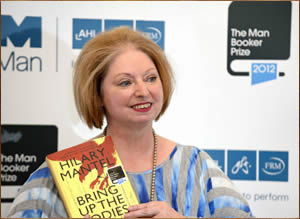
Booker Prize voor Hilary Mantel

Booker Prize voor Hilary Mantel


De Britse schrijfster Hilary Mantel heeft dinsdag voor de tweede keer de literaire Booker Prize gewonnen. Zij krijgt de prijs voor Bring Up the Bodies. Hilary Mary Mantel werd op 6 juli 1952 als Hilary Mary Thompson in Glossop, Derbyshire, geboren. Zie ook alle tags voor Hilary Mantel op dit blog.


Uit: Bring Up the Bodies


“His children are falling from the sky. He watches from horse-back, acres of England stretching behind him; they drop, gilt-winged, each with a blood-filled gaze. Grace Cromwell hovers in thin air. She is silent when she takes her prey, silent as she glides to his fist. But the sounds she makes then, the rustle of feathers and the creak, the sigh and riffle of pinion, the small cluck-cluck from her throat, these are sounds of recognition, intimate, daughterly, almost disapproving. Her breast is gore-streaked and flesh clings to her claws.

Later, Henry will say, 'Your girls flew well today'. The hawk Anne Cromwell bounces on the glove of Rafe Sadler, who rides by the king in easy conversation. They are tired; the sun is declining, and they ride back to Wolf Hall with the reins slack on the necks of their mounts. Tomorrow his wife and two sisters will go out. These dead women, their bones long sunk in London clay, are now transmigrated. Weightless, they glide on the upper currents of the air. They pity no one. They answer to no one.

Their lives are simple. When they look down they see nothing but their prey, and the borrowed plumes of the hunters: they see a flittering, flinching universe, a universe filled with their dinner. All summer has been like this, a riot of dismemberment, fur and feather flying; the beating off and the whipping in of hounds, coddling of tired horses, the nursing, by the gentlemen, of contusions, sprains and blisters. And for a few days at least, the sun has shone on Henry. Sometime before noon, clouds scudded in from the west and rain fell in big scented drops; but the sun re-emerged with a scorching heat, and now the sky is so clear you can see into Heaven and spy on what the saints are doing.”


 1257355-7fbcd28ff7e4ae0f8ab6794987950020.jpg

Hilary Mantel (Glossop, 6 juli 1952)

Geschreven door Romenu om 09:24 Reageer op dit bericht
Reageer op dit bericht

Reageer op dit bericht

Een titel of je eigen website toevoegen

De blogger leest alles eerst na: je tekst verschijnt zodra die goedgekeurd is.

Simon Vestdijk, Miguel Delibes, Georg Büchner, Arthur Miller, Nel Noordzij

De Nederlandse schrijver Simon Vestdijk werd geboren in Harlingen op 17 oktober 1898. Zie ook mijn blog van 17 oktober 2010 en eveneens alle tags voor Simon Vestdijk op dit blog.


Uit: De kellner en de levenden


‘Gezichtsbedrog,’ glimlachte de tandarts, ‘een knappe truc. De moderne techniek staat voor niets. Later stonden ze weer op de gewone plaats, herinnert u zich maar... Misschien heeft u aan de Openbaring gedacht; maar daarin staat wèl geschreven, dat er geen nacht meer zal zijn, maar niets over de tijd. Ik ben natuurlijk geen autoriteit, al beschouw ik mezelf als tamelijk bijbelvast... Dominee, kunt u ons ook zeggen of er in de Openbaring iets over de tijd staat: dat die er niet meer zijn zal, of stilgezet is, of iets van dien aard?’

‘Maar wat ik zeggen wou; dat-er-geen-tijd-meer-zal-zijn, - waar staat dat beschreven, meneer Veenstra?’

‘In de Bijbel toch zeker?’

 ‘Mij niets van bekend. We zouden dit aan onze dominee moeten vragen, het is niet mijn bedoeling om eh... Hm... U doelt waarschijnlijk op Mattheüs 24, maar daarin staat niets over de tijd; wel over de voleinding der wereld, en oorlogen, en verduistering der zon, en de sterren die van de hemel zullen vallen, en een bazuin met groot geluid, en natuurlijk de komst van Christus...’

 ‘En hebben we die sterren soms niet gezien? In die grote zaal met al die boeken?’

 ‘Gezichtsbedrog,’ glimlachte de tandarts, ‘een knappe truc. De moderne techniek staat voor niets. Later stonden ze weer op de gewone plaats, herinnert u zich maar... Misschien heeft u aan de Openbaring gedacht; maar daarin staat wèl geschreven, dat er geen nacht meer zal zijn, maar niets over de tijd. Ik ben natuurlijk geen autoriteit, al beschouw ik mezelf als tamelijk bijbelvast... Dominee, kunt u ons ook zeggen of er in de Openbaring iets over de tijd staat: dat die er niet meer zijn zal, of stilgezet is, of iets van dien aard?’

Met inspanning van al zijn krachten richtte dominee Van der Woght zich op uit de dodelijke vermoeidheid, die hem nog steeds gekluisterd hield. Werktuiglijk glimlachte hij zijn mooie oude-mannenglimlach, en wijd sperden zijn fletsblauwe ogen zich open, als om te zien, te weten, zich te herinneren wat hij vroeger geweten had. Voor ieder was het duidelijk, dat op dit moment de Openbaring voor hem een boek was met evenveel zegelen gesloten als het boek, waarvan in de Openbaring wordt gerept”.


Simon Vestdijk (17 oktober 1898 – 23 maart 1971)


De Spaanse schrijver
Miguel Delibes werd op 17 oktober 1920 in Valladolid geboren. Zie
ookmijn blog van 17 oktober 2010 en eveneens alle tags voor Miguel Delibes op dit blog.


Uit: Les Rats (Vertaald door
Rudy Chaulet)


“Peu après le lever du jour, le Nini apparut à l’entrée de la grotte et contempla la nuée de corbeaux réunis en conseil. Les trois peupliers écimés de la rive, couverts de ces gros volatiles, ressemblaient à trois parapluies fermés, la pointe dirigée vers le ciel. Les terres basses de don Antero, le Puissant, tiraient sur le noir dans le lointain, comme un immense champ de cendres.
     La chienne se blottit contre les jambes de l’enfant et il lui caressa l’échine à rebrousse-poil de son pied nu et crasseux, sans la regarder, puis il bâilla, s’étira et leva les yeux vers le ciel lointain et satiné :
     « Le temps est à la gelée, Fa. Dimanche, on ira chasser les rats », dit-il.
     La chienne agita nerveusement sa queue tronquée et fixa sur l’enfant ses prunelles vivaces et jaunâtres. Les paupières de la chienne étaient gonflées et dépourvues de poils ; les chiens de son espèce arrivaient rarement à l’âge adulte les yeux intacts ; ils les perdaient souvent aux broussailles des ruisseaux, criblés par les herses, la renouée et le chiendent.
     Le père Ratier s’agita à l’intérieur, dans la paille, et la chienne, en l’entendant, aboya deux fois ; alors, la bande de corbeaux s’éleva péniblement au-dessus du sol d’un vol paisible et profond, rythmé par un brouhaha de croassements sinistres. Seule une corneille resta immobile sur les mottes sombres et l’enfant, en l’apercevant, courut vers elle en zigzaguant dans les sillons lourds d’humidité, évitant la chienne qui le poursuivait et aboyait à côté de lui. Lorsqu’il ouvrit le piège pour libérer le cadavre de l’oiseau, le Nini observa l’épi d’avoine intact, il le broya alors entre ses petits doigts nerveux et les grains s’éparpillèrent sur le sol.
     Élevant la voix par-dessus les croassements des corbeaux qui battaient lourdement des ailes, très haut, au-dessus de lui, il dit :
     « Il n’a pas réussi à y goûter, Fa ; il n’en a même pas mangé un grain. »


Miguel Delibes (Valladolid, 17 oktober 1920)


De Duitse schrijver
Georg Büchner werd geboren op 17 oktober 1813 in Goddelau. Zie ook mijn blog van 17 oktober 2010 en eveneens alle tags voor Georg Büchner op dit blog.


Uit: Dantons Tod


„(Camille Desmoulins und Philippeau treten ein.)

Hérault. Philippeau, welch trübe Augen! Hast du dir ein Loch in die rote Mütze gerissen? Hat der heilige Jakob ein böses Gesicht gemacht? Hat es während des Guillotinierens geregnet? Oder hast du einen schlechten Platz bekommen und nichts sehen können?

Camille. Du parodierst den Sokrates. Weißt du auch, was der Göttliche den Alcibiades fragte, als er ihn eines Tages finster und niedergeschlagen fand: »Hast du deinen Schild auf dem Schlachtfeld verloren? Bist du im Wettlauf oder im Schwertkampf besiegt worden? Hat ein andrer besser gesungen oder besser die Zither geschlagen?« Welche klassischen Republikaner! Nimm einmal unsere Guillotinenromantik dagegen!

Philippeau. Heute sind wieder zwanzig Opfer gefallen. Wir waren im Irrtum, man hat die Hebertisten nur aufs Schafott geschickt, weil sie nicht systematisch genug verfuhren, vielleicht auch, weil die Dezemvirn sich verloren glaubten, wenn es nur eine Woche Männer gegeben hätte, die man mehr fürchtete als sie.

Hérault. Sie möchten uns zu Antediluvianern machen. St. Just säh' es nicht ungern, wenn wir wieder auf allen vieren kröchen, damit uns der Advokat von Arras nach der Mechanik des Genfer Uhrmachers Fallhütchen, Schulbänke und einen Herrgott erfände.

Philippeau. Sie würden sich nicht scheuen, zu dem Behuf an Marats Rechnung noch einige Nullen zu hängen. Wie lange sollen wir noch schmutzig und blutig sein wie neugeborne Kinder, Särge zur Wiege haben und mit Köpfen spielen? Wir müssen vorwärts: der Gnadenausschuß muß durchgesetzt, die ausgestoßnen Deputierten müssen wieder aufgenommen werden!

Hérault. Die Revolution ist in das Stadium der Reorganisation gelangt. – Die Revolution muß aufhören, und die Republik muß anfangen. – In unsern Staatsgrundsätzen muß das Recht an die Stelle der Pflicht, das Wohlbefinden an die der Tugend und die Notwehr an die der Strafe treten. Jeder muß sich geltend machen und seine Natur durchsetzen können. Er mag nun vernünftig oder unvernünftig, gebildet oder ungebildet, gut oder böse sein, das geht den Staat nichts an. Wir alle sind Narren, es hat keiner das Recht, einem andern seine eigentümliche Narrheit aufzudrängen. – Jeder muß in seiner Art genießen können, jedoch so, daß keiner auf Unkosten eines andern genießen oder ihn in seinem eigentümlichen Genuß stören darf.”


Georg Büchner (17 oktober 1813 - 19 februari 1837)

Scene uit een opvoering van Dantons Tod in Wiehl, 2009


De Amerikaanse toneelschrijver
Arthur Miller werd geboren in New York op 17 oktober 1915. Zie ook mijn blog van 17 oktober 2010 en eveneens alle tags voor Arthur Miller op dit blog.


Uit:
Timebends: A Life


“Already in the sixties I was surprised by the common tendency to think of the late forties and early fifties as some sort of renaissance in the New York theatre. If that was so, I was unaware of it. I thought the theatre a temple being rotted out with commercialized junk, where mostly by accident an occasional good piece of work appeared, usually under some disguise of popular cultural coloration such as a movie star in a leading role.

That said, it now needs correction; it was also a time when the audience was basically the same for musicals and light entertainment as for the ambitious stuff and had not yet been atomized, as it would be by the mid-fifties, into young and old, hip and square, or even political left and middle and right. So the playwright’s challenge was to please not a small sensitized supporting clique but an audience representing, more or less, all of America. With ticket prices within reason, this meant that an author was writing for his peers, and if such was really not the case statistically, it was sufficiently so to support an illusion that had a basis in reality. After all, it was not thought particularly daring to present T.S. Eliot’s The Cocktail Party on Broadway, or Laurence Olivier in a Greek tragedy, or Giraudoux’s The Madwomen of Chaillot, or any number of other ambitious works. To be sure, such shows had much shorter lives than the trash, but that was to be expected, for most people would much rather laugh than cry, rather watch an actor being hit on the head by a pig bladder than by some painful truth.

The net of it all was that serious writers could reasonably assume they were addressing the whole American mix, and so their plays, whether successfully or not, stretched toward a wholeness of experience that would not require specialists or a coterie to be understood. As alienated a spirit as he was, O’Neill tried for the big audience, and Clifford Odets no less so, along with every other writer longing to prophesy to America, from Whitman and Melville to Dreiser and Hemingway and so on.”


Arthur Miller (17 oktober 1915 – 10 februari 2005)


De Nederlandse schrijfster en dichteres
Nel Noordzij (Eig. Pieternella Margaretha Breevoort-Noordzij) werd geboren in Rotterdam op 17 oktober 1923. Zie ook mijn blog van 17 oktober 2010 en eveneens alle tags voor Nel Noordzij op dit blog.


Uit:
Nel Noordzij en het desillusionerende proza (Bespreking door Marianne Vogel)


„Dat Nel Noordzij met haar roman de regels voor een fatsoenlijke beschrijving van de werkelijkheid en tevens die voor een fatsoenlijke beschrijving van de vrouw overtrad, doordat ze beschrijft hoe Renée naar de w.c. gaat, overgeeft, haar onthaarde oksels bekijkt, slechts zelden een ‘aardige’ opmerking tegen iemand maakt en als arts een tot het lichamelijke gereduceerd beeld van haar medemensen heeft, demonstreren de recensies over haar roman. Er wordt weliswaar beweerd dat de kritiek ‘over het algemeen positief [reageerde], omdat iedereen doorzag dat Renée's moedwillige cynisme de keerzijde vormde van een grote kwetsbaarheid.’ Maar alleen al de recensies van de belangrijkste critici geven een tegenstrijdiger beeld. Waar Jan Greshoff en H.A. Gomperts de modieuze, ja pubertaire woordenschat en het overdreven realisme bekritiseren, wijst Pierre Dubois deze bezwaren in twee recensies af en benadrukt de functionaliteit van de stijl van Noordzij, die zijns inziens niet overdreven is, maar juist de eerlijkheid en geloofwaardigheid van de roman ten goede komt. Waar Gomperts de roman alleen als glad cliché beschrijft, prijst Greshoff de overtuigingskracht en buitengewone helderheid van het boek, en besluit zijn recensie met de woorden: als Noordzij zich ‘losmaakt van de gril van de dag, wordt zij een van de allerbelangrijkste schrijvers van ons land. En misschien is zij dat al, in weerwil van haar kinderachtig te koop lopen met de verboden woorden uit de dictionnaire onzer schooljaren.’

Een dergelijk lovend oordeel komt echter maar een keer voor, en ongeveer twee derde van de recensies over Het kan me niet schelen is ronduit afkeurend. De argumenten die daarbij opduiken zijn in twee categorien te verdelen. De ene soort valt onder dezelfde kritiek die ook op het desillusionerend proza van de mannen gegeven werd: saai, naar, pijnlijk, moreel verwerpelijk, getuigt van een monomaan interesse voor bepaalde lichamelijke functies, maakt bezorgd over het effect op jeugdige lezers etc. etc. Dergelijke bezwaren wekken geen verbazing; pas de volgende generatie zou aan het eind van de jaren vijftig enthousiast zijn over deze nihilistisch-onverbloemde literatuur."


Nel Noordzij (17 oktober 1923 – 7 september 2003)

Cover


Zie voor nog meer schrijvers van de 17e oktober ook
mijn blog van 17 oktober 2011 deel 1 en eveneens deel 2.

Geschreven door Romenu om 00:00 Reageer op dit bericht

85 Jaar Günter Grass, Oscar Wilde, Guðbergur Bergsson, Eugene O’Neill, Gustaaf Peek


85 Jaar Günther Grass


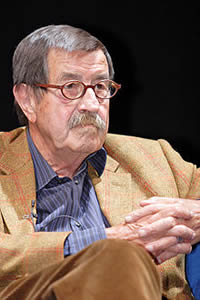
De Duitse dichter en schrijver Günter Grass werd geboren in Danzig (tegenwoordig Gdansk, Polen) op 16 oktober 1927. Günther Grass viert vandaag zijn 85e verjaardag. Zie ook mijn blog van 16 oktober 2010 en eveneens alle tags voor Günter Grass op dit blog.


Uit: Die Blechtrommel


“Zugegeben: ich bin Insasse einer Heil- und Pflegeanstalt, mein Pfleger beobachtet mich, läßt mich kaum aus dem Auge; denn in der Tür ist ein Guckloch, und meines Pflegers Auge ist von jenem Braun, welches mich, den Blauäugigen, nicht durchschauen kann.

Mein Pfleger kann also gar nicht mein Feind sein. Liebgewonnen habe ich ihn, erzähle dem Gucker hinter der Tür, sobald er mein Zimmer betritt, Begebenheiten aus meinem Leben damit er mich trotz des ihn hindernden Guckloches kennenlernt. Der Gute scheint meine Erzählungen zu schätzen, denn sobald ich ihm etwas vorgelegen habe, zeigt er mir, um sich erkenntlich zu geben, sein neuestes Knotengebilde. Ob er ein Künstler ist, bleibe dahingestellt. Eine Ausstellung seiner Kreationen würde

jedoch von der Presse gut aufgenommen werden, auch einige Käufer herbeilocken. Er knotet ordinäre Bindfäden, die er nach den Besuchsstunden in den Zimmern seiner Patienten sammelt und entwirrt, zu vielschichtig verknorpelten Gespenstern, taucht diese dann in Gips, läßt sie erstarren und spießt

sie mit Stricknadeln, die auf Holzsöckelchen befestigt sind.

Oft spielt er mit dem Gedanken, seine Werke farbig zu gestalten. Ich rate davon ab, weise auf mein weißlackiertes Metallbett hin und bitte ihn, sich dieses vollkommenste Bett bunt bemalt vorzustellen. Entsetzt schlägt er dann seine Pflegerhände über dem Kopf zusammen, versucht in etwas zu starrem Gesicht allen Schrecken gleichzeitig Ausdruck zu geben und nimmt Abstand von seinen farbigen Plänen.

Mein weißlackiertes metallenes Anstaltsbett ist also ein Maßstab. Mir ist es sogar mehr: mein Bett ist das endlich erreichte Ziel, mein Trost ist es und könnte mein Glaube werden, wenn mir die Anstaltsleitung erlaubte, einige Änderungen vorzunehmen: das Bettgitter möchte ich erhöhen lassen,

damit mir niemand mehr zu nahe tritt...”


 1257109-becd352ba4c8f7b732350de10825445f.jpg

Günter Grass (Danzig, 16 oktober 1927)


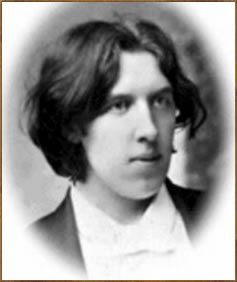
De Iers-Engelse schrijver Oscar Wilde werd geboren op 16 oktober 1854 in Dublin. Zie ook mijn blog van 16 oktober 2010 en eveneens alle tags voor Oscar Wilde op dit blog.


Ballad of Reading Gaol - I  (Fragment)


Some love too little, some too long,
Some sell, and others buy;
Some do the deed with many tears,
And some without a sigh:
For each man kills the thing he loves,
Yet each man does not die.


He does not die a death of shame
On a day of dark disgrace,
Nor have a noose about his neck,
Nor a cloth upon his face,
Nor drop feet foremost through the floor
Into an empty space.


He does not sit with silent men
Who watch him night and day;
Who watch him when he tries to weep,
And when he tries to pray;
Who watch him lest himself should rob
The prison of its prey.


He does not wake at dawn to see
Dread figures throng his room,
The shivering Chaplain robed in white,
The Sheriff stern with gloom,
And the Governor all in shiny black,
With the yellow face of Doom.


He does not rise in piteous haste
To put on convict-clothes,
While some coarse-mouthed Doctor gloats, and notes
Each new and nerve-twitched pose,
Fingering a watch whose little ticks
Are like horrible hammer-blows.


He does not feel that sickening thirst
That sands one's throat, before
The hangman with his gardener's gloves
Comes through the padded door,
And binds one with three leathern thongs,
That the throat may thirst no more.


He does not bend his head to hear
The Burial Office read,
Nor, while the anguish of his soul
Tells him he is not dead,
Cross his own coffin, as he moves
Into the hideous shed.


He does not stare upon the air
Through a little roof of glass:
He does not pray with lips of clay
For his agony to pass;
Nor feel upon his shuddering cheek
The kiss of Caiaphas.


 1257109-7ed412bd21207acbc04254700d2a170e.jpg

Oscar Wilde (16 oktober 1854 – 30 november 1900)


De IJslandse schrijver
Guðbergur Bergsson werd geboren op 16 oktober 1932 in Grindavik. Zie ook mijn blog van 16 oktober 2010 en eveneens alle tags voor Guðbergur Bergsson op dit blog.


Uit: Blue Eyes in a Pool of Sharks


“But in reality nature was damaged and many Russian cities became because of that ghost dwellings like American radio stations in this country left by the so called NATO defence force. They were not only in Keflavik but all over Iceland. And something similar might happen to places now willingly accepting Alcoa factories. Their directors and owners only aim at making benefits. That is their nature and aim they defend better than we protect ours. Having done what they can and having emptied their possibilities they simply move to another region that has quickly entered the competition offering still better conditions and facilities concerning taxes and prices of electricity. Capitalism in America is that way and it is too well known in all the United States.
To me this is felt as a question of knowledge. I have not suffered it in the flesh. In reality it is remote, something like a sad memory, a frustration, a sign of lack of believe in human dignity. It is like a feeling that a tourist might have, a tourist entering Human history. But to see in the future similar destruction in my fatherland where my hands can feel things and my feet walk brings anger, even in the vain of hateful sense of justice when it is absurd and based on frustration.”


 1257109-60fa1639583cb2321fbc9d4088550bd9.jpg

Guðbergur Bergsson (Grindavik, 16 oktober 1932)


De Amerikaanse schrijver
Eugene Gladstone O’Neill werd op 16 oktober 1888 in New York City geboren. Zie en ook mijn blog van 16 oktober 2010 en eveneens alle tags voor Eugene O’Neill op dit blog.


Uit: The Iceman Cometh


“LARRY--(grins) Yes, it's my bad luck to be cursed with an iron constitution that even Harry's booze can't corrode.

ROCKY--De old anarchist wise guy dat knows all de answers! Dat's you, huh?

LARRY--(frowns) Forget the anarchist part of it. I'm through with the Movement long since. I saw men didn't want to be saved from themselves, for that would mean they'd have to give up greed, and they'll never pay that price for liberty. So I said to the world, God bless all here, and may the best man win and die of gluttony! And I took a seat in the grandstand of philosophical detachment to fall asleep observing the cannibals do their death dance. (He chuckles at his own fancy--reaches over and shakes Hugo's shoulder.) Ain't I telling him the truth, Comrade Hugo?

ROCKY--Aw, fer Chris' sake, don't get dat bughouse bum started!

HUGO--(raises his head and peers at Rocky blearily through his thick spectacles--in a guttural declamatory tone) Capitalist swine! Bourgeois stool pigeons! Have the slaves no right to sleep even? (Then he grins at Rocky and his manner changes to a giggling, wheedling playfulness, as though he were talking to a child.) Hello, leedle Rocky! Leedle monkey-face! Vere is your leedle slave girls? (with an abrupt change to a bullying tone) Don't be a fool! Loan me a dollar! Damned bourgeois Wop! The great Malatesta is my good friend! Buy me a trink! (He seems to run down, and is overcome by drowsiness. His head sinks to the table again and he is at once fast asleep.)

ROCKY--He's out again. (more exasperated than angry) He's lucky no one don't take his cracks serious or he'd wake up every mornin' in a hospital.

LARRY--(regarding Hugo with pity) No. No one takes him seriously. That's his epitaph. Not even the comrades any more. If I've been through with the Movement long since, it's been through with him, and, thanks to whiskey, he's the only one doesn't know it.

ROCKY--I've let him get by wid too much. He's goin' to pull dat slave-girl stuff on me once too often. (His manner changes to defensive argument.) Hell, yuh'd tink I wuz a pimp or somethin'. Everybody knows me knows I ain't. A pimp don't hold no job. I'm a bartender. Dem tarts, Margie and Poil, dey're just a side line to pick up some extra dough. Strictly business, like dey was fighters and I was deir manager, see? I fix the cops for dem so's dey can hustle widout gettin' pinched. Hell, dey'd be on de Island most of de time if it wasn't fer me. And I don't beat dem up like a pimp would. I treat dem fine. Dey like me. We're pals, see? What if I do take deir dough? Dey'd on'y trow it away. Tarts can't hang on to dough. But I'm a bartender and I work hard for my livin' in dis dump. You know dat, Larry”.


 1257109-817094c971a9ffd5b383beff249ec775.jpg

Eugene O’Neill (16 oktober 1888 – 27 november 1953)


Onafhankelijk van geboortedata:

De Nederlandse schrijver Gustaaf Peek werd geboren in Haarlem in 1975. Peek studeerde Engelse Taal- en Letterkunde aan de Universiteit Leiden. Zie ook alle tags voor Gustaaf Peek op dit blog.


Uit: Dover (Vertaald door Davbid Colmer)


“In the second town he couldn’t find a parking space. He’d found the right street, but there were cars wedged in on both sides. Tony drove round and round waiting for someone to leave. He felt cold and clammy and realised it was a long time since he’d had anything to eat or drink. He ran out of patience and stopped right in front of the building. He jumped out, rushed up to the door, rang the bell. Nothing happened, so he banged on the door. Back to the van. Key in the lock, doors open – a car stopped behind him – he slammed them shut. The driver, a man, made a show of looking at his watch. The door of the house opened. A woman, drying her hands on what looked like a tea towel. Tony waited for some kind of signal. The woman said something he didn’t understand, but just stood there, the tea towel in her hands. Tony opened the doors and saw startled faces.

– Everything OK. Who’s next? Go, go!

Another three stood up, holding their bin bags, and got out. The car behind started hooting. Tony kept his back to it. The woman said something, the men answered. Doors shut. The clutch slipped, the van lurched, but didn’t stall. Two left. Rotterdam. Home.

He’d been driving non-stop for almost five hours. The old man and the fat guy would probably have done it faster. He was starting to feel faint. Five hours without food or drink. No breaks. Bladder about to burst. His city was close now. He had to get to the centre. Thuds from the back. He looked over his shoulder and saw fingers pressed against the window. A flushed face made Tony jump. Suddenly the man threw up against the glass. Tony’s hands stumbled over the wheel and the van swerved. Tony looked back at the road and regained control. A quick glance over his shoulder. The retching man’s face against the vomit-smeared window, the other man stretched out on the floor. He had to stop. Three hundred metres further on: clattering flags, garish signs advertising petrol and fast food. Tony took the exit.”


 1257109-aa11e98aeaede9ea078a9615d3539d65.jpg

Gustaaf Peek (Haarlem, 1975)


Zie voor nog meer schrijvers van de 16e oktober ook mijn blog van 16 oktober 2011 deel 1 en eveneens deel 2.

Geschreven door Romenu om 19:21 Reageer op dit bericht

A. F.Th. van der Heijden, Boualem Sansal, Friedrich Nietzsche

De Nederlandse schrijver A. F. Th. van der Heijden werd geboren in Geldrop op 15 oktober 1951. Zie ook mijn blog van 15 oktober 2010 en eveneens alle tags voor A. F.Th. van der Heijden op dit blog.


Uit: Tonio


“Er was die keer dat hii voor me uit de trap afdaalde, terwijl hij lachend iets over zijn schouder zei. Halverwege stond hij opeens stil, zodat ik tegen hem op botste.

'Dat ik dat toch ooit geweest ben.'

Op ooghoogte hing tegen de muur van de overloop zrjn portret als kaalhoofdige zuigeling, in een gestreept rompertje dwars in

zijn ledikant liggend, met boven zich kleurige houten ringen waaraan hij zich nog moest leren optrekken. Hij keek schuins in

de camera, happend in het dons.

Tonio schudde zijn hoofcl, alsof het een onbezonnen keuze betrof 'dat daar ooit te zqn geweest'. Jaren eerder had ik in mijn dagboek

genoteerd dat hij, net zo ongelovig zijn hoofd schuddend, had gezegd: 'Dat ik toch ooit dood zaI gaan.'

(…)


Soms wil ik hem heel dicht tegen me aan houden. De gedachte doet zich meestal voor als ik in bed lig te lezen, en zomaar opeens mijn boek ter zijde leg. Kom maar, zeg ik dan geluidloos. Kom maar, Tonio, onder het dek. Ik zal je warm houden.
Zijn lichaam is willoos, slap, maar niet koud. Het is de Tonio die na de aanrijding op het plaveisel heeft gelegen, een half etmaal voor zijn dood. De inzittenden van de rode Suzuki Swift staan buiten de auto, en durven niet naar het verderop neergekwakte lijf te kijken. De sirenes van politie en ambulance zijn nog niet hoorbaar. Het blauwe geflakker van de zwaailichten moet nog komen. Het is dan dat ik hem opraap en naar mijn bed draag, waarvan ik het dek opensla.
Kom maar. Dicht tegen me aan. Dat zal je warm houden. Ze komen zo om je beter te maken.”


1256369-e418f9ae1bd8b82a90412ece858db4f3.jpg 

A. F.Th. van der Heijden (Geldrop, 15 oktober 1951)


De Franstalige Algerijnse schrijver Boualem Sansal werd geboren op 15 oktober 1949 in El Teniente-Had. Zie ook alle tags voor Boualem Sansal op dit blog.


Uit: Das Dorf des Deutschen (Vertaald door Ulrich Zieger)


Malrichs Tagebuch
Oktober 1996
Es sind jetzt sechs Monate, dass Rachel tot ist. Er war dreiunddreißig Jahre alt. Eines Tages, das ist zwei Jahre her, ist irgendwas in seinem Kopf kaputtgegangen, er fing plötzlich damit an, zwischen Frankreich, Algerien, Deutschland, Österreich, Polen, der Türkei und Ägypten hin- und herzujagen. War er nicht auf Reisen, dann las er, hockte grübelnd in seiner Ecke, er schrieb, er delirierte. Er büßte die Gesundheit ein. Dann seine Arbeit. Dann den Verstand. Ophelia hat ihn sitzen lassen. Eines Abends hat er sich umgebracht. Das war am 24. April dieses Jahres 1996, gegen 23 Uhr.
Ich wusste nichts von seinen Problemen. Ich war jung, ich war siebzehn, als dieses Irgendwas in seinem Kopf zerbrach, ich war auf der schiefen Bahn. Rachel sah ich selten, ich mied ihn, er ging mir mit seinem Gewäsch auf den Wecker. Ich bedaure es, das zu sagen, er ist mein Bruder, aber dermaßen angepasst, da kriegst du die Krise. Er hatte sein Leben, ich hatte meins. Er war leitender Angestellter in einem amerikanischen Riesenkonzern, er hatte seine Tussi, sein kleines Häuschen, seinen Schlitten, seine Kreditkarte, sein Tagesablauf war geregelt, ich schlich rund um die Uhr mit den Abgebrannten aus der Siedlung um die Ecken. Sie ist als ZUS-1, empfindliche urbane Zone erster Kategorie eingestuft. Keine Zeit zum Ausruhen, man kommt aus dem einen Crash und schlittert in den nächsten. Eines Morgens hat Ophelia angerufen, um uns das Drama zu verkünden. Sie hatte bei ihrem Ex im Pavillon vorbeigeschaut, um zu sehen, was es Neues gibt. Ich ahnte etwas, hat sie gesagt. Ich sprang auf das Moped von Momo, dem Sohn des Schächters, und gab Gas. Da waren Leute vor dem Häuschen, die Polizei, der Rettungswagen, die Nachbarn, die Schaulustigen. Rachel war in der Garage, auf dem Fußboden sitzend, Rücken gegen die Wand, Beine ausgestreckt, das Kinn auf der Brust, den Mund offen.”


 1256369-5730fb244d36a4c6b6d38435af9ce74b.jpg

Boualem Sansal (El Teniente-Had, 15 oktober 1949)


De Duitse dichter, filosoof, filoloog en schrijver Friedrich Nietzsche werd geboren op 15 oktober 1844 in Röcken ten zuidwesten van Leipzig. Zie ook mijn blog van 15 oktober 2010 en eveneens alle tags voor Friedrich Nietzsche op dit blog.


Uit: Der Antichrist


„-Sehen wir uns ins Gesicht. Wir sind Hyperboreer, - wir wissen gut genug, wie abseits wir leben. "Weder zu Lande, noch zu Wasser wirst du den Weg zu den Hyperboreern finden": das hat schon Pindar von uns gewusst. Jenseits des Nordens, des Eises, des Todes - unser Leben, unser Glück ... Wir haben das Glück entdeckt, wir wissen den Weg, wir fanden den Ausgang aus ganzen Jahrtausenden des Labyrinths. Wer fand ihn sonst? - Der moderne Mensch etwa? "Ich weiss nicht aus, noch ein; ich bin Alles, was nicht aus noch ein weiss" - seufzt der moderne Mensch ... An dieser Modernität waren wir krank, - am faulen Frieden, am feigen Compromiss, an der ganzen tugendhaften Unsauberkeit des modernen ja und Nein. Diese Toleranz und largeur des Herzens, die Alles "verzeiht", weil sie Alles "begreift", ist Scirocco für uns. Lieber im Eise leben als unter modernen Tugenden und andren Südwinden! ... Wir waren tapfer genug, wir schonten weder uns, noch Andere: aber wir wussten lange nicht, wohin mit unsrer Tapferkeit. Wir wurden düster, man hiess uns Fatalisten. Unser Fatum - das war die Fülle, die Spannung, die Stauung der Kräfte. Wir dürsteten nach Blitz und Thaten, wir blieben am fernsten vom Glück der Schwächlinge, von der "Ergebung" ... Ein Gewitter war in unsrer Luft, die Natur, die wir sind, verfinsterte sich - denn wir hatten keinen Weg. Formel unsres Glücks: ein Ja, ein Nein, eine gerade Linie, ein Ziel ...”


 1256369-e70ce39e964e2f274382563678274e31.jpg

Friedrich Nietzsche (15 oktober 1844 – 25 augustus 1900)

Monument in Naumburg


Zie voor meer schrijvers van de 15e oktober ook mijn vorige blog van vandaag.

Geschreven door Romenu om 19:26 Reageer op dit bericht

Michail Lermontov, Italo Calvino, Tessa de Loo

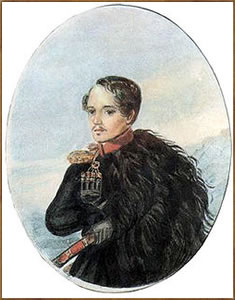
De Russische dichter en schrijver Michail Joerjevitsj Lermontov werd geboren op 15 oktober 1814 in Moskou. Zie ook mijn blog van 15 oktober 2010 en eveneens alle tags voor Michail Lermontov op dit blog.


The Cross On the Rock


I know a rock in a highland's ravine,

On which only eagles might ever be seen,

But a black wooden cross o'er a precipice reigns,

It rots and it ages from tempests and rains.


And many years have gone without any hints,

From times when it was seen from faraway hills.

And its every arm is raised up to the sky,

As if catching clouds or going to fly.


Oh, if I were able to rise there and stay,

Then how I'd cry there and how I'd pray;

And then I would throw off real life's chains

And live as a brother of tempests and rains!


Requiem

1831


There is a blest place: by the trace

In wilderness, in a little glade’s middle,

Where in the eve, mists twine and bristle

In moony silver’s easy lace…

My friend! You know that glade, fair;  

There dig a pit and let me rest,

When I will cease to breathe in air.


Give to that grave a good regard --

Let all be legally there settled

Raise on the grave a cross of maple,

And place a stone, wild and hard.

When thunderstorms will shake the forest,

The traveler will see my cross;

Maybe, the stone and the moss

Will give to him a rest at most. 


Vertaald door Yevgeny Bomver


1256366-7b9dc24429841ee5464fb9c97dd09792.jpg
Michail Lermontov (15 oktober 1814 - 27 juli 1841)

Zelfportret, 1837


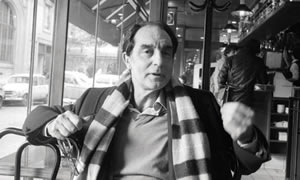
De Italiaanse schrijver Italo Calvino werd geboren in Santiago de las Vegas op Cuba op 15 oktober 1923. Zie ook mijn blog van 15 oktober 2010 en eveneens alle tags voor Italo Calvino op dit blog.


Uit: Invisible Cities (Vertaald door William Weaver)


“The city of Leonia refashions itself every day: every morning the people wake between fresh sheets, wash with just-unwrapped cakes of soap, wear brand-new clothing, take from the latest model refrigerator still unopened tins, listening to the last-minute jingles from the most up-to-date radio.

     On the sidewalks, encased in spotless plastic bags, the remains of yesterday's Leonia await the garbage truck.   Not only squeezed rubes of toothpaste, blown-out light bulbes, newspapers, containers, wrappings, but also boilers, encyclopedias, pianos, porcelain dinner services. It is not so much by the things that each day are manufactured, sold, bought that you can measure Leonia's opulence, but rather by the things that each day are thrown out to make room for the new.   So you begin to wonder if Leonia's true passion is really, as they say, the enjoyment of new and different things, and not, instead, the joy of expelling, discarding, cleansing itself of a recurrent impurity.   The fact is that street cleaners are welcomed like angels, and their task of removing the residue of yesterday's existence is surrounded by a respectful silence, like a ritual that inspires devotion, perhaps only because once things have been cast off nobody wants to have to think about them further.

     Nobody wonders where, each day, they carry their load of refuse.   Outside the city, surely; but each year the city expands, and the street cleaners have to fall farther back.   The bulk of the outflow increases and the piles rise higher, become stratified, extend over a wider perimeter.   Besides, the more Leonia's talent for making new materials excels, the more the rubbish improves in quality, resists time, the elements, fermentations, combustions.   A fortress of indestructible leftovers surrounds Leonia, dominating it on every side, like a chain of mountains.”


 1256366-979cd497fa5af813e0aee8ba3075c062.jpg

Italo Calvino (15 oktober 1923 - 19 november 1985)


De Nederlandse schrijfster Tessa de Loo (pseudoniem van Tineke Duyvené de Wit) werd op 15 oktober 1946 in Bussum geboren. Zie ook mijn blog van 15 oktober 2010 en eveneens alle tags voor Tessa de Loo op dit blog.


Uit: Het rookoffer


„Op een avond lag hij vermoeid naast haar, beroofd van zijn vitaliteit. Ze spraken over 'La Nausée' van Sartre, dat hij kort daarvoor gelezen had. Hij had veel herkend, zei hij, het gevoel van walging en zinloosheid week haast nooit van zijn zijde. Barbara was verontwaardigd. Dit was een belediging van haar en het leven zelf! Deze bekentenis moest voortkomen uit jeugdige dweepzucht, uit zijn neiging tot romantiek met een nihilistisch tintje. 'Het bestaan is niet zinloos,' zei ze fel, 'de liefde is de rechtvaardiging ervan.' Guido haalde zijn schouders op. 'We worden geboren om te sterven,' zei hij mat, 'meer is er niet. Daarom spelen we het leven. We spelen het alsof we erin geloven.' Barbara zweeg. Wat betekende zij dan voor hem?'”

(…)


' 'En wat doen we met haar?' vroeg de beul. Hij wees op de prinses die handenwringend naar het zacht heen en weer bungelende lichaam van haar minnaar keek. Samen met de galg tekende het zich zwart af tegen de hemel. 'Haar straf,' sprak de koning, 'zal zwaarder zijn: wij laten haar in leven.'


 1256366-cd8418968c1c0f460c64a32a283c0ef7.jpg

Tessa de Loo (Bussum, 15 oktober 1946)


Zie voor nog meer schrijvers van de 15e oktober ook
mijn blog van 15 oktober 2011 deel 1 en eveneens deel 2.

Geschreven door Romenu om 19:13 Reageer op dit bericht

Friedenspreis des Deutschen Buchhandels 2012 voor Liao Yiwu

Friedenspreis des Deutschen Buchhandels 2012 voor Liao Yiwu

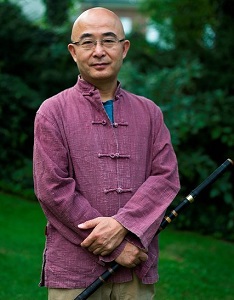
Aan de Chinese dichter en schrijver Liao Yiwu werd gisteren in de Frankfurter Paulskerk de Friedenspreis des Deutschen Buchhandels uitgereikt. Liao Yiwu (ook bekend als Lao Wei) werd geboren op 4 augustus 1958 in Yanting, Sichuan Zie ook alle tags voor Liao Yiwu op dit blog.

Uit: For a Song and a Hundred Songs (Vertaald door Wenguang Huang)

“I have written this book three times, thanks to the relentless obstructions of the Chinese security police.
I first started writing it on the backs of envelopes and on scraps of paper that my family smuggled into the prison where I was serving a four-year sentence from 1990 to 1994 for writing and distributing a poem that condemned the infamous, bloody government crackdown on the 1989 student prodemocracy movement in Tiananmen Square.
Even after my release in 1994, the police continued to monitor and harass me. On October 10, 1995, police raided my apartment in Chengdu, Sichuan Province, confiscating the handwritten manuscript of For a Song and a Hundred Songs. As a punishment for what they called “attacking the government’s penitentiary system” with my writings, I was placed under house arrest for twenty days.
I started on my book again from scratch. It took me three years to finish a new version, which was seized in 2001, along with my other unpublished literary works. This time, the police also absconded with my computer.
Writers like to wax poetic and brag about their works in an attempt to secure a berth in the history of literature. Unfortunately, I no longer possess many physical products of my years of toil. Instead, I have become an author who writes for the pleasure of the police. Most of my past memories—the manuscripts that I have painstakingly created about my life, and my poems—are now locked away at the Public Security Bureau. In a grimly humorous twist, the police used to peruse my writings more meticulously than even the most conscientious editors.
Chinese career spies have amazing memories. A director of a local public security branch could memorize many of my poems and imbue them with more complicated ideas than I had originally intended. So in a sense, my writing found a way to the minds and lips of at least one eager audience.
Indeed, the police proved to have an insatiable need for more of my work. So after each successive raid, I dug more holes like a rat, and I hid my manuscripts in deeper and deeper crevices across the city, in the homes of family and friends. My furtive efforts to conceal my work called to mind those of the Nobelist Aleksandr Solzhenitsyn, whose handwritten manuscript of The Gulag Archipelago had famously faced similar threats from the KGB. The only way to preserve his writings was to get them published.
In early 2011, after this book was finally smuggled out of China and scheduled to be published in Taiwan and in Germany, I again met resistance from the Chinese authorities.”.


 2083121-5fdd3fbb84e96c3555fd6615ebc4f92c.jpg
Liao Yiwu (Sichuan, 4 augustus 1958)

Geschreven door Romenu om 00:00 Reageer op dit bericht

E. E. Cummings, Péter Nádas, Katha Pollitt, Daniël Rovers

De Amerikaanse dichter en schrijver Edward Estlin Cummings werd geboren in Cambridge, Massachusetts op 14 oktober 1894. Zie ook mijn blog van 14 oktober 2010 en eveneens alle tags voor E. E. Cummings op dit blog.


if you like my poems let them


if you like my poems let them
walk in the evening,a little behind you

then people will say
"Along this road i saw a princess pass
on her way to meet her lover(it was
toward nightfall)with tall and ignorant servants."


my father moved through dooms of love


my father moved through dooms of love
through sames of am through haves of give,
singing each morning out of each night
my father moved through depths of height

this motionless forgetful where
turned at his glance to shining here;
that if(so timid air is firm)
under his eyes would stir and squirm

newly as from unburied which
floats the first who,his april touch
drove sleeping selves to swarm their fates
woke dreamers to their ghostly roots

and should some why completely weep
my father's fingers brought her sleep:
vainly no smallest voice might cry
for he could feel the mountains grow.

Lifting the valleys of the sea
my father moved through griefs of joy;
praising a forehead called the moon
singing desire into begin

joy was his song and joy so pure
a heart of star by him could steer
and pure so now and now so yes
the wrists of twilight would rejoice

keen as midsummer's keen beyond
conceiving mind of sun will stand,
so strictly(over utmost him
so hugely) stood my father's dream

his flesh was flesh his blood was blood:
no hungry man but wished him food;
no cripple wouldn't creep one mile
uphill to only see him smile.

Scorning the Pomp of must and shall
my father moved through dooms of feel;
his anger was as right as rain
his pity was as green as grain

septembering arms of year extend
yes humbly wealth to foe and friend
than he to foolish and to wise
offered immeasurable is

proudly and(by octobering flame
beckoned)as earth will downward climb,
so naked for immortal work
his shoulders marched against the dark

his sorrow was as true as bread:
no liar looked him in the head;
if every friend became his foe
he'd laugh and build a world with snow.

My father moved through theys of we,
singing each new leaf out of each tree
(and every child was sure that spring
danced when she heard my father sing)

then let men kill which cannot share,
let blood and flesh be mud and mire,
scheming imagine,passion willed,
freedom a drug that's bought and sold

giving to steal and cruel kind,
a heart to fear,to doubt a mind,
to differ a disease of same,
conform the pinnacle of am

though dull were all we taste as bright,
bitter all utterly things sweet,
maggoty minus and dumb death
all we inherit,all bequeath

and nothing quite so least as truth
--i say though hate were why men breathe--
because my Father lived his soul
love is the whole and more than all


1255786-2884f07b79322c2ba8530b41f07c2d8d.jpg 

E. E. Cummings (14 oktober 1894 - 3 september 1962)

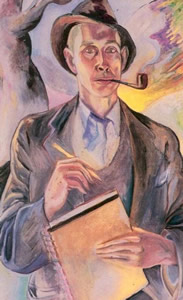
Self-portrait with sketchpad, 1939


De Hongaarse schrijver Péter Nádas werd geboren op 14 oktober 1942 in Boedapest. Zie ook mijn blog van 14 oktober 2010 en eveneens alle tags voor Péter Nádas op dit blog.


Uit: Parallel Stories (Vertaald door Imre Goldstein)


“No one could have said that Klára Vay, with her towering coiffure and enormous eyes, her rounded lips thickly coated in lipstick, her mink coat and, even more, her gesture as she tossed it carelessly off her shoulder, her revealing décolletage and glaring white skin, her skin-tight dress so short it scared off whoever looked at it, in her inordinately high-heeled and pointed shoes, was not an apparition to attract the eye. There were her shapely calves, her figure which on the whole made a girlish impression, her strong hips, powerful thighs: the contradictions or disharmony of her anatomy. As soon as they entered Kristóf sensed the discomfort of the challenge her appearance represented and was mindful of being seen by strangers with such an ostentatious apparition. His skin itched with the awareness that Klára’s beauty and impermissible elegance rendered him ridiculous.
He turned into a little shit.
And, pathetically, he was supposed to be proud, too.
For a little shit to have such a woman. As though he had been her page boy, her escort, her secret lover for years. Or indeed, had any chance of ever being her lover.
It was wrong to let Klára see that he was overawed the first time they went out together. He had to put on the most neutral face and looks possible, to prevent those others reading from his face just how desperate he was, the ultimate failure and disaster that he had so successfully evaded up till now. 
They both managed to hit the right note, too.
They were not scandalous enough to attract those eyes for very long, the gazes peeled off, one by one. For themselves they remained scandalous and intolerable. The visible age gap had also lost its weight as a possible factor in an apparent drama of broken love. The only thing that must have been intolerable was the awareness that these two will not manage without each other and they were clearly unable to account for this awareness to themselves. They held their champagne flutes in their free hand and as though these glasses were stopping them from touching each other, their coats hung limply off the high bar stools. Bodily silence, or the total lack of the wish to talk had cut them off from other people. There was little you could subtract from what had gone before, and nothing from their presence.”


 1255786-bacbf25484cb357c3cb160ef52bdeb10.jpg

Péter Nádas (Boedapest,14 oktober 1942)


De Amerikaanse dichteres, essayiste, critica en feministe
Katha Pollitt werd geboren op 14 oktober 1949 in New York. Zie ook mijn blog van 14 oktober 2010 en eveneens alle tags voor Katha Pollit op dit blog.


Night Subway


The nurse coming off her shift at the psychiatric ward
nodding over the Post, her surprisingly delicate legs
shining darkly through the white hospital stockings,
and the Puerto Rican teens, nuzzling, excited
after heavy dates in Times Square, the girl with green hair,
the Hasid from the camera store, who mumbles
over his prayerbook the nameless name of God,
sitting separate, careful no woman should touch him,
even her coat, even by accident,
the boy who squirms on his seat to look out the window
where signal lights wink and flash like the eyes of dragons
while his mother smokes, each short, furious drag
meaning Mens no good they tell you anything –

How not think of Xerxes, how he reviewed his troops
and wept to think that of all those thousands of men
in their brilliant armour, their spearpoints bright in the sun,
not one would be alive in a hundred years?

O sleepers above us, river
rejoicing in the moon, and the clouds passing over the moon.


Lunaria


Now that I am
all done with spring
rampant in purple
and ragged leaves

and summer too
its great green moons
rising through
the breathless air

 pale dusted like
the Luna's wings
I'd like to meet
October's chill

like the silver moonplant
Honesty
that bears toward winter
its dark seeds

a paper lantern
lit within
and shining in
the fallen leaves.


 1255786-221918bc7024d615869e7fecec9819ab.jpg

Katha Pollitt (New York,14 oktober 1949)


De Nederlandse schrijver Daniël Rovers werd geboren in Zelhem op 14 oktober 1975. Zie ook mijn blog van 14 oktober 2010 en eveneens alle tags voot Daniël Rovers op dit blog.


Uit: In de walvis


„Het geluid van de elektromotor zwelt aan, zittingen zuigen aan bezwete ruggen, het perron schiet weg achter de met geslepen schroevendraaiers bewerkte ruiten; je staart naar buiten en ziet niets dan beroete buizen, leidingen en je eigen gezicht; tegenover je neemt een reclameblond jongetje plaats, zijn benen reiken niet eens tot aan de grond, zijn handen zoeken steun op de zitting. Een kleine dikke vrouw snelt op de open deuren toe, twee volle plastic supermarkttassen in haar handen, het vertreksignaal klinkt, houdt lang aan, de metrobestuurder moet de vrouw hebben opgemerkt, en ze bereikt ook op tijd de deuren, haar hoofd vooruitgestoken als bij een foto-finish, maar precies op dat moment houdt ze in, bang om de drempel te nemen, en het signaal klinkt nog een keer, dit keer langer en dreigender, waarna de deuren alsnog in beweging komen en dichtslaan. Geschreeuw. Twee dames die bij de deuren staan sjorren aan de stalen hendels, en het duurt een volle seconde tot de deuren weer opengaan – om meteen daarna weer dicht te klappen. De vrouw staat nog altijd op het perron, een van haar boodschappentassen is gevallen, ze wrijft met de palm van haar rechterhand over haar hoofd, en omdat de andere plastic zak nog in de winkelhaak van rechterwijsvinger en duim hangt slaat dat zakje nu tegen haar gezicht en schouders; de vrouw grijnst en blijft ondertussen met haar hand over haar hoofd wrijven, alsof zo de pijn uit haar schedel zal verdwijnen. De stuurse blik, die vertraagde manier van bewegen: de metropassagiers kijken naar buiten en zwijgen, delen de schaamte over wat de meeste van hen gezien moeten hebben: er staat een hulpeloos kind van vijftig jaar oud op het perron.“


 1255786-0bd32bc4ef104695e6bfb0af216917cd.jpg

Daniël Rovers (Zelhem, 14 oktober 1975)


Zie voor nog meer schrijvers van de 14e oktober ook mijn vorige blog van vandaag.

Geschreven door Romenu om 19:31 Reageer op dit bericht

Katherine Mansfield, Margarete Susman, Stefan Żeromski

De Nieuw-Zeelandse schrijfster Katherine Mansfield werd geboren op 14 oktober 1888 in Wellington. Zie ook mijn blog van 14 oktober 2010 en eveneens alle tags voor Katherine Mansfield op dit blog.


Uit: Bliss (The Man Without A Temperament)


“He stood at the hall door turning the ring, turning the heavy signet ring upon his little finger while his glance travelled coolly, deliberately, over the round tables and basket chairs scattered about the glassed-in veranda. He pursed his lips–he might have been going to whistle–but he did not whistle–only turned the ring–turned the ring on his pink, freshly washed hands.

Over in the corner sat The Two Topknots, drinking a decoction they always drank at this hour–something whitish, greyish, in glasses, with little husks floating on the top–and rooting in a tin full of paper shavings for pieces of speckled biscuit, which they broke, dropped into the glasses and fished for with spoons. Their two coils of knitting, like two snakes, slumbered beside the tray.

The American Woman sat where she always sat against the glass wall, in the shadow of a great creeping thing with wide open purple eyes that pressed–that flattened itself against the glass, hungrily watching her. And she knoo it was there–she knoo it was looking at her just that way. She played up to it; she gave herself little airs. Sometimes she even pointed at it, crying: "Isn't that the most terrible thing you've ever seen! Isn't that ghoulish!" It was on the other side of the veranda, after all . . . and besides it couldn't touch her, could it, Klaymongso? She was an American Woman, wasn't she, Klaymongso, and she'd just go right away to her Consul. Klaymongso, curled in her lap, with her torn antique brocade bag, a grubby handkerchief, and a pile of letters from home on top of him, sneezed for reply.

The other tables were empty. A glance passed between the American and the Topknots. She gave a foreign little shrug; they waved an understanding biscuit. But he saw nothing. Now he was still, now from his eyes you saw he listened. "Hoo-e-zip-zoo-oo!" sounded the lift. The iron cage clanged open. Light dragging steps sounded across the hall, coming towards him. A hand, like a leaf, fell on his shoulder. A soft voice said: "Let's go and sit over there–where we can see the drive. The trees are so lovely." And he moved forward with the hand still on his shoulder, and the light, dragging steps beside his. He pulled out a chair and she sank into it, slowly, leaning her head against the back, her arms falling along the sides.”


 1255781-665f6fe34619c2f06c91aca2ddd6984d.jpg

Katherine Mansfield (14 oktober 1888 – 9 januari 1923)

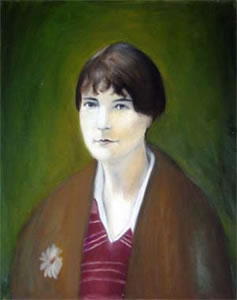
Portret door Shoshana Kertesz


De Duitse dichteres, schrijfster en filosofe Margarete Susman werd geboren op 14 oktober 1872 in Hamburg. Zie ook mijn blog van 14 oktober 2010 en eveneens alle tags voor Margarete Susman op dit blog.


Uit: Ich habe viele Leben gelebt. Erinnerungen


Diesem Wissen entspricht ein fast gleichzeitiges Erlebnis: Ich stehe an einem der hohen Fenster unseres Kinderzimmers, an das mir – da ich es bald verlassen mußte – gewiß keine Erinnerung geblieben wäre, wenn nicht dieses frühe starke Erlebnis es für immer in mein Bewußtsein eingegraben hätte. Ich sehe die schwarzen Vorhänge mit den großen roten Blumen, die längliche Form des hohen Zimmers, an dessen einem Fenster ich stand, und ich fühle noch heute das bittere Elend, das damals mein Kinderherz erfüllte. Ich hatte eben vorher in einem Streit meine Schwester mit einer Puppe an den Kopf geschlagen, und nun stand sie im Zimmer hinter mir und weinte, und meine Mutter tröstete sie zärtlich. Ich fühlte mich trostlos und verlassen, und aus diesem schmerzlichen Verlassensein stieg die Frage in mir auf: „Ist das, was jetzt in mir ist, wohl Mitleid?” – eine Frage, die ich – da sie nach dem Wesen einer mir nahen doch verborgenen Wahrheit fragte – vielleicht die erste philosophische Frage meines Lebens nennen möchte. Dieses Elend war natürlich nicht Mitleid, sondern Reue und das Gefühl des Ausgestoßenseins. Aber das Wort Mitleid, das ich damals noch nicht verstand, mußte mich schon oft aus Gesprächen der Erwachsenen getroffen haben, und dies ist sicher kein Zufall gewesen. Denn auch heute noch erscheint mir das Mitleid als eines der schwersten

Probleme des Menschenlebens, sowohl im Einzelnen wie im Sozialen. Denn so sicher das Wort Mitleid zu unserem Leben gehört, ist es doch das Seltenste und Schwerste, weil es nur da ganz wirklich ist, wo ein Mensch ganz in das Leben eines anderen einkehrt, während ihm doch durch sein eigenes Dasein eine unüberschreitbare Grenze gesetzt ist. Dies alles wußte ich damals noch nicht, aber durch den frühen Schmerz streifte ich an eine der Wurzeln meines Lebens, die des Mitlebens überhaupt.

Eine zweite Erinnerung stammt aus einer um wenige Jahre späteren Zeit. Sie führt mich in ein anderes Zimmer, das mir auch nur durch die Stärke eines Erlebnisses im Gedächtnis geblieben ist. Es war dunkel um uns; nur die große hellgedeckte Platte des Tisches war durch die Lampe über ihr aus dem Dunkel herausgeschnitten. Wir hatten eben mit unseren Eltern, wie immer nach deutschem Brauch, Weihnachten gefeiert, und nun saßen wir vor dem Abendessen mit dem Kinderfräulein, an dessen große dunkle Augen ich mich heute noch erinnere – ich weiß auch noch, daß sie Amanda hieß –, an diesem Tisch, wo sie uns Geschichten erzählte. In meinem Herzen brannte noch der hohe

Christbaum mit seinen vielen hellen Lichtern, die den großen Saal durchstrahlten.


 1255781-5a6ac00c6a2a19e909dba5e02fd03702.jpg

Margarete Susman (14 oktober 1872 - 16 januari 1966)

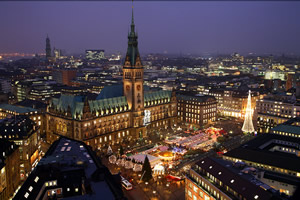
Hamburg in kersttijd 


De Poolse schrijver
Stefan Żeromski werd geboren op 14 oktober 1864 in Strawczyn in de buurt van Kielce. Zie ook mijn blog van 14 oktober 2010 en eveneens alle tags voor Stefan Żeromski op dit blog.


Uit: Forebodings (Vertaald door Marie Busch)


“In the darkest corner of the ward, in the bed marked number twenty-four, a farm labourer of about thirty years of age had been lying for several months. A black wooden tablet, bearing the words

'Caries tuberculosa', hung at the head of the bed, and shook at each movement of the patient. The poor fellow's leg had had to be amputated above the knee, the result of a tubercular decay of the bone. He was a peasant, a potato-grower, and his forefathers had grown potatoes before him. He was now on his own, after having been in two situations; had been married for three years and had a baby son with a tuft of flaxen hair. Then suddenly, from no cause that he could tell, his knee had pained him, and small ulcers had formed. He had afforded himself a carriage to the town, and there he had been handed over to the hospital at the expense of the parish.

He remembered distinctly how on that autumn afternoon he had driven in the splendid, cushioned carriage with his young wife, how they had both wept with fright and grief, and when they had finished crying had eaten hard-boiled eggs: but what had happened after that had all become blurred--indescribably misty. Yet only partially so.

Of the days in the hospital with their routine and monotony, creating an incomprehensible break in his life, his memory retained nothing; but the unchanging grief, weighing like a slab of stone on a grave, was ever present in his soul with inexorable and brutal force during these many months. He only half recalled the strange wonders that had been worked on him: bathing, feeding, probing into the wound, and later on the operation. He had been carried into a room full of gentlemen wearing aprons spotted with blood; he was conscious also of the mysterious, intrepid courage which, like a merciful hand, had supported him from that hour.”


1255781-cb390bf1bd87ccd923e9434693e9b9ed.jpg
Stefan Żeromski (14 oktober 1864 - 20 november 1925)

Portret door Leona Wyczółkowskiego


Geschreven door Romenu om 19:24 Reageer op dit bericht

Herman Franke, Colin Channer, Migjeni, Arna Wendell Bontemps, Conrad Richter, Edwina Currie

De Nederlandse schrijver Herman Franke werd geboren op 13 oktober 1948 in Groningen. Zie ook mijn blog van 13 oktober 2010 en eveneens alle tags voor Herman Franke op dit blog.


Uit: Traag licht


„De vrouwen in mijn leven hielden mij ieder op hun eigen manier een spiegel voor. Mannen deden dat niet, zelfs mijn beste vrienden niet. Mannen bevechten elkaar of steunen elkaar onvoorwaardelijk. Ze houden elkaar een masker voor, wat op zijn tijd veel prettiger is dan een spiegel. Hoe het met vrouwen zit, weet ik niet zeker, maar ik denk dat vrouwen tegenover elkaar juist hun masker afleggen. Ik had wel een vrouw willen zijn.'

(…)


'Dat deze vrouw dood was, fascineerde me. Dood zijn en toch lust weten aan te wakkeren van de man die naar die naaktfoto van je kijkt, daarin schuilt een mysterieuze biologische tegenstrijdigheid die mijn zinnen extra prikkelde. […] Misschien komt het doordat seks zich op deze foto's dwars door de dood heen manifesteert, lak heeft aan de voortplanting en daardoor zelfs meer aan botte levensdrift appelleert dan de aanblik van een blote prachtvrouw in levende lijve. Het kan ook zijn dat die oude naaktfoto's je laten voelen dat al die maatschappelijke veranderingen er niet zo veel toe doen. De mens blijft zichzelf gelijk, nu en toen, hier en daar, in weer en wind, door de eeuwen heen. Je waant je een ogenblik een met alle mensen die er zijn en waren. Dus als seks een verlangen naar eenwording is, wordt door de vrouwen op die oude foto's niet alleen die eenwording maar ook het verlangen daarnaar tot de zoveelste macht verheven.'


 1255053-3754d556d77584ba192d275672d42ee3.jpg

Herman Franke (13 oktober 1946 – 14 augustus 2010)

In 1990


De Jamaicaanse schrijver Colin Channer werd geboren op 13 oktober 1963 in Kingston. Zie ook mijn blog van 13 oktober 2010 en eveneens alle tags voor Colin Channer op dit blog.


Uit: Satisfy My Soul


„Up ahead a herd of cattle toddle down a path. They moo and jostle as they splash into the ocher river, triggering the flowers on a tree festooned with Spanish moss to burst into a spray of screeching birds.
In theory this is stunning. But in Jamaica, an island that produces elemental drama daily, no one stops to look. Not the women spreading clothes on white boulders. Not the naked children swinging out on leafy vines. Not the men in trunks and soccer shorts who wade upstream, waist deep, empty bamboo rafts in tow, hunched against the current, delivering the vessels to the starting point for tips.
Fifteen feet away from us the captain of our raft is punting with a slender pole. The braided muscles in his back are coiling. His navy polo shirt is snug. Water tongues the grooves between the knuckled stems that form the hull. In essence we are sailing on a fence.
People are watching me. Waiting. A bead of perspiration stretches from my beard and bursts against my shirt.
Then as the captain steers around a bar of silt I find a question.
“Okay, Chadwick, on the night before you’re set to go to the gallows you get a set of choices. A last book. A last song. A last meal with any writer living or dead. And the chance to sleep with anyone in the whole wide world—a living anyone, of course.”
The producer on the raft beside us smiles and makes a fist. This is how she told me that she wants the show to be—arch and energetic.
I am a guest on Trapped in Transit, a travel show on A&E.
Each week on TIT, as all the members of the crew appear to call it, an odd couple chosen from the worlds of politics and entertainment take a journey: Howard Stern and Yasir Arafat canoeing in Mongolia. Martha Stewart and Biz Markie on a llama in Peru.
Chadwick is a congressman. If his reparations bill is passed, every black American will receive a million dollars in exchange for relocation to Liberia.”


 1255053-27fc32b37f965c121fea8f1ac0c75260.jpg

Colin Channer (Kingston, 13 oktober 1963)

Cover 


De Albanese dichter Migjeni (eigen. Millosh Gjergj Nikolla) werd geboren op 13 oktober 1911 in Shkodra. Zie ook mijn blog van 13 oktober 2010 en eveneens alle tags voor Migjeni op dit blog.


Song Of Youth


Sing, youth, the loveliest song you know!
Sing the song that seethes within your breast,
Let your joy burst forth in passion...
Don't hold back your song! Let it soar.

Sing your song, youth. I beg you sing...
Let it seize you, kiss you, inspire you to love
With youthful ardour... Let the foaming wave of feelings
Which your song arouses surge over us.

Sing your song, youth, and laugh like children!
Let the sound of your voice rise to the heavens
And echo back to us again, from the envious stars.

For we adore you, as we adore the sun.
Sing, youth! Sing your joyful song!
Laugh, youth, laugh! The world is yours.


Final Songs


A sleepless night
Suffering
Luckless inspiration
Incomprehensible song
Solitude
Under the banners of melancholy


1255053-effe2fe6af4aa5fe7b3d15207d7fa7d3.jpg 

Migjeni (13 oktober 1911 – 26 augustus 1938)

Buste in Shkoder


De Amerikaanse dichter en schrijver Arna Wendell Bontemps werd geboren op 13 oktober 1902 in Alexandria in Louisiana. Zie ook mijn blog van 13 oktober 2010 en eveneens alle tags voor Arna Wendell Bontemps op dit blog.


Reconnaissance


After the cloud embankments,
the lamentation of wind
and the starry descent into time,
we came to the flashing waters and shaded our eyes
from the glare.


Alone with the shore and the harbor,
the stems of the cocoanut trees,
the fronds of silence and hushed music,
we cried for the new revelation
and waited for miracles to rise.


Where elements touch and merge,
where shadows swoon like outcasts on the sand
and the tried moment waits, its courage gone--
there were we


in latitudes where storms are born.


 1255053-1e4be0d2d7b0a40dd8af2921659a47aa.jpg

Arna Wendell Bontemps (13 oktober 1902 – 4 juni 1973)


De Amerikaanse schrijver Conrad Richter werd geboren op 13 oktober 1890 in Pine Grove, Pennsylvania. Zie ook mijn blog van 13 oktober 2010 en eveneens alle tags voor Conrad Richter op dit blog.


Uit: The Sea of Grass


"That lusty pioneer blood is tamed now, broken and gelded like a wild horse and the frontier settlement. And I think that I shall never see it flowing through human veins again as I did in my Uncle Jim Brewton riding a lathered horse across a shaggy range, or standing in his massive ranch house, bare of furniture as a garret, and holding together his empire of grass and cattle with the fire in his eyes"

(…)


"....she went on chatting to me in slightly incoherent but charming fashion, saying the gayest of things, that required little or none of my tounge tied answers, all the while her delicate forehead shutting out the water tank and that ring of staring loafers as completely as if she stood alone with me in my uncles ranch house. And I realized that here was a finer fibered creature than any my long black hair and rope calloused hands had known"


 1255053-0e00eaeb225890c809f31d6392e82a47.jpg

Conrad Richter (13 oktober 1890 – 30 oktober 1968)

Cover


De Britse romanschrijfster en gewezen politica Edwina Currie werd geboren in Liverpool op 13 oktober 1946. Zie ook mijn blog van 13 oktober 2010.


Uit: Diaries

“Liverpool, Thursday,  July 25 1996, 10.20pm

I’m here to help sort out Mum’s flat. The carpet hunt reminded me why coming to Liverpool is like arriving in a different country — a bit like Bulgaria, I imagine — in which nothing’s ever easy, straightforward, sophisticated or courteous.

At Carpet World, a loudmouth salesman cackled at the idea of free fitting, said the cheapest underlay was £3.49 (it wasn’t), did all his sums terrifyingly in his head and wise-cracked his way round the shop. Oh, how I loathe all those Scousers who want to be Freddie Starr. 

Took Mum to Evita tonight at the Empire. There was an odd moment when I thought of old love, and suddenly felt very sad.

I miss [John Major] so — it was so precious, while it lasted — and whenever I see actors embrace, mouth to mouth, it turns me over, for it’s so long since anyone kissed me with passion and longing.

Oh, misery. And I so loathe wasting hours dining with constituents, like last Friday night. How can people be so uninteresting — their hols in hotels in Cyprus . . . argh.” 


 1255053-023f25ce0251e7e8684cf612ac7466d3.jpg

Edwina Currie (Liverpool, 13 oktober 1946)

 
Geschreven door Romenu om 15:24 Reageer op dit bericht

Stefaan van den Bremt, Eugenio Montale, Robert Fitzgerald

De Vlaamse dichter en essayist Stefaan van den Bremt werd geboren in Aalst op 12 oktober 1941. Zie ook mijn blog van 12 oktober 2010 en eveneens alle tags voor Stefaan van den Bremt op dit blog.


Naastenliefde


Wie heeft de pad het pad zien oversteken?
De boer op zijn tractor niet: hij heeft
al honderd padden overreden. Het pad
is smal, en de pad traag. Hij is een
pelgrim, onderweg (misschien mist hij
een kenteken?). Hij sleept zich naar
de plas, de poel waarin herboren wordt
zijn groene paradijs. Hij wil dwars
door het stenen huis, hij volhardt in
zijn heimwee, zwijgend, laat zich
met geen klem van drempels overreden.
En als wij in het donker de deur dicht-
slaan brengt hij geen klacht uit, geeft
geen kik. Pas maanden later vindt men
tussen deur en drempel, geplet, gedroogd,
zijn bijna gewichtloos, haast onstoffelijk
omhulsel. Gelukkige pad, nog steeds
op pad, pelgrim zonder reisgoed.


Lijflied


Het is van mijn leven nog niet geschreven,
nog nooit van m'n leven.
Het staat om de dood nog niet te boek,
om de dooie dood niet.

Het voelt nog zo iel aan,
of het mijn tong nog niet kan roeren;
ik voel me beroerd. Hoor hoe
het zou willen schreien.

Ik wil het ooit nog eens op
kunnen schrijven, al is het te weinig
om van te leven, het is om dood te gaan
te veel.

Een wijs is het, een onbepaalde
ruimte, die nog niet weet van tijd.
Een mond waarin bestorven ligt
wat nog geboren moet worden.


 1254585-c6698fbab29a3fc09e5274435e3c1076.jpg

Stefaan van den Bremt (Aalst, 12 oktober 1941)


De Italiaanse dichter Eugenio Montale werd geboren in Genua op 12 oktober 1896. Zie ook mijn blog van 12 oktober 2010 en eveneens alle tags voor Eugenio Montale op dit blog.


Glory of Expanded Noon

Glory of expanded noon
when the trees give up no shade,
and more and more the look of things
is turning bronze, from excess light.

Above, the sun—and a dry shore;
so my day is not yet done:
the finest hour is over the low wall,
closed off by a pale setting sun.

Drought all around: kingfisher hovers
over something life has left.
The good rain is beyond the barrenness,
but there's greater joy in waiting.


Vertaald door Jonathan Galassi


Bring Me the Sunflower

Bring me the sunflower so I can transplant it
here in my own field burned by salt-spray,
so it can show all day to the blue reflection of the sky
the anxiety of its golden face.

Darker things yearn for a clarity,
bodies fade and exhaust themselves in a flood
of colors, as colors do in music. To vanish,
therefore, is the best of all good luck.

Bring me the plant that leads us
where blond transparencies rise up
and life evaporates like an essence;
bring me the sunflower sent mad with light.


Vertaald door Charles Wright


 1254585-e310c3ba3334106f0c07e12a656e5453.jpg

Eugenio Montale (12 oktober 1896 - 12 september 1981)

Portret door  Guido Peyron, 1932


De Amerikaanse dichter, criticus en vertaler Robert Stuart Fitzgerald werd geboren op 12 oktober 1910 in Springfield, Illinois. Zie ook mijn blog van 12 oktober 2010 en eveneens alle tags voor Robert Fitzgerald op dit blog.


Cobb Would Have Caught It

In sunburnt parks where Sundays lie,
Or the wide wastes beyond the cities,
Teams in grey deploy through sunlight.


Talk it up, boys, a little practice.


Coming in stubby and fast, the baseman
Gathers a grounder in fat green grass,
Picks it stinging and clipped as wit
Into th eleather: a swinging step
Wings it deadeye down to first.
Smack. Oh, attaboy, attyoldboy.


Catcher reverses his cap, pulls down
Sweaty casque, and squats in the dust:
Pitcher rubs new ball on his pants,
Chewing, puts a jet behind him;
Nods past batter, taking his time.
Batter settles, tugs at his cap:
A spinning ball: step and swing to it,
Caught like a cheek before it ducks
By shivery hickory: socko, baby:
Cleats dig into dust. Outfielder,
On his way, looking over shoulder,
Makes it a triple. A long peg home.


Innings and afternoons. Fly lost in sunset.
Throwing arm gone bad. There's your old ball game.
Cool reek of the field. Reek of companions.


Night Images


Late in the cold night wakened, and heard wind,   

And lay with eyes closed and silent, knowing   

These words how bodiless they are, this darkness   

Empty under my roof and the panes rattling   

Roughed by wind. And so lay and imagined   

Somewhere far off black seas heavy-shouldered   

Plunging on sand and the ebb off-streaming and   

Thunder forever. So lying bethought me, friend,   

What traffic ghouls have, or this be legend,   

In low inland hollows of the earth, under

Shade of moon, the night moaning, and bitter frost;   

And feared the riches of my bones, long given   

Into this earth, should tumble to their hands.   

No girl or ghost beside me, and I lonely,   

Remembering gardens, lilac scent, or twilight   

Descending late in summer on that town,   

I lay and found my years departed from me,   

And feared the cold bed and the wind, absurdly   

Alone with silence and the trick of tears.


 1254585-cb84e353458a6733c4a1646165edd30d.jpg

Robert Fitzgerald (12 oktober 1910 – 16 januari 1985)


Zie voor nog meer schrijvers van de 12e oktober ook mijn blog van 12 oktober 2011 deel 1 en eveneens deel 2.

Geschreven door Romenu om 19:44 Reageer op dit bericht

Nobelprijs voor de Literatuur voor Mo Yan


Nobelprijs voor de Literatuur voor Mo Yan


De Nobelprijs voor de Literatuur is toegekend aan Chinese schrijver Mo Yan. Dat heeft het Nobelcomité in Stockholm bekendgemaakt. Mo Yan werd geboren op 17 februari 1955 in Gaomi in de provincie Shandong. Aan de Nobelprijs is een bedrag van ongeveer € 930.000 verbonden. Het Nobelcomité roemt Mo Yan voor het "hallucinerend realisme" waarmee hij volksverhalen, geschiedenis en het hedendaagse combineert. Mo Yan, een pseudoniem voor 'spreek niet', krijgt de prijs op 10 december uitgereikt. Zie ook alle tags voor Mo Yan op dit blog.
 

Uit: The Garlic Ballads (Vertaald door Howard Goldblatt)


“Gao Yang touched the drop of nectar with his tongue, and his taste buds were treated to a cool, sweet taste that relaxed him. He surveyed his three acres of garlic field. It was a good crop, the white tips large and plump, some at a jaunty angle, others straight as a board. The garlic was moist and juicy, with downy sprouts beginning to appear. His pregnant wife was on her hands and knees beside him, yanking garlic out of the ground. Her face was darker than usual, and there were fine lines around her eyes, like veins of spreading rust on a sheet of iron. As she knelt, knees coated with mud, her childhood deformity — a stunted left arm that inconvenienced her in everything she did — made the job harder than it ought to have been. He watched her reach down and pinch the stalks with a pair of new bamboo chopsticks; the effort made her bite her lip each time, and he felt sorry for her. But he needed her help, for he’d heard that the co-op was setting up shop in the county town to buy the garlic crop at slightly over fifty fen a pound, higher than last year’s peak price of forty-five. He knew the county had expanded the amount of acreage given over to garlic this year; and with a bumper crop, the earlier you harvested yours, the sooner you could sell it. That was why everyone in the Village, women and children included, was out in the fields. But as he looked at his pitiable pregnant wife, he said, “Why not rest awhile?”

“What for?” She raised her sweaty face. “I’m not tired. I just worry the baby might come.”

“Already?” he asked anxiously.

“I figure some time in the next couple of days. I hope it waits till the harvest is in, at least.”

“Do they always come when they’re due?”

“Not always. Xinghua was ten days late.”

They turned to look behind them, where their daughter sat obediently at the edge of the field, her sightless eyes opened wide. She was holding a stalk of garlic in one hand and stroking it with the other.

“Careful with that garlic, Xinghua,” he said. “Each stalk is worth several fen.”


 1254189-09e75bca326ebcb689c42846e235e6b9.jpg

Mo Yan (Gaomi, 17 februari 1955)

Geschreven door Romenu om 09:15 Reageer op dit bericht

Gertrud von Le Fort, François Mauriac, Conrad Ferdinand Meyer

De Duitse dichteres en schrijfster Gertrud von Le Fort werd geboren in Minden op 11 oktober 1876. Zie ook mijn blog van 11 oktober 2010 en eveneens alle tags voor Gertrud von Le Fort op dit blog.


Stille


Mich ruft zuweilen eine Stille,
die alles Tönen überschweigt
bis ein geheimnisvoller Wille
sich über meine Seele neigt.

Der sprengt im Zittern von Sekunden
dies enge Haus - die Welt ist Traum,
in ferne Täler sanken Stunden
und flüsternah ward jeder Baum.


Die Heimatlosen


Wir sind von einem edlen Stamm genommen,
Der Schuld vermählt,
Wir sind auf dunklen Wegen hergekommen
Wund und gequält.

Wir hielten einst ein Vaterland umfangen -
Gott riß uns los -
Wir sind durch Feuer und durch Blut gegangen
Verfolgt und bloß.

Des Abgrunds Engel hat uns überflogen -
Wer bannt sein Heer?
Wir sind am Rand der Hölle hingezogen -
Uns graust nicht mehr.

Durch jede Schmach sind wir hindurchgebrochen
Bis ins Gericht:
Wir hörten Worte, die ihr nicht gesprochen -
O, redet nicht!

Uns winkt hier niemals Heimat mehr wie andern,
Uns hält kein Band,
Gott riss uns los, wir müssen wandern, wandern -
Wüst liegt das Land,

Wüst liegt die Stadt, wüst liegen Hof und Hallen,
Die Hand ward leer,
Wir sahen eine Welt in Trümmer fallen -
Uns trifft nichts mehr.

Ziel eines Hasses oder Spottes,
Was liegt daran?
Wir sind die Heimatlosen uns'res Gottes -
Er nimmt uns an.

Die Schuld ist ausgeweint, wir sind entronnen
Ins letzte Weh:
Die ew'ge Gnade öffnet ihre Bronnen -
Blut wird zu Schnee.


 1253938-1d4f9858f3fac91b28938c30bdf77ccf.jpg

Gertrud von Le Fort (11 oktober 1876 - 1 november 1971)


De Franse schrijver François Mauriac werd op 11 oktober 1885 geboren in Bordeaux. Zie ook mijn blog van 11 oktober 2010. en eveneens alle tags voor François Mauriac op dit blog.


Uit : Thérèse Desqueyrou


“L'avocat ouvrit une porte. Thérèse Desqueyroux, dans ce couloir dérobé du palais de justice, sentit sur sa face la brume et, profondément, l'aspira. Elle avait peur d'être attendue, hésitait à sortir. Un homme, dont le col était relevé, se détacha d'un platane, elle reconnut son père.
L'avocat cria __ << Non-lieu >> et, se retournant vers Thérèse : __ << Vous pouvez sortir, il n'y a personne. >>
Elle descendit des marches mouillées. Oui, la petite place semblait déserte. Son père ne l'embrassa pas, ne lui donna pas même un regard ; il interrogeait l'avocat Duros qui répondait à mi-voix, comme s'ils eussent été épiés. Elle entendait confusément leurs propos : -- Je recevrai demain l'avis officiel du non-lieu.
__ Il ne peut plus y avoir de surprise ?
__ Non : les carottes sont cuites, comme on dit.
__ Après la déposition de mon gendre, c'était couru.
__ Couru... couru... On ne sait jamais.
__ Du moment que, de son propre aveu il ne comptait jamais les gouttes...
__ Vous savez, Larroque, dans ces sortes d'affaires, le témoignage de la victime... >>
La voix de Thérèse s'éleva : __ Il n'y a pas eu de victime.
__ J'ai voulu dire : victime de son imprudence, madame. >>
Les deux hommes, un instant, observèrent la jeune femme immobile, serrée dans son manteau, et ce blême visage, qui n'exprimait rien. Elle demanda où était la voiture ; son père l'avait fait attendre sur la route de Budos, en dehors de la ville, pour ne pas attirer l'attention. Ils traversèrent la place : des feuilles de platane étaient collées aux bancs trempés de pluie. Heureusement, les jours avaient bien diminué. D'ailleurs, pour rejoindre la route de Budos, on peut suivre les rues les plus désertes de la sous-préfecture. Thérèse marchait entre les deux hommes qu'elle dominait du front et qui de nouveau discutaient comme si elle n'eût pas été présente ; mais, gênés par ce corps de femme qui les séparait, ils le poussaient du coude. Alors elle demeura un peu en arrière, déganta sa main gauche pour arracher de la mousse aux vieilles pierres qu'elle longeait. Parfois un ouvrier à bicyclette la dépassait, ou une carriole ; la boue jaillie l'obligeait à se tapir contre le mur. Mais le crépuscule recouvrait Thérèse, empêchait que les hommes la reconnussent. L'odeur de fournil et de brouillard n'était plus seulement pour elle l'odeur du soir dans une petite ville : elle y retrouvait le parfum de la vie qui lui était rendue enfin ; elle fermait les yeux au souffle de la terre endormie, herbeuse et mouillée ; s'efforçait de ne pas entendre les propos du petit homme aux courtes jambes arquées qui, pas une fois, ne se retourna vers sa fille ; elle aurait pu choir au bord de ce chemin : ni lui, ni Duros ne s'en fussent aperçus. Ils n'avaient plus peur d'élever la voix.”


1253938-c0e0dc7362a951c9106390d8f5224984.jpg

François Mauriac (11 oktober 1885 - 1 september 1970)

Hier links, met zijn zoon Claude in 1930 


De Zwitserse dichter en schrijver Conrad Ferdinand Meyer werd geboren in Zürich op 11 oktober 1825. Zie ook mijn blog van 11 oktober 2010 en eveneens alle tags voor Conrad Ferdinand Meyer op dit blog.


Das Strandkloster


Bollwerk und Mauer trutzen
Dem Wellenwurf schon ein Jahrtausend ja,
Wir singen, elf Kapuzen
Ein kräftig schallend Deo Gloria!

Die Kutten, stark gewoben
Umhingen uns in braunen Lappen lang
Sie sind gemach verstoben
Die Stäubchen irren durch den Klostergang.

Die Orgel im Empore
Spielt unser zwölftes totes Brüderlein
Hier rieselt uns im Chore
Der morsche Kalk sanft ins Geripp herein.

Es glitt vor tausend Jahren
Dem Strand ein Sarazenensegel nah
Sobalds vorbeigefahren
Anstimmten wir ein kräftig Gloria.

Ergötzt von unserm Singen
Nahm der Pirat zu uns zurück den Lauf,
Zwölf Köpfe liess er springen
Das Blut schoss wie aus Brunnenröhren auf.

Wir singen ohne Kehlen
Wir sitzen fröhlich ohne Schädel da,
Wir singen mit den Seelen
Ein kräftig schallend Deo Gloria!

Der Morgenstrahl, der schiefe
Durchs rechte Fenster äugelt er herein
Vergoldend in der Tiefe
Ein lustiglich psallierend Totenbein.

Der Abendstrahl, der schräge
Durchs linke Fenster blinzelt er herein
Und zählt, ob allewege
Wir richtig unser elf Gespenster sein.

Bollwerk und Mauer trutzen
Dem Wellenwurf noch tausend Jahre ja,
Wir singen, elf Kapuzen
Ein kräftig schallend Deo Gloria!


Der Reisebecher


Gestern fand ich, räumend eines langvergessnen Schrankes Fächer,
Den vom Vater mir vererbten, meinen ersten Reisebecher.
Währenddes ich, leise singend, reinigt ihn vom Staub der Jahre
Wars, als höbe mir ein Bergwind aus der Stirn die grauen Haare
Wars, als dufteten die Matten, drein ich schlummernd lag versunken,
Wars, als rauschten alle Quelle, draus ich wandernd einst getrunken.


Der Gesang des Meeres


Wolken, meine Kinder, wandern gehen
Wollt ihr? Fahret wohl! Auf Wiedersehen!
Eure wandellustigen Gestalten
Kann ich nicht in Mutterbanden halten.

Ihr langweilet euch auf meinen Wogen,
Dort die Erde hat euch angezogen:
Küsten, Klippen und des Leuchtturms Feuer!
Ziehet, Kinder! Geht auf Abenteuer!

Rauscht im Regen! Murmelt in den Quellen!
Füllt die Brunnen! Rieselt in den Wellen!
Braust in Strömen durch die Lande nieder -
Kommet, meine Kinder, kommet wieder!


1253938-81117f5332ee9128ea57264db252318e.jpg
Conrad Ferdinand Meyer
(11 oktober 1825 - 28 november 1898)
Medaille


Zie voor nog meer schrijvers van de 11e oktober ook mijn blog van 11 oktober 2011.


Geschreven door Romenu om 20:18 Reageer op dit bericht

Ferdinand Bordewijk, Menno Wigman, Jonathan Littell, Harold Pinter, Boeli van Leeuwen

De Nederlandse schrijver Ferdinand Bordewijk werd geboren op 10 oktober 1884 in Den Haag. Zie ook mijn blog van 10 oktober 2010 en eveneens alle tags voor Ferdinand Bordewijk op dit blog.


Uit: Karaker


„Hij keerde zich om naar de tafel met de resten van het middagmaal. Hij stond even stil, nadenkend, een breedgeschouderd man, zwaar zonder buikigheid, een keiharde kop op een korten breeden hals, op den kop een zwarte flambard. Dat draait wel weer bij, dacht hij, desondanks twijfelend. Dan ging hij laconiek zelf het vaatwerk wasschen in de keuken.

Het meisje Joba Katadreuffe liet niets meer van zich hooren. Daar zij van haar toestand niet den minsten hinder had bleef zij aan den arbeid. Zij verhuurde zich als werkster, toen haar zwangerschap niet meer was te verbergen zei ze eenvoudig dat ze door haar man was verlaten. In dezen tijd had zij het in het geheel niet slecht, altijd volop eten en behoorlijk logies. Tot het laatst toe was zij voldoende van werkhuizen voorzien. Ze hoefde niet naar de arbeidsbeurs te gaan, waar men onderzocht zou hebben, haar ongehuwden staat hebben ontdekt. Zij kon heel flink werken, ze had een gestel van ijzer, ze werd door den een aan den ander aanbevolen. De laatste maanden werkte ze alleen bij menschen zonder kinderen thuis, ze voorkwam zelf de pijnlijkheid van een situatie in gezinnen met kinderen, van de kinderlooze werkhuizen alleen kon ze blijven bestaan.

Ze had tijdig tevoren een plaats in de kraamzaal besproken, ze was wel heel jong maar geenszins onwetend, een natuurlijke voorzienigheid was haar eigen. Ook had zij het goede moment gekozen toen ze zich te bed legde, en ze kon nog eenigen tijd uitrusten. Een verstandig meisje, zonder verwanten en vrienden, een meisje dat niets had behoeven te leeren, dat alles wist. Deze Joba.      

Ze voelde zich tot het laatst bizonder wel. Het frissche gezicht met de harde tanden en sprekende oogen nam de zusters die toch zooveel gewend waren geheel in. En dit ondanks haar ernst, haar zwijgen, de stroefheid van haar taal. Men had gevraagd hoe het kind zou heeten. Jacob Willem. Als het een meisje was dan enkel Jacoba.

Men wees haar er op dat de vader verplicht was tot levensonderhoud. Ze antwoordde prompt en pathetisch:

– Het kind zal nooit een vader hebben.

– Ja, maar we bedoelen geen vaderrèchten, we bedoelen alleen maar dat de vader moet opbrengen voor je kind.

– Nee.

– Hoe nee?

– Ik wil niet.

Men wees haar er op dat zij na haar ontslag zich om steun kon wenden tot Moederzorg, tot Kinderzorg.”


 1253272-4de21386652222ea4d06910ab715fd96.jpg

Ferdinand Bordewijk (10 oktober 1884 – 28 april 1965)


De Nederlandse dichter en vertaler Menno Wigman werd geboren in Beverwijk op 10 oktober 1966. Zie ook mijn blog van 10 oktober 2010 en eveneens alle tags voor Menno Wigman op dit blog.


Stramien


De waanzin zelf gaat goed gekleed.
Zijn werk vergt tact, precisie ook.
Dus kruist hij namen aan,

kamt steden uit, tast schedels af.
Veegt hij zijn voeten, is het raak.
Stampt het in de nok.

Weer vraagt zijn vrouw naar zijn pensioen.
En hij met noodweer nog op pad.
Niet snik. 'Verkeerd bedraad.'

Van Luther met zijn inktpot tot Feith,
tot Freud en jou en mij geen mens
die zijn stramien begrijpt.


Nachttrein


Na alles dit. Een vreemde, afgeleefde blik
in een beslagen ruit. Dat afgehakte hoofd,
die Hitler zonder snor: ben ik dat echt?
Heeft daar, in die verwaande izegrim,
heeft daar een moeder in geloofd? Mijn god,

waar is die plunderaar die met Walküren sliep,
de dichter die op vogels en violen reed?
Ik ben zo moe, zo vastgevroren in een vloek,
en in de vuile ruit die zich verspreekt
zie ik nog één keer mijn verloren blik,

Omlijst door angst en rook en zelfverwijt.
Te laat. Geen hartstocht dreef mij naar de grens,
geen Gorter of Lodeizen greep mijn pen. Te laat.
En zoals alles wat met leven is behept
ben ik op weg en kom ik aan.


Nichtje


Nichtje, wild honingnichtje, hoe we speels
langs tafelpoten kropen, pumps en laarzen
beslopen, steeds naar veters grepen, stout

stout nichtje, blond je vlechten en van snoep
je mond, die sloep, die zomer en dat meer
waar ik het raadsel van je mond uitvond,

nu strik je zelf je veters, stapte duizend
treinen in, nam vluchten naar Milaan
en hield in Praag en Kaapstad taxi's aan.

Iets drijft ons op. Iets jaagt ons heen en weer.
O dat mij ooit een nachtkroeg wordt beloofd
waar jij mijn heimwee met verhalen troost,

vier veters eeuwig aan elkaar geknoopt.


 1253272-9dc51bd4c0567cb27acbaef2f257e85f.jpg

Menno Wigman (Beverwijk, 10 oktober 1966)


De Amerikaanse schrijver Jonathan Littell werd geboren in New York op 10 oktober 1967. Zie ook mijn blog van 10 oktober 2010 en eveneens alle tags voor Jonathan Littell op dit blog.


Uit: The Kindly Ones (Vertaald door Charlotte Mandell)


„What’s more I think it will do me good. It’s true that I have been in a rather glum mood of late. The constipation, probably. A distressing and painful problem, and a somewhat new one for me; it used to be just the opposite. For a long time I had to go to the toilet three or four times a day; now, once a week would be a blessing. I’ve been reduced to taking enemas, a repulsive procedure, albeit effective. Forgive me for wearying you with such sordid details: but I do have a right to complain a little. And if you can’t bear this you’d better stop right here. I’m no Hans Frank, and I can’t stand mincing words. I want to be precise, as far as I am able. In spite of my shortcomings, and they have been many, I have remained someone who believes that the only things indispensable to human life are air, food, drink, and excretion, and the search for truth. The rest is optional.

Some time ago, my wife brought home a black cat. She probably thought it would make me happy; of course she never asked my opinion. She must have suspected I would have flatly refused, so presenting me with the fait accompli was safer. And once it was there, nothing could be done about it, the grandchildren would cry, etc. But this was a very unpleasant cat. Whenever I tried to pet it, to show my goodwill, it would slip away to sit on the windowsill and stare at me with its yellow eyes; if I tried to pick it up and hold it, it would scratch me. At night, on the other hand, it would come and curl up in a ball on my chest, a stifling weight, and in my sleep I would dream I was being smothered beneath a heap of stones. With my memories, it’s been more or less the same. The first time I decided to set them down in writing, I took a leave of absence. That was probably a mistake. Things were going well, though: I had bought and read quite a few books on the subject, in order to refresh my memory; I had drawn up organizational charts, detailed chronologies, and so on. But with this leave of absence I suddenly had a lot of free time, and I began thinking. What’s more it was fall, a bitter grey rain was stripping the leaves off the trees, and I was slowly overcome with dread. I realized that thinking is not always a good idea.”


1253272-c40a38765a7d3083919b8703661bd250.jpg
Jonathan Littell (New York, 10 oktober 1967)


De Britse schrijver Harold Pinter werd geboren op 10 oktober 1930 in Londen. Zie ook mijn blog van 10 oktober 2010 en eveneens alle tags voor Harold Pinter op dit blog.


Uit: Old Times


“[Deeley, slumped in armchair, still.
Kate curled on a sofa, still.
Anna standing at the window, looking out.

Silence.

Lights up on Deeley and Kate, smoking cigarettes.

Anna's figure remains still in dim light or the window.]

KATE. [reflectively] Dark.

[Pause]

DEELEY. Fat or thin?

KATE. Fuller than me. I think.

[Pause]

DEELEY. She was then?

KATE. I think so.

DEELEY. She may not be now.

[Pause]

Was she your best friend?

KATE. Oh, what does that mean?

DEELEY. What?

KATE. The word friend … when you look back … all that time.

DEELEY. Can’t you remember what you felt?

[Pause]

KATE. It is a very long time.

DEELEY. But you remember her. She remembers you. Or why would she be coming here tonight?

KATE. I suppose because she remembers me.

[Pause]

DEELEY. Did you think of her as your best friend?

KATE. She was my only friend.

DEELEY. Your best and only.

KATE. My one and only.”


 1253272-5475b32b9fc784f8b4cc56de3bff4105.jpg

Harold Pinter (10 oktober 1930 – 24 december 2008)


De Antilliaanse (Curaçaose) schrijver Willem Cornelis Jacobus (Boeli) van Leeuwen werd geboren op 10 oktober 1922 op Curaçao. Zie ook mijn blog van 10 oktober 2010 en eveneens alle tags voor Boeli van Leeuwen op dit blog.


Uit: Gesprek met Boeli van Leeuwen (Interview door Jos de Roo)


“Boeli: ‘Dat zou ik nou willen: het eeuwige leven.’ Opeens: ‘Dante, ik ben bezig Dante te lezen, als je dat doet, dan lijkt Shakespeare er een soort Vondel naast. De meeste mensen denken dat Dante de hel is, maar het mooiste gedeelte van Dante is zijn paradiso, waar hij dus in het licht komt.’ Hij staat op, bladert in Dante en zete: Toen ik dit las, ducht ik hoezeer dit op mij slaat: Op de helft van onze levensweg bevond ik mij in een donker woud, waarbij ik de rechte weg totaal verloren was. Het was hard, dat woeste woud, als je eraan dacht, kwam de angst naar boven. Toen ik dat las, dacht ik: laat eens kijken wat de laatste regel van de Paradiso is. Licht, zegt hij, dat is liefde en als we de zaak heel goed bekijken en we kijken om ons heen, dan zien we dat de liefde de zon en de andere sterren doet bewegen. Het hele laatste stuk is een uitbarsting van puur genot!

Wie zou niet willen dat het leven zin had? Wie zou niet willen zijn als de eenvoudige man voor wie we hier een job creëerden als boombewaker. Jati heette hij en hij gaf de geweldige mango-boom hier water. Ik ging voor een paar jaar naar Aruba en toen ik terug kwam, stond de chauffeur beneden: ‘Jati wil je spreken,’ zei hij. Ik ging naar het houten huisje hierachter, ik hoorde het gehik van een kankerpatiënt. Jati was een skelet. ‘Ben je klaar, Jati?’ vroeg ik. Hij zei: ‘Ja, ik ben klaar.’ Maar hij wou niet dood, die man bleef maar leven. Ik zei: ‘Ben je klaar om te gaan?’ ‘Ja,’ zei hij. Het blauwe pak had hij, zijn sokken, zijn schoenen, het graf, alles was klaar. Ik zei: ‘Je moet eerst naar het ziekenhuis.’ We hebben de dokter laten komen, de ziekenauto, hij werd een beetje nat gemaakt van binnen, want hij was totaal uitgedroogd. Twee dagen later was hij dood.

Toen heb ik een preek gehouden in de Fortkerk. De dood van Jati. Ik zei: ‘Ik ben in de katholieke kerk geweest waar de pastoor almaar vroeg: “Señor, heb genade met Jati, Señor, laat Jati toe in jouw koninkrijk.” Ik zei: “Er was maar één mens in het bestuurskantoor die helemaal onschuldig was en dat was Jati. En die mangoboom, die staat er nog. Helemaal groen, die man leeft nog steeds in die boom, helemaal een onschuldig mens.”


 1253272-e7c85e900e0cbfa994fa56441a5b5d52.jpg

Boeli van Leeuwen (10 oktober 1922 – 28 november 2007)


Zie voor nog meer schrijvers van de 10e oktober ook mijn blog van 10 oktober 2011 deel 1 en eveneens deel 2 en ook deel 3.


Geschreven door Romenu om 19:05 Reageer op dit bericht

Tadeusz Różewicz, Herman Brusselmans, Mário de Andrade, Colin Clark

De Poolse dichter en schrijver Tadeusz Różewicz werd geboren in Radomsko op 9 oktober 1921. Zie ook mijn blog van 9 oktober 2010 en eveneens alle tags voor Tadeusz Różewicz op dit blog.


Pigtail


When all the women in the transport
had their heads shaved
four workmen with brooms made of birch twigs
swept up
and gathered up the hair

Behind clean glass
the stiff hair lies
of those suffocated in gas chambers
there are pins and side combs
in this hair

The hair is not shot through with light
is not parted by the breeze
is not touched by any hand
or rain or lips

In huge chests
clouds of dry hair
of those suffocated
and a faded plait
a pigtail with a ribbon
pulled at school
by naughty boys.


Vertaald door Adam Czerniawski


Transformations


My little son enters
the room and says
'you are a vulture
I am a mouse'


I put away my book
wings and claws
grow out of me


their ominous shadows
race on the walls
I am a vulture
he is a mouse


'you are a wolf
I am a goat'
I walked around the table
and am a wolf
windowpanes gleam
like fangs
in the dark


while he runs to his mother
safe
his head hidden in the warmth of her dress


Vertaald door Czeslaw Milosz


1252614-225f327bc993f8003f2259e1774269f3.jpg
Tadeusz Różewicz (Radomsko, 9 oktober 1921)

In 1979


De Vlaamse schrijver Herman Brusselmans werd geboren in Hamme op 9 oktober 1957. Zie ook mijn blog van 9 oktober 2010 en eveneens alle tags voor Herman Brusselmans op dit blog.


Uit: Doodgaan zonder te sterven


„Op 6 juli 1992 lig ik in bed, bezopen zoals altijd in die tijd. Enfin, ik word wakker en kijk naar buiten. Een stralende dag, geen zuchtje wind, blablabla. Ik draai me om en ga weer slapen. Who cares? Ik woonde toen in een vrijgezellenflat met kleine raampjes met luikjes. Opeens schrik ik wakker van het geklapper van die luikjes, echt harde slagen zo. Ik kijk op de klok, half twaalf en denk: veel te vroeg. De raampjes (eigenlijk: luikjes, BV) blijven klapperen, dus ik ga mijn bed uit en loop naar het raam. Ik kan echter geen enkele fysieke of fysische verklaring voor het klapperen vinden.’

   ‘Ik poets mijn tanden, ga naar een afspraak en kom ’s avonds weer thuis. Gaat de telefoon: mijn moeder is vanmorgen om half twaalf gestorven. Shit. Die luikjes zijn zonder enige verklaring gaan klapperen nét op het moment dat mijn moeder sterft. Dan heb je toch zoiets van: die is afscheid komen nemen.’

 ‘Bij alles wat je zegt over de dood, kom je op een punt dat je zegt: nou, tot hier kan ik vrij rationeel dit of dat zeggen, maar de volgende stap is onduidelijk. Dat is wat ik tegen heb op religie. Dat is zo’n man – meestal zijn dat ook weer mannen hè, de paus, de pastoor en de dominee – dat zo’n man dan wel even gaat zeggen tegen de menselijke horden hoe dat het zit met de dood. Ik begrijp wel dat religie voor troost zorgt; als mensen horen dat er na de dood nog iets is, dan zijn ze opgelucht. Vandaar ook die zelfmoordenaars van de islam. Die denken: morgen zitten we toch in de hemel fantastisch te zijn.’

   ‘Natuurlijk is het ook heel eenvoudig om, laten we zeggen, voor 99% daar niet in te geloven en dat ene procent achter de hand te houden. Dat doe ik eigenlijk ook. Wat is daar op tegen? Het is toch allemaal maar pure speculatie. En die 1% vul ik vervolgens wel zelf in. Vroeger bad ik op een vrij naïeve manier tegen een soort god: God, zorg ervoor dat ik morgen mijn examen haal, God zorg ervoor dat dat meisje straks mijn huis passeert, want dan kan ik haar aanspreken, enzovoorts.’

‘Dat godsbeeld is na mijn moeders dood vervangen door mijn moeder. Dus mijn moeder is niet dood voor mij, mijn moeder is God geworden. Het is ook veel gemakkelijker om iemand die je zeer nauw aan het hart ligt, tot God te benoemen. Je hebt daar een effectief juist beeld van. Veel mensen stellen zich bij God een oude man met een baard voor. Een vrij dwaas beeld, als je niet van de ratten besnuffeld bent, absoluut. Maar dat beeld van mijn moeder is níet dwaas. Zij is mijn God, zij is ergens, zij luistert naar mij.’


1252614-c8315e4883febac7ec64b70fd0ea5ce9.jpg
Herman Brusselmans (Hamme, 9 oktober 1957)


De Braziliaanse dichter en schrijver Mário de Andrade werd op 9 oktober 1893 in São Paulo in Brazilië geboren. Zie ook mijn blog van 9 oktober 2010 en eveneens alle tags voor Mário de Andrade op dit blog.


The Mountains of Rolling-Girl


The Mountains of Rolling-Girl
Had not that name before…

They were from the other side,
They rode  to town to marry.
And they crossed the mountains,
The bridegroom with the bride,
Each one on a horse.

Both of them were happy,
In the heavens all was peace.
Along the narrow trails
He rode ahead and she behind.
And they laughed. O how they laughed!
They laughed for no reason at all.

The Mountains of Rolling-Girl
Had not that name before.

The red tribes of evening
Rapidly rode away
And hurriedly hid themselves
Down down in the caves,
Afraid of the coming night.

But both of them continued,
Each one on a horse,
And they laughed. O wow hey laughed!

And their laughter married
With laughter of the pebbles
Which leaped so lightly
From the narrow path
Towards the precipice.

Ah, Fortune inviolate!
One hoof has stepped in error.

The bride and her horse vaulted
Headlong down the chasm.
Not even the thud was heard.
There is only the silence of death.
In the heavens all was peace…
Spurring and whipping his horse,
The bridegroom vaulted headlong
Into the void of the chasm.

And the mountains of Rolling-Girl
Rolling-Girl were named.


Vertaald door John Nist en Yolanda Leite


1252614-a40a740cb15180814e98f195d852549f.jpg
Mário de Andrade (9 oktober 1893 – 25 februari 1945)

Portret door Tarsila do Amaral


De Britse schrijver en filmmaker Colin Clark werd geboren op 9 oktober 1932 in Londen. Zie ook alle tags voor Colin Clark op dit blog.


Uit: My Week With Marilyn


“THURSDAY 13 SEPTEMBER
The phone in the studio rang. Milton happened to be standing next to it and picked it up. His face crumpled a little when he told me, ‘It’s for you.’

It was Roger, Marilyn’s bodyguard: ‘Miss Monroe wants you to visit this evening.’

‘Me? Why me?’

Milton exploded from across the room, ‘What is my star doing phoning my third assistant director?’

Marilyn came on the line, ‘See you later, Colin. OK?’
*   *   *   *   *


‘Come on, Colin,’ Marilyn laughed, ‘let’s have some dinner. I’m starved. Or are you meant to be with somebody else? There’s not a Mrs Colin is there, waiting for you at home?’
I looked at her across the table and for the first time realised what was going on. Marilyn was lonely. She needed someone to talk to, someone who didn’t expect her to be clever or sexy, but just to be whatever she felt she wanted to be.”


1252614-0c2740e4da1eee292b3750e8a6d5b6af.jpg

Colin Clark (9 oktober 1932-17 december 2002)


Zie voor nog meer schrijvers van de 9e oktober ook mijn blog van 9 oktober 2011 deel 1 en eveneens deel 2 en ook deel 3.

Geschreven door Romenu om 18:56 Reageer op dit bericht

Alexis de Roode, Martin van Amerongen, Benjamin Cheever

De Nederlandse dichter Alexis de Roode werd geboren op 8 oktober 1970 in Hulst. Zie ook mijn blog van 8 oktober 2010 en eveneens alle tags voor Alexis de Roode op dit blog.


Voor al wat onzichtbaar sterft

Niemand weet waar de dieren sterven.
Waar ze bolletjes worden,
de achterste voetjes steeds dichter
bij de voorste voetjes.
Tot ze omvallen.
We zien wel bontjes op verlaten wegen -
graanvelden in de wínd
in de ochtend verkleefd van dauw.
Later zwarte plakkaten.
Slechts eenmaal zag ik een konijn
dat zitten bleef,
met dichtgekleefde ogen,
de ruggengraat stond hoog.
Bij het optillen was er geen gewicht.
Ik zette het neer en ging terug naar de huizen,
het stille dier nam af in de zon.
Niemand is erbij als de konijnen sterven
met velden tegelijk.
Niemand hoort hun laatste snuffel uitgesnuffeld
worden in een gouden bos
of het schreeuwen onder autobanden.
Een wereldwijd geruisloos verdwijnen
juist om de hoek van ansichtkaarten.


Dichtbij

Je vindt je gezicht gekeerd
naar een gat in de grond
en elders kijken kun je niet.

Tussen de graven loopt een hond.

Het is je vader die daar ligt
te vermolmen, schimmels
in wilde kleuren op zijn grijze huid.

Twee meter aarde wordt doorzichtig.

De regen stroomt langs je lichaam,
sijpelt de donkere aarde in,
maakt zijn kale voorhoofd nat.

Er snuffelt een hond aan de zerk.

Je kunt hem opgraven als je wilt.
Zo dichtbij is de dood:
misschien vier, vijf uur werken.


1251978-125a74f1bfd663b100ebddccee02f84e.jpg
Alexis de Roode (Hulst, 8 oktober 1970)


De Nederlandse schrijver en journalist Martin van Amerongen werd geboren op 8 oktober 1941 in Amsterdam. Zie ook mijn blog van 8 oktober 2010 en eveneens alle tags voor Martin van Amerongen op dit blog.


Uit: Heeft een jood geen ogen. Het karakter Shylock…


“William Shakespeares De koopman van Venetië is een onmiskenbaar meesterwerk te midden der meesterwerken, een toneelstuk dat geen enkele dorre regel of saaie scène bevat, maar niettemin inmiddels niet meer met goed fatsoen te presenteren lijkt.
Het ligt aan Shylock.
De ogenschijnlijke onspeelbaarheid van De koopman van Venetië is niet zozeer de schuld van de Engelsen, althans van hun Elisabethaanse voorouders die in een maatschappij leefden waarin geen of nauwelijks joden woonden, zodat de joodse woekeraar geheel en al als een product van hun fantasie moet worden beschouwd. Shylocks positie is veeleer onmogelijk gemaakt door de nationaal-socialisten, die hem archetypisch verklaarden en in de schouwburgen de artistieke vorm van bloeddorst etaleerden die in de vernietigingskampen in praktijk werd gebracht.
Speelt men Shylock zoals Shakespeare hem heeft bedoeld, dan staat er een slecht mens tussen de coulissen. Elke vorm om dit te verheimelijken, elke poging om Shylock te vergoelijken als het slachtoffer van een antisemitische samenleving is tot mislukken gedoemd. Shylock weet wat hij doet. Hij heeft van den beginne de ondergang van Antonio, zijn christelijke concurrent, gezworen en is ten volle bereid een legale moord te plegen: het uitrukken van Antonio's hart, de tegenwaarde van de drieduizend dukaten die de Venetiaanse koopman de joodse geldhandelaar schuldig was.

De koopman van Venetië is een onmiskenbaar antisemitisch toneelstuk, gedomineerd door de 360 versregels die Shylock zijn vergund, een bijfiguur die zo haarscherp en psychologisch uitgewogen is getekend dat de hoofdfiguren (de altruïstische handelaar Antonio, de fortuinjager Bassanio en de nepjuriste Portia) geheel van het toneel worden gespeeld. Jarenlang zijn Shylocks protagonisten door het schellinkje bij de artiesteningang («En nu tussen ons, schurk!») opgewacht. Het is een klassiek misverstand. Shylock is méér dan een schurk. Hij is een hartstochtelijk levend mens, van vlees en bloed, die in de letter van de wet gelooft, hij is bovendien een man van formaat, gevat en zelfbewust, een solitair in een vijandelijke samenleving. «Van een raciaal minderwaardigheidscomplex, zoals ons duidelijk in Othello tegemoet treedt, is bij Shylock in elk geval geen sprake», zegt Justus Meijer”.


 1251978-1ae5889fec28ab69f785505b48ac03e6.jpg

Martin van Amerongen (8 oktober 1941 – 11 mei 2002)


De Amerikaanse schrijver Benjamin Cheever werd geboren op 8 oktober 1948 in New York. Zieook mijn blog van 8 oktober 2010 en eveneens alle tags voor Benjamin Cheever op dit blog.


Uit: The Good Nanny


“Andie was half-Irish, but the party was being held to celebrate, or at least acknowledge, her promotion to the enviable but not entirely respectable position of top film critic for the New York Post . "Yes, I love my job," she said when asked. Everybody asked.

Stuart heard a cry of tires, and then what sounded like a collision, but by the time he put down the oysters and reached the window to look out, a red van was moving through the intersection. A green SUV, which was on his lawn, reversed back onto the road and followed the van.

"What happened?" Andie asked. "I felt just as if somebody had walked over my grave."

"Nothing to do with your grave," said Stuart. "Looks as if there was an accident at the crossroads."

"Doesn't that mean tragedy?" asked Wallace Stevens (not that Wallace Stevens). "An encounter at a crossroads?"

"Traditionally, it means tragedy," said Stuart, going back to the kitchen to get the oysters.

"Can I have another?" asked Stevens, when the host reappeared.

"You ate the last tray," said Stuart. "Let's give somebody else a chance."

"You didn't want me here at all, did you?" asked Stevens. "It was Scarlet's idea, wasn't it?" A tall, ungainly creature who might have been Lincolnesque if it weren't for the weak chin and a terrible comb-over, Stevens-a book agent-had been the last guest invited and the first to arrive.

"He'll try and do business," Stuart had said. "And he's a spitter."

"He's had us to dinner twice now in the city," countered Andie. "You may not like him, but he is a brilliant agent. The man can ask the baldest questions and somehow get away with it, or almost. There are a half a dozen writers we admire who never would have made it without him. Besides which, we are celebrating the patron saint of outcasts."

"We're also honoring the man who cast out the snakes," said Stuart.

"If we don't include Stevens," said Andie, "he'll hear about the party from your old friend Loose Lips Solon at Random House."


 1251978-08642920307ce379398ed36af0160075.jpg

Benjamin Cheever (New York, 8 oktober 1948)


Zie voor nog meer schrijvers van de 8e oktober ook
mijn blog van 8 oktober 2011.

Geschreven door Romenu om 19:25 Reageer op dit bericht

Simon Carmiggelt, James Whitcomb Riley, Thomas Keneally

De Nederlandse schrijver en dichter Simon Carmiggelt werd geboren op 7 oktober 1913 in Den Haag. Zie ook mijn blog van 7 oktober 2010 en eveneens alle tags voor Simon Carmiggelt op dit blog.

Uit:  Denkend aan A. Roland Holst


"Na de broodjes kaas reden we weer terug.

Ik vroeg hem:

‘Vrouwen hebben altijd een grote rol gespeeld in je leven en in je werk. Maar waarom ben je nooit getrouwd?’

Hij keek me met pretoogjes aan en antwoordde:

‘Je weet wat ik vaak gezegd heb. Vóór mijn vijftigste ben ik niet getrouwd uit egoïsme en na mijn vijftigste uit altruïsme. En dan - er is maar één vrouw die ik trouw kan zijn en dat is de Muze en zij sprak telkens: och, ga maar naar al die aardse vrouwen, want je komt toch weer bij me terug.’

Ondanks de eeuwige concurrentie van de Muze is Roland Holst, zijn leven lang, door vrouwen verwend. Maar hij had ook wel eens tegenslag. Daarover vertelde hij meer dan eens, met grote zelfspot. Op een middag kwam ik bij hem toen hij net weer eens een kroon-jaar achter de rug had. Hij wees mij op een tafel, die geheel vol hoog opgestapelde brieven lag en zei met een zucht:

‘Felicitaties. Die ik allemaal beantwoorden moet. Ik voel mij door weldaden gesloopt. En het zal bij elk kroonjaar in de toekomst wéér gebeuren. Onvermijdelijk. Weet jij een manier om 81 te worden zonder 80 te zijn geweest? In zulke omstandigheden helpen mij maar twee dingen: drankzucht en ontucht.’

Nu was - zo vertelde hij mij - een der brieven afkomstig van een hem onbekende vrouw in Den Haag. Zij bewonderde niet alleen zijn werk, maar gaf ook, in bewogen proza, uiting aan haar liefde voor zijn persoon. De apotheose van de brief was een invitatie, haar eens te komen bezoeken.

‘Dus ik dacht: och, waarom niet?’ zei hij tegen me. ‘Ontucht, nietwaar? Ik schreef haar terug en ik reisde naar Den Haag. Bij het station nam ik een tram die mij in de buurt van haar woning zou brengen. Maar toen ik, na toch deugdelijk te hebben geïnformeerd bij de conducteur, aan de halte in de nabijheid was uitgestapt, kon ik de straat niet vinden. En het huisnummer was mij, eerlijk gezegd, ook ontschoten. Nogal doelloos liep ik daar rond. Een vrouw met een klein meisje aan de hand zag die doelloosheid blijkbaar aan mij, want ze vroeg of ze me soms kon helpen. Ik legde haar mijn situatie uit en zij inviteerde mij binnen te komen. Het adres van de dame in kwestie zou ze dan in de telefoongids even voor mij opzoeken. Terwijl ze daarmee bezig was, keek ik aandachtig naar haar. Een aardige vrouw, met een helder gezicht. Zij schreef het adres voor mij op een papiertje en legde mij uit hoe ik lopen moest. Ik bedankte haar en nam afscheid. Daarop wandelde ik naar mijn bewogen briefschrijfster en belde aan. De deur werd geopend en daar stond ze. Ze was tamelijk bejaard en corpulent en ze had van die blote, dof-witte armen. Ze zei: Kom maar. Ik dacht: ik had liever gewild dat het die vrouw met dat heldere gezicht was geweest.’

‘En wat deed je?’ vroeg ik.

Hij keek me aan met zijn pretoogjes en antwoordde:

‘Ik heb met haar de Couperus-tentoonstelling bezocht.’


1251300-08e0c7c30c9e75e0720950e604caae16.jpg 

Simon Carmiggelt (7 oktober 1913 – 30 november 1987)


De Amerikaanse dichter en schrijver James Whitcomb Riley werd geboren op 7 oktober 1849 in Greenfield, Indiana. Zie ook mijn blog van 7 oktober 2010 en eveneens alle tags voor James Whitcomb Riley op dit blog.


June


Queenly month of indolent repose!
I drink thy breath in sips of rare perfume,
As in thy downy lap of clover-bloom
I nestle like a drowsy child and doze
The lazy hours away. The zephyr throws
The shifting shuttle of the Summer's loom
And weaves a damask-work of gleam and gloom
Before thy listless feet. The lily blows
A bugle-call of fragrance o'er the glade;
And, wheeling into ranks, with plume and spear,
Thy harvest-armies gather on parade;
While, faint and far away, yet pure and clear,
A voice calls out of alien lands of shade:--
All hail the Peerless Goddess of the Year!


The Boys


Where are they?--the friends of my childhood enchanted--
The clear, laughing eyes looking back in my own,
And the warm, chubby fingers my palms have so wanted,
As when we raced over
Pink pastures of clover,
And mocked the quail's whir and the bumblebee's drone?

Have the breezes of time blown their blossomy faces
Forever adrift down the years that are flown?
Am I never to see them romp back to their places,
Where over the meadow,
In sunshine and shadow,
The meadow-larks trill, and the bumblebees drone?

Where are they? Ah! dim in the dust lies the clover;
The whippoorwill's call has a sorrowful tone,
And the dove's--I have wept at it over and over;--
I want the glad luster
Of youth, and the cluster
Of faces asleep where the bumblebees drone!


September Dark


1
The air falls chill;
The whippoorwill
Pipes lonesomely behind the Hill:
The dusk grows dense,
The silence tense;
And lo, the katydids commence.

2
Through shadowy rifts
Of woodland lifts
The low, slow moon, and upward drifts,
While left and right
The fireflies' light
Swirls eddying in the skirts of Night.

3
O Cloudland gray
And level lay
Thy mists across the face of Day!
At foot and head,
Above the dead
O Dews, weep on uncomforted!


 1251300-37e8b503bf650573cc30b425120b9c78.jpg

James Whitcomb Riley (7 oktober 1849 – 22 juli 1916)

 Portret door T. C. Steele, 1891, Indianapolis-Museum-of-Art


De Australische schrijver Thomas Keneally werd geboren op 7 oktober 1935 in Sydney. Zie ook mijn blog van 7 oktober 2010 eveneens alle tags voor Thomas Keneally op dit blog.


Uit: The Grate Shame


“Unlike the humble criminal with whom I begin this book, internationally renowned Irish figures serving time in Australia would sometimes be pardoned or, in more graphic cases, participate in highly organised escapes, arriving again in the northern hemisphere, above all in the United States. There they would exploit in various ways their lustre, and marshal for 'the Irish cause' the sympathy of America and of liberal thought everywhere.
In the twentieth century the reputation of the better known of these prisoners has remained stronger in Ireland and America than in Australia. The famed and tragic Kennedy boys of Boston, for example, would be pointed by the Boston Irish political culture to the speeches of former Tasmanian life-sentenced convict and US general, Thomas Francis Meagher. John Mitchel's Jail Journal remains a classic of penal experience, particularly in Ireland. In Glasnevin Cemetery in Dublin, the grave of Terence Bellew McManus, whose funeral procession--from San Francisco down to the Central American isthmus and across the Atlantic to Dublin--must have been one of the longest funerary events in history, is still honoured and a place for pilgrimage.

But the document which made it inevitable that I should write this book is an obscure one--far more so than any attaching to the spectacular careers of General Thomas Francis Meagher and of John Mitchel, famous friends in Australian exile, famous opponents in the American Civil War”

.


 1251300-f2b975ff42634075b923f468348a58fd.jpg

Thomas Keneally (Sydney, 7 oktober 1935)


Zie voor nog meer schrijvers van de 7e oktober ook mijn vorige blog van vandaag.

Geschreven door Romenu om 19:50 Reageer op dit bericht

Dirkje Kuik, Steven Erikson, Wilhelm Müller

De Nederlandse schrijfster en beeldend kunstenares Dirkje Kuik werd geboren in Utrecht op 7 oktober 1929. Zie ook mijn blog van 7 oktober 2010 en eveneens alle tags voor Dirkje Kuik op dit blog.


1251289-fecaebbfe24bc990e78553483c907598.jpg
Dirkje Kuik: Oude huizen aan de Nieuwe Gracht


Uit: Huishoudboekje met rozijnen


„'Wanneer ik 's morgens in mijn huis aan Oude Kamp opsta, een bloes en een rok aanschiet, het haar glad op een pinnetje, een gebloemde hoofddoek om, gebit nog niet in -- wat ga rommelen in de keuken -- o hoe mis ik dan een tuin -- mijn kat te eten geef, dan weet ik waar ik op lijk. Het is een belegen boerenvrouw uit Jutland, die in dat keukentje rondloopt, zij met haar lange gebogen neus, haar grote oren, haar fletse blauwe ogen, zij met het dunne haar op een speldje.'


1251289-13c1a5bfa78d097d72cb44fc12719afe.jpg 

Dirkje Kuik (7 oktober 1929 – 18 maart 2008)


De Canadese schrijver, archeoloog, antropoloog Steven Erikson (pseudoniem van Steve Rune Lundin) werd geboren in Toronto op 7 oktober 1959. Zie ook mijn blog van 7 oktober 2010 en eveneens alle tags voor Steven Erikson op dit blog.


Uit: Forge of Darkness


„. . . so you have found me and would know the tale. When a poet speaks of truth to another poet, what hope has truth? Let me ask this, then. Does one find memory in invention? Or will you find invention in memory? Which bows in servitude before the other? Will the measure of greatness be weighed solely in the details? Perhaps so, if details make up the full weft of the world, if themes are nothing more than the composite of lists perfectly ordered and unerringly rendered; and if I should kneel before invention, as if it were memory made perfect.

Do I look like a man who would kneel?

There are no singular tales. Nothing that stands alone is worth looking at. You and me, we know this. We could fill a thousand scrolls recounting the lives of those who believe they are each both beginning and end, those who fit the totality of the universe into small wooden boxes which they then tuck under one arm – you have seen them marching past, I’m sure. They have somewhere to go, and wherever that place is, why, it needs them, and failing their dramatic arrival it would surely cease to exist.

Is my laughter cynical? Derisive? Do I sigh and remind myself yet again that truths are like seeds hidden in the ground, and should you tend to them who may say what wild life will spring into view? Prediction is folly, belligerent assertion pathetic. But all such arguments are past us now. If we ever spat them out it was long ago, in another age, when we both were younger than we thought we were.

This tale shall be like Tiam herself, a creature of many heads. It is in my nature to wear masks, and to speak in a multitude of voices through lips not my own. Even when I had sight, to see through a single pair of eyes was a kind of torture, for I knew – I could feel in my soul – that we with our single visions miss most of the world. We cannot help it. It is our barrier to understanding. Perhaps it is only the poets who truly resent this way of being. No matter; what I do not recall I shall invent.”


.

 1251289-db3e390a79ac05a7269e81f723dbb293.jpg

Steven Erikson (Toronto, 7 oktober 1959)


De Duitse, romantische dichter Wilhelm Müller werd geboren op 7 oktober 1794 in Dessau. Zie ook mijn blog van 7 oktober 2010 en eveneens alle tags voor Wilhelm Müller op dit blog.


Uit: Winterreise


Gute Nacht

Fremd bin ich eingezogen,
Fremd zieh ich wieder aus.
Der Mai war mir gewogen
Mit manchem Blumenstrauß.
Das Mädchen sprach von Liebe,
Die Mutter gar von Eh' -
Nun ist die Welt so trübe,
Der Weg gehüllt in Schnee.

Ich kann zu meiner Reisen
Nicht wählen mit der Zeit:
Muß selbst den Weg mir weisen
In dieser Dunkelheit.
Es zieht ein Mondenschatten
Als mein Gefährte mit,
Und auf den weißen Matten
Such ich des Wildes Tritt.

Was soll ich länger weilen,
Daß man mich trieb' hinaus?
Laß irre Hunde heulen
Vor ihres Herren Haus!
Die Liebe liebt das Wandern,
Gott hat sie so gemacht -
Von einem zu dem andern -
Fein Liebchen, gute Nacht!
Will dich im Traum nicht stören,
Wär' schad' um deine Ruh',
Sollst meinen Tritt nicht hören -
Sacht, sacht die Türe zu!
Ich schreibe nur im Gehen
An's Tor dir gute Nacht,
Damit du mögest sehen,
Ich hab' an dich gedacht.


1251289-4926047b153727a7838a5083aabad7b0.jpg
Wilhelm Müller (7 oktober 1794 – 1 oktober 1827)

Cover

Geschreven door Romenu om 19:42 Reageer op dit bericht

Victor Vroomkoning, Ulrike Ulric, Heinrich Federer, Maria Dąbrowska, Louis Begley

De Nederlandse dichter Victor Vroomkoning (pseudoniem van Walter van de Laar) werd geboren op 6 oktober 1938 in Boxtel. Zie ook mijn blog van 6 oktober 2010 en eveneens alle tags voor Victor Vroomkoning op dit blog.


Overpeinzing

Vanmorgen was ik nog een spelend kind
in een tuin vol beelden, vanmiddag een
jongleur met toverballen op een marktplein,
in de schemering een hemellichaam aan een
trapeze zonder net, maar met de avond viel
ik uit mijn luchtig leven in het vlees terug
van een schouwer, zijn twee handen om mijn
kop gevouwen, overdenkend hoe het kind
dat in mij opstond zoveel nog te denken gaf.


Icoon


Ik kwam aan een oase, een vrouw
stond blootsvoets in zichzelf geschaard
lege ogen boven een mond vol krijt
levende afwezigheid. Zij strekte zich

tot in de verten uit, eindeloze
bruid. Lemen voeten kreeg ik, veren
van de vogels die haar omhalsden
ik voelde mij zo wijd als zij.

Zij openbaarde mij een glimp van
heiligheid, mijn afgeleefde kleren
gingen glanzen in het eigeel licht
dat zich uit alle hoeken repte
de barsten in mijn kop en leden
beelden, mijn wonden werden vlees.


Iets


De grot waarin ik ben
maakt me mijn hart bewust
mijn zinnen zijn verlamd de lust
is dood niets wat ik nog ken.

Een zacht geruis bezingt mijn oor
mijn mond is droog mijn ogen blind
geen oorsprong die ik zoek of vinden
moet de duisternis is door en door.

Een klank is het die tot me komt
geen woord geen lettergreep
een toon die niets betekent.

Er komt iets in me om
iets wat ik nooit begreep
licht op nu mij het donker heeft.


 1250472-7fa8b355e884d6f286b1b0499d7b8005.jpg

Victor Vroomkoning (Boxtel, 6 oktober 1938)


De Duitse dichteres en schrijfster Ulrike Ulrich werd geboren in op 6 oktober 1968 in Düsseldorf. Zie ook mijn blog van 6 oktober 2010 en eveneens alle tags voor Ulrike Ulrich op dit blog.


Uit: Totale Phase


“Wir gehen den Mond unter der Brücke suchen. Viel haben wir noch nicht gemeinsam. Nur die Zukunft und eine Verabredung zum Mond. Du kannst mit ihm tanzen. Ich seh dir zu, an den Pfeiler gelehnt. Der Mond spiegelt sich in der Schneedecke, sage ich und du nimmst mir nicht übel, dass ich ohne Not lüge. Hinter meinem Rücken steigt der Mond in den Fluss. Ich kann dein Lied sehen.

Ich tanze so gern mit dir im Schnee, werde ich Wochen später sagen. Du wirst mir Lieder schenken, damit ich sie trage. Zwischen uns fallen flach die Kristalle. Du darfst mich vertonen, werde ich sagen, obwohl du so viel Entfernung brauchst und ich so viel Rot.

Wie lange noch, frage ich, als du mich in den Kreis holst. Wir haben noch nie eine Uhr gehabt. Nicht mal am Anfang. Wir raten. Wir laufen. Wir tanzen. Manchmal sind wir uns Mond. Der lacht hinter halb vorgehaltener Hand. Es ist so weit, sagst du, und wir tanzen den Kopf im Nacken. Bis wir unter der Brücke stehen. Über meinen Kopf hinweg siehst du, wie der Mond in Deckung geht, mein Rücken warm.”


 1250472-0adccb6fb56b4f84f07b34072e728322.jpg

Ulrike Ulrich (Düsseldorf, 6 oktober 1968)

Düsseldorf 


De Zwitserse schrijver en priester
Heinrich Federer werd geboren op 6 oktober 1866 in Brienz. Zie ook mijn blog van 6 oktober 2009 en ook mijn blog van 6 oktober 2010 en eveneens alle tags voor Heinrich Federer op dit blog.


Uit: Umbrische Reisegeschichtlein


“Wenn nichts mehr aus der alten Zeit des Romulus und Remus redete und die letzten Jungen jener milden Wölfin von einem der vielen Abbruzzenjäger erschossen sind, und wenn die mittelalterlichen Städtekriege und die napoleonischen Feldzüge und die Amerikaner und die Museen alle Dokumente beiseite geschafft hätten, ein unbestechlicher Zeuge aus jenen Tagen bleibt: der Tiber. Und er redet noch aus der gleichen Lunge wie vor dreitausend Jahren, und er hat noch das gleiche graubraune dunkle Auge und führt noch die gleiche Hirtensprache und atmet noch den gleichen sagenschweren Duft wie damals, als Ennius von den ersten Etruskern und Volskern ein Kapitel seiner Annalen begann.

Einmal bin ich nachts bei offenem Fenster in Orvieto hoch oben auf dem Berg erwacht... vielleicht vom Glockenschlag, der so silberig dünn hinter dem Riesendom hervor eine Stunde nach Mitternacht anschlug. Der große italienische Himmel sah durchs Fenster. Nicht so blitzend klar und zündend frisch wie unser nordischer Meer- und Gebirgshimmel, der, von grauen Wogen oder von dunkeln Tannen oder von hellem Schnee umrahmt, oft eine fast eisige Bläue und eine metallene Sternenkraft besitzt. Nein, der leise, weiche, wohlige italienische Himmel, wie Sammet mit feinen goldenen Nadelstichen darin. Dieser Himmel, der so schwärmerisch macht, der voll Liebesabenteuer ist, der das in such a night des »Kaufmanns von Venedig«, die Petrarka-Sonette und die Tasso-Schwermütigkeit auf dem Gewissen hat. Dantes Himmel liegt viel, viel nördlicher.
In such a night bin ich erwacht. Es war totenstill um mich. Aber ein um diese Zeit selten warmes Lüftchen rann leise in die Kammer und machte mir auf einmal das Bett unerträglich. Ich sprang ans Gesimse. Wie ein Märchen aus alten Zeiten sah ich die leuchtende Kathedrale, diesen schönsten Dom der Welt, mit ihren bunten Marmorgliedern gleichsam aus dem Sternenhimmel heruntersteigen und im Dunkel der breiten, schlafenden Stadtmassen versinken. Es war unsäglich feierlich und bedrückend zugleich.”


1250472-e3ac503c64874549e056455858ab1584.jpg
Heinrich Federer (6 oktober 1866 – 29 april 1928)


De Poolse schrijfster Maria Dąbrowska werd geboren op 6 oktober 1889 in Russów bij Kalisz. Zie  ook mijn blog van 6 oktober 2009 en eveneens alle tags voor Maria Dąbrowska op dit blog.


Uit: Nights and Days


“Conducting the negotiations connected with the transfer, he showed more faith in his fellow men than prudence in seeing to his interests - as a result of which he bought an estate mortgaged to such an extent that his purchase led to the loss, not only of the newly bought estate, but also of one of the remaining family villages. So it was that the son of Maciej Niechcic, Michal, inherited from his father the family estate Jarosty considerably trimmed down, as well as his father's restless disposition. He also tried to wrench himself out of the family world and began his grownup life with a scandalous deed. He married a Dominican novice Florentyna Klicki. This Miss Klicki was the pretty and very poor bearer of a prominent name, who entered the convent in order to avoid being at the mercy of her rich relations. The story went out that Micha Niechcic had been seeing her secretly in the cloister, and that, if the truth were known, he had simply stolen her away. And even though, later on, everything was done according to law and custom - the lady repented according to all propriety, was released from her novitiate, and both received absolution and the sacrament of marriage - the noble houses, great and small, would not forgive Niechcic his behavior for a long time. He, however, did not make much of it, for, even though he was kind to everyone, he resembled his father in seeking for the associations to which he aspired: respect, friendship, closeness - not in the neighboring mansions, but in the world at large, with people busy with intellectual work or with public affairs. As for Lady Florentyna, she felt happy in her new circumstances, partly because having tasted many humiliations in her youth from people of her own circle, she considered the society of anyone else a great blessing, and partly because to be happy was consistent with her truly affectionate nature.”


 1250472-4ae94550b9d3dff2db03f74039cc4908.jpg

Maria Dąbrowska (6 oktober 1889 – 19 mei  1965)


De Amerikaanse schrijver Louis Begley werd geboren als Ludwig Beglejter op 6 oktober 1933 in Stryj (toen Polen, tegenwoordig Oekraïne). Zie ook mijn blog van 6 oktober 2009 en eveneens alle tags voor Louis Begley op dit blog.


Uit: Shipwreck


“I was smoking a cigarette at the bar, an empty glass before me, wondering whether I should have another or leave, when I felt a hand on my shoulder. A rather deep, pleasant voice said, Let me treat you to a whiskey. I don't like drinking alone. I bet you don't either.
There was no reason to refuse. It wasn't as though I were expected elsewhere. I nodded and followed him to a table. Seeing a waiter lounge unoccupied within hailing distance, he ordered a bottle of whiskey, ice, and soda water. We were served with surly efficiency. With a sigh of what I took to be satisfaction, he crossed and recrossed the ankles of the long, thin legs stretched out before him, and looked about. I too once more took in the flickering lights, the grouping of shadows at other tables, and the murmur of voices. After a moment, he broke the silence: I should introduce myself. North. I am John North.
I bowed slightly and reciprocated the politeness.
Abruptly, he spoke again, this man so like me in appearance and demeanor, from the crown of his neatly barbered head to the tips of his brogues, well worn but beautifully polished.
Listen, he said. Listen. I will tell you a story I have never told before. If you hear me out, you will see why. I would have been a fool to tell it. With you, somehow I feel secure. Call it instinct or impulse or fate--your choice. Besides, could it possibly matter what I say to you over a pleasant drink here, at L'Entre Deux Mondes?
Something in what he had said or had failed to say must have amused him hugely. He laughed to the point of tears. It was a moment before he got hold of himself and was able to continue. Is not this benighted place the perfect no-man's-land? he asked.”


 1250472-73b4a14990fcfa2bc83d065ffa08f3c4.jpg

Louis Begley (Stryj, 6 oktober 1933)


Zie voor nog meer schrijvers van de 6e oktober ook mijn blog van 6 oktober 2011 en eveneens mijn blog van 6 oktober 2010.

Geschreven door Romenu om 15:13 Reageer op dit bericht

Flann O’Brien, Roberto Juarroz, Václav Havel

De Ierse schrijver Flann O’Brien werd geboren op 5 oktober 1911 in Strabane, County Tyrone. Zie ook mijn blog van 5 oktober 2009 en ook mijn blog van 5 oktober 2010 en eveneens alle tags voor Flann O’Brien op dit blog.


Uit: At Swim-Two-Birds


“HAVING placed in my mouth sufficient bread for three minutes' chewing, I withdrew my powers of sensual perception and retired into the privacy of my mind, my eyes and face assuming a vacant and preoccupied expression. I reflected on the subject of my spare-time literary activities. One beginning and one ending for a book was a thing I did not agree with. A good book may have three openings entirely dissimilar and inter-related only in the prescience of the author, or for that matter one hundred times as many endings.

Examples of three separate openings - the first: The Pooka MacPhellimey, a member of the devil class, sat in his hut in the middle of a firwood meditating on the nature of the numerals and segregating in his mind the odd ones from the even. He was seated at his diptych or ancient two-leaved hinged writing-table with inner sides waxed. His rough long-nailed fingers toyed with a snuff-box of perfect rotundity and through a gap in his teeth he whistled a civil cavatina. He was a courtly man and received honour by reason of the generous treatment he gave his wife, one of the Corrigans of Carlow.

The second opening: There was nothing unusual in the appearance of Mr. John Furriskey but actually he had one distinction that is rarely encountered - he was born at the age of twenty-five and entered the world with a memory but without a personal experience to account for it. His teeth were well-formed but stained by tobacco, with two molars filled and a cavity threatened in the left canine. His knowledge of physics was moderate and extended to Boyle's Law and the Parallelogram of Forces.

The third opening: Finn Mac Cool was a legendary hero of old Ireland. Though not mentally robust, he was a man of superb physique and development. Each of his thighs was as thick as a horse's belly, narrowing to a calf as thick as the belly of a foal. Three fifties of fosterlings could engage with handball against the wideness of his backside, which was large enough to halt the march of men through a mountain-pass.

I hurt a tooth in the corner of my jaw with a lump of the crust I was eating. This recalled me to the perception of my surroundings.

It is a great pity, observed my uncle, that you don't apply yourself more to your studies. The dear knows your father worked hard enough for the money he is laying out on your education. Tell me this, do you ever open a book at all?

I surveyed my uncle in a sullen manner. He speared a portion of cooked rasher against a crust on the prongs of his fork and poised the whole at the opening of his mouth in a token of continued interrogation.


1249868-6e33993b3862424f562bdbbd4bfcc35b.jpg
Flann O’Brien (5 oktober 1911 – 1 april 1966)


De
Argentijnse dichter, essayist en literatuurwetenschapper
Roberto Juarroz werd geboren in Coronel Dorrego op 5 oktober 1925. Zie ook mijn blog van 5 oktober 2009 en ook mijn blog van 5 oktober 2010 en eveneens alle tags voor Roberto Juarroz op dit blog.


Hij tekende overal ramen

Hij tekende overal ramen.
Op te hoge muren,
op te lage muren,
op wanden die stompe hoeken maken,
in de lucht en zelfs op de daken.

Hij tekende ramen alsof het vogels waren.
Op de grond, in de nachten,
in de voelbaar dove blikken,
in de omgeving van de dood,
op de graven, in de bomen.

Hij tekende zelfs ramen op de deuren.
Maar nooit tekende hij een deur.
Hij wilde niet naar binnen en niet naar buiten.
Hij wist dat het onmogelijk is.
Hij wilde alleen zien: zien.

Hij tekende ramen.
Overal.

Vertaald door Mariolein Sabarte Belacortu


Tenth. 3


In every world
there are floating images,
vagabond icons
whose destiny is to float adrift,
figures disquieting to fixed beings
and to everything tied-down.

But there are also worlds
made only of images,
without anchorage or ports,
entirely nomadic,
rootless glimmerings,
fleeting flashes.

Every image tends to stretch out spontaneously,
discard its source
and stand on its own.
And those worlds of floating images
also try to do without the others
in search of a freer space.

Because beyond the weight of bodies,
only images are free.
Therefore man ought
to turn into image.
Or let his image drift freely
and learn to exist with no image.


Vertaald door Mary Crow


1249868-0be54c9a36c0bb343c72289d9c9b38d0.jpg
Roberto Juarroz (5 oktober 1925 – 31 maart 1995)


De Tsjechische schrijver en politicus
Václav Havel werd op 5 oktober 1936 in Praag geboren. Zie ook mijn blog van 5 oktober 2009 en ook mijn blog van 5 oktober 2010 en eveneens alle tags voor Václav Havel op dit blog.


HOOP


Diep in onszelf dragen wij de hoop.
Als dat niet het geval is,
is er geen hoop meer.

Hoop
is een kwaliteit van de ziel
en hangt niet af
van wat er in de wereld gebeurt.

Hoop
is niet voorspellen
of vooruitzien.
Het is een gerichtheid van de geest,
een gerichtheid van het hart,
voorbij de horizon verankerd.

Hoop
in deze diepe en krachtige betekenis
is niet hetzelfde als vreugde
omdat alles goed gaat
of bereidheid je in te zetten
voor wat succes heeft.

Hoop
is ergens voor werken
omdat het goed is,
niet alleen
omdat het kans van slagen heeft.

Hoop
is niet hetzelfde als optimisme.
Evenmin de overtuiging
dat iets goed zal aflopen.
Wel de zekerheid dat iets zinvol is
ongeacht de afloop,
het resultaat.


1249868-01950fc130b54dcd9a1d05b59ad36d77.jpg
Václav Havel (5 oktober 1936 – 18 december 2011)


Zie voor nog meer schrijvers van de 5e oktober ook mijn blog van 5 oktober 2011 deel 1 en eveneens deel 2.

Geschreven door Romenu om 19:13 Reageer op dit bericht

Oek de Jong, Matthieu Gosztola, Charles Frazier, Cynthia Mc Leod

De Nederlandse schrijver Oek de Jong werd geboren in Breda op 4 oktober 1952. Zie ook mijn blog van 4 oktober 2010 en eveneens alle tags voor Oek de Jong op dit blog.

Uit: Een rij handkarren


“Breitner is er vroeg voor opgestaan, zoals hij wel vaker doet wanneer hij in de stad wil fotograferen. Hij houdt van de drukte en beweging in de Amsterdamse straten, maar ook van de ochtendstilte, de lange schaduwen die een nog laagstaande zon werpt, van roerloos water waarin zich de huizen weerspiegelen. Het is ook handig om in alle vroegte te fotograferen: er zijn nog maar weinig mensen op straat, zodat hij zijn stadsgezichten met figuren gemakkelijker kan componeren.

Hij loopt van zijn huis aan de Lauriergracht naar de Wallen en daar zoekt hij zijn weg naar de plek die hij al een tijd in zijn gedachten heeft: een bocht in de Oudezijds Achterburgwal. In de stegen weerklinken zijn voetstappen. Ergens wordt een raam omhoog geschoven. Uit een kelderwoning klinkt kindergekrijs. In een halfdonker café staan de stoelen op de tafels. De bedompte geur van bier en afval mengt zich met de frisse lucht.

Daar gaat Breitner met zijn zwarte bolhoed en zijn camera. Hij is nog geen veertig. Hij ademt. Hij huivert misschien even in de ochtendkilte na te weinig slaap. De ijle schaduwen van bomen, gaslantaarns en brugleuningen glijden over hem heen. Wanneer hij een brug afloopt schuiven zijn voeten in zijn schoenen naar voren, tegen het leer aan.

Nog een steeg, dan is hij ter plaatse en ligt rechts van hem de Oudezijds Achterburgwal. Er zijn toch een paar mensen op de kade. Hij maakt er gebruik van, impulsief als hij is. Hij kiest meteen zijn standpunt, volgt in de zoeker van de camera de bewegingen van zijn figuren en drukt dan af. Uit de camera komt een zacht geluid van werkend mechaniek.

Meer dan honderd jaar later zie je op de foto die bocht in de Oudezijds Achterburgwal. De zon staat nog laag en beschijnt de achtergevels van de huizen aan de Zeedijk. Ruiten blinken. Overal hangt wasgoed buiten de ramen, het heeft daar de hele nacht gehangen, boven de gracht. De houten steunen van lege waslijnen werpen lange, schuinse schaduwen op de gevels. Het is pril licht dat op de oude huizen valt.”


 1249148-4ba12cbfa3c2fcdb86dab9794853d67a.jpg

Oek de Jong (Breda, 4 oktober 1952)


De Franse dichter en schrijver
Matthieu Gosztola werd geboren op 4 oktober 1981 in Le Mans (Sarthe). Zie ook mijn blog van 4 oktober 2010 en alle tags voor Matthieu Gosztola op dit blog.

Uit: Débris de tuer (Rwanda, 1994)


Alors on démarre l’écoute

              un an

                                    avant la fin de la fin

                    on n’a pas de théorie

sur le chemin


                                            ils entendaient communiquer à la radio-Télévision

                                                      libre des Mille-Collines                                                                                                                                                              mais ça n’a pas duré

          ils se sont mis            muhere iruhande

                       à lancer des branches

                       sur la saison en cours


Et le présent de justesse

Parce que l’avenir a déjà mangé


Uit: Une caresse pieds nus


Nos caresses changent le papier peint

Des pièces où nous faisons l'amour


*


La lumière démise

Dans une caresse


La lumière se dévide dans nos caresses


Nos caresses font de chaque instant

La plus haute syllabe de l’été


*


Fulgurance d’une caresse

Portant la nuit à notre oreille


1249148-242bb5f32f94e13dac3413eaf4e659d7.jpg
Matthieu Gosztola (Le Mans, 4 oktober 1981)
Hier met collega dichter en vertaler Pierre Drogi (links)


De Amerikaanse schrijver
Charles Frazier werd geboren op 4 oktober 1950 in Asheville, North Carolina. Zie ook mijn blog van 4 oktober 2010 en alle tags voor Charles Frazier op dit blog.


Uit: Cold Mountain


“At the first gesture of morning, flies began stirring. Inman's eyes and the long wound at his neck drew them, and the sound of their wings and the touch of their feet were soon more potent than a yardful of roosters in rousing a man to wake. So he came to yet one more day in the hospital ward. He flapped the flies away with his hands and looked across the foot of his bed to an open triple-hung window. Ordinarily he could see to the red road and the oak tree and the low brick wall. And beyond them to a sweep of fields and flat piney woods that stretched to the western horizon. The view was a long one for the flatlands, the hospital having been built on the only swell within eyeshot. But it was too early yet for a vista. The window might as well have been painted grey.
Had it not been too dim, Inman would have read to pass the time until breakfast, for the book he was reading had the effect of settling his mind. But he had burned up the last of his own candles reading to bring sleep the night before, and lamp oil was too scarce to be striking the hospital's lights for mere diversion. So he rose and dressed and sat in a ladderback chair, putting the gloomy room of beds and their broken occupants behind him. He flapped again at the flies and looked out the window at the first smear of foggy dawn and waited for the world to begin shaping up outside.
The window was tall as a door, and he had imagined many times that it would open onto some other place and let him walk through and be there. During his first weeks in the hospital, he had been hardly able to move his head, and all that kept his mind occupied had been watching out the window and picturing the old green places he recollected from home. Childhood places.

The damp creek bank where Indian pipes grew. The corner of a meadow favored by brown-and-black caterpillars in the fall. A hickory limb that overhung the lane, and from which he often watched his father driving cows down to the barn at dusk.”


1249148-f13bc531d38aa8689c6ccb822d0aebbf.jpg
Charles Frazier (Asheville, 4 oktober 1950)


De Surinaamse schrijfster
Cynthia Henri Mc Leod werd geboren op 4 oktober 1936 in Paramaribo als Cynthia Ferrier. Zie ook mijn blog van 4 oktober 2010 en eveneens alle tags voor Cynthia Mc Leod op dit blog.


Uit: The Free Negress Elisabeth (Vertaald door Brian Doyle)


“1 December 1750

Elisabeth sat in her carriage as it lumbered, creaked and squeaked its way along the Heerenstraat. She inhaled the scent of the orange blossoms planted along both sides of the street and brushed a couple of tiny white flowers from her blue dress.

Men and women, the occasional couple, all of them followed by groups of male and female slaves, made their way to the Dutch Reformed Church on the other side of Oranjetuin cemetery. All the slaves were well-dressed; the women in starched and colourful baggy dresses, short smock jackets, ankle bands, bracelets and brightly coloured necklaces, the men in trousers and short jackets, the indispensable Sunday hat, but none of them wore shoes. They held parasols on long poles above their masters’ and mistresses’ heads and carried trays with prayer books wrapped in gold braided velvet on the palms of their hands. A few of the slaves held hands with a white or light brown child or carried such a child on their arm.

Although Elisabeth’s house was not far from the church, she always took her carriage. She passed the procession of people and nodded on occasion when someone greeted her. The carriage stopped in front of the church, a large white wooden construction in which the Police Council and the Council of Criminal Justice met during the week on the ground floor and church services were held on the upper floor on Sundays. It was the custom to have services in the morning in Dutch and in the afternoon in French, but on this occasion, the Walloon minister, Duvoisin, was presiding at the morning service because the Reverend IJver was sick in bed.

Elisabeth stepped down from her carriage, assisted by Present and Venis who had followed on foot. Venis made slight adjustments to her mistress’s dress and presented her with a silver tray bearing a prayer book wrapped in purple velvet. Venis also tried to brush a lock of hair from her mistress’s wig out of sight, but Elisabeth stopped her and muttered: ‘Leave it.’ She slowly ascended the stairs and entered the church.”


1249148-2ba59945c0ff941be1a23edfd82defbc.jpg
Cynthia Mc Leod (Paramaribo, 4 oktober 1936)


Zie voor nog meer schrijvers van de 4e oktober ook mijn blog van 4 oktober 2011 deel 1 en eveneens deel 2.

Geschreven door Romenu om 20:00 Reageer op dit bericht

Meer van Romenu

↑ Terug naar de berichten