Naar de inhoud

Romenu

Over literatuur, gedichten, kunst en cultuur
seniorennet.beseniorennet.be

Sinterklaas, Hans Andreus, Hanif Kureishi, Joan Didion, Christina Rossetti
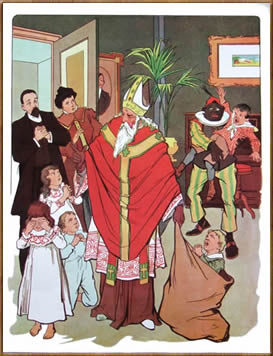
 

Bij Sinterklaas


Uit: Een heel stout jongetje

"Even kijken," zei Sint Nicolaas terwijl hij zijn bril opzette en in het Grote Boek keek, "ah, juist, nu weet ik het weer, hier woont dat hele stoute jongetje. Zozo..." en hij keek over zijn brillenglazen naar het jongetje. Het stoute jongetje keek brutaal terug, maar zijn tong durfde hij toch niet uit te steken.
"Piet," vervolgde Sint Nicolaas tegen Zwarte Piet, "dit jongetje is onverbeterlijk. Wat ik niet allemaal over hem gehoord heb, sinds ik weer in Nederland ben!"
"Dus geen cadeautje, Sinterklaas?" vroeg Zwarte Piet.
"Cadeautje?" vroeg Sint Nicolaas. "Hoe haal je 't in je hoofd, Piet. Is het niet juist," vroeg hij toen aan Vader en Moeder, "dat dit jongetje dit jaar nóg meer ruiten heeft gebroken en nóg meer potten jam heeft leeggelikt dan verleden jaar? En dat hij de schoenen van zijn schoolmeester, die de arme man uitgetrokken had omdat zijn voeten zo'n pijn deden, zomaar heeft verstopt, zodat de meester op zijn sokken naar huis moest? En... ach, ik kan wel blijven doorgaan."
"Het spijt ons," knikten vader en moeder, "het is allemaal waar."
"En heb jij geen spijt?" vroeg Sint Nicolaas aan het jongetje.


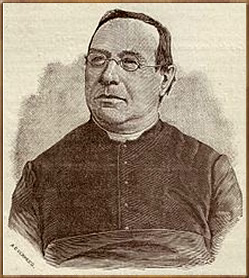
 1507506-7078581670e6a0571c455fa660678d8d.jpg
Illustratie uit “Sint Nicolaas en zijn knecht” van Jan Schenkman, uitgave ca. 1907


"Je hebt stoute jongetjes en Brave Hendriken," zei het jongetje, "en ik wil geen Brave Hendrik zijn."
"Nog steeds even brutaal," zei Sint Nicolaas. "Piet, stop hem in de zak!" Het jongetje probeerde nog weg te lopen, maar Zwarte Piet pakte hem meteen beet en stopte hem in de zak. "Zo, dan gaan we maar weer," zei Sint Nicolaas. "Maar ons jongetje dan?" vroegen vader en moeder. Sint Nicolaas en Zwarte Piet waren echter de kamer en het huis al uit.
Nu moet je weten dat Sint Nicolaas stoute kinderen nooit heel lang in de zak laat zitten. Na een half uurtje of zo vindt hij het wel genoeg, dan doet hij de zak open en laat de kinderen beterschap beloven, voor hij ze naar huis stuurt. En dikwijls geeft hij ze dan nog een cadeautje ook. Maar toevallig was het jongetje één van de laatste kinderen die hij had bezocht. En de volgende dag ging hij terug naar Spanje, want hij had haast dit jaar.
Pas toen ze weer thuis in Spanje waren, zei Sint Nicolaas tegen zijn knecht: "Zeg, Piet, herinner ik me dat nou goed? Hadden wij niet een heel stout jongetje in de zak gestopt?"
"Ja, baas," zei Piet.
"Maar hebben we dat jongetje ook weer uit die zak gehaald?"
"Nee, baas, dat ben ik helemaal vergeten," zei Piet.
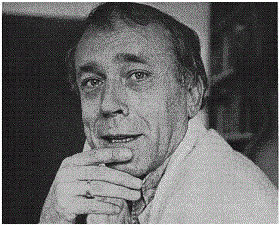
 

 1507506-2d087a09dfc041015e60497403679c45.jpg
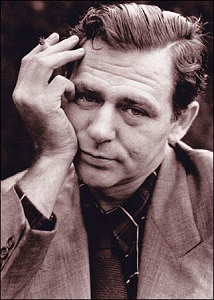
Hans Andreus (21 februari 1926 – 9 juni 1977)


De Britse schrijver en regisseur Hanif Kureishi werd geboren op 5 december 1954 in Bromley, Kent. Zie ook alle tags voor Hanif Kureishi op dit blog.

Uit: Intimacy

“It is the saddest night, for I am leaving and not coming back. Tomorrow morning, when the woman I have lived with for six years has gone to work on her bicycle, and our children have been taken to the park with their ball, I will pack some things into a suitcase, slip out of my house hoping that no one will see me, and take the tube to Victor's place. There, for an unspecified period, I will sleep on the floor in the tiny room he has kindly offered me, next to the kitchen. Each morning I will heave the thin single mattress back to the airing cupboard. I will stuff the musty duvet into a box. I will replace the cushions on the sofa.
I will not be returning to this life. I cannot. Perhaps I should leave a note to convey this information. `Dear Susan, I am not coming back ...' Perhaps it would be better to ring tomorrow afternoon. Or I could visit at the weekend. The details I haven't decided. Almost certainly I will not tell her my intentions this evening or tonight. I will put it off. Why? Because words are actions and they make things happen. Once they are out you cannot put them back. Something irrevocable will have been done, and I am fearful and uncertain. As a matter of fact, I am trembling, and have been all afternoon, all day.
This, then, could be our last evening as an innocent, complete, ideal family; my last night with a woman I have known for ten years, a woman I know almost everything about, and want no more of. Soon we will be like strangers. No, we can never be that. Hurting someone is an act of reluctant intimacy. We will be dangerous acquaintances with a history. That first time she put her hand on my arm -- I wish I had turned away. Why didn't I? The waste; the waste of time and feeling. She has said something similar about me. But do we mean it? I am in at least three minds about all questions.
I perch on the edge of the bath and watch my sons, aged five and three, one at each end. Their toys, plastic animals and bottles float on the surface, and they chatter to themselves and one another, neither fighting nor whingeing, for a change. They are ebullient and fierce, and people say what happy and affectionate children they are. This morning, before I set out for the day, knowing I had to settle a few things in my mind, the elder boy, insisting on another kiss before I closed the door, said, `Daddy, I love everyone.'


 1507506-eb5b472a8c978ea7fdc8fbbc1851b243.jpg
Hanif Kureishi (Bromley, 5 december 1954)


De Amerikaanse schrijfster Joan Didion werd geboren in Sacramento Valley op 5 december 1934. Zie ook alle tags voor Joan Didion op dit blog.

Uit: Blue Nights

 “When I began writing these pages I believed their subject to be children, the ones we have and the ones we wish we had, the ways in which we depend on our children to depend on us, the ways in which we encourage them to remain children, the ways in which they remain more unknown to us than they do to their most casual acquaintances; the ways in which we remain equally opaque to them. The ways in which our investments in each other remain too freighted ever to see the other clear. The ways in which neither we nor they can bear to contemplate the death or the illness or even the aging of the other. As the pages progressed it occurred to me that their actual subject was not children after all, at least not children per se, at least not children qua children: their actual subject was this refusal even to engage in such contemplation, this failure to confront the certainties of aging, illness, death. This fear. Only as the pages progressed further did I understand that the two subjects were the same. When we talk about mortality we are talking about our children. Once she was born I was never not afraid. I was afraid of swimming pools, high-tension wires, lye under the sink, aspirin in the medicine cabinet, The Broken Man himself. I was afraid of rattlesnakes, riptides, landslides, strangers who appeared at the door, unexplained fevers, elevators without operators and empty hotel corridors. The source of the fear was obvious: it was the harm that could come to her. A question: if we and our children could in fact see the other clear would the fear go away? Would the fear go away for both of us, or would the fear go away only for me?”


1507506-37ffd84511c4fe586223176215ae9b31.jpg
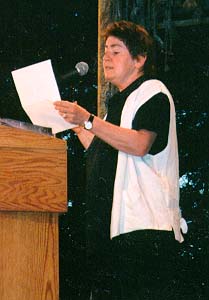
Joan Didion (Sacramento Valley, 5 december 1934)
In 1966


De Engelse dichteres en schrijfster Christina Georgina Rossetti werd geboren in Londen op 5 december 1830. Zie ook alle tags voor Christina Rossetti op dit blog.


Holy Innocents

Sleep, little Baby, sleep,
The holy Angels love thee,
And guard thy bed, and keep
A blessed watch above thee.
No spirit can come near
Nor evil beast to harm thee:
Sleep, Sweet, devoid of fear
Where nothing need alarm thee.

The Love which doth not sleep,
The eternal arms around thee:
The shepherd of the sheep
In perfect love has found thee.
Sleep through the holy night,
Christ-kept from snare and sorrow,
Until thou wake to light
And love and warmth to-morrow.


If Stars Dropped Out Of Heaven

If stars dropped out of heaven,
And if flowers took their place,
The sky would still look very fair,
And fair earth's face.
Winged angels might fly down to us
To pluck the stars,
Be we could only long for flowers
Beyond the cloudy bars.


O Wind, Why Do You Never Rest

O wind, why do you never rest
Wandering, whistling to and fro,
Bringing rain out of the west,
From the dim north bringing snow?


 1507506-3b045a09b6a5d128da9ff24ef74dabfd.jpg
Christina Rossetti (5 december 1830 - 27 december 1894) 


Zie voor nog meer schrijvers van de 5e december ook mijn blog van 5 december 2011 deel 1 en eveneens deel 2.

Geschreven door Romenu om 15:34 Reageer op dit bericht
Reageer op dit bericht

Reageer op dit bericht

Een titel of je eigen website toevoegen

De blogger leest alles eerst na: je tekst verschijnt zodra die goedgekeurd is.

Rainer Maria Rilke, Geert Mak, Nikoloz Baratashvili, Emil Aarestrup

De Duitse dichter Rainer Maria Rilke werd als René Karel Wilhelm Johann Josef Maria Rilke op 4 december 1875 in Praag geboren. Zie ook alle tags voor Rainer Maria Rilke op dit blog.


Da neigt sich die Stunde und rührt mich an

Da neigt sich die Stunde und rührt mich an
mit klarem, metallenem Schlag:
mir zittern die Sinne. Ich fühle: ich kann -
und ich fasse den plastischen Tag.

Nichts war noch vollendet, eh ich es erschaut,
ein jedes Werden stand still.
Meine Blicke sind reif, und wie eine Braut
kommt jedem das Ding, das er will.

Nichts ist mir zu klein, und ich lieb es trotzdem
und mal es auf Goldgrund und groß
und halte es hoch, und ich weiß nicht wem
löst es die Seele los...


Sankt Christofferus

Die große Kraft will für den Größten sein.
Nun hofft er, ihm endlich hier zu dienen
an dieses Flusses Furt; er kam von zwein
berühmten Herren, die ihm klein erschienen,
und ließ sich dringend mit dem dritten ein:

den er nicht kannte; den er durch Gebet
und Fastenzeiten nicht auf sich genommen,
doch der im Ruf steht, jedem nachzukommen
der alles lässt und für ihn geht.

So trat er täglich duch den vollen Fluss -
Ahnherr der Brücken, welche steinern schreiten, -
und war erfahren auf den beiden Seiten
und fühlte jeden, der hinüber muss.

Und ruhte nachts in dem geringen Haus,
gefasst zu handeln, jeder Stimme inne,
und atmete die Mühe mächtig aus,
genießend das Geräumige seiner Sinne.

Dann rief es einmal, dünn und hoch: ein Kind.
Er erhob sich groß, dass er es überführe;
doch wissend, wie die Kinder ängstlich sind,
trat er ganz eingeschränkt aus seiner Türe
und bückte sich -: und draußen war Nachtwind.

Er murmelte: Was sollte auch ein Kind...?
nahm sich zurück mit einem großen Schritte
und lag in Frieden und entschlief geschwind.
Aber da war es wieder, voller Bitte.
Er spähte wieder -: draußen war Nachtwind.

Da ist doch keiner, oder bin ich blind?
warf er sich vor und ging noch einmal schlafen,
bis ihn dieselben Laute zwingend lind
noch einmal im verdeckten Innern trafen:
Er kam gewaltig:
                        draußen war ein Kind.


Uit: Die Sonette an Orpheus, Erster Teil 

III. Sonett

Ein Gott vermags. Wie aber, sag mir, soll
ein Mann ihm folgen durch die schmale Leier?
Sein Sinn ist Zwiespalt. An der Kreuzung zweier
Herzwege steht kein Tempel für Apoll.

Gesang, wie du ihn lehrst, ist nicht Begehr,
nicht Werbung um ein endlich noch Erreichtes;
Gesang ist Dasein. Für den Gott ein Leichtes.
Wann aber
sind wir? Und wann wendet er

an unser Sein die Erde und die Sterne?
Dies
ists nicht, Jüngling, Dass du liebst, wenn auch
die Stimme dann den Mund dir aufstößt, - lerne

vergessen, dass du aufsangst. Das verrinnt.
In Wahrheit singen, ist ein andrer Hauch.
Ein Hauch um nichts. Ein Wehn im Gott. Ein Wind.


1506704-7c6fb60cec649ec39c824cd967496021.jpg

Rainer Maria Rilke (4 december 1875 – 29 december 1926)
Portret door Lou Albert Lasard, 1916


De Nederlandse schrijver Geert Mak werd geboren op 4 december 1946 in Vlaardingen. Zie ook alle tags voor Geert Mak op dit blog..

Uit: De brug

“Istanbul is een klassieke stad, zoals Amsterdam dat was in het midden van de vorige eeuw: de armoede bivakkeert in het oude hart, de middenklasse woont, ring na ring, steeds verder daarbuiten, de rijkdom – en die bestaat hier ook in groten getale – leeft in het groen, op de eilanden of in de luxewijken aan de overkant van de Bosporus.
De stad volgt daarmee een oud patroon. Al vanaf de vroegste tijden waren de heuveltoppen van het oude Constantinopel gereserveerd voor de rijken. Uit hun huizen en paleizen stroomden pis en vuil gestaag naar beneden – de stad kende geen riolen – totdat die uiteindelijk in zee verdwenen. De sociale indeling werd bepaald door diezelfde beweging van boven naar beneden: hoe lager een huis op de heuvel stond, hoe meer afval zich daaromheen verzamelde, hoe nederiger de status van de bewoner was. Wie onder aan de heuvels woonde, verkeerde dus altijd in de stront van de rijken, daar was niets aan te doen.
De brug overspant een brede riviermonding die de twee oudste buurten scheidt, en daarmee ook de twee geesten binnen deze stad: de zuidzijde is behoudend en gericht op het Oosten, de noordelijke kant, met zijn eeuwenoude ambassades en koopmanspaleizen, is doortrokken van de mentaliteit van het Westen en de lichtheid van het moderne leven.
Een geliefde stadsschrijver — we zullen er meer ontmoeten — vergeleek de huizenmassa’s van de twee stadsdelen ooit met ‘de wijd uitgespreide vleugels van een klein vogeltje met een iel lijf ’. Dit beeld klopt nog steeds. De brug is dat kleine lijf tussen die twee enorme vleugels. ‘De brug is klein, piepklein, iel, maar haal je hem weg, dan breken die enorme vleugels aan weerskanten ervan af, dan kunnen ze niet meer bewegen, niet langer de lucht in vliegen!’


 1506704-ddba0edb633961498954b0afa03431f7.jpg
Geert Mak (Vlaardingen, 4 december 1946)


De Georgische schrijver en dichter Nikoloz Baratashvili werd geboren op 4 december 1817 in Tbilisi.Zie ook alle tags voor Nikoloz Baratashvili op dit blog.


Chinnari

An aloe stands in solitude upon a lofty precipice;
The sunbeams mingling with the shades the myriad boughs caress and kits.
'Tis Joy to dream beneath her shade - a refuge from this world of woe-
Where rustling leaves give soft response to murmurs of the stream below.

The wind the slender aloe bends; the river hums in harmony;
And all these sounds sweet slumber lure, where dreams expire in melody.
'Midst nature's things there is a tongue - the essence of a flow divine:
In vain can mortal lips express a sound more eloquent and fine!

In hopeless love the Mtkvari heaves; the rushing waters swish and hiss;
It cannot reach its loved one's feet, and beats with wrath the precipice.
The fair chinnari from its height in proud and haughty dignity,
Inclines its head and sadly sighs as Mtkvari groans in agony.

As gentle breezes sway the tree, the waters whirled from passions deep
By jealous frenzy rendered white, burst on and lash the rocky steep…
The heart must suffer endless pain if love sincere within it hides,
And if the love thus cherished dear in scorching fires of passion bides!


 1506704-ac50bfe60524408294e0f5c044b58147.jpg
Nikoloz Baratashvili (4 december 1817 – 21 oktober 1844)
Portret door Lado Gudiashvili 


De Deense dichter Emil Aarestrup werd geboren op 4 december 1800 in Kopenhagen. Zie ook alle tags voor Emil Aarestrup op dit blog en ook mijn blog van 4 december 2010


Fear

Hold tighter still, your firm arms
Place round me and enfold me.
Hold tight while yet your heart beats
And let its warmth console me.

A short while, and we’re parted,
Like berries in the hedgerow;
A short while, and we’ve vanished
Like bubbles in the stream’s flow.


Vertaald door John Irons


 1506704-af3fcb75f56b82012659ea74e503450d.jpg
Emil Aarestrup (4 december 1800 – 21 juli 1856)
Portret door P. Hansen, 1886


Zie voor nog meer schrijvers van de 4e december ook mijn blog van 4 december 2011 deel 2.

Geschreven door Romenu om 23:01 Reageer op dit bericht

Joseph Conrad, Herman Heijermans, Hendrik Conscience, Grace Andreacchi, Ugo Riccarelli, France Prešeren

De Brits-Poolse schrijver Joseph Conrad werd geboren op 3 december 1857 in Berdichev, Rusland in een gezin met Poolse ouders. Zie ook alle tags voor Joseph Conrad op dit blog.

Uit: The Secret Agent

“It clattered; and at that signal, through the dusty glass door behind the painted deal counter, Mr. Verloc would issue hastily from the parlour at the back. His eyes were naturally heavy; he had an air of having wallowed, fully dressed, all day on an unmade bed. Another man would have felt such an appearance a distinct disadvantage. In a commercial transaction of the retail order much depends on the seller's engaging and amiable aspect. But Mr. Verloc knew his business, and remained undisturbed by any sort of æsthetic doubt about his appearance. With a firm, steady-eyed impudence, which seemed to hold back the threat of some abominable menace, he would proceed to sell over the counter some object looking obviously and scandalously not worth the money which passed in the transaction: a small cardboard box with apparently nothing inside, for instance, or one of those carefully closed yellow flimsy envelopes, or a soiled volume in paper covers with a promising title. Now and then it happened that one of the faded, yellow dancing girls would get sold to an amateur, as though she had been alive and young.
Sometimes it was Mrs. Verloc who would appear at the call of the cracked bell.
Winnie Verloc was a young woman with a full bust, in a tight bodice, and with broad hips. Her hair was very tidy. Steady-eyed like her husband, she preserved an air of unfathomable indifference behind the rampart of the counter. Then the customer of comparatively tender years would get suddenly disconcerted at having to deal with a woman, and with rage in his heart would proffer a request for a bottle of marking ink, retail value sixpence (price in Verloc's shop one-and-sixpence), which, once outside, he would drop stealthily into the gutter.“

 
1506280-a569e55035feaf320785a93ec414ab7c.jpg

Joseph Conrad (3 december 1857 – 3 augustus 1924)
Bob Hoskins en Christian Bale in de film The Secret Agent, 1996


De Nederlandse schrijver Herman Heijermans werd geboren op 3 december 1864 in Rotterdam. Zie ook alle tags voor Herman Heijermans op dit blog.

Uit: Op hoop van zegen

“clémentine
Zo.
daantje
... En de bedstee met de gordijne... 't Is me 'n bik.+
Neemt 'n pruim.
Kan u mijn niet is gebruike?
clémentine
Misschien. Hand hoger! Je mònd stil!
cobus
Da's makkelijk ezeid - as ù gewoon is te pruime en je niet pruime màg - dan kan je je lippe niet vàsthoue. Wat zeg jij, Daantjè?
daantje
Ik zeg dat 't tijd wordt. We ete om vier en de moeder is làstig.
clémentine
Dat zal met jullie ouwetjes wel nódig zijn.
daantje, een stoel bijschuivend
Pèh! We hebbe nog al wat in te brenge! Niet dàt! 'n Diakenie is me 'n bik. Vrete met snauwe - of je 'n bedelaar ben. Vanmorrege koffie as - as 't onderste uit de regenton - en errete zo hard as je eksteroog.
clémentine
In jouw plaats - hou je mond stil! - zou 'k God danken dat me ouwe dag bezorgd is.
cobus
Tja-tja je mag je niet bezondige...
't is me 'n bik: het is me nogal wat moois
daantje
God dànke? Née hoor. Me hele leven gevaren - hoeveel reize wel? - niet te telle - schipbreuk gehad - gebrek gehad - gevaren van me tiende - èn - twéé zoons op zee verloren. Nee hoor. Nee hoor. De moeder is 'n krèng. Je zou d'r op d'r smoel slaan...”
 

 1506280-18bb815e6c00fc035168bf004c9d711c.jpg
Herman Heijermans (3 december 1864 – 22 november 1924)
Cover dvd


De Vlaamse schrijver Henri (Hendrik) Conscience werd geboren in Antwerpen op 3 december 1812. Zie ook alle tags voor Hendrik Conscience op dit blog.

Uit: De Leeuw Van Vlaanderen Of De Slag Der Gulden Sporen

“De Vlaming die bij dit gezegde tegenwoordig was, geliet zich alsof hij de Franse taal niet verstond, en zag De Chatillon met stout gelaat in de ogen.
"Mijne heren," riep de ridder, "ziet die Laat mij aanzien.... Kom eens hier, lomperd! Nader hier voor mij."
De jongeling naderde langzaam en hield zijn ogen gedurig op de ridder gevestigd. Er zweefde iets zonderlings over zijn wezenstrekken,—een uitdrukking waarin toorn en list te saam gesmolten waren: iets zo dreigend en zo geheim dat De Chatillon met een aandoening van benauwdheid werd bevangen.
Een der bijwezende ridders wendde zich om en verliet de plaats waar dit gebeurde; hij week enige stappen tussen het geboomte en deed genoeg bemerken dat dit toneel hem niet behaagde.
"Wilt gij mij zeggen," vroeg De Chatillon aan de gids, "waarom gij ons door zulke wegen leidt, en waarom gij ons niet gewaarschuwd hebt dat er een afgehakte boom in de baan lag?"
"Heer!" antwoordde de Vlaming in slecht Frans. "Ik ken geen andere weg naar het slot Wijnendale en wist niet dat het UEdele geliefde op dit uur te slapen."
Bij dit gezegde kwam er een bitsige grimlach op zijn gelaat; het scheen dat hij de ridder tergen wilde.
"Bij God!" riep De Chatillon hem toe. "Gij lacht—gij spot met mij.... Hola! Mijn knapen, dat men die Laat in de lucht hange! En dat hij der raven ten spijze worde!"
Nu grimlachte de jongeling nog meer: de hoeken van zijn mond trokken zich achteruit, en een bleke of purperen kleur verfde beurtelings zijn wangen.
"Een Vlaming ophangen?" morde hij. "Wacht een weinig!"
Hierop ging hij enige treden achterwaarts, plaatste zich met de rug tegen een boom, stroopte de mouwen van zijn kolder tot aan de schouders op, en toog zijn blikkerend kruismes uit de schede. De ronde spieren van zijn blote armen waren gespannen, en zijn gelaat kreeg iets in zich dat de leeuwen eigen is.” 

 1506280-a1648268269a1b3a4040903e2dea5723.jpgbr>
Hendrik Conscience (3 december 1812 – 10 september 1883)

Standbeeld in Schilde


De Amerikaanse dichteres en schrijfster Grace Andreacchi werd geboren op 3 december 1954 in New York. Zie ook alle tags voor Grace Andreacchi op dit blog.


I AM WITH THE COWARDS

A response to terrorists of all kinds and nations
We've had enough of obscene death
Enough of burnt babies cities in ashes
Leafless trees wells poisoned with hate
We are called upon to love
Terrorism will not save a single soul
Terrorism will not save us from terrorists
Terrorism has come to destroy us
All of us, Arab and Jew
Americans, Europeans, everybody
Terrorism doesn't care who we are
It kills us for the hell of it
with bombs in the marketplace
with bombs that drop from the sky
with bulldozers with landmines with hate
with stupidity with the courage of animals
without a conscience
If to love your enemy is cowardly then
I am with the cowards
If to see no enemy but a brother in holiness
Is cowardly then I am with the cowards
If there is a remedy anywhere to the stupidity of man
It is with the cowards
And I, mother of the world, insist
Stop your deadly game
The world does not belong to you
But to God.
The olive groves are His
The sweet blue air over our heads is His
The sea and all that is in it - His
How dare you squabble over it?
It is His
And We are His
And our children too are His.
Not yours.


1506280-96b0b0b8762d401e213c9de60947fe92.jpg 
Grace Andreacchi (New York, 3 december 1954)


De Italiaanse schrijver Ugo Riccarelli werd geboren op 3 december 1954 in Turijn. Zie ook alle tags voor Ugo Riccarelli op dit blog en ook mijn blog van 3 december 2010..

Uit: Der vollkommene Schmerz (Vertaald door Karin Krieger)

„Doch vor allen Dingen beeindruckte den Maestro die
Liebenswürdigkeit der Frauen in Colle. Nicht daß die Frauen bei ihm zu Hause nicht freundlich waren, doch sie wahrten in allen Lebenslagen eine Zurückhaltung, die fast schon an Widerspenstigkeit grenzte und sie in einer eigenen Welt isolierte, sogar dann noch, wenn sie Ehefrau oder Großmutter wurden. Die Frauen von Colle dagegen scheuten sich nicht, zu lächeln und mit bezauberndem Charme und Liebreiz das Wort an einen Fremden zu richten. Dem Maestro war dieser Liebreiz nicht geheuer, und so kam es, daß er in den ersten Wochen die Freundlichkeit, mit der ihm die Witwe Bartoli begegnete, zwar einerseits genoß, sie jedoch andererseits mit dem Mißtrauen und der Wachsamkeit eines Menschen hinnahm, der daran gewöhnt ist, in zwanglosen Umgangsformen einem Fremden gegenüber wenn nicht heimliche Absichten, so doch zumindest etwas Unübliches zu sehen. Aber mit der Zeit gab er seinen Argwohn auf, da er auch die anderen Frauen des Ortes beobachtete und mit ihnen Worte wechselte, und er begann das Vergnügen eines Gesprächs, eines erwiderten Grußes oder einer Erzählung zu schätzen, die zwar belanglos sein mochten, doch gefärbt von jener ausholenden, sonnigen Redeweise, die ihnen epische Züge verlieh.“  

 1506280-87318d3d1930488a7e8c15942697eebf.jpg
Ugo Riccarelli (Turijn, 3 december 1954)


De Sloveense dichter en schrijver France Prešeren werd geboren op 3 december 1800 in Vrba. Zie ook alle tags voor France Prešeren op dit blog en ook mijn blog van 3 december 2010.


O'er thee, Misfortune, I have ceased to wail

O'er thee, Misfortune, I have ceased to wail,
I'll utter no reproaches any more.
Thank God, I'm used to griefs thou hast in store
And to the sufferings in life's strong jail.

No burden can now hurt my shoulders frail;
My lips are used to bitter drinks of yore;
My feet, like leather, are no longer sore,
I dread no thorny path, no irksome trail.

Stiff are my limbs and joints as if confined.
My heart, once sensitive, is hard as stone,
The claims of sorrow have subdued my mind.

All fear is fled; with it all hopes have flown.
Should Fate caress or beat me, it will find
Insensibility of flesh and bone.


Vertaald door A. I. Lenarčič en W.K. Matthe


A Wreath of Sonnets   (1/14)

A Slovene wreath your poet has entwined,
Of fifteen sonnets is the chaplet bound,
And in it thrice the Master Theme must sound:
Thus are the other harmonies combined.

Now from his source like streams in order wind
The sonnets, and the head of each is found
By the last line of the last sonnet crowned;
This is a semblance of your poet's mind.

From one love all by thoughts arise, and lo!
Whene'er I sleep at night they cease to flow,
But stir when darkness flees before dawn's rays.

You are the Master Theme of my whole life,
Which will be heard when I have ceased my strife -
A record of my pain and of your praise.


Vertaald door V. de Sola Pinto


 1506280-37da7082d48575e62e0e41ea67ce19ba.jpg
France Prešeren (3 december 1800 – 8 februari 1849)


Zie voor nog meer schrijvers van de 3e september ook mijn blog van 3 december 2011 deel 1 en eveneens deel 2.


Geschreven door Romenu om 18:36 Reageer op dit bericht

Botho Strauß, Frédéric Leroy, Ann Patchett, Hein Boeken, T. C. Boyle

De Duitse schrijver Botho Strauß werd geboren op 2 december 1944 in Naumburg an der Saale. Zie ook alle tags voor Botho Strauß op dit blog.

Uit: Lichter des Toren

„Mit seinem Bruder, einem Kretin, ging der Junge die Landstraße hinaus. Wie steif und verordnet er schritt! Nicht mal hätte man sagen können, wer von beiden der Ältere war, der Begleiter oder das rundköpfige, tapsige Wesen, das er ausführte, eines von seinem eigenen
Fleisch und Blut. Der Idiot hielt den Kopf gesenkt, und es lächerte ihn grundlos, im wesentlichen und schlechthin. Der Imbezille ist jemand ohne Stab (bacillum). Der gerade Bruder war ihm einer, er ging bei ihm eingehängt. Manchmal zuckte der Gerade mit dem Arm, so wie eine steife Gattin ihren betrunkenen Mann vom Torkeln abhält und an sich zieht. Ja, er riß sogar an ihm und zerrte ihn in einen festeren Schritt. Doch der Schwachsinnige unterbrach sich nur kurz und begann sogleich wieder sein hohes, wimmerndes Kichern, als wär’s die einzige Äußerung, Belustigt sein, die sich ihm gleichsam von Gott mitgeteilt hatte über die Menschen, die einzige zu mindest, die ihn in eine höhere Übereinstimmung zu versetzen schien. Es war beinah, als diene er einem leisen Dauergelächter, das aus den Sphären über die Erde erging, als Medium. Als wäre er willenlos wie eine Muschel bereit zum ewigen Wiedertönen. Unterwegs griff der Junge, der zum Ausgang mit dem Idioten angestellte Bruder, in seine Hosentasche, nahm ein großes Taschen tuch heraus und ließ den Kichernden sich darin schneu zen, so wie Mütter es mit rotztriefenden Kindern tun. Und gerade hierin, wie also der Bruder vor sich und den Leuten im Dorf den überlegenen Erwachsenen hervorkehrte, unbeholfen und geniert, hätte es für den Betreuten einen unmittelbaren Kitzel zum Kichern gegeben. Doch der Idiot ward ja aus unendlicher Ferne belustigt und spürte neben sich gar nichts“.

 1505609-5f145bff0afb74dee83a13dfba92b5d0.jpg
Botho Strauß (Naumburg, 2 december 1944)


De Vlaamse dichter Frédéric Leroy werd geboren op 2 december 1974 in Blankenberge. Zie ook alle tags voor Frédéric Leroy op dit blog.


Olijfgeheugen

Jij, vlijmscherp uitgelijnd
op giftig azuur, koppig
en verstard vormenspel,
amalgaam van molm,
versteende stof en zilver,
schenk mij van je vruchten
de bitterste,
opdat ik herinneren zou
hoe de strijd gestreden werd,
paarden waren er, weet ik nog,
besmeurd met bloed en slijk.
Het wordt me duidelijk,
stilaan: alles is een leugen,
er was geen tijd
vóór jou tijd.


Ochtendritueel

Men had dauw op de lippen.

Met het aanbreken van de dag begon ook
het uitwisselen van geschenken.

Alsof we door geven en nemen
gelijken zouden worden.

Ik, naakt als gras
en onthutst dat te zijn,
had niets te geven,
ontving slechts

een zelfontworpen woord
buiten beschouwing gelaten.


Harde klinkers

Er staat iets te gebeuren: alsof
vandaag het wereldverhaal in de aarde
zelf besloten ligt, elke steen, elke kiezel
een letter wil zijn, elke straat of gevel een zin,
een richting, een al dan niet doodlopend eind.

Geen slecht woord meer
over de stenen: elke klinker is nu bruikbaar
om ruiten in te gooien, schedels te breken.

Er staat geschreven en er wordt gefluisterd.

Er staat geschreven dat er wordt gefluisterd.

Commando’s sluipen oren binnen, stampen
deuren in. Iemand knielt op het voetpad en leest met ongeloof
de stoeptegels. Een familie woorden kruipt uit het asfalt,
gaat neuriënd op wandel en een manifest welt op uit de rioolgaten.
Iemand luistert aandachtig naar de stank, grift op de vensterbank
van het postkantoor met een vingernagel nauwgezet
een spijkerschrift in opgedroogde duivenstront.

De kasseien hebben bloed gedronken.

Een priester sluit de boeken


 1505609-bffa552e4fee7e9a97668fcd020bbdcb.jpg
Frédéric Leroy (Blankenberge, 2 december 1974)
Blankenberge, de pier


De Amerikaanse schrijfster Ann Patchett werd geboren in Los Angeles op 2 december 1963. Zie ook alle tags voor Ann Patchett op dit blog.

Uit: The Getaway Car

“In my junior year of college, I studied with Grace Paley. The fact that I even met Grace Paley, much less sat in her classroom for an entire year, is a wonder to me even now. There was no better short story writer, and very possibly no better person, though she would smack me on the head with a newspaper were she around to hear me say such a thing. (Interested in being a better writer? Go buy yourself a copy of The Collected Stories by Grace Paley.) The lesson that Grace taught was a complicated one, and I will admit I had been out of her class for a couple of years before I fully understood all she had given me. I was used to Allan Gurganus, who was as diligent a teacher as he was a writer. He was where he said he would be at the appointed minute, our manuscripts meticulously commented on in his trademark brown ink. He gave assignments and picked readings that spoke directly to our needs. But when we went to Grace’s classroom, there was often a cancellation notice taped to the door: GRACE HAS GONE TO CHILE TO PROTEST HUMAN RIGHTS VIOLATIONS or something of that nature. Or I would be sitting outside her office for our scheduled conference but the door stayed closed. I could hear someone in there, and frequently that someone was crying. After half an hour or so, Grace would pop her head out, telling me very kindly that I should go. “She’s having troubles,” she would say of that unseen person who had arrived before me. If I held up my poor little short story, a reminder of why I was there, she would smile and nod. “You’ll be fine.”

 1505609-9a8382e1ff8f5b31176bb64ecbe190d1.jpg
Ann Patchett (Los Angeles, 2 december 1963)


De Nederlandse dichter en schrijver Hein (Hendrik Jan) Boeken werd geboren in Amsterdam op 2 december 1861. Zie ook alle tags voor Hein Boeken op dit blog.

 
O dooi-wind

O dooi-wind, dooi-wind, dooi, o wind, o dooi!
Gij die van ’t zuiden aanvliegt, maak, o maak
Dat al, wat stokte, weer op gang geraak’,
Dat al wat dor is, word’ weer mooi!

- Ik ruik de geur alreê van gras en hooi
Uit gras en zooi – en dat weer ’t al ontwaak
Tot nieuwe muziek en zangerig vermaak,
Dat ook ikzelf uit kille koude ontdooi!

Ik zie u vliegen voor de grauwe maandag
In wilde jacht van draderige wolken,
Al voort, al voort – wat is het dat u jaagt?

Hoe lief dat gij verlaat de blauwe baan
Der zuider zee, tot troost der noordse volken,
En lokt u niet wat gij in ’t zuiden zaagt?


Interview

Een interview? Waartoe? 'k Beeld nu al jaren,
— En 't laatst wel 't meest en nooit zo ongestoord -
In rijm, onrijm, met 't uitgezochtste woord
De stemmingen, die door mij henen varen;

En al de beelden grijp ik bij de haren,
Die 'k kan verpraaien van mijn kapersboord,
En ook begint — onlangs heb ik 't gehoord —
Mijn duistre Stijl, goddank! wat op te klaren.

Nu wilt gij van mij horen. 'Die of die,
Mijn meester is 't'. ''k Heb alles uit mij zelven'.
Of. 'Dichters moeten leren mythlogie,
Historie, Grieks'. Of: 'Laten zij maar delven
in 't eigen hart'. Neen, vriend, ik zie u garen
Eens bij geval, 't examen wil mij sparen.


 1505609-6b08e41c3e787885e77d6d1a684e50b7.jpg
Hein Boeken (2 december 1861 – 19 oktober 1933)


De Amerikaanse schrijver Thomas Coraghessan Boyle werd geboren op 2 december 1948 in Peekskill, New York. Zie ook alle tags voor T. C. Boyle op dit blog.

Uit: The Tortilla Curtain

“He threw an uneasy glance at the bushes, then worked his way along the passenger side to the rear, expecting the worst, the bleeding flesh and hammered bone, sure now that the man must have been trapped under the car.  Stooping, palm flat, one knee in the dirt, he forced himself to look.  Crescendo and then release: nothing there but dust and more dust.
        The license plate--PILGRIM--caught the sun as he rose and clapped the grit from his hands, and he looked to the bushes yet again.  "Hello!" he cried suddenly over the noise of the cars flashing by in either direction.  "Is anybody there?  Are you okay?"
        He turned slowly round, once, twice, as if he'd forgotten something--a set of keys, his glasses, his wallet--then circled the car again.  How could no one have seen what had happened?  How could no one have stopped to help, bear witness, gape, jeer--anything?  A hundred people must have passed by in the last five minutes and yet he might as well have been lost in the Great Painted Desert for all the good it did him.  He looked off up the road to the bend by the lumberyard and the grocery beyond it, and saw the distant figure of a man climbing into a parked car, the hard hot light exploding round him.  And then, fighting down the urge to run, to heave himself into the driver's seat and burn up the tires, to leave the idiot to his fate and deny everything--the date, the time, the place, his own identity and the sun in the sky--Delaney turned back to the bushes.  "Hello?" he called again.
        Nothing.  The cars tore past.  The sun beat at his shoulders, his neck, the back of his head.
        To the left, across the road, was a wall of rock; to the right, the canyon fell off to the rusty sandstone bed of Topanga Creek, hundreds of feet below.  Delaney could see nothing but brush and treetops, but he knew now where his man was--down there, down in the scrub oak and manzanita.  The high-resin-compound bumper of the Acura had launched that sad bundle of bone and gristle over the side of the canyon like a Ping-Pong ball shot out of a cannon, and what chance was there to survive that?  He felt sick suddenly, his brain mobbed with images from the eyewitness news--shootings, stabbings, auto wrecks, the unending parade of victims served up afresh each day--and something hot and sour rose in his throat.  Why him?  Why did this have to happen to him?”

 1505609-e2b8841dae04209923dbc39e90825725.jpg
T. C. Boyle (Peekskill, 2 december 1948)


Zie voor nog meer schrijvers van de 2e december ook mijn blog van 2 december 2011 deel 2.


Geschreven door Romenu om 18:49 Reageer op dit bericht

Bij de eerste zondag van de Advent (Knecht Ruprecht, Theodor Storm)


Bij de eerste zondag van de Advent


 1504648-d0ca75b29d1184b3805dedbcb5a7b086.jpg
Guido Philipp Schmitt, "Knecht Rupprecht beschenkt Kinder", tekening, 1907


Knecht Ruprecht

Von drauss' vom Walde komm ich her;
Ich muss euch sagen, es weihnachtet sehr!
Allüberall auf den Tannenspitzen
Sah ich goldene Lichtlein sitzen;
Und droben aus dem Himmelstor
Sah mit großen Augen das Christkind hervor;

Und wie ich so strolcht' durch den finstern Tann,
Da rief's mich mit heller Stimme an:
"Knecht Ruprecht", rief es, "alter Gesell,
Hebe die Beine und spute dich schnell!
Die Kerzen fangen zu brennen an,
Das Himmelstor ist aufgetan,

Alt' und Junge sollen nun
Von der Jagd des Lebens einmal ruhn;
Und morgen flieg ich hinab zur Erden,
Denn es soll wieder Weihnachten werden!"
Ich sprach: "O lieber Herre Christ,
Meine Reise fast zu Ende ist;

Ich soll nur noch in diese Stadt,
Wo's eitel gute Kinder hat."
- "Hast denn das Säcklein auch bei dir?"
Ich sprach: "Das Säcklein, das ist hier:
Denn Äpfel, Nuss und Mandelkern
Fressen fromme Kinder gern."

- "Hast denn die Rute auch bei dir?"
Ich sprach: "Die Rute, die ist hier;
Doch für die Kinder nur, die schlechten,
Die trifft sie auf den Teil, den rechten."
Christkindlein sprach:" So ist es recht;
So geh mit Gott, mein treuer Knecht!"

Von drauss' vom Walde komm ich her;
Ich muss euch sagen, es weihnachtet sehr!
Nun sprecht, wie ich's hier innen find!
Sind's gute Kind, sind's böse Kind?


 1504648-90cd629cc66d6b593d8d2542b823d558.jpg
Theodor Storm (14 september 1817 - 4 juli 1888)
Storm-Museum, Husum, woonkamer


Zie voor de schrijvers van de 1e december ook mijn vorige twee blogs van vandaag.

Geschreven door Romenu om 13:25 Reageer op dit bericht

Tahar Ben Jelloun, Daniel Pennac, Billy Childish, Henry Williamson

De Franse schrijver Daniel Pennac werd geboren in Casablanca op 1 december 1944. Zie ook alle tags voor Daniel Pennac op dit blog.

Uit: Chagrin d'école

“Fin du film.
Générique.
Puis, se tournant lentement vers Bernard, elle demande
- Tu crois qu'il s'en sortira un jour ?
C'est que je fus un mauvais élève et qu'elle ne s'en est jamais tout à fait remise. Aujourd'hui que sa conscience de très vieille dame quitte les plages du présent pour refluer doucement vers les lointains archipels de la mémoire, les premiers récifs à ressurgir lui rappellent cette inquiétude qui la rongea pendant toute ma scolarité.
Elle pose sur moi un regard soucieux et, lentement :
- Qu'est-ce que tu fais, dans la vie ?
Très tôt mon avenir lui parut si compromis qu'elle ne fut jamais tout à fait assurée de mon présent. N'étant pas destiné à devenir, je ne lui paraissais pas armé pour durer. J'étais son enfant précaire. Elle me savait pourtant tiré d'affaire depuis ce mois de septembre 1969 où j'entrai dans ma première classe en qualité de professeur. Mais pendant les décennies qui suivirent (c'est-à-dire pendant la durée de ma vie adulte), son inquiétude résista secrètement à toutes les « preuves de réussite » que lui apportaient mes coups de téléphone, mes lettres, mes visites, la parution de mes livres, les articles de journaux ou mes passages chez Pivot. Ni la stabilité de ma vie professionnelle, ni la reconnaissance de mon travail littéraire, rien de ce qu'elle entendait dire de moi par des tiers ou qu'elle pouvait lire dans la presse ne la rassurait tout à fait. Certes, elle se réjouissait de mes succès, en parlait avec ses amis, convenait que mon père, mort avant de les connaître, en aurait été heureux mais, dans le secret de son cœur demeurait l'anxiété qu'avait fait naître à jamais le mauvais élève du commencement. Ainsi s'exprimait son amour de mère ; quand je la taquinais sur les délices de l'inquiétude maternelle, elle répondait joliment par une blague à la Woody Allen :
- Que veux-tu, toutes les Juives ne sont pas mères, mais toutes les mères sont juives." 

 
1504628-6ed14388e1a5e60edd0f66ba0eb20bd7.jpg

Daniel Pennac (Casablanca, 1 december 1944)


De Marokkaanse romanschrijver, dichter en essayist Tahar Ben Jelloun werd geboren in Fez op 1 december 1944. Zie ook alle tags voor Tahar Ben Jelloun op dit blog.

Uit: Leaving Tangier (Vertaald door Linda Coverdale)

“He holds his nose, because staring so hard at these images has filled his nostrils with the odor of death, a suffocating, clinging, nauseating stench. When he closes his eyes, death begins to dance around the table where he sits almost every day to watch the sunset and count the first lights scintillating across the way, on the coast of Spain. His friends join him, to play cards in silence. Even if some of them share his obsession of leaving the country someday, they know, having heard it one night in Toutia’s voice, that they must not lose themselves in images that foster sadness.
Azel says not a word about either his plan or his dream. People sense that he is unhappy, on edge, and they say he is bewitched by love for a married woman. They believe he has flings with foreign women and suspect that he wants their help to leave Morocco. He denies this, of course, preferring to laugh about it. But the idea of sailing away, of mounting a green-painted horse and crossing the sea of the straits, that idea of becoming a transparent shadow visible only by day, an image scudding at top speed across the waves—that idea never leaves him now. He keeps it to himself, doesn’t mention it to his sister, Kenza, still less to his mother, who worries because he is losing weight and smoking too much.
Even Azel has come to believe in the story of she who will appear and help them to cross, one by one, that distance separating them from life, the good life, or death.”


1504628-d86096a51e09a07fe24c8df430b79a29.jpg

Tahar Ben Jelloun (Fez, 1 december 1944)


De Britse dichter, schrijver, schilder, zanger en producer Billy Childish (echte naam William Charlie Mand) werd geboren op 1 december 1959 in Chatham, Kent. Zie ook alle tags voor Billy Childish op dit blog.


on seeing another slim volume of poetry

hanging there like a lie
another string of
empty boasts
and self delusion
you scum ive called friends who still rite this shit

i reject
every line that claims imortality
every slim volume
i reject

the boasts of reading tours that never took place
i reject
and
lists of international exhibitions of dubious
authenticity
i reject verbatom
and
with a meer gesture
these hymes to self agandisment
this
totalitarian
smuggery of verse
vailed as love

i reject
this ode to masterbation

i have no hatred
only contempt
and
because of you barstards
i demand of myself
that i am no a poet


 1504628-9fbfd9fd4946aba4547f53ef5ce6081d.jpg
Billy Childish (Kent, 1 december 1959)


De Britse schrijver Henry Williamson werd geboren op 1 december 1895 in Londen. Zie ook alle tags voor Henry Williamson op dit blog.

Uit: The Wet Flanders Plain

“The dug-outs of Y ravine had subsided, the dry-rotted timbers broke with a touch; the pistons and mainshaft and cylinders of the aeroplane rusted in the grasses–I remembered the charred framework on the ridge above Station Road–with rifle barrels and holed helmets and burst minenwerfer cases. Those dreaded oil-drums of the minnies! Rust and mildew and long tangled grass and frogs. The Ancre flowed in its chalky bed, swift and cold as before, gathering its green duckweed into a heaving coat as of mail, and drowning the white flowers of water crow’s-foot. Only one thing of all our work remained–the wooden military bridge over Mill Causeway. “Out work?” a voice seemed to say, a voice of the wan star. “What you seek is lost for ever in ancient sunlight, which arises again as Truth.” The voice wandered thinner than memory, and was gone with the star under the horizon.“

 
1504628-0475cc167d305eb1065d0c60d439c249.jpg
Henry Williamson (1 december 1895 - 13 augustus 1977)
Portret door Charles Tunnicliffe, z.j.


Zie voor nog meer schrijvers van de 1e december ook mijn vorige blog van vandaag.


Geschreven door Romenu om 13:24 Reageer op dit bericht

Mihály Vörösmarty, Valery Bryusov, Ernst Toller

De Hongaarse dichter Mihály Vörösmarty werd geboren op 1 december 1800 in Puszta-Nyék. Zie ook alle tags voor Mihály Vörösmarty op dit blog.


Prologue (Fragment)

It's winter now and death and snow and stillness,
The earth turned white;
Not hair by hair as happy people do,
It lost its colour all at once, like God,
Who on the sixth day, crowning his creation,
Gave life to man, the godly-beastly mongrel,
And shattered by the grim monstrosity
His sorrow turned Him white and very old.
When spring, the makeup-mistress comes again,
The aged earth may take a periwig
And find a frilly frock of daffodils.
The ice may thaw out on her glassy eyes,
Her perfume-scented, painted-on complexion
Pretending youth and faking happiness;
Ask then the aging, wrinkled prostitute
What has she done to her unhappy sons?


Vertaald door Peter Zollman


Vorwort (Fragment)

Jetzt herrschen Winter, Stille, Schnee und Tod.
Die Erde aber ist jählings ergraut;
doch nicht allmählich wie friedliche Menschen,
nein, über Nacht ergraut, wie einstmals Gott,
der, als die Welt er schuf und dann den Menschen,
halb Gott im Wesen und noch halb ein Tier,
erschauderte ob seiner düstren Schöpfung
und vor Entsetzen grau ward, müd und alt.

Bald kommt der Lenz gegangen, ein Barbier,
die graue Erde nimmt dann die Perücke
und legt den Blumen Samt und Seide an.
Von ihren starren Augen taut der Frost,
mit Düften und mit grell geschminkten Wangen,
täuscht Freude sie und frische Jugend vor.
Ihr aber fragt die alte Sünderin:
Wo tat sie die erschlagnen Söhne hin?


Vertaald door Günther Deicke


1504615-6c834e8345b8baa2b50d3484b0a09c94.jpg 
Mihály Vörösmarty (1 december 1800 – 19 november 1855)
Borstbeeld in Boedapest


De Russische dichter en schrijver Valery Bryusov werd geboren op 1 december 1873 in Moskou. Zie ook alle tags voor Valery Bryusov op dit blog.

Uit: Im Spiegel (Vertaald door Hans von Guenther)

„Aus dem Archiv eines Psychiaters
Ich liebte die Spiegel schon seit meinen frühesten Jahren. Als Kind weinte und zitterte ich oft, wenn ich in ihre durchsichtig-wahrhaftige Tiefe blickte. In der Kindheit war es mein Lieblingsspiel, durch die Zimmer und den Garten zu gehen, einen Spiegel vor mir herzutragen und in seinen Abgrund blickend, mit jedem Schritte den Rand zu überschreiten und vor Schrecken und Schwindlichkeit fast zu ersticken. Schon als Mädchen begann ich, mein ganzes Zimmer mit großen und kleinen, getreuen und ein wenig verzerrenden, klaren und etwas trüben Spiegeln zu füllen. Ich hatte mich gewöhnt, ganze Stunden, ganze Tage inmitten dieser sich kreuzenden, in einander übergehenden, taumelnden, verschwindenden und aufs neue erstehenden Welten zu verbringen. Meine einzige Leidenschaft wurde es, mich diesen lautlosen Fernen hinzugeben, diesen Perspektiven ohne Echo, diesen abgesonderten Welten, welche die unsere durchschneiden und, im Widerspruch zu der Erkenntnis, mit ihr gleichzeitig und am gleichen Platze existieren.
Diese umgedrehte Wirklichkeit, die von uns durch die glatte Spiegelfläche getrennt und dem Tastvermögen irgendwie unerreichbar ist, zog mich immer an und lockte mich wie ein Abgrund oder ein Geheimnis.
Mich lockte auch jene Erscheinung, die immer, wenn ich an den Spiegel herantrat, vor mir erschien und mein Wesen seltsam verdoppelte. Ich bemühte mich, zu erraten, wodurch jene (die andere Frau) sich von mir unterscheide, und, wie es sein könne, daß ihre rechte Hand meine linke sei und daß alle Finger dieser Hand umgestellt wären, obgleich auf einem von ihnen sich eben mein Verlobungsring befand. Meine Gedanken begannen sich zu verwirren, kaum daß ich in dieses Rätsel eindringen wollte, um es zu lösen. In _dieser_ Welt, wo man sich an alles herantasten kann und wo Stimmen und Töne sind, da lebte ich, die Wirkliche; aber in jener _Spiegel_welt, die man nur sehen kann, lebte sie, die Erscheinung.“ 


1504615-46b0a6f2a86f06876e8e5de517c56bc2.jpg
Valery Bryusov (1 december 1873 - 9 oktober 1924)


De Duitse dichter en schrijver Ernst Toller werd geboren op 1 december 1893 in Samotschin (tegenwoordig Szamocin). Zie ook alle tags voor Ernst Toller op dit blog.


Lied der Einsamkeit

Sie wölbt um meine Seele Kathedralen,
Sie schäumt um mich wie brandend Meer,
Der Gosse sperrt sie sich wie eine Wehr,
Und wie ein Wald beschützt sie meine Qualen.
In ihr fühl' ich die Süße abendlicher Stille,
Auf leeren Stunden blüht sie maienliches Feld,
Ihr Schoß gebiert das Wunder der geahnten Welt,
Ein stählern Schwert steilt sich metallner Wille.
Sie schmiegt sich meinem Leib wie schlanker Frauen Hände,
In meine Sehnsucht perlt sie aller Märchen Pracht,
Ein sanftes Schwingen wird sie hingeträumter Nacht . . .
Doch ihre Morgen lodern Brände,
Sie sprengen Tore schwerer Alltagszelle,
Einstürzen Räume, aufwächst eisige Helle.


Gefangene Mädchen

Wie kleine arme Dirnen an belebten Straßenecken
Sich schüchtern fast und wieder roh bewegen,
Im Schatten der Laternen sich erst dreister regen
Und den zerfransten Rock kokett verstecken . . .
Wie Waisenkinder, die geführt auf Promenaden,
Je zwei und zwei in allzu kurzen grauen
Verschoßnen Kleidern sehr verschämt zu Boden schauen
Und Stiche fühlen in den nackten Waden . . .
So schlürfen sie umstellt von hagren Wärterinnen,
Die warmen Hüften wiegend auf asphaltnen Kreisen,
Sie streichen heimlich mit Gebärden, leisen,
Das härne Kleid, als strichen sie plissiertes Linnen,
Und wie sich in gewölbten Händen Brüste runden,
Befällt sie Grauen ob der Last der leeren Stunden . . .


1504615-361b300cfd8a80595563ba593e8eb9ee.jpg
Ernst Toller (1 december 1893 – 22 mei 1939)
Hier met zijn vrouw Christiane Grautoff

Geschreven door Romenu om 13:24 Reageer op dit bericht

Pierre Kemp

De Nederlandse dichter Pierre Kemp werd geboren in Maastricht op 1 december 1886. Zie ook alle tags voor Pierre Kemp op dit blog.


Stadsgezicht

De stad is vol wielen en hoeken
De huizen vol ramen en zoeken -
de mensen gaan heen en weer.
De mensen zijn vol mannen en vrouwen
en om de hoek van gebouwen
kijkt een dame in een heer.


Van der Kleuren

De zon begint de plaatjes weer te lezen
op de deuren,
glimlacht om de namen naar hun wezen
en fluistert: hier is er geen.
Maar hier woont Van der Kleuren
en die is nooit alleen.
Doopt hij de kleuren in het water
zij worden nimf en hij is sater.
Houdt hij de kleuren naar het licht,
‘Kets’ zegt de vonk en wordt gedicht.
En slaapt die kleurenzuchtige man?
Van kleuren zonder kleren droomt hij dan!


Bloem

Het is een bloem
om er met een vaantje om rond te gaan
en zacht te zingen.
Het is een bloem om niet meer burger te zijn,
maar een broer van een kinderhemdje in zonneschijn.


 1598678-5d035b613e46ea8e5adf35ed3e17dea8.jpg
Pierre Kemp (1 december 1886 - 21 juli 1967)

Geschreven door Romenu om 00:00 Reageer op dit bericht

Herinnering aan Ramses Shaffy


Herinnering aan Ramses Shaffy

Nederlands grootste chansonnier Ramses Shaffy is vandaag precies vier jaar geleden op 76-jarige leeftijd overleden.

De Nederlandse chansonnier en acteur Ramses Shaffy werd op 29 augustus 1933 geboren in de Parijse voorstad Neuilly-sur-Seine als zoon van een Egyptische diplomaat en een Poolse gravin van Russische afkomst. Zie ook alle tags voor Ramses Shaffy op dit blog.

 
1504606-0495faba967a52e9206f783f2fde4ed5.jpg

Ramses Shaffy (29 augustus 1933 – 1 december 2009)


Ik drink

Doe het licht alvast maar uit
Ga naar boven toe en sluit
Je ogen toe en slaap
Ik blijf beneden en verzink
In mijn verleden en ik drink
Op wat ooit was... Ja, ik beloof je niet te veel
Ik hou van je en slaap nu maar

Ik drink op elke vrouw die mij niet mag
Op ieder kind dat ik niet had
En jij die mij zo lang bezat
Ik drink op ieder huis dat ik verliet
Op elke vriend die mij verried
En jij die mij toch binnenliet

Toen die nacht
Vlak voor de bioscoop
Het regende en goot
Langs de stille gracht
Ik voer daar in mijn boot
En toen heel onverwacht
Stond jij daar stil en lachte
En ik zie nog je mond
Je lippen waren rond
Je rode lippen rond

Ik drink
Gelukkig word ik niet gauw dronken
Slaap... ik zie de jaren lonken
Vannacht schrijf ik een boek
Ik zie de beelden die ik zoek
Je krijgt pas laat een overwicht
Pas tegen 't vallen van de nacht
Het einde van het licht
Slaap maar, wees alleen
Slaap maar door mijn leven heen

Ik drink op elke ongeschreven brief
Op elke schoft, elk negatief
Op elk vergeefs 'ik heb je lief'
Ik drink op de gedachte die ik had
Op de gevolgen die 'k vergat
En jij die mij verdedigd had

Toen die dag
Waarop jij zacht in dat café
Vroeg: Mag ik met je mee
En ik die niets verstond
Ik was wat in de war
Mijn ogen stonden star
Maar jij keek daar doorheen
En jij begreep meteen
Daar zit iemand alleen

Ik drink op het gevecht van jou en mij
Op het gevloek en het gevrij
En op het keren van het tij
Ik drink op elke dag die is geweest
Op elke lach op ieder feest
En jij die toevallig leest
Ik drink op elke vrouw die mij niet zag
Op ieder kind dat ik niet had
En jij die mij toch wel bezat
En jij die mij maar niet vergat


Geschreven door Romenu om 00:00 Reageer op dit bericht

David Nicholls, Christophe Vekeman, Yasmine Allas, Y.M. Dangre, Reinier de Rooie, Jan G. Elburg

De Engelse schrijver David Nicholls werd geboren op 30 november 1966 in Eastleigh, Hampshire. Zie ook alle tags voor David Nicholls op dit blog.

Uit: Starter For Ten

“I want to be able to listen to recording of piano sonatas and know who's playing. I want to go to classical concerts and know when you're meant to clap. I want to be able to 'get' modern jazz without it all sounding like this terrible mistake, and I want to know who the Velvet Underground are exactly. I want to be fully engaged in the World of Ideas, I want to understand complex economics, and what people see in Bob Dylan. I want to possess radical but humane and well-informed political ideals, and I want to hold passionate but reasoned debates round wooden kitchen tables, saying things like 'define your terms!' and 'your premise is patently specious!' and then suddenly to discover that the sun's come up and we've been talking all night. I want to use words like 'eponymous' and 'solipsistic' and 'utilitarian' with confidence. I want to learn to appreciate fine wines, and exotic liquers, and fine single malts, and learn how to drink them without turning into a complete div, and to eat strange and exotic foods, plovers' eggs and lobster thermidor, things that sound barely edible, or that I can't pronounce...Most of all I want to read books; books thick as brick, leather-bound books with incredibly thin paper and those purple ribbons to mark where you left off; cheap, dusty, second-hand books of collected verse, incredibly expensive, imported books of incomprehensible essays from foregin universities.”


   1504158-87c73289f6268bb0ce30e4216a205989.jpg
David Nicholls (Hampshire, 30 november 1966)


De Vlaamse schrijver, dichter en performer Christophe Vekeman werd geboren in Temse op 30 november 1972. Zie ook alle tags voor Christophe Vekeman op dit blog.

DE ROZEN

Je werd ziek toen je de sneeuw in liep om in de stad de rozen te tellen
De dokter was stomdronken, niet in staat om een diagnose te stellen
Hij hijgde en hij proestte en stal al mijn medicijnen
Hij legde mij het zwijgen op, zei dat ik woorden zoeken moest en noemde jou de zijne
‘Het leven is vallen en opstaan en ten slotte blijven liggen,’
Zo las de dokter lallend voor uit één van mijn nieuwste liefdesgedichten
Je huilde van ontroering en je keek hem vol bewondering aan
Toen hij bij jou in bed kruipend kreunde: ‘Ik ben klaar om dood te gaan’
Terstond kreeg hij de stuipen en jij steigerde, brullend als een leeuwin
Voor de laatste keer vulde de dokter zijn glas en stuurde mij vervolgens de sneeuw in
Daar liep ik dan in eenzaamheid, daar liep ik vele uren
Ik wist hoe sterk zijn lichaam was, en dat zijn doodsstrijd heel lang kon duren
De dokter was niet te bekennen toen ik eindelijk weer de deur achter mij dichttrok
Ik klopte de sneeuw van mijn kleren en droogde mijn natte gezicht aan je rok
Je zei: ‘De man is gestorven’, ik zuchtte: ‘Het spijt mij, maar dat is gelogen’
Je deed je best te geeuwen, maar je hapte naar lucht als een vis op het droge
Toen je begon te schreien, kreeg ik toch weer medelijden
Je vroeg je luidkeels af hoe je jezelf van je ziekte zou kunnen bevrijden
Ik schreeuwde: ‘Kijk, ik ben geen dokter, maar ik kan je wel het antwoord vertellen!’
Terwijl jij de sneeuw in liep om in de stad de rozen te tellen


 1504158-6044b5fdb3fe37f4fd5fad718c1b6337.jpg
Christophe Vekeman (Temse, 30 november 1972)


De Nederlandse schrijfster en actrice Yasmine Allas werd geboren op 30 november 1967 in Mogadishu in Somalië. Zie ook alle tags voor Yasmine Allas op dit blog.

Uit: Idil, een meisje

‘Idil, ze zijn mooi geworden. Je vader heeft wel smaak.’ Zade stond met de uitnodiging in zijn handen. ‘Kijk, nog een paar dagen en dan ben je helemaal van mij. Er komen heel veel gasten, iedereen zal jaloers op ons zijn. We passen zo goed bij elkaar.’
Droom maar, Zade, droom maar.
‘We houden van elkaar. Het is een eer om samen met jou die zaal binnen te komen, waar al die belangrijke mensen zitten.’
IJl maar, Zade, ijl maar.
‘Zie je het voor je? Ik wel. Een heel grote zaal, helemaal vol met mensen die alleen voor ons zijn gekomen. En dan kom ik met jou binnen, met je mooie witte jurk. Dan gaan we zitten, iedereen komt ons feliciteren. Er wordt gegeten, gedanst en dan zie ik al die mannen denken: zat ik maar naast dat jonge, mooie, intelligente meisje,’
Kwijl maar, Zade, kwijl maar.
‘En dan is het moment aangebroken dat we naar huis gaan, het moment waarop ik zo lang heb moeten wachten. Het moment waarop ik mijn rijpe vrucht kan plukken.’
De gedachte aan het moment dat hij zo verheerlijkte, maakte me bang. ‘Jullie doen het maar zoals jullie willen, aan mij wordt toch niks gevraagd.’ Ik schrok van mijn eigen felheid en liep weg.
‘Mooi, jong, intelligent en vurig’, lachte Zade.”


1504158-c4eb367067160d3909d9f935aaea9611.jpg
Yasmine Allas (Mogadishu, 30 november 1967)


De Vlaamse dichter en schrijver Y.M. (Yannick) Dangre werd op 30 november 1987 geboren in Kapellen. Zie ook alle tags voor Y.M. Dangre op dit blog.


De verstomming VI

Zwijgen. Roepen. Zwijgen.
Vitten omdat we al tijden en
minnaars lang niet meer aan
elkaar zitten, niet meer passen
op beloftes als op de kinderen
van vroeger.

Zwijgen.

Wij kruisen armen, degens,
bleke stiltes, maar geen
blikken. Wij kijken door elkaar
als door kapotte brillen
en boeien klinken zacht
de gezamenlijke dag aan
onze enkels. Wij

zwijgen om bijeen te blijven.


1504158-3b8ce5dbce43b26f2958036c81e884cf.jpg 
Y.M. Dangre (Kapellen, 30 november 1987)


De Nederlandse dichter Reinier de Rooie werd geboren op 30 november 1961 in Hengelo. Zie ook alle tags voor Reinier de Rooie op dit blog.


Ballade van de oproerkraaier

saaie burgers kwaaie vrouwen
het zal u twee jaar lang berouwen
mij te kiezen om een lied
van hengelo wel of hengelo niet
met mijn voeten schop ik gaten
in de stilte van uw straten
met mijn fikken steek ik hens
in uw allerdiepste wens
met mijn ogen zal ik draaien
alle winden die hier waaien
in het schelpje van mijn oor
gaat uw jammerklacht teloor
ik zal dichters naar u zenden
die de achtste hel verkenden
en mijn prinsen op een paard
zijn uw dochters zelden waard
ook zal ik uw nachten braken
en uw honden doen ontwaken
zit u 's ochtends in de kerk
ben ik slapend aan het werk
ja dan schep ik nieuwe verzen
met de zoete smaak van kersen
ach dan droom ik van wat is
en het toch zo node mis
envoi
saaie burgers kwaaie vrouwen
wilt u vredig huisjes bouwen
en u wármen aan een lied:
kies mij niet!


1504158-ee3df4f2d697eac114f1e840b405de9e.jpg
Reinier de Rooie (Hengelo, 30 november 1961)


De Nederlandse dichter en schrijver Jan G. Elburg werd geboren op 30 november 1919 te Wemeldinge. Zie ook alle tags voor Jan G. Elburg op dit blog.


Zomer

Met twee linkerhanden boetseert de zon
de aarde. alles gaat scheef door het lachen
der lichamen. ik ben veel te blauw
van binnen. mijn ingewand zamelt te veel
liefde en luide kreten.
o de snaakse waardigheid van de dagen.
o de aardigheden van het aambeeld water.
wij moeten wel jongen. van grote liefde
een huis werpen uit schelpen en zand.
een naakt klateren.
nu dommelt de grote blonde vrouw nog met garnalenvuur.
nu zondert het havergroen gras zich nog af
in de zomer.
wij zouden wonen kunnen in stokrozen. in onze stem:
gewone boomrovers. loverkielen
met een rood lachend hoofd er boven.
elke struik een tuin.
wij willen buiten muiten
uit zijn
met aarde de witte wolken betalen.
er is een getij als een glimlachend afrika
over dalen en glasdaken van warmte.


Opnieuw

Grond worden,
gras, kever, ochtendnevel
smaak aan de tong van het grazend
vee en vlees zijn, weer
mest en molshoop worden,
bliksemvis in de sloot,
maar zo mogelijk
volle aar, zwellende korrel;
en gegeten worden
om man te zijn, vrouw te zijn,
ja vooral opnieuw mens te zijn
en zichzelf in liefde te verzamelen.


 1504158-f1dded5382607ee654654f119ba0d5a6.jpg
Jan G. Elburg (30 november 1919 – 13 augustus 1992)


Zie voor nog meer schrijvers van de 30e november ook mijn vorige blog van vandaag en eveneens mijn eerste blog van vandaag.

Geschreven door Romenu om 15:10 Reageer op dit bericht

Mark Twain, Lee Klein, Adeline Yen Mah, John McCrae, Jonathan Swift, Philip Sidney

De Amerikaanse schrijver Mark Twain (pseudoniem van Samuel Langhorne Clemens) werd geboren op 30 november 1835 te Florida. Zie ook alle tags voor Mark Twain op dit blog.

Uit:The Adventures of Huckleberry Finn

“If you are with the quality, or at a funeral, or trying to go to sleep when you ain't sleepy—if you are anywheres where it won't do for you to scratch, why you will itch all over in upwards of a thousand places. Pretty soon Jim says:
"Say, who is you?  Whar is you?  Dog my cats ef I didn' hear sumf'n. Well, I know what I's gwyne to do:  I's gwyne to set down here and listen tell I hears it agin."
So he set down on the ground betwixt me and Tom.  He leaned his back up against a tree, and stretched his legs out till one of them most touched one of mine.  My nose begun to itch.  It itched till the tears come into my eyes.  But I dasn't scratch.  Then it begun to itch on the inside. Next I got to itching underneath.  I didn't know how I was going to set still. This miserableness went on as much as six or seven minutes; but it seemed a sight longer than that.  I was itching in eleven different places now.  I reckoned I couldn't stand it more'n a minute longer, but I set my teeth hard and got ready to try.  Just then Jim begun to breathe heavy; next he begun to snore—and then I was pretty soon comfortable again.“ 

 1504147-b9a0f813809327829d8c5963a1b5b99d.jpg
Mark Twain (30 november 1835 – 21 april 1910)
Scene uit de film Huckleberry Finn and His Friends, 1979


De Amerikaanse dichter, schrijver en essayist Lee Klein werd geboren op 30 november 1965 in New York. Zie ook alle tags voor Lee Klein op dit blog.


THE SHOPPPINGTOWN DOWN UNDER (Fragment)

Double Decker down under domestic doppelgangers
Continents we would reinvent-chewing on the concrete hive
But sitting at the mall to go onto the net
A sliding glass door through a parquet meridian

There is still time left to
To back out
Back out from a blackout
Two porous gauzy starfish like cloud formations
Light goes out in one in a flash
Black
The other one white
The ground below
A parched tan canvas

There is still time left to back out
Back out from a blackout

How about a sub-moutainous McDonald’s
Built upon an historic site
And serving as it’s de facto marker
With the shrine/photo gallery just by the bathrooms
William Frederick Paddington
Perhaps the most famous policeman in Colonial Australia
Here after missing his coach a the inn
ran after it
and caught it
but then got caught on it
it being the coach’s door
caught on it was his jacket’s interior breast pocket
which held his service revolver within
which then dislodged
he suffered for weeks
and finally died


1504147-340ab36ef082f12ee8d0c71457c6e99c.jpg
Lee Klein (New York, 30 november 1965)


De Chinese schrijfster Adeline Yen Mah werd geboren op 30 november 1937 in Tianjin. Zie ook alle tags voor Adeline Yen Mah op dit blog.

Uit: Chinese Cinderella

„As she closed the lid, an old photograph fell out. I picked up the faded picture and saw a solemn young man and woman, both dressed in old-fashioned Chinese robes. The man looked rather familiar.
"Is this a picture of my father and dead mama?" I asked.
"No. This is the wedding picture of your grandparents. Your Ye Ye was twenty-six and your Nai Nai was only fifteen." She quickly took the photo from me and locked it into her box.
"Do you have a picture of my dead mama?"
She avoided my eyes. "No. But I have wedding pictures of your father and your stepmother, Niang. You were only one year old when they married. Do you want to see them?"
"No. I've seen those before. I just want to see one of my own mama. Do I look like her?" Aunt Baba did not reply, but busied herself with putting the safe-deposit box back into her closet. After a while I said, "When did my mama die?"
"Your mother came down with a high fever three days after you were born. She died when you were two weeks old. . . ." She hesitated for a moment, then exclaimed suddenly, "How dirty your hands are! Have you been playing in that sandbox at school again? Go wash them at once! Then come back and do your homework!"
I did as I was told. Though I was only four years old, I understood I should not ask Aunt Baba too many questions about my dead mama. Big Sister once told me, "Aunt Baba and Mama used to be best friends. A long time ago, they worked together in a bank in Shanghai owned by our grandaunt, the youngest sister of Grandfather Ye Ye. But then Mama died giving birth to you. If you had not been born, Mama would still be alive. She died because of you. You are bad luck." 

 
1504147-6ca5f107ed6a661ecb9bf48920ff452d.jpg
Adeline Yen Mah (Tianjin, 30 november 1937)
Cover


De Canadese dichter, arts, auteur, kunstenaar, militair John Alexander McCrae werd geboren in Guelph (Ontario) op 30 november 1872. Zie ook alle tags voor John McCrae op dit blog.


The Hope Of My Heart

"Delicta juventutis et ignorantius ejus, quoesumus ne memineris, Domine."
I left, to earth, a little maiden fair,
With locks of gold, and eyes that shamed the light;
I prayed that God might have her in His care
And sight.
Earth's love was false; her voice, a siren's song;
(Sweet mother-earth was but a lying name)
The path she showed was but the path of wrong
And shame.
"Cast her not out!" I cry. God's kind words come --
"Her future is with Me, as was her past;
It shall be My good will to bring her home
At last."


Then And Now

Beneath her window in the fragrant night
I half forget how truant years have flown
Since I looked up to see her chamber-light,
Or catch, perchance, her slender shadow thrown
Upon the casement; but the nodding leaves
Sweep lazily across the unlit pane,
And to and fro beneath the shadowy eaves,
Like restless birds, the breath of coming rain
Creeps, lilac-laden, up the village street
When all is still, as if the very trees
Were listening for the coming of her feet
That come no more; yet, lest I weep, the breeze
Sings some forgotten song of those old years
Until my heart grows far too glad for tears.


 1504147-1f165da8be93e8f709dc6fa7d8a773a6.jpg
John McCrae (30 november 1872 - 28 januari 1918)


De Engelse schrijver Jonathan Swift werd op 30 november 1667 in Dublin geboren uit Engelse ouders. Zie ook alle tags alle tags voor Jonathan Swift op dit blog.

Uit: Gulliver's Travels

“But the creatures ran off a second time, before I could seize them; whereupon there was a great shout in a very shrill accent, and after it ceased I heard one of them cry aloud TOLGO PHONAC; when in an instant I felt above a hundred arrows discharged on my left hand, which, pricked me like so many needles; and besides, they shot another flight into the air, as we do bombs in Europe, whereof many, I suppose, fell on my body, (though I felt them not), and some on my face, which I immediately covered with my left hand. When this shower of arrows was over, I fell a groaning with grief and pain; and then striving again to get loose, they discharged another volley larger than the first, and some of them attempted with spears to stick me in the sides; but by good luck I had on a buff jerkin, which they could not pierce. I thought it the most prudent method to lie still, and my design was to continue so till night, when, my left hand being already loose, I could easily free myself: and as for the inhabitants, I had reason to believe I might be a match for the greatest army they could bring against me, if they were all of the same size with him that I saw. But fortune disposed otherwise of me. When the people observed I was quiet, they discharged no more arrows; but, by the noise I heard, I knew their numbers increased; and about four yards from me, over against my right ear, I heard a knocking for above an hour, like that of people at work; when turning my head that way, as well as the pegs and strings would permit me, I saw a stage erected about a foot and a half from the ground, capable of holding four of the inhabitants, with two or three ladders to mount it: from whence one of them, who seemed to be a person of quality, made me a long speech, whereof I understood not one syllable.”

 1504147-a58a0f0b31ead9cbd6dc37380c401a11.jpg
Jonathan Swift (30 november 1667 – 19 oktober 1745)
Scene uit de film Gulliver’s Travels, 2010


De Engelse schrijver Sir Philip Sidney werd geboren op 30 november 1554 in het kasteel van Penshurst in het graafschap Kent. Zie ook alle tags voor Sir Philip Sidney op dit blog.


Fair Eyes, Sweet Lips

Fair eyes, sweet lips, dear heart, that foolish I
Could hope by Cupid's help on you to prey;
Since to himself he doth your gifts apply,
As his main force, choice sport, and easeful stay.

For when he will see who dare him gainsay,
Then with those eyes he looks, lo by and by
Each soul doth at Love's feet his weapons lay,
Glad if for her he give them leave to die.

When he will play, then in her lips he is,
Where blushing red, that Love's self them doth love,
With either lip he doth the other kiss:

But when he will for quiet's sake remove
From all the world, her heart is then his room
Where well he knows, no man to him can come.


My Words, I Know Do Well

My words I know do well set forth my mind,
My mind bemoans his sense of inward smart;
Such smart may pity claim of any heart,
Her heart, sweet heart, is of no tiger's kind:
And yet she hears, yet I no pity find;
But more I cry, less grace she doth impart,
Alas, what cause is there so overthwart,
That nobleness itself makes thus unkind?
I much do guess, yet find no truth save this:
That when the breath of my complaints doth touch
Those dainty doors unto the court of bliss,
The heav'nly nature of that place is such,
That once come there, the sobs of mine annoys
Are metamorphos'd straight to tunes of joys.


 1504147-ce3bf34b3df8e3cf0dbdb530c034fb0a.jpg
Philip Sidney (30 november 1554 – 17 oktober 1586)
Portret doorGeorge Knapton(naar Isaac Oliver), 1739


Zie voor nog meer schrijvers van de 30e november ook mijn vorige blog van vandaag.

Geschreven door Romenu om 14:47 Reageer op dit bericht

Winston Churchill, Lucy Maud Montgomery, Rudolf Lavant, John Bunyan,Sergio Badilla Castillo, David Mamet, Wil Mara

De Britse staatsman en schrijver Sir Winston Leonard Spencer Churchill werd geboren in Woodstock op 30 november 1874. Zie ook alle tags voor Winston Churchill op dit blog.

Uit: The Crossing

“I was born under the Blue Ridge, and under that side which is blue in the evening light, in a wild land of game and forest and rushing waters. There, on the borders of a creek that runs into the Yadkin River, in acabin that was chinked with red mud, I came into the world a subject ofKing George the Third, in that part of his realm known as the province ofNorth Carolina.
The cabin reeked of corn-pone and bacon, and the odor of pelts. It had two shakedowns, on one of which I slept under a bearskin. A rough stone chimney was reared outside, and the fireplace was as long as my father was tall. There was a crane in it, and a bake kettle; and over it great buckhorns held my father's rifle when it was not in use. On other horns hung jerked bear's meat and venison hams, and gourds for drinking cups, and bags of seed, and my father's best hunting shirt; also, in a neglected corner, several articles of woman's attire from pegs. These once belonged to my mother. Among them was a gown of silk, of a fine, faded pattern, over which I was wont to speculate. The women at the Cross-Roads, twelve miles away, were dressed in coarse butternut wool and huge sunbonnets. But when I questioned my father on these matters he would give me no answers.
My father was--how shall I say what he was? To this day I can only surmise many things of him. He was a Scotchman born, and I know now that he had a slight Scotch accent. At the time of which I write, my early childhood, he was a frontiersman and hunter. I can see him now, with his hunting shirt and leggings and moccasins; his powder horn, engraved with wondrous scenes; his bullet pouch and tomahawk and hunting knife. He was a tall, lean man with a strange, sad face. And he talked little save when he drank too many "horns," as they were called in that country.” 

 
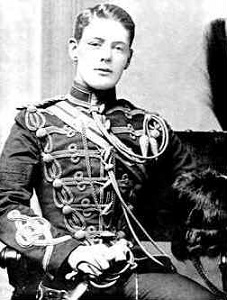
1504144-94dc0461bcf37cd9a91dd692d2309765.jpg
Winston Churchill (30 november 1874 - 24 januari 1965)
In 1895


De Canadese schrijfster Lucy Maud Montgomery werd geboren in Clifton op 30 november 1874. Zie ook alle tags voor Lucy Maud Montgomery op dit blog.

Uit: Anne Of Green Gables

“She was sitting there one afternoon in early June. The sun was coming in at the window warm and bright; the orchard on the slope below the house was in a bridal flush of pinky-white bloom, hummed over by a myriad of bees. Thomas Lynde-- a meek little man whom Avonlea people called "Rachel Lynde's husband"--was sowing his late turnip seed on the hill field beyond the barn; and Matthew Cuthbert ought to have been sowing his on the big red brook field away over by Green Gables. Mrs. Rachel knew that he ought because she had heard him tell Peter Morrison the evening before in William J. Blair's store over at Carmody that he meant to sow his turnip seed the next afternoon. Peter had asked him, of course, for Matthew Cuthbert had never been known to volunteer information about anything in his whole life.
And yet here was Matthew Cuthbert, at half-past three on the afternoon of a busy day, placidly driving over the hollow and up the hill; moreover, he wore a white collar and his best suit of clothes, which was plain proof that he was going out of Avonlea; and he had the buggy and the sorrel mare, which betokened that he was going a considerable distance. Now, where was Matthew Cuthbert going and why was he going there?” 

 
1504144-aa4cbce867bb9b22a1e943e919136a09.jpg
Lucy Maud Montgomery (30 november 1874 – 24 april 1942)


De Duitse dichter en schrijver Rudolf Lavant (eig. Richard Cramer) werd geboren op 30 november 1844 in Leipzig. Zie ook alle tags voor Rudolf Lavant op dit blog.


Heißer Wunsch


Ein schönes Alter wurde mir beschieden,
Auf das zu hoffen niemals ich gewagt;
Doch sehnt man sich nach Ruhe und nach Frieden,
Da man der Hoffnung ohnehin entsagt.

Nun würgt es mich, den Müden, an der Kehle,

Da ich so fest an meinen Traum geglaubt —
Es wurde mir das Gleichgewicht der Seele,
Der Nächte Schlummer wurde mir geraubt.
Ich sah vor mir zerfahren und zerrinnen,

Was seit den Kinderjahren ich geliebt;

Ich muss mich immer mühsam erst besinnen,
Dass so etwas wie Freude es noch gibt.
 
Und dennoch möchte ich nicht vom Leben scheiden,
Bis uns ein Retter aus der Not erstand,

Bis nach des Weltkampfs grauenhaften Leiden

Erschüttert man den Mut zum Frieden fand.
Bis über sich nach schreckerfüllten Tagen
Den schönsten Sieg Europas Rat gewann,
Bis das Geschlecht als einz’ge Frucht der Klagen

Sich auf die Menschlichkeit zurückbesann.


1504144-3be19d3d092c90acc0dffc6194a74962.jpg

Rudolf Lavant (30 november 1844 – 6 december 1915)


De Engelse dichter en schrijver John Bunyan werd geboren op 30 november 1628 in Harrowden bij Bedford. Zie ook alle tags voor John Bunyan op dit blog.


The Shepherd Boy sings in the Valley of Humiliation

HE that is down needs fear no fall,
   He that is low, no pride;
He that is humble ever shall
   Have God to be his guide.
I am content with what I have,
   Little be it or much:
And, Lord, contentment still I crave,
   Because Thou savest such.
Fullness to such a burden is
   That go on pilgrimage:
Here little, and hereafter bliss,
   Is best from age to age.


Upon The Lord's Prayer

Our Father which in heaven art,
Thy name be always hallowed;
Thy kingdom come, thy will be done;
Thy heavenly path be followed
By us on earth as 'tis with thee,
We humbly pray;
And let our bread us given be,
From day to day.
Forgive our debts as we forgive
Those that to us indebted are:
Into temptation lead us not,
But save us from the wicked snare.
The kingdom's thine, the power too,
We thee adore;
The glory also shall be thine
For evermore.


1504144-88ad6c7ba4a7a5e6fee0568024d80e3e.jpg 
John Bunyan (30 november 1628 - 31 augustus 1688)
John Bunyan in de gevangenis van door Alexander Johnston, eind 19e eeuw


De Chileense dichter en schrijver Sergio Badilla Castillo werd geboren in Valparaíso op 30 november 1947. Zie ook alle tags voor Sergio Badilla Castillo op dit blog.


THE MAN FROM CARTHAGE

The crowd with spontaneous anxiety fossilizes itself in this anchorage
I came here to hide myself like an old elephant
looking for a place to die
the city I've always loved as if it was my woman.
Although she distanced herself for more than 30 years .
The overseer makes fun of the globetrotter’s return
despicable gawky still with his European mind
with phlegmatic manners of a English gentleman
overwhelmed by secret enemies:
It is old Strindberg walking in Karlavägen under the snow
or perhaps myself at noon in the coastal promenade,
wandering around aimlessly to recover the lost tracks
on the pavement.
Mathematical confusions explain my ominous years.
I remain perplex when an imprudent lady consults about my
mother’s health and then I think I’m still transcendent
behind all the skylights and inner doors.
The exile /at heart/ was more a lack of affection than expatriation
and perhaps not what I expect from this return.
The light of a lamppost partly obstructs / my eyes’ obstinate
glance with sincere restlessness. The sea is there and escapes in the horizon of the prospect of my gaze
August Strindberg /decayed and bearded/ has returned to Stockholm
He reads a volume /at the blue tower of Drottninggatan/ about a solitary man in front of the sea in Carthage.


 1504144-822a27c223239c3f97d0f640f1b8aae8.jpg
Sergio Badilla Castillo (Valparaíso, 30 november 1947)


De Amerikaanse toneelschrijver en filmregisseur David Mamet werd geboren op 30 november 1947 in Chicago. Zie ook alle tags voor David Mamet op dit blog.

Uit: Why I Am No Longer a 'Brain-Dead Liberal'

“These cherished precepts had, over the years, become ingrained as increasingly impracticable prejudices. Why do I say impracticable? Because although I still held these beliefs, I no longer applied them in my life. How do I know? My wife informed me. We were riding along and listening to NPR. I felt my facial muscles tightening, and the words beginning to form in my mind: Shut the fuck up. "?" she prompted. And her terse, elegant summation, as always, awakened me to a deeper truth: I had been listening to NPR and reading various organs of national opinion for years, wonder and rage contending for pride of place. Further: I found I had been—rather charmingly, I thought—referring to myself for years as "a brain-dead liberal," and to NPR as "National Palestinian Radio."
This is, to me, the synthesis of this worldview with which I now found myself disenchanted: that everything is always wrong.
But in my life, a brief review revealed, everything was not always wrong, and neither was nor is always wrong in the community in which I live, or in my country. Further, it was not always wrong in previous communities in which I lived, and among the various and mobile classes of which I was at various times a part.
And, I wondered, how could I have spent decades thinking that I thought everything was always wrong at the same time that I thought I thought that people were basically good at heart?" 

 1504144-ec8a5f7ed579d7ba41de0e369b7845cc.jpg
David Mamet (Chicago, 30 november 1947)


De Amerikaanse schrijver Wil Mara werd geboren op 30 november 1966 in de buurt van Long Beach Island, New Jersey. Zie ook alle tags voor Wil Mara op dit blog.

Uit: Blown Away!

“She went up to Jewel and petted her nose. Jewel seemed to like it. "Excuse me. I couldn't help overhearing. I love mules, as you can probably tell. And this one is pretty, and sweet, too." The girl's long red hair, which was held back with a white headband, reminded me of Rudy's tail. I felt a bit ashamed when the thought crossed my mind; comparing a girl's hair to a dog's tail wasn't very nice. But Rudy's tail was beautiful -- long and silky -- and the girl's hair, which fell to her waist, was long and silky too.
"I was to meet my aunt Edith here, but she's late. Can you tell me how to find Edith Kraynanski's house?" she asked.
Dad and I looked at each other in surprise. Edith Kraynanski was a Polish lady who had lived alone in her tidy little house for as long as I could remember. She was known for the delicious Polish food that she often shared with her neighbors. We never knew she had any family. "I'll show you where she lives," I offered. "But first I should help Sharkey with the mule and the dog."
"I'll give Sharkey a hand," Dad offered. "After you take..." He paused.
"Mara," the girl said, holding out her hand. "Mara Lynn Kraynanski."
"How do you do, Mara," Dad said, shaking her hand. "I'm Doug Pitney, and this is my son, Jake. We live at the general store down the road apiece, and your aunt Edith lives near us." He turned to me. "Jake, take Mara's suitcase and show her to Miss Edith's place. I'll help with the mule until you can get back to Sharkey's." 


1504144-b9f29bb0ee29630094c2543ba54b2304.jpg
Wil Mara (Long Beach Island, 30 november 1966)

Geschreven door Romenu om 14:23 Reageer op dit bericht

In Memoriam Hermine de Graaf


In Memoriam Hermine de Graaf

De Nederlands schrijfster Hermine de Graaf is op 62-jarige leeftijd overleden. Hermine de Graaf werd geboren in Winschoten op 13 maart 1951.Zie ook alle tags voor Hermine de Graaf op dit blog.

 Uit: Een kaart, niet het gebied

“Het stadje waarin ze woonde was niet interessant voor kinderen, een groep huizen, straten erdoorheen die stervormig naar het middelpunt, een marktplein liepen. Op dat plein stonden parkeermeters bij rechthoekige vakken, er midden op verhief zich de kerk. Net een begraafplaats met grafzerken die hongerig riepen om kwartjes… dat was zo’n beetje alles wat er over het plaatje te vertellen viel”.
(...)

 Als wij winkelruiten of spiegels voorbij liepen, volgde ik zijn ogen die het niet na konden laten er blikken in te werpen, waren de ruiten vuil of de spiegels verweerd dan zag ik ogen die boos spatten….’, ‘Spiegels kunnen mensen rechtstreeks met hun beeltenis confronteren, als er niets in de wereld zou zijn dat je beeltenis kon weerkaatsen, dan zou je op grond van andere tekens een beeld van jezelf moeten vormen, meer gebaseerd op je innerlijk en gericht op wat anderen over je zeiden. Het zou voor Simon beter geweest zijn…’

 
1503822-ba90ea1d69ff141bc0884f8ad8849f12.jpg

Hermine de Graaf (13 maart 1951 – 29 november 2013)

Geschreven door Romenu om 20:30 Reageer op dit bericht

Mario Petrucci, Carlo Levi, Jean-Philippe Toussaint, C.S. Lewis, Wilhelm Hauff

De Engelse dichter en schrijver Mario Petrucci werd geboren op 29 november 1958 in Londen. Zie ook alle tags voor Mario Petrucci op dit blog.

 
THE LIBERATION OF BERLIN ZOO
(1945)

"Whenever you see a green space in Berlin be very suspicious." Pieke Biermann

A shell ladders the wire fence top to bottom -
skids to its middle in mud, a huge sizzling clove.
And out they stalk under wide noonlight –

wary at first, casting this way and this
with the yellow of hunger that winks
in phosphorescent coins.   The cats currmurr –

a liquid that beats in their throats low and thick,
almost a cello.   Movement stirs instinct -
ankles, wrists, pale exposures of neck.

Jaguar begins.   Her continents of muscle
flinch.   She unwinds her crouch into the convoy's
parallel herd - embraces from behind, full pelt,

a traffic policeman, his white-gloved salute
the flash of a doe's tail.   In the act of being
savaged his hands signal on - and for seconds

diverted trucks respond without dent or screech.
On Tiergartenstrasse, Panther is surprised
onto its haunches by Oberkommandierender Guttmann

rounding a bend.   Animal meets animal.   Panther
grins - lifts a black velvet claw.   Guttmann
raises a hand.   And for a moment they are old

co-conspirators slapping pad to palm - before
a single swipe opens a flap in Guttmann's pot
neatly through the buttonhole, spills his coils

into winter which at last he feels, threading him.
Panther swills bloodwine.   Fangs the sweet cakes
of a half-digested Limburger lunch.

Orang-utan has mounted a tram.   Points back
at children, one arm trailed in a mockery of style,
chin cocked to velocity's breeze.   Tonight she'll drag

knuckles right up the Reichstag steps, plant
a trained suck on the cheek of the porter.   His look
will pale her into intelligence.   On Potsdamer Platz

Zho crops turf.   Her eyes betray a sidewise disposition
towards predators louche in the alleys behind speakeasy
and bar.   Yet something is missing from the maw

of buildings - a tooth pulled from history to make
this square of sward, which Zho crops simply because
it grows, because it ranks so unnaturally green.

Last is Python.   Her anvil head, by degrees,
jacks towards dim hammerings of free air, grim
to push the die-cast snout into any nest of blood.

The cold slides into her.   She slops into culverts
heavy as a rope of copper - moulds to the sewers,
wraps the city in coils of intention.   Develops

a rattle for Russia, a string of diamond yellows
for Poland.   She winds up a tension.   And Berlin ticks
inwards, becomes a city breathless, a gasp of dust

where Volkswagens are specks, circling crazily.
But there is nothing to fear.   Not now.   The cats
have had their fill - only pawprints lead through snow

down to the mouths of alleys.   A white-gloved
claw is on the kerb.   The people walk round it, pull
tight their collars.   Eventually, from a windowbox

in Charlottenburg Palace, a single petal of phlox
will bear down into the shallow cup of its palm
with all the weight of a snowflake.


 1503765-e2655a975324a3810e6c2d8c60e836d8.jpg
Mario Petrucci (Londen, 29 november 1958)


De Italiaanse schrijver, schilder, arts en politicus Carlo Levi werd geboren op 29 november 1902 in Turijn. Zie ook alle tags voor Carlo Levi op dit blog.

Uit: Christus kwam niet verder dan Eboli (Vertaald door Margriet Agricola)

“Giulia was als een berg die door de wind en de regens gegeseld wordt, en waaruit een vriendelijk groen heuveltje oprijst. Giulia’s zoontje was namelijk rond en mollig en altijd even vriendelijk en goedlachs. Hij kon nog niet zo goed praten en ik begreep lang niet alles wat hij zei als hij door mijn kamers struinde en achter Barone aan zat. Nino deelde alles wat hij kreeg met Barone: zijn gedroogde vijgen, zijn stukken brood en ook het lekkers dat ik hem gaf. Hij ging dan op zijn tenen staan en hield de hand met het hapje voor Barone zo hoog mogelijk, zodat die er niet bij kon. De hond was echter veel groter dan hij, en al spelend en vrolijk springend ontfutselde hij Nino de lekkernijen, maar hij lette altijd goed op dat hij het kind geen pijn deed. Als Barone op de grond ging liggen, ging Nino over hem heen liggen en dan lagen ze samen te spelen. Na een tijdje viel Nino moe van het spelen in slaap, en dan bleef Barone als een kussentje onbeweeglijk onder hem liggen en durfde nauwelijks adem te halen uit angst hem wakker te maken. Zo brachten zij uren door op de keukenvloer.”

 1503765-51d12f4fdf39180113450f3d62bc4f81.jpg
Carlo Levi (29 november 1902 – 4 januari 1975)


De Belgische schrijver Jean-Philippe Toussaint werd op 29 november 1957 geboren in Brussel. Zie ook alle tags voor Jean-Philippe Toussaint op dit blog.

Uit: The Bathroom (Vertaald door Nancy Amphoux en Paul De Angelis)

« 5. Edmondsson finally alerted my parents.

6. Mom brought me pastries. Sitting on the bidet with the open box wedged between her legs, she arranged the pastries in a soup plate. I thought she seemed ill at ease, she'd been avoiding my eyes ever since she came in. She raised her head with a weary sadness, made as if to say something but didn't, picked out the eclair, and bit into it. You need some distraction, she told me, sports, I don't know. She wiped the corners of her mouth with her glove. There's something suspicious about the need to be diverted, I replied. When I added, almost smiling, that there was nothing I feared less than diversions, she saw there was no use arguing with me and, mechanically, held out a napoleon.

7. Twice a week I would listen to the radio broadcast of the day's play for the French soccer championship. The program lasted two hours. From a studio in Paris the announcer would orchestrate the voices of the reporters covering the matches in the different stadiums. Believing that soccer gains in the imagining, I never missed these dates. Lulled by warm human voices, I would listen to their reports with the lights off, sometimes with my eyes close. »

 1503765-adf481fc2534ee727cae190f6c4e91ee.jpg
Jean-Philippe Toussaint (Brussel, 29 november 1957)


De Ierse schrijver C.S. Lewis werd geboren op 29 november 1898 in Belfast. Zie ook alle tags voor C. S. Lewis op dit blog.

Uit:Till We Have Faces

“And now we are coming to that part of my history on which my charge against the gods chiefly rests; and therefore I must try at any cost to write what is wholly true. Yet it is hard to know perfectly what I was thinking while those huge, silent minutes went past... Anyway, my whole heart leaped to shut the door against something monstrously amiss; not to be endured. And to keep it shut. Perhaps I was fighting not to be mad myself.
But what I said when I got my breath (and I know my voice came out in a whisper) was simply, "We must go away at once. This is a terrible place."
Was I believing in her invisible palace? A Greek will laugh at the thought. But it's different in Glome. There the gods are too close to us... No door could be kept shut. Yes, that was it; not plain belief, but infinite misgiving – the whole world (Psyche with it) slipping out of my hands.
(…)

She was as certain of her palace as of the plainest thing... This valley was indeed a dreadful place; full of the divine, sacred, no place for mortals. There might be a hundred things in it that I could not see.... A sickening discord, a rasping together of two worlds, like the two bits of a broken bone.”

 1503765-7a9bbe79baf9bf98a8f5c34215df0ba7.jpg
C.S. Lewis (29 november 1898 – 22 november 1963)


De Duitse dichter en schrijver Wilhelm Hauff werd geboren inStuttgart op 29 november 1802. Zie ook alle tags voor Wilhelm Hauff op dit blog.

Bin einmal ein Narr gewesen...

Bin einmal ein Narr gewesen,
Hab geträumet, kurz doch schwer;
Wollt in schönen Augen lesen,
Daß von Lieb was drinnen wär.

Selig von der Vahr bis Bremen
Schwatzt ich zu der Holden mein;
Muß mich wahrlich heut noch schämen,
Daß ich solch ein Narr konnt sein.

Und die Glut, die in mir brannte,
Barg ich unter heitrem Scherz.
Von dem lieben Schwabenlande
Sprach ich zu dem kalten Herz.

Wollte sie zur Heimat locken,
Wollte alles ihr gestehn,
Doch sie sprach ganz kalt vom Brocken,
Dort sei alles gar zu schön.

Meine Lieb, mein Herz, mein Schwaben
Sind für dich zu eng, zu klein,
Größer willst du alles haben,
Nun so mag dein Harz dich freun!

Fahre wohl, du kaltes Wesen,
Freier blick ich um mich her,

Bin einmal ein Narr gewesen,
Hab geträumet kurz, doch schwer.


 1503765-88e37ef8e58de2b2c1b8e20f1001c65c.jpg
Wilhelm Hauff (29 november 1802 - 18 november 1827)
Monument inLichtenstein-Honau (detail)


Zie voor nog meer schrijvers van de 29e november ook mijn blog van 29 november 2011 deel 1 en eveneens deel 2 en ook deel 3.

Geschreven door Romenu om 18:51 Reageer op dit bericht

Jean Senac

De Algerijnse, Franstalige, dichter en schrijver Jean Senac werd geboren op 29 november 1926 in Beni Saf in de regio Oran in Algerije, als zoon van een onbekende vader. Senac was een Algerijn die sterk hechtte aan zijn Algerijnse nationaliteit. Zijn gedichten waren grotendeels revolutionaire liederen waarvan hij hoopte dat ze zouden bijdragen aan een wereld van schoonheid en broederschap in een Algerije dat open stond voor alle culturen. Een diepgaande zoektocht naar identiteit, zowel persoonlijk als cultureel en zijn strijd om acceptatie te vinden als homoseksueel kenmerkte zijn hele leven. Senac was een groot bewonderaar van het werk van dichters als Gerard de Nerval, Arthur Rimbaud, Antonin Artaud en Jean Genêt. Een langdurige vriendschap verbond hem met de in Algerije geboren schrijver en Nobelprijswinnaar Albert Camus. Deze duurde van 1947 tot 1958. In april 1958 verbrak hij de relatie met Camus omdat deze een Algerijnse student, genaamd Taleb, niet ondersteunde. Taleb werd uiteindelijk geëxecuteerd wegens zijn politieke activiteiten tegen de Fransen. In 1965 kwam Houari Boumédiène aan de macht in Algerije. Senac werd in toenemende mate het slachtoffer van laster en beledigingen. Ook werd hij heftig aangevallen in de pers en in 1972 werd zijn werk verboden. Vrienden drongen er bij hem op aan Algerije te verlaten, maar hij bleef, In de nacht van 29 op 30 augustus 1973 werd hij in Algiers vermoord. De moord op hem werd nooit opgelost. Een deel van zijn nalatenschap wordt bewaard in het Stadsarchief in Marseille.


Le poème

Je parle pour boucher les trous de ton étoffe
amour
je continue mon sommeil animant
Si tu ne viens pas
que sera ma strophe
un rail de plainte interminable
hache de sanglots contre mes lecteurs
Le centre du temps est un arbre atroce un arbre de sable où germent
les clous le cœur est torture véloce un mot nous broie les genoux
Si tu ne viens pas je parle et j’existe
quel feu donnera
ce bois d’orgue triste
j’écris pour appeler un temps plus beau que nous
Et pour les transparents qui souffleront l’argile.


Quelqu’un

Le bruit des pages tournées…
Non, c’est un rêve.

Entre deux portes l’air…
Non (reprends ta lecture).

Cette paille qui tremble sous le toît…
Rentre tes mains. Réchauffe-les.

Ce bruit…
C’est un réveil.
Cet autre…
Le cheval.

La nuit coule, froide, blanche,
entre l’oreille et le coeur.


 1559761-ff32bc16281a320c197abe1b48aab794.jpg
Jean Senac (29 november 1926 – 30 augustus 1973)

Geschreven door Romenu om 00:00 Reageer op dit bericht

Erwin Mortier, Alberto Moravia, Hugo Pos, Stefan Zweig, Sherko Fatah, William Blake

De Vlaamse dichter en schrijver Erwin Mortier werd geboren in Nevele op 28 november 1965. Zie ook alle tags voor Erwin Mortier op dit blog.


Vrede zij met U

Zo zal geschieden, aldus, zoals beschreven:
Glorie nadert zonder vleugelslag.

Bazuingeschal ontbreekt. De poort van het Paradijs
staat op een kier, ook ongeolied kniert zij niet.

Daarachter: Eeuwigheid.

Het heet daar immer vrijdag, alleen het licht
lijkt anders (voor wie het ziet; een permanente

dinsdag halfweg maart – bijwijlen sneeuw,
een schuinse zon zonder de moeheid
van september) .

Een engel bleek als lamsleer –
bij nader inzien staat zijn rok vol uitgewiste tekens –

keert de dividenden uit en doopt de hemel Winst

(St. James’ Park rond lunchtijd: klerken en scholieren,
koperblazers, narcissen, broodjes tonijn
en sluimerende eenden).

Toch slaat men ginds nog dweilen uit,
giet emmers loog leeg,

hangt daar lucht van bier op de puien

(wat enigszins verbaast gezien er vrede heerst
en nergens vuil).

Ook zijn daar nog journaals met wisselkoersen
en de index, en zelfs oorlog:

stormen van lieflijkheid boven de ijskap.

Wat dood is herrijst dan spoorslags uit de puinen
– slaat sterven uit plooien,

schudt hoofden,
haalt schouders op.


Ik was de schikgodin

Ik was de schikgodin van serge en katoen.
Een stiefzus van de tijd. Ik vlocht netten
voor een ziel van vlees en bloed.
Genadig zond het lot mij spoken
voor mijn rokken. Mijn dames
waren schepen. ik sneed zeilen
voor hun mast. Hoe jankte niet
de kast, alsof haar vliezen braken
toen ze gingen. Wie schept,
baart sterven. Ik knipte
navelstrengen door, ik leerde
zonder zakdoek wuiven.


1503164-42f70da1939fe21dc6592c0bfc8c74da.jpg
Erwin Mortier (Nevele, 28 november 1965)


De Italiaanse schrijver Alberto Moravia werd geboren in Rome op 28 november 1907. Zie ook alle tags voor Alberto Moravia op dit blog.

Uit: Two Friends (Vertaald door Marina Harss)

“The woman, a widow, lived alone in her tiny apart-ment. Maurizio usually went to s her in the eve-nings. During the day he kept his old habits and oftens Sergio. The woman, who was jealous and didnot completely trust Maurizio, often subtly reproachedhim about his friendship with Sergio. She was a con-ventional woman; in her eyes, poverty was the worstpossible defect a person could have. In her opinion,Maurizio, who was so much wealthier than Sergio,should associate only with his equals. Moreover, shebelieved that Sergio was not a true friend and attachedhimself to Maurizio only because of his wealth. Howcould Maurizio not see this? And on, and on. Thewoman, who was German by birth, concealed her hos-tility toward Sergio; in fact, she always affected a sick-eningly sweet manner in his presence. But she oftensaid to Maurizio: “I’m sure that if I made eyes at yourdear friend, he would not think twice about betrayingyou.” Though Maurizio was convinced that this wasnot true, and was sure of Sergio’s loyalty, he did notvigorously protest, because, deep down, these insinu-ations were convenient to him.
(…)

The woman felt that she had heard enough, andshe sent Sergio away, with the pretext that Mauriziowas so late already that he would probably not comeat all.That same evening, when Sergio was having din-ner with his family, Maurizio called. Sergio came to the phone, thinking that his friend wanted to make anappointment for the next day. But instead, Mauriziosaid: “What did you say to Emilia? What ideas haveyou gotten into your head?” He sounded irritated,but there was something else as well. Sergio thoughthe heard contempt in his voice. He answered vehe-mently: “Nothing that wasn’t true.” At the other endof the line, Maurizio’s voice pressed on, more vio-lently: “Indiscreet and voluble as usual . . . There arethings one just shouldn’t do . . . You don’t visit yourfriend’s lover in order to speak ill of him . . . You haveno manners . . . It’s completely crazy.”

 1503164-aff132ebca8b95a3440869d89a87523f.jpg
Alberto Moravia (28 november 1907 – 26 september 1990)


De Surinaamse schrijver, dichter en jurist Hugo Pos werd geboren in Paramaribo op 28 november 1913. Zie ook alle tags voor Hugo Pos op dit blog.

Uit: De dood van mijn grootvader

“Ik kom uit een muzikale familie. Twee gebroeders Pos, beiden musici, zijn na de val van Napoleon om onnaspeurbare redenen in Suriname terechtgekomen en daar blijven hangen. Ik neem aan dat ze de kost verdienden door het geven van pianoles aan dochters van rijke plantagedirecteuren en kooplieden. Phili Samson, een verdienstelijk man, die je met recht een stadsarchivaris zou kunnen noemen, heeft een oud programma opgedoken, waaruit blijkt dat de gebroeders in 1833 ter gelegenheid van het bezoek van de eerste Oranjeprins aan Suriname (hij was adelborst op een oorlogsschip) een concert hebben gegeven. Volgens een Duitse musicoloog, die het heeft geanalyseerd, stond het programma op hoog peil en was niet verschillend van wat er in die dagen in Leipzig en Dresden ten gehore werd gebracht.

Mijn vioolles begon elke donderdagmiddag om zes uur precies. Dan kwam Ping Ping vanuit de richting van zijn huis de Gravenstraat af fietsen. Mijn moeder stond op het balkon van ons huis te kijken om me te waarschuwen wanneer hij er aankwam. Dat was nodig, omdat ik het muziekboek met de études van Spohr, die ik de afgelopen week had moeten instuderen, meestal op het laatste ogenblik opende.

Ik wilde liever niet hebben dat de man erachter zou komen dat ik pas een kwartier voor hij kwam aan mijn oefeningen begon. ‘Hij komt,’ riep mijn moeder en verdween dan in de slaapkamer. Ik legde de viool haastig neer in de kist en plaatste haar op tafel bij de muziekstandaard. Zodra hij binnen was en op de gemakkelijke stoel, die voor hem klaarstond, was gaan zitten, deed ik de kist open, streek met een brok hars langs de strijkstok, plaatste het instrument onder de kin, deed alsof ik luisterde naar het trillen van de stemvork en begon te spelen.”

 1503164-3256a14baec748409ffd0a847a03023e.jpg
Hugo Pos (28 november 1913 - 11 november 2000)


De Oostenrijkse schrijver Stefan Zweig werd op 28 november 1881 in Wenen. Zie ook alle tags voor Stefan Zweig op dit blog.

Uit:Der Stern über dem Walde

“Einmal, als sich der schlanke und sehr soignierte Kellner François beim Servieren über die Schulter der schönen polnischen Gräfin Ostrowska herabneigte, geschah etwas Seltsames. Nur eine Sekunde währte es und war kein Zucken und kein Erschrecken, keine Regung und Bewegung. Und doch war es eine jener Sekunden, in die tausende Stunden und Tage voll Jubel und Qual gebannt sind, gleichwie der großen dunkelrauschenden Eichen wilde Wucht mit all ihren wiegenden Zweigen und schaukelnden Kronen in einem einzigen verflatternden Samenstäubchen geborgen ist. Nichts Äußerliches geschah in dieser Sekunde. François, der geschmeidige Kellner des großen Rivierahotels beugte sich tiefer hinab, um die Platte dem suchenden Messer der Gräfin besser zurecht zu legen. Doch sein Gesicht ruhte diesen Moment knapp über der weichgelockten duftenden Welle ihres Hauptes, und als er instinktiv das devot gesenkte Auge aufschlug, sah sein taumelnder Blick, in wie milder und weißleuchtender Linie ihr Nacken sich aus dieser dunklen Flut in das dunkelrote bauschende Kleid verlor. Wie Purpurflammen schlug es in ihm auf. Und leise klirrte das Messer an die unmerklich erzitternde Platte. Obzwar er aber in dieser Sekunde alle Folgenschwere dieser jähen Bezauberung ahnte, meisterte er gewandt seine Erregung und bediente mit der kühlen und ein wenig galanten Verve eines geschmackvollen Garçons weiter. Er reichte die Platte mit geruhigem Gange dem steten Tischgenossen der Gräfin, einem älteren, mit ruhiger Grazie begabten Aristokraten, der mit fein akzentuierter Betonung und einem kristallenen Französisch gleichgültige Dinge erzählte. Dann trat er ohne Blick und Gebärde von dem Tisch zurück.“

1503164-be4fe74f4f6dcbcc9d4c83f65b8dea5c.jpg 
Stefan Zweig (28 november 1881 – 22 februari 1942)


De Duitse schrijver Sherko Fatah werd geboren op 28 november 1964 in Oost-Berlijn. Zie ook alle tags voor Sherko Fatah op dit blog.

Uit: Ein weißes Land

„Ich sah ihm nach, als er aus dem Saal verschwand. Wir hatten kein Wort gewechselt, obwohl wir einander verstanden hätten. Ich hatte geglaubt, Dr. Stein sei mit den hiesigen Sitten vertraut. Die natürliche Autorität, mit der er sich bewegte und kurze Anweisungen auf Englisch gab, die ruhige Art, in der er seine Hände hob, um wie ein erstarrter Dirigent zu warten, bis jemand vom Personal ihm die Gummihandschuhe von den Händen zog, all das hätte mich nie zweifeln lassen an der Kompetenz des Arztes. Doch dieser Mann verstand nichts. Anstatt mich mit dem Zettel loszuschicken, auf dem Dinge notiert waren, die er brauchte,

ging er selbst in den Basar. Ich war erstaunt, als er mit den kleinen Paketen zurückkam, sich mir vorsichtig näherte und die Sachen hinhielt wie Geschenke. Doch ich sollte sie nur verwahren, bis der Doktor am frühen Abend nach Hause ging.

Das war nicht richtig. Es war beleidigend. Ich sah es ihm nach. Schließlich war dieser Mann hier ein Fremder. Er konnte nicht wissen, dass jeder Fremde, noch dazu ein so wichtiger wie er, Anspruch auf jemanden hatte, der seine Einkäufe erledigte, seine

Briefe holte oder wegbrachte oder ihn zu Leuten führte, die er besuchen wollte. Er hätte es lernen können, wenn er nur einmal gefragt hätte. Dann aber, dachte ich und wiegte den Kopf, hätte er vielleicht auch mehr erfahren, als ihm lieb war. Er hätte mich erkannt, und alles, was wir gesehen hatten, wäre in diesem Augenblick anwesend gewesen, hätte den Raum zwischen uns erfüllt.

So aber saß ich tagein, tagaus auf meinem Stuhl am Fenster, starrte in den Saal oder auf den Hof des Krankenhauses hinaus und wartete. Jedes Mal, wenn der Doktor erschien, fuhr ich zusammen und richtete mich auf, weil ich erwartete, beansprucht zu werden. Und jedesmal war es eine kleine Enttäuschung, wenn es nicht geschah.“

 1503164-71ae3cb32b538b29ddb8e381e6976cca.jpg
Sherko Fatah (Oost-Berlijn, 28 november 1964)


De Engelse schrijver, dichter en schilder William Blake werd geboren op 28 november 1757 in Londen. Zie ook alle tags voor William Blake op dit blog.

Why Was Cupid a Boy

Why was Cupid a boy,
And why a boy was he?
He should have been a girl,
For aught that I can see.
For he shoots with his bow,
And the girl shoots with her eye,
And they both are merry and glad,
And laugh when we do cry.
And to make Cupid a boy
Was the Cupid girl's mocking plan;
For a boy can't interpret the thing
Till he is become a man.
And then he's so pierc'd with cares,
And wounded with arrowy smarts,
That the whole business of his life
Is to pick out the heads of the darts.
'Twas the Greeks' love of war
Turn'd Love into a boy,
And woman into a statue of stone--
And away fled every joy.

1503164-9db0ac6590eef63066a79fdc54e26296.jpg
William Blake (28 november 1757 – 12 augustus 1827)
William Blake: The sun at his eastern gate, 1820


Zie voor nog meer schrijvers van de 28e november ook mijn blog van 28 november 2011 deel 1 en eveneens deel 2 en ook deel 3.

Geschreven door Romenu om 19:17 Reageer op dit bericht

Navid Kermani, James Agee, Nicole Brossard, Philippe Delerm, Jacques Godbout, Jos. Habets

De Duits-Iraanse schrijver en islamist Navid Kermani werd geboren op 27 november 1967 in Siegen. Zie ook alle tags voor Navid Kermani op dit blog.

Uit: Über den Zufall

„Daß ich in der Vorlesung auf Jean Paul und Hölderlin eingehen müßte, wenn ich über den Roman sprechen wollte, den ich schreibe, genau gesagt über die Poetik des Romans, den ich schreibe, stand fest, noch bevor ich mich für den Haupttitel entschied, mit dem ich nun hadere. Der Roman selbst, den ich schreibe, bildet seine Poetik im Laufe der Lektüre von Jean Paul und Hölderlin aus. Eigentlich müßte ich zuerst über Hölderlin sprechen und dann erst über Jean Paul, weil der Enkel, Sohn, Vater, Mann, Liebhaber, Freund, Romanschreiber, Berichterstatter, Orientalist, die Nummer zehn oder Navid Kermani zunächst Hölderlin liest und erst sehr viel später Jean Paul. Indes habe ich in meinem Brief an die Universität Frankfurt, ohne es zu bedenken, im Untertitel der Vorlesung zuerst Jean Paul genannt, weil sich dadurch im Satz klanglich ein Ausströmen von den beiden einsilbigen Namen Jean und Paul über das dreisilbige Hölderlin zur längsten Einheit ergab, der Roman, den ich schreibe. Niemand würde mich hindern, wenigen es auch nur auffallen, wenn ich trotz der Reihenfolge im Untertitel dennoch mit Hölderlin begänne. Was mich daran hindert, die Reihenfolge umzukehren, ist eben die Poetik von der ich in der nächsten Stunde und an den vier kommenden Dienstag, so Gott will, zu Ihnen sprechen werde.
Wenn Sie den Roman kennten, den ich schreibe, würden Sie sehen, daß ich darin stets bemüht bin, dem zu folgen, was sich von selbst ergibt, »schlafen, wenn man müde ist, essen, wenn man hungert«, wie der Meister Baso Matsu im achten Jahrhundert die Lehre des Zen-Buddhismus zusammenfaßte.“ 

 1502546-85411dc1ae4e2181f70710159db9759a.JPG
Navid Kermani (Siegen, 27 november 1967)


De Amerikaanse dichter en prozaïst James Agee werd geboren in Knoxville, Tennessee.op 27 november 1909. Zie ook alle tags voor James Agee op dit blog.

Uit: A Death in the Family

“Finally she stopped at a corner to wait for a streetcar, turning her back to him, and pretending he wasn't even there, and after trying to get her attention for a while, and not succeeding, he looked out at the audience, shrugged his shoulders, and acted as if she wasn't there. But after tapping his foot for a little, pretending he didn't care, he became interested again, and with a charming smile, tipped his derby; but she only stiffened, and tossed her head again, and everybody laughed. Then he walked back and forth behind her, looking at her and squatting a little while he walked very quietly, and everybody laughed again; then he flicked hold of the straight end of his cane and, with the crooked end, hooked up her skirt to the knee, in exactly the way that disgusted Mama, looking very eagerly at her legs, and everybody laughed loudly; but she pretended she had not noticed. Then he twirled his cane and suddenly squatted, bending the cane and hitching up his pants, and again hooked up her skirt so that you could see the panties she wore, ruffled almost like the edges of curtains, and everybody whooped with laughter, and she suddenly turned in rage and gave him a shove in the chest, and he sat down straight-legged, hard enough to hurt, and everybody whooped again; and she walked haughtily away up the street, forgetting about the streetcar, "mad as a hornet!" as his father exclaimed in delight; and there was Charlie, flat on his bottom on the sidewalk, and the way he looked, kind of sickly and disgusted, you could see that he suddenly remembered those eggs, and suddenly you remembered them too. The way his face looked, with the lip wrinkled off the teeth and the sickly little smile, it made you feel just the way those broken eggs must feel against your seat, as queer and awful as that time in the white pekay suit, when it ran down out of the pants-legs and showed all over your stockings and you had to walk home that way with people looking; and Rufus' father nearly tore his head off laughing and so did everybody else, and Rufus was sorry for Charlie, having been so recently in a similar predicament, but the contagion of laughter was too much for him, and he laughed too.”

1502546-9ce6c888e498496bb2d1333b48ce4d84.jpg 
James Agee (27 november 1909 - 16 mei 1955)


De Canadese dichteres en schrijfster Nicole Brossard werd geboren op 27 november 1943 in Montreal (Quebec). Zie ook alle tags voor Nicole Brossard op dit blog.

Uit: Soft Link 3

“It’s names of places, cities, climates that haunt. Characters. Clear mornings, a fine rain that falls all day, rare images from elsewhere and America, two natural disasters that make us close ranks amid corpses, it’s quiet or violet acts, mortars, ice cubes in glasses at cocktail hour, noise of dishes or a slight stutter that momentarily torments, a slap, kiss, it’s names of cities like Venice or Reading, Tongue and Pueblo, names of characters Fabrice Laure or Emma. Words honed over years and novels, words we spoke with halting breath laughing spitting sucking an olive, verbs we add to the pleasure of lips, to success, to sure death. It’s words like cheek or knee and still others further than we can see that leave us teetering on the edge of the abyss, to stretch like cats in morning it’s words that keep us up till dawn or make us flag down a cab on a weekday night when the city’s asleep before midnight and solitude is caught like an abscess in the jaw. It’s words spoken from memory, in envy or pride often words uttered with love while layhing our hands behind the head or pouring a glass of port.”

 1502546-c975051384df469113f61a3e7ce33ddf.jpg
Nicole Brossard (Montreal, 27 november 1943)


De Franse schrijver Philippe Delerm werd geboren op 27 november 1950 in Auvers-sur-Oise. Zie ook alle tags voor Philippe Delerm op dit blog.

Uit: Ma grand-mère avait les mêmes

“V‘là l ‘bord d ‘la nuit qui vient.
Celle-là, c’est la marque d’une seule personne.
Une belle personne. Madame Hermier était l’épicière. Elle est morte depuis quinze ans au moins. C’est elle qui régentait le quartier, avec, sous son apparence revêche, un sens de l’équité sans concession. Première rencontre un jour de panne d’électricité :
-Mon pauv’ monsieur, j’veux bien vous vendre trois bougies, mais pas la boîte. Il en faut pour tout le quartier.
Au fil des ans, elle était devenue une amie, venait à la maison partager la galette des rois, bavardait un peu, et disait tout à coup :
-J’vais renter. V’là l’bord d’la nuit qui vient.
Des mots entendus, des mots qu’elle inventait ? Peu importe. Les mots de Madame Hermier. J’aime les soirs précoces à cause d’elle, la sagesse solitaire de ses dimanches d’hiver. Rien ni personne ne l’attendait, mais il fallait rentrer avant la nuit. Peut-être une manière de ne pas vouloir nous importuner trop longtemps, de couper court à nos mais vous avez le temps. Comment la retenir, puisque le bord de la nuit venait ?
Le bord de la nuit. La nuit devient une matière, un tissu, les heures s’installent et nous mettent un manteau. Nos mouvements doivent suivre, s’envelopper dans cette amplitude du ciel, marcher à l’amble. Madame Hermier ne redoutait guère les deux cents mètres nocturnes de trottoir qui l’eussent ramenée chez elle sous les réverbères.
Mais c’était aussi une politesse de suivre le rythme du jour. Jehan Rictus appelait le crépuscule « le furtif ». Voilà. Madame Hermier voulait rentrer à la lisière du furtif.“

 1502546-b9fa3584b931ccf1ec9f3f669ccdbdda.jpg
Philippe Delerm (Auvers-sur-Oise, 27 november 1950)


De Canadese dichter, schrijver, essayist en filmmaker Jacques Godbout werd geboren op 27 november 1933 in Montreal, Quebec. Zie ook alle tags voor Jacques Godbout op dit blog en ook mijn blog van 27 november 2010.

Uit: Operation Rimbaud  (Vertaald door Patricia Claxton)

“I joined the Jesuits, I studied theology and other futilities. Ignatius of Loyola provides the rule and the uniform, and we of the rank and file provide the conceit and ambition. I am a summa cum laude graduate of one of the universities of our Intelligence Branch, in Chicago. It should be understood that, while the Company works closely with people in Intelligence (as it's called in English), the Superior General of the Jesuits, who is in Rome, should not bear the brunt of blame for the escapades of some of his soldiers. I must stress that all Jesuit fathers are not spies just because they belong to an international congregation; the problem is the Company's penchant for secrecy of the kind cultivated by secret services. You never know whether this chemistry professor at our college in Tokyo, or that Latin teacher in Timbuktu, is working for the greater glory of God or the greater power of the West. These divided loyalties do add spice to the vocation. It's a simple matter: true Jesuits wear hair shirts to conquer their perverse impulses, and false Jesuits use their black robes to hide their lusts — which makes them all the worse, Papa would have said. When I left university at the age of twenty-four, I took my mercenary vows: poverty, chastity, mendacity. They started me off with some delicate little jobs in Greece, where our archaeologists were being watched too closely by the authorities, then in Singapore, where the government was jeopardizing our imports of Cuban tobacco. I loved travelling, interminable meals taken in the company of aging fathers, theological problems raised by science, philosophical discussions, the practice of mental restriction, and the charm of mature women attracted by my cassock. An exquisite routine until this mission, which, for all my efforts, as I have said, has taken a turn as corrosive as sulphuric acid. Wealth, allurement, rebellion ...”

 1502546-2e2a0f71f4b01195234976a759ba20a5.jpg
Jacques Godbout (Montreal, 27 november 1933)


De Nederlandse schrijver, priester en archivaris Joannes Josephus (Jozef) Habets werd geboren in Oirsbeek op 27 november 1829. Zie ook alle tags voor Jos. Habets op dit blog en ook mijn blog van 27 november 2010.

Uit: Jacobus van den Borgh

“Op dit voorouderlijk kasteel werd geboren Gerard Petersen van den Borgh, een tresselijk katholiek en zeer godvruchtig man, die ter oorzake dezer verwoesting naar Amsterdam is vertrokken, alwaar hij in huwelijk trad met Anna Janssen de Boys, eene jonge dochter van eerlijke afkomst, bijzondere godsvrucht en groote mildadigheid jegens den armen en behoeftigen man. Uit dit voortreffelijk en goedaardig paar werd omstreeks het jaar 1560, te Amsterdam in hun huis en erf genaamd ‘Den Orgel’ Jacobus Van den Borgh geboren.
Na zijne voorbereidende studiën te Amsterdam voltrokken te hebben, bezocht hij op aanraden van zijn bloedverwant en stadgenoot, Dr Joannes Jansonius, president van het Pauscollegie
te Leuven, deze wijdberoemde universiteit. Hij verwierf er den graad van Licentiaat in de Godgeleerdheid en werd in 1585 priester gewijd. Na achtervolgens de ambten van pastoor te Linden, pastoor van het begijnhof te Leuven en deken van dat distrikt bekleed te hebben, verwierf hij den doctoralen hoed en werd in 1605 in de plaats van Jan Clarius, tot professor en president van het groot collegie der Theologie benoemd.
Hij werd eindelijk in 1611 in de domkerk van Mechelen tot de bisschoppelijke waardigheid verheven, en nam den 19 Mei van hetzelfde jaar, zijnen bisschoppelijken zetel van Roermond plegtig in bezit.”

 1502546-ca385a70b9bca47712ff62c6d785411c.jpg
Jos. Habets (27 november 1829 - 22 juni 1893)


Zie voor nog meer schrijvers van de 27e November ook mijn blog van 27 november 2011 deel 1 en eveneens deel 2.

Geschreven door Romenu om 18:31 Reageer op dit bericht

Eugène Ionesco, Marilynne Robinson, Luisa Valenzuela, Louis Verbeeck, William Cowper

De Frans-Roemeense schrijver Eugène Ionesco werd geboren op 26 november 1912 in Slatina, Roemenië. Zie ook alle tags voor Eugène Ionesco op dit blog.

Uit: Victims of Duty

«A petit bourgeois interior. CHOUBERT is sitting inan armchair near the table reading a newspaper. MADELEINE, his wife, is sitting at the table darningsocks. Silence
MADELEINE: [ pausing in her work ] Any news in the paper?
CHOUBERT: Nothing ever happens. A few comets and a cosmicdisturbance somewhere in the universe. Nothing to speak of.The neighbors have been fined for letting their dogs make amess on the pavement...
MADELEINE: Serve them right. It’s horrible when you step onit.
CHOUBERT: And think of the people on the ground floor,opening their windows in the morning to see that ! Enough toput them in a bad mood for the rest of the day.
MADELEINE: They’re too sensitive.
CHOUBERT: It’s the times we live in; all nerves. Nowadaysmen have lost the peace of mind they had in the past. [Silence]Oh, and here’s an official announcement.
MADELEINE: What’s it say?
CHOUBERT: It’s quite interesting. The Government’s urging allthe citizens of the big towns to cultivate detachment.Accord-ing to this, it’s our last hope of finding an answer to theeco-nomic crisis, the confusion of the spirit and the problemsof existence.
MADELEINE: We’ve tried everything else, and it hasn’t doneany good, but I don’t suppose it’s anyone’s fault.
CHOUBERT: For the time being the Government’s merelyrecom-mending this ultimate solution in a friendly manner.They can’t fool us; we know how a recommendation has a wayof turning into an order.
MADELEINE: You’re always so anxious to generalize!
CHOUBERT: We know how suggestions suddenly come to look like rules, like strict laws.» 

 
1501913-1278c655fee1f362ed4309d2e8d383a4.jpg

Eugène Ionesco (26 november 1912 – 28 maart 1994)
Scene uit ‘Victims of Duty’, Cutting Ball Theater, San Francisco, 2008


De Amerikaanse schrijfster Marilynne Robinson werd geboren in Sandpoint, Idaho op 26 november 1943. Zie ook alle tags voor Marilynne Robonson op dit blog.

Uit: Home

“And there was Ames, her father’s alter ego, in whom he had confided so long and so utterly that he was a second father to them all, not least in the fact of knowing more about them than was entirely consistent with their comfort. Sometimes they made their father promise not to tell anyone, by which he knew they meant Reverend Ames, since he was far too discreet to repeat any confidence, except in the confessional of Ames’s stark bachelor kitchen, where, they suspected, such considerations were forgotten. And what was their father not to tell? How they informed on Jack, telling him what Jack had said, what Jack had done or seemed inclined to do.
"I have to know," their father said. "For his sake." So they told on their poor scoundrel brother, who knew it, and was irritated and darkly amused, and who kept them informed or misinformed and inspired urgent suspicions among them which they felt they had to pass on, whatever their misgivings, to spare their father having to deal with the sheriff again. They were not the kind of children to carry tales. They observed a strict code against it among themselves, in fact, and they made an exception of Jack only because they were afraid to do otherwise. "Will they put him in jail?" they asked one another miserably when the mayor’s son found his hunting rifle in their barn. If they had only known, they could have returned it and spared their father surprise and humiliation. At least with a little warning he could have composed himself, persuaded himself to feel something less provocative than pure alarm.
But no, they did not put him in jail. Jack, standing beside his father, made yet another apology and agreed to sweep the steps of the city hall every morning for a week. And he did leave the house early every morning. Leaves and maple wings accumulated at city hall until the week was over and the mayor swept them up. No. His father would always intercede for him. The fact that his father was his father usually made intercession unnecessary. And that boy could apologize as fluently as any of the rest of the Boughtons could say the Apostles’ Creed.”.
 

 1501913-c382cc3a18fed348175133115f434624.jpg
Marilynne Robinson (Sandpoint, 26 november 1943)


De Argentijnse schrijfster Luisa Valenzuela werd geboren op 26 november 1938 in Buenos Aires. Zie ook alle tags voor Luisa Valenzuela op dit blog.

Uit:The Censors (Vertaald door Frank Thomas Smith)

« It's true that on the third day a letter blew a fellow-worker's hand off and disfigured his face, but the bureau chief claimed it had been mere negligence on the victim's part and Juan and the other employees could continue working as before, although with much less assurance. At quitting time another fellow worker tried to organize a strike to demand more pay for hazardous work, but Juan didn't participate and after thinking it over a while he denounced him to the authorities in order to be promoted.
Once doesn't form a habit, Juan thought as he left the chief's office, and when they transferred him to Section J where they unfold the letters with infinite care to see if they contain poisonous powder, he felt that he had ascended a step and could therefore return to his healthy habit of not getting involved in external affairs.
From J, thanks to his merits, he rose rapidly until reaching E, where the work became more interesting, for there begins the reading and analysis of the letters. In that Section he could even cherish hopes of coming across his own missive written to Mariana which, judging by the time elapsed, should have reached this level after a very long procession through the other departments.»
 

 1501913-b69a6bb0986f914307b3c1c1bed3c336.jpg
Luisa Valenzuela (Buenos Aires, 26 november 1938)


De Vlaamse dichter en schrijver Louis Verbeeck werd geboren in Tessenderlo op 26 november 1932. Zie ook alle tags voor Louis Verbeeck op dit blog.


GRAFSCHRIFT VAN MIJN VOETEN

Wanneer ik dood en ver van hier
Zal liggen onder groene grassen
Zet dan geen bloemen op mijn zerk
Stouw geen fanfare naar de kerk
Maar zorg dan dat mijn schoenen passen.

Want ver zal ik nog moeten gaan
Om in het paradijs te mogen…
Lees dus geen rede op mijn graf
Al schrijft ge ze waarschijnlijk af,
Maar denk eens aan mijn eksterogen.


1501913-4f7fec706472bbe21e6086f8e1af0af5.JPG 
Louis Verbeeck (Tessenderlo, 26 november 1932)


De Engelse dichter William Cowper werd geboren op 26 november 1731 in Berkhamstead, Herford. Zie ook alle tags voor William Cowper op dit blog.

Happy Solitude--Unhappy Men

My heart is easy, and my burden light;
I smile, though sad, when thou art in my sight:
The more my woes in secret I deplore,
I taste thy goodness, and I love thee more.
There, while a solemn stillness reigns around,
Faith, love, and hope within my soul abound;
And, while the world suppose me lost in care,
The joys of angels, unperceived, I share.
Thy creatures wrong thee, O thou sovereign good!
Thou art not loved, because not understood;
This grieves me most, that vain pursuits beguile
Ungrateful men, regardless of thy smile.
Frail beauty and false honour are adored;
While Thee they scorn, and trifle with thy Word;
Pass, unconcerned, a Saviour's sorrows by;
And hunt their ruin with a zeal to die.


1501913-80b089659ed94e6eed1983506e844301.jpg

William Cowper (26 november 1731 – 25 april 1800)
Dedail uit glas-in-loodraam, St. Nicholas' Church, Dereham


Zie voor nog meer schrijvers van de 26e november ook mijn blog van 26 november 2011.

Geschreven door Romenu om 18:12 1 reactie Reageer op dit bericht

Maarten ’t Hart, Connie Palmen, Alexis Wright, Arturo Pérez-Reverte, Ba Jin, Augusta de Wit

De Nederlandse schrijver Maarten 't Hart werd geboren op 25 november 1944 in Maassluis. Zie ook alle tags voor Maarten ’t Hart op dit blog.

Uit: De som van misverstanden: Theodor Fontane

“De meest bijzondere eigenschap van Fontane's romans is stellig dat zij van de hand zijn van een schrijver die de zestig al gepasseerd was. Weliswaar had Fontane, toen zijn eerste roman Vor dem Sturm in 1878 (Fontane was toen achtenvijftig jaar) uitkwam, al ruim tien jaar aan dit boek gewerkt en men zou dus kunnen zeggen dat Fontane al voor zijn vijftigste levensjaar als romanschrijver is begonnen. Maar Vor dem Sturm is niet karakteristiek voor Fontane; het heeft, afgezien van de laatste honderdvijftig bladzijden van de in totaal zevenhonderd bladzijden, niet die eigenaardige, jeugdige frisheid die zo kenmerkend is voor het latere werk, het is een te lange, saaie roman van een oud schrijver, een werk waarmee men een schrijversloopbaan afsluit, niet een debuut. Het lijkt het meest op Der Stechlin, Fontane's laatste werk. Hubert Ohl heeft aangetoond dat in beide romans een vergelijkbaar soort symboliek te vinden is en hij klopt die symboliek op tot iets heel bijzonders maar in feite zijn het twee niet geheel geslaagde pogingen om via een symbool de geschiedenis en het leven van een individu te vervlechten.
De echte Fontane is de Fontane van de in 1882 verschenen novellen L'Adultera en Schach von Wuthenow. Om het eigenaardige verschijnsel te verklaren van een schrijver die na zijn zestigste begint en op zijn vijfenzeventigste zijn meesterwerk schrijft hebben zowel Thomas Mann als Georg Lukács het woord ‘rijping’ gebruikt, Thomas Mann in de zin van persoonlijke rijping, Georg Lukács in de zin van maatschappelijke rijping. Mij kunnen deze twee varianten van de rijpingstheorie niet bekoren; als iemand met het schrijven van romans begint na zijn vijfendertigste zou men kunnen spreken van rijping, van een late bloei juist zoals men in de muziek in het geval van Bruckner van een late bloei spreekt. Maar als iemand begint na zijn zestigste moeten er andere oorzaken zijn. “

 1501297-382d6c2934301ddcc2da1a492d043768.jpg
Maarten ’t Hart (Maassluis, 25 november 1944)


De Nederlandse schrijfster Connie Palmen werd op 25 november 1955 geboren in Sint Odiliënberg. Zie ook alle tags voor Connie Palmen op dit blog.

Uit: De vriendschap

“Iedereen die voor abnormaal wil doorgaan en er hard aan werkt om excentriek en uitzonderlijk te zijn, heeft een grotere voorspelbaarheid dan wie normaal, gewoon, alledaags en onopvallend heet te zijn. Zodra bijzonderheid gewild is, is het meest bijzondere er vanaf. Echt uitzonderlijke mensen weten zelden van zichzelf dat ze uitzonderlijk zijn en als ze er door de jaren heen achter beginnen te komen dat iets hen van anderen onderscheidt, kost het ze meestal hun verdere leven om zich er bij neer te leggen.”
(…)

“Ik denk dat wij onszelf verminken, omdat we ons onbruikbaar willen maken voor een verlangen, voor een ideaal, voor een verhaal. We ontzeggen ons het recht, en ontnemen ons bij voorbaat de kans, op een beloofd geluk, waarvan wij denken dat het niet voor ons is weggelegd. Door ons ongeschikt te maken, helpen wij het lot een handje en nemen het zelf op ons. We maken ons liever eigenhandig onaantrekkelijk, dan dat we dat oordeel over onze aantrekkingskracht, waarde en betekenis aan anderen overlaten. We worden liever dik, dronken, ontrouw en ongelukkig, dan dat we het angstaanjagend grotere aanpakken, een ideaal waarmaken dat we koesteren en daarvoor erkenning zoeken bij anderen.”

 1501297-546154f7de472daa7b9ab92061826274.jpg
Connie Palmen (Sint Odiliënberg, 25 november 1955)


De Spaanse schrijver Arturo Pérez-Reverte werd geboren op 25 november 1951 in Cartagena. Zie ook alle tags voor Arturo Pérez-Reverte op dit blog.

Uit: The Club Dumas (Vertaald door Sonia Soto)

“My name is Boris Balkan and I once translated The Charterhouse of Parma. Apart from that, I've edited a few books on the nineteenth-century popular novel, my reviews and articles appear in supplements and journals throughout Europe, and I organize summer-school courses on contemporary writers. Nothing spectacular, I'm afraid. Particularly these days, when suicide disguises itself as homicide, novels are written by Roger Ackroyd's doctor, and far too many people insist on publishing two hundred pages on the fascinating emotions they experience when they look in the mirror.
But let's stick to the story.
I first met Lucas Corso when he came to see me; he was carrying "The Anjou Wine" under his arm. Corso was a mercenary of the book world, hunting down books for other people. That meant talking fast and getting his hands dirty. He needed good reflexes, patience, and a lot of luck-and a prodigious memory to recall the exact dusty corner of an old man's shop where a book now worth a fortune lay forgotten. His clientele was small and select: a couple of dozen book dealers in Milan, Paris, London, Barcelona, and Lausanne, the kind that sell through catalogues, make only safe investments, and never handle more than fifty or so titles at any one time. High-class dealers in early printed books, for whom thousands of dollars depend on whether something is parchment or vellum or three centimeters wider in the margin. Jackals on the scent of the Gutenberg Bible, antique-fair sharks, auction-room leeches, they would sell their grandmothers for a firstedition. But they receive their clients in rooms with leather sofas, views of the Duomo or Lake Constance, and they never get their hands-or their consciences-dirty. That's what men like Corso are for.
He took his canvas bag off his shoulder and put it on the floor by his scuffed oxfords. He stared at the framed portrait of Rafael Sabatini that stands on my desk next to the fountain pen I use for correcting articles and proofs.”

 1501297-7320fb0c866ef5c7fd774fe13c491256.jpg
Arturo Pérez-Reverte (Cartagena, 25 november 1951)


De Australische (Aboriginal) schrijfster Alexis Wright werd geboren op 25 November 1950 in de Gulf of Carpentaria. Zie ook alle tags voor Alexis Wright op dit blog.

Uit : Carpentaria

“Normal Phantom was an old tribal man, who lived all of his life in the dense Pricklebush scrub on the edge of town. He lived amidst thickets of closely growing slender plants with barely anything for leaves, which never gave an ant an inch of shelter under a thousand thorny branches. This foreign infestation on the edge of Desperance grew out of an era long before anyone in the Phantom family could remember. They had lived in a human dumping ground next to the town tip since the day Normal Phantom was born. All choked up, living piled up together in trash humpies made of tin, cloth, and plastic too, salvaged from the rubbish dump. The descendants of the pioneer families, who claimed ownership of the town, said the Aboriginal was really not part of the town at all. Sure, they worked the dunny cart in the old days, carted the rubbish, and swept the street. Furthermore, they said, the Aboriginal was dumped here by the pastoralists, because they refused to pay the blackfella equal wages, even when it came in. Right on the edge of somebody else's town, didn't they? Dumped the lot of them without any sign of lock, stock, or barrel.
No, the Pricklebush was from the time before the motor car, when goods and chattels came up by camel train until Abdul and Abdullah, the old Afghan brothers, disappeared along the track called the "lifeline," connecting north to south. After much time had passed the jokes came about Afghans being shifty dogs, dodgy dogs, murdering dogs, and unreliable. When the cupboards turned bare, the town talk finally turned to the realisation that very likely the camel men were never coming back -- then everyone in town assumed they had died.”

 1501297-806ef8a266b94bc99c30ec3f7dd9397e.jpg
Alexis Wright (Gulf of Carpentaria, 25 November 1950)


De Chinese schrijver Ba Jin werd op 25 november 1904 geboren in Chengdu. Zie ook alle tags voor Ba Jin op dit blog.

Uit: When the Snow Melted (Vertaald door Tang Sheng)

“Separation was of course one way to solve the problem. But things must be pretty serious if such a drastic solution was contemplated. I was worried. To tell the truth I would hate to see this young couple separate, though I didn't like to see them quarrel all the time either.
"Separate?" I knitted my brows and then smiled to ease the tension. "Come, don't get excited. Squabbles between husband and wife are really nothing unusual. If only both sides will compromise a little it's quite easy to settle them amicably. To my mind, you two ought to make an ideal couple." "I used to think so too," she said wistfully. Then she sighed softly and a slight pause ensued before she continued, "But it hasn't worked out that way. Just why, I don"t know. At any rate there is a barrier between us."
"Barrier? What barrier?" I asked, as if the idea were quite incongruous.
"I don't know either," she replied in despair. "It's something invisible and intangible, yet I feel it's there . . ." She stopped and bit her lips. A look of grief, seemingly faint but in fact profound, clouded her pretty girlish face. And there was anguish in the depth of her eyes. When I saw the expression in them my own heart sank.
"Zisheng, you must find a way out for me!" she begged. "I haven't the courage to go on living with him."
I found myself in a most awkward position. I sympathized with her and was eager to help her - but her husband, Bohe, was my friend. Besides, I could see no good reason why they should split up. I was not ingenious enough to suggest a solution.
"But tell me, do you still love him?" was all I could think of asking after some thought. I only hoped that they would be reconciled.
"Yes, I do," she answered positively after only a little pause. Her face glowed and I knew she was telling the truth. I was delighted, thinking that now the problem would not be difficult to solve.“

1501297-68025d53b322892ab4a8d453921354f1.jpg
Ba Jin (25 november 1904 – 17 oktober 2005)
Standbeeld in Shangaï.


De Nederlandse schrijfster Augusta de Wit werd geboren in Sibolga (Sumatra) op 25 november 1864. Zie ook alle tags voor Augusta de Wit op dit blog.

Uit:Orpheus in de dessa

 “De dag was gloeiend geweest; nu met zonsondergang begon het af te koelen.
Een nauw bemerkbare windtocht ging in donkerten en bleekheden door het geboomte en deed den daglang opgezamelden bloesemgeur uit neigende kelken uitvloeien op de lucht; gedragen daalden de doorschijnendwitte bloemblaadjes der njamploengs neder in het stof en het vaal-oranje geschroeide gras van den berm.
In de modderige rivier was het dessa-volk aan het baden: als pasgegoten brons glansden de bruine gestalten in den schuinschen rooden zonnegloed. Een naakte jongen, dien twee andere nazetten, kwam den weg afgerend en vloog met een sprong van de oeverhoogte af in het water, dat schitterend rond hem opspatte; een eind verder dook hij weer op en keek om, lachend, met oogen die tintelden onder het in het gezicht druipende haar. - Aan den kant stond een jonge vrouw, slank in haar rooden sarong, die, donker-gedrenkt, haar in waterige plooien van boezem tot knie omvloeide. Het hoofd een weinig neigend, hief zij beide armen op om haar zwarte haarwrong wat hooger te schikken. Haar schouders en haar gebogen nek glansden goudachtig boven het purperen gewaad.”

 1501297-7e1853467c6fb652131146ac10741f7d.jpg
Augusta de Wit (25 november 1864 - 9 februari 1939)
Standdbeeld van Orpheus naar de roman van Augusta de Wit in het Zuiderpark in Den Haag,
Gemaakt door de beeldhouwster Lidi van Mourik Broekman


Zie voor nog meer schrijvers van de 25e november ook mijn vorige blog van vandaag.

Geschreven door Romenu om 19:02 Reageer op dit bericht

In Memoriam Gerrit Krol


In Memoriam Gerrit Krol

De Nederlandse dichter en schrijver Gerrit Krol is zondag in zijn woonplaats Groningen op 79-jarige leeftijd overleden. Zie ook mijn blog van 1 augustus 2010 en eveneens alle tags voor Gerrit Krol op dit blog.


Uit het tekenboek van Rauh
 
Voorop de vleermuis die in vallende staat
het verstand doorsteekt met een speld
en de bedoelingen van ons hart
met een potlood uit elkaar legt.
Dan Jonas, die met schubjes op zijn rug
- etiketten waar hij is geweest -
zoekt langs het water naar een brug
die hem verbinden moet met Kanaän
dat hij niet mag betreden.
Er staat dat hij op het einde nog
in laatste tweespraak met het Kruis
zijn ziel beveelt in handen van de Geest -
het kruis dat diep beneden hem
rechtop gezet is in een kluitje klei,
het kruis, in dierbare verhoudingen
gesneden, maar in een kluit. Een traan
zakt van zijn oog af op het hout
als hij zijn offer brengt: een kleine bips en koud.
Hij schreit en houdt in vlinderslag
zich aan de takken vast.
 
Het blinde echtpaar waarvan de man
in het vuur zijn handen houdt
dat knettert en als radium straalt,
terwijl zijn vrouw een beeltenis,
een foto rondgeknipt als medaillon,
van liefde heeft in haar oog gespeld -
zij wachten zij aan zij,
totdat Hij, die ons allen bijhoudt,
naderkomt met geheven handen
en helpt ze pijnloos uit hun vel.
 
De dieren zoeken in volle draf het licht,
het schijnsel dat de mensen dragen:
er zit een oude man gehurkt
met op zijn hoofd een druppel vet
waarin een kaarsje is gezet.
Hij kijkt verbeten over 't veld
of het in deze omstandigheden geldt.
De hond schuift in het rond; de mug
die trillend heeft verdeeld de lucht
gaat onder, en nog kleinere dieren.
 
Nauwkeurig heb ik de plaat bekeken
waarop, volgens de tekst door anderen geschreven
en doorgestreept maar geschreven dus toch,
de monsters zich een einde bereiden,
zich in het leven snijden op de elleboog -
zo een die tussen de benen met een zaag omhoog
als brood zijn eigen zak te snijden staat.
 
Tevergeefs kruipt op de einder toe
een vrouw van wie de geitjes drinken.
Waarom, als haar die functie is gegeven,
waarom dan niet en wél het stukje deeg
dat eeuwen hangt reeds eeuwen
boven een bek die niet meer leeft?
 
En die grote troela dan
die, boeketten bloemen wringend,
denkt dat nu alles voorbij is?
 
De Christus hangt in donkere nacht
in stukken aan het kruis; zijn macht
is afgevallen als een kleed,
maar zolang Hij onder een theemuts
bijeenhoudt wat ons allen aangaat,
te Zijner tijd onthuld,
zolang zwemt er een vis
voor het wachthuis heen en weer.
 
Aan het einde van zijn leven,
innig vergroeid met boom en struik,
zo deelt de tekenaar ons mede,
heeft de oude man de kracht,
in afwachting van de dood,
nog een vogel op zijn hoofd te laten nestelen.
 
Zo ijlt dan door de ruimte een holle scherf
voort naar de snelheid van het licht,
het duizendjarig rijk der doden,
waar vrede is en dunne bomen
op een middag als het lente is,
het uur waarop bezoekers komen. 

 
 1500996-f3a6e44cd57a49ce5b34145e6459cc63.jpg
Gerrit Krol (1 augustus 1934 – 24 november 2013)

Geschreven door Romenu om 10:31 Reageer op dit bericht

Meer van Romenu

↑ Terug naar de berichten