Naar de inhoud

Romenu

Over literatuur, gedichten, kunst en cultuur
seniorennet.beseniorennet.be

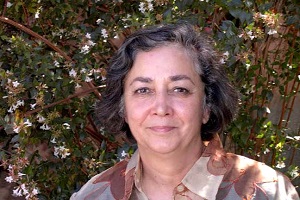
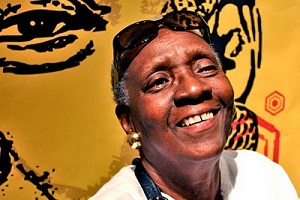
Ljoedmila Oelitskaja

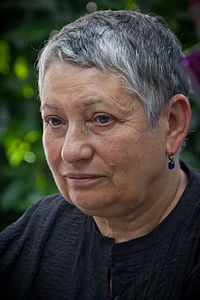
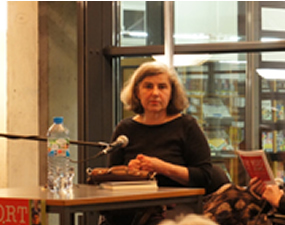
De Russische schrijfster Ljoedmila Jevgenjevna Oelitskaja werd geboren in Davlenkanovo, Basjkirostan, op 23 februari 1943. Oelitskaja groeide op in Moskou, waar ze biologie studeerde aan de Universiteit van Moskou. Daarna werkte ze aan het Academie-instituut in Moskou als wetenschapster op het terrein van de genetica en biochemie. Oelitskaja begon haar literaire carrière in de jaren tachtig als schrijfster voor het ‘Joods Theater’ en als scenarioschrijfster voor de film. Haar eerste novelle, Sonetjska (1992), was meteen een groot succes en de start van een snelle literaire carrière, ook internationaal. Haar bekendste roman is “Reis naar de zevende hemel” uit 2002: de geschiedenis van de Russische artsenfamilie Koekotski, een verhaal waarin het begrip vrijheid op alle mogelijke manieren centraal staat. Oelitskaja’s boeken werden in vele landen vertaald, ook in het Nederlands. Haar werk werd ook veelvuldig onderscheiden, onder meer met de Russische Bookerprijs (2002), de Orde van de Academische Palmen (2003), de Orde van Kunst en Letteren (2004) en de Man Booker International Prize (2009).

Uit:The Funeral Party (Vertaald door Cathy Porter)

“Something had happened to Alik's vision. Things disappeared and sharpened simultaneously. Densities altered and expanded. The faces of his friends became liquid, and objects flowing. But this flowing was pleasant rather than unpleasant, and revealed the connections between them in a new way. The corner of the room was cut off by an old ski, from which the dingy white walls ran off cheerfully in all directions. These undulations were halted by a female figure sitting cross-legged on the floor, touching the wall with the back of her head. This point, where her head touched the wall, was the most stable part of the picture.
Someone had raised the blinds and the light fell on the dark liquids in the bottles, shining green and gold on the window-sill. The liquids stood at different levels, and this xylophone of bottles suddenly recalled a youthful dream. In those years he had painted many still lifes with bottles. Thousands of bottles. Maybe more than he had drunk. No, he had drunk more. He smiled and closed his eyes.
But the bottles didn't go away: they stood there palely, like waving columns on the other side of his eyelids. He realized that this was important. The realization crept in slowly and hugely, like a loose cloud. Bottles, bottle rhythms. Music sounded. Scriabin's light-music. This had turned out on closer study to be thin, mechanical rubbish. He had gone on to learn about optics and acoustics, but these hadn't been the key to anything either. His still lifes weren't bad, just utterly irrelevant: he hadn't discovered the metaphysical still lifes of Morandi yet.
All those paintings had been blown away in the wind; none were left now apart from a few in Petersburg maybe, stored by his friends there, or by the Kazantsevs in Moscow. God, how they used to drink in those days. They had collected the bottles, taking back the ordinary empties, but the foreign ones and the old ones of coloured glass they kept.
The bottles standing on the tin flap which edged the roof of the Kazantsevs' house in Moscow were Czech beer-bottles of dark glass. No one could remember who had put them up there. In the Kazantsevs' kitchen was a low door leading up to the attic, and from the attic a window opened on to the roof. Irina once darted out of this window and ran across the roof. There was nothing unusual about this, they were forever running on to the roof to dance and sunbathe.”


 1638460-f7440ecb85ab45ebd56d1474d6e74a07.jpg
Ljoedmila Oelitskaja (Davlenkanovo, 23 februari 1943)

Geschreven door Romenu om 00:00 Reageer op dit bericht
Reageer op dit bericht

Reageer op dit bericht

Een titel of je eigen website toevoegen

De blogger leest alles eerst na: je tekst verschijnt zodra die goedgekeurd is.

In Memoriam Leo Vroman

In Memoriam Leo Vroman

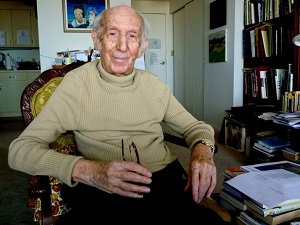
De Nederlandse dichter en schrijver Leo Vroman is vanochtend op 98-jarige leeftijd overleden in zijn woonplaats Fort Worth in de Verenigde Staten. Leo Vroman werd op 10 april 1915 in Gouda geboren. Zie ook alle tags voor Leo Vroman op dit blog.


Uitstel van het einde

Het advies in dit stakkergebouw
is: Blijf zo lang mogelijk bezig,
maar ik neem dat niet zo nauw
en ben dus flakkerend aanwezig.

Zo voel ik mij soms naar buiten zweven
als ik naar ons uitzicht kijk,
en ben, Bezig, dan weer even
in twee kamers tegelijk.

Dan weer, graag bij bliksemlicht,
moet ik nodig een gedicht
en ben een vleugelsinterklaas,
een onweerbare huispoweet
van fladderend meesterwerk, helaas
niet wetend hoe het onweer heet.

Duikelend schaam ik mij dan weer
voor mijn vlegelachtigheid
en de draad noodlottig kwijt
schrijf ik mij neer.


Steen

Drie stenen zitten op een steen.
Acht stenen liggen er om heen.
Daar onder liggen er nog negen.
Andere daar naast en tegen.
Een steen steekt half uit het zand naar buiten
om zich nog eventjes te uiten.
Leert, kinderen, dit uit zijnen mond:
houdt steeds een vuist boven de grond.


Sluiting

Als ik morgen niet opsta
moet je niet schrikken:
per slot, elke opera
en alle toneelstukken
hebben hun ogenblikken,
het vallen van gordijnen
of andere ongelukken.
Dit is dan het mijne.

Sluit dus mijn gezicht,
doe die mond en twee ogen
maar netjes dicht
en ik ben voltooid.

Laat zo maar gaan,
en die oren mogen
nog openstaan,
want je weet nooit


 1554265-c0cb09556c42e204e3b8e0c2135acedf.jpg
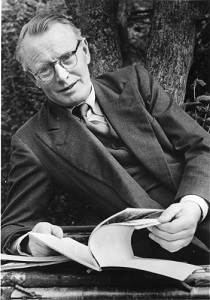
Leo Vroman (10 april 1915 - 22 februari 2014)

Geschreven door Romenu om 17:58 Reageer op dit bericht

Arnon Grunberg, Paul van Ostaijen, Hugo Ball, Danilo Kiš, Sean O'Faolain, Jane Bowles, Ishmael Reed

De Nederlandse schrijver Arnon Grunberg werd geboren in Amsterdam op 22 februari 1971. Zie ook alle tags voor Arnon Grunberg op dit blog.

Uit: Huid en haar

'Waar wacht je op?' vraagt Lea.
Ze draagt een zwarte wollen jas met een bontkraag, tweedehands gekocht. Ze kan zich zulke jassen niet nieuw permitteren. Lea reist lichtbepakt. Een rugzak, meer heeft ze niet nodig voor vijf dagen. Met een föhn krijg je de meeste kreukels uit je kleren.
Op haar knie ligt een hand. Maar een hand op een knie is nog geen intimiteit.
'Waarvan bent u precies een kenner?' had een professor haar die avond tijdens een staande receptie gevraagd terwijl hij schijnbaar terloops haar bovenarm aanraakte. Ze had het onprettig gevonden. De vraag en de aanraking.
Een uur daarvoor had ze haar jurk in de badkamer opgehangen aan de rail waaraan ook het douchegordijn was bevestigd en hem met de föhn behandeld. De kreukels gingen er minder goed uit dan ze had gehoopt. Morgenochtend gaat ze naar huis, dan kan ze haar jurk laten stomen.
Kenner. Een belachelijk woord. Je kunt het eigenlijk alleen ontkennend gebruiken, als in: 'Ik ben geen kenner van porseleinwerk.' Ze is een kenner van Rudolf Höss, dat moest ze toegeven.
'Höss,' had ze geantwoord. Vervolgens had ze zich geëxcuseerd met de woorden: 'Even kijken of hier nog meer mensen zijn die ik ken.'
In de verte, ingeklemd tussen een pilaar en een gesticule- rende man met een baard, had ze Roland Oberstein zien staan. Ze had de behoefte gevoeld om op hem af te stappen en zonder verdere plichtplegingen tegen hem te zeggen: 'Red mij.'
Pathetisch natuurlijk. Maar is hoop op redding niet per definitie pathetisch? Hebben we leren leven zonder hoop? Als we al redding zoeken, mogen we dan alleen diep in onszelf graven?
Ze weigert dit te aanvaarden.
De professor was achter haar aangelopen. 'Höss,' had hij gezegd, 'de commandant van Auschwitz. Boeiend. Had hij niet een verhouding met een gevangene in het kamp?”


 1554150-c742fdb58052eb01f91ff895d5a51092.jpg
Arnon Grunberg (Amsterdam, 22 februari 1971)


De Vlaamse dichter en schrijver Paul van Ostaijen werd geboren in Antwerpen op 22 februari 1896. Zie ook alle tags voor Paul van Ostaijen op dit blog.


Het dorp

Een vleermuis aan de nacht
hangt niet uw adem aan een vreemde adem
zo gij dit beseft het dorp
en de mensen nacht'lik huis aan huis
één licht - wellicht bij de pastoor -
en langs uw weg een late koe
In de wig van weg en stroom
is van de leegte zo het dorp
alsof 't een boot was die maar voor korte tijd
op anker ligt

Om het staketsel kletst
het donkere water
gemeten
en vreemder dan een moorden zonder gil

Gij weet dat er geen gelaat is
waar gij binnen kunt
als in uw huis

En gij stoot overal der dingen oppervlak
een spiegel van uw eenzaamheid
een teller van uw korte reis


De vaas

Snijd van de struik de seringen
stel de bloemen in een aarden vaas
 
Zoals de aarden vaas draagt
glad juweel van geworden kennis
van zijn kleien oorsprong de herinnering
sluit gij met het laatste doen van uw handen uw verlangen
in de vereniging van de bloem met de aarden vaas


Spleen pour rire
Sophie-Fritz Stuckenberg zu eigen

Het meisje dat te Pampelune geboren tans te Honoloeloe woont
en in een rode lakkooi gevangen houdt
een kobaltblauwe papegaai
- zij schilderde hem met Ripolinkoeleuren
zoals gezeid de veren blauw
de snavel en de poten geel -
het meisje van Pampelune te Honoloeloe
dat om haar hoge hals heeft een krans van purperen anemonen
op haar opalen borst kleine barokkoralen
en om haar dijen niets
(Vogelveren dorsten haar dijen niet te dragen
zo zeer zijn dun haar dunne dijen)
dit pampeluner meisje dat te Honoloeloe woont
ken ik niet

Priez toujours pour le pauvre Gaspard
Il n'est pas encore mort ce soir


 1554150-22218565c795acde85a05dc55aa1b09f.jpg
Paul van Ostaijen (22 februari 1896 – 18 maart 1928)


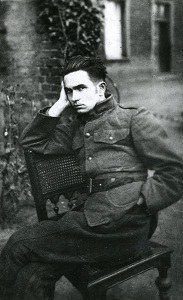
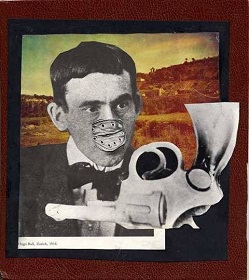
De Duitse dichter en schrijver Hugo Ball werd geboren op 22 februari 1886 in Pirmasens. Zie ook alle tags voor Hugo Ball op dit blog.


Legende

Vor einem hellen Marienbild
Spielte ein Bettler die Geige.
Die Vögel sangen im Herbstgefild,
Der Tag ging schon zur Neige.

Er spielte der Reben süße Last,
Die hingen ihm bis zur Stirne,
Er spielte den reifen Apfelast
Und der Berge schneeige Firne.

Er spielte der blauen Seen Licht,
Die leuchteten ihm aus den Augen.
Er sang zu der Geige und immer noch nicht
Wollte das Lied ihm taugen.

Da sang er den Mond und die Sterne dazu
Die konnte er alle verschenken
Und weinte des Waldes einsame Ruh,
Die tät seine Geige tränken.

Er spielte und sang und merkte kaum
Wie Maria sich leise bewegte
Und ihm beim Spiel ihrer Hände Schaum
Auf die wehenden Locken legte.

Er drehte beim Spiele sich hin und her,
Das tönende Holz unterm Kinne.
Er wollte, daß seine süße Mär
In alle vier Winde zerrinne.

Da stieg die Madonna vom Sockel herab
Und folgte ihm auf seine Wege.
Die gingen bergauf und gingen bergab
Durch Gestrüpp und Dornengehege.

Er spielte noch, als schon der Hahn gekräht
Und manche Saite zersprungen.
Auf Dreien spielt er die Trinität
Auf zweien die Engelszungen.

Zuletzt war es nur noch das heimliche Lied
Vom eingeborenen Sohne.
Maria deckte den Mantel auf ihn
Darin schläft er zum ewigen Lohne.


 1554150-d27359eb000a9aa335d8251487a6e3cc.jpg
Hugo Ball (22 februari 1886 – 14 september 1927)
Collage door Erik Hurtado Saura


De Servische schrijver Danilo Kiš werd geboren op 22 febrari 1935 in Subotica. Zie ook alle tags voor Danilo Kiš op dit blog.

Uit: Hourglass (Vertaald door Ralph Manheim)

“The flickering shadows dissolve the outlines of things and break up the surfaces of the cube, the walls and ceiling move to and fro to the rhythm of the jagged flame, which by turns flares up and dies down as though about to go out. The yellow clay at the bottom of the cube rises like the floorboards of a sinking boat, then falls back into the darkness, as though flooded with muddy water. The whole room trembles, expands, contracts, moves a few centimeters to the right or left, up or down, all the while keeping its cubical shape. Horizontals and verticals intersect at several points, all in vague confusion, but governed by some higher law, maintaining an equilibrium that prevents the walls from collapsing and the ceiling from tilting or falling. This equilibrium is due no doubt to the regular movement of the crossbeams, for they, too, seem to glide from right to left, up and down, along with their shadows, without friction or effort, as lightly as over water. The waves of the night dash against the sides of the roomboat. Gusts of wind blow soft flakes and sharp icy crystals by turns against the windowpane. The square, embrasure-like window is stuffed with a disemboweled pillow; bits of cloth stick out and dangle like amorphous plants or creepers. It is hard to say whether they are trembling under the impact of the wind blowing through the cracks, or whether it is only their shadow that sways to the rhythm of the jagged flame.”


 1554150-83a8f01345fb0a7cd8dba633fa935d7d.jpg
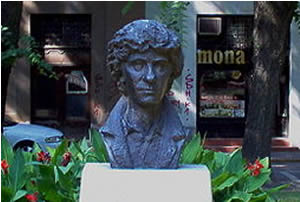
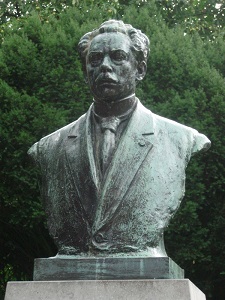
Danilo Kiš (22 februari 1935 – 15 oktober 1989)
Borstbeeld in Subotica


De Ierse schrijver Sean O'Faolain werd geboren op 22 februari 1900 in Cork. Zie ook alle tags voor Sean O'Faolain op dit blog.

Uit: An Irish Journey

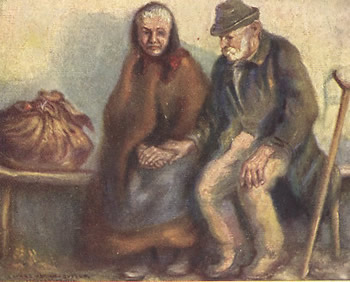
"And yet it is a lovely, lovely place. Its slums, that have a hot verminous smell, indescribable and unique -- walk down Millard Street of a hot summer day and you get the pure bouquet of it -- come back to the memory before everything else with a geyser-gush of nostalgia. Cork's poor are its kings. In these ambition has not sharpened the claw, and passion lives at blood-heat. The shawled women and girls (are they passing away into what they used to call, derisively, "hatty wans"?) are magnificent. Observe the coal-quay kids - often dressed in a costume, especially a Sunday costume, that I have seen nowhere else - purple stockings, fawny boots, halfway-up the calf, sometimes a bright velvet cap, golden tasselled, reflecting the half-barbaric love of colour that one used to see in the brilliance of the petticoats and shawls, and in the many half-inch-thick finger-rings and dangling earrings of the mothers roaring over the fish-crates. Note the men, in my youth, straightened by bouts in the North Cork Militia or the Munster Fusiliers, swaggering like sergeant-majors. In all of these there is the principle of life at its full."


 1554150-284978780220ed7c166fbe8db864a89f.jpg
Sean O'Faolain (22 februari 1900 – 20 april 1991)


De Amerikaanse schrijfster Jane Bowles werd als Jane Auer geboren op 22 februari 1917 in New York. Zie ook alle tags voor Jane Bowles op dit blog.

Uit: Two Serious Ladies

“Where is your little house Miss Goering?” Arnold asked her, trying to introduce a more natural tone into the conversation. “It’s on an island,” said Miss Goering, “not far from the city by ferryboat. I remember having visited this island as a child and always having disliked it because one can smell the glue factories from the mainland even when walking through the woods or across the fields. One end of the island is very well populated, although you can only buy third-rate goods in any of the stores. Farther out the island is wilder and more old-fashioned; nevertheless there is a little train that meets the ferry frequently and carries you out to the other end. There you land in a little town that is quite lost and looks very tough, and you feel a bit frightened, I think, to find that the mainland opposite the point is as squalid as the island itself and offers you no protection at all. … ” Arnold shifted about uneasily in his chair. . . . “I am sure that the island has certain advantages too, which you know about, but perhaps you prefer to surprise with them rather than disappoint us.” “I know of none at the moment,” said Miss Goering. “Why, are you coming with us?” “I think that I would like to spend quite a bit of time with you out there; that is, if you will invite me.”


 1554150-f19838186ffb46df191e571aa6f03d0b.jpg
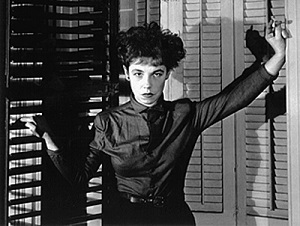
Jane Bowles (22 februari 1917 – 4 mei 1973)


De Afro-Amerikaanse dichter, schrijver en essayist Ishmael Scott Reed werd geboren op 22 februari 1938 in Chattanooga, Tennessee. Zie ook alle tags voor Ishmael Reed op dit blog.


Earthquake Blues

Well the cat started actin funny
and the dog howled all night long
I say the cat started actin very frightful
and the birds chirped all night long
The ground began to rumble
As the panic hit the town

Mr. Earthquake Mr. Earthquake
you don't know good from bad
Mr. Earthquake Mr. Earthquake
you don't know good from bad
You kill the little child in its nursey
You burn up the window's pad

The buildings started swaying
like a drunk man walking hoome
The buildings started swaying
The people they were running
and the hurt folks began to moan

Mr. Earthquake Mr. Earthquake
you don't know good from bad
Mr. Earthquake Mr. Earthquake


 1554150-b450e3ed206dc93a9108a7124b26e004.jpg
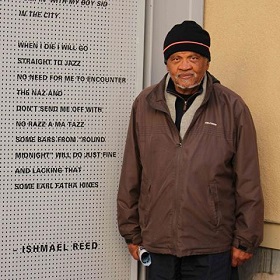
Ishmael Reed (Chattanooga, 22 februari 1938)
Bij de installatie van zijn gedicht “"When I Die I Will Go To Jazz”,

SFJAZZ Center, San Francisco


Zie voor nog meer schrijvers van de 22e februari ook mijn vorige blog van vandaag.

Geschreven door Romenu om 14:34 Reageer op dit bericht

Morley Callaghan, Wayne C. Booth, Jules Renard, James Russell Lowell, Edna St. Vincent Millay, Ottilie Wildermuth

De Canadese schrijver Morley Callaghan werd geboren op 22 februari 1903 in Toronto. Zie ook alle tags voor Morley Callaghan op dit blog. 

Uit:All the Years of Her Life

“The drug store was beginning to close for the night. Young Alfred Higgins who worked in the store was putting on his coat, getting ready to go home. On his way out, he passed Mr. Sam Carr, the little gray hair man who owned the store. Mr. Carr looked up at Alfred as he passed and said in a very soft voice, ''Just a moment, Alfred, one moment before you go.''
Mr. Carr spoke so quietly that he worried Alfred. ''What is it, Mr. Carr?''
''Maybe you'd be good enough to take a few things out of your pockets and leave them here before you go.'' Said Mr. Carr.
''What things? What are you talking about?''
''You've got a compact and a lipstick and at least two tubes of toothpaste in your pockets, Alfred.''
''What do you mean?'' Alfred answered. ''Do you think I am crazy?'' His face got red.
Mr. Carr kept looking at Alfred, coldly. Alfred did not know what to say and tried to keep his eyes from meeting the eyes of his boss. After a few moments, he put his hand into his pockets and took out the things he had stolen.
''Petty thieving, eh, Alfred?'' said Mr. Carr. ''And maybe you'd be good enough to tell me how long this has been going on.''
''This is the first time I ever took anything.''
Mr. Carr was quick to answer, ''So now you think you tell me a lie? What kind of a fool do I look like, hah? I don't know what goes on in my own store, eh? I/ tell you, you have been doing this for a long time.'' Mr. Carr had a strange smile on his face. ''I don’t like to call the police,'' he said, ''but maybe I should call your father and let him know I'm going to have to put you in jail.''
''My father is not home, he is a printer, he works nights.''


 1554130-e867f3f669d2634d6ec70fdbad842174.jpg
Morley Callaghan (22 februari 1903 – 25 augustus 1990)


De Amerikaanse letterkundige en literatuurwetenschapper Wayne Clayton Booth werd geboren op 22 februari 1921 in American Fork, Utah. Zie ook alle tags voor Wayne C. Booth op dit blog.

Uit: Confessions of an Aging, Hypocritical Ex-Missionary

“Until I was far into my teens, I was an utterly unquestioning Mormon. My parents and grandparents and aunts and uncles were all visibly, audibly, aggressively devout--all except one uncle, a smoker, a "black sheep." For our family, non-Mormons were beyond the pale--to be tolerated, of course, even treated kindly if they behaved themselves, viewed perhaps as potential converts, but never courted or married, and never even visited socially. They were certainly not destined, like us, to enter the celestial kingdom. We knew that in the next life those lost souls would not even be allowed to come near us, as we all continued our eternal progression, pursuing knowledge and righteousness--concepts that when defined correctly turned out to be the same thing.
What I remember as most important to me was that in heaven the non-Mormon or non-devout males down there in the lower kingdoms would have no hope for what I had a strong hope for, if I kept my nose clean: becoming the god of another world, accompanied by a pious female helpmate. Meanwhile, here and now, non-Mormons were so far beneath us that it was dangerous even to get near them. I remember feeling scared to walk too close to the one non-Mormon church in my home town, American Fork, Utah. I would always cross the road and walk on the other side, to avoid contamination, and I was thankful that we lived in another ward, far from that wicked place.
In short, until my first questioning began at about fourteen, I was a 100 percent devotee of what might be called an exclusivist, or particularist, anti-ecumenical version of Mormonism. That boy, the very young Wayne Booth, would perhaps these days be called by non-Mormons a fundamentalist (the word wasn't in our vocabulary, I'm quite sure). Born and reared in the pre-Darwinian nineteenth century, as you might say, he was for about fifteen years unaware of what had been happening to western thought from long before he was born.”


 1554130-754bb9210c6016aab4d2fc5dbc494400.jpg
Wayne C. Booth (22 februari 1921 – 9 oktober 2005)


De Franse schrijver Jules Renard werd geboren op 22 februari 1864 in Châlons-du-Maine. Zie ook alle tags voor Jules Renard op dit blog.

Uit: Journal de Jules Renard 1905-1910

“Je lui ai fait donner les palmes. Il dit aux gens de son village :
- Mes amis, les palmes me font bien plaisir, mais ce n'est rien à côté de vos félicitations.
L'esprit inquiet mais clairvoyant, c'est-à-dire actif et sain, de l'homme qui ne travaille pas.
Le poëte Ponge me dit :
- Quelques personnes m'ont dit qu'on ferait mieux de m'offrir un bureau de tabac que les palmes académiques. Moi, à cause de mes enfants, je préfère les palmes. Le bureau de tabac, je ne pourrais pas le tenir moi-même parce que mon travail des champs m'en empêcherait ; s'il fallait le faire tenir par un autre, le gain n'en vaudrait plus la peine.
Ragotte m'a apporté de l'eau chaude. Je lui dis :
- Mais la bouillote fuit !
- Oh ! je le sais bien, dit-elle.
Le médecin lui a dit de prendre chez le pharmacien de la denrée qu'elle boira. Elle profite, pour se coucher, d'un instant où je ne suis pas dans la cuisine. Dans le coin, elle ôte sa jupe, met son bonnet. Je vois ses pieds nus dans ses savates.
Leur manie de cacher qu'ils sont malades. Leur ignorance en face de la maladie. En dehors de « J'ai mal aux reins, je ne peux pas dormir ni manger », ils ne savent rien.
Cette odeur de peau raclée de gens qui ne se lavent jamais.
Philippe. Ses oreilles gèlent, cuisent et pèlent.
Toute la campagne tremble de froid.”


 1554130-7a34bf047930438bf6a245f1b6d2c415.jpg
Jules Renard (22 februari 1864 – 22 mei 1910)
Portret door Delannoy, 1903


De Amerikaanse dichter, essayist, uitgever en diplomaat James Russell Lowell werd geboren op 22 februari 1819 in Cambridge, Massachusetts. Zie ook alle tags voor James Russell Lowell op dit blog.


Midnight

The moon shines white and silent
On the mist, which, like a tide
Of some enchanted ocean,
O'er the wide marsh doth glide,
Spreading its ghost-like billows
Silently far and wide.

A vague and starry magic
Makes all things mysteries,
And lures the earth's dumb spirit
Up to the longing skies:
I seem to hear dim whispers,
And tremulous replies.

The fireflies o'er the meadow
In pulses come and go;
The elm-trees' heavy shadow
Weighs on the grass below;
And faintly from the distance
The dreaming cock doth crow.

All things look strange and mystic,
The very bushes swell
And take wild shapes and motions,
As if beneath a spell;
They seem not the same lilacs
From childhood known so well.

The snow of deepest silence
O'er everything doth fall,
So beautiful and quiet,
And yet so like a pall;
As if all life were ended,
And rest were come to all.

O wild and wondrous midnight,
There is a might in thee
To make the charmed body
Almost like spirit be,
And give it some faint glimpses
Of immortality!


 1554130-9b8cfbcf1d68ad3925ee6bee0157b9f1.GIF
James Russell Lowell (22 februari 1819 – 12 augustus 1891)
Borstbeeld door William Wetmore Story, 1892


De Amerikaanse dichteres en schrijfster Edna St. Vincent Millay werd geboren op 22 februari 1892 in Rockland, Maine. Zie ook alle tags voor Edna St. Vincent Millay op dit blog.


What lips my lips have kissed

What lips my lips have kissed, and where, and why,
I have forgotten, and what arms have lain
Under my head till morning; but the rain
Is full of ghosts tonight, that tap and sigh
Upon the glass and listen for reply,
And in my heart there stirs a quiet pain
For unremembered lads that not again
Will turn to me at midnight with a cry.
Thus in winter stands the lonely tree,
Nor knows what birds have vanished one by one,
Yet knows its boughs more silent than before:
I cannot say what loves have come and gone,
I only know that summer sang in me
A little while, that in me sings no more.


Nee, liefde is niet blind

Nee, liefde is niet blind. Jouw lelijkheid
Hoe mooi die vrouwen zijn, ik zie het goed
Dat jouw gezicht aan regels niet voldoet
Te hoog je voorhoofd en uiteen te wijd
Je ogen. En geschoold in lieflijkheid
Maakt dat het hiermee te zijn opgevoed
Mij nu jouw fouten niet ontkennen doet
En lief moet hebben tot het eind der tijd
Subtieler is de oppermacht der liefde
Betrapt men mij als ik iets lelijk vind
’t Is net alsof ik zeg dat niets meer zint
Niet hoogstaand is, kan schrijven. Men mag vrezen
Wat dan die schoonheid is die mannen blieven
Waarom wordt die alom door hen geprezen


Vertaald door Ans Bouter


 1554130-7eb116290b43255d6cf472616281b53f.jpg
Edna St. Vincent Millay (22 februari 1892 – 19 oktober 1950)
Cover biografie 


De Duitse dichteres en schrijfster Ottilie Wildermuth werd geboren op 22 februari 1817 in Rottenburg am Neckar. Zie ook alle tags voor Ottilie Wildermuth op dit blog.


Der Hausfrau Frühlingsfeier - I

Der Frühling schaut zu uns herab
Dort aus den blauen Hallen;
Er lässt als Gruß die milde Luft
Durch alle Lande wallen.

Er lockt hervor das grüne Gras,
Verscheucht viel alte Schmerzen;
Er weckt die Hoffnung und die Lust
In tausend jungen Herzen.

Die Hausfrau aber hat nicht Zeit,
Dass sie im Frühling schwärme;
Nun müssen Thür und Fenster auf,
Damit die Sonne Wärme.

Nun muß der alte Winterstaub
Aus jeglichem Gemache;
Nun soll es hell und sauber sein,
Hinauf bis unter'm Dache.

Da räumt sie aus, da räumt sie ein
In Kisten und in Schränken;
Fürwahr, sie hat vergessen ganz
Noch an den Lenz zu denken.


 1554130-d990eb98f494975d541acb424f0282d5.jpg
Ottilie Wildermuth (22 februari 1817 – 12 juli 1877)

Geschreven door Romenu om 14:15 Reageer op dit bericht

Herman de Coninck, Chuck Palahniuk, Hans Andreus, Wystan Hugh Auden, Laure Limongi, Justus van Effen

De Vlaamse dichter, essayist, journalist en tijdschriftuitgever Herman de Coninck werd geboren in Mechelen op 21 februari 1944. Zie ook alle tags voor Herman de Coninck op dit blog.


Mijn Moedertje

juist als ik bedenk hoe onnoemelijk mooi je rug
verandert in twee wonderen,
komt mijn moeder binnenvallen om nog avondijke
overschrijvingen te doen. we zoeken beide de vrede
des harten op nogal verschillende manieren.

ze komt om haar dagelijkse portie zoon.
ze zegt dat ik mijn voeten moet verwijderen
van de zetel van haar keuze, en laat er dan
haar achterste als een strandbal in neer.

op de schoot waar ik vroeger zat liggen
belastingformulieren die ze beter begrijpt.
het is niet haar fout dat ik mezelf ben,
echt niet. we zwijgen.

tot ze eindelijk slapengaat. ik plak
een zoen als een scheve postzegel
op haar kaak. ik lig een verdieping hoger wakker
dan zij. door de avond razen treinen
als lange aa's door lange ziekenzalen.


Cadeau

Het gaat niet over hebben, hooguit over krijgen.
Alléén ben ik degene die nooit praat,
maar met jou kan ik zwijgen.

Over wat voorbij is en nooit overgaat.
Over mijn vader. Over een vroegere vrouw.
Over hoe verliezen kan verrijken.

Neem een kind dat zijn eerste stappen zet.
Het gaat niet over hen vasthouden, maar over -zou
ik?- loslaten en lang kijken.


Flamingo's

Flamingo's op poten zo dun als de ff's
van mejuffer, of als twee sigarette-
pijpjes waaraan ze zuinig de rook
van zichzelf opzuigen: met dit soort
raffinementjes zetten ze zichzelf voortdurend
voorzichtig op stelten.

En hoe ze op één been staan, het andere
in hun veren opgeplooid als een handtas
onder de arm, deftige dames, wachtend op de tram
naar Rilke (psst, Germaine, laat niks merken,
daar zijn weer toeristen naar ons aan 't kijken!).


 1553570-9de93e90acb3128564299b112ce5c88f.jpg
Herman de Coninck (21 februari 1944 - 22 mei 1997)
Op een flyer


De Amerikaanse schrijver en journalist Chuck Palahniuk werd geboren op 21 februari 1962 in Pasco, Washington. Zie ook alle tags voor Chuck Palahniuk op dit blog.

Uit:Fight Club

“Tyler gets me a job as a waiter, after that Tyler’s pushing a gun in my mouth and saying, the first step to eternal life is you have to die. For a long time though, Tyler and I were best friends. People are always asking, did I know about Tyler Durden.
The barrel of the gun pressed against the back of my throat, Tyler says “We really won’t die.”
With my tongue I can feel the silencer holes we drilled into the barrel of the gun. Most of the noise a gunshot makes is expanding gases, and there’s the tiny sonic boom a bullet makes because it travels so fast. To make a silencer, you just drill holes in the barrel of the gun, a lot of holes. This lets the gas escape and slows the bullet to below the speed of sound.


 1553570-fed2ed334adf4b60eddf4f8011638078.jpg
 Brad Pitt en Edward Norton als Taylor Durden en The Narrator in de film “Fight Club” uit 1999


You drill the holes wrong and the gun will blow off your hand.
“This isn’t really death,” Tyler says. “We’ll be legend. We won’t grow old.”
I tongue the barrel into my cheek and say, Tyler, you’re thinking of vampires.
The building we’re standing on won’t be here in ten minutes. You take a 98percent concentration of fuming nitric acid and add the acid to three times that amount of sulfuric acid. Do this in an ice bath. Then add glycerin drop-by-drop with an eye dropper. You have nitroglycerin.
I know this because Tyler knows this.
Mix the nitro with sawdust, and you have a nice plastic explosive. A lot of folks mix their nitro with cotton and add Epsom salts as a sulfate. This works too. Some folks, they use paraffin mixed with nitro. Paraffin has never, ever worked for me.
So Tyler and I are on top of the Parker-Morris Building with the gun stuck in my mouth, and we hear glass breaking. Look over the edge. It’s a cloudy day, even this high up. This is the world’s tallest building, and this high up the wind is always cold. It’s so quiet this high up, the feeling you get is that you’re one of those space monkeys. You do the little job you’re trained to do."


 1553570-0d7fa53cdb5519604e6ad2454c0bd40d.jpg
Chuck Palahniuk (Pasco, 21 februari 1962)


De Nederlandse dichter en prozaschrijver Hans Andreus werd geboren in Amsterdam op 21 februari 1926. Zie ook alle tags voor Hans Andreus op dit blog.


Uit de ooghoeken

De zijdelingse
benadering
is dikwijls de beste:

uit de ooghoeken zie je
wel niets scherp omlijnd,

maar het licht speelt
mee naarmate het minder
botst op de blik

en zelfs de dood-
verklaarde dingen

verraden dan even hun
stralende afkomst.


Angst die ons vernedert

Angst die ons vernedert.
En het gevecht geen lange
heldenzang. Een dierenangst,
sidderend en duizelend,
een redeloos bijten in leven,
hopeloos op de grens van het bestaande.

Wij,
voer
voor de ruimte,
ketting-
reactie,
kralensnoer van de zon,
wij verbeelden ons niets
meer, zien
met onze ogen niets
meer, horen
onverstaanbaar geluid,
geen geluid.

En zijn biddende huid.
Maar de wil van de laatste
dubbelganger in ons:
lichtvalk of elk ander woord,
zal geschieden. Is
geschied.


Zwart Schaap

Bij de Hoge Enk een zwart schaap
alleen in een weide, grazend
en kauwend als één die weet
dat alles voor hem is

zolang de witte er niet zijn.


 1553570-2d087a09dfc041015e60497403679c45.jpg
Hans Andreus (21 februari 1926 – 9 juni 1977)
Cover 


De Engelse dichter, essayist en criticus Wystan Hugh Auden werd geboren in York op 21 februari 1907. Zie ook alle tags voor Wystan Hugh Auden op dit blog.


O Tell Me The Truth About Love

Some say love's a little boy,
And some say it's a bird,
Some say it makes the world go around,
Some say that's absurd,
And when I asked the man next-door,
Who looked as if he knew,
His wife got very cross indeed,
And said it wouldn't do.

Does it look like a pair of pyjamas,
Or the ham in a temperance hotel?
Does its odour remind one of llamas,
Or has it a comforting smell?
Is it prickly to touch as a hedge is,
Or soft as eiderdown fluff?
Is it sharp or quite smooth at the edges?
O tell me the truth about love.

Our history books refer to it
In cryptic little notes,
It's quite a common topic on
The Transatlantic boats;
I've found the subject mentioned in
Accounts of suicides,
And even seen it scribbled on
The backs of railway guides.

Does it howl like a hungry Alsatian,
Or boom like a military band?
Could one give a first-rate imitation
On a saw or a Steinway Grand?
Is its singing at parties a riot?
Does it only like Classical stuff?
Will it stop when one wants to be quiet?
O tell me the truth about love.

I looked inside the summer-house;
It wasn't over there;
I tried the Thames at Maidenhead,
And Brighton's bracing air.
I don't know what the blackbird sang,
Or what the tulip said;
But it wasn't in the chicken-run,
Or underneath the bed.

Can it pull extraordinary faces?
Is it usually sick on a swing?
Does it spend all its time at the races,
or fiddling with pieces of string?
Has it views of its own about money?
Does it think Patriotism enough?
Are its stories vulgar but funny?
O tell me the truth about love.

When it comes, will it come without warning
Just as I'm picking my nose?
Will it knock on my door in the morning,
Or tread in the bus on my toes?
Will it come like a change in the weather?
Will its greeting be courteous or rough?
Will it alter my life altogether?
O tell me the truth about love.


 1553570-aac978909b874f555af9974f50d76667.jpg
W. H. Auden (21 februari 1907 – 29 september 1973)
In 1939 


De Franse dichteres en schrijfster Laure Limongi werd geboren op 21 februari 1976 in Bastia (Corsica). Zie ook alle tags voor Laure Limongi op dit blog.

Uit: Le bleu de l’inflexion

“Le genou est fléchi afin de disposer le corps à la verticale de la serrure.
Le corps porte la clef mais ne veut pas ouvrir, encore.
La main tient la clef en la caressant tandis que l’œil ne broie que du noir. Tandis que l’œil clair perce, sourcil contre métal glacé, fouille sans succès, l’œil à la limite de sa perception ne pourra s’en remettre qu’à l’action. Peut-être.
La main gauche est posée, à plat contre le bois de la porte qui est un bois lisse.
Le mur du couloir regarde la scène.
L’odeur savante des cheveux a séduit et bruisse du mouvement de la tête ne sachant trop si et quoi et que faire.
Avec un je-ne-sais-quoi de sauvage et perdu.
Avec un je-ne-sais-quoi de déjà mort.
La robe est froissée de toucher le sol, portant le poids du personnage léger au cœur lourd.
La robe crisse de la respiration haletante de la curiosité et de la peur.
Le mur du couloir en est ému.”


 1553570-646c115666cbf9e9b7527532ef42328b.jpg
Laure Limongi (Bastia 21, februari 1976)


De Nederlandse schrijver Justus van Effen werd geboren in Utrecht op 21 februari 1684. Zie ook alle tags voor Justus van Effen op dit blog.

Uit: No. 5. Den 17. September 1731. De Hollandsche Spectator

"Men verdenke my niet van het dwaas opzet, van tegens de Taal-zuiveraars 't gebruik van een laf mengelmoes van vreemde woorden, te willen verdedigen, waar door Wysneuzen van beide de Sexen voor geestig en welspreekend zoeken door te gaan: 't Is zo glissant, dat had ik Mejuffer niet gesouteneert, zy zekerlyk zoude getombeert hebben. Wie kan diergelyke spreekwyzen zonder walging aanhooren? Moet men niet zot wezen om voor Neêrduitsch te verkopen een styl, welke geborene Nederlanders, zonder verscheide andere Taalen te verstaan, onmogelyk kunnen bevatten? Men heeft nochtans in boeken en conversatien die verwerring der taalen gesmaakt. 't Gemeenste volkje zelfs zoekt 'er zich van te bedienen, om boven huns gelyken uit te blinken, maar die goede luiden rabraken die vreemde woorden zo onerbermelyk, dat zy zich zelven niet verstaande, van anderen zekerlyk niet kunnen begrepen worden. Ik zal in 't vervolg de gelegenheid wel vinden, om de bespottelykheid van zo eene opgesmukte Chaos met zyne ware verwen af te schilderen."


 1553570-8756f22c931e5e7604a6ac5fee920732.jpg
Justus van Effen (21 februari 1684 - 18 september 1735)
Utrecht in de 18e eeuw


Zie voor nog meer schrijvers van de 21e februari mijn blog van 21 februari 2012 deel 2 en ook mijn blog van 21 februari 2011.

Geschreven door Romenu om 18:23 Reageer op dit bericht

P. C. Boutens, Ellen Gilchrist, Julia Franck, Georges Bernanos, William Carleton, Cornelis Sweerts

De Nederlandse dichter Pieter Cornelis Boutens werd geboren in Middelburg op 20 februari 1870. Zie ook alle tags voor P. C. Boutens op dit blog.


Zooals een kind

Zooals een kind, dat trouw aan moeders knie
Zegt, vóor het slapen gaat, dezelfde beê,
Elk' avond 't eigen woord van troost en vreê,
Napratend z'n moeder de oude litanie,
En 't legt zijn hoofd gerust neêr en gedwee,
Al weet het niet, wat het bidt of tot wien,
Maar bad het niet, dan zou 't zijn oog misschien
Niet luiken uit vage angst voor komend wee; -

Zoo zal mijn hart het goede blijven doen
Zonder verwachting van loon, zonder doel,
Alleen om 't goede zelf, omdat ik voel,
Dat 't zóo zal kunnen slapen in den nacht,
En leven tevreden, als de zon lacht
Over de bloemen van den zomernoen.


Uit:Strofen en andere verzen uit de nalatenschap van Andries de Hoghe

Vierde strofe

De dagen lengen ongeteld tot weken;
al maanden ligt mijn schip ter reede op stroom;
en al dien tijd verkeer ik in hun stad,
een stil en onopmerklijk vreemdeling
die niemand zoekt en niemand van zich weert
en niemand aanstoot geeft. Met reede penningen
koop ik het weinige wat ik behoef,
en ding niet op hun overvragen af:
zoo won ik onbedacht hun brave hebzucht,
en niets blijkt over dat ik winnen kan;
voetstoots heeft hun verwondering aanvaard
den vreemden dwaas die niet de waarde kent
van geld en goed, wiens onbegrepen luim
hun eng-verdaaglijkscht leven doelloos deelt...
En onderwijl, als staâg en ongerept
achter den schijn van ondiep dageblauw
de groote gang der sterren zich voltrekt,
neemt hemelhoog het stille wonder stand.
Welhaast, misschien dez' eigen avond nog
(zoo zingt het voorgevoel van mijn geduld)
spreekt zich de trage bloode droomer uit,
de jongste broeder die mij nimmer moeit,
en dien ik nauwlijks op te merken lijk...
Hij vindt zijn moeder in het schemeruur,
met oogen als diepdonkre bloemen open,
en zucht dat hij niet langer leven kan
binnen de grenzen van het oude huis,
dat hij den broederen zijn erfdeel laat
en heen zal gaan den koelen einder in
vóordat de schaamte om onverdiend geluk
zijn liefde moordt tot onverschilligheid
zoodat hij haar niet meer beminnen zou...
Met de eerste sterren komt hij stil aan boord
en zet zich zwijgend op de bleeke plecht.
Dan gaat het breede witte zeil omhoog,
en met hem keer ik naar mijn verre land.


 1552913-dd931a7096e319e9d37a10ccb8a572c1.jpg
Pieter Cornelis Boutens (20 februari 1870 – 14 maart 1943)


De Amerikaanse schrijfster Ellen Gilchrist werd geboren op 20 februari 1935 in Vicksburg, Mississippi. Zie ook alle tags voor Ellen Gilchrist op dit blog.

Uit: Flights of Angels

“Six months before he died he told his daughter that he had not wanted to remarry her mother. He was brushing his teeth while he told her. She liked to watch him brush his teeth. He was so efficient, so dedicated, so determined.
"I did it to save the children," he said. "I came back to save the children."
"You gave up the mistress to save what children?" the daughter asked.
"To save Juliet. She was running around with the wrong crowd. She was going out with a black."
"So you tore up the life Mother was making for herself and made her marry you again to save Juliet?"
"Had to do it. Had to stop that." He was flossing now. He had been the first person she knew who used dental floss. It had been given to him by the pathological dentist who had ruined all their teeth in the sixties.
The old man was eighty-eight when this conversation took place. The year after he lost all the money. The year before they took his car away and then his gun. He had had at one time almost twenty million dollars but he had lost it all. He had lost it by believing in his sons. Or else, he had lost it by being afraid to invest in the markets, by being afraid of the contemporary world, by being a racist and a misogynist and becoming an old man. His father had died a pauper and now he was about to die one too. Except for Social Security, a government program he would have ended if he could have. He had given at least one of his millions of dollars to the right wing of the Republican party. Now he was being taken care of by Social Security and Medicare. He saw the irony.”


 1552913-bbec8e543271f140ddac99ebd1fda3c3.jpg
Ellen Gilchrist (Vicksburg, 20 februari 1935)


De Duitse schrijfster Julia Franck werd geboren op 20 februari 1970 in Oost-Berlijn. Zie ook alle tags voor Julia Frank op dit blog.

Uit: Liebediener

„Unten in meiner Wohnung herrschte Dämmerlicht, und ich konnte kaum etwas erkennen, so düster war es. Im Frühling und Sommer wurde der Gestank in meiner Wohnung besonders schlimm, ich nahm ihn nur in den ersten Minuten wahr, wenn ich von draußen reinkam, wie jetzt.
Ich dachte an die Zeitung und ärgerte mich wieder. Erst Tage später fiel mir ein, daß Ostern gewesen war und also keine Zeitung im Kasten hatte sein können. Ich schämte mich dann, nicht nur, weil ich Charlotte im Verdacht gehabt hatte, sondern vor allem, weil ich mich dabei ertappte, noch immer an die Zeitung zu denken. Ich legte die Tüte mit den Schokoladeneiern auf den Tisch und stieg auf den Stuhl, um die Fensterluke zu öffnen. Die Fenster saßen dicht unter der Decke, und so wurde beim Lüften nur die obere Luftschicht bewegt, während die untere unberührt klamm blieb. Die Pflastersteine strömten eine staubige, riechende Hitze aus, die sich in die Kühle meines Kellers mischte. Von innen roch es nach Schimmel, von draußen nach Urin, das war ich gewohnt und fühlte mich nicht unbedingt wohl, aber zu Hause darin.
Die Abgase des roten Autos schwelten über dem Pflaster und wurden durch die offene Luke in meine Wohnung gedrückt. Der Mann war noch immer damit beschäftigt, aus seiner Parklücke zu kommen. Trotzdem ließ ich die Luke offen, der Mann hupte zweimal kurz hintereinander, ich konnte nur die obere Hälfte seines Kopfes erkennen, er sah sich um, es schien gerade so, als warte er auf etwas. Ich reckte mich, um den Mann besser sehen zu können. Er schlug mit beiden Händen auf das Lenkrad und raufte sich die Haare. Dann starrte er in die Richtung meines Hauses, als lauere er auf jemanden, dem einer der beiden Wagen gehören würde, die ihn einklemmten.“


 1552913-fbebf4f89474105ac42759221bcf70ff.jpg
Julia Franck (Oost-Berlijn, 20 februari 1970)


De Franse schrijver Georges Bernanos werd geboren in Parijs op 20 februari 1888. Zie ook alle tags voor Georges Bernanos op dit blog.

Uit: Journal d’un curé de campagne

„Ma paroisse est une paroisse comme les autres. Toutes les paroisses se ressemblent. Les paroisses d'aujourd'hui, naturellement. Je le disais hier à M. le curé de Norenfontes : le bien et le mal doivent s'y faire équilibre, seulement le centre de gravité est placé bas, très bas. Ou, si vous aimez mieux, l'un et l'autre s'y superposent sans se mêler, comme deux liquides de densité differente. M. le curé m'a ri au nez. C'est un bon prêtre, très bienveillant, très paternel et qui passe même à l'archevêché pour un esprit fort, un peu dangereux. Ses boutades font la joie des presbytères, et il les appuie d'un regard qu'il voudrait vif et que je trouve au fond si usé, si las, qu'il me donne envie de pleurer.
(…)

L’Eglise dispose de la joie, de toute la part de joie réservée à ce triste monde. Ce que vous avez fait contre elle, vous l’avez fait contre la joie. Est-ce que je vous empêche, moi, de calculer la précession des équinoxes ou de désintégrer les atomes ? Mais que vous servirait de fabriquer la vie même, si vous avez perdu le sens de la vie ? Vous n’auriez plus qu’à vous faire sauter la cervelle devant vos cornues. Fabriquez de la vie tant que vous voudrez ! L’image que vous donnez de la mort empoisonne peu à peu la pensée des misérables, elle assombrit, elle décolore lentement leurs dernières joies. Ça ira encore tant que votre industrie et vos capitaux vous permettront de faire du monde une foire, avec des mécaniques qui tournent à des vitesses vertigineuses, dans le fracas des cuivres et l’explosion des feux d’artifice. Mais attendez, attendez le premier quart d’heure de silence. Alors, ils l’entendront, la parole - non pas celle qu’ils ont refusée, qui disait tranquillement : « je suis la Voie, la Vérité, la Vie » - mais celle qui monte de l’abîme : « Je suis la porte à jamais close, la route sans issue, le mensonge et la perdition. »


 1552913-1ea932793529fa57f8e3dda3cf9ecbad.jpg
Georges Bernanos (20 februari 1888 - 5 juli 1948)
Borstbeeld in Rimboval


De Ierse schrijver William Carleton werd geboren op 20 februari 1794 in Glogher, in het graafschap Tyrone. Zie ook alle tags voor William Carleton op dit blog.

Uit: The Midnight Mass

“M'Kenna's house stood, as I said, at the foot of this mountain, just where the yellow surface of the plain began to darken into the deeper hues of the heath; to the left lay a considerable tract of stony land in a state of cultivation; and beyond the river, exactly opposite the house, rose a long line of hills, studded with houses, and in summer diversified with pasture and corn fields, the beauty of which was heightened by the columns of smoke that slanted across the hills, as the breeze carried them through the lucid haze of the atmosphere.
M'Kenna's family consisted of himself, his wife, two daughters, and two sons. One of these was a young man addicted to drink, idle, ill-tempered, and disobedient; seldom taking a part in the labors of the family, but altogether devoted to field sports, fairs, markets, and dances. In many parts of Ireland it is usual to play at cards for mutton, loaves, fowls, or whiskey, and he was seldom absent from such gambling parties, if held within a reasonable distance. Often had the other members of the family remonstrated with him on his idle and immoral courses; but their remonstrances only excited his bad passions, and produced, on his part, angry and exasperating language, or open determination to abandon the family altogether and enlist. For some years he went on in this way, a hardened, ungodly profligate, spurning the voice of reproof and of conscience, and insensible to the entreaties of domestic affection, or the commands of parental authority. Such was his state of mind and mode of life when our story opens.”


 1552913-0cfa9c08e8816cc4ba4b09b989ce6a97.jpg
William Carleton (20 februari 1794 – 30 januari 1869)
Glogher, de kathedraal


De Nederlandse dichter, liedtekstschrijver, toneelschrijver en boekhandelaar Cornelis Sweerts werd geboren in Amsterdam op 20 februari 1669. Zie ook alle tags voor Cornelis Sweerts op dit blog.


Wilt Vrienden zyn, En mijd de schyn

1.
Woorden ziften, zemel knoopen:
Wie daar toe gezint mag zijn,
Die mag na sijn besje loopen,
Daar men met een glaasje wijn
Tracht de vriendschap te verbinden;
Laat men zig in zoetheid vinden.
Alles sta, daar vreugd is, vry.
Toon u dan verheugt en bly.

2.
Schijn van waarheid te doen gelden,
Achterdenken, haat en nijt,
Dultmen onder vrienden zelden:
Wie sijn hert verteert van spijt
Kan zich zelf slechs onderdrukken;
Vyandschap baart ongelukken,
Vriendschap doet de haat te niet,
En kent onheil noch verdriet.


 1552913-e44dea16818da964b83db75809c835af.jpg
Cornelis Sweerts (20 februari 1669 - 23 maart 1749)
De Dam in Amsterdam in 1666, schoolplaat door Isings


Zie voor nog meer schrijvers van de 20e februari ook mijn blog van 20 februari 2013 en ook mijn blog van 20 februari 2012 deel 2.

Geschreven door Romenu om 18:51 Reageer op dit bericht

Siri Hustvedt, Helen Fielding, Jaan Kross, Helene Hegemann, Dmitri Lipskerov, Björn Kuhligk, Wolfgang Fritz

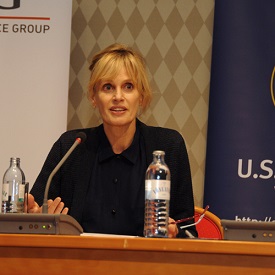
De Amerikaanse schrijfster en essayiste Siri Hustvedt werd geboren op 19 februari 1955 in Northfield, Minnesota. Zie ook alle tags voor Siri Hustvedt op dit blog.

Uit: The Sorrows of an American

“The day Inga and I began working, the weather outside was heavy. Through the large window, I looked at the thin layer of snow under an iron-colored sky. I could feel Inga standing behind me and hear her breathing. Our mother, Marit, was sleeping, and my niece, Sonia, had curled up somewhere in the house with a book. As I pulled open a file drawer, I had the abrupt thought that we were about to ransack a man’s mind, dismantle an entire life, and without warning a picture of the cadaver I had dissected in medical school came to mind, its chest cavity gaping open as it lay on the table. One of my lab partners, Roger Abbot, had called the body Tweedledum, Dum Dum, or just Dum. “Erik, get a load of Dum’s ventricle. Hypertrophy, man.” For an instant I imagined my father’s collapsed lung inside him, and then I remembered his hand squeezing mine hard before I left his small room in the nursing home the last time I saw him alive. All at once, I felt relieved he had been cremated.
Lars Davidsen’s filing system was an elaborate code of letters, numbers, and colors devised to allow for a descending hierarchy within a single category. Initial notes were subordinate to first drafts, first drafts to final drafts, and so on. It wasn’t only his years of teaching and writing that were in those drawers, but every article he had written, every lecture he had given, the voluminous notes he had taken, and the letters he had received from colleagues and friends over the course of more than sixty years. My father had catalogued every tool that had ever hung in the garage, every receipt for the six used cars he had owned in his lifetime, every lawnmower, and every home appliance—the extensive documentation of a long and exceptionally frugal history. We discovered a list for itemized storage in the attic: children’s skates, baby clothes, knitting materials. In a small box, I found a bunch of keys. Attached to them was a label on which my father had written in his small neat hand: “Unknown Keys.”


 1552291-946dbda3d879160e60dc976ed28e7e9d.JPG
Siri Hustvedt (Northfield, 19 februari 1955)


De Engelse schrijfster Helen Fielding werd geboren in Morley, Yorkshire op 19 februari 1958. Zie ook alle tags voor Helen Fielding op dit blog.

Uit: Bridget Jones: Mad About the Boy

‘Jones, you little devil,’ growled Daniel when I called. ‘What are you wearing, what colour are your knickers and how are my godchildren?’
Daniel Cleaver, my former Emotional F___wit ‘boyfriend’ and Mark’s former arch-enemy, has, to his credit, really done his best to help since Mark was killed. After years of bitter one-upmanship, when Billy arrived the two of them finally made it up and Daniel is actually the children’s godfather.
Daniel’s best isn’t exactly everyone’s best: the last time he had them to stay, it turned out he just wanted to impress some girl by boasting that he had godchildren and . . . suffice it to say he dropped them off at school three hours late, and when I picked up Mabel later, her hair was in an incredibly complex plaited chignon.
‘Mabel, what fabulous hair!’ I said, imagining Daniel had brought John Frieda in to do full hair and make-up on Mabel at 7.30 a.m.
‘De teacher did it,’ said Mabel. ‘Daniel brushed my hair wid a fork,’ adding, ‘it had maple syrup on it.’
‘Jones? Are you still there, Jones?’
‘Yes,’ I said, startled.
‘Babysitting call, Jones?’
‘Would you . . . ?’
‘Absolutely. When were you thinking?’
I cringed: ‘Tomorrow?’
There was a slight pause. Daniel was obviously doing something. ‘Tomorrow night is absolutely fine. I find myself at a loose end, having been rejected by all human women under the age of eighty- four.’ Awww.
‘We might be quite late, is that OK?’


 1552291-46aabc868ded1b0349d3e1b9e3d38e7c.jpg
Helen Fielding (Morley, 19 februari 1958)


De Estlandse schrijver Jaan Kross werd geboren op 19 februari 1920 in Tallin. Zie ook alle tags voor Jaan Kross op dit blog.

Uit: The Czar’s Madman (Vertaald door Anselm Hollo)

“However, none of those invited deigned to appear. Some were traveling abroad, others had taken to their beds due to a cold brought on by the autumn weather, or they had some other excuse. Consequently, we did not take our meals in the dining room which was close to the kitchen and hence afflicted by the odours of cooking – Timo couldn’t stand those – but in the green tea salon next to the drawing room. The table, however, was set with the von Bock family’s heavy silver. I had heard that old Baron von Bock had died a poor man, through no fault but his own (in the summer of 1812, as a captain in charge of military hospitals during Buonaparte’s offensive, of “hospital fever”). Hence, Timo had to be a poor man as well… But it wasn’t only the family silver that made me realize a curious thing it is, this poverty of the wealthy.
At dinner, Dr Robst faced me across the table. He cared for the health of the inhabitants of the estate and also attended the leaseholder of Poltsamaa, von Wahl, and the owners of the castle, the Bobruiskys, whenever they appeared in Poltsamaa between their sojourns in St Petersburg and Paris. In addition, Dr Robst collected butterflies and occasionally directed artisans’ children in performances of excerpts from Lessing’s or Kotzebue’s plays. He always arrived at the table quite red in the face from the exertion of walking the two hundred paces from the old main building, the one known as The Foundation, to the manor. Even before we were seated, and also between bites of dinner, he recited quotations from Rousseau in a theatrical voice, or gave lectures on the song birds of the region, punctuating these by whistling various birdsongs. He provided the scientific background to each one these and always, with a bow, begged Madame to excuse the whistling.”


 1552296-d199ce70f48d597a0282fd19b5c58db7.jpg
Jaan Kross (19 februari 1920 – 27 december 2007)


De Duitse schrijfster, regisseuse en actrice Helene Hegemann werd geboren in Freiburg im Breisgau op 19 februari 1992. Zie ook alle tags voor Helene Hegemann op dit blog.

Uit: Jage zwei Tiger

„Er würde für den Rest seines Lebens allein bleiben. Seine Mutter hatte ihm ununterbrochen ein Mantra vorgebetet, dass er davonlaufen müsse, wenn er sich nicht wehren könne, und Feuer oder Vergewaltigung schreien. Er solle brennen, wilder sein als seine Provokateure und zugleich wie ein Renaissancegemälde aussehen, egal, ob er sich vor einer für 800 Euro mit englischen Seidenmalereien tapezierten Betonmauer befinde oder in vergletscherten Kesselmoorlandschaften. Kai konnte laufen, es kam ihm vor, als hätte die Natur seinen erbärmlichen Menschenkörper in ihrer Gewalt, schmerzhaft und unbezwingbar. Trotzdem schützte ihn der verdreckte Wald mit seiner natürlichen Gleichgültigkeit vor einer Realität, in der ihm längst instabile Knochenbrüche mit Polytrauma diagnostiziert und ein mit Pinguinen bedrucktes Nachthemd übergezogen worden wäre, hier zu sein war die einzige Möglichkeit, die Zeit anzuhalten und eine Strategie zu entwickeln, die Scheiße auszuhalten, irgendwie durchzukommen, durch diesen fürchterlichen hellen Tag. Alles war zu hell, es war unerträglich. In seine Beckenknochen liefen aufgrund diverser Gefäßverletzungen gerade ein bis zwei Liter Blut, nebensächlich, kalter Schweiß, zerquetschtes Unterhautfettgewebe in der Breite eines Autoreifens, es war wirklich egal. Ihm fiel eine Geschichte ein, die er oft gehört hatte, als er klein war – von einem erfolglosen Exfreund seiner Mutter, Halbindianer mit einem von Leberflecken übersäten Körper und dunklen Haaren bis zum Arsch.“


 1552291-3bddf1df29a8d5cbf96742bd0cb84229.jpg
Helene Hegemann (Freiburg im Breisgau, 19 februari 1992)


De Russische schrijver Dmitri Lipskerov werd geboren op 19 februari 1964 in Moskou. Zie ook alle tags voor Dmitri Lipskerov op dit blog.

Uit: The Last Sleep of Reason (Vertaald door Dmitri Priven)

“Karapetian was scratching his sideburns without saying a word, but thought deep down that Captain Sinichkin was a complete nobody, wearing on his shoulder-straps the star that was rightfully Karapetian's.
As usual, the Armenian lunch was served at two; poor Zubov again was getting bashed. The topic chewed over was Russian woman's influence on Armenian man's psyche. One of the officers even suggested that a relationship with a fair-haired people causes the Caucasus man to lose hair five times as fast, and not only on the head but also chest and back.
Sergeant-major Zubov tried to elucidate what the connection was between the psyche and baldness, but was commanded to shut up; however, swallowing a piece of roast lamb, Zubov-Zubian expressed protest in the form of unbuttoning his uniform. A perfect silence reigned over the table when the dining audience had beheld a stupendous sight, which Sinichkin named to himself "A Sheep Before Shearing". The sergeant-major's chest was a darker shade of black so dense was the hair on it. His skin was not showing one bit under the brunette vegetation, and the seasoned Armenians sulked in view of such hormonal assets of their colleague.
Zubov offered to model his back and behind, hinting vulgarly that the degree of shagginess on those body parts is no less than on his chest, but the officers waved him off, and Major Pogosian warned that he would shoot the moron if he took his pants off at the dinner table.
Such was Sergeant-major Zubov's little victory over his fellow countrymen, and he was flashing a conceited smirk from under his multi-tiered nose all afternoon.
After lunch Major called Sinichkin to his office for a briefing."


 1552291-f0915078163ed77bfd207adc138c443a.jpg
Dmitri Lipskerov (Moskou, 19 februari 1964)


De Duitse dichter en schrijver Björn Kuhligk werd geboren op 19 februari 1975 in Berlijn. Zie ook alle tags voor Björn Kuhligk op dit blog.


NACH DEN SCHÖNHEITEN

Böse Frauen kommen aus dem
Paßbildautomaten, nette Männer
verletzen sich selbst, sie paßte da
nicht rein, in keine Schublade, sie
tanzte wie ein zwischen zwei Fingern
geklemmtes Rotkehlchen und dann ihr
Lidschlag und kein Trost dazwischen
streute sie auf leisen Sohlen eine Hand
voll Blicke in den Raum, die Hände
zugewachsen mit 928-Silber, tanzte sie die
Freitagnacht zu einer Hauptschlagader
und ihr Kleid, so muß man es beteuern, war
ein mit Hochmut sich füllendes Gewebe


 1552291-bc46e0b5bf3ac9e7365c82457eb282eb.jpg
Björn Kuhligk (Berlijn, 19 februari 1975)


De Oostenrijkse schrijver Wolfgang Fritz werd geboren op 19. Februar 1947 in Innsbruck. Zie ook mijn blog van 19 februari 2009 en ook mijn blog van 19 februari 2010.

Uit: Für Kaiser und Republik

 “Die Himmelpfortgasse in Wien ist eine stille und elegante Nebengasse, die von der betriebsamen Kärntner Straße zum prachtvollen Parkring führt. Ihren all zu viel versprechenden Namen hat sie von einem Kloster, St. Agnes zur Himmelspforte, das sich von 1535-1783 hier befand. In den Jahren 1696-1724 hat der Prinz Eugen, Feldherr der Türkenkriege, und damit zu Macht, Ruhm und Reichtum gekommen, sein Stadtpalais in dieser Gasse errichtet. Als er 1736 starb, erbte es seine Nichte, die es so sehr verludern ließ, dass die stets ordentliche Kaiserin Maria Theresia es ihr abkaufte und der Verwaltung des Staatsvermögens zugänglich machte.
Am 20. März 1848 entstand hier das Finanzministerium. Es ist wie die ganze staatliche Verwaltung ein Produkt der Revolution, die zwar insofern als gescheitert bezeichnet werden muss, als an ihrem Ende nicht Demokratie und Menschenrechte standen. Es ist ihr aber gelungen, die altfeudalen Wirtschaftsverhältnisse zu überwinden, und über das ganze so vielgestaltige Reich einen einheitlichen und nach den damaligen Verhältnissen fortschrittlichen Administrationsapparat zu legen.”


 1552291-8be7ed7419480cf0858bb3f205e4e328.jpg
Wolfgang Fritz (Innsbruck, 19 februari 1947)


Zie voor nog meer schrijvers van de 19e februari ook mijn blog van 19 februari 2013 deel 1 en 2 en ook mijn blog van 19 februari 2011 deel 2 en eveneens deel 3.

Geschreven door Romenu om 19:51 Reageer op dit bericht

Nick McDonell, Toni Morrison, Robbert Welagen, Bart FM Droog, Huub Beurskens, Gaston Burssens

De Amerikaanse schrijver Nick McDonell werd geboren op 18 februari 1984 in New York. Zie ook alle tags voor Nick McDonell op dit blog.

Uit: Twelve

“And White Mike ran after them, barking and howling, and Hunter ran after him, and White Mike let them get away after a couple blocks. Hunter put White Mike in a cab, but he had to convince the cabbie to take White Mike, and pay him in advance. The cabbie was jumpy and looked in the mirror at White Mike the whole ride. White Mike had his head out the window, staring at the pedestrians. When White Mike got home and collapsed in his bed with his shoes and clothes still on, his last thought before sleep was Why not? He had been awake for three days.
White Mike gets out of a cab on Seventy-sixth Street and Park Avenue. He looks at the number of the cab: 1F17. He memorizes the number every time he gets out of a cab, in case he leaves anything behind. This has never happened.
Down Park Avenue there are Christmas lights wrapped around all the trees and bushes, and the wires give the snow better purchase, so the frost hangs low from the branches. When the lights turn on at night the trees almost disappear between the bulbs, and the disembodied points of light outline jagged constellations in the dark air. It is getting past dusk, and White Mike remembers one night, years ago, when his mother was still alive and she sat on the edge of his bed, tucking him in for the night, and told him about Chaos Theory. White Mike remembers exactly what she said. The story she told him was about how if a butterfly died over a field in Brazil and fell to the ground and made a mouse move or a tiny shoot of grass bend, then everything might be different here, thousands and thousands of miles away.
"How come?",he asked.
"Well, if one thing happens and changes something else, then that thing changes something else, right? And that change could come all the way around the world, right here to you in your bed." She tweaked his nose."Did a butterfly do that?"
"Did the butterfly die?",he asked her back.
The lights on Park Avenue suddenly turn on. White Mike can feel his beeper vibrating again.”


 1551706-2d24d1d2a55d6505267680803e4a28a2.JPG
Nick McDonell (New York, 18 februari 1984)
Chace Crawford als Mike in de film “Twelve” uit 2010


De Afro-Amerikaansschrijfster Toni Morrison werd geboren op 18 februari 1931 in Lorain, Ohio. Zie ook alle tags voor Toni Morrison op dit blog.

Uit: The Bluest Eye

“When, on a day after a trip to collect coal, I cough once, loudly, through bronchial tubes already packed tight with phlegm, my mother frowns. "Great Jesus. Get on in that bed. How many times do I have to tell you to wear something on your head? You must be the biggest fool in this town. Frieda? Get some rags and stuff that window."
Frieda restuffs the window. I trudge off to bed, full of guilt and self-pity. I lie down in my underwear, the metal in the black garters hurts my legs, but I do not take them off, because it is too cold to lie stockingless. It takes a long time for my body to heat its place in the bed. Once I have generated a silhouette of warmth, I dare not move, for there is a cold place one-half inch in any direction. No one speaks to me or asks how I feel. In an hour or two my mother comes. Her hands are large and rough, and when she rubs the Vicks salve on my chest, I am rigid with pain. She takes two fingers' full of it at a time, and massages my chest until I am faint. Just when I think I will tip over into a scream, she scoops out a little of the salve on her forefinger and puts it in my mouth, telling me to swallow. A hot flannel is wrapped about my neck and chest. I am covered up with heavy quilts and ordered to sweat, which I do, promptly.
Later I throw up, and my mother says, "What did you puke on the bed clothes for? Don't you have sense enough to hold your head out the bed? Now, look what you did. You think I got time for nothing but washing up your puke?"

 1551706-3a7502221237edb329d768f6789385f7.jpg
Toni Morrison (Lorain, 18 februari 1931)
Cover Time, 1998


De Nederlandse schrijver Robbert Welagen werd geboren in Dordrecht op 18 februari 1981. Zie ook alle tags voor Robbert Welagen op dit blog.

Uit: Het verdwijnen van Robbert

“Ik had het plan opgevat om halsoverkop te vertrekken.
Mijn appartement was bijna leeg. Er stond alleen nog maar het nodige: een bed en een lamp. De meeste spullen die ik bezat, had ik verkocht of weggegooid. Wat ik overhield, paste in een koffer. Het was een grote koffer, dat wel.
Ik had om één reden mijn spullen weggegooid: om op een dag spoorloos te verdwijnen. Het was met een hersenspinsel begonnen, nu beheerste het mijn leven.
Vier dagen was ik bezig geweest om van mijn bezittingen af te komen. Best kort eigenlijk, als je bedenkt hoeveel jaren het heeft gekost om alles te verzamelen.
Een antiquair kocht de Tsjechische tafel die ik op mijn achttiende verjaardag van mijn vader en moeder had gekregen. Het blad was versierd met een rode en gele rand, waarop bloemetjes waren geschilderd. Ik had Tsjechië eens bezocht en het eerste landelijke station dat ik zag, was op dezelfde wijze versierd.
De tafel sloot wat betreft charme aan bij het lichtgroene dressoir met een marmeren blad. Ooit gekocht in een winkeltje toen ik in mijn eerste studentenkamer woonde.
In de bovenste lade van het dressoir bewaarde ik souvenirs. Een donkerblauw betaalmuntje bijvoorbeeld, waarop ‘Boekenbal’ stond. Een jaartal ontbrak.”


 1551706-040cc7fe8b5aa8a9fb9f7408b7d63db1.jpg
Robbert Welagen (Dordrecht, 18 februari 1981)


De Nederlandse dichter Bart FM Droog werd geboren in Emmen op 18 februari 1966. Zie ook alle tags voor Bart FM Droog op dit blog.


HET ZUUR

Het zuur marcheert in vaste kolommen
waggelt in statements om het hardst
ja, het is wijs en alwetend en –machtig

maar ongrijpbaar blijft dat ogenblik
van bliksemflits van hier naar daar
wanneer het publiek juicht

omwille van wat geen wetenschap is
en dat deert het zuur, het zuur wil weten
determineren en afdoen, afdoen

rangschikken, beoordelen en tot slot
in boeken bergen, opsluiten en
vooral vergeten, dat wil het zuur.


HET IS MEI EN HET REGENT      

Het is mei en het regent en ik denk aan jou
en jij aan mij op deze dag in mei dat het regent
en vogels krijsen in het struweel en het regent
het regent, in mei, in mij, in mei

in mei zeiden we goodbye, voorgoed, voorgoed
voorbij in mei ging onze liefde voorbij
en het regent en het regent in mei, in mij
in jou en mij voorgoed voorbij

die mei met jou en mij, zij aan zij
als het regent in mij denk ik aan die mei
dat jij mij zei mijn lief, mijn zoet, die dag
die dag in mei zo lang zo lang voorbij.


 1551706-e1229eb8a395725b95b0fa23679844d3.jpg
Bart FM Droog (Emmen, 18 februari 1966)


De Nederlandse dichter,vertaler en schilder Huub Beurskens is geboren in Tegelen op 18 februari 1950. Zie ook alle tags voor Huub Beurskens op dit blog.

Uit: Buitenwegen (Herfst in Rome)

“Kom, op een late, zonnige oktobermiddag wandelen we door Rome. We hebben het Forum Romanum bezocht en waren verre van alleen, zijn toen met vele anderen achter langs het Senatorenpaleis omhoog gelopen naar de Campidoglio, hebben daar staan kijken over een deel van de stad om te zien hoe we weldra, beneden, meerdere malen een veilig heenkomen zouden moeten proberen te vinden, laverend door het in rijen toeterende en blauw dampende verkeer dat zich voortdurend schijnt te verwarren en ontknopen rondom een in smetteloos wit gestoken, druk gebarende en fluitende agent op de Piazza Venezia. We wilden nog een stukje verder dan dat plein en dat is ons uiteindelijk gelukt. Terwijl het Italiaanse verkeer, ondanks deze prachtige, milde dag, van geen ophouden weet, richting Termini of Porta Pia dendert en tegelijkertijd op identieke wijze uit beide richtingen stroomt, gaan we, een onmiddellijke oase vermoedend, een kleine kloosterkerk binnen. San Silvestro in Monte Cavallo.
We komen niet bedrogen uit. Alle verkeer is weg wanneer de zware deur achter ons dichtvalt. We kijken, langzaam wennend aan het betrekkelijke donker, naar boven, om ons heen. Bij een zijdeur ontwaren we een klein gezelschap, er wordt zacht gepraat, je zou haast zeggen dat er wordt geconverseerd. Men opent de deur. Een bundel licht valt in de kerk. We zijn zo nieuwsgierig en volgen de mensen, acht of tien in getal, en komen in een kleine kloostertuin met grasperkjes, heesters en cipressen, omsloten door een oude kruisgang. De herfstzon valt nog net aan de oostzijde binnen. Enkelen zijn daar tussen de zuiltjes op het muurtje gaan zitten, anderen staan, een zit er in het gras.”


 1551706-e361fca71796447bac715cf537821ad6.jpg
Huub Beurskens (Tegelen, 18 februari 1950)
Herfst in Rome 


De Vlaamse dichter en schrijver Gaston Burssens werd geboren in Dendermonde op 18 februari 1896. Zie ook alle tags voor Gaston Burssens op dit blog.


Jespers

De avond is zo stil als ’t wezen kan
Nog stiller dan bij ’t luiden van de vespers
Een wandeling door het land van Jespers
Is stiller dan ik zeggen kan

De zee is niet zeer ver
Iets verder dan de verste horizonnen
Als wij haar ruisen voelen her en der
Is ’t wonder van haar stilte reeds begonnen

De velden liggen lauw in dit geruis
De mestlucht met de mist heft ons omhangen
We horen vele vogelzangen
We zien één enkele vledermuis

De wilgen zijn nog stiller dan ze krom zijn
Verdoezeld in de stilt’ en bijna zwart
De boeren zitten stiller dan ze stom zijn
En onze geest staat stil en wij zijn zonder hart

De weiden liggen niet ze hangen
ze hangen aan de mist en ’t is de mist die ligt
Wij hebben ei zo na niet één verlangen
Wij horen een gedicht

De koeien o de koeien
Toen Onze Lieve Heer de koe geschapen heeft
Wist hij wel dat haar loeien
Een klacht zou zijn die om de stilte beeft

De maan want ja het maantje bidt zijn vespers
Stil als een wit konijn
En ik en Jespers
Wij luisteren naar de maneschijn


 1551706-c8cd11ffce9f799733a4e074c852860c.jpg
Gaston Burssens (18 februari 1896 – 29 januari 1965)
“Strand “ door Floris Jespers, ca. 1914


Zie voor nog meer schrijvers van de 18e februari ook mijn blog van 18 februari 2012 deel 1 en eveneens deel 2.

Geschreven door Romenu om 18:42 Reageer op dit bericht

Maarten Mourik

De Nederlandse dichter, publicist en diplomaat Maarten Mourik werd geboren in Streefkerk op 18 februari 1923 als zoon van een boer die later gemeenteambtenaar werd. In de Tweede Wereldoorlog verbleef hij als dwangarbeider in Bernau in Duitsland. In 1946 trad hij in dienst van het ministerie van Buitenlandse Zaken. Hij was van 1978 tot 1985 ambassadeur van Nederland bij de UNESCO. Hij ging in 1988 met pensioen. Na zijn pensionering richtte Mourik in 1990 het Nederlands-Vlaamse 'Comité Buitenlands Cultureel Beleid' mee op, dat zich inzette voor een meer actief buitenlands cultureel beleid. Mourik werd echter vooral bekend na zijn loopbaan toen hij in januari 2001 een aanklacht indiende tegen Jorge Zorreguieta wegens 'misdaden tegen de menselijkheid'; hij had opdracht gegeven aan de Amsterdam International Law Clinic, later aan de advocaten Britta Böhler en Liesbeth Zegveld om te onderzoeken of aangifte mogelijk was. Het Nederlandse Openbaar Ministerie besloot na die aanklacht dat in Nederland niet tot vervolging kon worden overgegaan. Over zijn strijd tegen Zorreguieta publiceerde hij in het boek "Dubbelgevecht", waar hij ook zijn eigen strijd na een beroerte beschreef. In dit boek onthulde hij dat toenmalig algemeen secretaris van Beatrix der Nederlanden, Philip de Heer, een poging had gedaan Mourik van aangifte tegen Zorreguieta af te houden.


Nomade

En elke keer opnieuw dan loopt
men in de val van eigen dromen;
hoe vaak al heb ik niet gehoopt
in de oase aan te komen
waar niets meer tot vertrekken noopt,
met altijd groenend gras en bomen,
en water dat men krijgt, niet koopt.
Maar aan het lot is niet te ontkomen.

Want men voert met zich mee de beesten
waarvan men dienaar is en heer,
maar ’t eerste altijd nog het meeste
en zo bevuilt men keer op keer
wat paradijs had kunnen zijn,
en drijft zichzelf in de woestijn.


Het Vijfde Seizoen

Boven onze hoofden zwenken 
de trekvogels terug naar 't Noorden; 
onder onze voeten breken 
narcissen door het herfstig gras; 
hoewel de nachten langer worden 
lengen nu ook de dagen weer;
- er is absoluut geen twijfel mogelijk: 
dit jaar brengt ons een tweede lente.


 1552587-647a25fb19a901228a0a071abd658d2f.jpg
Maarten Mourik (18 februari 1923 - 30 september 2002)

Geschreven door Romenu om 00:00 Reageer op dit bericht

Shahrnush Parsipur, Sadegh Hedayat, Mo Yan,Yevgeni Grishkovetz, Frederik Hetmann, Emmy Hennings

De Iraanse schrijfster Shahrnush Parsipur werd geboren op 17 februari 1946 in Teheran. Zie ook alle tags voor Shahrnush Parsipur op dit blog.

Uit: Touba and the Meaning of Night (Vertaald door Kamran Talattof and Havva Houshmand)

“Haji Adib thought about the women, "They can think." Something had been shaken in him again, just as the first time he had seen the globe. Haji Adib thought, "Very well, you know that the earth is round, you knew it very well. But then why so much anxiety?" This knowledge threw him rapidly into depths of thought. In his studies he had read that some of the Greek philosophers had hypothesized the roundness of the earth. He knew that the scientists of the east also had knowledge of this fact. At least, a few of them knew it. Then Galileo had come and proven it. Haji Adib knew all of this, yet he wanted to continue believing in the squareness of the earth.
He sat on the edge of the octagonal pool and leaned his head on his left arm. He needed to understand why he wanted the earth to remain square. Impatiently, he wanted to throw aside any thought of the sleeping lady earth. But the thought would not leave him, spinning in the sphere of his mind.... Who was it who said that slaves were merely tools that spoke? Haji Adib had at last found a thought to keep him from dwelling on the sleeping lady of the earth. Who said it? Perhaps it was a Roman. He raised his eyebrows, but it would not come to him. He could not remember.
Who was it who had said, "Let us shut the books and return to the school of nature?" Again, his memory failed him. What had been the use of all his reading, he thought.
On the ground, ants were coming and going in a straight line. Haji Adib placed his index finger in the way of one of the ants. The ant stopped, shook his antennae, then climbed up his finger. Now that the earth was round, everything took on a different meaning. The ant walked aimlessly up and down Haji Adib's finger. Without doubt, Rumi had been right: Nature progressed, ascended, and was always becoming. But did an ant think? Perhaps it had some kind of thought process. Not everything could be Haji Adib's sole possession, particularly thought.”


 1551149-f1db50db728f9d50e9ce14a8dc4a7563.jpg
Shahrnush Parsipur (Teheran, 17 februari 1946)


De Iraanse schrijver Sadegh Hedayat werd geboren op 17 februari 1903 in Teheran. Zie ook alle tags voor Sadegh Hedayat op dit blog.

Uit: The Elixir of Life (Vertaald door Kambiz Parsai)

„The sons said: “Most obediently dear father!”; and prepared to leave. Readily,the cobbler gave each a loaf of bread and a jug of water and kissed them goodbye.
The three brothers began their journey. As long as their eyes could see and there was some strength in their knees, they went forth. Exhausted to death, they finally reached a crossroads. They spotted an elm tree there and sat under its shade to take some rest. Ahmadak was so tired that he immediately fell into a deep slumber. The elder brothers who were always very jealous of him and indeed nourished a thirst for his blood, began to contemplate the removing of this ever-present obstacle on their way. They voiced to each other the fear that Ahmadak would one day emerge as a formidable challenge and a big headache. They said: “We’d better get rid of him now!” They jumped on him, tied his hands behind him, dragged him to a nearby deep and dark cave and threw him there. Ahmadak`s pleas remained unheard. The more he begged them for mercy, the less they listened to him. To make things still more difficult for him, the pitiless brothers closed the entrance of the cave with stone. They had already taken Ahmadak`s shirt with them and stained it with the blood of a dove they killed. They gave the shirt to the leader of a passing caravan imploring him to show it to their cobbler father back home and inform him that Ahmadak had been devoured by a wolf. They then continued their way forth until they reached a forked-road. There they cast lots and one went eastward and the other went westward.”


 1551149-8d7c4f215aa51290cb866018e1f1b221.jpg
Sadegh Hedayat (17 februari 1903 – 9 april 1951)


De Chinese schrijver Mo Yan werd geboren op 17 februari 1955 in Gaomi in de provincie Shandong. Zie ook alle tags voor Mo Yan op dit blog.

Uit: Shifu, You'll Do Anything for a Laugh (Vertaald door Howard Goldbaltt)

“He parked his bike and took a look around, exchanging a meaningful glance with old Qin Tou, the gateman. Then, with a heavy sigh, he slowly walked over to join the crowd. His heart was heavy, but not too heavy. After word of imminent layoffs at the factory had gotten out, he went to see the factory manager, a refined middle-aged man, who graciously invited him to sit on the light-green lambskin sofa. Then he asked his secretary to bring them tea. As Ding held the glass of scalding liquid and smelled its jasmine fragrance, he was engulfed in gratitude, and suddenly found himself tongue-tied. After smoothing out his high-quality suit and sitting up straight on the opposite sofa, the factory manager said with a little laugh:
“Ding Shifu, I know why you're here. After several years of financial setbacks here at the factory, layoffs have become unavoidable. But you're a veteran worker, a provincial model worker, a shifu — master worker — and even if we're down to the last man, that man will be you.”
People were crowding up to the bulletin board, and from his vantage point behind them, Ding Shikou caught a glimpse of three large sheets of paper filled with writing. Over the past few decades, his name had appeared on that bulletin board several times a year, and always on red paper; those were the times he had been honored as an advanced or model worker. He tried to elbow his way up front, but was jostled so badly by the youngsters that he wound up moving backward. Amid all the curses and grumbling, a woman burst out crying. He knew at once it was Wang Dalan, the warehouse storekeeper. She'd started out as a punch-press operator, but had mangled one of her hands in an accident, and when gangrene set in they'd had to amputate it to save her life. Since it was a job-related injury, the factory kept her on as a storekeeper”.


 1551149-d2ad5e13183e21b5665278a02d61a6d5.jpg
Mo Yan (Gaomi, 17 februari 1955)


De Russische schrijver, regisseur en acteur Yevgeni Grishkovetz werd geboren op 17 februari 1969 in Kemerovo. Zie ook alle tags voor Yevgeni Grishkovetz op dit blog.

Uit: Rivers (Vertaald doorAdrienne Celt)

“Only once did I see a bear outside of a zoo. Only one time in my whole life. Even though I was born in Siberia, and lived my first thirty-odd years there. In Siberia, where once upon a time my great-grandfather was born and died, where my grandfather was born and died, and where my father too was born. I ran away from Siberia. Ran far and, I’d dare say, remorselessly.
I was born and raised in a city that now seems neither big nor small to me. I somehow can’t call its true measurements to mind. Sometimes it looms incomprehensibly large, but when I left, it was stifling and claustrophobic. And now even when I return — ra-a-rely, rarely — return to that city of my birth, I don’t know what I’m looking at. It’s big or small for those who live there. And I’m one of those who left. I left and now I can’t understand it. Never.
My mind no longer contains the mechanism to understand the city, and perhaps more importantly, I’m not completely convinced that I need to understand it. How’s that for a problem?
This is why, when I’m oh-so-far from the city where I was born and raised, and farther still from my Mother Country, I fall into some strange practices… Imagine: heat, the very end of July. The South. And not just our south, but the true South. Grasshoppers sing in the dry grass, and everything else rings with the immobilizing heat. The sky is cloudless, the horizon burning white hot, and you stand before some kind of attraction, something distinguished among all these ruins.A guide drones on about the historical significance of the place, right where you’re standing, and someone from your group, someone like you, the pedantic people in shockingly bright shorts, asks some probing question to show off their own intelligence. Your vision is starting to blur, when your guide leads you onward, and you enter some cave or tomb, and its dark coolness falls over you, it seems almost damp, but not unpleasantly damp, restoringly so.“


 1551149-5025fa695f69aca7b892955f521db4d6.jpg
Yevgeni Grishkovetz (Kemerovo, 17 februari 1969)


De Duitse schrijver Frederik Hetmann (eig. Hans-Christian Kirsch) werd geboren op 17 februari 1934 in Breslau. Zie ook alle tags voor Frederik Hetmann op dit blog.

Uit: Geräusch der Grille - Geräusch des Geldes

„Eines Tages verließ ein Indianer die Reservation und besuchte einen weißen Mann, mit dem er befreundet war.
In einer Stadt zu sein, mit all dem Lärm, den Autos und den vielen Menschen um sich -'all dies war ganz neuartig und auch ein wenig verwirrend für den Indianer.
Die beiden Männer gingen die Straße entlang, als plötzlich der Indianer seinem Freund auf die Schulter tippte und ruhig sagte: "Bleib einmal stehen. Hörst du auch, was ich höre?".
Der weiße Freund des roten Mannes horchte, lächelte und sagte dann: "Alles, was ich höre, ist das Hupen der Autos und das Rattern der Omnibusse. Und dann freilich auch die Stimmen und die Schritte der vielen Menschen. Was hörst du denn?"
"Ich höre ganz in der Nähe eine Grille zirpen", antwortete der Indianer.
Wieder horchte der weiße Mann. Er schüttelte den Kopf.
"Du musst dich täuschen", meinte er dann, "hier gibt es keine Grillen. Und selbst wenn es hier irgendwo eine Grille gäbe, würde man doch ihr Zirpen bei dem Lärm, den die Autos machen, nicht hören."
Der Indianer ging ein paar Schritte. Vor einer Hauswand blieb er stehen. Wilder Wein rankte an der Mauer. Er schob die Blätter auseinander, und da - sehr zum Erstaunen des weißen Mannes - saß tatsächlich eine Grille, die laut zirpte.“


 1551149-196952578f6e3e4933e063d59e7f75b1.jpg
Frederik Hetmann (17 februari 1934 – 1 juni 2006)


De Duitse dichteres, schrijfster en caberetiere Emmy Hennings werd geboren op 17 februari 1885 in Flensburg. Zie ook alle tags voor Emmy Hennings op dit blog.


Morpheine

We wait for one last adventure
What does the sunshine care for us?
Days piled high collapse
Restless nights - prayer in purgatory.

Then too, we do not read the daily mail
Only sometimes we smile quietly in the pillows,
Because we know everything, and cannily
Fly hither and thither in fever chill.

Though people scurry and strive
Today the rain still falls drearily
We drive through life without stopping
And sleep, perplexed, thereafter...


Vertaald door Howard A. Landman


An die Scheiben schlägt der Regen

An die Scheiben schlägt der Regen.
Eine Blume leuchtet rot.
Kühle Luft weht mir entgegen.
Wach ich, oder bin ich tot?
Eine Welt liegt weit, ganz weit,
Eine Uhr schlägt langsam vier.
Und ich weiß von keiner Zeit,
In die Arme fall ich dir ...


 1551149-bb0f087f59e44a06cccbccdb823b3c70.jpg
Emmy Hennings (17 februari 1885 – 10 augustus 1948)
Hier met een van haar Dada poppen, 1917


Zie voor nog meer schrijvers van de 17e februari ook mijn blog van 17 februari 2012 deel 2 en eveneens mijn blog van 17 februari 2011 deel 2 en eveneens deel 3.

Geschreven door Romenu om 19:30 Reageer op dit bericht

Dolce far niente (Charles Simic), Elisabeth Eybers, Anil Ramdas, Ingmar Heytze


Dolce far niente (Bij een huwelijksjubileum)


 1550530-bd8a488e26fa3d19736eaa73f8a22919.jpg
De ouderdom door Eduard Adrian Dussek, z.j.


Old Couple

They’re waiting to be murdered,  
Or evicted. Soon
They expect to have nothing to eat.  
In the meantime, they sit.

A violent pain is coming, they think.
It will start in the heart
And climb into the mouth.
They’ll be carried off in stretchers, howling.

Tonight they watch the window  
Without exchanging a word.  
It has rained, and now it looks  
Like it’s going to snow a little.

I see him get up to lower the shades.  
If their window stays dark,
I know his hand has reached hers
Just as she was about to turn on the lights.


 1550530-8fdb650e903dd1d099d2c81fc6336e7f.jpg
Charles Simic (Belgrado, 9 mei 1938)


De Zuidafrikaanse dichteres Elisabeth Eybers werd geboren op 16 februari 1915 in Klerksdorp. Zie ook alle tags voor Elisabeth Eybers op dit blog.


Kringloop

Jou laatste stappen, aarzelend dog te zeerste
gewaag, herhaal die ritme van die eerste:

hoewel nie juis volkome onbesuisd
geskied jou voortgang meestal uit die vuis,

dit toon onafgerond, iets wat geen ag
slaan op sisteem of pas by elke dag.

In jou bewoë wankeling word dit weer
'n zaak van noodzaak om te balanseer.


Toekoms

Die duisendjarige ryk
so troosryk en fiktief
dui onweerlegbaar aan
Iemand het ons lief...

Ons aardbewoners aap
genade en almag na
wat geen beskeidenheid
of feitendwang verdra:

die twee-en-sestigjarige
Mafia-voorman weet
hy mag nou honderd jaar
lang tronkspagghetti eet.

En jy en ek? Ons laat
ons oë en hande raak
asof die melkwegstoet
sy skittering nooit sal staak.


Die ontmoeting

Ek wou al wat ek het vir jou bewaar:
die jonkheid van my lyf, ’n hart wat bly
en sterk is en gelate om te ly,
en oë wat weifelloos en helder staar.

Deur al die jare was ek wys en vroom
in stil afwagting, en jy was nie ver,
want bo ons hoofde was dieselfde ster
en in ons harte was dieselfde droom.

Ek het alreeds die gretigheid geweet
van jou gelaat, en dikwels het ek jou stem
gehoor met ligte aarseling en klem …

Toe was dit dat opeens die sagte kreet
van welkom klankloos bly: met ’n gebaar
van vae ontsteltenis staan ons voor mekaar.


 1550530-fadad0fa38e7a66259e12c1a5f39d809.jpg
Elisabeth Eybers (16 februari 1915 – 1 december 2007)
Portret door Tom Küsters, 1996


De Surinaams-Nederlandse schrijver,columnist, essayist, programmamaker en presentator Anil Ramdas werd geboren in Paramaribo op 16 februari 1958 Zie ook alle tags voor Anil Randas op dit blog.

Uit: Doktor Murke

“Bovendien had ze iets eerlijks. Ze vertelde niet, zoals de andere leerkrachten uit Europa, dat ze naar Suriname was gekomen met de missie zwarte kindertjes vooruit te helpen. Ze kwam gewoon voor het weer. De eerste dag bijvoorbeeld dat ze het klaslokaaltje betrad, dat niet veel meer was dan een barak met een vloer, een dak en gaas van ijzerdraad bij wijze van muren, keek ze naar buiten en vroeg ongelovig: en het blijft dus gewoon groen, het hele jaar door? We zwegen.
Wat schlagers zijn, leg dat eens uit aan een jongen in de tropen. Ze kreeg het niet uitgelegd, want ze kon of durfde niet voor de klas te zingen.
Hoe kwam ik op schlagers? Door het zwijgen en de Duitsjuf, die gek was op Heinrich Böll. Ze had een favoriet verhaal, dat ze een half jaar lang voor ons uiteenrafelde en waar ze alle mogelijke implicaties uit peuterde. Het was Doktor Murkes gesammeltes Schweigen. Een bizar verhaal over een psycholoog die bij de radio werkte. Doktor Murke was belast met de uitzending van voordrachten van grote intellectuelen in Duitsland. En Murke had twee obsessies. Hij hield ervan de geleerden te sarren die in de uitzendkamer van de studio zaten opgesloten. Vanuit de kamer van de technicus stelde hij ze bijvoorbeeld een vraag, en deed dan de luidsprekers uit als ze begonnen met een antwoord. Hij had de macht de meest geleerde mensen van Duitsland aan en uit te schakelen.
Zijn andere obsessie was het sparen van stukjes geluidsband. Als de geleerden lange lezingen hielden, wilden ze weleens even pauzeren, enkele seconden, om op adem te komen, of om te kuchen, of een slokje water te drinken. Die stukjes moesten eruit worden geknipt, en Murke nam alle snippers mee naar huis. Daar plakte hij ze aan elkaar en draaide de band af. Hij verzamelde het zwijgen van de grote geesten op aarde.”


 1550530-71678b2908c8d60a9d22cfd9618e75c3.jpg
Anil Ramdas (16 februari 1958 - 16 februari 2012)


De Nederlandse schrijver en dichter Ingmar Heytze werd geboren op 16 februari 1970 in Utrecht. Zie ook alle tags voor Ingmar Heytze op dit blog.


Open bief aan terroristen

Jullie doen niet écht je best.
Eén welgemikte kogel van het dak,
twee ballonnetjes met zenuwgas,
drie gram C4 in de brievenbus,
hoeveel moeite is dat helemaal?
Ben ik niet zoals iedereen opblaasbaar
tot een advertentie voor die heilige zaken
van jullie? Mag ik niet even willekeurig
worden afgeslacht als ieder ander?
Laat ík soms geen ontroostbare familie
achter? Hoe zit het, ik sta af en toe
toch ook te soezen bij een bushokje?
Nou, waar wachten we nog op?


Nocturne

De sterren zijn met veel, vanavond.
Grote ogen in de nacht:
een meisje zwiert haar rok tot bloemen
op een dansfeest aan de gracht.

Een jongen wankelt door de stad.
Zijn benen slepen uit de maat.
De stoep ligt slordig langs de straat.
Hij heeft zijn flessen leeggedacht.

Hij is zijn mooiste woorden kwijt
en niemand die zijn pijn begrijpt;
zij danst met sterren in het haar
en hij - een slechte goochelaar
die stram naar vallend herfstblad grijpt
en briefjes post aan de oneindigheid.


Gangsterliefje

Toen het cement zich sloot boven mijn hoofd
viel er toch iets van me af. Rust nu maar uit,
dacht ik met de dode dichteres die recht
van spreken heeft, je hebt je strijd gestreden.

Probeer niet te zwemmen of adem te halen,
geniet maar van het koele mortel om je heen,
voel of je het begin van verstening meekrijgt
voordat je hart zijn vrede vindt en zwijgt.

Gangsterliefje met je klein kaliber kolibrie
vol kogels en je rode lippen, wees gegroet
vanuit mijn pijler op de brug. Ooit rijd je
langs, dan breek ik vrij, zien wij elkaar terug.


 1550530-8438cb1bb455493f2f698e86b459fe12.jpg
Ingmar Heytze (Utrecht, 16 februari 1970)


Zie voor meer schrijvers van de 16 februari ook mijn blog van 16 februari 2013 deel 1 en ook

deel 2 en eveneens deel 3.

Geschreven door Romenu om 18:20 Reageer op dit bericht

Dolce far niente (Ludwig August Frankl-Hochwart), Richard Blanco, Tobias Amslinger


Dolce far niente


 1549936-fa86eb27d84d4954ec6af927edb44f26.jpg
Dolce far niente door Sir William Quiller Orchardson, 1872


Dolce far niente

Alller Sorgen leicht entbunden,
Hingestreckt im weichen Moose,
Fliehen ungezählt die Stunden,
Gleich den Düften einer Rose.

Glühende Orangen hängen
Sonnenmüd vom Baum herunter,
Vögel singen mit Gesängen
Eingeschlafne Lüftchen munter.

Faul sich dehmnd schlingt die Rebe
Sich von Stamme hin zu Stamme,
In dem grünenden Gewebe
Kocht des Weines süße Flamme.

Und in heißer Sonnenhelle
Liegt des Meeres blaue Fläche,
Ohne Rauschen, selbst die Welle
Träge ist sie zum Gespräche.

Bläulich war der Himmelsbogen
Und nun ist er roth geworden,
Wolken kommen angezogen
Mit gemalten, bunten Borden.

Und es treten goldne Sterne
Ueber mir in dunkle Räume, —
Alle Bilder, nah und ferne,
Sind sie wirklich, sind sie Träume?


 1549936-50f92ba413bed0fb81f009413172cf16.jpg
Ludwig August Frankl-Hochwart (3 februari 1810 – 12 maart 1894)
Portret door Leopold Pollack, 19e eeuw


De Amerikaanse dichter Richard Blanco werd geboren op 15 februari 1968 in Madrid. Zie ook alle tags voor Richard Blanco op dit blog.


LAST NIGHT IN HAVANA

Drifting from above, the palms seem to sink
willingly into the saffron ground, all I can map
is the marble veins of rivers turning static,
the island coastline retreating like a hem
from the sargasso patches of Caribbean.
I think of you primo, huddled on the edge
of an Almendares curb last night,
El Greco shadow spilt across the street,
and over the tracks stapled to the weeds
below your open bedroom window.
Covered in cobwebs of humid wind,
we slapped at unreachable mosquitoes
as Havana's tenements collapsed around us,
enclosed us like the yellow of old books
or the stucco walls of a hollow chapel.
You confessed you live ankled in the sand
of a revolution, watching an unparted sea,
marking tides and learning currents
that will carry you through the straits
to my door, blistered and salted, but alive.
You said you want silence, you want to leave
the sweep of the labor trains in your window,
the creak of your father's wheelchair in the hall
searching for a bottle of pills he will find empty,
and the slam of your eyelids forcing sleep.
The tires are ready, bound with piano wire,
the sail will be complete with the linen scraps
your mother will stitch together after midnights
when the neighbors are trying to fall asleep.
Last night in Havana, your face against your knees,
your words drowning with the lees in an empty bottle
of bootleg wine you clutched around the neck
and will keep to store fresh water.


 1549936-cea532231f3f18f1cb35166eba1c0baa.jpg
Richard Blanco (Madrid, 15 februari 1968)


Onafhankelijk van geboortedata:

De Duitse dichter en schrijver Tobias Amslinger werd geboren in 1985 in Stuttgart. Zie ook alle tags voor Tobias Amslinger op dit blog.


DURÖHRE

Du Blick in VerrücktesPferd schrapp-schrapp mehr
facher Augen Blick auf ein stilles Gemetzel schrapp sanft
tötet der Engel today. Nicht im wüsten (related) Sturm mit 300
nicht: „Donnern der Rotoren“, nur Piepsen (intensiv auf Station)

Erneute Wiedergabe: Come on, fire! Keep shoot’n.
Ein Van fährt heran, um den Verwundeten schrapp
enthält möglicherweise Inhalte, die für einige Nutzer
unangemessen

ist schon was besonderes, zu so einer Gruppe von
MeisterBush die mit Drehung des Kopfs (automatisch)
Kanonen bewegt. Das ist das Schwierigste:
wie mit 160 auf der Autobahn und du blickst

durch eine Klopapierrolle (ich kann’s nicht anders beschrapp
dahinter grünes Glas (Smaragd) eine verzauberte Welt
mit 600 Seiten / Schüssen pro Minute Ich
fühle mich sicher in einem Fluggerät, das mich beschützen kann


 1722661-fd184a1d01c71d56c3069dd7714325e4.jpeg
Tobias Amslinger (Stuttgart, 1985)
Stuttgart, Schlosspark


Zie voor de schrijvers van de 15e februari ook mijn blog van 15 februari 2013 en ook mijn blog van 15 februari 2012 deel 1 en eveneens deel 2.

Geschreven door Romenu om 00:00 Reageer op dit bericht

Love and Friendship (Emily Brontë), Ischa Meijer, Alexander Kluge, Piet Paaltjens, Robert Shea, Frank Harris


Bij Valentijnsdag


 1549479-5f1075307ba1246919489de942938357.jpg
Illustratie uit:
Vies de saints door Richard de Montbaston et collaborateurs
Sint Valentijn en zijn leerlingen


Love and Friendship

Love is like the wild rose-briar,
Friendship like the holly-tree—
The holly is dark when the rose-briar blooms
But which will bloom most constantly?

The wild rose-briar is sweet in spring,
Its summer blossoms scent the air;
Yet wait till winter comes again
And who will call the wild-briar fair?

Then scorn the silly rose-wreath now
And deck thee with the holly’s sheen,
That when December blights thy brow
He still may leave thy garland green.


 1549479-5d350f79692871652a7e965a616074b0.jpg
Emily Brontë (30 juli 1818 - 19 december 1848)


De Nederlandse journalist, toneelschrijver, filmacteur en televisiepresentator Ischa Meijer werd geboren in Amsterdam op 14 februari 1943. Zie ook alle tags voor Ischa Meijer op dit blog.

Uit: De interviewer en de schrijvers (Gerrit Komrij)

“De grootste belachelijkheid die je jezelf op de hals kunt halen, is, denk ik, voortdurend bezig blijven met het verbazen van de mensen. En dat bén ik ook helemaal niet. Ik ben bezig om iets te maken, te schrijven. Eén groot boek, vanaf m'n kinderjaren tot m'n laatste dag. En dat boek wordt gewoon in stukjes en afleveringen, in verschillende oefeningen uitgegeven. Altijd maar weer getokkel op een bordpapieren lier. Exercities in één en hetzelfde. Ja, maar daar is ieder mens mee bezig. Niemand doet iets anders. Om in de mode van de dag te blijven, zou ik moeten zeggen: treurig genoeg. Maar ik vertel liever dat 't me hoogst vrolijk stemt.
De hilariteit die mijn werk wekt? Vind ik best. Als ik zeg dat het eigenlijk intens tragische stukjes zijn, wekt dat alleen nog maar méér hilariteit. Daar kan ik me ook geen zorgen over maken. Trouwens, dat zou een goedkope weg zijn om het publiek te strelen. Als je vrolijk bent, vindt iedereen dat prettig. Als je vrolijk bent omdat je zo droevig bent, en je roept dat heel luid, vindt iedereen dat nog prettiger. Een soort constante in de Nederlandse waardering. Zoals ook mensen het heel mooi vinden wanneer je een boek schrijft met allemaal van die lelijke, afbrekende stukken en d'r staat toch iets opbouwends in. Dan is het hele boek inenen prachtig. Waarom? Ik bedoel, ik zou me geen eniger boek kunnen voorstellen dan waarin alles afbrekend was, beledigend.’‘Wat is er nu mooier?’
‘Te veel je hoed afnemen - daar krijg je alleen maar verstandskwaaltjes van. Tocht op je hersens.’
‘En god, al lachen de mensen zich dood. 't Zal mij een zorg zijn.’


 1549479-83e57c4352815c1ccc3f45690a9ad137.jpg
Ischa Meijer (14 februari 1943 – 14 februari 1995)


De Duitse schrijver en regisseur Alexander Kluge werd op 14 februari 1932 geboren in Halberstadt. Zie ook alle tags voor Alexander Kluge op dit blog.

Uit: Dezember (samen met Gerhard Richter)

“1. Dezember 1941: Eissturm an der Front vor Moskau. Es müßten zwei Armeen in Reserve stehen, sagt Generalfeldmarschall Fedor von Bock, der gegen 17 Uhr mit dem Oberkommando des Heeres telefoniert. An sich brauchen wir, fährt er fort, keine Waffen zur Bekämpfung der Russen, sondern eine Waffe zur Bekämpfung des Wetters. Nichts von diesem Geschehen im Osten ist in den Häusern Deutschlands unmittelbar wahrzunehmen.
  Dr.-Ing. Fred Sauer, ehemals Siemens, für die Versuchsabteilung des Heereswaffenamtes tätig, untersucht die Anatomie von Mammuten. Ließ sich aus den kurzen Rümpfen und gedrungenen Körpern dieser erfahrenen Riesen der Kaltsteppe (die es mit ihren staubigen, immerwährenden, extrem kalten Ostwinden im Jahr 1941 nicht mehr gibt) eine winterfeste Panzerwaffe entwickeln? In den gewaltigen Säulenbeinen, so Fred Sauer, wärmte das sauerstoffhaltige Blut, das aus dem Körper dieser Tiere strömte, das verbrauchte kalte Blut, das zum Körper hinaufstieg. Das war ein Hinweis auf die Möglichkeit, durch doppelte Kreisläufe in den Motoren (einer zur Erwärmung des Gerätes und einer für den Antrieb) eine Aushilfe gegen die Tükke des russischen Winters zu finden. Das Projekt kommt für die Entscheidung in diesem Jahr zu spät. 
  Der Monat Dezember 1941 war durch Zeitarmut charakterisiert.”


 1549479-5dccb17b43c0f4a2b7a44c4d4e145bf9.jpg
Alexander Kluge (Halberstadt, 14 februari 1932)


De Nederlandse schrijfster, journaliste en columniste Hanna Marleen Bervoets werd geboren ion Amsterdam op 14 februari 1984.Zie ook alle tags voor Hanna Bervoets op dit blog.

Uit: Iets (column)

“Soms droom ik dat ik eindexamen wiskunde moet doen. Dat ik die middag in de gymzaal wordt verwacht, met potlood, banaan, blikje Red Bull en zwart-witte examenbundel in mijn tas. En dat ik, wanneer ik daar eenmaal zit, met uitzicht op geschoren nekken en klimrekken, opeens niet meer weet hoe je een vergelijking oplost. Wat een afgeleidde ook alweer is, waar soscastoa ook alweer een ezelsbruggetje van was, – vaak is dat het moment waarop ik ontwaak. Vervolgens blijkt een deel van de droom waar: ik heb werkelijk geen idee waar soscastoa voor staat. Maar dan groeit het besef dat dat niet erg is, daar mijn eindexamenwiskunde al elf jaar achter de rug is. Wat volgt is een korte oriëntatiefase  – Waar ben ik: in bed. Wat doe ik: kwijlen op een kussen. Wat voor dag is het: dinsdag, misschien… – die eindigt in een gevoel van algehele opluchting.
Geen groter geluk dan ongeluk dat niet echt blijkt. Het eindexamen dat slechts gedroomd is. Maar ook: de telefoon die toch niet gejat is, want gewoon in een binnenzak zit. Het fietsslot dat na een kwartier alsnog open klikt. De vermiste kat die door de buren wordt teruggebracht. De brandweerauto die naar een ánder huis op weg was. Allemaal situaties die, meestal, grote opluchting veroorzaken.
En zoals er mensen zijn die niezen lekkerder dan klaarkomen vinden, vind ik opluchting misschien wel fijner dan triomf. Ja, op de slappe lach na, vind ik opluchting misschien wel de fijnste staat denkbaar.”


 1549479-807fa296c7f2f793d9010db106975ab6.jpg
Hanna Bervoets (Amsterdam, 14 februari 1984)


De Nederlandse dichter en predikant Piet Paaltjens werd geboren in Leeuwarden op 14 februari 1835. Zie ook alle tags voor Piet Paaltjes op dit blog.


Frits en Kee
Moderne ballade

Zij heette Kee. Hij schreef zich Frits.
Zij zag wat scheel. Hij liep mank.
Een englenpaar. Maar zij erg bits,
En hij verschriklijk aan de drank.

Zo woonden ze in een lekke schuit,
Als twee marmotjes in hun hol.
Geregeld schold zij hem de huid
En dronk hij zich met bitter vol.

De tijd vliegt snel, vooral wanneer
De liefde 's levens zuur verzoet.
Hun koopren bruiloft kwam dus, eer
Het minnend paar het had vermoed.

In zijn verrassing leegde hij
Reeds 's morgens vroeg zijn tweede fles;
En van weeromstuit raasde zij
In ééns wel voor een week of zes.

Doch ziet! - Terwijl de teedre bruid
Haar eedle bruidegom en heer
Nog streelde, zonk opeens de schuit
Tot op de boom der stadsgracht neer.

Het water stroomde 't roefje in
En vulde in nog geen ommezien
Frits' lege fles, zijn gemalin
En ook hemzelve bovendien.

Toen taald' hij naar geen drinken meer,
En Keetje hield voorgoed de mond.
Dat was voor de allereerste keer
In hun gelukkig echtverbond.


 1549479-0394be756c098d79ddf90183ba9fb709.jpg
Piet Paaltjens (14 februari 1835 – 19 januari 1894)


De Amerikaanse schrijver Robert Shea werd geboren op 14 februari 1933 in New York. Zie ook alle tags voor Robert Shea op dit blog.

Uit: All Things Are Lights

“The battle cries of northern crusaders and Languedoc Cathars were now so mingled that Roland could not tell one from the other. Swords boomed on wooden shields and rang on steel helmets. Screams pierced the night, some fading into the darkness below as men plunged off the mountaintop to their deaths.
But the clamor of battle diminished as Roland on his ledge crossed to the north side. The limestone wall of the fortress glowed faintly under the stars, rising above Roland like the hull of a ship. Like the Ark atop Mount Ararat, he thought. Only this ark could not save those who sought refuge in her. Against the pale background of the wall a sloping boulder stuck out, huge and black. Roland’s father, who had visited this place years ago, had written him saying, “The top of the great stone is only ten feet below the top of the parapet, and an agile man can make it over the wall there. You should be able to do it, if you have not let the wine and women of France ruin your body ere now.”
Roland could make out cracks and crevices in the century-old wall where he might dig in with fingers and toes. Still, it would be a far more fearsome climb than his father had made it sound. Taking a running start, Roland scrambled up the huge rock. Atop the boulder, he threw himself flat against the wall and reached up high, finding a fissure that afforded him a grip. Then he felt about with his right toe until it slipped into a crack between stones. Maybe now he would have the leverage to push himself upward. His limbs ached from clinging to the wall, but he could only inch his way up. He dared not look over his shoulder. Behind and below him, he knew, was black, empty space. Right hand up, right foot, left hand up, left foot, he crawled upward until at last the palm of his hand touched the blessed flatness of the top. He let out the breath he hadn’t even been aware he was holding. He raised himself up a little further and slid both arms over the wall and hauled himself to lie flat along the top.”


 1549479-68b07a9afa67cd67e4e23abe96ee1362.jpg
Robert Shea (14 februari 1933 – 10 maart 1994)


De Iers-Engelse schrijver, publicist, uitgever en redacteur Frank Harris werd geboren op 14 februari 1856 in Galway, Ierland Zie ook alle tags voor Frank Harris op dit blog

Uit: Oscar Wilde, His Life and Confessions

“He never took any interest in mathematics either at school or college. He laughed at science and never had a good word for a mathematical or science master, but there was nothing spiteful or malignant in anything he said against them; or indeed against anybody.
“The romances that impressed him most when at school were Disraeli’s novels. He spoke slightingly of Dickens as a novelist. . . .
“The classics absorbed almost his whole attention in his later school days, and the flowing beauty of his oral translations in class, whether of Thucydides, Plato or Virgil, was a thing not easily to be forgotten.”
This photograph, so to speak, of Oscar as a schoolboy is astonishingly clear and lifelike; but I have another portrait of him from another contemporary, who has since made for himself a high name as a scholar at Trinity, which, while confirming the general traits sketched by Sir Edward Sullivan, takes somewhat more notice of certain mental qualities which came later to the fruiting.
This observer who does not wish his name given, writes:
“Oscar had a pungent wit, and nearly all the nicknames in the school were given by him. He was very good on the literary side of scholarship, with a special leaning to poetry. . . .
“We noticed that he always liked to have editions of the classics that were of stately size with large print. . . . He was more careful in his dress than any other boy.
“He was a wide reader and read very fast indeed; how much he assimilated I never could make out. He was poor at music.”


 1549479-1e0a823ba5c6669da4d662fb1bdee1ed.jpg
Frank Harris (14 februari 1856 – 27 augustus 1931)
Karikatuur door Owl in Vanity Fair, 1913


Zie voor nog meer schrijvers van de 14e februari ook mijn blog van 14 februari 2012 deel 1 en eveneens deel 2.

Geschreven door Romenu om 18:39 Reageer op dit bericht

M. Vasalis, Jan Arend, Georges Simenon, Nynke van Hichtum, Urs Faes

De Nederlandse dichteres en psychiater M. Vasalis werd geboren in Den Haag op 13 februari 1909. Zie ook alle tags voor M. Vasalis op dit blog.


Een witte ochtend

Een witte ochtend, eerste dooi
de lucht wit-grijs, egaal gespreid
en aan de lange horizon
welt nu een witte zon.
Geen wind, beweging of geluid.
Er botten waterdruppels uit;
aan iedre tak en iedre struik
zijn knoppen licht.

Een hartstochtsloze en totale aanwezigheid
maakt zich nu kenbaar en het is
of in een diepe adempauze van de tijd,
dichtbij, een pasgeboren kind
zich stil, volmaakt en ademend bevindt.


Eb

Ik trek mij terug en wacht.
Dit is de tijd die niet verloren gaat:
iedre minuut zet zich in toekomst om.
Ik ben een oceaan van wachten,
waterdun omhuld door 't ogenblik.
Zuigende eb van het gemoed,
dat de minuten trekt en dat de vloed
diep in zijn duisternis bereidt.

Er is geen tijd. Of is er niets dan tijd?


Fanfare-corps

De lucht scheen blinkend door de blaren,
bleek en volmaakt als glas geslepen.
Met vaste manlijke gebaren
werden de horens aangegrepen,
en luidkeels, zonder enig schromen
spoot de muziek tussen de bomen;
heldhaftig, trots. Een onverbloemde
voor elk verstaanbare muziek,
die aan het ademloos publiek
ieder gevoel met name noemde.

En even plots werd dit geklater
gedempt, twee koopren kelen weenden...
- over het donkergroene water
gleden twee smalle witte eenden
geluidloos als een droombeeld voort -
De horens, smekend en gesmoord
schenen hen dringend iets te vragen,
hen volgend met haast menslijk klagen.

Een warm en onverwacht verdriet,
eerbied voor de gewoonste dingen,
neiging om hardop mee te zingen,
en dan te huilen om dit lied
ontstond in mijn verwend gemoed.
Ik voelde me bedroefd en goed.


 1548910-0da4668cb37bc3b236a885f11630c33a.jpg
M. Vasalis (13 februari 1909 - 6 oktober 1998)
Cover


De Nederlandse schrijver en dichter Jan Arends werd geboren op 13 februari 1925 in Den Haag. Zie ook alle tags voor Jan Arends op dit blog.


Een kleine barst

Een
kleine barst
wordt
een scheur.

Een
scheur
wordt
een kloof.

En zo
staat de mens
alleen.


Kanker

is
een goede dood.

Teplettervallen
is
een goede dood.

Verdrinken
is
een goede dood.

Zelfmoord
is
een goede dood.

Elke dood
is
een goede dood.

Maar
de dood
die je
te wachten staat
dat is
een slechte dood.

Altijd.


 1548910-7c5e8567bdcc55f666842141fee6d243.jpg
Jan Arends (13 februari 1925 – 21 januari 1974)


De Belgische (Franstalig) schrijver Georges Simenon werd geboren in Luik op 13 februari 1903. Zie ook alle tags voor Georges Simenon op dit blog.

Uit: De meisjes van Concarneau (Vertaald door G.J. van Wagensveld)

‘Zeg wat je van me denkt, Marie.’
‘Wat wilt u dat ik van u denk?’
‘Geloof je dat ik het meen?’
‘Als u me kust?’
‘Als ik je zeg dat ik alleen maar aan jou denk, dat ik aan boord in gedachten steeds bij je ben geweest, zo zelfs dat je broer het gemerkt heeft…Hou je een beetje van me, Marie? Een heel klein beetje maar om te beginnen?’
‘Bent u werkelijk zo sentimenteel?’
Of hij sentimenteel was! Hij zou zomaar in tranen zijn uitgebarsten! Zijn oogleden brandden. Hij keek haar met grote benevelde ogen aan…
‘Ik zou vooral niet graag willen dat je je verbeeldt dat ik met je speel… Begrijp je wat ik bedoel?’
‘Nee!’
‘Ik bedoel dat ik je respecteer, dat, als ik je het hof maak, dat met serieuze bedoelingen is.’
‘Heus!’
Tot nu toe was ze door blijven gaan haar huishouden te doen. Eindelijk veegde ze haar handen af aan de doek die bij de kachel hing en kwam voor hem staan.
‘Geloof je me niet?’


 1548910-6b3041bc8f2456af003360a6c1bf7f73.jpg
Georges Simenon (13 februari 1903 - 4 september 1989)


De Nederlandse schrijfster Nynke van Hichtum (pseudoniem van Sjoukje Troelstra-Bokma de Boer) werd geboren in Nes op 13 februari 1860. Zie ook alle tags voor Nynke van Hichtum op dit blog.

Uit: Afke's tiental

“Deze keek met oogen vol liefde naar het kleine, stijf ingebakerde wezentje, met zijn klein, rood gezichtje. Ze nam 't voorzichtig in haar armen en zoende 't telkens en telkens weêr op de fluweelzachte wangetjes en 't gerimpelde voorhoofdje, ja, zelfs op de kleine, teere vingertjes, die aanvoelden als héél jonge, zachte, kleine slaboontjes.
‘Kijk toch eens, Saapke, riep ze, ‘wat een engeltje! En wat 'n zachte, zwarte krulletjes heeft 't in z'n nekje! Kijk eens, wat 'n aardig lokje, dat daar onder 't mutsje vandaan komt kijken en wat 'n lief neusje! En die oogjes, hoe verstandig! O Saapke, 't is 'n schat!’
Maar Saapke stond er hoofdschuddend bij. ‘Ja,’ zei ze, ‘'t kindje is wel lief, al is 't dan ook maar 'n heel klein, mager popke, maar me dunkt, je hebt toch al kinderen genoeg, Afke! Je bent warempel nog net zoo blij met je tiende, als 'n ander met nummer één. 't Is, of je nog nooit 'n klein kindje gezien hebt, zoo bekijk je 't aan alle kanten!’
Moeder Afke keek ernstig naar het kleine schepseltje in haar armen: ‘Ja,’ zei ze nadenkend, ‘misschien moest ik wel treurig zijn, nu dit kindje er is, want we kunnen 't toch nooit genoeg te eten geven; maar ik kan 't niet helpen, ik ben er alweer blij meê! Ik zal 't dan maar dubbel liefhebben, omdat 't bij zijn oudere broertjes en zusjes zooveel moet missen, en dan zullen we dit kleine ding ook nog wel fatsoenlijk groot krijgen!’
‘De pop’ was weer gaan slapen in Moeders arm, en Saapke bracht het kleine pakje weer veilig in zijn nestje.”


 1548910-f7f2de43c32d369eb38592b4e37da51d.jpg
Nynke van Hichtum (13 februari 1860 - 9 januari 1939)
Nes: Dorpsstraat in 1918 


De Zwitserse schrijver Urs Faes werd geboren op 13 februari 1947 in Aarau. Zie ook alle tags voor Urs Faes op dit blog.

Uit: Liebesarchiv

„Ich wartete.
Ich war mit niemandem verabredet.
Ich wartete, unschlüssig, was ich tun sollte, ungehalten darüber, daß ich die Zeit nicht richtig eingeschätzt hatte, viel zu fr“h eingetroffen war und nicht wußte, was ich anfangen sollte, in dieser winterlich kalten Kleinstadt am Rhein, in der ich niemanden kannte.
Ich schlenderte durch die Altstadtgassen, die menschenleer waren, die Schaufenster erleuchtet, Weihnachtsschmuck, Tannenbäume, Lichterketten.
Ich spürte die Kalte, schauderte leicht, steckte die Hände in die Taschen. Eine Katze strich vorbei, von der Brücke drang Verkehrslarm herüber.
Ich war froh, mit niemandem verabredet zu sein.
(…)

Ich war gern allein auf dem Zimmer.
Michael war im Heim. Die Mutter war im Laden oder in der Küche, der Vater im Keller oder im Garten. Nur zum Essen saßen wir zusammen, dann verkroch sich wieder jeder in seine Ecke. Als wären wir unsere eigenen Haustiere. Aber was hätten wir schon gemeinsam unternehmen sollen?
(…)

So blitzen die Augenblicke auf, grell und blendend, heben sich ab vom Dämmerdunkel jenes Sommers, in dem dies alles zu Ende ging, jäh und unwiederbringlich: der Sommer, in welchem der Vater einer Geliebten folgte und uns, die Mutter und mich und den kleinen Michi, allein zurückließ, der Sommer, in welchem Edgar und ich in Isabelle verliebt waren; der Sommer in jenem Jahr, in welchem sich der Mond vor die Sonne schob und im Fluss ein Toter gefunden wurde; das Jahr, in welchem Michi endgültig ins Heim musste und wir Weihnachten ohne den Vater feierten, das Jahr, in welchem meine Kindheit endete.“


 1548910-750f93ae5877284c1a8c45af55ebc12d.jpg
Urs Faes (Aarau,13 februari 1947)


Zie voor nog meer schrijvers van de 13e februari ook mijn blog van 13 februari 2012 deel 1 en eveneens deel 2 en ook deel 3.

Geschreven door Romenu om 19:14 Reageer op dit bericht

Barbara Honigmann, Detlev Meyer, Lou Andreas-Salomé, Sabahattin Ali, Friedrich de la Motte-Fouqué, John Hennessy

De Duitse schrijfster Barbara Honigmann werd geboren op 12 februari 1949 in Oost-Berlijn. Zie ook alle tags voor Barbara Honigmann op dit blog.

Uit: Damals, dann und danach

„Frau Schulze wohnte im ersten Stock, und ich wohnte unter dem Dach. Ich war Studentin, und was Frau Schulze für einen Beruf hatte, weiß ich heute noch nicht. Wenn ich an ihrer Tür vorbeilief, hörte ich oft ein merkwürdiges Lärmen dahinter und manchmal eine merkwürdige Stille, und beides kam mir unheimlich vor, und manchmal hatte ich sogar das Gefühl, daß sie hinter der Tür stand und mir auflauerte. Abends und lange bis in die Nacht hörte man sie mit ihrer lauten Stimme durch das ganze Haus schreien und lallen. Ich hatte bald begriffen, daß sie eine Trinkerin war.
Deshalb schlich ich so leise, wie es mir nur irgend möglich war, an ihrer Tür vorbei, mehrmals jeden Tag.
An einem Abend aber riß sie tatsächlich, wie ich es schon immer befürchtet hatte, als ich vorbeischlich, die Tür auf, zerrte mich in ihre Wohnung hinein, mit Gewalt zog sie an mir und schubste und stieß mich, daß ich mich nicht wehren konnte, und brüllte auf mich ein, komm, Anne, komm rein, jetzt kommst du endlich rein, Anne, und dann drückte sie mich auf einen Stuhl in ihrer Küche, und da sah ich und roch den Alkohol, weil Frau Schulze mich gar nicht mehr losließ und heulte und grölte, bis ich endlich sagte:
»Was haben Sie denn, was ist denn los?«
Sie schrie immer mehr, warum ich nie gekommen sei, früher, was ich mir denn erlauben würde.
»Warum bist du nie wieder zu mir gekommen, Anne?«
Ich sagte, daß ich nicht Anne heiße und nicht Anne sei und daß sie mich wohl mit jemandem verwechseln müsse.
»Aber du bist eine Jüdin, ich habe dich sofort er- kannt!«
Ich habe »Ja« gesagt, »ich bin eine Jüdin«, sollte ich etwa nein sagen? Deswegen war ich noch lange nicht Anne! Doch nun ahnte ich es schon, woran es lag, daß sie so auf mich einschrie und mich nicht losließ.“


 1548318-f2291fc37593f215a966150b02e6a6f1.jpg
Barbara Honigmann (Oost-Berlijn, 12 februari 1949)


De Duitse schrijver en dichter Detlev Meyer werd geboren op 12 februari 1950 in Berlijn. Zie ook alle tags voor Detlev Meyer op dit blog.


Ich habe an der Tafel der Götter gesessen

Ich habe an der Tafel der Götter gesessen,
und alles an mir war von Gold.

Ich leuchtete in die Erdennächte,
und in meiner Jugend ging die Sonne nie unter.

Nun sind alle Himmel kalt.
Ich bin unter die Menschen gefallen.


Das fragwürdige Gedicht

Bist du es?
Bist du es vielleicht,
der so viel gibt,
daß es mir reicht?

Der so sehr liebt,
daß ich ganz leicht
von all den andern lasse?
Daß ich begreif,

und daß ich fasse
nur dich –
ausschließlich dich –
und ewiglich?

Bist du es?
Bist du so rein und ohne List?
Kann sein,
daß du es bist?

O sei es!
Oder sei es nicht.


 1548318-bea3972b28af337281bc7ccc2d2f0b1c.jpg
Detlev Meyer (12 februari 1950 – 30 oktober 1999)


De Russisch-Duitse dichteres en schrijfster Lou Andreas-Salomé werd geboren op 12 februari 1861 in Sint Petersburg. Zie ook alle tags voor Lou Andreas-Salomé op dit blog.


Todesbitte

Lieg ich einst auf der Totenbahr
- ein Funke, der verbrannt -,
Streich mir noch einmal übers Haar
Mit der geliebten Hand.

Eh' man der Erde wiedergibt,
Was Erde werden muß,
Auf meinen Mund, den Du geliebt,
Gib mir noch Deinen Kuß.

Doch denke auch: im fremden Sarg
Steck ich ja nur zum Schein,
Weil sich in Dir mein Leben barg!
Und ganz bin ich nun Dein.


Aphorismen

Alle Liebe ist auf Tragik angelegt. Nur stirbt die glückliche an Übersättigung und dieunglückliche an Hunger. Es stirbt sich aber langsamer und schmerzlicher an Hunger.

*

Wir werden in der Liebe, Hingabe, ja uns selber geschenkt, wir werden uns in ihr präsenter, umfänglicher, mit uns selbst vermählter als zuvor, und nichts andres als dies ist ihre echte Wirkung, ihre Lehens- und Freudenwirkung.


 1548318-960403afe0f259c62c89346438b9b3b5.jpeg
Lou Andreas-Salomé (12 februari 1861 – 5 februari 1937)


De Turkse dichter en schrijver Sabahattin Ali werd geboren op 12 februari 1906 in Gümülcine, tegenwoordig, Komotini, Griekenland. Zie ook alle tags voor Sabahattin Ali op dit blog.

Uit: The Devil Within 

“She was shocked when the car stopped and for a moment she couldn’t remember where she was. Omer was trying to help her from the car by holding her arm. When she stepped out the headlights of an approaching car dazzled her eyes. She stood leaning against the car’s chassis.
Having asked the drivers to wait, Hüseyin Bey began to rap on a glass door. The place resembled a night club devoid of customers. A sleepy barefoot man in white underwear opened the door without checking who was there scowling as if ready to curse. Upon recognising editorialist Hüseyin Bey, his manner changed.
“Welcome sir,” he said respectfully. “Please come in.”
They all entered. All of them including Hüseyin Bey felt tired and sluggish. The night and damp weather soothed the nerves. It was as if they didn’t feel up to having fun but, having set out to, they felt obliged to continue. The girls were exhausted, their faces sulky and worn out. Without makeup as suited intellectual women, they looked more like young men out on the town.
Whatever the reason, the waiter put on a white apron over his underwear and having switched on a light in a far corner of the night club, invited the guests over. Then he went over to the sideboard to gather together a few bottles of raki, a bit of bread and cheese and two tins of sardines. Ismet Şerif, in order to cheer up his silent friends, began to speak flippantly. Apart from the girl introduced by Emin Kamil, no one laughed.”


 1548318-b9a542619a9d54bcc9ea8df86728d42c.jpg
Sabahattin Ali (12 februari 1906 – 2 april 1948)


De Duitse schrijver Friedrich Heinrich Karl Freiherr de la Motte-Fouqué werd geboren in Brandenburg an der Havel op 12 februari 1777. Zie ook alle tags voor Friedrich de la Motte-Fouqué op dit blog.

Uit: Das Schauerfeld

„Am Fuße des Riesengebirges, in einer blühenden schlesischen Landschaft, hatten sich, einige Zeit vor dem Westfälischen Frieden, unterschiedliche Verwandte in die Erbschaft eines reichen Bauern zu teilen, der ohne Kinder verstorben war und dessen mannigfache Grundstücke hier und dort durch die fruchtbare Gegend hin zerstreut lagen. Man kam zu diesem Endzwecke in einer Schenke des Hauptdorfes zusammen und wäre bald über die Anordnung des Teilungswesens einig geworden, hätte es nicht unter der Nachlassenschaft einen wunderlichen Acker gegeben, welcher das Schauerfeld geheißen war.
Dort blühete es von vielen Blumen und war mannigfach wucherndes Gesträuch aufgeschossen, allzumal des Bodens kräftige Fruchtbarkeit bezeugend, aber ebensosehr dessen Vernachlässigung und Verödung beurkundend. Denn seit vielen Jahren war keine Pflugschar drüberhingezogen, seit vielen Jahren keine Saat darauf gefallen. Oder hatte man desgleichen ja hin und wieder versucht, so waren die Stiere unter dem Joch in eine unbegreifliche Wut geraten, und selbst die Ackerknechte und Säeleute hatten den Platz mit wildem Entsetzen geräumt, beteuernd, es ziehen dort gräßliche Gestalten umher, die sich in furchtbarer Vertraulichkeit zu den Arbeitern gesellten, so daß kein menschlicher Sinn davor ausdauern könne und einem schon immer der Wahnwitz drohend über die Schulter blicke.“


 1548318-83422c6330828094f09b0a80fa17cffb.jpg
Friedrich de la Motte-Fouqué (12 februari 1777 – 23 januari 1843)
Bronzen gedenkplaat in Brandenburg an der Havel


Onafhankelijk van geboortedata:

De Amerikaanse dichter John Hennessy werd geboren in 1965 in New Jersey. Zie ook alle tags voor John Hennessy op dit blog.Zie ook alle tags voor John Hennessy op dit blog.


The One About the Monk

The monk kneeling beneath dry pines, striking
Fire from stones. The monk drifting across
The bay, afloat on gunnel boards he's tied
Together with his amber sash, inscrutable
Third buoy nodding with the channel markers.
The monk chipping through shale and clay with pick
And shovel, a pile of bones to fill the hole.
The monk startling the cows that graze the fields
As he and his kite take off--no tree is tall enough
To catch him, sandals no anchor. Bells, at least,
And lowing, the leaping heeler's puzzled growl
And bark; but too late now for letting go.


 1548318-83a5c928f5d12269994d727177c42739.jpg
John Hennessy (New Jersey, 1965)


Zie voor nog meer schrijvers van de 12e februari ook mijn blog van 12 februari 2012 deel 1 en eveneens deel 2 en ook deel 3.

Geschreven door Romenu om 19:05 Reageer op dit bericht

Maryse Condé, Kazys Bradūnas, Gerhard Kofler, Else Lasker-Schüler, Roy Fuller, Karoline von Günderrode

De Franse schrijfster Maryse Condé werd op 11 februari 1937 in Pointe-à-Pitre op Guadeloupe geboren. Zie ook alle tags voor Maryse Condé op dit blog.

Uit: Victoire (Vertaald door Peter Trier)

„Sie starb einige Jahre nach der Hochzeit meiner Eltern, bei meiner Geburt war sie schon recht lange tot.
Ich kenne von ihr nur eine sepiafarbene Fotografie von Cattan, dem besten Fotografen der damaligen Zeit. Sie stand auf dem Klavier, auf dem ich meine Tonleitern übte; die Frau, die darauf zu sehen war, trug ein Kleid mit breitem Spitzenkragen, das sie wie ein Schulmädchen aussehen ließ. Ein Eindruck, der durch ihre zierlichen Formen noch verstärkt wurde. Ihre winzigen Füße steckten in Lackschuhen mit Spangen wie bei einer Erstkommunikantin. Um ihren zarten Hals lag eine sogenannte grenn-d’ò-Kette aus Goldperlen. Wie alt war sie? War sie hübsch? Ich hätte es nicht zu sagen vermocht.
Jedenfalls blieb der Blick an ihr haften und konnte sich nicht wieder von ihr lösen.
Eines Tages, ich war sieben oder acht Jahre alt, hielt ich es nicht mehr aus:
»Mama, wie hieß Omama?«
»Victoire Élodie Quidal.«
Der Name erfüllte mich, die den Klang des eigenen Namens bedauerte, mit Bewunderung. Ich hasste vor allem meinen Vornamen, den ich läppisch fand. Maryse, die kleine Marie? Dieser Name war dagegen schwer wie eine bronzene Medaille. Volltönend. Ich insistierte:
»Was hat sie gemacht?«
»Sie hat sich verdingt.«
Vor Verblüffung setzte ich mich auf.
»Meinst du, sie war ... ein Dienstmädchen?«, fragte ich ungläubig und voll Bedauern.“


 1547766-ad40f84d4acffc19d54205bd7bdd2aed.jpg
Maryse Condé (Pointe-à-Pitre, 11 februari 1937)


De Duitse schrijfster en dichteres Else Lasker-Schüler werd geboren in Elberfeld op 11 februari 1869. Zie ook alle tags voor Else Lasker-Schüler op dit blog.


Hingabe

Ich sehe mir die Bilderreihen der Wolken an,
Bis sie zerfließen und enthüllen ihre blaue Bahn.
Ich schwebe einsamlich die Welten all hinan,
Entzifferte die Sternoglyphen und die Mondeszeichen um den Mann.
Und fragte selbst mich scheu, ob oder wann
Ich einst geboren wurde und gestorben dann?
Mit einem Kleid aus Zweifel war ich angetan,
Das greises Leid geweiht für mich am Zeitrad spann.
Und jedes Bild, das ich von dieser Welt gewann,
Verlor ich doppelt, und auch das was ich ersann.


Nun schlummert meine Seele

Der Sturm hat ihre Stämme gefällt,
O, meine Seele war ein Wald.
Hast du mich weinen gehört?
Weil deine Augen bang geöffnet stehn.
Sterne streuen Nacht
In mein vergossenes Blut.
Nun schlummert meine Seele
Zagend auf Zehen.
O, meine Seele war ein Wald;
Palmen schatteten,
An den Ästen hing die Liebe.
Tröste meine Seele im Schlummer.


 1547766-01639ae82e7db3f904a65fbe1b30ab99.jpg
Else Lasker-Schüler (11 februari 1869 - 22 januari 1945)
Hier tussen haar man  Berthold (links) en haar zus Anna en zwager Franz (rechts), rond 1900


De Litouwse dichter Kazys Bradūnas werd geboren in Kiršai, Rayon Vilkaviškis, op 11 februari 1917. Zie ook alle tags voor Kazys Bradūnas op dit blog.


BARBARIANS FEAR

Barbarians fear the letter:
Burnt into the clay tablet of law,
Into the parchment of prayer,
Into a book of poems
And into the samizdat fragment
Of Holy Scripture.
Barbarians tremble before the letter,
That fends off the dagger,
Gently strokes the lyre
And resonates the word
In a hymn.
Barbarians ambush
And strangle the letter,
Trample its ribs under hoof
And toss it into flames.
But the letter lives —
Like a legendary bird,
It rises on wings of flame
And descends
On a prison wall
Inscribing — FREEDOM!


Vertaald door Jurgis Bradūnas


EXILE

Where did you put my father
Who wished to die at home?
Where are the mothers,
Who followed behind? — 
At a distant shoreline
Lie their bones.
From Siberia and from Alaska
Blows only coldness.

I dig and dig and dig
The heavy fallow earth.
Birds collect
The scattered seed . . .

When I die,
Children, place under my head
The hard exile of your kinfolk,
And God will come and light
Every icicle.


Vertaald door Rita Dapkus


 1547766-db8db4491d2e04263343489a663d6761.jpg
Kazys Bradūnas (11 februari 1917 - 9 februari 2009)
Als student in Vilnius 


De Oostenrijkse dichter Gerhard Kofler werd geboren op 11 februari 1949 in Bozen. Zie ook alle tags voor Gerhard Kofler op dit blog.


DU WIRST DICH HÖREN

im weitesten
horizont
gehend
erhobenen haupts
dort in der
fernsten luft
wirst du dich nun
schweigen hören

es wird stille sein
form und kunst
und du wirst teilnehmen
am großen klang

schweigend für den augenblick


KATZE IN DER SONNE

Rom
habe ich wiedergefunden
wie eine katze
ausgestreckt in der sonne
vom kalender
nahm ich
vier tage
ich lege sie
in ein glückliches
denkmal


 1547766-46eff7c43d62f18bdde9bfcaa61c10b2.jpg
Gerhard Kofler (11 februari 1949 - 2 november 2005)


De Engelse dichter en schrijver Roy Fuller werd geboren op 11 februari 1912 Failsworth in Lancashire. Zie ook alle tags voor Roy Fuller op dit blog.


Winter Night

An owl is hooting in the grove,
The moonlight makes the night air mauve,
The trees are regular as crystals,
The thawing road shines black as pistols,
And muffled by the quiet snow
The wind is only felt to blow.
Dread bird that punctually calls!
Its sound inhuman strangely falls

Within the human scale; and I
Am forced to place, besides the cry,
The moon, the trees, the swollen snow,
Reluctantly with what I know.
Even the road conveys the sense
Of being outside experience;
As though, this winter night of war,
The world men made were man's no more.


 1547766-4113f5c83ee958cd514587b2b196fe10.jpg
Roy Fuller (11 februari 1912 – 27 september 1991)


De Duitse dichteres Karoline von Günderode werd geboren op 11 februari 1780 in Karlsruhe. Zie ook alle tags voor Karoline von Günderode op dit blog.


Des Knaben Abendgruss

Mitternacht! Mitternacht!
Ich bin erwacht,
Der Mondenschein
Schaut hell herein
In mein Kämmerlein;
Da muß ich traurig sein.
Denn sonst im Mondenschein
War mit mir am Fensterlein
Ein lieblich Mägdelein.
Nun muß ich traurig sein,
Weil jetzt im Mondenschein
Ich bin allein.


 1547766-0d57b0b02816cfe1f42226a17d064043.jpg
Karoline von Günderode (11 februari 1780 - 26 juli 1806)
Cover biografie


Zie voor nog meer schrijvers van de 11e februari ook mijn blog van 11 februari 2012 deel 1 en eveneens deel 2 en ook deel 3

Geschreven door Romenu om 18:48 Reageer op dit bericht

Johan Harstad, Åsne Seierstad, Simone Trieder, Bertolt Brecht, Boris Pasternak, Jakov Lind, Carry-Ann Tjong-Ayong

De Noorse schrijver Johan Harstad werd geboren op 10 februari 1979 in Stavanger. Zie ook alle tags voor Johan Harstad op dit blog.

Uit: Buzz Aldrin, What Happened to You in All the Confusion? (Vertaald door Deborah Dawkin)

“It is a Tuesday.There can be no doubt about that.I see it in the light, the traffic outside the windows will continue to stream all day, slowly,disinterestedly, people driving back and forth out of habit rather than necessity.Tuesday.The week’s most superfluous day. A day that almost nobody notices among all the other days. I read somewhere, I don’t remember where, that statistics showed there were 34 perccent fewer appointments made on an average Tuesday than on any other day.Ona worldwide basis.That’s how it is.On the other hand a much greater number of funerals are held on Tuesdays than during the rest of the week.They sort of bunch up, you never get on top of it.
I had a friend. And had this not been so, I would never have ended up with a large sum of money in my inside pocket, and been almost run over, I would never have rescued a person from the sea nor been thrown out of various bars. I would not have come inches from jumping three thousand feet down from a mountain, I would never have tried building a boat,and last, but not least, I might never have disappeared. But I had a friend. Jørn. Jørn played in a band. And I’d said yes. It was some weeks ago now. He’d asked me one evening, as we sat in his apartment in Storhaug. Jørn and Roar were going over with his band, Perkleiva, at the end of July, together with another Norwegian band, the Kulta Beats from Trondheim, they were going to play at some festival over there, on the Faroe Isles, a gig they’d been offered through the Stavanger Council, as far as I understood. Stavanger and Tórshavn were twinned towns,and Stavanger wanted to do its bit for the Faroese National Day, Olsok. Some Danish band, whose name I can never remember, were invited too, as well as all the Faroese artists.That was what I’d been told. More or less. And that I was going with them in the guise of being their soundman.”
 

 1547195-3bf7597062eef5d2eeec023555d5ff73.jpg
Johan Harstad (Stavanger, 10 februari 1979)


De Noorse schrijfster en journaliste Åsne Seierstad werd geboren in Oslo op 10 februari 1970. Zie ook alle tags voor Åsne Seierstad op dit blog.

Uit: The Angel of Grozny: Inside Chechnya (Vertaald door Nadia Christensen)

“On stairways without banisters, on ledges where one false step means you plummet to the bottom, in rooms where at any moment the ceiling can collapse on top of him or the floor give way under him – this is where Timur lives. From the top of the concrete skeletons he can peer out through holes in a wall at the people below. When he gets hungry he startles the pigeons, which flutter away in confusion. He chases them into a corner and chooses his victim. The fattest. Grasping it tightly between his legs, he breaks its neck with a practised grip. He twists off the head, quickly turns the bird upside down, and holds it like that until all the blood flows out. Then he plucks it, thrusts a stick through its body and roasts it over a fire he’s lighted on the top floor whose roof has been blasted off. Sometimes he roasts two. In the rubbish dump on the hillside below he ferrets out half- rotten tomatoes, partially eaten fruit, a crust of bread. He searches in the top layers because the refuse quickly becomes cov- ered with dust and muck and, when the rain comes, gets mixed with bits of glass, metal and old plastic bags. The dump is a life- less place. Only up on the asphalt strip at the top of the steep hill is there movement. People, cars, sounds. When he’s down here, amid the rotting earth, he’s hidden from the life up there, the street life, the human life. Just as on a top floor, almost in the sky, he’s hidden from the life below. Quick as a squirrel, slippery as an eel, lithe as a fox, with the eyes of a raven and the heart of a wolf, he crushes everything he The Angel of Grozny.”


 1547195-fd4030cb5f1fe696dea0602e0040a438.jpg
Åsne Seierstad (Oslo, 10 februari 1970)


De Duitse schrijfster Simone Trieder werd geboren op 10 februari 1959 in Quedlinburg. Zie ook alle tags voor Simone Trieder op dit blog.

Uit: Im Karree

„Hier wär es so schön still, sagst du.
Bleib einen Moment stehen, lass den Straßenlärm hinter dir, das Seufzen und Zischen der Laster, das Geschwätz der her­beieilenden Autos, die dann wie Katapulte bei Rot gespannt warten, derweil die Autoradios mit Techno und Herbert Grönemeyers „Irgendwann find und lieb ich dich“ den Count­down zählen, bis sie bei Grün alle losschnipsen – einen kurzen Hopser nur, denn gleich wird sie das nächste Rot aufhalten.
Tritt ein in das vermeintlich stille Karree, mein Karree. Hier stoßen res­tau­rierte Gründerzeit­häuser auf einen unsanierten Sozialbau. Ange­sehene Bürger der Stadt mussten es sich zu Beginn der 30er Jahre gefallen lassen, dass an ihre reichverzierte Häuserzeile dieser schlichte Sozialbau im rechten Winkel angedockt wurde. Aber niedriger musste er bleiben. Und die Bürger wendeten den kleinen Ange­stellten unter ihnen ihren Wirt­schafts­trakt zu, Toiletten, Bad, Küche. Der Sozial­bau trotzte mit intelli­gent gestalteter Schlicht­heit: Die Treppen­häuser springen vor­witzig vor, ein Torbogen verbindet elegant die beiden Blöcke, jede Wohnung hat ein bis zum Boden gehendes Fenster, das italienisches Flair verbreitet und das den Bewohnern des Sozialbaus einen fast bürger­lichen Blick auf die gemeinsame Wäsche­wiese ermöglicht. Die Bewohner der Gründerzeitzeile allerdings verstecken die Wäsche in ihren Höfen, die sie von den Nachbarn trennen. Aber aus den Fenstern ihrer Wohnungen müssen sie den Anblick karierter Hemden, Arbeits­kombinationen, Schürzchen und Schlüpferchen ertragen.“


 1547195-3d251a0515dc7aa072236bb9e0a10ac3.jpg
Simone Trieder (Quedlinburg, 10 februari 1959)


De Duitse dichter en schrijver Bertolt Brecht werd op 10 februari 1898 in de Zuid-Duitse stad Augsburg geboren. Zie ook alle tags voor Bertolt Brecht op dit blog.


Voorstel, architectuur met poëzie te verbinden
 
Waarom niet geschreven op de mooie bouwsels
Die jullie bouwen, met het geweer over de schouder?
Ze zullen in steen gehouwen de namen dragen
Van de klassen die ze doen verrijzen
 
Vermeld ook de gebruiksaanwijzing, en dat gij u eraan houdt!
En dat die voor iedereen geldt, hak dat erin!
Dat jullie voor het eerst voor jullie zelf bouwen
Vermeldt het op het jullie overlevende steen!
 
En jullie dichters, die eindelijk een loflied
Zingen op die het verdiend hebben (onder ons gezegd
Ook zij de eersten die zoiets doen!)
 
Wanneer de steenhouwer jullie vraagt: welke woorden?
Geef hem dan alleen de beste te schrijven:
Ge ziet, het is moeilijk ze in het steen te drijven.


Vertaald door Jacq Vogelaar


De rook

Het kleine huisje onder de bomen aan het meer.
Uit het dak stijgt rook op.
Ontbrak hij
Hoe troosteloos zouden dan
Huis, bomen en meer zijn.


Vertaald door Germain Droogenbrood


Ballade van de ontoereikendheid van ‘s mensen plannen

De mens leeft met zijn kop. Zijn kop is vaak abuis.
Probeer het maar, ook van jouw kop
Leeft op zijn hoogst een luis.
Voor dit aardse leven
Is de mens gewoon te dom,
Niet in list bedreven,
Voor bedrog te stom.

Ja, maak jij maar een plan!
Wees jij maar een groot licht!
En maak dan nog een ander plan, nooit zijn ze waterdicht.
Voor dit aardse leven
Is de mens gewoon te goed.
Doch zijn hoger streven
Is toch o, zo zoet.

Ja, loop naar het geluk
Maar loop niet ver vooraan,
Eenieder loopt naar het geluk,
‘t Geluk loopt achteraan.
Voor dit aardse leven
Is de mens te ijdel toch.
Daarom is zijn streven
Enkel zelfbedrog.

De mens is toch niet goed,
Dus mep hem op zijn hoed.
Heb jij hem op zijn hoed gemept
Dan wordt hij misschien goed.
Voor dit aardse leven
Is de mens niet goed genoeg.
Mep hem daarom even
Rustig op zijn hoed!


Vertaald door Geert van Istendael en Koen Stassijns


 1547195-289f50d4c7670d4f1eb8ea231d161879.jpg
Bertolt Brecht (10 februari 1898 – 14 augustus 1956)
Cover biografie 


De Russische dichter en schrijver Boris Leonidovich Pasternak werd geboren in Moskou op 10 februari 1890. Zie ook alle tags voor Boris Pasternak op dit blog.


July

A ghost is roaming through the building,
And shadows in the attic browse;
Persistently intent on mischief
A goblin roams about the house.

He gets into your way, he fusses,
You hear his footsteps overhead,
He tears the napkin off the table
And creeps in slippers to the bed.

With feet unwiped he rushes headlong
On gusts of draught into the hall
And whirls the curtain, like a dancer,
Towards the ceiling, up the wall.

Who is this silly mischief-maker,
This phantom and this double-face?
He is our guest, our summer lodger,
Who spends with us his holidays.

Our house is taken in possession
By him, while he enjoys a rest.
July, with summer air and thunder-
He is our temporary guest.

July, who scatters from his pockets
The fluff of blow-balls in a cloud,
Who enters through the open window,
Who chatters to himself aloud,

Unkempt, untidy, absent-minded,
Soaked through with smell of dill and rye,
With linden-blossom, grass and beet-leaves,
The meadow-scented month July.


 1547195-ccb1569002b70df802ececfce3926da7.jpg
Boris Pasternak (10 februari 1890 - 30 mei 1960)
Boris en zijn broer Alexander, portret door hun vader Leonid Pasterrnak


De Joods-Oostenrijks-Britse schrijver Jakov Lind (pseudoniem van Heinz Landwirth) werd geboren in Wenen op 10 februari 1927. Zie ook alle tags voor Jakov Lind dit blog.

Uit: Selbstporträt (Vertaald door Jakov Lind en Günther Danehl)

„Der Krieg ist noch nicht vorüber. Die Welt ringsum ist immer noch dein Feind. Schreien sie um Hilfe, so stell dich taub; verlangen sie nach deiner Kraft, geh fort; appellieren sie an dein Mitgefühl, zeig ihnen Haß. Ehe ich ganz begriff, was geschehen war, erkannte ich, daß Leben nicht nur eine Sache des körperlichen Überlebens ist. Mitgefühl mit allen menschlichen Wesen ist nicht mehr der Kern, der Saft meines Lebens. Aus ihrer Schale gepreßt, verläßt die Seele den Körper, und du stirbst mit dem, dem du den Tod wünschst.“


 1547195-9c0635e35a0ddd256a6a8e45a5c132be.jpg
Jakov Lind (10 februari 1927 – 17 februari 2007)


De Surinaamse dichteres Carry-Ann Tjong-Ayong werd op 10 februari 1941 in Paramaribo, Suriname geboren Zie ook alle tags voor Carry-Ann Tjong-Ayong op dit blog.


WeerzienEen zweem van tederheid
Als een witte nevel
Een handvol goudstof
Verbond mijn gisteren met vandaag
gerijpte handen grijpen de mijne gretig
als was vandaag nog gisteren
en diepe donkere ogen
doorboren mijn wezen
zacht als laserstralen helend
en weer verheft zich mijn huid
met steile haartjes van emoties
ongekend, toch zo vertrouwd
ik ben weer jong.


1547195-4b4c70162385599d31f06cefa9570f08.jpg
Carry-Ann Tjong-Ayong (Paramaribo, 10 februari 1941)


Zie voor nog meer schrijvers van de 10e februari ook mijn blog van 10 februari 2013 deel 2 en eveneens deel 3


Geschreven door Romenu om 19:40 Reageer op dit bericht

John Coetzee, Thomas Bernhard, Brendan Behan, Geerten Gossaert, Jacques Schreurs, Rainer Maria Gerhardt

De Zuidafrikaanse schrijver John Maxwell Coetzee werd geboren op 9 februari 1940 in Kaapstad. Zie ook alle tags voor John Coetzee op dit blog.

Uit: Summertime

“Well, cast your mind back to the books he wrote. What is the one theme that keeps recurring from book to book? It is that the woman doesn’t fall in love with the man. The man may or may not love the woman; but the woman never loves the man. What do you think that theme reflects? My guess, my highly informed guess, is that it reflects his life experience. Women didn’t fall for him—not women in their right senses. They inspected him, maybe they even tried him our. Then they moved on.”
(…)

“The path that leads through Latin and alebra is not the path to material success. But it may suggest much more: that understanding things is a waste of time; that if you want to succeed in the world and have a happy family and a nice home and a BMW you should not try to understand things but just add up the numbers or press the buttons or do whatever else it is that marketers are so richly rewarded for doing”
(…)

“What I call my philosophy of teaching is in fact a philosophy of learning. It comes out of Plato, modified. Before true learning can occur, I believe, there must be in the student's heart a certain yearning for the truth, a certain fire. The true student burns to know. In the teacher she recognizes, or apprehends, the one who has come closer than herself to the truth. So much does she desire the truth embodied in the teacher that she is prepared to burn her old self up to attain it. For his part, the teacher recognizes and encourages the fire in the student, and responds to it by burning with an intenser light. Thus together the two of them rise to a higher realm. So to speak.”


 1546565-38f5a6b171ffb2e3b1d0ad5693313ab5.jpg
John Coetzee (Kaapstad, 9 februari 1940)


De Oostenrijkse schrijver Thomas Bernhard werd geboren op 9 februari 1931 in Heerlen. Zie alle tags voor Thomas Bernhard op dit blog.

Uit: Holzfällen

„Einen Fogosch um dreiviertelein Uhr nachts wegen eines Burgschauspielers, in dessen Barthaaren sich jetzt, da er seine Kartoffelsuppe mit der größten Geschwindigkeit, also wie ausgehungert, halb ausgelöffelt hatte, diese Kartoffelsuppe verfangen hatte. Der Ekdal, sagte er und löffelte die Suppe, der Ekdal ist schon jahrzehntelang meine Wunschrolle gewesen, und er sagte, wieder Suppe löffelnd, und zwar alle zwei Wörter einen Löffel Suppe nehmend, also er sagte der Ekdal und löffelte Suppe und sagte war schon und löffelte Suppe und immer meine und löffelte Suppe und sagte Lieblingsrolle gewesen und löffelte Suppe und er hatte auch noch zwischen zwei Suppenlöffeln seit Jahr- und dann wieder nach zwei Suppenlöffeln zehnten gesagt und das Wort Wunschrolle genauso, als redete er von einer Mehlspeise, denke ich. Mehrere Male sagte er der Ekdal ist meine Lieblingsrolle, und ich fragte mich sofort, ob er auch dann immer wieder von dem Ekdal als seiner Lieblingsrolle gesprochen hätte, wenn er keinerlei Erfolg mit seinem Ekdal gehabt hätte. Hat ein Schauspieler in einer Rolle Erfolg, sagt er, es sei seine Lieblingsrolle, hat er mit seiner Rolle keinen Erfolg, sagt er nicht, dass es seine Lieblingsrolle ist, dachte ich. Immer wieder löffelte der Burgschauspieler die Kartoffelsuppe und sagte, der Ekdal sei seine Lieblingsrolle.“


 1546565-e8b84bdeb4d3e1de0608888ca0a7da45.jpg
Thomas Bernhard (9 februari 1931 — 12 februari 1989)


De Ierse dichter en schrijver Brendan Behan werd geboren op 9 februari 1923 in Dublin. Zie ook alle tags voor Brendan Behan op dit blog.


THE AULD TRIANGLE

A hungry feeling
Came o'er me stealing
And the mice were squealing
In my prison cell
And that auld triangle went jingle-jangle
All along the banks of the Royal Canal

Oh! To start the morning
The warden bawling
"Get up out of bed, you!
And clean out your cell!"
And that auld triangle went jingle-jangle
All along the banks of the Royal Canal

Oh! the screw was peeping
And thelag was sleeping
As he lay weeping
For his girl Sal
And that auld triangle went jingle-jangle
All along the banks of the Royal Canal

On a fine Spring evening
The lag lay dreaming
And the sea-gulls were wheeling
High above the wall
And that auld triangle went jingle-jangle
All along the banks of the Royal Canal

Oh! the wind was sighing
And the day was dying
As the (lag|loike) lay crying
In his prison cell
And that auld triangle went jingle-bloody-jangle
All along the banks of the Royal Canal

In the women's prison
There are seventy women
And I wish it was with them
That I did dwell
Then that auld triangle could go jingle-jangle
All along the banks of the Royal Canal


 1546565-5bc5fa7bfa37f8ecd7e10921f4df0120.jpg
Brendan Behan (9 februari 1923 – 20 maart 1964)
Portret door Barry Mullan, z.j.  


De Nederlandse dichter, essayist, historicus en politicus Geerten Gossaert (eig. Frederik Carel Gerretson) werd geboren in Kralingen op 9 februari 1884. Zie ook alle tags voor Geerten Gossaert op dit blog.


Quem me esse dicitis?

Geboren tot verlangen,
Gelouterd tot geduld,
Hebt Gij, in mijn gezangen,
Uw melodie vervuld.

Zij ons Uw doel verborgen,
Uw daden zijn ons klaar:
Gij maakt, in vreugdes morgen,
Uw werken openbaar.

O dag des heils! O heden!
O zuivre morgenpracht!
Wat deert mij nu ’t verleden?
Wat heucht mij van den nacht?

Ik kan alleen bezinnen
Dat ik, met ziel en zin,
Het leven durf beminnen
Omdat ik U bemin!


Cadente lucifero

Verre, oever tot oever, scheidde ons
'T ziltige zwin en het zwalpend tij;
Wie door de storm en de stroom geleidde ons?
‘Enkel een ster, tusschen u en mij.’
Liefde met teedere handen spreidde ons
'T leger van bladeren windevrij;
Nacht met zijn vleugelen veilig ombreidde ons
Waar we sluimerden, zij aan zij;
Wakker, waakzaam als wachter, beidde ons
Enkel een ster, tusschen u en mij.
Nu - op eenzame sponde glijden ons
Langzaam de lijdlijke uren voorbij...
Zeg mij, liefste, o zeg, wat scheidde ons?
‘Enkel een ster, tusschen u en mij!’


 1546565-af608d09e95a19284f99bd031704904c.jpg
Geerten Gossaert (9 februari 1884 - 27 oktober 1958)
Cover 


De Nederlandse dichter en schrijver Jacques Schreurs werd geboren in Sittard op 9 februari 1893. Zie ook alle tags voor Jacques Schreurs op dit blog.

Uit: Kroniek Eener Parochie

“Ik zonk weg in een grooten leeren armstoel met leeuwenkoppen en koperen ringen, recht tegenover de Disputa van Raphael Santi en wachtte. De torenklok sloeg vijf en diep in het doodstille huis riep een klokje haastig achter elkander vijfmaal: koekoek.
Toen hij zijn brevier gesloten had, knielde de pastoor neer in de schemering en nam hij het hoofd in de handen voor een kort slotgebed. Opstaande maakte hij een groot kruis en zonder mij aan te zien zeide hij: Welkom! en vervolgde: Het is de gewoonte niet dat hier gerookt wordt; ik zal u dus geen sigaar presenteeren doch een glas wijn bied ik u gaarne aan. Ik dankte. Dan nam hij plaats in den monumentalen zetel en naar zijn lange witte handen ziende, ging hij voort:
Ik ben den bisschop dankbaar voor de assistentie die hij mij in u, jongeman, doet toekomen; ik zie in deze zijne geste méér een bewijs van zijn hartelijke bezorgdheid voor mijn gezondheid dan wel bekommernis om het heil der mij toegewezen, en ik mag wel zeggen, toegewijde kudde welke niets te kort komt, daar haar pastoor - en dit moge u, jongeman, eenigszins aanmatigend toeklinken - zich als herder volkomen bewust is ondanks zijne jaren in niets te kort te schieten ten opzichte van zijn schapen. Uw taak hier zal dus uiteraard een zeer beperkte zijn tenzij, wat God verhoede...
Hier onderbrak hij zijn rustigen monoloog en met hoog opgetrokken wenkbrauwen bleef hij een tijdlang naar zijn witte handen staren, in die doodsche onverschilligheid jegens mij die mij bevroor. Ik dacht hem aan te vullen daar ik vermoedde dat bij zijn laatste woorden het schrikbeeld der Mijn voor zijn geest was opgerezen, doch begreep intuïtief dat zwijgen het beste was om vooral geen ontijdige spanningen op te roepen.”


 1546565-4cf25c8e6b3472eb22d30af25f20f573.jpg
Jacques Schreurs (9 februari 1893 – 31 januari 1966)
Bob Storm als pastoor Bonhomme in de tv-serie “Dagboek van een herdershond” uit 1978,
gebaseerd op de kroniek van Jacques Schreurs


De Duitse dichter, schrijver, vertaler en uitgever Rainer Maria Gerhardt werd geboren op 9 februari 1927 in Karlsruhe. Zie ook alle tags voor Rainer Maria Gerhardt op dit blog.


Magie

gelber schimmer seh ich steigen
grüne lichte rote hellen
aller farben kühle düfte
aller reiche reine schwellen

da ich von der berge gipfel
niederstieg wo grause hausen
zu dem grund der dunklen tiefen
zu des stromes braunem brausen

und wie da die schwarzen ufer
zu dem flachen kahne schauen
bis zu jener lichten stelle
wo die flüsse meere bauen

seh ich glanz der grossen dinge
kristallinische bereiche
wo kein hauch zählt keine schwinge
augen starrn auf meine leiche

tot im toten streife ich durch
grauen gneis und schwarzen schiefer
grüss den könig der gesteine
sinke hzu den richtern tiefer

keinen träumen sind die zeichen
ausgeliehen keinen nächten
da die dinge mich verstiessen
hause ich in steilen schächten

als der gast der grünen steine
silberiger fächerungen
streift ein toten in dem geiste
durch das reich der reinigungen


 1546565-717fdd85f388f3888f53a48ad09aceaf.JPG
Rainer Maria Gerhardt (9 februari 1927 – 27 juli 1954)
Karlsruhe, de piramide op de Marktplatz


Zie voor nog meer schrijvers van de 9e februari ook mijn vorige twee blogs van vandaag.

Geschreven door Romenu om 17:11 Reageer op dit bericht

Alice Walker, Alina Reyes, Amy Lowell, Natsume Soseki, Herman Pieter de Boer

De Amerikaanse schrijfster en feministe Alice Malsenior Walker werd geboren op 9 februari 1944 in Eatonton, Georgia Zie ook alle tags voor Alice Walker op dit blog.

Uit: The Color Purple

“Dear God,
It took him the whole spring, from March to June, to make up his mind to take me. All I thought about was Nettie. How she could come to me if I marry him and he be so love struck with her I could figure out a way for us to run away. Us both be hitting Nettie's schoolbooks pretty hard, cause us know we got to be smart to git away. I know I'm not as pretty or as smart as Nettie, but she say I ain't dumb.
The way you know who discover America, Nettie say, is think bout cucumbers. That what Columbus sound like. I learned all about Columbus in first grade, but look like he the first thing I forgot. She say Columbus come here in boats call the Neater, the Peter, and the Santomareater. Indians so nice to him he force a bunch of 'em back home with him to wait on the queen.


 1546556-87aef52b4955271598ce7ae14278b38b.jpg
Scene uit de film van Steven Spielberg uit 1985


But it hard to think with gitting married to Mr. ______ hanging over my head.
The first time I got big Pa took me out of school. He never care that I love it. Nettie stood there at the gate holding tight to my hand. I was all dress for first day. You too dumb to keep going to school, Pa say. Nettie the clever one in this bunch.
But Pa, Nettie say, crying, Celie smart too. Even Miss Beasley say so. Nettie dote on Miss Beasley. Think nobody like her in the world.”


 1546556-bd4261f5949e07fb2ef65561561463ff.jpg
Alice Walker (Eatonton, 9 februari 1944)


De Franse schrijfster Alina Reyes (pseudoniem van Aline Patricia Nardone) werd geboren op 9 februari 1956 in Bruges. Zie ook alle tags voor Alina Reyes op dit blog.

Uit: Sept nuits

"Je suis arrivée à minuit, selon ses instructions. Hôtel agréable, mais discret.
- Je suis attendue, chambre 58.
- Tout de suite sur votre gauche... Bonsoir, madame.
J'aurais peut-être pu ne rien dire ? Ou dire "mon mari m'attend" ? Mais je n'ai pas de mari, et je n'en veux pas. Pourquoi me soucier de ce que le veilleur de nuit pouvait penser ? Comme s'il n'en avait pas vu d'autres... Mais je me moque de ce que font les autres, et de ce qu'ils peuvent penser. Si au moins ça pouvait l'exciter un peu... d'imaginer..."
(…)

"Dans la forêt profonde, il y a des sorcières, elles font des sabbats, lèchent le cul du diable. Il y a des faunes et des satyres, et des nymphes qu'ils tirent. Il y a une rivière avec des vouivres tout au fond qui attirent les hommes pour leur sucer la queue. Il y a de la fureur, dans ma forêt profonde, et il a bon goût, le cul du diable. Mais je n'ai pas le droit. Pas le droit, cette nuit."


 1546556-1eda9233cdb57c75fbce4ca65386fa7a.jpg
Alina Reyes (Bruges, 9 februari 1956)


De Amerikaanse dichteres Amy Lowell werd geboren op 9 februari 1874 in Brookline, Massachusetts. Zie ook alle tags voor Amy Lowell op dit blog.


A Japanese Wood-Carving

High up above the open, welcoming door
It hangs, a piece of wood with colours dim.
Once, long ago, it was a waving tree
And knew the sun and shadow through the leaves
Of forest trees, in a thick eastern wood.
The winter snows had bent its branches down,
The spring had swelled its buds with coming flowers,
Summer had run like fire through its veins,
While autumn pelted it with chestnut burrs,
And strewed the leafy ground with acorn cups.
Dark midnight storms had roared and crashed among
Its branches, breaking here and there a limb;
But every now and then broad sunlit days
Lovingly lingered, caught among the leaves.
Yes, it had known all this, and yet to us
It does not speak of mossy forest ways,
Of whispering pine trees or the shimmering birch;
But of quick winds, and the salt, stinging sea!
An artist once, with patient, careful knife,
Had fashioned it like to the untamed sea.
Here waves uprear themselves, their tops blown back
By the gay, sunny wind, which whips the blue
And breaks it into gleams and sparks of light.
Among the flashing waves are two white birds
Which swoop, and soar, and scream for very joy
At the wild sport. Now diving quickly in,
Questing some glistening fish. Now flying up,
Their dripping feathers shining in the sun,
While the wet drops like little glints of light,
Fall pattering backward to the parent sea.
Gliding along the green and foam-flecked hollows,
Or skimming some white crest about to break,
The spirits of the sky deigning to stoop
And play with ocean in a summer mood.
Hanging above the high, wide open door,
It brings to us in quiet, firelit room,
The freedom of the earth's vast solitudes,
Where heaping, sunny waves tumble and roll,
And seabirds scream in wanton happiness.


 1546556-0ee9b587d97f9998afa35f2ba4c6ce96.jpg
Amy Lowell (9 februari 1874 - 12 mei 1925)
Portret door Sarah Gooll Putnam, 1892


De Japanse schrijver Natsume Sōseki werd geboren als Natsume Kinnosuke op 9 februari 1867 in Edo. Zie ook alle tags voor Natsume Sōseki op dit blog.

Uit: Haiku

people of my age -
with the passing of years
less impurities to cleanse

*

The crow has flown away:
swaying in the evening sun,
a leafless tree.

*

A red sun
Falls into the sea
What summer heat!


 1546556-d3c85825b6a2fd4d09339bd3125e1351.jpg
Natsume Sōseki (9 februari 1867 – 9 december 1916)


De Nederlandse dichter en schrijver Herman Pieter de Boer werd geboren op 9 februari 1928 in Rotterdam. Zie ook alle tags voor Herman Pieter de Boer op dit blog.


De plataan spreekt

Ik, de Gevlekte Zuiderling,
ben meegevoerd en hier geplant
in mooi en dankbaar Nederland.
Ik herberg de herinnering

aan iedere vergadering
of liefdeskus of vriendenhand
onder mijn takken op het zand,
duizenden dagen, ieder ding.

Ik ben een dappere Plataan,
ik wil nog eeuwen lang bestaan,
dat is mijn droom.

Mijn lover valt en groeit weer aan,
zo mag en zal het verder gaan.
Ik ben een wereldboom.


In de file

Ik voel nu het verkeer vertragen
en bid in stilte achter het stuur:
“O lieve Heer, niet op dit uur!”
Niet met zo’n volle warme wagen!’

Van alle voortbewegingsplagen
is dit wel Nummer Eén Tortuur!
De keel verdroogt, de maag wordt zuur,
de hitte bonkt met mokerslagen.

Nu staan we muurvast op een weg,
er is geen heg en ook geen steg,
de kinderen, ze krijten,

Ze slaan en schreeuwen er op los,
er is geen greppel en geen bos,
en iedereen moet schijten.


 1546556-28251c92f0b696f3c64ffa392ca5c13c.jpg
Herman Pieter de Boer (9 februari 1928 – 1 januari 2014)


Zie voor nog meer schrijvers van de 9e februari ook mijn vorige blog van vandaag.

Geschreven door Romenu om 16:53 Reageer op dit bericht

Maurits Sabbe, Rahel Sanzara, Anthony Hope, Vasily Zhukovsky, Karoline Brachmann

De Vlaamse schrijver Maurits Sabbe werd op 9 februari 1873 te Brugge geboren. Zie ook alle tags voor Maurits Sabbe op dit blog.

Uit: Hoe Monne en Jean Baptiste hun eerste communie deden

“Een nieuwe, gewichtige bekommering beheerschte sedert eenigen tijd heel Monne's jongensleventje. Hij zou eerlang, even als zijn broer Jean Baptiste, zijn eerste communie doen. Alhoewel beide jongens bijna twee jaar in leeftijd scheelden, had Bariseele toch weten te verkrijgen, dat ze samen hun communie mochten doen. Dat ging zoo in één moeite door.
Sedert maanden waren ze nu bezig met hun catechismus. Jean Baptiste leerde hem gemakkelijk, al spelende, maar Monne had er erg op te piekeren. Al zijn vrijen tijd sleet hij over het vrome boekje en meer dan eens was de avond al aan 't donkeren terwijl hij zich, vóór zijn slaapkamerraampje, de christelijke leeringen nog in den geest zat te prenten. Bij Jean Baptiste kwam alles werktuigelijk in 't geheugen zonder dat hij werkelijk nadacht over het geen hij leerde. Monne daarentegen was er heel mee vervuld. Hij overwoog alles, trachtte alles te doorgronden, vulde met zijn verbeelding aan wat hem niet duidelijk genoeg voorkwam en geraakte aldus in een toestand van mijmerende vroomheid, waarin hij vreugde vond. Als de onderpastoor op de ‘kapel’ vertelde over de schepping van hemel en aarde, over het paradijs, over hel en vagevuur, over de heiligen en dies meer, genoot Monne zijn blijdste stonden. Het leven en lijden van Jezus kende hij ook in de puntjes, vooral sedert hij op Quickelbornée's aanraden op Witten Donderdag het Marullenklooster bezocht had, waar de passie in gekleurde houten beelden ten toon gesteld stond. Alles was daar in bonte werkelijkheid te zien, tot den verhangen Judas toe, die met de tong uit den mond aan een heusch koordje aan een boomtak hing te zwieren.”


1546547-50449cb0bb456650f5a347a41c88a251.jpg
Maurits Sabbe (9 februari 1873 – 12 februari 1938)
Beeld door Octaaf Rotsaert in Brugge


De Duitse schrijfster, actrice en danseres Rahel Sanzara (eig. Johanna Bleschke) werd geboren op 9 februari 1894 in Jena. Zie ook alle tags voor Rahel Sanzara op dit blog.

Uit: Das verlorene Kind

„Und doch geschah es, daß er, als er vierzehn Jahre alt war, im Dunkeln sich fürchtete. Es war eine sonderbare Furcht, ohne greifbaren Grund. Sie überfiel ihn zum erstenmal, als er, vor Freude über die Genesung eines lange und schwer erkrankten Kameraden schlaflos, in einer Nacht am Fenster des Schlafsaales stand. Sein Herz schlug; er fühlte noch die Berührung, mit der der Wiedergenesene seine Hand ergriffen und sie zart, aber freudig gedrückt hatte. In der Erschütterung, die diese Erinnerung in ihm hervorbrachte, bereitete sich in seinem Innern die große Ahnung der Liebe vor; der Knabe ahnte, daß nicht nur die Menschen ihm zu Freunden waren, sondern daß auch er Freund den Menschen bedeuten konnte, er begriff, daß er einmal als Mann lieben würde. Obwohl ihm diese Offenbarung aus reinstem Herzensgefühl kam, rührte sie doch mit ihrem Glück bis ins Tiefste auch seinen Körper auf. Und diesem zum erstenmal gefühlten Glück drängte sich plötzlich die zum erstenmal gefühlte Furcht entgegen. Finsternis erschreckte ihn. Es war eine mondlose Nacht. Um ihn schliefen die anderen, er sah sie nicht, er hörte nur ihren Atem. Dunkelheit war auch um sie, aber eine andere, hellere Dunkelheit als die, die um ihn stand. Er fühlte sie um seinen freudig erregten Körper geschmiegt, eng wie eine zweite Haut, in der er eingefangen war mit allen Strömen seines Blutes. Er fühlte sie als eine böse, drohende, wesenlose Macht, die sein mit Freude erfülltes Herz bezwang, es mit abgrundtiefer Furcht durchschauerte, aber es ließ ihn nicht fliehen, nicht an Gott denken, den gütigen Erfüller aller seiner Gebete, regungslos mußte er stehenbleiben, mußte der Furcht gehorchen, der entsetzten Traurigkeit seines Herzens sich hingeben. Am Tage war dann alles wieder heiter, eben und schön.“


 1546547-e221dbcb1f9fe8d61c50545e0b0f10eb.jpg
Rahel Sanzara (9 februari 1894 – 8 februari 1936)


De Britse advocaat en schrijver Sir Anthony Hope Hawkins werd geboren op 9 februari 1863 in Londen. Zie ook alle tags voor Anthony Hope op dit blog.

Uit: The prisoner of Zenda

“That is the explanation, and I am glad to have finished it: the blemishes on honourable lineage are a delicate subject, and certainly this heredity we hear so much about is the finest scandalmonger in the world; it laughs at discretion, and writes strange entries between the lines of the "Peerages".
It will be observed that my sister-in-law, with a want of logic that must have been peculiar to herself (since we are no longer allowed to lay it to the charge of her sex), treated my complexion almost as an offence for which I was responsible, hastening to assume from that external sign inward qualities of which I protest my entire innocence; and this unjust inference she sought to buttress by pointing to the uselessness of the life I had led. Well, be that as it may, I had picked up a good deal of pleasure and a good deal of knowledge
.


 1546547-fb60141847a981b8ea0a5a1abb71d479.jpg
Scene uit de film van Richard Thorpe met Stewart Granger en Deborah Kerr, 1952


I had been to a German school and a German university, and spoke German as readily and perfectly as English; I was thoroughly at home in French; I had a smattering of Italian and enough Spanish to swear by. I was, I believe, a strong, though hardly fine swordsman and a good shot. I could ride anything that had a back to sit on; and my head was as cool a one as you could find, for all its flaming cover. If you say that I ought to have spent my time in useful labour, I am out of Court and have nothing to say, save that my parents had no business to leave me two thousand pounds a year and a roving disposition.”


 1546547-f0ef4dda71d0b50494803dce2aa25dd4.jpg
Anthony Hope (9 februari 1863 – 8 juli 1933)
In 1897


De Russische dichter en vertaler Vasily Andreyevich Zhukovsky werd geboren op 9 februari (29 januari) 1783 inMishenskoe bij Tula. Zie ook alle tags voor Vasily Zhukovsky op dit blog.


Gebet der Russen (Molitwa Russkich)

Gott, schütze den Zaren!
Gib viele Tage auf Erden
Dem Verehrungswürdigen,
Dem Bezwinger der Hochmütigen,
Dem Beschirmer der Schwachen,
Alles dies sende uns
Der Himmel herab!

Dem machtvollen
Und rechtgläubigen Russland,
Herr, gib deinen Schutz!
Eine Herrschaft gib ihm,
Einträchtig und ruhig in Kraft,
Und halte fern
Alle Schmach und Schande!

O Vorsehung,
Deinen Segen sende
Auf uns herab!
Streben nach Wohlfahrt,
Versöhnung in Glück,
Ausdauer im Leid
Gib auf Erden!


 1546547-eeffdc5b5e6cedd918ce7f74bbf697bf.jpg
Vasily Zhukovsky (9 februari 1783 - 12 april 1852)
Borstbeeld in Baden-Baden


De Duitse dichteres en schrijfster Karoline Louise Brachmann werd geboren op 9 februari 1777 in Rochlitz. Zie ook alle tags voor Karoline Brachmann op dit blog.


Der Frühlingsregen

Welch' ein sanfter, milder Regen
Von dem leichten Wolkenzelt,
Trägt uns süßen Duft entgegen
Aud des Gartens Blüthenwelt!

Und die grüne Nacht der Blätter
Ist mit Perlen reich geschmückt,
Während schon durch's dunkle Wetter
Wieder schön die Sonne blickt.

Abendliche Rosen glimmen
Frischer auf mit sanftem Schein,
Neu erwachen tausend Stimmen
In dem grünen feuchten Hain.

Auf der süßen Töne Wogen
Hebt sich das beschwingte Chor;
Und ein lichter Regenbogen
Steigt als Friedensgeist empor.


 1546547-a60b3a5fc58cfe45ea6c82c4550c6a19.jpg
Karoline Brachmann (9 februari 1777 – 17 september 1822)
Rochlitz

Geschreven door Romenu om 16:41 Reageer op dit bericht

Meer van Romenu

↑ Terug naar de berichten