Naar de inhoud

Romenu

Over literatuur, gedichten, kunst en cultuur
seniorennet.beseniorennet.be

Jan Kjærstad, Michelangelo, Elisabeth Castonier, Johan, Bojer, Stanisław Jerzy Lec, Victoria Benedictsson, Cyrano de Bergerac, Luigi Alamanni

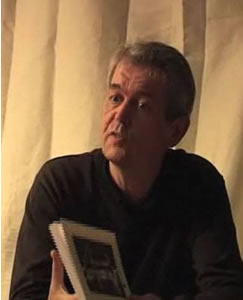
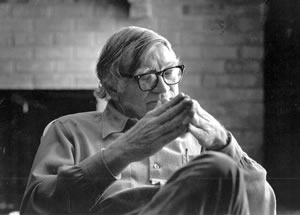
De Noorse schrijver Jan Kjærstad werd geboren op 6 maart 1953 in Oslo. Zie ook mijn blog van 6 maart 2007 en ook mijn blog van 6 maart 2009.


Uit: The Discoverer (Vertaald door Barbara Haveland)


„Behold this man. Behold this man, as he feels three tugs on the rope and slowly, after smiling uncertainly, proceeds to traverse, to edge out onto those dauntingly airy galleries. Behold this man as he inches across the rock face; see how with the caution of the novice he feels his way forward using all of his limbs, his whole body in fact, before shifting his weight from one foot to the other. I can sense how frightened, how truly terrified he is, and yet how full of the determination to do this, to see it through, make it to the top. And then, suddenly, as if something has ground to a halt, he freezes. He shuts his eyes. He looks as though he is listening to the wind, while at the same time concentrating hard, trying to place the scent emanating from the rock against which he is pressed. The bright sunlight glitters off the cliff face, sparkles in the runnels of meltwater. As far as I can see he is holding his breath. I have known it all along. This is the moment of truth. On a ledge, with a drop of hundreds of meters into the abyss only a step away. Here you live, or you die.

"This is a second I shall remember."

Then he does the one thing I have begged him not to do. He half turns, while apparently hanging on tight with both hands. He looks out. Looks down. As if intent on defying something. Proving something. For a moment he seems to be completely dazzled by the Slingsby glacier far below. Or no, not dazzled, but stunned, panic-stricken. Psyched out, as they say. I refuse to believe it. That this man could be afraid of anything, a man who brought thousands of cars to a halt on Oslo's Town Hall Square and who, by his mere presence, drew a cyclone to himself; a man who has been with three fair maids at once and who would not hesitate to dive to a depth of fifteen meters without an oxygen tank.“


Kjærstad
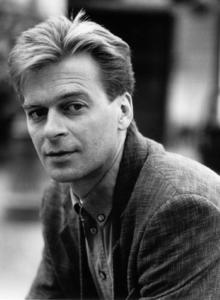
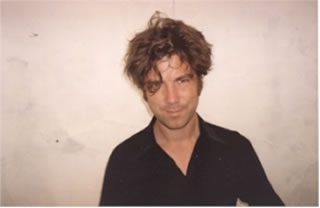
Jan Kjærstad (Oslo,  6 maard 1953)


De Italiaanse beeldhouwer, schilder, architect en dichter Michelangelo werd geboren op 6 maart 1475 in Caprese. Zie ook mijn blog van 6 maart 2009.


Celestial Love


No mortal thing enthralled these longing eyes

When perfect peace in thy fair face I found;

But far within, where all is holy ground,

My soul felt Love, her comrade of the skies:

For she was born with God in Paradise;

Nor all the shows of beauty shed around

This fair false world her wings to earth have bound:

Unto the Love of Loves aloft she flies.

Nay, things that suffer death, quench not the fire

Of deathless spirits; nor eternity

Serves sordid Time, that withers all things rare.

Not love but lawless impulse is desire:

That slays the soul; our love makes still more fair

Our friends on earth, fairer in death on high.


Vertaald door John Addington Symonds


michelangelo
Michelangelo (6 maart 1475 – 18 februari 1564)

Portret door Jacopino del Conte, na 1535


De Duitse schrijfster Elisabeth Castonier werd geboren op 6 maart 1894 in Dresden. Haar eerste roman Frau, Knecht, Magd verscheen in het Berliner Tageblatt. Tijdens het Derde Rijk ging zij in ballingschap, eerst naar Wenen, later naar Italië en tenslotte naar Engeland. Zij werkte voor de BBC en werd correspondente voor bladen als de News Chronicle, de New Statesman en emigrantenbladen als de Pariser Tageszeitung en het Wiener Tageblatt. Vanaf  1944 werkte zij als landbouwster. In 1955 kon zij om gezondheidsredenen dit werk niet langer doen. Zij trok naar een Cottage in Wiltshire en begon opnieuw te schrijven, vaak goedverkopende, vrolijke verhalen over het leven in Engeland.


Uit: Stürmisch bis heiter. Memoiren einer Außenseiterin


„Ich ging mit Ines zum Opernplatz, denn dergleichen sieht man nur einmal im Leben – und außerdem war es gut, Zeuge gewesen zu sein.

Menschenmassen strömten die Linden entlang, Musikkapellen spielten, es herrschte Feiertagsstimmung. Fackelzüge marschierten auf, Studenten umstanden den Scheiterhaufen, warfen ihre Fackeln in die Flammen, hochbeladene Lastwagen brachten das Brennmaterial, die deutsche Literatur. Zuerst kamen die Prominenten, später alles, was aus Verlagen und Buchhandlungen an verbotenen Schriftstellern abgeholt worden war.

Ines bemerkte: »Dies ist natürlich der größte Scheiterhaufen aller Zeiten, weil er vom größten Führer aller Zeiten und dem größten Schreier aller Zeiten befohlen worden ist.«

(...)

Nachdenklich stimmen die Einzelschicksale, die nur geschichtliche Randnotizen (wenn überhaupt) blieben, aber Existenzen und Familien zerstörten.

Beim Rundfunk arbeitete ich längst nicht mehr. Dort waren alle, die ich gekannt hatte, entlassen worden oder geflohen. Zu ihnen gehörte ein Mann, der sich später mit seiner Frau, seinem Bruder und seiner Schwägerin vor Capri mit Steinen beschwert ertränkte. Sie hinterließen einen Brief, in dem sie mitteilten, daß kein Land ihnen Einreisebewilligung erteilt hätte und ihre Aufenthaltsbewilligung in Italien befristet wäre. Sie hofften, daß sie in dem Land, in das sie sich jetzt flüchteten, freundlich aufgenommen würden. „


Castonier
Elisabeth Castonier (6 maart 1894 – 24 september 1975)


De Noorse schrijver Johan Bojer werd geboren op 6 maart 1872 in Orkdal. Hij was een buitenechtelijk kind van een dienstmeisje en een handelsreiziger. Hij groeide op als pleegking van de familie Fætten in Rissa. Hij werkte o.a. als visser, boer, vertegenwoordiger en boekhouder. In 1893 publiceerde Bojer zijn eerste literaire werk Unge tanker, onder het pseudoniem Johan K. Hansson. Een kleine erfenis van zijn vader stelde hem in 1895 in staat naar Parijs te gaan, waar hij tot 1915 bleef en kennis maakte met de schrijvers Knut Hamsun en August Strindberg. Ook Victor Hugo had invloed op zijn werk. Zijn belangrijkste werk is wellicht Den siste viking (De laatste Viking) uit 1921.


Uit: The Great Hunger (Vertaald door W. J. Alexander Worster en C. Archer)


“For sheer havoc, there is no gale like a good northwester, when it roarsin, through the long winter evenings, driving the spindrift before itbetween the rocky walls of the fjord. It churns the water to a frothof rushing wave crests, while the boats along the beach are flung insomersaults up to the doors of the grey fisher huts, and solid old barngangways are lifted and sent flying like unwieldy birds over the fields.

"Mercy on us!" cry the maids, for it is milking-time, and they haveto fight their way on hands and knees across the yard to the cowshed, dragging a lantern that WILL go out and a milk-pail that WON'T be held. And "Lord preserve us!" mutter the old wives seated round the stove within doors--and their thoughts are far away in the north with the Lofoten fishermen, out at sea, maybe, this very night.

But on a calm spring day, the fjord just steals in smooth and shining by ness and bay. And at low water there is a whole wonderland of strange little islands, sand-banks, and weed-fringed rocks left high and dry, with clear pools between, where bare-legged urchins splash about, and tiny flat-fish as big as a halfpenny dart away to every side. The air is filled with a smell of salt sea-water and warm, wet beach-waste, and the sea-pie, see-sawing about on a big stone in the water, lifts his red beak cheerily sunwards and pipes: "Kluip, kluip! the spring has come!"

On just such a day, two boys of fourteen or thereabouts came hurrying out from one of the fishermen's huts down towards the beach. Boys are never so busy as when they are up to some piece of mischief, and evidently the pair had business of this sort in hand. Peer Troen, fair-haired and sallow-faced, was pushing a wheelbarrow; his companion, Martin Bruvold, a dark youth with freckles, carried a tub. And both talked mysteriously in whispers, casting anxious glances out over the water.”


bojerjohan
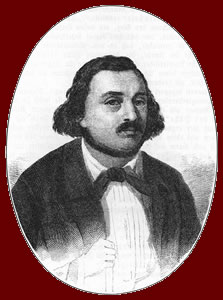
Johan Bojer (6 maart 1872 – 3 juli 1959)


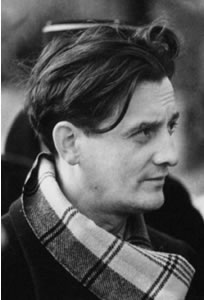
De Poolse dichter en aforist Stanisław Jerzy Lec werd geboren op 6 maart 1909 in Lemberg. Zie ook mijn blog van 6 maart 2007 en ook mijn blog van 6 maart 2009.


Uit: Die Tinte ist ein Zündstoff (Biografie door Marta Kijowska)


»Fasse dich kurz. Die Welt ist mit Worten übervölkert«, lautet einer von Lec’ meistzitierten Aphorismen. Was er von anderen verlangte, galt auch für ihn selbst. So schrieb oder besser kritzelte

er mit zitternder Hand im Frühjahr 1966, wenige Wochen vor seinem Tode, seine Letzte Autobiographie. Sie war wie die meisten seiner literarischen und satirischen Werke: kurz, prägnant

und voller Fragen.

War ich denn wirklich am 6. März 1909, wie es aus meinem Lemberger Geburtsschein hervorgeht, geboren? Oder vielmehr erst im Jahre 1933, als ich nach der Wiener und der Lemberger Schule und der Universität die Stätte der Rechtswissenschaft verließ, um meine erste Bekanntschaft mit dem Unrecht zu machen? Oder vielleicht wurde ich erst existent, als im selben Jahr mein Lyrikbändchen Farben aus der Druckmaschine herausfiel? Oder vielleicht erst im Jahre 1935 mit dem Erscheinen der Satirensammlung Zoo? Nun, später kam ich mehrmals auf die Welt, lyrisch und satirisch – mit jedem

Buch, mit jedem Gedicht, ja mit dem kleinsten Epigramm.

Womöglich wurde ich aber erst im Krieg geboren? Im Konzentrationslager? Oder erst nach der Flucht vor der Hinrichtung im Jahre 1943? Oder als ich die Wälder der Partisanen im Jahre 1944 verließ? Wie viele Gelegenheiten auch danach, geboren zu werden!

Laut Geburtsschein wurde Stanisław Jerzy Lec also am 6. März 1909 in Lemberg geboren. Sein Vater, Baron Benno de Tusch-Letz, war – entgegen der Familientradition, nach der die männlichen Nachkommen den Arztberuf wählten – Bankier und Großgrundbesitzer. Er besaß Güter in Podolien und in der Bukowina und auch zwei Wohnsitze: in Lemberg und in Wien, wo seine Vorfahren in den Adelsstand erhoben worden waren.“


lec2
Stanisław Jerzy Lec  (6 maart 1909 – 7 mei 1966)


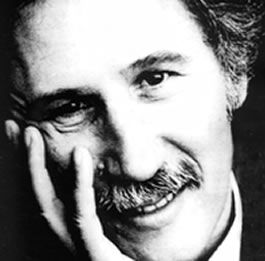
De Zweedese schrijfster Victoria Maria Benedictsson werd geboren op 6 maart 1850 in Schonen. Zie ook mijn blog van 6 maart 2007 en ook mijn blog van 6 maart 2009.


Uit: Money (Vertaald door Verne Moberg)


„It was an uncommonly beautiful autumn day, and Axel Möller had put up the doors to the street to bring air and light into the dark shop. On a sugar barrel in its farthest corner he sat down with his back up against the wall and his violin beneath his chin. He was fantasizing.

There was a strange contrast between the inspired facial expression and the wretched potpourri that he was rendering. A painter who had only seen him would have been delighted; a musician who had heard would have been driven to despair. One could hear nothing more miserable than this helpless groping for something he never could reach; the striking up of well-known melodies that were not allowed to emerge as, muddling through them, he tried to make believe he was composing; then lastly these random runs, constituting the total outcome of his concert appearances. But there was no

doubt that he believed himself to be producing something beautiful, and that he drew pleasure from this.

There was a darkening in the doorway. He looked up and could see Selma. Her contours appeared sharp against the sunny background; she was dressed in a close-fitting dark-blue dress that made her look even slimmer.

"I would like to hear you play but don't dare on your mother's account," she said laughing as she grabbed hold onto each door post and let her body balance forward as far as her arms reached.

His face shone with joy when he saw her, but before he could answer she was gone.

Even when she had gone he thought he heard a subdued laugh and saw a white row of teeth appear over there in the shadow. He laid the violin on the counter and thought for a moment. It was probable that she turned off at the gate and was walking home along the railway embankment. And in that case. . . It was a blessing that the overgrown current bushes were standing in the way of Mother's window!“


Benedictsson
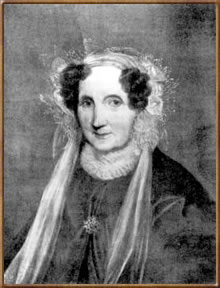
Victoria Benedictsson (6 maart 1850 – 21 juni 1888)


De Franse schrijver Savinien Cyrano de Bergerac werd geboren op 6 maart 1619 in Parijs. Zie ook mijn blog van 6 maart 2007 en ook mijn blog van 6 maart 2009.


Uit: Voyage dans la lune


"... J'avais attaché autour de moi quantité de fioles pleines de rosée, sur lesquelles le soleil dardait ses rayons si violemment, que la chaleur qui les attirait, comme elle fait les plus grosses nuées, m'éleva si haut, qu'enfin je me trouvai au-dessus de la moyenne région. Mais comme cette attraction me faisait monter avec trop de rapidité, et qu'au lieu de m'approcher de la lune comme je le prétendais, elle me paraissait plus éloignée qu'à mon partement, je cassai plusieurs de mes fioles, jusqu'à ce que je sentis que ma pesanteur surmontait l'attraction, et que

je redescendaisvers la terre."

"... J'avais fait une machine que je m'imaginais capable de m'élever autant que je voudrais en sorte que de tout ce que j'y croyais nécessaire n'y manquant, je m'assis dedans et me précipitai en l'air du haut d'une roche. Mais parce que je n'avais pas bien pris mes mesures, je culbutai rapidement vers la vallée."

"... quand on eut découvert l'invention du ressort, quelques uns dirent qu'il fallait y attacher quantité de fusées volantes... à peine y eus-je mis les deux pieds que me voilà enlevé dans la nue..."


vraicyrano

Cyrano de Bergerac (6 maart 1619 – 28 juli 1655)


Zie voor onderstaande schrijver ook mijn blog van 6 maart 2009.


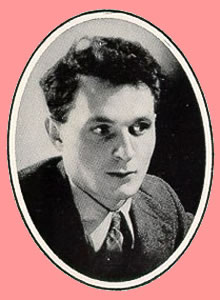
De Italiaanse dichter Luigi Alamanni werd geboren op 6 maart 1495 in Florence.

Geschreven door Romenu om 20:10 Reageer op dit bericht
Reageer op dit bericht

Reageer op dit bericht

Een titel of je eigen website toevoegen

De blogger leest alles eerst na: je tekst verschijnt zodra die goedgekeurd is.

Pier Paolo Pasolini, Arthur van Schendel, Koos van Zomeren, Danny King, Leslie Marmon Silko

De Italiaans filmregisseur, dichter en schrijver Pier Paolo Pasolini werd geboren in Bologna op 5 maart 1922. Zie ook mijn blog van 5 maart 2007 en ook mijn blog van 5 maart 2008 en ook mijn blog van 5 maart 2009.


Stolen Days

We who are poor have little time
for youth and beauty:
you can do well without us.

Our birth enslaves us!
butterflies shorn of all beauty,
buried in the chrysalis of time.

The wealthy don't pay for our time:
those days stolen from beauty
possessed by our fathers and us.

Will time's hunger never die?


Vincent

Vincent won't go to the fair in the towns of the Friuli,
they play only church bells not violins in the Friuli!
When he sees some poor man lost in a square of Friuli
he gives him his jacket since he's sheltered by some wall,
when he sees a poor man lost and alone in the Friuli
he gladly gives him his heart as the sky turns to dusk.
"Good-bye, mom, good-bye, dad I am leaving the Friuli
I'm leaving for America, the glory of the Friuli!"
The train is taking me toward the clear blue sea,
oh, the sad loneliness of dying so far from Friuli.


Vertaald door Adeodato Piazza Nicolai


Uit: Amado Mio. Unkeusche Handlungen


Und eines Nachmittags oder Abends lief ich schreiend
Auf den sonntäglichen Straßen, nach dem Fußballspiel,
zum alten Friedhof, dort hinter der Bahn,
um wieder und wieder bis aufs Blut
den süßesten Akt des Lebens zu vollziehen,
ganz allein, auf dem Erdhaufen
der zwei oder drei Gräber
italienischer oder deutscher Soldaten,
die ohne Namen auf dem Balkenkreuz
hier liegen aus dem vorigen Krieg.


Vertaald door Maja Pflug


Pier_Paolo_Pasolini
Pier Paolo Pasolini (5 maart 1922 – 2 november 1975)


De Nederlandse schrijver Arthur van Schendel werd geboren op 5 maart 1874 in Batavia. Zie ook mijn blog van 5 maart 2007 en ook mijn blog van 5 maart 2008 en ook mijn blog van 5 maart 2009.


Uit: Een zwerver verliefd


„Toen Tamalone een knaap was van dertien jaren, bleek en bescheiden, was hij het meest geliefde kind van zijn vader, die hem altoos bij zich verlangde, hem 's morgens medenam naar het hof van den baljuw en hem zijn boek liet dragen. En thuis na het avondeten las hij hem voor, dicht bij hem gezeten. De jongen luisterde dan met oogen neêrgeslagen naar de geschiedenissen van de heiligen, van de koningen en de oorlogen en zat nog langen tijd daarna zwijgend voor zich te staren. Maar zelden sprak hij een woord.

Eens zag een priester hem en was getroffen door de zonderling teedere bekoring dier donkere oogen; en nadat hij vele malen in de woning van Anfroy, den vader, was komen spreken nam hij den knaap mede naar zijn kapel, achter het gasthuis bij de rivier. Daar, in de sacristij, waar hij door de hooge ruitjes de kalme zonnige wolken aan de lucht zag gaan, zat voortaan Tamal des morgens met andere jongens op banken, luisterend naar den priester, die in 't midden met schoone klanken stond te zingen; hun aller hooge stemmen herhaalden dan een korte wijs, - bij het ijl geluid zijner eigen stem voelde hij zijn hart verwonderlijk poperen, zijn wangen waren heet en hij wendde zijn oogen van den meester niet af. Den langen weg naar huis, en des morgens weder naar de kapel toegaande dacht hij gedurig hoe heerlijk het was in de ruimte van een kerk te zingen; hij keek niet meer naar het koopvolk en de huizen die hij voorbij liep, hij zag inwendig zoovele nieuwe dingen en hoorde steeds den klank van de stem des priesters - het waren zijn eerste droomen waar zijn gelaat van bloosde en dit was zijn eerste liefde, het koraalgezang dat vader Mahy hem leerde.

In de kapel hielden de geestelijken veel van hem; zijn vader was heimelijk verblijd wanneer hij des avonds den jongen met een boek op de knieën stillekens bij het licht zag lezen, en dacht glimlachend aan later tijd.“


Arthur_van_Schendel
Arthur van Schendel (5 maart 1874 – 11 september 1946)

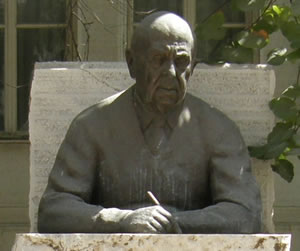
Borstbeeld in Amsterdam


De Nederlandse schrijver, columnist en dichter Koos van Zomeren werd geboren in Velp op 5 maart 1946. Zie ook mijn blog van 5 maart 2007  en ook mijn blog van 5 maart 2008 en ook mijn blog van 5 maart 2009.


Uit: Otto’s oorlog


„Stein hield kantoor in de achterkamer van een woning boven een van zijn winkels. Meubilair uit de jaren vijftig en spetters duivenkak op de ruiten. De geur van vermolmd hout en verschoten behang. Het geheel ademde een onbeschaamde smakeloosheid uit en had een ontwrichtende uitwerking op zijn zakenrelaties. Toch was intimidatie niet zijn belangrijkste oogmerk. Evenmin was het zijn
bedoeling te koketteren met zijn eenvoudige afkomst. Op de allerlaatste plaats liet hij zich leiden door overwegingen van zuinigheid. Alles liet hij bij het oude omdat hij eraan gehecht was.“

(...)


„Het grijsgroene, slijmerige slik verweerde zich energiek. Het zoog, kneedde en slurpte, het beroofde hen van hun adem, moed en zweet, maar het kon niet verhinderen dat ze het eiland bereikten. Zodra ze vaste grond onder de voeten hadden liet Simon zich vallen. Stein stond te kotsen. De eerste tien minuten zeiden ze geen stom woord. In die tijd werden ze zich bewust van de eigenaardige, weeë geur die over Arel hing. Naast een rotsblok lag met gespreide vleugels en een opzij gezakte kop het gemummificeerd kadaver van een pelikaan. Als een lugubere kopie lag achter de volwassen vogel in precies dezelfde houding een donzig bruin jong. En zij waren de eersten niet die hier door de dood waren overmeesterd. Het hele eiland was bedekt met karkassen en knekels,
die in de loop der jaren de poreuze, zachtgele kleur van de bodem hadden aangenomen. Je kon geen stap verzetten zonder op een bot te trappen.“


koos_nijmegen
Koos van Zomeren (Velp,  5 maart 1946)


De Britse schrijver Danny King werd geboren op 5 maart 1969 in Slough, Berkshire. Zie ook mijn blog van 5 maart 2009.


Uit: The Burglar Diaries


'How the fuck should I know? This ain't my house, I don't live here do I? Have a look in those drawers over there by the videos,' which he does, as I make a little more room for my hand so I can finally yank out the last of the cables. I pull the machine out from under the table and take it through to the back door - our point of entry for this evening - to put with the rest of the pile. A big telly, a portable, a microwave, one of those miniature hi-fi systems, an answerphone, a camera, a leather jacket, a three quarter's full bottle of scotch (for personal consumption later) and an alright looking set of graphite golf clubs. Some burglars would take the furniture as well, but I'm not really in that game. Too big and too much of an effort to be arsed with. I'm strictly an electrical appliances man; they yield the most amount of wedge for the least amount of bulk - not counting jewellery of course, though there ain't an awful lot of that about in reality. The image of some Milk Tray man shinning up a drainpipe to steal Lady Fanshaw's diamond tiara is nothing more than a product of Hollywood and a romantic view of burglary. Let me assure you, if Raffles had lived on this estate, he would've nicked videos as well.

'These 'em?' says Ollie, holding out a manual with 'How to use your new video recorder' written in big letters on the front.

'Yeah, that's them,' I say.

'Well here'ya.'

'Don't give 'em to me, I don't want them. Stick 'em in your pocket.'

'I ain't got the room, you take 'em.'

This is another of Ollie's little traits, filling his pocket with crap. We ain't in most houses more than ten minutes before he's stashed half a ton of junk we ain't ever going to get a penny for away in his slacks. Calculators, pens, cheap digital watches and anything else shiny that catches his eye. We did this one job once where the geezer had a big bottle of coppers - you know, one and two pence pieces - and old jackdaw here practically gives himself a hernia trying to clamber over the back fence in a hurry, a bit later on, with little more than £19 in his pocket. Cunt!“


DannyKing
Danny King (Slough, 5 maart 1969)


De Indiaans-Amerikaanse schrijfster Leslie Marmon Silko werd geboren op 5 maart 1948 in Albuquerque, New Mexico. Zie ook mijn blog van 5 maart 2007 en ook mijn blog van 5 maart 2009.


Uit: Language and Literature from a Pueblo Indian Perspective


„In the Creation story, Antelope says that he will help knock a hole in the earth so that the people can come up, out into the next world.  Antelope tries and tries; he uses his hooves, but is unable to break through.  It is then that Badger says, “Let me help you.”  And Badger very patiently uses his claws and digs a way through, bringing the people into the world.  When the Badger clan people think of themselves, or when the Antelope people think of themselves, it is as people who are of this story, and this is our place, and we fit into the very beginning when the people first came, before we began our journey south.

Within the clans there are stories that identify the clan.  One moves, then from the idea of one’s identity as a tribal person into clan identity, then to one’s identity as a member of an extended family.  And it is the notion of “extended family” that has produced a kind of story that some distinguish from other Pueblo stories, though Pueblo people do not.  Anthropologists and ethnologists have, for a long time, differentiated the types of stories the Pueblos tell.  They tended to elevate the old, sacred, and traditional stories and to brush aside family stories, the family’s account of itself.  But in Pueblo culture, these family stories are given equal recognition.  There is no definite, present pattern for the way one will hear the stories of one’s own family, but it is a very critical part of one’s childhood, and the storytelling continues throughout one’s life.  One will hear stories of importance to the family—sometimes wonderful stories—stories about the time a maternal uncle got the biggest deer that was ever seen and brought it back from the mountains.  And so an individual’s identity will extend from the identity constructed around the family—“I am from the family of my uncle who brought in this wonderful deer and it was a wonderful hunt.”


sliko
Leslie Marmon Silko (Albuquerque, 5 maart 1948)

Zie voor nog meer schrijvers van de 5e maart ook mijn vorige blog van vandaag.

Geschreven door Romenu om 20:17 Reageer op dit bericht

Ennio Flaiano, Frank Norris, Fritz Usinger, Friedrich Schnack, Moritz Carrière

De Italiaanse schrijver Ennio Flaiano werd op 5 maart 1910 in Pescara geboren. Zie ook mijn blog van 5 maart 2009.


Uit: Alles hat seine Zeit (Tempo di uccidere, Vertaald door Susanne Hurni)


„Ich war erstaunt, am Leben zu sein, doch ich war es müde, auf Hilfe zu warten. Müde vor allem der Bäume, die dem Abgrund entlang wuchsen, überall wo Platz war für ein Samenkorn, das zufällig hingeweht war und dort seine Tage beschloss. Die Hitze, diese weiche Luft, die auch die Morgenbrise nicht zu kühlen vermochte, verlieh den Bäumen das Aussehen von ausgestopften Tieren.

Seit das Lastauto umgekippt war, gerade in der ersten steil abfallenden Straßenkurve, hatte der Zahn wieder angefangen, mir weh zu tun, und jetzt drängte mich etwas, das ich als unwiderstehlich empfand (vielleicht die Ungeduld der Neuralgie), diesen Ort zu verlassen. «Ich gehe», sagteich und stand auf. Der Soldat, der zufrieden rauchte und jetzt bereit war, alles Unvorhergesehene des

neuen Abenteuers mit mir zu teilen, machte ein finsteres Gesicht. «Wohin denn?», fragte er.

«Runter zum Fluss.» Wir sahen den Fluss noch nicht, aber er lag dort unten in seinem seit Jahr hunderten gegrabenen Tal, das von ein paar faulen Krokodilen, auf der Jagd nach Wäscherinnen, bewacht wurde. Ich dachte, ich würde einen Lastwagen finden, um auf der anderen Seite wieder hinaufzufahren. Ich musste vor dem Abend dort sein, oder ich vergeudete einen der vier Tage, die man mir zugestanden hatte, damit ich einen Zahnarzt aufsuchen konnte.

Ja, ich musste weggehen. Jenseits des Tals erschien am weißen Himmel der gegenüberliegende Rand des Hochlands. Der Fluss hatte sich um die Berge herumgegraben, und sie waren trocken geblieben wie Knochen. Zwischen den beiden Felswänden lagen Kilometer, wie viele weiß ich nicht, denn die Entfernungen trügen bei diesem Licht, das weitab liegende winzige Einzelheiten

scharf umreißt; vielleicht waren es fünf oder sechs Kilometer.“


flaiano-ennio

Ennio Flaiano (5 maart 1910 – 20 november 1972)


De Amerikaanse schrijver Frank Norris werd geboren op 5 maart 1870 in Chicago. Zie voor onderstaande schrijver ook mijn blog van 5 maart 2007 en ook mijn blog van 5 maart 2009.


Uit: The Pit


„A great, slow-moving press of men and women in evening dress filled the vestibule from one wall to another. A confused murmur of talk and the shuffling of many feet arose on all sides, while from time to time, when the outside and inside doors of the entrance chanced to be open simultaneously, a sudden draught of air gushed in, damp, glacial, and edged with the penetrating keenness of a Chicago evening at the end of February.

The Italian Grand Opera Company gave one of the most popular pieces of its repertoire on that particular night, and the Cresslers had invited the two sisters and their aunt to share their box with them. It had been arranged that the party should assemble in the Auditorium vestibule at a quarter of eight; but by now the quarter was gone and the Cresslers still failed to arrive.

"I don't see," murmured Laura anxiously for the last time, "what can be keeping them.“


norris

Frank Norris (5 maart 1870 – 25 oktober 1902)


De Duitse dichter, schrijver en vertaler Fritz Usinger werd geboren op 5 maart 1895 in Friedberg, Hessen. Zie ook mijn blog van 5 maart 2009.


BABYLON DES WORTS

Noch sing ich unter Trümmern, wenn ich zerfallen bin.
Auch aus Zerbrochenem verkündet sich der Sinn.
Das Schöne führt die Linien zu einem Ganzen fort.
Doch ändert sich der Abgrund nicht an seinem Ort.

Die Erde ist vollendet nicht im Ganzen fort und fort.
Sie blüht und sie gedeiht an ihrem seltnen Ort.
Manchmal gelingt ihr wohl ein göttlicher Gewinn,
Doch nie das höchste Wort Jehova-gleich »Ich bin«.

So lass in Trümmern mich, wenn ich zerfallen bin!
Auch die zerbrochnen Tempel sagen noch den Sinn.
Der Sinn ist grösser als der grösste Turm aus Wort.
Unsterblich dauert Babylon an dem Ruinen-Ort.


Usinger
Fritz Usinger (5 maart 1895 – 9 december 1982)


De Duitse dichter en schrijver Friedrich Schnack werd geboren op 5 maart 1888 in Rieneck, Unterfranken. Zie ook mijn blog van 5 maart 2009.


Franken


Der Main geht breit und kühl durch weite Feuerwochen

Bamberg und Würzburg segneten ihn ein.

Die Stille lodert, wenn die Weine kochen:

die frohe “Leisten” und der milde “Stein”.


Die Glocken wecken auf in den vertrauten Auen,

von Harz und Honig schwebt ein holdes Wehn.

O liebte ich: ich liebte ihre Frauen

und würde in die Rosengärten gehn!


Die kleinen Dörfer haben ihre Wunder:

uralte Giebel, Türme, Truhen voller Zinngerät.

Am Tore atmet glühend der Holunder,

die Nacht ist lau, hier wird es niemals spät.


Die Brunnen rauschen unter süßen Linden,

die Bienenwolken sprühn wie goldnes Licht.

Die Zäune überstrahlt der Blütenschwarm der Winden

und grüßt Marias wehes Traumgesicht.


Die gute Heimat muß ich feurig preisen:

hier wohnte Friedrich Schnack in einem kleinen Haus,

er sah den Main zum fernen Rheine reisen

und lobte Gott und trank den Weinkrug aus.


Schnack

Friedrich Schnack (5 maart 1888 – 6 maart 1977)


De Duitse schrijver en filosoof Moritz Carrière werd geboren op 5 maart 1817 in Griedel, Hessen. Zie ook mijn blog van 5 maart 2009.


Uit: Das Wesen und die Formen der Poesie


„Der rechte Epiker verschwand hinter seinem Werk, mit eigener Kraft schienen die Bilder des Lebens sich vor unserer Anschauung zu bewegen, nach eigenem Sinne sich zu Gruppen zu verbinden; eine innere Einheit, eine eigene Folgerichtigkeit verkettete die Gedanken. Aber der Lyriker tritt selber in den Mittelpunkt, sein Gefühl ist es das die Welt in sich aufnimmt, er zeigt sie uns nur im Spiegel seines Gemüths. Und wie das All klanglos, dunkel, in schweigender Nacht dastünde, wenn nicht die Wellen der Luft an ein Ohr und die Schwingungen des Aethers an ein Auge schlügen, wo dann die Seele sie empfindend zu Tönen und Farben werden läßt, so sollen wir in der Subjectivität des Dichters die Macht erkennen, welche in aller Fülle der Natur und der Geschichte nur den Wiederschein ihrer eigenen Gefühle erblickt; aus seinem Auge entspringt der Morgensonnenstrahl, der die Memnonsäule tönen macht, und der Hauch seines Mundes wird der belebende Odem der Gebilde seiner Hand. Sein Gefühl singt er um das Echo im Herzen der Andern wach zu rufen, nicht Anschauungen will er vor uns hinführen, sondern Stimmungen in uns erwecken. Die Melodie der Seele und ihre Selbstinnigkeit tönt in seinem Lied, und von den Dingen spricht er nur wie sie das Gemüth bewegen, wie sie durch die Empfindungen, die sie in uns erregen, in ihrer Untrennbarkeit vom Ich als Bedingungen der eigenen wechselnden Zustände gefühlt werden; er schildert sie nur um durch ihr Bild den gleichen Eindruck auf die Hörer zu machen und so in ihnen die Bebungen des eigenen Innern fortzittern zu lassen.“


Moritz_Carriere
Moritz Carrière (5 maart 1817 – 19 januari 1895)
Buste bij zijn graf in München


Geschreven door Romenu om 20:14 Reageer op dit bericht

Kristof Magnusson, Khaled Hosseini, Robert Kleindienst, Irina Ratushinskaya

De Duitse schrijver Kristof Magnusson werd geboren op 4 maart 1976 in Hamburg. Zie ook mijn blog van 4 maart 2007 en ook mijn blog van 4 maart 2008 en ook mijn blog van 4 maart 2009.


Uit: Das war ich nicht


“Ich sollte mich wirklich schämen. Schämen solltest du dich, Henry LaMarck! Auf jeder anderen Party wäre es im Rahmen des gesellschaftlich Akzeptierten gewesen, sich sang- und klanglos davonzustehlen, doch auf der Party zu meinem eigenen sechzigsten Geburtstag war es das sicher nicht.        
        Meine Verlegerin Gracy Welsh hatte mich zu Parker Publishing gebeten, angeblich um mir die Umschlagentwürfe für die Taschenbuchausgabe meines letzten Romans, Windeseile, zu zeigen. Als ich jedoch das Großraumbüro im 24. Stock betrat, standen plötzlich jede Menge Leute um mich herum und riefen: "Überraschung!" Viele hatten sich mit Hütchen dekoriert, mit ganz ironisch hässlichen Hütchen natürlich, da ich bei Parker Publishing
für meinen Humor bekannt war. Humor - Schmumor, ich war sechzig
geworden, was war daran witzig?
        Als sich der Überraschungslärm nicht legen wollte, schnipp­te Gracy mit dem Zeigefinger an ihren mit Sekt gefüllten Plastik­becher, begrüßte und beglückwünschte mich und sagte dann das, von dem sie dachte, das ich es ohnehin längst wusste:
        "Henrys Geburtstag wäre ja an sich schon eine tolle Sache, aber das ist erst der Anfang: Henry ist nämlich mit Windeseile einer der Finalisten um den diesjährigen Pulitzerpreis. Ist das nicht fantastisch?"
        Alle schienen zu jubeln, das sah ich ihren Gesichtern an, denn ich hörte nichts, und spürte auch nichts, außer diesem Herz­rasen, das mich seit einiger Zeit immer wieder befiel und in ­meinem ganzen Körper wiederzuhallen schien, aufdringlich und schnell. Oh Gott. Ich war für den Pulitzerpreis nominiert, den ich vor etlichen Jahren schon einmal für meinen Roman Unterm Ahorn bekommen hatte. Damals war das eine echte Auszeichnung gewesen, doch jetzt schoss mir nur ein Gedanke durch den Kopf: Sie wollen dir schnell noch mal den Pulitzerpreis geben, bevor sie dich aufs literarische Abstellgleis schieben.


Magnusson-Kristof
Kristof Magnusson (Hamburg, 4 maart 1976)


De Afghaanse schrijver Khaled Hosseini is geboren op 4 maart 1965 in Kabul. Zie ook mijn blog van 4 maart 2007 en ook mijn blog van 4 maart 2008 en ook mijn blog van 4 maart 2009.


Uit: Tausend strahlende Sonnen (Vertaald door Michael Windgassen)


“Mariam war fünf, als sie zum ersten Mal das Wort »harami« hörte. Es war an einem Donnerstag, zweifelsohne, denn Mariam erinnerte sich, dass sie aufgeregt und mit ihrenGedanken woanders gewesen war, wie immer an Donnerstagen, wenn Jalil in der kolba zu Besuch kam. Sie sehnte sich danach, ihn endlich im kniehohen Gras der Lichtung winkend näher kommen zu sehen, und hatte,

um sich die Zeit zu vertreiben, das Teeservice aus dem Schrank geholt. Für ihre Mutter Nana war das Teeservice das einzige Andenken an die eigene Mutter, die zwei Jahre nach Nanas Geburt gestorben war. Nana hielt jedes Einzelteil aus blauem und weißem Porzellan in Ehren, die Kanne mit der elegant geschwungenen Tülle, den handgemaltenFinkenundChrysanthemen,unddas Zuckerschälchen mit dem Drachen, der böseGeister fernhalten sollte. Ausgerechnet dieses Zuckerschälchen glitt Mariam aus der Hand, fiel auf die Holzdielen der kolba und zersprang in tausend Stücke.

Als Nana die Scherben sah, verfärbte sich ihr Gesicht dunkelrot, die Unterlippe bebte, und die Augen, das lidlahme ebenso wie das gesunde, trafen Mariam mit hartem, starrem Blick. Sie war so wütend,

dass Mariam fürchtete, der Dschinn würde wieder Besitz von ihr ergreifen. Doch der Dschinn kam nicht, diesmal nicht. Stattdessen packte Nana Mariam bei den Händen, zog sie nah zu sich heran und stieß zwischen zusammengepressten Zähnen hervor:

»Du ungeschickter kleiner harami. Das ist wohl der Dank für das, was ich alles ertragen musste. Zerbrichst mir mein Erbe, du ungeschickter kleiner harami.« Damals verstand Mariam nicht. Sie wusste weder, was harami bedeutete, noch war sie alt genug zu begreifen, wie ungerecht der

Vorwurf war, denn schließlich hatten sich die Erzeuger schuldig gemacht und nicht der harami – der Bankert –, dessen einziges Vergehen darin bestand, auf die Welt gekommen zu sein. Der Tonfall

ihrer Mutter ließ allerdings vermuten, dass ein harami etwas Hässliches, Widerwärtiges war, so etwas wie ein Insekt, wie die krabbelnden Kakerlaken, die Nana immer fluchend aus der kolba fegte.

Später konnte sich Mariam sehr wohl einen Begriff davon machen. Die Art, in der Nana das Wort aussprach – oder vielmehr ausspuckte –, ließ Mariam den Stachel spüren, der darin steckte.”


KhaledHosseini
Khaled Hosseini (Kabul, 4 maart 1965)


De Oostenrijkse dichter en schrijver Robert Kleindienst werd geboren op 4 maart 1975 in Salzburg. Hij studeerde germanistiek, pedagogie en politicologie. Kleindienst schrijft gedichten, proza en drama. Zie ook mijn blog van 4 maart 2009.


Uit: Später vielleicht


„Erst im Weitergehen realisierte er, was soeben passiert war: Um Haaresbreite wäre er von der Schaufel eines Baggers getroffen worden. Um Haaresbreite wäre er nicht mehr jemand gewesen, der durch die Stadt ging, auf der Suche nach Ideen, sondern ein Körper, um den sich nach und nach Menschen versammelt hätten. Betroffene Bauarbeiter. Fotografierende Touristen. Kinder, die unbeantwortet bleibende Fragen an ihre Eltern gestellt hätten. Irgendwann wäre der Arzt eingetroffen und hätte wohl nur noch seinen Tod festgestellt. Seltsam. Nie im Leben hatte er ernsthaft daran gedacht, sich das Leben zu nehmen. Und jetzt, wo er fast von einem metallenen Klotz ausgelöscht worden wäre, ohne die leiseste Vorwarnung, fühlte er einen unabdingbar stärkeren Drang, zu leben. Er ging ins nächste Café und schrieb.

Seltsam, alles aufzuschreiben, was man eben wahrnimmt. So greift man ein Stück Welt auf und erschafft sie gleichzeitig neu am Papier. Aber ich möchte erleben und dann erst Worte dafür finden, nicht umgekehrt. Ich bin kein Bildersammler, der gleich beim ersten Sehen alles in Worte umsetzt, jemand, dessen Wahrnehmung sich aufs Schreiben reduziert. Aber wo kann ich Bilder finden, wenn nicht vor der Haustür? Es ist ein pointillistisches Vermessen von Menschen und Landschaft, mit dem Zweck, später alles in Worten wiederzugeben. Ich schreibe das Drehbuch meines eigenen Lebens, aber ich schreibe nicht über mich, sondern schreibe mich selbst.“


Kleindienst1
Robert Kleindienst (Salzburg, 4 maart 1975)


De Russische dichteres en dissidente Irina Ratushinskaya werd geboren op 4 maart 1954 in Odessa. Zie ook mijn blog van 4 maart 2007  en ook mijn blog van 4 maart 2009.


Uit: Wind Of The Journey


Fairy tales creep on little cat paws
And smell like currants.
And by night they steal away
Little boys, if they don't go to bed properly,
Little girls, if they don't go to bed properly,
And even little bear cubs.
Oh, they are naughty, terribly naughty.


And they take the stolen child to the raspberry wood,
There is a honeysuckle bridge and beyond it a valley,
And whatever you fear, that's what they have there:
An old witch stares at you and eats you up,
A tree ensnares you and eats you up,
Wolves' eyes glow in the dark, too many to count.
And no one, no one will wake you!


Once you've had your fill of fear, you can fly,
Jump on a bed made of clouds,
Tickle the stars' whiskers:
A scarlet bell, hot bronze!
If you burn yourself, don't bawl:
There's a bear that patrols the sky
Waiting to have fun with the hunting dogs.


And from there you can see it all clearly:
The castles and roads and the chases.
Over there, the mermaids wave, laughing.
"Hey, you over there, behind the bronze mountain!
If you feel like a hero, come out and fight!
But if you're a coward we'll send you home,
You'll go back for ever and ever."


And then you'll cry under the covers,
You'll remember how it was and is no more.
Only a scent, like after a thunderstorm.
Oh you, stars and voices!
Now I am closing my eyes tight-tight:
Steal me back there!
If you don't I'll run away anyway!


Vertaald door Lydia Razran Stone


Ratushinskaya

Irina Ratushinskaya (Odessa, 4 maart 1954)


Zie voor nog meer schrijvers van de 4e maart ook
mijn vorige twee blogs van vandaag.

Geschreven door Romenu om 20:26 Reageer op dit bericht

Annette Seemann, F. W. Bernstein, Léon-Paul Fargue, Alan Sillitoe, Giorgio Bassani

De Duitse schrijfster en vertaalster Annette Seemann werd geboren op 4 maart 1959 in Frankfurt am Main. Zie ook mijn blog van 4 maart 2009.


Uit: Anna Amalia - Herzogin von Weimar


„Anna Amalia von Sachsen-Weimar-Eisenach, geboren am 24. Oktober 1739, gestorben am 10. April 1807, ist eine bis heute faszinierende Per­sönlichkeit. Sie ermöglichte die Entstehung der deutschen oder Weima­rer Klassik in der uns bekannten Form; sie vereinigte in sich große gei­stige, künstlerische und gesellige Gaben, die sie konsequent ausbildete. Sie war den Problemen des Landes gegenüber äußerst aufgeschlossen und bemühte sich, ihrem Sohn den Staat schuldenfrei zu hinterlassen, machte andererseits keine Abstriche bei der Inszenierung von höfischen Vergnügungen wie Bällen, Spielvergnügungen oder großen Empfängen und vor allem nicht beim Erwerb der neuesten Mode, für die sie hohe Preise zu zahlen bereit war. Sie haßte es, wenn man ihr schmeichelte, und suchte von Wahrhaftigkeit geprägte menschliche Beziehungen. Bei einigen Menschen galt sie als launisch.
Über 16 Jahre lang übte sie die Landesadministration des Herzogtums Sachsen-Weinar-Eisenach aus, um dann in ihr »Wittumspalais« über­zusiedeln und dort die zweite Lebenshälfte, abgesehen von mehreren Reisen und einem zwei Jahre währenden Italienaufenthalt, zu verbrin­gen und sich umfangreichen Sprach- und kulturhistorischen Studien sowie der Musik zu widmen.
Anna Amalia spielte vier Instrumente, komponierte, malte und zeich­nete, sie fertigte Übersetzungen aus mehreren Sprachen an, sie schrieb, neben Briefen auch einige fiktionale Texte. Sie pflegte intensiven Aus­tausch mit zahlreichen Dichtern und Gelehrten, deren berühmteste die »Weimarer Vier«, Goethe, Wieland, Schiller und Herder, sind.“


Seemann2
Annette Seemann (Frankfurt am Main, 4 maart 1959)


De Duitse dichter, graficus, karikaturist en satiricus F. W. Bernstein (eig. Fritz Weigle) werd geboren op 4 maart 1938 in Göppingen. Zie ook mijn blog van 4 maart 2009.


Gewalt


Die Gewalt im Allgemeinen
muß der Bürger strikt verneinen
sonst kriegt er eins auf den Hut
bis er sie verneinen tut

Im Besondren hilft Gewalt
in so manchem Sachverhalt
Mit Gewalt fällt manches leicht
was man ohne schwer erreicht

Nur mit Schlägen kriegst Du ein’
Nagel in die Wand hinein
Nur mit Sanftmut kannst Du ihn
schwerlich wieder rauseziehn

Hört das Fänsän nimmer auf
nimm den Hammer und hau drauf...


Bernstein

F. W. Bernstein (Göppingen, 4 maart 1938)


De Engelse schrijver Alan Sillitoe werd geboren op 4 maart 1928 in Nottingham. Zie ook mijn blog van 4 maart 2007  en ook mijn blog van 4 maart 2008 en ook mijn blog van 4 maart 2009.


Uit: Die Einsamkeit des Langstreckenläufers (Vertaald door Günther Klotz)


“„Sobald ich ins Borstal kam, machten sie mich zum Langstreckengeländeläufer. Sie dachten vermutlich, ich sei dazu gerade richtig gebaut, denn ich war hager und lang für mein Alter (und bin immer noch so), und jedenfalls hatte ich nicht viel dagegen, wenn ich ehrlich sein soll, denn Laufen ist bei uns zu Hause immer groß geschrieben worden, besonders das Weglaufen vor der Polizei.“

(…)


„Das macht richtig Spaß, als Langstreckenläufer allein da draußen, und keine Seele da, die dir die Laune verdirbt oder sagt, du sollst was machen […]. Manchmal denk ich, ich bin noch nie so frei gewesen wie in den beiden Stunden, wenn ich den Weg draußen vor den Toren lang trotte und bei der laublosen breitbauchigen Eiche am Ende des Heckenwegs wende.”

(…)


„Ich will euch nicht verheimlichen, daß wir durch die ganze Stadt spaziert sind, […], und wenn wir die Augen nicht auf der Erde hatten, wo sie nach verlorenen Brieftaschen und Uhren suchten, dann schielten sie nach offenen Fenstern und Ladentüren, ob nicht irgendwo was Lohnendes zu klemmen war.“


Sillitoe
Alan Sillitoe (Nottingham, 4 maart 1928)


De Franse dichter en essayist Léon-Paul Fargue werd geboren op 4 maart 1876 in Parijs. Zie ook mijn blog van 4 maart 2007 en ook mijn blog van 4 maart 2008 en ook mijn blog van 4 maart 2009.


Uit: Le piéton de Paris


“Chef-d'œuvre poétique de Paris, les quais ont enchanté la plupart des poètes, touristes, photographes et flâneurs du monde. C'est un pays unique, tout en longueur, sorte de ruban courbe, de presqu'île imaginaire qui semble être sortie de l'imagination d'un être ravissant. Je connais tellement, pour l'avoir faite cent fois, la promenade qui berce le marcheur du quai du Point-du-Jour au quai des Carrières à Charenton, ou celle qui, tout jeune, me poussait du quai d'Ivry au quai d'Issy-les-Moulineaux, que j'ai l'impression d'avoir un sérieux tour du monde sous mes talons. Ces seuls noms : Orsay, Mégisserie, Voltaire, Malaquais, Gesvres, aux Fleurs, Conti, Grands-Augustins, Horloge, Orfèvres, Béthune et place Mazas me suffisent comme Histoire et Géographie. Avez-vous remarqué que l'on ne connaît pas mieux "ses" quais que ses sous-préfectures ? J'attends toujours un vrai Parisien sur ce point : où finit le quai Malaquais, où commence le quai de Conti? Où se trouve le quai de Gesvres ? ...


fargue
Léon-Paul Fargue (4 maart 1876 – 24 november 1947)

Getekend door André Beucler


De Italiaanse schrijver Giorgio Bassani werd geboren op 4 maart 1916 in Bologna. Zie ook mijn blog van 4 maart 2007  en ook mijn blog van 4 maart 2009.


Uit: Les lunettes d'or (Vertaald door Michel Arnaud)


« Du pas traînant de ses vieilles godasses cloutées sur la chaussée, Cenzo se dirigeait vers le centre de la place en brandissant dans sa main droite un journal déployé.
« Prochaines mesures du Grand Conseil contre les juifs !» braillait-il avec indifférence, de sa voix caverneuse.
   Et cependant que Nino se taisait, très gêné, je sentais naître en moi, avec une indicible répugnance, la vieille et atavique haine du juif pour tout ce qui est chrétien, catholique, bref, goy. Goy, goïm ; quelle honte, quelle humiliation, quel dégoût de m’exprimer ainsi ! Et pourtant j’y parvenais déjà, me disais-je, comme n’importe quel juif de l’Europe de l’est, qui n’aurait jamais vécu hors de son ghetto. Je pensais au nôtre, de ghetto, à la via Mazzini, à la via Vignatagliata, à l’impasse Toricoda. Dans un futur assez proche, eux, les goïm, allaient nous forcer à grouiller à nouveau, là, parmi les étroites et tortueuses ruelles de ce misérable quartier médiéval, dont en fin de compte nous n’étions sortis que depuis soixante-dix, quatre-vingts ans. Entassés les uns sur les autres, derrière les grilles, comme autant de bêtes apeurées, nous ne nous évaderions plus jamais.
   « Ça m’embêtait de t’en parler, commença Nino sans me regarder; mais tu ne peux pas t’imaginer combien ce qui est en train de se passer me fait de la peine. Mon oncle Mauro est pessimiste, inutile que je te le cache: et d’ailleurs, c’est naturel, car lui a toujours souhaité que les choses aillent le plus mal possible. Moi, personnellement, je ne crois pas. Malgré les apparences, je ne crois pas que, en ce qui vous concerne, l’Italie imitera vraiment l’Allemagne. Tu verras, comme d’habitude, tout cela finira en bulle de savon. »
   J’aurais dû lui être reconnaissant d’avoir abordé ce sujet. Qu’eût-il pu dire d’autre, après tout ? Eh bien, non. Pendant qu’il parlait, je parvins à peine à dissimuler l’agacement que me causaient ce qu’il disait et le ton, surtout le ton désabusé de sa voix. « Comme d’habitude, tout cela finira en bulle de savon. » Pouvait-on être plus maladroit, plus insensible, plus obtusément goïm que cela ?
   Je lui demandai pourquoi, lui, à la différence de son oncle, il était optimiste.


Bassani
Giorgio Bassani (4 maart 1916 – 13 april 2000)

Geschreven door Romenu om 20:22 Reageer op dit bericht

Kito Lorenc, J. Rabearivelo, Bernardo Ashetu, Jacques Dupin, Thomas S. Stribling

De Duits-sorbische dichter, schrijver en vertaler Kito Lorenc werd geboren op 4 maart 1938 in Schleife (Oost-Sachsen). Zie ook mijn blog van 4 maart 2007  en ook mijn blog van 4 maart 2009.


Schließübung


So langsam wirds Zeit

das Haus einzuzäunen

die Alarmanlage anzubringen

und den Hund auszubuddeln

da wo er begraben liegt


Zeit wirds wieder

die Zeit totzuschlagen

die Grenzen dichtzumachen

die Akten zu schließen

und den Muskel


Fangen wir gleich an mit

wo es am schnellsten klappt

es geht schon beim Autofahren

beim Ausfüllen der Steuererklärung

beim Fernsehn hinter der Zeitung


Und immer etwas steigern

die Leistung dann kommts auch

zum Wachstum also dies schon mal

üben: auf und zu und

so langsam machts Spaß


kito-lorenc
Kito Lorenc (Schleife, 4 maart 1938)


De Madagassische dichter en schrijver Jean-Joseph Rabearivelo werd geboren op 4 maart 1901 in Antananarivo. Zie ook mijn blog van 4 maart 2007  en ook mijn blog van 4 maart 2009.


POEME D'ADIEU 


A l'âge de Guérin,

A l'âge de Deubel,

Un peu plus vieux que toi,

Rimbaud anté-néant,

Parce que cette vie est pour nous trop rebelle

Et parce que l'abeille a tari tout pollen,

Ne plus rien disputer

et ne plus rien attendre,

Et, couché sur le sable ou la pierre,

Sous l'herbe, fixer un regard tendre

Sur tout ce qui deviendra quelques jours des gerbes.


Rabearivelo
Jean-Joseph Rabearivelo (4 maart 1901 – 22 juni 1937)


De Poolse journalist, schrijver en dichter Ryszard Kapuściński werd geboren in Pinsk, Polen (thans Wit-Rusland), op 4 maart 1932. Zie ook mijn blog van 4 maart 2009.


Uit: Persia Risen, Persia Fallen


„Why is Darius so compelling? Reading Herodotus on Eastern rulers, we can see that although all of them perform cruel deeds, there are occasionally those capable of more, and that this "more" can be something useful and even good. It was thus with Darius. On the one hand, he was a murderer. Here he is setting off with his army against the Scythians: "At this point a Persian called Oeobazus, all three of whose sons were in the army, asked Darius whether one of them could be left behind. Darius replied in a friendly fashion, as if the request were reasonable, and said that he would leave all three behind. Oeobazus was overjoyed at the prospect of his sons being released from military service, but Darius ordered those responsible for such things to kill all three of them. So he did leave them there in Susa—with their throats cut."

On the other hand, Darius was a good administrator, took care of the roads and the mail, minted money, and supported trade. And first and foremost, almost from the moment he donned the royal diadem, he began to erect a magnificent city, Persepolis, whose importance and luster put it on a par with Mecca and Jerusalem.

I am witness in Tehran to the last weeks of the shah's regime. The gigantic, normally chaotic city scattered over a large swath of sandy terrain is now in a state of total disarray. Traffic is paralyzed by endless daily demonstrations. Men, invariably black-haired, and women, invariably in hijabs, walk in mile- and even multi-mile-long columns, chanting, shouting, rhythmically shaking their raised fists. Every now and then, armored trucks drive into the streets and squares and fire at the demonstrators. They fire for real, and as the dead and wounded fall, the panicked crowds disperse or hide in the entryways of buildings.“


Ryszard-Kapuscinski

Ryszard Kapuściński (4 maart 1932 - 23 januari 2007)


De Surinaamse dichter Bernardo Ashetu (Eig. Hendrik George van Ommeren) werd geboren in Kasabaholo op 4 maart 1929. Zie en ook mijn blog van 4 maart 2009.


baleh-baleh


Och, dat ik rijk ware

dat ik water had

en land

en wolken,

dat ik rijk ware

en de macht had

om zon en duister,

bloed en adem

te zetten naar mijn wil -

Och, dat ik rijk ware

en het beter had

alleen maar om lang te rusten

om lang en zoet en lang

te rusten een baleh - baleh

met klamboe van rode zijde.


Ashetu
Bernardo Ashetu (4 maart 1929  - 3 augustus 1982)


De Franse dichter Jacques Dupin werd geboren in Privas, Ardèche, op 4 maart 1927. Zie ook mijn blog van 4 maart 2009.


L'alliance


Cette boue séchera !

A la fêlure de la jarre, au tressaillement

de ma douleur dans sa gangue, je sais

que revient le vent.


Le vent qui se disperse et le vent qui

rassemble, l'inintelligible, le vivant !

Nous ne dormirons plus. Nous ne

cesserons plus de voir. De pourvoir le

feu.


Obscur horizon ! Seule brûle la tranche

d'un livre - quand je me détourne.


dupin1
Jacques Dupin (Privas, 4 maart 1927)


De Amerikaanse schrijver Thomas S. Stribling werd geboren op 4 maart 1881 in Clifton, Tennessee. Zie ook mijn blog van 4 maart 2009.


Uit: Laughing Stock


„We entered the heavy, grimy building in this equivocal mood, and when we learned that the clerk was in, whether we were disappointed or appointed, neither of us knew.
The clerk of the court was a very businesslike fellow. He wrote out the license in no time and then said the ceremony. As he repeated words which evidently he had used many, many times, I was amazed at the brevity and simplicity of the wedding compared with the overwhelming influence it would have on our lives. If ours had been the first wedding, if custom had not proved over and over the permeating force of weddings, nobody in the world would have believed that the writing of a slip of paper, joining hands and repeating a word or two, would really have united two human beings for life. I wondered through how many millennia and through what endless quirks and changes the form and potency of the clerk's simple ceremony had developed. And I realized that I was a far more nearly-civilized being than I had ever fancied myself. The clerk's fee was two dollars, neither more nor less. It was like buying a sack of flour.“


Stribling
Thomas S. Stribling (4 maart 1881 – 8 juli 1965)

Geschreven door Romenu om 20:20 Reageer op dit bericht

Manfred Flügge, Josef Winkler, Hans Verhagen, Kola Boof

De Duitse schrijver Manfred Flügge werd geboren op 3 maart 1946 in Kolding, Denemarken. Zie ook mijn blog van 3 maart 2009.


Uit: Heinrich Mann


„Als er 13 war, ließen ihn die Eltern von Lübeck mit dem Dampfschiff Newa nach Sankt Petersburg reisen. Dort lebte ein Onkel, dessen Firma ihr 25-jähriges Jubiläum feierte. Wahrscheinlich wollte Senator Mann seinem Heinrich die guten Seiten des Kaufmannsberufs zeigen, ihn auf eine Lehrzeit im Ausland vorbereiten; doch Heinrich lernte vor allem die Lust am Reisen. Sein Tagebuch von den zwei Wochen in Sankt Petersburg ist der erste erhaltene Text von ihm. Heinrich war ein aufmerksamer

Tourist, ihn reizten die Zeugnisse aus dem Leben der Zaren, aber auch die Bilder in der Eremitage. Eine Ansichtskarte von der Isaakskirche hat er sein Leben lang aufbewahrt. Ein Jahr später, 1885, nahm er das Tagebuch wieder vor und verbesserte einige Passagen stilistisch. Der literarische Ehrgeiz war erwacht.

Die Ferne reizte ihn, regte ihn an. Und seine eigene Stadt? In einem Brief vom Mai 1889 schrieb der 18-Jährige «Phantasieen über meine Vaterstadt L.»: «Ich kann es zur Ehre meiner Vaterstadt sagen – dieselbe riecht wahrhaft wohlhabend, stinkt sozusagen behäbig.» Fremde nähmen «mehr oder weniger beleidigenden Unwohlgeruch» wahr, es sei aber kein «gewöhnlicher Gestank», sondern «ein Millionengestank». Zwar gäbe es ein Theater, das verdächtig nah an der Börse liege, doch die Männer interessierten sich nur für die Schauspielerinnen. Für so etwas Abgestandenes und Unpraktisches wie Poesie und Literatur hätten die Bürger keine Zeit.

Börse oder Theater, Geschäft oder Literatur, das schien hier die Wahl zu sein. Jahrzehnte später, als etablierter Autor schon, hat er eine Kinderphantasie festgehalten, die sich um diesen Gegensatz drehte, ein wahres Drama der Einbildungskraft.

«Herr Gewert war ein schöner Mann, schwarzhaarig und bleich.» Trotz jugendlicher Gestalt war er leicht füllig, und er benahm sich anders als die Herren der Gesellschaft. «Er war der Sohn der Blumenfrau und er spielte im Stadttheater mit.» Das Stadttheater konnte der Junge aus der Ecke seines Fensters erkennen, es fi el auf, denn es war größer als die anderen Häuser. Aber welche Dinge geschahen dort zu später Stunde, wenn die Kinder schliefen? Mine, das Kindermädchen vom Lande, konnte es ihm nicht recht erklären. Das Rätsel beschäftigte seine Einbildung, erzeugte düstere nächtliche Visionen. Gegen die gesteigerte Spannung und große Erregung half nur ein Theaterbesuch mit den Eltern.“


m_flugge
Manfred Flügge (Kolding, 3 maart 1946)


De Oostenrijkse schrijver Josef Winkler werd geboren op 3 maart 1953 in Kamering, Kärnten. Zie ook mijn blog van 3 maart 2007 en ook mijn blog van 3 maart 2008  en ook mijn blog van 3 maart 2009.


Uit: Natura Morta


"Signori, buon giorno!" rief Piccoletto, "un chilo di salmone originale, soltanto dieci mila Lire!" und knabberte an seinen nach Schleim und Fischblut riechenden Fingernägeln. Der Junge, der grüne, kniehohe Fischerstiefel und ein weisses Leibchen trug, auf dem die Rolling Stones abgebildet waren, fasste einen mehreren Kilo schweren Lachs unter den weinroten Kiemen und legte ihn auf eine alte Waage. Sein nackter rechter Oberschenkel war mit rostbrauner Fischgalle beschmiert. Mit offenem Mund, angestrengt die Zungenspitze zwischen den Lippen herausstreckend, schnitt er dem Fisch mit einem kleinen, scharfen, leicht gekrümmten Messer den Bauch auf, zog mit geschickten Handbewegungen die Eingeweide heraus und wickelte den Fisch in weisses Fettpapier mit Wasserzeichen. Aus einem Eimer schüttete er Wasser über den Holzblock und schwemmte die Eingeweidereste auf den Boden. Piccoletto erzählte in römischen Dialekt, dass er an seinem gestrigen freien Tag mit seiner Vespa ans Meer nach Lapislazoli gefahren sei und eine schwarzgekleidete Nonne am Meeresufer gesehen habe, die nackte mongoloide Kinder betreute. Ein mongoloides Kind fasste eine Barbiepuppe am blonden Schopf und ging damit in die Fluten hinein. Eine gehbehinderte Frau, die ganz dünne Beine, aber einen mächtigen Oberkörper hatte, kroch auf Knien aus dem Meer heraus, auf ihr am heissen Strand ausgebreitetes Badetuch zu. Ihre Brüste berührten den Schaum der Meereswellen und die weissen, heissen Sandkörner.“


Josef_Winkler
Josef Winkler (Kamering,  3 maart 1953)


De Nederlandse dichter en journalist Hans Verhagen werd geboren in Vlissingen op 3 maart 1939. Zie ook mijn blog van 3 maart 2008 en ook mijn blog van 3 maart 2009.


Het was een grauwe


Het was een grauwe en een gure,
een dag waarop ik sterfelijk
moet zijn geweest als nooit tevoren,
maar ik had geen last van de gedachte
aan de dood - en een gedachte,
dat was alles wat het was, de dood.

Ik herinner me nog goed hoeveel beter
ik me voelde opgewassen
tegen de verliederlijking
die zeker in een zanger of een dichter
aan een half woord al genoeg heeft;
het bederf dat ons in stand houdt

Je wordt gauw te oud geacht
om volwassen te worden,
nu de geest al generaties plaatsmaakt
voor zoveel gezond verstand,
dat een mens, een wonder zijns ondanks,
van de no-nonsense aan het malen slaat.


Dat niemand weet


Dat niemand weet waar of we ons bevinden
en waarom we hier gekomen zijn
wordt angstvallig stilgezwegen voor de kinderen
Die verklappen niets van ons geheim

Er is een plek waar iemand zich ter aarde moet werpen
voor één glas oorsponkelijk water
en een kop vol stof is alles wat hem wacht
Treurclowns murmeren 'dat hij eerst moet leren
door één deur te kunnen met de zwaartekracht'

Maar stofkop lacht en neemt de glans aan van een Alpentop
Elke korrel aarde veert springlevend op waar hij zal passeren
Heldendom als dit kán niet eens worden vernederd
Er is een wolk die over heel dewereld regent


hans-verhagen
Hans Verhagen (Vlissingen, 3 maart 1939)


De Amerikaanse dichteres en schrijfster Kola Boof werd (naar eigen zeggen) geboren als Naima Bint Harith op 3 maart 1972 in Omdurman, Soedan. Zie ook mijn blog van 3 maart 2009.


Fly Away Sleeping

I Will Kill God


before I see my Black Babies dead.
Black men and White men
and those toxic White bitches
who called me sister,
do not understand.


They are God.


I would be happy to slit their throats--to
crush their evil heads in the toilet.
To place my babies on my pretty
brown back
And sail into the sunset.


I would be like a goddess.
I would be nappy and smiling.
I would be tall and dark as charcoal.
I would be singing.
I would be free.

Free at last.


To make up my own prayers.


kola-boof
Kola Boof (Omdurman, 3 maart 1972)


Zie voor nog meer schrijvers van de 3e maart ook mijn vorige twee blogs van vandaag.

Geschreven door Romenu om 20:18 Reageer op dit bericht

Gudrun Pausewang, James Merrill, Clifton Snider

De Duitse schrijfster Gudrun Pausewang werd geboren op 3 maart 1928 in Wichstadt. Zie ook mijn blog van 3 maart 2007 en ook mijn blog van 3 maart 2009.


Uit: Die Wolke


„Nach und nach verlor sie zwei der drei Kinder im Gewühl. Sie schrie verzweifelt ihre Namen und versuchte sie zu suchen. Doch es war vergebens. Kurze Zeit später drückte die Menschenmenge von außen das Tor auf. Die Heubler’s kamen auf sie zugestürzt und konnten nicht fassen, dass sie zwei ihrer Kinder verloren hatte. Frau Heubier schrie sie schrill an und Janna-Berta drückte ihr das kleinste

Kind in die Hände und lief weg. Sie lief und lief. Ihr Ziel war das Rapsfeld in dem Uli lag. Und nun begann es auch noch zu regnen. Das Gewitter kam von Süden.

Der verseuchte Regen prasselte auf sie nieder und es war ihr egal, sie lief immer langsamer weiter. Nun schlenderte sie nur noch auf dem Pannenstreifen der Autobahn dahin. Ein VW-Bus hielt neben ihr an. Die Insassen des Busses überredeten sie mitzukommen. Janna-Berta schlief im Bus gleich ein. Als sie wieder aufwachte waren sie in Herleshausen an der Grenze zur DDR. Die Leute im VW-Bus wollten über die Grenze in die DDR. Doch man ließ niemanden durch. Janna-Berta bedankte sich und lief von der Autobahn in das Dorf. Dort bettelte sie um Wasser. Doch sie bekam keines, da sie schon verseucht war. Sie trottete aus dem Dorf und musste sich mehrmals übergeben. Anschließend ließ sie sich einfach fallen, weinte hemmungslos und schlief ein.“


pausewang
Gudrun Pausewang (Wichstadt, 3 maart 1928)


De Amerikaanse dichter James Merrill werd geboren op 3 maart 1926 in New York. Zie ook mijn blog van 3 maart 2007 en ook mijn blog van 3 maart 2008 en ook mijn blog van 3 maart 2009.


Scenes of Childhood

    for Claude Fredericks


My mother’s lamp once out,

I press a different switch:   

A field within the dim   

White screen ignites,   

vibrating to the rapt   

Mechanical racket   

Of a real noon field’s   

Crickets and gnats.


And to its candid heart   

I move with heart ajar,   

With eyes that smart less   

From pollen or heat

Than from the buried day   

Now rising like a moon,   

Shining, unwinding   

Its taut white sheet.


Two or three bugs that lit   

Earlier upon the blank   

Sheen, all peaceable   

Insensibility, drowse   

As she and I cannot   

Under the risen flood   

Of thirty years ago

A tree, a house


We had then, a late sun,

A door from which the primal

Figures jerky and blurred

As lightning bugs

From lanterns issue, next

To be taken for stars,

For fates. With knowing smiles   

And beaded shrugs


My mother and two aunts

Loom on the screen. Their plucked   

Brows pucker, their arms encircle   

One another.

Their ashen lips move.

From the love seat’s gloom

A quiet chuckle escapes

My white-haired mother


To see in that final light   

A man’s shadow mount   

Her dress. And now she is   

Advancing, sister-

less, but followed by   

A fair child, or fury—

Myself at four, in tears.   

I raise my fist,


Strike, she kneels down. The man’s   

Shadow afflicts us both.

Her voice behind me says

It might go slower.

I work dials, the film jams.

Our headstrong old projector   

Glares at the scene which promptly   

Catches fire.


Puzzled, we watch ourselves   

Turn red and black, gone up

In a puff of smoke now coiling   

Down fierce beams.

I switch them off. A silence.   

Your father, she remarks,   

Took those pictures; later   

Says pleasant dreams,


Rises and goes. Alone

I gradually fade and cool.   

Night scatters me with green

Rustlings, thin cries.

Out there between the pines   

Have begun shining deeds,   

Some low, inconstant (these   

Would be fireflies),


Others as in high wind

Aflicker, staying lit.

There are nights we seem to ride   

With cross and crown

Forth under them, through fumes,   

Coils, the whole rattling epic—

Only to leap clear-eyed

From eiderdown,


Asleep to what we’d seen.   

Father already fading—

Who focused your life long   

Through little frames,

Whose microscope, now deep   

In purple velvet, first

Showed me the skulls of flies,   

The fur, the flames


Etching the jaws—father:

Shrunken to our true size   

Each morning, back of us,   

Fields wail and shimmer.   

To go out is to fall

Under fresh spells, cool web   

And stinging song new-hatched   

Each day, all summer.


A minute galaxy

About my head will easily

Needle me back. The day’s   

Inaugural Damn

Spoken, I start to run,

Inane, like them, but breathing

In and out the sun   

And air I am.


The son and heir! In the dark   

It makes me catch my breath   

And hear, from upstairs, hers—

That faintest hiss

And slither, as of life

Escaping into space,

Having led its characters

To the abyss


Of night. Immensely still

The heavens glisten. One broad   

Path of vague stars is floating   

Off, a shed skin

Of all whose fine cold eyes

First told us, locked in ours:

You are the heroes without name   

Or origin.


James_Merrill
James Merrill (3 maart 1926 – 6 februari 1995)


De Amerikaanse dichter, schrijver en criticus Clifton Mark Snider werd geboren op 3 maart 1947 in Duluth, Minnesota. Zie ook mijn blog van 3 maart 2009.


Uit: Bare Roots


„After dinner he felt so content and renewed he decided to read over in his Bible the story of Zacchæus. He wanted to visualize him as a man, for the more he thought about the story, the more he visualized him as a monkey, up in the tree above the crowd. The image persisted, despite his fervent efforts to expel it from his brain.

And this was no ordinary monkey such as one would find in a zoo: this was an organ grinder's monkey Justin saw in his brain. An organ grinder's monkey who had escaped from his master and climbed up to see the crowd he himself had attracted. Everyone was looking for him, but no one thought to look up in the tree, the most natural place for a monkey to be.

Thinking of the little monkey in the tree made Justin smile. Then the guilt took over, and he opened his red leather-covered Bible to the story and read it through. Justin was thus able to imagine a little humpbacked man staring down at the crowd, hoping to catch sight of Jesus.

His sense of propriety and holiness restored, Justin thumbed through the pages, looking at the glossy color illustrations. He stopped at the one depicting Mary of Bethany anointing Jesus's feet with her long, dark, sensuous hair. Only a portion of Christ's face was visible, but Mary's face was fully visible, looking up at Jesus. And her face was beautiful, as was her hair. The longer Justin stared, the more difficult it was to turn the page. His holy sense was jeopardized by a different sensation, one with which he was too familiar. It was, indeed, the cause of his guilt, his sin. He was aroused by the picture.“


Snider
Clifton Snider (Duluth, 3 maart 1947)


Geschreven door Romenu om 20:15 Reageer op dit bericht

Paul Guimard, Heinz Knobloch, Alexandros Papadiamantis, Charels Sealsfield, William Godwin, Thomas Otway, Edmund Waller

De Franse schrijver Paul Guimard werd geboren op 3 maart 1921 in Saint-Mars-la-Jaille. Zie ook mijn blog van 3 maart 2007 en ook mijn blog van 3 maart 2009.


Uit:  Les choses de la vie


"Je suis absolument dans mon droit mais je suis piégée. Je vais exactement un peu trop vite, la camionnette est exactement un peu trop de travers, le camion est exactement un peu trop prêt, la route est exactement un peu trop étroite. Et merde! Il n'y a pas une probabilité sur un million pour que tout tourne aussi mal, pas sur un milliard, et ça tombe toujours sur un type qui n'a rien à se reprocher, qui roule trop vite, d'accord, mais sans excès".

(…)


"A deux ou trois secondes près, je passais, je n'aurais même jamais imaginé que je frôlais une catastrophe. Je roulerais tranquillement vers Rennes. Mon costume et la MG seraient intacts. J'aurais mangé du faisan chez Mortreux. Ces trois secondes, je les ai perdues quelque part." "[...] une idée volette, bourdonne comme une mouche verte, se pose, je la chasse, elle revient, s'entête, hideuse, et je ne peux l'écraser. Une idée et une image: je suis dans ma voiture, quai Voltaire, je vais partir pour Rennes, le moteur tourne, je viens de passer ma première, je commence à manoeuvrer pour déboîter, Hélène est debout sur le trottoir, elle me dit quelque chose, je baisse ma glace pour entendre, elle dit:
- Sois prudent, ne roule pas trop vite...
Je souris, je démarre, je viens de perdre quelques secondes. A deux cent cinquante kilomètres de moi le marchand de cochons se tape un verre de calva. Je viens de perdre."


Paul_Guimard
Paul Guimard (3 maart 1921 – 2 mei 2004)


De Duitse schrijver en feuilletonist Heinz Knobloch werd op 3 maart 1926 in Dresden geboren. Zie ook mijn blog van 3 maart 2009.


Uit: Geisterbahnhöfe


„Als nun am Abend des 9. November 1989 die Mauer durch bewegte Menschen zerbrochen wurde, wollten einige Berliner sehr bald unterirdisch nachsehen, wie es da ausschaute. Sie hatten oft genug über den Stahlplatten gestanden in dieser oder jener Straße. Die hatten ein paar Luftlöcher und gaben ab und zu ein Geräusch her, das so klang, als fahre darunter gerade eine schnelle Bahn. Es handelte sich um die abgedeckten Notausgänge der unterirdischen Bahn, die beileibe nicht als Noteingänge verwendet werden sollten und konnten. Doch etwas Luft mußte bleiben. Sie durfte nicht so abgeschnitten werden wie der Zugang zu den Bahnhöfen.
An jenem sagenhaften 9. November 1989 am frühen Nachmittag, als noch niemand ahnen konnte, was sich am Abend und in der Nacht zutragen würde, an jenem Nachmittag bot sich dem Spaziergänger im Angesicht des Eingangs zum Untergrundbahnhof »Oranienburger Tor«, der unpassierbar stand wie gewohnt, im Schaufenster der Buchhandlung gegenüber ein Anblick; seltsam, ungewohnt und verblüffend.
Undenkbar war er nicht. Im Schaufenster standen, sorgfältig um die »Gesammelten Werke und Schriften« von Erich Honecker gruppiert, die zumeist zweibändigen »Reden und Schriften« von Mielke, Tisch, Hager, Inge Lange und wie sie alle heißen.
Es konnte die stehengebliebene, anbefohlene Dekoration sein zum gerade noch vom Volk gestatteten 40. Jahrestag der Deutschen Demokratischen Republik. So sah sie aus im Schaufenster und hätte vielleicht noch die Leser geärgert einen Monat später. Jetzt aber erfreute das Schaufenster.
Wegen dieser Darbietung bisher kaum beachtet. Nun aber stand da ein Kärtchen, gut sicht- und lesbar auf einem Glasträger in der Mitte und lautete schlicht »Alles umsonst«.
Es könnte als Kernwort stehen neben: »Wir sind das Volk«.


Knobloch
Heinz Knobloch (3 maart 1926 – 24 juli 2003)


De Griekse schrijver Alexandros Papadiamantis werd geboren op 3 maart 1851 in Hora op het eiland Skiathos. Zie ook mijn blog van 3 maart 2007 en ook mijn blog van 3 maart 2009.


Uit: The Boundless Garden: Selected Short Stories (Vertaald door Andrew Watson)


„But that year, as we have said, the coaster had sunk, the islands were cut off for several days, and Father Vangelis was reluctantly obliged to stay and celebrate Easter on the far shore of the billowing, storm-tossed sea. It seemed as though his little flock in Kalivia, whose homes clustered around the monastery of St Athanasios, would end up not having any liturgy at all.

Some of them thought they should take their wives and children down into the town, to hear the Resurrection proclaimed and attend the liturgy there, but Uncle Milios, the village elder of Kalivia, wished to celebrate Easter the way he always had; Sevenmonth (so called because he'd been born premature) didn't want his wife being stared at by the townspeople; and Uncle Anagnostis, an old villager who knew the Easter service by heart, but couldn't actually read a word of it [1], longed to chant Receive the body of Christ himself. All three insisted (and many agreed) that at all costs they must get one of the priests in town to come up to Kalivia and celebrate the liturgy for them there.

Everyone felt the best choice would be Father Kyriakos: he wasn't of a particularly good family (he was even related to one or two of the villagers himself) and he didn't look down on them. He was even said to have some Albanian blood in him. He certainly wasn't stand-offish — in fact it was rumoured here and there that the priest had a habit of 'finishing off the husband's procreation duties' with his female parishioners. But that was just the idle talk of mischief-makers and grudge-bearers, and only fools paid any attention to it. Like most of the true clergymen of the Greek Church (with one or two exceptions), the priest was by and large of blameless character.“


Papadiamantis

Alexandros Papadiamantis (3 maart 1851 – 3 januari 1911)


De Oostenrijks-Amerikaanse schrijver Charels Sealsfield (eig. Carl Postl) werd geboren op 3 maart 1793 in Znojmo. Zie ook mijn blog van 3 maart 2007 en ook mijn blog van 3 maart 2009.


Uit: Die Prärie am Jacinto


Über den Madeiras und Sherries und Chambertins und Lafittes und den gewonnenen und verlorenen Wetten und Cottonpreisen und Sklavenpreisen und Banksystemen und Subtreasury-Systemen begannen denn doch allmählich die Köpfe heiss zu werden - noch immer aber herrschte ein heiter zuvorkommender, gentlemanischer Ton. Da liess sich, gerade wie der bardolphsnasige Mayordomo eine frische Ladung Bouteillen aufstellte, vom untern Ende der Tafel herauf eine entschiedene Stimme hören:

»Wir wollen nicht.«

»Ihr wollt nicht?« donnerte es heftig, beinah rauh entgegen.

»Wir wollen nicht«, war die feste Antwort.

Die zwei Stimmen wirkten wie die erste Windbraut vor dem hereinbrechenden Sturme. Alle schauten in der Richtung, wo der Stoss herkam. Es war jedoch nichts zu sehen, die dichten Rauchwolken der Havannas verhüllten Streiter und Zecher.

»Wer ist der Mann?« wisperte es am obern Ende der Tafel.

»Darf ich so frei sein zu fragen, Gentlemen, um was es sich handelt?« fragte ein zweiter.

»Gewiss,« versetzte die entschiedene Stimme, »mein achtbarer Nachbar ist der Ansicht, Texas müsse sich dem Süden anschliessen.«

»Das muss es auch«, fielen mehrere ein.

»Dass ich nicht wüsste«, entgegnete im ironischen Tone der Disunionist.

Die Kühnheit, in diesem Tone zu vierundzwanzig oder mehr Grandees, die zusammen leicht ein Heer von fünf- bis sechstausend rüstigen Negern ins Cottonfeld stellen konnten, zu sprechen, schien nicht geringes Befremden zu erregen; die Frage, wer ist der Mann, liess sich, und zwar sehr missbilligend, wiederholt vom oberen Ende der Tafel herab hören.


sealsfield

Charels Sealsfield (3 maart 1793 – 26 mei 1864)


De Engelse schrijver, journalist, econoom en politiek filosoof. William Godwin werd geboren in Wisbech in Cambridgeshire op 3 maart 1756. Zie ook mijn blog van 3 maart 2009.


Uit: Italian Letters


„The Count de St. Julian to the Marquis of Pescara

Palermo

My dear lord,

It is not in conformity to those modes which fashion prescribes, that I am desirous to express to you my most sincere condolence upon the death of your worthy father. I know too well the temper of my Rinaldo to imagine, that his accession to a splendid fortune and a venerable title can fill his heart with levity, or make him forget the obligations he owed to so generous and indulgent a parent. It is not the form of sorrow that clouds his countenance. I see the honest tear of unaffected grief starting from his eye. It is not the voice of flattery, that can render him callous to the most virtuous and respectable feelings that can inform the human breast.

I remember, my lord, with the most unmingled pleasure, how fondly you used to dwell upon those instances of paternal kindness that you experienced almost before you knew yourself. I have heard you describe with how benevolent an anxiety the instructions of a father were always communicated, and with what rapture he dwelt upon the early discoveries of that elevated and generous character, by which my friend is so eminently distinguished. Never did the noble marquis refuse a single request of this son, or frustrate one of the wishes of his heart. His last prayers were offered for your prosperity, and the only thing that made him regret the stroke of death, was the anguish he felt at parting with a beloved child, upon whom all his hopes were built, and in whom all his wishes centred.

Forgive me, my friend, that I employ the liberty of that intimacy with which you have honoured me, in reminding you of circumstances, which I am not less sure that you revolve with a melancholy pleasure, than I am desirous that they should live for ever in your remembrance. That sweet susceptibility of soul which is cultivated by these affectionate recollections, is the very soil in which virtue delights to spring. Forgive me, if I sometimes assume the character of a Mentor. I would not be so grave, if the love I bear you could dispense with less.“


Godwin
William Godwin (3 maart 1756 - 7 april 1836)

Portret door Henry William Pickersgill, 1830


De Engelse dichter en schrijver Thomas Otway werd geboren op 3 maart 1652 in Trotton, bij Midhurst. Zie ook mijn blog van 3 maart 2009.


Uit: Alcabiades


„Tim. What mean these shouts ?

Serv. Oh all your hopes are crost,

The gallant Alcibiades is lost.

Tim. Hah!

Sere. When last night the youth of Athens late


Rose up the orgia to celebrate,

The Bacchanals, all hot and drunk with wine,

He led to the almighty Thund'rer's shrine,

And there his image seated on a throne

They violently took, and tumbled down:

This opportunity Theramnes got

To supplant him, and his own ends promote:

 For by the senate he was doom'd to bleed,

And that his rival should in all succeed.

But he, the threatning danger to evade,

Is to the Spartan camp for refuge fled:

And now, by order from the senate, all

With shouts proclaim Theramnes general.  


Tim. But is he fled ? Has he so meanly done,

To leave me to be wretched here alone ?

Is this thy plighted faith, is this thy truth!

Oh too unkind, false, and unconstant youth!


Ottaway
Thomas Otway (3 maart 1652 – 14 april 1685)


De Engelse dichter en politicus Edmund Waller werd geboren in Coleshill, Buckinghamshire op 3 maart 1606. Zie ook mijn blog van 3 maart 2009.


The Dancer


Behold the brand of beauty tossed!
See how the motion does dilate the flame!
Delighted love his spoils does boast,
And triumph in this game.
Fire, to no place confined,
Is both our wonder and our fear;
Moving the mind,
As lightning hurled through air.


High heaven the glory does increase
Of all her shining lamps, this artful way;
The sun in figures, such as these,
Joys with the moon to play.
To the sweet strains they all advance,
Which do result from their own spheres,
As this nymph's dance
Moves with the numbers which she hears.


Edmund_Waller_by_John_Riley
Edmund Waller (3 maart 1606 – 21 oktober 1687)

Portret door John Riley


Geschreven door Romenu om 20:12 Reageer op dit bericht

Godfried Bomans, Multatuli, Thom Wolfe, John Irving, Michael Salinger

De Nederlandse schrijver Godfried Bomans werd geboren in Den Haag op 2 maart 1913. Zie ook mijn blog van 2 maart 2007 ook mijn blog van 2 maart 2008. en ook mijn blog van 5 december 2009 en eveneens mijn blog van 2 maart 2009.


Uit: Spookjes (De bramenplukker)


“En zij trokken een donker woud door, zwommen twee rivieren over, sprongen over sloten en heggen, en waren bij de bramenplukker. "Bramenplukker!" riep de reiziger, "hier zijn we!" "Wat aardig!" riep de bramenplukker, "u laat er geen gras over groeien, dat moet ik zeggen. Hemeltje lief, wat hebt u daar een mensen bij u! Het zijn er wel een paar duizend! Wat gaat u daarmee beginnen?" "Wij komen de parels halen," sprak de burgemeester, naar voren tredend, "en wij gaan in het paleis wonen waar de zoldering van beweegbaar mozaïek is en de zuilen van groen smaragd. Wij komen luisteren naar de muziek en de spiegels moeten we ook hebben." "Wel, dat is heerlijk!" riep de bramenplukker, hem omhelzend, "ik ben zo blij dat jullie het ook waarderen! Dat jullie inziet hoe mooi dat alles is! Welkom, welkom! Ontbijtkoek heb ik niet zoveel, maar wel goed brood en fris water."

"Wij moeten geen ontbijtkoek," sprak de burgemeester langzaam, "wij moeten parels." "Die krijgen jullie!" riep de bramenplukker, "zoveel als je dragen kunt. Wacht tot morgen!" "Kan het niet vanavond?" vroeg de burgemeester bezorgd, "tijd is geld!" "Nee," hernam de bramenplukker hoofdschuddend, "nu is het donker. En in het donker ziet men de parels niet. Maar morgenochtend vroeg zult u eens wat zien! Gaan jullie nu wat slapen, we hebben alle tijd." "Goed," sprak de burgemeester, "slapen, mannen! We hebben alle tijd!"
De volgende morgen lagen de velden glinsterend en flikkerend onder de rode hemel; aan elke grashalm, ook de kleinste, hingen prachtige, zilveren diamanten, en toen de zon opging, veranderden deze in topazen, smaragden en blauwe saffieren, stralend van licht, flonkerend van zuiverheid, schitterender dan aardse juwelen. En daartussen stonden de mensen en spraken over de parels die nu weldra gevonden zouden worden, hele grasvelden vol. Werd nu de bramenplukker maar wakker; zij hielden de ogen strak gevestigd op de kleine deur.
Eindelijk ging zij open; de bramenplukker trad naar buiten en schouwde zwijgend over de velden; zijn ogen stonden vol tranen. "Jullie treffen het wel," sprak hij zachtjes. "Wat zegt ie?" mompelde de burgemeester. "Ik zeg: jullie treffen het wel," hernam de bramenplukker glimlachend, "zoveel parels liggen er anders nooit." "Ik zie geen parels," sprak de burgemeester. "Zien jullie geen parels?" vroeg de bramenplukker verbaasd. "Wij zien niets," riepen de mensen, "wij zien helemaal niets."


Sculptuur_Godfried_Bomans
Godfried Bomans (2 maart 1913 - 22 december 1971)

Sculptuur van Wim Jonker in de Janstraat te Haarlem


De Nederlandse schrijver Multatuli (pseudoniem van Eduard Douwes Dekker werd geboren in Amsterdam op 2 maart 1820. Zie ook mijn blog van 2 maart 2007  en ook mijn blog van 2 maart 2008. en eveneens mijn blog van 2 maart 2009.


Uit: Ideën I


“Wees door de Natuur bedeeld met zucht naar kennis... maak van 't streven naar waarheid uw hoofddoel, uw eenig doel... offer alles op aan dat streven... verwaarloos alle belangen om dat ééne belang... betaal de geringe kans op slagen met uw rust, met uwe gezondheid, met uw welvaart, met alles wat een mensch offeren kàn... verlaat vrouw en kind, zeggende: Vrouwe, wat heb ik met u te doen? Kind, wat heb ik met u te doen? Ik zoek de waarheid... ziedaar myne vrouw, ziedaar het kind van m'n hart.

Trek naar de woestyn... sla u een kemelhuid om de lenden... omgord u met lederen riem... voed u met sprinkhanen en wilde honig.

Denk, peins, overweeg... twyfel... overweeg nogmaals, en weder, en nogeens... altyd door, altyd op-nieuw.

Rek uw begrip tot de uiterste grens der mogelykheid van kennen, kunnen, weten, en begrypen.

Schroef uw denkvermogen op tot de hoogste mate van bevatting.

Span uwe gedachten voor de logge vracht van alle onopgeloste vraagstukken... zweep ze voort met de kracht van uwen wil, tot raders en zeelen kraken...

Hebt ge dit alles gedaan?

Als ge dit zult gedaan hebben tot uwe ziel vermoeid is, tot uw vleesch zich afscheidt van 't gebeente...

Als ge dan eindelyk meent iets te hebben geleerd, iets te weten, iets te begrypen...

Keer dan terug uit de woestyn. Volg de inspraak van uw hart dat aandryft tot meedeeling, en zeg:

- Broeders, ik geloof deze zaak is alzoo.

- Dan zal er afscheiding zyn tusschen wie u hooren.

Een gedeelte zal roepen:

- Deze mensch is slecht.

Dit zeggen zy die nadachten over de onderwerpen welke u bezighielden, maar die niet nadachten als gy in de woestyn. Zy noemen u slecht, wyl ze vreezen dat het volk offer zal schatten boven gebrek aan offer, en inspanning nemen tot maatstaf om 't slagen te meten.

Antwoord denzulken door te wyzen op uw versleten kleed van kemelvel.

En een ander gedeelte zal bestaan uit hen die nooit hoorden van de dingen die ge overdacht, uit lieden die zich bezighielden met niets, al den tyd dien gy sleet in zoo zwaren arbeid.

En weder zullen dezen zich verdeelen.

Het eerste deel zal zeggen:

- M'nheer, net m'n idee.”


multatuli
Multatuli (2 maart 1820 - 19 februari 1887)


De Amerikaanse schrijver en journalist Thom Wolfe werd geboren op 2 maart 1930 in Richmond, Virginia. Zie ook mijn blog van 2 maart 2007 en eveneens mijn blog van 2 maart 2009.


Uit: The Painted Word


“All these years, along with countless kindred souls, I am certain, I had made my way into the galleries of Upper Madison and Lower Soho and the Art Gildo Midway of Fifty-seventh Street, and into the museums, into the Modern, the Whitney, and the Guggenheim, the Bastard Bauhaus, the New Brutalist, and the Fountainhead Baroque, into the lowliest storefront churches and grandest Robber Baronial temples of Modernism. All these years I, like so many others, had stood in front of a thousand, two thousand, God-knows-how-many thousand Pollocks, de Koonings, Newmans, Nolands, Rothkos, Rauschenbergs, Judds, Johnses, Olitskis, Louises, Stills, Franz Klines, Frankenthalers, Kellys, and Frank Stellas, now squinting, now popping the eye sockets open, now drawing back, now moving closer--waiting, waiting, forever waiting for . . . it . . . for it to come into focus, namely, the visual reward (for so much effort) which must be there, which everyone (tout le monde) knew to be there--waiting for something to radiate directly from the paintings on these invariably pure white walls, in this room, in this moment, into my own optic chiasma. All these years, in short, I had assumed that in art, if nowhere else, seeing is believing. Well--how very shortsighted! Now, at last, on April 28, 1974, I could see. I had gotten it backward all along. Not "seeing is believing," you ninny, but "believing is seeing," for Modern Art has become completely literary: the paintings and other works exist only to illustrate the text.

Like most sudden revelations, this one left me dizzy. How could such a thing be? How could Modern Art be literary? As every art-history student is told, the Modern movement began about 1900 with a complete rejection of the literary nature of academic art, meaning the sort of realistic art which originated in the Renaissance and which the various national academies still held up as the last word.


tomwolfe
Thom Wolfe (Richmond, 2 maart 1930)


De Amerikaanse schrijver John Irving werd geboren op 2 maart 1942 in Exeter, New Hampshire. Zie ook mijn blog van 2 maart 2007 en ook mijn blog van 2 maart 2008. en eveneens mijn blog van 2 maart 2009.


Uit: Last Night in Twisted River


„The young canadian, who could not have been more than fifteen, had hesitated too long. For a frozen moment, his feet had stopped moving on the floating logs in the basin above the river bend; he'd slipped entirely underwater before anyone could grab his outstretched hand. One of the loggers had reached for the youth's long hair — the older man's fingers groped around in the frigid water, which was thick, almost soupy, with sloughed-off slabs of bark. Then two logs collided hard on the would-be rescuer's arm, breaking his wrist. The carpet of moving logs had completely closed over the young Canadian, who never surfaced; not even a hand or one of his boots broke out of the brown water.

Out on a logjam, once the key log was pried loose, the river drivers had to move quickly and continually; if they paused for even a second or two, they would be pitched into the torrent. In a river drive, death among moving logs could occur from a crushing injury, before you had a chance to drown — but drowning was more common.

From the riverbank, where the cook and his twelve-year-old son could hear the cursing of the logger whose wrist had been broken, it was immediately apparent that someone was in more serious trouble than the would-be rescuer, who'd freed his injured arm and had managed to regain his footing on the flowing logs. His fellow river drivers ignored him; they moved with small, rapid steps toward shore, calling out the lost boy's name. The loggers ceaselessly prodded with their pike poles, directing the floating logs ahead of them. The rivermen were, for the most part, picking the safest way ashore, but to the cook's hopeful son it seemed that they might have been trying to create a gap of sufficient width for the young Canadian to emerge. In truth, there were now only intermittent gaps between the logs. The boy who'd told them his name was "Angel Pope, from Toronto," was that quickly gone.

"Is it Angel?" the twelve-year-old asked his father. This boy, with his dark-brown eyes and intensely serious expression, could have been mistaken for Angel's younger brother, but there was no mistaking the family resemblance that the twelve-year-old bore to his ever-watchful father. The cook had an aura of controlled apprehension about him, as if he routinely anticipated the most unforeseen disasters, and there was something about his son's seriousness that reflected this; in fact, the boy looked so much like his father that several of the woodsmen had expressed their surprise that the son didn't also walk with his dad's pronounced limp.“


Irving
John Irving (Exeter, 2 maart 1942)


De Amerikaanse dichter en performer Michael Salinger werd geboren op 2 maart 1962 in Cleveland, Ohio. Zie ook mijn blog van 2 maart 2009.


Stingray (Fragment)


The young man believed

he had hooked an angel

shark

line ripping from his bait casting real

drag click whizzing away

a New Year's Eve noisemaker

attached to an electric drill

the rest of the anglers

at his end of the pier

grabbing their gear

clearing way

to watch this fight

big fish

big fish


big fish on

passes

tide steady

down 600 foot fishing pier

as tackle lay abandoned

on wheather cured panks

so that the owners

could  catch this show

50 pound test line

stretching tight

gutteral cvat howling

like an out of tune violin

while the young man

repels down a mountainside

back leaning with all his weight

gaining three feet

giving up

two

towed from one rough hewn railing

to the other

for three tortuous quarters of an hour

before we even see

the fish


Salinger
Michael Salinger (Cleveland, 2 maart 1962)

Zie voor nog meer schrijvers van de 2e maart ook mijn vorige blog van vandaag.

Geschreven door Romenu om 20:10 Reageer op dit bericht

Pascal Rannou, János Arany, Jevgeni Baratynski, Sholom Aleichem, Olivia Manning, Gerhard von Halem

De Franse schrijver en letterkundige Pascal Rannou werd geboren op 2 maart 1958 in Laval. Zie ook mijn blog van 2 maart 2009.


Uit: Noire la neige


«Lavaida !... Non, Alvaida !... Zut, Valaida !...» Trois frimousses pouffent de rire et se cachent derrière leurs pupitres relevés. Maîtresse n'en peut plus. «Bon sang ! A-t-on idée de donner à trois soeurs des prénoms si semblables ! Je m'y perds, moi ! Lavaida !» Le pupitre se baisse et l'aînée apparaît, joli visage long et bien dessiné, petit nez mutin et tresses bouclées.
«Oui, m'dame !
- Viens donc me faire cette division, que les autres comprennent !»
Le groupe se tait, car Lavaida est la plus avancée, et son intelligence impose le respect. L'école est une baraque de planches et de tôles, située dans les bas quartiers de Chicounago, faubourg de Chattanooga. C'est même curieux qu'il y ait une école. Quand elle a ouvert, les blancs du coin ont haussé les épaules : «Une école pour nègres ! Ça sert à rien, sont incapables d'apprendre à lire... tout juste bons à tapiner et à brailler leur damné blues», a éructé Jim Crow. Sûr que si les blancs avaient dû cracher au bassinet, il y aurait eu des manifs, et même des lynchages. Mais l'école est financée par un couple de philanthropes, des blancs, Mr et Mrs Lawson, un pasteur presbytérien et sa femme qui se sont un peu enrichis en étant les premiers, dans le Tennessee, à proposer des spectacles de cinéma ambulant. Le public se rassemble dans ces granges qu'on appelle Odeon Nickel, puisqu'on y entre pour quelques sous, et assiste le plus souvent debout aux projections. Les plus chanceux s'asseyent sur des bottes de paille, les enfants s'accroupissent au premier rang. Vers 1910, le cinéma est encore balbutiant, mais le public en raffole. Le pasteur noir, Mr Cooke, et parfois aussi Ma', quand les tournées familiales lui en laissent le temps, accompagnent au piano les images muettes : films burlesques ou sentimentaux, actualités ou dessins animés. Quand Ma' joue, on a le droit d'y aller. On est accroupies auprès d'elle, et le rythme sautillant des ragtimes nous ravit.“


Rannou
Pascal Rannou (Laval, 2 maart 1958)


De Hongaarse dichter János Arany werd geboren op 2 maart 1817 in Nagyszalonta. Zie ook mijn blog van 2 maart 2007 en ook mijn blog van 2 maart 2009.


Auf dem Friedhof


Hier ist das stille Gräberfeld,
wo Pietät die Wache hält,
sie schützt den Schlaf der Toten.
Die Hügel grünen in der Au,
die Nachwelt zahlt den Zoll genau
auf wohlbestelltem Boden.


Wohl ein Jahrhundert ist es jetzt,
seitdem man hier die Bäumchen setzt,
die mit den Blütenkerzen.
Grabkreuze werden aus dem Wald,
sie mehren sich erstaunlich bald,
so wie gebrochne Herzen.


Vertaald door Géza Engl


Dieses Leben


Ein Gelage ist dies Leben:
Auch du mußt dein Glas erheben,
Freud und Leid gilt es zu grüßen,
sei's vom Sauren, sei's vom Süßen.


Trinke wie aus tiefster Brust,
Lust folgt Leid und Leid folgt Lust.
Viele schlürften wild das Naß,
wenige wie ich mit Maß.


Die mit mir beim Wein gesessen,
liegen drunten schon indessen,
ich, der stets den Rausch vermieden,
halt den Platz, der mir beschieden.


Blick ich auf die Trümmerreste,
scheinen öd mir solche Feste!
Trank ich denn nicht zur Genüge,
daß ich nicht dort unten liege?


Vertaald door Annemarie Bostroem


Arany

János Arany (2 maart 1817 – 22 oktober 1882)

Standbeeld in Boedapest


De Russische dichter Jevgeni Baratynski werd geboren op 2 maart 1800 in Sint Petersburg. Zie ook mijn blog van 2 maart 2007 en ook mijn blog van 2 maart 2009.


The Skull


Departed brother, who has disturbed your sleep

And trampled on the sanctity of the tomb?

Into your house, all dug up, I stepped down —

I took your skull in my hands, dusty and yellow.


The remnants of your hair — it wore them still.

I saw the slow course of decay upon it.

Horrible sight! How powerfully it struck

The sensible inheritor of that ruin.


Along with me a crowd of mindless youths

Above the open pit laughed mindlessly.

If only then, if only in my hands

Your head had burst forth into prophecy!


If only it had taught us — rash, in bloom,

And menaced hourly by the hour of death —

The truths that lie within the ken of tombs,

Uttering them in its impassive voice!


What am I saying? A hundred times is blessed

That law which has embalmed its lips in silence.

And righteous is that custom which demands

Respect for the solemn sleep of the departed.


Let the living live! Let the dead decay in peace!

O man, worthless creation of the Almighty,

Recognize finally that you were made

Neither for wisdom nor for omniscience!


We need our passions as we need our dreams.

They are the law and nourishment of our being:

You will not bring under the selfsame laws

The noise of the world and the silence of the graveyard.


Wise men will not extinguish natural feelings.

The answer they search for no grave shall supply.

Let life bestow its joys upon the living —

And death itself will teach them how to die.


 Vertaald door Ilya Bernstein


Baratynski
Jevgeni Baratynski (2 maart 1800 – 11 juli 1844)


De Russisch-joodse schrijver Sholom Aleichem werd geboren in Pereyslav bij Kiev op 2 maart 1859. Zie ook mijn blog van 2 maart 2009.


Uit: Wandering Stars (Vertaald door Aliza Shevrin)


„After the meal, and after Sholom-Meyer’s little speech, and after the cantor’s wife had cleared the table and the cantor said grace, the director felt it was time to get to the matter for which they had come. First he lifted his top hat, revealing a large bald pate, smoothed his fringe of pomaded hair, and wiped the sweat from his forehead. Then he began speaking. By nature he was a man of few words, but once he got going, it was hard for him to stop himself. His tongue would carry him off God knew where, so that he often ended up saying things he didn’t intend. Sholom-Meyer, his right-hand man, knowing his weakness, would try to take over, but the director would persist in speaking in his own style.

“You must understand, dear cantor,” Shchupak began, “that this is the way it is. Listen, I myself was once a cantor’s chorister. Actually I carried the slop pot. I mean I sang. I had a true soprano voice and caught more than a few slaps — I helped out on the pulpit. Then I went out on my own, sang at weddings, circumcisions, and pidyon habens chanting a kol m’koydesh that I had actually composed by myself. You should see this book full of my songs with my portrait on the cover. My kol m’koydesh goes like this, just listen.”


He began to warble:


Kol m’koydesh [Tzipkele my wife],

Sh’vii [may the devil take you],

K’rui lo [this very night!]


Albert Shchupak was into his role. He was preparing to sing kol m’koydesh in another key when Sholom-Meyer signaled him with a kick under the table that the sooner he stopped the better. Then Sholom-Meyer began explaining in plain words to the cantor exactly why they had come.“


Sholem_Aleichem_Kiev
Sholom Aleichem (2 maart 1859 - 13 mei 1916)

Standbeeld in Kiev


De Britse schrijfster Olivia Manning werd geboren op 2 maart 1908 in Portsmouth. Zie ook mijn blog van 2 maart 2009.


Uit: The Balkan Trilogy (The spoilt city)


„„One morning, while the city quivered like a mirage in the August heat, Harriet came face to face with Bella in the Calea Victoriei. Bella gave a smile and hurried into a shop. So she had not gone to Sinai after all, but had remained here, like everyone else, the prisoner of uncertainty and fear.

The Rome Conference had broken down. This time no one imagined that that was the end of the matter. There would be another conference. When it was announced, there was no stir and no more talk of defiance. The new Cabinet had announced complete fealty to the Führer and the Führer required a peaceful settlement. A settlement of any kind could only mean Rumania’s loss. Around the cafés and bars this fact was beginning to be accepted with a half-humorous resignation. What else was there to do? Yakimov, inspired by the tenor of conversation about him, had thought up a little joke. “Quel débâcle!” he said whenever opportunity arose: “As you walk cracks appear on the pavement,” and even Hadjimoscos had not the heart to snub him.

The young men still stood with their banners on the palace pavement, supported now by an admiring crowd. As for the King, having made his speech, his declaration of constancy, he had retired into silence, and a song was being sung which David did his best to put into English verse:


“They can have Bessarabia. We don’t like corn.

The best wheaten bread’s the stuff in our New Dawn.

Let them have the Dobrudja. Ma’s palace, anyway,

Has been sold to the nation for a million million lei.


Who wants Transylvania? Give it ’em on a plate.

Let them take what they damn well like. I’ll not abdicate”

The last phrase “Eu nu abdic” was the slogan of the moment. Jokes were told and the point was “Eu nu abdic”. Riddles were asked and the answer was always “Eu nu abdic”. However recondite, it was the smartest retort to any request or inquiry. It always raised a laugh.“


Olivia_manning
Olivia Manning (2 maart 1908 - 23 juli 1980)


De Duitse dichter en schrijver Gerhard Anton von Halem werd geboren op 2 maart 1752 in Oldenburg. Zie ook mijn blog van 2 maart 2009.


Eifersucht


Du, Eifersucht, wärst Amors Kind?
So sei von mir bewundert.
Dein Vater, sagt man, ist blind;
Du hast der Augen hundert.


Von Halem
Gerhard Anton von Halem (2 maart 1752 – 4 januari 1819)


Geschreven door Romenu om 20:07 Reageer op dit bericht

Jan Eijkelboom, Franzobel, Jim Crace

De Nederlandse dichter, vertaler en journalist Jan Eijkelboom werd op 1 maart 1926 in Ridderkerk geboren. Zie ook mijn blog van 1 maart 2008 en ook mijn blog van 28 februari 2008 en ook mijn blog van 1 maart 2009.


Sluitertijd


Zie de afbladderende dichter.

Heb ik het goed? Kijkt hij

vanuit die plooien, de gelaagdheid

van aanzicht en overjas

nog steeds de lens tegemoet?


Zal ik hem vertellen hoe het

eindtraject moet worden afgelegd?

Ach, je gelooft je ogen niet

en wat hij zegt of prevelt

gaat ook al op de prent verloren -


De plek heeft hij zelf uitgekozen.

Een dichtgemetseld godshuis.

Maar in verweerde steen en brokkelige

kalk schuilt een betekenis

die nog verwoord wil zijn

wie weet nog uitgelegd.


Dreamtime


Er is geen begin en het einde is zoek.


Moge het sterven sereen zijn

toch zet het zich voort

in het bloedbad van een geboorte,

de geboorte van iemand anders dan,

dat valt niet te ontkennen.


Maar in het leven is ons gegeven

te doen alsof er geen dood was,

niet met de kop in het zand

maar juist op de uitkijk

naar weer een ander land,

een te bevaren kust.


En onderweg vermaan je nog een kind

dat zegt dat het zich dood verveelt:

ga in gods naam wat doen.

En het kind roept: maar ik bèn er toch?


Liefst zijn ook wij ons van geen kwaad bewust.


Lege kerk 1


Het hoog karkas, de nutteloze ruimte,

preekstoel en orgel afgedekt, een leegte

die het licht naar binnen zuigt.


De jongen die daar zat op bikkelharde,

nu weggehaalde banken, verzon eens

hoe je slingerend van lichtkroon


naar lichtkroon als Tarzan kon ontkomen

aan 't herderlijke dwangbevel

dat onder hem de kudde deed verstarren.


Wat bleef is een afwezigheid

die heel die ruimte vult en reikt

tot aan het tongewelf, het schedeldak


van wie hier staat en ongeschonden

straks weer het heiligdom verlaat.


jan_eijkelboom
Jan Eijkelboom (1 maart 1926 – 28 februari 2008)


De Oostenrijkse schrijver, dichter en schilder Franzobel werd geboren op 1 maart 1967 in Vöcklabruck. Zie ook mijn blog van 1 maart 2007 en ook mijn blog van 28 februari 2008 en ook mijn blog van 1 maart 2009.


Deutschland marschiert


Es dampfte das Entgegenkommen, Mensch

mit Wandervereinen, Pokalen gesteinigt,

als man noch schlechte Kragenknöpfe hatte,

mit Schmerzen ging, um die Zehen Watte,

da man noch nichts von Pediküre geahnt,

Blasen, als ob das Erdreich jählings zerrisse

und Schritte linkshin zur Fläche

ekligen Leichnams Schwarzfinsternis,

Gesichter, todmüde, fertig die Nacht,

die halbvollen aus unendlichen Rücken

kommenden Blasen, die stinken im Schritt

und faulend noch schreien:

Deutschland marschiert.


Autoscooter/Loveparade: Sehne


Wie Sehnen, Sucht und See  
Schnecken tief im Gras wie  
Füße hat es nie gegeben,  
keine Sonne, Flüstern nicht,  
Milchgefühl, mit Abstand,  
Blümchenmuster wie wir sind  
unnahbar, Zuseher und/oder was  
hat uns gestülpt. Heraus.  


franznobel
Franzobel (Vöcklabruck, 1 maart 1967)


De Engelse schrijver Jim Crace werd geboren op 1 maart 1946 in St. Albans, Hertfordshire. Zie ook mijn blog van 1 maart 2009.


Uit: The Pesthouse


„Everybody died at night. Most were sleeping at the time, the lucky ones who were too tired or drunk or deaf or wrapped too tightly in their spreads to hear the hillside, destabilized by rain, collapse and slip beneath the waters of the lake. So these sleepers (six or seven hundred, at a guess; no-one ever came to count or claim the dead) breathed their last in passive company, unwarned and unexpectedly, without experiencing the fear. Their final moments, dormant in America.

But there are always some awake in the small times of the morning, the love-makers, for instance, the night workers, the ones with stone hard beds or aching backs, the ones with nagging consciences or bladders, the sick. And animals, of course.

The first of that community to die were the horses and the mules, which the travelers had picketed and blanketed against the cold out in the tetherings, between the houses and the lake, and beyond the human safety of stockades. They must have heard the landslide – they were so close and unprotected – though it was not especially bulky, not bulky enough, probably, to cause much damage on its own. In the time that it would take to draw a breath and yawn, there was a muted stony splash accompanied by a barometric pop, a lesser set of sounds than thunder, but low and devious, nevertheless, and worrying – for how could anyone not know by now how mischievous the world could be? The older horses, connoisseurs of one-night stands when everything was devious and worrying, were too weary after yet another day of heading dawnways, shifting carts, freight and passengers, to do much more than tic their ears and flare their nostrils. Even when, a moment later, the displaced waters of the lake produced a sloshing set of boisterous waves where there had not been any waves before, the full-growns would not even raise their heads. But the younger horses and the ever-childish mules tugged against their ropes, and one or two even broke free but hadn’t the foresight to seek high ground in the brief time that remained.“


jim-crace
Jim Crace (St. Albans, 1 maart 1946)


Zie voor nog meer schrijvers van de 1e maart en de 29e februari ook mijn vorige drie blogs van vandaag.
Geschreven door Romenu om 20:29 Reageer op dit bericht

Franz Hohler, Jacques Chessex, Lytton Strachey, Ryūnosuke Akutagawa

De Zwitserse schrijver, cabaretier en liedjesmaker Franz Hohler werd geboren op 1 maart 1943 in Biel. Zie ook mijn blog van 1 maart 2009.


Uit: Die Steinflut


„Als die siebenjährige Katharina Disch mit ihrem vierjährigen Bruder Kaspar am Freitag, dem 9. September 1881 das Haus ihrer Großmutter betrat, wußte sie nicht, daß sie erst wieder bei ihrer Hochzeit von hier weggehen würde.

Ihr Vater hatte sie für ein paar Tage weggeschickt, weil die Geburt eines Kindes bevorstand, und ohne

Widerspruch hatte Katharina das Bündelchen mit den beiden Nachtgewändern und etwas Leibwäsche, das ihre älteste Schwester Anna bereitgemacht hatte, genommen, hatte noch ihre Holzpuppe Lisi so hineingesteckt, daß sie mit dem Kopf herausschaute, und war dann mit Kaspar

an der Hand aufgebrochen. Sie war froh, daß sie nicht daheim bleiben mußte.

Wie verändert war ihr die Mutter beim Abschied vorgekommen!

Sie lag im Schlafzimmer im oberen Stock, ihre Haare, die sie sonst immer aufgesteckt hatte, waren

offen über das Kissen ausgebreitet und hingen sogar über den Bettrand hinunter, sie war bleich und schwitzte, von Zeit zu Zeit preßte sie die Lippen zusammen, kniff die Augen zu und drückte mit beiden Händen auf die Bettdecke, unter der sich ihr Bauch wölbte. Katharina wollte ihr nur schnell von der Türschwelle aus auf Wiedersehn sagen, aber die Mutter winkte sie zu sich heran, strich ihr mit ihrer Hand, die ganz kalt war, über die Haare und sagte leise, sie solle die Großmutter grüßen, und sobald ihr neues Geschwisterehen da sei, werde sie jemanden schicken. Dann drehte sie sich tief einatmend

zur Seite, griff in die Schublade des Nachttischchens, holte einige gedörrte Zwetschgen heraus und gab sie ihrer Tochter mit, »für unterwegs, für dich und Kaspar«,

fügte sie hinzu und versuchte zu lächeln. Katharina steckte sie schnell in die Tasche ihrer Schürze, blieb stumm stehen und suchte immer noch mit den Augen die Mutter, die sie kannte und die derjenigen, die dalag, so wenig glich. »Muesch ke Angscht ha«, flüsterte ihr die Frau aus dem Bett zu, legte sich wieder auf den Rücken und schloß ihre Augen.“


franz_hohler
Franz Hohler (Biel, 1 maart 1943)


De Franstalige, Zwitserse schrijver Jacques Chessex werd geboren op 1 maart 1934 in Payerne. Zie ook mijn blog van 1 maart 2009.


Uit: Le vampire de Ropraz


„Ropraz, dans le Haut-Jorat vaudois, 1903. C'est un pays de loups et d'abandon au début du vingtième siècle, mal desservi par les transports publics à deux heures de Lausanne, perché sur une haute côte au-dessus de la route de Berne bordée d'opaques forêts de sapins. Habitations souvent disséminées dans des déserts cernés d'arbres sombres, villages étroits aux maisons basses. Les idées ne circulent pas, la tradition pèse, l'hygiène moderne est inconnue. Avarice, cruauté, superstition, on n'est pas loin de la frontière de Fribourg où foisonne la sorcellerie. On se pend beaucoup, dans les fermes du Haut-Jorat. A la grange. Aux poutres faîtières. On garde une arme chargée à l'écurie ou à la cave. Sous prétexte de chasse ou de braconne on choie poudre, chevrotine, gros pièges à dents de fer, lames affûtées à la meule à faux. La peur qui rôde. A la nuit on dit les prières de conjuration ou d'exorcisme. On est durement protestants mais on se signe à l'apparition des monstres que dessine le brouillard. Avec la neige, le loup revient. Il n'y a pas si longtemps qu'on a tué le dernier, en 1881, sa dépouille empaillée s'empoussière à douze kilomètres dans une vitrine du musée du Vieux-Moudon. Et l'horrible ours venu du Jura. Il a éventré des génisses il n'y a pas quarante ans dans les gorges de la Mérine. Les vieux s'en souviennent, ils ne rient pas à Ropraz ni à Ussières. Au temps de Voltaire, qui a habité le château d'en bas, au hameau d'Ussières, les brigands attendaient sur la route principale, celle de Berne, des Allemagnes, plus tard les soldats revenus des guerres de la Grande Armée rançonnaient les honnêtes gens. On fait très attention quand on engage un trimardeur pour la moisson ou la pomme de terre. C'est l'étranger, le fouineur, le voleur. Anneau à l'oreille, sournois, le laguiole glissé dans la botte.“


Chessex
Jacques Chessex (1 maart 1934 – 9 oktober 2009)


De Britse schrijver Giles Lytton Strachey werd geboren op 1 maart 1880 in Londen. Zie ook mijn blog van 1 maart 2007 en ook mijn blog van 28 februari 2008 en ook mijn blog van 1 maart 2009.


Uit: Lytton Strachey (Biografie door R. A. Scott-James)


„MANNING was now thirty-eight, and it was clear that  he was the rising man in the Church of England.'  Eminent Victorians, from which these words are  quoted, appeared in 1918, when Lytton Strachey himself  was thirty-eight and was recognized as a rising man -- perhaps  the rising man -- in the world of letters. Frank Swinnerton  has said that he and another publisher's reader, Geoffrey  Whitworth, 'were as excited before publication as the world  was after it'. Augustine Birrell responded as wit to wit; the  Liberal leader, Asquith, in his Romanes Lecture spoke of  'Mr. Strachey's subtle and suggestive art'. In the fourth  year of war this provocative book vied with the war itself  as a topic of conversation. It delighted and it scandalized.
By some it was admired for its subtle portraiture, its deft  handling of the theme, its irony, its flexible prose. Others  were thrilled by this cool attack, this scathing flanking movement, against old idols of the market-place already slightly  discredited by the Edwardians and now sufficiently demoded
to invite hue and cry. Later, Strachey was to write a more  important and equally entertaining book, Queen Victoria,  but it was Eminent Victorians which made his name and fixed  his reputation; and by that more than anything else he has  been judged and often misjudged.

He was acclaimed as a new writer, but he was not a new  writer. He had been almost continuously contributing articles  to weeklies, monthlies, or quarterlies for over fourteen years,  and a piece of masterly critical writing, Landmarks in French  Literature, had appeared in book form in 1912 -- but hardly  anybody at that time read it. He is perhaps generally thought  of as a man of letters belonging essentially to the decade that  followed the Great War -- that period of disillusion and  clever flippancy, ingenious experiment and delicate fantasy,  unsentimental, anti-romantic, playfully frank, and gracefully uninsistent upon anything too serious.“


Lytton_Strachey
Lytton Strachey (1 maart 1880 – 21 januari 1932)

Buste van Stephen Tomlin


De Japanse dichter en schrijver Ryūnosuke Akutagawa werd geboren op 1 maart 1892 in Tokio. Zie ook mijn blog van 1 maart 2009.


Uit: Rashomon


"I'm taking this hair… I'm taking this woman's hair to… Well, I thought I'd make a wig."

The servant was disappointed that the old woman's answer was so unexpectedly dull. Along with the disappointment, those old feelings of hatred and contempt came flooding back to him. And somehow, he must have conveyed these feelings to the old woman. With the hairs she had stolen from the corpse still clutched in one hand, she mumbled in a raspy, toadish voice:

"I see. Well, perhaps it is immoral to pull out the hairs of the dead. But these corpses up here—all of them—they were just the sort of people who wouldn't have minded. In fact, this woman whose hair I was just pulling out a moment ago—she used to cut snakes into 5-inch pieces, dry them, and go sell them at the camp of the crown prince's palace guard, saying it was dried fish. If she hadn't died in the plague, she would probably still be going there now. And yet, the guards said this woman's dried fish tasted good, and they always bought it to go with their rice. I don't think what she did was immoral. If she hadn't done it, she would have starved to death, so, she just did what she had to. And this woman, who understood so well these things we have to do, would probably forgive me for what I'm doing to her too."


Akutagawa

Ryūnosuke Akutagawa (2 maart 1892 – 24 juli 1927)

Geschreven door Romenu om 20:27 Reageer op dit bericht

Jean-Edern Hallier, William Dean Howells, Marcel Cabon, John Byrom, Mercedes de Acosta

De Franse schrijver Jean-Edern Hallier werd geboren op 1 maart 1936 in Saint-Germain-en-Laye. Zie ook mijn blog van 1 maart 2009.


Uit: Un barbare en Asie du Sud-Est


« Et comment aurait-on pu, après la paix de Genève, en 1975, penser que l’Asie du Sud-Est intéresserait encore ? Las, les conséquences de la fin de la guerre du Vietnam et de la défaite des Américains auront été incalculables : tout un sous-continent, en proie à l’érosion interne et à un formidable glissement de terrain, est en train de s’effondrer comme une falaise d’où nous contemplerions paisiblement l’océan, assis tout en haut, tandis que les vagues invisibles la minent implacablement en dessous. Boat-people, pirates, réfugiés, famine au Cambodge, colonie de peuplement, nouveau capitalisme sauvage chinois, montée de l’Islam sont autant d’intersignes - termes désignant dans les légendes de la mort de Basse Bretagne les mauvais présages - de ce prochain changement de la carte du monde, sur de vastes territoires, qu’aucun traité de Yalta n’aura fixé… »


 Hallier

Jean-Edern Hallier (1 maart 1936 – 12 januari 1997)


De Amerikaanse dichter, schrijver en criticus William Dean Howells werd geboren op 1 maart 1837 in Martinsville, Ohio. Zie ook mijn blog van 1 maart 2009.


Tomorrow


Old fraud, I know you in that gay disguise,

That air of hope, that promise of surprise:

Beneath your bravery, as you come this way,

I see the sordid presence of Today;

And I shall see there, before you are gone,

All the dull Yesterdays that I have known.


Earliest Spring


Tossing his mane of snows in wildest eddies and tangles,

Lion-like March cometh in, hoarse, with tempestuous breath,

Through all the moaning chimneys, and 'thwart all the hollows and

angles

Round the shuddering house, threating of winter and death.


But in my heart I feel the life of the wood and the meadow

Thrilling the pulses that own kindred with fibres that lift

Bud and blade to the sunward, within the inscrutable shadow,

Deep in the oak's chill core, under the gathering drift.


Nay, to earth's life in mine some prescience, or dream, or desire

(How shall I name it aright?) comes for a moment and goes--

Rapture of life ineffable, perfect--as if in the brier,

Leafless there by my door, trembled a sense of the rose.


dean_howells
William Dean Howells (1 maart 1837 – 11 mei 1920)


De Mauritiaanse dichter, schrijver en journalist Marcel Cabon werd geboren op 29 februari 1912 in Curepipe. Zie ook mijn blog van 1 maart 2009.


Kélibé-Kéliba (Fragment)


Une coiffure de plumes.

Kélibé-Kéliba.

Une coiffure de plumes,

des reins plus souples que le feu.


Des bracelets de coquillages

Kélibé-Kéliba,

des bracelets de coquillages,

des reins plus souples que le feu.


Des nattes de passiava.

Kélibé-kéliba,

des nattes de passiava,

des reins plus souples que le feu.


Et dans mes bras ma Kélibé.


Et dans tes bras ta kéliba.


Et dans mes bras ma Kélibé.


Et le vieux roi d'Asakali

qui avait perdu sa couronne

disait à la veuve jolie

qu'il avait prise dans ses bras:

"Hâtons-nous d'aimer:l'heure est douce.

Hatons-nous d'aimer:l'heure est brêve..."


Marcel Cabon

Marcel Cabon
(29 februari 1912 – 31 januari 1972)


De Engelse dichter en vertaler  John Byrom werd geboren op 29 februari 1692 in Manchester. Zie ook mijn blog van 29 februari 2008 en ook mijn blog van 1 maart 2009.


Uit: Miscellaneous Poems


"God bless the King, I mean the Faith's Defender;
God bless - no harm in blessing - the Pretender;
But who Pretender is, or who is King,
God bless us all - that's quite another thing."


Byrom
John Byrom (29 februari 1692 – 26 september 1763)


De Spaans-Amerikaanse schrijfster en dichteres Mercedes de Acosta werd geboren op 1 maart 1893 in New York. Zie ook mijn blog van 1 maart 2007 en ook mijn blog van 1 maart 2009.


 Uit: Here Lies the Heart


„In Madras I hired a car, and so anxious was I to arrive in Tiruvannamalai that I did not go to bed and traveled by night, arriving about seven o'clock in the morning after driving almost eleven hours. I was very tired as I got out of the car in a small square in front of the temple [Arunachaleswara Temple]. The driver explained he could take me no farther. I turned toward the hill of Arunachala and hurried in the hot sun along the dust-covered road to the abode about two miles from town where the Sage dwelt. As I ran those two miles, deeply within myself I knew that I was running toward the greatest experience of my life.When, dazed and filled with emotion, I first entered the hall, I did not quite know what to do. Coming from strong sunlight into the somewhat darkened hall, it was, at first, difficult to see; nevertheless, I perceived Bhagavan at once, sitting in the Buddha posture on his couch in the corner. At the same moment I felt overcome by some strong power in the hall, as if an invisible wind was pushing violently against me. For a moment I felt dizzy. Then I recovered myself. To my great surprise I suddenly heard an American voice calling out to me, "Hello, come in." It was the voice of an American named Guy Hague, who originally came from Long Beach, California. He told me later that he had been honorably discharged from the American Navy in the Philippines and had then worked his way to India, taking up the study of yoga when he reached Bombay. Then he heard about Sri Ramana Maharshi and, feeling greatly drawn to him, decided to go to Tiruvannamalai. When I met him he had already been with the Maharshi for a year, sitting uninterruptedly day and night in the hall with the sage.”


DeCosta
Mercedes de Acosta (1 maart 1893 – 9 mei 1968)

Geschreven door Romenu om 20:21 Reageer op dit bericht

Robert Lowell, Richard Wilbur, Saul Williams, Ralph Ellison, Steven Barnes

De Amerikaanse dichter Robert Traill Spence Lowell werd geboren op 1 maart 1917 in Boston. Zie ook mijn blog van 1 maart 2007 en ook mijn blog van 28 februari 2008 en ook mijn blog van 1 maart 2009.


Waking in the Blue 


The night attendant, a B.U. sophomore,

rouses from the mare's-nest of his drowsy head

propped on The Meaning of Meaning.

He catwalks down our corridor.

Azure day

makes my agonized blue window bleaker.

Crows maunder on the petrified fairway.

Absence! My hearts grows tense

as though a harpoon were sparring for the kill.

(This is the house for the "mentally ill.")


What use is my sense of humour?

I grin at Stanley, now sunk in his sixties,

once a Harvard all-American fullback,

(if such were possible!)

still hoarding the build of a boy in his twenties,

as he soaks, a ramrod

with a muscle of a seal

in his long tub,

vaguely urinous from the Victorian plumbing.

A kingly granite profile in a crimson gold-cap,

worn all day, all night,

he thinks only of his figure,

of slimming on sherbert and ginger ale--

more cut off from words than a seal.

This is the way day breaks in Bowditch Hall at McLean's;

the hooded night lights bring out "Bobbie,"

Porcellian '29,

a replica of Louis XVI

without the wig--

redolent and roly-poly as a sperm whale,

as he swashbuckles about in his birthday suit

and horses at chairs.


These victorious figures of bravado ossified young.


In between the limits of day,

hours and hours go by under the crew haircuts

and slightly too little nonsensical bachelor twinkle

of the Roman Catholic attendants.

(There are no Mayflower

screwballs in the Catholic Church.)


After a hearty New England breakfast,

I weigh two hundred pounds

this morning. Cock of the walk,

I strut in my turtle-necked French sailor's jersey

before the metal shaving mirrors,

and see the shaky future grow familiar

in the pinched, indigenous faces

of these thoroughbred mental cases,

twice my age and half my weight.

We are all old-timers,

each of us holds a locked razor.


robert_lowell
Robert Lowell (1 maart 1917 - 12 September 1977)


De Amerikaanse dichter Richard Wilbur werd geboren op 1 maart 1921 in New York. Zie ook mijn blog van 1 maart 2007 en ook mijn blog van 28 februari 2008 en ook mijn blog van 1 maart 2009.


Boy at the Window 


Seeing the snowman standing all alone

In dusk and cold is more than he can bear.

The small boy weeps to hear the wind prepare

A night of gnashings and enormous moan.

His tearful sight can hardly reach to where

The pale-faced figure with bitumen eyes

Returns him such a God-forsaken stare

As outcast Adam gave to paradise.


The man of snow is, nonetheless, content,

Having no wish to go inside and die.

Still, he is moved to see the youngster cry.

Though frozen water is his element,

He melts enough to drop from one soft eye

A trickle of the purest rain, a tear

For the child at the bright pane surrounded by

Such warmth, such light, such love, and so much fear.


The Beautiful Changes 


One wading a Fall meadow finds on all sides

The Queen Anne's Lace lying like lilies

On water; it glides

So from the walker, it turns

Dry grass to a lake, as the slightest shade of you

Valleys my mind in fabulous blue Lucernes.


The beautiful changes as a forest is changed

By a chameleon's tuning his skin to it;

As a mantis, arranged

On a green leaf, grows

Into it, makes the leaf leafier, and proves

Any greenness is greener than anyone knows.


Your hands hold roses always in a way that says

They are not only yours; the beautiful changes

In such kind ways,

Wishing ever to sunder

Things and Thing's selves for a second finding, to lose

For a moment all that it touches back to wonder.


richard_wilbur

Richard Wilbur (New York, 1 maart 1921)


De Amerikaanse dichter, schrijver, acteur, rapper en musicus Saul Stacey Williams werd geboren in

Newburgh, New York op 29 februari 1972. Zie ook mijn blog van 28 februari 2008 en ook mijn blog van 1 maart 2009.


She (Fragment)


i presented
my feminine side
with flowers

she cut the stems
and placed them gently
down my throat

and these tu lips
might soon eclipse
your brightest hopes


***

she had nothing
but time on her hands:
silver rings, turquoise stones
and purple nails

i rubbed my thumb
across her palm:
a featherbed
where slept a psalm

yea, though i walk
i used to fly
and now we dance

i watched
my toenails blacken
and walked a deadened trance

until she woke me
with the knife edge
of her glance

i have the scars to prove
the clock strikes
with her hands


saul_williams
Saul Williams (Newburgh, 29 februari 1972)


De Afro-Amerikaanse schrijver Ralph (Waldo) Ellison werd geboren in Oklahoma City op 1 maart 1913. Zie ook mijn blog van 1 maart 2007 en ook mijn blog van 1 maart 2009.


Uit: Ralph Ellison (Biografie door Arnold Rampersad)


„Decades after the blazing hot afternoon in June 1933 when Ralph Ellison, in his first and last outing as a hobo, climbed fearfully and yet eagerly aboard a smoky freight train leaving Oklahoma City on a dangerous journey that he hoped would take him to college in Tuskegee, Alabama, his memories of growing up in Oklahoma continued both to haunt and to inspire him. For a long time he had suppressed those memories; then the time came when he began to crave them.

The turning point had been his triumph in 1952 with his novel Invisible Man. That success had led to a cascading flow of honors such as no other African-American writer had ever enjoyed. In 1953, he won the National Book Award, besting The Old Man and the Sea, by Ernest Hemingway, one of his idols. Later, the American Academy of Arts and Letters elected him a member, one of the fifty distinguished American men and women who formed its inner core. At the White House, first Lyndon B. Johnson and then Ronald Reagan awarded him presidential medals. At the behest of the novelist and critic André Malraux, another of his idols, France made him a Chevalier of the Order of Arts and Letters. The most venerable social club in America connected to the arts, the Century, in New York, elected him as its first black member. Harvard University, awarding him an honorary degree, offered him a professorship. Never out of print and translated into more than twenty languages, Invisible Man maintains its reputation as one of the jewels of twentieth-century American fiction.

Ellison’s triumph in 1952 had also led to a tangled mess of fears and doubts about his ability to finish a second novel at least as fine as Invisible Man. By the time of his death in 1994, his failure to produce that second novel had made Ellison, a proud man, the butt of surreptitious jokes and cruel remarks. The snickering and giggling behind his back often left him prickly and tart, if not downright hostile. Clinging fearlessly and stubbornly to the ideal of harmonious racial integration in America, he found it hard to negotiate the treacherous currents of American life in the volatile 1960s and 1970s.“


Ellison

Ralph Ellison (1 maart 1913 –  16 april 1994)


De Amerikaanse schrijver Steven Barnes werd geboren op 1 maart 1952 in Los Angeles. Zie ook mijn blog van 1 maart 2007 en ook mijn blog van 1 maart 2009.


Uit: Shadow Valley


„Summer’s warm rains had long since riven the earth, then dried again to dust. Three moons would wax and wane before the winter rivers swelled within their graveled banks.
Hot Tree had lived most of her adult life in Fire boma, the bamboowalled cluster of huts a day’s walk southeast of Great Sky. Now her hair was streaked with white, her brown skin deeply wrinkled, her breasts empty sacks. Years had cooled the fire in her dancing feet. She felt both hollow and heavy, and knew it would not be long before Father Mountain summoned her bones. 
So much had changed in the past few moons. 
For generations unknown the Ibandi had lived within the sheltering shadows of the mountains called Great Sky and Great Earth. The peaks were home to Father Mountain and Great Mother, whose timeless passion had birthed the world. 
Three moons ago, Great Sky had exploded, the cataclysm wreathing the sky in stinking smoke and spewing rivers of boiling mud down its verdant slopes. Trees had been wrenched up by the roots, tumbling like dead brush. The Ibandi hunt chiefs had died. Some believed the god Himself had perished, but Hot Tree did not, though she well believed that the explosion was a sign of His displeasure with their wickedness.“ 


steven_barnes
Steven Barnes (Los Angeles, 1 maart 1952)


De Duitse schrijfster en dichteres Sabina Lorenz werd geboren op 1 maart 1967 in München. Zij is mede-uitgeefster van het literatuurtijdschrift "außer.dem". Zij publiceerde korte prozateksten en gedichten in bloemlezingen en tijdschriften. In 2007 verscheen haar dichtbundel Die Fremde ist ein Ort.


Und nun


Wie sich auf der Durchreise Gänse
unter Touristen mischten, ich saß, du sprangst
an den Gleisen entlang, still verwachsen
mit Heckenrosen, Hornkraut im Schienenbett.
Vergessen, dass du keine Steppschuhe trugst
und auf einmal dieser Angstflügel, die Gänse
kehren wieder und ihr Schrei:
Eil! Eil! Wann
geht der Zug. Verlorene Federn
vom letzten Jahr. Du hobst sie auf, grinstest
in die Augen der Touristenkameras, breit, und
strichst und strichst diese zerzausten
Dinger. Versuch. Ein Spiel.
Du saßt
ich sprang.
War ja nichts zu sehen als Licht.


Sabina Lorenz (München, 1 maart 1967)

Geschreven door Romenu om 00:00 Reageer op dit bericht

Stephen Spender, Luc Dellisse, Marcel Pagnol, Marin Sorescu, Raphaële Billetdoux

De Engelse dichter, essayist en schrijver Stephen Spender werd geboren op 28 februari 1909 in Londen. Zie ook mijn blog van 28 februari 2007 en ook mijn blog van 28 februari 2008 en ook mijn blog van 28 februari 2009.


I Think Continually Of Those Who Were Truly Great


I think continually of those who were truly great.

Who, from the womb, remembered the soul's history

Through corridors of light where the hours are suns

Endless and singing. Whose lovely ambition

Was that their lips, still touched with fire,

Should tell of the Spirit clothed from head to foot in song.

And who hoarded from the Spring branches

The desires falling across their bodies like blossoms.


What is precious is never to forget

The essential delight of the blood drawn from ageless springs

Breaking through rocks in worlds before our earth.

Never to deny its pleasure in the morning simple light

Nor its grave evening demand for love.

Never to allow gradually the traffic to smother

With noise and fog the flowering of the spirit.


Near the snow, near the sun, in the highest fields

See how these names are fŠted by the waving grass

And by the streamers of white cloud

And whispers of wind in the listening sky.

The names of those who in their lives fought for life

Who wore at their hearts the fire's center.

Born of the sun they traveled a short while towards the sun,

And left the vivid air signed with their honor.


Uit: Poems


XXX


In railway halls, on pavements near the traffic,

They beg, their eyes made big by empty staring

And only measuring Time, like the blank clock.


No, I shall weave no tracery of pen-ornament

To make them birds upon my singing-tree:

Time merely drives these lives which do not live

As tides push rotten stuff along the shore.


- There is no consolation, no, none

In the curving beauty of that line

Traced on our graphs through history, where the oppressor

Starves and deprives the poor.


Paint here no draped despairs, no saddening clouds

Where the soul rests, proclaims eternity.

But let the wrong cry out as raw as wounds

This Time forgets and never heals, far less transcends.


 584960-0557da75704500e44b2e79c7530ee86b.jpg

Stephen Spender (28 februari 1909 – 16 juli 1995)


De Belgische-Franse dichter, schrijver, essayist, dramaturg en scenarioschrijver Luc Dellisse werd geboren op 28 februari 1953 in Brussel. Zie ook mijn blog van 28 februari 2009.


Uit: Le jugement dernier


“Maintenant que la partie est finie, je pense parfois que ce serait intéressant de dire la vérité.

D’avouer le secret que j’ai masqué jusqu’au bout sous le sérieux de mon apparence. Un secret que

savent, par expérience directe, quelques centaines de personnes disséminées dans deux ou trois pays. Que tous les autres ignorent.

Les autres, le reste du monde, ça ne constitue évidemment pas des foules. Je ne suis pas très sociable. Mais j’ai toujours été étonné de voir comme aux yeux de mes proches, j’étais lisse et insoupçonnable. C’était des hommes, bien sûr, des mâles, des dupes parfaites. Des amis qui connaissaient ma fièvre de lecture et d’écriture, qui m’avaient vu fonctionner en public ou dans quelques lieux plus intimes et qui ne croyaient pas qu’avec mon froid visage et mes façons penchées

de chèvre qui broute, je puisse servir d’autres dieux que la littérature.
Il faut dire que la plupart des hommes manquent d’imagination ; mais aussi je suis affligé d’un corps

tellement maladroit qu’on est déjà surpris que je parvienne à marcher et à parler ; imaginer en plus que j’ai une vie intime demanderait un effort surhumain.

Parfois j’avais des jouissances de dissimulation en pensant que depuis des années, à l’insu du monde, j’étais un agent double. Ceux qui ne connaissaient de moi que l’écorce ne pouvaient pas soupçonner que tous mes gestes, tous mes voyages, tous mes travaux, tous mes textes, tous mes emplois, toutes mes pensées, tout le long effort joyeux de mes journées, étaient sous-tendus par un secret sans fin.

Je n’ai jamais pris beaucoup de peine à le cacher, ce secret, et avec un peu d’observation ou de

psychologie, il aurait sauté aux yeux ; mais croyezmoi sur parole : personne n’est psychologue.”


584960-7c2a50a970938a19c467c5e2b5c37464.jpg
 

 Luc Dellisse (Brussel, 28 februari 1953)


De Franse schrijver, dramaturg en regisseur
Marcel Pagnol werd geboren op 28 februari 1895 in Aubagne, Bouches-du-Rhône. Zie ook mijn blog van 28 februari 2007 en ook mijn blog van 28 februari 2009.


Uit: La gloire de mon père


„Les deux mains en avant, j’écartais les térébinthes, et les genêts, qui étaient aussi grands que moi… J’étais encore à cinquante pas du bord de la barre, lorsqu’une détonation retentit, puis, deux secondes plus tard, une autre ! Le son venait d’en bas : je m’élançai, bouleversé de joie, lorsqu’un vol de très gros oiseaux, jaillissant du vallon, piqua droit sur moi… Mais le chef de la troupe chavira soudain, ferma ses ailes et, traversant un grand genévrier, vint frapper lourdement le sol. Je me penchais pour le saisir, quand je fus à demi assommé par un choc violent qui me jeta sur les genoux : un autre oiseau venait de me tomber sur le crâne, et je fus un instant ébloui. Je frottai vigoureusement ma tête bourdonnante : je vis ma main rouge de sang. Je crus que c’était le mien, et j’allais fondre en larmes, lorsque je constatai que les volatiles étaient eux-mêmes ensanglantés, ce qui me rassura aussitôt.

Je les pris tous deux par les pattes, qui tremblaient encore du frémissement de l’agonie.

C’étaient des perdrix, mais leur poids me surprit : elles étaient aussi grandes que des coqs de basse-cour, et j’avais beau hausser les bras, leurs becs rouges touchaient encore le gravier.

Alors mon cœur sauta dans ma poitrine : des bartavelles ! Des perdrix royales ! Je les emportai vers le bord de la barre – c’était peut-être un doublé de l’oncle Jules ?

Mais, même si ce n’était pas lui, le chasseur qui devait les chercher me ferait sûrement grand accueil, et me ramènerait à la maison : j’étais sauvé !

Comme je traversais péniblement un fourré d’argéras, j’entendis une voix sonore, qui faisait rouler les R aux échos : c’était celle de l’oncle Jules, voix du salut, voix de la Providence !“


584960-fa5c68fa8850405e2ad181cb19b161fc.jpg
Marcel Pagnol (28 februari 1895 – 18 april 1974)


De Roemeense dichter Marin Sorescu werd geboren op 29 februari 1936 in Bulzeşti. Zie ook mijn blog van 28 februari 2009.


Passport

To cross the border
Between the sunflower
And the moonflower
Between the alphabet
Of handwritten events
And printed events.

To be friend of all atoms
Which form the light
To sing with the atoms which sing
To cry
With the atoms which die
To enter into all the days of one's life
Without restriction
No matter whether they fall on one side or the other
Of the word
Earth.

This passport
Is written in my bones
On my skull, femur, phalanges and spine
All arranged in a way
To make clear
My right to be man.


Vertaald door Constantin Roman & Timothy J.L. Cribb


584960-241ad9ef97d00e6a300a77f58fbe0889.jpg
Marin Sorescu (29 februari 1936 – 8 december 1996)


De Franse schrijfster Raphaële Billetdoux werd geboren op 28 februari 1951 in Neuilly sur Seine. Zie ook mijn blog van 28 februari 2009.


Uit: Mes nuits sont plus belles que vos jours


"Ils vivaient les heures comme mari et femme les années. Midi sonna sans que l'un et l'autre encore aient appréhendé minuit. Dans le cadre de fenêtre les voiliers lentement longeaient l'horizon du lit. Les bouillons de leurs draps finissaient aux lignes blanches de l'écume. Machoires à la renverse, cheveux épars, ils dormaient..."
Un homme, une femme, un hôtel, les draps d'un lit, la chaleur d'un mois de juillet, la lune et la mer : avec ces seuls éléments, Raphaël Billetdoux construit un roman qui a la rigueur d'une tragédie antique, où trois nuits sont toute une vie.


584960-4fc593e172834392b42f73a755fb0635.jpg
Raphaële Billetdoux (Neuilly sur Seine, 28 februari 1951)


Zie voor meer schrijvers van de 28e en ook de 29e februari mijn vorige drie blogs van vandaag.
Geschreven door Romenu om 21:33 Reageer op dit bericht

Daniel Handler, Bodo Morshäuser, John Montague, Bruce Dawe, Dee Brown

De Amerikaanse schrijver Daniel Handler werd geboren op 28 februari 1970 in San Francisco, Californië. Zie ook mijn blog van 28 februari 2007 en ook mijn blog van 28 februari 2009.


Uit: Adverbs


“Love was in the air, so both of us walked through love on our way to the corner. We breathed it in, particularly me: the air was also full of smells and birds, but it was the love, I was sure, that was tumbling down to my lungs, the heart's neighbors and confidants. Andrea was tall and angry. I was a little bit shorter. She smoked cigarettes. I worked in a store that sold things. We always walked to this same corner, Thirty — seventh and what's — it, Third Avenue, in New York, because it was easier to get a cab there, the entire time we were in love.

"You must be nervous," she said when we'd walked about two puffs.

"Yes," I said. "I am nervous. I've never been to a reading of a will. I didn't even know they still did things like this, read wills. I thought it was, I don't know, a movie thing. In a movie. Do you think everybody will be dressed up?"

"Who cares?" Andrea said. She threw down her cigarette and ground it out with the heel of her shoe like a new kind of halfhearted dance. "Look," she said, and shaded her eyes with her hand for a minute like she was actually looking at something. I turned my head to see. "I just mean, look," she said, cupping my head with her hand. "The expression I mean. Look, I'm trying to be nice, but I'm scatterbrained right now, if you know what I mean. I'm frightened by your behavior. I woke up this morning and you said good morning and I said good morning, what do you feel like doing today and you said well I sort of have to do this thing and I said what thing and you said go to the reading of my father's will and Isaid what are you talking about and then you told me your dad died. This morning. I mean, he died two weeks ago but that's when you told me. That's when you told me. I'm trying to think that you just must be in shock that your dad died but it's very, very, very, very, very, very difficult."


584957-51a1d3803b058a0e77a9f6581c024c92.jpg
Daniel Handler (San Francisco, 28 februari 1970)


De Duitse schrijver Bodo Morshäuser werd geboren op 28 februari 1953 in Berlijn. Zie ook mijn blog van 28 februari 2007 en ook mijn blog van 28 februari 2008 en ook mijn blog van 28 februari 2009.


Uit: Berliner Simulation


"Nur einer in diesem Ubahnzug läßt ein Rätsel bestehen. (...) Voller Gefühl sieht er finster drein. Wir haben den gleichen Weg. Er komme aus Süddeutschland, wo er arbeite, zum Wochenende nach Berlin, wo er wohne. Er macht einen militärischen Gruß und sagt: »Diesen hier! Vier Jahre freiwillig. Im Jahr verdiene ich 25 000 Mark. 6000 gebe ich für die Flüge oder Bahnfahrten aus. Am Wochenende muß ich eben zu meiner Frau!« (...)
Der Vermissende ist der Idiot. Das höchste der Gefühle anderer für ihn ist Mitgefühl - was ihn rasend macht."

(...)


"Und dann (…) gehe ich nach Hause und was sehe ich? Ich sehe das Modell eines Fernsehbeitrags über das Modell einer Demonstration. Was wirklich ist, rutscht, wie üblich, hinten weg, und in der Hauptsache wird das gesagt, was an anderer Stelle auch schon gesagt worden ist. So geht das Tag für Tag. Nicht die Ereignisse, sondern die Modelle werden wiederholt. (…) In diesen Modellen sollen wir bleiben wie in einem Hamsterrad, denn in ihnen bleibt nichts wirklich; nur die Simulation."


584957-8d96c3a446ce803e092be8cbf11933e1.jpg
Bodo Morshäuser (Berlijn, 28 februari 1953)


De Ierse dichter
John Montague werd geboren in New York op 28 februari 1929. Zie ook mijn blog van 28 februari 2007 en ook mijn blog van 28 februari 2008 en ook mijn blog van 28 februari 2009.


Uprooting


My love, while we talked

They removed the roof. Then

They started on the walls,

Panes of glass uprooting

From timber, like teeth.

But you spoke calmly on,

Your example of courtesy

Compelling me to reply.

When we reached the last

Syllable, nearly accepting

Our positions, I saw that

The floorboards were gone:

It was clay we stood upon.


The Golden Hook


Two fish float:


one slowly downstream

into the warm

currents of the known


the other tugging

against the stream,

disconsolate twin,


the golden

marriage hook

tearing its throat.


584957-d581a9e6375572b61a1c72cc93ecd6f2.jpg
John Montague (New York, 28 februari 1929)


De Australische dichter en schrijver Donald Bruce Dawe werd geboren op 28 februari 1930 in Fitzroy, Melbourne. Zie ook mijn blog van 28 februari 2009.


In the Confessional


Bless me, Father, for I have sinned.

this week for the first time in seventy-eight years

I have committed the following sin:

I watched a rugby league game from start to finish.

And what is more, Father, I enjoyed it!

Especially Israel Folau's high 'screamer'

and his two touch-downs.

Oh, and also Johnathan Thurston's

Dummy pass splitting the Blues' back-line.

Oh, and also Billy Slater's dashing subsequent touch-down!

For these, and for such other Origin-al sins

I may in future commit, I ask penance

and absolution of you, Father, and I firmly intend

with your help to sin no more, unless

as God's AFL representative of the one true Game

which we are told is played in Heaven

I have indeed committed the one unforgivable

--hullo? Are you there, Father?

Hullo?!


584957-af4d3e282ad43b3014e514a8d431acf7.jpg
Bruce Dawe (Fitzroy, 28 februari 1930)


De Amerikaanse schrijver en historicus Dee Brown werd geboren op 28 februari 1908 in Alberta, Louisiana. Zie ook mijn blog van 28 februari 2009.


Uit: Bury My Heart at Wounded Knee


„Columbus kidnapped ten of his friendly Taino hosts and carried them off to Spain, where they could be introduced to the white man’s ways. One of them died soon after arriving there, but not before he was baptized a Christian. The Spaniards were so pleased that they had made it possible for the first Indian to enter heaven that they hastened to spread the good news throughout the West Indies.

The Tainos and other Arawak people did not resist conversion to theEuropeans’ religion, but they did resist strongly when hordes of these bearded strangers began scouring their islands in search of gold and precious stones. The Spaniards looted and burned villages; they kidnapped hundreds of men, women, and children and shipped them to Europe to be sold as slaves. Arawak resistance brought on the use of guns and sabers, and whole tribes were destroyed, hundreds of thousands of people in less than a decade after Columbus set foot on the beach of San Salvador, October 12, 1492.

Communications between the tribes of the New World were slow, and news of the Europeans’ barbarities rarely overtook the rapid spread of new conquests and settlements. Long before the English-speaking white men arrived in Virginia in 1607, however, the Powhatans had heard rumors about the civilizing techniques of the Spaniards. The Englishmen used subtler methods. To ensure peace long enough to establish a settlement at Jamestown, they put a golden crown upon the head of Wahunsonacook, dubbed him King Powhatan, and convinced him that he should put his people to work supplying the white settlers with food. Wahunsonacook vacillated between loyalty to his rebellious subjects and to the English, but after John Rolfe married his daughter, Pocahontas, he apparently decided that he was more English than Indian.“


584957-202a70143938c7ee66fcd3cdd639ed40.jpg
Dee Brown (28 februari 1908 – 12 december 2002)


Geschreven door Romenu om 21:23 Reageer op dit bericht

Bart Koubaa, Berthold Auerbach, Sophie Tieck, Michel de Montaigne

De Vlaamse schrijver Bart Koubaa (pseudoniem van Bart van den Bossche) werd geboren op 28 februari 1968 in Eeklo. Zie ook mijn blog van 28 februari 2009.


Uit: De leraar


‘In feite zijn mijn lessen mijn grootste tijdverlies. Er is nog bitter weinig waarmee ik de leerlingen kan boeien. Het grootste gedeelte schrijft en spreekt gebrekkig Nederlands en kan met moeite lezen. Ik toon nooit documentaires die ondertiteld zijn. Sinds de uitbreiding van Europa hoor ik meer en meer Engels in de klas, zo'n pseudo-Hollywoodtaaltje met veel fuck en shit en asshole en Angelina Jolie.

(...)


Een paar weken geleden was er een nieuweling die zich op de speelplaats spontaan een volwaardige volzin liet ontvallen waarin het woord carjacking voorkwam; puur geluk waarschijnlijk, maar je moet ze niet altijd onderschatten. Toch krijg ik de laatste jaren meer en meer taalgevangenen in de klas. Ze zijn gefrustreerd omdat ze te oud zijn om bij mij op de banken te zitten en kennen wel degelijk het verschil tussen een werkwoord en een cirkel maar begrijpen me niet als ik hun vraag de werkwoorden in de zin te omcirkelen.’


584949-f005d9a360efef3f74f396ecf6a19e89.jpg
Bart Koubaa (Eeklo, 28 februari 1968)


De Duitse schrijver Berthold Auerbach (eig. Moyses Baruch) werd geboren op 28 februari 1812 in Nordstetten in het Zwarte Woud. Zie ook mijn blog van 28 februari 2009.


Uit: Die feindlichen Brüder


„In der spärlich bewohnten kalten Gasse, »der Kniebis« genannt, steht ein kleines Häuschen, das außer einem Stall und einem Schuppen nur drei zum Teil mit Papier zugeklebte Fenster hat; oben am Dachfenster hängt ein Laden nur an einer Angel und droht jeden Augenblick herunterzufallen. Neben dem Hause ist ein kleines Gärtchen, das noch durch einen der Länge nach hindurchlaufenden Zaun von dürren Dornen in zwei Hälften geschieden ist. In dem Hause wohnten zwei Brüder schon seit vierzehn Jahren in unabänderlicher Feindschaft. Wie im Garten, so war auch im Hause alles geteilt, von der Dachkammer bis hinab in den kleinen Keller; die Fallthüre war offen, aber drunten hatte jeder seinen durch Latten abgeteilten verschlossenen Raum. Auch sonst waren an allen Thüren noch Hängeschlösser befestigt, als ob man stündlich den Ueberfall von Dieben fürchtete; der Stall gehörte dem einen, der Schuppen dem andern Bruder. Kein Wort wurde im Hause vernommen, wenn nicht einer bisweilen laut vor sich hinfluchte.

Michel und Koanradle, so hießen die beiden Brüder, waren beide schon sehr bei Jahren und beide unbeweibt. Dem Koanradle war seine Frau schon früh gestorben, und er lebte nun so für sich allein; der Michel war nie verheiratet gewesen.

Eine blau angestrichene, lange, sogenannte Bankkiste war die erste Ursache des Bruderhasses.“


584949-019d24591fdc52b23afa47cda213bd33.jpg

 Berthold Auerbach (28 februari 1812 - 8 februari 1882)
 Rond 1850


De Duitse dichteres en schrijfster
Sophie Tieck werd geboren op 28 februari 1775 in Berlijn. Zie
ook mijn blog van 28 februari 2009.


Uit: Die Stimme im Walde


„Nur noch eine Tagereise war Alfonso von seiner Heimath entfernt. Er hatte die Diener vorausgesendet, um der Mutter die frohe Bothschaft zu bringen, daß sie ihren geliebten Sohn wieder an ihren Busen drücken sollte. Er hatte die Nacht in einer einsamen Hütte, am Fuße eines Berges geruht, und die Bewohner hatten ihm wunderbare Dinge erzählt, von Geistern, die in dem Walde wohnen sollten, der jetzt vor dem Ritter lag. Er dachte an diese Erzählungen, als er hinein ritt, und die hohen Baumwipfel über ihm rauschten; eine sonderbare Empfindung beklemmte seine Brust, furchtsam schaute er um sich, und lächelte über seine eigne Thorheit. Bin ich denn noch derselbe, sprach er, der den Tod nicht [30] fürchtete, der mit Ruhm und Ehre kämpfte? Und nun erbebt mein Herz vor den Erzählungen einer leichtgläubigen Alten. Er ritt muthig weiter, und seine Augen schwärmten in den Blätterlabyrinthen, die sich über ihm durch einander bewegten. Er erreichte einen offnen Platz im Walde, und der hohe Rasen, den Alfonso nie so frisch und grün gesehen zu haben glaubte, die Bäume, die ringsum so still standen, ohne auch vom kleinsten Lüftchen bewegt zu werden, luden ihn zur Ruhe ein. Er stieg ab, und band sein Pferd an einen Baum, und setzte sich nieder. Es war ein heißer Tag, und die Kühle an diesem Plätzchen empfing ihn mit aller Lieblichkeit; er irrte mit den Augen durch die hohen Gräser, dann wieder in den Zweigen umher; kein Lüftchen regte sich. Endlich entstand in dem Baumwipfel über ihm ein Rauschen, als wenn ein sanfter Wind die Blätter durch einander kräuselt.“


584949-4db8f6a554faee8f5e3c4181a64277f7.jpg
Sophie Tieck (28 februari 1775 – 1 oktober 1833)


De Franse filosoof, schrijver en politicus Michel Eyquem de Montaigne werd geboren in Bordeaux op 28 februari 1533. Zie ook mijn blog van 28 februari 2007 en ook mijn blog van 28 februari 2008.en ook mijn blog van 28 februari 2009.


Uit: Les essais: De la force de l'imagination


J“e suis de ceux qui sentent tres-grand effort de l'imagination. Chacun en est heurté, mais aucuns en sont renversez. Son impression me perse ; et mon art est de luy eschapper, par faute de force à luy resister. Je vivroye de la seule assistance de personnes saines et gaies. La veuë des angoisses d'autruy m'angoisse materiellement : et a mon sentiment souvent usurpé le sentiment d'un tiers. Un tousseur continuel irrite mon poulmon et mon gosier. Je visite plus mal volontiers les malades, ausquels le devoir m'interesse, que ceux ausquels je m'attens moins, et que je considere moins. Je saisis le mal, que j'estudie, et le couche en moy. Je ne trouve pas estrange qu'elle donne et les fievres, et la mort, à ceux qui la laissent faire, et qui luy applaudissent. Simon Thomas estoit un grand medecin de son temps. Il me souvient que me rencontrant un jour à Thoulouse chez un riche vieillard pulmonique, et traittant avec luy des moyens de sa guarison, il luy dist, que c'en estoit l'un, de me donner occasion de me plaire en sa compagnie : et que fichant ses yeux sur la frescheur de mon visage, et sa pensée sur cette allegresse et vigueur, qui regorgeoit de mon adolescence : et remplissant tous ses sens de cet estat florissant en quoy j'estoy lors, son habitude s'en pourroit amender : Mais il oublioit à dire, que la mienne s'en pourroit empirer aussi.“


584949-d1591d9d9a14595bccf4aa6bc122bea8.jpg
Michel de Montaigne (28 februari 1533 – 13 september 1592)

Chateaux-saint-michel-de-montaigne, de toren waar Montaigne werkte.

Geschreven door Romenu om 21:17 Reageer op dit bericht

Martin Suter, Yórgos Seféris, Howard Nemerov, Ernest Renan, José Vasconcelos

De Zwitserse schrijver Martin Suter werd geboren op 29 februari 1948 in Zürich. Zie ook mijn blog van 29 februari 2008 en ook mijn blog van 28 februari 2009.


Uit: Unter Freunden


„Das also ist Meuli, denkt Haberstich, als er Brachingers Büro betritt. Der neue Mann sitzt auf dem Besprechungs­sofa und steht jetzt auf, um ihm die Hand zu schütteln. Brachinger bleibt sitzen. Zwei leere Kaffeetassen und ein paar zerknüllte Schokopapierchen verraten, dass die beiden schon länger zusammensitzen. Aha, ich bin also nachträg­lich dazugebeten worden. Wahrscheinlich nachdem die ver­traulichen Themen besprochen waren, fährt es Haberstich durch den Kopf.
So sieht er also aus, der Mann, der ihm gefährlich werden könnte. Grösser, als er ihn sich vorgestellt hat. Und jünger. Und mit mehr Haaren. Im ersten Vergleich mit sich selbst schneidet der andere, ehrlich gesagt, etwas besser ab. Äu­sserlich. Obwohl: Auf der rechten Schulter scheinen ein paar Schuppen zu liegen. Das ist die Kehrseite von dichtem Haarwuchs - Schuppen.
Von seinem Sessel aus verfolgt Brachinger die Begrü­ssungsszene. Haberstich spürt, wie auch er vergleicht. Da­mit wird er jetzt leben müssen: Mit Meuli verglichen zu werden. Nun, ihm soll's recht sein. Er hat keine Vergleiche zu fürchten. Wenigstens keine fachlichen. Und was die äu­ssere Erscheinung angeht: So übel sieht er auch nicht aus. Er hat einfach keine Zeit für Bodyshaping und Hairstudios.  Wichtig ist einfach, dass er schon bei der ersten direkten Begegnung gut abschneidet. Er muss Brachinger alerter, re­aktionsschneller, informierter und schlagfertiger vorkom­men als der Neue. Er muss von Anfang an die Diskrepanz in allen Belangen (ausser vielleicht den äusserlichen) deutlich machen.“


584942-736f1de1f58d8248174d4f8abdc38696.jpg

Martin Suter (Zürich 29 februari 1948)


De Griekse dichter
Yórgos Seféris werd geboren in Smyrna (nu Izmir, in Turkije) op 29 februari 1900. Zie ook mijn blog van 19 februari 2007 en ook mijn blog van 29 februari 2008 en ook mijn blog van 28 februari 2009.


The Leaf of the Poplar 


It trembled so, the wind set it sailing

it trembled so, how could it not yield to the wind

far beyond

the sea

far beyond

an island in the sun

and hand gripping oars

dying the last stroke at the sighting of port

tired eyes closing

like sea anemones


It trembled so much

I sought it so much

in the shade of the eucalyptus

Spring to Autumn

bare in the close woods

my God I sought it.


Lost worlds 


How can you gather together

the thousand fragments

of each person?

What's wrong with the rudder?

The boat inscribes circles

and there's not a single gull.

The world sinks:

hang on, it'll leave you

alone in the sun.

You write:

the ink grew less,

the sea increases.

The body that hoped to flower like a branch,

to bear fruit, to become like a flute in the frost —

imagination has thrust it into a noisy bee-hive

so that musical time can come and torture it.


584942-95b4ec6f610961609ded6f16b95dd632.jpg
Yórgos Seféris (29 februari 1900 - 20 september 1971)


De Amerikaanse dichter en literatuurdocent Howard Nemerov werd geboren op 29 februari 1920 in New York. Zie ook mijn blog van 29 februari 2008. en ook mijn blog van 28 februari 2009.


Casting 


The waters deep, the waters dark,

Reflect the seekers, hide the sought,

Whether in water or in air to drown.

Between them curls the silver spark,

Barbed, baited, waiting, of a thought--

Which in the world is upside down,

The fish hook or the question mark?


Style 


Flaubert wanted to write a novel

About nothing. It was to have no subject

And be sustained upon the style alone,

Like the Holy Ghost cruising above

The abyss, or like the little animals

In Disney cartoons who stand upon a branch

That breaks, but do not fall

Till they look down. He never wrote that novel,

And neither did he write another one

That would have been called La Spirale,

Wherein the hero's fortunes were to rise

In dreams, while his walking life disintegrated.


Even so, for these two books

We thank the master. They can be read,

With difficulty, in the spirit alone,

Are not so wholly lost as certain works

Burned at Alexandria, flooded at Florence,

And are never taught at universities.

Moreover, they are not deformed by style,

That fire that eats what it illuminates. 


 584942-4a6f8c487c9c4412a9ee904078da3f20.jpg

Howard Nemerov (29 februari 1920 – 5 juli 1991)

Hier (l) met collega dichter Richard Wilbur


De Franse schrijver en filosoof Ernest Renan werd op 28 februari 1823 geboren in Tréguier in Bretagne uit een vissersfamilie. Zijn vader was een vurig republikein, terwijl zijn moeder uit een royalistische familie stamde. Deze tweespalt heeft Renan zijn gehele leven gevoeld. In 1838 ging Renan na succesvolle schoolresultaten studeren aan het kerkelijk college van Saint-Nicolas du Chardonnet in Parijs. Met zijn achtergrond van een streng, Bretons katholicisme vond hij hier de stijl te spitsvondig. Hij hoopte meer degelijkheid te vinden op het seminarie van Issy-les-Moulineaux waar hij in 1840 begon. Door kennis te maken met de filosofie en de taalkunde werd zijn moeite om te geloven echter steeds groter, zodat hij uiteindelijk afzag van een religieus leven en ging werken als onderwijzer. Ondertussen zette hij zijn studie voort met name van de Semitische talen. In 1847 leverde dit hem een prijs op en een positie aan het lycée van Vendôme. In 1878 werd Renan verkozen tot lid van de Académie française. Één der bekendste werken van Renan, al tijdens zijn leven, was Het leven van Jezus (Frans: 'La vie de Jésus', 1863).


Uit: La poésie des races celtiques


„Lorsqu'en voyageant dans la presqu'île armoricaine on dépasse la région, plus rapprochée du continent, où se prolonge la physionomie gaie, mais commune, de la Normandie et du Maine, et qu'on entre dans la véritable Bretagne, dans celle qui mérite ce nom par la langue et la race, le plus brusque changement se fait sentir tout à coup. Un vent froid, plein de vague et de tristesse, s'élève et transporte l'âme vers d'autres pensées ; le sommet des arbres se dépouille et se tord ; la bruyère étend au loin sa teinte uniforme ; le granit perce à chaque pas un sol trop maigre pour le revêtir ; une mer presque toujours sombre forme à l'horizon un cercle d'éternels gémissements. Même contraste dans les hommes : à la vulgarité normande, à une population grasse et plantureuse, contente de vivre, pleine de ses intérêts, égoïste comme tous ceux dont l'habitude est de jouir, succède une race timide, réservée, vivant toute au dedans, pesante en apparence, mais sentant profondément et portant dans ses instincts religieux une adorable délicatesse. Le même contraste frappe, dit-on, quand on passe de l'Angleterre au paya de Galles, de la basse Écosse, anglaise de langage et de mœurs, au paya des Gaëls du Nord, et aussi, avec une nuance sensiblement différente, quand on s'enfonce dans les parties de l'Irlande où la race est restée pure de tout mélange avec l'étranger. Il semble que l'on entre dans les couches souterraines d'un autre âge, et l'on ressent quelque chose des impressions que Dante nous fait éprouver quand il nous conduit d'un cercle à un autre de son enfer.“


 584942-e3d9d64147f83f0d210767d800e7d550.jpg

Ernest Renan (28 februari 1823 – 12 oktober 1892)


Zie voor onderstaande schrijver ook mijn blog van 28 februari 2009.


De Mexicaanse schrijver, filosoof en politicus José Vasconcelos Calderón werd geboren in Oaxaca op 28 februari 1882

Geschreven door Romenu om 21:09 Reageer op dit bericht

John Steinbeck, André Roy, Lawrence Durrell, Henry Longfellow, Elisabeth Borchers, Irwin Shaw

De Amerikaanse schrijver John Steinbeck werd geboren in Salinas, Californië, op 27 februari 1902. Zie ook mijn blog van 27 februari 2007 en ook mijn blog van 27 februari 2008 en ook mijn blog van 27 februari 2009.


Uit: Of Mice and Men


“A few miles south of Soledad, the Salinas River drops in close to the hillside bank and runs deep and green. The water is warm too, for it has slipped twinkling over the yellow sands in the sunlight before reaching the narrow pool. On one side of the river the golden foothill slopes curve up to the strong and rocky Gabilan mountains, but on the valley side the water is lined with trees—willows fresh and green with every spring, carrying in their lower leaf junctures the debris of the winter’s flooding; and sycamores with mottled, white, recumbent limbs and branches that arch over the pool. On the sandy bank under the trees the leaves lie deep and so crisp that a lizard makes a great skittering if he runs among them. Rabbits come out of the brush to sit on the sand in the evening, and the damp flats are covered with the night tracks of ’coons, and with the spread pads of dogs from the ranches, and with the split-wedge tracks of deer that come to drink in the dark.

There is a path through the willows and among the sycamores, a path beaten hard by boys coming down from the ranches to swim in the deep pool, and beaten hard by tramps who come wearily down from the highway in the evening to jungleup near water. In front of the low horizontal limb of a giant sycamore there is an ash pile made by many fires; the limb is worn smooth by men who have sat on it.

Evening of a hot day started the little wind to moving among the leaves. The shade climbed up the hills toward the top. On the sand banks the rabbits sat as quietly as little gray, sculptured stones. And then from the direction of the state highway came the sound of footsteps on crisp sycamore leaves. The rabbits hurried noiselessly for cover. A stilted heron labored up into the air and pounded down river. For a moment the place was lifeless, and then two men emerged from the path and came into the opening by the green pool.”


John_Steinbeck-Monterey

John Steinbeck (27 februari 1902 - 20 december 1968)

Standbeeld in Monterey


De Canadese dichter, schrijver en essayist André Roy werd geboren op 27 februari 1944 in Montréal. Hij studeerde Frans en is werkzaam als docent en literair criticus. Het bekendst is zijn cyclus „Passions“, bestaande uit Les passions du Samedi (1979), Petit supplément aux passions (1980); en Monsieur Désir (1981).


Un rien d'amour


Le ciel distribué dans le temps massif ;

L'oeil est un temple dans la nuit ;

L'air marche

Parce que chacun possède son propre corps.

Pourquoi je rêve comme une bête

Quand tu n'es pas là ?


Je rêvais que tu rêvais dans mes songes,

Que tu étais heureux comme en enfer.

Il existe quatre lois pour la passion :

Avant, pendant, après, jamais.


Les étoiles digérées par ton corps

Deviennent des animaux dans tes yeux.

Ta passion veux que tu saignes,

Que tu puisses te pardonner de nous aimer.


The Muscles and Body Hairs


Melted in the mouth, colour hanging

A pink tool, but for now let”s talk

Of the ripple of his muscles (see how time

Is upset at a glance, the clock in

Slow motion) attuned to his technique, I exclaim

His body hairs briefly summing them up

In those cerain young spots that make me

Abandon all discretion now I’m summing up

Since at that time I was still coming.


Pleasure and Desire, Knowing and Wanting


knowing fatal pleasure, or very chemical,

so stupendously they I don't dare write the word

they ejaculated but don't fix me foor good

in those virile snapshots

despite their nervousness and the conversation that

helped I understand this will to tenderness,

the irritated look on their gorgeous faces

("Your face is as cute as a love-word")

because that swiftness, that suavity and

because desire has already scored you, teeth sweat,

the happenings that resist or that have disappeared

too soon, but no zeal, no shame in admitting it.


Vertaald door Daniel Sloate


Roy
André Roy (Montréal, 27 februari 1944)


De Britse dichter en schrijver Lawrence George Durrell werd geboren op 27 februari 1912 in Jalandhar in India. Zie ook mijn blog van 27 februari 2007 en ook mijn blog van 27 februari 2008 en ook mijn blog van 27 februari 2009.


This Unimportant Morning 


This unimportant morning

Something goes singing where

The capes turn over on their sides

And the warm Adriatic rides

Her blue and sun washing

At the edge of the world and its brilliant cliffs.


Day rings in the higher airs

Pure with cicadas, and slowing

Like a pulse to smoke from farms,


Extinguished in the exhausted earth,

Unclenching like a fist and going.


Trees fume, cool, pour - and overflowing

Unstretch the feathers of birds and shake

Carpets from windows, brush with dew

The up-and-doing: and young lovers now

Their little resurrections make.


And now lightly to kiss all whom sleep

Stitched up - and wake, my darling, wake.

The impatient Boatman has been waiting

Under the house, his long oars folded up

Like wings in waiting on the darkling lake.


lawrence-durrell

Lawrence Durrell (27 februari 1912 – 7 november 1990)


De Amerikaanse dichter Henry Wadsworth Longfellow werd geboren in Portland, Maine, op 27 februari 1807. Zie ook mijn blog van 27 februari 2007 en ook mijn blog van 27 februari 2008 en ook mijn blog van 27 februari 2009.


Hymn to the Night 


I heard the trailing garments of the Night

Sweep through her marble halls!

I saw her sable skirts all fringed with light

From the celestial walls!


I felt her presence, by its spell of might,

Stoop o'er me from above;

The calm, majestic presence of the Night,

As of the one I love.


I heard the sounds of sorrow and delight,

The manifold, soft chimes,

That fill the haunted chambers of the Night

Like some old poet's rhymes.


From the cool cisterns of the midnight air

My spirit drank repose;

The fountain of perpetual peace flows there,--

From those deep cisterns flows.


O holy Night! from thee I learn to bear

What man has borne before!

Thou layest thy finger on the lips of Care,

And they complain no more.


Peace! Peace! Orestes-like I breathe this prayer!

Descend with broad-winged flight,

The welcome, the thrice-prayed for, the most fair,

The best-beloved Night! 


henry-longfellow

Henry Longfellow (27 februari 1807 - 24 maart 1882)


De Duitse schrijfster en dichteres Elisabeth Borchers werd geboren in Homberg op 27 februari 1926. Zie ook mijn blog van 27 februari 2007 en ook mijn blog van 27 februari 2008 en ook mijn blog van 27 februari 2009.


November


Es kommt eine Zeit,
da lassen die Bäume
ihre Blätter fallen.
Die Häuser rücken
enger zusammen.
Aus dem Schornstein
kommt ein Rauch.

Es kommt eine Zeit,
da werden die Tage klein
und die Nächte groß,
und jeder Abend
hat einen schönen Namen.

Einer heißt Hänsel und Gretel.
Einer heißt Schneewittchen.
Einer heißt Rumpelstilzchen.
Einer heißt Katherlieschen.
Einer heißt Hans im Glück.
Einer heißt Sterntaler.


Dezember

Es kommt eine Zeit
da wird es still
Da gehn die Lichter aus
da kommt ein Wind
ruft nach dem Fährmann
Der träumt den Traum
vom goldnen Schiff
Das Schiff hat eine
große Fahrt bei Nacht
Es geht von Haus zu Haus
Es fährt die Straßen auf und ab
Es kommt durch alle Länder
Es kommt durch alle Stuben
Da bleibt ein goldner Schein zurück


Borchers
Elisabeth Borchers (Homberg, 27 februari 1926)


De Amerikaanse schrijver Irwin Shaw werd geboren op 27 februari 1913 als Irwin Gilbert Shamforoff in New York. Zie ook mijn blog van 27 februari 2009.


Uit: The Girls In Their Summer Dresses


„‘Sure,’ he said. He took his eyes off the hatless girl with the dark hair, cut dancer-style, like a helmet, who was walking past him with the self-conscious strength and grace dancers have. She was walking without a coat and she looked very solid and strong and her belly was flat, like a boy’s, under her skirt, and her hips swung boldly because she was a dancer and also because she knew Michael was looking at her. She smiled a little to herself as she went past and Michael noticed all these things before he looked back at his wife. ‘Sure,’ he said, ‘we’re going to watch the Giants and we’re going to eat steak and we’re going to see a French picture. How do you like that?’
  ‘That’s it,’ Frances said flatly. ‘That’s the program for the day. Or maybe you’d just rather walk up and down Fifth Avenue.’
  ‘You always look at other women,’ Frances said. ‘At every damn woman in the city of New York.’
  ‘Oh, come now,’ Michael said, pretending to joke. ‘Only pretty ones. And, after all, how many pretty women are there in New York? Seventeen?’
  ‘More. At least you seem to think so. Wherever you go.’
  ‘Not the truth. Occasionally, maybe, I look at a woman as she passes. In the street. I admit, perhaps in the street I look at a woman once in a while....’
  ‘Everywhere,’ Frances said. ‘Every damned place we go. Restaurants, subways, theaters, lectures, concerts.’
  ‘Now, darling,’ Michael said. ‘I look at everything. God gave me eyes and I look at women and men and subway excavations and moving pictures and the little flowers of the field. I casually inspect the universe.’
  ‘You ought to see the look in your eye,’ Frances said, ‘as you casually inspect the universe on Fifth Avenue.’
  ‘I’m a happily married man.’ Michael pressed her elbow tenderly, knowing what he was doing. ‘Example for the whole twentieth century, Mr. and Mrs. Mike Loomis.’
  ‘You mean it?’
  ‘Frances, baby....’
  ‘Are you really happily married?’
  ‘Sure,’ Michael said, feeling the whole Sunday morning sinking like lead inside him.   ‘Now what the hell is the sense in talking like that?’

  ‘I would like to know.’ Frances walked faster now, looking straight ahead, her face showing nothing, which was the way she always managed it when she was arguing or feeling bad.“


IrwinShaw

Irwin Shaw (27 februari 1913 – 16 mei 1984)


Zie voor nog meer schrijvers van de 27e februari ook
mijn vorige blog van vandaag.


Geschreven door Romenu om 20:19 Reageer op dit bericht

Meer van Romenu

↑ Terug naar de berichten