Naar de inhoud

Romenu

Over literatuur, gedichten, kunst en cultuur
seniorennet.beseniorennet.be

Joe Queenan, Oodgeroo Noonuccal, Jan Boerstoel, Koen Frijns, André Malraux

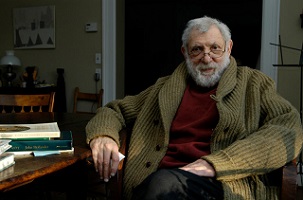
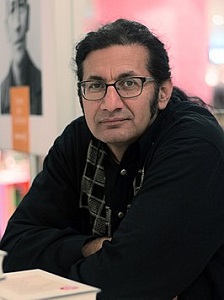
De Amerikaanse schrijver, humorist en criticus Joe Queenan werd geboren op 3 november 1950 in Philadelphia, Pennsylvania. Zie ook alle tags voor Joe Queenan op dit blog.

Uit: My 6,128 Favorite Books

“A case can be made that people who read a preposterous number of books are not playing with a full deck. I prefer to think of us as dissatisfied customers. If you have read 6,000 books in your lifetime, or even 600, it's probably because at some level you find "reality" a bit of a disappointment. People in the 19th century fell in love with "Ivanhoe" and "The Count of Monte Cristo" because they loathed the age they were living through. Women in our own era read "Pride and Prejudice" and "Jane Eyre" and even "The Bridges of Madison County"—a dimwit, hayseed reworking of "Madame Bovary"—because they imagine how much happier they would be if their husbands did not spend quite so much time with their drunken, illiterate golf buddies down at Myrtle Beach. A blind bigamist nobleman with a ruined castle and an insane, incinerated first wife beats those losers any day of the week. Blind, two-timing noblemen never wear belted shorts.
Similarly, finding oneself at the epicenter of a vast, global conspiracy involving both the Knights Templar and the Vatican would be a huge improvement over slaving away at the Bureau of Labor Statistics for the rest of your life or being married to someone who is drowning in dunning notices from Williams-Sonoma . No matter what they may tell themselves, book lovers do not read primarily to obtain information or to while away the time. They read to escape to a more exciting, more rewarding world. A world where they do not hate their jobs, their spouses, their governments, their lives. A world where women do not constantly say things like "Have a good one!" and "Sounds like a plan!" A world where men do not wear belted shorts. Certainly not the Knights Templar.
I read books—mostly fiction—for at least two hours a day, but I also spend two hours a day reading newspapers and magazines, gathering material for my work, which consists of ridiculing idiots or, when they are not available, morons. I read books in all the obvious places—in my house and office, on trains and buses and planes—but I've also read them at plays and concerts and prizefights, and not just during the intermissions. I've read books while waiting for friends to get sprung from the drunk tank, while waiting for people to emerge from comas, while waiting for the Iceman to cometh.
In my 20s, when I worked the graveyard shift loading trucks in a charm-free Philadelphia suburb, I would read during my lunch breaks, a practice that was dimly viewed by the Teamsters I worked with. Just to be on the safe side, I never read existentialists, poetry or books like "Lettres de Madame de Sévigné" in their presence, as they would have cut me to ribbons.”


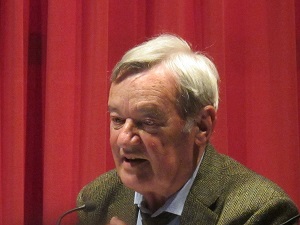
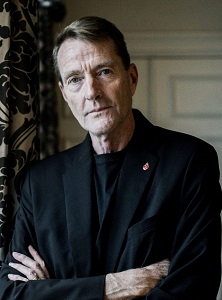
 2190160-933136cfd7e226a17ddc57209cd4fe70.jpg
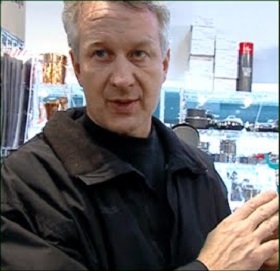
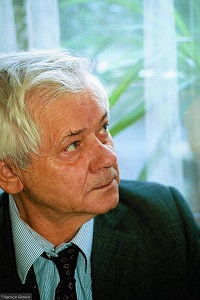
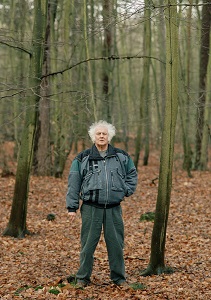
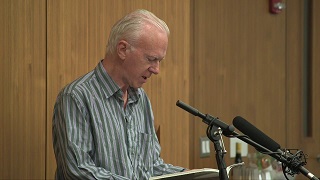
Joe Queenan (Philadelphia, 3 november 1950)


De Australische dichteres en schrijfster Oodgeroo Noonuccal (eig. Kathleen Jean Mary Ruska) werd geboren op 3 november 1920 in Minjerribah (Stradbroke Island) in Moreton Bay. Zie ook alle tags voor Oodgeroo Noonuccal op dit blog.


Dawn Wail for the Dead

Dim light of daybreak now
Faintly over the sleeping camp.
Old lubra first to wake remembers:
First thing every dawn
Remember the dead, cry for them.
Softly at first her wail begins,
One by one as they wake and hear
Join in the cry, and the whole camp
Wails for the dead, the poor dead
Gone from here to the Dark Place:
They are remembered.
Then it is over, life now,
Fires lit, laughter now,
And a new day calling.


Entombed Warriors
Xian, September 20, 1984

Qin Shi Huang
(first Emperor of China)
Plotted his burial,
With careful and clear detail.
Called in his artists
To prepare for his resurrection.
Clay warriors and horses,
A legion of foot soldiers,
Cavalry,
Archers and Generals.
Swords, lances and spears,
And battle axes in bronze,
His artists
made for him,
And
All guarded his secret
For 2,000 years
The Earth Mother
Nursed her son,
Until
By chance,
A pick and shovel,
Revealed his secret.
The earth opened up
And exposed to the world,
His fear,
His insecurity.


 2190160-15e9056a63b75e0d9b8314f2487efcda.jpg
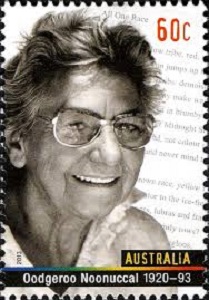
Oodgeroo Noonuccal (3 November 1920—16 September 1993)


De Nederlandse dichter en schrijver Jan Boerstoel werd geboren in Den Haag op 3 november 1944. Zie ook alle tags voor Jan Boerstoel op dit blog.


Leve de jalousie de métier

De mens is gierig, wreed en dom en daarbij nogal snel
geneigd zijn brave buurvrouw zelfs haar snorfiets te misgunnen,
al hoort zoiets sinds jaar en dag natuurlijk niet te kunnen
en kwam je vroeger om die afgunst ook nog in de hel.

Maar is de mens een kunstenaar, dan helpt de uitlaatklep
van broeders in het vak hem niet zozeer om te verheffen
als om te evenaren, sterker nog, te overtreffen,
want niets werkt inspirerender dan andermans geschep.

Ergo: wat buurmans gras aangaat, laat naijver je sieren,
als daardoor wordt bereikt, dat je nóg beter gaat tuinieren.


Uit: Acht kroegverzen


Dorst

De dorst
die voor de baat uitgaat,
maakt op den duur
dat niets meer baat.


Natuurliefhebber

Het mooiste uitzicht
volgens mij,
zijn veertig flessen
op een rij.


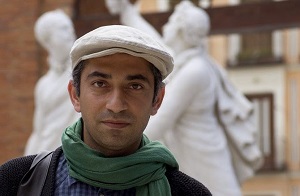
 2190160-ac1021497a9a8ab6b15ad389051974fb.jpeg
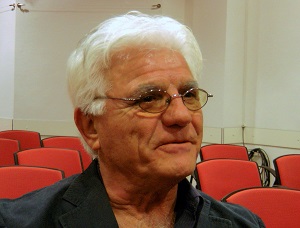
Jan Boerstoel (Den Haag, 3 november 1944)


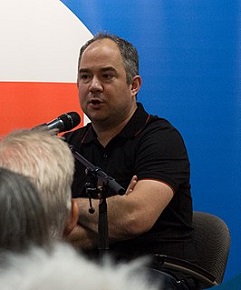
De Nederlandse dichter, schrijver, performer en bassist Koen Frijns werd geboren op 3 november 1993 in Eindhoven. Zie ook alle tags voor Koen Frijns op dit blog.


Hoe God toch De Bruin versloeg

Scootmobiels zaten vast in de modder,

vrouwen werden op de rug weggedragen
en krukken vlogen door de lucht..

Het stormde in Lourdes.

Hinkelend en proestend keken
de geredde pelgrims

naar mevrouw De Bruin die achterbleef

en rustig in haar rolstoel zat.

Het water trad buiten haar oevers en
steeg

tot een mythische hoogte.

De Bruin duwde haar arm door haar keel

en trok via haar luchtpijp een long uit haar
kas

Ze zette de long op de ventielen van haar banden

en pompte tot ze geen adem meer bezat.

De banden groeiden en groeiden

Tot een vlot geboren was.

Ze deinde mee op Gods water, zeven
dagen lang.

Tot ze strandde op een eiland in de
oceaan.

Ze teerde op het laatste beetje zuurstof

dat nog in haar bloedvaten zat.

Een engel dook op uit het water.

Ze boog zich over De Bruin en vroeg:

Was Gods woord niet voldoende?

Waarom hebt gij niet gedaan wat God u
beval? '

Dat heb ik niet.' zei De Bruin

Ik wilde eigenlijk terug naar Kerkrade.’


 2190160-afb0ee79f938d9f6797aacf0a8b09656.jpg
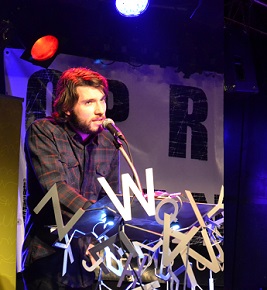
Koen Frijns (Eindhoven, 3 november 1993)


De Franse schrijver en kunstfilosoof André Malraux werd geboren op 3 november 1901 in Parijs. Zie ook alle tags voor André Malraux op dit blog.

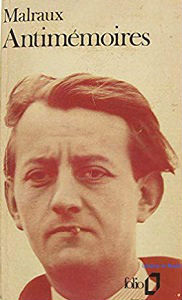
Uit: Antimémoires

“1965 au large de la Crète
Je me suis évadé, en 1940, avec le futur aumônier du Vercors. Nous nous retrouvâmes peu de temps après l'évasion, dans le village de la Drôme dont il était curé, et où il donnait aux israélites, à tour de bras, des certificats de baptême de toutes dates, à condition pourtant de les baptiser : « Il en restera toujours quelque chose... » Il n'était jamais venu à Paris : il avait achevé ses études au séminaire de Lyon. Nous poursuivions la conversation sans fin de ceux qui se retrouvent, dans l'odeur du village nocturne. « Vous confessez depuis combien de temps ? — Une quinzaine d'années... — Qu'est-ce que la confession vous a enseigné des hommes ? — Vous savez, la confession n'apprend rien, parce que dès que l'on confesse, on est un autre, il y a la Grâce. Et pourtant... D'abord, les gens sont beaucoup plus malheureux qu'on ne croit... et puis... » Il leva ses bras de bûcheron dans la nuit pleine d'étoiles : « Et puis, le fond de tout, c'est qu'il n'y a pas de grandes personnes... » Il est mort aux Glières. Réfléchir sur la vie — sur la vie en face de la mort — sans doute n'est-ce guère qu'approfondir son interrogation. Je ne parle pas du fait d'être tué, qui ne pose guère de question à quiconque a la chance banale d'être courageux, mais de la mort qui affleure dans tout ce qui est plus fort que l'homme, dans le vieillissement et même la métamorphose de la terre (la terre suggère la mort par sa torpeur millénaire comme par sa métamorphose, même si sa métamorphose est l'ceuvre de l'homme) et surtout l'irrémédiable, le : tu ne sauras jamais ce que tout cela voulait dire.”


 2190160-d469f7261d6ccd5ecd3625fd714d021d.jpg
André Malraux (3 november 1901 – 23 november 1976)
Cover 


Zie voor nog meer schrijvers van de 3e november ook mijn vorige blog van vandaag.

Geschreven door Romenu om 13:43 Reageer op dit bericht
Reageer op dit bericht

Reageer op dit bericht

Een titel of je eigen website toevoegen

De blogger leest alles eerst na: je tekst verschijnt zodra die goedgekeurd is.

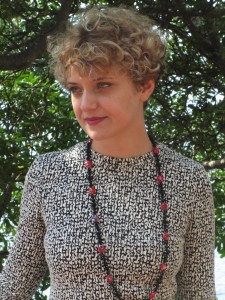
Ann Scott, Dieter Wellershoff, Hanns Heinz Ewers, William Cullen Bryant, Laura Accerboni

De Franse schrijfster Ann Scott (pseudoniem) werd geboren op 3 november 1965 in Boulogne-Billancourt. Zie ook alle tags voor Ann Scott op dit blog.

Uit: Cortex

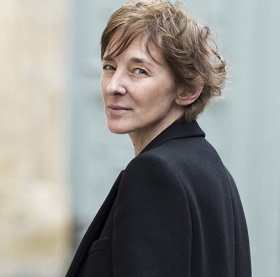
“D'après ses calculs, il ne se trouve plus qu'à quelques centaines de mètres du dernier barrage de sécurité. Aux deux précédents il a donné chaque fois la même excuse : « Mon hôtel est dans ce périmètre, voilà la clé de ma chambre, mon smoking n'a pas de rapport avec la cérémonie, je rentre d'une fête qui a duré toute la nuit », et les deux fois les flics n'ont pas eu de mal à le croire tant il empeste l'alcool. Pénétrer dans cette zone sécurisée n'était pas nécessaire à ce qu'il vient accomplir ici mais le spectacle valait la prise de risque : d'un point de vue purement jubilatoire, cette artère désertée où se succèdent tous ces théâtres et restaurants et magasins fermés lui fait l'effet de traverser la ville fantôme d'I Am Legend où les mutants tapis dans la pénombre des portes cochères attendent que le soleil se couche pour sortir dévorer les survivants ; et d'un point de vue strictement factuel, Hollywood Boulevard débarrassé de ses touristes laisse place à une coquille vide, ce qu'est cette ville pour lui, ce contre quoi il lutte et vient lutter une fois encore. C'est à ça que sa vie se mesure, au déluge de pensées qui l'assaillent dès le réveil, au flot d'allégories qui jaillissent de son cerveau à la moindre bribe d'image ou de conversation qu'il capte et s'efforce de contenir en notant tout ce qu'il peut où qu'il se trouve. Les poches de ses vestes sont bourrées de bouts de papier couverts de taches de graisse et de traces de verres qui font baver son écriture microscopique que lui seul est capable de relire, et c'est à ça que sa vie se résume, à cette brillance qu'il sécrète malgré lui, à la Red Bull qui le maintient éveillé le jour et au bourbon qui l'aide à s'oublier la nuit parce qu'être autant complexé que décomplexé le détruit. Les trois flics qui discutent derrière la barrière décroisent les bras en le voyant approcher. Les deux plus jeunes portent discrètement la main à la crosse de leur arme tandis que le troisième, moustachu grisonnant proche de la soixantaine avec des cheveux en brosse et des yeux bleus très délavés, contourne tranquillement la barrière en lui demandant où il croit aller comme ça. Burt sort son carton d'invitation qu'il tend avec sa pièce d'identité. Le policier y jette un oeil sans les prendre, et Burt entreprend d'expliquer qu'il serait reconnaissant qu'on le laisse entrer par ce côté, qu'il voudrait éviter la remontée entière du tapis rouge parce qu'il est claustrophobe et risquerait de faire un malaise devant les caméras. “


 2190158-abbcf0d9810ad167f2ffdbcf38ffcf49.jpg
Ann Scott (Boulogne-Billancourt, 3 november 1965)


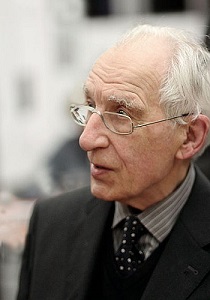
De Duitse schrijver en essayist Dieter Wellershoff werd geboren op 3 november 1925 in Neuss. Dieter Wellershoff overleed op 15 juni jongstleden op 92-jarige leeftijd. Zie ook alle tags voor Dieter Wellershoff op dit blog.

Uit: Der Ernstfall

“Damals, heute. Warum wieder zurückblicken nach fast einem halben Jahrhundert? Was suchte ich? Was erwartete ich zu finden, als ich mich Ende März 1994 auf den Weg nach Bad Reichenhall machte, wo ich den Kriegswinter 1944/45 im Lazarett verbracht hatte? Meine chronisch erkrankten Nasennebenhöhlen zu kurieren, war das praktische Ziel meiner Reise. Doch zugleich und vielleicht sogar vor allem war es für mich eine Reise in die Vergangenheit.
Der von mir gewählte Kurort sei »gut für die Atemwege«, hatte der Angestellte der Krankenkasse gesagt. Ich wusste es, denn ich hatte mit meinem Arzt darüber gesprochen und das Bäderhandbuch studiert. Aber als der Angestellte es noch einmal sagte, so beiläufig, wie man etwas Bekanntes bestätigt, kam die Erinnerung aus dem Körper zurück. Es war wie ein innerer Luftzug. Die Erinnerung an einen tiefen Atemzug.
Sanitäter hatten mich auf einer Bahre aus dem Lazarettzug getragen und in der langen Reihe der Verwundeten auf dem Bahnsteig abgestellt. Und bevor ich von anderen Trägern wieder hochgehoben und zu einem der wartenden Sanitätsautos gebracht wurde, wandte ich den Kopf und sah zum ersten Mal in meinem Leben die verschneiten Alpen. Das war für mich so unerwartet und wunderbar, als seien sie eben aus dem Boden gewachsen, ein mächtiger Schutzwall, hinter dem ich in Sicherheit war. Klare Winterluft, gierig eingesogen, füllte meine Lungen und durchströmte mich mit einem Gefühl von Zuversicht.
Ich war vor zehn Tagen neunzehn Jahre alt geworden und hatte bisher immer in flachen Landschaften gelebt: am Niederrhein, wo ich aufgewachsen, in Holland, Berlin und der Mark Brandenburg, wo ich militärisch ausgebildet worden war, und zuletzt in Litauen und Ostpreußen an der Front, von wo ich im weiten Umweg über Polen und Schlesien gekommen war, verwundet durch einen Granatsplitter, doch inzwischen operiert und wieder transportfähig und zur weiteren Genesung hierher verfrachtet, denn die oberschlesischen Lazarette mussten geräumt werden für die neuen Massenlieferungen verwundeter und verstümmelter Menschen, die dort Tag für Tag von der näher gerückten Ostfront eintrafen.”


 2190158-f8eeaddbd40f5ea315a9b92d14d73414.jpg
Dieter Wellershoff (3 november 1925 – 15 juni 2018)


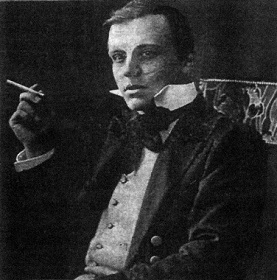
De Duitse schrijver, filmmaker en cabaretier Hanns Heinz Ewers werd geboren op 3 november 1871 in Düsseldorf. Zie ook alle tags voor Hanns Heinz Ewers op dit blog.

Uit: The Spider (Vertaald door Joe Bandel)

“The lover struggled in vain, reaching his weak legs out again and again in an effort to escape this wild embrace. His beloved would not let him go. In a few minutes she spun a cocoon around him so tightly that he couldn't move a single limb. Then she sank her sharp pinchers into his body and sucked in full pulls the young blood of her beloved. I saw then how she finally cut loose the miserable, unrecognizable lump, legs, skin and thread and contemptuously threw it out of the net. That is how love is with these creatures. I'm glad I'm not a boy spider.

Monday 14 March

I don't even look at my books any more. I just spend my days at the window. When it gets dark I still sit there. She is not there, but I close my eyes and then I see her. Hmm, this journal has really become something much different than what I thought it would be. It tells of Mrs. Dubonnet and the commissioner, of spiders and of Clarimonde. But there is not one syllable about the discovery I wanted to make. What can I write instead?

Tuesday 15 March

We have discovered an unusual game, Clarimonde and I. We play it all day long. I greet her, immediately she greets me back. Then I drum with my hand against the windowpane. She scarcely sees it before she begins drumming as well. I nod to her, she nods back. I move my lips as if I'm speaking to her and she does the same. Then I stroke the hair back on my temples and her hand is on her forehead as well.”


 2190158-05e23c13983d2eeba68b56e4cd5671df.jpg
Hanns Heinz Ewers (3 november 1871 – 12 juni 1943)


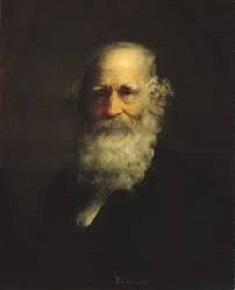
De Amerikaanse dichter, journalist en jurist William Cullen Bryant werd geboren op 3 november 1794 in Cummington, Massachusetts. Zie ook alle tags voor William Cullen Bryant op dit blog.


My Autumn Walk

On woodlands ruddy with autumn
The amber sunshine lies;
I look on the beauty round me,
And tears come into my eyes.

For the wind that sweeps the meadows
Blows out of the far Southwest,
Where our gallant men are fighting,
And the gallant dead are at rest.

The golden-rod is leaning,
And the purple aster waves,
In a breeze from the land of battles,
A breath from the land of graves.

Full fast the leaves are dropping
Before that wandering breath;
As fast, on the field of battle,
Our brethren fall in death.

Beautiful over my pathway
The forest spoils are shed;
They are spotting the grassy hillocks
With purple and gold and red.

Beautiful is the death-sleep
Of those who bravely fight
In their country’s holy quarrel,
And perish for the Right.

But who shall comfort the living,
The light of whose homes is gone:
The bride that, early widowed,
Lives broken-hearted on;

The matron whose sons are lying
In graves on a distant shore;
The maiden, whose promised husband
Comes back from the war no more?

I look on the peaceful dwellings
Whose windows glimmer in sight,
With croft and garden and orchard,
That bask in the mellow light;

And I know that, when our couriers
With news of victory come,
They will bring a bitter message
Of hopeless grief to some.

Again I turn to the woodlands,
And shudder as I see
The mock-grape’s blood-red banner
Hung out on the cedar-tree;

And I think of days of slaughter,
And the night-sky red with flames,
On the Chattahoochee’s meadows,
And the wasted banks of the James.

Oh, for the fresh spring-season,
When the groves are in their prime,
And far away in the future
Is the frosty autumn-time!

Oh, for that better season,
When the pride of the foe shall yield,
And the hosts of God and Freedom
March back from the well-won field;

And the matron shall clasp her first-born
With tears of joy and pride;
And the scarred and war-worn lover
Shall claim his promised bride!

The leaves are swept from the branches;
But the living buds are there,
With folded flower and foliage,
To sprout in a kinder air.


 2190158-c5c773f960681cf68dfe4fe27475bf9f.jpg
William Cullen Bryant (3 november 1794 – 12 juni 1878)
Portret door Thomas Le Clear, ca. 1876


Onafhankelijk van geboortedata

De Italiaanse dichteres Laura Accerboni werd in 1985 geboren in Genua. Zie ook alle tags voor Laura Accerboni op dit blog.


Kou

Kou
is niet echt aangenaam.
Als je rilt
daalt je geloofwaardigheid
tot het nulpunt.
Daarom heb ik geleerd
spijkers
in mijn handen te slaan.
Nu ben ik
een onwankelbaar mens.


Vertaald door Frans Denissen en Hilda Schraa


I could be a wild boar

I could be a wild boar
if I wanted
and shoot myself between the eyes 
if I wanted
and no one
would think anything of it.
Someone
would worry
about removing the lead
from the carcass.
Should it end up
between teeth,
should it injure
cheeks
at midday.


Vertaald door George Tatge


 2190158-271b042dccf2aaff892320c161ba454b.jpg
Laura Accerboni (Genua, 1985)

Geschreven door Romenu om 13:43 Reageer op dit bericht

All Souls (May Sarton)


Bij Allerzielen


 2189918-1a1a40b6e4a1f7c823a1f928d2fb0fa1.JPG
Allerzielen door Joza Uprka, 1897


All Souls


Did someone say that there would be an end,
An end, Oh, an end, to love and mourning?
Such voices speak when sleep and waking blend,
The cold bleak voices of the early morning
When all the birds are dumb in dark November—
Remember and forget, forget, remember.

After the false night, warm true voices, wake!
Voice of the dead that touches the cold living,
Through the pale sunlight once more gravely speak.
Tell me again, while the last leaves are falling:
“Dear child, what has been once so interwoven
Cannot be raveled, nor the gift ungiven.”

Now the dead move through all of us still glowing,
Mother and child, lover and lover mated,
Are wound and bound together and enflowing.
What has been plaited cannot be unplaited—
Only the strands grow richer with each loss
And memory makes kings and queens of us.

Dark into light, light into darkness, spin.
When all the birds have flown to some real haven,
We who find shelter in the warmth within,
Listen, and feel new-cherished, new-forgiven,
As the lost human voices speak through us and blend
Our complex love, our mourning without end.


 2189918-1712665c055cb5e47adc85534487545a.jpg
May Sarton (May 3 mei 1912 – 16 juli 1995)
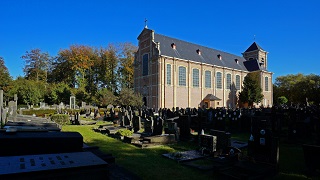
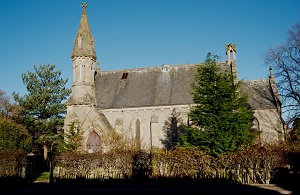
Sint-Catharinakerk in Wondelgem, België, de geboorteplaats van May Sarton


Zie voor de schrijvers van de 2e november ook mijn vorige blog van vandaag.


Geschreven door Romenu om 11:17 Reageer op dit bericht

Charlotte Mutsaers, E. du Perron, Désanne van Brederode, Hera Lind, Kees van den Heuvel, Odysseas Elytis, Augusta Peaux, Thomas Mallon, Bilal Xhaferri

De Nederlandse dichteres, schrijfster, essayiste en kunstschilderes Charlotte Jacoba Maria Mutsaers werd geboren in Utrecht op 2 november 1942. Zie ook alle tags van Charlotte Mutsaers op dit blog.


Zeventig

De zilte struiken hielden mij
voortdurend uit de slaap
de honden naast me
dreven langs voor aap

Koreaanse oesters met Koreaanse baarden
zeepaarden gestuwd door paardenstaarten
dennenstroop met tuiten langs de mastschacht
korenaren wiegend in de zweetnacht

Zo sliep ik in
mijn bed op open zee
alles normaal alleen
mijn leeftijd vreemd


Leda Pavlova

Liefst hult zich de hals
van een dansende vrouw
in hagelwit zwanenbont
(indien geen boa van struis
of constrictor voorhanden).

Niet dat de arm van de man
ontoereikend zou zijn
in de kou, maar zie:
wie wil dansen, doet dat
niet op molières.

Het sneeuwt in Rusland van
negentienhonderdentoen:
zwaanziek slingert zich eentje
een zwanennek om de hals.
De lenige stola wil meer.

‘Goed, ga je gang en bedek mij.’

Daar hield zij twee schoentjes
aan over: de kracht van Castor en
Pollux gevat in kuikentjesleer.
Hoog tilden die haar van de grond:
Anna Pavlova, Leda Renata.    


Broodje standbeeld etend in de nacht

Is het dakhaar
wat dit brood
zo grauw bedekt
of wat dacht jij
zwaar gemaande
nek?

- Leisteen als je
't mij zo dodelijk
vraagt.
Maar vraag
me niet
hoe zwaar
zo'n kapsel
draagt.

Eet smakelijk.

- Jij ook.

Kijk, dat bedoel ik:
het genot
alvorens te
verstenen
dat je die
zware hoed
nooit
meer hoeft
af te nemen.


 2189915-1ece52cfd9309bc8ffc36442e77e2d8c.jpg
Charlotte Mutsaers (Utrecht, 2 november 1942)


De Nederlandse dichter, schrijver en criticus Charles Edgar (Eddy) du Perron werd geboren op 2 november 1899 in Jatinegara (West Java). Zie ook alle tags voor E. du Perron op dit blog.


De Man die lacht

Geen schorre kreet, geen hoge klacht
hebben uit hem God's oor gewond,
't is een verdwaasde jonge kwant
die zich gered waant als hij lacht.

En dwazer nog die iets verwacht
van zulk een doodgeboren zon:
dit neerzien op Napoleon
en Christus vanuit bed veracht.

Maar als alles wordt afgedaan,
zal deze staan in 't laatste licht,
zijn grijns op 't hospitaalgezicht.

En God zal vragen: ‘Welke waan
bracht zó een tot een eindgericht?’
En hij zal zeggen: ‘Zie mij aan’.


Gli Amanti

‘Ook als 'k je mond niet zie meer, slechts voel wijken,
wanneer mijn mond je rode lippen bindt,
zijn je ogen stralend... - Waarom ooit bezwijken
voordat de dood, die àndre dood, ons vindt.’

De nacht verbleekte; als stappen over 't grind
hoorden zij iets het knarsend raam bereiken;
dan zwaar de stilte, waarin zij als lijken
bijeen nog lagen, maar verkild en blind.

En niettemin zocht elk voor zich te kerven,
in de eigen wanhoop, naar het eendre kwaad:

‘Zijn laatste liefde zal de mens nog derven,
ook voor wie uitrees, komt ééns de evenmaat.

Zijn wij reeds dood? Want wij, want wij ook, sterven!
Of is het smaad? Worden wij nòg versmaad?’


Kolonie

Nu schijnt daarginds misschien een halve maan
tweemaal zo hel als hier een maan in luister.
In 't kleine soosje heeft iedereen verstaan,
volop: alleen de whisky-soda bruist er -

hoe het de planter dit jaar is vergaan
met zijn tantièmes. Eén vreemdeling huist er
schuin tegenover, maar verkiest 't gefluister
van zijn waringin boven dàt bestaan.

Hij meent terecht: zo'n dorp is te waarderen
boven 't nabootsel van een grote stad,
maar om de geur van 't veld, de lichte kleren,

de kreet van de tonggèrets, 't daaglijks bad
in de rivier, en haar, wier vreemd erbarmen
in 't sterfuur krauwt over zijn hoofd en armen.


 2189915-528b47945e7ce8a334ab5335770b2543.jpg
E. du Perron (2 november 1899 – 14 mei 1940)


De Nederlandse schrijfster Désanne van Brederode werd op 2 november 1970 in Utrecht geboren. Zie ook alle tags voor Désanne van Brederode op dit blog.


Kwijt

Er raakte iets onvindbaar. Leek het op licht?
Ik ben het vergeten. Het sloop weg, hoewel het voetloos was.
Het verpulverde, maar zonder stoffelijk te zijn geweest.
Het smolt onder mijn voeten, terwijl ik nog steeds bleef staan,
recht overeind. De lucht bleef lucht, hooguit
verdween het hemelse eruit, het ruisen van veren,
de opspattende glans van gras en planten,
de geurige allure van een nog ongevallen regen.

Voortaan zou ik mijn leven alleen nog herkennen
aan de oneetbaarheid ervan. Er werd mij wel verteld
wanneer het bederf was begonnen. Afremmen kon men het niet.
Wat restte is het besef dat ik nog elke dag minder weet
hoe mensen dat toch doen: huiswaarts keren.
Dalen, landen. Of urenlang op de uitkijk staan,
alvast oefenend op een omhelzing.


Solitude

Zelf een gedachte worden.
In vier stappen. Om te beginnen:
in winters leren slapen zonder
deken. In zomers leren
zwemmen zonder water.
In alle regens thuis zijn
als een kind. Rondom
en tussen druppels leren
rennen. Onopgejaagd,
ofschoon doorweekt.
Eigen gelach niet horen.
Niets weten van verschillen
aangaande ziel en geest en
vingertoppen, zonlicht, tenen.

Vervolgens zachtjes zweven.
Op doordeweekse,
alledaagse klachten
meeruisen als een bries of
lage stofwolk, als uitgestoven
stuifzand leren dalen.
Schoonheid in gras
vertalen - van liggend gras
de gloed omvatten. In dauw
een pijn doorzien die op
de jouwe lijkt. Sprekend
de mijne is. Vertrapt zijn.
Niets vertrappen.


 2189915-2ace871b7ff6b03a826c1c498cbf9412.jpg
Désanne van Brederode (Utrecht, 2 november 1970)


De Duitse schrijfster Hera Lind werd geboren op 2 november 1957 in Bielefeld als Herlind Wartenberg. Zie ook alle tags voor Hera Lind op dit blog.

Uit:Himmel und Hölle

»Nebenan können Sie sich gleich für die Hochzeit frisieren lassen. Ich meine, wenn es dermaßen eilt …« Die Verkäuferin des piekfeinen Brautmodengeschäftes in Hamburg-Blankenese musterte mich kritisch. »Sie wollen wirklich noch heute heiraten?« »Klar«, sagte ich lässig. »Der Tag ist ja noch lang.« Zufrieden trat ich vor den riesigen Spiegel und betrachtete meine Erscheinung. So ein champagnerfarbenes bodenlanges Traumkleid aus Seide, Taft und Spitze macht wirklich einen schlanken Fuß. Darin sähe vermutlich jede Frau toll aus! Erfreulicherweise war ich unbeschwerte fünfundzwanzig Jahre jung und hatte kein Gramm Übergewicht. Ohne dass ich es wollte, huschte mir ein kleines Lächeln über das Gesicht. Dieses Wahnsinns-Ding, dieses sündhaft teure Designerkleid war wie für mich gemacht! Für mich, Konstanze Haber! Ich war die perfekte Braut. Mein Blick ging suchend zu meiner Mutter, die in ihrem feinen dunkelblauen Kostüm auf einem Brokatstuhl saß. Sie hatte die Beine wie siamesische Zwillinge nebeneinanderstehen und nippte an ihrem Tee. Ihr Verhalten war dermaßen distanziert, damenhaft und vornehm, als ginge sie das Ganze hier gar nichts an.
»Wie findest du’s?« Beifall heischend wippte ich in dem bodenlangen Seidenkleid, das meine Füße keck umspielte, auf und ab. Wie ein kleines Mädchen. Am liebsten wäre ich gehüpft! Mutter nahm einen Schluck Tee und blickte mich prüfend an. Ihr Gesicht verriet keinerlei Regung: weder Stolz noch Rührung, noch Begeisterung, noch Trauer. Von wegen: Brautmutter war die Eule, nahm Abschied mit Geheule! Nein. Gefühle zeigen war nicht angesagt. In diesem Punkt war meine Mutter durch und durch elitär. Ich fand das völlig in Ordnung. Man kann auch gemeinsam schweigen, ganz entspannt. Vor allem mit engen Verwandten. Nonverbale Kommunikation sozusagen. Das zeigte nur, wie gut wir uns verstanden, Mutter und ich. Na ja, natürlich nicht immer. Jetzt, zum Beispiel, gab es schon ein paar Differenzen in Bezug auf meine etwas spontane Lebensplanung. Und auch was die Auswahl meines zukünftigen Gatten betraf, war Mutter vielleicht nicht GANZ so begeistert. Also, sie SCHRIE nicht direkt vor Glück. Oh Gott, Mutter, jetzt sag doch endlich was! Ich WEISS, es ist das teuerste Kleid. Aber eben auch das schönste. Ich bin doch deine einzige Tochter, und ich heirate ganz bestimmt nur einmal! Als wäre ich Luft, wandte sich meine Mutter an die Verkäuferin. »Meine Tochter ist Steinbock«, seufzte sie pikiert."

 2189915-9c0635e35a0ddd256a6a8e45a5c132be.jpg
Hera Lind (Bielefeld, 2 november 1957)


De Nederlandse dichter en vertaler Kees van den Heuvel werd geboren op 2 november 1960 in Mill. Zie ook alle tags voor Kees van den Heuvel op dit blog.


Assepoester revisited
(voor J.)

Het bal ging juist zoals ik mocht verwachten
Het was gelukt mijn droomprins te bekoren
En samen zwierden we door sprookjeszalen
Tenslotte had ik gauw een schoen verloren

Wat deed het zeer, dat hunkeren, dat smachten!
Wat was hij mooi die neus, die kin, die oren!
Ik bad vol vuur dat hij me snel kwam halen
Tenslotte had ik toch een schoen verloren

Ik hinkte wekenlang op twee gedachten
‘Het lukt hem vast niet om me op te sporen’
‘Natuurlijk wel, ik gaf genoeg signalen’
Tenslotte had ik zelfs een schoen verloren

Ik vul mijn dagen nu met jammerklachten
En loop onafgebroken zwaar te balen
Tenslotte heb ik wel een schoen verloren


Jaarwisseling (2)

Saai hoor, die kerstdagen!
Nooit eens een spoedgeval
Waar ik als arts
Enthousiast over word

Aangenaam anders zijn
Oudejaarsavonden
Dan kom ik ogen en
Oren te kort


 2189915-e5ed62c37cdb8bb47f7bb71bb3b2c775.jpg
Kees van den Heuvel (2 november 1960 – 11 januari 2010)
Mill


De Griekse dichter Odysseas Elytis (pseudoniem voor Odysseas Alepoudhelis) werd op 2 november 1911 te Iraklion op Kreta geboren. Zie ook alle tags voor Odysseas Elytis op dit blog.


Windows toward the Fifth Season

I

Do you know the hair that wrote the wind? The glances that paralleled the time? The silence that felt itself?

But you are a nocturnal invention that takes pleasure in rainy confidences. That takes pleasure in the three-masted opening of the sea. You are an unachievable case that reigns when it shipwrecks. You are a gaudy catastrophe... .

Ah! I want the elements that know how to grasp to come. The middle of my medi-tation will delight their curving disposition. When expanding rings ascend then the sudden sky will take on the color of my penultimate sin.

While the last sin will still be enchanted by these solitary words!


II

The sound of feet ends at the edge of hearing. A strained tempest pours into the youthful breast that squanders its inexplicable radiance. Desire has a very high stature and in its palms burns absence. Desire gives birth to the road on which it wants to walk. It leaves ...

And toward it a people of hands ignites admiration's fireprey.


III

How lovely! She has taken the form of the thought that feels her when she feels it consecrated to her... .

IV

My summer abandonments have hidden themselves in my ageless vineyards. An un-dulation of dream drew back and left them there and asked nothing. In their deaf nets a swarm of bees turned its buzzing around. Mouths resembled colors and fled the flowers. The waters of early morning stopped their speech nocturnal and un-touched.

It's as if nothing were known anymore.

And yet there is a feeling behind this ignored little mountain.... It has neither tears nor conscience.

It does not leave it does not return.


Vertaald door Jeffrey Carson en Nikos Sarris


 2189915-feec7cf490accbb02409756804b0daee.jpg
Odysseas Elytis (2 november 1911 – 18 maart 1996)
Portret door Vangelis Andreopoulos, z.j.


De Nederlandse dichteres Augusta Guerdina Peaux werd geboren in Simonshaven op 2 november 1859. Zie ook alle tags voor Augusta Peaux op dit blog.


In het oerwoud

Liefde’s wezen is zo teer
en ons hart is het ruige bos
en wij weten haar daar in de wildernis
alléén en van alles los,
van alles, van wereld en schone schijn
om enkel te zijn wat zij is:
een vlam, een verlangen, een felle pijn,
een kreet in de duisternis.

Wie ’t spoor in de bossen bijster raakt
is daar aan de dood gewijd,
en liefde zwerft argeloos en naakt
door ons donkere hart en de tijd
en wij kunnen niet redden, het leven is wreed
en het lot een verscheurend dier
en angst om zijn liefde is ’s mensen leed
door al zijn dagen hier.


Een avond

De boomen die in dezen avond staan
bewegen alleen hun dunne twijgen,
zij raken den avond niet aan,
die zoo hoog blijft zwijgen.
Een boom vangt een ster in zijn donker loover
en wolken vangen sterren,
de wilde wind danst over
de beek en 't water lokt maanglans van verre.
Kinderspel is het in een groote zaal
van avondeenzaamheid
en tot den avond dringt niet hun kindertaal
en het gedruisch van hun vroolijkheid.
Deze avond is zoo stil geweest,
van zoo vochtigen dauw bedropen,
zoo eenzaam en zoo verweesd
met zoo wijde oogen open.


 2189915-71150f6fc195e516564f98d4c80a662f.jpg
Augusta Peaux (2 november 1859 – 23 februari 1944)
De kerk van Simonshaven bij avond


De Amerikaanse schrijver en criticus Thomas Mallon werd geboren op 2 november 1951 in Glen Cove, New York. Zie ook alle tags voor Thomas Mallon op dit blog.

Uit: Finale

“This has given us a lot of ideas for ours,” said a smiling Ronald Reagan to an unsmiling Rosalynn Carter, as the incumbent president concluded a quick tour of his predecessor’s new library.
 “Yes,” agreed Nancy, who was thinking: ideas for what not to do. All these kitsch displays: the “Peanut Brigade” banner from ’76; the kids’ letters—“Please stop people from killing the whales”—and worse, Carter’s replies to them, signed “Jimmy.”
 “Good,” said Rosalynn, without adding any words or warmth.
 The two presidential couples filed out into the sunshine, toward the speakers’ platform, as the Fort McPherson army band played “Hail to the Chief.” Nancy looked over the four circular pavilions that had just been constructed on this hillside and thought they looked like a monotonous world’s fair.
 Still, as much as she tried, it was hard for her to dislike the Carters themselves. No matter how prudish and pickle-pussed the two of them might be, there was no getting away from how much they had done for her and Ronnie—first, by defeating the Fords, whom she had no trouble at all disliking; and then, once in the White House, by screwing up so badly they seemed to have spent their whole four years rolling out a red carpet for the Reagans. Someone on Mike Deaver’s staff used to refer to the thirty-ninth president as “the Mastermind,” insisting that Jimmy Carter was the greatest Republican strategist of all time.
 Nancy looked back at the building they’d just exited, as if to pay the design a compliment with some extra attention. She was actually trying to take comfort in the thought of how Carter’s papers were now neatly stored in towering rows of banker’s boxes that ran along a huge curving wall. Even failure could be made to look like accomplishment; something settled, achieved. So maybe there was hope for her and Ronnie if things really did fall apart.
 No, things could fall to such smithereens that even an illusion became impossible to construct. Nixon’s library still wasn’t built, and from what she heard it would be a penny arcade of cheap statues and props, while the documents it ought to house remained far away under the government’s lock and key, serving the prison term that Nixon had avoided.
She and Ronnie, along with the Carters, reached the platform. Applause—and jeers—could be heard from the crowd of spectators on the hillside. Nancy for a moment couldn’t tell if the disapproval related to the Sandinistas or South Africa—probably the latter, given that most of Atlanta’s black establishment was here for the dedication.”


 2189915-7058c53ca99baffc583af4896dcd8f9b.jpg
Thomas Mallon (Glen Cove, 2 november 1951)


De Albanese dichter en schrijver Bilal Xhaferri werd geboren op 2 november 1935 in Ninat bij Konispol. Zie ook alle tags voor Bilal Xhaferri op dit blog.


À Pégase

Du ciel ne descends pas pour moi,
je peux faire à pied mon chemin.
Les espaces infinis je les aime,
mais je veux être au plus près de la terre.
Derrière ton galop céleste,
les poètes composeront des poèmes d’or
moi je suis un piéton de chemins terrestres,
de chemins terrestres, le chanteur.
Du ciel, donc, Pégase, ne descends pas pour moi,
je peux faire à pied mon chemin.
Les espaces infinis je les aime
mais j’ai des vertiges quand je ne sens pas sous mes pieds la terre.


 2189915-2371d1d8e4869134538584063673948f.jpg
Bilal Xhaferri (2 november 1935 – 14 oktober 1986)
Cover


Zie voor alle bovenstaande schrijvers ook mijn blog van 2 november 2017 en eveneens mijn blog van 2 november 2008,

Geschreven door Romenu om 11:16 Reageer op dit bericht

Ida Vitale

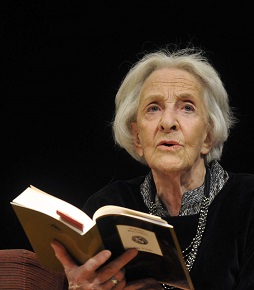
De Uruguayaanse dichteres, schrijfster, vertaalster en letterkundige Ida Vitale werd geboren in Montevideo op 2 november 1923. Vitale speelde een belangrijke rol in de Uruguayaanse kunststroming die bekend staat als de 'Generation of 45'. Zij groeide op in een cultureel ontwikkelde en kosmopolitische familie. In haar jonge jaren las zij graag historische werken. De ontdekking van een paar Uruguayaanse dichters van rond de eeuwwisseling, Delmira Agustini en, vooral haar geestverwante María Eugenia Vaz Ferreira, alsmede van Gabriela Mistral bracht haar op het pad van de poëzie. Zij studeerde geesteswetenschappen in Uruguay en werkte vervolgens als docente. In 1950 trouwde zij met de literaire criticus Ángel Rama. Ze scheidde van haar eerste echtgenoot en werkte mee aan het weekblad Marcha; tussen 1962 en 1964 redigeerde zijj de literaire pagina van de Uruguayaanse krant Época. Ze was mededirecteur van het tijdschrift Clinamen en trad toe tot het management van Maldoror Magazine. Gedwongen door de dictatuur vluchtte zij in 1973 naar Mexico, Zij breidde haar werkterrein uit met het schrijven van essays en literaire kritieken en vertaalde boeken voor het Economisch Cultuurfonds; ook gaf zij lezingen, nam deel aan jury's en werkte samen met talrijke kranten. Zij keerde terug naar Uruguay in 1984 en redigeerde de culturele pagina van het weekblad Jaque. Sinds 1989 woont ze in Austin (Texas) met haar tweede echtgenoot, de dichter Enrique Fierro, en reist ze heel sporadisch naar Montevideo. In 2010 krreg zij een eredoctoraat van de Universiteit van de Republiek. Vitale vertaalt vooral uit het Frans en Italiaans, werk van o.a. Simone de Beauvoir, Benjamin Peret, Gaston Bachelard, Mario Praz en Luigi Pirandello. In 2009 ontving zij de Premio Internacional Octavio Paz de Poesía y Ensayo, in 2014 de Premio Internacional Alfonso Reyes. In 2016 de Premio Internacional de Poesía Federico García Lorca en in 2017 de Premio Max Jacob.


Merry-Go-Round

The carousel, the roundabout, the what-
do-you-call-it, the merry-go-round, they called
to me, like a candle flame, a chariot, a stag,
a swan and a horse, a rearing horse
circling round and round but prodigiously still,
so still he trotted up into the air
with organ pipes and little bells, the air
not moving the horse’s tail
all golden and white, but dangerous,
the danger of falling in the midst of flight,
of me falling and being forgotten
by Father, of getting off elsewhere
than where I got on, all at once alone,
no more clouds in my hair, no more wind,
I am lost, no more that delectable fear
of flying with both hands clutching
the horse’s mane now slipping my grasp, and I
am clay in a kiln of air that slowly recovers
a stillness of form, the form of beginnings,
of being alone without wings.


Undermining the Wall

Time’s mission: to measure itself against the wall,
undermine it, unknot its solid ties,
temper its blade. Mind your impatience:
a sigh returns as a storm.
 
A sunset peers out from behind
Batoví Hill, bleedingly splendid.
In your heart there should be ashes:
there still is blood.
 
Life: it comes with wings or briers,
a bouquet for the vase and smiles
or stony silence. Then, the wall.


Vertaald door Sarah Pollack


 2192864-c4430a42a765b1646717b9d27ca8df11.jpg
Ida Vitale (Montevideo, 2 november 1923)

Geschreven door Romenu om 00:00 Reageer op dit bericht

All Saints' Day (John Keble)


Bij Allerheiligen


 2189760-45d4529b7bb38ee4a9f69ce914b1b889.jpg
Alle Heiligen door Giovanni del Biondo, 1367


All Saints' Day

Why blow'st thou not, thou wintry wind,
Now every leaf is brown and sere,
And idly droops, to thee resigned,
The fading chaplet of the year?
Yet wears the pure aerial sky
Her summer veil, half drawn on high,
Of silvery haze, and dark and still
The shadows sleep on every slanting hill.

How quiet shews the woodland scene!
Each flower and tree, its duty done,
Reposing in decay serene,
Like weary men when age is won,
Such calm old age as conscience pure
And self-commanding hearts ensure,
Waiting their summons to the sky,
Content to live, but not afraid to die.

Sure if our eyes were purged to trace
God's unseen armies hovering round,
We should behold by angels' grace
The four strong winds of Heaven fast bound,
Their downward sweep a moment stayed
On ocean cove and forest glade,
Till the last flower of autumn shed
Her funeral odours on her dying bed.

So in Thine awful armoury, Lord,
The lightnings of the judgment-day
Pause yet awhile, in mercy stored,
Till willing heart swear quite away
Their earthly stains; and spotless shine
On every brow in light divine
The Cross by angel hands impressed,
The seal of glory won and pledge of promised rest.

Little they dream, those haughty souls
Whom empires own with bended knee,
What lowly fate their own controls,
Together linked by Heaven's decree; —
As bloodhounds hush their baying wild
To wanton with some fearless child,
So Famine waits, and War with greedy eyes,
Till some repenting heart be ready for the skies.

Think ye the spires that glow so bright
In front of yonder setting sun,
Stand by their own unshaken might?
No — where th'upholding grace is won,
We dare not ask, nor Heaven would tell,
But sure from many a hidden dell,
From many a rural nook unthought of there,
Rises for that proud world the saints' prevailing prayer.

Oh Champions blest, in Jesus' name,
Short be your strife, your triumph full,
Till every heart have caught your flame,
And, lightened of the world's misrule,
Ye soar those elder saints to meet,
Gathered long since at Jesus' feet,
No world of passions to destroy,
Your prayers and struggles o'er, your task all praise and joy.


 2189760-a51b518e77640af9f83e434f60a67959.jpg
John Keble (25 april 1792 – 29 maart 1866)
Kerk en kerkhof in Fairford, Gloucestershire, de geboorteplaats van John Keble


Zie voor de schrijvers van de 1e november ook mijn vorige blog van vandaag.


Geschreven door Romenu om 16:25 Reageer op dit bericht

Job Degenaar, Rudy Kousbroek, Huub Oosterhuis, Szilárd Borbély, Ilse Aichinger, Jean-Simon DesRochers, Stefaan van Laere, Hermann Broch, Jean Tardieu

De Nederlandse dichter Job Degenaar werd geboren in Dubbeldam op 1 november 1952. Zie ook alle tags voor Job Degenaar op dit blog.


De treinreis

Grauwe middag en de trein snelt voort,
hoopjes sneeuw liggen onttoverd
langs de baan -

tegenover mij neemt ze plaats, en inderdaad
zo in de ruit onder het pasgeboren licht
ontwaakt ze, wordt ze onweerstaanbaar

mythisch als haar hoofd over de velden
raast, oplichtend bij 't verzitten, een
messias op verkenning in het avondland


Verlies van landschap

Wat had ik je lief, mooie vrouw,
je polyfonie van oktoberlichtval,
als herfst je weiden bedauwde, je
lichaam de naglans droeg van zomers

En nu? Een raadsel ben je, gebrekkig
decor voor de chaos van een geest

Ik sta voor het raam en zie je
als in een vertraagde film,
je lichaam scheef in een rolstoel

In mij sterven de tuinen
Een weggegroeid kind duwt je
de oude lanen door


Maart en knikkers

Verraden door de winter
die onverwacht verdween
verbrokkelt de marmeren vijver
en stroomt met wolken vol

In struiken waar, tussen resten
van vorig leven, al wat groenigs lekt,
ligt verwilderd, haast van hout weer,
een waaier van kranten uit oktober

Langs tochthoeken botsen
knikkers met eeuwigheid


 2189758-fb4f2215e455c8e720f5cc8108d9eadf.jpg
Job Degenaar (Dubbeldam, 1 november 1952)


De Nederlandse dichter, schrijver en essayist Rudy Kousbroek werd op 1 november 1929 in Pematang Siantar in Indonesië geboren. Zie ook alle tags voor Rudy Kousbroek op dit blog.

Uit: Bestaan er gradaties in het geloof?

“Er zijn in de wereld nog altijd massa's mensen die geloven. Zijn daar gradaties in mogelijk? Is geloof quantificeerbaar? Dat is een vraag die zich voordoet in deze tijd, nu steeds meer mensen zich niet langer op een van de gevestigde godsdiensten beroepen en in plaats daarvan volstaan met de belijdenis: ‘er moet toch “iets” zijn’.
Op de vraag wat dit ‘iets’ dan wel inhoudt komt meestal geen duidelijk antwoord, maar wat er in alle gevallen mee bedoeld wordt is dat de wereld ‘uit meer bestaat dan alleen het stoffelijke’. Een coherente religie kun je het niet noemen, het is meer een metafysische grabbelton. Zo is uit recent onderzoek gebleken dat in Nederland, zowel onder kerkelijken als onkerkelijken, één op de vier mensen in engelen en gebedsgenezing gelooft, en bijna de helft in wonderen. Ook blijkt van tijd tot tijd dat de letter van het Christendom de mensen meer en meer onbekend is. Nog onlangs werd een 17de-eeuwse gevelsteen in een veelgelezen krant als volgt beschreven: ‘Een kleurige gedenksteen beeldt het bijbelse verhaal uit waarin een jongetje wordt gered door een walvis’. Het is kortom religie zoals beleden door analfabeten, met aanvullingen afkomstig uit allerlei populair bijgeloof (occultisme, zielsverhuizing, astrologie, wedergeboorte etc.).
Dat is dus grosso modo waar het over gaat als er sprake is van ‘een beetje geloven’ of ‘ietsisme’. De vraag is dan of mensen met deze opvattingen, hoe vaag ook, gezien moeten worden als gelovigen. Volgens mij is daar geen twijfel aan. Sinds jaar en dag heb ik betoogd dat ‘een beetje geloven’ een vorm is van geloof en niet van ongeloof; ook een beetje geloven is geloven, schreef ik, ‘zoals een beetje zwanger zwanger is’.
Over deze uitspraak is nogal wat te doen geweest en van tijd tot tijd laait het vuur weer op. ‘Volgens Rudy Kousbroek,’ schreef Ger Groot in De Groene Amsterdammer, ‘kun je niet een beetje geloven. Toch is “een beetje geloven” precies wat katholieken altijd hebben gedaan.’
Het merkwaardigste van deze discussie is dat de door mij gebruikte metafoor door iedereen die het er niet mee eens is wordt opgevat als een ontkenning: ‘volgens K kun je niet een beetje geloven’, ‘K zegt een beetje geloven kan niet’. ‘K ontkent dat er verschillende manieren van geloven zijn’.

 2189758-f3a2d918a64c96f5d1212bfb11339ac0.jpg
Rudy Kousbroek (1 november 1929 – 4 april 2010)


De Nederlandse priester, theoloog en dichter Huub Oosterhuis werd geboren in Amsterdam op 1 november 1933. Zie ook alle tags voor Huub Oosterhuis op dit blog.


Psalm van David

Jonatan mijn broeder uw borst heeft mij bewogen
de tempel van uw tanden de vlam van uw handen
uw lichaam uw liefde uw hart in uw lijf
- mijn hart in uw handen mijn broeder mijn geliefde

uw liefde van verre van boven
uw lichaam gekust en verkregen
uw ziel zo begeerd ik sta verlegen
om uw schoonheid mijn broeder mijn geliefde

gij zult mij vrij maken gij zijt
mij zozeer als mijn leven
geliefde waar zijt
gij gebleven


Woord en vriend

Men vindt eenmaal een woord
men wordt eenmaal gehoord
en andermaal verstaan -
dan heeft men afgedaan.

Men wordt eenmaal bemind
men wordt eeuwig, men vindt
eenmaal een vriend, men maait
wat men niet heeft gezaaid.

Dan nooit meer. men heeft
alles gezien. men leeft
voorgoed in duisternis.
Maar men weet wie men is.


 2189758-a53ea5dd3cd2686b08cd3d70142e6be3.jpg
Huub Oosterhuis (Amsterdam, 1 november 1933)


De Hongaarse dichter, schrijver, vertaler en letterkundige Szilárd József Borbély werd geboren op 1 november 1963 in Fehérgyarmat. Zie ook alle tags voor Szilárd Borbély op dit blog.

Uit: Die Mittellosen (Vertaald door Heike Flemming en Lacy Kronitzer)

»Warum haben sie es weggenommen ?«, frage ich, um etwas zu fragen. Damit sie mit mir spricht. Doch sie antwortet nicht.
Ich frage sie erneut, weil die Stille nicht gut ist. Sie gebiert Angst. Schnüffelt an einem herum wie ein Hund. Hat keine Stimme, taucht plötzlich auf, geräuschlos. Lauert einem immer auf. Er tut dir nichts. Schmiegt sich heimtückisch an dich. Verharrt in deiner Nähe. Doch zuvor entscheidet er, ob er es mit einem Dieb zu tun hat. Man muss dann warten, bis sein Herrchen auftaucht und die Stille, die in den unteren Ästen des Baumes hockt, aufschreckt. Der Ton lässt sie davonfliegen. Und der Hund verzieht sich hinter den Rücken seines Herrchens.
Die Bauern hassen die Herren«, sagt sie, »aber sie hassen auch einander.«
»Sind die Alecskas keine Bauern ?«, frage ich.
»Sie waren es nie. Sie kamen aus Szlatina. Wir sind nicht so wie die hier. Kotzt ein Bauer das Essen aus, frisst es sofort der andere, damit nichts umkommt«, sagt Mutter. Und sie spuckt aus. Meine Mutter kann eigentlich nicht so gut spucken. Spucken muss man geradeaus. Scharf. Mutter spuckt nur zwanghaft wegen des Brechreizes. Weil sich ihr der Magen umdreht. Sie hat einen bitteren Geschmack im Mund. Die Säure beißt sie. Aber sie hat nichts zum Ausspucken. Die Männer können richtig spucken. Scharf, kräftig. Gelb, schleimig. Man kriegt es kaum weg, wenn es getrocknet ist. Es kommt wahrscheinlich vom Tabak.
»Die hier sind allesamt Bauern, zu jeglicher Verschwendung unfähig. So wie sie auch nicht träumen können. Wenn sie merken, dass ein Kind träumt, lassen sie es so lange nicht schlafen, bis es sich das Träumen abgewöhnt hat. Die Großen verheimlichen es, aber irgendwann kommt es doch heraus. Dann werden sie gewissen sofort, was zu tun ist.
Man muss es dem Kind abgewöhnen, sagen sie.
Und dann, wenn es schon sehr müde ist und sie es vergeblich schütteln und nicht aufwecken können, schaffen sie eine schwarze Katze herbei. Sie muss schwarz sein, das ist wichtig. Mit dem Katzenjungen geht es am besten. Sie nähen die Katze in ein enges Säckchen, damit sie nicht zappelt, und schlagen sie neben dem schlafenden Kind tot …«
»Das ist nicht wahr, oder ?«, frage ich meine Mutter.
»Doch, sicher ist es wahr. Und sie beeilen sich dabei nicht, machen es ganz sachte. Weil die Bauern alles gemächlich machen. Gleichgültig. So schlagen sie auch die schwarze Katze tot. Langsam, mit gelangweiltem Gesicht. Lustlos wie bei der Arbeit. Sie müssen es. Weil sie keine Freude mögen. Die Freude nach einer gelungenen Arbeit. Sie kennen das nicht. Sie wollen, dass das schlafende Kind nicht aufwacht, aber die Qual der Katze hört. Damit die Todesangst des Tieres in das Kind übergeht.«quält, bis man sie gebrochen hat. Die Großen verheimlichen es. Aber die Kinder plaudern es noch unvorsichtig aus."


 2189758-bce7741c411e82df41020c06a3f82c68.jpg
Szilárd Borbély (1 november 1963 – 19 februari 2014)


De Oostenrijkse dichteres en schrijfster Ilse Aichinger werd met haar tweelingzusje Helga geboren op 1 november 1921 in Wenen. Zie ook alle tags voor Ilse Aichinger op dit blog.

Uit: Das vierte Tor

“Die Tramway fährt so schnell daran vorbei, als hätte sie ein schlechtes Gewissen, und verschwindet rot und glänzend im Dunst der Ebene. So bleibt denjenigen, die es suchen, keine andere Wahl, als beim dritten Tor schon auszusteigen und mit schnellen Schritten die kleine Mauer entlang zu gehen, verfolgt von den neugierigen Blicken der Menschen, die vergessen haben, daß es ein viertes gibt. Nur wenige suchen es! Wohin führt das vierte Tor?
Fragen Sie doch die Kinder mit den scheuen klugen Gesichtern, die eben – beladen mit Reifen, Ball und Schultasche – von der letzten Plattform abgesprungen sind. Sie tragen keine Blumen in den heißen Händen und sind nicht geführt von Vater, Mutter und Großtante, wie andere Kinder, die man behutsam zum erstenmal einweiht in das Mysterium des Todes! Nicht wahr – das erschüttert Sie ein wenig und Sie fragen neugierig: „Wohin geht ihr?“ „Wir gehen spielen!“ „Spielen! Auf den Friedhof? Warum geht ihr nicht in den Stadtpark?“ „In den Stadtpark dürfen wir nicht hinein, nicht einmal außen herum dürfen wir gehen!“ „Und wenn ihr doch geht?“ „Konzentrationslager“ sagt ein kleiner Knabe ernst und gelassen und wirft seinen Ball in den strahlenden Himmel. Sie frösteln und haben plötzlich ein leises beklemmendes Gefühl in der Herzgegend, fast bereuen Sie es, gefragt zu haben! Doch ein unerklärliches Etwas zwingt Sie, die Unterhaltung fortzusetzen: „Ja, habt ihr denn gar keine Angst vor den Toten?“ „Die Toten tun uns nichts!“ Sie wollten noch etwas fragen, aber steht nicht dort an der Ecke ein Mensch im hellgrauen Anzug und beobachtet Sie? Könnte es Ihnen nicht schaden, mit diesen Kindern hier gesehen zu werden? Sicher ist es besser, vorsichtig zu sein! Sie verabschieden sich also schnell und wenden sich um. Vielleicht gelingt es Ihnen, Ihre Herzbeklemmungen loszuwerden? . . .
Auf dem jüdischen Friedhof blüht der Jasmin, strahlend weiß und gelassen und wirft Wolken von Duft in das flirrende Licht der Sonne. Er blüht restlos und hingegeben, ohne Angst, Haß und Vorbehalt, ohne die traurigen Möglichkeiten des Menschlichen. Über die Gräber wuchern Sträucher und Blattpflanzen, die niemand mehr pflegt, ranken sich rund um den Stein, beugen sich tief hernieder und zittern leicht in der Wärme des Mittags, so als wären sie sich der Berufung bewußt, Zeugen einer Trauer zu sein, die in alle Winde verweht wurde, einer unnennbar schweren erschütternden Trauer, der Trauer der Verstoßenen! Und wachsen und wachsen wild und unaufhaltsam wie das Heimweh der Emigranten in Schanghai, Chicago und Sydney, wie die letzte Hoffnung der Verschleppten, wie der letzte Seufzer der Getöteten und verbergen mitleidend die eingesunkenen Hügel. Gelassen liegen die Toten unter den zerfallenden, überwucherten Steinen. Ganz selten nur hört man das Knirschen von Schritten auf Kies, das Geräusch des Grasschneidens oder das leise Weinen Hinterbliebener.”


 2189758-61e95e3fc52010a2004974b5968cf4f4.jpg
Ilse Aichinger (1 november 1921 – 11 november 2016)


De Canadese schrijver Jean-Simon DesRochers werd geboren op 1 november 1976 in Montréal, Québec, Canada. Zie ook alle tags voor Jean-Simon DesRochers op dit blog.

Uit: Les inquiétudes

“L’idée venait de sa femme. «On peut pas laisser le plancher de même, voyons, Alex, c’est plein de rayures pis de marques... C’est laitte. » Xavier passe une fois de plus devant la maison, il roule à pleine vitesse, le front bas, comme s’il voulait battre un record. Alexandre se souvient des affiches collées aux murs. Des joueurs de hockey, des légendes.
Gretzky, Lemieux, Savard, Coffey, Kurri, Tretiak. Ses idoles de papier. Il repense à cette partie qu’il avait jouée sachant que Denis Savard était dans les gradins. Il avait marqué deux fois. Des buts de gros ouvrage. Des rondelles récupérées dans le coin à coups d’épaules et de coudes, rien d’élégant.
Alexandre n’était pas ce type de joueur.
L’horloge au mur indique dix-huit heures. Diane devrait arriver dans quelques instants. D’une main lente, Alexandre clique sur le dossier où sont stockés les photos et les extraits de presse de sa dernière saison, il y a quatre ans. L’uniforme noir, violet, gris et blanc des Royals de Reading, les articles du journal local, ses bonnes parties, ses bagarres, ses deux entrevues, sa blessure au genou. Au-delà des images, il y a les souvenirs plus nets, ce bruit d’os qui craque, celui de sa carrière qui prend fin sans prévenir. Son cri, la surface de la glace à peine entamée, le silence dans l’aréna vide aux deux tiers. Le verrou de la porte principale glisse.
Alex? T’es là? Xavier? T’es où, mon grand?
Y fait le tour du bloc en bicycle.
Ah. On mange quoi?
D’la pizz.
Encore? Maudit, Alex... J’essaye de maigrir.
Alexandre recule sa chaise à roulettes jusqu’au couloir.
Sa femme accroche son manteau à un crochet mal vissé. Elle porte un tailleur acheté le printemps dernier, lors d’une vente de fin de saison. Une maille file à l’un de ses bas."


 2189758-bba149803adec43cef49a7d8c9a555e1.jpg
Jean-Simon DesRochers (Montréal, 1 november 1976)


De Belgische dichter en schrijver Stefaan van Laere werd geboren op 1 november 1963 in Wetteren. Zie ook alle tags voor Stefaan van Laere op dit blog.

Uit: Man genoeg om vrouw te zijn. Een leven in travestie

“6 januari 2003. Ik heb net een documentaire gezien over oud-artiesten in Barcelona en krijg ineens een onbehaaglijk gevoel dat me helemaal van streek maakt. Hoelang zal het duren voor ik zelf een van die zielige artiesten word die het net niet gered hebben en die vol nostalgie naar vervlogen tijden krampachtig hun lang vervlogen status proberen hoog te houden?
Wacht ook op mij een roemloos einde op een sjofel podium in een achterafzaaltje, enkel nog toegejuicht door al even meelijwekkende collega’s van weleer, die enkel applaudisseren om de waarheid niet onder ogen te moeten zien?
De tijd in showbizzland gaat snel. Voor je het weet raak je overvleugeld door een nieuwe generatie die nóg gretiger is, en de weg bergaf gaat razendsnel. Ik heb ze zien komen en gaan, de jonge snaken met talent, hoop en kracht die de wereld zouden veroveren. Velen zijn geroepen, weinigen uitverkoren. De weg naar de top loopt langs grillige bochten en ravijnen, bezaaid met vele verlokkingen. Slechts een handjevol maakt het echt in de keiharde wereld van glitter en glamour.
Hoe vaak heb ik niet in een kleedkamer in een of ander godvergeten gat voor de spiegel naar mijn gezicht zitten kijken, me afvragend hoe lang ik het nog zou volhouden. Met eyeliner proberend mijn gelaat wat terug te geven van de jeugd die ik na zovele jaren leven buiten het zonlicht voorgoed verloren ben. Lachend alsof ik nog in schone schijn geloof, terwijl de lach vanbinnen allang verstomd is en ik niet meer in de spiegel durf kijken, bang als ik ben voor de diepe plooien in mijn wangen die mijn grimas met zich mee brengt.
Zeker, ik speel op de bühne nog steeds de altijd goedgeluimde travestiester, al geloof ik er zelf niet meer in.
Ik heb op grote podia gezongen en gedanst, geflankeerd door beroemdheden. Ik ben afwisselend geprezen, verguist en begeerd, maar om een of andere reden is het allemaal aan me voorbijgegaan. Waar anderen genieten van hun welverdiend succes vond ik het maar normaal, niet echt beseffend dat een leven in de spotlights een schijnbestaan is.
Ik begon in kleine cafés en werkte me op naar vooraanstaande nightclubs en theaters. Op het eerste gezicht een weloverwogen carrièreplanning, maar het is me allemaal overkomen. Vele jonge mensen dromen van een loopbaan zoals de mijne, maar die droom is leuker dan de realiteit.”

 2189758-e8f37d9704765057fc631d17dc42d0c0.jpg
Stefaan van Laere (Wetteren, 1 november 1963)
Cover


De Oostenrijkse dichter en schrijver Hermann Broch werd op 1 november 1886 in Wenen geboren. Zie ook Zie ook alle tags voor Hermann Broch op dit blog.

Uit: Der Tod des Vergil

“Blattwehendes und Schmetterlingswehendes, vieles pfeilartig, vieles gabelschwänzig, vieles mit langen Peitschenschwänzen, vieles so durchsichtig, daß es bloß unsichtbar-stumm gleich schweigenden Schreckensrufen umherflog, manches dagegen bloß harmlos und einem blöd-durchsichtigen Lächeln gleichend, das sonnenstäubchenhaft vervielfacht, mückenhaft unbekümmert leer umherschwärmte, den Kandelaber in des Raumes Mitte umtanzte, an den erloschenen Kerzen nippte, freilich sofort wieder durch Nachstürmendes, Nachsausendes, Nachtanzendes verdrängt und weitergedrängt, das Hohlgedränge der Gestaltlosigkeit, in dem neben Gesicht und Ungesicht, neben zwiegestalteten Szyllen und seltsamen Robben und gesträubten Hydren, neben blutig einhersausenden, blutig umbänderten Köpfen zerflattert zerschlängelten Haares, sich allerlei Verwachsenes tummelte, sausend allerlei Bekörpertes und Befußtes, allerlei Behuftes, kleinverkümmerte oder unfertige Zentauren und Zentaurenreste, geflügelte und ungeflügelte; es barst der orkusgeschwängerte Raum vor Fratzengetier, Krötiges und Eidechsiges und Hundspfötiges tauchte auf, Gewürm unbestimmbarer Beinzahl, beinlos, einbeinig, zweibeinig, dreibeinig, hundertbeinig, oftmals zappelschrittig im Bodenlosen, oftmals beingestreckthölzern, steifgestreckt dahinsegelnd, oftmals eng aneinandergepreßt, als wollten sie sich, bei aller Geschlechtslosigkeit, fliegend begatten, oftmals einander pfeilgeschwinde durchdringend, als wären sie durchlässiger Äther, als wären sie Äthergeschöpfe, äthergeboren und äthergetragen, wahrhaftig, das waren sie, da ihr übereinanderkollerndes, übereinanderkriechendes, übereinanderpurzelndes Fliegegewühl, obwohl sie einander verdeckten und überdeckten, bis zu den letzten Grenzen des mit ihnen vollgepackten Raumes und bis in die letzten Einzelheiten mühelos vom Blicke erhascht und erfaßt werden konnte, oh, sie waren das ätherbeschuppte, ätherbefiederte Äthergezücht aus dem Vulkan der Äonen, stoßweise emporgeworfen, sturzartig, flutartig, immer wieder verdampfend, immer wieder verflüchtigt, so daß immer wieder der Raum leer wurde, sphärenleer und leer wie das Weltall, nur noch durchtrabt von einem einsamen Roß, das gesträubter Mähne hoch in der Luft vorüberstampfte, nur noch durchschwebt von einem einsamen Mannstorso, dessen flachdurchsichtiges Gesicht, bettwärts gekehrt, sich zu einem leeren höhnischen Spiegellachen verzerrte, ehe es von der neuanschwellenden Ungezieferflut des Grauens wieder überschwemmt wurde -, und keines dieser Geschöpfe atmete, denn in der Vorgeborenheit gibt es keinen Atem; zur Furienkammer war das Gemach geworden, und es bot Raum für das ganze Grauengeschehen, obschon dieses unaufhaltsam weiter wuchs:...”


 2189758-00ac5109a3e38a34cf5add2f57478035.jpg
Hermann Broch (1 november 1886 – 30 mei 1951)
Cover


De Franse dichter en schrijver Jean Tardieu werd geboren op 1 november 1903 in Saint German de Joux. Zie ook alle tags voor Jean Tardieu op dit blog.


III Meneer meneer aan zee

Een dag aan zee zaten
Meneer en Meneer in hun eentje
rustig te praten,
ze aten een appel
en keken naar de lucht.

- Kijk toch, zegt een van hen:
Het Aangename Niets!
En wat een zalige rust
nu in de onmetelijke
afgrond dingen en mensen
als vanzelf ontgrenzen!
Voor wie op God gelijkt
zijn de dagen, de een na
de ander, niet meer van node.

- Daar gaat het niet om
Meneer (antwoordt Meneer):
wij zijn slechts schimmen.
Kijk: de totaliteit
van de grote Eenheid
is ons ontzegd en dus
onttrekken wij ons
eraan door hoeveelheid.
En wij maar optellen,
en wij maar oppotten!
Zo is verscheidenheid
op deze aarde voor ons
een bittere noodzaak.
Kijk die vis
die geen vogel is
die geen appel is
die geen walvis is
die geen schip is...

- Ach, voor mijn gevoel,
valt Meneer in de rede,
zijn voor het oog van
de eeuwigheid walvis
en appel gelijk.

Bij deze woorden steekt de wind op
en nemen hun hoeden de vlucht
en de twee personages
in de mooie, blauwe lucht
lossen eensklaps op.


Vertaald door Rein Bloem


 2189758-78b3a31fb7f3f43bb11f3fbbf5290733.jpg
Jean Tardieu (1 november 1903 – 27 januari 1995)


Zie voor de schrijvers van de 1e november ook mijn blog van 1 november 2015 deel 1 en eveneens deel 2 en ook mijn blog van 1 november 2009.

Geschreven door Romenu om 16:24 Reageer op dit bericht

Eddy Evenhuis

De Nederlandse dichter en journalist Egbert (Eddy) Evenhuis werd geboren in Groningen op 1 november 1920. Evenhuis volgde de HBS in Groningen en werd eind jaren dertig voluntair bij het Groninger Dagblad, waar hij A. Marja leerde kennen. Ook maakte hij kennis met Koos Schuur die hem "Prins Der Zeven Meren" doopte. Hij debuteerde in 1938 in Den Gulden Winckel. Zijn eerste dichtbundel verscheen in 1943 onder de titel “Uit de pas” bij de clandestiene Homerus Pers. Na de bevrijding werkte Evenhuis weer voor het Groninger Dagblad, tot hij in 1948 hoofdredacteur werd van De Vrije Pers te Soerabaja. Hij keerde in 1954 terug naar Nederland en werd kort daarop buitenlandredacteur bij de Leeuwarder Courant. Een jaar later volgde hij hoofdredacteur Kees van Beem op, tot 1965 samen met Jan Piebenga en vervolgens met Jacob Noordmans. Hij schreef scherpe liberale commentaren in zijn rubriek 'Feiten en achtergronden' en las net als collega hoofdredacteur Jacob Noordmans alle drukproeven. Voor dichten had hij steeds minder tijd, maar hij stuurde weleens een gedicht onder een valse naam naar de Lyrische Courant, de poëzie-bijlage van zijn eigen krant, dat dan werd geplaatst. In 1983 legde hij het hoofdredacteurschap neer en in 1985 ging hij met pensioen. In 1995 gaf hij in eigen beheer nog een dichtbundel uit. Evenhuis werd door Ab Visser tot de Groninger School gerekend.


Brulboei

De brulboei heeft zijn stem verloren
en drijft nu rond in open zee.
De meeuwen krijschen. Dit te hooren
brengt angst voor eigen stil zijn mee.

Vroeger, in dekking van een kust
en door een ankertouw gebonden,
stemde hij luid, zijn plicht bewust,
mee in het koor der duizend monden.

Nu zwijgend en door roest vervreten
en eenzaam zwalkend door een straat,
hechten zich blinkend in de reten
de eendenmossels van den haat.


Elza van Brabant

Vol naalden waren wij: vergroeide dennen,
en ons gesprek was als het zand zoo geel.
Het leidde ons steeds rond de oude vennen,
we zeiden niets en toch, we spraken veel.

Eerst in den avond kan ze aan mij wennen,
dan ligt ze stil als ik haar langzaam streel.
Al wat zij ziet van mij wil zij niet kennen.
van al wat donker is, neemt zij haar deel.

Ik houd den nacht, die Elza doet beminnen,
strijd tegen 't licht met luik en spanjolet.
Nu fladdert rond de vleermuis van haar zinnen.

Straks komt de dag met wederkeerig haten.
Bij 't eerste schijnsel ligt zij in het bed,
een zandverstuiving, doodsbleek en verlaten.


 2224125-80ea2cc1db6ef47a12c13bfead046003.JPG
Eddy Evenhuis (1 november 1920 – 21 augustus 2002)

In 1947

Geschreven door Romenu om 00:00 Reageer op dit bericht

Halloween (Madison Cawein)


Bij Halloween


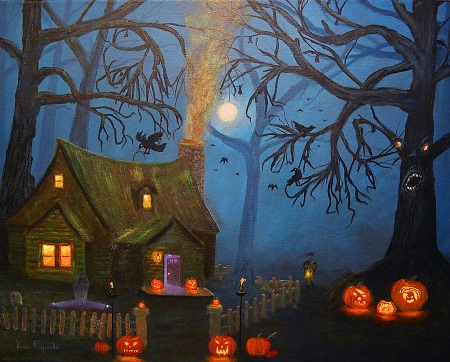
 2189455-ee56c21d7f5d8220390ae05abc10dcfa.jpg
Halloween Night door Ken Figurski, 2014


Halloween


It was down in the woodland on last Hallowe’en,
Where silence and darkness had built them a lair,
That I felt the dim presence of her, the unseen,
And heard her still step on the hush-haunted air.

It was last Hallowe’en in the glimmer and swoon
Of mist and of moonlight, where once we had sinned,
That I saw the gray gleam of her eyes in the moon,
And hair, like a raven, blown wild on the wind.

It was last Hallowe’en where starlight and dew
Made mystical marriage on flower and leaf,
That she led me with looks of a love, that I knew
Was dead, and the voice of a passion too brief.

It was last Hallowe’en in the forest of dreams,
Where trees are eidolons and flowers have eyes,
That I saw her pale face like the foam of far streams,
And heard, like the night-wind, her tears and her sighs.

It was last Hallowe’en, the haunted, the dread,
In the wind-tattered wood, by the storm-twisted pine,
That I, who am living, kept tryst with the dead,
And clasped her a moment who once had been mine.


 2189455-47101daaa22ffad4aa1498d5fe8bef82.jpg
Madison Cawein (23 maart 1865 – 8 december 1914)
Oktober in Iroquois Park, Louisville, Kentucky, de geboorteplaats van Madison Cawein


Zie voor de schrijvers van de 31e oktober ook mijn vorige twee blogs van vandaag.


Geschreven door Romenu om 18:42 Reageer op dit bericht

Bruce Bawer, Joseph Boyden, John Keats, Don Winslow, Carlos Drummond de Andrade, Jean Améry, Nick Stone, Irina Denezhkina, Marijke Schermer

De Amerikaanse dichter, schrijver en literatuurcriticus Bruce Bawer werd geboren op 31 oktober 1956 in New York. Zie ook alle tags voor Bruce Bawer op dit blog.

Uit: Gays in the Era of Trump (Artikel in Frontpage Magazine, februari 2017)

“Certainly, given what Islamic immigration has meant for gay people in Europe, you'd think that every half-aware gay American would have cheered Trump's executive order temporarily blocking entry into the U.S. by citizens of seven majority-Muslim countries. In three of those nations, Syria, Somalia, and Libya, being gay is punishable by imprisonment; in three others, Yemen, Sudan, and Iran, it's a capital offense. (In the seventh, Iraq, homosexuality is technically legal, thanks to the U.S. influence over its post-Saddam constitution, although it's still not exactly the ideal spot for a gay honeymoon.) And yet on February 4, thousands of gays rallied outside the Stonewall Inn in New York's Greenwich Village – where the modern gay-rights movement is generally viewed as having begun – to protest the visa ban. These protesters (like the gay idiots of the BDS movement who march in “solidarity” with Palestine) haven't just been fed lies about Islam; they've failed to grasp – yet – that they're being used by the left to whitewash a “victim group” many of whose members, if given the power, would toss them to their deaths from the tops of buildings.
But this will change. Across Europe, gays have been deserting the left in growing numbers for the so-called “far-right” parties that are standing up to Islam – and they're making that move because they've seen enough of Islam to know that it represents a threat to their very lives. With Islam continuing its dread incursion into the U.S., with President Trump pronouncing the question of same-sex marriage “settled,” and (not least) with the staggeringly popular, flagrantly gay, and passionately pro-Trump Milo Yiannopoulos out there providing young audiences with desperately needed reality checks about Islam and the left, it only makes sense that gay Americans, like their European counterparts, will over time be increasingly suspicious of Islam's apologists – and increasingly receptive to Trump's blunt truth-telling about the Religion of Peace.”


2189447-5ea61057245c41a8dc93185c07ca526c.jpg
Bruce Bawer (New York, 31 oktober 1956)
De USA Gay Pride vlag


De Canadese schrijver Joseph Boyden werd geboren op 31 oktober 1966 in Willowdale, Ontario. Zie ook alle tags voor Joseph Boyden op dit blog

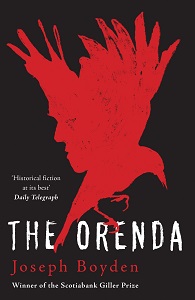
Uit: The Orenda

"And when the dogs are within a few minutes of reaching me, I will suddenly begin to feel a warmth creeping. My body will continue its hard seizures, but my toes and fingers and testicles will stop burning. I will begin to feel a sense of, if not comfort, then relief, and my breathing will be very difficult and this will cause panic but that will slowly harden to resolve. And when the dogs are on the lake and racing toward me, jaws foaming and teeth bared, I will know that even this won’t hurt anymore, my eyes frozen shut as I slip into a sleep that no one can awaken from. As the dogs circle me I will try to smile at them, baring my own teeth, too, and when they begin to eat me I won’t feel myself being consumed but will, like You, Christ, give my body so that others might live.
This thought of giving, I now see, lifts me just enough to pick up the girl and begin walking away from the lake’s edge. After all, if she’s alive, won’t her people—my pursuers—consider sparing me? I will
keep her alive, not only because this is what You demand but also to save myself. The thought of betraying Your wishes feels more an intellectual quandary than what I imagine should physically cause my heart to ache, but I’ll worry about that later. For now I follow the others’ footsteps as best I can, my thick black robe catching on the branches and nettles, the bush so thick I wonder how it is that the men I follow, and those who follow me, are not part animal, contain some black magic that gives them abilities beyond what is natural. You seem very far away here in this cold hell, and the Superior’s attempts to prepare me before I left France, before my journey to this new world, seem ridiculous in their naïveté. You will face great danger. You will most certainly face death. You will question Jesus’ mercy, even His existence. This is Lucifer whispering in your ear. Lucifer’s fires are ice.
There is no warming your body and your soul by them. But Superior doesn’t have any idea what true cold is, I realize, as I allow myself and the girl to be swallowed by the darkness of trees that the bitter sun fails to penetrate."


 2189447-5bea0abd4ef6b1cb710675a0ad241d07.jpg
Joseph Boyden (Willowdale, 31 oktober 1966)
Cover


De Engelse dichter John Keats werd geboren op 31 oktober 1795 in Finsbury Pavement in Londen. Zie ook alle tags voor John Keats op dit blog.


Ode on Melancholy

No, no, go not to Lethe, neither twist
Wolf’s-bane, tight-rooted, for its poisonous wine;
Nor suffer thy pale forehead to be kiss’d
By nightshade, ruby grape of Proserpine;
Make not your rosary of yew-berries,
Nor let the beetle, nor the death-moth be
Your mournful Psyche, nor the downy owl
A partner in your sorrow’s mysteries;
For shade to shade will come too drowsily,
And drown the wakeful anguish of the soul.

But when the melancholy fit shall fall
Sudden from heaven like a weeping cloud,
That fosters the droop-headed flowers all,
And hides the green hill in an April shroud;
Then glut thy sorrow on a morning rose,
Or on the rainbow of the salt sand-wave,
Or on the wealth of globed peonies;
Or if thy mistress some rich anger shows,
Emprison her soft hand, and let her rave,
And feed deep, deep upon her peerless eyes.

She dwells with Beauty — Beauty that must die;
And Joy, whose hand is ever at his lips
Bidding adieu; and aching Pleasure nigh,
Turning to poison while the bee-mouth sips:
Ay, in the very temple of Delight
Veil’d Melancholy has her sovran shrine,
Though seen of none save him whose strenuous tongue
Can burst Joy’s grape against his palate fine;
His soul shall taste the sadness of her might,
And be among her cloudy trophies hung.


Ode aan de neerslachtigheid

Ontwring de wrangwortel geen giftige wijn,
ontwijk de Lethe, laat geen scarabee
of doodshoofdvlinder je eigen Psyche zijn,
laat je niet kussen door Persefone,
nachtschades rode druif, op ’t bleke hoofd,
rijg niet je rozenkrans uit taxuszaad
en maak de donzige uil geen deelgenoot
van jouw geheim verdriet: je ziel verdooft
als elke schaduw in de schaduw staat –
daartussen vindt de waakzame angst de dood.

Maar komt zij plotseling uit de hemel vallen,
Neerslachtigheid, als huilbui die de bloemen
knikt maar ook voedt, en legt ze een wade op alle
hellingen met hun prille lentegroenen –
voed je verdriet dan met een morgenroos,
met welige pioenen, met de wieren
die aanspoelen omringd door regenbogen –
of, is je meesteres fantastisch boos,
vang dan haar zachte handen, laat haar tieren
en zwelg diep, diep in haar weergaloze ogen.

Ze woont bij Schoonheid, die ooit dood zal zijn,
en Blijheid, met haar hand steeds aan de lippen
ten afscheid, naast Plezier, ofwel Venijn
zo gauw de bijenmond ervan gaat nippen –
ja, de gesluierde Neerslachtigheid
heeft in het vreugdevolle heiligdom
haar soevereine schrijn, alleen betreden
door wie de druif van Blijheid met zijn tong
te barsten drukt – zijn ziel hangt na die tijd
tussen haar droeve, duistere trofeeën.
 

Vertaald door Jan Kuijper


 2189447-1d7f37514660c8102cde87c15300bc1c.jpg
John Keats (31 oktober 1795 – 23 februari 1821) 
John Keats listening to the Nightingale on Hampstead Heath door Joseph Severn, ca. 1845


De Amerikaanse schrijver Don Winslow werd geboren in New York op 31 oktober 1953. Zie ook alle tags voor Don Winslow op dit blog.

Uit: The Force

“The last guy on earth anyone ever expected to end up in the Metropolitan Correctional Center on Park Row was Denny Malone.
You said the mayor, the president of the United States, the pope—people in New York would have laid odds they'd see them behind bars before they saw Detective First Grade Dennis John Malone.
A hero cop.
The son of a hero cop.
A veteran sergeant in the NYPD's most elite unit.
The Manhattan North Special Task Force.
And, most of all, a guy who knows where all the skeletons are hidden, because he put half of them there himself.
Malone and Russo and Billy O and Big Monty and the rest made these streets their own, and they ruled them like kings. They made them safe and kept them safe for the decent people trying to make lives there, and that was their job and their passion and their love, and if that meant they worked the corners of the plate and put a little something extra on the ball now and then, that's what they did.
The people, they don't know what it takes sometimes to keep them safe and it's better that they don't.
They may think they want to know, they may say they want to know, but they don't.
Malone and the Task Force, they weren't just any cops on the Job. You got thirty-eight thousand wearing blue, Denny Malone and his guys were the 1 percent of the 1 percent of the 1 percent the smartest, the toughest, the quickest, the bravest, the best, the baddest.
The Manhattan North Special Task Force.
"Da Force" blew through the city like a cold, harsh, fast and violent wind, scouring the streets and alleys, the playgrounds, parks and projects, scraping away the trash and the filth, a predatory storm blowing away the predators.
A strong wind finds its way through every crack, into the project stairwells, the tenement heroin mills, the social club back rooms, the new-money condos, the old-money penthouses. From Columbus Circle to the Henry Hudson Bridge, Riverside Park to the Harlem River, up Broadway and Amsterdam, down Lenox and St. Nicholas, on the numbered streets that spanned the Upper West Side, Harlem, Washington Heights and Inwood, if there was a secret Da Force didn't know about, it was because it hadn't been whispered about or even thought of yet.”


 2189447-5ce36a7e5fb3d0d3e3ef3a839394ce82.jpg
Don Winslow (New York, 31 oktober 1953)
Cover


Zie voor nog meer schrijvers van de 31e oktober ook mijn vorige blog van vandaag.

Geschreven door Romenu om 18:42 Reageer op dit bericht

Carlos Drummond de Andrade, Jean Améry, Nick Stone, Irina Denezhkina, Marijke Schermer

De Braziliaanse dichter Carlos Drummond de Andrade werd geboren op 31 oktober 1902 in Itabira, een klein dorpje in de staat Minas Gerais. Zie ook alle tags voorCarlos Drummond de Andrade op dit blog.


Dawn

The poet rode the trolley drunk.
The sun came up behind the yards.
The small hotels slept very sadly.
The houses too were drunk.

Everything was a total wreck.
Nobody knew that the world was going to end
(only a child did but kept it quiet),
that the world was going to end at 7:45.
Last thoughts! Last telegrams!

Joe who listed pronouns,
Helen who loved men,
Sebastian who ruined himself,
Arthur who never said anything,
set off for eternity.

The poet is drunk, but
he hears a voice in the dawn:
Why don't we all go dancing
between the trolley and the tree?

Between the trolley and the tree
dance, brothers!
Even without music
dance, brothers!
Children are being born
with so much spontaneity.
Love is fantastic
(love and what it produces).

Dance, brothers!
Death will come later
like a sacrament.


Poetry

I spent one hour thinking of a verse
my pen does not want to write.
Yet, it is here inside
restless, alive.
It is here inside
and does not wish to get out.
But the poetry of this very moment
overflows my whole life.


Aporia

An insect digs
digs without alarm
perforating the earth
without finding escape.
What to do, exhausted,
in a blocked country,
union of the night
root and mineral?
And the labyrinth
(oh reason and mystery)
suddenly untie itself:
in green, lonely,
antieuclidean,
an orchid is born.


 2189449-8839c53a2602754ebc222f477361c718.jpg
Carlos Drummond de Andrade (31 oktober 1902 – 17 augustus 1987)


De Oostenrijkse schrijver Jean Améry werd geboren op 31 oktober 1912 in Wenen. Zie ook alle tags voor Jean Améry op dit blog.

Uit: Die Schiffbrüchigen

“Eugen Althager aber schwebte im Leeren. In eine unpersönliche Ferne waren ihm die Tage gerückt, in denen er gearbeitet hatte. Sachlich nur mehr und akademisch wußte er um eine Zeit, da er im Buchladen gestanden war und verkauft hatte. Unbeschwert von Erinnerungen daran war seine Seele. Das war vor drei Jahren gewesen: da sein Leben gegliedert und zielhaft gewesen war. Urlaube hatte es gegeben, die erstrebt und erhofft worden waren, Werktage der Arbeit, freie Abende, Sonntage der Einkehr und Andacht. Das waren Feiern gewesen, deren Leuchtkraft in den Jahren verblaßt war. Die ungeheure Menge freier Zeit, die nun sein Leben erfüllte, hatte jeden Begriff von Freiheit in ihm erdrückt. Er kämpfte einen erbitterten Kampf gegen diese Freiheit. Stunden um Stunden rang er ihr ab. Stunden, die trotz ihrer Sinnlosigkeit nicht würdelos versackten. Hell und hart waren seine Tage.
Nur in äußersten Fällen der inneren Trostlosigkeit, wenn drohend die Gefahr stumpfen Dämmerns vor ihm erwuchs, suchte er Umgang mit Freunden. Dann stieg er die sauberen, hellen Stiegen zu Heinrich Hessls Wohnung empor. Und Heinrichs Mutter, die ihn wohltuend und menschlich mit »Du« ansprach, öffnete ihm. Immer noch war es gut sein mit Heinrich Hessl. Achtzehn Jahre der Freundschaft lagen zwischen ihnen. Am ersten Schultag waren die Knaben damals nebeneinander gesetzt worden und nun stand Heinrich wenige Tage vor dem Rigorosum. Was alles zwischen jenem ersten Schultag und heute geschehen war! Die Tage einer ländlichen Kindheit mit den ungeheuer weiten und großartigen Spielen in den Wäldern. Was wissen davon die Knaben der Städte, die ihre mühseligen, armen Spiele hinter den grau verstaubten Büschen der Parks spielen, zwischen den Müllkübeln und Teppichstangen der Hinterhöfe. Höhlen hatten sie gemeinsam gegraben in den Wäldern, waren Reiter und Pfadfinder gewesen. Später waren die Knaben dann vorübergehend auseinandergekommen. Eugen, der die unteren Klassen eines Provinzgymnasiums besucht hatte, mußte frühzeitig einen Beruf erlernen und Heinrich wurde dem fragwürdigen städtischen Mittelschulbetrieb übergeben. Immer wieder, wenn die Freunde einander zu verlieren drohten, wenn starke Verschiedenheiten der Sphären und Lebensformen zwischen sie traten, dann war es das Erinnern der ländlichen Reiter- und Jägerzeit, das siegte.”


 2189449-662f8c2175450a8af8a619eb2aa23e11.jpg
Jean Améry (31 oktober 1912– 17 oktober 1978)
Portret door Manfred Dübelt, 2004


De Engelse schrijver Nick Stone werd geboren op 31 oktober 1966 in Cambridge. Zie ook alle tags voor Nick Stone op dit blog.

Uit: Mr Clarinet

“New York City, 6 November 1996

Ten million dollars if he performed a miracle and brought the boy back alive, five million dollars if he came back with just the body, and another five million if he dragged the killers in with it — their dead-or-alive status was immaterial, as long as they had the kid's blood on their hands. Those were the terms, and, if he chose to accept them, that was the deal.
Max Mingus was an ex-cop turned private investigator. Missing persons were his specialty, finding them his talent. Most people said he was the best in the business — or at least they had until 17th April 1989, the day he'd started a seven-year sentence for manslaughter on Attica Island and had his licence permanently revoked. The client's name was Allain Carver. His son's name was Charlie. Charlie was missing, presumed kidnapped. Optimistically, with things going to plan and ending happily for all concerned, Max was looking at riding out into the sunset a millionaire ten to fifteen times over. There were a lot of things he wouldn't have to worry about again, and he'd been doing a lot of worrying lately, nothing but worrying. So far, so good, but now for the rest: The case was based in Haiti. Waytee?' Max said as if he'd heard wrong. `Yes,' Carver replied. Shit. He knew this about Haiti: voodoo, AIDS, Papa Doc, Baby Doc, boat people and, recently, an American military invasion called Operation Restore Democracy he'd seen on TV. He knew — or had known — quite a few Haitians, ex-pats he'd had regular dealings with back when he'd been a cop and worked a case in Little Haiti, Miami. They hadn't had a decent thing to say about their homeland, 'bad place' being the most common and kindest. Nevertheless, he had fond memories of most of the Haitians he'd met. In fact, he'd admired them. They were honest, honourable, hard-working people who'd found themselves in the most unenviable place in America —bottom of the food chain, south of the poverty line, a lot of ground to make up. That went for most of the Haitians he'd met. When it came to people there were always plenty of exceptions to every generalization, and he'd come face to face with those. They hadn't left him with bad memories so much as the kind of wounds that never really heal, that open up at the slightest nudge or touch. The whole thing was already sounding like a bad idea. He'd just come out of one tough spot. Why go to another? Money. That was why.”

 2189449-814e914aaea2b514eeac20e31f04cba7.jpg
Nick Stone (Cambridge, 31 oktober 1966)


De Russische schrijfster Irina Denezhkina werd geboren op 31 oktober 1981 in Yekaterinburg. Zie ook alle tags voor Irina Denezhkina op dit blog.

Uit: Give Me: Songs for Lovers

“Now here I am stuck in real life, trying to wake him up. Trying to make him realize I want that rapid-rush start to our relationship to continue. Sugar, it’s like the Stork and the Heron … He smokes. And looks the other way. Drinks beer. And looks the other way. Plays the drums like a maniac. And all the time it’s like I don’t exist for him. Then why does he ask me to call? Why did he take me to Peterhof with Volkova and Kres? We had a great time there, climbed in all the fountains, and a militiaman even tried to chase us. And in the last fountain it was slippery, and Lyapa took hold of my hand. Or I took hold of his. I don’t remember. And we stood there under the clear streams of water, squeezing each other’s hands, and all around us everything was bright and happy. Lyapa’s spikes ran and his whole head was covered in gel. We stood there holding hands, and Volkova couldn’t get it together to take a picture of us. Finally she clicked the shutter and we headed back, still holding hands. And that was all. Separate again. And we’re still separate now. We walk separately, and it’s all just nothing but.
… Always writing hits so the brothers will get the feel. No garbage and no drivel and no strife.
The telephone rang. I started and looked at the clock—whoa! One o’clock in the morning!
Hippolet? Volkova’s voice mocked me tenderly in the receiver.
Whalelet?
Guess where I’m calling from!!!
I listened. Besides Volkova’s sniffling into the receiver I could hear the distant rumble of music.
From a club?
Right! And guess what phone I’m using!
A mobile.
Somehow I guessed all the answers very quickly. Volkova lost interest in her game and started telling me things in her everyday voice:
I’ve met this guy. Thirty-eight. Rich as Croesus … He gave me a lift home from work, then we went to a bar, and then came here. Tarasova’s here too. Her guy’s worse! Ha ha!
Well, naturally, I said with a nod, although Volkova couldn’t see me.
And where did you get to, mush? Volkova asked, suddenly taking an interest in me."

yeka
Irina Denezhkina (Yekaterinburg, 31 oktober 1981)


Onafhankelijk van geboortedata

De Nederlandse schrijfster Marijke Schermer werd geboren in Amsterdam in 1975. Zie ook alle tags voor Marijke Schermer op dit blog.

Uit: Noodweer

“Na het applaus, bij het verlaten van de zaal, raken ze elkaar kwijt. Emilia zoekt een tijdje. Bruch staat niet bij een deur of boven aan de trap op haar te wachten. Ze dwaalt door de gangen. Ze kijkt op haar telefoon. Geen berichten. Ze veronderstelt dat Bruch Vincent heeft gevonden, regisseur van de voorstelling en vriend van hem van vroeger. Ze bestelt een glas bier in de foyer. De actrice die Blanche speelde had de hele tuttige enscenering goed gemaakt. Ze liet alle zinnen van Tennessee Williams woord voor woord horen. Je leek me zo zacht, zo lief, als een holte in de rots die de wereld is waarin ik me kon verbergen. Ze liet de wanhoop als een niet te breken golf in zich uitbarsten. Emilia had ergens in een kier van de avond de leegte gevoeld die zij met diepe betekenis associeert. Daar is ze melancholisch van geworden.
Ze gaat het Ajaxbalkon op. Het is er leeg en verlaten waardoor ze zich afvraagt of het eigenlijk wel is toegestaan dat zij daar is. Er staan opgestapelde kratten en twee scheef gewaaide parasols. Het heeft geregend. In haar tas zoekt ze naar sigaretten die ze niet kan vinden. Ze gaapt. En dan grijpt iemand haar plotseling van achteren vast. Een stevige greep vat haar schouder. Een grote warme vaag naar komijn ruikende hand vouwt zich over haar gezicht, drukt haar ogen dicht, vingers schuin over haar lippen, vingertoppen waarop haar huid het eelt kan onderscheiden. Haar rug raakt een massief lijf. Achter haar ogen vindt een ontploffing plaats. Een vlam panische angst. Onmiddellijk daarna verdwijnt alle kracht en alle vorm uit haar lichaam en glijdt ze, zonder een spoor van een vluchtof vechtreflex, volkomen slap, uit zijn greep op de grote harde natgeregende cementtegels.
‘Hé, Emilia! wat doe je?’ Vertraagd breekt de stem door de suizende stilte. Het is Frank, vaak genoeg aan hun eettafel gezeten. Lolbroek, zonder meer, met terugwerkende kracht ook inderdaad bezitter van die komijnachtige lichaamsgeur, ze had hem daaraan kunnen herkennen.
‘Maak je nou een grap?’ roept hij van boven. Er verstrijken zeker twintig seconden waarin het vocht uit de tegels in de stof van haar kleren trekt, waarin ze zich afvraagt of ze haar reactie met een opmerking ongedaan zou kunnen maken. Dan pas hervindt Emilia haar spieren en botten en komt ze overeind.”

 2189449-565fe15fece5e041462408dd6cb4f46b.jpg
Marijke Schermer (Amsterdam, 1975)


Zie voor nog meer schrijvers van de 31e oktober ook mijn blog van 31 oktober 2017 deel 2.

Geschreven door Romenu om 18:42 Reageer op dit bericht

Jan Van Loy, Andrew Solomon, Ezra Pound, Paul Valéry, Miguel Hernández, Fjodor Dostojevski, Georg Heym, Kostas Karyotakis, Michal Ajvaz

De Vlaamse schrijver Jan Van Loy werd op 30 oktober 1964 geboren te Herentals, in de Antwerpse Kempen. Zie ook alle tags voor Jan Van Loy op dit blog.

Uit: Hondenbrood

“Onze koffiekopjes zijn leeg, en Celis en ik leunen doelloos op de tapkast. De kroegbaas vouwt een vaatdoek in vieren. Celis futselt wat aan zijn lepeltje. Wij zijn de enige klanten.
‘Ik haat de ochtend,’ zeg ik.
‘IJdelheid der ijdelheden,’ zegt Celis.
‘Alles ligt zo plat als een paardenvijg.’
‘Jongens, hou het toch eens beetje luchtig,’ zegt de man achter de tap. ‘Kijk eens naar buiten. De zon schijnt, het wordt een prachtige dag.’
‘Wat is dat toch met die middenstand?’ zegt Celis tegen mij. ‘Wil altijd maar kletsen.’
‘Denken dat ze meer kunnen verzetten als ze er wat gelul bijdoen.’
‘Rustig, rustig,’ zegt de kastelein.
‘Onlangs heb ik het mijn kapper nog ingewreven,’ zeg ik. ‘Ik zei zwijgen en knippen, barbier, zei ik, ik wil niet weten waar jij met vakantie bent geweest.’
‘Ik praat met winkeliers zoals met mijn seniele oma,’ zegt Celis. ‘Als ze zegt, lekker weer, dan zeg ik: o jáá.’
‘Maar morgen wordt het weer slecht, zeggen ze.’
‘Altijd hetzelfde in dit kloteland.’
‘Als ik met pensioen ben, overwinter ik in Spanje.’
‘Maar gelijk heb je. Profiteer er maar van.’
Celis wendt zich tot de kroegbaas. ‘Is het nu luchtig genoeg?’ vraagt hij.
‘Drinken jullie nog iets, of hoe zit het?’
Ik laat mijn kont van mijn kruk glijden. ‘Kom,’ zeg ik. ‘Hij houdt niet van ons.’
Aan een plein dat wemelt van de vretende en schijtende duiven, vinden we nog één vrije bank.
‘Ik wil niet gaan dweilen,’ zegt Celis.
Maandag moeten we gaan dweilen. 't Is allemaal de schuld van Kristien.
Als hij niet uitkijkt, krijgt elke niksnut in dit land een maatschappelijk werkster over zich heen, en wij hebben Kristien gekregen. Dat ‘werkster’ doet ons altijd denken aan een bij, een vervelende bij die dreigend om je oren komt zoemen en zichzelf in een huidplooi probeert te wringen om je daar een steek te geven met het excuus dat ze niet anders kon. Wat een nuttig dier, die bij: zij schenkt ons honing en verse bloemen, het is de altruïst onder de insecten - maar net als alle altruïsten zijn het hypocrieten, die bijen. Leve de onvervalst valse wesp.
Kristien is een bij. Het liefst belt ze je om half negen 's ochtends uit bed, voor de een of andere formaliteit die noodzakelijk heet te zijn vanwege ‘het nieuwe computersysteem’ dat nu al jaren onderweg is.”
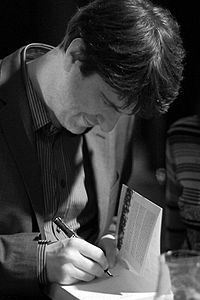
 

 2189091-42c48da36bf2a37e2e53930ebb236cb9.jpg
Jan Van Loy (Herentals, 30 oktober 1964)


De Amerikaanse schrijver, psychiater en journalist Andrew Solomon werd geboren op 30 oktober 1963 in New York. Zie ook alle tags voor Andrew Solomon op dit blog.

Uit: A Stone Boat

“This is what happened when my mother got sick: we were in Europe, on one of those family trips we had been taking since my childhood, one of those exquisitely conceived and impeccable holidays into which my mother poured—so it seems in retrospect—more energy than she could afford. "Just think, Harry:' my mother had said a week before, her voice lilting. "Four days of Paris, August sun, the city almost empty, and then we'll go down to the château—you'll love the chateau—and we'll eat breakfast looking across the valley, and we'll go for walks, and we'll swim a little if it gets really warm, and we'll go see all the Matisses. There's a piano at the château, so you can practice, but no one is going to make you perform for a whole two weeks. Just come along and relax and have a good time' I was living in London then, and my parents flew across the Atlantic three or four times a year; my father's bank had an office in the UK, and since my move to Britain he had taken an active interest in supervising the local staff, and came over for regular quick visits. My mother and I would spend the after-noons together while he worked, and then we would all meet for supper. Sometimes my parents came straight to London, but often enough I met them on the Continent so that we could all travel together. A few days before breakfast looking across the valley, my mother got sick in Paris. I will not forget my parents' arrival in Paris that time. My old friend Helen, my brother, Freddy, and I had been sitting for at least an hour in the bar at the hotel, waiting. When Helen and I left the bar (we left to see whether my parents had arrived yet, while Freddy went off to the bathroom), there they were. My father was at the front desk, discussing the rooms in his familiar way, and my mother was sitting nearby. The reality of my par-ents' checking in that day is so strong that it overwhelms me:”

 

 2189091-4515286b9a88ce5d7ef1dce835973e74.jpg
Andrew Solomon (New York, 30 oktober 1963)


De Amerikaanse dichter Ezra Pound werd geboren in Hailey, Idaho op 30 oktober 1885. Zie alle tags voor Ezra Pound op dit blog.

Uit: Canto III (Fragment)

I sat on the Dogana's steps
For the gondolas cost too much, that year,
And there were not " those girls ", there was one face,
And the Buccentoro twenty yards off, howling " Stretti ",
And the lit cross-beams, that year, in the Morosini,
And peacocks in Kore's house, or there may have been.
Gods float in the azure air,
Bright gods and Tuscan, back before dew was shed.
Light: and the first light, before ever dew was fallen.
Panisks, and from the oak, dryas,
And from the apple, maelid,
Through all the wood, and the leaves are full of voices,
A-whisper, and the clouds bowe over the lake,
And there are gods upon them,
And in the water, the almond-white swimmers,
The silvery water glazes the upturned nipple,
As Poggio has remarked.
Green veins in the turquoise,
Or, the gray steps lead up under the cedars.

My Cid rode up to Burgos,
Up to the studded gate between two towers,
Beat with his lance butt, and the child came out,
Una nina de nueve anos,
To the little gallery over the gate, between the towers,
Reading the writ, voce tinnula:
That no man speak to, feed, help Ruy Diaz,
On pain to have his heart out, set on a pike spike
And both his eyes torn out, and all his goods sequestered, "
And here, Myo Cid, are the seals,
The big seal and the writing."
And he came down from Bivar, Myo Cid,

With no hawks left there on their perches,
And no clothes there in the presses,
And left his trunk with Raquel and Vidas,
That big box of sand, with the pawn-brokers,
To get pay for his menie;
Breaking his way to Valencia.
Ignez da Castro murdered, and a wall
Here stripped, here made to stand.
Drear waste, the pigment flakes from the stone,
Or plaster flakes, Mantegna painted the wall.
Silk tatters, "Nec Spe Nec Metu."
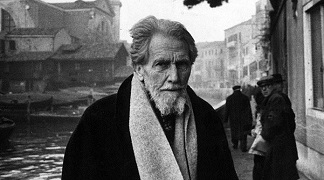
 

 2189091-d334f674d90c2d5e445872ca6c63259a.jpg
Ezra Pound (30 oktober 1885 – 1 november 1972)
In 1963


De Franse dichter en schrijver Paul Valéry werd geboren op 30 oktober 1871 in Sète. Zie ook alle tags voor Paul Valéry op dit blog.


Été

Été, roche d’air pur, et toi, ardente ruche,
Ô mer! Éparpillée en mille mouches sur
Les touffes d’une chair fraîche comme une cruche,
Et jusque dans la bouche où bourdonne l’azur;

Et toi, maison brûlante, Espace, cher Espace
Tranquille, où l’arbre fume et perd quelques oiseaux,
Où crève infiniment la rumeur de la masse
De la mer, de la marche et des troupes des eaux,

Tonnes d’odeurs, grands ronds par les races heureuses
Sur le golfe qui mange et qui monte au soleil,
Nids purs, écluses d’herbe, ombres des vagues creuses,
Bercez l’enfant ravie en un poreux sommeil!

Dont les jambes (mais l’une est fraîche et se dénoue
De la plus rose), les épaules, le sein dur,
Le bras qui se mélange à l’écumeuse joue
Brillent abandonnés autour du vase obscur

Où filtrent les grands bruits pleins de bêtes puisées
Dans les cages de feuille et les mailles de mer
Par les moulins marins et les huttes rosées
Du jour… Toute la peau dore les treilles d’air.


Féerie

La lune mince verse une lueur sacrée,
Toute une jupe d’un tissu d’argent léger,
Sur les bases de marbre où vient l’Ombre songer
Que suit d’un char de perle une gaze nacrée.

Pour les cygnes soyeux qui frôlent les roseaux
De carènes de plume à demi lumineuse,
Elle effeuille infinie une rose neigeuse
Dont les pétales font des cercles sur les eaux…

Est-ce vivre?… Ô désert de volupé pamée
Où meurt le battement faible de l’eau lamée,
Usant le seuil secret des échos de cristal…

La chair confuse des molles roses commence
À frémir, si d’un cri le diamant fatal
Fêle d’un fil de jour toute la fable immense.
 

 2189091-8bc68525d67b7c1818123e58cd7b95fc.jpg
Paul Valéry (30 oktober 1871 – 20 juli 1945)
Hier met zijn “laatste muze” Jean Voilier (rechts), eind jaren 1930


De Spaanse dichter en schrijver Miguel Hernández werd geboren in Orihuela, Alicante, op 30 oktober 1910. Zie ook alle tags voor Miguel Hernández op dit blog.


Elegy For Ramon Sue
(In Orihuela, where he and I were born, death like a lightning flash deprived me of Ram6n Sij6, so dear to me.)

I want to be the grieving gardener
of the earth you fill and fertilize,
my dearest friend, so soon.

Mingling my helpless sorrow with the rain,
the snails, and all the organs of your body,
I shall feed your heart

to the drooping poppies. Pain bunches up
between my ribs till every breath I draw
becomes an aching stitch.

A brutal slam, a heavy frozen fist,
a sudden silent killing axe-blow sent
you toppling to the ground.

Nothing gapes wider than my wounded cry,
this grief that plummets down to roots of death
sunk deeper than my life.

Across the stubble of the dead I walk
uncomforted, leaving my heart behind,
and go about my business.


Vertaald door Edwin Honig


First Song

The field has retreated,
seeing man's
convulsive charge.

What an abyss is laid bare
between the olive tree and man!

The animal who sings,
the animal who knows
how to weep and grow roots,
has remembered his claws.

Claws that he dressed up
in gentleness and flowers
but which, in the end, he bares
in all his cruelty.

They crackle on my hands:
Keep away from them, boy.
Or I will plunge them
into your little body.

I've regressed into a tiger.
Keep away or I'll tear you apart.

These days, love is death,
and ma lies in ambush for man.


Vertaald door Don Share
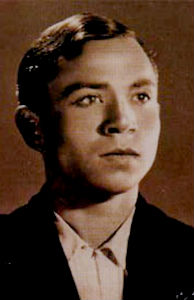
 

 2189091-c966f13792b9f5766da483a52ce2f419.jpg
Miguel Hernández (30 oktober 1910 – 28 maart 1942)


De Russische schrijver Fjodor Michajlovitsj Dostojevski werd geboren ergens tussen 30 oktober en 11 november 1821 in Sint Petersburg. Zie ook alle tags voor Fjodor Dostojevski op dit blog.

Uit: Buried Alive: Or, Ten Years Penal Servitude in Siberia (Vertaald door Marie von Thilo)

"Oun prison was situated on the outskirts of the fortress, and almost immediately above the rampart. I used often to look through the chinks in the fence and try and catch a glimpse of the wide world beyond. But all I could see was a little piece of the sky and the high grassy rampart where the sentinels walked to and fro day and night. And then I used to wonder how often during the long years that lay before me I should creep to the fence and peep through the holes and see the same sentinels and the same rampart and the same little bit of blue sky, which, strange to say, did not seem to belong to that sky which we could see from our prison, but rather to some other sky that was far away from us, and under which free people lived. The courtyard was very large—two hundred feet long and one hundred and fifty wide. It formed an irregular hexangle, and was surrounded by a high fence made of posts pointed at the top. They had. been rammed deep into the ground, and stood so close that they nearly touched each other. Across the posts broad planks had been nailed to make the fence still more solid. This was the outer bulwark of the convict prison. An opening had been left for the,gates in one of the sides of the hexangle. They were very strong, and always kept locked and watched night and day by the sentinels. The only time when they were unlocked was when the convict prisoners left the prison to go to their work. Beyond those gates was the fair free world where the people might do as they listed. But to us who used on this side of the fence that world seemed as unreal as a weird fairy tale. For we lived in our on world, which was unlike anything we had ever heard or seen; we were ruled by our own laws, wore a peculiar garb, and had peculiar customs and habits. Our dwelling-place was not unlike a huge grave where living people had been buried; and I am going to describe to you this abode.”
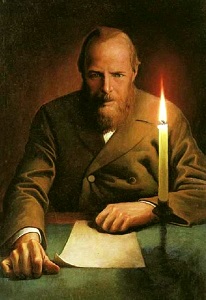
 

 2189091-44211943ae2a05ca69a50f0f939cb448.jpg
Fjodor Dostojevski(30 oktober 1821 – 9 februari 1881)
Portret door Konstantin Vasilyev, z.j.


De Duitse dichter Georg Heym werd geboren op 30 oktober 1887 in Hirschberg. Zie ook alle tags voor Georg Heym op dit blog.


An den schönen Gott

Wenige nur lieben dich noch
Seit dich verstieß das verächtliche Volk.
Ihre Seelen tragen darum
Kummer und Haß und Hohn.

Doch in ihr Herz senketest du,
Als du schiedest, die Schönheit, und
Sie erkennen einander an
Sehnsucht und Leid im Aug.


Die Somnambulen

Schon braust die Mitternacht. Mit langem Haar
In weiße Tücher feierlich gehüllt
Zieht schwankend auf der Somnambulen Schar,
Wie Rauch so weiß, der weit den Himmel füllt.

Aus allen Dächern steigen sie herauf,
Irrlichtern gleich auf einem schwarzen Sumpf.
Sie tanzen auf der Wetterfahnen Knauf,
Mit irren Lächelns fröhlichem Triumph.

Sie schlagen Zimbeln in der leichten Hand
Und irren singend in der grünen Luft.
Vor ihren Brüsten zittert ihr Gewand,
Die wild den Mond berauschen, süß, voll Duft.

Sie kitzeln ihn mit ihren zarten Händen
Und zwicken leicht ihn in das gelbe Ohr.
Sie wiegen sich in ihren magern Lenden
Im Tanzschritt hin, ein weißer Trauerchor.

Sie fliegen durch die Nacht wie Wolken leise
Hoch über spitzer Berge blauem Grat
Hinauf zu ihm auf ihrer leichten Reise
Zu einem Wiegenlied an Abgrunds Pfad.

Der Mond umfängt sie sanft mit Spinnenarm.
Ihr Haupt wird von dem Kusse weiß gemalt.
Sie ruhn an ihres Bräutigams Herzen warm,
Der tief durch ihre dünne Rippe strahlt.


Halber Schlaf

Die Finsternis raschelt wie ein Gewand,
Die Bäume torkeln am Himmelsrand.

Rette dich in das Herz der Nacht,
Grabe dich schnell in das Dunkele ein,
Wie in Waben. Mache dich klein,
Steige aus deinem Bette.

Etwas will über die Brücken,
Er scharret mit Hufen krumm,
Die Sterne erschraken so weiß.

Und der Mond wie ein Greis
Watschelt oben herum
Mit dem höckrigen Rücken.
 

 2189091-717e3b2cd980df46ac78c5755fb92a78.jpg
Georg Heym (30 oktober 1887 – 16 januari 1912)
Ets door Ernst Ludwig Kirchner, 1924


De Griekse dichter en schrijver Kostas Karyotakis werd geboren op 30 oktober 1896 in Tripolis. Zie ook alle tags voor Kostas Karyotakis op dit blog.


Strophes

1.
For twenty years I gambled
with books instead of cards;
for twenty years I gambled
and I squandered my life.
Poor now I lie down here
to listen to an easy wisdom
which an old plane tree
whispers to me.


2.
Free from everything I want
to sail to the end of the world.
If I have any friend left,
he should flee, escape.
And when death demands
the wealth I've amassed,
you, my vast bitterness,
will be my only estate.


Vertaald door Haris Stavrakis
 

 2189091-2d4596a879e9d6b511ec581cebd71081.jpg
Kostas Karyotakis (30 oktober 1896 – 21 juli 1928)
Dimosthenis Papadopoulos als Kostas Karyotakis in de Griekse dramaserie “Karyotakis” uit 2009


De Tsjechische dichter, schrijver, essayist en vertaler Michal Ajvaz werd geboren op 30 oktober 1949 in Praag. Zie ook alle tags voor Michal Ajvaz op dit blog.

The Other City (Vertaald door Gerald Turner)

“A cough was heard from the cinema foyer. It was even worse than that gloomy November day when you were walking through the de-serted center of a village near Prague and you heard from a loud-speaker attached to a lamp-post a voice ironically reading your study about the Grail of rural post-offices, which lay at the bottom of your desk drawer and which you have never given to anyone to read, be-cause it was your only piece of writing in which you openly named (even with the vilest consonants produced by slovenly and depraved movements of the tongue in the moist darkness of the mouth) the thing that squelches its way out of the deep chasm in the middle of your apartment. Some kind of St Vitus's Cathedral, even bigger than the one at Prague Castle, is moving around the Sobeslav district at a speed of 170 mph. The Isthmus rises above the surface of two seas. The piano turned into crabs and crept around the bedroom, the mo-ment was not yet ripe for the music to sound, not yet; the goddesses in silver cases had not yet fallen through the ceiling of the mon-sters' parliament. The pictogram with the spiral at its center, drawn in pencil on the backs of the lively piano crabs, is pronounced with a sound that resembles a sneeze in a concrete bunker and means forgetting the supple movements of the hand with the green rings in the darkened room in the house above the lake. (There are many and various Chinas on whose outskirts we live; there are rice fields in all the rooms of the adjacent apartment.) You wanted to flee the dial dance because speech is inadequate to describe what was here before the emergence of ornament. We wouldn't even be able to see the primordial dance because vision is so embedded in the mesh of familiar sense, that whatever is not nourished by that sense would remain invisible to us." "But what about the starfish on the carpet, the Gothic-chapel rail-road car and the books with the mysterious script?" I objected. "After all, people from our world encountered them:' "Those are just things that happen to get washed up on our shore, which we have enveloped in some compensatory meaning on the basis of false similarities with our own experience. The anxious and cunning deity of grammar holds its protective hand over us, and conceals the monsters' faces; we say 'that thing's a mystery' and 'that incident is uncanny: but in doing so we discreetly wrap their dread-ful presence, their sinister essence, unrelated to anything and de-fying our gaze, in metaphor, as if in an old threadbare suit and so assign them a place in our world. It can't be helped. It doesn't matter who drew the pattern on our mosaic floor, it still remains our prison and our home.”
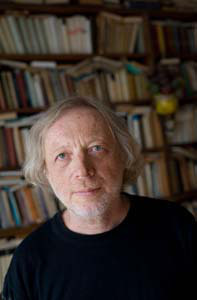
 

 2189091-f24d4156182e59b22f4bd8075ed1508d.jpg
Michal Ajvaz (Praag, 30 oktober 1949)


Zie voor nog meer schrijvers van de 30e oktober ook mijn blog van 30 oktober 2017 en ook mijn blog van 30 oktober 2011 deel 2.


Geschreven door Romenu om 18:23 Reageer op dit bericht

Matthias Zschokke, Andrea Voigt, Harald Hartung, Mohsen Emadi, Lee Child, Michel van Stratum, Zbigniew Herbert, Claire Goll, Dora Read Goodale

De Zwitserse dichter, schrijver en filmmaker Matthias Zschokke werd geboren op 29 oktober 1954 in Bern. Zie ook alle tags voor Matthias Zschokke op dit blog.

Uit: Die Wolken waren groß und weiß und zogen da oben hin

“Zwar habe er erschöpft dazu gelächelt und gemeint einen feinen Scherz gemacht zu haben, doch auch die Mutter konnte das stumme Lächeln durch die Telefonleitung bindurch naturgemäß nicht wahrnehmen und hörte nur den Satz, der ihr schroff vorkam und ihr die Sprache verschlug. Danach rief sie ein paar Tage nicht mehr an und redete nicht mehr davon, dass er sie umbringen kommen solle. Die Stille, die darauf folgte, empfand er als wohltuend. Manchmal knisterte seine Geliebte mit einer Cellophantüte — er lebte mit einer Frau zusammen, in deren Nähe er sich wohl fühlte —, oder sie blätterte die Seite in einem Magazin um oder in einem Buch, und er dachte, was für eine himmlische Ruhe, und schaute ihr glücklich beim Knistern und Blättern zu.
Außer seiner Mutter hatte Roman einen Freund, der die Lust am Leben ebenfalls verloren haue und litaneiartig am Ende ihrer gelegentlichen Telefonate — sie wohnten fünfhundert Kilometer weit auseinander —jeweils wiederholte, er wäre tief enttäuscht, wenn Roman, nachdem er seine Mutter erschossen haben würde, auf dem Weg zurück nach Berlin bei ihm nicht Halt machen und auch ihn erschießen würde. Und dann war da noch eine Opossumratte, die zu jener Zeit, also gestern, in einem niederösterreichischen Tierpark gehalten wurde und — obwohl noch jung an Jahren — von einem Tag auf den anderen plötzlich den Eindruck erweckte, sich altersschwach zu fühlen und ebenfalls den Tod herbeizusehnen. Man kannte ihr Gesicht in der ganzen Welt, weil sie stark schicke, was bei Opossumratten selten vorkommt, weswegen sie fotografiert und ihr Portrait in vielen, auch seriösen Tageszeitungen auf der Seite mit den vermischten Meldungen abgedruckt worden war und international für Heiterkeit gesorgt hatte. Ihr Name war Traudel. Kurz nachdem sie als schielendes Opossum den Gipfel ihrer Berühmtheit erklommen hatte, wurde sie von der besagten Lebensmüdigkeit gepackt. Sie legte sich auf den Bauch, schlang, was man ihr vor die Schnauze legte, lustlos in sich hinein, wurde dick und dicker und rührte sich nicht mehr vom Fleck. Die Di-rektion des Tierparks schaffte ein junges, hübsches Männchen an und setzte es in Traudels Käfig, in der Hoffnung, damit ihre Lebenslust neu anzuregen. Doch Traudel fauchte das junge, hübsche Männchen wütend an, sobald es sich ihr näherte: Sie lag auf ihrem dicken Bauch und fauchte. Das junge, hübsche Männ-chen ließ sich davon nicht beirren. Immer wieder nä-herte es sich in erotischer Absicht vorsichtig der schielenden Traudel. Doch die war des Lebens definitiv überdrüssig und wollte nichts mehr wissen von Liebe und Sex. Romans Freund hatte 'bandet aus der Ferne ins Herz geschlossen. Er berichtete Roman in täglichen Mails die letzten Neuigkeiten aus dem Opossumrat-tenkäfig, in dem zwischenzeitlich eine Kamera installiert worden war, die rund um die Uhr übers Internet weltweit zeigte, was dort vor sich ging.”


 2188829-b2c6c25c1f6b6eb20b02ac88126f8ffa.jpg
Matthias Zschokke (Bern, 29 oktober 1954)


De Nederlandse dichteres en schrijfster Andrea Voigt werd geboren in Rotterdam op 29 oktober 1968. Zie ook alle tags voor Andrea Voigt op dit blog.


Donderdag

Ik stak de sleutel in het slot en wrikte
de deuren schuurden langs de drempel
de kamer was verlicht, het bed verspreid

op tafel stond een pot met soep
de haverkoeken lagen op een bord
en vet, geeloranje kaas en uien en augurken

ik kon lopen door de kamer met een mond vol Schotse zalm
aan tafel zitten bij de warmte van een vuur
bekers vol met whisky kon ik drinken

ik snijd het zware brood in dikke plakken
en leg het op een plank met zoute boter
met honing en met bittere marmelade

in het midden van de kamer ga ik zitten
op de oude stenen vloer
wachtend op de honger en de kou


Succes

Mijn succesfactoren zijn niet in balans
ik ben niet met mijn wezen in gesprek
in mijn ogen hangt de verveelde blik
van John Malkovich na een moord

mr. Bantoe heeft beloofd dat hij gaat zorgen
voor onmiddellijke terugkeer van geluk
ziekte en gevaren en geliefden
onttovering met veren van de maraboe

ooit schoot ik vogels uit de lucht
ik ging ze zoeken in te diepe sneeuw
het bloed dat ik vond was mijn eigen
de ogen, de vleugels van mij

ik begeef me naar de metro
met een wapen in mijn tas, en bankbiljetten
mijn hartslag is niet sneller dan normaal
mijn slenteren zorgvuldig voorbereid


 2188829-771ff5932dc4f40a6b1b6c8f01878e5d.jpg
Andrea Voigt (Rotterdam, 29 oktober 1968)
Cover achterkant  


De Duitse schrijver, dichter en literatuurwetenschapper Harald Hartung werd geboren op 29 oktober 1932 in Heme. Zie ook alle tags voor Harald Hartung op dit blog.

Uit: Der Tag vor dem Abend

“Große Waldmüller-Retrospektive im Unteren Belvedere.
Nach 1845 hat der Maler nur noch wenige Naturstudien in seine Skizzenbücher eingefügt; vielleicht weil er fortan auch Fotografien als Studienmaterial benutzte. Ein Gegner in der Akademie warf ihm »mosaikartige daguerrotypische Nachahmung« vor. Dabei ist Waldmüllers Licht einzigartig.
Starke Kontraste und brillante Lichtkanten, wie er sie einsetzte, waren der damaligen Fotografie nicht erreichbar. Womöglich mokierte er sich über das neue Medium. Dafür spricht der 1847 gemalte »Guckkastenmann«. Er zeigt eine Schar Kinder in einer dunklen Scheune, die fasziniert auf den Vorführer und sein Gerät blicken. Der Betrachter sieht nicht, was sie sehen; er sieht nur ihre Reaktion: ihre naive, pure Begeisterung. Freilich gibt es in dem Bild auch ein gegenläufiges Motiv: Im abgedunkelten Vordergrund hockt ein Mädchen, das, den Kopf in die Hand gestützt, nachdenklich, fast melancholisch Richtung Betrachter blickt – traurig vielleicht deshalb, weil sie, die Tochter des Guckkastenmannes, von der allzu bekannten Vorführung angeödet wird. Vielleicht also hat der Maler sie so plaziert, um seine Ironie gegen das neue Medium zu wenden. Und damit seinen Stolz auf die Überlegenheit seiner veristischen Malerei.
Wir sehen Wien und seine Parks für einige Tage in Waldmüllers Licht.”


 2188829-f2aa8f2bf307ff18266efe2bf87c2bee.JPG
Harald Hartung (Herne, 29 oktober 1932)


De Iraanse dichter en vertaler Mohsen Emadi werd geboren op 29 oktober 1976 in Sari. Zie ook alle tags voor Mohsen Emadi op dit blog.


Ego      

They come from burial
everybody carries his memory of the house
the doors, the windows,
the frames, the curtains and the carpets
the oven, the stove and the vessels
and the house is being left without wooden bolt and
fire
everyone has taken his portion of the memories
the opening and closing of the first door
the first waiting and the fire.

I go up from my stairs
the cats run away
it’s cold
I sit in a without door doorway
the snakes crawl in me.

In the morning
I see myself in a broken slice of a mirror
without memory
without wooden bolt
without fire
without self...


A myth of creation

In the beginning
it was
possibility,
that knew or didn’t know
that wants or don’t want
to get or not to get the shape of your eyes
to dress or not to  dress in the color of your shirt
to pace or not  to pace in your feet
to walk or not to walk with the trace of your shoes on the bosomto bring or not to bring a cloud or a rain to the bed
for me to feel or not to feel myself in the tremor of pain
and to discover the face of impossible
in the end.


Vertaald door Mohsen Emadi


 2188829-44c6bbc655abdaa58e0c729ee978cf21.jpg
Mohsen Emadi (Sari, 29 oktober 1976)


De Engelse schrijver Lee Child (pseudoniem van Jim Grant) werd geboren op 29 oktober 1954 in Coventry. Zie ook alle tags voor Lee Child op dit blog.

Uit: Past Tense

“Jack Reacher caught the last of the summer sun in a small town on the coast of Maine, and then, like the birds in the sky above him, he began his long migration south. But not, he thought, straight down the coast. Not like the orioles and the buntings and the phoebes and the warblers and the ruby-­throated hummingbirds. Instead he decided on a diagonal route, south and west, from the top right-­hand corner of the country to the bottom left, maybe through Syracuse, and Cincinnati, and St. Louis, and Oklahoma City, and Albuquerque, and onward all the way to San Diego. Which for an army guy like Reacher was a little too full of Navy people, but which was otherwise a fine spot to start the winter.
It would be an epic road trip, and one he hadn’t made in years.
He was looking forward to it.
He didn’t get far.
He walked inland a mile or so and came to a county road and stuck out his thumb. He was a tall man, more than six feet five in his shoes, heavily built, all bone and muscle, not particularly good looking, never very well dressed, usually a little unkempt. Not an overwhelmingly appealing proposition. As always most drivers slowed and took a look and then kept on going. The first car prepared to take a chance on him came along after forty minutes. It was a year-­old Subaru wagon, driven by a lean middle-­aged guy in pleated chino pants and a crisp khaki shirt. Dressed by his wife, Reacher thought. The guy had a wedding ring. But under the fine fabrics was a workingman’s body. A thick neck and large red knuckles. The slightly surprised and somewhat reluctant boss of something, Reacher thought. The kind of guy who starts out digging post holes and ends up owning a fencing company.
Which turned out to be a good guess. Initial conversation established the guy had started out with nothing to his name but his daddy’s old framing hammer, and had ended up owning a construction company, responsible for forty working people, and the hopes and dreams of a whole bunch of clients. He finished his story with a little facial shrug, part Yankee modesty, part genuine perplexity. As in, how did that happen? Attention to detail, Reacher thought. This was a very organized guy, full of notions and nostrums and maxims and cast-­iron beliefs, one of which was that at the end of summer it was better to stay away from both Route One and I-­95, and in fact to get out of Maine altogether as fast as possible, which meant soon and sideways, on Route Two, straight west into New Hampshire.”


 2188829-f1281825266c0db138f6613abb21bde1.jpg
Lee Child (Coventry, 29 oktober 1954)


De Nederlandse dichter en schilder Michel van Stratum werd geboren in Goirle op 29 oktober 1970. Zie ook alle tags voor Michel van Stratum op dit blog.


Duivelsverzen

Zij worden gedreven
Door een satanische kracht
In naam van het goddelijke
Een boek, een profeet
Dragers van de pracht

Enig doel in het vizier
Het bereiken der bestemming
Door duivels te verjagen
En verkondigers van het hemelse
Tot in het absurde te behagen

Vanwaar dit panische
Dit helse dit onverzoenbare
Waarom niet gewoon rustig
Op het strand
De schim van leider
En profeet voor ogen
En het boek in de hand

Verlangend naar de hemel staren...


 2188829-bfa8c1258c3fe15db55aa86ff64b5bac.jpg
Michel van Stratum (Goirle, 29 oktober 1970)


De Poolse dichter, schrijver en essayist Zbigniew Herbert werd geboren op 29 oktober 1924 in Lemberg. Zie ook alle tags voor Zbigniew Herbert op dit blog.


Episode in de bibliotheek

Een blond meisje heeft zich over het gedicht gebogen. Met een potlood zo scherp als een lancet brengt ze de woorden over op blank papier en verandert ze in streepjes, accenten, cesuren. Het lamento van de gevallen dichter lijkt nu op een salamander afgevreten door de mieren.
Toen we hem onder vuur wegdroegen, geloofde ik dat zijn nog warme lichaam in het woord zou herrijzen. Maar nu ik de dood van de woorden zie, weet ik dat de ontbinding geen grenzen kent. Van ons zullen alleen lettertekens overblijven, her en der verspreid in de zwarte aarde. Accenten op het niets en op stof.


Het huis van de dichter

Ooit was hier adem op de ruiten, de geur van gebraden vlees, hetzelfde gezicht in de spiegel. Nu een museum. De flora van de vloeren heeft men verdelgd, de kisten leeggehaald, de kamers schoongespoten met was. Dagen en nachten aaneen waren de ramen geopend. Muizen mijden dit bedorven huis.
Het bed werd netjes opgemaakt. Maar niemand wil hier ook maar één nacht doorbrengen.
Tussen zijn kast, zijn bed en zijn stoel - een witte grens van afwezigheid, even precies als het afgietsel van de hand.


Klassiek

Groot houten oor dichtgestopt met watten en flauwekul van Cicero. Een meesterlijk stilist - zeggen allen. Niemand schrijft vandaag nog zulke lange zinnen. En wat een eruditie. Zelfs in steen kan hij lezen. Het zal alleen nooit in hem opkomen dat de aderen in het marmer van de thermen van Diocletianus gesprongen bloedvaten zijn van slaven uit steengroeven.


Vertaald door Gerard Rasch


 2188829-96258dd127c6f313f87d5f5f5ce7c2b1.jpg
Zbigniew Herbert (29 oktober 1924 – 28 juli 1998)
In 1955


De Duits – Franse schrijfster Claire Goll werd geboren op 29 oktober 1890 in Nürnberg. Zie ook alle tags voor Claire Goll op dit blog.


Träumte ich nur

Träumte ich nur,
Daß ich in goldenem Taxi
Mit dir durch den Montag fuhr?
Saßest du wirklich neben mir
Und hieltest meine Hand
An der mein Körper bebte?
Die Blumenkioske der Boulevards
Drängten zu den Fenstern herein,
Das Verdeck war aus Himmel
Und alle Lichtreklamen loderten:
Ich liebe dich.

Oder träumte ich,
Daß der Wagen hielt
Und wir ankamen auf der Erde?
Sitze ich nicht immer noch
In goldenem Taxi neben dir
Fahre durch den zarten Montag
Ins Paradies?
Halte ich nicht ewig deine Hand
Und lasse dich nie wieder aussteigen
Aus meinem Traum?


Junge Akrobatin

Bunter Vogel du, der zwischen Welten
Ueber Abend, Stadt und Staunen schwebt,

Schwing dich auf dem Trapez
Ueber dich selbst durch die Zeit.

Deine Schenkel flattern zitternd von Zweig zu Zweig
Und dein Herz von Mensch zu Mensch.

Goldne Flitterlibelle, deine schwebende
Sehnsucht Fällt nie durch die gierigen Augen ins Herz.

Armer Stern, der allnächtlich aufgehn muß
Am kleinen bezahlten Himmel der Gaukler.

Der jeden Abend abstürzt in die Arme roher Athleten,
In den giftigen grauen Zigeunerwagen,

Der dich gefangen durch das unendliche Leben fährt.


 2188829-2c9170191e07aa08b7476a9364c98fb3.jpg
Claire Goll (29 oktober 1890 – 30 mei 1977)
Portret door Albert Gleizes, 1921


De Amerikaanse dichteres Dora Read Goodale werd geboren op 29 oktober 1866 in Mount Washington, Massachusetts. Zie ook alle tags voor Dora Read Goodale op dit blog.


Asters

The Autumn wood the aster knows,
The empty nest, the wind that grieves,
The sunlight breaking thro’ the shade,
The squirrel chattering overhead,
The timid rabbits lighter tread
Among the rustling leaves.


The Soul of Man

Say, in a hut of mean estate
A light just glimmers and then is gone,
Nature is seen to hesitate,—
Put forth and then retract her pawn;

Say, in the alembic of an eye
Haughty is mixed with poor and low;
Say, Truth herself is not so high
But Error laughs to see her so;

Say, all that strength failed in its trust;
Say, all that wit crept but a span;
Say, ’t is a drop spilled in the dust,—
And then say brother—then say man!


 2188829-680aa1bf6decfd91e545a11011aa124e.jpeg
Dora Read Goodale (29 oktober 1866 – 12 december 1953)
Cover


Zie voor nog meer schrijvers van de 29e oktober ook mijn blog van 29 oktober 2017 deel 1 en eveneens deel 2.

Geschreven door Romenu om 18:17 Reageer op dit bericht

Herfststorm (J. C. Bloem)


Dolce far niente


 2188512-f69e20263922201c78d2d2fb9ee29337.jpg
Early Autumn Storm door Romona Youngquist, 2015


Herfststorm

Nu vieren alle winden hunne toomen,
De hechte zomerbouw stort steen na steen,
De wereld valt als een oud huis ineen:
Molmzwarte balken kraken van de boomen,

Flarden behang van blaren neder komen;
Een lucht van roet drukt landen, dras als veen,
Gelijk een water breekt door dijken heen
Gaan regenvlagen in geweldge stroomen.

Weldra besneeuwt de winter deze puinen
Van wat den aanval der seizoenen duldde;
Maar alle winter vindt zijn zeker tanen.

Dan treedt de lente in nieuwe aardsche tuinen,
Die langs de dingen glimlacht bleek en gulden
Met een gelaat verteederd door veel tranen.


 2188512-fd1f295bf88bf35f7574c89d7ac5e83c.jpg
J. C. Bloem (10 mei 1887 – 10 augustus 1966)
Oude ansichtkaart van Oudshoorn, de geboorteplaats van J.C. Bloem


Zie voor de schrijvers van de 28e oktober ook mijn vorige twee blogs van vandaag.

Geschreven door Romenu om 07:51 Reageer op dit bericht

Evelyn Waugh, Jan Weiler, István Kemény, JMH Berckmans, John Hollander

De Britse schrijver Evelyn Waugh werd geboren in Londen op 28 oktober 1903. Zie ook alle tags voor Evelyn Waugh op dit blog.

Uit:The Loved One

'I will give the matter every consideration.'
'I'll leave our brochure with you. And now I must hand you over to the cosmetician.'
She left the room and Dennis at once forgot everything about her. He had seen her before everywhere. American mothers, Dennis reflected, presumably knew their daughters apart, as the Chinese were said subtly to distinguish one from another of their seemingly uniform race, but to the European eye the Mortuary Hostess was one with all her sisters of the air-liners and the reception-desks, one with Miss Poski at the Happier Hunting Ground. She was the standard product. A man could leave such a girl in a delicatessen shop in New York, fly three thousand miles and find her again in the cigar stall at San Francisco, just as he would find his favourite comic strip in the local paper; and she would croon the same words to him in moments of endearment and express the same views and preferences in moments of social discourse. She was convenient; but Dennis came of an earlier civilization with sharper needs. He sought the intangible, the veiled face in the fog, the silhouette at the lighted doorway, the secret graces of a body which hid itself under formal velvet. He did not covet the spoils of this rich continent, the sprawling limbs of the swimming-pool, the wide-open painted eyes and mouths under the arc-lamps. But the girl who now entered was unique. Not indefinably; the appropriate distinguishing epithet leapt to Dennis's mind the moment he saw her: sole Eve in a bustling hygienic Eden, this girl was a decadent.
She wore the white livery of her calling; she entered the room, sat at the table and poised her fountain-pen with the same professional assurance as her predecessor's, but she was what Dennis had vainly sought during a lonely year of exile.
Her hair was dark and straight, her brows wide, her skin transparent and untarnished by sun. Her lips were artificially tinctured, no doubt, but not coated like her sisters' and clogged in all their delicate pores with crimson grease; they seemed to promise instead an unmeasured range of sensual converse. Her full face was oval, her profile pure and classical and light; her eyes greenish and remote, with a rich glint of lunacy.".

 2188510-04ce82eed5ae3d34dc307ea9a4e14f75.jpg
Evelyn Waugh (28 oktober 1903 – 10 april 1966)
Scene uit de gelijknamige film uit 1965 met Robert Morley (Sir Ambrose Abercombie) en Robert Morse (Dennis Barlow)


De Duitse schrijver en journalist Jan Weiler werd geboren op 28 oktober 1967 in Düsseldorf. Zie ook alle tags voor Jan Weiler op dit blog.

Uit: In meinem kleinen Land

“Was ich auch gefragt wurde: Und? Wie sind sie so, die Deutschen? Komische Frage, denn sie wird ja immer von Landsleuten gestellt. Die müssten ja selber wissen, wie sie sind. Trotzdem beantworte ich die Frage gerne, denn die Deutschen sind viel besser als ihr Ruf. Sie sind freundlich. Höflich. Hilfsbereit. Sie haben Humor.
Ich bin nie wirklich schlecht behandelt worden auf meiner Reise. Manchmal drücken sich die Leute einfach schlecht aus. Oder sie denken für einen Moment nicht nach. Oder sie haben den Kopf voll mit anderen Dingen und können gerade nicht höflich sein. Das kann einem überall passieren, nicht nur in Deutschland.
Einmal habe ich in einem IC eine Fahrkarte für den Nahverkehr dabeigehabt. Der Schaffner hat keinen Zuschlag von mir verlangt. Wissen Sie, wieso? Weil die Heizung im Zug nicht funktionierte. In Rostock haben sie extra für mich die Küche wieder aufgemacht, als ich spätabends zurück ins Hotel kam. Eine Taxifahrerin aus Ennepetal hat mich an einem Schneesamstag, als überall das Licht ausging, durchs Chaos gefahren, obwohl man sie woanders noch viel dringender gebraucht hätte.
Übrigens: Es gibt womöglich eine deutsche Mentalität, aber kaum eine regionale. Die Menschen lachen überall an den gleichen Stellen. Es gibt keine sturen Westfalen oder exaltierten Rheinländer oder schwierig zu erobernde Norddeutsche oder dankbare Thüringer. Alles Unsinn. Manchmal lachen die Zuschauer lauter, manchmal leiser, manchmal gibt es Szenenapplaus, manchmal nicht.
Könnten Sie einhundert deutsche Städte aus dem Kopf aufzählen? Ich hätte es nicht gekonnt. Dabei hat unser kleines Land sogar noch viel mehr. Ich habe jedenfalls einhundert gesehen, und die allermeisten haben mir gefallen. Und noch viel mehr als die Städte haben mir die Menschen gefallen, also die Deutschen. Man traut es sich beinahe nicht zu formulieren, aber im Großen und Ganzen haben wir es nicht schlecht getroffen.”


 2188510-0ac088ec4cbb4a310b7aff694b69e670.jpg
Jan Weiler (Düsseldorf, 28 oktober 1967)


De Hongaarse dichter en schrijver István Kemény werd geboren op 28 oktober 1961 in Boedapest. Zie ook alle tags voor István Kemény op dit blog.


Der Vater, wie er im Buche steht

Gib mir: ein Geheimnis. Einen Rat. Eine Stellung bei Hofe
Oder gib mir den einen, den Geheimrat bei Hofe
Einen, der altmodisch, bärtig  und  korpulent  ist
Ein Realist der gleichwohl Wahrhaftiges spricht
Ein alter Schulfreund längst verstorbener Maler
Die Traumrolle jedes Schauspielers mit erfahrenem Alter
Einen, der heimlich bewundert wird von jedermann
Gegenstand vieler Witze, über die man herzhaft lachen kann
Schon zweimal verhasst, vier oder fünfmal nur langweilig
womöglich wird er bald wieder als Minister vereidigt
Seine Affären waren vor kurzem noch in aller Munde
Dass er ab und zu trinkt, macht unter Freunden die Runde
Auf großen Festen plaudert er haltlos und mit Genuss
doch fremde Plattitüden hält er diskret unter Verschluss
Einmal die Woche bittet er den Philosophen zu Tische
Als Amateurhistoriker pflegt er seine geistige Frische
Ob Tabakpfeife, oder Epoche, er kennt alle Details
nicht ein deutscher Fürstenname, den er nicht weiß
Er hat auch Schlechtes getan, er erkennt das Vergehen
doch kennt keine Reue, er macht nichts ungeschehen.
Er weiss, er müsste unfehlbar sein, weiss er ist es nicht
und könnte mich dennoch töten lassen, oder auch dich.
Ich wüsste, er sorgte für mich, auch wenn ich fremd wär
alles könnte ich sein, mich quälte keine Freiheit mehr.


Vertaald door Orsolya Kalász en Monika Rinck


Visiting The King

I know you are preparing for battle, Sir,
and your time is precious, for maybe it will be your
last night, your captains are waiting, because
even your strategy is incomplete, and your servants
are making your luxurious, though light and perhaps
last feast, and girls in their colorful tents
are beautifying themselves in a hurry,
you do not have much time left to chatter, especially
because I’ve come from the enemy camp,
I’ve grown up and learned there, there I was in love,
and there is my past, though I am not a traitor,
but a traveller, a wanderer,
wise and impudent, very brave at the moment
and even a bit surprised at that, but neither
mad nor drunk, and I do not want to kill
or to divert you, I’ve simply come
to ask, whether you send
a message towards the very edge,
since I am just on my way, to
call or shout from over there,
as I’m bored with God keeping silent.


Vertaald door Gábor Mezei


 2188510-699a1681c5495711729b9c67b4eaa8b7.jpg
István Kemény (Boedapest, 28 oktober 1961)


De Vlaamse schrijver JMH Berckmans (Jean-Marie Henri) werd geboren in Leopoldsburg op 28 oktober 1953. Zie ook alle tags voor JMH Berckmans op dit blog.

Uit: Een beetje voorbij het huis van Elsschot

“Het zou trouwens de eerste keer niet zijn dat de witte mens de dikke koe haar smoel ineen timmert. Het zou de eerste keer niet zijn dat de witte mens het kot afbreekt. De witte mens heeft problemen. Hij gaat met z'n problemen naar Beretta maar Beretta heeft al honderdduizend keer gezegd dat ze hem niet kan helpen. Hij is al bij Landuyt geweest en Landuyt kon hem ook niet helpen. Hij heeft al in de doos gezeten en zelfs van de doos is hij niet wijzer geworden en op den duur hebben ze 'm losgelaten. Tegen hem zegt iedereen witte mens, al heet hij eigenlijk Paul Serge Rosette, naar zijn peter en zijn meter en zijn doodgeboren broertje.
In de voorkamer ligt Mie Bees al jaren op sterven maar nu gaat ze het niet lang meer maken. Camilla de gorilla heeft de onderpastoor besteld voor de belezing van de stervenden. Alle anderen wachten in spanning af. De priester laat op zich wachten.
Het wordt steeds later. Misschien komt hij morgen pas, misschien zijn er vandaag te veel stervenden in de wereld van de levenden.
Carlos is vrijer van de dikke koe en Ludo Cleerbout is de vrijer van de zwarte heks en behalve de zwarte heks heeft niemand het hoog op met Ludo Cleerbout vanwege z'n maniertjes en z'n smoeltje en z'n vele, vele praatjes voor de vaak. Hij werkt aan de band in een autovelgenfabriek en brengt voor het overige de tijd zo maar een beetje zoek met platen draaien op fuiven en rondhangen tot de nacht in de dag verkleurt. Als de zwarte heks van school af is willen ze trouwen en ergens in de randstad gaan wonen met hun meubeltjes en hun stereo en hun autootje in de box. Hun Volkswagentje. Maar eerst wil ze de school af maken. De handelshumaniora op Mère Jeanne in de Tabaksvest. Zodat ze een baantje vindt op een kantoortje en ganse dagen pennen likken kan en haar zestienjarige kont verslijten tot er sleet op zit en ze veulens en kalveren baren kan.
En ten slotte is er het jong Veerle, maar het jong Veerle is bijkomstig, het jong Veerle is nog maar zeven, het jong Veerle heeft nergens weet van, het jong Veerle snapt toch de ballen van wat er hier allemaal aan de hand is. Het jong Veerle snapt de ballen van Big Jim.”

 2188510-fd795ef97f6db43fe666bbfff5122858.jpg
JMH Berckmans (28 oktober 1953 – 31 augustus 2008)


De Amerikaanse dichter en criticus John Hollander werd geboren op 28 oktober 1929 in New York. Zie ook alle tags voor John Hollander op dit blog.


The Mad Potter (Fragment)

Now at the turn of the year this coil of clay
Bites its own tail: a New Year starts to choke
On the old one’s ragged end. I bite my tongue
As the end of me—of my rope of stuff and nonsense
(The nonsense held, it was the stuff that broke),
Of bones and light, of levity and crime,
Of reddish clay and hope—still bides its time.

Each of my pots is quite unusable,
Even for contemplating as an object
Of gross unuse. In its own mode of being
Useless, though, each of them remains unique,
Subject to nothing, and themselves unseeing,
Stronger by virtue of what makes them weak.

I pound at all my clay. I pound the air.
This senseless lump, slapped into something like
Something, sits bound around by my despair.
For even as the great Creator’s free
Hand shapes the forms of life, so—what? This pot,
Unhollowed solid, too full of itself,
Runneth over with incapacity.
I put it with the others on the shelf.

These tiny cups will each provide one sip
Of what’s inside them, aphoristic prose
Unwilling, like full arguments, to make
Its points, then join them in extended lines
Like long draughts from the bowl of a deep lake.
The honey of knowledge, like my milky slip,
Firms slowly up against what merely flows.


 2188510-74eb059c13d556f8d00ef1064d92c786.jpg
John Hollander (28 oktober 1929 – 17 augustus 2013)


Zie voor nog meer schrijvers van de 28e oktober ook mijn vorige blog van vandaag.

Geschreven door Romenu om 07:50 Reageer op dit bericht

Uwe Tellkamp, Johannes Daniel Falk, Karl Philipp Conz, Arjen van Veelen, Al Galidi

De Duitse schrijver Uwe Tellkamp werd geboren op 28 oktober 1968 in Dresden. Zie ook alle tags voor Uwe Tellkamp op dit blog.

Uit: Der Eisvogel

“Vater bestellte mich in die Bank, wie es seine Art war: Er wusste, dass ich nicht ans Telefon ging, deshalb ließ er mir eine Nachricht zukommen, nicht per e-Mail oder Fax, auch nicht per Post, sondern per Fahrradkurier. Ich möchte dich sprechen. Ich kann morgen eine Viertelstunde erübrigen, warte in meinem Büro auf mich. Und ich wartete - nicht weil mir sein Befehl Wunsch oder ich ein besonders gutdressierter und gehorsamer Sohn gewesen wäre, mich interessierte, was er diesmal von mir wollte, und ich hatte Sehnsucht nach einem Gesicht: Willst du kein normales Leben führen, hatten Lippen zu mir gesagt, die ich bei einem früheren Besuch in Vaters Bank zum ersten Mal sah, damals, als ich im Vestibül aufgerufen wurde und der Empfangsdame folgte, deren Hintern in einem zum Zerreißen gespannten Kostüm vor mir die polierte Marmortreppe zur Chefetage hochschaukelte, dann die Unterredung mit meinem Vater: Wie sieht jetzt deine weitere Lebensplanung aus, Wiggo, hast du eine Stelle, hast du eine Freundin, dann klopfte es, herein, ja, Frau Toft ... - 't Hooft, sagten die Lippen, einer dieser für mich seltsamen holländischen Namen mit einem Apostroph am Anfang und kleinem Buchstaben danach. Die Augen glitten von meinem Vater zu mir, musterten mich spöttisch, dunkel wie Brombeeren, das Haar schwarz und glatt wie Vogelflügel. Ja, Frau 't Hooft, entschuldigen Sie. Ihr Name ist nicht ganz unkompliziert. Bringen Sie die Dornier-Analyse? Frau 't Hooft nickte, trat zum Tisch. Ich habe es soweit vorbereitet; aber einiges an den Beteiligungsverhältnissen ist noch unklar, könnten wir, sie sprach ohne Akzent. - In zehn Minuten, sagte Vater. Sie ging. Meine beste Assistentin, ehrgeizig, aber nicht zu sehr, kein Blaustrumpf, glaube ich, will auch Kinder, wie findest du sie? - Vater, hast du mich deswegen bestellt, um mit mir über deine Assistentinnen zu reden? - Nein, aber darüber, was du dir jetzt vorstellst, nachdem du es glücklich bis aufs Arbeitsamt gebracht hast, mein Sohn, wie alt bist du? Vater zündete sich ruhig eine seiner Cohibas an.”


 2188508-f9d737ce0503b2872b4f9fdf82e2253c.jpg
Uwe Tellkamp (Dresden, 28 oktober 1968)
Cover


De Duitse dichter, schrijver en theoloog Johannes Daniel Falk werd geboren op 28 oktober 1768 in Danzig. Zie ook alle tags voor Johannes Daniel Falk op dit blog.


Der Bäcker von Prag und die neun Strohwische (Fragment)
Eine Ballade

Graumäntelein ging, so grau von Gestalt,
Wohl durch den finstern böhmischen Wald,
Graumäntelein ging wohl über ein Jahr,
Der Mantel zerrissen und unscheinbar;
Der Regen beregnet ihn jeglichen Tag;
Er ging von Böhmisch-Brod bis gen Prag.

Und wie er gen Prag in die Hauptstadt kam,
Wo die Moldau mitten die Stadt durchschwamm,
Wo Heiligenbilder und d’runter erhöht
St. Nepomuk hoch auf der Brücke steht;-
Hell glänzen drei Sternlein über dem Haupt –
Daß selig das Volk wird, das an ihn glaubt;

Besucht’ er im Regen sein altes Quartier,
Tief unter’m Hradschin angebaut liegt’s hier.
Und der Nebel durchzog so finster die Stadt,
Und der Wanderer sucht im Nebel den Pfad;
Hier wohnt der Hussit, und der Christ und der Jud’,
und lebet geschützt vor Verfolgungswuth.

Und sieh’! vor der Thür auf dem Schemel da saß,
Verkaufend Semmel und Stritzel, Herr Clas;
Herr Clas, den Reichen und Armen bekannt,
Und der reichste der Bäcker in Prag nur genannt;
Wohl hielt er der Schweine sich hundert zur Mast,
Er selbst war dicker als alle sie fast.


 2188508-d79ad77474eaf8ca9b631ac7db8f7425.jpg
Johannes Daniel Falk (28 oktober 1768 – 14 februari 1826)
Portret door Hanna Kohlschein, z.j.


De Duitse dichter en schrijver Karl Philipp Conz werd geboren op 28 oktober 1762 in Lorch. Zie ook alle tags voor Karl Philipp Conz op dit blog.


Abendphantasie

Die Phantasie, des Himmels schönstes Kind,
Kommt auf Gewölk von Rosen hergezogen;
Der Abendsonne Zauberdüfte sind
Schon vor ihr her den Bergen angeflogen:

Romantisch liegt vor mir das kleine Thal,
Vom nahen Wall der Hügel still begränzet,
Um die ersterbend schon der letzte Strahl
Der Sonn’ im Kampfe mit den Schatten glänzet;

Die fallen jetzt hernieder in das Land;
Das Schauspiel dort der Ferne tritt zurücke;
Die Welt verengt an dichter Nebelwand
Allmählich sich des Spähers irrem Blicke.

Ein Schweigen, wie der Ruhe Schweigen, zieht
Sich rings umher durchs dämmernde Gefilde,
Auf das herab schon Hespers Fackel glüht:
Verschwunden sind vor mir des Tags Gebilde.

Die Nebel fliehn; der Sterne Welt geht auf;
Sie blinken Aug an Auge schon am Himmel:
Frey wandeln sie jetzt den gewohnten Lauf,
Den festlichen, in seligem Gewimmel.

Mein innres Licht wird durch ihr Licht erhellt:
Es tagt in mir; ich wähne, neue Augen
Gehn in mir auf, die Wunder jener Welt
Voll Pracht und hoher Schönheit einzusaugen.

Der Gottheit Strahl berühret mich und reißt
Mich hoch empor, weit über niedre Zonen
Hin wo der Quell der ewgen Wahrheit fleußt,
Und die Gestalten alles Guten thronen.


 2188508-c1d061c8431d369b283c29b9cd321980.jpg
Karl Philipp Conz (28 oktober 1762 – 20 juni 1827)
Lorch


Onafhankelijk van geboortedata

De Nederlandse schrijver, essayist, journalist en columnist Arjen van Veelen werd geboren in Rotterdam in 1980. Zie ook alle tags voor Arjen van Veelen op dit blog.

Uit: En hier een plaatje van een kat & andere ongerijmdheden van het moderne leven

“Treinstations begonnen op vliegvelden te lijken. Er kwamen beveiligingspoortjes. Er kwamen steeds meer winkels. ‘De winkels geven het station een gevoel van veiligheid en comfort, gemak en zekerheid in een hectische omgeving, maar brengen ook sfeer en vermaak,’ schreef de NS.
Het was in diezelfde tijd dat treinconducteurs op omroepcursus moesten, waar ze leerden om de reiziger ‘persoonlijker’ toe te spreken. ‘Goedemiddag, welkom in de intercity naar Eindhoven’, of ‘wij gaan nog voor u stoppen in Venlo’. Let op dat ‘voor u’ – het stoppen van de trein, voorheen vanzelfsprekend, werd nu gebracht als extra service, een gunst bijna. En omgekeerd leerden de conducteurs om vertragingen voortaan ‘extra reistijd’ te noemen, als een onverwachte bonus. In die tijd verschenen er op de stations slogans als ‘Genieten’, ‘Prettig wachten’, ‘Verwen jezelf’.
Wachten werd genieten.
Genieten werd shoppen.
Het missen van je trein werd een belevenis.
Maar zomaar ergens zitten kon haast niet meer: bijna elk stoeltje of bankje in de hal hoorde nu bij een keten. Consumptie verplicht. De wachtende mens werd gekalmeerd met goede catering. Zijn wachttijd moest geen sleur zijn, maar een vakantie, een minibreak. Alsof je hier niet wachtte op de boemel, maar in de rij stond voor de achtbaan.”


 2188508-50147c86178d2dec1d2fc6fa14375ff9.jpg
Arjen van Veelen (Rotterdam, 1980)


De Nederlandstalige dichter en schrijver Al Galidi (eigenlijk Rodhan Al Khalidi) werd geboren in Al-Najaf (een klein dorpje in het Zuiden van Irak). Zie ook alle tags voor Al Galidi op dit blog.


Vergadering

Waarheen gaat de Nederlander?
Naar een vergadering.
Waar komt hij vandaan?
Van een vergadering.

Het huis
is de vergadering van de Nederlander
met zijn hond.

De douche
is de vergadering van de Nederlander
met het warme water.

De slaap
is de vergadering van de Nederlander
met zijn bed.

Wakker worden
is de vergadering van de Nederlander
met de haast.

De vergadering
is de vergadering van de Nederlander
met de vergadering.


 2188508-3bfeb59b5848a78a1878b935710abf87.jpg
Al Galidi (Al-Najaf, 1971)


Geschreven door Romenu om 07:50 Reageer op dit bericht

Blind Bartimeus (George MacDonald)


Bij de 30e zondag door het jaar


 2188507-2ca8b399a47f432f2e5f4474dd5ec071.jpg
Les Aveugles de Jéricho door Nicolas Poussin, 1650


Blind Bartimeus

As Jesus went into Jericho town,
Twas darkness all, from toe to crown,
About blind Bartimeus.
He said, 'My eyes are more than dim,
They are no use for seeing him:
No matter-he can see us!'

'Cry out, cry out, blind brother-cry;
Let not salvation dear go by.-
Have mercy, Son of David.'
Though they were blind, they both could hear-
They heard, and cried, and he drew near;
And so the blind were saved.

O Jesus Christ, I am very blind;
Nothing comes through into my mind;
'Tis well I am not dumb:
Although I see thee not, nor hear,
I cry because thou may'st be near:
O son of Mary, come!

I hear it through the all things blind:
Is it thy voice, so gentle and kind-
'Poor eyes, no more be dim'?
A hand is laid upon mine eyes;
I hear, and hearken, see, and rise;-
'Tis He! I follow him!


 2188507-08e95d2feacf286dbb3045f83147d9fe.jpg
George MacDonald (10 december 1824 – 18 september 1905)
Christ Church in Huntly, Aberdeenshire, de geboorteplaats van George MacDonald


Zie voor de schrijvers van de 28e oktober ook mijn volgende twee blogs van vandaag.

Geschreven door Romenu om 07:50 Reageer op dit bericht

Sylvia Plath, Dylan Thomas, Steffie van den Oord, Zadie Smith, Nawal el Saadawi, Albrecht Rodenbach

De Amerikaanse dichteres en schrijfster Sylvia Plath werd geboren op 27 oktober 1932 in Jamaica Plain, een buitenwijk van Boston. Zie ook alle tags voor Sylvia Plath op dit blog.


Circus in Three Rings

In the circus tent of a hurricane
designed by a drunken god
my extravagant heart blows up again
in a rampage of champagne-colored rain
and the fragments whir like a weather vane
while the angels all applaud.

Daring as death and debonair
I invade my lion's den;
a rose of jeopardy flames in my hair
yet I flourish my whip with a fatal flair
defending my perilous wounds with a chair
while the gnawings of love begin.

Mocking as Mephistopheles,
eclipsed by magician's disguise,
my demon of doom tilts on a trapeze,
winged rabbits revolving about his knees,
only to vanish with devilish ease
in a smoke that sears my eyes.


Channel Crossing

On storm-struck deck, wind sirens caterwaul;
With each tilt, shock and shudder, our blunt ship
Cleaves forward into fury; dark as anger,
Waves wallop, assaulting the stubborn hull.
Flayed by spray, we take the challenge up,
Grip the rail, squint ahead, and wonder how much longer

Such force can last; but beyond, the neutral view
Shows, rank on rank, the hungry seas advancing.
Below, rocked havoc-sick, voyagers lie
Retching in bright orange basins; a refugee
Sprawls, hunched in black, among baggage, wincing
Under the strict mask of his agony.

Far from the sweet stench of that perilous air
In which our comrades are betrayed, we freeze
And marvel at the smashing nonchalance
Of nature : what better way to test taut fiber
Than against this onslaught, these casual blasts of ice
That wrestle with us like angels; the mere chance

Of making harbor through this racketing flux
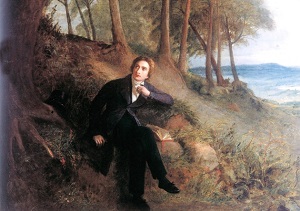
Taunts us to valor. Blue sailors sang that our journey
Would be full of sun, white gulls, and water drenched
With radiance, peacock-colored; instead, bleak rocks
Jutted early to mark our going, while sky
Curded over with clouds and chalk cliffs blanched

In sullen light of the inauspicious day.
Now, free, by hazard's quirk, from the common ill
Knocking our brothers down, we strike a stance
Most mock-heroic, to cloak our waking awe
At this rare rumpus which no man can control :
Meek and proud both fall; stark violence

Lays all walls waste; private estates are torn,
Ransacked in the public eye. We forsake
Our lone luck now, compelled by bond, by blood,
To keep some unsaid pact; perhaps concern
Is helpless here, quite extra, yet we must make
The gesture, bend and hold the prone man's head.

And so we sail toward cities, streets and homes
Of other men, where statues celebrate
Brave acts played out in peace, in war; all dangers
End : green shores appear; we assume our names,
Our luggage, as docks halt our brief epic; no debt
Survives arrival; we walk the plank with strangers.


 2188316-6f1a41da29839163cb397b3f7c8a6f97.jpg
Sylvia Plath (27 oktober 1932 – 11 februari 1963)


De Engelse dichter Dylan Thomas werd geboren op 27 oktober 1914 in Swansea in Wales. Zie ook alle tags voor Dylan Thomas op dit blog.


How Shall My Animal

How shall my animal
Whose wizard shape I trace in the cavernous skull,
Vessel of abscesses and exultation's shell,
Endure burial under the spelling wall,
The invoked, shrouding veil at the cap of the face,
Who should be furious,
Drunk as a vineyard snail, flailed like an octopus,
Roaring, crawling, quarrel
With the outside weathers,
The natural circle of the discovered skies
Draw down to its weird eyes?

How shall it magnetize,
Towards the studded male in a bent, midnight blaze
That melts the lionhead's heel and horseshoe of the heart
A brute land in the cool top of the country days
To trot with a loud mate the haybeds of a mile,
Love and labour and kill
In quick, sweet, cruel light till the locked ground sprout
The black, burst sea rejoice,
The bowels turn turtle,
Claw of the crabbed veins squeeze from each red particle
The parched and raging voice?

Fishermen of mermen
Creep and harp on the tide, sinking their charmed, bent pin
With bridebait of gold bread, I with a living skein,
Tongue and ear in the thread, angle the temple-bound
Curl-locked and animal cavepools of spells and bone,
Trace out a tentacle,
Nailed with an open eye, in the bowl of wounds and weed
To clasp my fury on ground
And clap its great blood down;
Never shall beast be born to atlas the few seas
Or poise the day on a horn.

Sigh long, clay cold, lie shorn,
Cast high, stunned on gilled stone; sly scissors ground in frost
Clack through the thicket of strength, love hewn in pillars drops
With carved bird, saint, and suns the wrackspiked maiden mouth
Lops, as a bush plumed with flames, the rant of the fierce eye,
Clips short the gesture of breath.
Die in red feathers when the flying heaven's cut,
And roll with the knocked earth:
Lie dry, rest robbed, my beast.
You have kicked from a dark den, leaped up the whinnying light,
And dug your grave in my breast.


 2188316-bc8cecb1036d9c156668058f560b0b8d.jpg
Dylan Thomas (27 oktober 1914 – 9 november 1953)
Tim Hollander als Dylan Thomas in de televisiefilm “A Poet in New York” uit 2014


De Nederlandse schrijfster Steffie van den Oord werd geboren op 27 oktober 1970, in Ammerzoden, Gelderland. Zie ook alle tags voor Steffie van den Oord op dit blog.

Uit: Vonk, een noodlottige liefde

“Het was een prachtige dag voor een executie, en toch voelde Andries van Anhout niet de voldoening die zich meestal aandiende als hij op het punt stond het schepengericht te dienen. Als jongen was hij al gewend zijn vader op het schavot te assisteren, maar zojuist, toen hij haar kinderen had opgemerkt, kon hij, scherprechter op leeftijd, maar één ding doen, in een niet bij zijn ambt passende opwelling: grijpen naar zijn zwarte lap, voortijdig, zodat ze haar niet zouden herkennen en de illusie konden koesteren dat hier een andere vrouw stond, niet hun moeder. Ook had hij het gedaan voor haar. Vonk, zo was hij haar kortweg gaan noemen.
De stilte die altijd kwam maar die nu volkomen leek, was met het blinddoeken ingetreden. Een zuigeling krijste: een stem die scherper was dan zijn gewette zwaard. ‘Mama…!’: hij hoorde het opnieuw. Kon dan niemand haar kinderen weghalen, ontsnapten ze nu al aan hun voorlopige voogd? Als ze die hadden. Zo kon hij zijn werk niet doen. Hij vloekte onhoorbaar, alweer onprofessioneel, hij keek naar de heren schepenen die – nogal ongebruikelijk – met elkaar in discussie waren gegaan. Hij wachtte op een teken dat hij verder kon, of niet; al zou dat raar zijn, zelden vertoond.
De hele stad wachtte. Langer dan anders wachtte hij. De eerste zonnige dag was het, de laatste dinsdag van maart, 1713 alweer.
Andries van Anhout had zijn eerste lijfstraf, twee harige rechtervingers, al dertig jaar achter zich – in één slag – ; talloze keren had hij in deze stad en elders de doodstraf voltrokken, met het zwaard, met het koord; zelden tot nooit had hij zich ergens iets van aangetrokken, vakkundig roofde hij vet op misdadige lijken voor zijn heilzame smeersels; maar deze vrouw, Vonk, om wie een moord was gepleegd – en terecht! dacht hij in een opwelling –, deze vrouw beroerde hem. En dat mocht niet. Het kon niet: ze beroerde hem. Niet eens omdat ze rossig was en met duizend sproeten bedekt en zelfs halfnaakt toch waardig, nee, dat was het niet; het was omdat ze anders was dan wie ook met wie hij te maken kreeg.
In haar diepste nood had hij haar gezien en misschien wel beter gekend dan haar man ooit, misschien zelfs beter dan haar minnaar: ook haar geest werd opgelicht door iets mysterieus, een inwendig soort sproeten, iets dat hij nog niet eerder was tegengekomen en waarover hij in het boek dat sinds generaties in de familie was, bondig alle geheimen bevattend, een losse aantekening had gemaakt: Standvastig, doch niet van godsvr. of devote aard. Op een los blad. Niet bedoeld om te bewaren voor toekomstige generaties scherprechters, laat staan voor zijn zoon, die stevig optrad met de stok.”


 2188316-bdfa26172610919808016f6baab906f7.jpg
Steffie van den Oord (Ammerzoden, 27 oktober 1970)


De Engelse schrijfster Zadie Smith werd geboren op 27 oktober 1975 in Londen. Zie ook alle tags voor Zadie Smith op dit blog.

Uit: Feel Free

“Last time I was in Willesden Green I took my daughter to visit my mother. The sun was out. We wandered down Brondesbury Park toward the high road. The "French Market" was on, which is a slightly improbable market of French things sold in the concrete space between the pretty turreted remnants of Willesden Library (1894) and the brutal red-brick beached cruise ship known as Willesden Green Library Centre (1989), a substantial local landmark that racks up nearly five hundred thousand visits a year. We walked in the sun down the urban street to the concrete space—to market. This wasn't like walking a shady country lane in a quaint market town ending up in a perfectly preserved eighteenth-century square. It was not even like going to one of these farmers' markets that have sprung up all over London at the crossroads where personal wealth meets a strong interest in artisanal cheeses. But it was still very nice. Willesden French Market sells cheap bags. It sells CDs of old-time jazz and rock and roll. It sells umbrellas and artificial flowers. It sells ornaments and knickknacks and doodahs, which are not always obviously French in theme or nature. It sells water pistols. It sells French breads and pastries for not much more than you'd pay for the baked goods in Greggs down Kilburn High Road. It sells cheese, but of the decently priced and easily recognizable kind—Brie, goat's, blue—as if the market has traveled unchanged across the Channel from some run-down urban suburb of Paris. Which it may have done for all I know. The key thing about Willesden's French Market is that it accentuates and celebrates this concrete space in front of Willesden Green Library Centre, which is at all times a meeting place, though never quite so much as it is on market day. Everybody's just standing around, talking, buying or not buying cheese, as the mood takes diem. It's really pleasant. You could almost forget Willesden High Road was ten yards away. This matters. When you're standing in the market you're not going to work, you're not going to school, you're not waiting for a bus. You're not heading for the Tube or shopping for necessities. You're not on the high road where all these activities take place. You're just a little bit off it, hanging out, in an open-air urban area, which is what these urban high streets have specifically evolved to stop people from doing. Everybody knows that if people hang around for any length of time in an urban area without purpose they are likely to become "antisocial." And indeed there were four homeless drunks sitting on one of the library's strange architectural protrusions, drinking Special Brew. Perhaps in a village they would be sitting under a tree, or have already been driven from the area by a farmer with a pitchfork. I do not claim to know what happens in villages. But here in Willesden they were sitting on their ledge and the rest of us were congregating for no useful purpose in the unlovely concrete space, simply standing around in the sunshine, like some kind of community.”


 2188316-c3afa5a23b83a919a8edda3cbf6ec5e8.jpg
Zadie Smith (Londen, 27 oktober 1975)


De Egyptische schrijfster, gynaecologe, moslimfeministe en politiek activiste Nawal el Saadawi werd geboren in Kafr Tahla op 27 oktober 1931. Zie ook alle tags voor Nawal el Saadawi op dit blog.

Uit: Women At Point Zero (Vertaald door Sherif Hetata)

“Without looking me in the face, he said, 'What do you mean, you can't carry on like this? `I cannot continue to live in your house,' I stammered. 'I'm a woman, and you're a man, and people are talking. Besides, you promised I'd stay only until you found me a job.' He retorted angrily, 'What can I do, get the heavens to intervene for you?' `You're busy all day in the coffee-house, and you haven't even tried to find me a job. I'm going out now to look for one.' I was speaking in low tones, and my eyes were fixed on the ground, but he jumped up and slapped me on the face, saying, 'How dare you raise your voice when you're speaking to me, you street walker, you low woman?'
His hand was big and strong, and it was the heaviest slap I had ever received on my face. My head swayed first to one side, then to the other. The walls and the floor seemed to shift violently. I held my head in my hands until they grew still again, then I looked upwards and our eyes met. It was as though I was seeing the eyes that now confronted me for the first time. Two jet black surfaces that stared into my eyes, travelled with an infinitely slow movement over my face, and my neck, and then dropped downwards gradually over my breast, and my belly, to settle somewhere just below it, between my thighs. A cold shiver, like the shiver of death, went through my body, and my hands dropped instinctively to cover the part on which his gaze was fixed, but his big strong hands moved quickly to jerk them away. The next moment he hit me with his fist in the belly so hard that I lost consciousness immediately. He took to locking me in the flat before going out. I now slept on the floor in the other room. He would come back in the middle of the night, pull the cover away from me, slap my face, and then bear down on me with all his weight. I kept my eyes closed and abandoned my body. It lay there under him without movement, emptied of all desire, or pleasure, or even pain, feeling nothing. A dead body with no life in it at all, like a piece of wood, or an empty sock, or a shoe. Then one night his body seemed heavier than before, and his breath smelt different, so I opened my eyes. The face above me was not Bayoumi's. `Who are you?' I said. `Bayoumi,' he answered. I insisted, 'You are not Bayoumi. Who are you?' `What difference does it make? Bayoumi and I are one.' Then he asked, 'Do you feel pleasure?' `What did you say?' I enquired. `Do you feel pleasure?' he repeated. I was afraid to say I felt nothing so I closed my eyes once more and said, `Yes.' He sank his teeth into the flesh of my shoulder and bit me several times in the breast, and then over my belly.”


 2188316-f43bcf5fb8105b1cbe4f98ea9793492e.jpg
Nawal el Saadawi (Kafr Tahla, 27 oktober 1931)


De Belgische dichter en schrijver Albrecht Rodenbach werd geboren te Roeselare op 27 oktober 1856. Zie ook alle tags voor Albrecht Rodenbach op dit blog.


Het klooster

'k Kwam gewandeld gansch aleene.
De avond viel, de zonne zonk,
smeltend ginder ver in 't westen,
langzaam weg in roeden gloed.
Váér mij' lag het rustig kerkhof,
achter mij strekte de stee;
en ik ging voorbij het klooster,
langs de groene hagen heen,
tot ik stil bleef staan vóór 't kerksken,
met zijn scherpe torennaald,
van de zone rood beschongen,
huis van vrede en heiligheid.
't Kloksken viel opeens aan 't luiden,
en ik trad het kerksken in.
't Altaar stond van 't licht te schitteren.
menschen knielden, hier en daar,
en de priester, de koralen,
traden op en 't lof begon.
Nevens 't altaar achter traliën,
schoof een groen gordijn nu weg,
en ik hoorde maagden zingen,
eerst gezamenlijk in koor,
dan opeens een enkle stemme,
wijl 't Hoogweerdig, plechtig in
's priesters handen, over 't buigend
volk, het kruisgebaar volbracht.
't Maagdenherte scheen te kloppen,
als zij zong « Adoro te.»
Lieve zusters, Jezus' maagden,
ook mijn herte was ontroerd,
en ge zoudet 't geerne schenken,
wist gij wat ik wenschte dan.
Een gebed voor mij, die jong ben,
een gebed voor dezen tijd,
die mij rollen zal en wentelen,
lijk de zee de bare rolt.
«Recht door zee» wil ik toch varen,
zusters, een gebed voor mij.


 2188316-314c6b7b2a73e4f82e20643e9af2eab0.jpg
Albrecht Rodenbach (27 oktober 1856 – 23 juni 1880)


Zie voor nog meer swchrijvers van de 27e oktober ook mijn vorige blog van vandaag.

Geschreven door Romenu om 12:09 Reageer op dit bericht

Jamie McKendrick, Fran Lebowitz, Josef Václav Sládek, Enid Bagnold, Kazimierz Brandys, Reza Allamehzadeh


De Engelse dichter en vertaler Jamie McKendrick werd op 27 oktober 1955 in Liverpool geboren. Zie ook alle tags voor Jamie McKendrick op dit blog.


A Mole of Sorts

The digging creature has been at work again
out there — first a modest trough with a crest
of dry earth, fit for a starling or a thrush
to rest in. No big deal except to some yellow ants
doing repairs, carrying stuff on their hods.
Next day the hole was deeper,
deeper and wider, encroaching on the lawn
which yielded inch by inch each clump of turf
as though to a pendulum or scythe.

Asleep, I sat talking to an animal:
three-, four-foot long with silky white fur
and slim interminable fingernails
lucid as biro shafts or goose quills.
They made the plasticky click
of knitting needles as he waved them
in front of his pink snout as if to dry
the shining varnish. He was indeed
he declared to me a mole of sorts.

In a question of days, two weeks at most,
the lavender, the rose bush, the bay plant,
the bindweed, the lilac tree, the brambles
and the potato vine had disappeared
leaving a long rectangular pit
like the foundations of a house
that would never be built, never be lived in.
Then I suppose that was the job done
and the digger moved on to another plot


 2188311-237e9f1486412330409ce38341452598.jpg
Jamie McKendrick (Liverpool, 27 oktober 1955)


De Amerikaanse schrijfster Frances Ann “Fran” Lebowitz werd geboren op 27 oktober 1950 in Morristown, New Jersey. Zie ook alle tags voor Frans Lebowitz op dit blog.

Uit: Fran Lebowitz Doesn’t Have a Cell Phone, But Knows Everything That Happens on Social Media Anyway (Interview door Stephanie Eckardt op W Magazine)

“Have you read any new novelists lately that you’re excited about?
By new novelists you probably mean people right out of writing school, which didn’t use to exist. I mean, it’s not that I’m against the idea of new novelists. I’m always asking people if they’ve read anything new that is really good. They very rarely say yes, and when they do, they’re often wrong. My idea of a new novelist is someone who’s still alive. I read Darryl Pinckney’s novel, Black Deutschland. I’m sure he’s not your idea of young, but he’s younger than me. That might be the most recent novel I read by someone who’s alive.

What about by someone who’s not?
My great preference. You know what, I just read Little Dorrit, because I asked a friend of mine what she recommended and she said “Did you ever read Little Dorritt?” And I said, “I think I did not," because when I was young, I was not the world’s biggest [Charles] Dickens fan. So I did read it, and I would highly recommend it, and he is definitely not alive. The great thing about writers who are not alive is that you don’t meet them at parties.

Do you watch any TV shows?
I watch TV all night long, I flip it on and off. But I have to tell you that watching TV is really an exact description, by which I mean if something interests me I’ll watch it 'til the commercial, then I’ll flip and I don’t even remember that I watched it anymore. I know this is against the law, but I am also the only person I know of who is not presently obsessed with television. I never imagined that I would live to see a day where people talked about television all the time. I’m astounded by the number of people who — do you realize how much TV you’re watching? Thousands of hours. Thousands of hours. And people now think it’s like a requirement. I have to go, I have 75 episodes of such and such I have to watch. I’m not saying these shows are not good, I’m just saying maybe if I was three years old and I imagined I had this amount of time ahead of me, I might start pursuing it.

Do you have cable?
I do. When they first invented cable television, I didn’t get it. I thought it was ridiculous to pay to watch television. It should be free, like water. [Laughs.] I didn’t get it until they built the World Trade Center (I mean the initial one) because that cut off the TV reception to downtown. So I do have cable television.”


 2188311-bba33fda407a393f6e9062abc8ca9336.jpg
Fran Lebowitz (Morristown, 27 oktober 1950)


De Tsjechische schrijver, dichter, journalist en vertaler Josef Václav Sládek werd geboren op 27 oktober 1845 in Zbiroh. Zie ook alle tags voor Josef Václav Sládek op dit blog.


We’ll Last, As We’ve Lasted

We’ll last, as we’ve lasted
up till now, awoken,
though fate-battered, blasted,
never crushed or broken.

Many tidal surges
at our promontory
fought off down the ages,
we’ll fight on, yield nary!

Though our flags be rended,
rooftop torn, storm-blustered,
we’ll stay, our house tended
by our hands, own-mastered.

Let seas seethe, rapacious,
by our blood outlasted,
gutsy, contumacious,
we’ll last, as we’ve lasted!


Vertaald door Václav Z J Pinkava


 2188311-cb5db92a5ba8b78188cc2751c74d304e.jpg
Josef Václav Sládek (27 oktober 1845 – 28 juni 1912) 


De Britse schrijfster Enid Algerine Bagnold werd geboren op 27 oktober 1889 in Rochester, Kent. Zie ook alle tags voor Enid Bagnold op dit blog.


Uit: A Diary Without Dates

“When one shoots at a wooden figure it makes a hole. When one shoots at a man it makes a hole, and the doctor must make seven others.
I heard a blackbird sing in the middle of the night last night - two bars, and then another. I thought at first it might be a burglar whistlingto his mate in the black and rustling garden.
But it was a blackbird in a nightmare.
Those distant guns again tonight... 5
Now a lull and now a bombardment; again a lull, and then batter,batter, and the windows. Is the lull when they go over the top?
I can only think of death tonight. I tried to think just now, 'What is it, after all! Death comes anyway; this only hastens it.' But that won'tdo; no philosophy helps the pain of death. It is pity, pity, pity, that I feel, and sometimes a sort of shame that I am here to write at all.
Summer... Can it be summer through whose hot air the guns shakeand tremble? The honeysuckle, whose little stalks twinkled and shone that January night, has broken at each woody end into its crumbled flower.
Where are the frost, the snow? ... Where are the dead?
The sound of a bombardment at the Front, which could be heard in England.
Where are my trouble and my longing, and the other troubles, and the happiness in other summers?
Alas, the long history of life! There is that in death that makes the throat contract and the heart catch: everything is written in water.
We talk of tablets to the dead, there can be none but in the heart, and the heart fades.”


 2188311-ad67ac209bf866777157262cc4027990.jpg
Enid Bagnold ( 27 oktober 1889 – 3 maart 1981)


De Poolse schrijver Kazimierz Brandys werd geboren op 27 oktober 1916 in Lodz. Zie ook alle tags voor Kazimierz Brandys op dit blog.

Uit: Maanden (Vertaald door Liesbeth Schnack-Dijkhuis)

“November 1978
Honderd passen van mijn poortdeur. Al twintig jaar blijven daar groepen buitenlandse toeristen even staan, al twintig jaar hoor ik diezelfde hese bariton: ‘That is the old gothic door of fifteenth century!’ Daarop weerklinkt het toeristisch gekakel, de groep bekijkt mijn poort. Sinds twintig jaar vervloek ik dat wezen en haat ik zijn heesheid. Pas een maand geleden heb ik, op weg naar huis, die gids voor het eerst gezien. Het was een vrouw, al wat ouder, met donkere, lachende ogen, waarmee ze me niet zonder sympathie een steelse blik toewierp, alsof ze mijn langjarige kwellingen begreep. Haar schoenen zaten onder de modder. Ik voel sindsdien geen haat meer als ik haar bariton beneden hoor. Op honderd passen van mijn poort gebeuren wonderen. Niet overdrachtelijk, nee, echte wonderen, met een wonderdoener die uit Engeland is gekomen. Tussen het Bastion en de Swietojerskastraat staat al sinds vroeg in de ochtend een menigte. Mensen op karretjes, mannen met kinderen op de arm, grijsaards, verlamde vrouwen, zonen die hun moeders in rolstoelen voortduwen, een hoop mensen met een schijnbaar gezond uiterlijk, veel jonge gezichten. De zijstraten zijn aan het eind versperd met auto's, er komen ziekenauto's aangereden. De menigte staat uren te wachten, om de zoveel tijd klinkt er aan de voet van de Heilige-Jacekkerk een megafoon die nummers en namen afroept. De healer, Clive Harris, geneest door handoplegging. De zieken schuiven ieder op hun beurt naar voren, er is een stem van een vrouwelijke tolk te horen: ‘Head... Leg... Breast...’ De healer, zijn ogen halfdicht, beroert hoofden, armen, borsten. Naar het schijnt neemt hij de pijn weg en doet zijn aanraking gezwellen wijken. Harris is een veertigjarige man, kort van gestalte, met kleine handen en voeten; hij heeft iets ziekelijks over zich, een soort kreupele jongensachtigheid. Hij beroert de zieken als in trance. De header uit roeping straalt - naar ik heb gehoord - elektromagnetische golven uit. Om de paar uur drinkt hij twee, drie bekers melk. De wonderen berusten ook op belangeloosheid. Harris neemt geen geld aan.
Over dat alles vertelde mevrouw Helenka, die op haar reumatische benen even bij ons langs was gekomen om uit te rusten nadat ze vijf uur in de menigte had gestaan. Ontdaan kwam ze binnen, een zilvervos aan, een vilten, roestbruine baret op het hoofd en ringen in de oren. Ze werkt nu al acht jaar niet meer bij ons, maar twintig jaar lang heeft ze bij ons gediend, na de oorlog aanbevolen door mevrouw Bronia, de vroegere huishoudster van tante Klima Heyman, de overleden zuster van mijn moeder. Ik schoof mijn werk opzij om wat met haar te praten. We hadden het over ziektes, over mensen die overleden waren, over de duurte.”


 2188311-720406b7e8d25b961c7b108dc466f7a7.jpg
Kazimierz Brandys (27 oktober 1916 – 11 maart 2000)
Cover


De Iraanse schrijver en filmmaker Reza Allamehzadeh werd geboren op 27 oktober 1943 in Sari, Mazandaran. Zie ook alle tags voor Reza Allamehzadeh op dit blog.

Uit: Steril und illusorisch. Iranische Erfahrungen mit dem „islamischen Kino“

“Vierzehn Jahrhunderte nach Erscheinen des Propheten hat es die islamische Revolution im Iran auf sich genommen, endlich das heilige Bilderverbot des Koran durchzusetzen. Mit zu den ersten Aktionen der damals noch jungen Bewegung gehörte das Abbrennen von Kinos in Teheran und anderen Städten. Die Brandstiftungen erreichten im September 1978 einen Höhepunkt, als das „Rex“ im südiranischen Abadan von religiösen Fanatikern und Khomeini-Anhängern angezündet wurde; sie verschlossen alle Ausgänge des mit 400 Menschen besetzten Kinosaales und legten Feuer. Von den 400 Männern, Frauen und Kindern, die sich dort eingefunden hatten, um einen iranischen Film zu sehen, verbrannten 377 bei lebendigem Leibe. In diesem Kontext sah das iranische Kino der Ankunft der islamischen Revolution entgegen.
Nach seinem Machtantritt 1979 ließ sich Khomeini von engen Beratern überreden, zwei Filme des in den USA lebenden arabischen Regisseurs Mostafa A'ghad anzusehen; beide Filme, The Messenger und Omar Mokhtar, sind Beispiele für aufwendige Hollywoodproduktionen, in denen ein islamisches Thema im Zentrum steht. Wenig später machte Khomeini eine seiner obskuren und orakelhaften Äußerungen, die seinen Ruf als unbestrittener Meister der Doppeldeutigkeiten begründeten: „Wir sind nicht gegen das Kino, wir sind gegen Prostitution.“ Seit diesem Tag versucht die iranische Filmindustrie herauszufinden, was genau der Meister damit gemeint haben könnte. Die orthodoxe Auffassung ist simpel genug: „Wir sind gegen das Kino, weil es Prostitution ist.“ Der zur Zeit gültige Trend in den Regierungsinstitutionen, die die Filmindustrie kontrollieren, läßt den Satz folgendermaßen interpretieren: „Wir sind gegen die Art von Kino, die Prostitution bedeutet, nicht aber gegen ein islamisches Kino.“ Das islamische Regime hat einige Jahre gebraucht, um zu erkennen, daß die Konzeption eines islamischen Kinos illusorisch ist.
Der Direktor der Kulturabteilung in einer der größten Regierungsstellen „für islamische Filmproduktion“, Mohsen Tabatab'i, hat erklärt: „Die beste Definition des islamischen Kinos besagt, daß das Kino in der Propagierung des Islam eine eigene Rolle zu spielen hat — so wie auch die Moschee ihre Aufgabe hat.“ Um dieses Ziel zu erreichen, gibt die Filmstiftung jährlich 25 bis 40 Millionen US-Dollar aus — „zur Förderung des neuen islamischen Films“. Die „Bonyad-e-Mostafazan“ („Stiftung der Schwachen“) besitzt etwa 80 Prozent aller iranischen Kinos.”


 2188311-6cc16e617aa373c930197c1b3e83f294.jpg
Reza Allamehzadeh (Sari, 27 oktober 1943)

Geschreven door Romenu om 12:08 Reageer op dit bericht

Jan Wolkers, Marja Pruis, Maartje Wortel, Andrew Motion, Harry M.P. van de Vijfeijke, Stephen L. Carter, Karin Boye, Trevor Joyce, Pat Conroy

De Nederlandse dichter, schrijver en beeldend kunstenaar Jan Wolkers werd geboren in Oegstgeest op 26 oktober 1925. Zie ook alle tags voor Jan Wolkers op dit blog.

Uit: Serpentina's petticoat

“Het was zó'n natte novembermaand dat we dikke stukken hout op gelijke afstanden van elkaar in de tuin hadden gelegd, zodat we van blok tot blok springend tenminste met droge voeten in de schuur kwamen. De regen hield maar aan. Als lange draden grijze wol stroomden de stralen naar beneden, uit kluwens waar geen eind aan scheen te komen. De tuin kwam blank te staan. De stukken hout dreven weg en bleven tegen struiken en verdorde planten aan dobberen. Ze leken op een uit elkaar geslagen vloot en deden me denken aan een gravure in mijn geschiedenisboek, waaronder stond: Gods adem heeft ze verstrooid.
- We moeten toch in de schuur zien te komen, zei ik tegen Evert en Eddy.
Ik haalde de rubber jachtlaarzen van mijn vader te voorschijn, die al jaren niet meer gebruikt waren, zodat ik me afvroeg of ze nog wel waterdicht zouden zijn. Op het hoge stoepje voor de zijdeur van het huis trok ik ze aan. Ik liep er even aarzelend mee het water in, als iemand die in april de zee probeert. Mijn voeten bleven droog. Daarna draaide ik me met de rug naar Eddy toe en spreidde mijn armen uit. Hij sprong zo wild, dat ik bijna mijn evenwicht verloor. Ik sloeg mijn armen rond zijn harde lange dijen en ging in de richting van de schuur lopen. Als ik een voet verplaatste bleef er een klein bruin wolkje in het water achter. Ik voelde me een vliegtuig dat door ontploffende granaten achtervolgd wordt. Mijn tenen moest ik omhoogsteken om niet uit de laarzen te schieten die in de modder vastzogen.
Toen ik terugging om Evert te halen liep ik over het gazon. Als geheime donkere kreeften lagen grote dahliaknollen onder water, die op het gras te drogen waren gelegd voor de regen kwam. Mijn vader had ze maar laten liggen. Je kunt ze toch niet eten en wie denkt er aan bloemen voor volgend jaar in zo'n verschrikkelijke tijd, had hij gezegd. Ik trapte tegen de knollen. Ze vielen uit elkaar, terwijl er een lichtgele brij langzaam in het water opwolkte.
We lagen op een harde matras gevuld met zeegras. De schuurdeur hadden we open laten staan en we keken, zonder te spreken, naar de luchtbellen die de regen in het water sloeg. Soms stond een van ons op en pakte een paar tabaksbladeren, die in een lange rij aan een touw langs de zoldering hingen. Ze hadden goudgeel moeten worden, maar als onwillige kameleons waren ze in een vuile bruingroene kleur blijven steken. We knipten ze zorgvuldig fijn en rolden er sigaretten van in papier dat we uit een oud kerkboek scheurden. Ik had het boek uit de bibliotheek van mijn vader gehaald en er het binnenwerk uit getrokken”.


 2188191-0622b5e1e0b6fa03842ade33334c2f01.jpg
Jan Wolkers (26 oktober 1925 – 19 oktober 2007)


De Nederlandse schrijfster en journaliste Marja Pruis werd geboren in Amsterdam op 26 oktober 1959. Zie ook alle tags voor Marja Pruis op dit blog.

Uit: Omdat je het Waard Bent

“Soms heb ik het idee dat ik van ver kom. Alsof nu een ander soort mores heerst dan waarmee ik ben
opgegroeid, en ik me iedere keer over weerzin, schrik of angst moet heen zetten om me in de wereld
van nu te begeven. Inmiddels ben ik oud genoeg om te weten dat als ik dit idee heb, ik hier niet alleen in sta. In die zin zou iedereen het gevoel kunnen hebben van ver te komen en wordt deze planeet bewoond door aliens.
Misschien is het idee dat er een tijd bestaat waarin je zou kunnen samenvallen met jezelf, een tijd waarin je je thuis voelt, een illusie. Per definitie onmogelijk, omdat de definitie van leven veranderlijkheid is. Het is denk ik niet dat ik terugverlang naar vroeger. Ik wil niet achteruit – maar
vooruit is ook weer zoiets. Het is het splijtende gevoel dat zich achter me een zwart-witfilm ontrolt, zonder geluid – het enige geluid dat je hoort is het geratel van een amechtige projector – terwijl vóór
me een bonte kermis gaande is waarop het verplicht is een 3D-bril op te zetten. Het geluid staat
te hard, de gezichten komen te dichtbij. Een polonaise waarbij je moet inhaken op straffe van onzichtbaarheid.
Het heeft te maken met dat iedereen een vertegenwoordiger van zichzelf lijkt te zijn geworden, iedereen moet zich laten zien, en wat iedereen laat zien, moet dan weer het beste zijn dat hij of zij mogelijkerwijs kan laten zien. En dat is, ben ik bang, weer terug te voeren op het grote wereldwijde
web waarop de mensheid sinds enige decennia is aangesloten en waarvan we waarschijnlijk
nooit meer losgekoppeld raken.
De druk om constant bereikbaar te zijn, jezelf in heel je glorie te openbaren, je kunsten en goede daden op eigen houtje te etaleren… Ik weet dat de sociale media ook zegenrijk effect sorteren – Revolutie!”


 2188191-b17e2bf7570f9f55d3e42f03272c083a.jpg
Marja Pruis (Amsterdam, 26 oktober 1959)
Cover


De Nederlandse schrijfster Maartje Wortel werd geboren in Eemnes op 26 oktober 1982. Zie ook alle tags voor Maartje Wortel op dit blog.

Uit: Half mens

“Ik heb laatst gelezen dat je ’s ochtends bij het wakker worden al beslist of je diezelfde dag bijvoorbeeld een ijsje gaat eten. Niet bewust, maar iets in je heeft al gekozen. Vandaag mag je ijs.
Je moet niet alles geloven wat ze in de krant zetten, maar nu ik er met terugwerkende kracht over nadenk, weet ik dat het waar is.
Iets in je heeft al gekozen. Zo was het ook bij Michael Poloni. Hij heeft lang moeten wachten. Toch heeft hij uiteindelijk gekregen waar hij naar verlangde, als ik het goed begrepen heb. Hij zag er in ieder geval gelukkig uit, dat kunnen niet alle mensen zeggen. Als ikzelf eens aan iemand vraag: ‘Hoe zie ik eruit vandaag?’ dan zeggen de mensen negen van de tien keer: ‘Weet je zeker dat je het horen wil?’ De tiende is mijn moeder. Zij zegt: ‘Jongen, jij bent een beauty en dat weet je best.’ Dat zijn de dagen waarop ik mijn hoed opzet.
Maar goed, het gaat nu niet om mij. Het gaat om Michael Poloni. Voor hem begon het ongeveer een half jaar geleden met een ongeluk. Het was allemaal al veel eerder begonnen natuurlijk, maar vanaf de zaterdag waarop het ongeluk plaatsvond begon het voor hem pas echt. Iets in hem had al lang daarvoor gekozen. Vandaag mag je ijs. En het besef wat dat te betekenen heeft komt altijd later, als je je ijsje al ophebt, begrijp je?
Laat ik dit vooropstellen: met mij heeft dit hele verhaal uiteindelijk niets te maken. Per toeval werd ik, James Dillard, drieënveertig jaar oud, geboren en getogen in Los Angeles, deelgenoot van dit verhaal, maar langs de zijlijn, en voor een paar maanden maar.
Het was op een dinsdagmorgen, ik had een bagel gegeten, daarna had ik gekakt terwijl ik ondertussen een hoofdstuk las uit The Road to Los Angeles. Ik had mijn tanden gepoetst en overwogen of ik me zou scheren.Ik had koffiegedronken met mijn huisgenote Allijah, een bloedmooi meisje. We zaten aan de straatkant, met de loodsdeur open. Ik keek naar het verkeer en zij vertelde over haar examens, wat me vrij weinig interesseerde, ze had al een vriend. De buurvrouw zei gedag, ze loopt kreupel. Ik vroeg me af of het niet link was dat ze zelf nog in haar auto reed. Ook dacht ik aan wat ik die middag zou gaan doen, en dat alles hetzelfde zou zijn als wat ik gisteren had gedaan en de dag daarvoor en ook de dag daarvoor. Ik deed niets, al mijn hele leven niet. Ik leefde van anticlimax naar anticlimax. Dan kan je in z’n grote stad als Los Angeles wonen maar dat lost niets op.”

 

 2188191-f356850d1549338c2cc954f7249b2123.png
Maartje Wortel (Eemnes, 26 oktober 1982)


De Engelse dichter, schrijver en biograaf Andrew Motion werd geboren op 26 oktober 1952 in Braintree in Essex. Zie ook alle tags voor Andrew Motion op dit blog.


Laying the Fire

I am downstairs early
looking for something to do

when I find my father on his knees
at the fireplace in the sitting-room
sweeping ash
from around and beneath the grate
with the soft brown hand-brush
he keeps especially for this.

Has he been here all night
waiting to catch me out?
So far as I can tell
I have done nothing wrong.

I think so again
when he calls my name
without turning round;

he must have seen me
with the eyes in the back of his head.

‘What’s the matter old boy?
Couldn’t sleep?’

His voice is kinder than I expect,
as though he knows
we have in common a sadness
I do not feel yet.

I skate towards him in my grey socks
over the polished boards of the sitting-room,

negotiating the rugs
with their patterns of almost-dragons.

He still does not turn round.

He is concentrating now
on arranging a stack of kindling
on crumpled newspaper in the fire basket,

pressing small lumps of coal
carefully between the sticks
as though he is decorating a cake.

Then he spurts a match,
and chucks it on any old how,

before spreading a fresh sheet of newspaper
over the whole mouth of the fireplace
to make the flames take hold.

Why this fresh sheet
does not also catch alight
I cannot think.

The flames are very close.

I can see them
and hear them raging
through yesterday’s cartoon of President Kennedy

and President Khrushchev
racing towards each other in their motorcars
both shouting
I’m sure he’s going to stop first!

But there’s no need to worry.
Everything
is just as my father wants it to be,
and in due time,
when the fire is burning nicely,
he whisks the newspaper clear,

folds it under his arm,

and picks up the dustpan
with the debris of the night before.

Has he just spoken to me again?
I do not think so. I
do not know.
I was thinking how neat he is.
I was asking myself:
will I be like this? How will I manage?

After that he chooses a log
from the wicker wood-basket
to balance on the coals,
and admires his handiwork.

When the time comes to follow him,
glide, glide over the polished floor,
he leads the way to the dustbins.

A breath of ash
pours continuously over his shoulder
from the pan he carries before him
like a man bearing a gift
in a picture of a man bearing a gift.


 2188191-aa577525d691fbee23cb385d1b477ebb.jpg
Andrew Motion (Braintree, 26 oktober 1952)
Hier bij een standbeeld van Philip Larkin in Hull 


De Nederlandse dichter Harry M.P. van de Vijfeijke werd geboren op 26 oktober 1946 in Waalre. Zie ook alle tags voor Harry M.P. van de Vijfeijke op dit blog.


Waar de witgeschilde berken

Waar de witgeschilde berken het uitgillen
in hun bladerwolken, geel, een plas,

waarop ik voor het eerst mijn smalte
overwon en op ijzers uithuizig
comfortabel was.

De zwarte vloer, vijver van verre dagen.
Nu mijn vader sterft en ik nog
wat blijf, ga ik mij vast terug
op de vroege vlakten wagen.


De stad. We bleven

De stad. We bleven.
Ooit was er een reden.

Zij had het ongemakkelijk die tijd, de stad.
Er werden ingewanden weggehaald,
geschiedenis bracht ongerief, gewoeker.

Ik werd verwacht te bloeien. Klaproos
op kaalslag. Ik viel niet mee.

We raakten in de pas, het tumult
waarmee ik je bezocht werd milder.

De trouw die ik belijd is er niet een
van het zweren.

Het is liefde, een van goed vaarwater,
rustig en welwillend als een schil.


 2188191-0f752c9a4f340ac190cff8a8b4f3a779.jpg

Harry M.P. van de Vijfeijke (Waalre, 26 oktober 1946)


De Amerikaanse schrijver Stephen L. Carter werd geboren op 26 oktober 1954 in Washington, D.C. Zie ook alle tags voor Stephen L. Carter op dit blog.

Uit: The Impeachment of Abraham Lincoln

“The President was dying.
As the grim news spread through Washington City, angry crowds spilled into the cold, muddy night. Abraham Lincoln had been shot at Ford’s Theatre, on Tenth Street. The wounds were mortal, people were saying. There was no way he could survive. The war was over, the South utterly vanquished, yet somehow its withered hand had reached up into the nation’s capital and extracted this bitter revenge. The crowds became mobs, looking for somebody to hang. Some wanted to burn Ford’s to the ground. Others marched toward Old Capitol Prison, where many leaders of the late rebellion were still being held. Rumors passed from mouth to mouth: The Vice- President had been murdered in his rooms at Kirkwood House. The Secretary of State had been stabbed to death in his mansion on Lafayette Square. Confederate troops were advancing on the city. Or Union troops: nobody seemed to know for sure, and a coup d’état had been rumored for years. Outside Ford’s Theatre, a man in the blood-spattered uniform of an army major and a doctor carrying a candle fought their way into the street. A group bearing Lincoln’s unmoving body followed behind. Mrs. Lincoln, face like chalk, clutched her husband’s stiff hand. People leaned in, trying to see or touch. Men groaned. Women wept. A soldier banged on the door of a row house across the way. They carried the President inside and shut the door. People craned to peer in the windows. Minutes later, Secretary of War Stanton, the most feared man in Washington, arrived in an unguarded carriage and raced inside. Other officials followed. Furious soldiers took up positions on the sidewalk but seemed to have no clear orders. They battered members of the crowd for practice. Other men went in. The people who had been closest to the body passed on the story: the President’s head was a mass of blood.
Meanwhile, the hue and cry had been raised. That actor fellow. Wilkes Booth. He had shot the President and leaped to the stage, then escaped on horseback. Somehow the mob was armed now, looking for someone to whom they might do mayhem.”


 2188191-ba9b95ae25768bf3dd29ee3af0ce5869.jpg
Stephen L. Carter (Washington, 26 oktober 1954)


De Zweedse dichteres en schrijfster Karin Maria Boye werd geboren op 26 oktober 1900 in Göteborg. Zie ook alle tags voor Karin Boye op dit blog.


Evening Stillness

Feel how near Reality dwells.
She breathes near here
on evenings with no wind.
Perhaps when no one looks, she shows herself,

The sun glides over rock and grass.
In her silent play
life's spirit is concealed.
Never as this evening was he so close.

I have met a stranger with silent lips.
If I had reached out my hand
I would have brushed his soul,
as we passed each other with timid steps.


Burning Candles

Now cries the night aloud in need,
with unknown dread a-quake.
Now light I here two candles straight
for eternal darkness' sake.

If the Lord's angels pass by here,
the light will call to them,
then they will hear the flames sing my prayer,
and bear it with them home.

They are warriors who go in armour of fire
with word from the Almighty's house.
Their speech has no words for harsh and sweet.
but for burning candles it has.

That is why they stand on the storm's back
between the whipping wings' din,
that is why they smile at the darkness's power
and meet the cold with disdain.

O Lord my God, O terrible God,
Your mantle's roar booms free.
I pray for flowers and pray for peace -
but give burning candles to me!


Vertaald door David McDuff


 2188191-10c3106ab4c548eb0c2258ec72cf1f38.JPG
Karin Boye (26 oktober 1900 – 24 april 1941) 
Standbeeld in Göteborg (detail)


De Ierse dichter Trevor Joyce werd geboren op 26 oktober 1947 in Dublin. Zie ook alle tags voor Trevor Joyce  op dit blog.


FROM A PHANTOM HYPERSESTINA (Fragment)

peacocks
seem out
of place
and uneasy
here

large
rattling
tails
folded

eyes
all
neatly
stacked

like tenses
of some
complex
and irregular
verb tabled
in a grammar

could
should
would

or a hand
of cards


 2188191-48e749341fa0cdc8d7c188ba66e10549.jpg
Trevor Joyce (Dublin, 26 oktober 1947)


De Amerikaanse schrijver Pat Conroy werd geboren op 26 oktober 1945 in Atlanta, Georgia. Zie ook alle tags voor Pat Conroy op dit blog.

Uit:Beach Music

“I am usually up when the Piazza Farnese awakens. In darkness I brew my coffee and take a cup up to the terrace where I watch first light come over the deer-colored city.
At six in the morning, the man at the newspaper stand arrives and begins arranging magazines beneath his canopy. Then a truck enters the piazza from the west carrying bales of Il Messaggero and other morning papers. The two carabinieri who guard the entrance to the French Embassy switch on the lights of their jeep to begin their slow perfunctory circling of the Palazzo Farnese. Wearing the same expressions, like face cards in a disfigured deck, the carabinieri seem bored and usually you can see the pale glow of their cigarettes against the dashboards as they sit in their cars during the long Roman night. A van carrying fragrant bags of coffee then arrives in front of the Bon Caffe at the same time the owner of the cafe rolls up the steel shutters. His first cup of coffee always goes to the driver of the truck, the second to the owner of the newspaper stand. A small boy, the son of the owner, then takes two cups of black coffee to the carabinieri across the piazza just as the nuns in Santa Brigida begin to stir in the convent across from my building.
While it is still dark beneath the annealed stars and low-seated moon a nun opens the small steel gate in front of the Church of Santa Brigida, an act signifying that Mass is about to start. There is solitude in the fatigue of watching such beginnings and I then ritually count the thirteen churches I can see from my terrace. I was still counting them when I spotted a man who had been following us for the last few days enter the piazza from the Campo dei Fiori.
I slipped behind an oleander bush as the man looked up toward my terrace, then entered the Bon Caffe. I continued to count the bell towers and the four great moony clocks whose hands commemorated the exact moment of their death for Rome to see. I listened with pleasure to the music of the fountains in the piazza.
Across the piazza, a nun moved on the church's terrace this Monday morning, heedless as a moth in her mothering of roses. A brindled cat stalked a pigeon into the first slice of sunlight in the piazza, but a bum clapped his hands and shooed them both away. The man who'd been following me came out of the Bon Caffe and looked my way again. He lit a cigarette, then walked to the newspaper stand and bought a copy of Il Messaggero.
Below me the piazza began to bloom with life as carts rolled into it and pedestrians entered from the side streets. Pigeons called to each other from the stately rows of fleurs-de-lys that stretched along the entablature of the French Embassy. I love both the regularity and austereness of my piazza.”


 2188191-cdc1f0e8a7be1df095f05f4509c83a60.jpg
Pat Conroy (26 oktober 1945 – 4 maart 2016)
Cover


Zie voor nog meer schrijvers van de 26e oktober ook mijn blog van 26 oktober 2014 deel 2.

Geschreven door Romenu om 19:20 Reageer op dit bericht

Meer van Romenu

↑ Terug naar de berichten