Naar de inhoud

Romenu

Over literatuur, gedichten, kunst en cultuur
seniorennet.beseniorennet.be

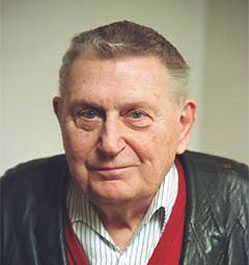
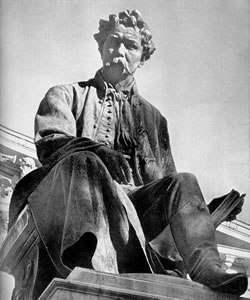
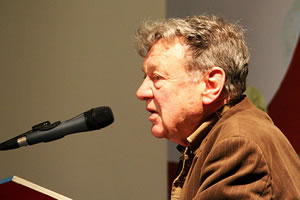
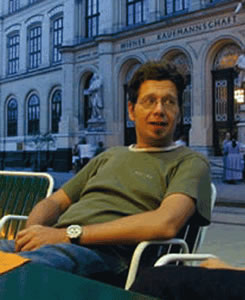
Abe Kōbō, Manuel del Cabral, Jan Frederik Helmers, Manfred Gregor, Alessandro Manzon
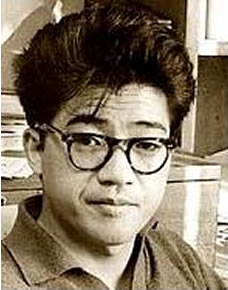
De Japanse schrijver Abe Kōbō werd geboren op 7 maart 1924 in Tokyo. Zie ook mijn blog van 7 maart 2007 en ook mijn blog van 7 maart 2008 en ook mijn blog van 7 maart 2009 en ook mijn blog van 7 maart 2010.


Uit: The ruined map (Vertaald door E. Dale Saunders)


„On the left was a sharp rise with a high protective wall of stone blocks piled on top of each other. On the right was an almost perpendicular cliff, set off from the street by a minimally low guardrail and a ditch. I saw the drawn, pale face of the boy: he came sliding and tumbling down, as if he were holding the guardrail under his arm. My heart leapt thumping to my throat. I started to open the window with the thought of scolding the boy, but I flinched at the reproachful looks which the women cast at me. It would be easier to let him go on by, I supposed. It would be ridiculous if by agitating the women I found myself in the position of having to take responsibility for the boy's bruises. Nothing would jeopardize my situation more than their trumping up some story against me. I had to be without blemish for the present, at least around here.

I stepped on the accelerator. The car barely moved, and there was the smell of burning rubber. Suddenly the curve was there. The colors of the women, clustered around the boy who had missed death with neither loss of blood nor broken bones, flew to the side of my rear-view mirror, and clear sky appeared like the surface of a Braun tube after the picture has disappeared. The stretch of road was flat, and a small bus station lay in a wide space carved out of the hillside. There were benches with roofs to ward off the rain, a public telephone, and even a drinking fountain beside a brick enclosure that perhaps was a flower bed in summer.“


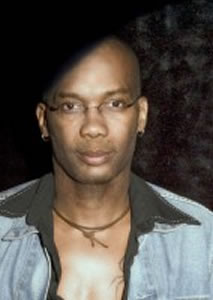
867463-f9e26e39bdbd27070619b06e057c06c0.jpg
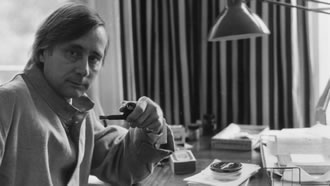
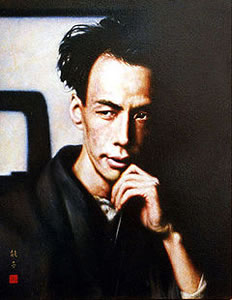
Abe Kōbō (7 maart 1924 – 22 januari 1993)


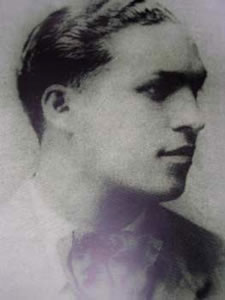
De Dominicaanse dichter en schrijver Manuel del Cabral werd geboren op 7 maart 1907 in Santiago de los Caballeros. Zie ook mijn blog van 7 maart 2009 en ook mijn blog van 7 maart 2010.


Tropical Stonecutting


Black men swing down their picks on the white stones.
Within their picks they hold the sun entwined,
And, as if pressed and wrung from them, wept drops
Of patent leather spill out of their spines.

Men with light voices rinsing their dark skin
Rinse it with pearls of stubborn sweat and stand
Cracking the savage cashbox of the wilds,
Cracking the land, but never touching Man.

Leaping from stones, as soon as each pick picks,
A fragment of sheared sun is sparked and blown
Out but resurges with returning picks
Like God himself exploding in the stone.

Enormous yet not great, the morning can
Enter a single drop of sweat and sink.
Struck sparks leap upward from the stones' own skulls
And are the only thoughts the stones can think.

Black men are singing as they swing their axes
As if their song could soften what they break.
But at these stones they delve, and delve forever,
Delving into the quarry of their ache.

Swinging against the innocent light stones,
These Haitians toil out in the noonday rum.
These blacks that bid the cracked stones bristle sparks
Are nights that chip away at chunks of sun.

Today in search of earthen ore, they hit
upon a greater gold: its lode is day,
the very day that took their human picks
and studded them with star-shards, as if they
stood on the summit, hacking God away.


Vertaald door A.Z. Foreman


 867463-e4e885922f3ff68b08f3d36b7047e86f.jpg

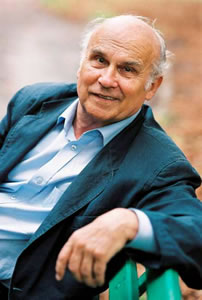
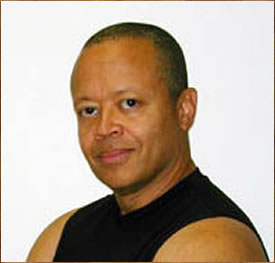
Manuel del Cabral (7 maart 1907 – 14 mei 1999)


De Nederlandse dichter en schrijver Jan Frederik Helmers werd geboren op 7 maart 1767 in Amsterdam. Zie ook mijn blog van 7 maart 2007 en ook mijn blog van 7 maart 2009 en ook mijn blog van 7 maart 2010.


De Dichter (Fragment)


De feestgalm ruist langs markt en straten
De citer klinkt bij ’t vreugdgeschal:|
De landman heeft zijn’ ploeg verlaten:
In sneeuwwit feestgewaad snelt elk naar Romes wal.
De stem de zaamgevloeide menigt’
Is tot door vreugd bedwelmd, ontroerd.
Door ’t trapp’lend hengstgespan, in ’t blank gareel geslagen,
Wordt op een zegekar, een jongling omgedragen,
En naar het Kapitool gevoerd.


  Ontscheurt gij aan het stof der graven,
ô Tijd! de halve goôn in ’t licht,
Die eens ’t heelal de wetten gaven?
Voert gij de Scipio’s terug voor ons gezigt?
Voor wien is ’t, dat hier duizend zielen
Als voor een hooger wezen knielen?
Wie is de godheid van deez’ dag?
Het hoofd des Raads drukt hem een’ krans van lauwerblaêren,
Terwijl elks lofzang klinkt, op zilverwitte haren,
En huldigt hem met diep ontzag.


Het is Perrarcha, de eer en luister

Van ’t schoon Itaalje, Phebus zoon:

Hij schopt de onwetendheid in ’t duister,

En voert de Dichtkunst weêr op d’elpenbeenen troon.

Juich , Menschdom, juich ! ge ontvangt weêr ’t leven.

Een Dichter heeft den nacht verdreven

Der domheid, die u eeuwen trof.

Een Dichter doet zijn stem ’t verbasterd menschdom hooren!

Deugd, wetenschappen, smaak en kunsten zijn herboren;

Zing, aarde! zing – des Dichters lof.


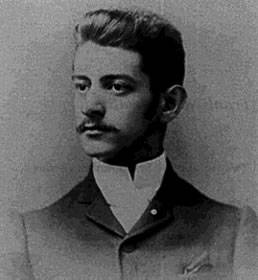
867463-7e1725ad4e76ddc4dbdf13f1bf51fbfc.jpg
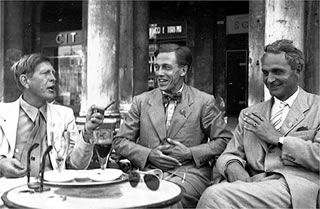
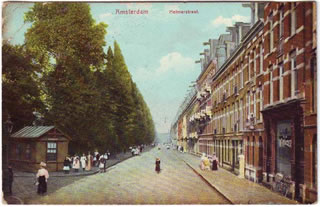
Jan Frederik Helmers (7 maart 1767 – 26 februari 1813)

Eerste Helmersstraat, Amsterdam, rond 1860


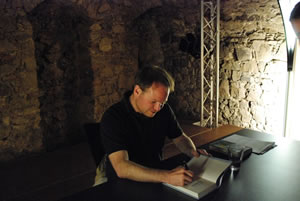
De Duitse schrijver Manfred Gregor (pseudoniem van Gregor Dorfmeister) werd geboren op 7 maart 1929 in Tailfingen.Zie ook mijn blog van 7 maart 2007 en ook mijn blog van 7 maart 2009 en ook mijn blog van 7 maart 2010.
 

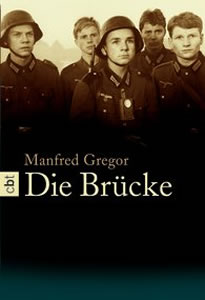
Uit: Die Brücke


„Karl Horber hatte sich gerade unter die Dusche im Waschraum gestellt und ließ das eiskalte Wasser über seine mageren Schultern rinnen. Er tat es vorsichtig, so daß der kalte Strahl weder voll auf seine Brust noch voll auf seinen Rücken traf. Entlang der Wand des Kasernenwaschraums und unter der

halboffenen Tür lümmelte der »Verein« herum und verfolgte mit spöttischem Interesse, wie sich Karl Horber den Schmutz herunterspülte, der bei der Übung im Granerfeld an ihm hängengeblieben

war. Der »Verein« hatte seine Freude mit Karl Horber. Man nannte ihn kurz »Zack«, seitdem Horber einen Tag lang als Schanzaufsicht eingeteilt gewesen war und jedes Kommando mit den Begleitworten »aber zackzack« versehen hatte. Horber gehörte selbst zum »Verein« und war wohlgelitten. Mit seinen abstehenden Ohren, dem sommersprossigen Gesicht und dem brandroten Schopf war der Sechzehnjährige an Spott gewöhnt. Auch jetzt, unter der Dusche, zeigte er sich hart im Nehmen, denn der »Verein« sparte nicht mit lehrreichen Hinweisen:

»Mach den Bauch nicht naß, Zack, sonst rostet der auch!«

»Leg die Ohren an, damit der Hals auch was abkriegt!«

»Schade, daß dich dein kleines Mädchen nicht sieht, die könnte sich nämlich nicht satt sehen!«

Jedesmal schallendes Gelächter im »Verein«, und prompt suchte der Nächste eine noch treffendere Bemerkung an den Mann zu bringen. Und Karl Horber lachte mit. Nicht weil das die beste Gegenwehr war, sondern weil Horber so voll Fröhlichkeit steckte, daß er über Witze und Blödeleien einfach

lachen mußte. Auch wenn es Witze über ihn selbst waren.

Horber lachte, und alles an seinem mageren Körper, die schlaksigen langen Beine, der Bauch, der krumme Rücken und die spitzen Schulterblätter, alles schien mitzulachen. Dann stand plötzlich Schaubeck im Türrahmen. Unteroffizier Schaubeck, genannt »das Vieh«.


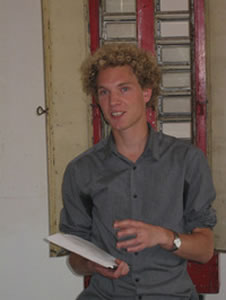
 867463-970bbe21fa951ca4fd091a88a4d3a615.jpg

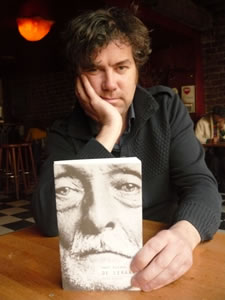
Manfred Gregor (Tailfingen, 7 maart 1929)

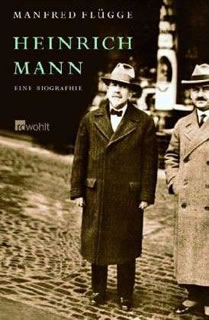
Boekomslag


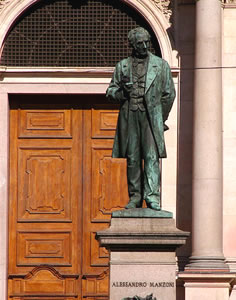
De Italiaanse schrijver Alessandro Francesco Tommaso Manzoni werd geboren op 7 maart 1785 in Milaan.Zie ook mijn blog van 7 maart 2007 en ook mijn blog van 7 maart 2009 en ook mijn blog van 7 maart 2010.
 

Uit: The Betrothed (Vertaling in de reeks Harvard Classics)


„That branch of the Lake of Como, which turns toward the south between two unbroken chains of mountains, presenting to the eye a succession of bays and gulfs, formed by their jutting and retiring ridges, suddenly contracts itself between a headland to the right and an extended sloping bank on the left, and assumes the flow and appearance of a river. The bridge by which the two shores are here united, appears to render the transformation more apparent, and marks the point at which the lake

ceases, and the Adda recommences, to resume, however, the name of _Lake_ where the again receding banks allow the water to expand itself anew into bays and gulfs. The bank, formed by the deposit of three large mountain streams, descends from the bases of two contiguous mountains,

the one called St. Martin, the other by a Lombard name, _Resegone_, from its long line of summits, which in truth give it the appearance of a saw; so that there is no one who would not at first sight, especially viewing it in front, from the ramparts of Milan that face the north, at once distinguish it in all that extensive range from other mountains of less name and more ordinary form. The bank, for a considerable distance, rises with a gentle and continual ascent, then breaks into hills and

hollows, rugged or level land, according to the formation of the mountain rocks, and the action of the floods. Its extreme border, intersected by the mountain torrents, is composed almost entirely of sand and pebbles; the other parts of fields and vineyards, scattered farms, country seats, and villages, with here and there a wood which extends up the mountain side. Lecco, the largest of these villages, and

which gives its name to the district, is situated at no great distance from the bridge, upon the margin of the lake; nay, often, at the rising of the waters, is partly embosomed within the lake itself; a large town

at the present day, and likely soon to become a city.“


867463-5df7cbcf00d898d9322f7cf8263890df.jpg
Alessandro Manzoni (7 maart 1785 – 22 mei 1873)

Standbeeld in Milaan
Geschreven door Romenu om 18:48 Reageer op dit bericht
Reageer op dit bericht

Reageer op dit bericht

Een titel of je eigen website toevoegen

De blogger leest alles eerst na: je tekst verschijnt zodra die goedgekeurd is.

Gabriel García Márquez, Günter Kunert, Elizabeth Barrett Browning, Stéphane Hoffmann, Teru Miyamoto, Nicolas Bouvier

De Colombiaanse schrijver Gabriel García Márquez werd op 6 maart 1928 in de kustplaats Aracataca geboren. Zie ook mijn blog van 6 maart 2007 en ook mijn blog van 6 maart 2008 en ook mijn blog van 6 maart 2009 en ook mijn blog van 6 maart 2010.

Uit:  Die Erzählungen von Gabriel Garcia Marquez 
(Die dritte Entsagung, vertaald door
Curt Meyer-Clason)

“Da war wieder dieser Lärm. Jener kalte, schneidende, senkrechte Lärm, den er schon so gut kannte; der sich jetzt aber als scharf und schmerzhaft erwies, als sei er ihm von einem Tag auf den anderen ungewohnt geworden.
Der Lärm kreiste in seinem leeren Schädel, dumpf und stechend. Eine Wabe hatte sich in den vier Wänden seiner Gehirnschale gebildet. Sie wuchs zunehmend in aufeinanderfolgenden Spiralen und schlug drinnen und ließ seine Wirbelsäule erzittern, unmäßig und misstönend, im sicheren Rhythmus seines Körpers. Etwas war in seinem stofflichen Aufbau eines festgefügten Menschen aus der Ordnung geraten; etwas, das »bei den anderen Malen« normal funktioniert hatte und nun in seinem Kopf hart und trocken hämmerte, mit den Knochen einer abgezehrten Hand hämmerte und ihn an alle bitteren Empfindungen des Lebens erinnerte. Er fühlte den animalischen Drang, die Fäuste gegen die blauen, vom Druck des verzweifelten Schmerzes violett angeschwollenen Adern seiner Schläfen zu pressen. Er hätte den Lärm, der den Augenblick mit seiner scharfen Diamantspitze durchbohrte, zwischen seinen beiden empfindlichen Handflächen orten mögen. Mit der Bewegung einer Hauskatze zogen sich seine Muskeln zusammen, als er sich vorstellte, wie er durch die gepeinigten Winkel seines fieberzerfetzten heißen Kopfes verfolgt wurde. Er würde ihn gleich einholen. Nein. Der Lärm hatte ein glattes, fast unberührbares Fell.

Aber er war entschlossen, ihn dank seiner gut geübten Strategie einzuholen und mit der ganzen Kraft seiner Verzweiflung lange und endgültig zu zerquetschen. Er würde nicht zulassen, dass er nochmals in sein Ohr dränge, dass er durch seinen Mund entweiche, durch jede einzelne seiner Poren oder durch seine Augen, die dabei aus den Höhlen treten und dem fliehenden Lärm aus der Tiefe ihrer ausweglosen Dunkelheit blind nachschauen würden.“


 866873-7b3c7c141b9b2c4849b52979325355fd.jpg

Gabriel García Márquez (Aracataca,  6 maart 1928)


De Duitse dichter en schrijver Günter Kunert werd geboren op 6 maart 1929 in Berlijn. Zie ook mijn blog van 6 maart 2007 en ook mijn blog van 6 maart 2008 en ook mijn blog van 6 maart 2009 en ook mijn blog van 6 maart 2010.


Wie ich ein Fisch wurde

Am 27. Mai um drei Uhr hoben sich aus ihren Betten
Die Flüsse der Erde, und sie breiteten sich aus
Über das belebte Land. Um sich zu retten
Liefen oder fuhren die Bewohner zu den Bergen aus.

Als nachdem die Flüsse furchtbar aufgestanden,
Schoben sich die Ozeane donnernd übern Strand,
Und sie schluckten alles das, was noch vorhanden,
Ohne Unterschied, und das war allerhand.

EineWeile konnten wir noch auf demWasser schwimmen,
Doch dann sackte einer nach dem anderen ab.
Manche sangen noch ein Lied, und ihre schrillen Stimmen
Folgten den Ertrinkenden ins nasse Grab.

Kurz bevor die letzten Kräfte mich verließen,
Fiel mir ein, was man mich einst gelehrt:
Nur wer sich verändert, den wird nicht verdrießen
Die Veränderung, die seine Welt erfährt.

Leben heißt: Sich ohne Ende wandeln.
Wer am alten hängt, der wird nicht alt.
So entschloss ich mich sofort zu handeln,
Und das Wasser schien mir nicht mehr kalt.

Meine Arme dehnten sich zu breiten Flossen,
Grüne Schuppen wuchsen auf mir voller Hast;
Als das Wasser mir auch noch den Mund verschlossen,
War dem neuen Element ich angepasst.

Lasse mich durch dunkle Tiefen träge gleiten,
Und ich spüre nichts von Wellen oder Wind,
Aber fürchte jetzt die Trockenheiten,
Und dass einst das Wasser wiederum verrinnt.

Denn aufs neue wieder Mensch zu werden,
Wenn man’s lange Zeit nicht mehr gewesen ist,
Das ist schwer für unsereins auf Erden,
Weil das Menschsein sich zu leicht vergisst.


866873-70bca02ca21c547fd7dbb123740d8de0.jpg
Günter Kunert (Berlijn, 6 maart 1929)


De Engelse dichteres Elizabeth Barrett Browning werd op 6 maart 1806 geboren in Durham, Engeland. Zie ook mijn blog van 6 maart 2007 en ook mijn blog van 6 maart 2008. en ook mijn blog van 6 maart 2009 en ook mijn blog van 6 maart 2010.


Sonnet III


Unlike are we, unlike, O princely Heart!
Unlike our uses and our destinies.
Our ministering two angels look surprise
On one another, as they strike athwart
Their wings in passing. Thou, bethink thee, art
A guest for queens to social pageantries,
With gages from a hundred brighter eyes
Than tears even can make mine, to play thy part
Of chief musician. What hast thou to do
With looking from the lattice-lights at me,
A poor, tired, wandering singer, singing through
The dark, and leaning up a cypress tree?
The chrism is on thine head,---on mine, the dew,---
And Death must dig the level where these agree.


Sonnet XXXVIII


De eerste keer dat hij mij kuste, kuste hij slechts

de vingers van deze hand waarmee ik schrijf;

En sindsdien, werd ze zuiverder en wit,

traag in zichzelf gekeerd, snel met haar O, lust,

als de engelen spreken. Een ring uit amethist

die ik hier niet kan dragen, lijkt mij minder waard,

dan die eerste kus. De tweede overtrof de eerste

in hoogte, en zocht het voorhoofd, wat onhandig

kwam hij half op mijn haar terecht. O opperste beloning!

Dat was het bekroond charisma van de liefde,

met zegenende zoetheid voorafgegaan.

De derde op mijn lippen was omvouwd

met volmaakt purperen praal, zodat, inderdaad, 

ik trots ben geweest en zei, Mijn allerliefste.


Vertaald door Lepus


 866873-98e9e0a5139e4cdec8befe8f5f8f1d7e.jpg

Elizabeth Barrett Browning (6 maart 1806 – 29 juni 1861)

Hier met haar zoon Robert, 1860


De Franse schrijver Stéphane Hoffmann werd geboren op 6 maart 1958 in Saint-Nazaire. Zie ook mijn blog van 6 maart 2009 en ook mijn blog van 6 maart 2010.


Uit: Le Gros nul


„Je n'ai rien contre les enfants, bien sûr. Ni pour. A vrai dire, je m'en fous. Simplement, je n'aime pas la vie qu'ils font mener à leurs parents. Avoir des enfants empêche toute singularité. Ce n'est pas le mariage qui fait rentrer dans le rang, c'est les enfants. Dès que vous avez des enfants, la société vous retombe dessus.Votre enfant, c'est votre geôlier.

(...)


A vrai dire, je n'ai jamais aimé le rock. Cette musique m'emmerde. Je n'ai jamais cru au Père Noël,
mais longtemps que Jimi Hendrix était une marque de machine à laver. Ce qu'il est, d'une certaine
manière : le rock, musique ménagère. "Musique de sauvages", disent les braves gens. Tout le contraire : musique polie, policée, voire policière. Rengaines à faire tourner en rond moutons, jésuites et belles-mères,pour mieux les tondre, "et merci pour le fric!" Dira Lennon.
Les Beatles. A-t-on jamais écrit chansons plus cuculs, plus mièvres, plus gnangnan, plus désuètes, plus guimauves ?
Révolutionnaires, eux ? Et en quoi je vous prie ? De la bouillie pour vieux jeunes gens. Ils s'étourdissent de rock, illusion de liberté…Le rock est une musique calmante,une popote bourgeoise, une tisanehypnotique pour gamins qui ne savent pas qu'il faut grandir.“


 866873-b7a8f35a08d2dd3301b483a424f6bc67.jpg

Stéphane Hoffmann (Saint-Nazaire, 6 maart 1958)

Saint-Nazaire


De Japanse schrijver Teru Miyamoto werd geboren op 6 maart 1947 in Kobe. Zie ook mijn blog van 6 maart 2009 en ook mijn blog van 6 maart 2010.


Uit: The Swallows' Nest (Vertaald door Anthony Hood Chambers)


"We've got to make plans to attract customers from farther away. We've got to make the shops look more modern. People have been saying so for a long time, and that's why Mr. Tai repainted his walls and enlarged his show-window. The Muratas remodeled their clock shop last summer, too. And it seems the Furukawas want to strip off this dirty old siding and replace it with a mortar wall. That swallows' nest will be in the way."

Tomi gave this some thought. "And the people of the shopping arcade decided by majority vote to get rid of the swallows' nest, so the Furukawas can renovate their shop?" She couldn't believe that the Dream Street crowd would exchange opinions about a swallows' nest for the benefit of someone else's shop. She knew everything about the people of Dream Street — their family customs, their financial problems, their secret thoughts. For thirty-four years, Iseki Tomi had been sitting in her three-by-six shop in a corner of the shopping arcade, watching the residents through her little glass window. She simply watched; she was no busybody, peering into people's houses. But she'd come to know the residents of the arcade as well as if she'd placed them, one by one, on the palm of her hand and studied them. For thirty-four years, since the age of forty-three, she'd looked out silently and guilelessly from her sunless shop; and, though she didn't realize it, she'd gained from this the power to see people.“


 866873-85ae9cac75715f16317b29ca0224c665.jpg

Teru Miyamoto (Kobe, 6 maart 1947)

Kobe


De Zwitserse schrijver, fotograaf en journalist Nicolas Bouvier werd geboren op 6 maart 1929 in Lancy. Zie ook mijn blog van 6 maart 2009 en ook mijn blog van 6 maart 2010.


Uit: L'Usage du Monde


„L’islam ici, le vrai ? c’est bien fini… plus que du fanatisme, de l’hystérie, de la souffrance qui ressort. Ils sont toujours là pour vociférer en suivant leurs bannières noires, mettre à sac une ou deux boutiques, ou se mutiler dans des transports sacrés, le jour anniversaire de la mort des Imam… Plus beaucoup d’éthique dans tout cela; quant à la doctrine, n’en parlons pas ! J’ai connu quelques véritables musulmans ici, des gens bien remarquables… mais ils sont tous morts, ou partis. A présent… Le fanatisme, voyez-vous, reprit-il, c’est la dernière révolte du pauvre, la seule qu’on n’ose lui refuser. Elle le fait brailler le dimanche mais baster la semaine, et il y a ici des gens qui s’en arrangent. Bien des choses iraient mieux s’il y avait moins de ventres creux.

(...)


« Première étape : petite étape », disent les caravaniers persans qui savent bien que, le soir du départ, chacun s’aperçoit qu’il a oublié quelque chose à la maison. D’ordinaire, on ne fait qu’un pharsar (6 km). Il faut que les étourdis puissent encore aller et revenir avant le lever du soleil. Cette part faite à la distraction m’est une raison de plus d’aimer la Perse. Je ne crois pas qu’il existe dans ce pays une seule disposition pratique qui néglige l’irréductible imperfection de l’homme.“


 866873-fa1ea2ed632a9b3f2b3a4c5361addb5f.jpg

Nicolas Bouvier (6 maart 1929 – 17 februari 1998)


Zie voor nog meer schrijvers van de 6e maart ook mijn vorige blog van vandaag.
Geschreven door Romenu om 19:40 Reageer op dit bericht

Jan Kjærstad, Michelangelo, Elisabeth Castonier, Johan Bojer, Stanisław Jerzy Lec , Victoria Benedictsson, Cyrano de Bergerac, Luigi Alamanni

De Noorse schrijver Jan Kjærstad werd geboren op 6 maart 1953 in Oslo. Zie ook mijn blog van 6 maart 2007 en ook mijn blog van 6 maart 2009 en ook mijn blog van 6 maart 2010.


Uit: The Conquerer (Vertaald door Barbara J. Haveland)


„I—the Professor—do not know whether or not to call this the irony of fate. Jonas Wergeland escaped disaster that time, but nothing could save him from the media earthquake triggered by his arrest and later trial—not surprisingly perhaps, seeing that Wergeland himself was the instigating factor. The public hoped, of course, for as long as they could, hoped that something was wrong, that someone,

somewhere had made a terrible and most unfortunate mistake. Rumour had it that Jonas Wergeland remained silent—and, others added, unmoved—and he refused to make any sort of statement to the police. He had accepted the lawyer appointed to defend him without demur and would not hear of engaging one of the big-time lawyers whom Daniel was sure would be able to help him.

I think everyone, including myself, awaited the trial in such a state of suspened to occupy the highly respected post of consultant physician.

“Do you know what the most surprising thing of all is?” my guest asked on the fourth evening on which she visited me, clad in her usual elegant black and as earnest as always. “The most surprising part

of all this washing of dirty laundry in public was one question that was never asked.

Obviously because it had nothing to do with the case. And yet it gets to the very nub of the matter. Because, if it were true that Jonas Wergeland possessed all those failings and evil inclinations, how could a whole nation fall under his spell? And that being the case, does this not say everything

about Norway, the cultural level of this country in the last decade before the millennium? That such an individual could wangle his way to such enormous power and popularity, I mean?” pense that you would have thought the honour of Norway was at stake.“


866865-5b9fefb9d14c7bc9c120c55398a1a0a6.jpg
Jan Kjærstad (Oslo,  6 maart 1953)


De Italiaanse beeldhouwer, schilder, architect en dichter Michelangelo werd geboren op 6 maart 1475 in Caprese. Zie ook mijn blog van 6 maart 2009 en ook mijn blog van 6 maart 2010.


Joy May Kill


Too much good luck no less than misery

May kill a man condemned to mortal pain,

If, lost to hope and chilled in every vein,

A sudden pardon comes to set him free.

Thus thy unwonted kindness shown to me

Amid the gloom where only sad thoughts reign,

With too much rapture bringing light again,

Threatens my life more than that agony.

Good news and bad may bear the self-same knife;

And death may follow both upon their flight;

For hearts that shrink or swell, alike will break.

Let then thy beauty, to preserve my life,

Temper the source of this supreme delight,

Lest joy so poignant slay a soul so weak.


Vertaald door John Addington Symonds


 866865-ba5678d5eeaca7b7803ef642407749ac.jpg

Michelangelo (6 maart 1475 – 18 februari 1564)

Zelfportret als onderdeel van de Florentijnse Pietà


De Duitse schrijfster Elisabeth Castonier werd geboren op 6 maart 1894 in Dresden. Zie ook mijn blog van 6 maart 2010.


Uit: Stürmisch bis heiter. Memoiren einer Außenseiterin


"Ich bereue nichts - vielleicht nur, diese oder jene Torheit nicht begangen zu haben, denn Torheiten und Irrtümer sind die Würze des Lebens. In der pastellfarbenen englischen Landschaft und einem nicht allzu stillen Lebensabend, umgeben von Blumen, Getier und Menschen, die genau wie ich gern lachen, kann ich meine Odyssee überblicken: sie war trotz allem herrlich, erregend, bunt."


866865-378f5243012aa623bf6a7ca82b86d1c9.jpg
Elisabeth Castonier (6 maart 1894 – 24 september 1975)


De Noorse schrijver Johan Bojer werd geboren op 6 maart 1872 in Orkdal. Zie ook mijn blog van 6 maart 2010.


Uit: Le dernier viking (Vertaald door Pierre Georget La Chesnais)


„Écartez-vous de la table, bonnes gens, voici enfin un bon repas.
Henrik apporta plusieurs plats contenant du pain d'avoine cassé en morceaux, puis vint la marmite pleine de foie bouilli, fumant, qu'il versa largement dans chaque plat. La graisse brillait et coulait sur les tas de pain d'avoine, et l'on devait ensuite râper le fromage de chèvre, le répandre, et enfin faire couler la mélasse en longs serpents dorés sur le tout. Il n'y avait plus alors qu'à touiller avec une cuillère de façon à en faire une bouillie, et alors, vrai, ça valait la peine d'y goûter.
    Les douze hommes, assis autour de la table, allongeaient le bras. Quand s'étaient-ils servis de cuillères pour la dernière fois ! À peine se souvenaient-ils d'avoir vécu autrement que de pain et de café. mais ceci était mieux qu'un repas. C'était la grande fête.
    Il est difficile d'imaginer avec quelle rapidité les plats furent vidés... Oui, bien sûr, Henrik Rabben avait encore du foie... en un tournemain, de nouveaux plats furent préparés, et les cuillères de fonctionner.
    Qu'est-ce que c'est... Les plats sont déjà vides ? Les gars commençaient vraiment à y prendre goût.
    Il y en eut un ou deux seulement qui desserrent d'un cran la boucle de leur ceinture. C'est que ce n'est pas tous les jours la fête dans la station.
    Les visages, les barbes, les doigts reluisaient de graisse, de mélasse et de fromage.
Lars dut sortir dans la neige, où le foie se conservait au frais, pour remplir une nouvelle marmite.“


 866865-48749b24395a5d59b70d7a7cdc6a4b85.jpg

Johan Bojer (6 maart 1872 – 3 juli 1959)


De Poolse dichter en aforist Stanisław Jerzy Lec werd geboren op 6 maart 1909 in Lemberg. Zie ook mijn blog van 6 maart 2007 en ook mijn blog van 6 maart 2009 en ook mijn blog van 6 maart 2010.


Aforismen:


„Viele, die ihrer Zeit vorausgeeilt waren, mussten auf sie in sehr unbequemen Unterkünften warten.“


„Die Verfassung eines Staates solle so sein, dass sie die Verfassung des Bürgers nicht ruiniere.“


„Eine Diktatur ist eine Regierung, bei der man in Gefahr gerät, sitzen zu müssen, wenn man nicht hinter ihr stehen will.“


 866865-b4a320938c11133969c5b30804fccfb7.jpg

Stanisław Jerzy Lec  (6 maart 1909 – 7 mei 1966)


De Zweedese schrijfster Victoria Maria Benedictsson werd geboren op 6 maart 1850 in Schonen. Zie ook mijn blog van 6 maart 2007 en ook mijn blog van 6 maart 2009 en ook mijn blog van 6 maart 2010.


Uit: The Big Book (Vertaald door Verne Moberg)


„In the evening we had colored lanterns in the garden. Christian came home from Sven Thor's wake, had been drinking, was talking nonsense over Ellen Key and being unbearable. To get rid of him, we

started walking around in the garden together.... It was completely dark. Matti and Karl disappeared. I wondered if they had it settled or if he was proposing then.

After the lanterns were extinguished, we went into the parlor....

When everybody had gone, I called to Matti.

"You know, he was in here swearing to Ellen that you two never got any peace, with Hilda around." Matti looked oddly indifferent.

Something strange had come over her. "You know, Mama, when we were up there in Sextorp," she began dryly, inexpressively, in a narrative tone, "he asked if I could care for him. And then he said that he'd been in love with Anna Whitlock4 for three years and that he'd been sick, and that he had lived the way young men usually did, and that I would probably never be able to care for him now. And, Mama, you know, when he told me this -- and he was in such a state -- so terribly upset -- I felt so sorry for him. He was so pale, and he cried, and he was just devastated."

"Oh? What about you?"

"I was so cold, I felt completely dead inside. It was all over." She dropped her voice to a whisper. "You know, Mama, I felt such disgust."

"Yes, but you knew that he'd been living that way, didn't you? And it hasn't been since he got to know you, has it?"

"Yes." Oh, there was such a heavy sense of shame.

"What are you saying?"

"Yes, I asked him. It had been since. It had been last winter."


 866865-0857174df5128ace671e3ae502254b44.jpg

Victoria Benedictsson (6 maart 1850 – 21 juni 1888)

Buste in Hörby


De Franse schrijver Savinien Cyrano de Bergerac werd geboren op 6 maart 1619 in Parijs. Zie ook mijn blog van 6 maart 2007 en ook mijn blog van 6 maart 2009 en ook mijn blog van 6 maart 2010.


Uit: L’Autre monde ou les états et empires de la Lune


„La lune était en son plein, le ciel était découvert, et neuf heures du soir étaient sonnées lorsque nous revenions d’une maison proche de Paris, quatre de mes amis et moi. Les diverses pensées que nous donna la vue de cette boule de safran nous défrayèrent sur le chemin. Les yeux noyés dans ce grand astre, tantôt l’un le prenait pour une lucarne du ciel par où l’on entrevoyait la gloire des bienheureux ; tantôt l’autre protestait que c’était la platine où Diane dresse les rabats d’Apollon ; tantôt un autre s’écriait que ce pourrait bien être le soleil lui-même, qui s’étant au soir dépouillé de ses rayons regardait par un trou ce qu’on faisait au monde quand il n’y était plus. « Et moi, dis-je, qui souhaite mêler mes enthousiasmes aux vôtres, je crois sans m’amuser aux imaginations pointues dont vous chatouillez le temps pour le faire marcher plus vite, que la lune est un monde comme celui-ci, à qui le nôtre sert de lune. » La compagnie me régala d’un grand éclat de rire. « Ainsi peut-être, leur dis-je, se moque-t-on maintenant dans la lune, de quelque autre, qui soutient que ce globe-ci est un monde. » Mais j’eus beau leur alléguer que Pythagore, Epicure, Démocrite et, de notre âge, Copernic et Kepler, avaient été de cette opinion, je ne les obligeai qu’à s’égosiller de plus belle. »


866865-125f63a66fd5ba65e42569a654c65339.jpg
Cyrano de Bergerac (6 maart 1619 – 28 juli 1655)

Standbeeld in Bergerac


De Italiaanse dichter Luigi Alamanni werd geboren op 6 maart 1495 in Florence. Zie ook mijn blog van 6 maart 2009.


Sleep, angry beauty


Sleep, angry beauty, sleep and fear not me;
For who a sleeping lion dares provoke?
It shall suffice me here to sit and see
Those lips shut up that never kindly spoke.
What sight can more content a lover's mind
Than beauty seeming harmless, if not kind?

My words have charmed her, for secure she sleeps;
Though guilty much of wrong done to my love;
And in her slumber, see, she close-eyed, weeps!
Dreams often more than waking passions move.
Plead, Sleep, my cause, and make her soft like thee,
That she in peace may wake and pity me.


Vertaald door Thomas Campion


866870-d32c9fc210483affd21295937ee033d5.jpg
Luigi Alamanni (6 maart 1495 – 18 april 1556)

Geschreven door Romenu om 19:39 Reageer op dit bericht

Clark Accord

De Surinaamse schrijver Clark Accord werd op 6 maart 1961 geboren in de Surinaamse hoofdstad Paramaribo. Op zijn zeventiende vertrok hij naar Nederland, waar hij achtereenvolgens werd opgeleid tot verpleegkundige en visagist. Hij bleef betrokkenheid houden met zijn thuisland. In 2000 richtte hij in Suriname een stichting op voor de verstrekking van maaltijden aan hulpbehoevenden. Hij verwierf bekendheid in 1999 met zijn roman De koningin van Paramaribo, over de Surinaamse prostituee Maxi Linder. Het debuut van Accord ging ruim 100.000 keer over de toonbank, beleefde dertig drukken en verscheen ook in Duitsland, Spanje, Latijns-Amerika en Finland. Het verhaal werd bewerkt tot een toneelstuk en de filmrechten zijn verkocht. In januari 2005 verscheen zijn tweede roman: Tussen Apoera en Oreala. In februari 2007 verscheen Bingo!. Daarnaast schreef hij columns en artikelen voor tijdschriften en kranten zoals Elsevier, Het Parool, Linda en Marie-Claire.


Uit: De koningin van Paramaribo


„Aan het eind van de schaars verlichte nauwe gang vond hij de trap die naar boven voerde. Zijn stappen klonken gedempt op het met bloemen gedecoreerde gele linoleum. Onzeker zette hij zijn voeten van de ene tree op de volgende. Hij kwam terecht in een aangenaam ingerichte voorzaal. In tegenstelling tot die van de meeste hoeren werd Maxi's woning verlicht door gaslampen en niet door de gebruikelijke kokolampu. Hij hoefde zich geen zorgen te maken dat hij vanavond thuis zou komen met de geur van verbrande olie in zijn kleding...     Het grote mahoniehouten bed nam bijna de gehele kamer in beslag. Aan het voeteneinde stond een manshoge spiegel. Langs de muur tegenover het raam hingen verschillende jurken keurig aan hangers - door hun veelal felle kleuren gaven ze de muur een bont aanzicht. Op de kaptafel lag het assortiment potjes, tubes en flesjes zoals iedere vrouw zich dat wenste: Yarley lavendel, Peggy Sage-nagellak, Eau de quinine, Radiant Rose-poeder, Sweetheart-poeder, Ruby Red-lipstick en Casanova-cream boden door hun verscheidenheid aan kleur en verpakking een feestelijke aanblik. Naast de kaptafel hing een zwartwitfoto van een stralend lachende Maxi Linder, met haar witte poedel voor het hek van de Hervormde kerk aan het kerkplein.

Maxi Linder zat op een met rood fluweel beklede chaise longue. Op de grond ervoor lagen haar twee honden als wattenbollen behaaglijk tegen elkaar aan te slapen. Maxi's ogen waren zorgvuldig en beheerst opgemaakt en de lipstick op haar volle mond had de kleur van rijpe kersen. Op een paar rode opengewerkte lakschoenen en een uit drie rijen bladgouden rozen bestaand collier na was ze naakt. Ze had haar knieën tot aan haar borsten opgetrokken.“


911549-971030105098d3ffa0add3dd8f59694c.jpg
Clark Accord (Paramaribo, 6 maart 1961)
Geschreven door Romenu om 00:00 Reageer op dit bericht

Pier Paolo Pasolini, Arthur van Schendel, Koos van Zomeren, Danny King, Nelly Arcan, Jean Orizet, Leslie Marmon Silko

De Italiaans filmregisseur, dichter en schrijver Pier Paolo Pasolini werd geboren in Bologna op 5 maart 1922. Zie ook mijn blog van 5 maart 2007 en ook mijn blog van 5 maart 2008 en ook mijn blog van 5 maart 2009 en ook mijn blog van 5 maart 2010.


The Best of Youth

Lord, we are alone you call on us no more.
Year after year, day after day You look on us no more!
Darkness on our side and splendor on your side,
for our sins you feel neither anger nor compassion.
for thirty centuries, nothing, nothing has changed:
nations have united so, united, they wage wars
but our misery's the same as everybody's misery
and only You know how to sort out good from bad!
Work days, dead days! She pushes the wheel barrow
by the railroad tracks then towards the quiet square
and stops in front of the almost-finished staircase
where it crunches the stones baked by the sun.
The gates are shut, two trucks are parked
near the cement slag, flanked by dead bushes
and the old lady pushes the wheel barrow
while holding the tips of a scarf with her teeth.
A young man sits down to blow on his harmonica,
another younger one with horse whip in his hand
feeds hay to his charge then follows his friends
who are dancing carefree by the stands.
They sing, a bit drunk, by early morning
and wear their red hankies around the neck.
Hoarsely they order four liters of wine
and coffee for the girls who are silent and sad.
Come on, trains, take these singing youths
dressed in white shirt and English blazers.
Come on, trains, take them so very far away
roaming the earth to see what they have lost here.
Trains everywhere scatter these once happy men,
They will not laugh when leaving home forever.


Vertaald door Adeodato Piazza Nicolai


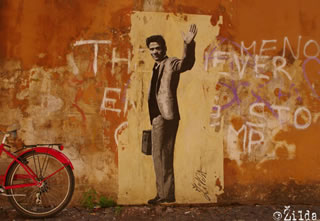
 866266-6ee818b1ed64f11256290e7e722042cd.jpg

Pier Paolo Pasolini (5 maart 1922 – 2 november 1975)

Straatkunst in Rome


De Nederlandse schrijver Arthur van Schendel werd geboren op 5 maart 1874 in Batavia. Zie ook mijn blog van 5 maart 2007 en ook mijn blog van 5 maart 2008 en ook mijn blog van 5 maart 2009 en ook mijn blog van 5 maart 2010.


Uit: Angiolino en de lente


“Een zondig mensch is nooit geheel zondig, zooals een arme, hoe arm ook, nooit geheel en al niets bezit. Hoe zouden er anders heiligen kunnen zijn, die toch ook toen zij klein waren schreeuwden als zij honger hadden en speelden in de modder van de straat en misschien dingen deden die niemand dan de engelen weet. Maar zij hadden één plekje dat wit was gebleven en toen daar de gouden stralen op vielen ging van den een tot den anderen dag de slechtheid van hen weg, de drift, de ergernis, de neiging om te stelen of te vloeken. En als zij dan van binnen geheel blank waren geworden konden zij de wonderlijke daden doen, zoodat de andere heiligen het zagen en er van spraken voor den troon waar de Gezegende zit. En dan zond hij er een met de lieve boodschap dat er weder een in de zaligheid mocht komen. Ik zeg dit niet omdat ik het beter meen te weten dan de vaders, maar omdat ik zelf heb gezien hoe het ons menschen gaat. Wij worden allen arm geboren, maar de een vindt zoodra hij de oogen opent al wat noodig is, en voor den ander kan de moeder geen behoorlijk doekje vinden om hem in te wikkelen. En de wisselvalligheden die dan volgen. Beppe verkwist niet zooveel of hij ontvangt altijd meer, Felice is nu rijk dan arm, Buonavontura kan nog zoo vriendelijk lachen of nog zoo bitter klagen, het helpt hem niets, hij telt de keeren niet dat hij zonder brood moet gaan. En toch weet Beppe niet van wat Buonavontura meer bezit dan hij, of Felice niet wat het beste is dat hij heeft. Maar Buonavontura begrijpt zeker meer, omdat hij de armste is. Dat is het witte plekje van den arme, dat hij meer begrijpt dan een ander. Hij weet dat de heer die langs loopt en doet of hij de uitgestrekte hand niet ziet niet meer of minder is dan hij zelf.”


 866266-f0e3d72f43e80ca68104c123d6a2a514.jpg

Arthur van Schendel (5 maart 1874 – 11 september 1946)

Portret door Jan Poortenaar, 1955


De Nederlandse schrijver, columnist en dichter Koos van Zomeren werd geboren in Velp op 5 maart 1946. Zie ook mijn blog van 5 maart 2007  en ook mijn blog van 5 maart 2008 en ook mijn blog van 5 maart 2009 en ook mijn blog van 5 maart 2010.


Uit: Nog in morgens gemeten


„Voor mij kan de polder in die tijd niet meer hebben behelsd dan het uitzicht. Hij was er altijd, je kwam er nooit. Een kind had er domweg niets te zoeken. Behalve die ene keer dus. Toen mocht ik met Lin mee.

Lin was op zijn oude dag op het Witte Huis gaan werken, de trotse boerderij van de Van Arendonken. Maar ik denk niet dat een Van Arendonk daar toen nog de baas was. Ik weet wel zeker dat de paarden die dag werden gemend door Maarten Bok. Maarten Bok was niet van Herwijnen, die was van Poederoijen. Een prachtige vent. Die kwam op visite als Lin jarig was. Hij voelde zich niets te goed voor de borrels die dan geschonken en de verhalen die dan verteld werden. Nou, dat was wat, een boer die bij zijn knecht op de verjaardag kwam. En sterk als een paard, en wérken dat-ie kon! Ik

herinner me het spannen van de spieren onder de huid van zijn onderarmen.

Vorig jaar heb ik Appie Bok nog eens gesproken. Hij vertelde toen dat zijn vader er een was uit een gezin van tien kinderen, die allemaal aanspraak maakten op een deel van het goed dat door de laatste Van Arendonk was nagelaten. Maarten was in feite als knecht van dat gezin begonnen. Hij moest zijn broers en zusters een voor een uitkopen en had niets dan zijn eigen arbeid om mee te betalen.

Goed, zij hadden land aan de Mert. Hooiland, verder deugde het nergens voor. En dat hooi werd dan pas diep in de zomer gewonnen. Het zou me niet verbazen als het een dag in augustus is geweest. Wij kwamen in ieder geval altijd pas half juli, net even voor de verjaardag van Tante, op Herwijnen.

Een kamp aan de Mert. Nu is dat een afstand van niets. Je gaat bij de Waaijensteinsestoep de dijk af, je steekt de provinciale weg over, je geeft gas en je bent er. Maar met paardenpassen was het nog een knap eind. Ach, het gelaten geklop van beslagen hoeven op ’s Heeren wegen.

‘De ingespannen paarden stapvoets zij aan zij, zo raadselachtig aan elkaar gehecht.’

Ja, als kind neem je aan dat de paarden van een tweespan, zozeer elkaars lotgenoten, met elkaar bevriend zijn. Het was Lin die me uit de droom hielp. Hem waren gevallen bekend waarin het ene paard zich geweldig moest uitsloven omdat het andere maar deed alsof.“


 866266-99fcd92f226196e673ad922f58d1ccaa.jpg

Koos van Zomeren (Velp,  5 maart 1946)


De Britse schrijver Danny King werd geboren op 5 maart 1969 in Slough, Berkshire. Zie ook mijn blog van 5 maart 2009 en ook mijn blog van 5 maart 2010.


Uit: The Pornographer Diaries


“Ow!’ I yelped.

‘What’s up?’ Barry asked from the track.

‘I got a thorn stuck in me,’ I told him, pulling my hand out of the brambles and sucking at the little black dot that had buried itself into my palm. The thorn showed enough of itself so that I could get my teeth on the end of it and yank it out, which brought a couple of tears to my eyes and made my lip wobble a bit. Luckily, I had my back to Barry so the rest of the school never got to hear about it. I wiped the blood onto my jeans and began crawling through the bush again.

‘Haven’t you got it yet?’ he whined again.

'You ask me that one more time and I’ll smack you in the fucking mouth!’ I hissed back at him, meaning, ‘you ask me that one more time and I’ll chuck your bike in the river while you’re in the shops and pretend it was Neil Barratt who came along and did it.’

I caught hold of a few more muddy and tattered pages that had been torn from the rest of the mag and gazed upon them in awe. The colours were dark from the damp and the dirt and some of them showed only fragments of pictures – but there was enough. Curvy, voluptuous ladies stared back at me wearing nothing but vacant expressions and an unidentifiable sludge you find under bushes in Berkshire – er, thorny bushes that is, not lady’s bushes.

This was my first ever glimpse of a nudey mag, and I liked what I saw. Sure I was no stranger to the Great Universal catalogue underwear and shower curtain sections, and if you took mine and every other lad in my geography class’s text books and hurled them across the playground, they’d all fall open on one particular page, but this was different.

This was a nudey mag.”


 866266-498a087f386c25971d0207df3d7b6f84.jpg

Danny King (Slough, 5 maart 1969)


De Canadese (Franstalige) schrijfster Nelly Arcan - pseudoniem van Isabelle Fortier – werd geboren in Lac-Mégantic op 5 maart 1973. Arcan was afkomstig uit Québec. Met haar eerste roman Putain (Hoer) uit 2001, kreeg zij veel bijval bij de kritiek en bij het grote publiek. In dat boek beschrijft Arcan haar verleden als escortdame. Zij werd genomineerd voor de Prix Médicis en de Prix Femina. Arcan schreef verschillende korte verhalen, opiniestukken en columns voor diverse kranten en literaire magazines van Québec. Zij schreef ook mee aan de dialogen van de film Nathalie... van Anne Fontaine. Arcan werd in september 2009 dood aangetroffen in Montréal, vermoedelijk na zelfmoord.


Uit: Whore


“When I speak, it’s usually not to others, which is why there’s nothing to hold me back, and so I can say without terrifying you that I was born in a country village near the Canadian border with Maine, that my education was religious, and that my teachers were all dried-up nuns, fanatic about the sacrifice they were making of their lives, women I had to call mothers and who’d had to choose fake names, like Sister Jeanne for Julie or Sister Anne for Andrée, sister-mothers who taught me that parents were powerless when it came to naming their children, that they were inadequate at defining them in relation to God, and what else would you like to know, that I was altogether normal, rather a gifted student, that in this fervently Catholic country where I grew up they sent schizophrenics to be exorcised by the priests, that life here could be quite beautiful if you didn’t want much, had faith. And what else? My studying twelve years of piano and like everybody else wanting to leave the country for the city, and then after I stopped touching the piano ending up as a barmaid, then a whore, to escape every shred of my past identity, so I could prove to others that you really could pursue your studies, dream about being a writer, hope for a future and throw your life away here and there all at the same time, sacrifice yourself just like the sisters in my elementary school did to serve their congregation.“


 866266-9c29f96f248ec701f52e84670ab57ae7.jpg

Nelly Arcan (5 maart 1973 –24 september 2009)


De Franse dichter en schrijver Jean Orizet werd geboren in Marseille op 5 maart 1937. Zijn vader, Louis Orizet, was een landbouwkundig ingenieur, zijn moeder leerde wiskunde en zijn grootvader werkte in de scheepsbouw. Een oudoom leraar leerde hem lezen voordat hij naar school ging.Toen de oorlog uitbrak werd  zijn vader benoemd tot tweede luitenant van de cavalerie, en zijn moeder verhuisde naar Dijon en vervolgens naar Macon. Daar bezocht hij de middelbare school, waar een van zijn leraren hem de brieven van Gerard de Nerval liet lezen die diepe sporen bij hem achter lieten.Zijn eigen werk is vertaald in twintig talen en bekroond met talloze prijzen.


L’eau dormante


L’eau dormante ne dort pas;
Elle rêve, j’en suis sûr,
Car son rêve,
Elle le murmure,
Doucement,
Pour ceux qui comprennent,
Ceux qui aiment
Son frissonnement.
Son rêve est bien apaisant;
Il lui donne un aspect tranquille
Immobile et changeant;
L’eau dormante sourit,
Elle est heureuse;
C’est l’eau rêveuse.


L'or sous le givre


Grise et blanche

une froide alchimie nocturne

brise l'instant


Au matin

c'est le couperet du soleil

qui tranche


Une pie cherche de l'or

sous le givre

de la branche.


 866266-be43794a76de3e75c407e8f93ae8c00e.jpg

Jean Orizet (Marseille, 5 maart 1937)


De Indiaans-Amerikaanse schrijfster Leslie Marmon Silko werd geboren op 5 maart 1948 in Albuquerque, New Mexico. Zie ook mijn blog van 5 maart 2007 en ook mijn blog van 5 maart 2009 en ook mijn blog van 5 maart 2010.


Uit: Gardens in the dunes


“They lay side by side with their mouths open and swallowed raindrops until the storm passed. All around them were old garden terraces in the dunes.

Sister Salt remembers everything. The morning the soldiers and the Indian police came to arrest the Messiah, Grandma Fleet told Sister Salt to run. Run! Run get your little sister! You girls go back to the old gardens! Sister Salt was big and strong. She carried Indigo piggyback whenever her little sister got tired. Indigo doesn't remember much about that morning except for the shouts and screams.

Indigo remembers they used to sell baskets at the depot in Needles while their mother washed linens in tubs of boiling water behind the hotel; Grandma Fleet searched the town dump for valuables and discarded seeds. They slept in a lean-to made of old crates and tin, near the river. They learned to talk English while selling baskets to tourists at the train station.

Now, at the old gardens, the girls live alone in Grandma Fleet's house. Grandma had returned a day after they did. Grandma saw Mama escape and run north with the other dancers ahead of the Indian police, who grabbed all the Indians they could, while the soldiers arrested the white people, mostly Mormons, who came to dance for the Messiah. The United States government was afraid of the Messiah’s dance”


.

 866266-311092fbcf1418ee6cdc62db3b6fcaa1.jpg

Leslie Marmon Silko (Albuquerque, 5 maart 1948)


Zie voor nog meer schrijvers van de 5e maart ook mijn vorige blog van vandaag.

Geschreven door Romenu om 18:58 Reageer op dit bericht

Frank Norris, Fritz Usinger, Friedrich Schnack, Ennio Flaiano, Moritz Carrière, Karl August Timotheus Kahlert

De Amerikaanse schrijver Frank Norris werd geboren op 5 maart 1870 in Chicago. Zie voor onderstaande schrijver ook mijn blog van 5 maart 2007 en ook mijn blog van 5 maart 2009 en ook mijn blog van 5 maart 2010.


Uit: The Pit


„Chicago, the great grey city, interested her at every instant and under every condition. As yet she was not sure that she liked it; she could not forgive its dirty streets, the unspeakable squalor of some of its poorer neighbourhoods that sometimes developed, like cancerous growths, in the very heart of fine residence districts. The black murk that closed every vista of the business streets oppressed her, and the soot that stained linen and gloves each time she stirred abroad was a never-ending distress.

    But the life was tremendous.  All around, on every side, in every direction the vast machinery of Commonwealth clashed and thundered from dawn to dark and from dark till dawn.  Even now, as the car carried her farther into the business quarter, she could hear it, see it, and feel in her every fibre the trepidation of its motion.  The blackened waters of the river, seen an instant between stanchions as the car trundled across the State Street bridge, disappeared under fleets of tugs, of lake steamers, of lumber barges from Sheboygan and Mackinac, of grain boats from Duluth, of coal scows that filled the air with impalpable dust, of cumbersome schooners laden with produce, of grimy rowboats dodging the prows and paddles of the larger craft, while on all sides, blocking the horizon, red in color and designated by Brobdignag letters, towered the hump-shouldered grain elevators.

    Just before crossing the bridge on the north side of the river she had caught a glimpse of a great railway terminus.  Down below there, rectilinear, scientifically paralleled and squared, the Yard disclosed itself.  A system of grey rails beyond words complicated opened out and spread immeasurably. Switches, semaphores, and signal towers stood here and there.  A dozen trains, freight and passenger, puffed and steamed, waiting the word to depart.  Detached engines hurried in and out of sheds and roundhouses, seeking their trains, or bunted the ponderous freight cars into switches; trundling up and down, clanking, shrieking, their bells filling the air with the clangour of tocsins.  Men in visored caps shouted hoarsely, waving their arms or red flags; drays, their big dappled horses, feeding in their nose bags, stood backed up to the open doors of freight cars and received their loads.“


866260-86f9f659832a05593f1fb30e6a517edd.jpg
Frank Norris (5 maart 1870 – 25 oktober 1902)


De Duitse dichter, schrijver en vertaler Fritz Usinger werd geboren op 5 maart 1895 in Friedberg, Hessen. Zie ook mijn blog van 5 maart 2009 en ook mijn blog van 5 maart 2010.


BLAU-GEDICHT


Nicht nur in einem Kleid aus Ewigkeit,

Auch innen ganz zur Ewigkeit befreit,

Ewiger Liebe voll, doch ungeliebt,

Der nie empfängt und dennoch immer gibt,


Aus oberen Wurzeln himmelstill gespeist,

Auch wenn die Erde keinen Trost verheisst,

Dem Tartaros-Gedröhn noch abgrundfern,

Im Lichte dienend einem oberen Herrn:


Dem Licht-Geist Christ-Apollon zugewandt,

Der Eines ist in zwiefachem Verband,

Schaff ich das Blau-Gedicht aus Form und Licht,

Da deren keines sich am andern bricht,


Das Liebe-Licht, den hellen Tempel-Geist,

Der sich im Gang der Verse wahr erweist,

Das Irdisch-Schöne, liebend ganz durchdrungen,

Von höchsten Chören unsichtbar durchsungen,


Das Helle und das Heilige geeint,

Dass jedes ganz den Grund des andern meint,

Das eine selig in des andern Armen,

Vom Wort der Schönheit bis zum Wort Erbarmen.


Ein Himmel von Ideen ganz durchlichtet

Und durch ihr Dasein nimmermehr vernichtet.

Idee ist auch den höchsten Welten teuer,

Denn sie ist nichts als göttlich reines Feuer,


Urfeuer, das schon vor den Welten glühte,

Das in der Liebe wie im Schönen blühte

Und der Vollendung Form zur Über-Zeit

Aus untrem Feuerdrang heraus befreit.


 866260-76d149e6a703df073105db10fdd82a05.jpg

Fritz Usinger (5 maart 1895 – 9 december 1982)

Friedberg


De Duitse dichter en schrijver Friedrich Schnack werd geboren op 5 maart 1888 in Rieneck, Unterfranken. Zie ook mijn blog van 5 maart 2009 en ook mijn blog van 5 maart 2010.


Kleine Hand in meiner Hand


Kleine Hand in meiner Hand
Ich und du im jungen Grase
Ich und du, im Kinderland
Gehn wir auf der langen Strasse
Kleine Hand in meiner Hand.

Kleine Hand in meiner Hand
die einander zärtlich fassen:
Ich und du, nichts hat Bestand,
einmal, ach! muß ich dich lassen
Kleine Hand aus meiner Hand.

Kleine Hand in meiner Hand
Kleiner Schritt bei meinem Schritt
Kleiner Fuß im weiten Land:
Einmal geh ich nicht mehr mit
Einmal gehst du ohne mich
Wie ein Traum mein Bild verblich.


 866260-ee8eaf67e026b525892a15730fe1beec.jpg

Friedrich Schnack (5 maart 1888 – 6 maart 1977)

Rieneck, burcht


De Italiaanse schrijver Ennio Flaiano werd op 5 maart 1910 in Pescara geboren. Zie ook mijn blog van 5 maart 2009 en ook mijn blog van 5 maart 2010.


Uit: Alles hat seine Zeit (Tempo di uccidere, Vertaald door Susanne Hurni)


“Und, jenseits des Randes, das ruhige Leben der Etappenlager. Noch weiter, und das Wort «Sonntag» würde wieder seinen Wert bekommen. Ich würde das erste Bett mit Leintüchern finden, den ersten Zeitungsverkäufer.Und einen Zahnarzt. Der Soldat wollte nicht nachgeben. «Warten Sie», sagte er, «irgendwer wird schon vorbeikommen.

» Ich betrachtete das Lastauto, das mit den Rädern gegen die Böschung lag, und schüttelte den Kopf: Es würde niemand vorbeikommen. Nur ein Oberst war vorübergefahren, gelangweilt wie ein General. Die vorlaute Art des Soldaten wurde mir allmählich lästig. Sich gemeinsam gerettet zu haben, schien mir kein rechter Grund mehr zu sein, uns Fotografien zu zeigen, uns unsere Angelegenheiten zu erzählen, die üblichen Vermutungen über unsere Rückkehr nach Italien anzustellen. Und doch tat es mir leid, ihn im Stich zu lassen.

«Sie lassen mich also allein?»

Ich fing an, meine Sachen zusammenzusuchen, den Tornister, das Koppel mit der Pistole. Um meine

Flucht zu beschönigen, suchte ich einen Vorwand, allerdings einen schlechten: Ich sagte zu ihm, wenn ich unten am Fluss einen Lastwagen fände (oft hielten die Fahrer dort an, um ein Bad zu nehmen), käme ich zurück, um ihm zu helfen. Der Soldat tat so, als glaube er daran, und seine plötzliche und feindselige Nachgiebigkeit ließ mich erröten. Er drückte mir die Hand ohne Wärme, wirklich enttäuscht. Nach fünfzig Schritten verdeckte mir eine Straßenbiegung die Sicht auf ihn und sein Lastauto. Seitdem habe ich ihn nicht wiedergesehen.

War es noch sehr weit bis zur Brücke? “


 866260-24414cf0bca6dd960f3510283254d586.jpg

Ennio Flaiano (5 maart 1910 – 20 november 1972)


De Duitse schrijver en filosoof
Moritz Carrière werd geboren op 5 maart 1817 in Griedel, Hessen. Zie ook mijn blog van 5 maart 2009  en ook mijn blog van 5 maart 2010.


Geheimnis

Worte, die dein Mund gesprochen, sonnenwarm und sonnenhell,
Küsse, die dein Mund gespendet, unversiegter Wonne Quell,
Wie so selig deine Seele, und ich preis' es immerdar,
Doch das Süßeste, das Tiefste, zeigt kein Bild und faßt kein Reim,
Und es bleibt unausgesprochen zwischen Gott und uns geheim.


 866260-b9d3f21107a2bef5cbc6d65c86f07dd0.jpg

Moritz Carrière (5 maart 1817 – 19 januari 1895)


De Duitse schrijver, literatuurhistoricus en muziekcriticus Karl August Timotheus Kahlert werd geboren op 5 maart 1807 in Breslau. Kahlert studeerde vanaf 1826 aan de universiteit van Breslau, daarna in Berlijn. Hij was actief als dichter en schrijver. Gebaseerd op de Hegeliaanse principes publiceerde hij in 1846 zijn " System der Aesthetik " en in 1853 een monografie over Angelus Silesius. Een serie artikelen over Silezische dichters en schrijvers publiceerde hij in Robert Prutz’ Literarisches Taschenbuch (1844), in Hennebergs Jahrbuch (1854) en in het Weimarische Jahrbuch. Over de Breslauer opera schreef hij vier jaar voor de „Schlesische Zeitung“. Een aantal studies met theoretische en kritische reflecties over muziek schreef hij voor de "Leipziger Neue Zeitschrift für Musik (1834-1843) en (1842-1850) voor de Allgemeine musikalische Zeiting.


Uit: System der Aesthetik


“Die geheimnißvolle Wirkung, welche auf das rnenschliche Gemüth Werke der schönen Kunst ausüben, ist eines jener ewigen Räthsel, zu deren Lösung die Wissenschaft immer wieder aufs Neue aufgefordert wird. Von zwei Seiten her, in der Erkenntniß der dem Künstler dienstbaren Naturstoffe, und der von den Gesetzen ihrer Anwendung werden an der Hand der Erfahrung manche sichtbare Fortschritte gemacht; dem scharfen Blicke des Naturforschers enthüllt sich eine Beziehung der ewig schaffenden Kräfte nach der andern; öffentlichen Lehranstalten für angehende Kunstjünger wird überall immer sorgfältige« Pflege. Solchen Bemühungen zum Trotze sind die Schwankungen des Geschmacks unter den Genießenden, und die harte Begegnung widersprechender Grundsätze unter den Schaffenden unvermindert geblieben, so daß nur ein einziger Gewinn, nämlich der, daß man allmählich die streitenden Ansichten schärfer auszuprägen, den Widerspruch also in seiner ganzen Bedeutung zu erkennen sich bemüht hat, daraus hervorgegangen ist. Ein Gewinn ist dies zu nennen, weil es den Drang verräth, den Streit zu entscheiden, und weil es durch die Beziehung alles des im Zwiefpel begriffenen Einzelnen auf ein Allgemeines, welches ihm zum Grunde liegen müsse,Schritte, die dieser Entscheidung entgegenführen, erzeugt.”


866260-faaefd61c2d7fa1dd540a8d756b59669.jpg
Karl August Timotheus Kahlert (5 maart 1807 – 29 maart 1864)

Breslau rond 1900 (Geen portret beschikbaar)

Geschreven door Romenu om 18:51 Reageer op dit bericht

Jurre van den Berg

De Nederlandse dichter Jurre van den Berg werd geboren in Thesinge op 5 maart 1986. Hij debuteerde officieel als dichter in het voorjaar van 2009 met de bundel Binnenvaart.  In 2007 ontving hij het Hendrik de Vriesstipendium van de gemeente Groningen voor zijn poëzieproject ‘Ter verlichting van een naam’, een areligieuze, hedendaagse beschouwing op de taal en thematiek van het bijbelboek Job. Ook de gedichten die hier uit voortkwamen zijn in de reeks ‘Wij zijn hier pas sinds gisteren’ in Binnenvaart opgenomen. Tijdens het collegejaar 2005-2006 was Jurre van den Berg huisdichter van de Rijksuniversiteit Groningen. De gedichten die hij in deze functie schreef werden samen met andere verzen gebundeld in Avondkikkers.


HERFST

Ik was vergeten hoe de regen
de straten kon spoelen.

Naar boven kijken en grijs goud
zien eten, het land ligt reeds
begraven onder verwaaide paraplu's.

Ik was vergeten hoe de regen.

Wat geweest is, dat het terug komt
en niet los laat, storm niet uitraast.
Het land ligt reeds begraven.

Als ik denk dat het voorbij is zoals
onder herfstkastanjes na de regen.

Het is droog maar de wind
waait druppels van het blad.


 939262-604b5df65376fad080749ddf27c492d5.jpg

Jurre van den Berg (Thesinge, 5 maart 1986)

Geschreven door Romenu om 00:00 Reageer op dit bericht

Kristof Magnusson, Khaled Hosseini, Robert Kleindienst, Irina Ratushinskaya, J. Rabearivelo

De Duitse schrijver Kristof Magnusson werd geboren op 4 maart 1976 in Hamburg. Zie ook mijn blog van 4 maart 2007 en ook mijn blog van 4 maart 2008 en ook mijn blog van 4 maart 2009 en ook mijn blog van 4 maart 2010.


Uit: Summer of Love (Vertaald door Mike Mitchell)


“Outside my window a lemon tree is steaming in the rising heat. Eyes closed, I feel all over the large mattress, although I know there’s no one else there. I’m lying in bed in a hotel room in California reading about Australia in a guidebook. The trip round the world was the idea of the head of personnel who appointed me. For the first three months, he said, my position was free, after all the stress of the examinations I could take time out to live a little, to see something of life. The next day I paid three thousand marks for an air ticket with the words ‘Hamburg — London — New York — San Francisco — Hong Kong — Bombay — Hamburg’ printed on it in slightly smudged red ink. I’d already ticked off London, New York and San Francisco, I hadn’t seen anything of life there. To me the red double-decker buses, yellow taxis and cable cars looked like poor, dirty copies of the double-deckers, taxis and cable cars I knew from films. In each place I stayed one night and flew on, only in San Francisco did I stay two nights, because I had a hotel room with cable TV. I began to get accustomed to things, bought a second deodorant, a rather sweet-smelling one by Jean Paul Gaultier, which I used for my left armpit. For the right one I continued to use the Hugo by Boss which I’d bought for my job interview. It was fun being able to distinguish left and right, port and starboard, the two halves of this body that was to carry me through the world, by smell. On the fifth day of my trip round the world I hired a bicycle and rode across the red bridge and out of the city. Soon I had no idea where I was any more. I was riding through pinewoods along a country road with no markings and which wasn’t on my map. Coming round a curve, a village suddenly leapt out at me. It was simply there; without there having been any signposts or a board with the name, there were wooden houses in front of me with blue scraps of sea hung between them. I rode past a filling station with Save the Rainforest banners hanging out of the windows. Shortly after that I stopped and asked a man, who was sitting in the sun outside a house with paintings on the walls, where I could buy something to drink. The man had long grey hair and his beard was spattered with flecks of colour. He asked me how I liked his wall painting and pointed over his shoulder: animals, naked people and pink clouds, with flowers in all the colours of the rainbow twined round them. Above it was written: 30 Years Summer of Love 1967-1997.”


 865733-4e402d34a41778a8d5455ee7792ec249.jpg

Kristof Magnusson (Hamburg, 4 maart 1976)


De Afghaanse schrijver Khaled Hosseini is geboren op 4 maart 1965 in Kabul. Zie ook mijn blog van 4 maart 2007 en ook mijn blog van 4 maart 2008 en ook mijn blog van 4 maart 2009 en ook mijn blog van 4 maart 2010.


Uit: De vliegeraar van Kabul (Vertaald door Miebeth van Horn)


„Ik herinner me hoofdzakelijk dit: zijn boksbeugel die in de middagzon flitst, hoe koud het ding bij de eerste klappen aanvoelt en hoe snel het warmer wordt van mijn bloed. Tegen de muur aan gegooid worden waar een spijker, waar misschien een schilderij aan gehangen heeft, in mijn rug prikt. Sohrab die gilt. Tabla, harmonium, een del-roba. Tegen de muur aan gekwakt worden. De boksbeugel die mijn kaak versplintert. In mijn eigen tanden stikken, ze doorslikken, met de gedachte aan die talloze uren die ik flossend en poetsend heb doorgebracht. Tegen de muur aan gekwakt worden. Op de grond liggen, waar bloed van mijn gesprongen bovenlip het mauve kleed kleurt, pijn die door mijn buik trekt, en me afvragen wanneer ik weer kan ademhalen. Het geluid van mijn knappende riben, dat net zo klinkt als de takken die Hassan en ik vroeger afbraken om te zwaardvechten, zoals Sindbad in die oude films. Sohrab die gilt. De zijkant van mijn gezicht die tegen de hoek van de televisietafel aan slaat. Weer dat knappende geluid, deze keer onder mijn linkeroog. Muziek. Sohrab die gilt. Vingers die mijn haar vastgrijpen, mijn hoofd naar achteren trekken, het geglinster van roestvrij staal. Daar komt hij. Alweer dat knappend geluid, nu mijn neus. Ik zet van pijn mijn tanden op elkaar en merk dat ze niet meer netjes gerangschikt staan. Geschopt worden. Sohrab gilt.
Ik weet niet op welk punt ik begon te lachen, maar ik deed het wel.“


865733-4804ced710399b6e8d2de70ead46f5b4.jpg
Khaled Hosseini (Kabul, 4 maart 1965)


De Oostenrijkse dichter en schrijver Robert Kleindienst werd geboren op 4 maart 1975 in Salzburg. Hij studeerde germanistiek, pedagogie en politicologie. Kleindienst schrijft gedichten, proza en drama. Zie ook mijn blog van 4 maart 2009 en ook mijn blog van 4 maart 2010.


festfahren

ob das gewitter niedergeht
wer weiß ob
sich die wolken verziehn
solang niemand fragt
wird nichts passiern

rostfreie viadukte
rollende räder wie gewohnt
sprungbildung auf den schienen

der zug rollt
aus dem morgen
überrollt dörfer
und menschen

in den vorderen zugabteilen
zelebriert man bereits
die sonnenfinsternis
der zugführer spielt schach
an der endstation


Wendekreis


geh komm mit uns im vorhof
schlachten wir dein mondkalb
aus dort können wir bleiben
bis sich das morgenrot bricht


was horchst du auf das sind nur
schritte komm bleib wir schlagen
dir fenster in deinen rücken


frag nicht
frag nicht nach dem letzten
tag er verglüht im aschenbecher
und die hände wischen
haarreste weg wie immer
morgenrot
unauffindbar


Stillstand, jetzt.
Stillstand.


 865733-0075b8e05b815b59dc747d2aca4fcbd7.jpg

Robert Kleindienst (Salzburg, 4 maart 1975)


De Russische dichteres en dissidente Irina Ratushinskaya werd geboren op 4 maart 1954 in Odessa. Zie ook mijn blog van 4 maart 2007  en ook mijn blog van 4 maart 2009 en ook mijn blog van 4 maart 2010.


Uit: Two Poems from Prison (Vertaald door Frances Padorr Brent en Carol Avins)


I’ll live through this, survive, and they’ll ask me:
how they beat my head on the prison cot,
how it froze during the nights,
how the first wisps of gray hair broke through.
I’ll smile and say some joke,
wave away the shadow that comes quickly,
and I’ll honor the dry September
that’s become my second birth.
And they’ll ask: doesn’t it hurt to remember?
without being deceived by the lightness around?
But names from the past burst in my memory—
beautiful—like old weapons.
And I’ll tell about the best in all the world,
the most tender, who don’t break,
how they accompanied us, how they went to torture,
awaited letters from those they loved.
And they’ll ask: what helped us live,
without letters or news—just walls
and coldness in the cell, stupidity of official lies,
nauseating promises for betrayal.
And I’ll tell about the first beauty which I saw in this captivity:
window in the frost! No spy holes, nor walls,
nor grating—no long suffering—
only bluish light in the smallest glass.
Whirling pattern—you can’t dream of anything more enchanted!
Look close, you’ll see it begin to blossom even more:
forests of thieves, fires, birds!
and how many times there was coldness
and how many windows glistened from that time on.
But it hasn’t happened again …


 865733-6daa8a7375fd2534a195f382f7dc7985.jpg

Irina Ratushinskaya (Odessa, 4 maart 1954)


De Madagassische dichter en schrijver Jean-Joseph Rabearivelo werd geboren op 4 maart 1901 in Antananarivo. Zie ook mijn blog van 4 maart 2007  en ook mijn blog van 4 maart 2009 en ook mijn blog van 4 maart 2010.


Farewell Poem


Is the age old of Guérin,

At the age of Deubel,

a little older than you,

Rimbaud anté-nothingness,

Because this life is for us too rebel

And because the bee dried up any pollen,

to compete for nothing more

and to wait for nothing more,

And, slept on the sand or the stone,

Under the herb, to fix a soft glance

To all which will become some days the sheaves.


Vertaald door Ramanatantara


 865733-0bbf22899154c63a17751584f7548129.jpg

Jean-Joseph Rabearivelo (4 maart 1901 – 22 juni 1937)


Zie voor nog meer schrijvers van de 4e maart ook mijn vorige blog van vandaag en eveneens mijn eerste blog van vandaag.
Geschreven door Romenu om 20:49 Reageer op dit bericht

Alan Sillitoe, Annette Seemann, F. W. Bernstein, Giorgio Bassani, Bernardo Ashetu

De Engelse schrijver Alan Sillitoe werd geboren op 4 maart 1928 in Nottingham. Zie ook mijn blog van 4 maart 2007  en ook mijn blog van 4 maart 2008 en ook mijn blog van 4 maart 2009 en ook mijn blog van 4 maart 2010.


Uit: The Loneliness of the Long-Distance Runner


„As soon as I got to Borstal they made me a long-distance cross-country runner. I suppose they thought I was just the build for it because I was long and skinny for my age (and still am) and in any case I didn't mind it much, to tell you the truth, because running had always been made much of in our family, especially running away from the police. I've always been a good runner, quick and with a big stride as well, the only trouble being that no matter how fast I run, and I did a very fair lick even though I do say so myself, it didn't stop me getting caught by the cops after that bakery job.
You might think it a bit rare, having long-distance cross-country runners in Borstal, thinking that the first thing a long-distance cross-country runner would do when they set him loose at them fields and woods would be to run as far away from the place as he could get on a bellyful of Borstal slumgullion-but you're wrong, and I'll tell you why. The first thing is that them bastards over us aren't as daft as they most of the time look, and for another thing I'm not so daft as I would look if I tried to make a break for it on my long-distance running, because to abscond and then get caught is nothing but a mug's game, and I'm not falling for it. Cunning is what counts in this life, and even that you've got to use in the slyest way you can; I'm telling you straight: they're cunning, and I'm cunning. If only 'them' and 'us' had the same ideas we'd get on like a house on fire, but they don't see eye to eye with us and we don't see eye to eye with them, so that's how it stands and how it will always stand. The one fact is that all of us are cunning, and because of this there's no love lost between us. So the thing is that they know I won't try to get away from them: they sit there like spiders in that crumbly manor house, perched like jumped-up jackdaws on the roof, watching out over the drives and fields like German generals from the tops of tanks.“


865730-21d20d4d8a88303b1c1addeaa29a25b0.jpg
Alan Sillitoe (Nottingham, 4 maart 1928)

Hier in 1973 


De Duitse schrijfster en vertaalster Annette Seemann werd geboren op 4 maart 1959 in Frankfurt am Main. Zie ook mijn blog van 4 maart 2009 en ook mijn blog van 4 maart 2010.


Uit: Anna Amalia - Herzogin von Weimar


“Sie wandelte sich von der charmanten jungen Rokokoprinzessin mit hohem Haarturmbau zur klassizistisch vor antiken Ruinen posierenden »Pallas Athene«, also entsprechend der Mode unterschiedlichster und für die europäische Geschichte wichtiger Epochen. Sie lebte in Zeiten des Übergangs zur bürgerlichen Gesellschaft, hielt an ständisch orien­tierten Hofzeremoniell fest, entwickelte aber gleichzeitig ein hohes Freundschaftsideal über die Standesgrenzen hinaus. Sie ignorierte die Französische Revolution soweit wie möglich und erlebte schmerzhaft 1806 den Einzug und die Plünderungen der napoleonischen Soldaten in Weimar.
Entscheidend für ihr Leben waren die menschlichen, kulturellen und politischen Beziehungen, die sie als junge Prinzessin und später als Her­zogin auch nach ihrer Übersiedlung nach Weimar und bis zum letzten Lebensjahr zu Braunschweig-Wolfenbüttel, ihrem Herkunftshof, pfleg­te. Dieser Aspekt wurde in der bislang erschienenen biographischen Literatur zu Anna Amalia nie in seiner wahren Bedeutung gewürdigt. Es sind der Braunschweiger Hof und seine kulturell orientierte, offene At­mosphäre, die Anna Amalia geprägt haben. Die Liebe zum Buch, zur Gelehrsamkeit wie zur Unterhaltung, zum Theater, zur Musik und zu den Fremdsprachen wurden in ihrer Kindheit gefördert und trugen die Herzogin lebenslang..“


 865730-a4c6492d674b5ee3fbdd2839aff193c9.jpg

Annette Seemann (Frankfurt am Main, 4 maart 1959)

De Rokokozaal in de Anna Amalia Bibliotheek


De Duitse dichter, graficus, karikaturist en satiricus F. W. Bernstein (eig. Fritz Weigle) werd geboren op 4 maart 1938 in Göppingen. Zie ook mijn blog van 4 maart 2009 en ook mijn blog van 4 maart 2010.


Wachtel Weltmacht?


Schaut Euch nur die Wachtel an!
Trippelt aus dem dunklen Tann;
tut grad so, als sei sie wer.
Wachtel Wachtel täuscht sich sehr.


Wär sie hunderttausend Russen,
hätt den Vatikan zerschussen
und vom Papst befreit ja dann:
Wachtel Wachtel Dschingis Khan!


Doch die Wachtel ist nur friedlich,
rundlich und unendlich niedlich;
sie erweckt nur Sympathie.
Weltmacht Wachtel wird sie nie!


865730-31d5abc153ea9e7d07aafcc97bc90991.jpg
F. W. Bernstein (Göppingen, 4 maart 1938)


De Italiaanse schrijver Giorgio Bassani werd geboren op 4 maart 1916 in Bologna. Zie ook mijn blog van 4 maart 2007  en ook mijn blog van 4 maart 2009 en ook mijn blog van 4 maart 2010.


Uit: Die Brille mit dem Goldrand (Vertaald door Herbert Schlüter)


„Der Nebel war so dicht, dass ich die Stimme Fadigatis hörte, bevor ich ihn selbst sah.
"Mein dummes Schmutzlieschen, wenn du nichts Schlimmeres bist!" fuhr er mit klagendem Tonfall, in dem eine manierierte Zärtlichkeit lag, fort.
"Du musst wissen, dass ich auch rein gar nichts für dich habe!"
Mit wem sprach er? Endlich sah ich ihn. In dem gelben Schein der einzigen Straßenlaterne tauchte plötzlich seine massige Gestalt auf. Ein wenig zur Seite geneigt, bewegte er sich nur langsam vorwärts, wobei er fortwährend sprach – zu einem Hund, wie ich nun feststellte.
Ein paar Meter von mir entfernt blieb er stehen.
"Also, willst du mich nun in Ruhe lassen oder nicht?"
Er sah dem Hund in die Augen und erhob den Zeigefinger zu einer drohenden Gebärde. Das Tier, eine Bastardhündin mit weißem, braungeflecktem Fell (wahrscheinlich war sie das Produkt einer Kreuzung zwischen einer Bracke und einem Foxterrier) erwiderte mit einem feuchten, angsterfüllten Blick von unten, während sie verzweifelt mit dem Schweif wedelte. Sie kroch dabei über den Kies dem Arzt vor die Füße. Im nächsten Moment würde sie sich auf den Rücken wälzen, den Bauch und die Pfoten in der Luft und sich so ganz seiner Gnade anheimgeben.“


865730-349584e4658201103175d1caf47a8854.jpg
Giorgio Bassani (4 maart 1916 – 13 april 2000)


De Surinaamse dichter Bernardo Ashetu (Eig. Hendrik George van Ommeren) werd geboren in Kasabaholo op 4 maart 1929. Zie en ook mijn blog van 4 maart 2009 en ook mijn blog van 4 maart 2010.


Uit goud


Neem de zachte blâren
die hangen tussen bloemen
in glorierijke vazen
en sla de koude haak vast.

Hang 't kale touw op
en overtrek je laatste gedachte
met draden gesponnen uit goud.


Anders


Anir strandde

op een

drooggelopen zee.


Twee uitgebeten

ogen in een

omgeslagen sloep

troffen hem en

hij werd anders

naast een broze

schelp op een

drooggelopen zee

vol roepende vogels.


865730-c98e257ccb014b08e357fc961a1a082d.jpg
Bernardo Ashetu (4 maart 1929  - 3 augustus 1982)

Geschreven door Romenu om 20:41 Reageer op dit bericht

Ryszard Kapuściński, Léon-Paul Fargue, Kito Lorenc, Jacques Dupin, Thomas S. Stribling

De Poolse schrijver dichter en journalist Ryszard Kapuściński werd geboren in Pinsk, Polen (thans Wit-Rusland), op 4 maart 1932. Zie ook mijn blog van 4 maart 2009 en ook mijn blog van 4 maart 2010.


Uit: The Shadow of the Sun (Vertaald door Klara Glowczewska)


„People of the North. Have we sufficiently considered the fact that northerners constitute a distinct minority on our planet? Canadians and Poles, Lithuanians and Scandinavians, some Americans and Germans, Russians and Scots, Laplanders and Eskimos, Evenkis and Yakuts--the list is not very long. It may amount to no more than 500 million people: less than 10 percent of the earth's population. The overwhelming majority live in hot climates, their days spent in the warmth of the sun. Mankind first came into being in the sun; the oldest traces of his existence have been found in warm climes. What was the weather like in the biblical paradise? It was eternally warm, hot even, so that Adam and Eve could go about naked and not feel chilled even in the shade of a tree.

Something else strikes the new arrival even as he descends the steps of the airplane: the smell of the tropics. Perhaps he's had intimations of it. It is the scent that permeated Mr. Kanzman's little shop, Colonial and Other Goods, on Perec Street in my hometown of Pinsk. Almonds, cloves, dates, and cocoa. Vanilla and laurel leaves, oranges and bananas, cardamom and saffron. And Drohobych. The interiors of Bruno Schulz's cinammon shops? Didn't their "dimly lit, dark, and solemn interiors" smell intensely of paints, lacquer, incense, the aroma of faraway countries and rare substances? Yet the actual smell of the tropics is somewhat different. We instantly recognize its weight, its sticky materiality. The smell makes us at once aware that we are at that point on earth where an exuberant and indefatigable nature labors, incessantly reproducing itself, spreading and blooming, even as it sickens, disintegrates, festers, and decays.“


 865724-84ffdfc4f3852eb8f1056ec933f7b8b8.jpg

Ryszard Kapuściński (4 maart 1932 - 23 januari 2007)


De Franse dichter en essayist Léon-Paul Fargue werd geboren op 4 maart 1876 in Parijs. Zie ook mijn blog van 4 maart 2007 en ook mijn blog van 4 maart 2008 en ook mijn blog van 4 maart 2009 en ook mijn blog van 4 maart 2010.


Uit: D'après Paris


„J’ai découvert la mer, enfant, rue de Sèvres, un matin plein de courses, au seuil des vacances, en pleine fièvre de départ. Mon père me pressait la mains sans rien dire et se hâtait, de son pas carré. De temps en temps, je regardais d’en bas le doux souci de son profil, et le tournant de son chapeau à haute forme où le ciel d’été défilait. Les maisons s’écartaient et glissaient peu à peu devant un estuaire, que les passants bordaient de sillons mâchurés, comme nous en tracions, le crayon à plat, pour les côtes et pour les montagnes, quand nous faisions une carte de géographie.

(...)

Nous arrivions au Bon Marché: "Tu vois...", commença mon père. En effet. J’aperçus un port fermé de grilles, un môle, un vaisseau immense, aux vitres brillantes, aux cheminées bleues, comme j'en avais vu l’image en couleurs dans un vieux livre, et qui me fit penser à l’Astrolabe, à la Zélée ou au Vengeur, des dames de proue coiffées de fanaux, des hublots laiteux, des lampes qui brûlaient dans le plein jour, des battements d’ailes blanches et jaunes, des claquements de pavillons, des fumées coupées de cris chantants et de cloches, et je compris que c'était la Mer.“


 865724-b12e10d5da3e3402768f5704ae9d3cb2.jpg

Léon-Paul Fargue (4 maart 1876 – 24 november 1947)


De Duits-sorbische dichter, schrijver en vertaler Kito Lorenc werd geboren op 4 maart 1938 in Schleife (Oost-Sachsen). Zie ook mijn blog van 4 maart 2007  en ook mijn blog van 4 maart 2009 en ook mijn blog van 4 maart 2010.


Uit: Die wendische Schiffahrt


„Alfons (rumpelt auf einer Art hölzernem Anti-Fahrrad zur Flurtür herein): Tanten, ich hab wieder was erfunden: das Fahrrad!
Wurscha (unwirsch wegen der Störung): Ach was, das Veloziped ist längst erfunden - schon 1865 wurden in Frankreich 400 Stück verkauft! Und in wenigen Jahren, 1898, wird es von der Firma Waltham Manufacturing in England sogar ein zehnsitziges Fahrrad geben!
Alfons (fährt, wie im folgenden mehrfach, mutwillig im Kreis herum):
Nein, ich hab das Pulver nicht erfunden,
und doch hat es geknallt!
(Da der Gendarm aufmerkt, harmloser weiter:)
Ja, das Fahrrad ist zwar schon erfunden,
aber gerade das Fahrrad, das Fahrrad!
kann man bekanntlich zum zweiten Mal erfinden!
Und schon erfinde ich die Klingel
und da erfinde ich auch das Katzenauge
und ganz beiläufig die Hosenklammer
und die Querstange für den Herrn
und keine Querstange für die Dame
und so weiter wie ich grad Lust hab
und überhaupt macht Fahrrad-Erfinden
erst beim zweiten Mal richtig Spaß!
(Hält, nachdem er einen weiteren Kreis gezogen, knapp vor dem Gendarmen.) Herr Wockatz, ich hab draußen Ihr Fahrrad gesehen. Warum haben Sie keine Schneekette drauf - soll ich Ihnen die Schneekette erfinden? (Fährt, ohne eine Antwort abzuwarten, wieder im Kreis.)“


 865724-022d5daff8f72e92c90c4723bb041b16.jpg

Kito Lorenc (Schleife, 4 maart 1938)

De kerk in Schleife


De Franse dichter Jacques Dupin werd geboren in Privas, Ardèche, op 4 maart 1927. Zie ook mijn blog van 4 maart 2009 en ook mijn blog van 4 maart 2010.


Uit: Écart


„Ce que nous nommons l'impalpable, dans un poème, est pour moi toujours très dur, pas du tout nébuleux. Il s'agit de laisser l'écriture, qui m'est propre quand même!, venir à la langue qui en sera l'expression, et ceci presque sans moi, comme si j'étais traversé, que l'écriture se servait de moi comme d'un médium. Ce qui m'intéresse, c'est d'aller vers quelque chose qui n'existe pas et qui ne commence à être que dans l'élaboration de l'écriture.
Il y a une sorte de consistance qui vient, qui est susceptible de venir à la lumière du fait même que l'on est dans un chantier perpétuel. Ce processus implique un rapport à un magma informe de concrétions mentales et un fonds de langue qui est celui que je puise en moi et dans mon dictionnaire. Écrire n'est que l'émancipation de cette rencontre, comme lorsque deux êtres se rencontrent : ce n'est ni lui ni elle, mais le mouvement qui vient les réunir. Il n'y a pas d'artisanat dans l'écriture. Je ne suis jamais face à ce que je fais comme si j'étais face à un corpus. Un livre s'écrit, s'oublie. Un autre vient, je passe à autre chose. C'est peut-être une grande faiblesse, mais dans tous les cas ça procède chez moi par des saccades, des coups. Je ne reviens pas en arrière, du moins j'essaye de faire que le coup me déporte en avant. J'essaye de parer au plus pressé. On écrit peut-être comme on est. Il n'y a pas de stratégie
."


865724-180520af6d10439ff2036ed3dfda7c67.jpg
Jacques Dupin (Privas, 4 maart 1927)


De Amerikaanse schrijver Thomas S. Stribling werd geboren op 4 maart 1881 in Clifton, Tennessee. Zie ook mijn blog van 4 maart 2009 en ook mijn blog van 4 maart 2010.


Uit: Laughing Stock


„Louella and I drove back in the evening to Shiloh Battlefield, and we intended to stay overnight in the big, log tourist hotel in the park. We did indeed eat supper there, but the feeling of being married was so strange and unnatural to us that we decided to drive after supper back to Clifton, and she would stay at her home and I in mine, which we did.
Nobody knew we were married. We continued like that for a day or two, and then we decided that we would go on the honeymoon we had originally planned.“

We left Clifton early one morning, and we learned afterwards that we were hardly out of town before all the villagers knew that we were married. However, we did not learn that until months later. We motored up through the Carolinas and Virginia, and stopped at Harper's Ferry, which was then one of the quaintest old towns in the United States, but which unhappily the WPA painted up and furbished up, until now it is about like any other old town. We also saw with amazement Copper City,
Tennessee....
...Louella and I drove on to New York....They were delighted with Louella, a Southern girl. All Northern people are delighted with Southern girls. They love to listen to them talk and see if they can understand anything they say. What they say makes no difference; just to comprehend the actual words themselves, that's their pleasure....“


 865724-1436437f1c90efe1acd0d0c8e959e917.jpg

Thomas S. Stribling (4 maart 1881 – 8 juli 1965)

Geschreven door Romenu om 20:36 Reageer op dit bericht

Manfred Flügge, Josef Winkler, Hans Verhagen, Kola Boof, Gudrun Pausewang, James Merrill, Clifton Snider

De Duitse schrijver Manfred Flügge werd geboren op 3 maart 1946 in Kolding, Denemarken. Zie ook mijn blog van 3 maart 2009 en ook mijn blog van 3 maart 2010.


Uit: Heinrich Mann


„Der störrische Knabe wollte aber nicht die Aufführung irgendeines Stücks sehen: «Ich will Herrn Gewert sehn!», rief er laut in den Saal hinein. Als der Bube ihn endlich auf der Bühne entdeckt hatte, wurden seine nächtlichen Phantasien wieder wach, und er verstand, dass Herr Gewert zu einer anderen Sphäre gehörte: «Er war ein verwegener, dabei düsterer Mann. Abenteuer und Märchen hatten ihn begleitet.»

Das Kind steigerte sich in eine Wahnvorstellung hinein, provozierte Eklat und Hinauswurf: Mine sollte ihn nach Hause bringen, doch unterwegs warf sich der unbändige Junge mit dem Sonntagsanzug in den Straßendreck, eine wahre Explosion der Affekte. Mine und das Kind gingen ziellos die Straßen auf und ab, bis sie schließlich zum Blumenladen von Gewerts Mutter fanden und dort anklopften. Sie entdeckten Herrn Gewert beim Abendessen. «Er saß und aß.» Aber dieses Sitzen und Essen entzauberte ihn, hob ihn aus der Sphäre von Abenteuer und Märchen heraus. «Der Anblick des ruhig essenden Herrn Gewert ernüchterte mich und erfüllte mich mit Trauer.» Fortan interessierte ihn Herr Gewert nicht mehr, auf Nachfragen der Eltern stellte er sich stumm und dumm. In der eindringlichen Schilderung des Missverständnisses, das eine widersinnige Poesie beinhaltet und zum Skandal führt, ist Heinrich Mann bei sich selbst. Es ist diese Märchensphäre, aus der seine ursprüngliche Inspiration hervorging, zu der immer schon der Wunsch nach der Verwandlung des Lebens gehörte, nach dem Übergreifen des Wunderbaren auf die eigene Erfahrung. Dieser Wunsch bestimmte seine Lebenswahl.

Als er 23 war, ein erstes Romanmanuskript beendet und auch zwei Wochen in Paris verbracht hatte, schrieb er während eines Aufenthalts in Florenz einen kurzen Text, teils in deutscher, teils in französischer Sprache, den er «Mein Plan» nannte. Darin imaginierte er ein apartes, elegantes, leicht theatralisches Leben in der großen Welt, stilvoll und selbstbewusst, beobachtend und genießend. Absolut modern wollte er sein und ein bisschen dekadent. Und: «Natürlich müsste Paris der Schauplatz sein.»


 864995-833719cdde8ef1abb644bd7ff1d913b6.jpg

Manfred Flügge (Kolding, 3 maart 1946)

Boekomslag


De Oostenrijkse schrijver Josef Winkler werd geboren op 3 maart 1953 in Kamering, Kärnten. Zie ook mijn blog van 3 maart 2007 en ook mijn blog van 3 maart 2008  en ook mijn blog van 3 maart 2009 en ook mijn blog van 3 maart 2010.


Uit: Der Katzensilberkranz in der Henselstraße


„Immer wieder, besonders abends, wenn es dämmert und in Klagenfurt die Straßen leer werden, gehe ich von der Khevenhüllerstraße, über die Radetzkystraße, Richtung Kaserne, wenige hundert Meter weiter, in die Henselstraße, in der Ingeborg Bachmann einen Teil ihrer Kindheit und ihre Jugend verbracht hat, betrachte einen großen, an der Zauntür des Nachbarhauses hängenden Schildpattkranz, einen Katzensilberkranz, wie ich ihn nenne, der aus Hunderten hostiengroßen

Schildpattalern zusammengefügt ist, ziehe ein leicht angeklebtes Schildpatt aus dem Kranz, stecke es schnell und verstohlen ein – auf meinem Schreibtisch wird es liegen müssen, sage ich mir, während ich diesen Text schreibe – und gehe, an das Katzensilber meiner Kindheit denkend, ein paar Schritte weiter zum Haus Nummer 26, zum Haus der Ingeborg Bachmann, das Katzensilber vor Augen, das ich damals am Flußufer der Drau gesammelt, nach Hause getragen, als Lesezeichen in Winnetou I hineingesteckt habe – ein paar Jahre bevor ich den Namen Ingeborg Bachmann das erste Mal hörte –, an der Stelle, wo Winnetou bei einem Zweikampf seinem damals noch weißen Feind Old Shatterhand ein Messer ins Herz stoßen wollte, aber auf der linken Brusttasche seines Gegners an der Sardinenbüchse abrutschte, so daß das Messer des Indianers seinem Feind Old Shatterhand oberhalb des Halses und innerhalb der Kinnlade in den Mund und durch die Zunge stieß und sein

Blut, wie es in Winnetou I steht, »aus der äußeren Wundöffnung am Hals in einem beinahe fingerdicken Strahle herausrann«.


 864995-c7a5557bdcebf47b8a7a1372b49c5839.jpg

Josef Winkler (Kamering,  3 maart 1953)


De Nederlandse dichter en journalist Hans Verhagen werd geboren in Vlissingen op 3 maart 1939. Zie ook mijn blog van 3 maart 2008 en ook mijn blog van 3 maart 2009 en ook mijn blog van 3 maart 2010.


Wie het hevigst verlangt


Wie het hevigst verlangt naar de ochtend
raakt als eerste verstrikt in de nacht.
Tot in het holst van de kast loert nageslacht.

Zeker eerst vertederd toezien hoe de kindren
elkaar op een lentebriesje blazend zich
vermakend tussen omgekeerde hoge houten stoelen
voortplanten, dan je aangesproken
voelen bij het noemen van je naam
en ook nog eens als een geparkeerd station
luisterrijk te kijk staan
terwijl je zit te eten met andermans mond
omdat je de jouwe wil sparen
voor woorden die je nooit zult spreken.

- welke zou je trouwens ook niet weten –


Gedicht nr. 8 van Citadel


In de cel zucht... wat u nu hoort is het janken van een rat
of acht, hebben we allang gehad,
vier vierjarige personen op trompet,
onder wie de nieuwe Mozart.

Gewaarwordt hij - die grotendeels uit reukorgaan bestaat,
gestoken in een dwingender materie dan de wetenschap
dat de mystiek er niet om liegt, al zou ze graag willen -
dat ook-bekend-als-neus is afgezet, op die plek
bevindt zich nu een modieuze tennisarm
conform de allernieuwste toegevoegde waarde -
dezelfde die hij op z'n elfde al had onderkend
als één van de grootste dompers op aarde.

Domweg dapper zijn gelukkig niet,
maar onbezoedeld sneuvelen.
Drogerende wijn op het lichaam geclusterd met mispels,
gebotteld aan longen, in monden ontzield, ietwat kurkig.
Alleen in deze heuvelen.


 864995-c5ffeac34737a943140caac669517ccc.jpg

Hans Verhagen (Vlissingen, 3 maart 1939)


De Amerikaanse dichter James Merrill werd geboren op 3 maart 1926 in New York. Zie ook mijn blog van 3 maart 2007 en ook mijn blog van 3 maart 2008 en ook mijn blog van 3 maart 2009 en ook mijn blog van 3 maart 2010.


The Black Swan


Black on flat water past the jonquil lawns

       Riding, the black swan draws

A private chaos warbling in its wake,

Assuming, like a fourth dimension, splendor  

That calls the child with white ideas of swans  

       Nearer to that green lake

    Where every paradox means wonder.


Though the black swan’s arched neck is like  

       A question-mark on the lake,

The swan outlaws all possible questioning:  

A thing in itself, like love, like submarine  

Disaster, or the first sound when we wake;

       And the swan-song it sings

    Is the huge silence of the swan.


Illusion: the black swan knows how to break  

       Through expectation, beak

Aimed now at its own breast, now at its image,  

And move across our lives, if the lake is life,  

And by the gentlest turning of its neck

       Transform, in time, time’s damage;

    To less than a black plume, time’s grief.


Enchanter: the black swan has learned to enter  

       Sorrow’s lost secret center

Where like a maypole separate tragedies

Are wound about a tower of ribbons, and where  

The central hollowness is that pure winter

       That does not change but is

    Always brilliant ice and air.


Always the black swan moves on the lake; always

       The blond child stands to gaze  

As the tall emblem pivots and rides out

To the opposite side, always. The child upon  
The bank, hands full of difficult marvels, stays

       Forever to cry aloud

    In anguish: I love the black swan.


 864995-5a5e37f44ae1a1852b6058d2fa4513a2.jpg

James Merrill (3 maart 1926 – 6 februari 1995)


De Amerikaanse dichteres en schrijfster Kola Boof werd (naar eigen zeggen) geboren als Naima Bint Harith op 3 maart 1972 in Omdurman, Soedan. Zie ook mijn blog van 3 maart 2009 en ook mijn blog van 3 maart 2010.


Naima Bint Harith


Jesus, are you lonely without

me?


Every since I came to this country

I have wanted to die.

I cannot find any dolphin to dream

about.

For here...the words of the children

are never children's words.

I am taller than the people here.

I am darker than everyone.

I am not beautiful in the songs they sing.

I am not Mohammed here.


This is a wedding cake, this country.

Stale and dusty.

No veil on my face, no Arab locust,

no husband to enslave me.

No one cuts my vagina here--I am not

accused of witchcraft here.

I am not naked on my dolphin here. There

is no Nile river here.

I have no mother (water) to bleed in.

There is no Blood...over here.


 864995-856aae89516f779739e901849cc87716.jpg

Kola Boof (Omdurman, 3 maart 1972)


De Duitse schrijfster Gudrun Pausewang werd geboren op 3 maart 1928 in Wichstadt. Zie ook mijn blog van 3 maart 2007 en ook mijn blog van 3 maart 2009 en ook mijn blog van 3 maart 2010.


Uit: Rosinkawiese - damals und heute


„Hartershausen, den 28. Februar 1979

Lieber Michael,

Du hast mich bisher nur einige Male kurz gesehen, als ich Deine Großmutter besuchte. Um so mehr überraschte mich Dein langer Brief, den ich vor einer Woche erhielt.

Ich konnte und wollte ihn nicht postwendend beantworten, denn er hat mich tief bewegt. Er hat lebhafte Erinnerungen, schöne und schmerzliche, in mir wachgerufen. Er hat mich gezwungen, meine Einstellung zu einem solchen Vorhaben, wie Du es erwägst, grundsätzlich zu überdenken. Er hat mich gefreut – ja wirklich, er löste in mir eine große Freude darüber aus, daß Du – so jung Du noch bist – einen ganz eigenen Lebensstil verwirklichen willst, daß Du das Sein, nicht das Haben, das Ideelle, nicht das Materielle, kurz: eine neue Lebensqualität anstrebst.

Und nicht zuletzt hat mich Dein Brief mit Dankbarkeit erfüllt, weil Du nach meinen Erfahrungen fragst. Im allgemeinen könnt Ihr jungen Leute heute, in unserer schnell-lebigen Welt, kaum noch etwas mit unseren Erfahrungen anfangen, weil sie längst vom Fortschritt überrollt wurden und dadurch für Euch wertlos geworden sind.

Aber da Du wohl offensichtlich vorhast, gegen den Strom zu schwimmen, oder besser gesagt, mitwirken willst, daß dieser Strom eine andere Richtung nehme, können Dir meine Erfahrungen, die einer Sechsundsiebzigjährigen, vielleicht doch dienlich sein, und ich will sie Dir daher gern übermit-

teln.

Um dies alles zu verarbeiten, habe ich ein paar Tage zeit- lichen Abstands gebraucht. Ich hoffe, Du kannst das begreifen.“


 864995-707906105dc1497b1124163aade926f1.jpg

Gudrun Pausewang (Wichstadt, 3 maart 1928)


De Amerikaanse dichter, schrijver en criticus Clifton Mark Snider werd geboren op 3 maart 1947 in Duluth, Minnesota. Zie ook mijn blog van 3 maart 2009 en ook mijn blog van 3 maart 2010.


Le
Mont
Saint-Michel


A gold Michael
tops the pinnacle,
a small announcement;
wings apart, sword uplifted,
dragon under foot, he gazes down,
further than pilgrims in the Middle Ages,
who trudged, their view blocked by forest.
A triangle in the distance points to heaven,
from the place called before "tomb on a hill,"
before Archangel Michael troubled Saint Aubert
to mount his monument there.  As the people fade
like icing down the narrow streets,  the lights turn
stone into gold: this place, this entanglement of history,
with hidden, shoulder-wide stairways, midnight cemeteries,
and massive medieval walls, arches, and the golden pinnacle.


 864995-ee0d0e9c50ce4346d8fddecd3baff8ef.jpg

Clifton Snider (Duluth, 3 maart 1947)

Mont Saint Michel


Zie voor nog meer schrijvers van de 3e maart ook mijn vorige blog van vandaag.

Geschreven door Romenu om 18:58 Reageer op dit bericht

Heinz Knobloch, Alexandros Papadiamantis, Charels Sealsfield, William Godwin, Edmund Waller, Thomas Otway, Paul Guimard

De Duitse schrijver en feuilletonist Heinz Knobloch werd op 3 maart 1926 in Dresden geboren. Zie ook mijn blog van 3 maart 2009 en ook mijn blog van 3 maart 2010.


Uit: Geisterbahnhöfe


„Wer dabei war …
Als nun am Abend des 9. November 1989 die Mauer durch bewegte Menschen zerbrochen wurde, wollten einige Berliner sehr bald unterirdisch nachsehen, wie es da ausschaute. Sie hatten oft genug über den Stahlplatten gestanden in dieser oder jener Straße. Die hatten ein paar Luftlöcher und gaben ab und zu ein Geräusch her, das so klang, als fahre darunter gerade eine schnelle Bahn. Es handelte sich um die abgedeckten Notausgänge der unterirdischen Bahn, die beileibe nicht als Noteingänge verwendet werden sollten und konnten. Doch etwas Luft mußte bleiben. Sie durfte nicht so abgeschnitten werden wie der Zugang zu den Bahnhöfen.
An jenem sagenhaften 9. November 1989 am frühen Nachmittag, als noch niemand ahnen konnte, was sich am Abend und in der Nacht zutragen würde, an jenem Nachmittag bot sich dem Spaziergänger im Angesicht des Eingangs zum Untergrundbahnhof »Oranienburger Tor«, der unpassierbar stand wie gewohnt, im Schaufenster der Buchhandlung gegenüber ein Anblick; seltsam, ungewohnt und verblüffend.
Undenkbar war er nicht. Im Schaufenster standen, sorgfältig um die »Gesammelten Werke und Schriften« von Erich Honecker gruppiert, die zumeist zweibändigen »Reden und Schriften« von Mielke, Tisch, Hager, Inge Lange und wie sie alle heißen.“


 864990-8c90c89cafdda688c9d1fd4e4060ce4d.jpg

Heinz Knobloch (3 maart 1926 – 24 juli 2003)


De Griekse dichter en schrijver Alexandros Papadiamantis werd geboren op 3 maart 1851 in Hora op het eiland Skiathos. Zie ook mijn blog van 3 maart 2007 en ook mijn blog van 3 maart 2009 en ook mijn blog van 3 maart 2010.


‘night of suffering’

When my poor eyes
will you close in silence,
offering sleep an’ bitter rest
to me…

Hearken how the nightingale
has crouched in solitude,
listen, listen to the owlet
ending its dirge…

And the stars, withered
lilies of God,
keep turning off an’ falling down
from heavenly lowlands…

And the fishing lamp’s gone
somewhere in the bleak haven,
glimmering the sea’s depths an’
being mirrored on the shore.


Vertaald door Irene Voulgaris


 864990-be002da1b0218a280af107c38a3e7e9a.jpg

Alexandros Papadiamantis (3 maart 1851 – 3 januari 1911)


De Oostenrijks-Amerikaanse schrijver Charels Sealsfield (eig. Carl Postl) werd geboren op 3 maart 1793 in Znojmo. Zie ook mijn blog van 3 maart 2007 en ook mijn blog van 3 maart 2009 en ook mijn blog van 3 maart 2010.


Uit: The Cabin Book


" Ton my word ! a masterpiece of Irish description ! " exclaimed at last the Chief Judge. " Not often have I heard anything which has so elastically, drolly, tragi-comically drawn the wild humor of the Irish national character,a comical desperation in the midst of the hardest pressure. Phelim, where did you get the story from ? it is delicious. The most capital gallows story I ever heard, Phelim!" " Capital! really, capital! " joined in the General. " And then so perfectly the reverse of that of the Texan !" observed Colonel Cracker. "Cracker! Cracker!" warned Oakley; "you jump about with the Texan in a manner which I fear will draw upon you a pull of the nose. What can he have done to you ? " "Pooh! done? I should like to see the one who would do anything to Cracker. I suspect him. I don't like his looks." "Don't like his looks?" said Bently, shaking his head. " Why, he has the most noble, cheerful, manly face you could see,a real Apollo's face." " Heaven bless your eyes!" laughed Cracker; " Phelim's face is, in my opinion, ten times better." " And his story, interrupted Meadows, " twenty times." " At any rate, he has carried off the prize," exclaimed a third. "He has ! he has ! " chimed in several. " Also, in the important point of moral," said a little man with a portly stomach, thick lips, and doleful looks ; " also in the important point of moral," he reiterated hastily. " I find it very exceptionable, the moral of the young man's story; very immoral, these Texan tendencies." " And what do you say to all the stories, director ? " asked the General (overhearing the immoral tendencies) of his neighbor, who was looking at thepunch-glass with swimming eyes and shaking head.”


 864990-c6571863e98a8cd924034abb13b80bf8.jpg

Charels Sealsfield (3 maart 1793 – 26 mei 1864)


De Engelse schrijver, journalist, econoom en politiek filosoof. William Godwin werd geboren in Wisbech in Cambridgeshire op 3 maart 1756. Zie ook mijn blog van 3 maart 2009 en ook mijn blog van 3 maart 2010.


Uit: Damon and Delia


“The races at Southampton have, for time immemorial, constituted a scene of rivalship, war, and envy. All the passions incident to the human frame have here assumed as true a scope, as in the more noisy and more tragical contentions of statesmen and warriors. Here nature has displayed her most hidden attractions, and art has furnished out the artillery of beauty.

Here the coquet has surprised, and the love-sick nymph has sapped the heart of the unwary swain. The scene has been equally sought by the bolder and more haughty, as by the timid sex. Here the foxhunter has sought a new subject of his boast in the _nonchalance_ of _dishabille_; the peer has played off the dazzling charms of a coronet and a star; and the _petit maître_ has employed the anxious niceties of dress.

Of all the beauties in this brilliant circle, she, who was incomparably the most celebrated, was the graceful Delia. Her person, though not absolutely tall, had an air of dignity. Her form was bewitching, and her neck was alabaster. Her cheeks glowed with the lovely vermilion of nature, her mouth was small and pouting, her lips were coral, and her teeth whiter than the driven snow. Her forehead was bold, high, and polished, her eyebrows were arched, and from beneath them her fine blue eyes shone with intelligence, and sparkled with heedless gaiety. Her hair was of the brightest auburn, it was in the greatest abundance, and when, unfettered by the ligaments of fashion, it flowed about her shoulders and her lovely neck, it presented the most ravishing object that can possibly be imagined.“


De Engelse dichter en politicus
Edmund Waller werd geboren in Coleshill, Buckinghamshire op 3 maart 1606.
Zie ook mijn blog van 3 maart 2009 en ook mijn blog van 3 maart 2010.


Old Age 


The seas are quiet when the winds give o'er;

So calm are we when passions are no more.

For then we know how vain it was to boast

Of fleeting things, so certain to be lost.

Clouds of affection from our younger eyes

Conceal that emptiness which age descries.


The soul's dark cottage, batter'd and decay'd,

Lets in new light through chinks that Time hath made:

Stronger by weakness, wiser men become

As they draw near to their eternal home.

Leaving the old, both worlds at once they view

That stand upon the threshold of the new.


864990-cc2648dc7ee77759ea45e5b0b593143b.jpg
Edmund Waller (3 maart 1606 – 21 oktober 1687)

Portret door John Riley


De Engelse dichter en schrijver Thomas Otway werd geboren op 3 maart 1652 in Trotton, bij Midhurst. Zie ook mijn blog van 3 maart 2009 en ook mijn blog van 3 maart 2010.


Uit: The Soldier’s Fortune


„ACT I.  SCENE I.

Enter Beaugard and his Father.'


Beau. Sir, I say, and say again, no matrimony ;  I'll not be noosed. Why, I beseech you, sir, tell  me plainly and hirfyy what have I done, that I  deserve to be married }


Father. Why, sauce-box, I, your old fiither, was  married before you were bom.


Beau. Ay, sir, and I thank you, the next thing  you did was, you begot me; the consequence of

which was as follows : As soon as I was born, you  sent me to nurse, where - 1 sucked two years at the  dirty dugs of a foul-feeding witch, that lived in a  thatched sty upon the neighbouring common ; as

soon as I was big enough, that you might be rid of  me, you sent me to a place called a school, to be

slashed and boxed by a ttiick-fisted blockhead, that  could not read himself; where I learned no letters.“


 864990-b4aef92b9a1547f9fa38c661d9cddb9b.jpg

Thomas Otway (3 maart 1652 – 14 april 1685)


Zie voor onderstaande schrijver ook mijn blog van 3 maart 2010.


De Franse schrijver Paul Guimard werd geboren op 3 maart 1921 in Saint-Mars-la-Jaille. Zie ook mijn blog van 3 maart 2007 en ook mijn blog van 3 maart 2009.

Geschreven door Romenu om 18:45 Reageer op dit bericht

Godfried Bomans, Multatuli, Thom Wolfe, John Irving, Michael Salinger

De Nederlandse schrijver Godfried Bomans werd geboren in Den Haag op 2 maart 1913. Zie ook mijn blog van 2 maart 2007 ook mijn blog van 2 maart 2008. en ook mijn blog van 5 december 2009 en eveneens mijn blog van 2 maart 2009 en ook mijn blog van 2 maart 2010.


Uit: Het zondagskind (Sprookjes)


„Er leefden eens een vader en een moeder en die hadden zes kinderen. Elk kind was op een andere dag van de week geboren. Het oudste kind heette Maandag en het jongste Zaterdag. En de rest heette naar de dagen ertussenin.
Maar een zondagskind was er niet bij en dat wilden die vader en moeder nu juist zo graag hebben. Ze waren wel blij met de zes, die ze hadden, maar ze waren nog meer bedroefd om het ene kind, dat ze misten. Ze liepen verdrietig door het huis en keken telkens naar het lege stoeltje, dat ze hadden klaargezet. En elke dag als ze gingen eten, zetten ze de wieg aan tafel, want je wist het maar nooit.
Dit hoorde de oude grootmoeder. Het was maar een klein mensje, met een geplooid mutsje, een piepstem en een bult. Ook was haar rechterbeen wat korter, ofschoon zij zelf volhield dat alleen haar linkerbeen wat langer was.
Maar zij kon toveren. Vroeger toverde zij de hele dag, maar nu deed zij het alleen 's avonds na tafel en was dan erg moe. "Kalm aan, vrouwtje," had de dokter gezegd, "alleen de kleine kunstjes, dan redden we het wel." Maar ze kon het niet laten en deed de grote ook.
Gelukkig maar, want anders was het zondagskind nooit gekomen. Dat zullen wij nu zien.
Op zekere dag kwam de oude grootmoeder voor een weekje logeren. Dat gebeurde elk jaar en nu was het weer zover. Ze klauterde de trap op naar haar kamertje onder de dakpannen en ging meteen in een dik boek zitten lezen.
"Bemoei je maar niet met me," zei ze met haar piepstem, "ik heb mijn boterhammetjes bij me. En als de week om is, dan kom ik vanzelf naar beneden."
Ze sliep niet, ze dronk niet en ze toverde niet, maar las aan één stuk door, de hele week lang. Elke dag kwam een van de zes kinderen, dat op die dag geboren was, naar boven met een kopje thee, maar ze raakte de kopjes niet aan en zei: "Zet het maar neer bij de andere kopjes." En toen het zondag geworden was, stonden er zes kopjes op een rij en toen kwam ze naar beneden.“


864340-70f0e7b5598f00110d5b70b43f024d8d.jpg
Godfried Bomans (2 maart 1913 - 22 december 1971)


De Nederlandse schrijver Multatuli (pseudoniem van Eduard Douwes Dekker werd geboren in Amsterdam op 2 maart 1820. Zie ook mijn blog van 2 maart 2007  en ook mijn blog van 2 maart 2008. en eveneens mijn blog van 2 maart 2009 en ook mijn blog van 2 maart 2010.


Uit: Max Havelaar


“Ik zeg: waarheid en gezond verstand, en hier blyf ik by. Voor de Schrift maak ik natuurlyk een uitzondering. De fout begint al van Van Alphen af, en wel terstond by den eersten regel over die ‘lieve wichtjes’. Wat drommel kon dien ouden heer bewegen, zich uittegeven voor een aanbidder van myn zusje Truitje die zeere oogen had, of van myn broêr Gerrit die altyd met zyn neus speelde? En toch, hy zegt: ‘dat hy die versjes zong, door liefde gedrongen.’ Ik dacht dikwyls als kind: ‘man, ik wilde u graag eens ontmoeten, en als ge my de marmerknikkers weigerde, die ik u vragen zou, of myn naam voluit in banket - ik heet Batavus - dan houd ik u voor een leugenaar.’ Maar ik heb Van Alphen nooit gezien. Hy was al dood, geloof ik, toen hy ons vertelde dat myn vader myn beste vrind was - ik hield meer van Pauweltje Winser, die naast ons woonde in de Batavierstraat - en dat myn kleine hond zoo dankbaar was. We hielden geen honden, omdat ze zoo onzindelyk zyn.

Alles leugens! Zoo gaat dan de opvoeding voort. Het nieuwe zusjen is van de groenvrouw gekomen in een groote kool. Alle Hollanders zyn dapper en edelmoedig. De Romeinen waren bly dat de Batavieren hen lieten leven. De Bey van Tunis kreeg een kolyk als hy het wapperen hoorde van de nederlandsche vlag. De hertog van Alva was een ondier. De eb, in 1672 geloof ik, duurde wat langer dan gewoonlyk, expres om Nederland te beschermen. Leugens! Nederland is Nederland gebleven, omdat onze oude luî goed op hun zaken pasten, en omdat ze het ware geloof hadden. Dat is de zaak!”


864340-9be42e193757b7e121229e2238fc919c.jpg
Multatuli (2 maart 1820 - 19 februari 1887)

Boekomslag


De Amerikaanse schrijver en journalist
Thom Wolfe werd geboren op 2 maart 1930 in Richmond, Virginia. Zie ook mijn blog van 2 maart 2007 en eveneens mijn blog van 2 maart 2009 en ook mijn blog van 2 maart 2010.


Uit: The Right Stuff


„A young man might go into military flight training believing that he was entering some sort of technical school in which he was simply going to acquire a certain set of skills. Instead, he found himself all at once enclosed in a fraternity. And in this fraternity, even though it was military, men were not rated by their outward rank as ensigns, lieutenants, commanders, or whatever. No, herein the world was divided into those who had it and those who did not. This quality, this it, was never named, however, nor was it talked about in any way.

As to just what this ineffable quality was . . . well, it obviously involved bravery. But it was not bravery in the simple sense of being willing to risk your life. The idea seemed to be that any fool could do that, if that was all that was required, just as any fool could throw away his life in the process. No, the idea here (in the all-enclosing fraternity) seemed to be that a man should have the ability to go up in a hurtling piece of machinery and put his hide on the line and then have the moxie, the reflexes, the experience, the coolness, to pull it back in the last yawning moment--and then to go up again the next day, and the next day, and every next day, even if the series should prove infinite--and, ultimately, in its best expression, do so in a cause that means something to thousands, to a people, a nation, to humanity, to God.

Nor was there a test to show whether or not a pilot had this righteous quality. There was, instead, a seemingly infinite series of tests. A career in flying was like climbing one of those ancient Babylonian pyramids made up of a dizzy progression of steps and ledges, a ziggurat, a pyramid extraordinarily high and steep; and the idea was to prove at every foot of the way up that pyramid that you were on of the elected and anointed ones who had the right stuff and could move higher and higher and even--ultimately, God willing, one day--that you might be able to join that special few at the very top, that elite who had the capacity to bring tears to men's eyes, the very Brotherhood of the Right Stuff itself.“


864340-c68c50bc3258cfc8a60d8ace6c407a00.jpg
Thom Wolfe (Richmond, 2 maart 1930)


De Amerikaanse schrijver John Irving werd geboren op 2 maart 1942 in Exeter, New Hampshire. Zie ook mijn blog van 2 maart 2007 en ook mijn blog van 2 maart 2008. en eveneens mijn blog van 2 maart 2009 en ook mijn blog van 2 maart 2010.


Uit: Prayer for Owen Meany


„I am doomed to remember a boy with a wrecked voicenot because of his voice, or because he was the smallest person I ever knew, or even because he was the instrument of my mothers death, but because he is the reason I believe in God; I am a Christian because of Owen Meany. I make no claims to have a life in Christ, or with Christand certainly not for Christ, which Ive heard some zealots claim. Im not very sophisticated in my knowledge of the Old Testament, and Ive not read the New Testament since my Sunday school days, except for those passages that I hear read aloud to me when I go to church. Im somewhat more familiar with the passages from the Bible that appear in The Book of Common Prayer; I read my prayer book often, and my Bible only on holy daysthe prayer book is so much more orderly.


I’ve always been a pretty regular churchgoer. I used to be a CongregationalistI was baptized in the Congregational Church, and after some years of fraternity with Episcopalians (I was confirmed in the Episcopal Church, too), I became rather vague in my religion: in my teens I attended a “nondenominational” church. Then I became an Anglican; the Anglican Church of Canada has been my churchever since I left the United States, about twenty years ago. Being an Anglican is a lot like being an Episcopalianso much so that being an Anglican occasionally impresses upon me the suspicion that I have simply become an Episcopalian again. Anyway, I left the Congregationalists and the Episcopaliansand my country once and for all.

When I die, I shall attempt to be buried in New Hampshirealongside my motherbut the Anglican Church will perform the necessary service before my body suffers the indignity of trying to be sneaked through U.S. Customs. My selections from the Order for the Burial of the Dead are entirely conventional and can be found, in the order that I shall have them readnot sungin The Book of Common Prayer. Almost everyone I know will be familiar with the passage from John, beginning with “. . . whosoever liveth and believeth in me shall never die.”


864340-0d48f73622b972b017148c69b55cd0eb.jpg
John Irving (Exeter, 2 maart 1942)


De Amerikaanse dichter en performer Michael Salinger werd geboren op 2 maart 1962 in Cleveland, Ohio. Zie ook mijn blog van 2 maart 2009 en ook mijn blog van 2 maart 2010.


Vespula vulgaris (Common Wasp)
 

The boy paid no particular attention
to the pear tree that he hid behind
sprawling branches
twisted above his head
or the legion of
yellow jacket wasps
buzzing in drunken circles
around fallen
fermenting summertime fruit
turning brown on the ground
nor did he bother to contemplate
the rough reptilian bark slipping beneath
tufts of grass becoming root
nerve tendril clutching the earth like
wooden shocks of lightening
frozen in time
the fact that he had
his father’s chin, his grandfather’s wit
his mother’s almond eyes
his brother’s Swiss army knife
illicitly in his pocket
and the family posture
shoulders sloped as if by weight
never crossed his mind
the boy did not notice the curl of dust
kicked from behind automobile
headed to horizon
the driver in yellow sundress
determined to escape
and never come back this time
or the whistle of the gopher
startled by the car’s passing
a full moon
cut from translucent tissue
still visible in the daytime sky
went equally ignored
the flash of slick tanned skin
of black haired
neighbor girl
skinny-dipping
had become the entire universe

to him


 864340-1719c34da125bba3be86227587d96654.jpg

Michael Salinger (Cleveland, 2 maart 1962)


Zie voor nog meer schrijvers van de 2e maart ook mijn vorige blog van vandaag.

Geschreven door Romenu om 18:49 Reageer op dit bericht

János Arany, Jevgeni Baratynski, Sholom Aleichem, Olivia Manning, Gerhard von Halem, Pascal Rannou

De Hongaarse dichter János Arany werd geboren op 2 maart 1817 in Nagyszalonta. Zie ook mijn blog van 2 maart 2007 en ook mijn blog van 2 maart 2009 en ook mijn blog van 2 maart 2010.


In der Einsamkeit


Der Puls der Uhr tickt träge an der Wand,
unmeßbar dehnt die Zeit sich immer länger.
Es wacht die Sorge um das Vaterland
und zieht die Furchen auf den Stirnen enger.
Wie lange noch muß diese Welt gebären?
Wie grausam, Schicksal, kann dein Uhrwerk sein.
Ich kann den Zahnradgang der Räder hören,
doch sind nicht Zifferblatt noch Zeiger dein.


Sie kommt, sie kommt, auch Gott kann sie nicht halten,
wie Felsgeröll, das in den Abgrund fällt:
Ob Leben, Tod, Fluch oder Segen walten,
wer kann es sagen, wer auf dieser Welt?
Unschlüssig ist das Volk, die Denker mürbe,
der Zweifel drückt sie wie ein finstrer Bann.
Wenn doch die Frucht in deinem Schoße stürbe...
O Zeit, verweil, erbarm dich, halte an!


Oh unerträglich dieses Zweifels Qualen!
Man spürt des Würfelns fürchterliche Pein,
gern dehnten wir die Zeit, bevor sie fallen,
die Würfel, - sie entscheiden unser Sein.
Ein Schritt in qualmende Unendlichkeiten,
wo ineinanderwirbeln Sein und Tod.
Wir klammern uns an unsre Elendszeiten,
halt noch ein wenig, Strohhalm in der Not!


Wart noch - doch welches Zagen, welche Reue!
Fort, Angstgesichter, euch will ich nicht sehn!
Vernunft und wahre Patriotentreue,
macht das nicht Mut uns, alles zu bestehn?
Und kämpfen ohne Hoffnung, ohne Glauben
an einen Sieg, den keiner vor sich sieht?
Nein - betet, laßt die Kräfte euch nicht rauben
und stimmet an gestählt das Siegeslied.


Laß, Himmel, nicht Millionen von Gebeten
so ungehört zergehn in deinem Schoß!
Ist so viel Blut der Opfer denn vonnöten,
sinnlos versickernd, wo man es vergoß?
Wo tote Märtyrer dort in der stillen
Scholle verfaulen, muß das Leben neu
entstehn und immer weitre Kreise füllen!
Mein Land, vertrau der Zukunft und sei treu.


Nicht immer ist der Mensch des Schicksals Meister,
oft ist's ein Weiser, manchmal auch ein Narr,
und ist die Hand ermattet, sind die Geister
der unheilvollen Nacht des Mitleids bar.
So läßt der Mensch sich wie eine Maschine
oft träge weitertreiben. Doch so wie
er zu sich kommt in seinem besten Sinne,
erwacht auch neue, höhre Harmonie.


Der Zeiten Flut läßt sich zurück nicht drängen,
sie zwingt und stößt uns vorwärts ohne Halt.
Nur an den Rändern bleiben Algen hängen,
und wendet rückwärts sich des Stroms Gewalt.
Getrost, uns trägt der Hauptstrom in die Weite,
und scheitert mancher auch an hartem Riff,
doch fliegend, mit den Ersten Seit an Seite
gebläht die Segel, vorwärts jagt das Schiff.


Vertaald door Annemarie Bostroem


 864338-a595d7b15f0c40e24d4527cbc99ca67b.jpg

János Arany (2 maart 1817 – 22 oktober 1882)

Monument in Boedapest


De Russische dichter Jevgeni Baratynski werd geboren op 2 maart 1800 in Sint Petersburg. Zie ook mijn blog van 2 maart 2007 en ook mijn blog van 2 maart 2009 en ook mijn blog van 2 maart 2010.


Der Tod


Der Tod ist nicht ein Grabgerippe,

Ein Kind des Dunkels und der Nacht,

Nicht jener Schnitter mit der Hippe,

Zu dem der Sklavensinn ihn macht.


Du kommst, uns Trost und Glück zu spenden,

Du, ew'gen Lichtes schöner Strahl:

Den Ölzweig trägst du in den Händen

Und nicht der Sense scharfen Stahl.

Die Welt der Millionen Blüten,

Entsprungen wilder Kräfte Streit,

Durch dich, o Tod, läßt sie behüten

Der Herr der Zeit und Ewigkeit.

Kühl fliegst du über allen Wesen,

Gießt Sanftmut in ihr heißes Blut,

Du läßt vom Selbstsinn sie genesen,

Du zügelst ihren Übermut.


Dem wilden Toben des Orkanes

Gebietet deine Rechte Trutz,

Vorm Wellendrang des Ozeanes

Gewährt dein starker Arm uns Schutz.

Wenn du nicht wärst, o Tod, so reckte

Bis in den Himmel sich der Baum,

Ein ungeheurer Wald bedeckte

Die Welt und raubte uns den Raum.

Und auch der Mensch! Von seinen Wangen

Flieht, wird er deiner sich bewußt,

Die Glut des Zorns, der ihn umfangen,

Und aus dem Herzen böse Lust.


Herrscht Unrecht hier, im Jammertale,

Ist einer arm, der andre reich –

Vor deinem heil'gen Tribunale

Wird alles recht, wird alles gleich.

In Fesseln sind wir hier geschlagen,

Und Zweifel rauben uns die Ruh':

Du lösest alle unsre Fragen,

All unsre Ketten lösest du!


 864338-77ba85f28dc0f4559b04dfcbeff371eb.jpg

Jevgeni Baratynski (2 maart 1800 – 11 juli 1844)


De Russisch-joodse schrijver Sholom Aleichem werd geboren in Pereyslav bij Kiev op 2 maart 1859. Zie ook mijn blog van 2 maart 2009 en ook mijn blog van 2 maart 2010.


Uit: Tewje, der Milchman (Vertaald door Armin Eidherr)


" Nun, wie's mir ums Herz wurde, können Sie sich ja ausmalen. Aber mir's anmerken lassen - pfui ! [ . . . ] Ich antwortete ihnen ganz lebhaft:' Ich beglückwünsche euch, aber warum habt ihr euch, Kinder, erst so spät besonnen? In anderen Ortschaften hat man das beinahe schon vergessen!' Da sagt mir Iwan Poperile, der Bürgermeister mein ich, diesmal schon ganz ernst:' Versteh mich recht, Tewje, wir haben uns hin und her überlegt, ob wir dich verprügeln sollen oder nicht verprügeln sollen. Überall, in allen Ortschaften, prügelt man euch. Warum sollen wir dich verschonen? . . . Da hat die Gemeinde beschlossen, dass wir dich verprügeln sollen . . . Aber jetzt kommt der Haken! Wir wissen noch selber nicht, was wir mit dir machen sollen, Tewje: ob wir dir nur die Scheiben einschlagen sollen und die Federbetten und die Polster zerreißen und die Federn ausschütten oder ob wir verbrennen sollen, deine Kate und den Stall und deinen ganzen Hausrat.“


 864338-dbd7c848ab8cf5b87a0b6c647f7fd3cc.jpg

Sholom Aleichem (2 maart 1859 - 13 mei 1916)


De Britse schrijfster Olivia Manning werd geboren op 2 maart 1908 in Portsmouth. Zie ook mijn blog van 2 maart 2009 en ook mijn blog van 2 maart 2010.


Uit: The Balkan Trilogy (The spoilt city)


„In the face of the threat to Transylvania, no one gave much thought to the southern Dobrudja, but the story went round that the old minister who had wept over Bessarabia, had wept—probably from habit—when the Bulgarian demand was received. He reminded the Cabinet that Queen Marie’s heart was buried in the palace at Balcic and the queen had believed her subjects would safeguard it with their lives. He stood up crying: “To arms, to arms,” but no one, not even the old man himself, could take this call seriously. The queen, though barely two years dead, symbolised an age of chivalry as outmoded as honour, as obsolete as truth.

The transfer of the southern Dobrudja was announced for September 7th.

That, Harriet thought, was one frontier problem peaceably settled, but when she made some comment of this sort to Galpin, he eyed her with the icy irony of one who has good cause to know better.

They had met on the pavement outside the Athénée Palace and Galpin was carrying a suitcase. “For my part,” he said, “I’m keeping a bag ready packed and my petrol-tank full.”

“Oh?”

He crossed to his car and put the case into the boot, then remarked in a milder tone: “I thought it darn odd they were willing to settle for that mouldy bit in the south when they could grab the whole coast.”

“Do you mean they are grabbing the whole coast?”

“They and one other. I expect it was arranged months ago. When the Bulgars take the south, the old Russkies will occupy the north. Between them they’ll hold the whole coastal plain. It’s a Slav plot.”


864338-63b454feacade2c143cc2f87f9d491ba.jpg
Olivia Manning (2 maart 1908 - 23 juli 1980)


De Duitse dichter en schrijver Gerhard Anton von Halem werd geboren op 2 maart 1752 in Oldenburg. Zie ook mijn blog van 2 maart 2009 en ook mijn blog van 2 maart 2010.


Gretels Warnung


Mit Liebesblick und Spiel und Sang

Warb Christel jung und schön;

So lieblich war, so frisch und schlank

Kein Jüngling rings zu seh'n.

Nein, keiner war

In ihrer Schaar,

Für den ich das gefühlt!

Das merkt er, ach!

Und ließ nicht nach,

Bis er es all, bis er es all,

Bis er es all erhielt!


Wohl war im Dorfe mancher Mann,

So jung und schön wie er;

Doch sah'n nur ihn die Mädchen an

Und kos'ten um ihn her.

Bald riß ihr Wort

Ihn schmeichelnd fort,

Gewonnen war sein Herz.

Mir ward er kalt,

Dann floh er bald

Und ließ mich hier, und ließ mich hier,

und ließ mich hier im Schmerz.


Sein Liebesblick und Spiel und Sang,

So süß und wonniglich,

Sein Kuß, der tief zur Seele drang,

Erfreut nicht fürder mich.

Schaut meinen Fall,

Ihr Schwestern all',

Für die der Folsche glüht,

Und trauet nicht dem, was er spricht.

O seht mich an, mich Arme an,

O seht mich an, und flieht!


864338-99f71ba695cf95140bfd53126e452626.jpg
Gerhard Anton von Halem (2 maart 1752 – 4 januari 1819)


Zie voor onderstaande schrijver ook mijn blog van 2 maart 2010.


De Franse schrijver en letterkundige Pascal Rannou werd geboren op 2 maart 1958 in Laval. Zie ook mijn blog van 2 maart 2009.

Geschreven door Romenu om 18:43 Reageer op dit bericht

Jan Eijkelboom, Franzobel, Jim Crace, Franz Hohler, Jacques Chessex, Lytton Strachey

De Nederlandse dichter, vertaler en journalist Jan Eijkelboom werd op 1 maart 1926 in Ridderkerk geboren. Zie ook mijn blog van 1 maart 2008 en ook mijn blog van 28 februari 2008 en ook mijn blog van 1 maart 2009. en ook mijn blog van 1 maart 2010.


Schilderij, Duits, 19de eeuw


Dit is de liefde:
stilstand van de tijd.
De jongeling die met het meisje
in suizend onbewegen
de steile rots afspringt.

Tussen Teutoonse sparren heeft,
onhoorbaar tandenknarsend
boven een stalen baard,
de man te paard
- rivaal of vader -
het zwaard vergeefs ontbloot.
Zie ook de tanden van de honden
die doodstil grommen aan de rand.

Tanden en zwaard bereiken nooit het paar.
Het paar haalt nooit de grond.
Het blijft ontheven in een val
die op een dans gelijkt,
zo losjes houden zij elkander
bij de hand en bij
de smalle leest.

Dit is de tijd die blijft,
omdat er niets beweegt.


Slikkerveer


Hier hoorde mijn moeder in negentien vijf
het drinkwater aan komen ruisen
door de net aangelegde buizen.

Hier zag ik tegen de ochtendzon
mijn grootvader thuiskomen van de Noord
die hij heen-en-terug was overgezwommen
om zijn zestigste verjaardag te vieren.

Hier hoorde ik als jongen
een uiteenvallende briket ritselen
in het fornuis en dacht:
het klinkt als zilverpapier
dat terug tracht te komen
uit zijn verfrommeling.

Ik borg dat op voor later -
voor nu.


Voor wat hoort wat

Voor wat hoort wat
Een kind vraagt nooit
waarom, waartoe het toch
op aarde werd geworpen.


Daarom en niet omdat
het hulpeloos zou zijn
verzorgen wij het trouw,


vereren het als god.
Tot het de dood ontdekt
en een der onzen wordt.


 863743-e4e3d7c21d02da1fbee225c784ba9cfb.jpg

Jan Eijkelboom (1 maart 1926 – 28 februari 2008)


De Oostenrijkse schrijver, dichter en schilder Franzobel werd geboren op 1 maart 1967 in Vöcklabruck. Zie ook mijn blog van 1 maart 2007 en ook mijn blog van 1 maart 2008  en ook mijn blog van 1 maart 2009 en ook mijn blog van 1 maart 2010.


Leibenfrost/Herbst:  


Wie Attila der Hunnenkönig,  
daß die Blätter von den Bäumen  
fallen, nun den Weg befaulen,  
stumm, so ist er eingefallen,  
wer jetzt noch keine Ahnung hat,  
erfährt es nimmermehr.  


Watschenmann:Kaltleutgebern/Täterprofil:  


Lebte eher nicht in fester Partnerschaft,  
also eher Einzelgängertyp, hat sich öfter  
in der Nähe des Tatorts aufgehalten eher  
oder dort vielleicht eher sogar gewohnt  
war im Umgang mit verbalen Konflikten  
eher ungeschickt, das heißt, er reagierte  
eher aggressiv und rastete möglicherweise auch aus,  
fiel durch ständiges Mitführen einer Bewaffnung  
auf, trat eventuell als Tierquäler schon  
in Erscheinung, ehe er jetzt  
Täter geworden ist.  


 863743-4f6f65a3f43ca7a2e289e4ed1cb1c257.jpg

Franzobel (Vöcklabruck, 1 maart 1967)


De Engelse schrijver Jim Crace werd geboren op 1 maart 1946 in St. Albans, Hertfordshire. Zie ook mijn blog van 1 maart 2009. en ook mijn blog van 1 maart 2010.


Uit: Being Dead


„ For old times’ sake, the doctors of zoology had driven out of town that Tuesday afternoon to make a final visit to the singing salt dunes at Baritone Bay. And to lay a ghost. They never made it back alive. They almost never made it back at all.
They’d only meant to take a short nostalgic walk along the coast where they had met as students almost thirty years before. They had made love for the first time in these same dunes. And they might have made love there again if, as the newspapers were to say, ‘Death, armed with a piece of granite, had not stumbled on their kisses.’
They were the oddest pair, these dead, spreadeagled lovers on the coast: Joseph and Celice. Both had been teachers. He was director at the Tidal Institute, where he was noted for his coldness as much as for his brains. She was a part-time tutor at the university. Hardly any of their colleagues had ever seen them together, or visited them at home, let alone witnessed them touch. How unexpected, then, that these two, of all couples, should be found like this, without their underclothes, their heads caved in, unlikely victims of unlikely passions. Who would have thought that unattractive people of that age and learning would encounter sex and murder in the open air?
They paid a heavy price for their nostalgia.”


863743-0fce1a8a46d4ee3ee1675e05777a44d7.jpg
Jim Crace (St. Albans, 1 maart 1946)


De Zwitserse dichter, schrijver, cabaretier en liedjesmaker Franz Hohler werd geboren op 1 maart 1943 in Biel. Zie ook mijn blog van 1 maart 2009 en ook mijn blog van 1 maart 2010.


Vom richtigen Gebrauch der Zeit


Ich habe dich

heute morgen

nicht zum Bahnhof begleitet

ich hatte soviel zu tun

und brauchte sie dringend

die halbe Stunde.


Doch kaum warst du weg

saß ich da

und war

eine ganze Stunde lang traurig.


Solaruhren


Deine Uhr

neben meiner Uhr

auf dem Fenstersims

in der Vormittagssonne.


Gemeinsam

trinken sie Licht

damit sie stets

ihre Pflicht erfüllen können

uns anzuzeigen

wie wir langsam

zusammen älter werden

du und ich.


 863743-219069d511affe298538204a546e44ea.jpg

Franz Hohler (Biel, 1 maart 1943)


De Franstalige, Zwitserse schrijver Jacques Chessex werd geboren op 1 maart 1934 in Payerne. Zie ook mijn blog van 1 maart 2009 en ook mijn blog van 1 maart 2010.


Uit: Le simple préserve l'énigme


„J'ai vingt-six ans, lui trente-trois. A l'époque il est long, maigre, souple, rapide, rieur et même moqueur. Le teint coloré, tirant sur le carmin en fin de repas, le sourire inquiété d'une petite cassure à une incisive. Quarante-huit ans d'amitié sont nés là, je veux dire de mutuelle curiosité, d'histoires de livres, d'enfants, de maisons, de séparations, dans l'exigence légèrement consentie d'une communauté de sentiment sur nos lieux, nos origines, notre proximité, - une totale indépendance des esprits et des mouvements. L'un et l'autre sachant ce qu'écrire pèse de silence, de travail contre soi et le monde, et d'exposition aux coups.“


863743-a4ecf1c898c0b6d4e74c12952bd10efa.jpg
Jacques Chessex (1 maart 1934 – 9 oktober 2009)


De Britse schrijver Giles Lytton Strachey werd geboren op 1 maart 1880 in Londen. Zie ook mijn blog van 1 maart 2007 en ook mijn blog van 1 maart 2008  en ook mijn blog van 1 maart 2009 en ook mijn blog van 1 maart 2010.


Uit: Frederick the Great and Voltaire


„At the present time [October 1915] when it is so difficult to think of anything but of what is and what will be, it may yet be worthwhile to cast occasionally a glance backward at what was. Such glances may at least prove to have the humble merit of being entertaining: they may even be instructive as well. Certainly it would be a mistake to forget that Frederick the Great once lived in Germany. Nor is it altogether useless to remember that a curious old gentleman, extremely thin, extremely active, and heavily bewigged, once decided that, on the whole, it would be as well for him not to live in France. For, just as modern Germany dates from the accession of Frederick to the throne of Prussia, so modern France dates from the establishment of Voltaire on the banks of the Lake of Geneva. The intersection of those two momentous lives forms one of the most curious and one of the most celebrated incidents in history. To English readers it is probably best known through the few brilliant paragraphs devoted to it by Macaulay; though Carlyle's masterly and far more elaborate narrative is familiar to every lover of The History of Friedrich II. Since Carlyle wrote, however, fifty years have passed. New points of view have arisen, and a certain amount of new material -- including the valuable edition of the correspondence between Voltaire and Frederick published from the original documents in the Archives at Berlin -- has become available. It seems, therefore, in spite of the familiarity of the main outlines of the story, that another rapid review of it will not be out of place.

Voltaire was forty-two years of age, and already one of the most famous men of the day, when, in

August 1736, he received a letter from the Crown Prince of Prussia. This letter was the first in a

correspondence which was to last, with a few remarkable intervals, for a space of over forty years. It was written by a young man of twenty-four, of whose personal qualities very little was known, and whose importance seemed to lie simply in the fact that he was heir- apparent to one of the secondary European monarchies.“


863743-68e6a44f6b5c1b78e8b43882c7765595.jpg
Lytton Strachey (1 maart 1880 – 21 januari 1932)

Hier met Virginia Woolf


Zie voor nog meer schrijvers van de 1e maart (en de 29e februari) ook mijn vorige blog van vandaag en eveneens mijn eerste blog van vandaag.
Geschreven door Romenu om 19:53 Reageer op dit bericht

Ryūnosuke Akutagawa, Sabina Lorenz, Robert Lowell, Richard Wilbur, Saul Williams, Ralph Ellison

De Japanse dichter en schrijver Ryūnosuke Akutagawa werd geboren op 1 maart 1892 in Tokio. Zie ook mijn blog van 1 maart 2009 en ook mijn blog van 1 maart 2010.


Uit: In a Grove (Vertaald door Takashi Kojima)


„Yes, sir. Certainly, it was I who found the body. This morning, as usual, I went to cut my daily quota of cedars, when I found the body in a grove in a hollow in the mountains. The exact location? About 150 meters off the Yamashina stage road. It's an out-of-the-way grove of bamboo and cedars.

The body was lying flat on its back dressed in a bluish silk kimono and a wrinkled head-dress of the Kyoto style. A single sword-stroke had pierced the breast. The fallen bamboo-blades around it were stained with bloody blossoms. No, the blood was no longer running. The wound had dried up, I believe. And also, a gad-fly was stuck fast there, hardly noticing my footsteps.

You ask me if I saw a sword or any such thing? No, nothing, sir. I found only a rope at the root of a cedar near by. And . . . well, in addition to a rope, I found a comb. That was all. Apparently he must have made a battle of it before he was murdered, because the grass and fallen bamboo-blades had been trampled down all around.

"A horse was near by?" No, sir. It's hard enough for a man to enter, let alone a horse. The Testimony of a Traveling Buddhist Priest Questioned by a High Police Commissioner The time? Certainly, it was about noon yesterday, sir. The unfortunate man was on the road from Sekiyama to Yamashina. He was walking toward Sekiyama with a woman accompanying him on horseback, who I have since learned was his wife. A scarf hanging from her head hid her face from view. All I saw was the color of her clothes, a lilac-colored suit. Her horse was a sorrel with a fine mane. The lady's height? Oh, about four feet five inches. Since I am a Buddhist priest, I took little notice about her details. Well, the man was armed with a sword as well as a bow and arrows. And I remember that he carried some twenty odd arrows in his quiver.“


 863735-eb1a64115d43474716f7ab67c8dbe79d.jpg

Ryūnosuke Akutagawa (1 maart 1892 – 24 juli 1927)


De Duitse schrijfster en dichteres Sabina Lorenz werd geboren op 1 maart 1967 in München. Zie ook mijn blog van 1 maart 2010.


Abend, offen


In den Straßen wächst Licht (take your time), tröstlich

bunte Einkaufstüten und bunte Kinder, sagt sie, Namen

im Mund, Luxus für alle im Lidl. So entstehen Räume.

Nach hinten raus gibts Brot von gestern, kaum

ahnt man wie sicher die Landschaft geworden ist. Und

unter der Linde, Lidl-Linde, sagt sie, parken tröstlich

bunte Wagen, Baumtraum, sagt sie, also

Parkplatz, Menschen, Einkaufstüten, ob das

wohl für Linden ewig sei, und wie lang

für Linden ewig sei, also ewig, sagt sie, ewig also

ist genauso, als ob es das nie gegeben, sagt sie

eine Zigarette lang, dann erlischt das Licht (take

away), nach hinten raus ist die Linde eine sichere

Geliebte. Den Ort zu bleiben gibts dort auch.


863735-7a5a1130f37970223278dc332527e8d8.jpg
Sabina Lorenz (München, 1 maart 1967)


De Amerikaanse dichter Robert Traill Spence Lowell werd geboren op 1 maart 1917 in Boston. Zie ook mijn blog van 1 maart 2007 en ook mijn blog van 1 maart 2008 en ook mijn blog van 1 maart 2009 en ook mijn blog van 1 maart 2010.


Children of Light 


Our fathers wrung their bread from stocks and stones

And fenced their gardens with the Redmen's bones;

Embarking from the Nether Land of Holland,

Pilgrims unhouseled by Geneva's night,

They planted here the Serpent's seeds of light;

And here the pivoting searchlights probe to shock

The riotous glass houses built on rock,

And candles gutter by an empty altar,

And light is where the landless blood of Cain

Is burning, burning the unburied grain.


Epilogue 


Those blessèd structures, plot and rhyme--

why are they no help to me now

I want to make

something imagined, not recalled?

I hear the noise of my own voice:

The painter's vision is not a lens,

it trembles to caress the light.

But sometimes everything I write

with the threadbare art of my eye

seems a snapshot,

lurid, rapid, garish, grouped,

heightened from life,

yet paralyzed by fact.

All's misalliance.

Yet why not say what happened?

Pray for the grace of accuracy

Vermeer gave to the sun's illumination

stealing like the tide across a map

to his girl solid with yearning.

We are poor passing facts,

warned by that to give

each figure in the photograph

his living name.


863735-eb50e7692784ea76a2ffde09742413a4.jpg
Robert Lowell (1 maart 1917 - 12 September 1977)


De Amerikaanse dichter Richard Wilbur werd geboren op 1 maart 1921 in New York. Zie ook mijn blog van 1 maart 2007 en ook mijn blog van 1 maart 2008 en ook mijn blog van 1 maart 2009 en ook mijn blog van 1 maart 2010.


The Writer


In her room at the prow of the house

Where light breaks, and the windows are tossed with linden,

My daughter is writing a story.


I pause in the stairwell, hearing

>From her shut door a commotion of typewriter-keys

Like a chain hauled over a gunwale.


Young as she is, the stuff

Of her life is a great cargo, and some of it heavy:

I wish her a lucky passage.


But now it is she who pauses,

As if to reject my thought and its easy figure.

A stillness greatens, in which


The whole house seems to be thinking,

And then she is at it again with a bunched clamor

Of strokes, and again is silent.


I remember the dazed starling

Which was trapped in that very room, two years ago;

How we stole in, lifted a sash


And retreated, not to affright it;

And how for a helpless hour, through the crack of the door,

We watched the sleek, wild, dark


And iridescent creature

Batter against the brilliance, drop like a glove

To the hard floor, or the desk-top,


And wait then, humped and bloody,

For the wits to try it again; and how our spirits

Rose when, suddenly sure,


It lifted off from a chair-back,

Beating a smooth course for the right window

And clearing the sill of the world.


It is always a matter, my darling,

Of life or death, as I had forgotten. I wish

What I wished you before, but harder.


863735-f8ae2707ba686df3ebcfc8586f8b9278.jpg
Richard Wilbur (New York, 1 maart 1921)


De Amerikaanse dichter, schrijver, acteur, rapper en musicus Saul Stacey Williams werd geboren in  Newburgh, New York op 29 februari 1972. Zie ook mijn blog van 28 februari 2008 en ook mijn blog van 1 maart 2009 en ook mijn blog van 1 maart 2010.


Uit: Dead Emcee Scrolls: The Lost Teachings of Hip-Hop


„There is no music more powerful than hip-hop. No other music so purely demands an instant affirmative on such a global scale. When the beat drops, people nod their heads, "yes," in the same way that they would in conversation with a loved one, a parent, professor, or minister. Instantaneously, the same mechanical gesture that occurs in moments of dialogue as a sign of agreement which subsequently, releases increased oxygen to the brain and, thus, broadens one's ability to understand, becomes the symbolic and actual gesture that connects you to the beat. No other musical form has created such a raw and visceral connection to the heart while still incorporating various measures from other musical forms that then appeal to other aspects of the emotional core of an individual. Music speaks directly to the subconscious. The consciously simplified beat of the hip-hop drum speaks directly to the heart. The indigenous drumming of continental Africa is known to be primarily dense and quite often up-tempo. The drumming of the indigenous Americas, on the other hand, in its most common representation is primarily sparse and down-tempo. What happens when you put a mixer and cross-fader between those two cultural realities? What kind of rhythms and polyrhythms might you come up with? Perhaps one complex yet basic enough to synchronize the hearts of an entire generation.
To program a drumbeat is to align an external rhythmic device to an individual's biorhythm. I remember being introduced to the hip hop/electronica sub-genre, drum and bass, by one of its pioneers, Goldie. I accompanied him to his DJ set at the London club, the Blue Note“


.

 863735-5e346a50d6025c45102b1f235b0805c4.jpg

Saul Williams (Newburgh, 29 februari 1972)


De Afro-Amerikaanse schrijver Ralph (Waldo) Ellison werd geboren in Oklahoma City op 1 maart 1913. Zie ook mijn blog van 1 maart 2007 en ook mijn blog van 1 maart 2009 en ook mijn blog van 1 maart 2010.


Uit: Living With Music


„It is to marvel: the ageless and irrepressible Duke Ellington is seventy, and another piano player of note, President Richard M. Nixon, has ordered in his honor a state dinner to be served in the house where, years ago, Duke's father, then a butler, once instructed white guests from the provinces in the gentle art and manners proper to such places of elegance and power. It is good news in these times of general social upheaval that traces of the old American success story remain valid, for now where the parent labored the son is to be honored for his achievements. And perhaps it is inevitable that Duke Ellington should be shown the highest hospitality of the nation's First Family in its greatest house, and that through the courtesy of the chief of state all Americans may pay, symbolically, their respects to our greatest composer.

Perhaps it is also inevitable (and if not inevitable, certainly it is proper) that that which a Pulitzer Prize jury of a few years ago was too insecure, or shortsighted, to do, and that which our institutions dedicated to the recognition of artistic achievement have been too prejudiced, negligent, or concerned with European models and styles to do, is finally being done by presidents. For it would seem that Ellington's greatness has been recognized by everyone except those charged with recognizing musical excellence at the highest levels—and even some of these have praised him privately while failing to grant him public honor.“


863735-63a5d745ecd876edcc9a1bedba58ccba.jpg
Ralph Ellison (1 maart 1913 –  16 april 1994)

Geschreven door Romenu om 19:52 Reageer op dit bericht

Steven Barnes, Jean-Edern Hallier, William Dean Howells, John Byrom, Mercedes de Acosta, Marcel Cabon

De Amerikaanse schrijver Steven Barnes werd geboren op 1 maart 1952 in Los Angeles. Zie ook mijn blog van 1 maart 2007 en ook mijn blog van 1 maart 2009 en ook mijn blog van 1 maart 2010.


Uit: Zulu Heart


„Mali had been first to touch Bilalistan's shores, her ships piloted by captains and navigators refused by Abyssinia's royal court. But that kingdom's Immortal Empress had swiftly grasped the potential of the storied land far to the west, and had claimed ownership. Egypt likewise had sent ships and men, as had half a dozen other peoples. Bitterly they fought. As kingdoms rose and fell in the Old World, so did they in the New.

The derelict's barnacled ribs shimmered in twenty cubits of crystalline water, not some heroic singularity but merely another of the rivened husks scattered about the sea bottom like broken birds' nests, once the proud carriages of the bravest sailors the world had ever known. Whether their destroyers' vessels had flown the flags of their origin or slunk through the islands like sharks in the starlight, death had been the same, the watery graves the same, the end the same: northern Bilalistan belonged to Egypt and Abyssinia alone.

Kai resented the fact that such thoughts had interrupted his swim. This was a time for pleasure, not politics. So despite these waters' grim history, or the urgency of a mission he dared not share even with his beloved wife, he paddled about like a boy half his age, reveling in the sun and surf.

Kai of Dar Kush had known war, and loss, and twenty-three summers. He was a tall man, so perfectly proportioned that, in repose, he seemed smaller than his actual height. Beardless and smooth-skinned was Kai, of almost weightless carriage, as easily underestimated as a sleeping cobra.

A solid shadow glided beneath him, roiling the water with its passage. Kai blinked his eyes to clarity, bringing into focus the dolphin's every gray-black digit. Its five cubits of muscle could have shattered him with a flick if it chose, but the creature seemed more inclined merely to float and study him.“


 863716-d159e17488ccf5a351cd37f4b060a63e.jpg

Steven Barnes (Los Angeles, 1 maart 1952)


De Franse schrijver Jean-Edern Hallier werd geboren op 1 maart 1936 in Saint-Germain-en-Laye. Zie ook mijn blog van 1 maart 2009 en ook mijn blog van 1 maart 2010.


Uit: L'enlèvement


« Depuis, je ne pense qu’au Père éternel. J’ai redécouvert la solitude, la solitude orgueilleuse de la Foi. Qu’importe si j’ai fauté : Dieu n’aime que les pécheurs. Comment savoir s’il m’aime ? Perce que tout homme au fond de lui-même vit la souffrance de Jésus -, et se sent abandonné de son père. Eli, Eli, lama sabachthani… Sauf qu’au bout de son calvaire, il ne ressuscite pas ; il connaît cette perversion absolue de la mémoire, le redoublement de la vie, et le redoublement plus terrible de la faute. Sa culpabilité, au lieu de s’en libérer, il l’aggrave.. Il porte sans espoir de rémission tous les péchés du monde. Dans un univers partagé entre les possédés et les démons, il a tout juste l’espérance insensée que ces derniers ressuscitent - Angel, mon ange invincible… D’ailleurs, maintenant que je n’ai plus rien à craindre, je lui téléphone tous les matins de mon domicile. Plus de risque d’écoute. La sonnerie retentit longuement dans le vide qu’est devenu ma vie, cette désolation que peuple, seule, la littérature… »


863716-cd596fbf2c7454715569db5350fa0b32.jpg
Jean-Edern Hallier (1 maart 1936 – 12 januari 1997)


De Amerikaanse dichter, schrijver en criticus William Dean Howells werd geboren op 1 maart 1837 in Martinsville, Ohio. Zie ook mijn blog van 1 maart 2009 en ook mijn blog van 1 maart 2010.


From Generation To Generation


Innocent spirits, bright, immaculate ghosts!

Why throng your heavenly hosts,

As eager for their birth

In this sad home of death, this sorrow-haunted earth?


Beware! Beware! Content you where you are,

And shun this evil star

Where we who are doomed to die,

Have our brief being and pass, we know not where or why.


We have not to consent or to refuse;

It is not ours to choose:

We come because we must,

We know not by what law, if unjust or if just.


The doom is on us, as it is on you,

That nothing can undo;

And all in vain you warn:

As your fate is to die, our fate is to be born.


Living


How passionately I will my life away

Which I would give all that I have to stay;

How wildly I hurry, for the change I crave.

To hurl myself into the changeless grave!


 863716-7ea146afcd8362133ab95c7c63d2a6eb.jpg

William Dean Howells (1 maart 1837 – 11 mei 1920)


De Engelse dichter en vertaler  John Byrom werd geboren op 29 februari 1692 in Manchester. Zie ook mijn blog van 29 februari 2008 en ook mijn blog van 1 maart 2009 en ook mijn blog van 1 maart 2010.


My Time, O ye Muses, was happily spent


My Time, O ye Muses, was happily spent,
When Phebe went with me wherever I went;
Ten thousand sweet Pleasures I felt in my Breast:
Sure never fond Shepherd like Colin was blest!
But now she is gone, and has left me behind,
What a marvellous Change on a sudden I find!
When Things were as fine as could possibly be,
I thought 'twas the Spring; but alas! it was she.


 863716-9573284683524f4e9c0fe3f6eeed4040.jpg

John Byrom (29 februari 1692 – 26 september 1763)


De Spaans-Amerikaanse schrijfster en dichteres Mercedes de Acosta werd geboren op 1 maart 1893 in New York. Zie ook mijn blog van 1 maart 2007 en ook mijn blog van 1 maart 2009 en ook mijn blog van 1 maart 2010.


Uit: Here Lies the Heart


„He rose from where he was sitting against the wall and came toward me, taking my hand and leading me back to a place beside him against the wall. He did not at first speak to me, allowing me to pull myself together. I was able to look around the hall, but my gaze was drawn to Bhagavan, who was sitting absolutely straight in the Buddha posture looking directly in front of him. His eyes did not blink or in any way move. Because they seemed so full of light I had the impression they were gray. I learned later that they were brown, although there have been various opinions as to the color of his eyes. His body was naked except for a loincloth. I discovered soon after, that this and his staff were absolutely his only possessions. His body seemed firm and as if tanned by the sun, although I found that the only exercise he ever took was a twenty-minute walk every afternoon at five o'clock when he walked on the hill and sometimes greeted yogis who came to prostrate themselves at his feet.

He was a strict vegetarian, but he only ate what was placed before him and he never expressed a desire for any kind of food. As he sat there he seemed like a statue, and yet something extraordinary emanated from him. I had a feeling that on some invisible level I was receiving spiritual shocks from him, although his gaze was not directed toward me. He did not seem to be looking at anything, and yet I felt he could see and was conscious of the whole world.

"Bhagavan is in samadhi," Guy Hague said.“


 863716-a593c0e4dc3912c18edf96b7ace6210f.jpg

Mercedes de Acosta (1 maart 1893 – 9 mei 1968)


Zie voor onderstaande schrijver ook mijn blog van 1 maart 2010.


De Mauritiaanse dichter, schrijver en journalist Marcel Cabon werd geboren op 29 februari 1912 in Curepipe. Zie ook mijn blog van 1 maart 2009.

Geschreven door Romenu om 19:00 Reageer op dit bericht

Stephen Spender, Luc Dellisse, Marcel Pagnol, Raphaële Billetdoux

De Engelse dichter, essayist en schrijver Stephen Spender werd geboren op 28 februari 1909 in Londen. Zie ook mijn blog van 28 februari 2007 en ook mijn blog van 28 februari 2008 en ook mijn blog van 28 februari 2009 en ook mijn blog van 28 februari 2010.


Uit: World within world


“It was a sign of this submission of human beings to the mechanical forces they had called into being and put into motion against one another that I was no longer interested in the personality of Hitler, since, having begun the war, he had not the power to make it stop.
Everyone had shrunk in his own mind as well as in the minds of his fellow-beings, because his attention was diverted to events dwarfing individuals. These events could only lead to more battles and a victory catastrophic for the winning, as for the losing side. Personal misfortunes seemed of minor importance compared with the universal nature of the disaster overtaking civilization. So that in the summer of 1940, when invasion seemed imminent, a friend could say to me: "Within six weeks from now, if I blow out my brains and they spatter all over the carpet, in my own home and with my family in the room, no one will think it worth noticing."
We lived in a trance-like condition in which, from our fixed positions in our island-fortress-prison, we witnessed, as in a dream, not only armies, but whole populations controlled by the magnetic force of power. Even in the minds of those who knew them well, France and other continental countries had become mental concepts only, areas in our minds where incredible things happened; there, puppet dictators transmitted orders received from Germany, and Germany, a vast arsenal of mechanical power, added to its resources the industries of other nations and the slave labour of their peoples. Even today, France under the Occupation remains to me an idea only, to which I can attach little reality, a hallucinated vision of folly, betrayal, and despairing courage. So that, if some French friend begins to speak of his life during those years, I stare at him as though expecting to see him change into a different person.“


 862934-5e495e057264301adef13ea0f273cf1b.jpg

Stephen Spender (28 februari 1909 – 16 juli 1995)

WH Auden, Cecil Day Lewis en Stephen Spender op een conferencie in Venetië, 1949.


De Belgische-Franse dichter, schrijver, essayist, dramaturg en scenarioschrijver Luc Dellisse werd geboren op 28 februari 1953 in Brussel. Zie ook mijn blog van 28 februari 2009 en ook mijn blog van 28 februari 2010.


Uit: La poésie pense à autre chose… » 


„1. La poésie ne connaît ni le temps, ni l’espace. Elle procède par gouttes de lumière. Elle ne sert pas à dire, mais à donner à voir. Elle n’a pas de mots pour penser. 

Elle cherche à capter, non pas le flux du temps, mais sa dynamique invisible, son grand mouvement exponentiel, après l’explosion secrète du monde – feu et glace, mort et vie. Elle permet de suivre, à la pointe de l’œil, toutes les météorites décrivant leur course, et chaque éclat. 

Comme une sonde spatiale de retour d’Alpha du centaure, elle ramène à nous des cailloux de différentes formes et de différentes couleurs, sur lesquels s’exercera, jusqu’à l’extinction des feux, notre ingéniosité géologique. 

Ce rêve a plus de force et plus de durée que l’objet réel de la pensée. 

La poésie, qui cherche et qui trouve là où il n’y a rien à trouver, est évidemment une aventure de l’esprit. En ce sens, elle appartient en propre au mouvement alternatif et prospectif de la pensée, qui s’empare des objets du monde, transitoires et mortels, et les transforme en vivants souvenirs. 

Parce qu’elle s’approprie des moments rougeoyants du monde, la poésie est le bonheur. Non pas la reconstitution du bonheur, mais l’expérience du bonheur en soi. Moment d’intensité rejouable, dans les mêmes termes, car ce qui est parfait revient deux fois. 


Quand je sciais la mort sur mon bûcher de verre

Tour de cristal dont les éclairs étaient des aigles

Des staccatos tirés au vol par la panique

Poudre de la main droite au piano

Fumée d’océans calcinés

Passage du vide en flocons de pollen

Porte des bras tordus sur la fresque des falaises

 Son bel œil de forêt mâchée par les hiboux

L’âge réel du froid, l’ascenseur humide

Dans la peau du sommeil »


 862934-450170a398ae73e48c52a408b9aaa359.jpg

 Luc Dellisse (Brussel, 28 februari 1953)


De Franse dichter, schrijver, dramaturg en regisseur Marcel Pagnol werd geboren op 28 februari 1895 in Aubagne, Bouches-du-Rhône. Zie ook mijn blog van 28 februari 2007 en ook mijn blog van 28 februari 2009 en ook mijn blog van 28 februari 2010.


ŒUFS DE PAQUES


Voici venir Pâques fleuries,
Et devant les confiseries
Les petits vagabonds s'arrêtent, envieux.
Ils lèchent leurs lèvres de rose
Tout en contemplant quelque chose
Qui met de la flamme à leurs yeux.


Leurs regards avides attaquent
Les magnifiques œufs de Pâques
Qui trônent, orgueilleux, dans les grands magasins,
Magnifiques, fermes et lisses,
Et que regardent en coulisse
Les poissons d'avril, leurs voisins.


Les uns sont blancs comme la neige.
Des copeaux soyeux les protègent.
Leurs flancs sont faits de sucre. Et l'on voit, à côté,
D'autres, montrant sur leurs flancs sombres
De chocolat brillant dans l'ombre,
De tout petits anges sculptés.


Les uns sont petits et graciles,
Il semble qu'il serait facile
D'en croquer plus d'un à la fois ;
Et d'autres, prenant bien leurs aises,
Unis, simples, pansus, obèses,
S'étalent comme des bourgeois.


Tous sont noués de faveurs roses.
On sent que mille bonnes choses
Logent dans leurs flancs spacieux
L'estomac et la poche vides,
Les pauvres petits, l'œil avide,
Semblent les savourer des yeux.


 862934-0e636b916d5e9ddcbce1394183c2001c.jpg

Marcel Pagnol (28 februari 1895 – 18 april 1974)

Hier met Jacqueline Bouvier


De Franse schrijfster Raphaële Billetdoux werd geboren op 28 februari 1951 in Neuilly sur Seine. Zie ook mijn blog van 28 februari 2009 en ook mijn blog van 28 februari 2010.


Uit: C'est encore moi qui vous écris


„Paris, janvier 1968, 

Papa, 

Je te le demande à l'avance, mais toujours maintenant je me sens coupable. Je cherche, je m'interroge par rapport à qui, à quoi, est-ce vous, est-ce moi, est-ce le seul fait d'avoir à demander une permission ou bien de devoir lutter pour l'obtenir.  

Trop souvent je me suis trouvée dans le sentiment d'impuissance, à vouloir dire les vérités que je crois cachées sous les choses et j'ai terminé cette aventure d'une journée devant la télévision, en pensant que j'aurais mieux fait d'aller m'égayer avec les autres.  J'ai des élans de tendresse pour les gens, pour des beautés dont ils n'ont pas conscience, pour ce professeur qui parle comme s'il avait du nougat collé aux dents, pour cet autre qui crie à chaque cours : « La foire, zéro ! Zéro, la foire ! », en agitant tristement les bras.  

J'ai envie de tout définir dans de petits traités, de m'exprimer par théorèmes pour mettre de l'ordre dans ma vie. Pour cela je préfère la société des adultes car je suis sûre, au moins, qu'ils entendent ce qu'il faut comprendre dans ce que je dis, que je ne sais pas dire...  

Ce merveilleux que me promettait maman vers les quatorze, quinze ans, je commence seulement, à dix-sept ans, à le voir un peu s'allumer. Il ne me paraît plus que j'appartiens à la vie, mais bien que la vie m'appartient, et dans chaque peine j'ai une force de bonheur. Bientôt je vous soumettrai quelque chose pour m'aider qui sera bien dans le fond, quoique décevant dans la forme. 

Papa, sache que ma gaieté n'est jamais oublieuse : même dans l'amusement je travaille, pense à vous, à vos regards... Je note, je juge, je reste lucide, je vous raconte tout sans cesse et sans arrêt dans ma tête, je sais ce que vous aimeriez ou n'aimeriez pas, je suis votre fille et le reste à l'extérieur, j'ai à coeur, toujours, de vous prolonger. »


 862934-ca856d1d5ccfe7fe7e3cbf545b0a8e3a.jpg

Raphaële Billetdoux (Neuilly sur Seine, 28 februari 1951)


Zie voor nog meer schrijvers van de 28e februari ook mijn vorige blog van vandaag en eveneens mijn eerste blog van vandaag. 
 

Zie voor nog de schrijvers van de 29e februari ook mijn derde blog van vandaag.
Geschreven door Romenu om 19:56 Reageer op dit bericht

Bodo Morshäuser, John Montague, Dee Brown, Daniel Handler

De Duitse dichter en schrijver Bodo Morshäuser werd geboren op 28 februari 1953 in Berlijn. Zie ook mijn blog van 28 februari 2007 en ook mijn blog van 28 februari 2008 en ook mijn blog van 28 februari 2009 en ook mijn blog van 28 februari 2010.


HERBST (1978)


Angelangt bei der Verteidigung der Verfassung.
Keine Metapher jetzt zum Winter der kommt!
Letzte Sonne auf betonierter Erde:
nicht zu beschreiben. Mit diesem Wahnsinn
sind wir verwandt ohne Frage.


Wald nun, und Bäume, ein Fest der Zynik.
Leises Grollen hinter den Bergen, vor der Stadt.
Funken sprühen dort, wo geschweißt wird,
mit Maske, aus Not, für kein Wunschkind mehr.
Krieg ist nur ein anderes Wort.


Und wie viele Blätter fallen erst gar nicht mehr!
Wieviel Papier an den Litfaßsäulen:
prophetische Hinweise auf die zwanziger Jahre.
Nach welchem Knochen springst du, Enkelkind,
sind sie nicht vergeben?


Wie viele alte Männer, denen ich nicht verzeih,
daß ich sie nicht verstehen soll,
Trümmerväter, Trümmermütter, endlich satt
und mitverschluckt alle Erinnerung an morgen.


Die letzten der Geschichte ziehen das Holzbein an,
stemmen sich mit Stöcken von der Weltbank hoch,
legen die Binde um den Arm.
Erzähl mir was vom Krieg!“


 862926-276d8fda99316e678dea6d1b3692762d.jpg

Bodo Morshäuser (Berlijn, 28 februari 1953)


De Ierse dichter John Montague werd geboren in New York op 28 februari 1929. Zie ook mijn blog van 28 februari 2007 en ook mijn blog van 28 februari 2008 en ook mijn blog van 28 februari 2009 en ook mijn blog van 28 februari 2010.


A Grafted Tongue


(Dumb,

bloodied, the severed

head now chokes to

speak another tongue -


As in

a long suppressed dream,

some stuttering garb -

led ordeal of my own)


An Irish

child weeps at school

repeating its English.

After each mistake


The master

gouges another mark

on the tally stick

hung about its neck


Like a bell

on a cow, a hobble

on a straying goat.

To slur and stumble


In shame

the altered syllables

of your own name:

to stray sadly home


And find

the turf-cured width

of your parents' hearth

growing slowly alien:


In cabin

and field, they still

speak the old tongue.

You may greet no one.


To grow

a second tongue, as

harsh a humiliation

as twice to be born.


Decades later

that child's grandchild's

speech stumbles over lost

syllables of an old order.


 862926-d581a9e6375572b61a1c72cc93ecd6f2.jpg

John Montague (New York, 28 februari 1929)


De Amerikaanse schrijver en historicus Dee Brown werd geboren op 28 februari 1908 in Alberta, Louisiana. Zie ook mijn blog van 28 februari 2009 en ook mijn blog van 28 februari 2010.


Uit: The Way To Bright Star


„Thinking about the circus coming to town led me to pull out this shoe box full of faded photographs that I keep in the bottom drawer of Old Man Fagerhalt’s desk. I have not looked at them for a long time, maybe a year or more. I just now found my favorite, the one of Queen Elizabeth Jones, of course, and there she is—in her white riding tights, her golden hair done up halo style, her lips parted in that joyful smile that is like none I’ve ever seen on any other human being’s face.

In the picture she is standing in front of those two damned camels. Those poor cursed evil-smelling beasts! Detest them I did, but it was they that brought me to Queen Elizabeth Jones, placing me in debt to them forever.

I would like to brood over the picture and dream again of the time and place where it was made and the life I led then. But I hear Hilda Fagerhalt out in the hardware store chattering with a customer, and I know that any minute now she will be traipsing down the hall, her slippers slapping on the hard boards, thrusting her Swedish head through the open door to remind me sharply to prepare an order for that keg of ten-penny nails I forgot about. “Remember the post office closes at six o’clock, Ben, and don’t forget the horse collars for Jack Bilbrew’s dray teams, either.”

I call her Fagerhalt, but she’s used my name, Butterfield, since Old Man Fagerhalt caught her in bed with me. And me at the time with a leg so badly shattered I knew I’d never ride in the circus again with Queen Elizabeth Jones. When Hilda crawled into my bed, she was only trying to comfort me and ease the cruel pain of mending bones. She is a great comforter, I’ll allow that. But Old Man Fagerhalt saw me as the spoiler of his daughter’s virtue, although she was the one who came into the bed. Maybe he just wanted to get her married and off his hands.

The desk before which I sit—this handmade oaken desk with its innumerable cubbyholes filled with useless papers and trinkets—Hilda now refers to as mine, although I will always think of it as Old Man Fagerhalt’s desk even though he has long been interred in Mount Holly cemetery out on Broadway.“


 862926-4b02eea327f7f2d69dba641cccfe3d10.jpg

Dee Brown (28 februari 1908 – 12 december 2002)


De Amerikaanse schrijver Daniel Handler werd geboren op 28 februari 1970 in San Francisco, Californië. Zie ook mijn blog van 28 februari 2007 en ook mijn blog van 28 februari 2009 en ook mijn blog van 28 februari 2010.


Uit: Watch Your Mouth


„Because this is, you know, an opera. Fiction, like all operas: a lie, but a lie is sort of a myth, and a myth is sort of a truth. All summer long I was watching things happen with Cynthia Glass and her family that were melodramatic, heart-wrenching, and absurdly — truly — tragic. Dire consequences lurked around their house like the growl of cellos when the jealous fiance´, or the enraged father, or the Old Spirit of the Mountains descends on the lovers, flushed with horniness and the effort of singing over a fifty-piece orchestra: La Forza Dei Glasses. Le Nozze Di Incest. Cyn. They were an opera and now the lights are lowering and here we are, reader or readers. No need to stress. An opera in book form is more convenient than the real thing, because you can eat when you want and wear whatever pleases you. Nothing, maybe. Read it alone in bed, the sheets lingering on your bare belly, your hips. Read it when no one's watching. Go ahead.

I know there are some operas that start right up, but this isn't one of them. Like Beethoven, whose only opera clears its throat with not one but four possible overtures, I've written a bunch of openings, all introducing the subject matters and what surrounds them. As somebody said in a book I've since lost, all behavior exists within a social and cultural context, so I hope these overtures will not exactly influence you, but tap you on the shoulder to get you looking in the right direction. Their purpose is similar to those hyphened taxonomies you can find clinging to the back of the title page like mold on a shower curtain, infecting your naked and vulnerable skin. You know the words I mean. I know that deep down you know what I'm talking about. Those Library of Congress things:

Pittsburgh, Pennsylvania — Fiction

Our story begins in Pittsburgh, Pennsylvania, where, the guidebooks would have it, ?geography demanded a city.? As if rich river-soaked land wanted nothing better than a bunch of greyed-out buildings dumped on it. The Ohio River is born where the Allegheny and the Monongahela meet in a wet intersection of sludgy vowels..“


 862926-ba49b75168694dd3eed7b3674425a03a.jpg

Daniel Handler (San Francisco, 28 februari 1970)

Geschreven door Romenu om 19:43 Reageer op dit bericht

Bart Koubaa, Berthold Auerbach, Sophie Tieck, Michel de Montaigne, Ernest Renan

De Vlaamse schrijver Bart Koubaa (pseudoniem van Bart van den Bossche) werd geboren op 28 februari 1968 in Eeklo. Zie ook mijn blog van 28 februari 2009 en ook mijn blog van 28 februari 2010.


Uit: De Belgen en hun breinen


„Mijn grootvader, geboren in Ana Paulowna, is daarvan de oorzaak. Waarschijnlijk was het door zijn toedoen dat mijn ouders een caravan in Cadzand hadden en niet in Blankenberge, dat we cassis dronken in plaats van cola en we geen mayonaise maar frietsaus op onze weliswaar Vlaamse frieten kwakten. Ik maak me sterk dat ik de frikandel speciaal in België geïntroduceerd heb; ik zie nog het gezicht van de frietkotuitbater toen ik hem beschreef wat ik precies wilde.

Mijn grootvader was er ook de oorzaak van dat tijdens legendarische voetbalwedstrijden Nederland-België mijn vader een kalmeringspil diende te slikken en dat de televisie op die avonden niet op BRT maar op Nederland 2 stond. Toch was er één dag in de week dat mijn vader altijd de Nederlandse televisie verkoos: zondagavond, VPRO. Ik ben deels opgevoed met Koot en Bie, met Van Dis in de IJsbreker, met eigenzinnige film- en documentaireavonden en tot op heden met het werk van Wim Kayzer; zijn gasten waren mijn leermeesters. Hij is er rechtstreeks de oorzaak van dat ik vandaag meewerk met wiskundigen, cognitieve neurowetenschappers en filosofen aan de neurologische lokalisatie van het geweten en het creatieve centrum. Mijn argumenten voor vanavond zijn zonder twijfel door zijn televisiewerk gekleurd. Op de trein hierheen voegde ik eraan toe dat mijn argumenten ook bepaald worden door wat mij drijft, en door de nachten sinds de geboorte van mijn zoon, vandaag precies vijf weken geleden.“


 862868-ea5f258ad48a2df96c475e169dbd8ce1.jpg

Bart Koubaa (Eeklo, 28 februari 1968)


De Duitse schrijver Berthold Auerbach (eig. Moyses Baruch) werd geboren op 28 februari 1812 in Nordstetten in het Zwarte Woud. Zie ook mijn blog van 28 februari 2009 en ook mijn blog van 28 februari 2010.


Uit: Der Lautenbacher


„Die Glocke läutete hell, ihre Töne zerflossen sanft in dem lichten Mittag; die Menschen kehrten von ihrer Arbeit heim. Die Männer gingen mit der Mütze in der Hand von den Feldern auf die Straße, die Stimme Gottes hatte sie gerufen, das harte Feldgeräthe aus der Hand zu legen, heimzukehren und sich zu stärken am Gebete und an irdischer Speise. Ein junger, schlank gewachsener Mann war die Straße von der Stadt heraufgekommen. Er war städtisch gekleidet und hatte einen braun marmorirten Ziegenhainer Stock, in den viele Namen eingeschnitten waren, in der Hand. Als er nun das Dorf so vor sich ausgebreitet sah, blieb er stehen, horchte hin nach dem Geläute und schaute umher in den Wald der blühenden Obstbäume, die das Dorf umdrängten. Er grüßte die Leute, die vom Felde herüber kamen, mit einer besondern Freundlichkeit, ja, als ob er sie kenne. Die Leute dankten herzlich und schauten sich Alle nochmals nach ihm um, sie meinten, das müsse Einer aus [106] dem Dorfe sein, der aus der Fremde heimkehre; er hatte sie ja so durchdringend angeschaut, und doch kannten sie ihn nicht.

Als die letzten Töne der Glocke verklungen waren, als Alles auf dem Felde stille, kein Mensch mehr zu sehen war und nur die Lerchen hoch in der Luft jubelten, da setzte sich der Fremdling an den Wegrain, schaute noch lange hinüber nach dem Dorfe, zog endlich eine Brieftasche heraus und oft wieder um sich blickend schrieb er hinein:

»Griechen und Römer! Wie hoch schallten eure Triumphe, wie schmetterten eure Kriegstrompeten, aber nur das Christenthum grub das Erz aus den dunkeln Schachten der Erde, ließ es hoch in den Lüften schweben und weithin seinen Klang ausgießen, zur Anbetung, zur Freude und zur Trauer. Wie herrlich mögen die Harfen und Pauken im Tempel zu Jerusalem geklungen haben; aber nicht mehr Ein Tempel steht auf der Erde, tausende hieß das Christenthum erstehen aller Orten ...“


 862868-0f009f042037db521d5e870f5caaee52.jpg

Berthold Auerbach (28 februari 1812 - 8 februari 1882)


De Duitse dichteres en schrijfster Sophie Tieck werd geboren op 28 februari 1775 in Berlijn. Zie ook mijn blog van 28 februari 2009 en ook mijn blog van 28 februari 2010.


Uit: Der Einsiedler und die Nonne


„In einer mondhellen Nacht stand Rinaldo unter dem Fenster seiner geliebten Lucinde; er hatte ein zärtliches Lied geendigt, und blickte schweigend auf zu den verschlossenen Gittern. Willst du, Grausame, sagte er endlich, denn nimmer meine Seufzer erhören? wird sich niemals dies Gitter öffnen, und du wie eine glänzende Sonne hervortreten? O richte deine Augen nach mir hin, laß mich in ihren Sternen Hoffnung lesen!

Rinaldo! rief eine ernste Stimme, und der Jüngling erschrack, er fürchtete das Geheimniß seiner Liebe verrathen.

Ein alter Mann näherte sich ihm und sagte: Dir leuchtet kein günstiger Stern der [110] Liebe, laß ab, einem Glücke nachzujagen, welches du niemals erreichen wirst.

So wird sie mich ewig verschmähen? rief Rinaldo aus.

O Thor! sagte der Alte, bedarf es nur ihrer Liebe, um dich zu beglücken?

Ach nur ihrer! seufzte der Jüngling. Laß nur sie auf mich hernieder lächeln, so will ich dreist mit des Schicksals Stürmen kämpfen.

Folge mir in meine Wohnung, sagte der Alte, und faßte Rinaldo's Hand, dort soll sich dein Schicksal deinen Augen enthüllen! Der Jüngling stand noch zweifelnd, als eine süße Stimme: Rinaldo! rief. Schnell wendete er sich um, es war Lucinde, die das Gitter ihres Fensters geöffnet hatte, und in aller Pracht der Schönheit stand, und auf den entzückten Jüngling herunter blickte.

Folge mir in meine stille Wohnung, sagte der Alte. Rinaldo ließ seine Hand fahren: O niemals rief er aus, werde ich deine arme Wohnung suchen, siehe dort öffnet sich mir der Himmel, und ich sollte mich ungläubig von ihm wenden?“


862868-4db8f6a554faee8f5e3c4181a64277f7.jpg
Sophie Tieck (28 februari 1775 – 1 oktober 1833)


De Franse filosoof, schrijver en politicus Michel Eyquem de Montaigne werd geboren in Bordeaux op 28 februari 1533. Zie ook mijn blog van 28 februari 2007 en ook mijn blog van 28 februari 2008 en ook mijn blog van 28 februari 2009 en ook mijn blog van 28 februari 2010.


Uit: Les essais: De l’institution des enfants


„Comme les pas que nous employons à nous promener dans une galerie, quoi qu’il y en ait trois fois autant, ne nous lassent pas comme ceux que nous mettons à quelque chemin desseigné1, aussi notre leçon, se passant comme par rencontre2, sans obligation de temps et de lieu, et se mêlant à toutes nos actions, se coulera sans se faire sentir. Les jeux mêmes et les exercices seront une bonne partie de l’étude : la course, la lutte, la musique, la danse, la chasse, le maniement des chevaux et des armes. Je veux que la bienséance extérieure, et l’entregent3, et la disposition de la personne, se façonne quant et quant4 l’âme. Ce n’est pas une âme, ce n’est pas un corps qu’on dresse : c’est un homme ; il n’en faut pas faire à deux5. Et, comme dit Platon, il ne faut pas les dresser l’un sans l’autre, mais les conduire également, comme un couple de chevaux attelés à même timon6. Et, à l’ouïr, semble-t-il pas prêter plus de temps et de sollicitude aux exercices du corps, et estimer que l’esprit s’en exerce quant et quant4, et non au rebours.

Au demeurant, cette institution se doit conduire par une sévère douceur, non comme il se fait. Au lieu de convier les enfants aux lettres, on ne leur présente, à la vérité, que horreur et cruauté. Otez-moi la violence et la force : il n’est rien à mon avis qui abâtardisse7 et étourdisse si fort une nature bien née. Si vous avez envie qu’il craigne la honte et le châtiment, ne l’y endurcissez pas.“


 862868-4760efa8bcb221f72301f3e653214777.jpg

Michel de Montaigne (28 februari 1533 – 13 september 1592)

Standbeeld in Parijs


De Franse schrijver en filosoof Ernest Renan werd op 28 februari 1823 geboren in Tréguier in Bretagne uit een vissersfamilie. Zie ook mijn blog van 28 februari 2010.


Uit: Des religions de l’antiquité et de leurs derniers historiens


"La religion d'un peuple, étant l'expression la plus complète de son individualité, est, en un sens, plus instructive que son histoire. L'histoire d'un peuple, en effet, ne lui appartient pas tout entière : elle renferme une part fortuite ou fatale qui ne dépend pas de la nation, qui parfois même la contrarie dans son déploiement naturel; mais la légende religieuse est bien l'œuvre propre et exclusive du génie de chaque race. L’Inde, par exemple, ne nous a pas laissé une ligne d'histoire proprement dite : les érudits parfois le regrettent, et paieraient au poids de l'or quelque chronique, quelque série de rois; mais, en vérité, nous avons mieux que tout cela : nous avons les poèmes, la mythologie, les livres sacrés du peuple indou; nous avons son âme. Dans l'histoire, nous eussions trouvé quelques faits sèchement racontés, dont la critique eut à grand'peine réussi à saisir le vrai caractère : la fable nous donne, comme dans l'empreinte d'un sceau, l'image fidèle de la manière de sentir et de penser propre à cette nation, son portrait moral tracé par elle-même. Ce que le XVIIIe siècle regardait comme un amas de superstitions et de puérilités est ainsi devenu, aux yeux d'une philosophie de l'histoire plus complète, le centre du développement humain. Des études qui autrefois semblaient l'apanage des esprits frivoles se sont élevées au niveau des plus hautes spéculations, et un livre consacré à l'interprétation de ces fables que Bayle déclarait bonnes tout au plus pour amuser les enfans a pris place parmi les œuvres les plus sérieuses de ce siècle“.


 862868-ea79d6ef7a4a2a6866636b9405e532f0.jpg

Ernest Renan (28 februari 1823 – 12 oktober 1892)

Geschreven door Romenu om 19:06 Reageer op dit bericht

Meer van Romenu

↑ Terug naar de berichten